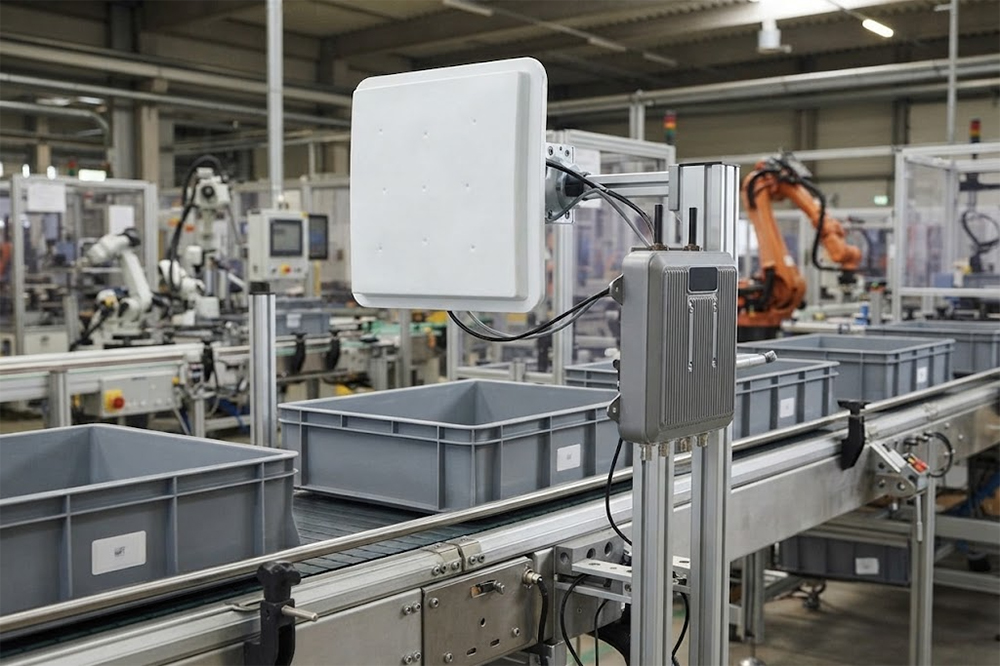
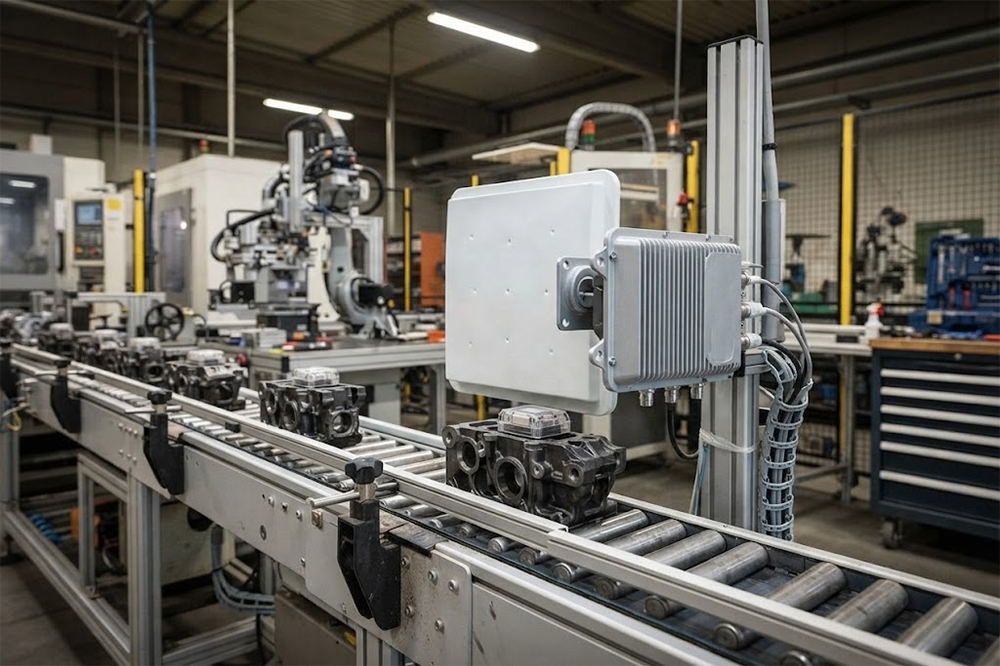
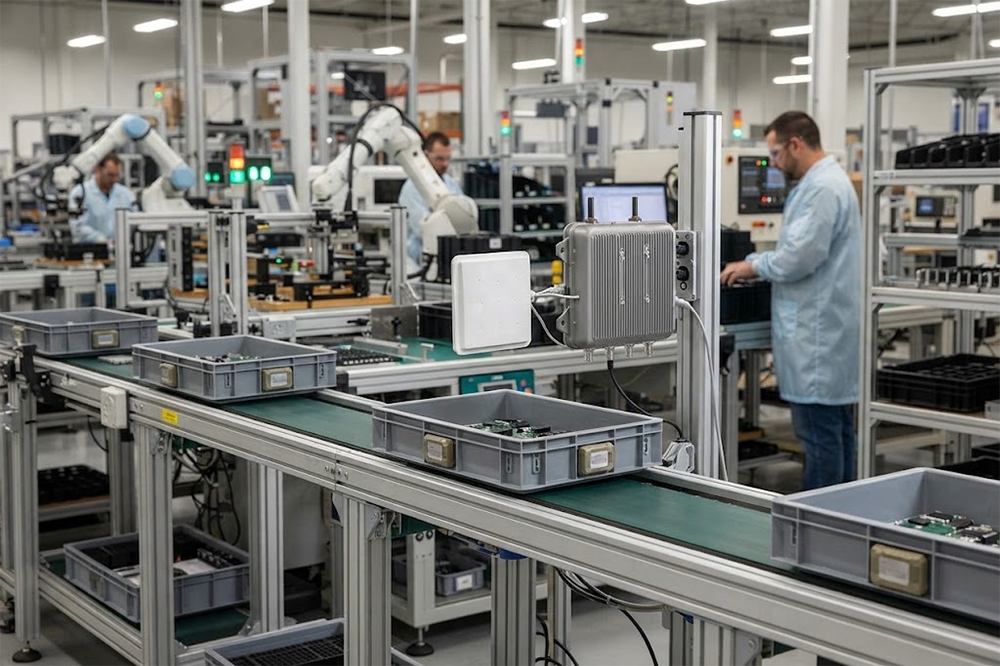
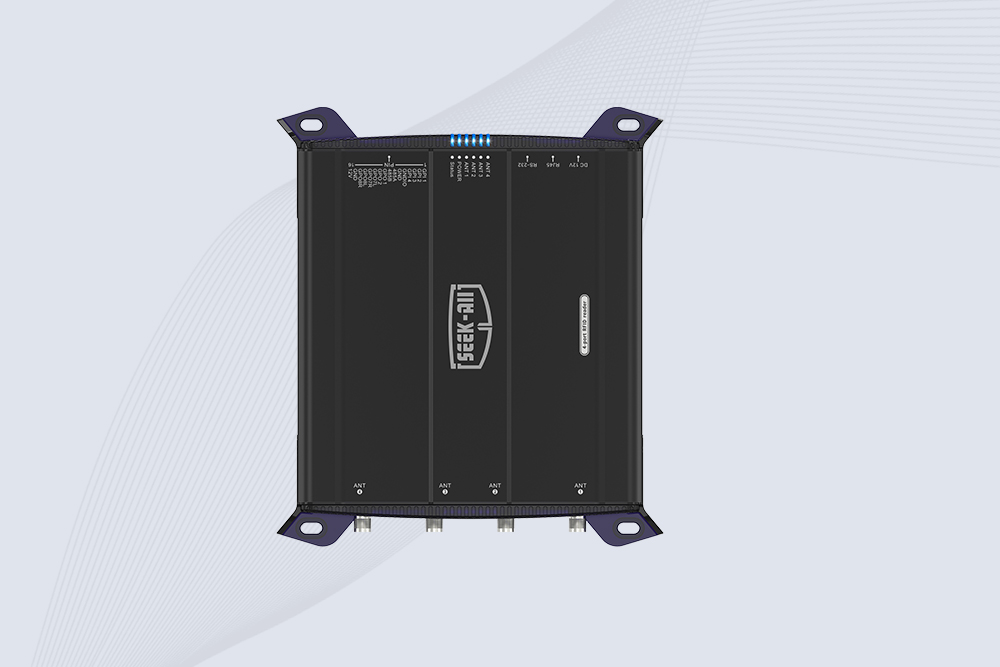
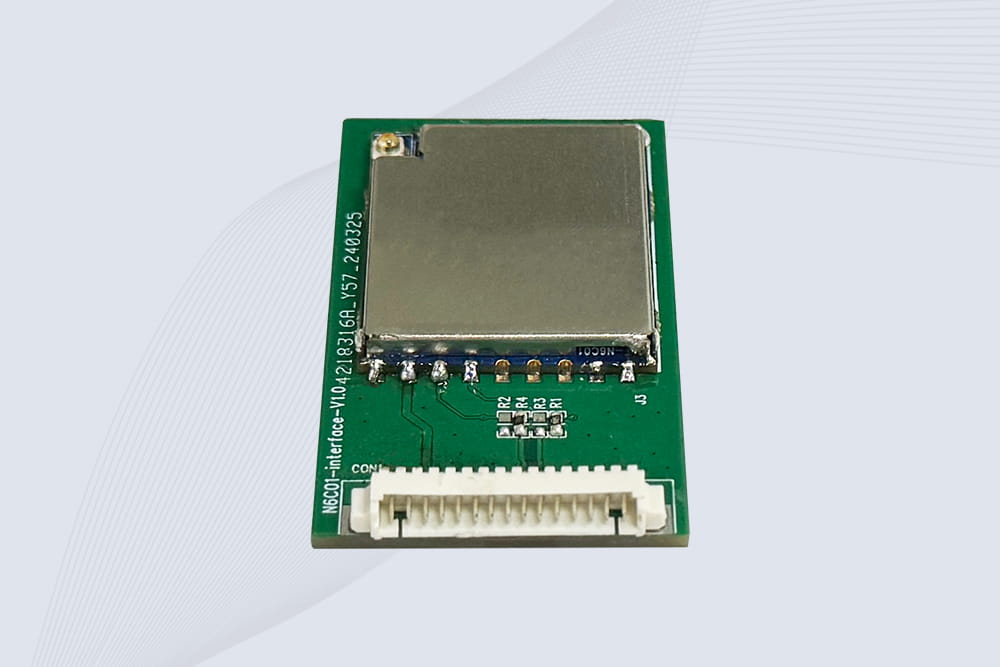
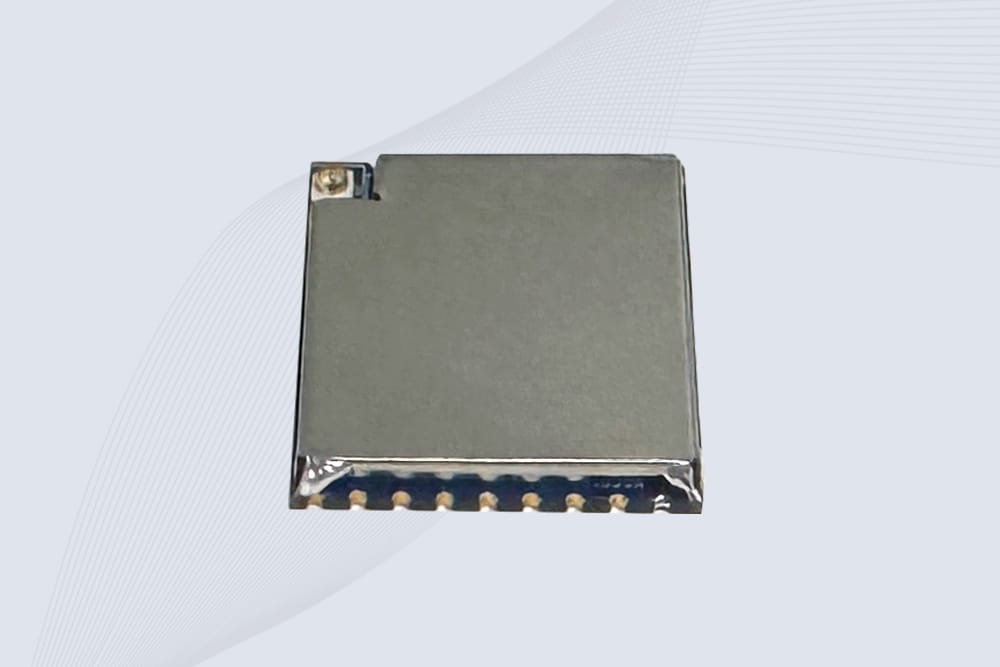
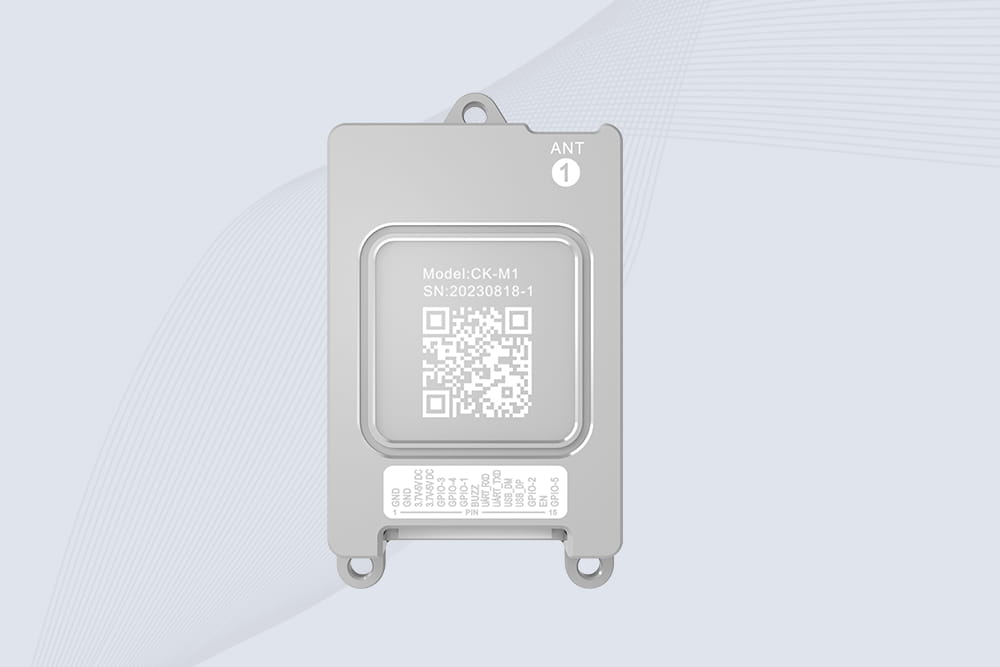
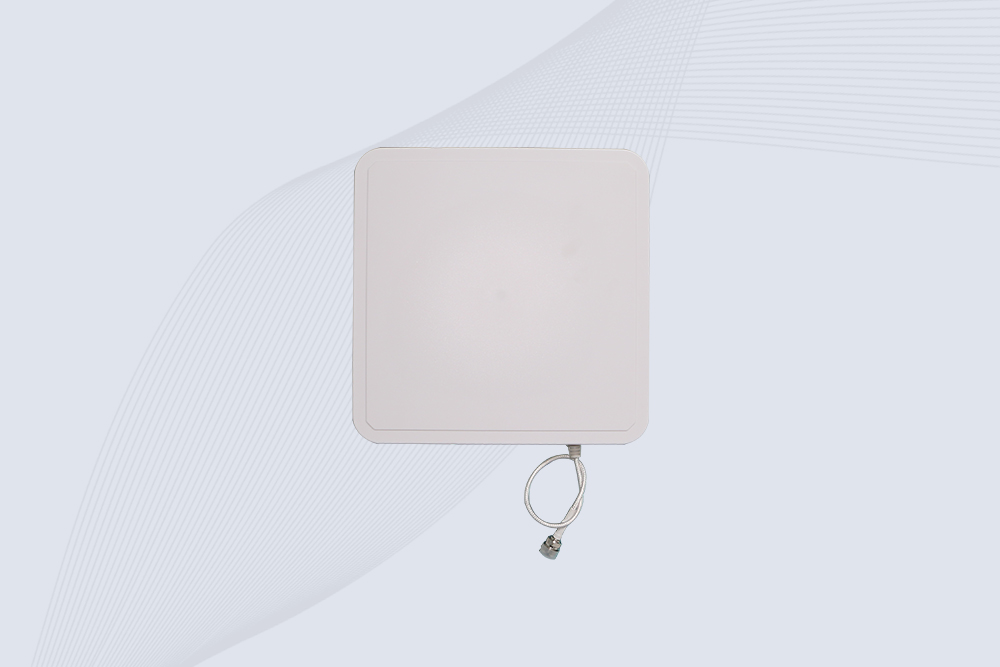
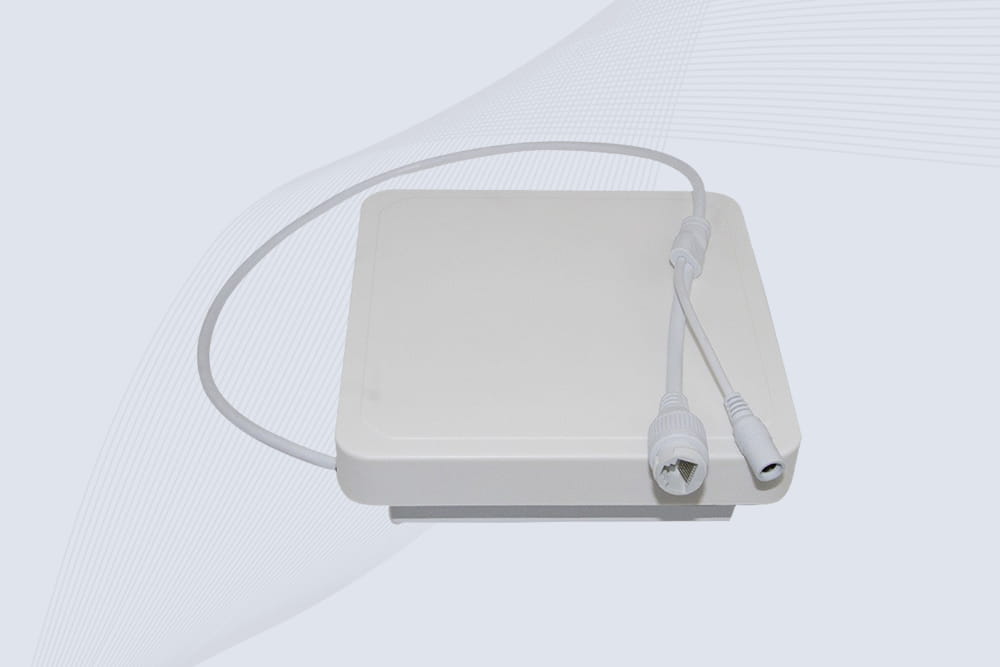
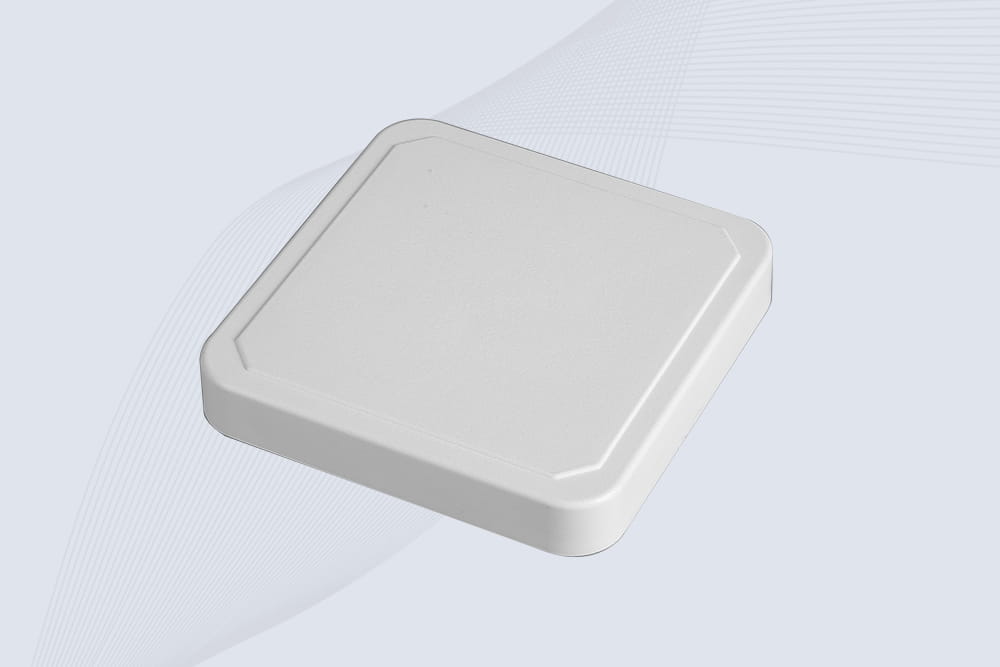
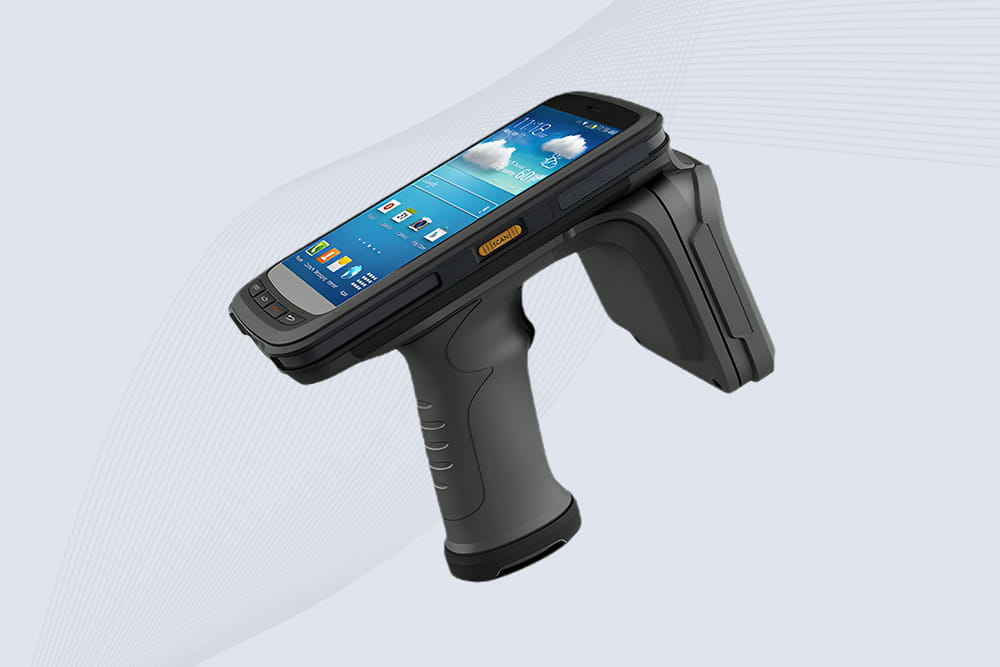
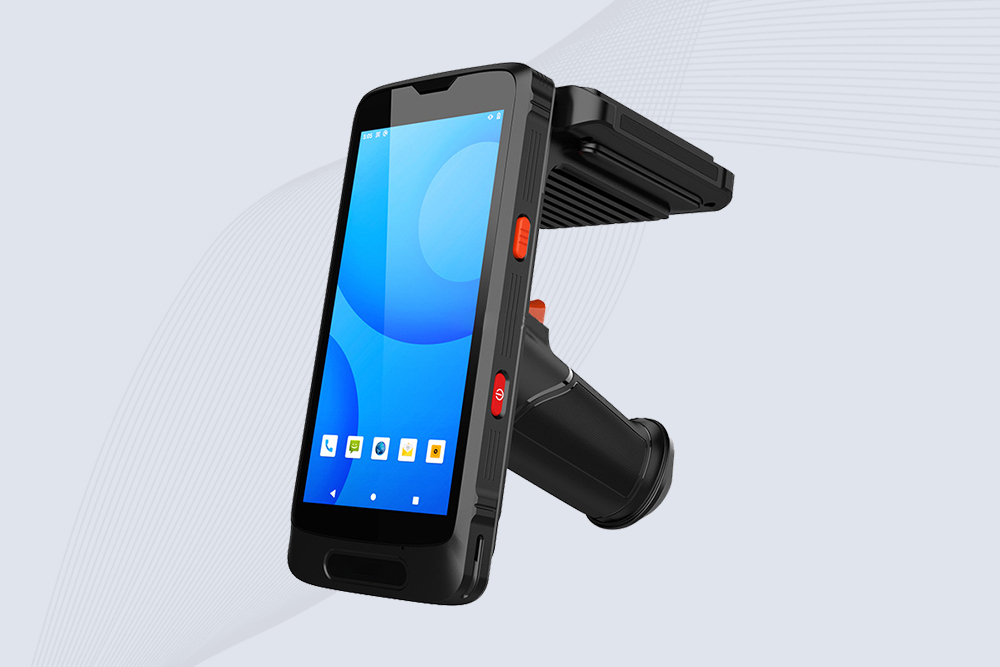
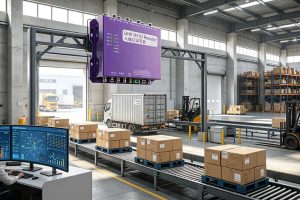
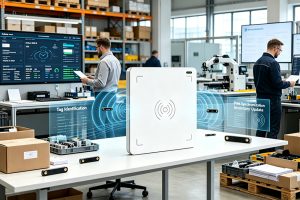
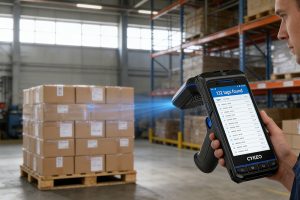
RFID readers can provide automatic identification at production lines, conveyors, workstations and material transfer points. The right reader depends on tag position, movement speed, reading distance, antenna layout, industrial environment and communication requirements.
A production line does not wait very patiently.
A part arrives.
The machine processes it.
Another part follows.
If the system does not know which workpiece is in front of it, somebody eventually has to step in and check.
This is one reason RFID has found a place in industrial automation.
An RFID tag can carry a unique identification number, while a reader installed beside a conveyor or workstation detects that tag as the product moves through the process.
On paper, it sounds straightforward.
In an actual factory, things get more interesting.
Metal machinery is everywhere. Products may move quickly. Tags may face different directions. Several tagged items can be close together. Electrical equipment can create a noisy RF environment.
And a reader that performs perfectly on a test bench may need some adjustment once it is installed beside a real production line.
So when choosing an RFID reader for industrial automation, I would start with the process rather than the reader specification.
What needs to be identified?
Where does it pass?
How quickly does it move?
How close are other tagged products?
And what does the production system need to do with the RFID data?
Those questions usually lead to a better hardware decision.
Where RFID Fits Into a Factory
RFID is not necessarily used everywhere in a factory.
It usually appears at specific identification points.
For example:
Production stations
Conveyor lines
Assembly areas
Work-in-process checkpoints
Tool stations
Material transfer points
Testing stations
Packaging lines
Finished goods areas
Loading and unloading points
Imagine a reusable production carrier moving between five workstations.
Each carrier has an RFID tag.
At Station 1, the reader identifies the carrier.
At Station 2, another reader records the next movement.
The manufacturing system now knows which carrier has reached which stage.
That may sound like a small thing, but when hundreds of carriers are moving around a factory, knowing their identity automatically can become very useful.
RFID Reader and Work-in-Process Tracking
Work-in-process, or WIP, is one of the areas where RFID can be particularly practical.
A product may spend hours, days or even weeks moving through production.
If every product or production carrier has an RFID tag, readers can identify it at important checkpoints.
The system can then associate the tag with the production record.
For example:
Tag ID: 0001837
Product: Model A
Production Order: 26841
Current Station: Testing
Status: Passed
The RFID reader is not replacing the manufacturing software.
It is providing the identification event that allows the software to know what just arrived.
That distinction is easy to miss when people first look at RFID automation.
Fixed RFID Readers Are Usually the Starting Point
For automated production lines, fixed RFID readers are often more practical than handheld readers.
A fixed reader can stay beside a conveyor or workstation.
The antenna creates the reading area.
When a tagged item enters that area, the reader captures the tag information.
There is no worker standing there with a scanner.
This is particularly useful when products move continuously.
A typical setup might look like:
Tagged product
↓
RFID antenna
↓
Fixed RFID reader
↓
PLC / industrial computer
↓
Production software
The reader identifies the tag.
The control system decides what happens next.
For example, the PLC may receive information that a particular carrier has arrived and allow the next machine operation to begin.
RFID on a Conveyor Line
Conveyors can look simple from a distance.
But RFID installation beside one is not always quite as simple.
Suppose products move at a steady speed.
The reader needs enough time to detect the tag as it passes through the antenna’s coverage area.
Now increase the conveyor speed.
The available reading time becomes shorter.
Add several tagged products close together.
Now tag collision and identification timing become more important.
Change the tag orientation.
The read performance may change again.
This is why conveyor applications should be tested with the actual product and actual movement speed.
A laboratory test where the tag sits motionless 30 centimeters from the antenna does not tell the whole story.
Reading Distance vs Reading Zone
Industrial buyers sometimes ask for the longest possible reading distance.
I understand why.
A large number looks good on a specification sheet.
But industrial automation often needs something slightly different.
It needs a controlled reading zone.
Suppose a production line has two conveyors running next to each other.
You want Reader A to identify products on Conveyor A.
You do not want it reading tags from Conveyor B.
A huge reading range could actually make the problem worse.
A carefully positioned antenna with appropriate reader power may be more useful than simply increasing the output.
This is one of those situations where “more” does not automatically mean “better.”
Antenna Position Can Change Everything
The reader and antenna should be considered as a pair.
The antenna can be installed:
Above the conveyor
Beside the conveyor
Under the conveyor
At a workstation
On both sides of a passage
Around a production fixture
The correct position depends on the product.
If the tag is always mounted on the top surface, an overhead antenna might work well.
If the tag is mounted on the side, a side-mounted antenna may be more appropriate.
If the product orientation changes randomly, multiple antennas may be needed.
There is no universal installation diagram that works for every factory.
This is why a supplier will often ask for product dimensions, tag position and conveyor layout before recommending the reader configuration.
Metal Is a Special Case
Industrial automation is full of metal.
Machines.
Fixtures.
Tooling.
Frames.
Motors.
Shelves.
Production carriers.
Metal can affect RFID performance, especially when the tag is mounted directly on a metal surface.
For these applications, an on-metal RFID tag may be necessary.
But even then, tag placement matters.
For example, moving the tag a few centimeters can sometimes change the result.
A tag that performs well on a flat metal panel may behave differently when attached to a curved metal component.
This is another reason not to finalize the reader and tag combination based only on a catalog photograph.
Test the actual asset.
RFID for Production Carriers
Production carriers are an interesting RFID application.
Many factories use reusable trays, pallets or carriers to move products between stations.
The product itself may change.
The carrier remains in circulation.
An RFID tag can be attached to the carrier.
Each production station has a reader.
The manufacturing system can then identify the carrier as it moves through the process.
This can be useful when the carrier contains multiple parts and the system needs a reliable way to associate the physical carrier with a production order.
It also helps when the carrier returns to the beginning of the process.
Instead of manually identifying it again, the system can recognize the same RFID tag.
Movement speed: Approximate conveyor or product speed
Reading distance: Approximate requirement
Reading zone: Where should the reader detect the tag?
Antenna: Number and installation position
Environment: Indoor, factory, outdoor, temperature, dust, etc.
Integration: PLC, MES, ERP, industrial PC or custom software
Quantity: Sample, pilot and expected bulk volume
With this information, a manufacturer can recommend a much more useful configuration.
Buying Industrial RFID Readers in Bulk
For OEMs and system integrators, the purchase is rarely just about the first sample.
A successful pilot may lead to dozens, hundreds or even thousands of readers.
That changes the purchasing priorities.
You may want to discuss:
Bulk pricing
MOQ
Lead time
Long-term availability
Firmware consistency
Antenna compatibility
API and SDK
OEM customization
Sample testing
Technical support
A stable reader platform can make a difference when you are deploying the same solution across several production lines.
It also makes spare parts and future expansion easier to manage.
Cykeo provides RFID reader solutions for industrial automation, warehouse management, asset tracking and other RFID applications. Explore Cykeo RFID Readers
When Should a Factory Consider RFID?
RFID is worth considering when the factory needs to identify physical products automatically at specific points.
Typical signs include:
Workers manually identify every product
Production carriers are difficult to track
Products frequently move between stations
Tools are shared between departments
WIP status is difficult to verify
Manual identification causes delays
The MES needs a reliable physical identification event
The production process already has defined checkpoints
It may not make sense to install RFID everywhere.
Sometimes two or three well-chosen reading points solve the main problem.
That is often a better place to start.
Final Thoughts
Industrial RFID works best when it becomes part of the production process rather than an extra system sitting beside it.
A reader identifies the tag.
The antenna defines the practical reading area.
The PLC or software decides what the identification means.
The production system then takes the next action.
For a simple workstation, one reader and antenna may be enough.
For a complex conveyor system, multiple antennas, carefully controlled reading zones and software filtering may be required.
The actual factory environment decides which approach makes sense.
If you are sourcing RFID readers for production lines, conveyor tracking, WIP identification, automated sorting or industrial asset management, the useful starting information is not simply the quantity you want to buy.
Send the supplier the application, product material, tag position, movement speed, reading distance and integration requirements.
That gives both sides something practical to work with.
Frequently Asked Questions
Can RFID readers work on production lines?
Yes. Fixed UHF RFID readers can be installed beside conveyors, workstations and production checkpoints to identify tagged products, carriers or components as they move through the process.
Can RFID track fast-moving products?
It can, but performance depends on movement speed, tag orientation, reader configuration, antenna position and reading distance. A real conveyor test is recommended for high-speed applications.
Can RFID readers connect to PLC systems?
Depending on the reader, integration can use Ethernet, TCP/IP, serial communication, digital I/O, API or SDK. The required interface should match the factory’s existing automation architecture.
Do RFID readers work around metal?
Yes, but metal can affect RFID performance. On-metal tags and careful antenna placement are often required for industrial equipment and metal production carriers.
Should I buy industrial RFID readers in bulk immediately?
For a new application, it is safer to test a sample or small pilot first. Once the reader, antenna and tag combination performs reliably in the actual environment, the project can move toward bulk purchasing.
Before integrating RFID into a production line, it helps to understand how the reader communicates with the tag and antenna. Our guide explains what an RFID reader is and how it works, including the basic role of the reader in an RFID system.
Industrial automation projects can have very different requirements depending on conveyor speed, tag position, reading distance and installation environment. Before selecting hardware, see our guide on how to choose the right RFID reader for your application.
Not every RFID application is located directly on the production line. Finished products, pallets and materials often move between manufacturing and warehouse areas. See our guide to the RFID reader for warehouse inventory if warehouse identification is also part of your project.
Production lines are only one part of industrial RFID. Tools, fixtures, reusable containers and other equipment may also need identification. Our guide to the RFID reader for asset tracking covers these applications in more detail.
Conveyor and production applications often raise questions about reading distance. However, maximum range is not always the main objective. Read our guide to RFID reader reading distance to understand how tags, antennas and the environment affect practical performance.
Industrial factories often need to track tools and fixtures alongside production assets. If tool identification is one of your requirements, see our guide to the RFID reader for tool management.
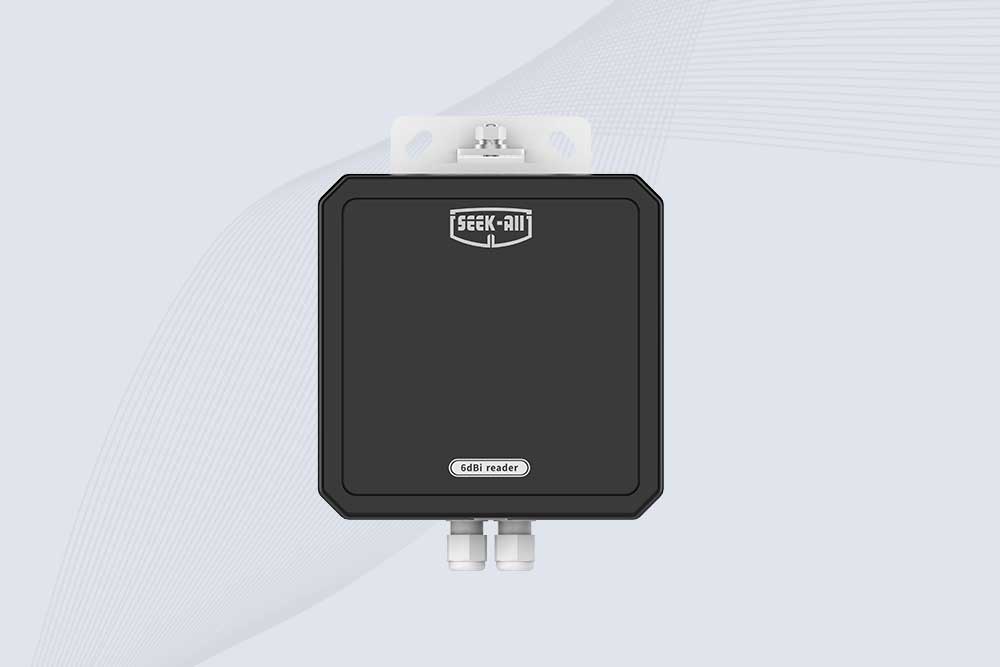
SSD-RA06L is an industrial UHF RFID reader with a built-in 6 dBi antenna, 3 m read range, 600+ tags/s, Ethernet, RS232, and optional Wi-Fi, 4G, and PoE.
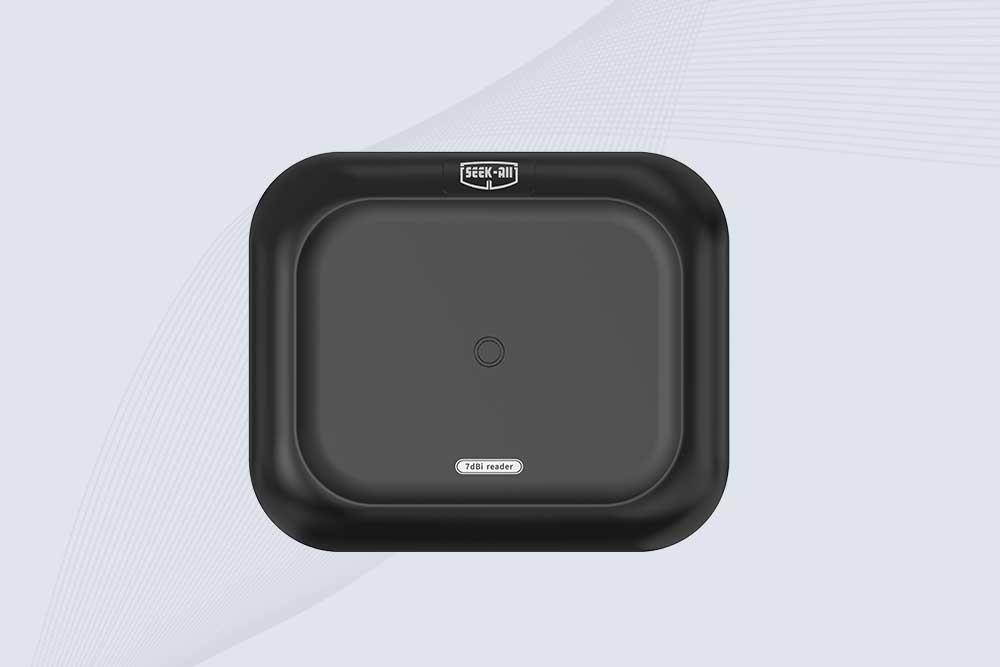
SSD-RA07L industrial UHF RFID reader with integrated 7 dBi antenna, up to 6 m reading distance, over 600 tags/s, Ethernet, RS232, and optional Wi-Fi, 4G, and PoE.
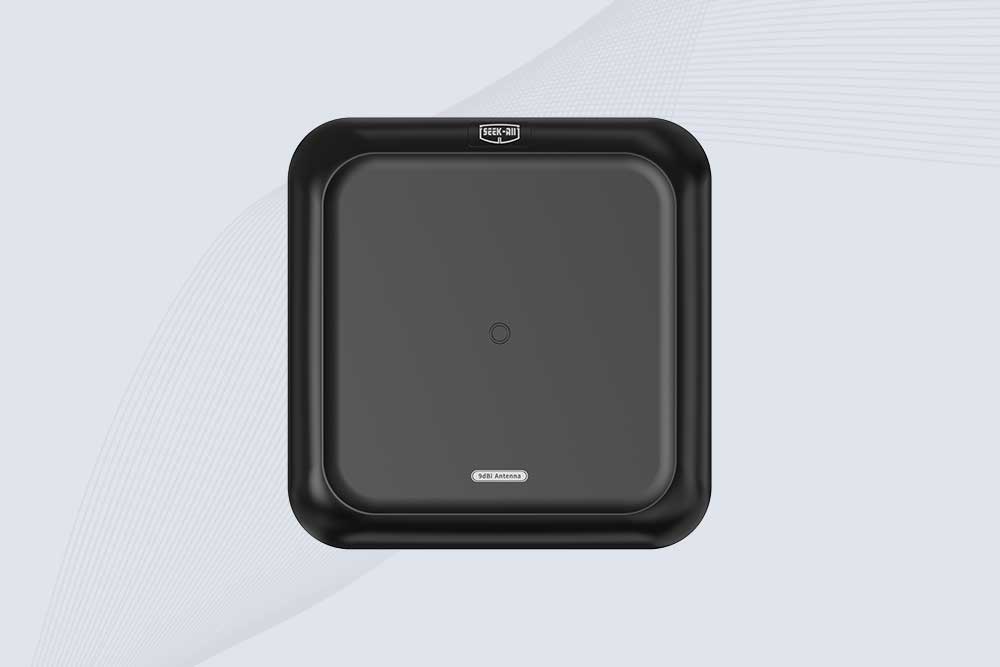
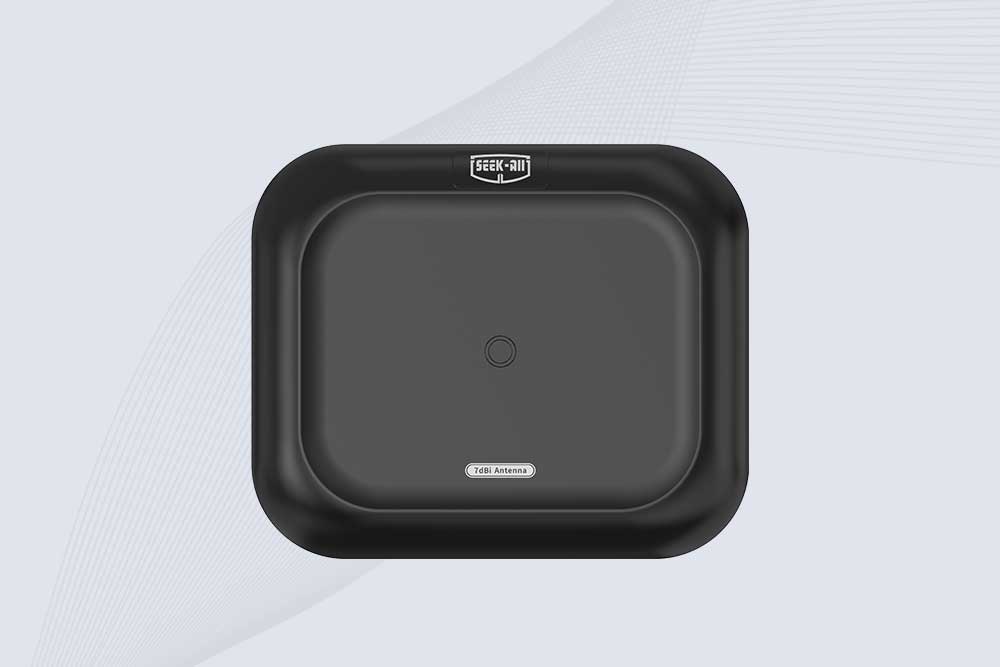
Explore the SSD-A07 UHF RFID antenna with 7 dBi gain, circular polarization, adjustable 840–960 MHz frequency, and 60°/75° beamwidth for stable RFID read/write performance.
SSD-A06 UHF RFID antenna with circular polarization, adjustable 840–960 MHz frequency, ≥4.5 dBi gain, and a compact directional design for RFID systems.
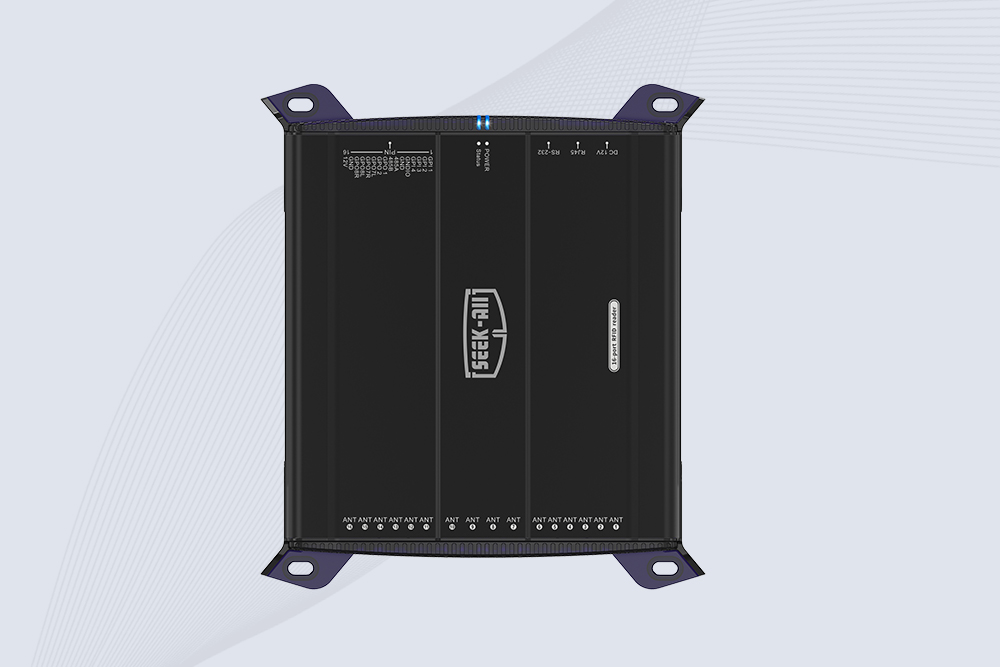
SSD-R16L Multi-Channel RFID Infrastructure for Automated Inventory Management ✔️ 16-Port High-Density RFID Reading Equipped with 16 SMA antenna ports, SSD-R16L supports multi-antenna deployment for warehouses, retail stores, logistics, production lines, and large-area RFID identification. ✔️ High-Speed & Long-Range Performance With up to 33…
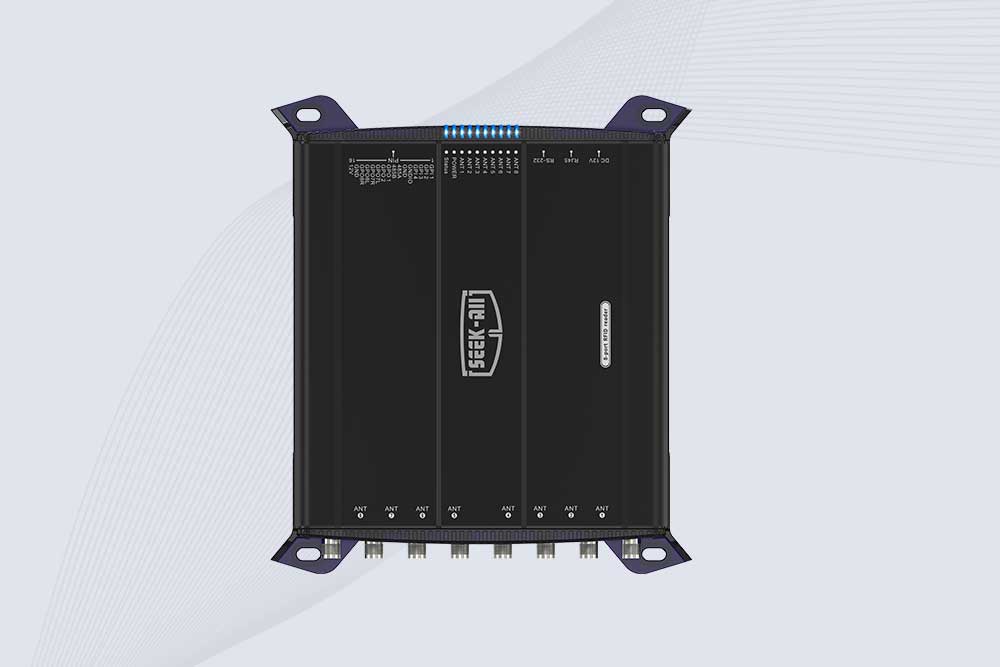
SSD-R8L 8-port UHF RFID reader with 33dBm output, up to 20m reading range and 600+ tags/s recognition. Ideal for warehouse, logistics, retail and asset tracking.
CYKEO Embedded RFID Modules are designed for compact industrial and IoT devices that require stable UHF performance. These UHF RFID Modules support global protocols, flexible power control, and reliable multi-tag reading for smart cabinets, production lines, and asset tracking systems.
CYKEO Embedded RFID Module is built for compact IoT and industrial devices that need stable UHF performance. This UHF module supports global protocols, low power operation, and reliable multi-tag reading for smart lockers, production lines, and always-on RFID systems.
CYKEO CYKEO-M1 drone rfid module is a compact UHF RFID reader module designed for drones and UAV platforms. It supports long-range aerial scanning, fast multi-tag reading, and stable performance in wind, vibration, and outdoor environments.
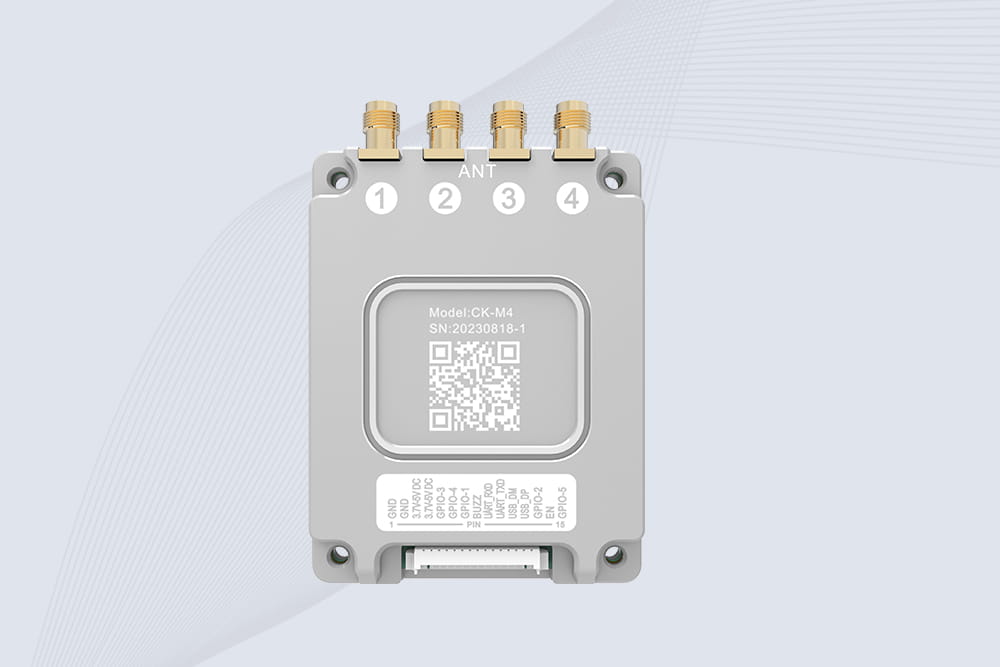
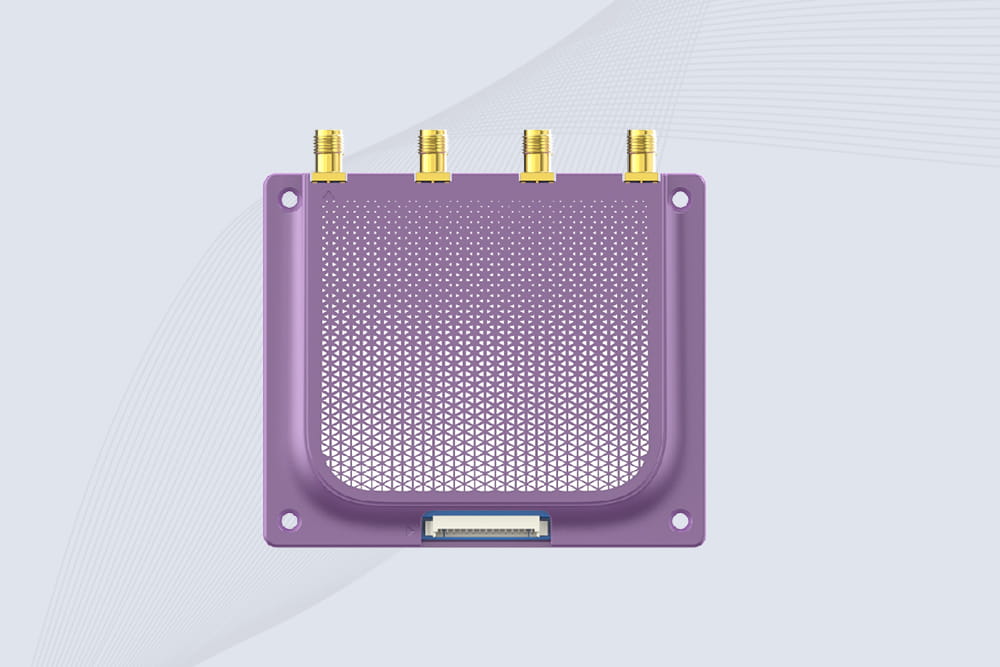
CYKEO CYKEO-M4 RC522 RFID Module is an industrial-grade UHF RFID reader with 4 ports, supporting ISO, EPC, and GB protocols. High-speed, accurate reading for IoT, automation, and warehouse applications.
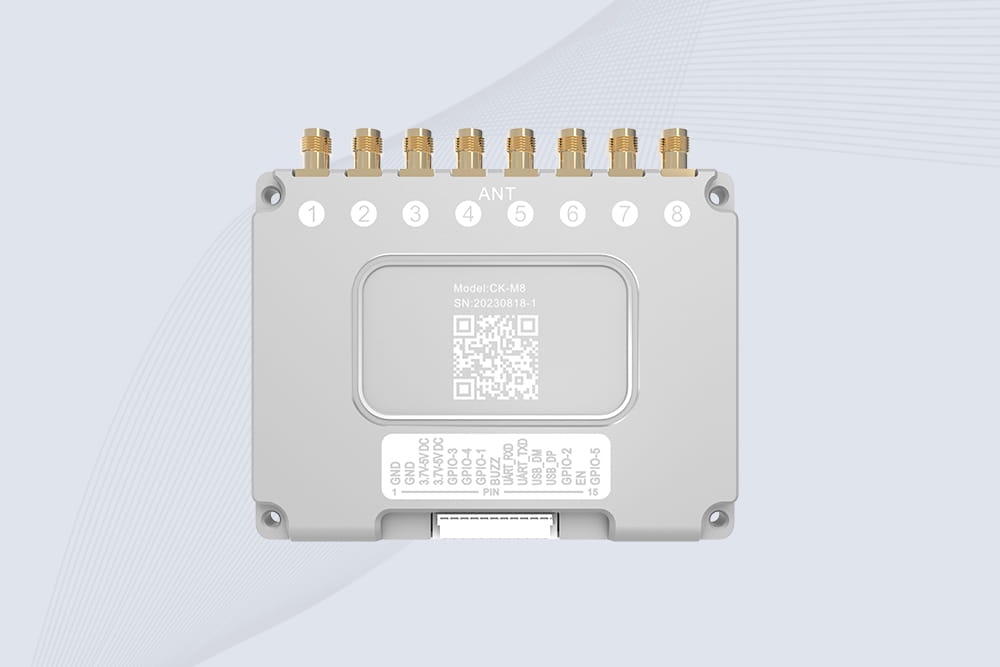
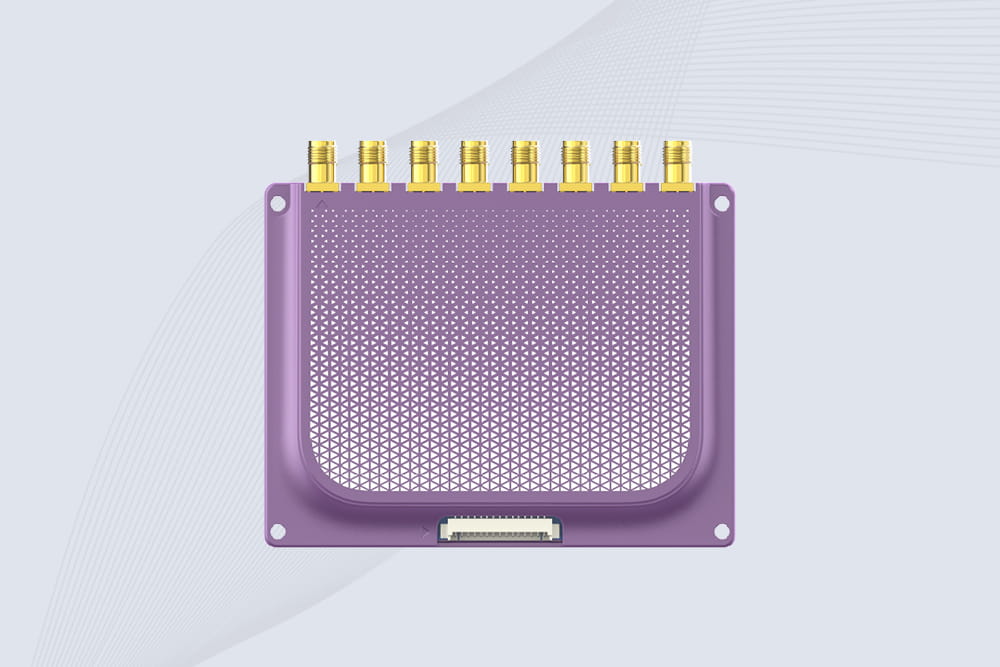
CYKEO CYKEO-M8 Module RFID is an 8-port UHF R2000 RFID Module designed for high-density, multi-tag environments. Stable 33dBm output, ISO & GB protocol support, ideal for warehouses, factories, and automated systems.
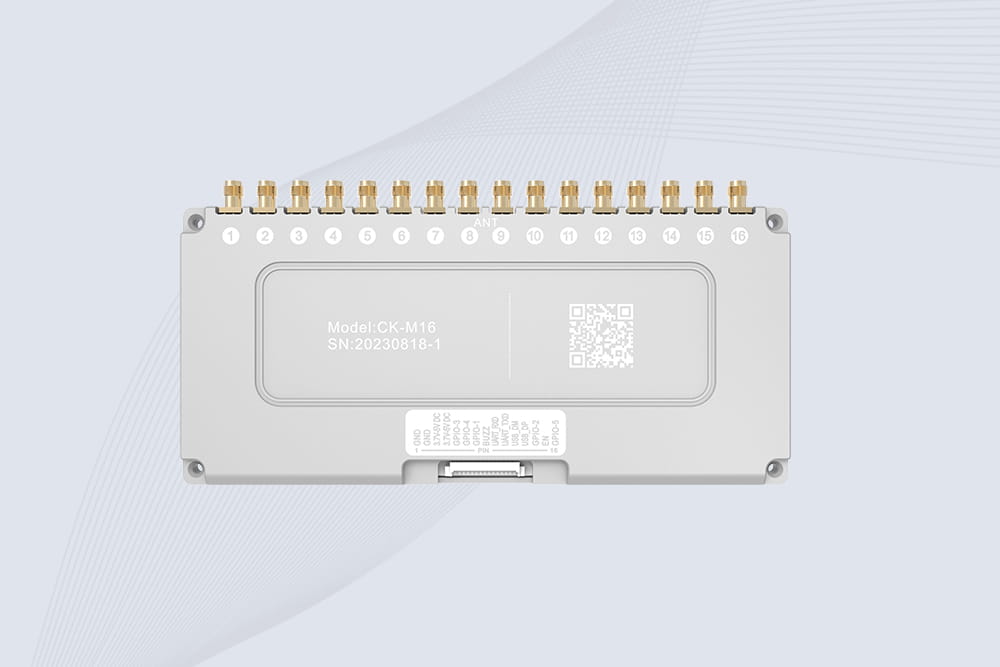
CYKEO CYKEO-M16 RFID Module is a 16-port UHF RFID reader module based on the R2000 chipset. Designed for dense tag environments, it supports ISO and GB standards and delivers stable multi-antenna control for industrial automation.
The CYKEO CYKEO-M16L RFID Reader Module is a 16-channel UHF RFID core designed for dense tag environments. With adjustable 33dBm output, multi-protocol support, and stable multi-antenna control, this RFID Tag Reader Module fits industrial automation, warehouse systems, and large-scale IoT deployments.
CYKEO CYKEO-M8L module RFID is a compact industrial UHF module built for dense tag and multi-antenna environments. With 8 RF ports, adjustable 33 dBm output, and ISO & GB protocol support, it is widely used in factories, warehouses, and automated tracking systems.
CYKEOCYKEO-M4L UHF RFID Module is a compact 4-channel RFID tag reader module designed for dense tag environments. Supporting ISO and GB protocols, it delivers stable reads up to 10 meters for industrial and IoT systems.
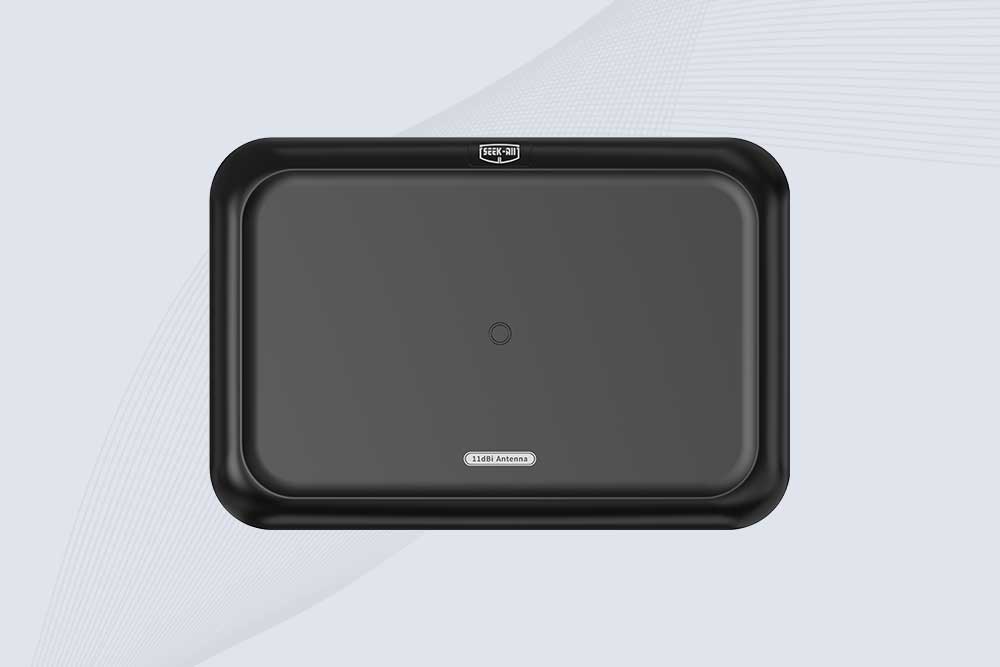
Cykeo CYKEO-A11 UHF RFID reader antenna delivers 11dBi gain, 840-960MHz frequency range, and IP65 ruggedness for retail, logistics, and industrial RFID systems. Features low VSWR and easy installation.
CYKEO Antenna RFID Reader delivers stable long-range UHF performance with a 10.5dBi directional design, built for warehouses, conveyor portals, and industrial RFID systems. This rfid reader antenna provides 20m+ read distance and rugged IP67 protection.
Cykeo CYKEO-A5B industrial Linear RFID Antenna delivers 5dBi gain, ≤1.5:1 VSWR, and IP65 rugged design for warehouse, production line, and logistics UHF systems.
Cykeo’s CYKEO-B12 Long Range RFID Antenna delivers 15m+ read range with 12dBi gain, IP65 rugged design, and global 840-960MHz UHF support. Ideal for warehouse/logistics asset tracking.
Cykeo CYKEO-B10 Long Distance RFID Antenna offers 10dBi gain, 840-960MHz frequency range, IP65 rating, and 20m+ coverage for logistics/warehousing/ETC systems. Low VSWR ensures stable signal transmission.
Cykeo CYKEO-A6 UHF RFID panel antenna features 6dBi gain, 840-960MHz broadband, IP65 metal-ready housing for logistics/smart retail. 18mm ultra-thin design with tool-free mounting.
Cykeo CK-A3 industrial antenna RFID UHF offers 5m+ tag detection, ≤1.3:1 VSWR, IP65 rugged design, and global UHF spectrum compatibility (840-960MHz) for warehouses, factories, and retail.
Cykeo CYKEO-B5 directional RFID antenna provides 5dBi gain with 60° narrow beamwidth for precise inventory tracking. IP65-rated, global UHF frequency support, and low VSWR.
Create your own high-performance DIY RFID antenna! 5dBi gain, 840-960MHz tunable, step-by-step guides. Compatible with Arduino, Raspberry Pi, and commercial UHF readers.
Cykeo CYKEO-A7 Flexible RFID Antenna features 840-960MHz wideband tuning, 7dBi gain, and IP68 rating for medical/retail/industrial curved surface deployments. 98% read accuracy with peel-and-stick installation.
Cykeo CYKEO-B5A industrial Passive RFID Antenna delivers 5dBi gain, 70° beamwidth, and -40°C~55°C operation for warehouses/smart cabinets. Compatible with Zebra/Impinj readers.
Cykeo’s CYKEO-A9B High Gain RFID Antenna delivers 15m+ read range with 9dBi amplification. Features IP54 rugged design, 840-960MHz bandwidth, and 80° beamwidth for warehouse/manufacturing RFID systems.
Cykeo’s enterprise-grade 8dbi Impinj RFID Antenna 10m+ read range with 840-960MHz tuning. Features IP65 housing, 1.4 VSWR, 35° beamwidth for retail/warehouse RFID systems.
Cykeo CYKEO-A9 industrial UHF RFID antenna delivers 9dBi gain, 840-960MHz frequency range, and IP65 protection for warehouse/logistics/retail RFID systems. Features N-type connector and ≤1.3:1 VSWR.
CYKEO UHF RFID Antenna built for long-distance and industrial applications. This antenna rfid uhf delivers strong gain, outdoor durability, and reliable tag performance in warehouses, yards, and vehicle ID systems.
CYKEO Antenna RFID delivers reliable long-range UHF performance in warehouses, retail shelves, and cold-chain environments. This compact uhf rfid antenna provides stable reads with circular polarization and ultra-wide 840–960 MHz support, ideal for industrial tracking, smart shelves, and asset monitoring.
Cykeo’s CYKEO-C8 UHF RFID antennas delivers 8dBi gain, 840-960MHz full-band coverage, and IP65 ruggedness for manufacturing/warehouse RFID systems. Industrial RFID Antennas Features
Cykeo’s 8dBi UHF RFID antenna and reader kit delivers 10m+ range, 840-960MHz broadband, and IP65 ruggedness for factories, warehouses, and logistics. ISO 18000-6C & EPC Gen2 certified.
Cykeo’s CYKEO-A12C UHF Large RFID Antenna delivers 12dBi gain, 840-960MHz global frequency, IP65 ruggedness for logistics/warehousing/automotive. 40° beamwidth ensures stable 15m+ tag reads.
CYKEO Near Field RFID Antenna provides precise 5–30 cm reading for shelves, cabinets, and workstations. This compact rfid shelf antenna delivers stable short-range performance around metal and clutter, ideal for pharmacies, libraries, and electronics sorting.
Cykeo’s industrial long range RFID reader delivers 20-meter scanning, 500+ tags/sec speed, and IP67 waterproof design for automated warehouses, logistics, and harsh environment applications.
Cykeo’s CYKEO-RA6L industrial RFID long range reader features 20m read distance, 500 tags/sec speed, and IP67 protection. Ideal for warehouse automation, manufacturing WIP tracking, and smart logistics. Supports ISO 18000-6C/6B protocols.
CYKEO Long Range RFID Tag Reader built for outdoor and industrial operations. This Outdoor RFID Reader delivers 20m read distance, fast tag processing, and IP67 durability for wide-area tracking.
Cykeo CYKEO-RA12L industrial Long Range RFID Reader delivers 20m read range, 200+ tags/sec scanning, and IP67 protection for manufacturing/logistics applications. Supports ISO 18000-6C/GB protocols.
RFID Industry Writer | IoT & Asset Tracking Analyst
James writes about RFID technology, asset tracking, and the practical challenges of digital transformation across warehousing, retail, manufacturing, and logistics.
His work focuses on how RFID is applied in real-world operations—improving inventory visibility, automating workflows, and helping businesses manage assets with greater accuracy and efficiency.
He regularly covers topics including UHF RFID, smart cabinets, RFID portals, tool tracking, warehouse automation, and industrial IoT trends..
What is the best RFID solution for supply chain management? Explore smart RFID systems with real-time tracking, inventory visibility, and automation solutions from Cykeo.
Learn about UHF RFID technology—how it works, key advantages over LF/HF, real-world applications in warehousing and retail, and how to choose the right UHF RFID reader. Expert guidance from CYKEO engineers.
 Cykeo RFID IoT Solution Products R&D Manufacturer