 Cykeo RFID IoT Solution Products R&D Manufacturer
Cykeo Fixed RFID Readers
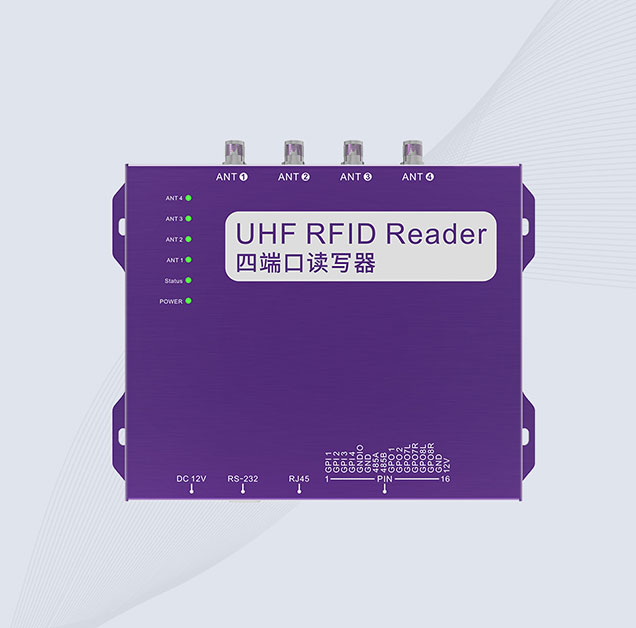
Cykeo supplies fixed RFID readers for permanent installation in RFID systems, including forklift RFID readers, 4-port, 8-port and 16-port fixed readers.
These readers are commonly used in access control, asset tracking, warehouse checkpoints and automated identification systems where stable, continuous reading is required.
SDK, API and demo software are provided to support integration with existing software platforms. For reader selection, port configuration or antenna matching, Cykeo’s technical team can offer basic technical guidance during system design.

UHF Fixed RFID Reader
A fixed RFID reader is designed to operate at a fixed location and work continuously as part of an RFID system.
Unlike handheld devices, fixed readers are installed on walls, gates, cabinets, forklifts or inside equipment, and they rely on external RFID antennas to read RFID tags.
Read More
In real installations, reading performance depends on antenna type, number of antenna ports, output power settings, installation height and surrounding structures. Multi-port fixed readers allow several antennas to be connected, making it possible to cover wider areas or multiple directions.
Fixed RFID readers transmit RF signals through connected antennas and receive responses from RFID tags that contain unique identification data. This enables automatic identification without manual scanning, even when goods, vehicles or assets are moving through the reading area.
Common Application Areas:
1.Warehousing and Logistics Checkpoints
In warehouses and logistics centers, Cykeo fixed RFID readers are installed at entry and exit points to identify pallets, containers and goods. Operators can confirm movements without stopping forklifts or opening packages.
2.Forklift Identification Systems
Forklift RFID readers are mounted directly on vehicles to read location tags, pallet tags or floor markers. This setup supports real-time tracking and improves warehouse operation accuracy.
3.RFID Gates and Channels
4-port, 8-port and 16-port fixed readers are commonly used in RFID gate systems. Multiple antennas are deployed to form a reading corridor, ensuring stable tag detection as items pass through.
4.Asset Management
Factories, hospitals and construction sites use fixed RFID readers to monitor tools, machines and mobile equipment. Once assets are tagged, their presence can be checked automatically, helping reduce loss and improve record accuracy.
5.Access Control Systems
Fixed RFID readers are installed at doors, gates and restricted areas. Staff cards, badges or vehicle tags can be read automatically, allowing access without manual verification.
6.Vehicle Identification Systems
Parking facilities and industrial yards use fixed RFID readers to identify vehicles as they approach gates. This supports smoother traffic flow and reduces waiting time.
7.Smart Cabinets and Equipment
Many customers integrate fixed RFID readers into smart cabinets, lockers or custom equipment. With suitable antennas, the system can automatically identify stored or retrieved items.
8.Industrial Automation
In production environments, fixed RFID readers are integrated into automated lines to track materials, workpieces or carriers as they move between processes.
9.Retail and Inventory Control
Retail warehouses install fixed readers at inventory points to speed up stock verification. Multiple tagged items can be identified at once without manual scanning.
10.Custom OEM Projects
Companies with in-house machining and assembly capabilities often purchase fixed RFID readers as core hardware and build their own RFID systems, such as access control units or automated storage equipment.
About Cykeo
Cykeo is an RFID hardware manufacturer focused on RFID readers, RFID modules and RFID antennas.
Our products are developed for software developers, system integrators, solution providers and enterprise customers who build complete RFID systems for their own applications.
Instead of closed systems, Cykeo offers flexible hardware together with open SDKs and APIs, allowing customers to integrate RFID functions into their own software platforms, mechanical designs and project solutions.
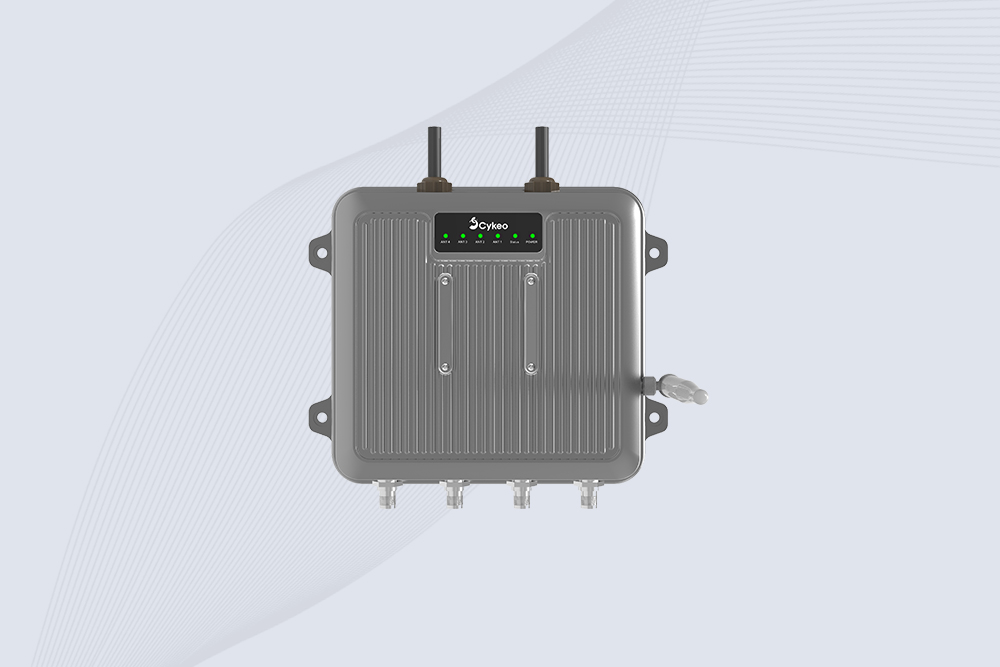
Cykeo CYKEO-C1 industrial Forklift RFID Reader features 20m read range, 600 tags/sec scanning, Impinj R2000 chipset, and IP67 rugged design. Ideal for warehouse logistics and manufacturing. Supports ISO 18000-6C/6B protocols.
More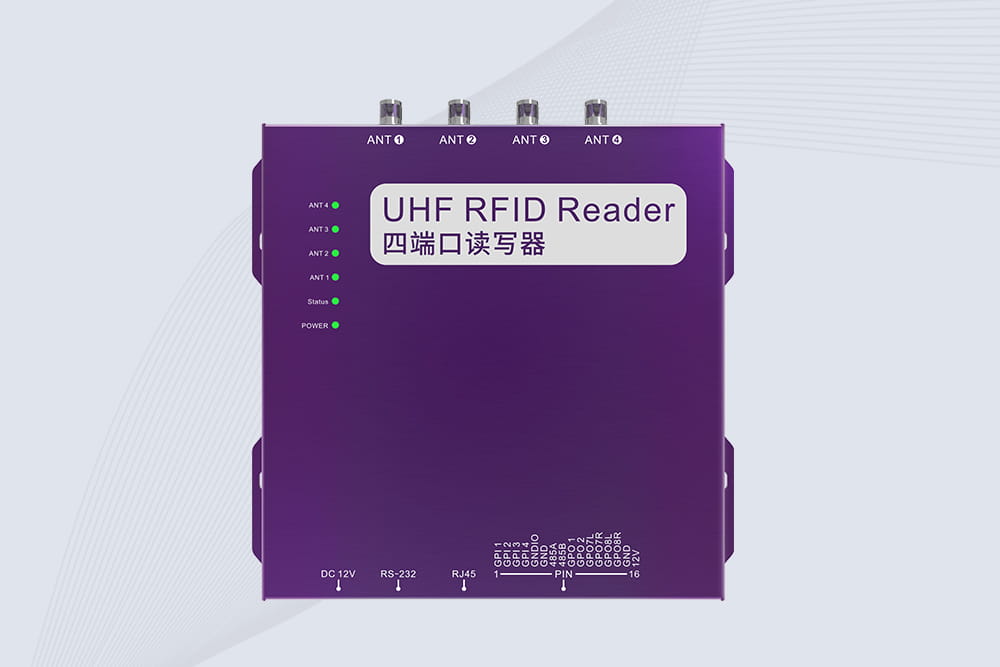
Cykeo CYKEO-R4 industrial UHF RFID Fixed Reader features 4 TNC ports, 400+ tags/sec speed, IP67 housing, and global frequency compliance for vehicle inspection, smart warehouse, and asset management systems.
More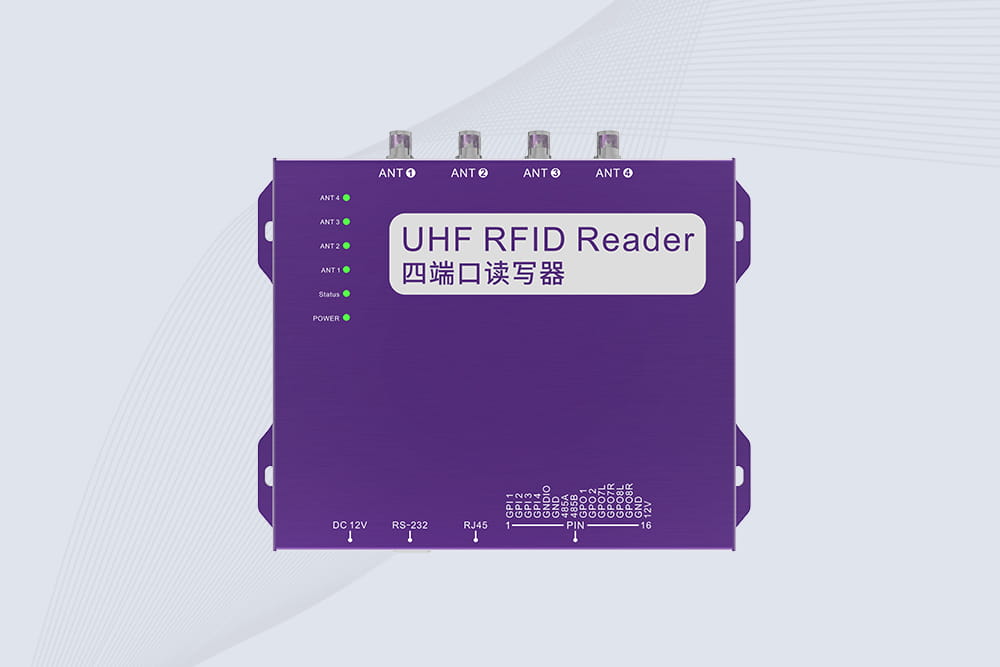
Cykeo's CYKEO-R4L 4-port Fixed UHF RFID Reader delivers 400 tags/sec scanning, ISO 18000-6C compliance, and IP65 protection. Ideal for warehouse automation, manufacturing WIP tracking, and logistics management.
More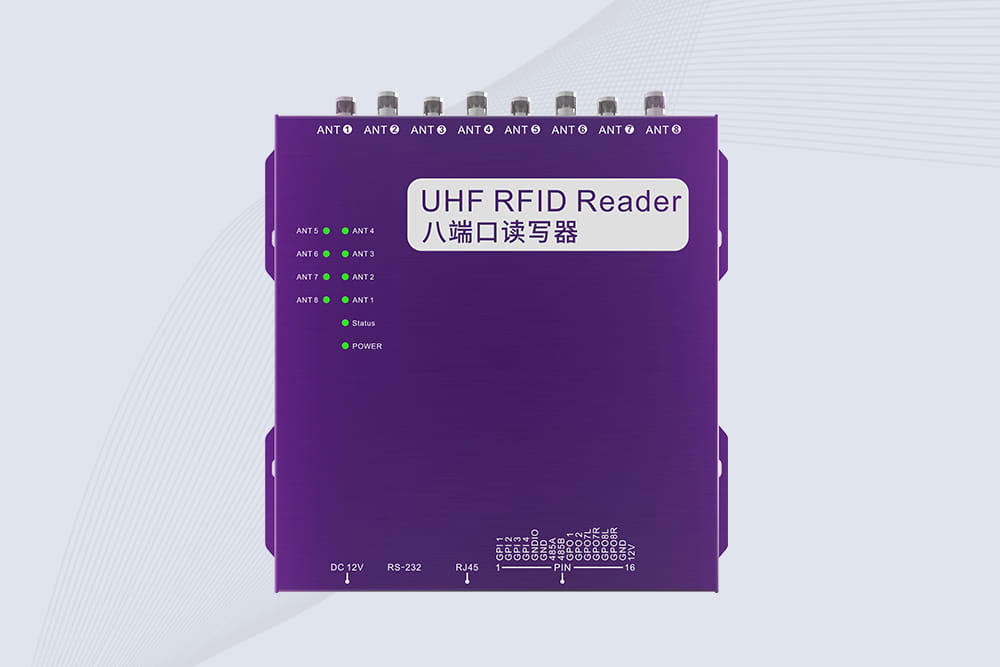
CYKEO CYKEO-R8L Fixed RFID Reader with 8-port UHF design, Impinj-based RF core and up to 20m read range. An industrial Fixed RFID Reader for vehicle inspection, warehouse portals, smart manufacturing lines and secure access checkpoints.
More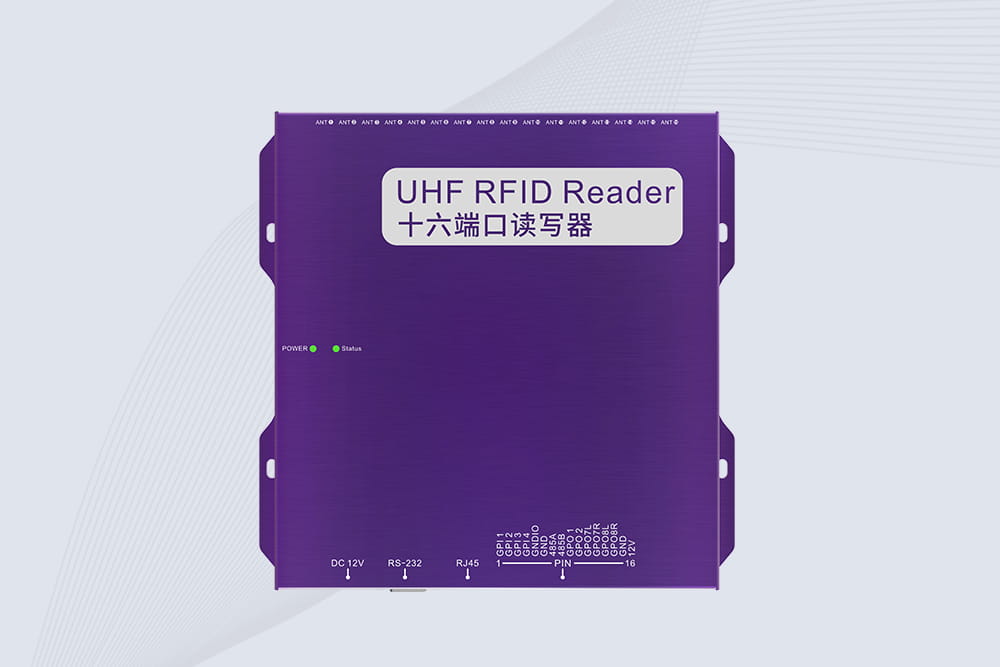
RFID Fixed Reader from CYKEO – the CYKEO-R16L 16-port UHF fixed reader for warehouses, smart cabinets, and production lines. Long-range, multi-tag reading, stable performance for 24/7 industrial use.
MoreMore about Fixed RFID Readers
RFID Fixed Readers from Cykeo offer consistency in high performance. Our Fixed RFID Readers offer the strong functionality needed to jumpstart a successful RFID system. An UHF RFID Reader is a radio frequency transmitter and receiver. RFID Readers can read and write information to an RFID tag. RFID Readers can also be fixed or portable. Portable RFID Readers can be installed or carried almost anywhere.
Cykeo offer a very strong after-sales team and rapid technical support services, including support for SDKs, APIs, software integration, system development, mobile or desktop applications, as well as any related configuration or troubleshooting assistance, making your project very convenient from planning to implementation.
More about RFID Fixed Readers
UHF RFID Fixed readers are powerful devices that enable seamless communication with RFID tags, facilitating efficient data capture and automation. These RFID readers use radio frequency waves to identify and track items or individuals, making them essential for industries like retail, logistics, and healthcare. By leveraging UHF RFID readers, organizations can reduce errors, streamline operations, and gain real-time visibility into their processes. This technology is ideal for applications such as inventory tracking, access control, and asset management.
At Cykeo, we offer a wide range of RFID readers to suit various applications and industries. From handheld RFID readers, USB RFID readers, Long Range RFID Reader, Portable RFID Reader, RFID Gate Reader, and fixed RFID readers to multi-functional, multi-frequency options, our carefully developed product portfolio provides RFID hardware for any type of system and project. Whether you’re upgrading your supply chain operations or enhancing workplace security, our RFID readers deliver reliability, precision, and performance to meet your business needs.
Frequently Asked Questions:RFID Stationary Reader
A fixed RFID reader does one thing continuously: it sends out radio signals and waits.
Once a tagged item moves into the reading zone, the tag wakes up and reflects data back. No button. No trigger. It just happens. That’s the whole point of a fixed reader.
In warehouses, these readers are bolted to walls, gates, ceilings, or conveyor frames. They don’t move, and they’re not meant to. The system is designed so goods move, not the reader. When everything is aligned properly, reads happen in the background and no one notices. When it’s not aligned, you notice very quickly.
There’s the lab answer, and then there’s the real one.
On paper, a UHF fixed RFID reader can reach 20 meters or more. In a warehouse, expect 3 to 8 meters to be reliable. Sometimes less.
Metal racks, forklifts, stacked cartons, liquids—these all eat range. HF fixed readers stay short, usually under a meter. LF is even shorter and rarely used for warehouse tracking anymore.
Anyone promising full-range performance everywhere is skipping the environment part.
They can be. They also fail badly when installed wrong.
In controlled zones like dock doors or conveyor choke points, fixed readers are extremely accurate. Over 99% is normal. In wide-open storage areas, accuracy depends entirely on layout, antenna direction, and tag placement.
Most “missed reads” are not hardware problems. They’re design shortcuts made early in the project.
Yes. That’s exactly what UHF RFID is built for.
A UHF reader doesn’t wait for one tag at a time. It cycles through responses using anti-collision logic, pulling data from many tags in rapid bursts. Pallets, cases, loose items—it can read them all together.
If it couldn’t, UHF RFID wouldn’t exist in logistics. Barcodes would still win.
Most fixed readers connect by Ethernet. That’s the default in warehouses for a reason.
Once connected, the reader sends data to software using APIs or middleware. Some setups use USB or serial ports, but that’s more common in testing rooms than real facilities.
The physical connection is easy. The real work starts when you map tag data to your system logic.
Replacing the reader is usually the last thing you should do.
Range improves fastest by changing antennas, repositioning them, and choosing better tags. Orientation matters more than power. So does distance to metal. Output power helps, but only within legal limits—and even then, gains are smaller than most people expect.
When range is poor, the problem is usually layout, not hardware.
The difference shows up the moment you try to use them in the real world.
A fixed RFID reader is installed in one place and stays there. Think dock doors, conveyor lines, gate antennas, or warehouse choke points. It runs continuously, reads tags automatically as they pass by, and usually connects to multiple external antennas. No trigger, no aiming. It’s built for volume, speed, and consistency. Once set up properly, it just works in the background.
A handheld RFID reader is the opposite in feel. Someone holds it, walks around with it, points it at shelves or assets, and pulls a trigger. It’s flexible and fast for spot checks, cycle counts, or finding missing items. But it depends on the operator. Angle matters. Distance matters. Fatigue matters.
In short:
- Fixed readers are about automation and scale.
- Handheld readers are about mobility and control.
If you need continuous tracking, fixed wins. If you need flexibility and movement, handheld makes more sense.
There’s no single price, and anyone giving one number is oversimplifying.
In practice, most fixed RFID readers fall into a few rough ranges:
- Entry-level models: Starting from $300
- Industrial or multi-port readers: Starting at $600
- High-performance systems with advanced filtering, rugged housing, or certifications: Starting from $1,000
The reader itself is only part of the cost. Antennas, cables, mounting hardware, software licenses, and integration time often matter more than the sticker price. I’ve seen projects where a cheaper reader ended up costing more because it couldn’t handle the environment or read rates.
A good rule of thumb:
Don’t buy a fixed RFID reader just on price. Buy it based on read reliability, environment, and long-term stability. The wrong choice is usually more expensive than the right one.