All RFID Product

RFID Tool Cabinet for Tool Replacement Planning: Smarter Tool Replacement Decisions

RFID Tool Cabinet for Tool Replacement Planning
Tool replacement is often handled only after something goes wrong.

A technician discovers that a tool is damaged. A measuring instrument fails calibration. A frequently used tool spends too much time in repair. Or several departments begin competing for the same equipment.

At that point, replacement becomes urgent.

A better approach is to identify potential replacement needs earlier.

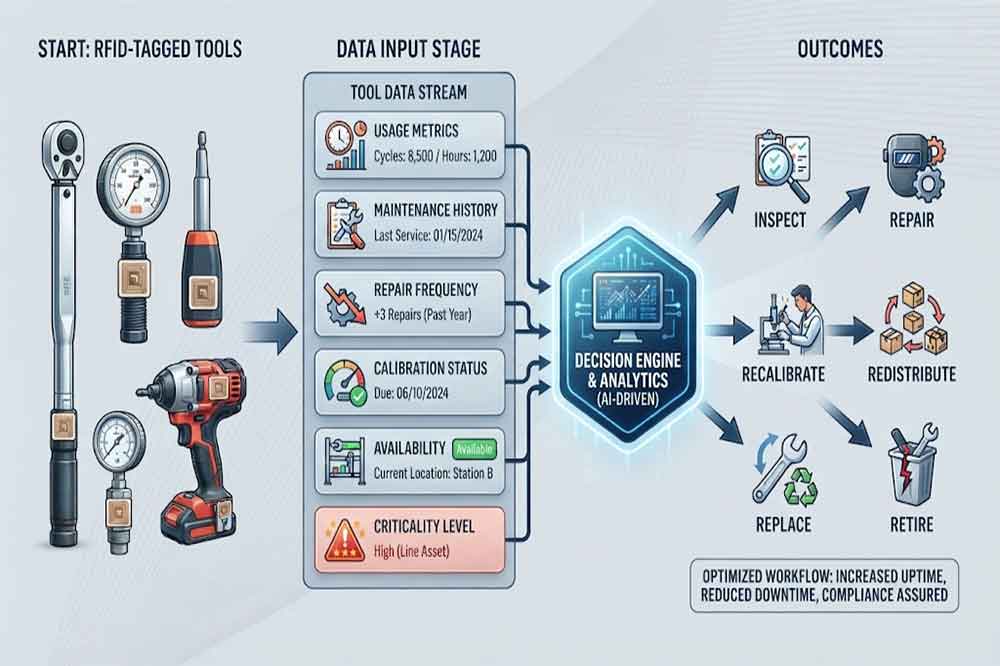
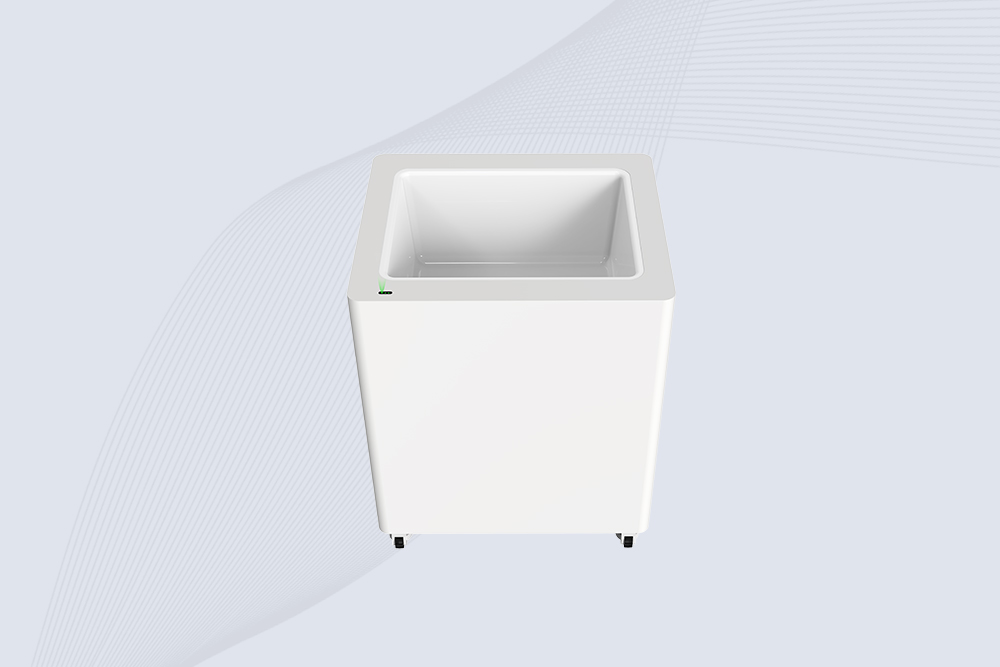
RFID tool cabinet can provide the operational records needed for this process. It can connect tool identity with checkout history, usage frequency, maintenance events, calibration status, location, users, and availability.

The RFID system does not decide automatically that a tool must be replaced. Instead, it provides information that helps managers and engineers review the tool’s condition and decide what action is appropriate.

That action could be:

  • Continue using the tool
  • Inspect the tool
  • Repair the tool
  • Recalibrate the tool
  • Move the tool to another department
  • Keep a backup unit
  • Replace the tool
  • Retire the tool

This makes replacement planning part of normal tool management rather than an emergency response.

RFID workflow for evaluating repair, replacement, and retirement

Why Tool Replacement Planning Matters

Factories rarely replace every tool at the same time.

Some tools may remain reliable for years. Others may experience heavy daily use, repeated repair, calibration problems, or physical damage.

The challenge is identifying which tools require attention before they create operational problems.

Consider a maintenance department with ten identical tools.

Two tools are rarely used.

Five tools are used regularly.

Three tools are used heavily and have already required several repairs.

A simple inventory count shows ten tools.

It does not show that the operational condition of those ten tools may be very different.

Replacement planning needs more information than quantity.

Useful information includes:

  • Tool age
  • Usage frequency
  • Checkout duration
  • Repair history
  • Maintenance frequency
  • Calibration history
  • Damage records
  • Availability
  • Location
  • User demand
  • Replacement cost
  • Criticality

RFID can help collect and organize many of these records.


1. Give Every Managed Tool a Digital Identity

Replacement planning starts with knowing exactly which tool is being evaluated.

An RFID tag can provide a unique identification reference for an individual tool.

The digital record may include:

  • Tool ID
  • Tool type
  • Serial number
  • RFID tag ID
  • Department
  • Current location
  • Purchase date
  • Supplier information
  • Calibration status
  • Maintenance status
  • Checkout history
  • Repair records
  • Replacement status

This makes it easier to distinguish two physically similar tools.

For example, two torque tools may look almost identical but have different maintenance histories.

Without individual identification, replacement planning can become a discussion about “the old torque wrench.”

With individual identification, the team can review the exact tool record.

For a broader approach to tool records, see [RFID Tool Cabinet Data Management].


2. Monitor Tool Usage Before Planning Replacement

Usage is an important replacement-planning indicator.

A tool that is checked out hundreds of times may experience very different wear from one used only occasionally.

RFID cabinet can record checkout and return activity.

Over time, managers can review:

  • Checkout frequency
  • Number of users
  • Departments using the tool
  • Average usage period
  • Peak usage periods
  • Number of returns
  • Number of availability conflicts

High usage does not automatically mean replacement is necessary.

A frequently used tool may be working perfectly.

However, high usage combined with repeated repairs or declining availability may deserve closer attention.

This is why usage should be reviewed together with maintenance and condition information.

See [RFID Tool Cabinet for Tool Usage Monitoring] for more information.


3. Track Repair and Maintenance History

Repair history can reveal patterns that are difficult to see during normal tool-room operations.

Suppose a tool has been repaired once in two years.

Another similar tool has been repaired four times in six months.

The second tool may deserve additional inspection.

An RFID tool management system can connect the tool’s identity with maintenance records.

Possible records include:

  • Repair date
  • Repair type
  • Problem description
  • Maintenance duration
  • Parts replaced
  • Return-to-service date
  • Technician
  • Current status

This history can help engineers distinguish between a one-time problem and repeated reliability issues.

Replacement should not be based on repair count alone, but repeated maintenance can be an important signal.

For maintenance processes, see [RFID Tool Cabinet Maintenance].


4. Consider Calibration Status

Calibration is particularly important for measuring and precision tools.

A tool may be physically intact but still unavailable for production because its calibration has expired.

For example, a measurement instrument may have:

Physical status: Available
RFID status: In cabinet
Calibration status: Expired

From an inventory perspective, the tool exists.

From an operational perspective, it may not be usable.

Replacement planning should therefore distinguish between:

  • Physically available
  • Operationally available
  • Under inspection
  • Under maintenance
  • Calibration expired
  • Calibration failed
  • Retired

If a tool repeatedly fails calibration or requires frequent adjustment, engineers may need to evaluate whether repair, recalibration, or replacement is more appropriate.

See [RFID Tool Cabinet for Tool Calibration] for the calibration-specific workflow.

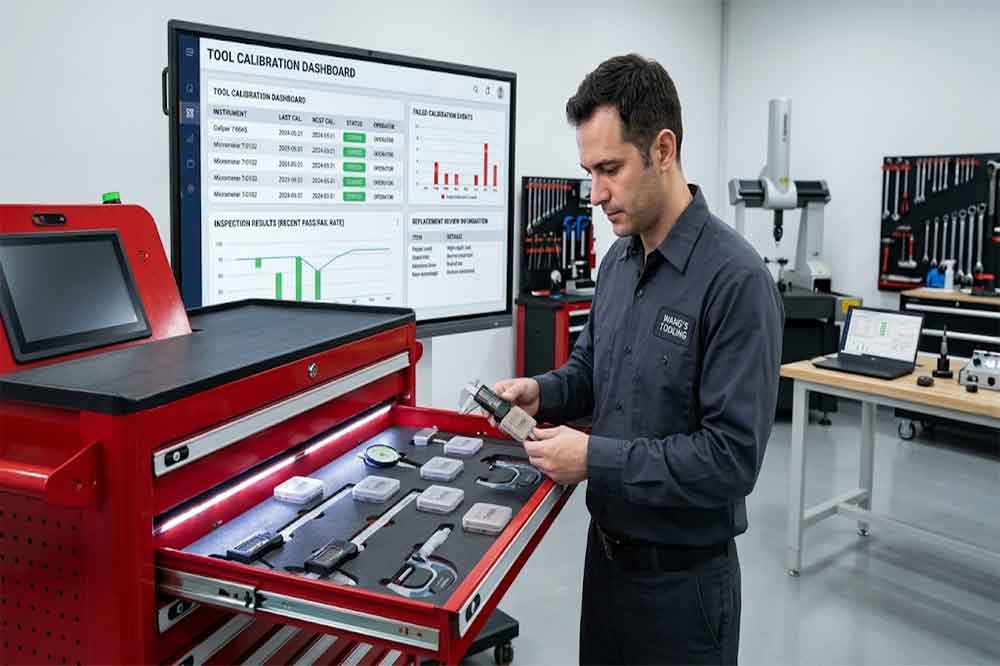
RFID system showing calibration status during tool replacement planning

5. Identify Tools With Frequent Downtime

A tool can remain physically present but create operational problems because it spends too much time unavailable.

For example:

A tool is checked out frequently.

It is then returned with a problem.

It spends several days in repair.

Another technician needs the same tool.

The team either waits or searches for an alternative.

If this pattern repeats, the tool may have a greater operational impact than its purchase price suggests.

RFID transaction records can help reveal how often a tool becomes unavailable.

Useful indicators may include:

  • Number of maintenance events
  • Total maintenance days
  • Number of failed inspections
  • Number of calibration failures
  • Availability conflicts
  • Emergency replacement requests

This information can support a more complete replacement review.


6. Separate Repair From Replacement

Not every problem requires a new tool.

A good replacement planning process should allow several possible actions.

Repair

Suitable when the problem is relatively simple and repair cost is reasonable.

Calibration

Suitable when accuracy can be restored through normal calibration procedures.

Inspection

Useful when the condition is uncertain and additional evaluation is required.

Redistribution

Useful when one location has excess tools while another has a shortage.

Backup

Useful when the tool is critical and failure would interrupt operations.

Replacement

May be considered when reliability, availability, repair cost, or lifecycle condition creates a stronger reason for purchasing a new unit.

Retirement

Appropriate when a tool should no longer be used.

RFID helps provide the records needed to compare these options.


7. Use Tool Criticality in Replacement Planning

Not every tool has the same operational importance.

A basic hand tool may have several alternatives.

A specialized production instrument may have no practical substitute.

Replacement planning should therefore consider tool criticality.

Possible categories include:

Low criticality
Alternative tools are readily available.

Medium criticality
The tool is important but temporary alternatives may exist.

High criticality
Tool unavailability could significantly affect maintenance or production.

Specialized criticality
The tool may be difficult to replace or require special qualification.

RFID records can help identify how often critical tools are requested and whether they experience availability conflicts.

Criticality should be defined by the factory’s own operational requirements rather than by RFID data alone.


8. Compare Replacement Need With Actual Tool Demand

A tool may appear old but still have low usage.

Another tool may be relatively new but heavily used.

Age alone is therefore not always enough.

Replacement planning can compare:

FactorPlanning Question
AgeHow long has the tool been in service?
UsageHow frequently is it used?
RepairsHow often does it require repair?
DowntimeHow long is it unavailable?
CalibrationDoes it remain within required standards?
DemandHow many users need it?
CriticalityWhat happens if it is unavailable?
CostWhat is the repair or replacement cost?
AlternativesCan another tool perform the same job?

This creates a more balanced replacement review.


9. Monitor Repeated Tool Damage

Damage is another useful replacement indicator.

A tool may repeatedly return from the field with:

  • Physical damage
  • Missing components
  • Broken handles
  • Damaged connectors
  • Worn working surfaces
  • Contamination
  • Incorrect storage conditions

RFID can identify the tool involved and connect the event with its transaction history.

This can help management determine whether the issue is:

  • Normal wear
  • Incorrect use
  • Storage problems
  • Training problems
  • Poor environmental conditions
  • Tool quality
  • Excessive workload

Sometimes the correct action is not replacement.

A workflow or training change may solve the problem more effectively.


10. Identify Tools That Are Difficult to Keep Available

A replacement decision can also be driven by availability.

Suppose one tool is constantly requested by several departments.

The tool may be in good condition, but users repeatedly have to wait for it.

In this situation, purchasing another unit may be more appropriate than replacing the existing tool.

This is an important distinction:

Replacement solves a condition problem.

Additional capacity solves a demand problem.

RFID data can help identify which situation is occurring.

For demand planning, see [RFID Tool Cabinet for Tool Demand Planning].


11. Use Tool History for Replacement Reviews

A replacement review should ideally look at the complete tool history.

For an individual tool, the system may show:

Registration → Storage → Checkout → Use → Return → Inspection → Maintenance → Calibration → Reuse → Repair → Replacement → Retirement

This historical view makes it easier to understand how the tool has performed.

For example, a manager reviewing a frequently repaired tool can see not only the latest problem but also the previous repair events.

This is particularly useful for high-value equipment.

See [RFID Tool Cabinet for Tool Traceability] for a detailed approach to tool history.


12. Plan Replacement Before Tool Failure

Waiting until failure can create operational pressure.

For critical tools, a factory may prefer to review replacement requirements before the current unit becomes unusable.

Warning indicators might include:

  • Increasing repair frequency
  • Increasing downtime
  • Repeated calibration problems
  • Increasing damage
  • Declining availability
  • Frequent user complaints
  • Increasing maintenance cost
  • Obsolete equipment
  • Lack of spare parts
  • Supplier discontinuation

RFID cannot determine all of these factors by itself.

However, it can provide the tool-level transaction history that connects many operational events.


13. Connect Replacement Planning With Tool Lifecycle Management

Replacement is one stage of the larger tool lifecycle.

A practical lifecycle may include:

Purchase → Registration → RFID Tagging → Storage → Issuing → Use → Inspection → Maintenance → Calibration → Return to Service → Replacement → Retirement

When these stages are connected, replacement does not become a separate spreadsheet exercise.

The system can maintain a history of what happened to the tool before the replacement decision.

For lifecycle management, see [RFID Tool Cabinet for Tool Lifecycle Management].


14. Support Replacement Budget Planning

Procurement and management teams often need to prepare annual tool budgets.

RFID records can provide evidence for the discussion.

For example, the team may identify:

  • Tools with repeated repairs
  • Tools approaching planned retirement
  • High-demand tools requiring additional units
  • Tools with repeated calibration problems
  • Tools with poor availability
  • Tools with high maintenance frequency

These can then be reviewed alongside:

  • Replacement price
  • Repair cost
  • Expected service life
  • Production requirements
  • Maintenance budget
  • Project plans

The result is a more structured replacement plan.

RFID data is one input rather than the only financial decision factor.


15. Manage Replacement Across Multiple Locations

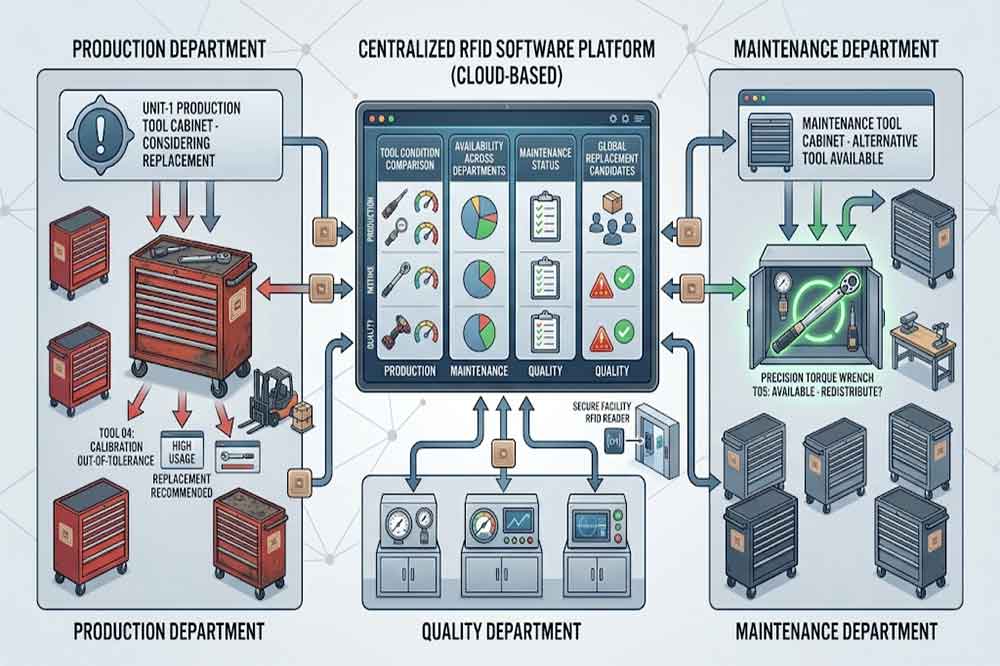
RFID system comparing tool availability across multiple factory locations

Large factories may store the same type of tool in different departments or buildings.

Before replacing a tool, managers should know whether another suitable unit is available elsewhere.

A centralized RFID system can help show:

  • Tool location
  • Current user
  • Availability
  • Maintenance status
  • Reservation
  • Department
  • Cabinet

For example, a production department may report that a tool is unavailable.

The system may show another unit sitting unused in a maintenance cabinet.

In that situation, redistribution could be considered before purchasing a new unit.

For multi-location management, see [RFID Tool Cabinet for Multi-Location Tool Management].


16. Use Replacement Planning With Reservations

Reservations provide a forward-looking view.

Historical usage tells management what has happened.

Reservations show what users currently expect to need.

Combining these records can reveal potential capacity problems.

For example:

A critical tool has two available units.

Both units are reserved for a scheduled maintenance project.

A third department has also requested the same tool.

The issue can be identified before the work begins.

This can lead to several possible actions:

  • Reschedule work
  • Transfer another tool
  • Rent equipment
  • Purchase an additional unit
  • Adjust reservations
  • Keep a backup

Replacement planning therefore works best when connected with availability management.


17. Create a Practical Replacement Dashboard

A replacement dashboard should focus on actionable information.

Useful sections may include:

Tools Under Review

Tools requiring inspection or management attention.

Repeated Repairs

Tools with recurring maintenance events.

Calibration Problems

Tools with repeated calibration-related issues.

High-Downtime Tools

Tools that spend significant time unavailable.

Critical Tools

Important equipment with limited alternatives.

Replacement Candidates

Tools selected for engineering or management review.

Upcoming Budget Requirements

Potential replacement needs for future planning periods.

The dashboard should support human review rather than automatically labeling every older tool as a replacement candidate.


18. Build a Replacement Review Process

A practical process can follow these steps:

Step 1 — Identify the tool

Use the RFID ID and digital tool record.

Step 2 — Review usage

Check checkout frequency and user demand.

Step 3 — Review condition

Check inspection, damage, repair, and maintenance records.

Step 4 — Review calibration

Confirm whether the tool remains within required standards.

Step 5 — Review availability

Check downtime and user conflicts.

Step 6 — Check alternatives

Look for other suitable tools or locations.

Step 7 — Compare repair and replacement

Consider technical and financial factors.

Step 8 — Define the action

Repair, recalibrate, redistribute, add capacity, replace, or retire.

Step 9 — Update the tool record

Record the final decision and relevant dates.

This creates a traceable replacement workflow.


19. What Data Should Be Used?

For replacement planning, useful RFID-related data may include:

  • Tool ID
  • RFID tag ID
  • Tool category
  • Purchase date
  • Current location
  • Department
  • User history
  • Checkout frequency
  • Checkout duration
  • Maintenance events
  • Repair history
  • Inspection results
  • Calibration records
  • Availability
  • Reservation history
  • Tool condition
  • Retirement status

Additional information may come from ERP, CMMS, MES, purchasing, or quality systems.

The more important point is not to collect everything.

The system should collect data that helps answer real replacement questions.


20. Pilot Replacement Planning Before Scaling

A pilot can help validate whether RFID data is useful for replacement decisions.

Select a small group of tools with different characteristics:

  • High-use tools
  • Low-use tools
  • Frequently repaired tools
  • Calibrated instruments
  • High-value tools
  • Shared tools

Then review the records over a practical period.

Ask:

  • Can we identify heavily used tools?
  • Can we see repair frequency?
  • Can we identify unavailable tools?
  • Can we track calibration status?
  • Can we find alternative tools?
  • Can managers review replacement candidates?
  • Does the data support purchasing discussions?

For pilot planning, see [RFID Tool Cabinet Pilot Project].


Common Mistakes in Tool Replacement Planning

Replacing Tools Based Only on Age

Age can be useful, but it does not describe actual condition or usage.

Replacing Every Frequently Used Tool

High usage does not automatically mean a tool is near failure.

Ignoring Repair History

Repeated repair may be more important than purchase date.

Counting Unavailable Tools as Usable

A tool under repair or with expired calibration may not be operationally available.

Ignoring Other Locations

A suitable tool may already exist elsewhere in the factory.

Confusing Replacement With Additional Capacity

A shortage caused by high demand may require another tool, not replacement.

Making RFID the Only Decision Source

Engineering inspection, quality requirements, cost, supplier information, and operational needs should also be considered.


RFID Tool Replacement Planning Checklist

Before building a replacement-planning workflow, confirm:

  • Every managed tool has a unique identity.
  • RFID tags are correctly mapped.
  • Usage records are available.
  • Maintenance history is recorded.
  • Repair events are traceable.
  • Inspection results are available.
  • Calibration status is visible where required.
  • Tool availability is accurate.
  • Tool location is current.
  • Critical tools are identified.
  • Alternative tools can be checked.
  • Multiple locations can be reviewed.
  • Replacement candidates can be flagged.
  • Human review remains part of the process.
  • Replacement decisions are recorded.
  • Retired tools remain traceable in historical records.

Conclusion

RFID tool cabinets can support a more structured approach to tool replacement planning by connecting individual tool identity with real operational history.

Instead of asking only whether a tool is old, managers can review how frequently it is used, how often it requires repair, how long it remains unavailable, whether it passes calibration, how critical it is, and whether another suitable tool is available elsewhere.

This information can help separate several different situations: a tool that needs repair, a tool that needs calibration, a tool that should be redistributed, a tool that requires additional capacity, and a tool that may be ready for replacement or retirement.

The most practical approach is to treat RFID as a data foundation rather than an automatic replacement decision engine. Engineering judgment, safety requirements, quality standards, cost, supplier availability, and operational priorities should remain part of the final review.

For factories managing many shared, specialized, calibrated, or high-value tools, connecting RFID records with maintenance and lifecycle information can make replacement planning more visible and easier to organize.

SSD-A11 11dBi UHF RFID Reader Antenna

SSD-A11 11dBi UHF RFID Reader Antenna

2026-09-18

SSD-A11 UHF RFID antenna features 840–960 MHz adjustable frequency, ≥10.5 dBi gain, circular polarization and 50Ω impedance for fixed RFID systems.

SSD-A09  HIGH-GAIN 9dBi UHF RFID Antenna​

SSD-A09 HIGH-GAIN 9dBi UHF RFID Antenna​

2026-09-18

SSD-A09 is a 9 dBi UHF RFID antenna with 840–960 MHz adjustable frequency, circular polarization, 50Ω impedance and directional 60° × 60° coverage.

SSD-A07 7dBi Ultra-Thin RFID Panel Antenna

SSD-A07 7dBi Ultra-Thin RFID Panel Antenna

2026-09-17

Explore the SSD-A07 UHF RFID antenna with 7 dBi gain, circular polarization, adjustable 840–960 MHz frequency, and 60°/75° beamwidth for stable RFID read/write performance.

SSD-A06 6dBi Ultra-Thin RFID Panel Antenna

SSD-A06 6dBi Ultra-Thin RFID Panel Antenna

2026-09-12

SSD-A06 UHF RFID antenna with circular polarization, adjustable 840–960 MHz frequency, ≥4.5 dBi gain, and a compact directional design for RFID systems.

SSD-D4AL USB RFID Reader

SSD-D4AL USB RFID Reader

2026-09-12

Discover SSD-D4AL, a USB-HID UHF RFID reader with 4/8/16 antenna options, Impinj E710/X3M1 chipset, plug-and-play USB power, and OEM customization.

SSD-D3AL USB RFID Reader

SSD-D3AL USB RFID Reader

2026-09-10

SSD-D3AL is a USB-HID UHF RFID reader with 0–30 cm reading, 0–15 cm writing, over 600 tags/s recognition, USB plug-and-play operation and OEM Logo customization.

SSD-D1AL USB RFID Reader

SSD-D1AL USB RFID Reader

2026-09-08

SSD-D1AL is a compact USB UHF RFID reader with Impinj E710/X3M1 chipset, USB-HID, 600+ tags/s recognition, 4/8/16 antenna support and plug-and-play USB power.

SSD-R16L 16-Port Fixed UHF RFID Reader

SSD-R16L 16-Port Fixed UHF RFID Reader

2026-08-27

SSD-R16L Multi-Channel RFID Infrastructure for Automated Inventory Management​ ✔️ 16-Port High-Density RFID Reading Equipped with 16 SMA antenna ports, SSD-R16L supports multi-antenna deployment for warehouses, retail stores, logistics, production lines, and large-area RFID identification. ✔️ High-Speed & Long-Range Performance With up to 33…

SSD-R8L 8-Port Fixed UHF RFID Reader

SSD-R8L 8-Port Fixed UHF RFID Reader

2026-08-26

SSD-R8L 8-port UHF RFID reader with 33dBm output, up to 20m reading range and 600+ tags/s recognition. Ideal for warehouse, logistics, retail and asset tracking.

SSD-R4L 4-Port Fixed UHF RFID Reader

SSD-R4L 4-Port Fixed UHF RFID Reader

2026-08-26

SSD-R4L is a 4-port UHF RFID fixed reader with 33dBm output power, up to 20m reading range, EPC C1G2 support and 600+ tags/s reading speed.

CYKEO-D1LA USB RFID Reader

CYKEO-D1LA USB RFID Reader

2025-12-22

CYKEO CYKEO-D1LA USB RFID Reader is a compact desktop solution with near-field control for precise tag reading and encoding. Powered by USB, supporting ISO 18000-6C, and built for stable batch writing, this usb rfid tag reader fits retail, libraries, offices, and controlled RFID encoding tasks.

 CYKEO-D1L RFID scanner USB

 CYKEO-D1L RFID scanner USB

2025-12-22

CYKEO CYKEO-D1L RFID scanner USB is a compact desktop UHF RFID scanner designed for short-range tag writing and verification. This usb rfid scanner supports batch encoding, stable 0–26 dBm output, and works across Windows, Linux, and Android systems.

CYKEO-D1C USB RFID Card Reader

CYKEO-D1C USB RFID Card Reader

2025-12-22

CYKEO CYKEO-D1C USB RFID Card Reader is a near-field UHF desktop writer designed for secure, short-range tag encoding. With USB-C connectivity and stable 26 dBm output, this rfid reader usb c is ideal for badge issuance, label encoding, and controlled desktop RFID workflows.

CYKEO-D2L RFID Reader USB

CYKEO-D2L RFID Reader USB

2025-12-22

CYKEO CYKEO-D2L RFID Reader USB is a compact desktop encoder built on the Impinj R500 chip. With near-field control and stable USB power, this usb rfid card reader delivers precise tag writing for offices, retail counters, and small-scale logistics encoding tasks.

CYKEO-D3L USB RFID Tag Reader

CYKEO-D3L USB RFID Tag Reader

2025-12-22

CYKEO CYKEO-D3L USB RFID Tag Reader delivers stable UHF tag reading and writing for daily desktop and light industrial tasks. Designed for controlled short-range operation, this USB RFID Tag Reader works reliably with rfid tag and reader systems in libraries, tool tracking, and inventory registration.

CYKEO-D4L Desktop UHF RFID Tag Reader

CYKEO-D4L Desktop UHF RFID Tag Reader

2025-12-22

The CYKEO CYKEO-D4L UHF RFID Tag Reader is a stable Desktop RFID Reader designed for accurate tag registration, borrowing, and return workflows. Built with the Impinj R2000 chip, this UHF RFID Tag Reader delivers controlled short-range reads for libraries, asset tracking, and inventory management environments.

CYKEO-D5L Desktop RFID Card Reader

CYKEO-D5L Desktop RFID Card Reader

2025-12-22

The CYKEO CYKEO-D5L Desktop RFID Card Reader is a stable UHF RFID Card Reader designed for controlled short-range reading and writing. Built for libraries, tool rooms, and asset desks, this UHF RFID Card Reader supports dense tag handling, secure data processing, and easy USB integration.

CYKEO-D6L Desktop UHF RFID Reader Writer​

CYKEO-D6L Desktop UHF RFID Reader Writer​

2025-12-22

The CYKEO CYKEO-D6L RFID Reader Writer is a heavy-duty Desktop RFID Reader designed for short-range, high-accuracy tag programming. Built for libraries, labs, and asset desks, this RFID Reader Writer supports batch processing, stable 33dBm output, and seamless integration with existing management systems.

CYKEO-D8B RFID Desktop Reader

CYKEO-D8B RFID Desktop Reader

2025-12-21

Cykeo CYKEO-D8B UHF RFID tunnel and RFID Desktop Reader features 30+ items batch reading,

CYKEO-D8A Embedded RFID Badge Reader

CYKEO-D8A Embedded RFID Badge Reader

2025-12-21

Cykeo CYKEO-D8A embedded RFID badge reader offers 30+ tags/sec scanning, 20cm anti-crosstalk precision, and DC 12V power for unmanned stores, warehouses, and smart inventory systems.

CYKEO-D8C RETAIL UHF RFID READER

CYKEO-D8C RETAIL UHF RFID READER

2025-12-21

Cykeo’s CYKEO-D8C UHF RFID gate reader achieves 200-tag/batch scanning with adjustable power control, ideal for retail inventory and smart warehouse management.

CYKEO-M1LX2 UHF Embedded RFID Modules

CYKEO-M1LX2 UHF Embedded RFID Modules

2025-12-15

CYKEO Embedded RFID Modules are designed for compact industrial and IoT devices that require stable UHF performance. These UHF RFID Modules support global protocols, flexible power control, and reliable multi-tag reading for smart cabinets, production lines, and asset tracking systems.

CYKEO-M1LX1 UHF Embedded RFID Module

CYKEO-M1LX1 UHF Embedded RFID Module

2025-12-15

CYKEO Embedded RFID Module is built for compact IoT and industrial devices that need stable UHF performance. This UHF module supports global protocols, low power operation, and reliable multi-tag reading for smart lockers, production lines, and always-on RFID systems.

CYKEO-M1 UHF Drone RFID Module

CYKEO-M1 UHF Drone RFID Module

2025-12-15

CYKEO CYKEO-M1 drone rfid module is a compact UHF RFID reader module designed for drones and UAV platforms. It supports long-range aerial scanning, fast multi-tag reading, and stable performance in wind, vibration, and outdoor environments.

CYKEO-M4 4-Port RFID Module

CYKEO-M4 4-Port RFID Module

2025-12-15

CYKEO CYKEO-M4 RC522 RFID Module is an industrial-grade UHF RFID reader with 4 ports, supporting ISO, EPC, and GB protocols. High-speed, accurate reading for IoT, automation, and warehouse applications.

CYKEO-M8 8-port RFID Module

CYKEO-M8 8-port RFID Module

2025-12-15

CYKEO CYKEO-M8 Module RFID is an 8-port UHF R2000 RFID Module designed for high-density, multi-tag environments. Stable 33dBm output, ISO & GB protocol support, ideal for warehouses, factories, and automated systems.

CYKEO-M16 16-Port RFID Module

CYKEO-M16 16-Port RFID Module

2025-12-15

CYKEO CYKEO-M16 RFID Module is a 16-port UHF RFID reader module based on the R2000 chipset. Designed for dense tag environments, it supports ISO and GB standards and delivers stable multi-antenna control for industrial automation.

CYKEO-M16L UHF 16-PORT  RFID Reader Module

CYKEO-M16L UHF 16-PORT RFID Reader Module

2025-12-15

The CYKEO CYKEO-M16L RFID Reader Module is a 16-channel UHF RFID core designed for dense tag environments. With adjustable 33dBm output, multi-protocol support, and stable multi-antenna control, this RFID Tag Reader Module fits industrial automation, warehouse systems, and large-scale IoT deployments.

CYKEO-M8L 8-PORT UHF RFID Module

CYKEO-M8L 8-PORT UHF RFID Module

2025-12-15

CYKEO CYKEO-M8L module RFID is a compact industrial UHF module built for dense tag and multi-antenna environments. With 8 RF ports, adjustable 33 dBm output, and ISO & GB protocol support, it is widely used in factories, warehouses, and automated tracking systems.

CYKEO-M4L UHF 4-CHANNELRFID MODULE

CYKEO-M4L UHF 4-CHANNELRFID MODULE

2025-12-15

CYKEOCYKEO-M4L UHF RFID Module is a compact 4-channel RFID tag reader module designed for dense tag environments. Supporting ISO and GB protocols, it delivers stable reads up to 10 meters for industrial and IoT systems.

CYKEO-A11 11dBi UHF RFID Reader Antenna

CYKEO-A11 11dBi UHF RFID Reader Antenna

2025-12-04

Cykeo CYKEO-A11 UHF RFID reader antenna delivers 11dBi gain, 840-960MHz frequency range, and IP65 ruggedness for retail, logistics, and industrial RFID systems. Features low VSWR and easy installation.

​CYKEO-A10 Antenna RFID Reader

​CYKEO-A10 Antenna RFID Reader

2025-12-04

CYKEO Antenna RFID Reader delivers stable long-range UHF performance with a 10.5dBi directional design, built for warehouses, conveyor portals, and industrial RFID systems. This rfid reader antenna provides 20m+ read distance and rugged IP67 protection.

CYKEO-PHF3 Smart HF RFID Antenna

CYKEO-PHF3 Smart HF RFID Antenna

2025-12-04

Cykeo CYKEO-PHF3 industrial HF RFID Antenna offers 24-point dynamic tracking, ISO 14443A/15693 protocols, metal-environment stability for archives/libraries/manufacturing.

CYKEO-A5B 5dBi Industrial Linear RFID Antenna​

CYKEO-A5B 5dBi Industrial Linear RFID Antenna​

2025-12-04

Cykeo CYKEO-A5B industrial Linear RFID Antenna delivers 5dBi gain, ≤1.5:1 VSWR, and IP65 rugged design for warehouse, production line, and logistics UHF systems.

CYKEO-B12 12dBi Long Range RFID Antenna

CYKEO-B12 12dBi Long Range RFID Antenna

2025-12-04

Cykeo’s CYKEO-B12 Long Range RFID Antenna delivers 15m+ read range with 12dBi gain, IP65 rugged design, and global 840-960MHz UHF support. Ideal for warehouse/logistics asset tracking.

CYKEO-B10 10dBi UHF RFIDHIGH-GAIN ANTENNA

CYKEO-B10 10dBi UHF RFIDHIGH-GAIN ANTENNA

2025-12-04

Cykeo CYKEO-B10 Long Distance RFID Antenna offers 10dBi gain, 840-960MHz frequency range, IP65 rating, and 20m+ coverage for logistics/warehousing/ETC systems. Low VSWR ensures stable signal transmission.

CYKEO-A6 6dBi Ultra-Thin RFID Panel Antenna

CYKEO-A6 6dBi Ultra-Thin RFID Panel Antenna

2025-12-04

Cykeo CYKEO-A6 UHF RFID panel antenna features 6dBi gain, 840-960MHz broadband, IP65 metal-ready housing for logistics/smart retail. 18mm ultra-thin design with tool-free mounting.

CYKEO-A3  UHF RFID 3DBi ANTENNA

CYKEO-A3 UHF RFID 3DBi ANTENNA

2025-12-04

Cykeo CK-A3 industrial antenna RFID UHF offers 5m+ tag detection, ≤1.3:1 VSWR, IP65 rugged design, and global UHF spectrum compatibility (840-960MHz) for warehouses, factories, and retail.

CYKEO-B5 5dBi UHF Directional  RFID Antenna

CYKEO-B5 5dBi UHF Directional RFID Antenna

2025-12-04

Cykeo CYKEO-B5 directional RFID antenna provides 5dBi gain with 60° narrow beamwidth for precise inventory tracking. IP65-rated, global UHF frequency support, and low VSWR.

CYKEO-A5C High-Gain UHF RFID Antenna System

CYKEO-A5C High-Gain UHF RFID Antenna System

2025-12-04

Create your own high-performance DIY RFID antenna! 5dBi gain, 840-960MHz tunable, step-by-step guides. Compatible with Arduino, Raspberry Pi, and commercial UHF readers.

CYKEO-A7 UHF RFID CARPET ANTENNA

CYKEO-A7 UHF RFID CARPET ANTENNA

2025-12-04

Cykeo CYKEO-A7 Flexible RFID Antenna features 840-960MHz wideband tuning, 7dBi gain, and IP68 rating for medical/retail/industrial curved surface deployments. 98% read accuracy with peel-and-stick installation.

CYKEO-B5A 5dBi Industrial Passive RFID Antenna

CYKEO-B5A 5dBi Industrial Passive RFID Antenna

2025-12-04

Cykeo CYKEO-B5A industrial Passive RFID Antenna delivers 5dBi gain, 70° beamwidth, and -40°C~55°C operation for warehouses/smart cabinets. Compatible with Zebra/Impinj readers.

CYKEO-A9B 9dBi High Gain RFID Antenna​

CYKEO-A9B 9dBi High Gain RFID Antenna​

2025-12-04

Cykeo’s CYKEO-A9B High Gain RFID Antenna delivers 15m+ read range with 9dBi amplification. Features IP54 rugged design, 840-960MHz bandwidth, and 80° beamwidth for warehouse/manufacturing RFID systems.

CYKEO-A8A INDUSTRIAL UHF RFID ANTENNA

CYKEO-A8A INDUSTRIAL UHF RFID ANTENNA

2025-12-03

Cykeo’s enterprise-grade 8dbi Impinj RFID Antenna 10m+ read range with 840-960MHz tuning. Features IP65 housing, 1.4 VSWR, 35° beamwidth for retail/warehouse RFID systems.

CYKEO-A9  HIGH-GAIN 9dBi UHF RFID Antenna​

CYKEO-A9 HIGH-GAIN 9dBi UHF RFID Antenna​

2025-12-03

Cykeo CYKEO-A9 industrial UHF RFID antenna delivers 9dBi gain, 840-960MHz frequency range, and IP65 protection for warehouse/logistics/retail RFID systems. Features N-type connector and ≤1.3:1 VSWR.

CYKEO-A12 12dBi RFID Circular Polarized Antenna

CYKEO-A12 12dBi RFID Circular Polarized Antenna

2025-12-03

CYKEO UHF RFID Antenna built for long-distance and industrial applications. This antenna rfid uhf delivers strong gain, outdoor durability, and reliable tag performance in warehouses, yards, and vehicle ID systems.

CYKEO-A5 5dBi UHF RFID Circular Polarized Antenna

CYKEO-A5 5dBi UHF RFID Circular Polarized Antenna

2025-12-03

CYKEO Antenna RFID delivers reliable long-range UHF performance in warehouses, retail shelves, and cold-chain environments. This compact uhf rfid antenna provides stable reads with circular polarization and ultra-wide 840–960 MHz support, ideal for industrial tracking, smart shelves, and asset monitoring.

CYKEO-C8  8dBi Industrial RFID Antennas

CYKEO-C8 8dBi Industrial RFID Antennas

2025-12-03

Cykeo’s CYKEO-C8 UHF RFID antennas delivers 8dBi gain, 840-960MHz full-band coverage, and IP65 ruggedness for manufacturing/warehouse RFID systems. Industrial RFID Antennas Features

​​CYKEO-A8 8dBi HIGH-GAIN UHF RFID ANTENNA​

​​CYKEO-A8 8dBi HIGH-GAIN UHF RFID ANTENNA​

2025-12-03

Cykeo’s 8dBi UHF RFID antenna and reader kit delivers 10m+ range, 840-960MHz broadband, and IP65 ruggedness for factories, warehouses, and logistics. ISO 18000-6C & EPC Gen2 certified.

CYKEO-A9A 9dBi UHF RFID HIGH-GAIN ANTENNA

CYKEO-A9A 9dBi UHF RFID HIGH-GAIN ANTENNA

2025-12-03

Cykeo CYKEO-A9A industrial UHF RFID reader and antenna kit delivers 10m range, 500 tags/sec, IP65 ruggedness for manufacturing/logistics. Supports EPC Gen2, ISO18000-6C.


RFID Tool Cabinet for Tool Replacement Planning: Smarter Tool Replacement Decisions(images 1)

James Wilson

RFID Industry Writer | IoT & Asset Tracking Analyst

James writes about RFID technology, asset tracking, and the practical challenges of digital transformation across warehousing, retail, manufacturing, and logistics.

His work focuses on how RFID is applied in real-world operations—improving inventory visibility, automating workflows, and helping businesses manage assets with greater accuracy and efficiency.

He regularly covers topics including UHF RFID, smart cabinets, RFID portals, tool tracking, warehouse automation, and industrial IoT trends..

PgUp: PgDn:

Relevance

View more