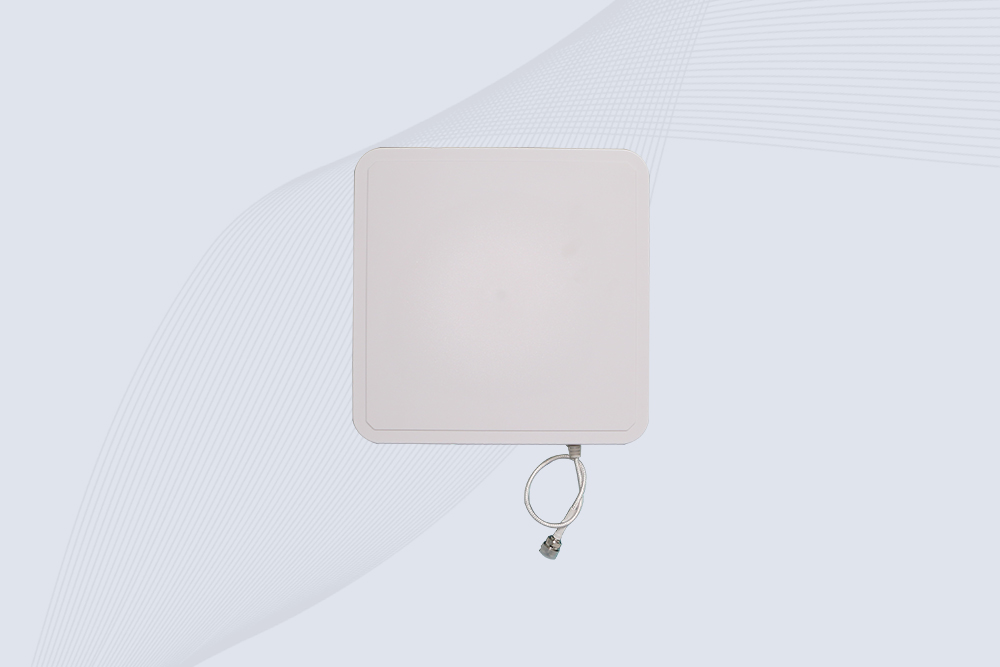
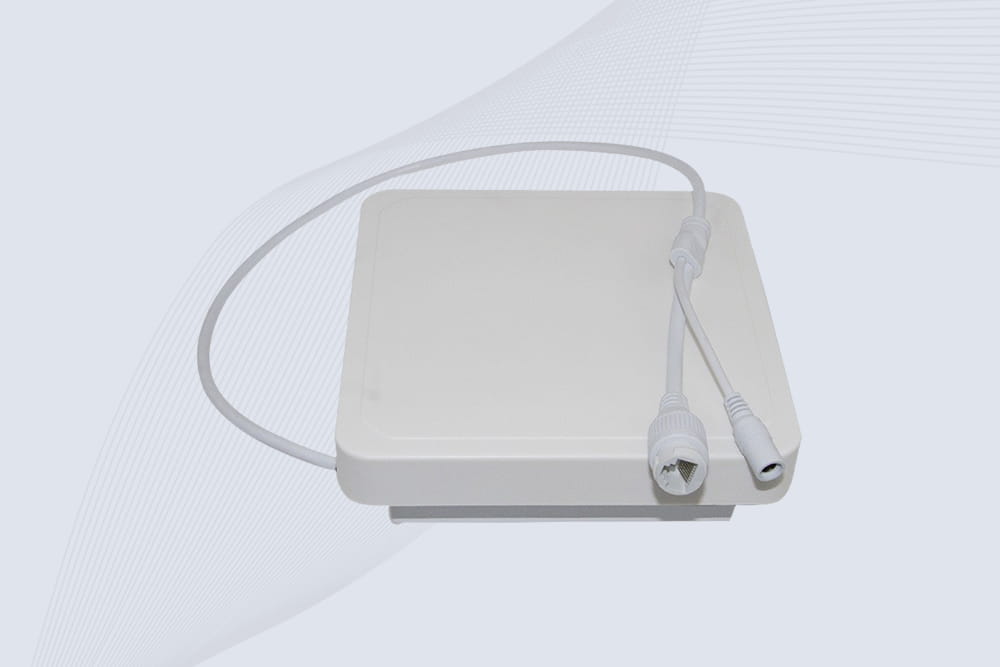
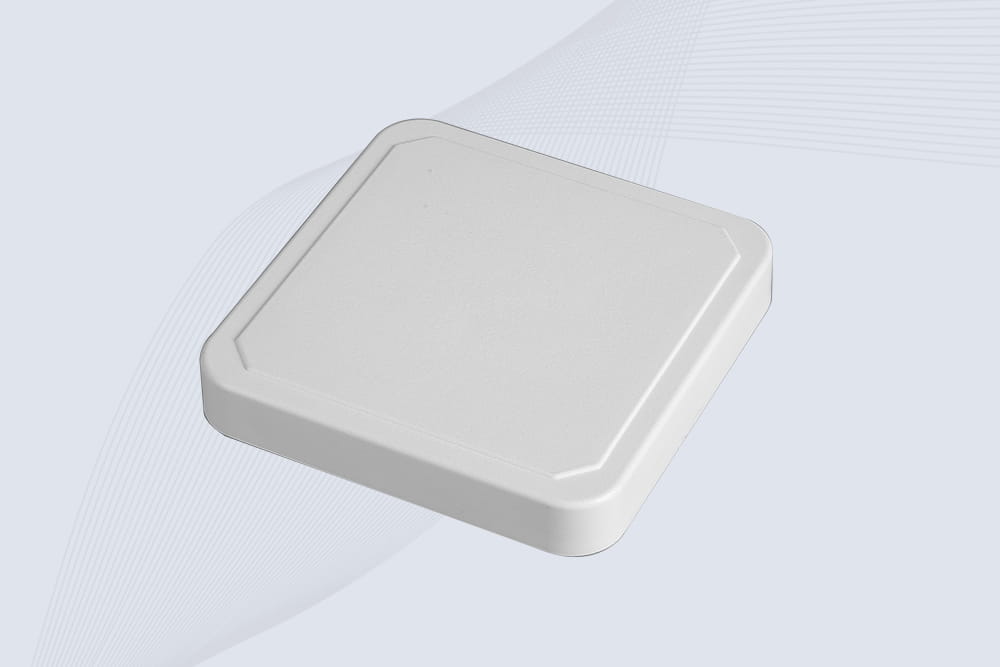
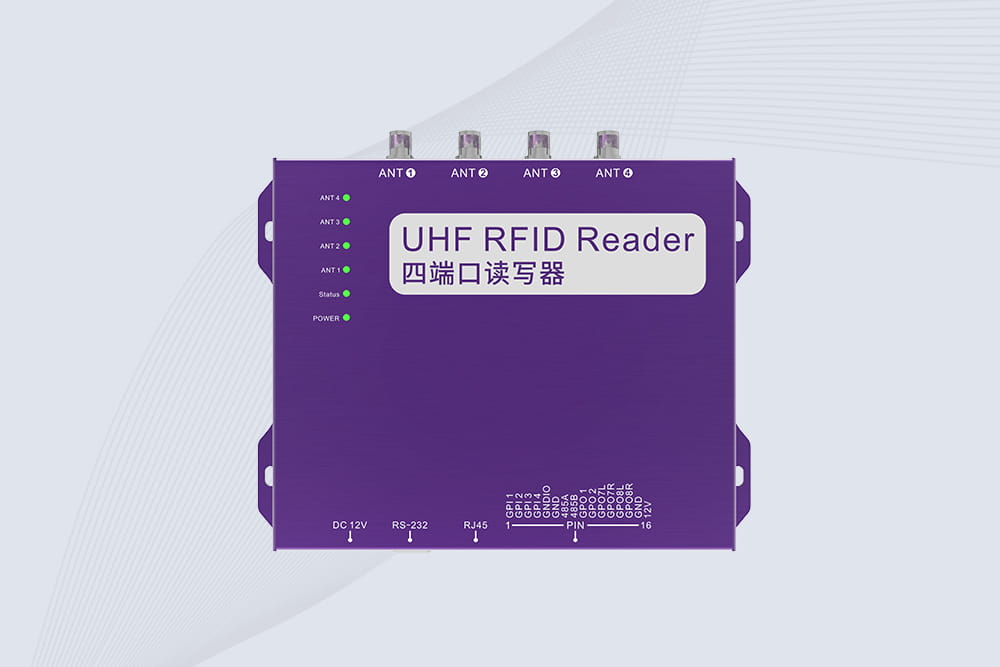
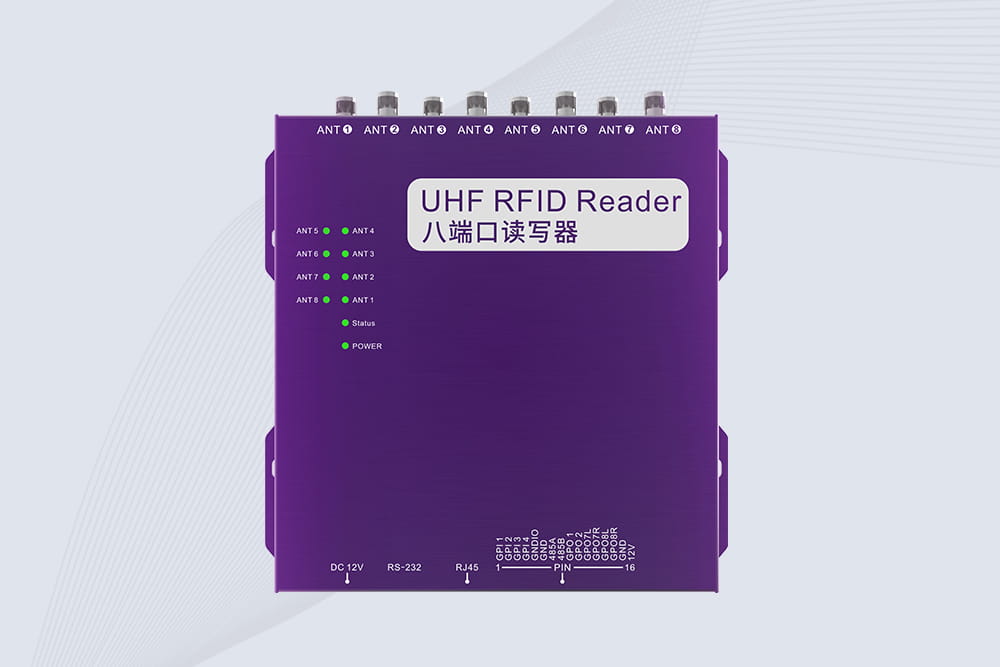
A long range RFID scanner supports food and beverage manufacturing by identifying tagged raw material containers, reusable bins, production equipment, pallets, and packaging assets as they move through warehouses, processing areas, packaging lines, cold rooms, and shipping zones.
The reader captures the RFID tag ID, while software connects the event with an ingredient record, production batch, inventory status, equipment location, or shipment. Reliable performance depends on tag selection, moisture and liquid conditions, antenna placement, hygiene requirements, and software integration.
How Does RFID Work in Food and Beverage Manufacturing?
A typical RFID workflow looks like this:
RFID tag → antenna → long range RFID scanner → EPC data → factory software → inventory or production event
For example, a tagged ingredient container leaves the raw material warehouse. A fixed RFID reader at the transfer point detects the tag and sends the EPC to the manufacturing system.
The software may update the container as:
Released from storage
Sent to production
Assigned to a batch
Received in the preparation area
Waiting for processing
Moved to packaging
Returned for cleaning
Sent to another facility
The RFID reader identifies the container. The software connects that identity with the correct ingredient, batch, or production record.
RFID does not independently verify food quality, ingredient composition, or regulatory compliance. It supports identification, movement records, and operational visibility.
Tracking Raw Materials and Ingredients
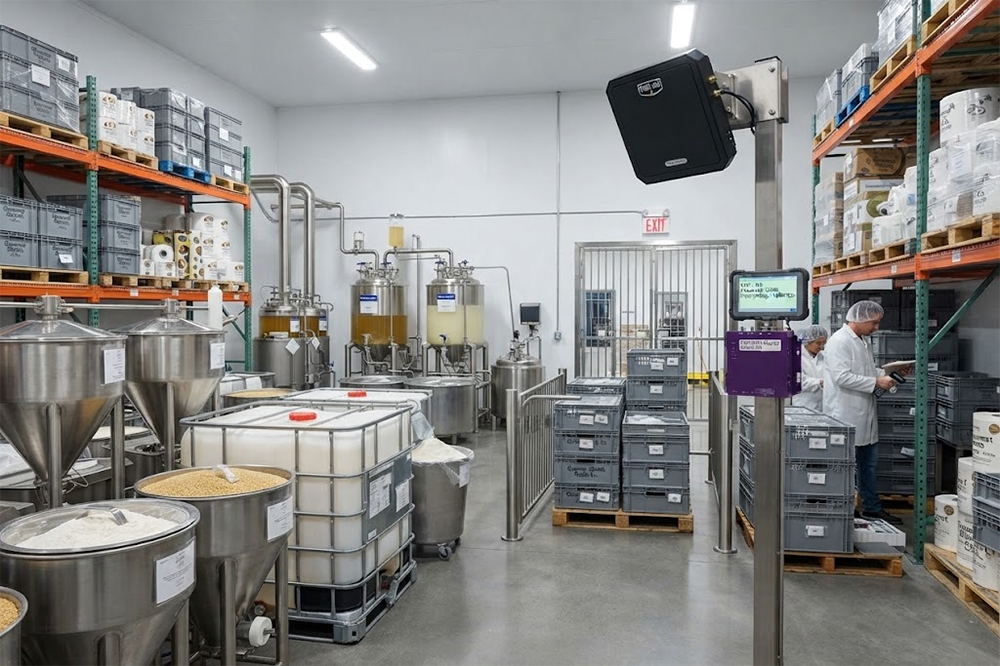
Food and beverage factories move many types of raw materials through storage and production.
Potential RFID-tracked items include:
Ingredient containers
Flour, grain, and powder bins
Liquid ingredient vessels
Syrup and beverage tanks
Reusable plastic crates
Stainless-steel containers
Pallets
Packaging materials
Intermediate product totes
Finished product cases
Returnable transport containers
A long range RFID scanner can identify tagged containers at warehouse entrances, preparation rooms, processing areas, and packaging transfer points.
This can reduce repetitive barcode scanning and help workers confirm that the correct container reached the intended production area.
The RFID EPC normally needs to connect with a database containing information such as:
Ingredient name
Material code
Batch number
Supplier
Quantity
Production order
Expiration date
Storage condition
Quality status
Current location
The database provides the meaning behind the tag.
RFID for Food Production and Batch Tracking
Food and beverage production often follows a sequence such as:
Raw material storage → preparation → mixing → processing → filling → packaging → finished goods warehouse
RFID can help record the movement of containers, pallets, production carriers, or reusable equipment through these stages.
The system may record:
Which container entered a production area
When an ingredient reached the preparation station
Which batch used a particular container
Whether the correct material arrived
When a product carrier moved to packaging
Whether a reusable bin returned for cleaning
When finished goods entered storage
In many applications, tagging every individual food product may not be necessary. A reusable container, pallet, tray, or production carrier may provide a more practical RFID target.
The best choice depends on the product type, packaging method, production speed, hygiene process, and required traceability.
Moisture and Liquid Can Affect RFID Performance
Food and beverage factories frequently handle water, sauces, oils, syrups, beverages, and other liquid-based materials.
Moisture and liquid can affect RFID signal performance. A standard RFID label may not work properly when attached directly to a wet surface, a liquid container, or a vessel with a high liquid content.
Depending on the application, the project may require:
Rugged RFID tags
Encapsulated RFID tags
On-metal RFID tags
Tags mounted away from liquid
Special tag orientation
Spacers or holders
Different antenna placement
Adjusted reader power
A more controlled reading zone
The tag should be tested in its final position. A tag that performs well in open air may behave differently when attached to a stainless-steel tank or a container filled with liquid.
Hygiene, Washing, and Cleaning Requirements
Food production environments may include frequent washing, sanitizing, steam cleaning, chemical exposure, and temperature changes.
RFID tags and mounting methods should be evaluated for:
Water resistance
Cleaning chemicals
High-pressure washing
Steam exposure
Temperature changes
Food-safe material requirements
Surface cleanliness
Mechanical impact
Adhesive durability
Tag housing durability
Required service life
A paper RFID label may be suitable for some dry packaging applications but unsuitable for reusable bins, stainless-steel containers, or equipment exposed to regular washing.
The reader and antenna installation should also avoid interfering with cleaning, production flow, and food-handling procedures.
For food-contact applications, the project team should verify the relevant material and safety requirements before selecting the tag or mounting method.
RFID for Packaging Lines
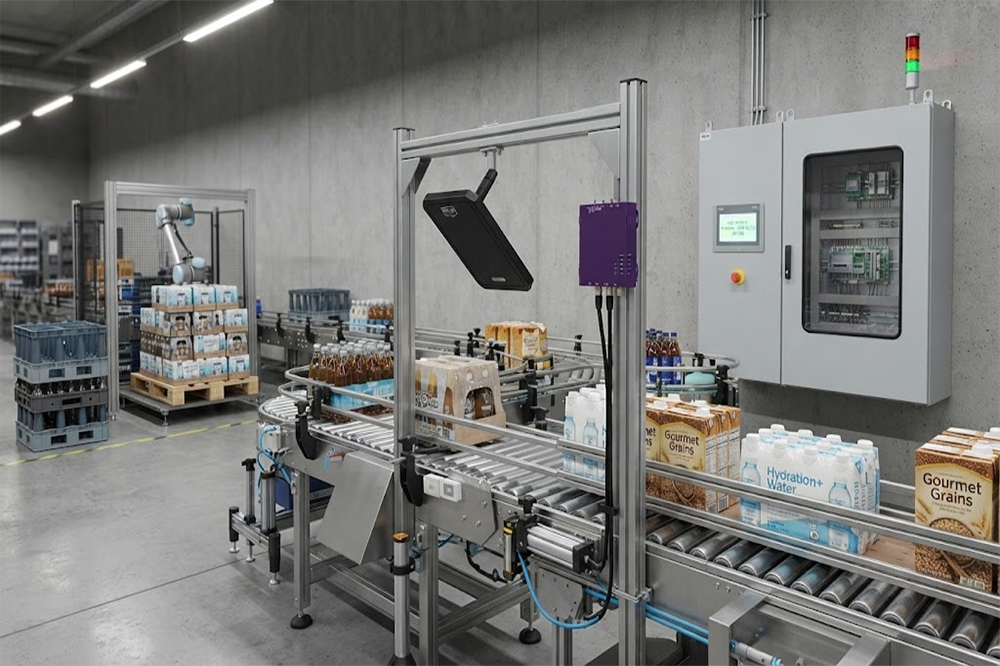
Packaging lines often move products at a consistent speed through filling, labeling, sealing, inspection, and case-packing processes.
RFID can help identify:
Reusable packaging trays
Product carriers
Cartons
Cases
Pallets
Returnable containers
Packaging tools
Production fixtures
A long range RFID scanner may be installed at a transfer point between packaging stages or near the finished goods warehouse.
The reading zone should match the actual product movement. If the reader detects a nearby pallet too early, the software may assign the wrong event to the packaging line.
Sensors and PLCs can help control the reading window:
A sensor detects the arriving carton or pallet.
The PLC triggers the RFID reader.
The reader identifies the tag.
The software checks the expected product or batch.
The system records the movement.
The conveyor or packaging process continues.
This approach is often more reliable than leaving the reader active across a large area.
Why Antenna Position Matters
A long range RFID scanner does not automatically read every tag within a large room. Its actual coverage depends on:
Antenna direction
Antenna height
Antenna angle
Reader output power
Tag performance
Tag orientation
Product material
Metal structures
Reading distance
Factory layout
In a food factory, unwanted reads can create incorrect inventory or production events. A reader at a packaging transfer point should not identify containers waiting in a nearby storage area.
A controlled reading zone can be created with:
Directional antennas
Correct antenna mounting
Reduced reader power when appropriate
Physical separation
Shielding or barriers
Sensor triggering
PLC signals
EPC filtering
Software time windows
Separate entry and exit checkpoints
The goal is to identify the correct item at the correct process point.
RFID for Reusable Containers and Pallets
Food and beverage manufacturers often reuse containers, crates, trays, pallets, and transport bins.
Without reliable tracking, reusable assets may be:
Left in the wrong production area
Sent to a supplier
Held in a shipping zone
Missed during cleaning
Counted incorrectly
Used for the wrong ingredient
Delayed in the return cycle
RFID can record movement at important points such as:
Raw material receiving
Ingredient storage
Preparation
Production
Cleaning
Packaging
Finished goods storage
Shipping
For metal containers, stainless-steel carts, and equipment cases, an on-metal RFID tag may be necessary.
The tag mounting position should also be selected carefully so that it remains readable and does not interfere with cleaning or handling.
Can RFID Read Multiple Food Production Assets?
UHF RFID readers can identify multiple tags in a reading zone. This is useful for pallets, reusable crates, production containers, and equipment carts.
Actual performance depends on:
Number of tags
Tag spacing
Liquid content
Moisture
Metal surfaces
Tag orientation
Reader power
Antenna position
Reading distance
Conveyor or cart speed
Software filtering
A pallet containing several tagged cases may behave differently from a single case. A group of wet containers may also require a different tag and antenna arrangement.
Testing should use actual packaging, containers, tag placement, and production speed.
RFID and Food Manufacturing Software
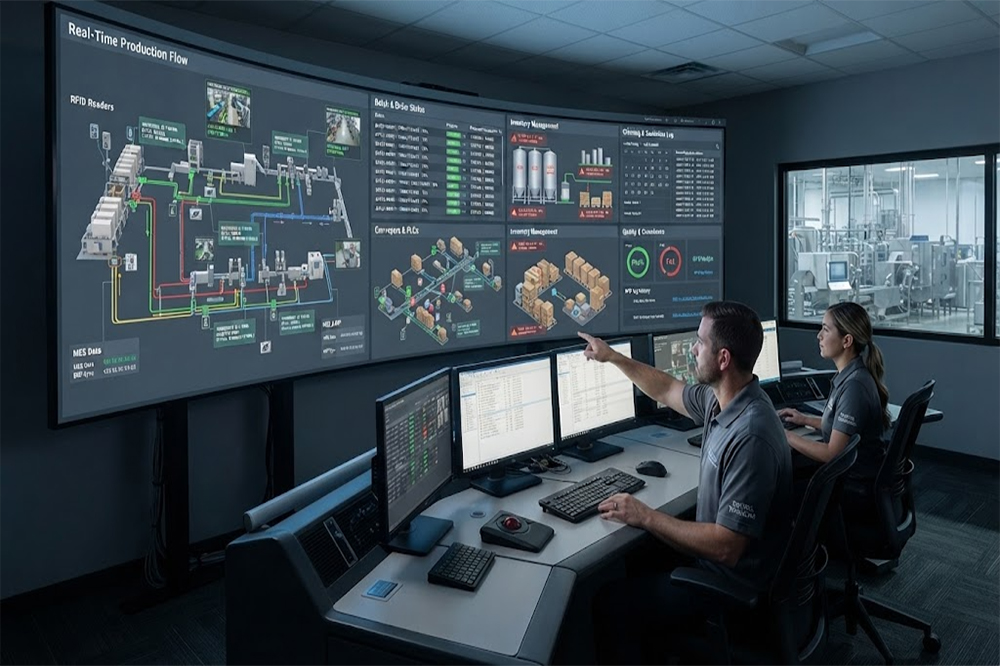
The RFID reader produces tag identification data. Factory software connects that data with production and inventory workflows.
Depending on the project, RFID may integrate with:
ERP systems
MES platforms
Warehouse management systems
Production planning software
Batch management systems
Quality management systems
Inventory databases
Maintenance management systems
Shipping and logistics software
Communication methods may include Ethernet, TCP/IP, serial communication, digital I/O, API, SDK, HTTP, MQTT, or an industrial gateway, depending on the reader and system architecture.
For example, the software may apply rules such as:
A container detected at receiving is marked as received.
A tagged ingredient bin detected at preparation is assigned to a production area.
A pallet detected at packaging is linked to a finished product batch.
A container detected at cleaning is marked as unavailable.
A tag detected at an unexpected location creates an alert.
The reader supplies the identification. The software creates the operational meaning.
A Practical Food Manufacturing RFID Example
Consider a beverage manufacturer that uses reusable stainless-steel containers and plastic ingredient bins.
The containers move between:
Raw material warehouse → preparation room → mixing area → filling line → cleaning area
The company installs long range RFID scanners at the warehouse exit, preparation entrance, filling area, and cleaning room.
Each container receives a tag selected for its material, moisture exposure, and cleaning process.
During the pilot test, the reader near the mixing area detects containers waiting on a nearby rack. The integrator changes the antenna angle, adjusts reader power, and uses a sensor to trigger the reading window.
The software then checks whether the detected container belongs to the expected production batch. When the container enters the cleaning area, its status changes automatically.
The improvement comes from combining RFID hardware, suitable tags, factory layout, and software rules.
What Should You Test Before Deployment?
Before placing a bulk RFID order, test the complete system under real food and beverage manufacturing conditions.
Important test items include:
Actual container materials
Liquid and moisture exposure
Metal surfaces
Cleaning chemicals
High-pressure washing
Steam or temperature exposure
RFID tag type
Tag mounting method
Tag durability
Reader frequency and protocol
Antenna direction
Reading distance
Reader output power
Number of tags
Conveyor speed
Container spacing
Sensor trigger timing
Duplicate read filtering
Batch validation logic
ERP or MES integration
Repeatability over multiple production cycles
A single dry tag test cannot prove that the RFID system will work on a wet stainless-steel container or a moving pallet.
What Should Distributors and System Integrators Look For?
For food and beverage applications, buyers should evaluate RF performance, tag durability, hygiene requirements, and software compatibility.
Important procurement points include:
Supported UHF frequency range
EPC C1G2 / ISO18000-6C compatibility
Reader sensitivity
Adjustable output power
Number of antenna ports
Antenna compatibility
Multi-tag reading performance
Communication interfaces
API and SDK support
Digital input and output
PLC integration options
Trigger support
Firmware stability
Waterproof or rugged tag compatibility
On-metal RFID tag compatibility
Washable and chemical-resistant tags
OEM and private-label support
Sample availability
MOQ
Lead time
Technical support
Bulk supply capability
The tag and reader should be evaluated together. A strong reader cannot compensate for a tag that fails after repeated washing or performs poorly near liquid.
Long Range RFID Does Not Replace Food Safety Procedures
RFID can improve identification and movement visibility, but it does not replace food safety and quality systems.
RFID cannot independently verify:
Food composition
Product freshness
Microbiological safety
Ingredient quality
Allergen status
Temperature compliance
Cleaning effectiveness
Regulatory release
These functions remain part of the manufacturer’s food safety, quality, and production procedures.
RFID can support them by providing accurate container identity, movement history, equipment status, and batch-related events.
The strongest system connects RFID data with existing quality, inventory, and production workflows.
Final Takeaway
A long range RFID scanner can help food and beverage manufacturers track raw materials, ingredient containers, reusable bins, production equipment, pallets, and packaging assets at warehouses, processing areas, cleaning rooms, and shipping checkpoints.
The most reliable system combines:
Suitable RFID tags
Moisture- and chemical-resistant materials
Correct antenna placement
Controlled reading zones
Sensor and PLC integration
Batch and inventory validation
Real-world testing
The goal is not simply to read tags from a long distance. The goal is to identify the correct material or asset at the correct process point and connect that event with the correct production record.
Food and beverage warehouses can also use the same approach forRFID warehouse inventory tracking, especially when raw materials and packaging supplies move through receiving and storage areas.
For automated packaging and sorting lines, RFID tracking on conveyor systems can help identify cartons, cases, trays, and containers as they move through production.
Manufacturers can combine container identification with RFID production line tracking to improve visibility between preparation, processing, filling, and packaging stations.
Production tools, maintenance equipment, and reusable carts can also be managed through RFID asset tracking.
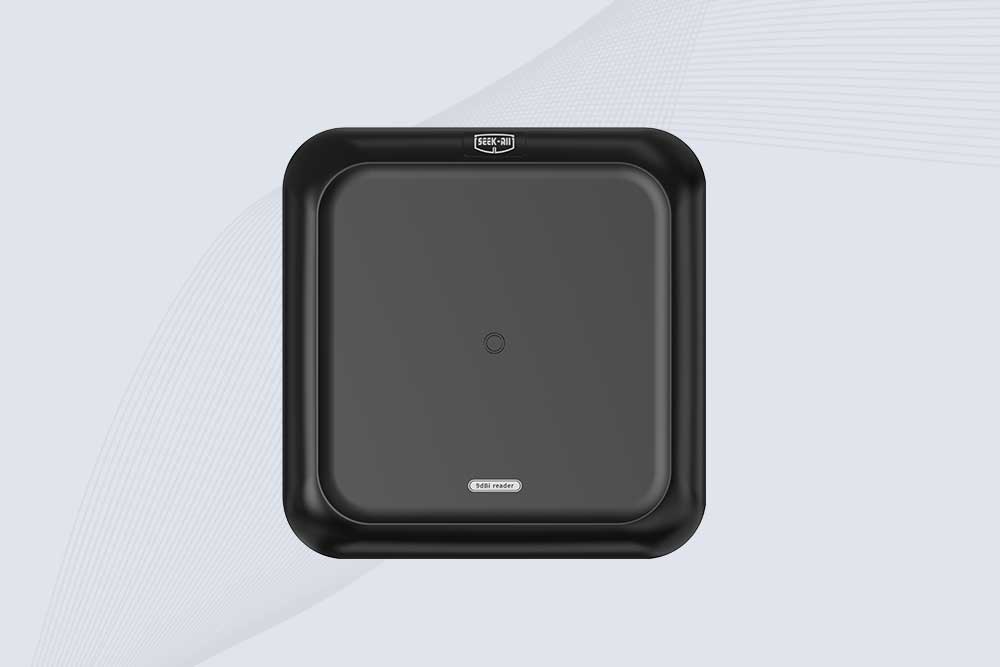
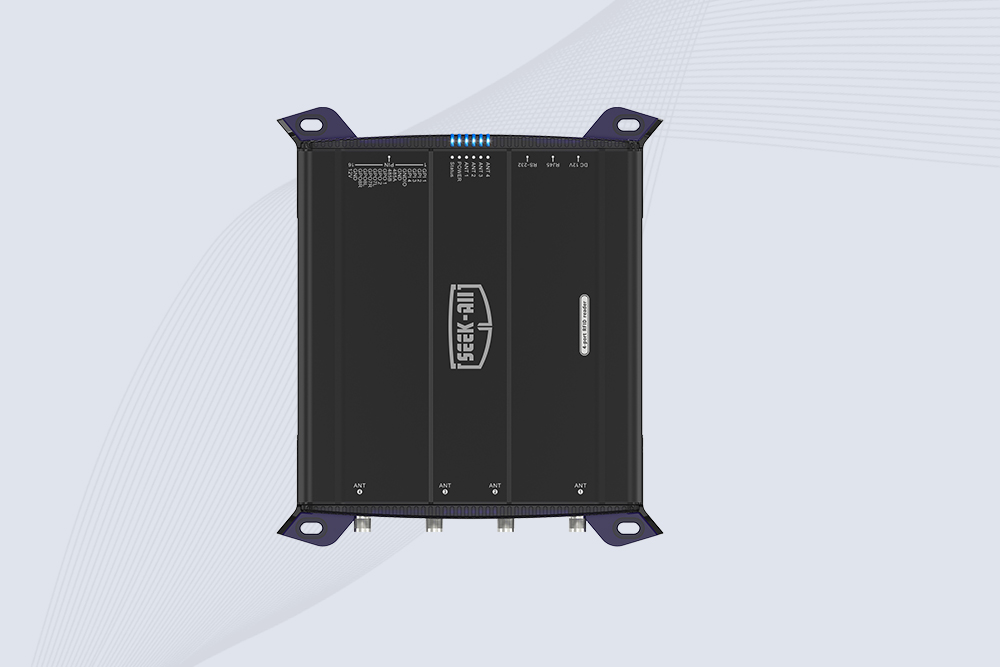
Explore our long range RFID scannersolutions for food production, packaging automation, reusable container tracking, and industrial inventory management.
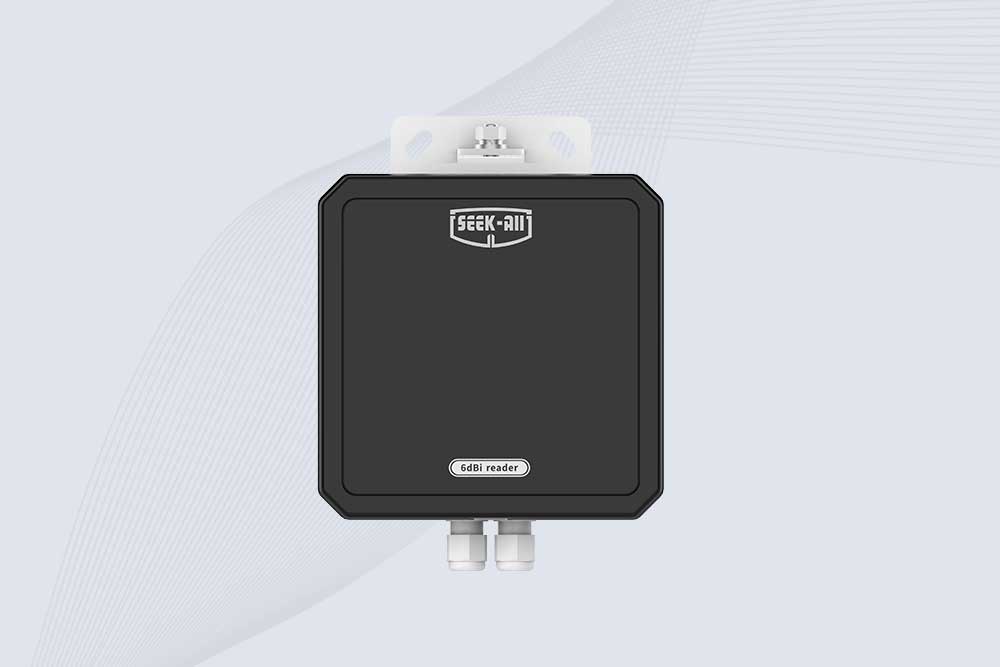
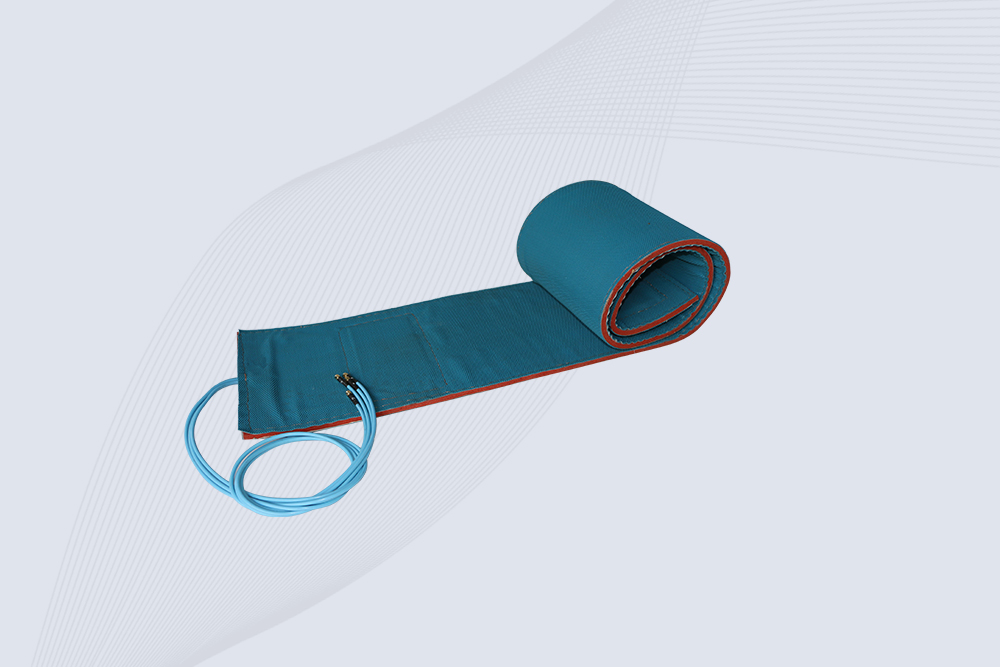
SSD-RA06L is an industrial UHF RFID reader with a built-in 6 dBi antenna, 3 m read range, 600+ tags/s, Ethernet, RS232, and optional Wi-Fi, 4G, and PoE.
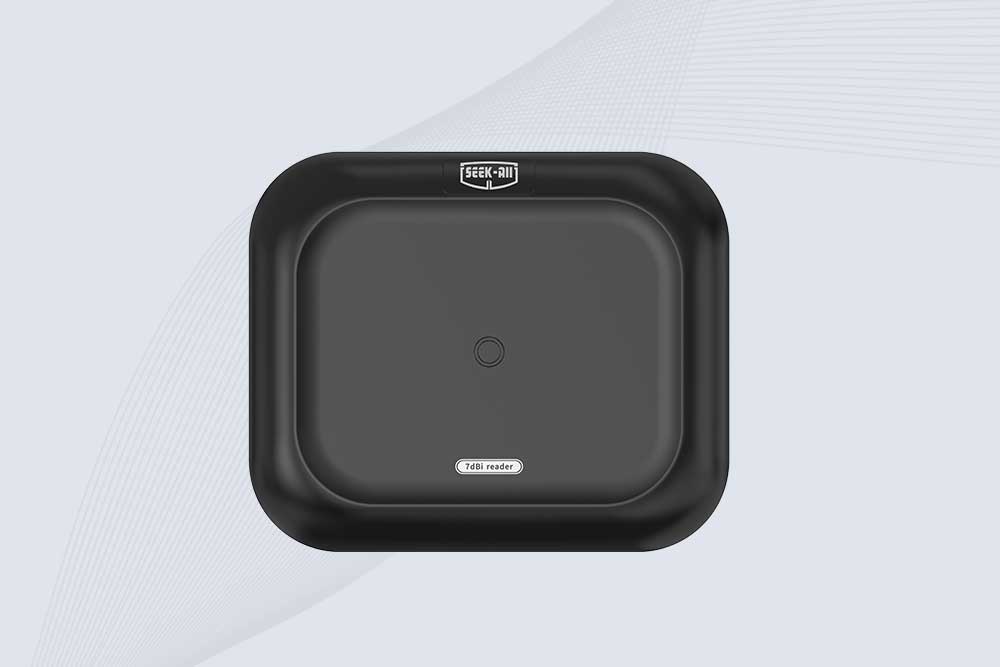
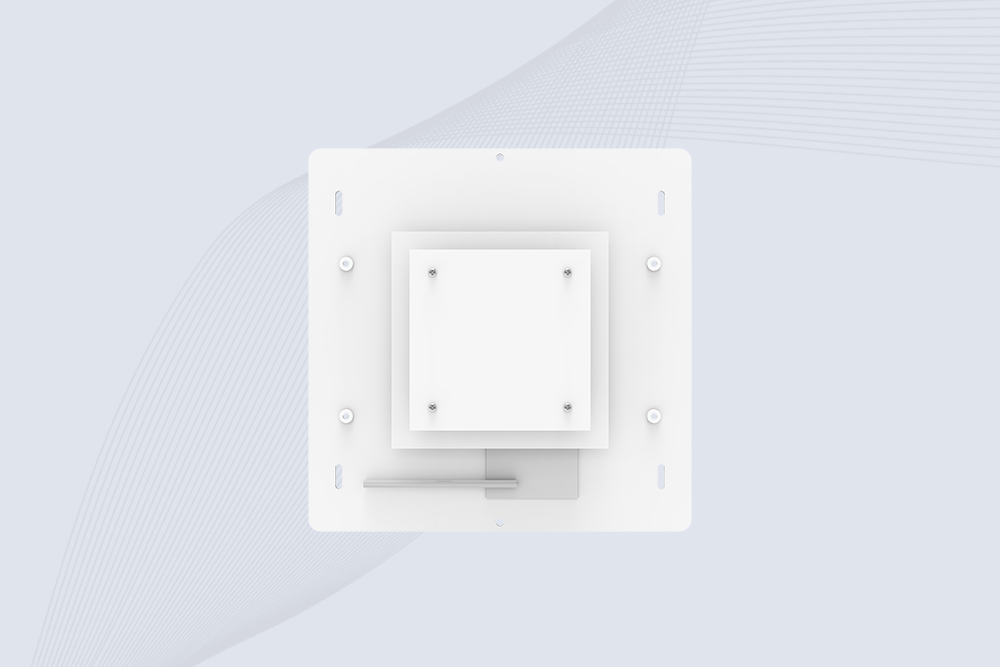
SSD-RA07L industrial UHF RFID reader with integrated 7 dBi antenna, up to 6 m reading distance, over 600 tags/s, Ethernet, RS232, and optional Wi-Fi, 4G, and PoE.
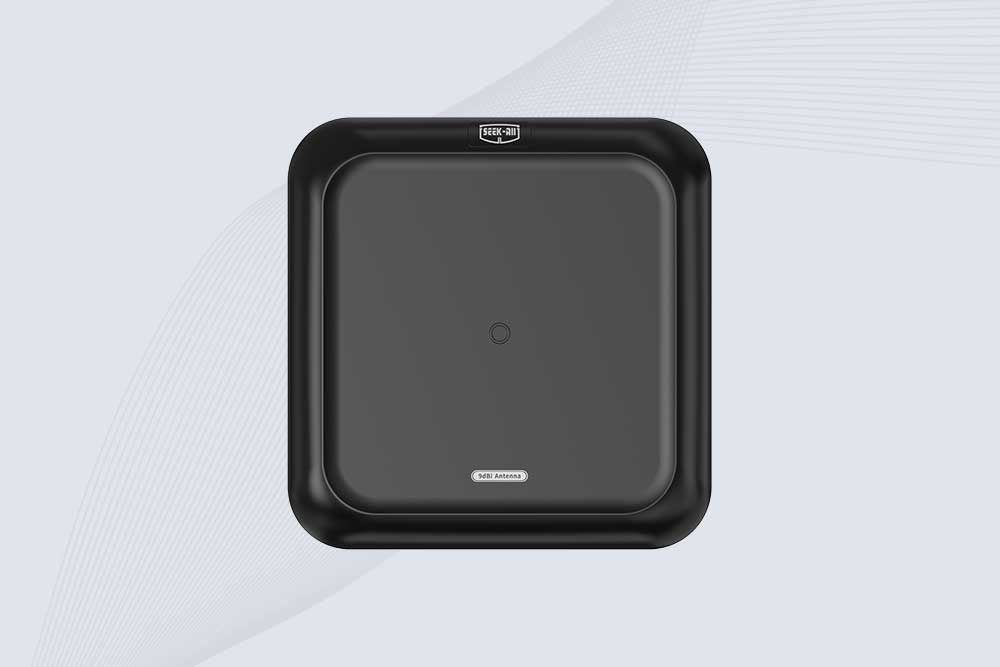
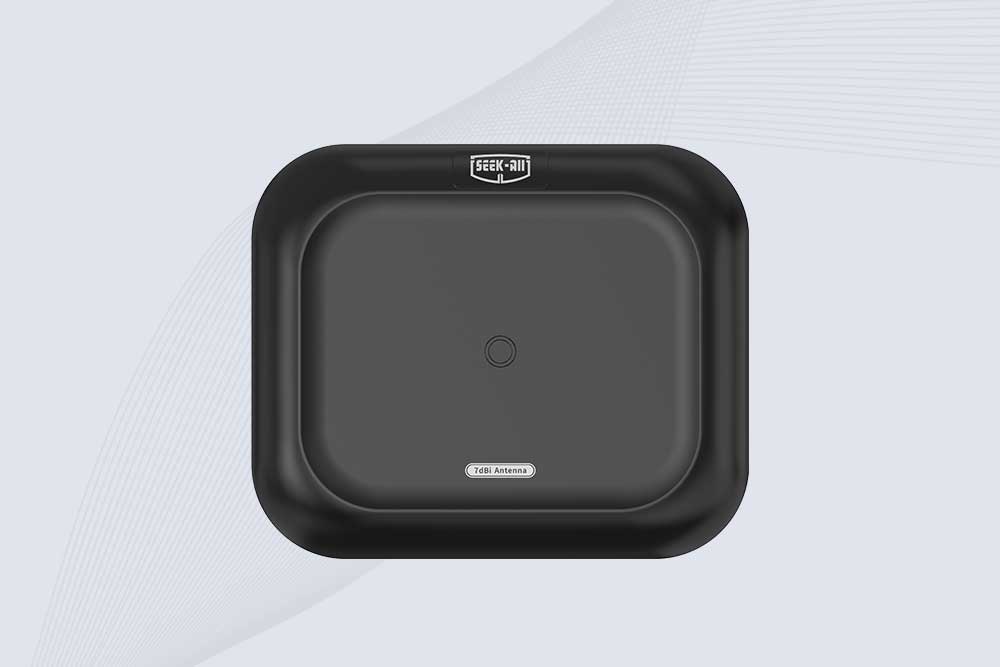
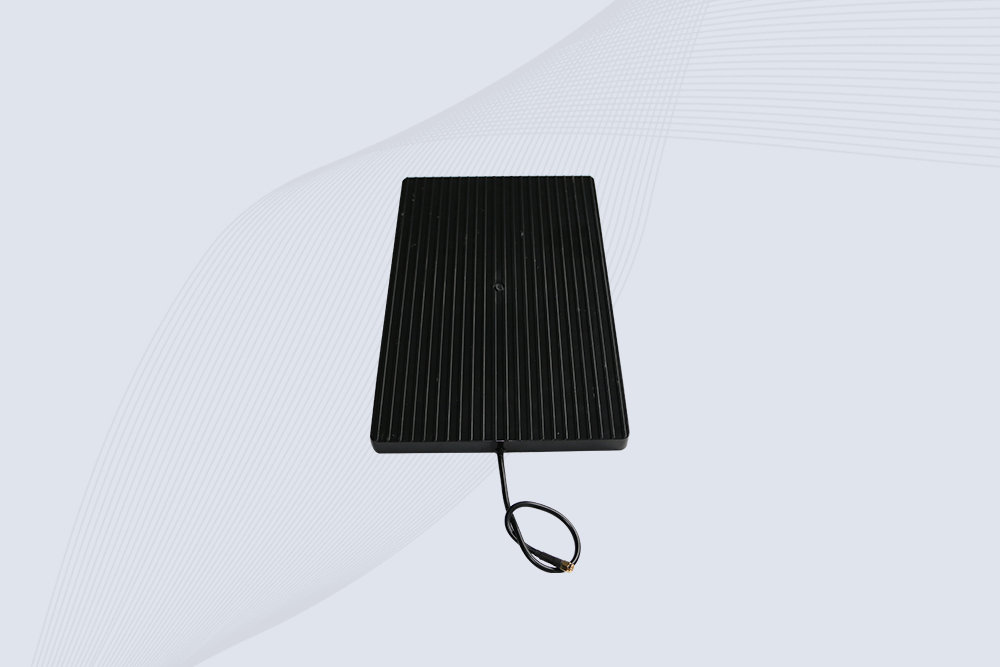
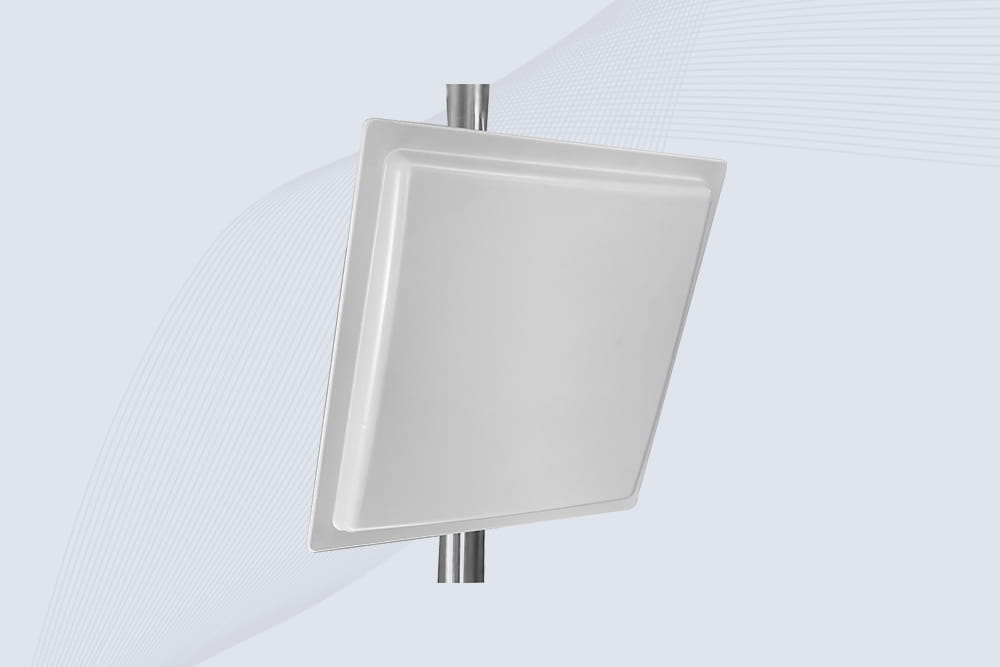
Explore the SSD-A07 UHF RFID antenna with 7 dBi gain, circular polarization, adjustable 840–960 MHz frequency, and 60°/75° beamwidth for stable RFID read/write performance.
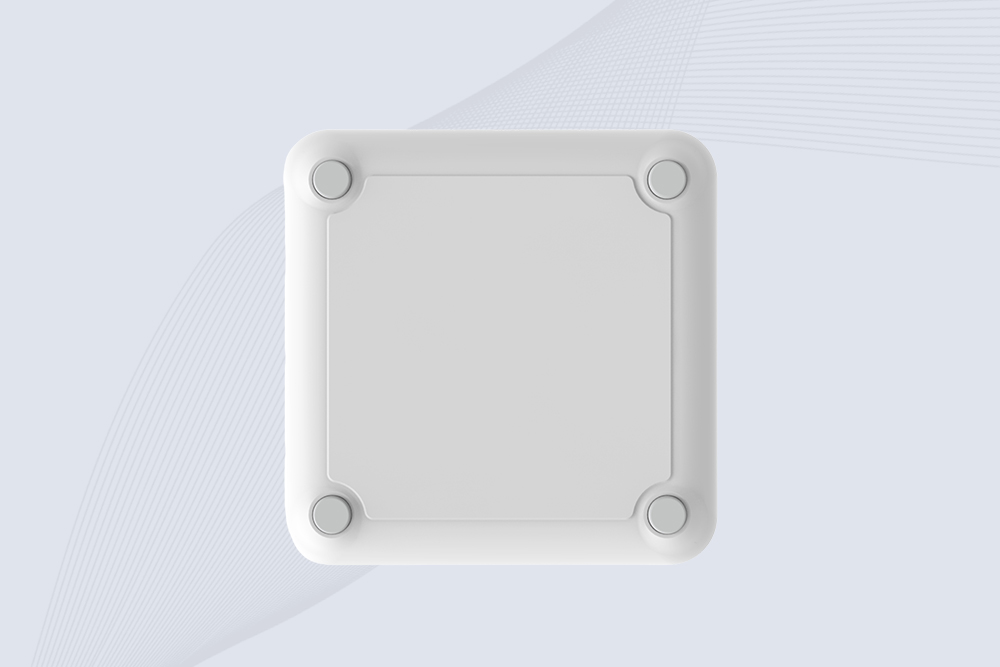
SSD-A06 UHF RFID antenna with circular polarization, adjustable 840–960 MHz frequency, ≥4.5 dBi gain, and a compact directional design for RFID systems.
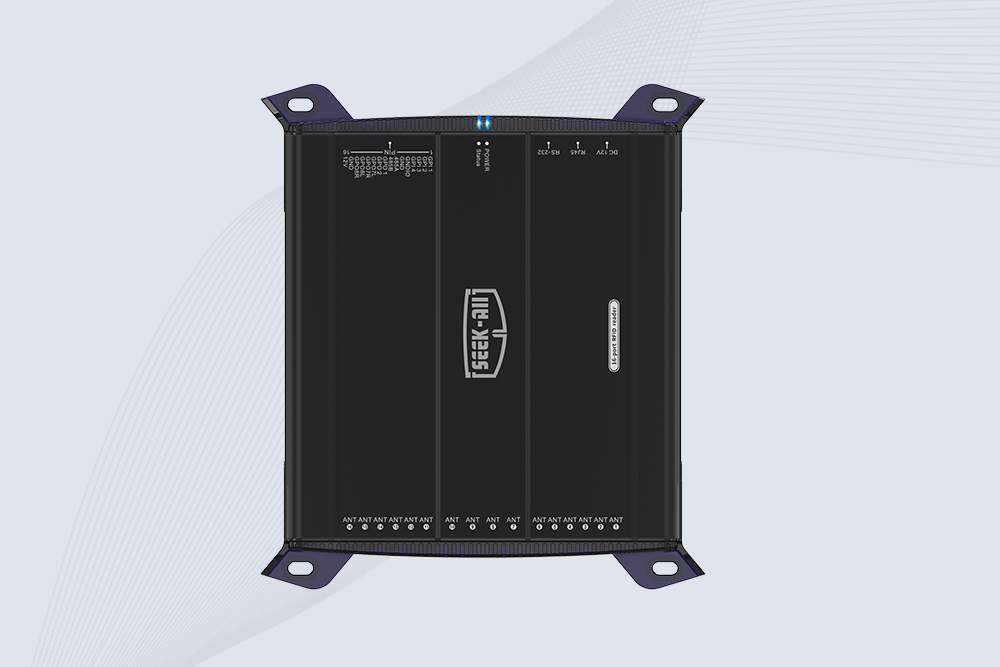
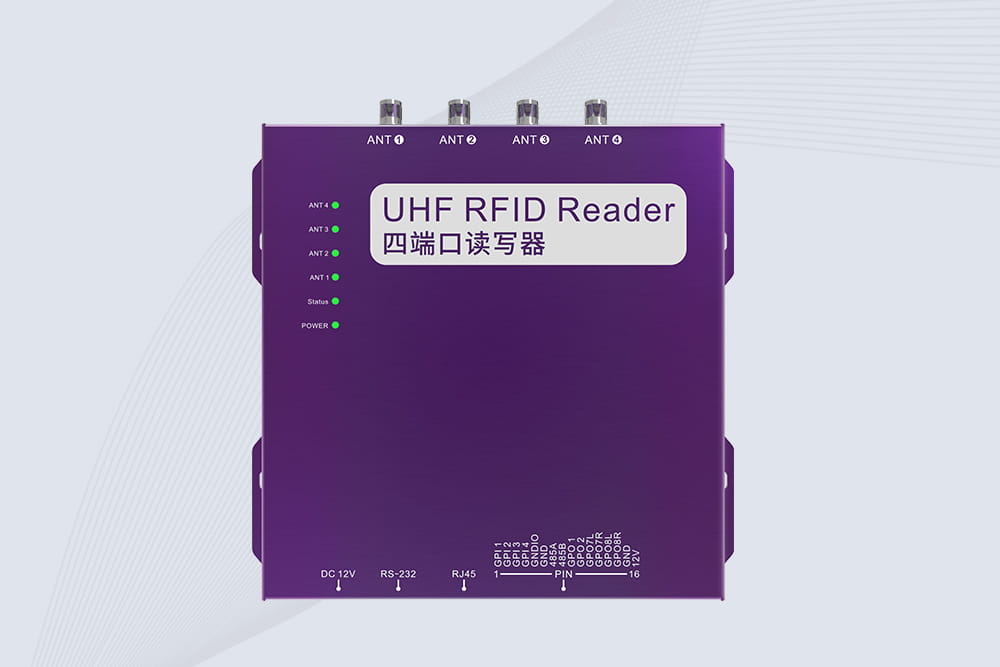
SSD-R16L Multi-Channel RFID Infrastructure for Automated Inventory Management ✔️ 16-Port High-Density RFID Reading Equipped with 16 SMA antenna ports, SSD-R16L supports multi-antenna deployment for warehouses, retail stores, logistics, production lines, and large-area RFID identification. ✔️ High-Speed & Long-Range Performance With up to 33…
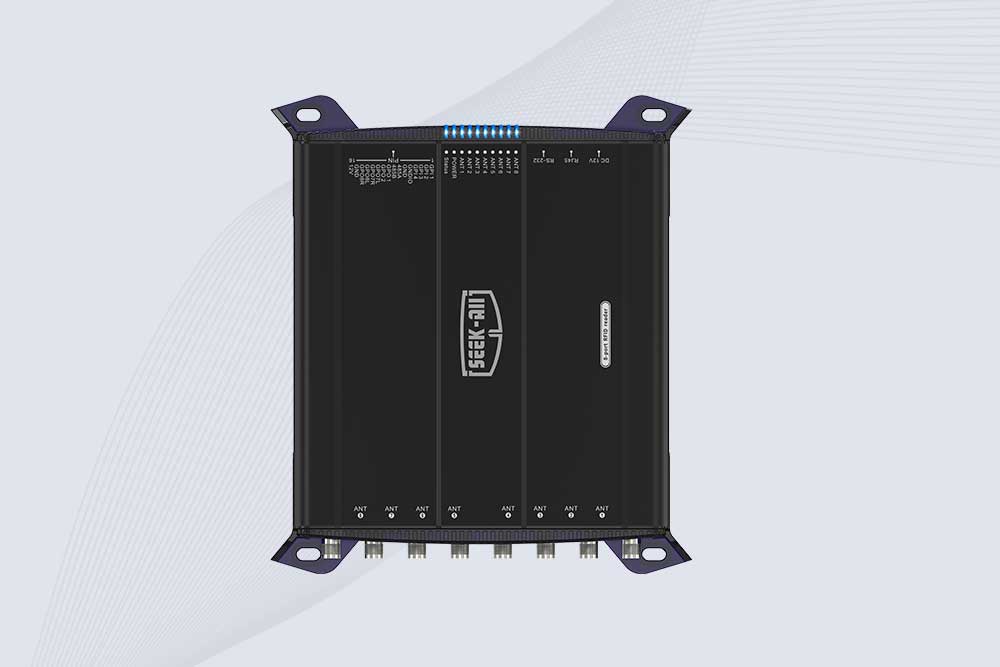
SSD-R8L 8-port UHF RFID reader with 33dBm output, up to 20m reading range and 600+ tags/s recognition. Ideal for warehouse, logistics, retail and asset tracking.
CYKEO Embedded RFID Modules are designed for compact industrial and IoT devices that require stable UHF performance. These UHF RFID Modules support global protocols, flexible power control, and reliable multi-tag reading for smart cabinets, production lines, and asset tracking systems.
CYKEO Embedded RFID Module is built for compact IoT and industrial devices that need stable UHF performance. This UHF module supports global protocols, low power operation, and reliable multi-tag reading for smart lockers, production lines, and always-on RFID systems.
CYKEO CYKEO-M1 drone rfid module is a compact UHF RFID reader module designed for drones and UAV platforms. It supports long-range aerial scanning, fast multi-tag reading, and stable performance in wind, vibration, and outdoor environments.
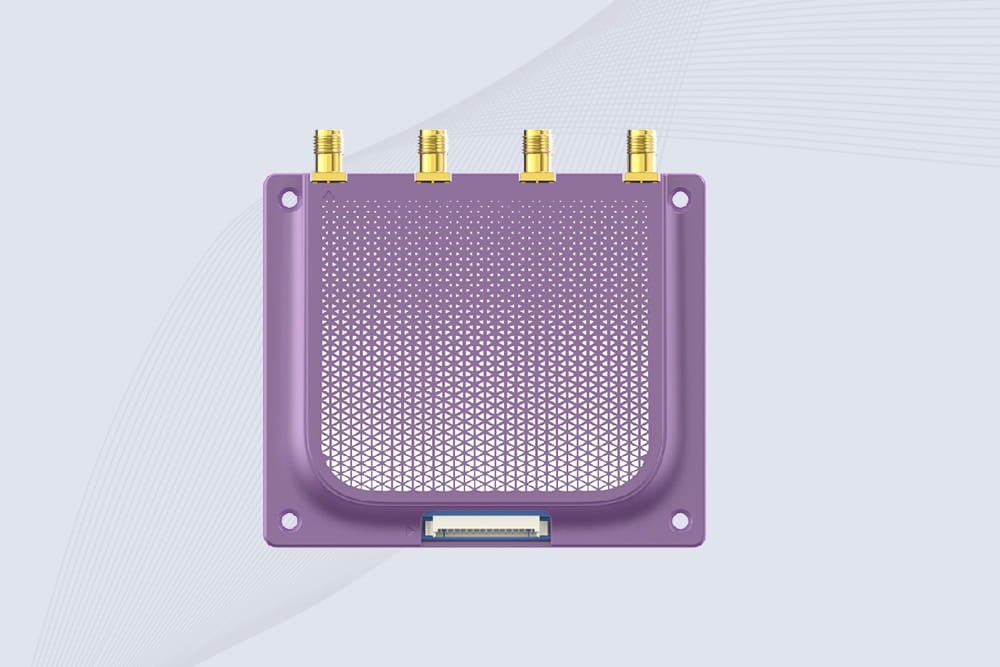
CYKEO CYKEO-M4 RC522 RFID Module is an industrial-grade UHF RFID reader with 4 ports, supporting ISO, EPC, and GB protocols. High-speed, accurate reading for IoT, automation, and warehouse applications.
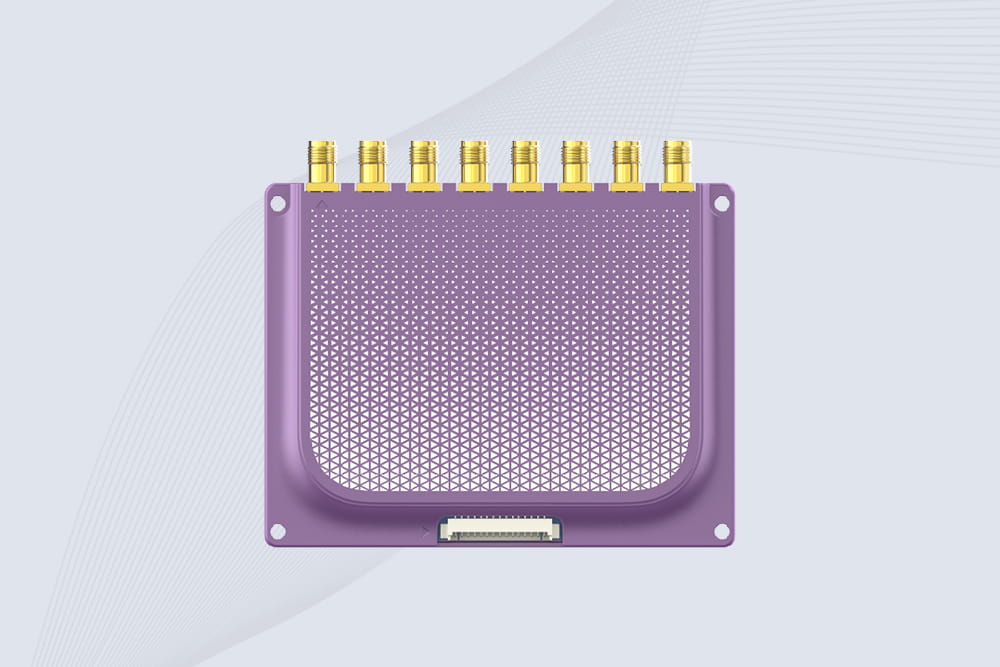
CYKEO CYKEO-M8 Module RFID is an 8-port UHF R2000 RFID Module designed for high-density, multi-tag environments. Stable 33dBm output, ISO & GB protocol support, ideal for warehouses, factories, and automated systems.
CYKEO CYKEO-M16 RFID Module is a 16-port UHF RFID reader module based on the R2000 chipset. Designed for dense tag environments, it supports ISO and GB standards and delivers stable multi-antenna control for industrial automation.
The CYKEO CYKEO-M16L RFID Reader Module is a 16-channel UHF RFID core designed for dense tag environments. With adjustable 33dBm output, multi-protocol support, and stable multi-antenna control, this RFID Tag Reader Module fits industrial automation, warehouse systems, and large-scale IoT deployments.
CYKEO CYKEO-M8L module RFID is a compact industrial UHF module built for dense tag and multi-antenna environments. With 8 RF ports, adjustable 33 dBm output, and ISO & GB protocol support, it is widely used in factories, warehouses, and automated tracking systems.
CYKEOCYKEO-M4L UHF RFID Module is a compact 4-channel RFID tag reader module designed for dense tag environments. Supporting ISO and GB protocols, it delivers stable reads up to 10 meters for industrial and IoT systems.
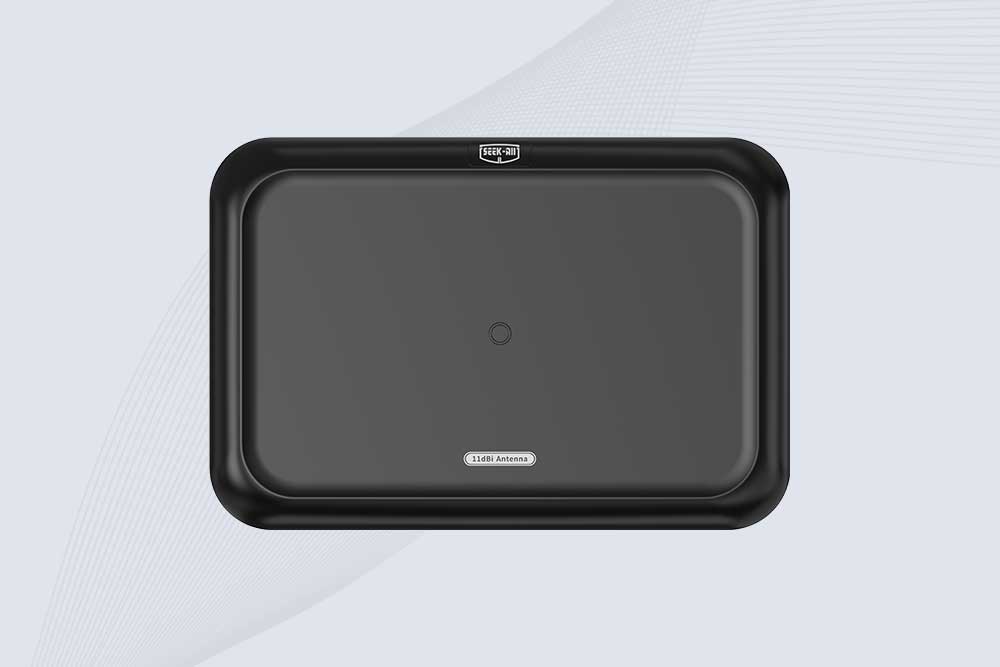
Cykeo CYKEO-A11 UHF RFID reader antenna delivers 11dBi gain, 840-960MHz frequency range, and IP65 ruggedness for retail, logistics, and industrial RFID systems. Features low VSWR and easy installation.
CYKEO Antenna RFID Reader delivers stable long-range UHF performance with a 10.5dBi directional design, built for warehouses, conveyor portals, and industrial RFID systems. This rfid reader antenna provides 20m+ read distance and rugged IP67 protection.
Cykeo CYKEO-A5B industrial Linear RFID Antenna delivers 5dBi gain, ≤1.5:1 VSWR, and IP65 rugged design for warehouse, production line, and logistics UHF systems.
Cykeo’s CYKEO-B12 Long Range RFID Antenna delivers 15m+ read range with 12dBi gain, IP65 rugged design, and global 840-960MHz UHF support. Ideal for warehouse/logistics asset tracking.
Cykeo CYKEO-B10 Long Distance RFID Antenna offers 10dBi gain, 840-960MHz frequency range, IP65 rating, and 20m+ coverage for logistics/warehousing/ETC systems. Low VSWR ensures stable signal transmission.
Cykeo CYKEO-A6 UHF RFID panel antenna features 6dBi gain, 840-960MHz broadband, IP65 metal-ready housing for logistics/smart retail. 18mm ultra-thin design with tool-free mounting.
Cykeo CK-A3 industrial antenna RFID UHF offers 5m+ tag detection, ≤1.3:1 VSWR, IP65 rugged design, and global UHF spectrum compatibility (840-960MHz) for warehouses, factories, and retail.
Cykeo CYKEO-B5 directional RFID antenna provides 5dBi gain with 60° narrow beamwidth for precise inventory tracking. IP65-rated, global UHF frequency support, and low VSWR.
Create your own high-performance DIY RFID antenna! 5dBi gain, 840-960MHz tunable, step-by-step guides. Compatible with Arduino, Raspberry Pi, and commercial UHF readers.
Cykeo CYKEO-A7 Flexible RFID Antenna features 840-960MHz wideband tuning, 7dBi gain, and IP68 rating for medical/retail/industrial curved surface deployments. 98% read accuracy with peel-and-stick installation.
Cykeo CYKEO-B5A industrial Passive RFID Antenna delivers 5dBi gain, 70° beamwidth, and -40°C~55°C operation for warehouses/smart cabinets. Compatible with Zebra/Impinj readers.
Cykeo’s CYKEO-A9B High Gain RFID Antenna delivers 15m+ read range with 9dBi amplification. Features IP54 rugged design, 840-960MHz bandwidth, and 80° beamwidth for warehouse/manufacturing RFID systems.
Cykeo’s enterprise-grade 8dbi Impinj RFID Antenna 10m+ read range with 840-960MHz tuning. Features IP65 housing, 1.4 VSWR, 35° beamwidth for retail/warehouse RFID systems.
Cykeo CYKEO-A9 industrial UHF RFID antenna delivers 9dBi gain, 840-960MHz frequency range, and IP65 protection for warehouse/logistics/retail RFID systems. Features N-type connector and ≤1.3:1 VSWR.
CYKEO UHF RFID Antenna built for long-distance and industrial applications. This antenna rfid uhf delivers strong gain, outdoor durability, and reliable tag performance in warehouses, yards, and vehicle ID systems.
CYKEO Antenna RFID delivers reliable long-range UHF performance in warehouses, retail shelves, and cold-chain environments. This compact uhf rfid antenna provides stable reads with circular polarization and ultra-wide 840–960 MHz support, ideal for industrial tracking, smart shelves, and asset monitoring.
Cykeo’s CYKEO-C8 UHF RFID antennas delivers 8dBi gain, 840-960MHz full-band coverage, and IP65 ruggedness for manufacturing/warehouse RFID systems. Industrial RFID Antennas Features
Cykeo’s 8dBi UHF RFID antenna and reader kit delivers 10m+ range, 840-960MHz broadband, and IP65 ruggedness for factories, warehouses, and logistics. ISO 18000-6C & EPC Gen2 certified.
Cykeo’s CYKEO-A12C UHF Large RFID Antenna delivers 12dBi gain, 840-960MHz global frequency, IP65 ruggedness for logistics/warehousing/automotive. 40° beamwidth ensures stable 15m+ tag reads.
CYKEO Near Field RFID Antenna provides precise 5–30 cm reading for shelves, cabinets, and workstations. This compact rfid shelf antenna delivers stable short-range performance around metal and clutter, ideal for pharmacies, libraries, and electronics sorting.
Cykeo’s industrial long range RFID reader delivers 20-meter scanning, 500+ tags/sec speed, and IP67 waterproof design for automated warehouses, logistics, and harsh environment applications.
Cykeo’s CYKEO-RA6L industrial RFID long range reader features 20m read distance, 500 tags/sec speed, and IP67 protection. Ideal for warehouse automation, manufacturing WIP tracking, and smart logistics. Supports ISO 18000-6C/6B protocols.
CYKEO Long Range RFID Tag Reader built for outdoor and industrial operations. This Outdoor RFID Reader delivers 20m read distance, fast tag processing, and IP67 durability for wide-area tracking.
Cykeo CYKEO-RA12L industrial Long Range RFID Reader delivers 20m read range, 200+ tags/sec scanning, and IP67 protection for manufacturing/logistics applications. Supports ISO 18000-6C/GB protocols.
Cykeo CYKEO-C1 industrial Forklift RFID Reader features 20m read range, 600 tags/sec scanning, Impinj R2000 chipset, and IP67 rugged design. Ideal for warehouse logistics and manufacturing. Supports ISO 18000-6C/6B protocols.
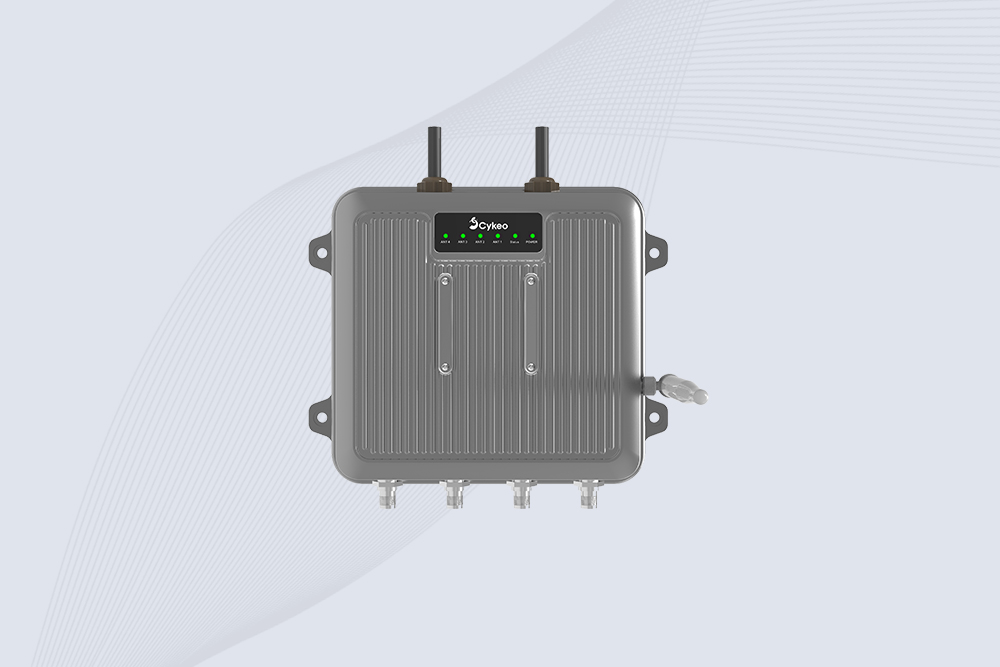
Cykeo CYKEO-R4 industrial UHF RFID Fixed Reader features 4 TNC ports, 400+ tags/sec speed, IP67 housing, and global frequency compliance for vehicle inspection, smart warehouse, and asset management systems.
CYKEO CYKEO-R8L Fixed RFID Reader with 8-port UHF design, Impinj-based RF core and up to 20m read range. An industrial Fixed RFID Reader for vehicle inspection, warehouse portals, smart manufacturing lines and secure access checkpoints.
RFID Industry Writer | IoT & Asset Tracking Analyst
James writes about RFID technology, asset tracking, and the practical challenges of digital transformation across warehousing, retail, manufacturing, and logistics.
His work focuses on how RFID is applied in real-world operations—improving inventory visibility, automating workflows, and helping businesses manage assets with greater accuracy and efficiency.
He regularly covers topics including UHF RFID, smart cabinets, RFID portals, tool tracking, warehouse automation, and industrial IoT trends..
Inventory RFID tags, with features such as contactless identification, batch reading, and strong anti-interference capabilities, have become a standard technology in enterprise digital transformation.
Learn how to connect fixed RFID readers to SAP ERP for real-time inventory updates. Explore middleware, API integration, and data mapping best practices.
Discover how Cykeo's new Beijing branch delivers cutting-edge RFID technology and tailored IoT solutions across six North China provinces, driving industrial digitalization with 48-hour delivery assurance.
RFID asset tag solutions help organizations identify, track, and manage valuable assets with higher accuracy, faster audits, and real-time visibility. Discover Cykeo RFID technologies for enterprise asset management.
 Cykeo RFID IoT Solution Products R&D Manufacturer