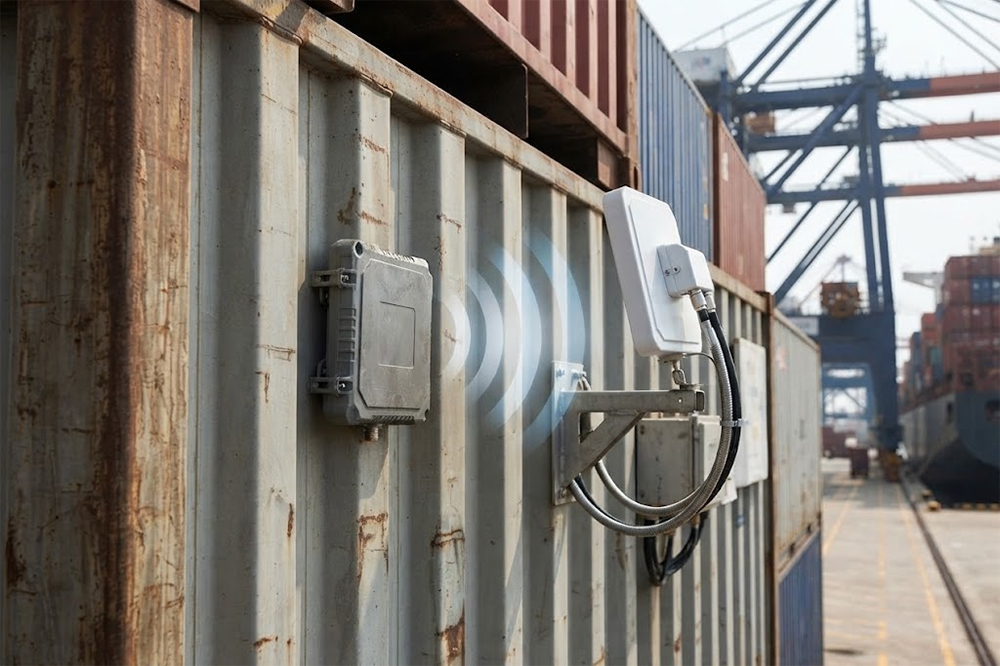
Ports handle constant flow of containers, trucks, trailers, transport carts, and other equipment.
A vehicle may enter through one gate, move to a loading area, wait in a yard, and leave through another checkpoint. When the site relies on manual records, it can become difficult to confirm where a container or vehicle was last detected.
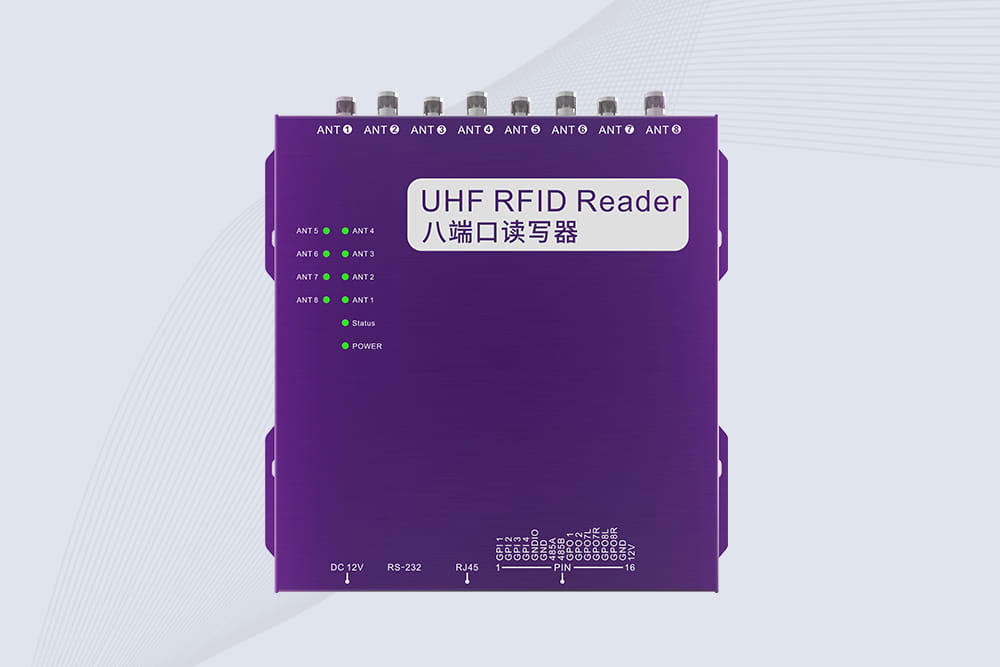
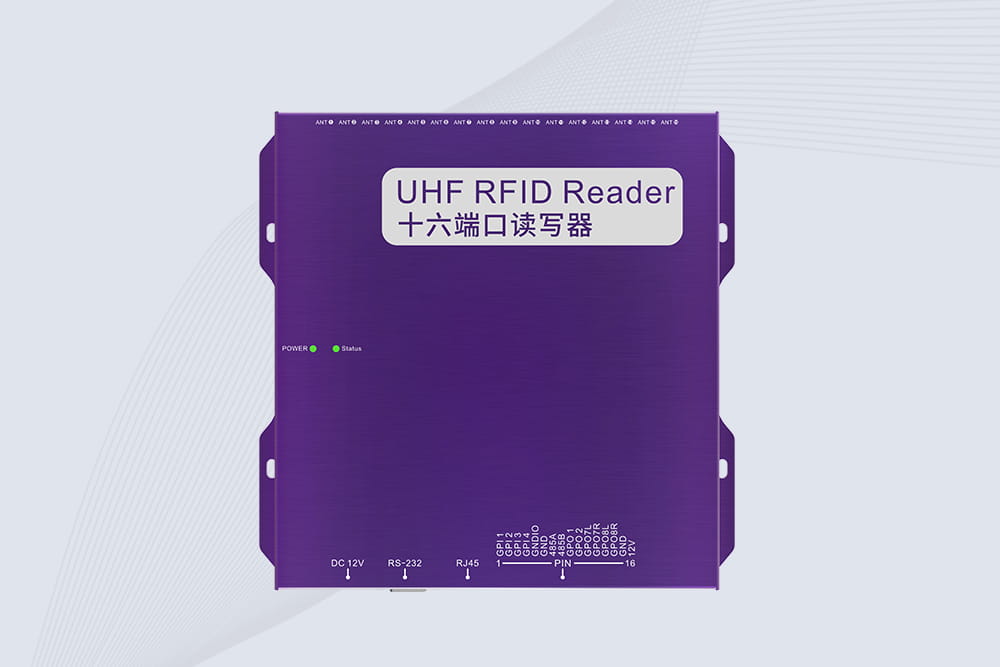
A long range RFID scanner can help automate this process.
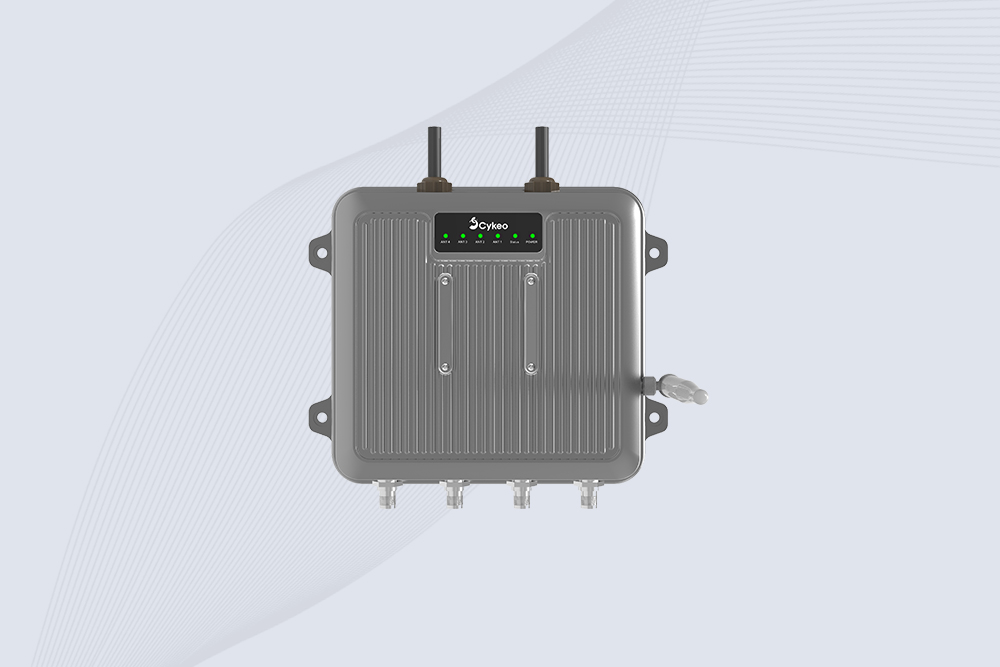
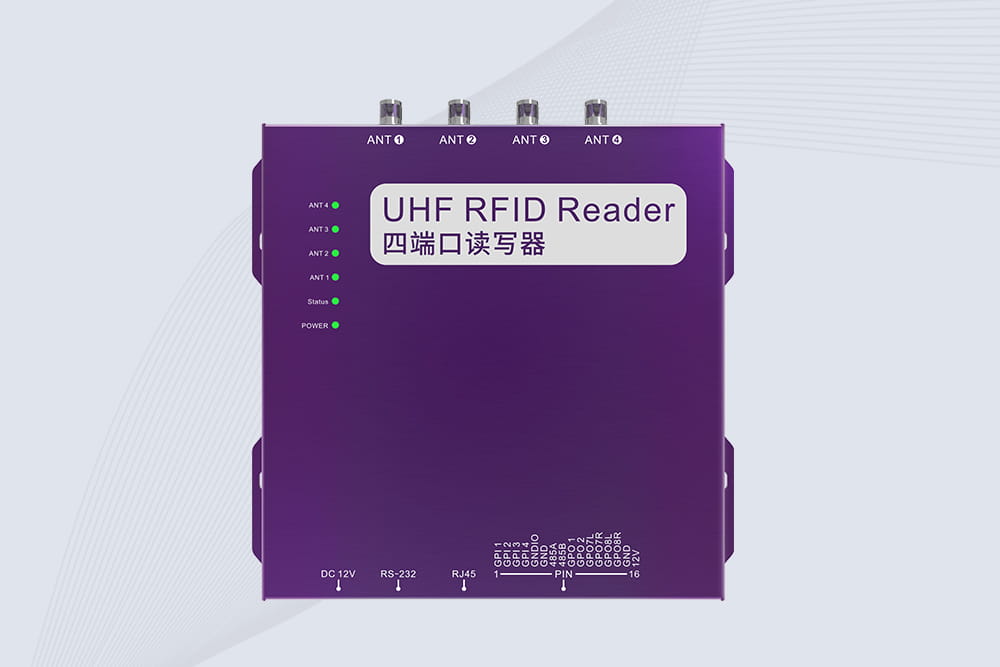
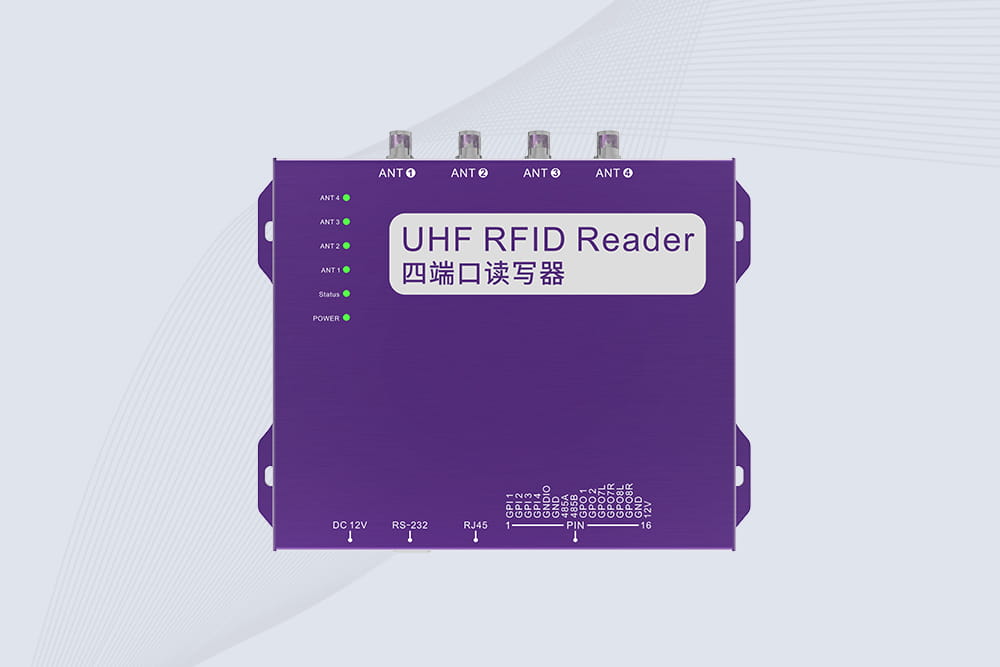
By attaching RFID tags to suitable assets and installing fixed rfid readers at important checkpoints, a port can record identification events as containers and vehicles move through the facility.
The RFID reader does not replace the entire port management system. It provides identification data that the software can use to update cargo, vehicle, and yard records.
How RFID Port Tracking Works
A basic RFID port tracking process looks like this:
RFID tag → antenna → RFID reader → tag ID → port management software
The RFID tag may be attached to:
Reusable containers
Transport bins
Yard equipment
Trucks
Trailers
Carts
Maintenance tools
Cargo handling equipment
When the tagged item passes through an RFID reading zone, the fixed UHF RFID reader detects the tag and sends its identification number to the software.
The software can then record:
Asset ID
Checkpoint location
Detection time
Entry or exit event
Vehicle or container status
Loading or unloading event
Movement history
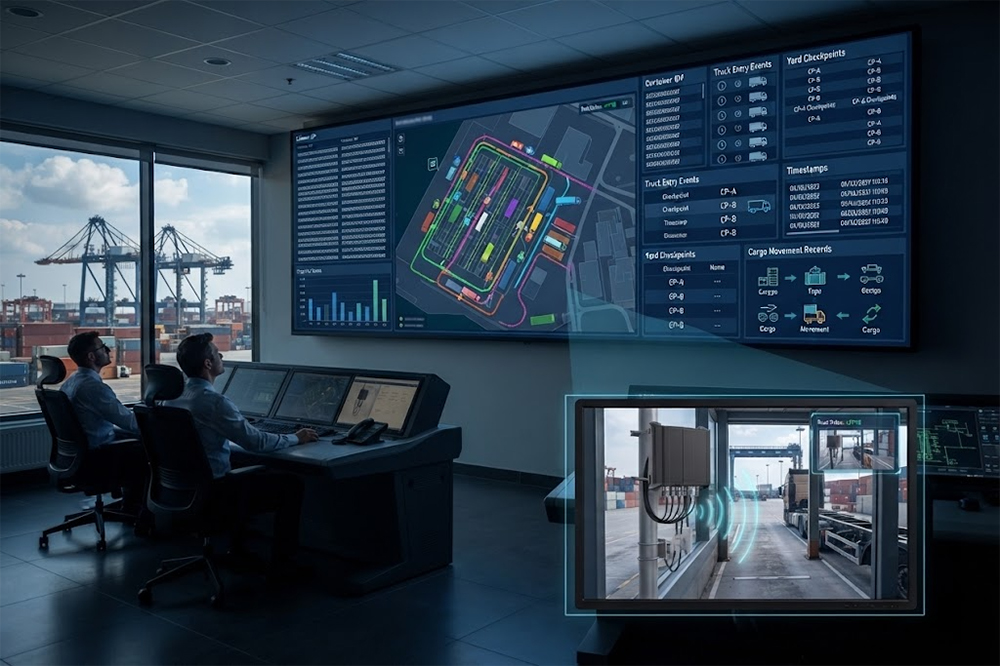
This creates a digital record of where the tagged item was detected.
RFID for Port Gate Automation
The entrance gate is one of the most practical places to use RFID.
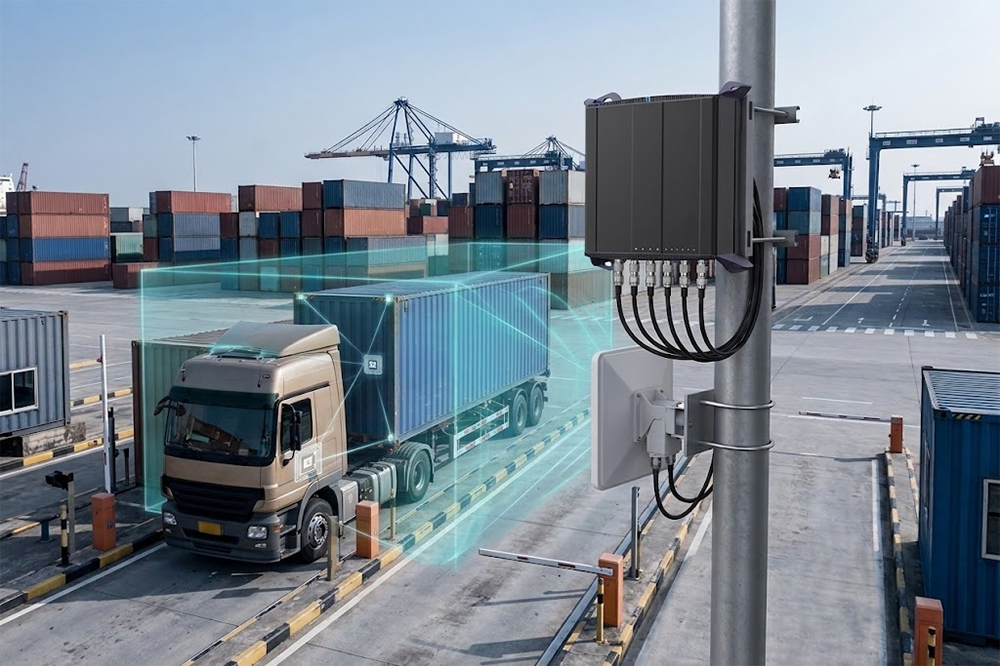
A truck approaches the port gate. The RFID reader detects the vehicle or trailer tag. The software checks the tag against the relevant database.
Depending on the project, the system may check:
Vehicle registration
Driver authorization
Container assignment
Delivery appointment
Cargo status
Access permission
Loading or unloading schedule
If the information is valid, the system can send a command to the gate controller or guide the vehicle to the next step.
The RFID reader does not make the entire access decision by itself. It supplies the identification data that the port software uses.
RFID Container Tracking
Containers move through several stages during port operations.
A container may be:
Registered at the gate
Moved to a yard location
Assigned to a loading area
Transferred to a truck
Loaded onto a vessel
Moved to another checkpoint
Released from the port
RFID can help record these movements when readers are installed at suitable locations.
For example, a reader at the entrance can record when a tagged container enters the facility. Another reader near a loading area can record a later detection event.
The system can then compare expected movements with actual detections.
However, RFID does not automatically know the container’s exact position at every moment. It records detection events at installed checkpoints.
That distinction is important when planning a port tracking system.
Long Range RFID Scanner and Yard Management
A port yard can contain many containers and vehicles close together.
This creates a challenging RF environment.
Metal containers, cranes, trucks, trailers, and other equipment can reflect or block radio signals. Container placement may also change from one operation to another.
A long range RFID scanner should therefore be installed with a clear purpose.
Instead of trying to cover the entire yard with one reader, a system integrator may install readers at:
Entry gates
Exit gates
Container transfer points
Loading zones
Inspection areas
Maintenance areas
Weighing stations
Restricted access points
Each reader creates a defined detection point.
This approach makes the collected data easier to interpret.
Metal Containers and RFID Tag Selection
Metal is one of the main factors to consider in port RFID projects.
Many containers, trailers, and handling machines have large metal surfaces. A standard RFID label may not perform well when attached directly to metal.
A suitable on-metal RFID tag may be required.
The tag should be selected according to:
Mounting surface
Reading distance
Tag orientation
Environmental exposure
Temperature
Moisture
Mechanical impact
Required service life
A tag that works well on a plastic bin may not perform the same way on a steel container.
For this reason, testing the actual tag on the actual asset is important before placing a large order.
Antenna Position and Reading-Zone Control
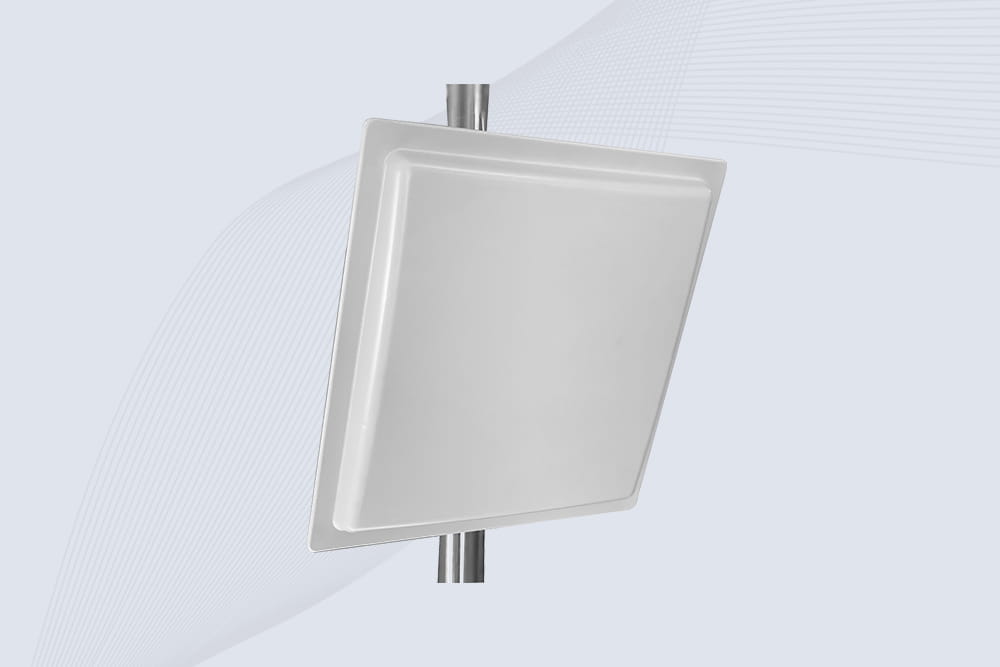
The rfid antenna has a major influence on the practical performance of a long range RFID scanner.
A port gate may need to identify a truck in one lane without detecting a vehicle in the next lane.
A container transfer point may need to detect a tagged container only when it passes through a specific location.
The antenna position should be planned around the movement path.
Important factors include:
Antenna height
Antenna angle
Lane width
Container height
Reader power
Reading distance
Vehicle direction
Adjacent lanes
Metal structures
Tag position
Increasing reader power is not always the best solution.
Sometimes a better antenna angle or a smaller reading zone can improve the accuracy of the system.
RFID Tracking for Trucks and Trailers
Ports may also use RFID to identify trucks and trailers.
A truck can receive an RFID tag that is associated with its vehicle record. A trailer may have a separate tag linked to its trailer ID.
This allows the system to distinguish between:
Truck identification
Trailer identification
Container identification
Driver or appointment information
The software can then associate the relevant records during a port operation.
For example, a truck may arrive with one trailer, exchange the trailer, and leave with another container. RFID can provide separate identification events for each tagged asset.
The complete association still depends on software logic and other operational data.
Can RFID Read Several Containers at Once?
UHF RFID readers can detect multiple tags within their reading zone.
This can be useful when several tagged items pass through a checkpoint together.
However, multiple-tag reading creates another challenge: the software must understand which tags belong to the same movement event.
For example, a truck may carry a container while another tagged asset is nearby. The reader may detect both tags.
To reduce confusion, the system may use:
Vehicle sensors
Gate sensors
Camera verification
Lane-specific antennas
Timing rules
Reader triggers
Software filtering
Expected container lists
RFID provides the tag data. The surrounding system determines how that data should be interpreted.
RFID and Port Equipment Tracking
Besides containers and trucks, ports use many reusable assets.
These may include:
Cargo carts
Transport bins
Pallet cages
Maintenance tools
Forklift attachments
Loading equipment
Service vehicles
Reusable packaging
A long range RFID scanner can be installed at equipment storage areas, maintenance entrances, or transfer checkpoints.
This can help the port record when equipment was moved or returned.
It may also support inventory checks and reduce time spent searching for reusable assets.
For metal equipment, an on-metal RFID tag is often worth considering.
RFID Integration with Port Software
A port RFID system usually needs to communicate with existing software.
Depending on the reader and system design, integration may involve:
Ethernet
TCP/IP
Serial communication
Digital input/output
API
SDK
HTTP
MQTT
The RFID reader may connect to a local industrial computer, gateway, or central software platform.
The software may then exchange information with:
Terminal operating systems
Yard management systems
Warehouse management systems
Fleet management software
Gate control systems
Weighing systems
Camera systems
ERP platforms
The exact integration method depends on the project and the available interfaces.
A Practical Port RFID Example
Imagine a logistics port handles several hundred trucks each day.
The port wants to reduce manual vehicle identification at the entrance and improve container movement records.
Each authorized truck receives an RFID tag. Selected containers also receive suitable RFID tags.
At the entrance, a fixed UHF RFID reader detects the truck tag. The software checks the vehicle record and appointment information.
At a container transfer point, another reader detects the container tag.
The system records:
Truck ID
Container ID
Checkpoint
Time
Movement event
During testing, the integrator notices that the reader sometimes detects a nearby tagged trailer before it reaches the gate.
Instead of simply increasing power, the team adjusts the antenna direction, checks the tag position, and improves the software timing.
This is a common RFID engineering lesson: the best solution often comes from improving the complete reading environment.
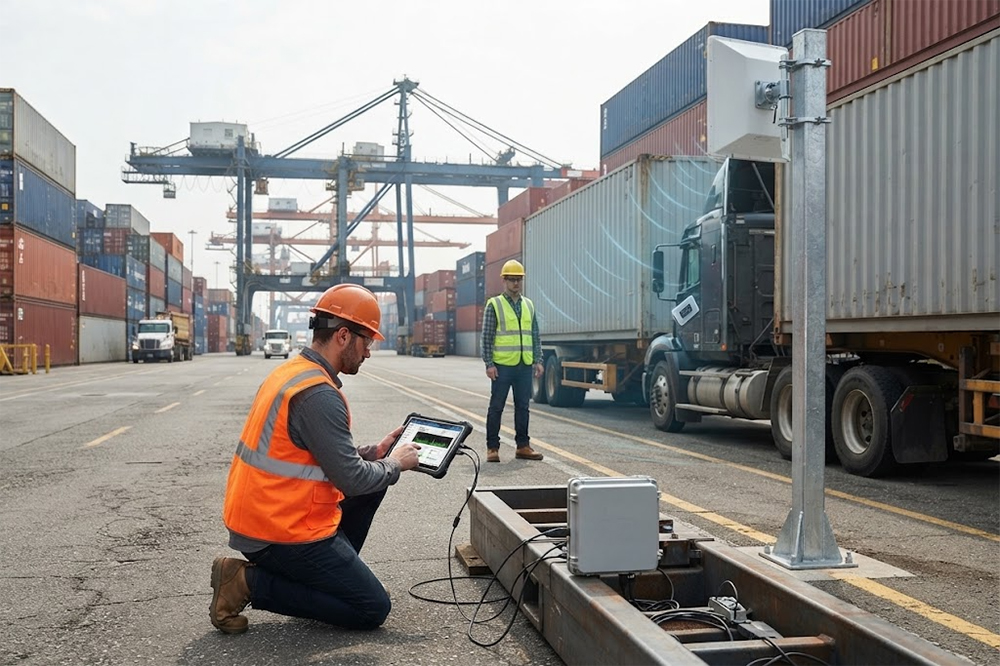
Testing RFID in Real Port Conditions
Port environments are difficult to reproduce in a small laboratory.
Testing should include:
Actual containers
Actual trucks and trailers
Actual RFID tags
Metal surfaces
Vehicle speed
Container spacing
Antenna position
Reader power
Adjacent lanes
Multiple tags
Weather exposure
Gate timing
Software response
The test should measure more than maximum reading distance.
Useful measurements include:
Successful identification rate
Missed reads
Unwanted reads
Wrong-lane reads
Detection timing
Multiple-tag performance
Repeatability
A sample test using real port assets can help determine whether the reader, antenna, and tag combination is suitable for the project.
What Should RFID Distributors and Integrators Check?
Before purchasing RFID hardware in bulk, buyers should review:
Frequency range
RFID protocols
Reader chipset
Output power
Receiving sensitivity
Antenna ports
Antenna compatibility
Communication interfaces
Digital I/O
API and SDK
Firmware
On-metal tag compatibility
Environmental protection
OEM customization
Sample availability
MOQ
Production lead time
Technical support
For port projects, it is also useful to ask whether the supplier can provide matching antennas, cables, tags, and integration support.
A complete hardware combination is often more valuable than a reader specification viewed alone.
Final Thoughts
A long range RFID scanner for ports can support container tracking, truck identification, gate automation, yard management, and equipment tracking.
The strongest applications usually involve defined checkpoints where the system needs to know which tagged asset passed a particular location and when.
Long reading distance is helpful, but it is not the only factor.
Metal containers, antenna direction, tag selection, vehicle movement, multiple lanes, and software timing all affect the result.
For RFID distributors and system integrators, the safest approach is to test the actual reader, antenna, tag, vehicle, and container combination before moving to a larger deployment.
The goal is not simply to read more tags.
The goal is to record the correct asset, at the correct checkpoint, at the correct time.
SSD-A06 UHF RFID antenna with circular polarization, adjustable 840–960 MHz frequency, ≥4.5 dBi gain, and a compact directional design for RFID systems.
SSD-R16L Multi-Channel RFID Infrastructure for Automated Inventory Management ✔️ 16-Port High-Density RFID Reading Equipped with 16 SMA antenna ports, SSD-R16L supports multi-antenna deployment for warehouses, retail stores, logistics, production lines, and large-area RFID identification. ✔️ High-Speed & Long-Range Performance With up to 33…
SSD-R8L 8-port UHF RFID reader with 33dBm output, up to 20m reading range and 600+ tags/s recognition. Ideal for warehouse, logistics, retail and asset tracking.
Cykeo CYKEO-A11 UHF RFID reader antenna delivers 11dBi gain, 840-960MHz frequency range, and IP65 ruggedness for retail, logistics, and industrial RFID systems. Features low VSWR and easy installation.
CYKEO Antenna RFID Reader delivers stable long-range UHF performance with a 10.5dBi directional design, built for warehouses, conveyor portals, and industrial RFID systems. This rfid reader antenna provides 20m+ read distance and rugged IP67 protection.
Cykeo CYKEO-A5B industrial Linear RFID Antenna delivers 5dBi gain, ≤1.5:1 VSWR, and IP65 rugged design for warehouse, production line, and logistics UHF systems.
Cykeo’s CYKEO-B12 Long Range RFID Antenna delivers 15m+ read range with 12dBi gain, IP65 rugged design, and global 840-960MHz UHF support. Ideal for warehouse/logistics asset tracking.
Cykeo CYKEO-B10 Long Distance RFID Antenna offers 10dBi gain, 840-960MHz frequency range, IP65 rating, and 20m+ coverage for logistics/warehousing/ETC systems. Low VSWR ensures stable signal transmission.
Cykeo CYKEO-A6 UHF RFID panel antenna features 6dBi gain, 840-960MHz broadband, IP65 metal-ready housing for logistics/smart retail. 18mm ultra-thin design with tool-free mounting.
Cykeo CK-A3 industrial antenna RFID UHF offers 5m+ tag detection, ≤1.3:1 VSWR, IP65 rugged design, and global UHF spectrum compatibility (840-960MHz) for warehouses, factories, and retail.
Cykeo CYKEO-B5 directional RFID antenna provides 5dBi gain with 60° narrow beamwidth for precise inventory tracking. IP65-rated, global UHF frequency support, and low VSWR.
Create your own high-performance DIY RFID antenna! 5dBi gain, 840-960MHz tunable, step-by-step guides. Compatible with Arduino, Raspberry Pi, and commercial UHF readers.
Cykeo CYKEO-A7 Flexible RFID Antenna features 840-960MHz wideband tuning, 7dBi gain, and IP68 rating for medical/retail/industrial curved surface deployments. 98% read accuracy with peel-and-stick installation.
Cykeo CYKEO-B5A industrial Passive RFID Antenna delivers 5dBi gain, 70° beamwidth, and -40°C~55°C operation for warehouses/smart cabinets. Compatible with Zebra/Impinj readers.
Cykeo’s CYKEO-A9B High Gain RFID Antenna delivers 15m+ read range with 9dBi amplification. Features IP54 rugged design, 840-960MHz bandwidth, and 80° beamwidth for warehouse/manufacturing RFID systems.
Cykeo’s enterprise-grade 8dbi Impinj RFID Antenna 10m+ read range with 840-960MHz tuning. Features IP65 housing, 1.4 VSWR, 35° beamwidth for retail/warehouse RFID systems.
Cykeo CYKEO-A9 industrial UHF RFID antenna delivers 9dBi gain, 840-960MHz frequency range, and IP65 protection for warehouse/logistics/retail RFID systems. Features N-type connector and ≤1.3:1 VSWR.
CYKEO UHF RFID Antenna built for long-distance and industrial applications. This antenna rfid uhf delivers strong gain, outdoor durability, and reliable tag performance in warehouses, yards, and vehicle ID systems.
CYKEO Antenna RFID delivers reliable long-range UHF performance in warehouses, retail shelves, and cold-chain environments. This compact uhf rfid antenna provides stable reads with circular polarization and ultra-wide 840–960 MHz support, ideal for industrial tracking, smart shelves, and asset monitoring.
Cykeo’s CYKEO-C8 UHF RFID antennas delivers 8dBi gain, 840-960MHz full-band coverage, and IP65 ruggedness for manufacturing/warehouse RFID systems. Industrial RFID Antennas Features
Cykeo’s 8dBi UHF RFID antenna and reader kit delivers 10m+ range, 840-960MHz broadband, and IP65 ruggedness for factories, warehouses, and logistics. ISO 18000-6C & EPC Gen2 certified.
Cykeo’s CYKEO-A12C UHF Large RFID Antenna delivers 12dBi gain, 840-960MHz global frequency, IP65 ruggedness for logistics/warehousing/automotive. 40° beamwidth ensures stable 15m+ tag reads.
CYKEO Near Field RFID Antenna provides precise 5–30 cm reading for shelves, cabinets, and workstations. This compact rfid shelf antenna delivers stable short-range performance around metal and clutter, ideal for pharmacies, libraries, and electronics sorting.
Cykeo’s industrial long range RFID reader delivers 20-meter scanning, 500+ tags/sec speed, and IP67 waterproof design for automated warehouses, logistics, and harsh environment applications.
Cykeo’s CYKEO-RA6L industrial RFID long range reader features 20m read distance, 500 tags/sec speed, and IP67 protection. Ideal for warehouse automation, manufacturing WIP tracking, and smart logistics. Supports ISO 18000-6C/6B protocols.
CYKEO Long Range RFID Tag Reader built for outdoor and industrial operations. This Outdoor RFID Reader delivers 20m read distance, fast tag processing, and IP67 durability for wide-area tracking.
Cykeo CYKEO-RA12L industrial Long Range RFID Reader delivers 20m read range, 200+ tags/sec scanning, and IP67 protection for manufacturing/logistics applications. Supports ISO 18000-6C/GB protocols.
Cykeo CYKEO-C1 industrial Forklift RFID Reader features 20m read range, 600 tags/sec scanning, Impinj R2000 chipset, and IP67 rugged design. Ideal for warehouse logistics and manufacturing. Supports ISO 18000-6C/6B protocols.
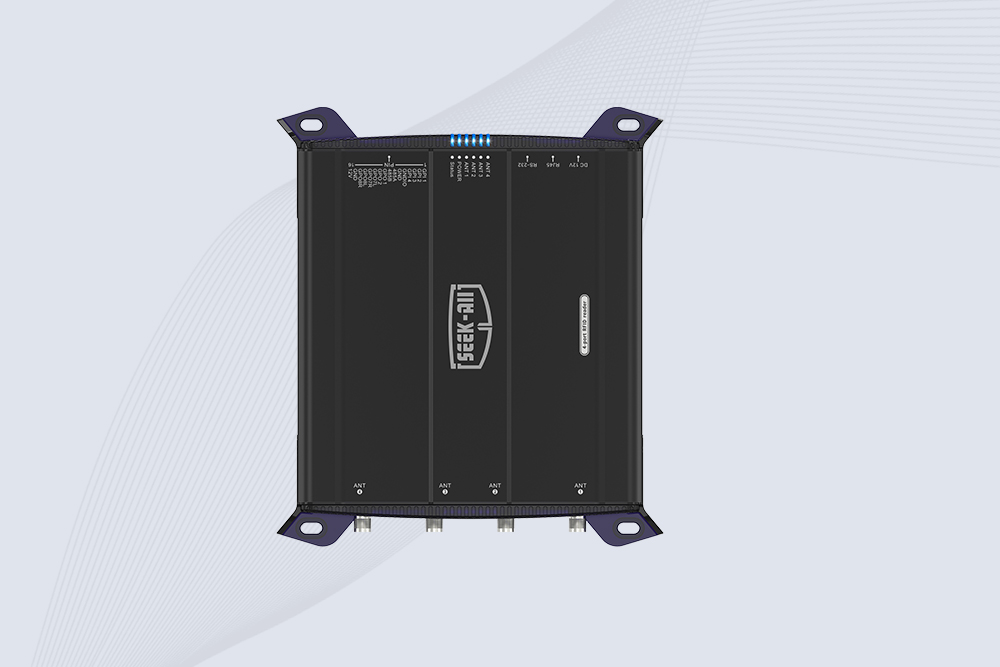
Cykeo CYKEO-R4 industrial UHF RFID Fixed Reader features 4 TNC ports, 400+ tags/sec speed, IP67 housing, and global frequency compliance for vehicle inspection, smart warehouse, and asset management systems.
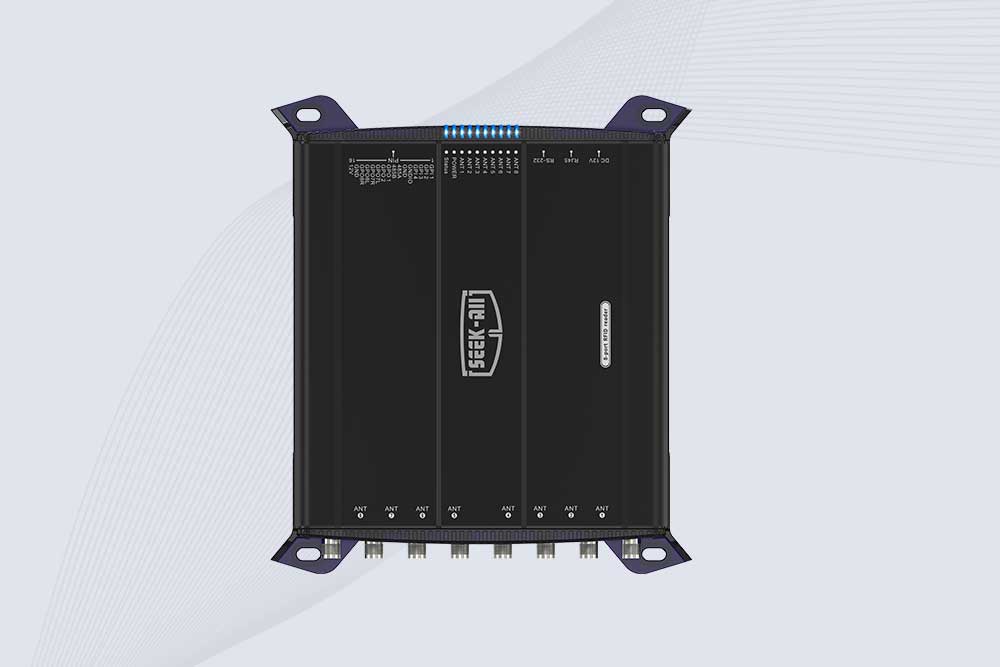
CYKEO CYKEO-R8L Fixed RFID Reader with 8-port UHF design, Impinj-based RF core and up to 20m read range. An industrial Fixed RFID Reader for vehicle inspection, warehouse portals, smart manufacturing lines and secure access checkpoints.
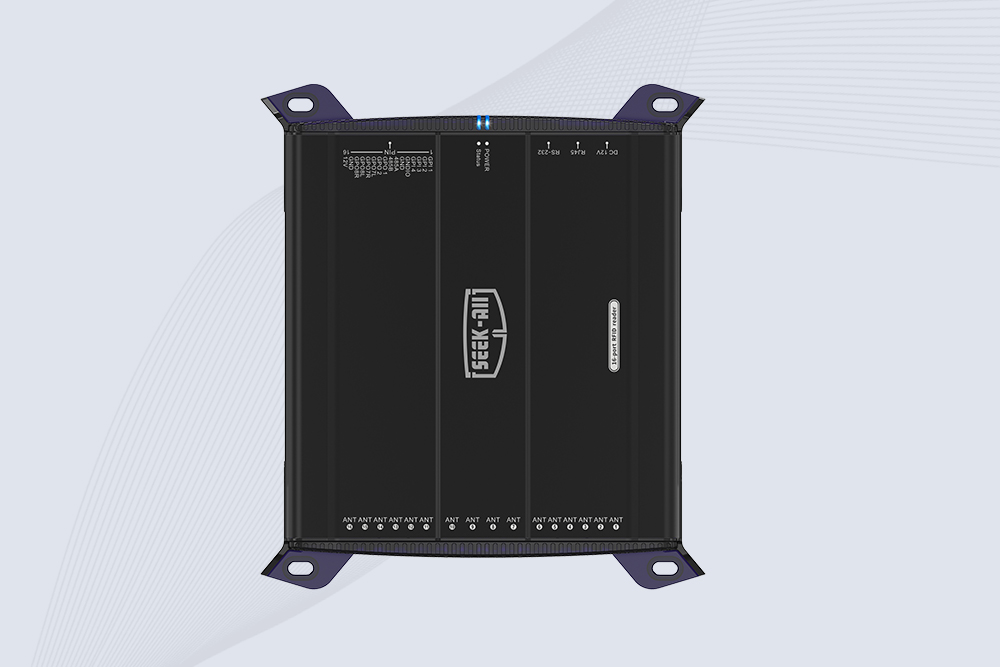
RFID Fixed Reader from CYKEO – the CYKEO-R16L 16-port UHF fixed reader for warehouses, smart cabinets, and production lines. Long-range, multi-tag reading, stable performance for 24/7 industrial use.
RFID Industry Writer | IoT & Asset Tracking Analyst
James writes about RFID technology, asset tracking, and the practical challenges of digital transformation across warehousing, retail, manufacturing, and logistics.
His work focuses on how RFID is applied in real-world operations—improving inventory visibility, automating workflows, and helping businesses manage assets with greater accuracy and efficiency.
He regularly covers topics including UHF RFID, smart cabinets, RFID portals, tool tracking, warehouse automation, and industrial IoT trends..
Wondering what is RFID reader module? We explain the definition, how it differs from finished readers, core components, and the product development cycle. Real guidance for OEMs from CYKEO engineers.
Not sure whether to choose a 4, 8, or 16 port RFID reader? Learn the differences in coverage, cost, and applications to select the right model for your project.
Explore how RFID Pharmacy Security Cabinets boost security, streamline inventory, and ensure compliance in pharmacies. Learn how this cost-effective solution offers long-term savings and peace of mind.
RFID vs barcode for inventory management: Discover which tech reduces stocktakes from days to hours. Real speed tests, hidden costs, and when to switch.
 Cykeo RFID IoT Solution Products R&D Manufacturer