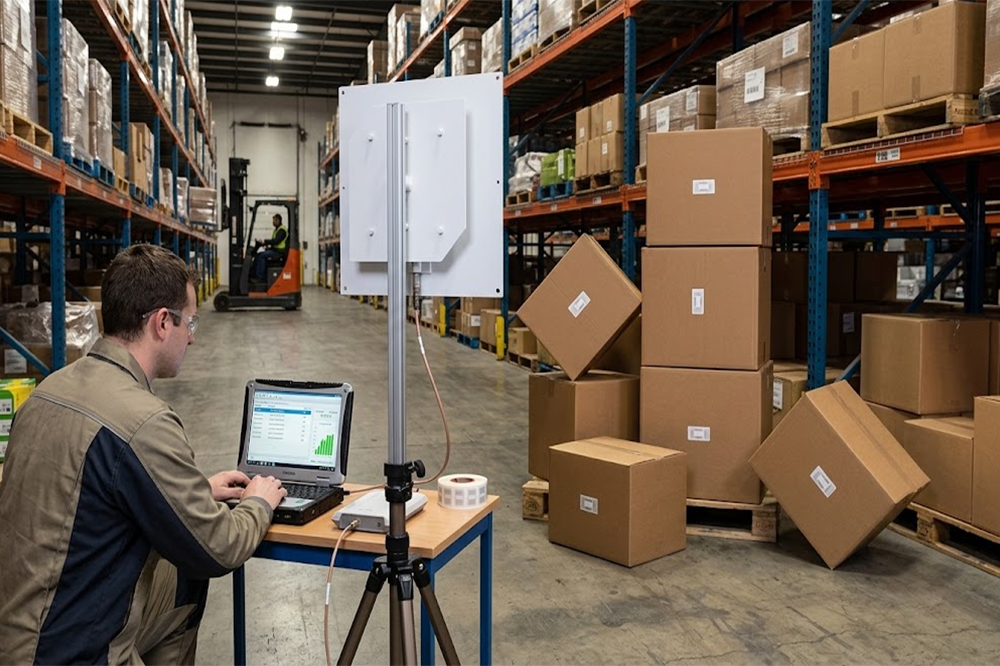
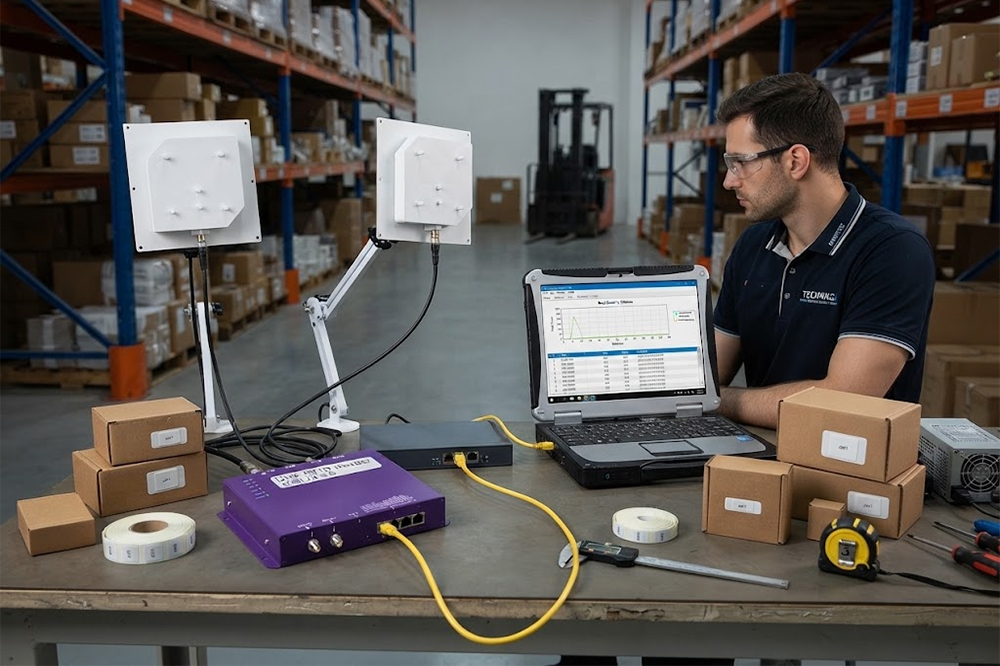
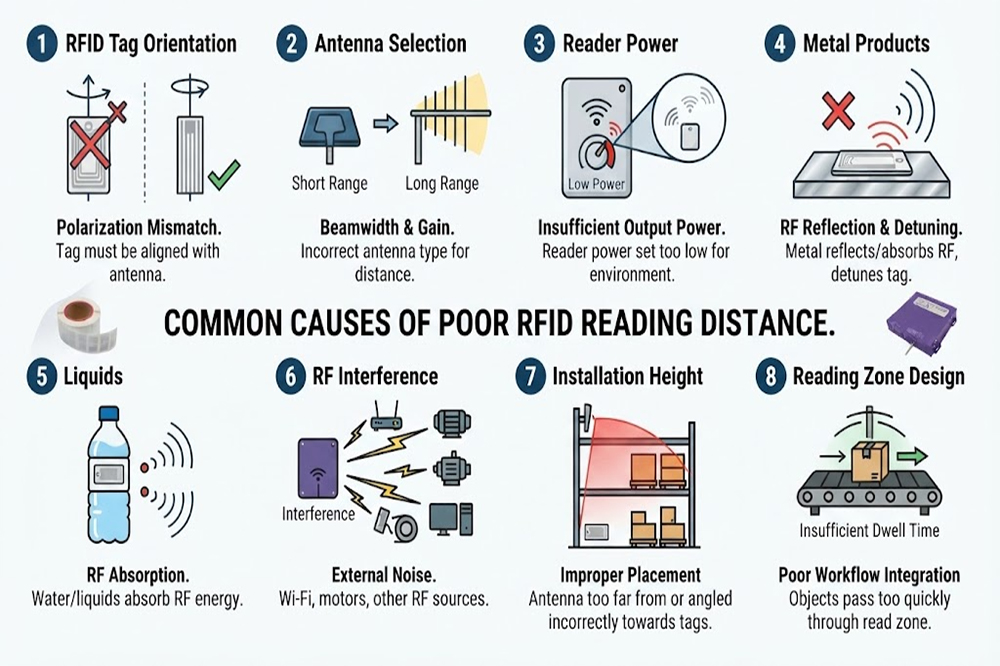
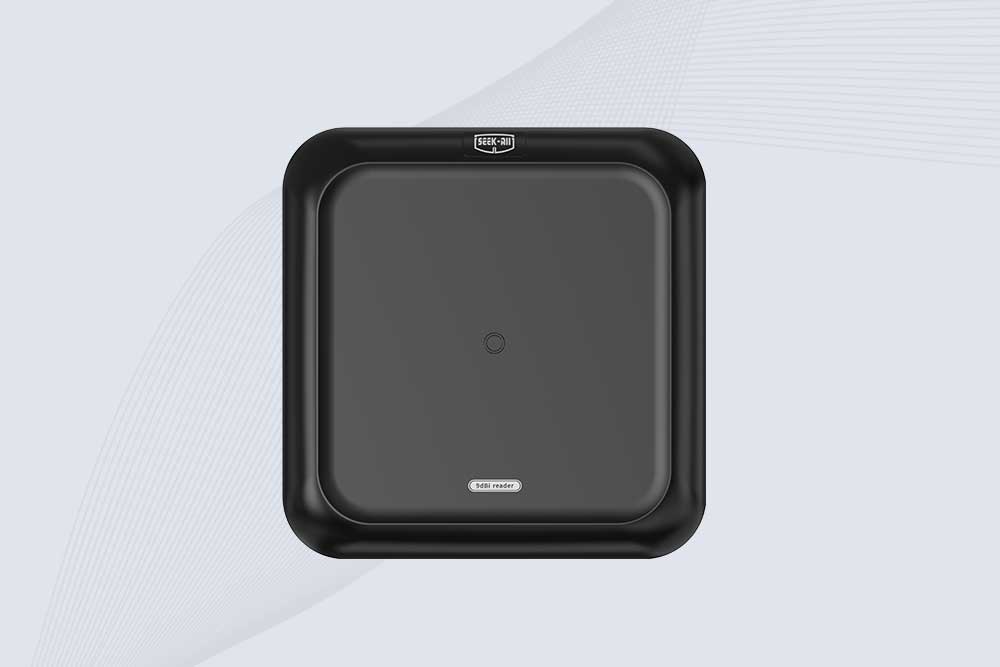
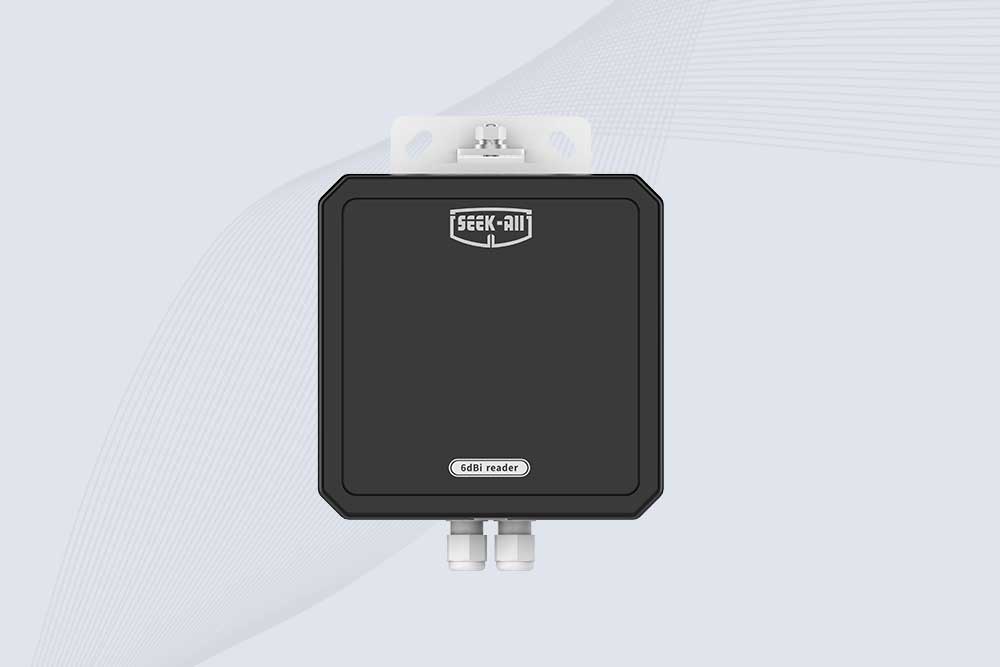
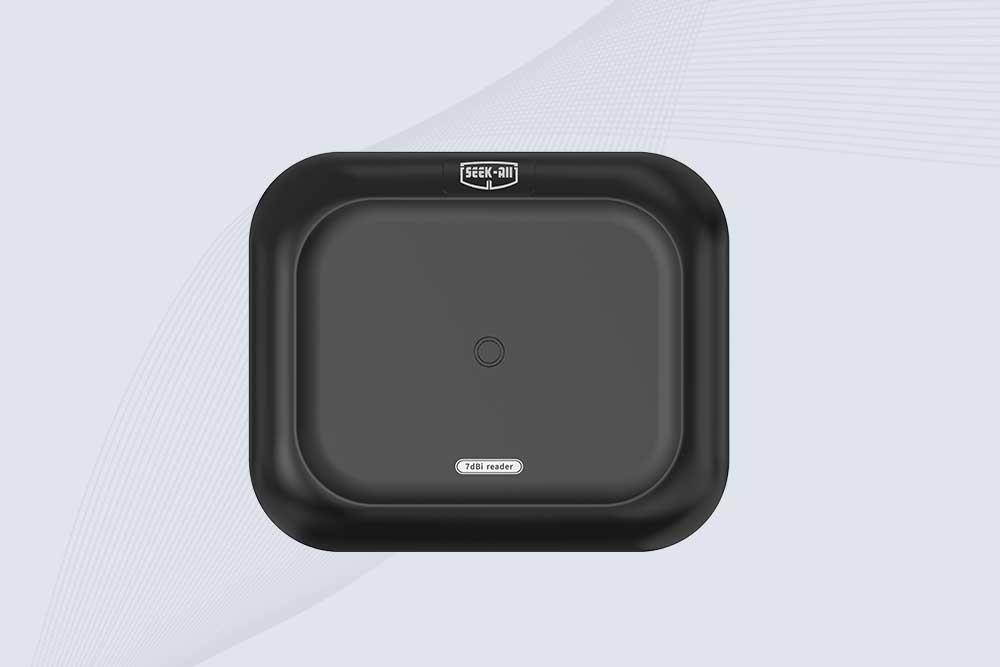
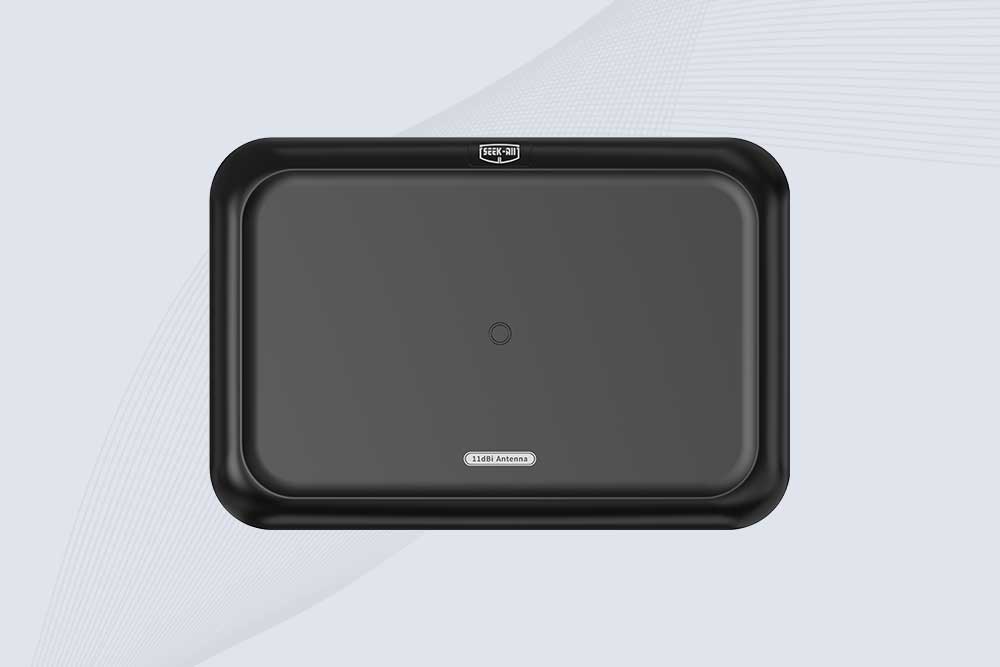
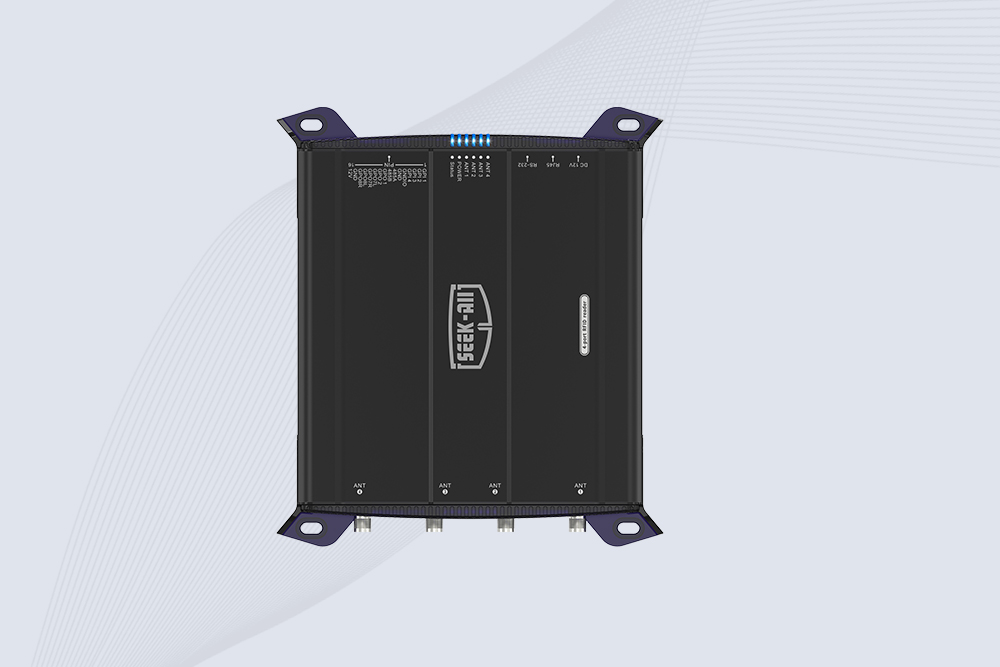
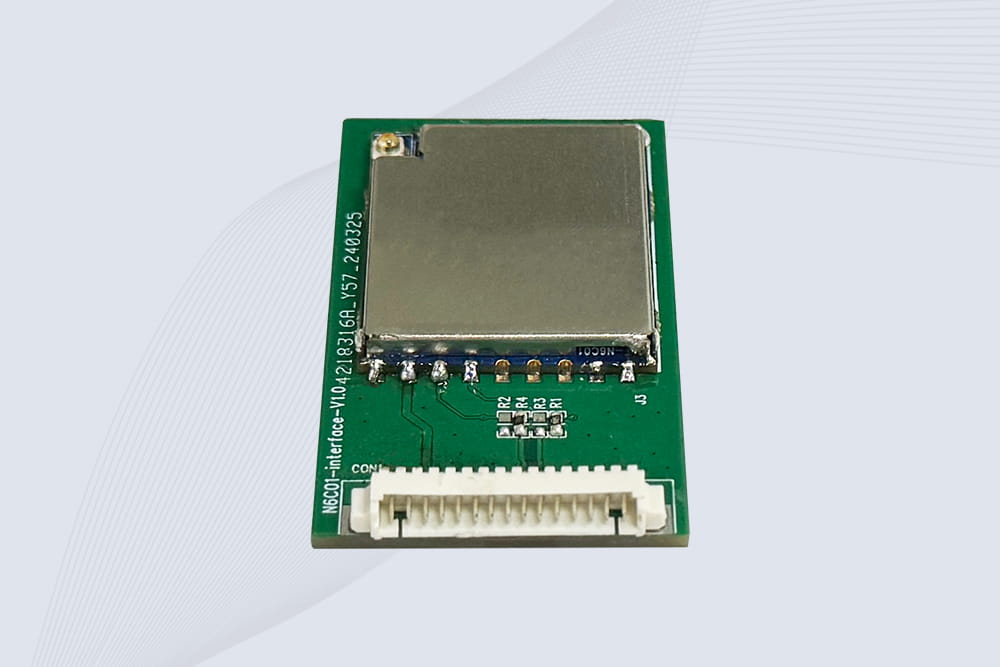
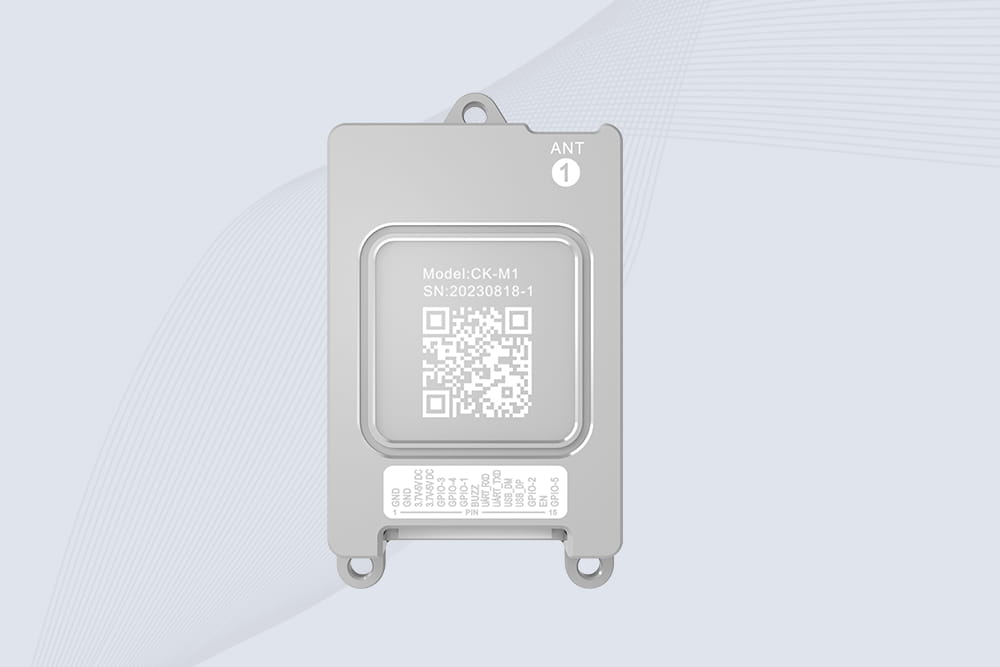
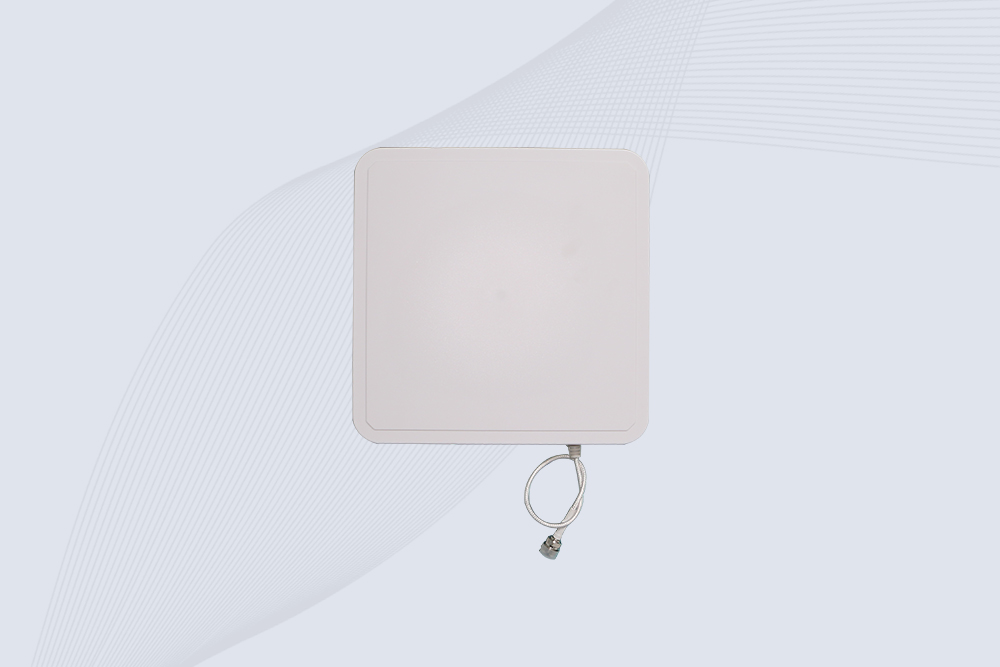
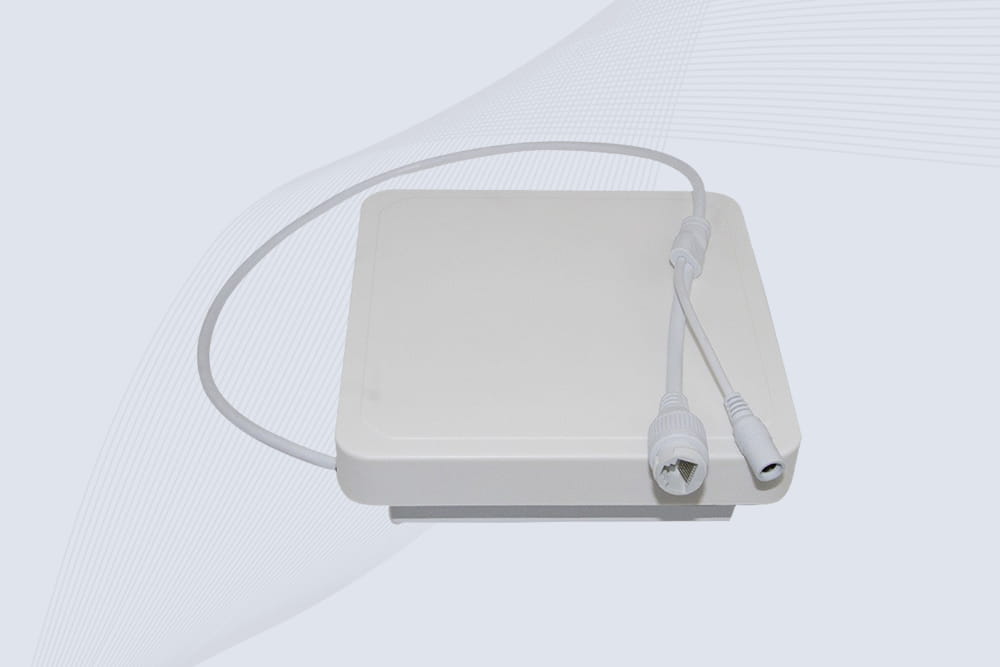
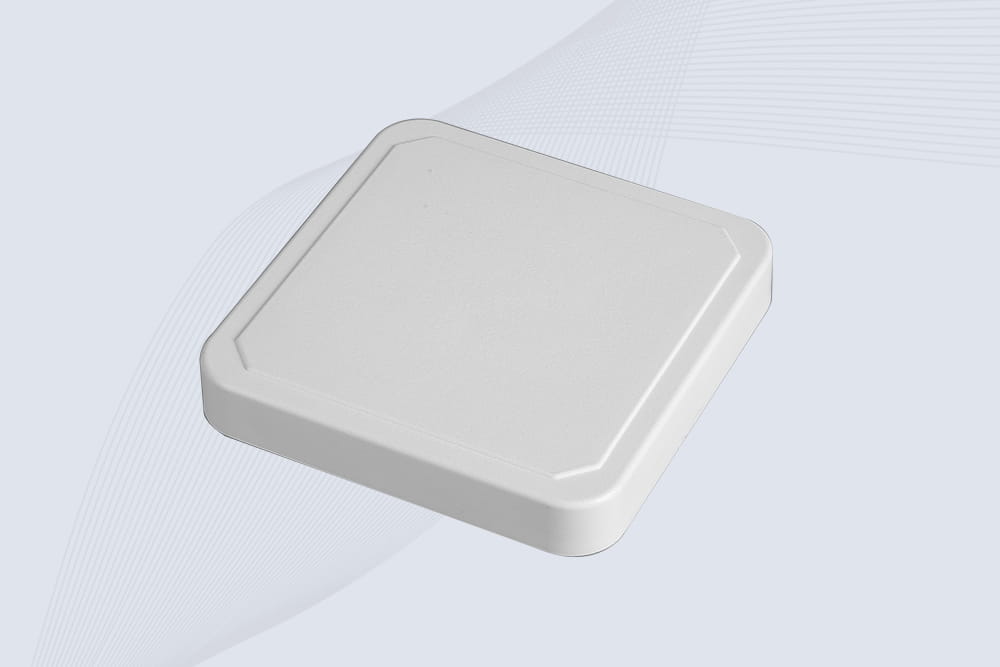
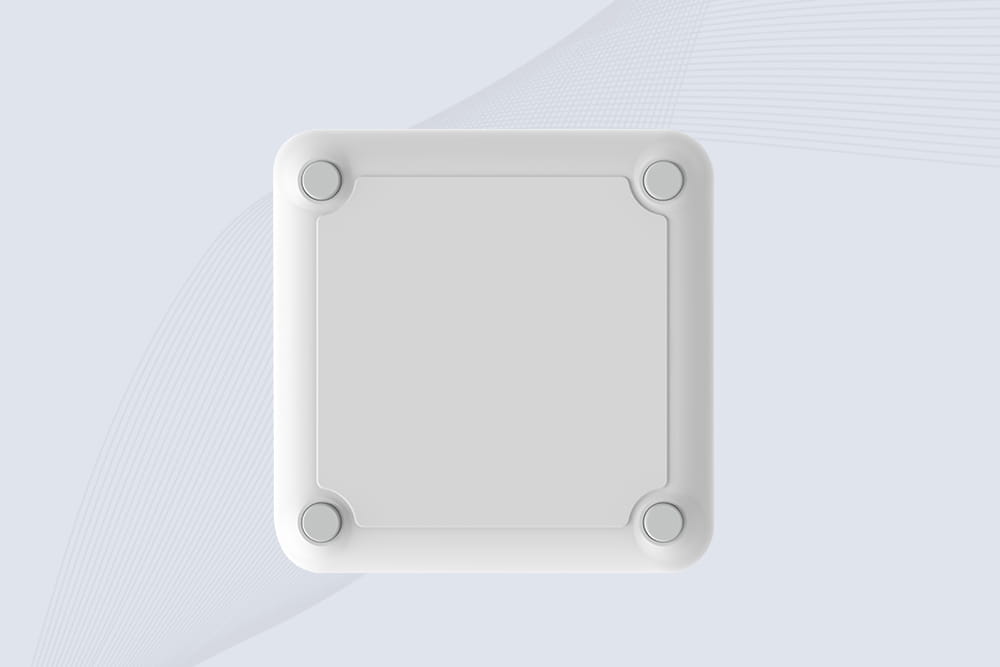
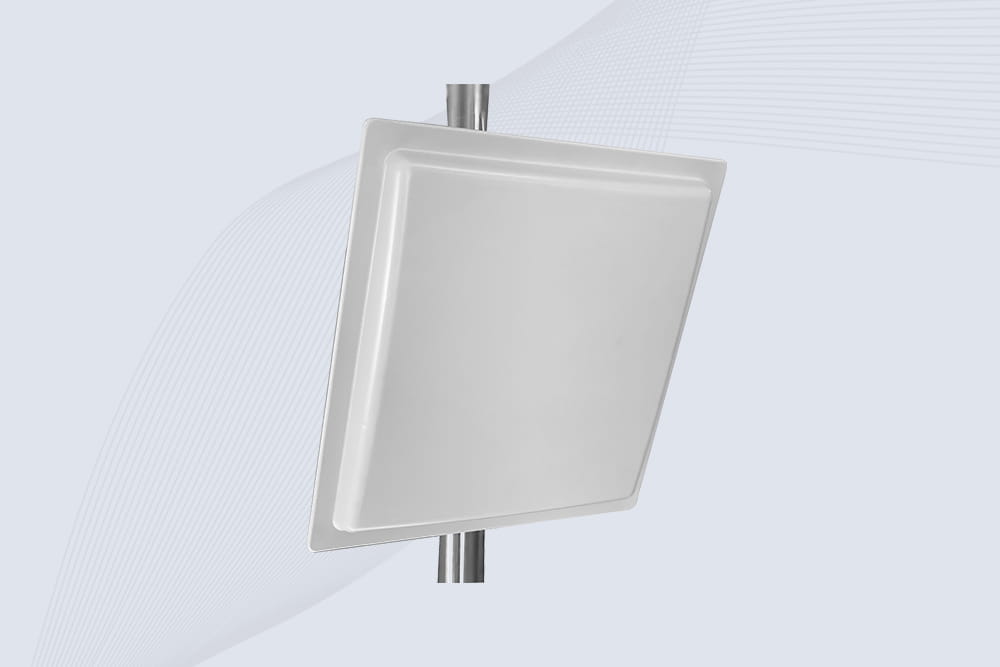
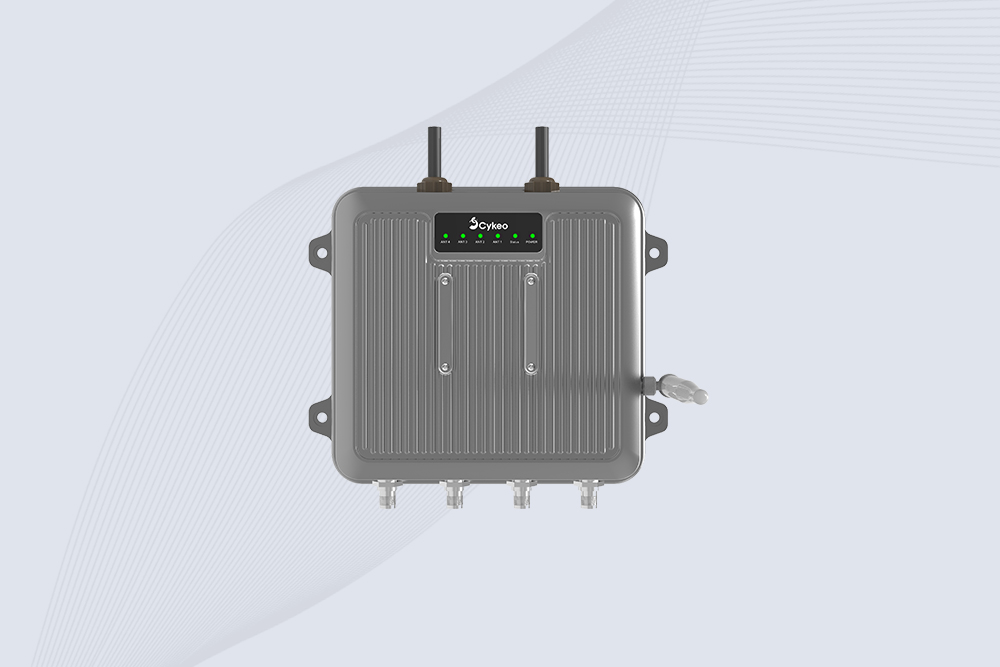
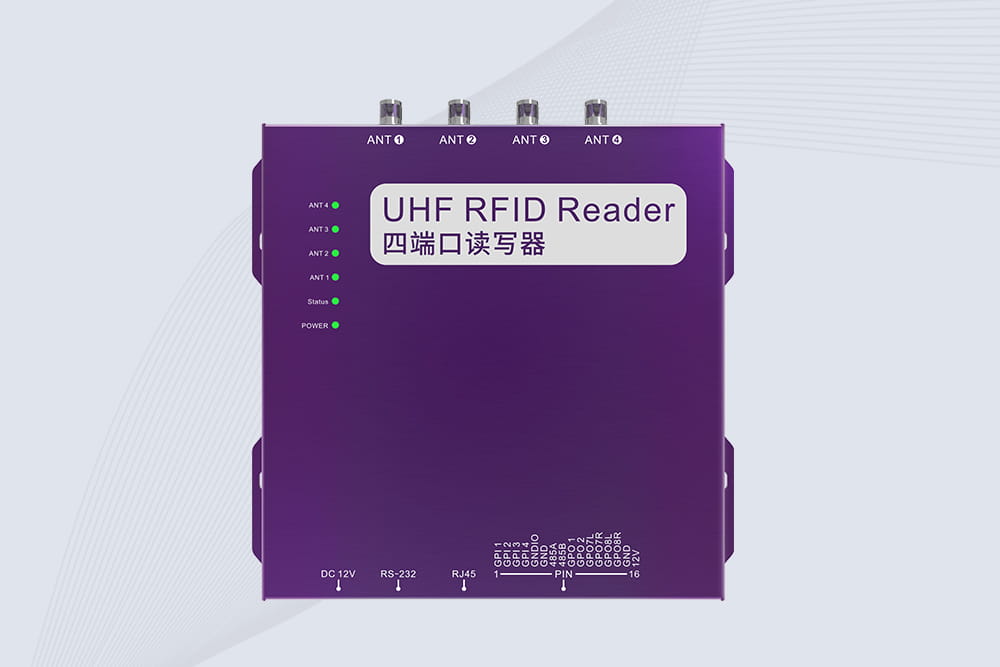
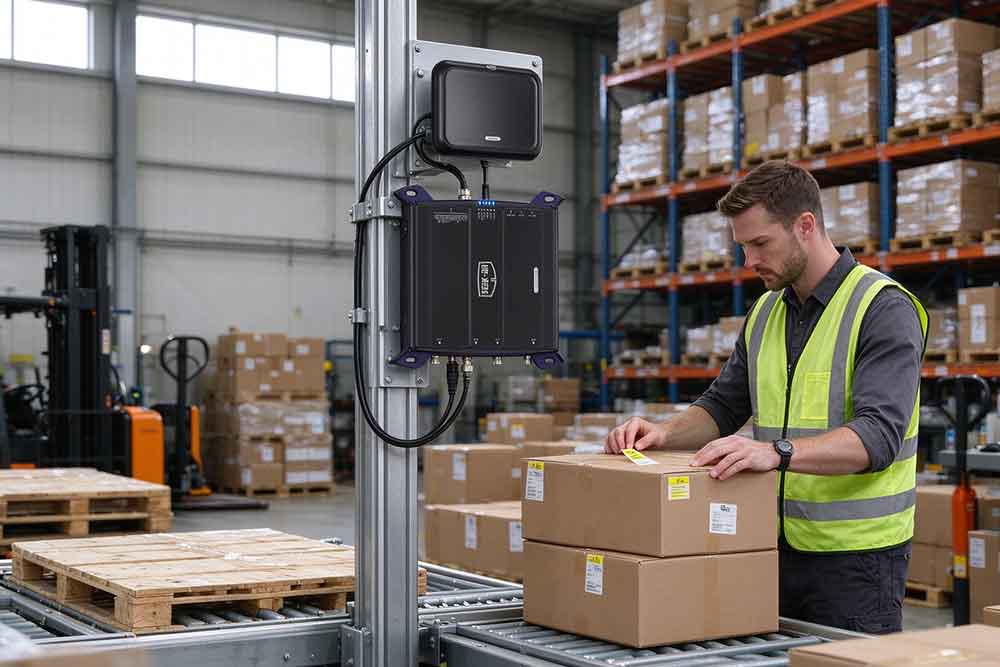
A long range RFID scanner may fail to reach its expected reading distance because of the RFID tag, antenna, tag orientation, reader power, product material, installation position, or surrounding RF environment. The advertised maximum range is only a reference; real project performance needs to be tested with the actual tags and products.
One of the most common questions from RFID customers sounds like this:
“Your reader says 20 meters, but we can only read our tags at 8 meters. Why?”
It is a reasonable complaint.
But in most cases, the reader itself isn’t necessarily the problem.
RFID reading distance is a combination of several things working together. Change the rfid tag, rfid antenna, product material, installation angle, or environment, and the result can change quite a lot.
This is something RFID distributors and system integrators run into sooner or later.
The specification sheet may look perfect.
Then the reader arrives at the customer’s warehouse.
And suddenly the 20-meter reading becomes 10 meters.
Sometimes even less.
The “20-Meter Range” Needs Some Context
When an RFID reader is advertised with a maximum reading distance, that number is usually based on specific testing conditions.
It may involve:
A particular RFID tag
A suitable antenna
Open space
Correct tag orientation
Appropriate reader power
Minimal RF interference
No nearby metal obstruction
Your customer’s warehouse probably doesn’t look like that.
There may be steel racks everywhere.
Pallets are moving.
Tags are attached to different surfaces.
Some tags face the antenna.
Others face sideways.
There may be dozens or hundreds of tags in the same area.
So a real project should never be designed around the maximum number alone.
Two UHF RFID tags can look almost identical from the outside and still perform differently.
One may work well at long distance.
Another may only provide stable reads at a much shorter range.
The antenna design inside the tag matters.
The chip matters.
The substrate matters.
The material where the tag is installed matters too.
So when a customer reports poor reading distance, ask for the exact RFID tag being used.
It sounds obvious, but it is often skipped.
Tag Orientation Is Easy to Ignore
Imagine a directional RFID antenna pointing toward a pallet.
The RFID tags on the front cartons face the antenna.
They read well.
The tags on the side cartons are rotated 90 degrees.
Some read.
Some don’t.
Move the pallet slightly and the result changes again.
This is not unusual.
RFID tags have polarization characteristics, and tag orientation relative to the antenna can influence performance.
For a real project, test the actual tag in several orientations.
Don’t test one perfectly positioned tag and assume the whole pallet will behave the same way.
Antenna Choice Can Make a Big Difference
A long range RFID scanner is only one part of the RF system.
The antenna is equally important.
Suppose a customer needs to read pallets moving through a warehouse door.
A directional antenna may make sense because the reading area needs to be focused toward the lane.
Now consider a different application:
A worker is walking around a storage area searching for tagged products.
A handheld reader with an integrated antenna has a different job.
There is no universal “best RFID antenna.”
The antenna should match the reading zone.
More Power Does Not Always Fix the Problem
This is another common assumption:
“If the reading distance is too short, increase the power.”
Sometimes that helps.
Sometimes it doesn’t.
And sometimes it creates a different problem.
Higher RF power can increase the reading area, but it can also increase unwanted reads.
Imagine two warehouse lanes next to each other.
You want the reader to identify pallets in Lane A.
Increasing power may cause tags in Lane B to become visible too.
Now the system is detecting more tags, but the data is worse.
For RFID system integrators, this is an important distinction:
More reads do not always mean better reads.
Metal Is a Frequent Trouble Spot
Metal and RFID can be a difficult combination.
A standard RFID label designed for cardboard may perform poorly when placed directly on a metal surface.
This can happen with:
Steel tools
Automotive parts
Metal containers
Machinery
Metal racks
Industrial equipment
The customer may say:
“The reader worked perfectly with the carton test.”
Then they attach the same tag to a steel component.
The reading distance drops sharply.
In this situation, the first thing to investigate is the tag.
A tag designed for metal applications may perform much better.
Liquids Can Also Change RFID Performance
Liquids can affect UHF RFID behavior.
This becomes relevant in applications involving:
Bottled liquids
Chemical containers
Food products
Beverage cartons
Liquid-filled plastic containers
Again, the reader isn’t necessarily defective.
The RF environment has changed.
The same tag that performs well on an empty cardboard box may behave differently when attached to a liquid-filled container.
This is why sample testing with the actual product is valuable.
Dense RFID Environments Are More Complicated
A single RFID tag in an open warehouse is easy to test.
Now put 200 tags in the same reading area.
The situation changes.
The reader needs to identify multiple tags and manage the RF communication efficiently.
Tag placement can also affect results.
If tags overlap or sit very close together, performance may differ from an isolated-tag test.
This is especially important for pallet-level and carton-level logistics projects.
Don’t test only one tag if the final application will involve hundreds.
RFID Interference Should Not Be Forgotten
RFID operates using radio signals.
That means the surrounding RF environment can matter.
Depending on the installation, nearby equipment and other RF sources may influence performance.
In a warehouse, the reader may also be surrounded by:
Metal structures
Electrical equipment
Motors
Conveyors
Other RFID readers
Wireless systems
Not every project will experience serious interference.
But if the performance is unexpectedly poor, it is worth checking.
Antenna Position Matters More Than People Expect
A few centimeters can sometimes make a noticeable difference.
The antenna may be mounted too low.
Or too high.
It may point slightly away from the target area.
A pallet may pass too close to the antenna.
Or perhaps the antenna is facing directly into a metal structure.
Before changing the reader, test the physical installation.
Move the antenna.
Change its angle.
Change the height.
Test again.
Sometimes the solution is surprisingly simple.
Cable Loss Can Also Matter
In fixed RFID systems, the antenna is connected to the reader with an RF cable.
Cable length and cable quality can affect system performance.
A long cable run introduces signal loss.
If the installation uses several meters of cable between the reader and antenna, cable selection should be considered.
For a warehouse gate, it may be better to plan the reader and antenna positions carefully rather than simply placing the reader somewhere convenient and running a very long RF cable.
The Reading Environment Is Often the Real Problem
A reader can perform well in a test room and behave differently in the customer’s warehouse.
This is normal.
A warehouse contains:
Steel racks
Concrete walls
Pallets
Forklifts
Products
Moving people
Different tag orientations
The environment changes constantly.
A pallet entering the reading zone may be positioned differently from the previous pallet.
This is why an RFID pilot project is useful.
It allows the solution provider to test actual operating conditions before a large deployment.
Don’t Confuse Reading Distance With Useful Reading Distance
This distinction is worth explaining to customers.
Suppose a reader detects a tag at 20 meters.
That sounds impressive.
But what if the customer only needs to detect tags within a 5-meter zone?
The extra 15 meters may actually cause problems.
For a warehouse gate, the useful question is:
“Can we reliably detect the correct tags inside the required zone?”
Not:
“How far can the reader possibly detect a tag?”
That’s a much more practical engineering question.
A Simple Troubleshooting Sequence
When a long range RFID scanner isn’t reaching the expected distance, I would normally check things in roughly this order.
First: Test the tag
Use a known good UHF RFID tag.
Second: Check orientation
Try different tag positions and angles.
Third: Check the antenna
Confirm antenna type, gain, polarization, and direction.
Fourth: Check reader settings
Review power and RF configuration.
Fifth: Check the product
Test the tag on the actual material.
Sixth: Check the installation
Change antenna height and angle.
Seventh: Check the environment
Look for metal, dense tags, and potential RF interference.
Eighth: Test again
Use the same tag and same measurement method.
This approach is usually more useful than immediately replacing the reader.
A Realistic Example for RFID Distributors
Imagine a distributor sells a long range RFID reader to a customer who wants to track steel tools.
The distributor demonstrates the reader using a standard cardboard RFID label.
The result is excellent.
The customer installs the reader.
Reading distance is poor.
The customer complains.
After testing, they discover that the original tag was designed for cardboard, while the customer’s tools are steel.
They switch to an on-metal RFID tag.
Performance improves significantly.
The reader was never the main problem.
This is why experienced RFID suppliers ask about the tagged object before recommending hardware.
What Should RFID Solution Provider Test?
For a proper project test, I would recommend checking:
Actual RFID tag
Use the tag that will be deployed.
Actual product
Don’t test only with an empty carton.
Actual antenna
Use the planned antenna type and mounting position.
Actual reader
Test the final hardware configuration.
Actual distance
Measure at realistic distances.
Different orientations
Try several tag angles.
Multiple tags
Test the expected tag density.
Real environment
If possible, test inside the customer’s actual warehouse.
The more closely the test matches the final application, the more useful the result becomes.
Why Sample Testing Is Important Before Bulk Orders
For RFID wholesalers and system integrators, this is one of the easiest ways to reduce project risk.
Don’t immediately purchase hundreds of readers because the specification sheet looks good.
Start with a sample.
Test it with:
Customer tags
Customer products
Customer antennas
Customer software
Customer environment
If the test works, move toward the larger order.
If it doesn’t, there is still time to adjust the configuration.
That can save a lot of trouble later.
What to Ask Your RFID Supplier
When evaluating a long range RFID scanner supplier, ask:
What is the recommended tag?
What antenna is used for the claimed reading distance?
What testing conditions were used?
Can I test a sample?
Does the reader support different antenna configurations?
Can the RF power be adjusted?
What communication interfaces are available?
Is API or SDK documentation available?
Can the reader be customized for our project?
Can you support bulk orders after testing?
These questions tell you much more than simply asking:
“How many meters?”
For Long Range RFID Scanner Buyers
If you’re sourcing RFID readers for a project, don’t send only:
“Please quote your long range RFID scanner.”
Give the supplier a little more information.
For example:
Application: warehouse pallet tracking Required range: 8–12 meters Tag type: UHF passive tag Product: wooden pallets and cartons Antennas: 2 per gate Communication: Ethernet Quantity: 50 units
Now the supplier has something useful to work with.
The recommendation is likely to be more accurate, and the quotation will be easier to compare.
For RFID distributors, wholesalers, and system integrators looking for long range UHF RFID scanners, fixed rfid readers, RFID antennas, or customized RFID solutions, provide your application, tag type, target reading distance, product material, antenna requirement, communication interface, and quantity for sample testing and bulk pricing.
SSD-RA06L is an industrial UHF RFID reader with a built-in 6 dBi antenna, 3 m read range, 600+ tags/s, Ethernet, RS232, and optional Wi-Fi, 4G, and PoE.
SSD-RA07L industrial UHF RFID reader with integrated 7 dBi antenna, up to 6 m reading distance, over 600 tags/s, Ethernet, RS232, and optional Wi-Fi, 4G, and PoE.
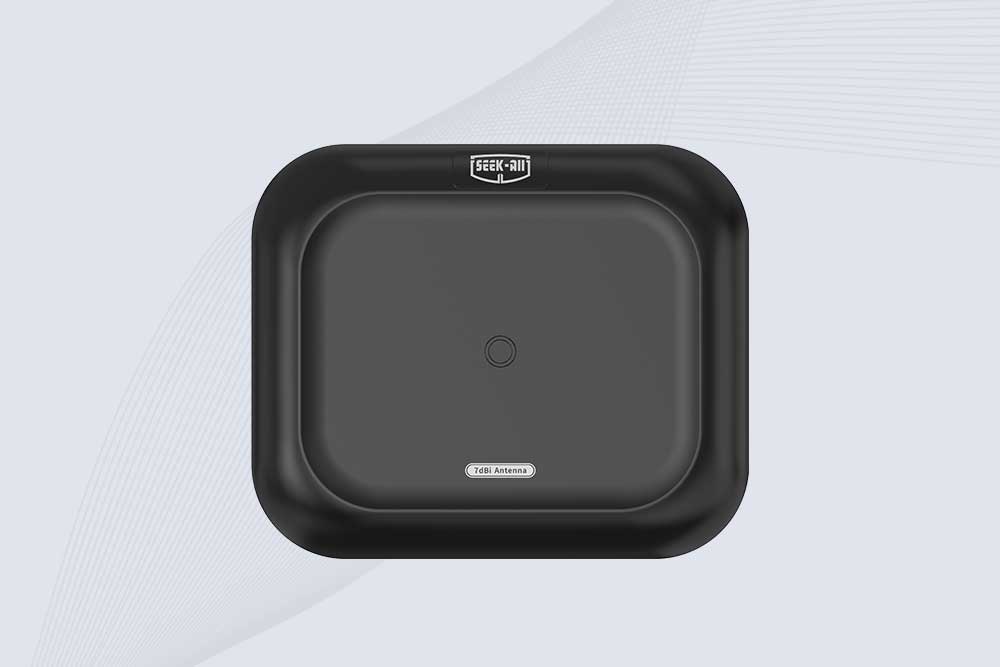
Explore the SSD-A07 UHF RFID antenna with 7 dBi gain, circular polarization, adjustable 840–960 MHz frequency, and 60°/75° beamwidth for stable RFID read/write performance.
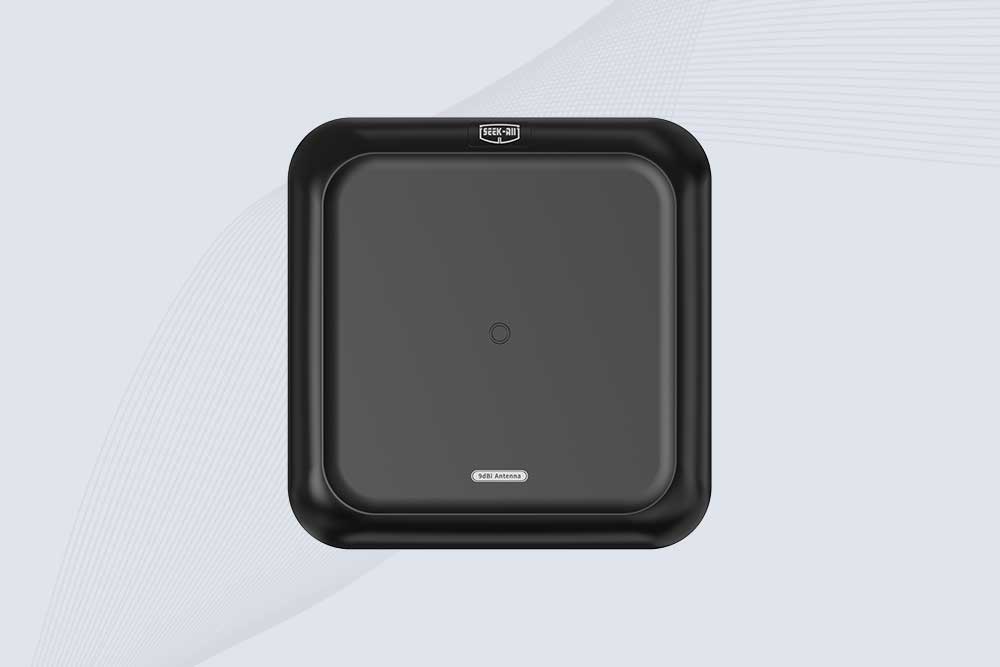
SSD-A06 UHF RFID antenna with circular polarization, adjustable 840–960 MHz frequency, ≥4.5 dBi gain, and a compact directional design for RFID systems.
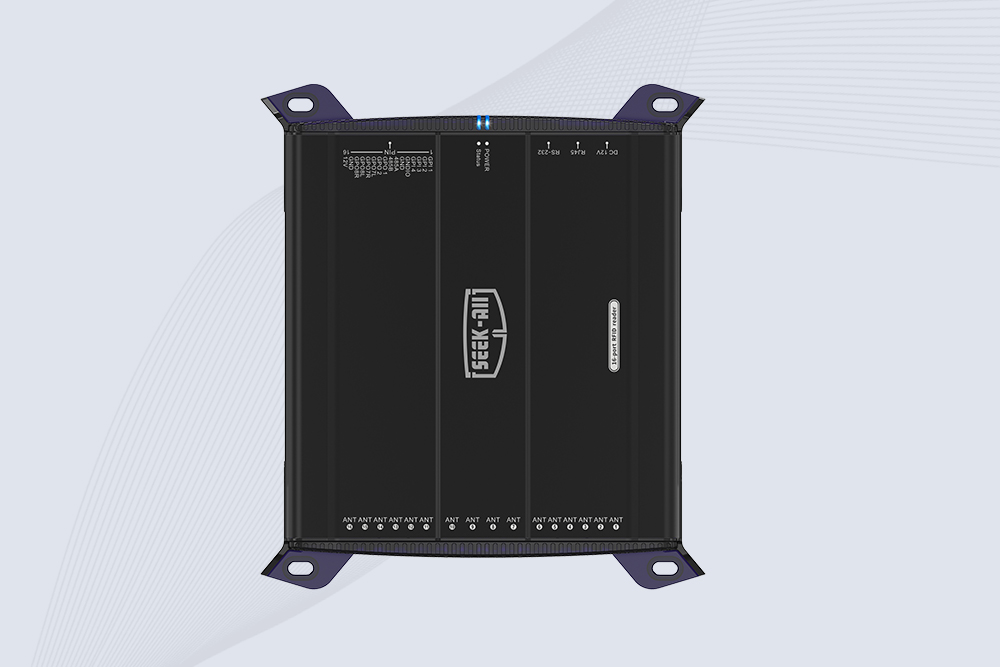
SSD-R16L Multi-Channel RFID Infrastructure for Automated Inventory Management ✔️ 16-Port High-Density RFID Reading Equipped with 16 SMA antenna ports, SSD-R16L supports multi-antenna deployment for warehouses, retail stores, logistics, production lines, and large-area RFID identification. ✔️ High-Speed & Long-Range Performance With up to 33…
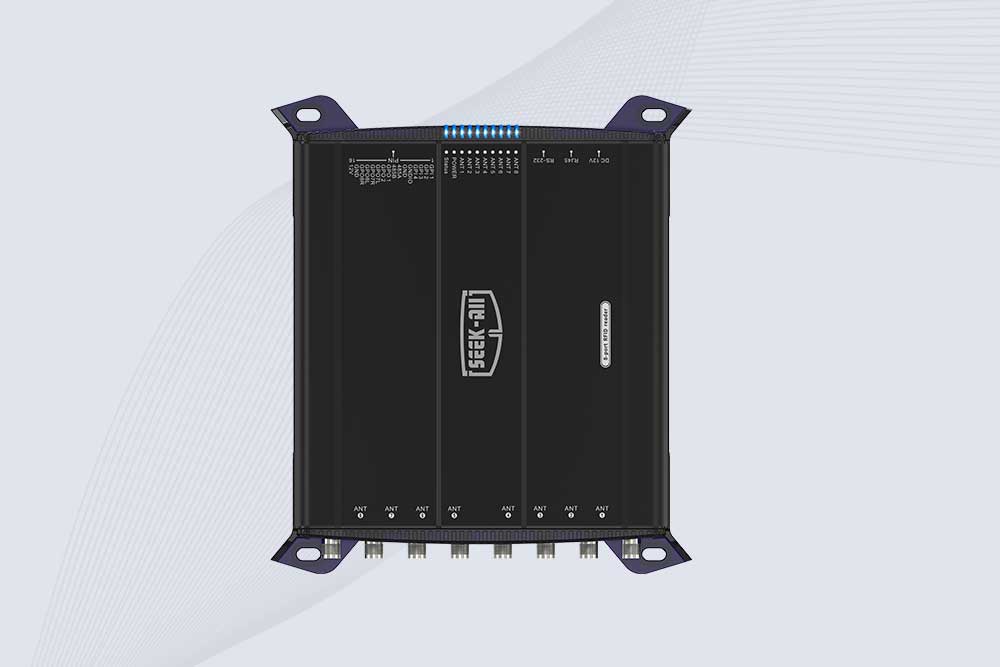
SSD-R8L 8-port UHF RFID reader with 33dBm output, up to 20m reading range and 600+ tags/s recognition. Ideal for warehouse, logistics, retail and asset tracking.
CYKEO Embedded RFID Modules are designed for compact industrial and IoT devices that require stable UHF performance. These UHF RFID Modules support global protocols, flexible power control, and reliable multi-tag reading for smart cabinets, production lines, and asset tracking systems.
CYKEO Embedded RFID Module is built for compact IoT and industrial devices that need stable UHF performance. This UHF module supports global protocols, low power operation, and reliable multi-tag reading for smart lockers, production lines, and always-on RFID systems.
CYKEO CYKEO-M1 drone rfid module is a compact UHF RFID reader module designed for drones and UAV platforms. It supports long-range aerial scanning, fast multi-tag reading, and stable performance in wind, vibration, and outdoor environments.
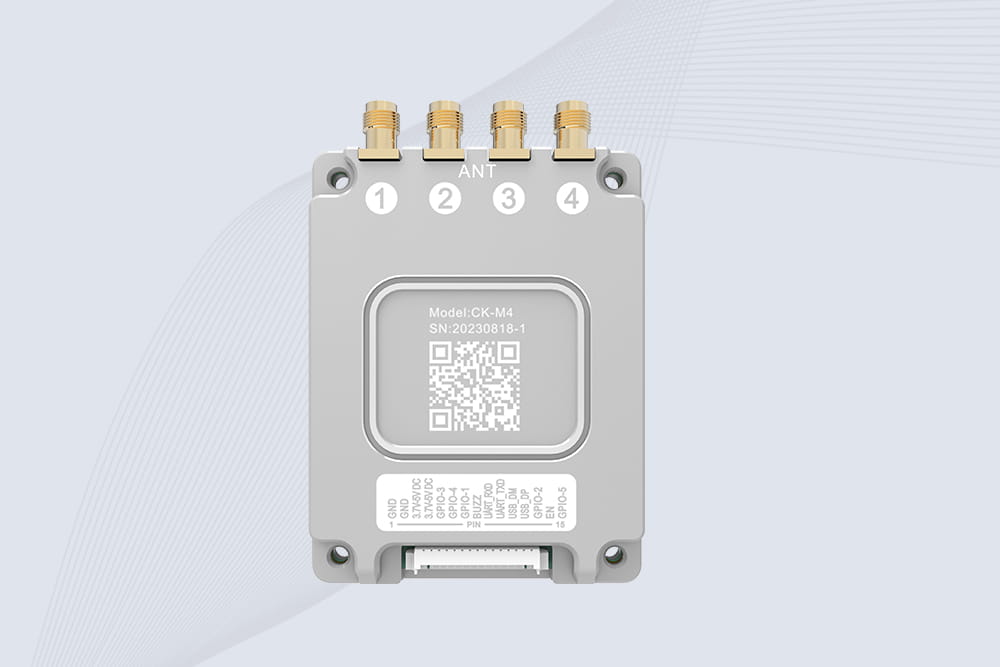
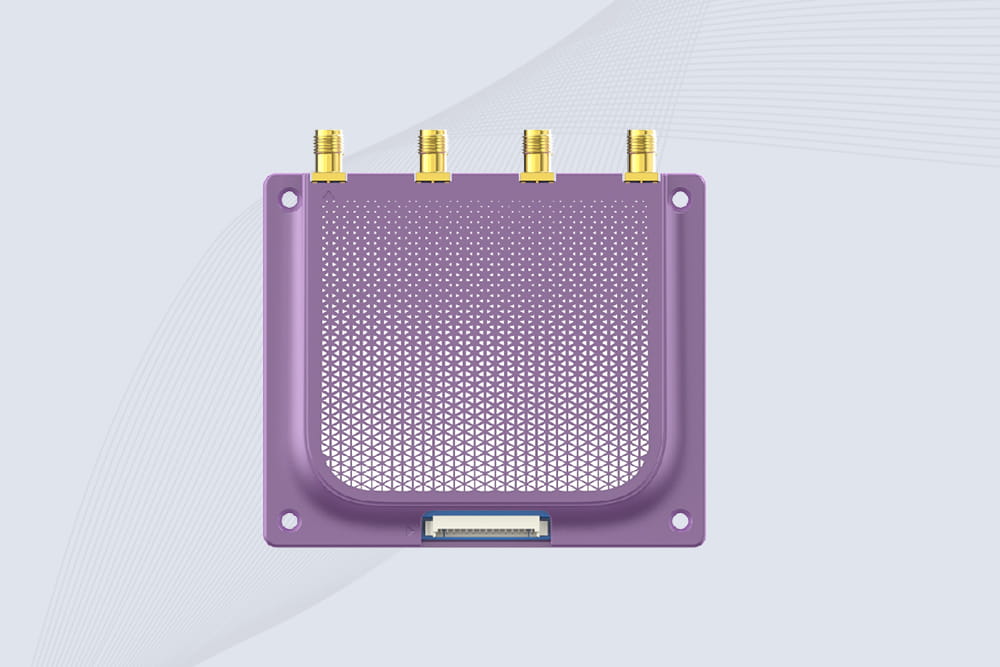
CYKEO CYKEO-M4 RC522 RFID Module is an industrial-grade UHF RFID reader with 4 ports, supporting ISO, EPC, and GB protocols. High-speed, accurate reading for IoT, automation, and warehouse applications.
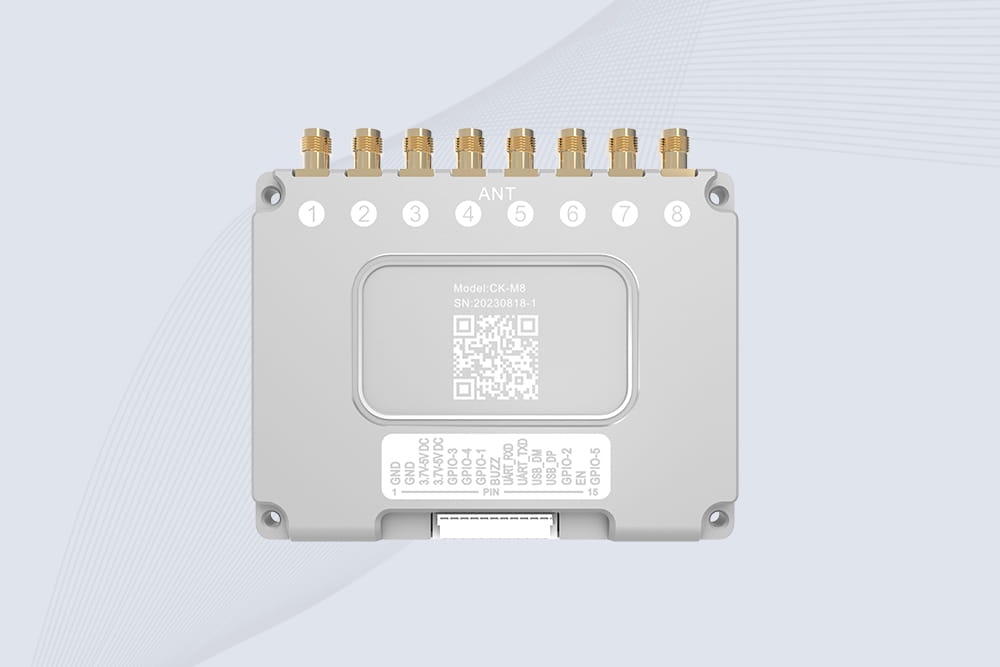
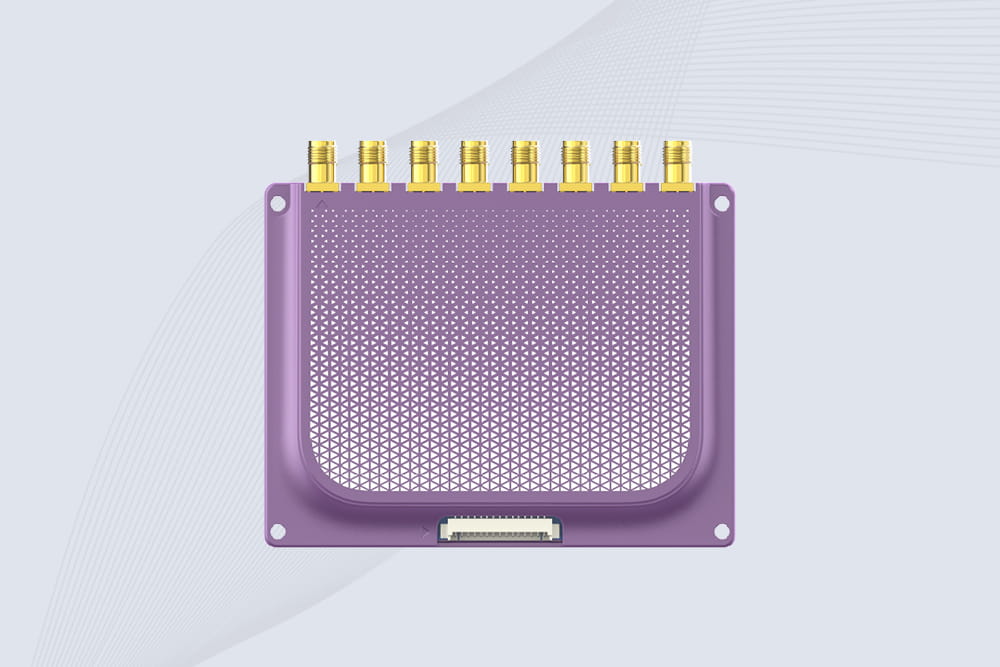
CYKEO CYKEO-M8 Module RFID is an 8-port UHF R2000 RFID Module designed for high-density, multi-tag environments. Stable 33dBm output, ISO & GB protocol support, ideal for warehouses, factories, and automated systems.
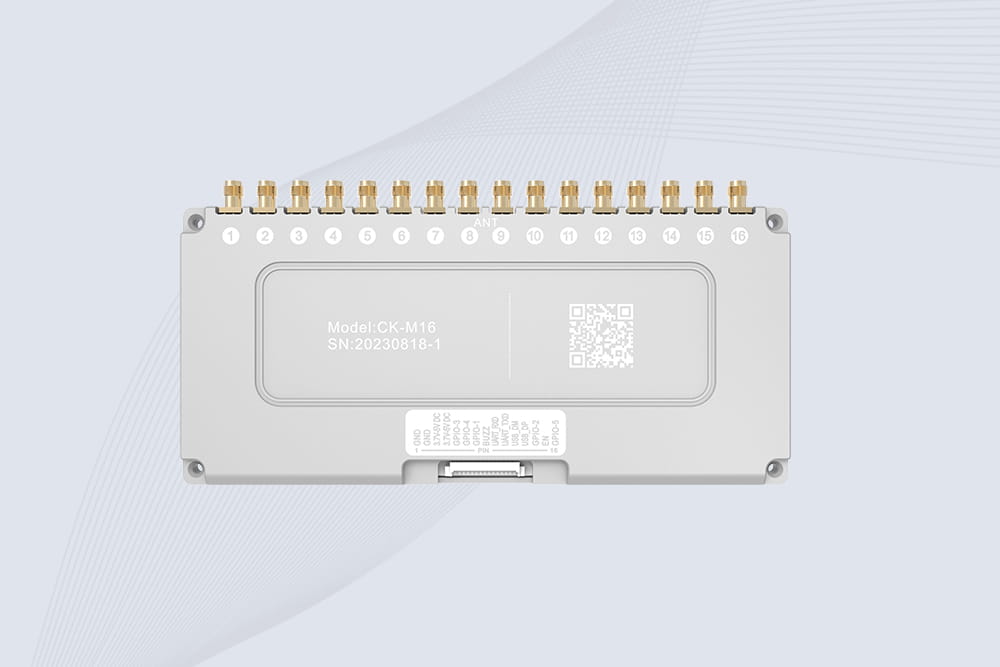
CYKEO CYKEO-M16 RFID Module is a 16-port UHF RFID reader module based on the R2000 chipset. Designed for dense tag environments, it supports ISO and GB standards and delivers stable multi-antenna control for industrial automation.
The CYKEO CYKEO-M16L RFID Reader Module is a 16-channel UHF RFID core designed for dense tag environments. With adjustable 33dBm output, multi-protocol support, and stable multi-antenna control, this RFID Tag Reader Module fits industrial automation, warehouse systems, and large-scale IoT deployments.
CYKEO CYKEO-M8L module RFID is a compact industrial UHF module built for dense tag and multi-antenna environments. With 8 RF ports, adjustable 33 dBm output, and ISO & GB protocol support, it is widely used in factories, warehouses, and automated tracking systems.
CYKEOCYKEO-M4L UHF RFID Module is a compact 4-channel RFID tag reader module designed for dense tag environments. Supporting ISO and GB protocols, it delivers stable reads up to 10 meters for industrial and IoT systems.
Cykeo CYKEO-A11 UHF RFID reader antenna delivers 11dBi gain, 840-960MHz frequency range, and IP65 ruggedness for retail, logistics, and industrial RFID systems. Features low VSWR and easy installation.
CYKEO Antenna RFID Reader delivers stable long-range UHF performance with a 10.5dBi directional design, built for warehouses, conveyor portals, and industrial RFID systems. This rfid reader antenna provides 20m+ read distance and rugged IP67 protection.
Cykeo CYKEO-A5B industrial Linear RFID Antenna delivers 5dBi gain, ≤1.5:1 VSWR, and IP65 rugged design for warehouse, production line, and logistics UHF systems.
Cykeo’s CYKEO-B12 Long Range RFID Antenna delivers 15m+ read range with 12dBi gain, IP65 rugged design, and global 840-960MHz UHF support. Ideal for warehouse/logistics asset tracking.
Cykeo CYKEO-B10 Long Distance RFID Antenna offers 10dBi gain, 840-960MHz frequency range, IP65 rating, and 20m+ coverage for logistics/warehousing/ETC systems. Low VSWR ensures stable signal transmission.
Cykeo CYKEO-A6 UHF RFID panel antenna features 6dBi gain, 840-960MHz broadband, IP65 metal-ready housing for logistics/smart retail. 18mm ultra-thin design with tool-free mounting.
Cykeo CK-A3 industrial antenna RFID UHF offers 5m+ tag detection, ≤1.3:1 VSWR, IP65 rugged design, and global UHF spectrum compatibility (840-960MHz) for warehouses, factories, and retail.
Cykeo CYKEO-B5 directional RFID antenna provides 5dBi gain with 60° narrow beamwidth for precise inventory tracking. IP65-rated, global UHF frequency support, and low VSWR.
Create your own high-performance DIY RFID antenna! 5dBi gain, 840-960MHz tunable, step-by-step guides. Compatible with Arduino, Raspberry Pi, and commercial UHF readers.
Cykeo CYKEO-A7 Flexible RFID Antenna features 840-960MHz wideband tuning, 7dBi gain, and IP68 rating for medical/retail/industrial curved surface deployments. 98% read accuracy with peel-and-stick installation.
Cykeo CYKEO-B5A industrial Passive RFID Antenna delivers 5dBi gain, 70° beamwidth, and -40°C~55°C operation for warehouses/smart cabinets. Compatible with Zebra/Impinj readers.
Cykeo’s CYKEO-A9B High Gain RFID Antenna delivers 15m+ read range with 9dBi amplification. Features IP54 rugged design, 840-960MHz bandwidth, and 80° beamwidth for warehouse/manufacturing RFID systems.
Cykeo’s enterprise-grade 8dbi Impinj RFID Antenna 10m+ read range with 840-960MHz tuning. Features IP65 housing, 1.4 VSWR, 35° beamwidth for retail/warehouse RFID systems.
Cykeo CYKEO-A9 industrial UHF RFID antenna delivers 9dBi gain, 840-960MHz frequency range, and IP65 protection for warehouse/logistics/retail RFID systems. Features N-type connector and ≤1.3:1 VSWR.
CYKEO UHF RFID Antenna built for long-distance and industrial applications. This antenna rfid uhf delivers strong gain, outdoor durability, and reliable tag performance in warehouses, yards, and vehicle ID systems.
CYKEO Antenna RFID delivers reliable long-range UHF performance in warehouses, retail shelves, and cold-chain environments. This compact uhf rfid antenna provides stable reads with circular polarization and ultra-wide 840–960 MHz support, ideal for industrial tracking, smart shelves, and asset monitoring.
Cykeo’s CYKEO-C8 UHF RFID antennas delivers 8dBi gain, 840-960MHz full-band coverage, and IP65 ruggedness for manufacturing/warehouse RFID systems. Industrial RFID Antennas Features
Cykeo’s 8dBi UHF RFID antenna and reader kit delivers 10m+ range, 840-960MHz broadband, and IP65 ruggedness for factories, warehouses, and logistics. ISO 18000-6C & EPC Gen2 certified.
Cykeo’s CYKEO-A12C UHF Large RFID Antenna delivers 12dBi gain, 840-960MHz global frequency, IP65 ruggedness for logistics/warehousing/automotive. 40° beamwidth ensures stable 15m+ tag reads.
CYKEO Near Field RFID Antenna provides precise 5–30 cm reading for shelves, cabinets, and workstations. This compact rfid shelf antenna delivers stable short-range performance around metal and clutter, ideal for pharmacies, libraries, and electronics sorting.
Cykeo’s industrial long range RFID reader delivers 20-meter scanning, 500+ tags/sec speed, and IP67 waterproof design for automated warehouses, logistics, and harsh environment applications.
Cykeo’s CYKEO-RA6L industrial RFID long range reader features 20m read distance, 500 tags/sec speed, and IP67 protection. Ideal for warehouse automation, manufacturing WIP tracking, and smart logistics. Supports ISO 18000-6C/6B protocols.
CYKEO Long Range RFID Tag Reader built for outdoor and industrial operations. This Outdoor RFID Reader delivers 20m read distance, fast tag processing, and IP67 durability for wide-area tracking.
Cykeo CYKEO-RA12L industrial Long Range RFID Reader delivers 20m read range, 200+ tags/sec scanning, and IP67 protection for manufacturing/logistics applications. Supports ISO 18000-6C/GB protocols.
Cykeo CYKEO-C1 industrial Forklift RFID Reader features 20m read range, 600 tags/sec scanning, Impinj R2000 chipset, and IP67 rugged design. Ideal for warehouse logistics and manufacturing. Supports ISO 18000-6C/6B protocols.
Cykeo CYKEO-R4 industrial UHF RFID Fixed Reader features 4 TNC ports, 400+ tags/sec speed, IP67 housing, and global frequency compliance for vehicle inspection, smart warehouse, and asset management systems.
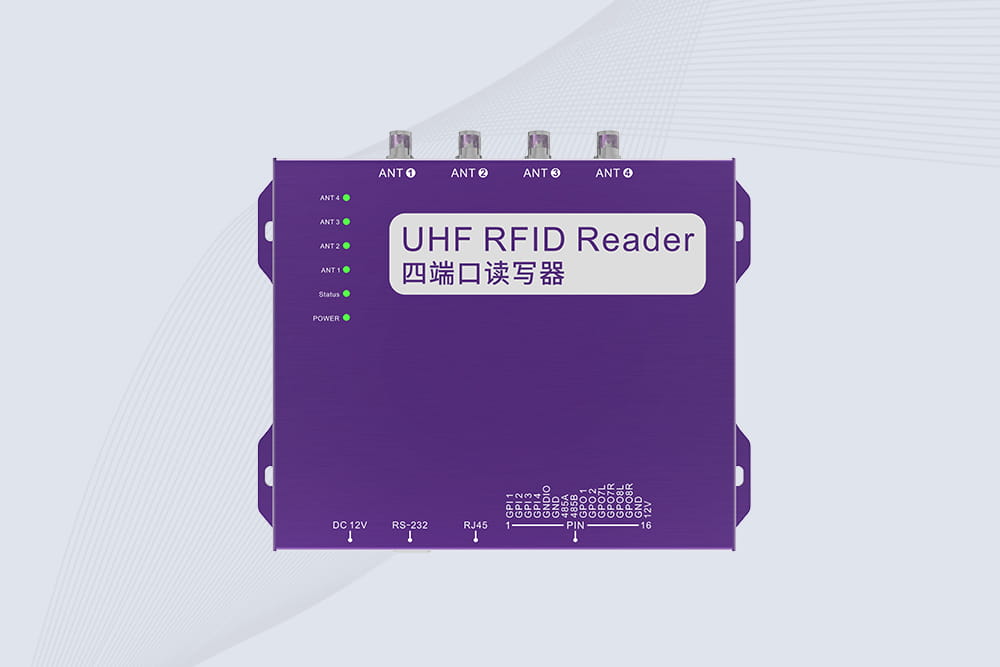
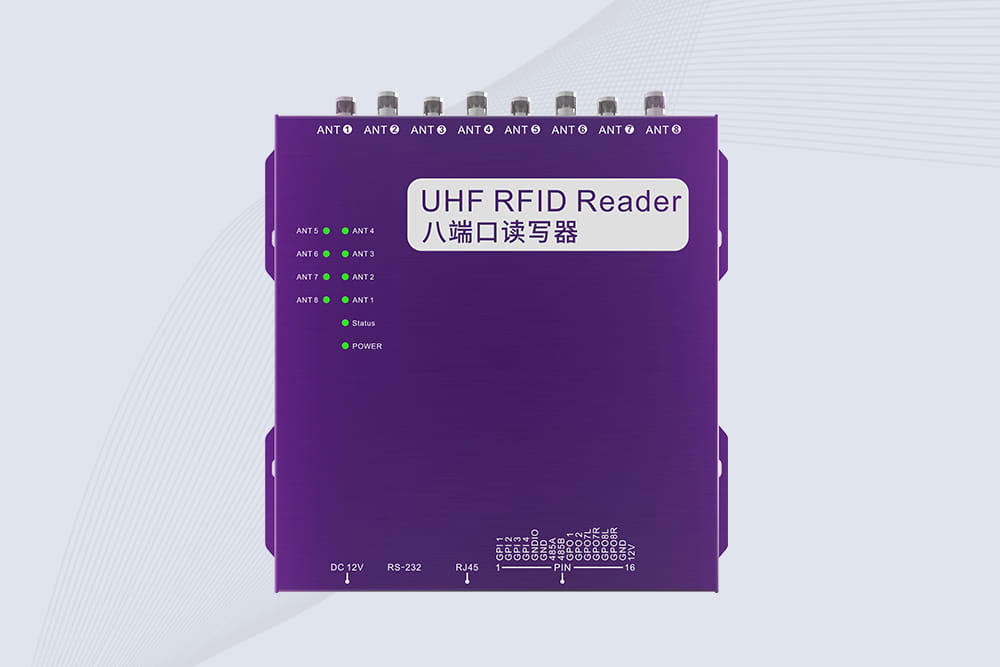
CYKEO CYKEO-R8L Fixed RFID Reader with 8-port UHF design, Impinj-based RF core and up to 20m read range. An industrial Fixed RFID Reader for vehicle inspection, warehouse portals, smart manufacturing lines and secure access checkpoints.
RFID Industry Writer | IoT & Asset Tracking Analyst
James writes about RFID technology, asset tracking, and the practical challenges of digital transformation across warehousing, retail, manufacturing, and logistics.
His work focuses on how RFID is applied in real-world operations—improving inventory visibility, automating workflows, and helping businesses manage assets with greater accuracy and efficiency.
He regularly covers topics including UHF RFID, smart cabinets, RFID portals, tool tracking, warehouse automation, and industrial IoT trends..
A practical guide on how to increase the range of your RFID reader. Learn about antenna selection, power tuning, environmental factors, and optimal tag placement for CYKEO systems.
Learn proven strategies to minimize RFID tag read errors in high-interference environments. Optimize antenna placement, signal settings, and tag selection for reliability.
RFID in a warehouse management system uses radio waves to identify tagged inventory and capture stock movement data. Integrated with readers and warehouse so...
 Cykeo RFID IoT Solution Products R&D Manufacturer