 Cykeo RFID IoT Solution Products R&D Manufacturer
how to set up rfid card
105UHF RFID cards are set up by matching the card and reader, configuring regional frequency parameters, writing supported EPC or user data, and verifying the r...
MoreAll RFID Product
UHF RFID works by transmitting radio waves from a reader to passive tags, which respond by backscattering encoded data. The reader captures each tag’s identifier through its antenna, manages multiple responses, and sends the resulting data to connected software.
UHF RFID is a radio system, not a wireless barcode.
A typical read begins when the reader sends RF energy through an antenna. A passive tag within the electromagnetic field uses that energy to power its integrated circuit. The tag then modulates the reflected signal, sending stored information back toward the reader.
For a warehouse pallet, that sequence can happen while the pallet is moving.
The operator does not need to aim a scanner at a label.
The main components are:
| Component | Role in UHF RFID |
|---|---|
| UHF RFID Tag | Stores and returns identification data |
| RFID Reader | Generates RF energy and receives tag responses |
| RFID Antenna | Transmits and receives RF signals |
| Middleware | Filters and processes tag observations |
| Business System | Converts RFID data into inventory or operational events |
The most common passive UHF RFID systems used in supply-chain applications operate under EPCglobal Class 1 Gen 2 / ISO/IEC 18000-63 specifications. GS1 identifies EPC/RFID as an important technology for automatic identification and data capture across supply chains.
This is one of the defining characteristics of passive UHF RFID.
The reader supplies the RF field.
When a passive tag enters that field, its antenna receives energy. The tag’s chip uses the available energy to operate and communicate.
Instead of generating a powerful radio transmission like a conventional active transmitter, the tag changes the characteristics of the signal being reflected back toward the reader.
This is known as backscatter.
The distinction sounds small.
In an actual warehouse, it is the reason thousands of inexpensive passive tags can operate without individual batteries.
A UHF RFID reader controls the communication session.
It transmits RF energy, issues commands, listens for tag responses, and decodes the returned information.
A reader may also adjust parameters such as:
Cykeo’s fixed UHF RFID readers support EPC C1G2 / ISO 18000-6C applications and provide adjustable RF output on selected models. For example, the CYKEO-R16L publishes a maximum RF output of 33 dBm with 1 dB adjustment steps.
That adjustment matters more than it might appear.
Maximum power is not automatically the correct power.
A warehouse pallet rarely carries one RFID tag.
It may carry dozens—or hundreds.
If every tag answered simultaneously, the reader would receive overlapping responses.
UHF RFID therefore uses anti-collision mechanisms to organize tag communication.
The reader can inventory tags within the RF field and progressively identify individual responses.
This is why UHF RFID can read multiple tagged objects in a short period without requiring an operator to scan them one at a time.
GS1’s RFID guidance describes the ability of RFID to identify multiple objects without requiring direct line-of-sight as a major distinction from optical barcode scanning.
There is a practical caveat.
More tags does not automatically mean more successful reads.
Tag orientation, product material, antenna polarization, RF reflections, interference, and reader configuration all influence the result.
UHF RFID is often marketed with a headline reading distance.
Field engineers tend to ask a different question:
At what distance, with which tag, on which product, under which RF conditions?
That is the useful measurement.
Cykeo’s CYKEO-R16L specifications list an EPC reading distance of up to 15 meters under specified conditions, with a maximum output of 33 dBm.
A real installation can produce a different result.
For example, a cardboard carton with a properly positioned general-purpose UHF tag is a relatively friendly RF target. A metal container or liquid-filled product is much less predictable.
This is why professional RFID testing should use the actual goods.
Not an empty demo box.
A tag turned away from the antenna can behave differently from one positioned in the intended orientation.
Metal surfaces can reflect and disturb RF energy. On-metal RFID tags are often required for metal equipment, containers, racks, and machinery.
Water-rich products can absorb UHF energy and reduce effective communication performance.
The antenna establishes the practical reading zone. Height, angle, polarization, spacing, and surrounding materials all matter.
Increasing power can extend coverage, but it can also increase unwanted reads from neighboring inventory.
Other RF devices, nearby RFID systems, reflections, and environmental conditions can influence reliability.
A good UHF RFID installation is therefore an RF engineering exercise as much as a hardware installation.
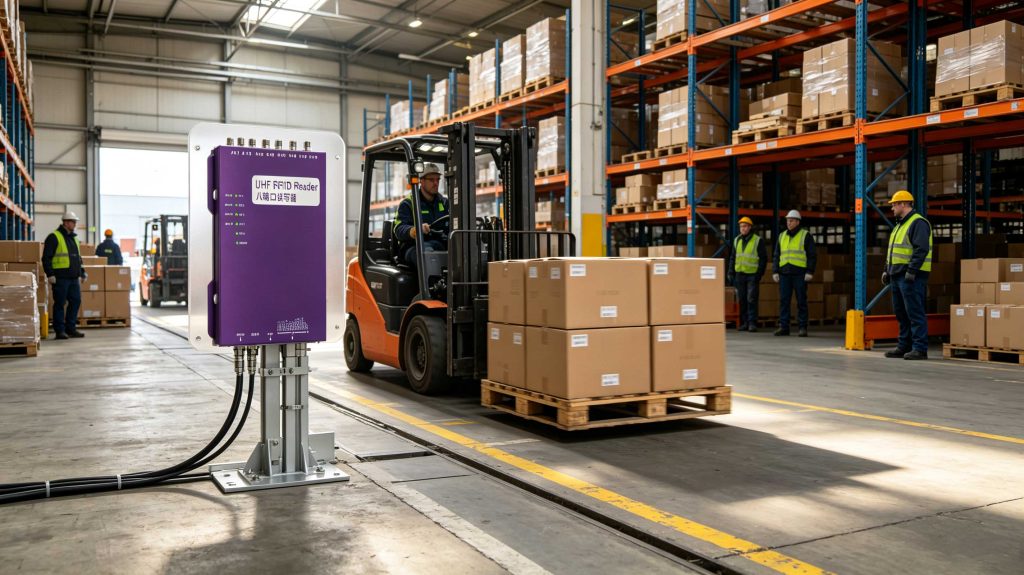
The operational difference becomes obvious at a busy receiving station.
With a barcode, the scanner needs the symbol in its optical field.
With UHF RFID, the reader can identify appropriately tagged objects within its RF field without visually locating each label.
| Feature | UHF RFID | Barcode |
|---|---|---|
| Direct line of sight | Usually not required | Usually required |
| Multiple-item reading | Yes | Usually sequential |
| Automatic portal reading | Strong fit | More difficult |
| Rewritable data | Supported by suitable tags | Not inherent |
| Long-range identification | Possible | Usually limited |
| Tag orientation | Still important | Symbol must be presented optically |
| Environmental sensitivity | RF/material dependent | Optical/label dependent |
Neither technology wins every application.
A small counter with five products may not justify RFID.
A distribution center processing thousands of tagged units through receiving and shipping gates is a different calculation.
A successful RFID read is only the beginning.
The reader may return:
EPC → antenna → timestamp → RSSI → read event
Middleware can then remove repeated observations and associate the tag with a business transaction.
For example:
Pallet EPC 3014… + Dock 02 + 09:42 + inbound order 78125 = receiving event
That is where RFID starts delivering operational value.
Cykeo fixed RFID readers provide communication and integration options intended for connection with host systems, including Ethernet and serial interfaces on relevant models.
The reader sees a tag.
The warehouse system understands what the tag means.
UHF RFID is particularly suitable for environments where objects repeatedly pass through defined physical checkpoints.
Common applications include:
The same basic RF principle remains underneath all of them.
Reader field → tag response → identification → data processing → business event
The engineering changes with the environment.
A conveyor tunnel has controlled movement.
A warehouse aisle does not.
A shipping dock has forklifts and metal structures.
A retail shelf has people constantly moving between products.
That physical context determines how the UHF RFID system should actually be designed.
From an engineering perspective, the first question should rarely be “How powerful is the reader?”
I would start with:
Where must the tag be detected—and where must it not be detected?
That single distinction changes antenna selection, reader power, mounting position, shielding, tag placement, and software filtering.
A 15-meter reading range can be impressive on a specification sheet.
At a warehouse shipping door, uncontrolled 15-meter coverage could be a problem.
The best UHF RFID system is not necessarily the one that reads the farthest.
It is the one that reads the right tag, in the right zone, at the right moment.
A practical UHF RFID system is built from four layers: RFID tags, reader hardware, antennas, and application software. The reader handles the radio conversation; the software decides what that conversation means operationally.
For industrial deployments, Cykeo supports UHF RFID hardware covering fixed readers, handheld readers, modules, and integrated solutions. Its fixed-reader portfolio is intended for warehouses, production lines, logistics checkpoints, and automated identification areas.
The tag carries the identity of the physical object.
For supply-chain applications, that identity is commonly represented through an EPC. GS1 explains that EPCs provide unique identifiers for physical objects, unit loads, locations, and other entities involved in business operations.
A passive UHF tag normally contains:
The tag does not need a conventional battery for normal passive operation.
The reader generates RF energy and manages communication with tags.
The Cykeo SSD-R16L, for example, provides 16 SMA antenna ports, adjustable 840–960 MHz operation, up to 33 dBm RF output, and a published recognition speed of more than 600 tags/s.
Those numbers describe the reader’s capabilities—not a guaranteed field result.
The antenna determines how the RF energy is physically introduced into the environment.
A warehouse may use:
The antenna position is often more important than simply selecting a higher-powered reader.
Raw tag observations have little business meaning by themselves.
Software can transform:
EPC + antenna + timestamp + signal information
into:
Pallet received → Dock 03 → Purchase order matched → Inventory updated
Cykeo’s SSD-R16L supports RESTful and native APIs, Java/C# development, and SDK-based secondary development for integration with enterprise systems
The specifications of a UHF RFID reader should be read together rather than separately.
| Parameter | Cykeo SSD-R16L Published Specification |
|---|---|
| Frequency | 840–960 MHz |
| Maximum RF Output | 33 dBm ±1 dBm |
| Recognition Speed | >600 tags/s |
| Published Reading Range | 0–20 m, tag dependent |
| Writing Range | 0–10 m, tag dependent |
| Antenna Ports | 16 SMA |
| Protocols | EPC C1G2, ISO 18000-6B/C |
| Interfaces | RJ45, RS232, HDMI, USB |
| Operating Temperature | -20°C to +60°C |
| RSSI | Supported |
| Tag Data Filtering | Supported |
These are current published Cykeo specifications. Reading distance is explicitly dependent on the tag and application environment.
That qualification is important.
RFID Journal notes that passive UHF read range depends on factors including reader power, tag antenna size, frequency, interference, and the object carrying the tag.
So a specification such as “20 meters” should never be interpreted as “every tag will always read at 20 meters.”
One of the strongest advantages of UHF RFID is simultaneous identification.
Imagine a pallet containing 80 tagged cartons.
With a conventional barcode workflow, each visible carton may need to be presented to a scanner.
With UHF RFID, the reader can interrogate multiple tags inside its RF field and resolve their responses using anti-collision procedures.
That changes the physical workflow.
The operator moves the pallet.
The RFID system observes the tags.
No deliberate aiming at every label is required.
GS1 describes passive UHF/RAIN RFID as capable of capturing unique identifiers at high rates and at distances well beyond 10 meters without line-of-sight contact.
Read range is one of the most misunderstood UHF RFID specifications.
RFID Journal gives typical passive UHF ranges in the 10–20 ft range while noting that special antenna systems can achieve substantially longer distances.
The practical range can change dramatically when the tag is attached to a difficult product.
Metal can reflect RF energy and alter the electrical behavior of an RFID antenna.
For metal assets, an ordinary paper-label tag may perform poorly.
An appropriately designed on-metal RFID tag is usually a better engineering choice.
Water absorbs UHF RF energy. RFID Journal specifically identifies water and liquid-heavy products as important causes of reduced UHF reading performance.
This becomes noticeable with:
The tag on the outside of a pallet may communicate easily.
A tag buried behind metal, liquid, or RF-absorbing material is a different problem.
RFID Journal has documented substantially lower read performance for tags hidden inside pallets containing cans or bottled water compared with RF-friendly goods.
This is why tag selection and placement must be validated using the customer’s actual products.
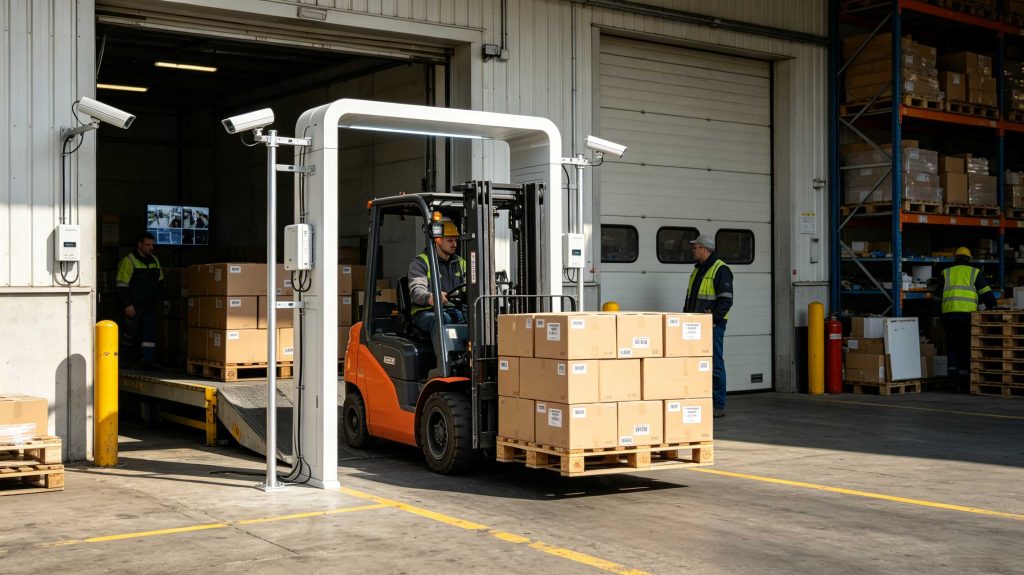
A warehouse installation can divide the facility into RFID reading zones.
For example:
| Zone | RFID Hardware | Typical Event |
|---|---|---|
| Receiving Door | Fixed reader + portal antennas | Goods received |
| Staging Area | Fixed reader | Pallet movement |
| Storage Area | Fixed/handheld reader | Inventory verification |
| Picking Area | Handheld/fixed reader | Item identification |
| Packing Station | Fixed/desktop reader | Order verification |
| Shipping Door | Fixed reader + antennas | Outbound confirmation |
| Conveyor | Reader + tunnel antennas | Automatic carton identification |
A 16-port reader can be useful when several antenna positions need to be managed from one hardware platform. Cykeo’s SSD-R16L is designed around this type of multi-antenna deployment.
The point is not to flood the entire warehouse with RF.
It is to create defined RFID events.
A common mistake is treating every detected EPC as an inventory transaction.
A tag might be visible for several seconds.
That can produce dozens of reader observations.
Software therefore needs rules for:
Cykeo’s SSD-R16L supports RSSI and tag-data filtering functions that can be used in these types of RFID processing architectures.
Consider a shipping door.
The business event is not:
“Tag 3014 was seen 47 times.”
It is:
“Pallet 3014 crossed the outbound shipping zone.”
That distinction separates raw RFID collection from a usable RFID system.
UHF RFID is particularly valuable where physical objects repeatedly cross defined checkpoints or where manual identification creates unnecessary labor.
Common applications include:
Cykeo identifies fixed RFID readers for warehouse entrances, production lines, and access points, while its broader RFID portfolio includes fixed, handheld, USB, and embedded reader categories.
Passive UHF RFID tags generally do not require a battery. They harvest energy from the reader’s RF field and use that energy to respond through backscatter communication.
There is no universal distance. RFID Journal notes that passive UHF tags commonly operate around 10–20 feet, while specialized configurations can achieve much longer distances. Tag construction, antenna, reader power, material, and RF environment all matter.
Yes. Anti-collision protocols allow a reader to identify multiple tags within its field. High-density systems are specifically designed to process large numbers of tag responses efficiently.
No. One major advantage of passive UHF RFID is that tags can generally be read without optical line of sight. However, physical materials and tag orientation can still strongly affect RF performance.
Yes, but the tag must be designed for the application. Standard UHF labels may perform poorly when placed directly against metal. On-metal RFID tags use specialized antenna structures to compensate for the metal surface.
Water absorbs UHF radio-frequency energy, reducing the energy available for tag communication. This can make tags on or inside liquid-heavy products significantly harder to read.
No. Higher RF power can increase coverage, but excessive coverage can also create unwanted reads from adjacent zones. Good RFID engineering balances power, antenna placement, tag selection, shielding, and software filtering.
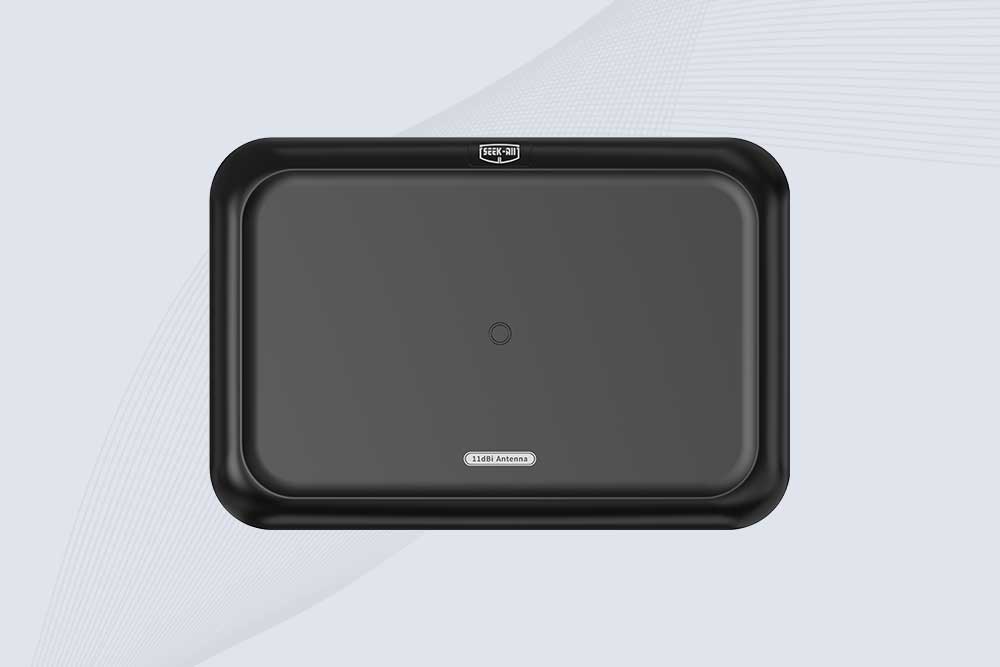
SSD-A11 UHF RFID antenna features 840–960 MHz adjustable frequency, ≥10.5 dBi gain, circular polarization and 50Ω impedance for fixed RFID systems.
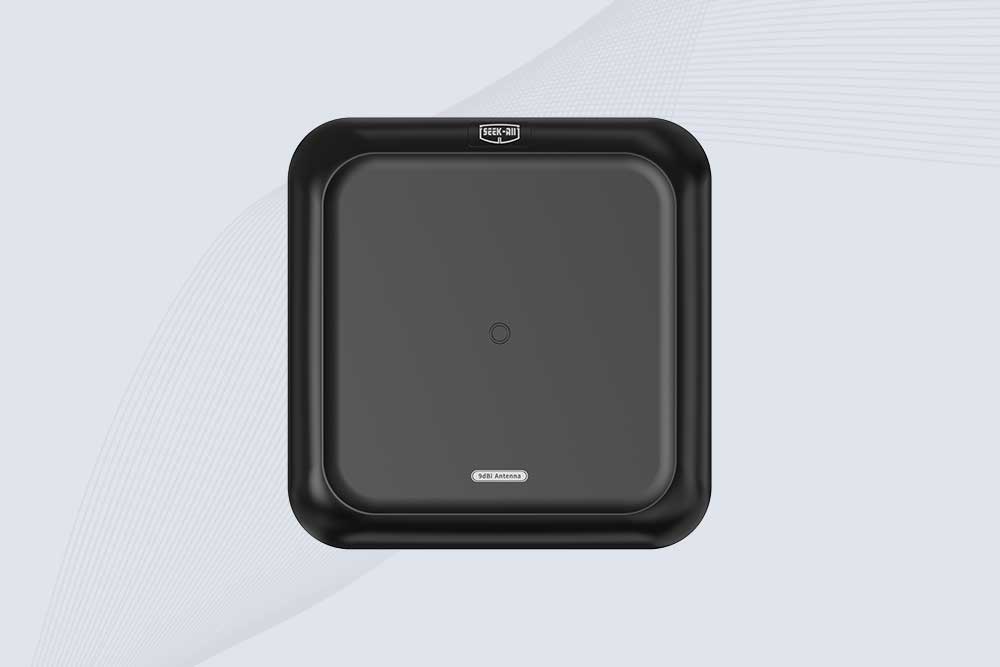
SSD-A09 is a 9 dBi UHF RFID antenna with 840–960 MHz adjustable frequency, circular polarization, 50Ω impedance and directional 60° × 60° coverage.
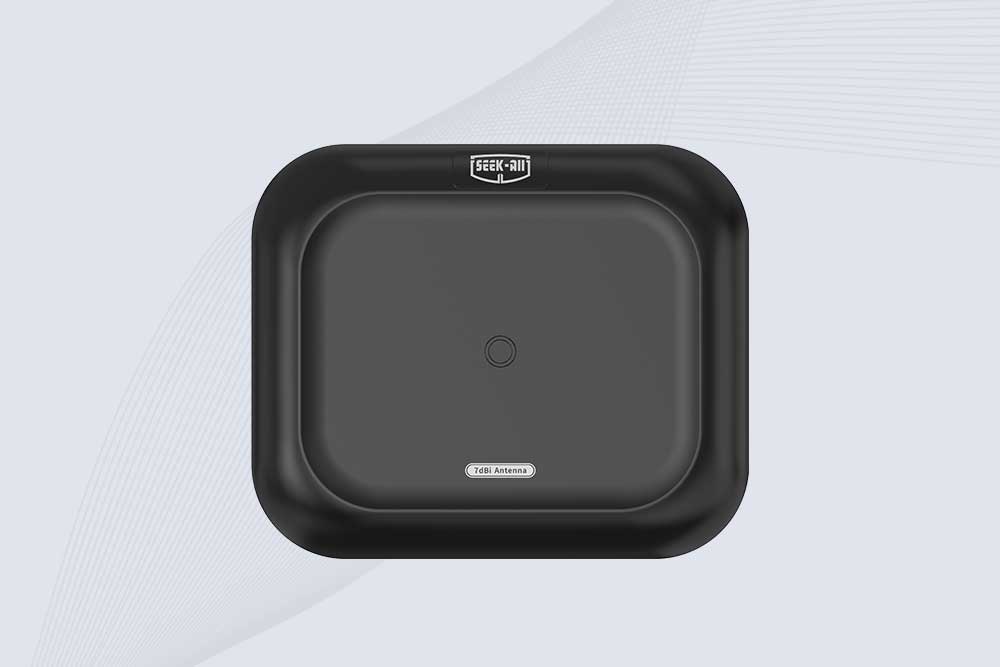
Explore the SSD-A07 UHF RFID antenna with 7 dBi gain, circular polarization, adjustable 840–960 MHz frequency, and 60°/75° beamwidth for stable RFID read/write performance.

SSD-A06 UHF RFID antenna with circular polarization, adjustable 840–960 MHz frequency, ≥4.5 dBi gain, and a compact directional design for RFID systems.

Discover SSD-D4AL, a USB-HID UHF RFID reader with 4/8/16 antenna options, Impinj E710/X3M1 chipset, plug-and-play USB power, and OEM customization.
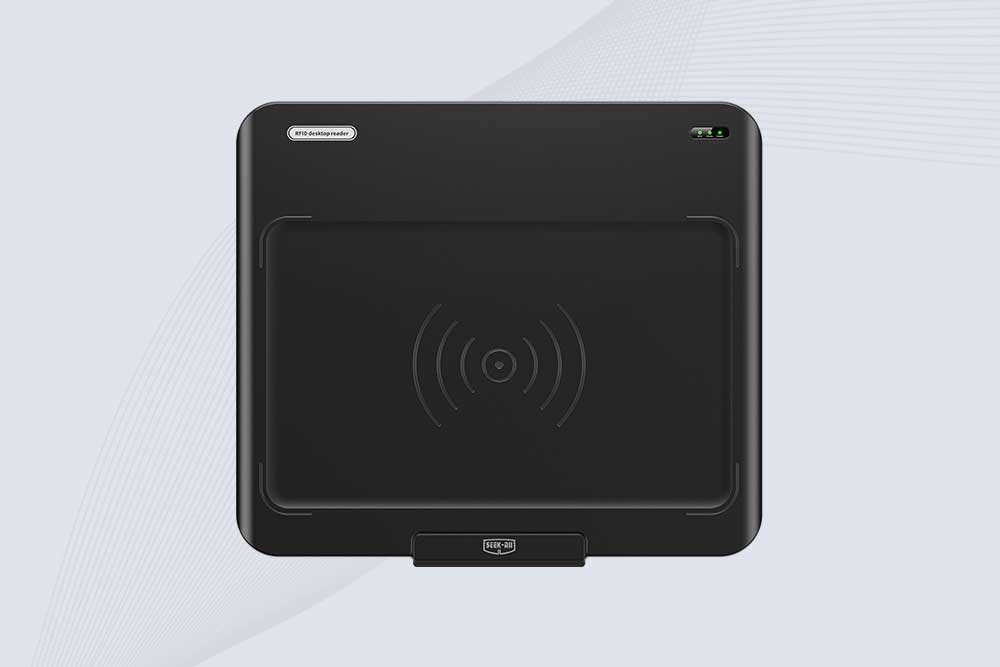
SSD-D3AL is a USB-HID UHF RFID reader with 0–30 cm reading, 0–15 cm writing, over 600 tags/s recognition, USB plug-and-play operation and OEM Logo customization.
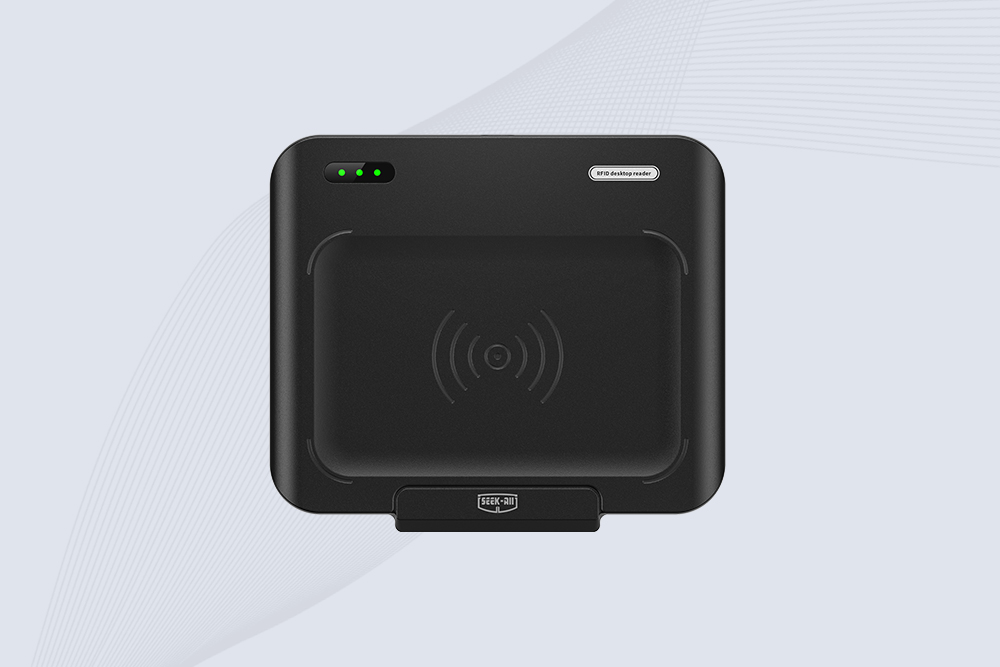
SSD-D1AL is a compact USB UHF RFID reader with Impinj E710/X3M1 chipset, USB-HID, 600+ tags/s recognition, 4/8/16 antenna support and plug-and-play USB power.
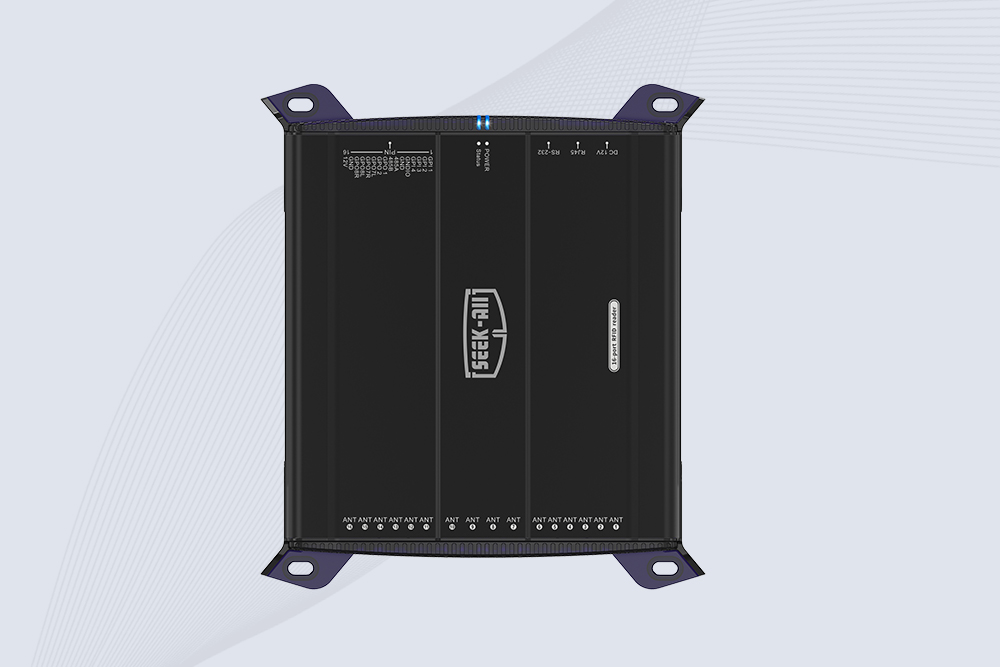
SSD-R16L Multi-Channel RFID Infrastructure for Automated Inventory Management ✔️ 16-Port High-Density RFID Reading Equipped with 16 SMA antenna ports, SSD-R16L supports multi-antenna deployment for warehouses, retail stores, logistics, production lines, and large-area RFID identification. ✔️ High-Speed & Long-Range Performance With up to 33…
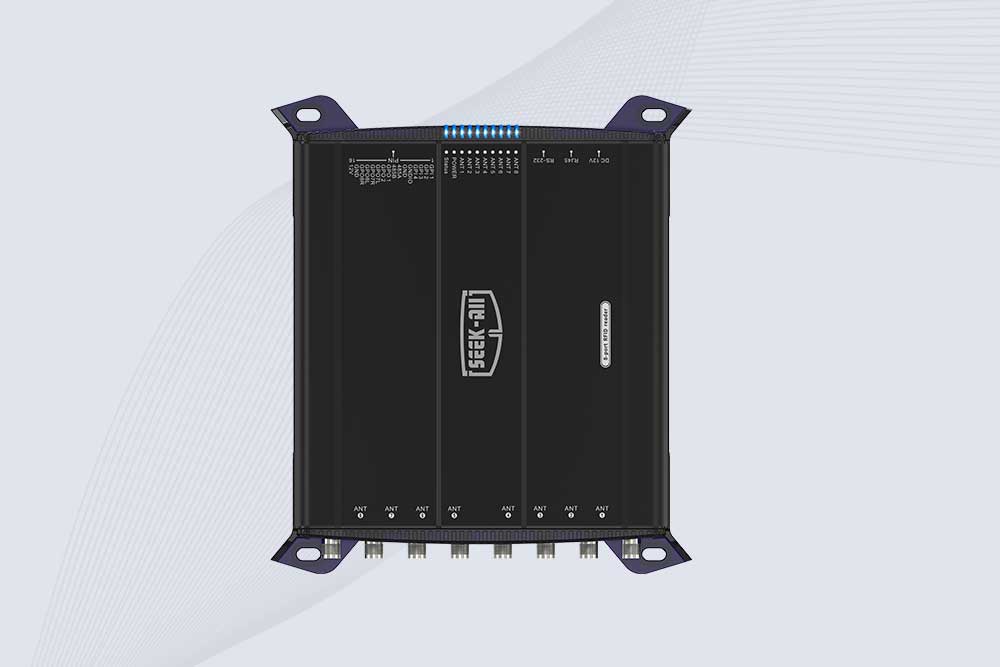
SSD-R8L 8-port UHF RFID reader with 33dBm output, up to 20m reading range and 600+ tags/s recognition. Ideal for warehouse, logistics, retail and asset tracking.
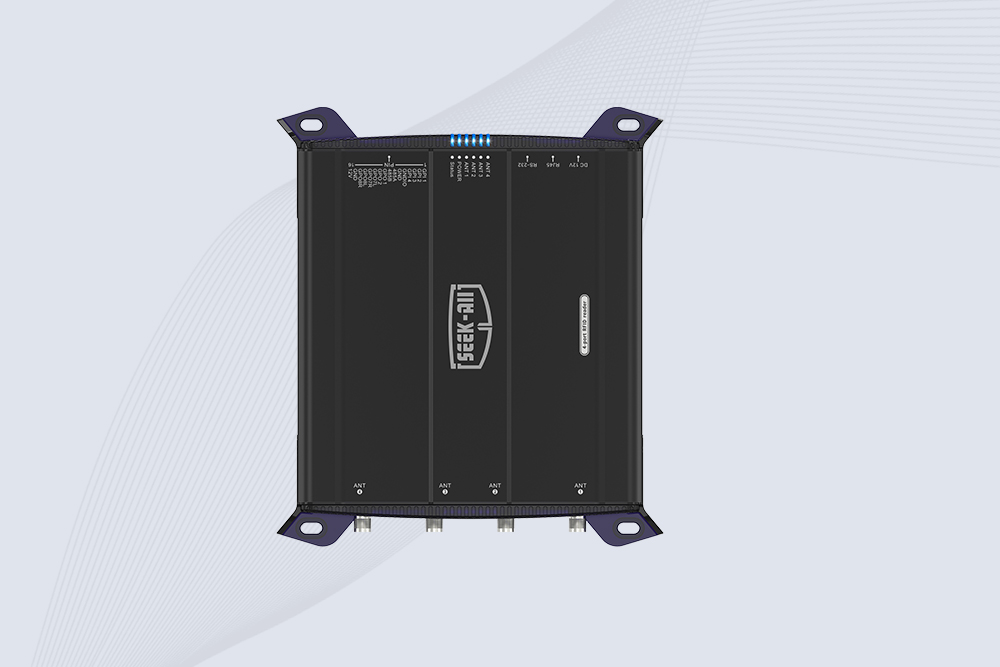
SSD-R4L is a 4-port UHF RFID fixed reader with 33dBm output power, up to 20m reading range, EPC C1G2 support and 600+ tags/s reading speed.

CYKEO CYKEO-D1LA USB RFID Reader is a compact desktop solution with near-field control for precise tag reading and encoding. Powered by USB, supporting ISO 18000-6C, and built for stable batch writing, this usb rfid tag reader fits retail, libraries, offices, and controlled RFID encoding tasks.
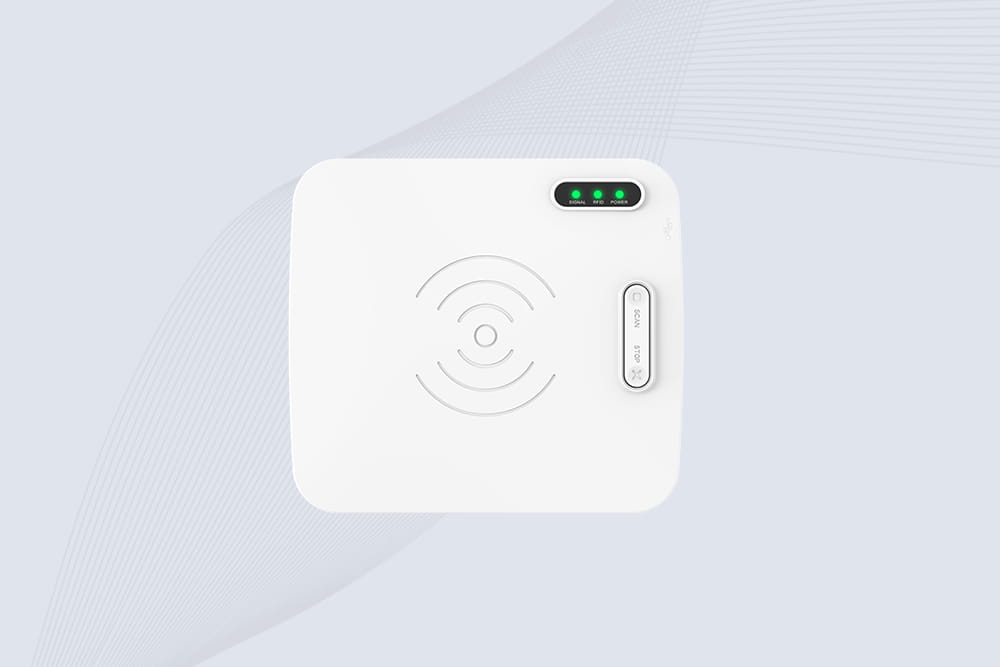
CYKEO CYKEO-D1L RFID scanner USB is a compact desktop UHF RFID scanner designed for short-range tag writing and verification. This usb rfid scanner supports batch encoding, stable 0–26 dBm output, and works across Windows, Linux, and Android systems.
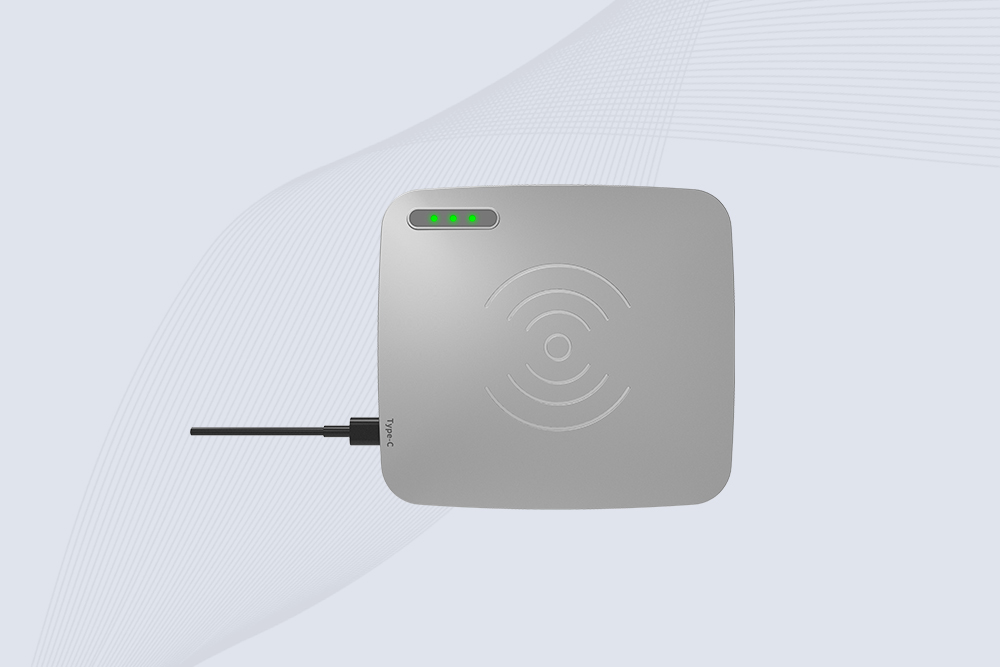
CYKEO CYKEO-D1C USB RFID Card Reader is a near-field UHF desktop writer designed for secure, short-range tag encoding. With USB-C connectivity and stable 26 dBm output, this rfid reader usb c is ideal for badge issuance, label encoding, and controlled desktop RFID workflows.
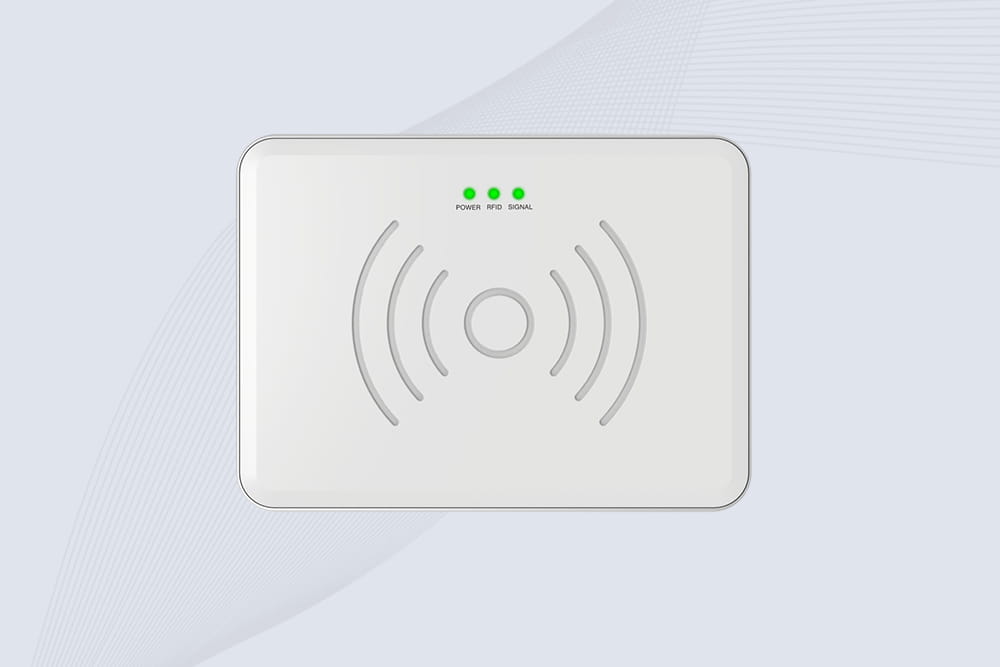
CYKEO CYKEO-D2L RFID Reader USB is a compact desktop encoder built on the Impinj R500 chip. With near-field control and stable USB power, this usb rfid card reader delivers precise tag writing for offices, retail counters, and small-scale logistics encoding tasks.
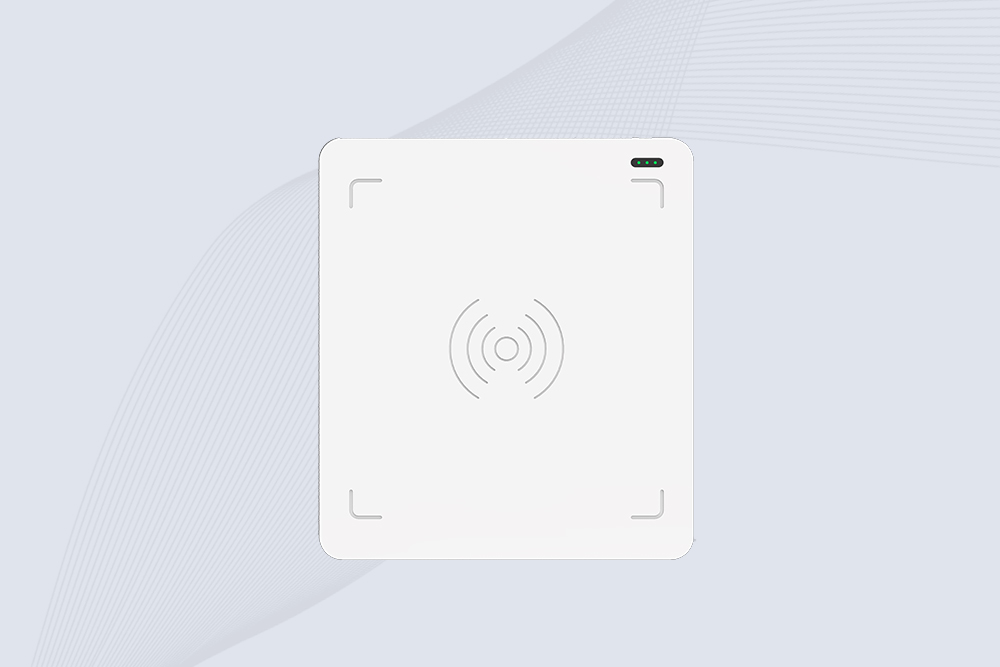
CYKEO CYKEO-D3L USB RFID Tag Reader delivers stable UHF tag reading and writing for daily desktop and light industrial tasks. Designed for controlled short-range operation, this USB RFID Tag Reader works reliably with rfid tag and reader systems in libraries, tool tracking, and inventory registration.
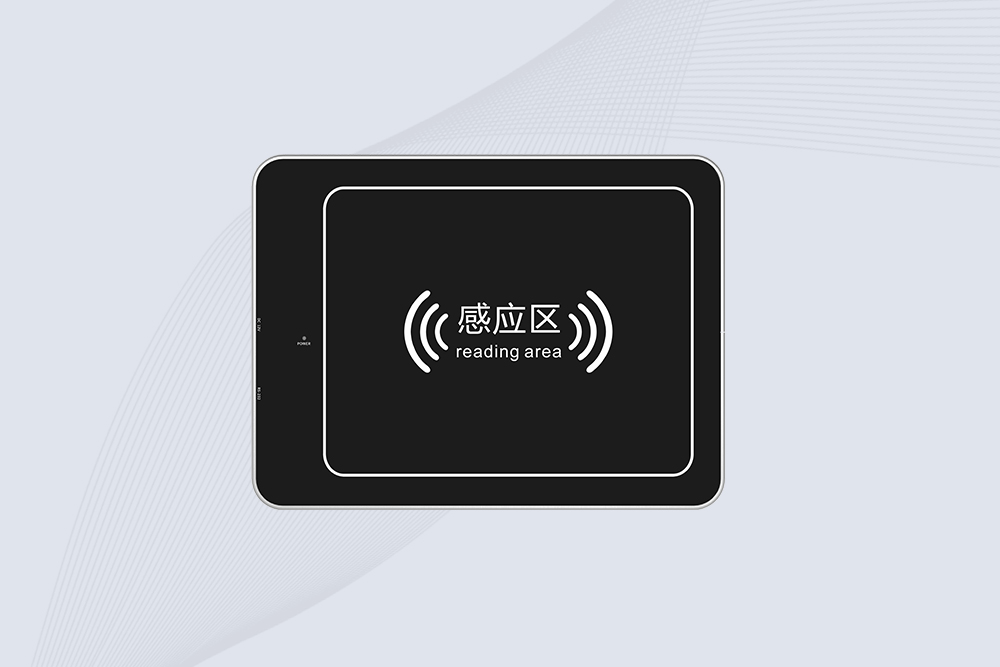
The CYKEO CYKEO-D4L UHF RFID Tag Reader is a stable Desktop RFID Reader designed for accurate tag registration, borrowing, and return workflows. Built with the Impinj R2000 chip, this UHF RFID Tag Reader delivers controlled short-range reads for libraries, asset tracking, and inventory management environments.
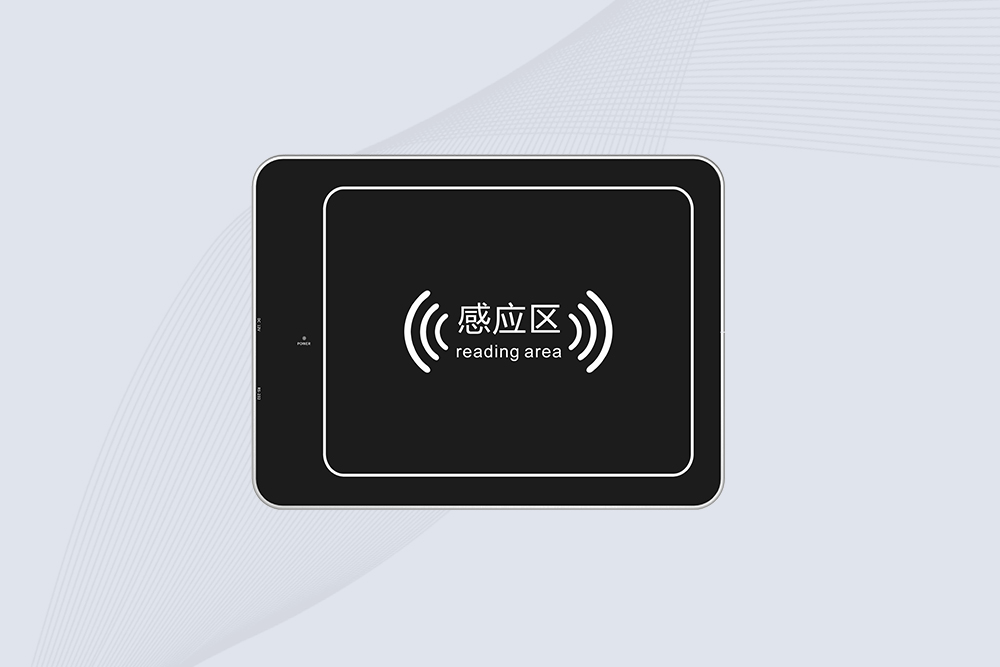
The CYKEO CYKEO-D5L Desktop RFID Card Reader is a stable UHF RFID Card Reader designed for controlled short-range reading and writing. Built for libraries, tool rooms, and asset desks, this UHF RFID Card Reader supports dense tag handling, secure data processing, and easy USB integration.
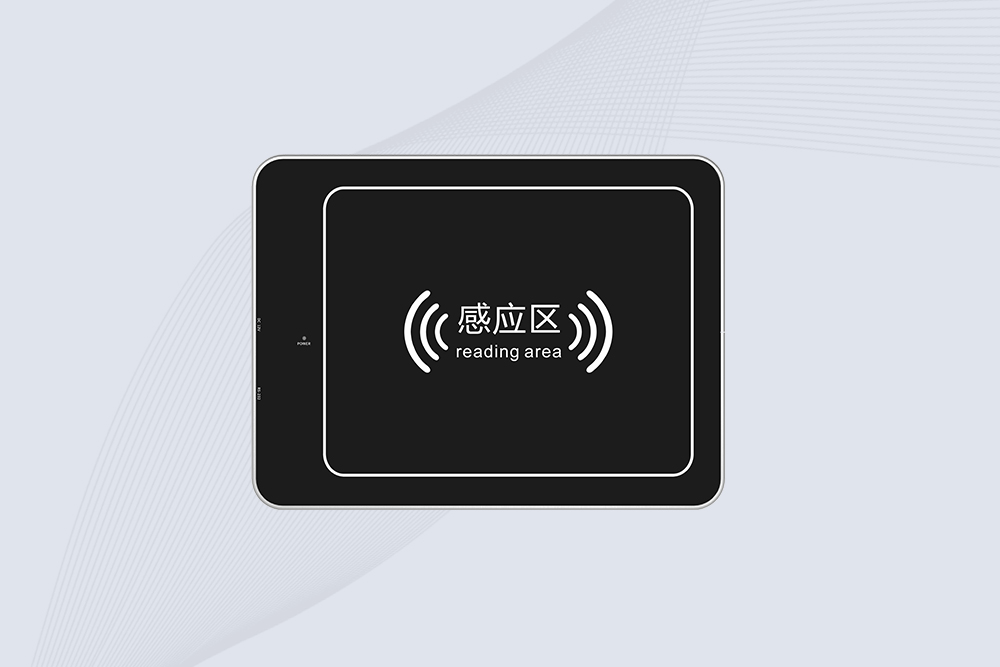
The CYKEO CYKEO-D6L RFID Reader Writer is a heavy-duty Desktop RFID Reader designed for short-range, high-accuracy tag programming. Built for libraries, labs, and asset desks, this RFID Reader Writer supports batch processing, stable 33dBm output, and seamless integration with existing management systems.
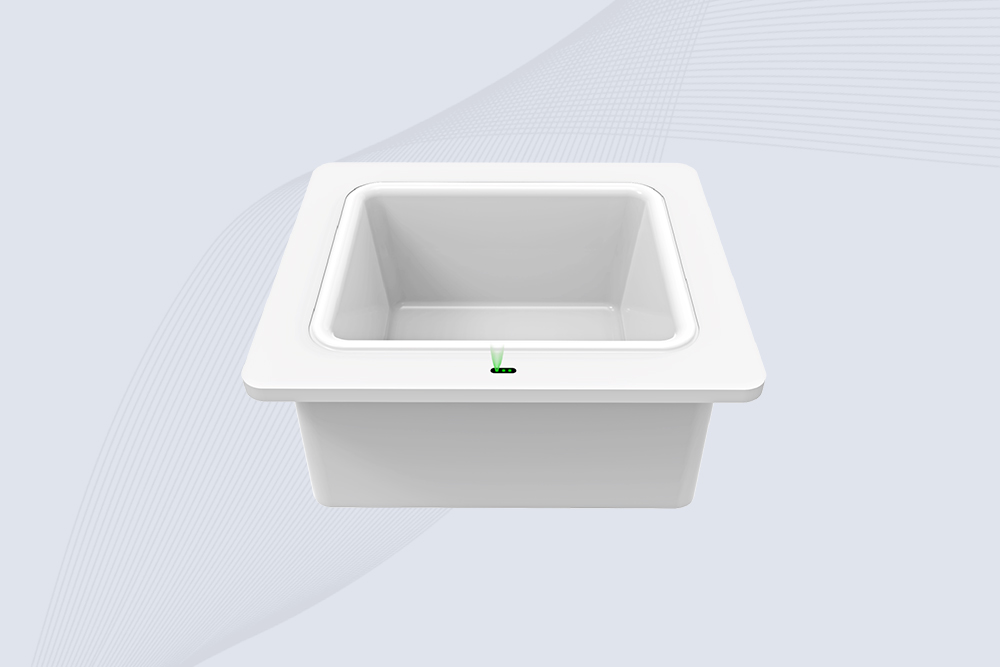
Cykeo CYKEO-D8B UHF RFID tunnel and RFID Desktop Reader features 30+ items batch reading,
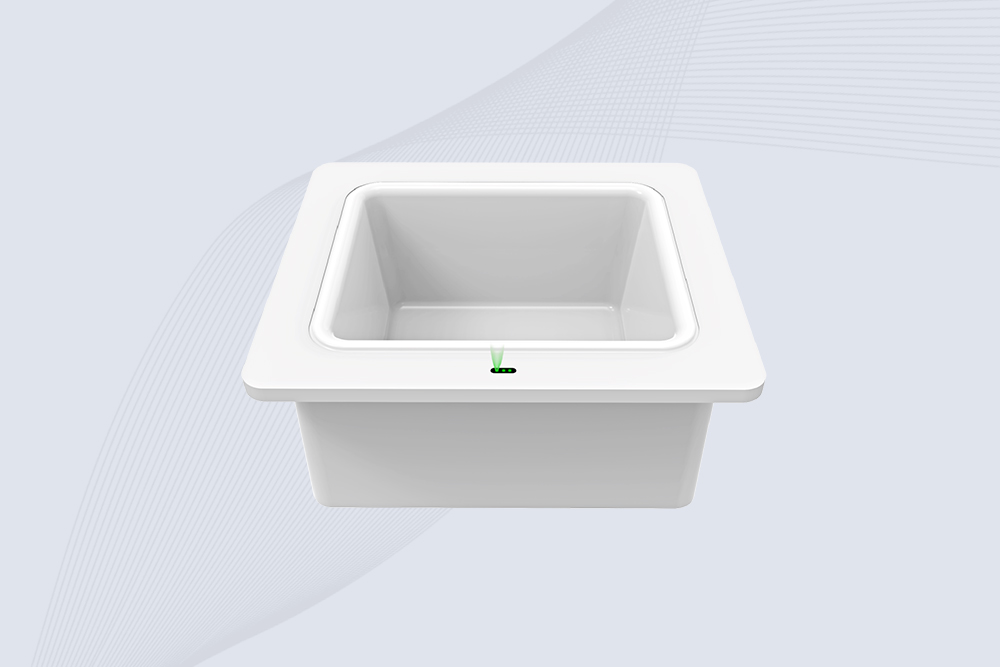
Cykeo CYKEO-D8A embedded RFID badge reader offers 30+ tags/sec scanning, 20cm anti-crosstalk precision, and DC 12V power for unmanned stores, warehouses, and smart inventory systems.
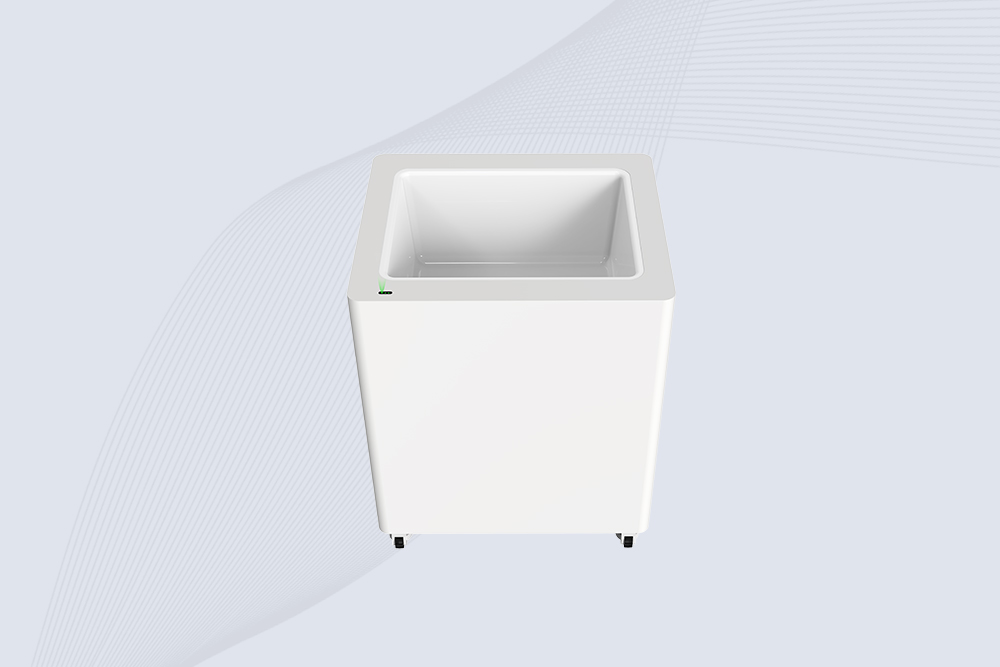
Cykeo’s CYKEO-D8C UHF RFID gate reader achieves 200-tag/batch scanning with adjustable power control, ideal for retail inventory and smart warehouse management.
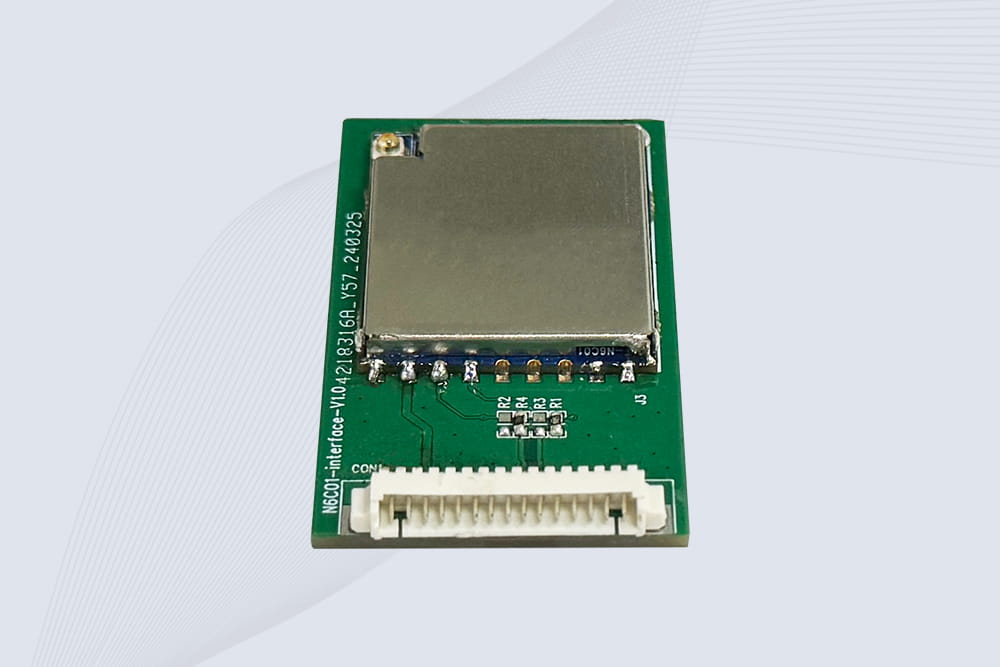
CYKEO Embedded RFID Modules are designed for compact industrial and IoT devices that require stable UHF performance. These UHF RFID Modules support global protocols, flexible power control, and reliable multi-tag reading for smart cabinets, production lines, and asset tracking systems.
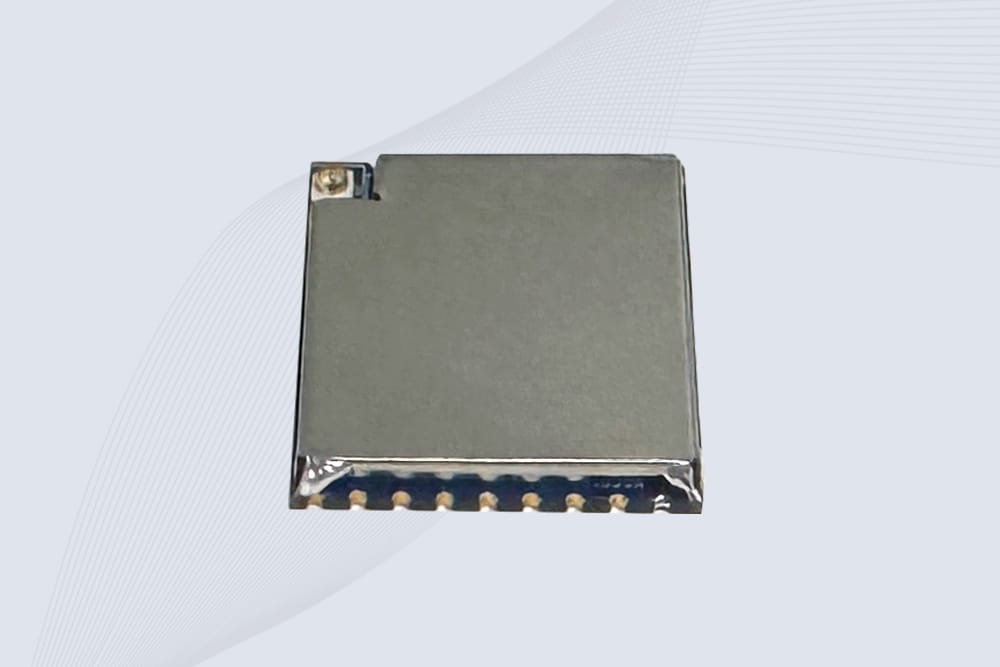
CYKEO Embedded RFID Module is built for compact IoT and industrial devices that need stable UHF performance. This UHF module supports global protocols, low power operation, and reliable multi-tag reading for smart lockers, production lines, and always-on RFID systems.
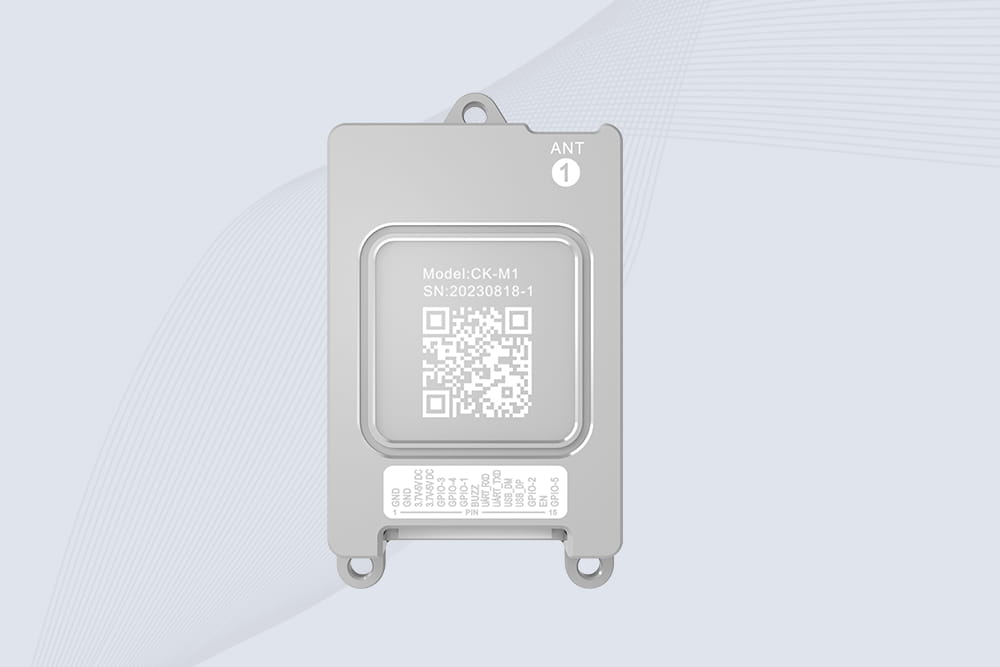
CYKEO CYKEO-M1 drone rfid module is a compact UHF RFID reader module designed for drones and UAV platforms. It supports long-range aerial scanning, fast multi-tag reading, and stable performance in wind, vibration, and outdoor environments.
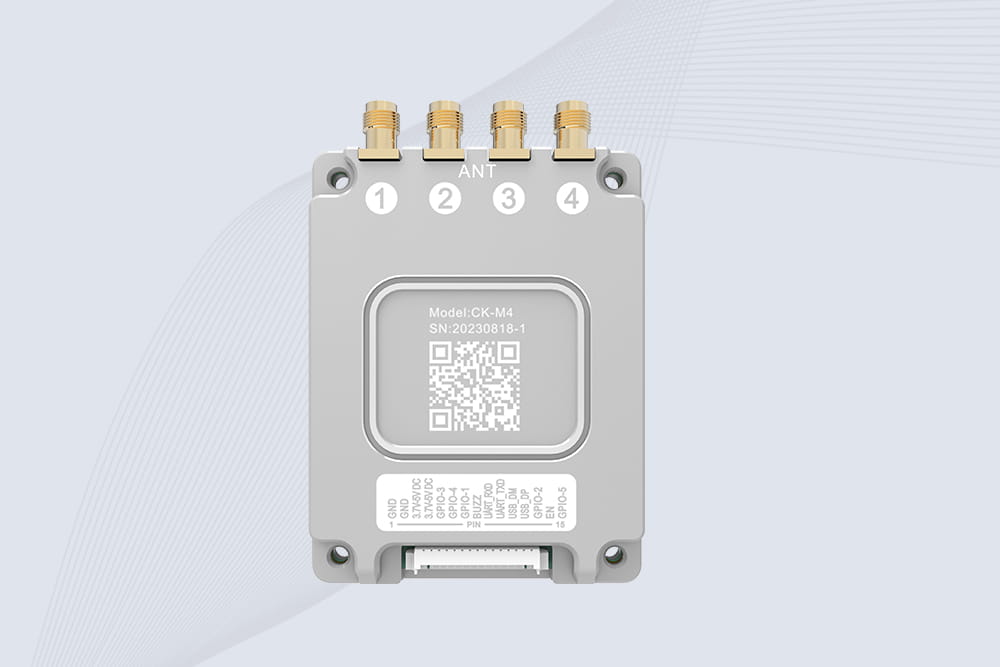
CYKEO CYKEO-M4 RC522 RFID Module is an industrial-grade UHF RFID reader with 4 ports, supporting ISO, EPC, and GB protocols. High-speed, accurate reading for IoT, automation, and warehouse applications.
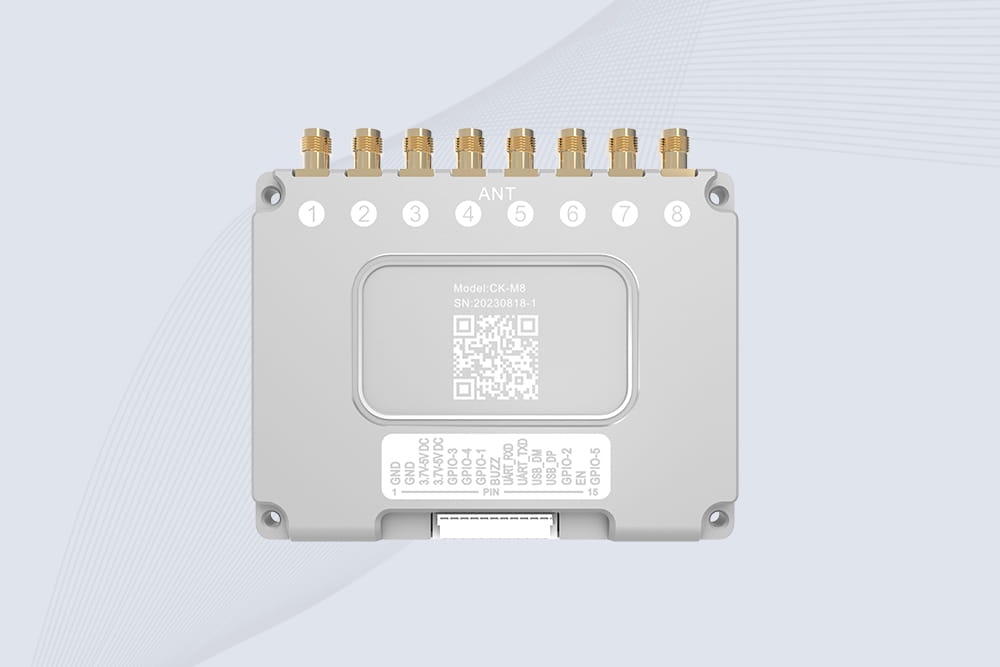
CYKEO CYKEO-M8 Module RFID is an 8-port UHF R2000 RFID Module designed for high-density, multi-tag environments. Stable 33dBm output, ISO & GB protocol support, ideal for warehouses, factories, and automated systems.
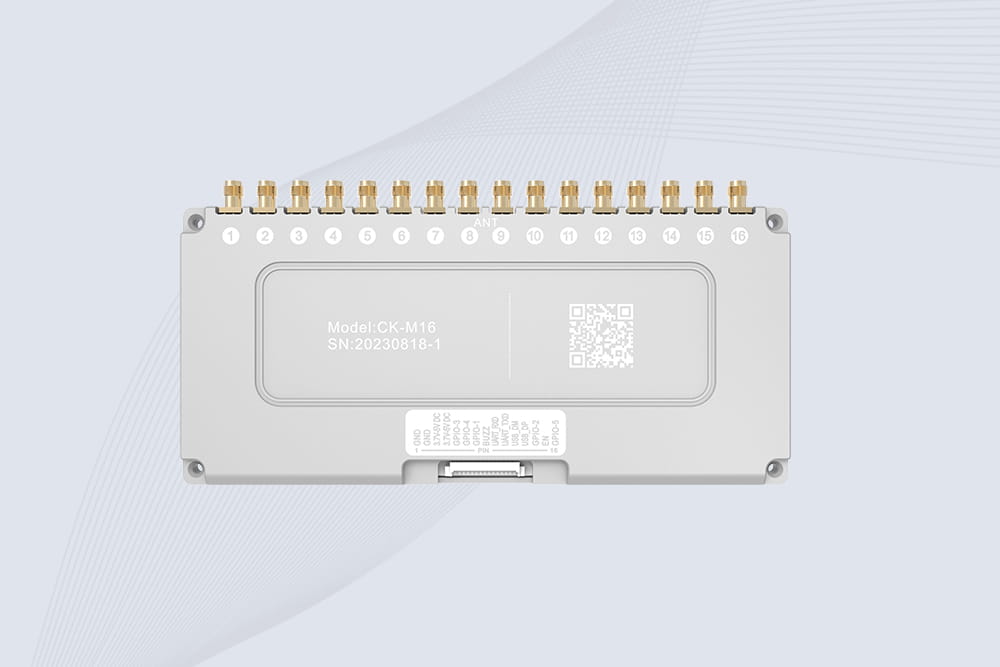
CYKEO CYKEO-M16 RFID Module is a 16-port UHF RFID reader module based on the R2000 chipset. Designed for dense tag environments, it supports ISO and GB standards and delivers stable multi-antenna control for industrial automation.
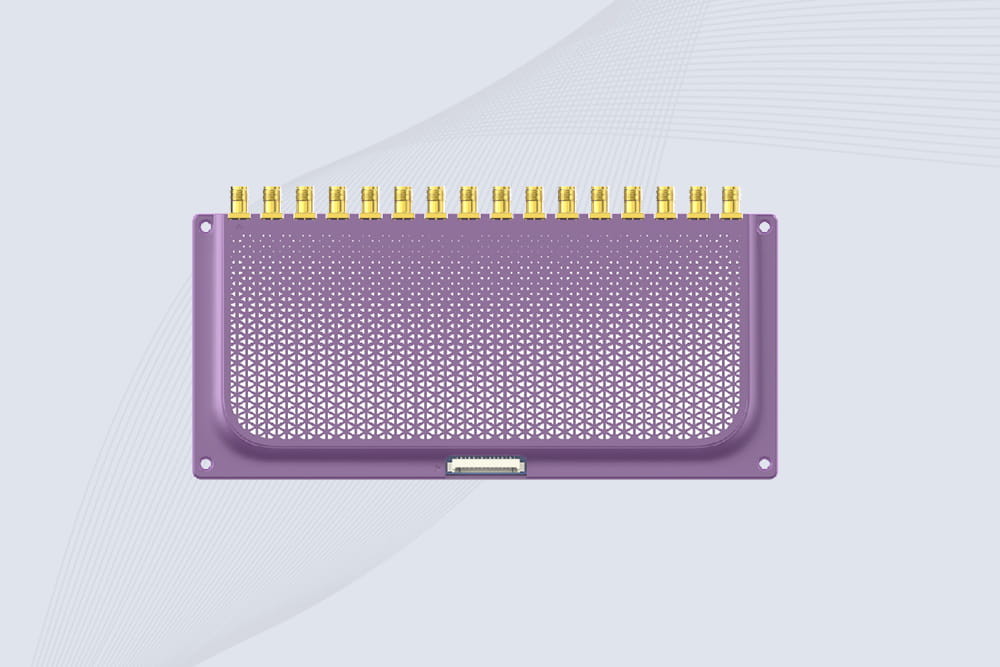
The CYKEO CYKEO-M16L RFID Reader Module is a 16-channel UHF RFID core designed for dense tag environments. With adjustable 33dBm output, multi-protocol support, and stable multi-antenna control, this RFID Tag Reader Module fits industrial automation, warehouse systems, and large-scale IoT deployments.
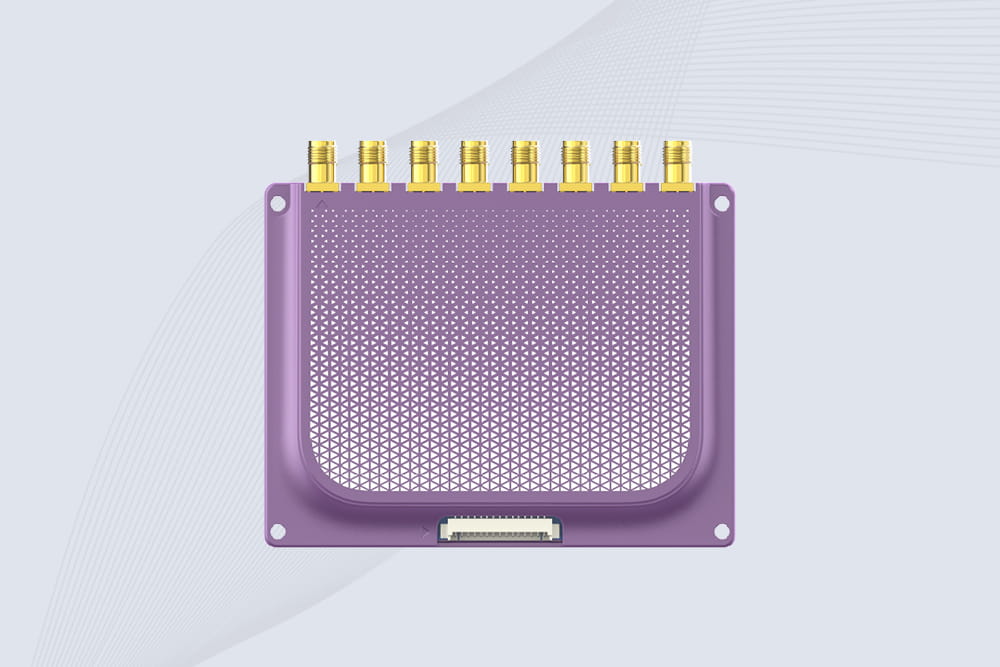
CYKEO CYKEO-M8L module RFID is a compact industrial UHF module built for dense tag and multi-antenna environments. With 8 RF ports, adjustable 33 dBm output, and ISO & GB protocol support, it is widely used in factories, warehouses, and automated tracking systems.
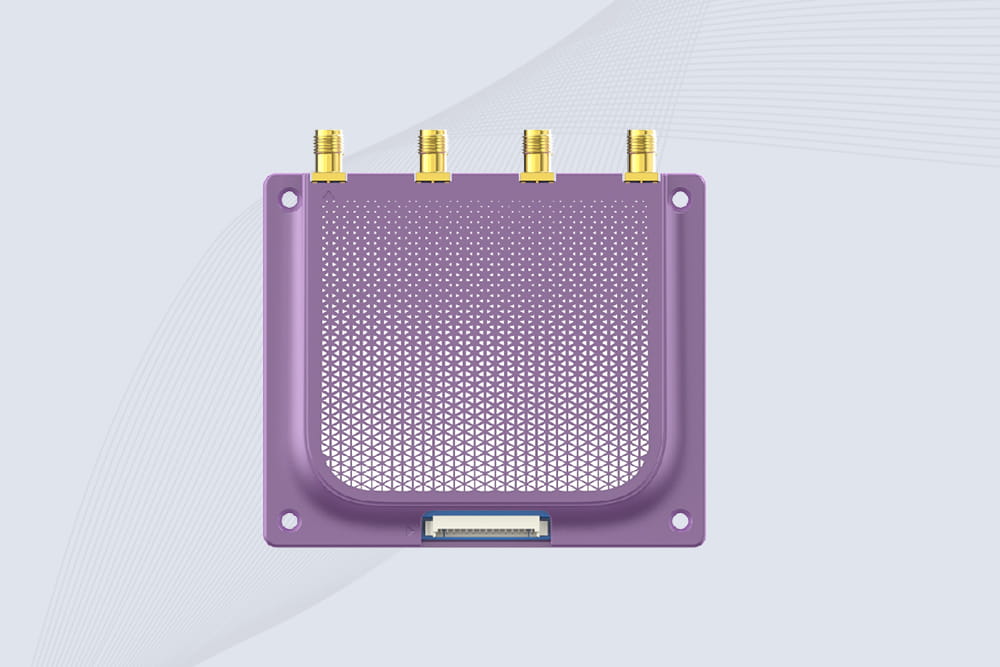
CYKEOCYKEO-M4L UHF RFID Module is a compact 4-channel RFID tag reader module designed for dense tag environments. Supporting ISO and GB protocols, it delivers stable reads up to 10 meters for industrial and IoT systems.
Cykeo CYKEO-A11 UHF RFID reader antenna delivers 11dBi gain, 840-960MHz frequency range, and IP65 ruggedness for retail, logistics, and industrial RFID systems. Features low VSWR and easy installation.

CYKEO Antenna RFID Reader delivers stable long-range UHF performance with a 10.5dBi directional design, built for warehouses, conveyor portals, and industrial RFID systems. This rfid reader antenna provides 20m+ read distance and rugged IP67 protection.

Cykeo CYKEO-PHF3 industrial HF RFID Antenna offers 24-point dynamic tracking, ISO 14443A/15693 protocols, metal-environment stability for archives/libraries/manufacturing.

Cykeo CYKEO-A5B industrial Linear RFID Antenna delivers 5dBi gain, ≤1.5:1 VSWR, and IP65 rugged design for warehouse, production line, and logistics UHF systems.

Cykeo’s CYKEO-B12 Long Range RFID Antenna delivers 15m+ read range with 12dBi gain, IP65 rugged design, and global 840-960MHz UHF support. Ideal for warehouse/logistics asset tracking.
Cykeo CYKEO-B10 Long Distance RFID Antenna offers 10dBi gain, 840-960MHz frequency range, IP65 rating, and 20m+ coverage for logistics/warehousing/ETC systems. Low VSWR ensures stable signal transmission.
Cykeo CYKEO-A6 UHF RFID panel antenna features 6dBi gain, 840-960MHz broadband, IP65 metal-ready housing for logistics/smart retail. 18mm ultra-thin design with tool-free mounting.

Cykeo CK-A3 industrial antenna RFID UHF offers 5m+ tag detection, ≤1.3:1 VSWR, IP65 rugged design, and global UHF spectrum compatibility (840-960MHz) for warehouses, factories, and retail.
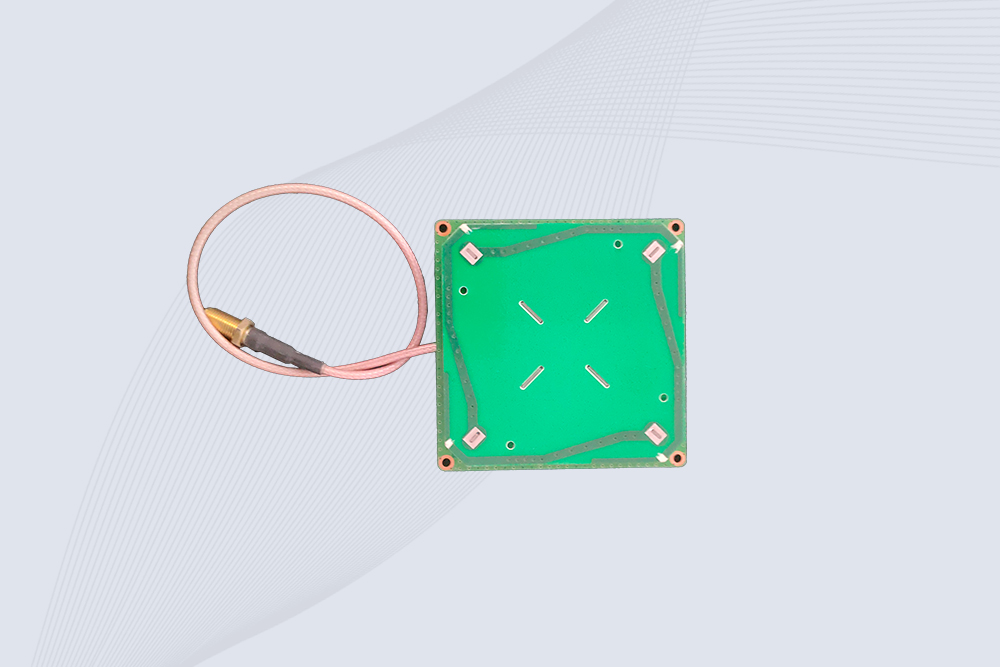
Cykeo CYKEO-B5 directional RFID antenna provides 5dBi gain with 60° narrow beamwidth for precise inventory tracking. IP65-rated, global UHF frequency support, and low VSWR.
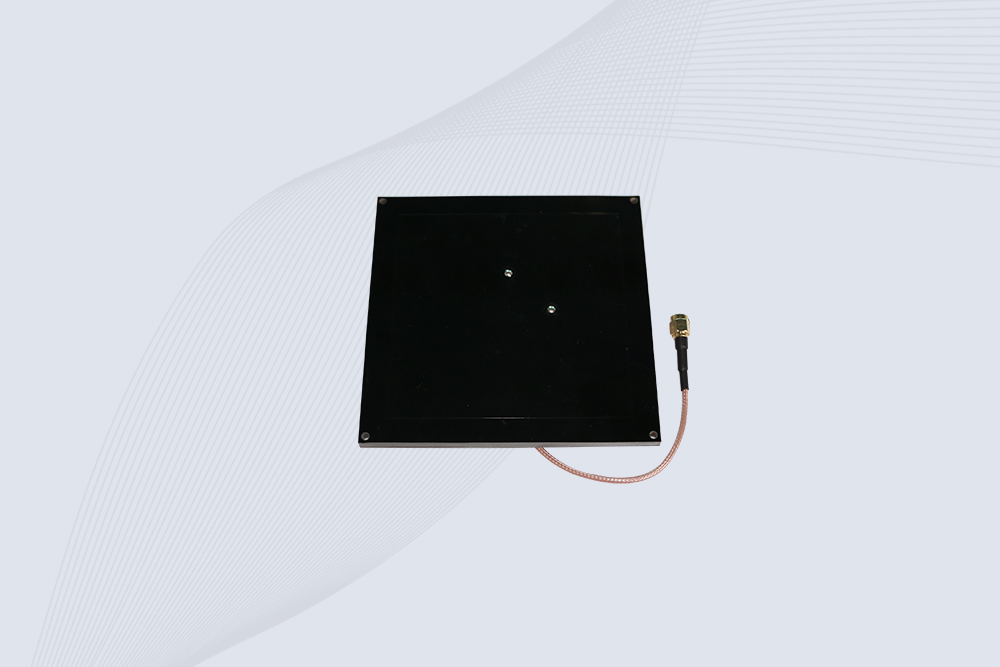
Create your own high-performance DIY RFID antenna! 5dBi gain, 840-960MHz tunable, step-by-step guides. Compatible with Arduino, Raspberry Pi, and commercial UHF readers.
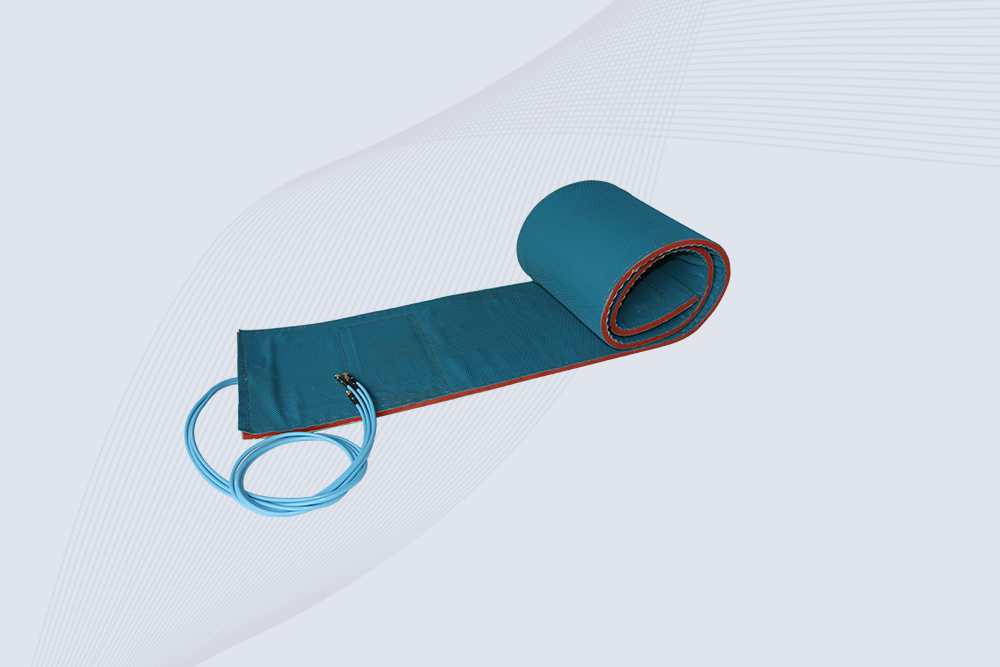
Cykeo CYKEO-A7 Flexible RFID Antenna features 840-960MHz wideband tuning, 7dBi gain, and IP68 rating for medical/retail/industrial curved surface deployments. 98% read accuracy with peel-and-stick installation.

Cykeo CYKEO-B5A industrial Passive RFID Antenna delivers 5dBi gain, 70° beamwidth, and -40°C~55°C operation for warehouses/smart cabinets. Compatible with Zebra/Impinj readers.
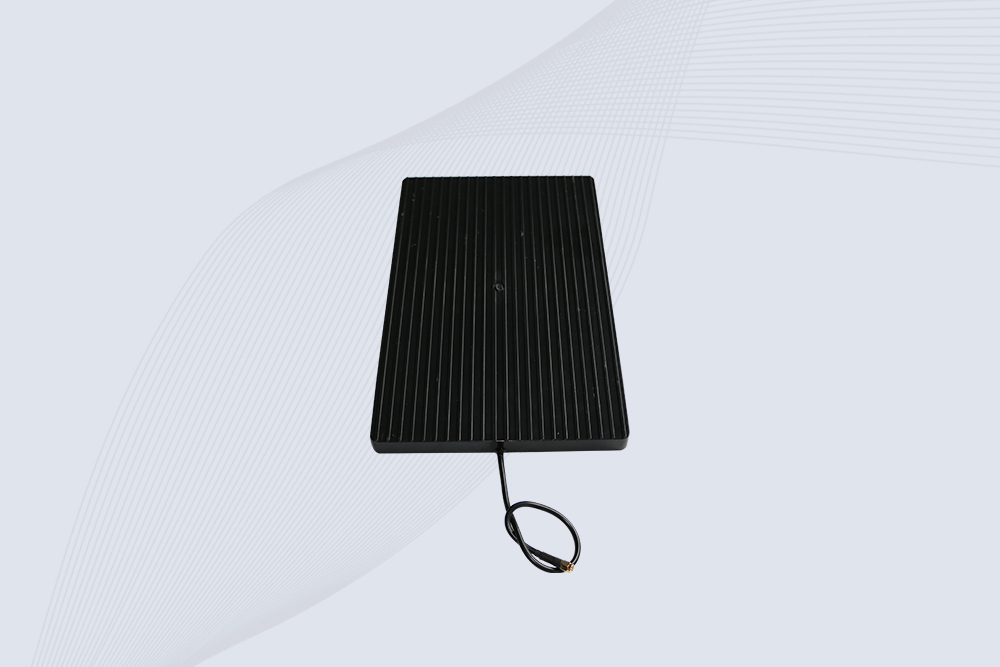
Cykeo’s CYKEO-A9B High Gain RFID Antenna delivers 15m+ read range with 9dBi amplification. Features IP54 rugged design, 840-960MHz bandwidth, and 80° beamwidth for warehouse/manufacturing RFID systems.

Cykeo’s enterprise-grade 8dbi Impinj RFID Antenna 10m+ read range with 840-960MHz tuning. Features IP65 housing, 1.4 VSWR, 35° beamwidth for retail/warehouse RFID systems.
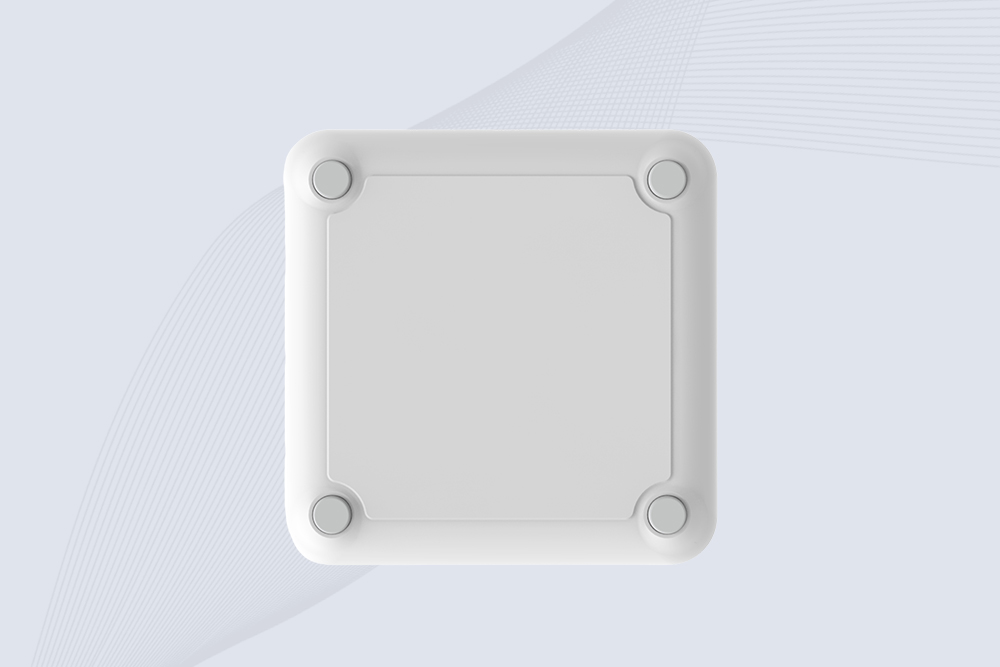
Cykeo CYKEO-A9 industrial UHF RFID antenna delivers 9dBi gain, 840-960MHz frequency range, and IP65 protection for warehouse/logistics/retail RFID systems. Features N-type connector and ≤1.3:1 VSWR.
CYKEO UHF RFID Antenna built for long-distance and industrial applications. This antenna rfid uhf delivers strong gain, outdoor durability, and reliable tag performance in warehouses, yards, and vehicle ID systems.
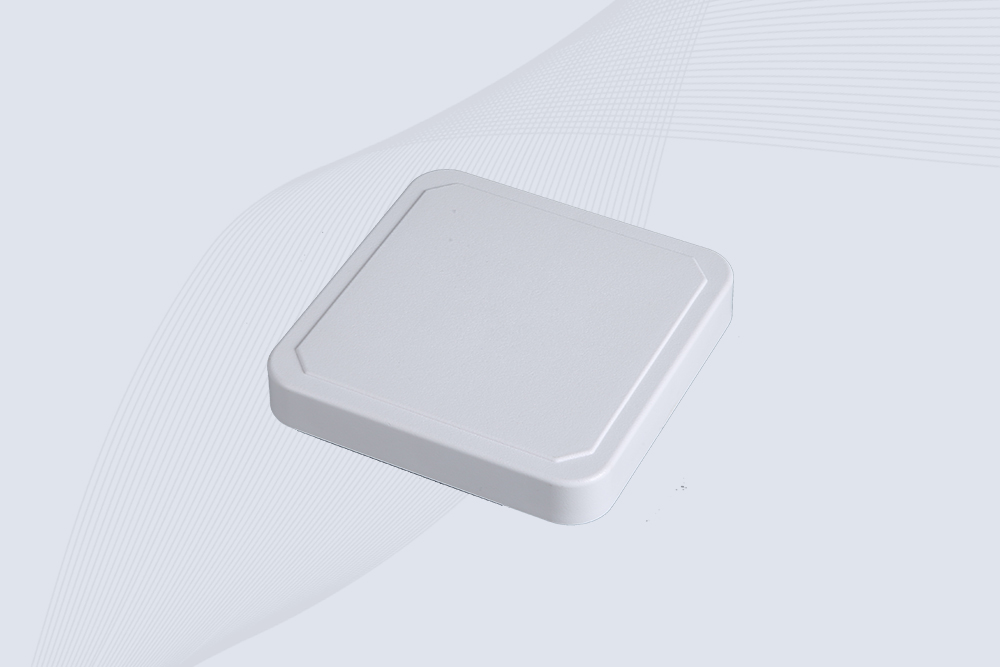
CYKEO Antenna RFID delivers reliable long-range UHF performance in warehouses, retail shelves, and cold-chain environments. This compact uhf rfid antenna provides stable reads with circular polarization and ultra-wide 840–960 MHz support, ideal for industrial tracking, smart shelves, and asset monitoring.
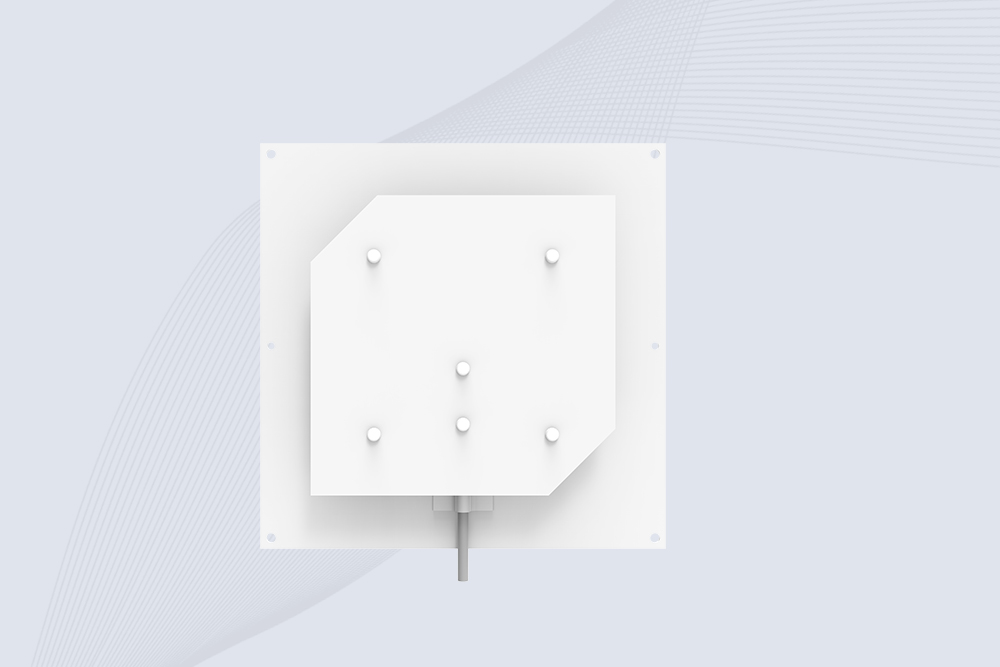
Cykeo’s CYKEO-C8 UHF RFID antennas delivers 8dBi gain, 840-960MHz full-band coverage, and IP65 ruggedness for manufacturing/warehouse RFID systems. Industrial RFID Antennas Features
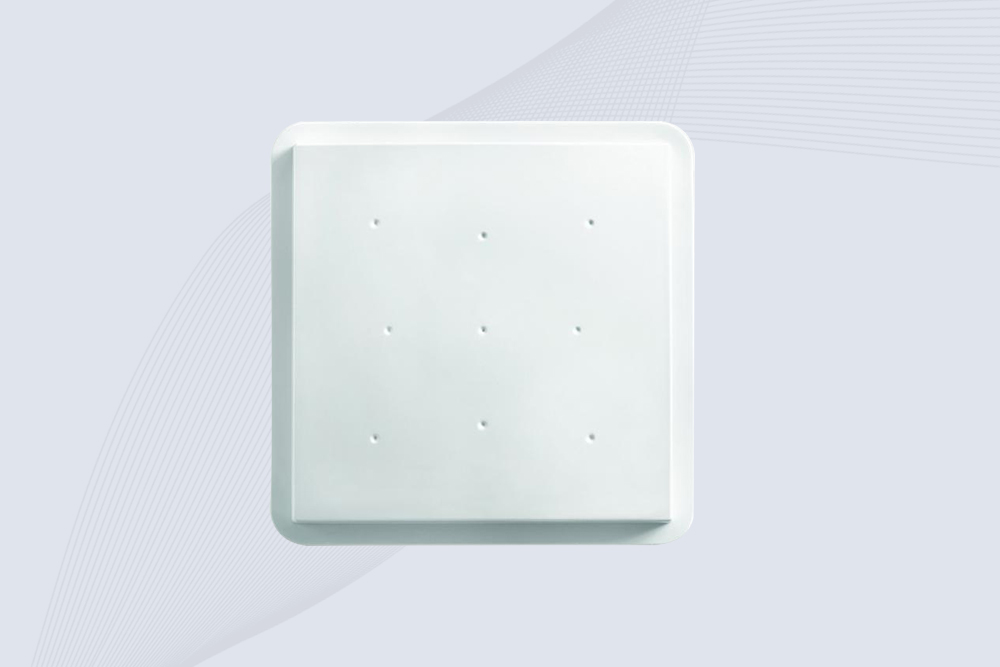
Cykeo’s 8dBi UHF RFID antenna and reader kit delivers 10m+ range, 840-960MHz broadband, and IP65 ruggedness for factories, warehouses, and logistics. ISO 18000-6C & EPC Gen2 certified.
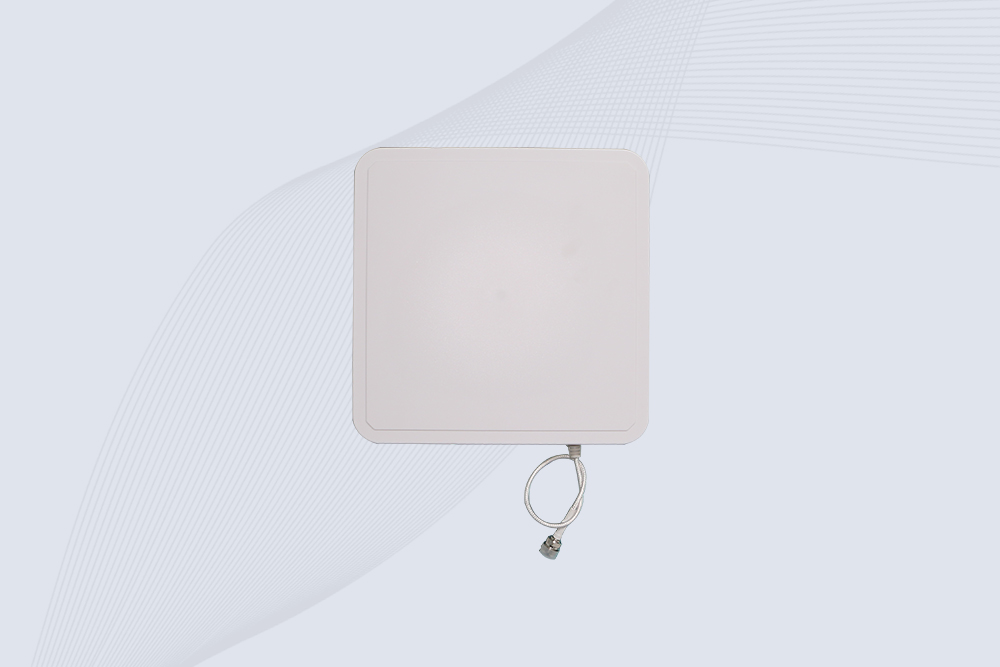
Cykeo CYKEO-A9A industrial UHF RFID reader and antenna kit delivers 10m range, 500 tags/sec, IP65 ruggedness for manufacturing/logistics. Supports EPC Gen2, ISO18000-6C.

UHF RFID cards are set up by matching the card and reader, configuring regional frequency parameters, writing supported EPC or user data, and verifying the r...
More
USB RFID reader and USB RFID scanner are usually the same type of RFID device. The main difference is terminology: “reader” describes the hardware, while “sc...
More
Key RFID tag solutions help businesses track keys, cabinets, vehicles, and assets with fast UHF RFID identification, reducing loss and improving inventory accuracy.
More
Confused by RFID tech? Learn what a RFID reader is, how it works, and why it's used in warehouses, stores, and access control. Get the plain facts here.
More