An RFID tag stores digital identification data and communicates wirelessly with an RFID reader to identify, track, and manage objects automatically. It enables real-time visibility for assets, inventory, and equipment without direct contact. In industrial environments, RFID tags improve operational accuracy, reduce manual recording errors, and support intelligent management systems.
What Does an RFID Tag Do in Modern Identification Systems?
An RFID tag is a small electronic identification device that allows physical objects to become digitally recognizable. Unlike traditional barcode labels that require optical scanning alignment, RFID tags communicate through radio frequency signals, allowing readers to capture information without direct visibility.
From our engineering experience at Cykeo, the role of an RFID tag is not simply “storing a number.” In real deployment projects, the tag becomes the connection point between physical assets and digital management platforms.
During a factory tool-management installation, for example, technicians were not struggling with missing data because tools lacked labels. The problem was that thousands of tool movements happened faster than manual records could follow. After attaching RFID tags and integrating readers at key checkpoints, every movement created a digital event.
That change—from “recording after the fact” to “capturing automatically”—is where RFID tags create measurable value.
According to the AIM Global, RFID technology is widely used across manufacturing, healthcare, logistics, retail, and supply chain industries because it provides automated identification and data collection capabilities.
How RFID Tags Work Inside an RFID System
An RFID tag usually contains three core components:
Component
Function
RFID chip
Stores identification data and manages communication
Protects internal components and enables installation
When an RFID reader sends a radio frequency signal, the tag antenna captures energy from that signal. The RFID chip then activates, processes stored information, and sends data back to the reader.
The communication process happens in milliseconds:
RFID reader emits radio frequency waves.
RFID tag receives energy through its antenna.
Chip retrieves stored identification information.
Tag transmits data back to the reader.
Management software processes the information.
This process allows hundreds or even thousands of tagged items to be identified much faster than manual scanning methods.
The global RFID market continues expanding because organizations need higher levels of automation. According to RAIN Alliance, billions of UHF RFID chips are produced annually, supporting applications from supply chains to industrial automation.
An RFID tag transfers stored identification data wirelessly to an RFID reader, enabling automated tracking and inventory management.
RFID Tag Types and Their Practical Functions
Different RFID tags are designed for different environments. Choosing the correct tag type is often more important than the tag itself.
At Cykeo, we normally evaluate four factors before recommending an RFID tag:
Reading distance requirements
Installation surface material
Environmental conditions
Data management requirements
Common RFID tag categories include:
RFID Tag Type
Main Application
Typical Advantage
UHF RFID Tag
Warehouse, logistics, asset tracking
Long reading distance
HF RFID Tag
Library, access control, payment
Short-range stable communication
On-metal RFID Tag
Equipment and industrial assets
Works on metal surfaces
Flexible RFID Label
Retail and inventory
Easy attachment
For example, metal equipment creates signal reflection problems that standard tags cannot handle effectively. Industrial projects often require specialized on-metal RFID tags with optimized antenna structures.
This is one reason RFID deployment requires engineering experience rather than simply selecting a tag from a catalog.
Cykeo Engineering Experience: Turning RFID Tags into Reliable Business Data
At Cykeo, RFID projects are usually evaluated from the entire system perspective—not only the tag specification.
Our engineering teams focus on:
Tag readability in real environments
Reader antenna positioning
Signal interference control
Software integration
Data accuracy improvement
A common mistake in RFID deployment is testing tags only in an empty laboratory environment. Industrial sites rarely behave like laboratories. Metal shelves, moving machinery, liquids, and electromagnetic interference can change reading performance.
In practical installations, we test:
Reading consistency during movement
Tag orientation impact
Dense tag inventory situations
Long-term environmental stability
This approach helps organizations move from simple RFID identification toward reliable digital asset management.
RFID Tag Advantages: Why Modern Industries Choose Smart Identification
An RFID tag is not simply a replacement for a barcode label. During years of RFID deployment projects across manufacturing plants, libraries, logistics centers, and asset management environments, our Cykeo engineering team has found that the real value of RFID tags appears when organizations need continuous visibility, faster inventory operations, and reliable data collection in complex environments.
In practical installations, the difference is obvious. A barcode requires direct alignment and manual scanning, while an RFID tag allows multiple tagged objects to be identified automatically without line-of-sight operation.
For example, in a European industrial tool management project, maintenance teams previously spent more than 30 minutes manually checking hundreds of tools before each shift. After introducing RFID tags with fixed readers and management software, the inventory process became an automated verification step completed within minutes.
Why RFID Tags Improve Industrial Identification Efficiency
RFID Tag vs Barcode Label Comparison
Feature
RFID Tag
Barcode Label
Reading method
Wireless radio communication
Optical scanning
Line of sight required
No
Yes
Multiple item reading
Supported
Usually one by one
Data storage
Can store electronic information
Limited printed information
Environmental resistance
Available with industrial protection
Limited by printing surface
Automation capability
High
Requires manual operation
According to GS1 RFID Technology Overview, RFID technology enables automatic identification and data capture by using radio waves between readers and tags. This capability has made RFID widely adopted in retail, healthcare, manufacturing, and logistics applications.
The value is not only speed. In many deployments, the biggest improvement comes from reducing human checking errors.
A warehouse operator walking through a storage area does not need to stop, locate every label, and scan each item individually. The RFID system captures the information flow while the operator focuses on handling materials.
Cykeo RFID Engineering Experience: Designing Tags for Real Working Conditions
At Cykeo, our RFID solutions are developed from engineering requirements rather than laboratory assumptions.
During product testing, our engineers frequently evaluate RFID tags in environments where interference is unavoidable: metal shelves, dense storage areas, moving equipment, and mixed material surfaces.
One detail learned from field deployment is that tag selection matters more than simply choosing the highest reading distance.
A 15-meter reading range may sound impressive, but in a tool room, archive cabinet, or medical storage environment, uncontrolled reading can create unnecessary data noise. A shorter, controlled reading zone often provides better operational accuracy.
This is why RFID tags are designed according to application requirements:
Asset tracking tags for industrial tools
Anti-metal RFID tags for equipment surfaces
Library RFID labels for document management
Laundry RFID tags for textile circulation
Flexible RFID labels for logistics packaging
Each environment creates different RF challenges.
Metal reflects electromagnetic signals. Liquids absorb RF energy. Dense stacks create tag collision risks.
The engineering process focuses on solving these practical problems.
Technical Advantages of Cykeo RFID Tag Solutions
Cykeo RFID systems combine tag design, reader technology, and software integration to create reliable identification workflows.
Key Technical Features
Technical Capability
Practical Benefit
Multi-tag recognition
Supports fast inventory of multiple items
Data filtering
Reduces unnecessary tag reads
RSSI signal detection
Helps evaluate signal strength and positioning
Stable write performance
Improves tag information updating
Flexible tag formats
Supports different installation environments
Integration support
Simplifies enterprise software connection
For UHF RFID applications, Cykeo systems support EPC Class 1 Gen 2 / ISO 18000-6C standards, which are widely used for global supply chain identification.
The AIM Global RFID Standards Information explains that UHF RFID systems are commonly used for automatic identification because they support fast reading and scalable deployments.
RFID tags enable automatic identification and real-time asset visibility in modern industrial environments.
RFID Tag Applications Across Different Industries
RFID tags are now used wherever organizations need reliable identification and tracking.
Manufacturing Asset Management
Factories use RFID tags to monitor:
Production tools
Maintenance equipment
Spare parts
Work-in-progress materials
A tagged tool can carry identification data throughout its lifecycle, reducing manual recording.
Library and Document Management
Libraries use RFID tags for:
Book registration
Self-service borrowing
Return automation
Inventory checking
Instead of manually scanning thousands of items, RFID readers can identify multiple books simultaneously.
Textile and Laundry Tracking
Industrial laundry operations require durable identification because textiles experience:
Washing cycles
High temperature
Moisture exposure
Repeated handling
Specialized RFID laundry tags are designed for these conditions.
Logistics and Supply Chain
RFID tags improve:
Shipment visibility
Warehouse inventory accuracy
Receiving efficiency
Distribution tracking
According to GS1 RFID Applications, RFID is widely used in supply chain processes to improve product identification and operational efficiency.
Frequently Asked Questions About What Does an RFID Tag Do
What information can an RFID tag store?
An RFID tag can store identification information such as:
Unique electronic ID numbers
Product information
Asset numbers
Tracking records
The exact memory capacity depends on the RFID chip type and application requirements.
Does an RFID tag need a battery?
Most RFID tags used in industrial identification are passive RFID tags.
They receive energy from the RFID reader signal and respond by transmitting stored information.
Active RFID tags contain batteries and are typically used when longer communication distances or additional sensing functions are required.
Can RFID tags be rewritten?
Yes. Many RFID tags support data writing and updating.
In Cykeo applications, writable RFID tags are commonly used for:
Asset registration
Tool management
Library circulation
Equipment records
How far can an RFID tag be read?
Reading distance depends on:
RFID frequency
Reader power
Antenna design
Installation environment
Tag structure
UHF RFID systems can achieve long-distance identification, while HF/NFC systems are designed for shorter controlled reading ranges.
Are RFID tags suitable for metal surfaces?
Yes, but standard RFID tags may perform poorly on metal.
For industrial equipment, anti-metal RFID tags with specialized shielding structures are commonly used to maintain stable communication.
SSD-A06 UHF RFID antenna with circular polarization, adjustable 840–960 MHz frequency, ≥4.5 dBi gain, and a compact directional design for RFID systems.
SSD-R16L Multi-Channel RFID Infrastructure for Automated Inventory Management ✔️ 16-Port High-Density RFID Reading Equipped with 16 SMA antenna ports, SSD-R16L supports multi-antenna deployment for warehouses, retail stores, logistics, production lines, and large-area RFID identification. ✔️ High-Speed & Long-Range Performance With up to 33…
SSD-R8L 8-port UHF RFID reader with 33dBm output, up to 20m reading range and 600+ tags/s recognition. Ideal for warehouse, logistics, retail and asset tracking.
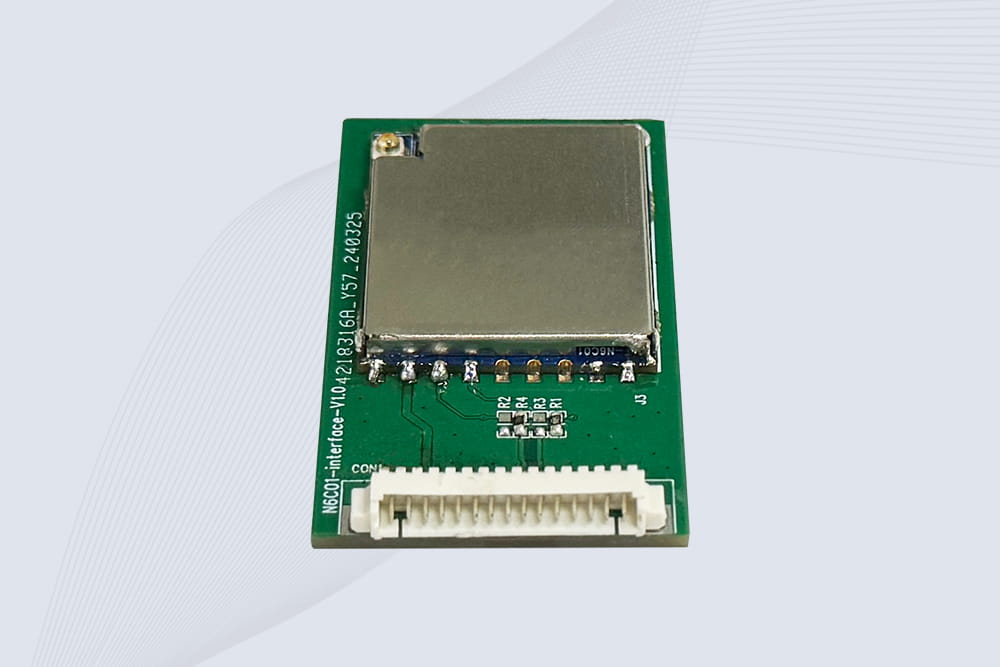
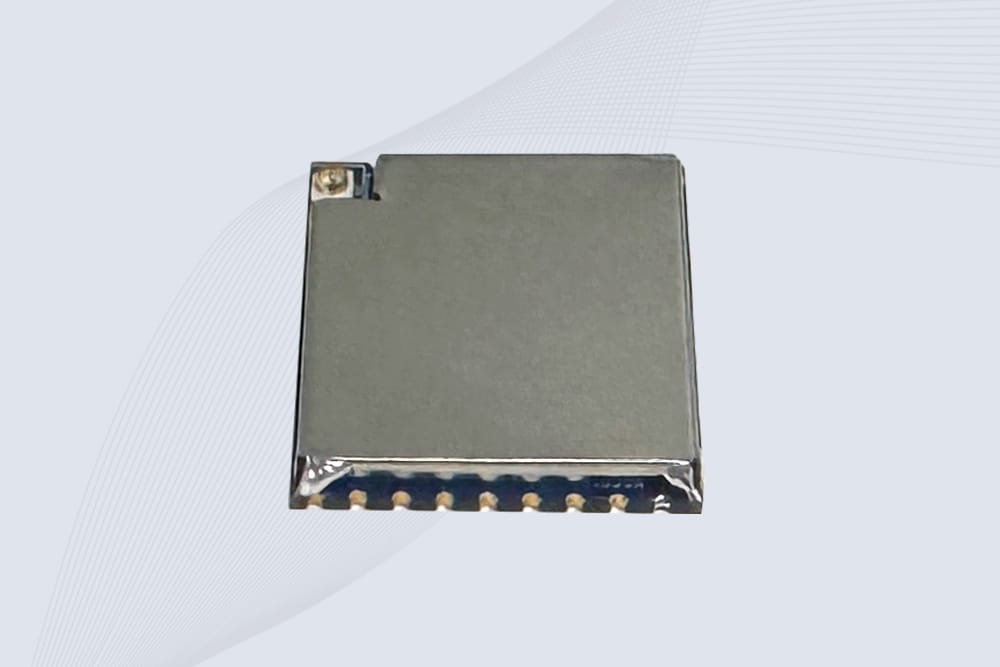
CYKEO Embedded RFID Modules are designed for compact industrial and IoT devices that require stable UHF performance. These UHF RFID Modules support global protocols, flexible power control, and reliable multi-tag reading for smart cabinets, production lines, and asset tracking systems.
CYKEO Embedded RFID Module is built for compact IoT and industrial devices that need stable UHF performance. This UHF module supports global protocols, low power operation, and reliable multi-tag reading for smart lockers, production lines, and always-on RFID systems.
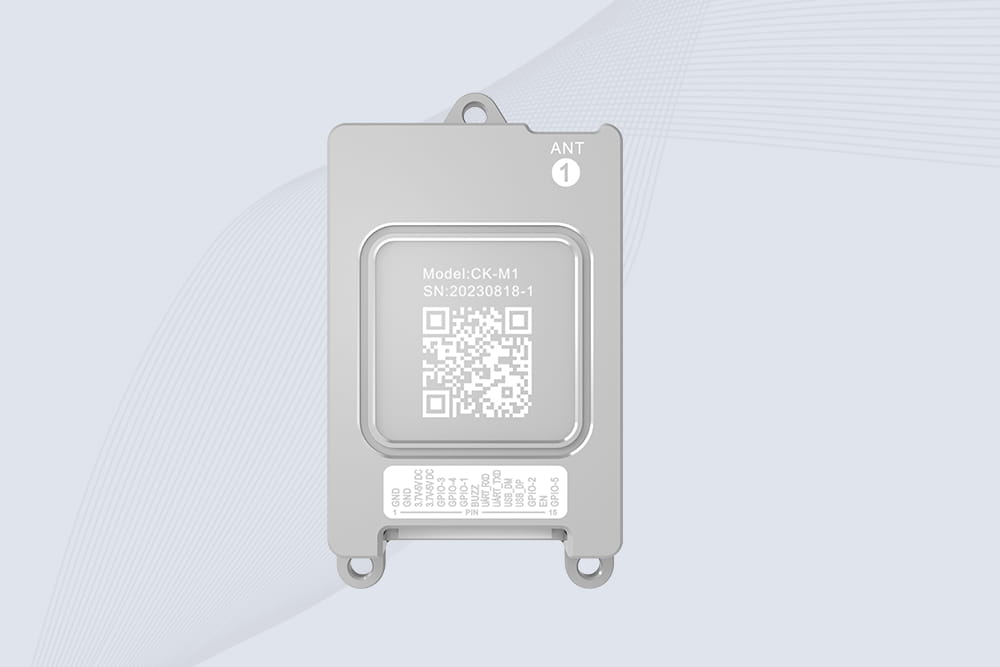
CYKEO CYKEO-M1 drone rfid module is a compact UHF RFID reader module designed for drones and UAV platforms. It supports long-range aerial scanning, fast multi-tag reading, and stable performance in wind, vibration, and outdoor environments.
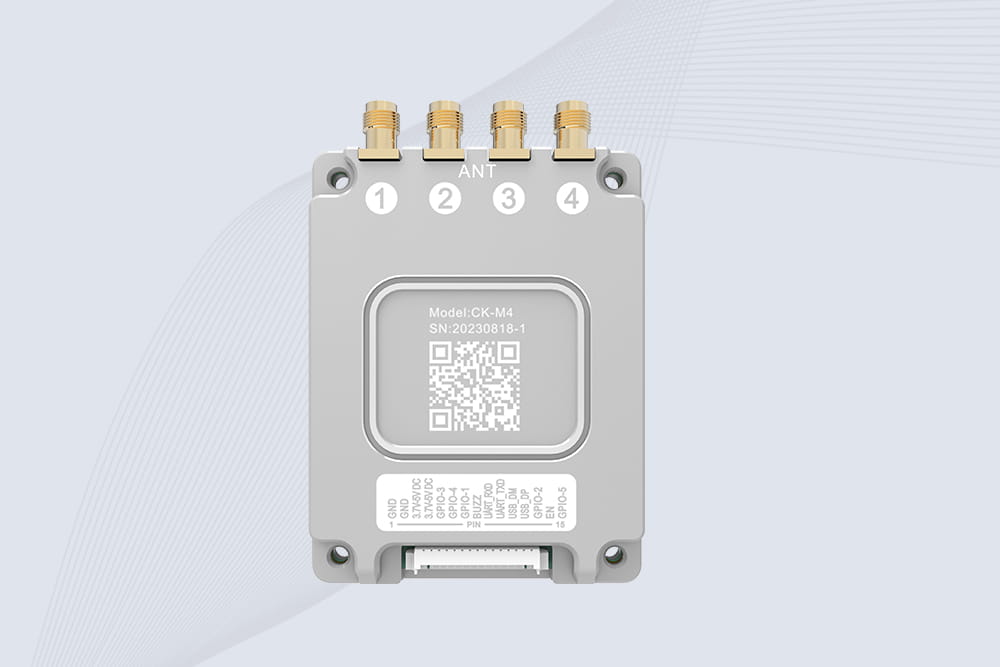
CYKEO CYKEO-M4 RC522 RFID Module is an industrial-grade UHF RFID reader with 4 ports, supporting ISO, EPC, and GB protocols. High-speed, accurate reading for IoT, automation, and warehouse applications.
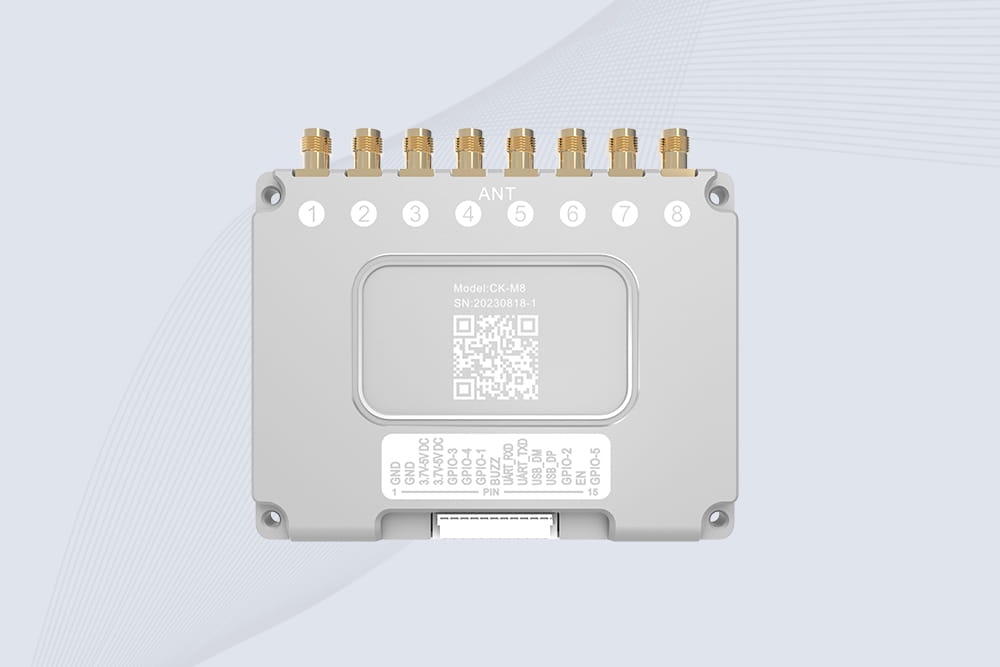
CYKEO CYKEO-M8 Module RFID is an 8-port UHF R2000 RFID Module designed for high-density, multi-tag environments. Stable 33dBm output, ISO & GB protocol support, ideal for warehouses, factories, and automated systems.
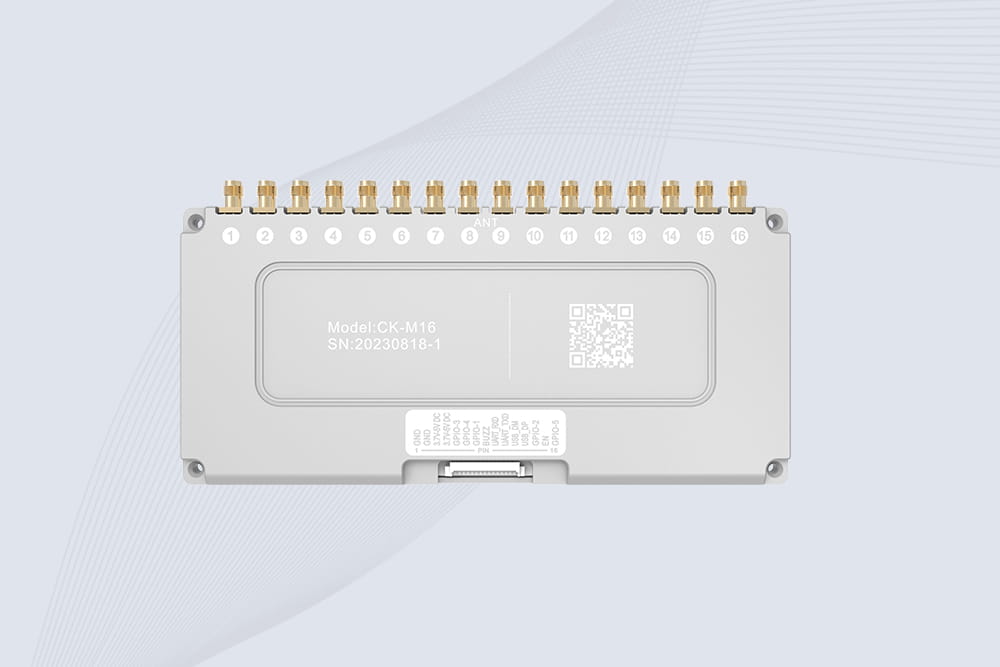
CYKEO CYKEO-M16 RFID Module is a 16-port UHF RFID reader module based on the R2000 chipset. Designed for dense tag environments, it supports ISO and GB standards and delivers stable multi-antenna control for industrial automation.
The CYKEO CYKEO-M16L RFID Reader Module is a 16-channel UHF RFID core designed for dense tag environments. With adjustable 33dBm output, multi-protocol support, and stable multi-antenna control, this RFID Tag Reader Module fits industrial automation, warehouse systems, and large-scale IoT deployments.
CYKEO CYKEO-M8L module RFID is a compact industrial UHF module built for dense tag and multi-antenna environments. With 8 RF ports, adjustable 33 dBm output, and ISO & GB protocol support, it is widely used in factories, warehouses, and automated tracking systems.
CYKEOCYKEO-M4L UHF RFID Module is a compact 4-channel RFID tag reader module designed for dense tag environments. Supporting ISO and GB protocols, it delivers stable reads up to 10 meters for industrial and IoT systems.
Cykeo CYKEO-A11 UHF RFID reader antenna delivers 11dBi gain, 840-960MHz frequency range, and IP65 ruggedness for retail, logistics, and industrial RFID systems. Features low VSWR and easy installation.
CYKEO Antenna RFID Reader delivers stable long-range UHF performance with a 10.5dBi directional design, built for warehouses, conveyor portals, and industrial RFID systems. This rfid reader antenna provides 20m+ read distance and rugged IP67 protection.
Cykeo CYKEO-A5B industrial Linear RFID Antenna delivers 5dBi gain, ≤1.5:1 VSWR, and IP65 rugged design for warehouse, production line, and logistics UHF systems.
Cykeo’s CYKEO-B12 Long Range RFID Antenna delivers 15m+ read range with 12dBi gain, IP65 rugged design, and global 840-960MHz UHF support. Ideal for warehouse/logistics asset tracking.
Cykeo CYKEO-B10 Long Distance RFID Antenna offers 10dBi gain, 840-960MHz frequency range, IP65 rating, and 20m+ coverage for logistics/warehousing/ETC systems. Low VSWR ensures stable signal transmission.
Cykeo CYKEO-A6 UHF RFID panel antenna features 6dBi gain, 840-960MHz broadband, IP65 metal-ready housing for logistics/smart retail. 18mm ultra-thin design with tool-free mounting.
Cykeo CK-A3 industrial antenna RFID UHF offers 5m+ tag detection, ≤1.3:1 VSWR, IP65 rugged design, and global UHF spectrum compatibility (840-960MHz) for warehouses, factories, and retail.
Cykeo CYKEO-B5 directional RFID antenna provides 5dBi gain with 60° narrow beamwidth for precise inventory tracking. IP65-rated, global UHF frequency support, and low VSWR.
Create your own high-performance DIY RFID antenna! 5dBi gain, 840-960MHz tunable, step-by-step guides. Compatible with Arduino, Raspberry Pi, and commercial UHF readers.
Cykeo CYKEO-A7 Flexible RFID Antenna features 840-960MHz wideband tuning, 7dBi gain, and IP68 rating for medical/retail/industrial curved surface deployments. 98% read accuracy with peel-and-stick installation.
Cykeo CYKEO-B5A industrial Passive RFID Antenna delivers 5dBi gain, 70° beamwidth, and -40°C~55°C operation for warehouses/smart cabinets. Compatible with Zebra/Impinj readers.
Cykeo’s CYKEO-A9B High Gain RFID Antenna delivers 15m+ read range with 9dBi amplification. Features IP54 rugged design, 840-960MHz bandwidth, and 80° beamwidth for warehouse/manufacturing RFID systems.
Cykeo’s enterprise-grade 8dbi Impinj RFID Antenna 10m+ read range with 840-960MHz tuning. Features IP65 housing, 1.4 VSWR, 35° beamwidth for retail/warehouse RFID systems.
Cykeo CYKEO-A9 industrial UHF RFID antenna delivers 9dBi gain, 840-960MHz frequency range, and IP65 protection for warehouse/logistics/retail RFID systems. Features N-type connector and ≤1.3:1 VSWR.
CYKEO UHF RFID Antenna built for long-distance and industrial applications. This antenna rfid uhf delivers strong gain, outdoor durability, and reliable tag performance in warehouses, yards, and vehicle ID systems.
CYKEO Antenna RFID delivers reliable long-range UHF performance in warehouses, retail shelves, and cold-chain environments. This compact uhf rfid antenna provides stable reads with circular polarization and ultra-wide 840–960 MHz support, ideal for industrial tracking, smart shelves, and asset monitoring.
Cykeo’s CYKEO-C8 UHF RFID antennas delivers 8dBi gain, 840-960MHz full-band coverage, and IP65 ruggedness for manufacturing/warehouse RFID systems. Industrial RFID Antennas Features
Cykeo’s 8dBi UHF RFID antenna and reader kit delivers 10m+ range, 840-960MHz broadband, and IP65 ruggedness for factories, warehouses, and logistics. ISO 18000-6C & EPC Gen2 certified.
Cykeo’s CYKEO-A12C UHF Large RFID Antenna delivers 12dBi gain, 840-960MHz global frequency, IP65 ruggedness for logistics/warehousing/automotive. 40° beamwidth ensures stable 15m+ tag reads.
CYKEO Near Field RFID Antenna provides precise 5–30 cm reading for shelves, cabinets, and workstations. This compact rfid shelf antenna delivers stable short-range performance around metal and clutter, ideal for pharmacies, libraries, and electronics sorting.
Cykeo’s industrial long range RFID reader delivers 20-meter scanning, 500+ tags/sec speed, and IP67 waterproof design for automated warehouses, logistics, and harsh environment applications.
Cykeo’s CYKEO-RA6L industrial RFID long range reader features 20m read distance, 500 tags/sec speed, and IP67 protection. Ideal for warehouse automation, manufacturing WIP tracking, and smart logistics. Supports ISO 18000-6C/6B protocols.
CYKEO Long Range RFID Tag Reader built for outdoor and industrial operations. This Outdoor RFID Reader delivers 20m read distance, fast tag processing, and IP67 durability for wide-area tracking.
Cykeo CYKEO-RA12L industrial Long Range RFID Reader delivers 20m read range, 200+ tags/sec scanning, and IP67 protection for manufacturing/logistics applications. Supports ISO 18000-6C/GB protocols.
Cykeo CYKEO-C1 industrial Forklift RFID Reader features 20m read range, 600 tags/sec scanning, Impinj R2000 chipset, and IP67 rugged design. Ideal for warehouse logistics and manufacturing. Supports ISO 18000-6C/6B protocols.
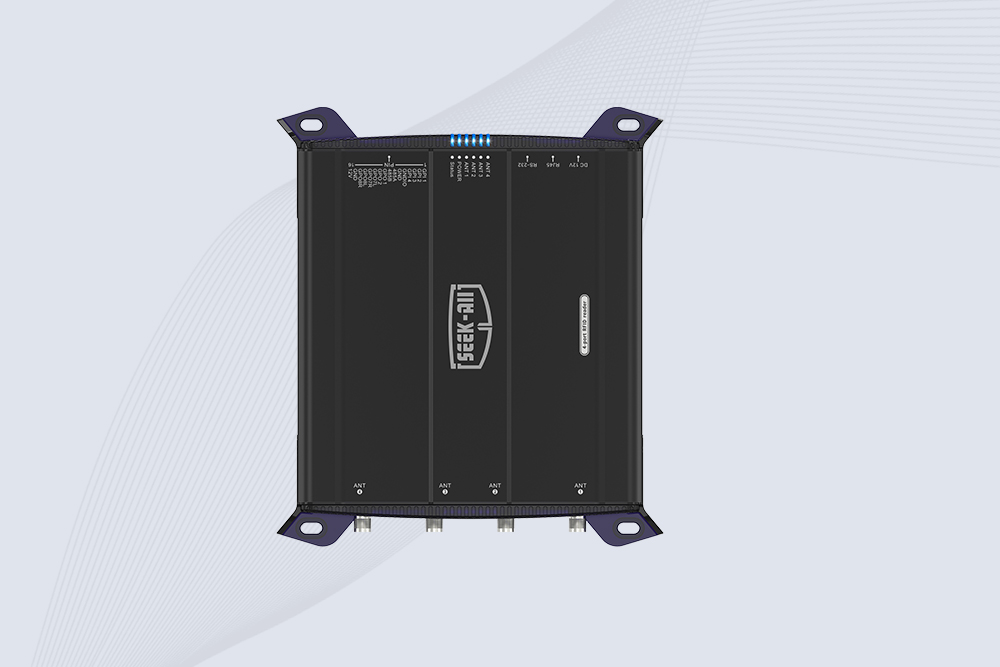
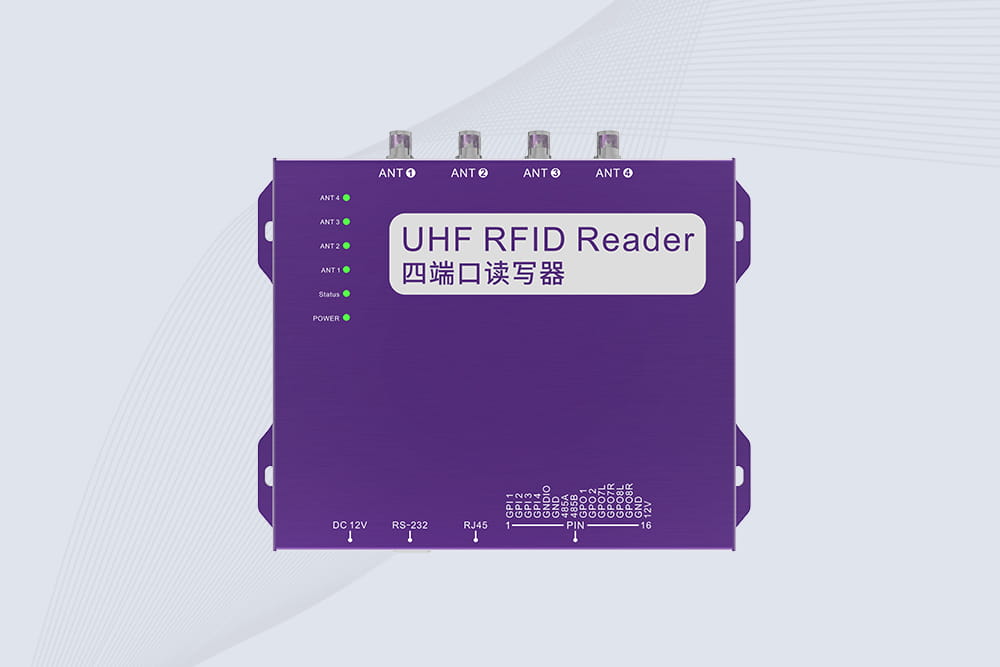
Cykeo CYKEO-R4 industrial UHF RFID Fixed Reader features 4 TNC ports, 400+ tags/sec speed, IP67 housing, and global frequency compliance for vehicle inspection, smart warehouse, and asset management systems.
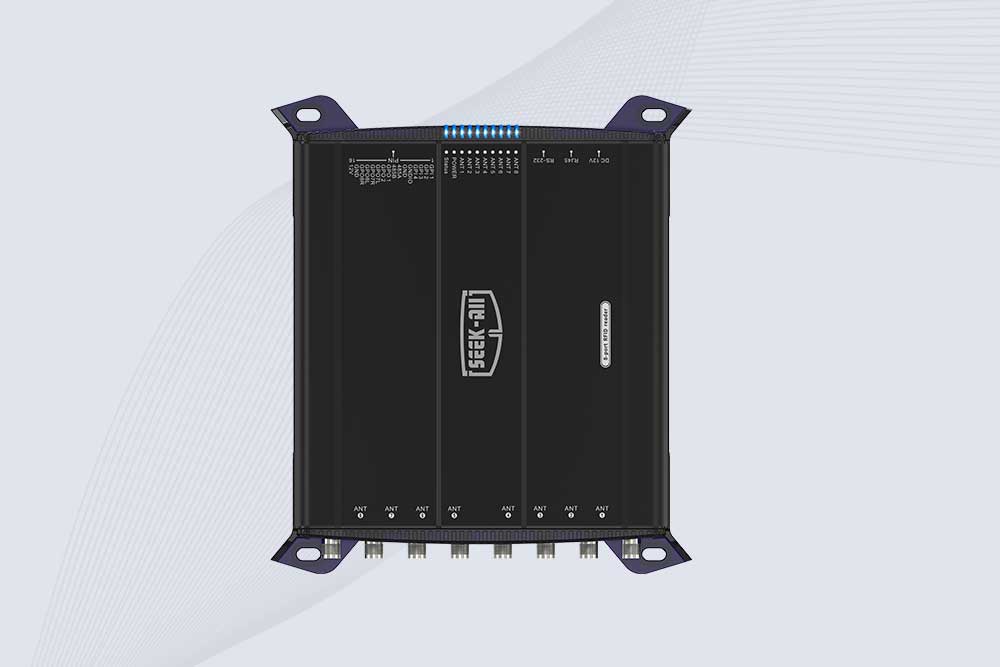
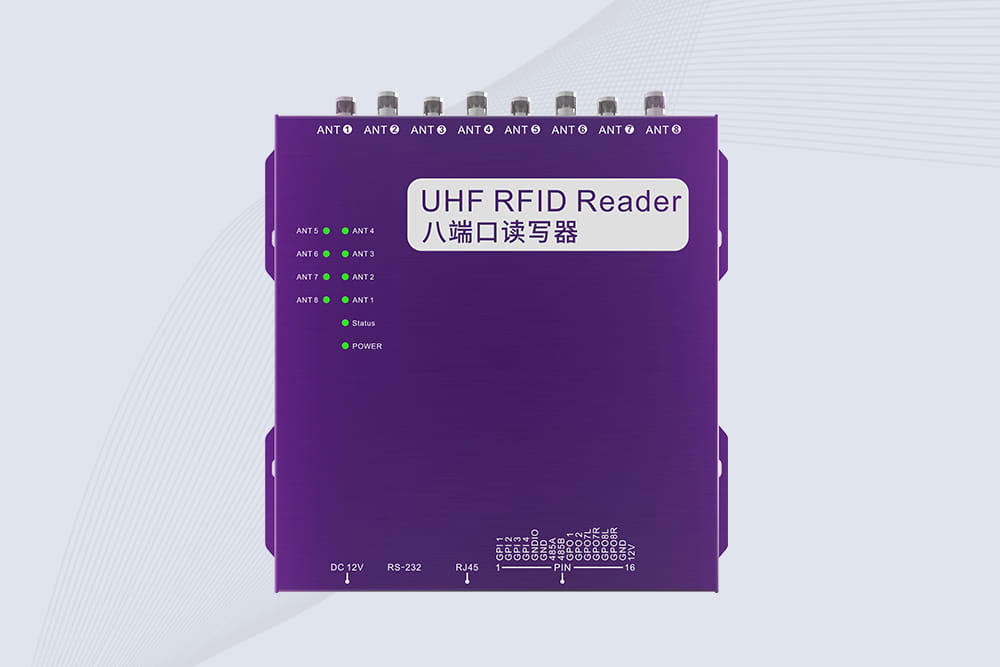
CYKEO CYKEO-R8L Fixed RFID Reader with 8-port UHF design, Impinj-based RF core and up to 20m read range. An industrial Fixed RFID Reader for vehicle inspection, warehouse portals, smart manufacturing lines and secure access checkpoints.
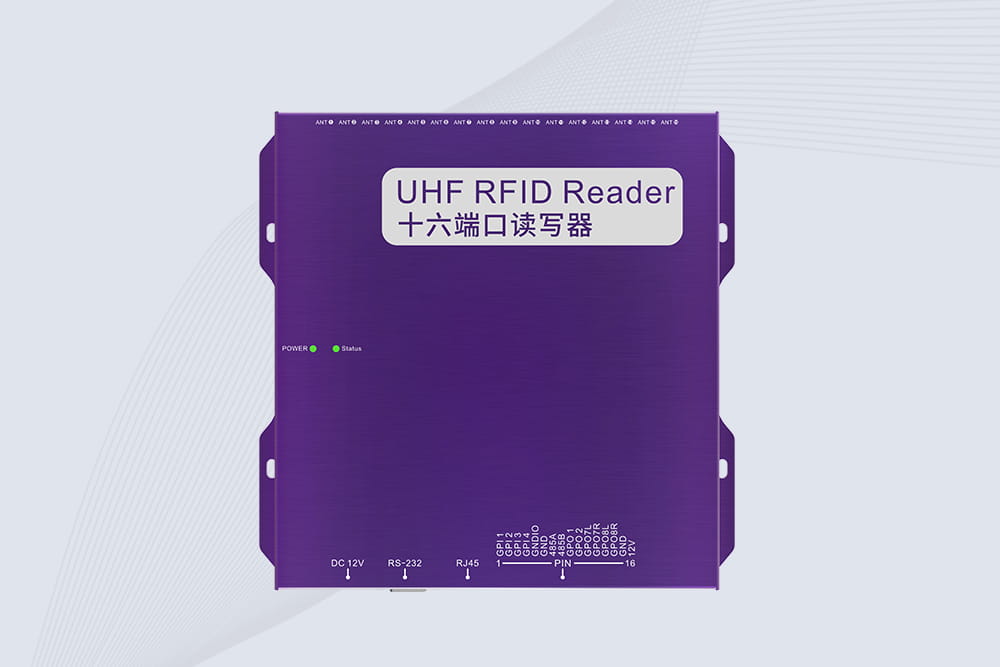
RFID Fixed Reader from CYKEO – the CYKEO-R16L 16-port UHF fixed reader for warehouses, smart cabinets, and production lines. Long-range, multi-tag reading, stable performance for 24/7 industrial use.
Inventory RFID tags, with features such as contactless identification, batch reading, and strong anti-interference capabilities, have become a standard technology in enterprise digital transformation.
A real-world look at UHF RFID reader deployment issues in warehouses and industrial sites. Covers installation mistakes, integration gaps, and what wholesale buyers often miss before scaling RFID projects.
Learn step-by-step how to set up an RFID workstation for efficient inventory management. Discover Cykeo’s hardware, software integration, and optimization tips.
Discover what is rfid used for in retail and how RFID smart checkout systems improve inventory accuracy, self-service payment, and store automation with Cykeo.
 Cykeo RFID IoT Solution Products R&D Manufacturer