 Cykeo RFID IoT Solution Products R&D Manufacturer
How Many Types of RFID Tags Are There?
117RFID tags have no single universal type count. They are mainly classified by power source, frequency, and physical construction, with passive UHF/RAIN RFID w...
MoreAll RFID Product
RFID means Radio Frequency Identification, a wireless technology that uses radio waves to identify, track, and manage objects through RFID tags and readers. It enables automatic data capture without direct contact, helping industries improve inventory accuracy, asset visibility, and operational efficiency.
When people ask what do you mean by rfid, they usually want more than a basic definition. In real industrial environments, RFID is not simply a replacement for barcodes. It is a complete identification system built around three working elements: RFID tags, RFID readers, and software platforms that process collected data.
An RFID tag stores digital information and communicates with a reader through radio frequency signals. Unlike traditional barcode scanning, RFID does not require a direct line of sight. Multiple tagged items can be identified simultaneously, which makes it practical for warehouses, manufacturing lines, hospitals, retail stores, and logistics operations.
During my years working with RFID deployment projects, I have seen the difference between a laboratory demonstration and a real production environment. A warehouse manager is not interested in whether a tag can be read from several meters away under perfect conditions. The real question is whether cartons can still be identified when workers move quickly, metal shelves create interference, and hundreds of tags enter the reader field together.
This is where RFID engineering becomes important.
According to GS1, UHF RFID systems commonly operate within the EPC Gen2 / ISO 18000-63 standard framework, allowing globally compatible identification solutions across supply chains. The standardization of RFID technology has helped manufacturers and logistics providers deploy systems across different regions and equipment platforms.
RFID tags are small electronic devices attached to products, containers, equipment, or identification cards. They contain an integrated circuit and antenna that allow information exchange with RFID readers.
The main RFID tag categories include:
| RFID Tag Type | Frequency Range | Typical Applications |
|---|---|---|
| LF RFID Tag | 125–134 kHz | Animal identification, access control |
| HF RFID Tag | 13.56 MHz | Library systems, payment cards, smart labels |
| UHF RFID Tag | 860–960 MHz | Warehouse tracking, retail inventory, logistics |
Passive UHF RFID tags are widely used in supply chain applications because they do not require an internal battery. They receive energy from the reader signal and return stored information through backscatter communication.
An RFID reader sends radio signals to activate tags and receives the returned data. Depending on the application, readers can be designed as:
In a recent warehouse RFID commissioning project, the main challenge was not increasing reading distance. The initial setup could already read tags across a large area, but operators were receiving unwanted reads from nearby shelves. By adjusting antenna direction, reader power, and filtering rules, the system became more reliable.
This type of field experience shows why RFID deployment requires application knowledge, not only hardware selection.
RFID adoption continues because it solves operational problems that manual processes often cannot handle efficiently.
According to research published by Auburn University RFID Lab, RFID implementation studies in retail supply chains have demonstrated improvements in inventory accuracy. One widely cited study involving retail stores tracked RFID-enabled inventory processes over multiple weeks and reported inventory accuracy improvements compared with conventional methods.
The practical advantages include:
A barcode requires scanning one item at a time. RFID readers can capture multiple tagged items within their reading zone, reducing manual handling during inventory operations.
RFID allows companies to associate physical objects with digital records. Equipment, tools, medical supplies, and products can be monitored throughout their movement.
Manual counting creates opportunities for missed items or incorrect records. RFID automation helps improve consistency by collecting identification data directly from tagged objects.

In manufacturing, RFID is often used to monitor work-in-progress products. A tagged component can carry information from assembly stations to inspection areas without requiring employees to manually enter every movement.
In healthcare, RFID systems help hospitals manage medical assets and consumable supplies. The value is not only knowing where an item is located but also creating a reliable digital history of movement.
Retail environments use RFID for inventory management, self-service checkout, and loss prevention. The technology allows businesses to connect physical products with real-time inventory systems.
Understanding what do you mean by rfid also requires looking at the complete system behind the technology. A successful RFID project is rarely based on a single reader or tag. It depends on matching hardware, software, installation conditions, and business processes.
A typical RFID system includes:
| RFID Component | Function |
|---|---|
| RFID Tags | Store identification data and attach to physical items |
| RFID Readers | Send radio signals and collect tag information |
| RFID Antennas | Control reading coverage and communication performance |
| RFID Software | Processes, stores, and connects RFID data with business systems |
In professional deployments, the selection process starts with the application environment. A retail shelf, a metal tool cabinet, and a warehouse loading gate all have different requirements.
For example, warehouse portal applications usually require stable long-range UHF RFID performance, while desktop encoding stations focus more on short-distance writing accuracy. Choosing a reader only based on maximum reading distance often creates problems later because uncontrolled read zones may capture unnecessary tags.
At Cykeo, RFID engineering projects typically begin by analyzing:
This approach helps businesses avoid common RFID deployment problems caused by unsuitable equipment selection.
RFID performance depends heavily on operating frequency. Different frequency ranges are designed for different environments.
| Frequency | Main Characteristics | Common Uses |
|---|---|---|
| LF RFID | Short range, stable near liquids and metals | Animal tracking, access systems |
| HF RFID | Moderate distance, widely standardized | Smart cards, libraries, NFC applications |
| UHF RFID | Longer range and faster multi-tag reading | Supply chain, warehouse, asset tracking |
For industrial applications, UHF RFID has become one of the most important choices because it supports fast identification of large quantities of items.
According to GS1, EPC-enabled RFID technology provides a standardized method for identifying products throughout global supply chains. This standardization allows companies, manufacturers, and logistics providers to build connected tracking systems across different regions.
Many companies initially approach RFID with a simple expectation: install readers, attach tags, and immediately obtain perfect tracking results.
Real projects are different.
During RFID system testing, one of the first issues engineers usually encounter is unpredictable tag behavior. A tag that performs well in an open test area may behave differently when attached to metal equipment, liquid containers, dense cartons, or moving machinery.
I have worked on RFID application evaluations where the biggest improvement did not come from changing hardware. It came from adjusting antenna placement, reader configuration, tag selection, and software filtering.
A practical RFID engineer needs to consider details such as:
These details determine whether RFID becomes a useful business tool or simply another disconnected device.
Warehouses use RFID to monitor inventory movement, automate receiving processes, and improve shipment visibility.
Typical applications include:
Fixed RFID readers installed at warehouse entrances can automatically identify tagged goods as they pass through controlled reading areas.
Manufacturers use RFID to track components, tools, and production processes.
A tagged product can carry information throughout different manufacturing stages, helping production teams understand location history and processing status.
Industrial environments often require durable RFID equipment because readers may operate continuously near machinery, dust, vibration, and electromagnetic interference.
Hospitals and laboratories use RFID technology for:
The key value is creating accurate digital visibility of physical resources.
RFID continues evolving from simple identification technology into a foundation for connected operations.
Modern RFID systems are increasingly integrated with:
The development of standardized RFID communication protocols has also improved interoperability between hardware suppliers and software platforms.
For companies evaluating RFID today, the important question is not only “what do you mean by RFID?” but also “how can RFID data improve a specific workflow?”
A successful RFID solution connects physical objects with reliable digital information.
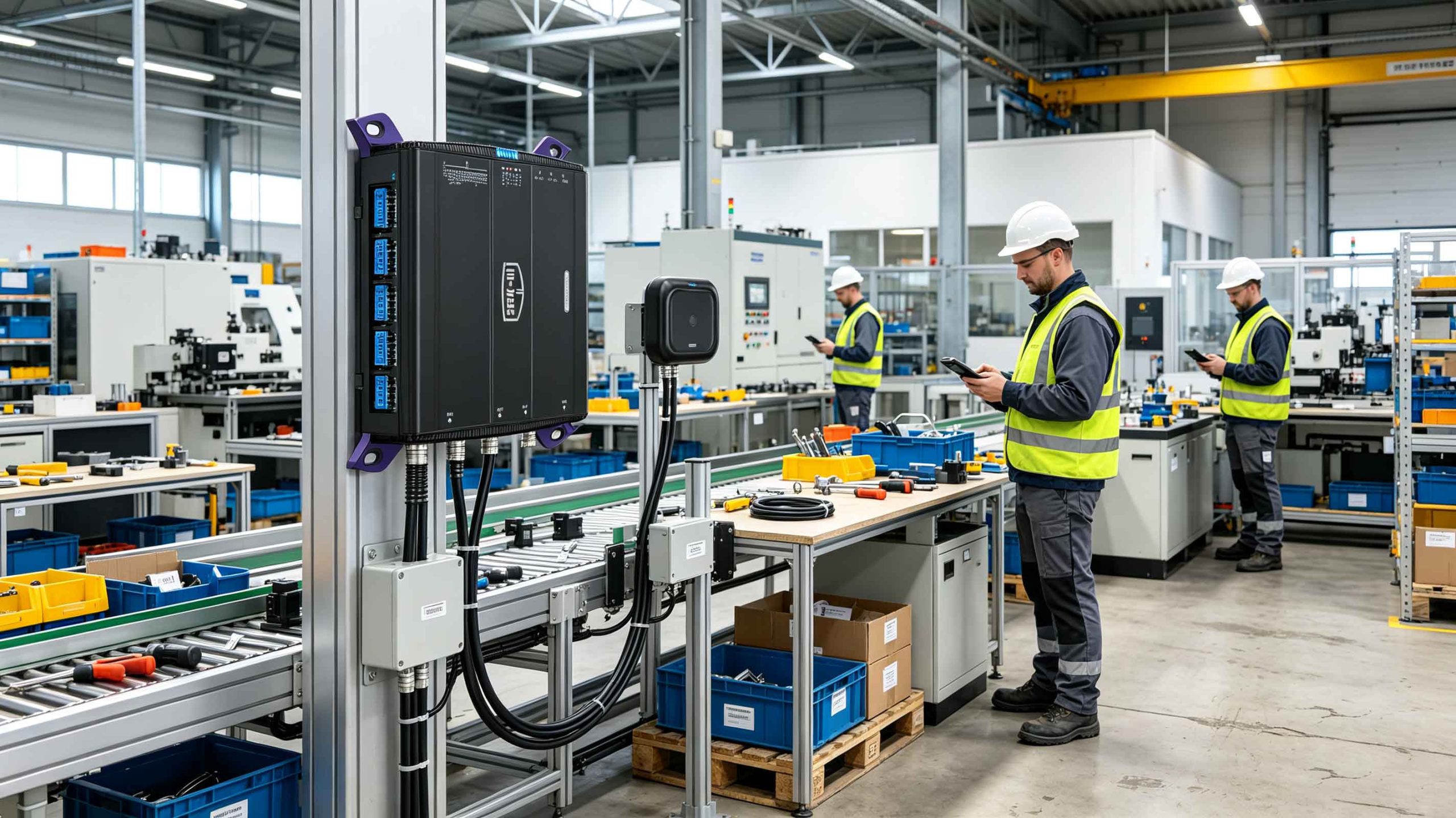
RFID means Radio Frequency Identification. It is a wireless identification technology that uses radio waves to exchange information between RFID tags and readers. Businesses use RFID to automatically identify, track, and manage physical objects without requiring direct scanning.
RFID works by allowing a reader to communicate with a tag through radio frequency signals. The reader sends energy and commands to the tag, then receives stored information. The collected data can be transferred into software systems for tracking and management.
RFID does not require direct visual contact like barcode scanning. Multiple RFID tags can often be identified simultaneously, while barcodes usually require individual scanning. RFID is commonly selected when companies need faster inventory operations and automatic identification.
RFID is used in logistics, manufacturing, healthcare, retail, transportation, libraries, and asset management. Any industry that needs reliable identification and tracking of physical items can potentially benefit from RFID solutions.
RFID reading distance depends on frequency, reader power, antenna design, tag type, and environment. UHF RFID systems can achieve several meters of reading distance in suitable conditions, while near-field applications may require much shorter ranges.
Some RFID tags can be rewritten and reused, depending on their memory design and application requirements. Reusable RFID tags are commonly used for industrial containers, equipment tracking, and returnable transport items.
When asking what do you mean by rfid, the answer goes beyond the abbreviation Radio Frequency Identification. RFID represents a complete identification ecosystem connecting physical objects, wireless communication, and digital management systems.
From warehouses and factories to healthcare and retail environments, RFID helps organizations create more accurate visibility into their operations.
With practical deployment experience, Cykeo focuses on designing RFID solutions that match real working conditions rather than only laboratory specifications. The most effective RFID systems are built around business needs, environmental challenges, and long-term operational reliability.
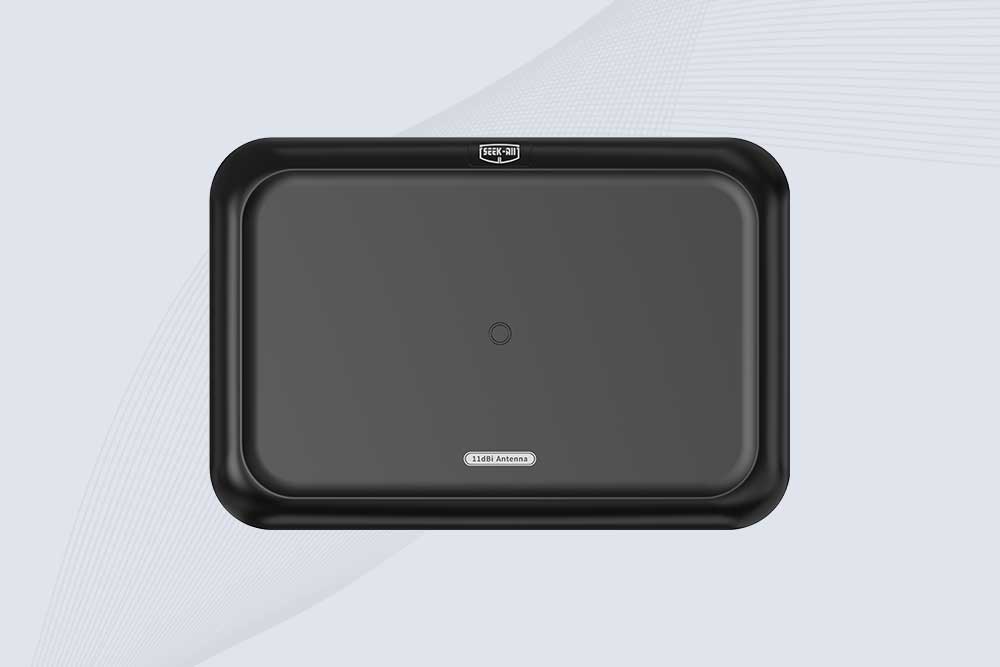
SSD-A11 UHF RFID antenna features 840–960 MHz adjustable frequency, ≥10.5 dBi gain, circular polarization and 50Ω impedance for fixed RFID systems.
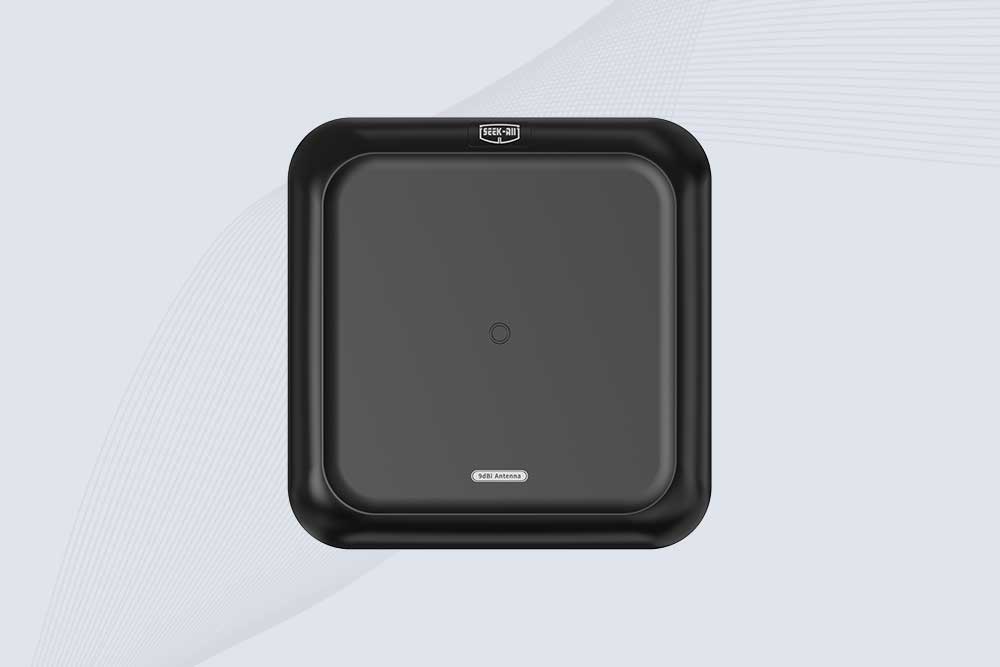
SSD-A09 is a 9 dBi UHF RFID antenna with 840–960 MHz adjustable frequency, circular polarization, 50Ω impedance and directional 60° × 60° coverage.
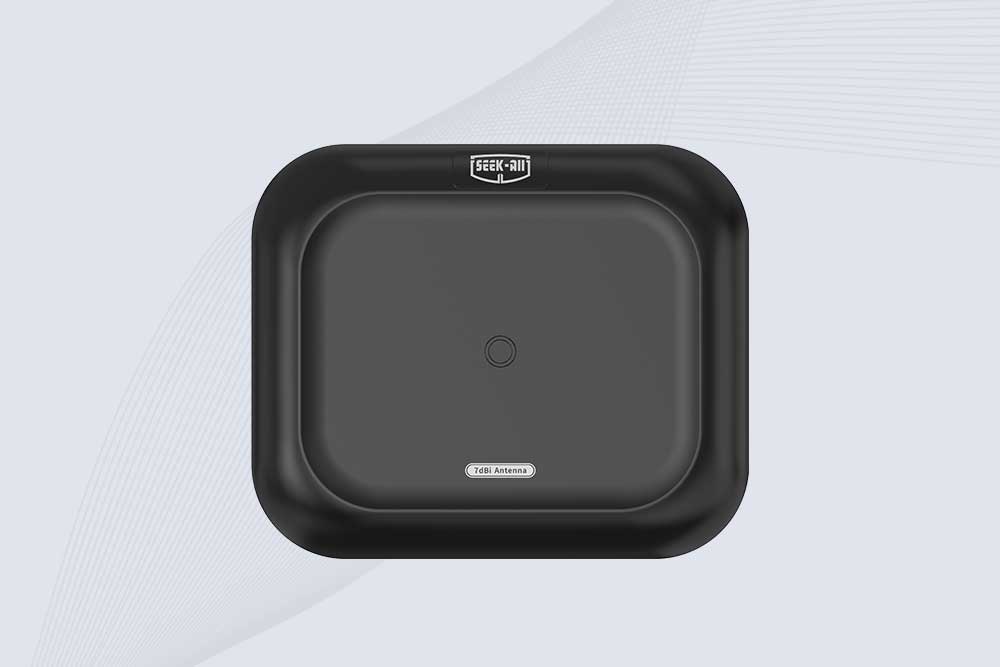
Explore the SSD-A07 UHF RFID antenna with 7 dBi gain, circular polarization, adjustable 840–960 MHz frequency, and 60°/75° beamwidth for stable RFID read/write performance.

SSD-A06 UHF RFID antenna with circular polarization, adjustable 840–960 MHz frequency, ≥4.5 dBi gain, and a compact directional design for RFID systems.
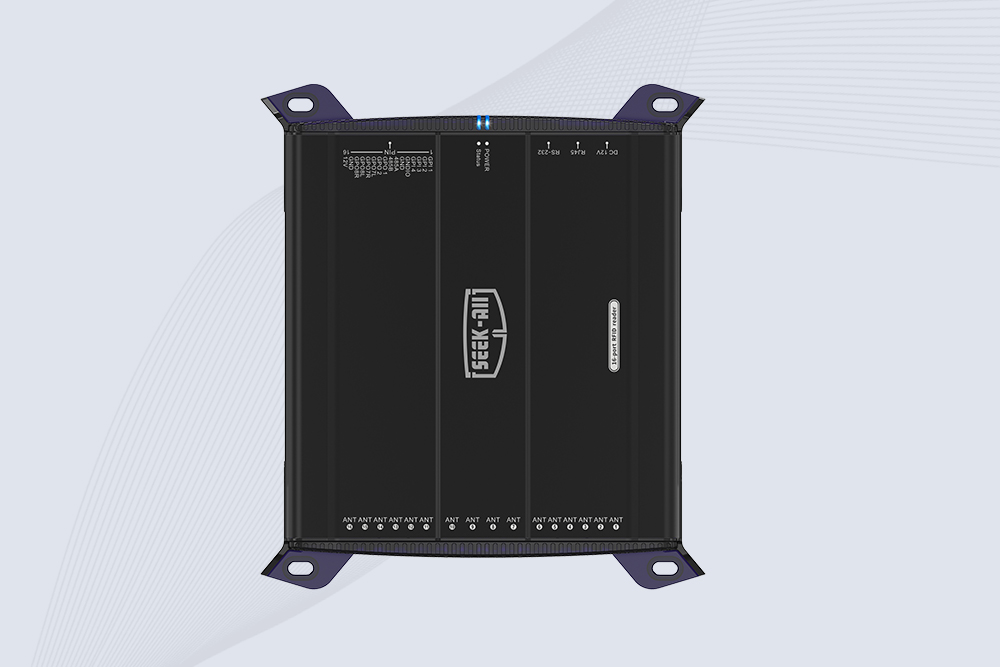
SSD-R16L Multi-Channel RFID Infrastructure for Automated Inventory Management ✔️ 16-Port High-Density RFID Reading Equipped with 16 SMA antenna ports, SSD-R16L supports multi-antenna deployment for warehouses, retail stores, logistics, production lines, and large-area RFID identification. ✔️ High-Speed & Long-Range Performance With up to 33…
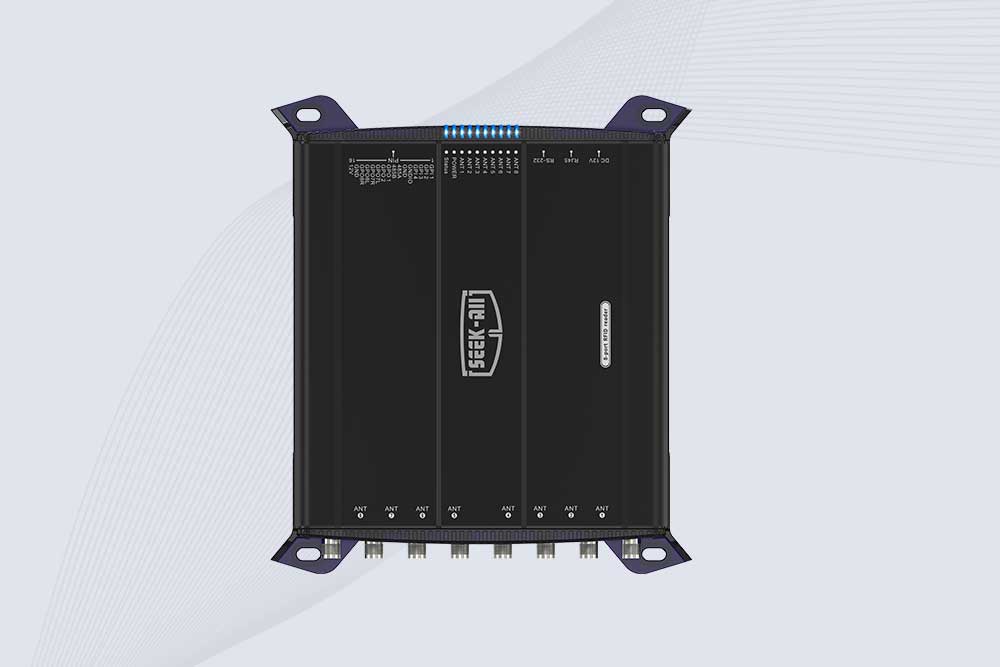
SSD-R8L 8-port UHF RFID reader with 33dBm output, up to 20m reading range and 600+ tags/s recognition. Ideal for warehouse, logistics, retail and asset tracking.
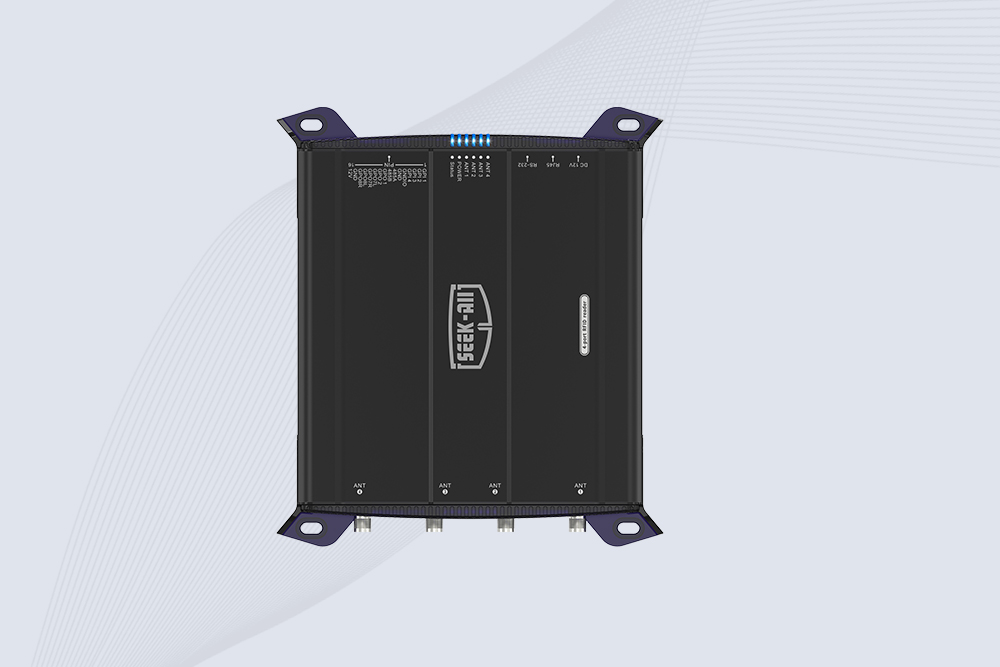
SSD-R4L is a 4-port UHF RFID fixed reader with 33dBm output power, up to 20m reading range, EPC C1G2 support and 600+ tags/s reading speed.
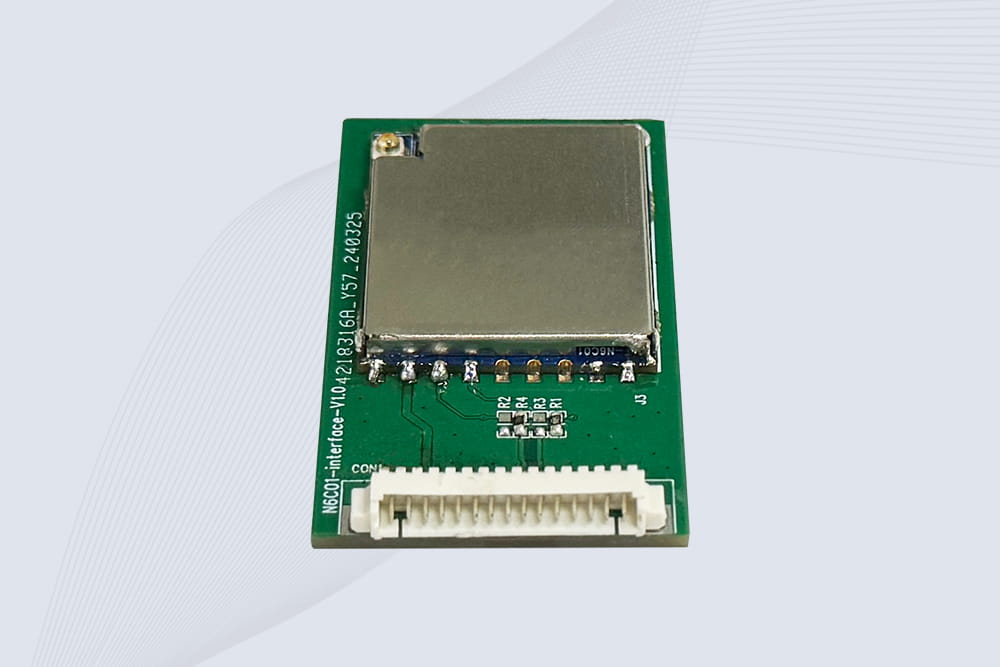
CYKEO Embedded RFID Modules are designed for compact industrial and IoT devices that require stable UHF performance. These UHF RFID Modules support global protocols, flexible power control, and reliable multi-tag reading for smart cabinets, production lines, and asset tracking systems.
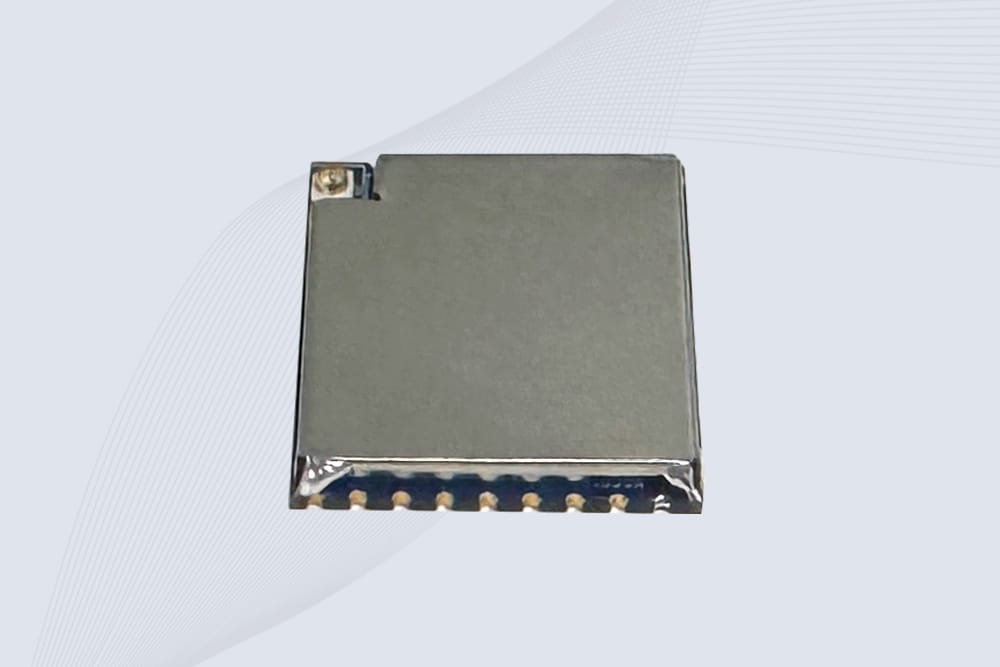
CYKEO Embedded RFID Module is built for compact IoT and industrial devices that need stable UHF performance. This UHF module supports global protocols, low power operation, and reliable multi-tag reading for smart lockers, production lines, and always-on RFID systems.
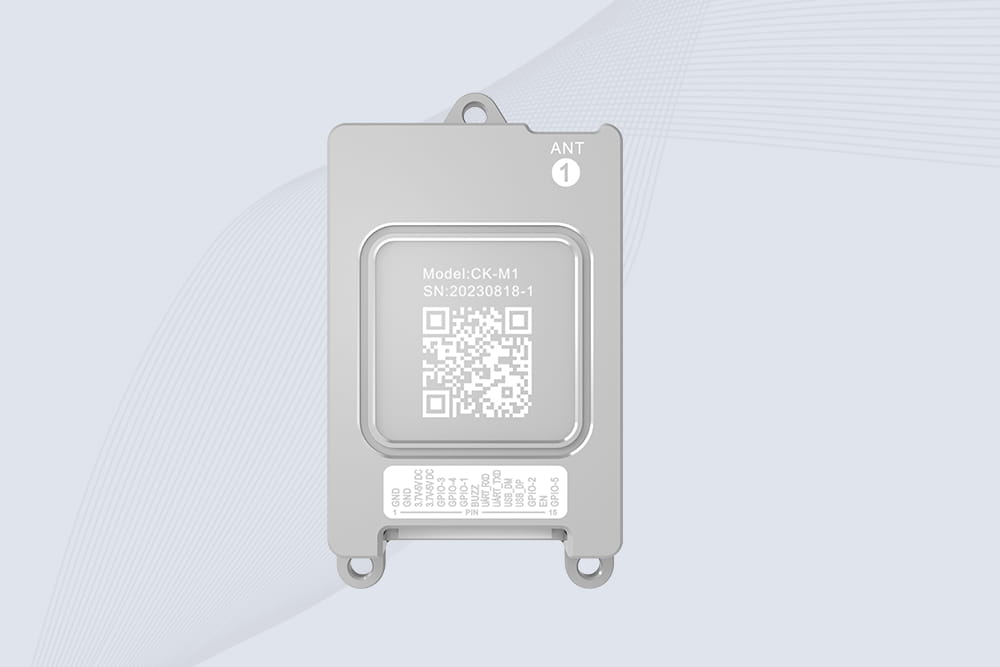
CYKEO CYKEO-M1 drone rfid module is a compact UHF RFID reader module designed for drones and UAV platforms. It supports long-range aerial scanning, fast multi-tag reading, and stable performance in wind, vibration, and outdoor environments.
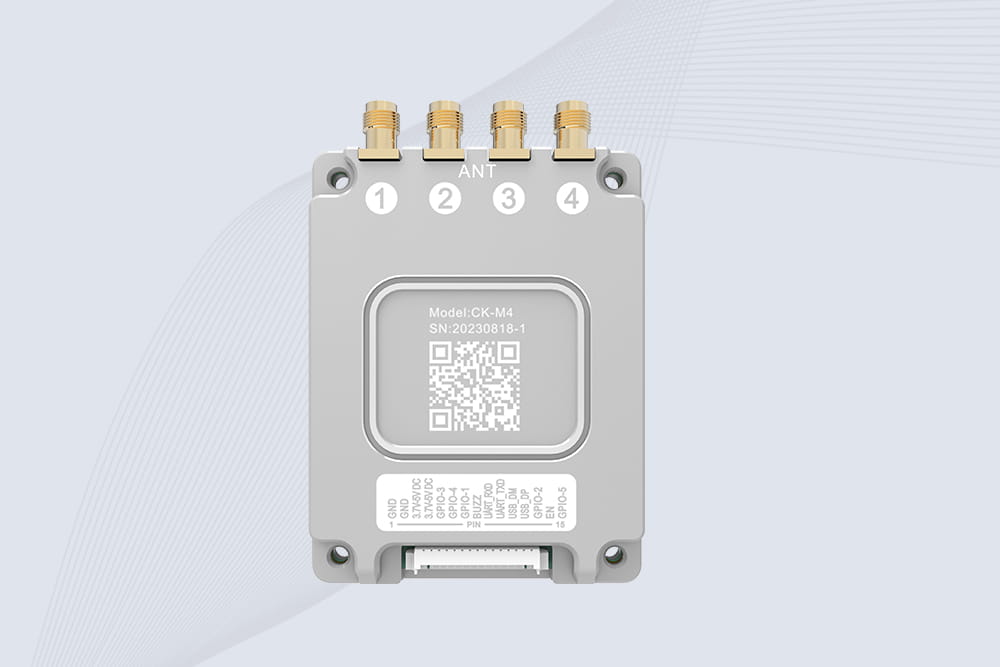
CYKEO CYKEO-M4 RC522 RFID Module is an industrial-grade UHF RFID reader with 4 ports, supporting ISO, EPC, and GB protocols. High-speed, accurate reading for IoT, automation, and warehouse applications.
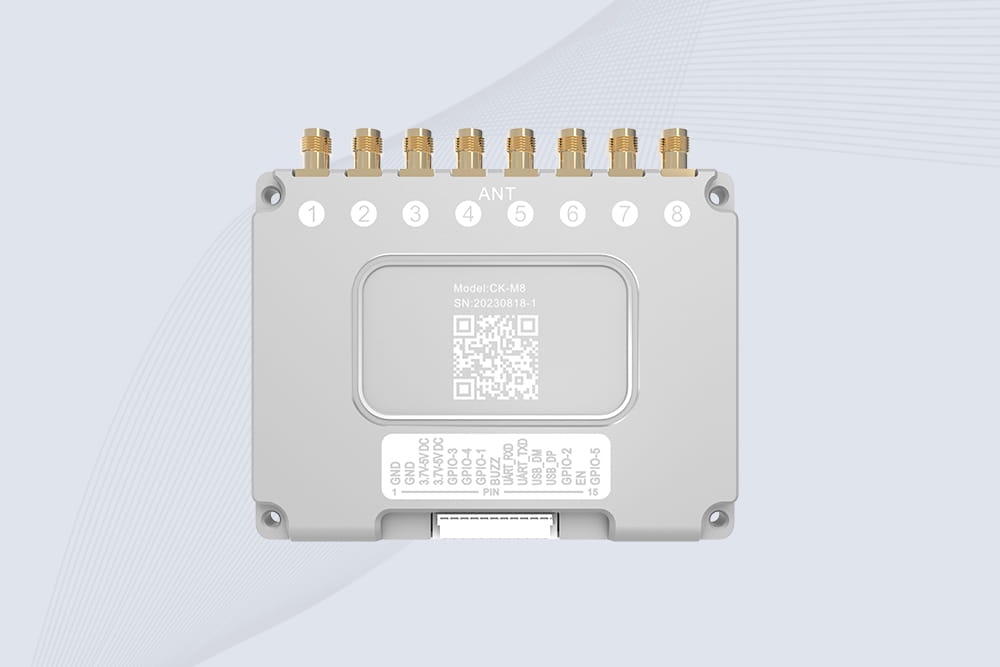
CYKEO CYKEO-M8 Module RFID is an 8-port UHF R2000 RFID Module designed for high-density, multi-tag environments. Stable 33dBm output, ISO & GB protocol support, ideal for warehouses, factories, and automated systems.
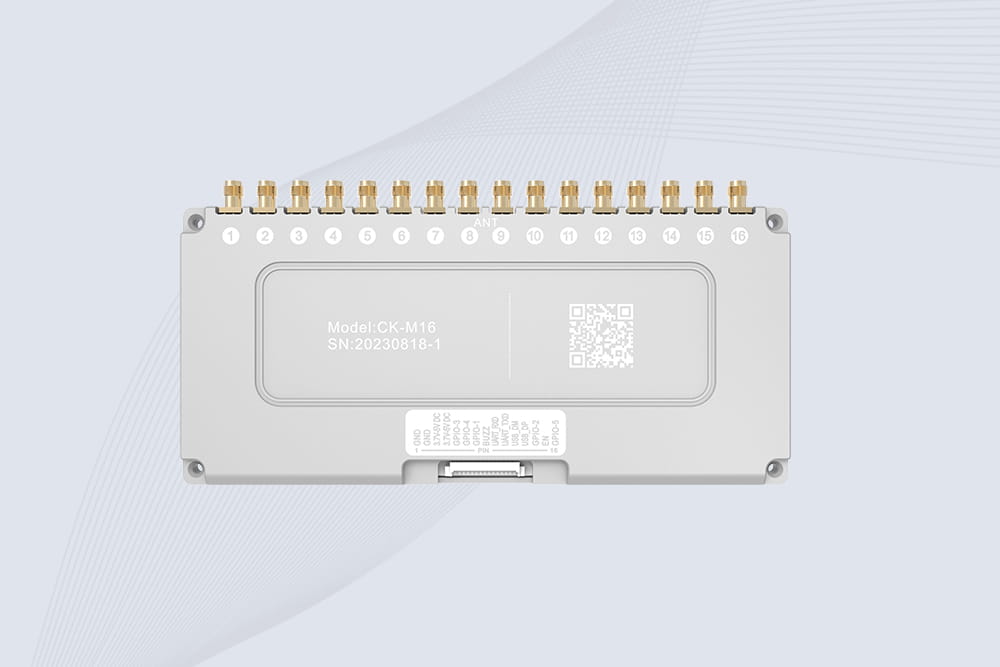
CYKEO CYKEO-M16 RFID Module is a 16-port UHF RFID reader module based on the R2000 chipset. Designed for dense tag environments, it supports ISO and GB standards and delivers stable multi-antenna control for industrial automation.
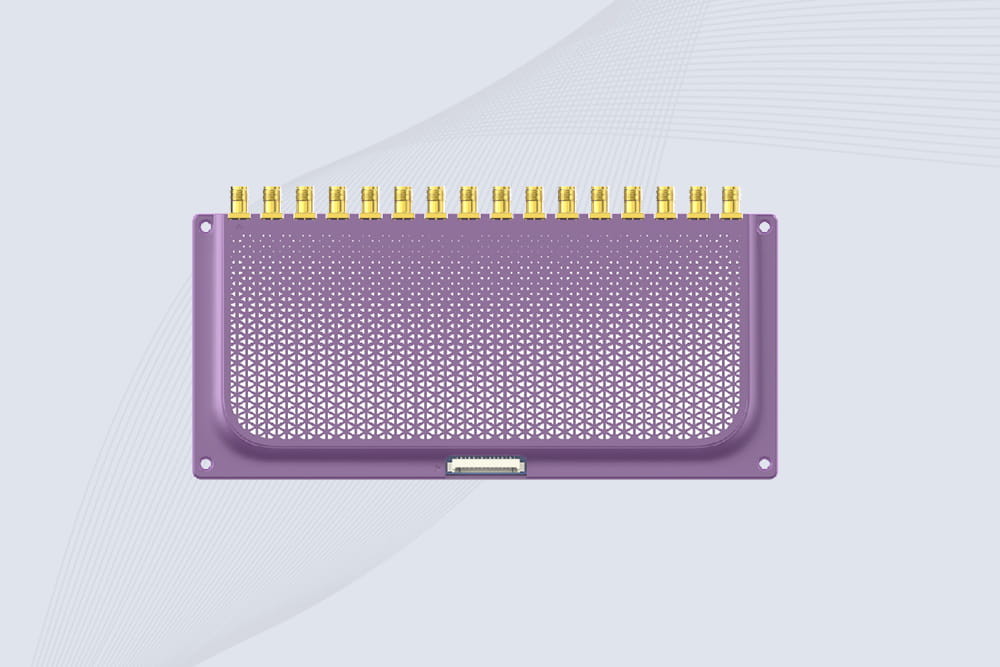
The CYKEO CYKEO-M16L RFID Reader Module is a 16-channel UHF RFID core designed for dense tag environments. With adjustable 33dBm output, multi-protocol support, and stable multi-antenna control, this RFID Tag Reader Module fits industrial automation, warehouse systems, and large-scale IoT deployments.
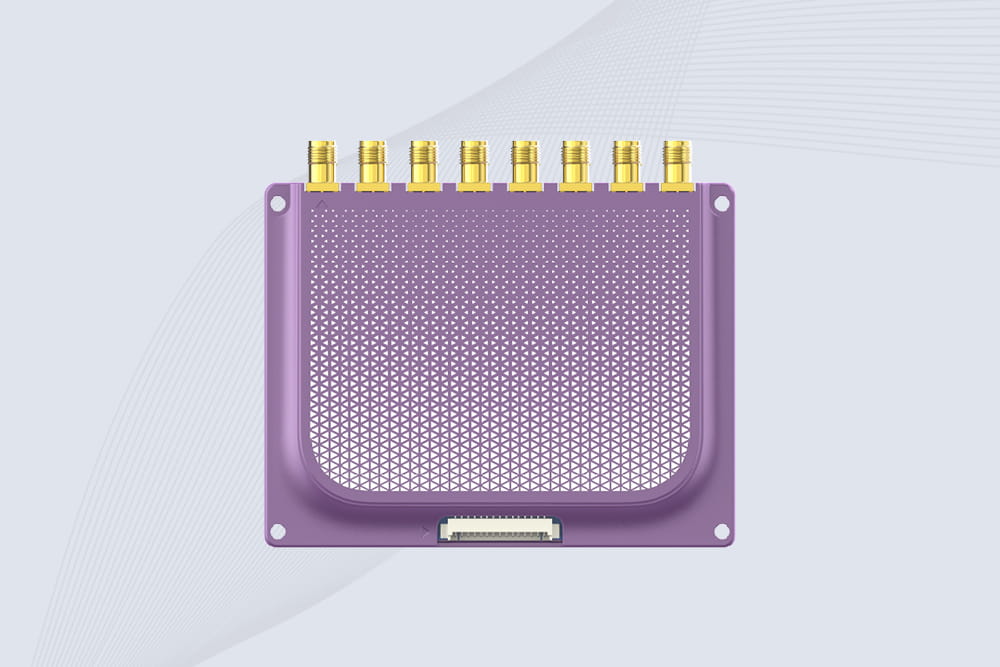
CYKEO CYKEO-M8L module RFID is a compact industrial UHF module built for dense tag and multi-antenna environments. With 8 RF ports, adjustable 33 dBm output, and ISO & GB protocol support, it is widely used in factories, warehouses, and automated tracking systems.
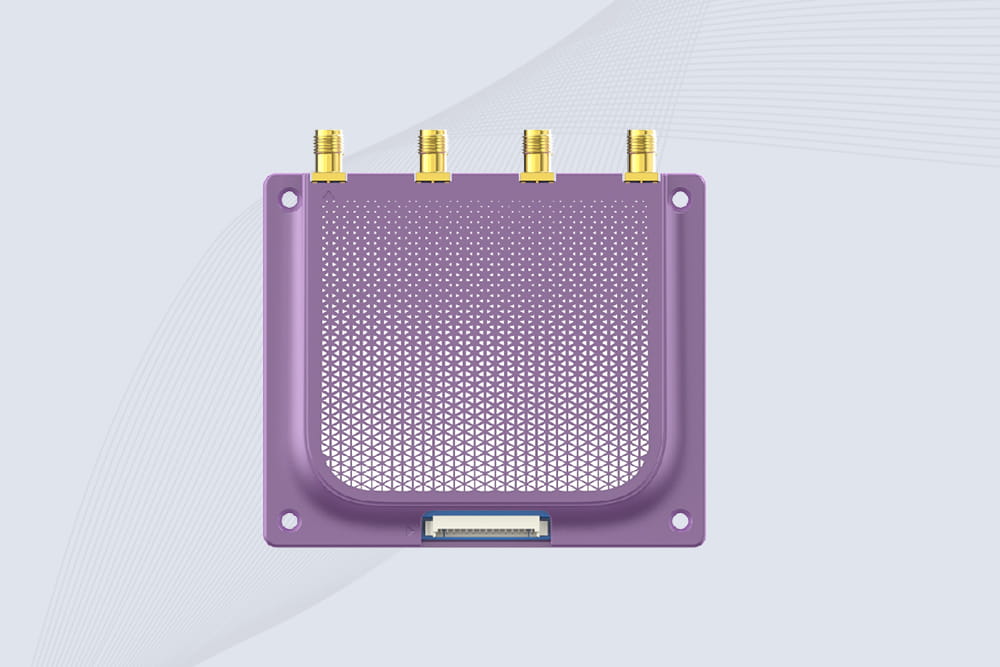
CYKEOCYKEO-M4L UHF RFID Module is a compact 4-channel RFID tag reader module designed for dense tag environments. Supporting ISO and GB protocols, it delivers stable reads up to 10 meters for industrial and IoT systems.
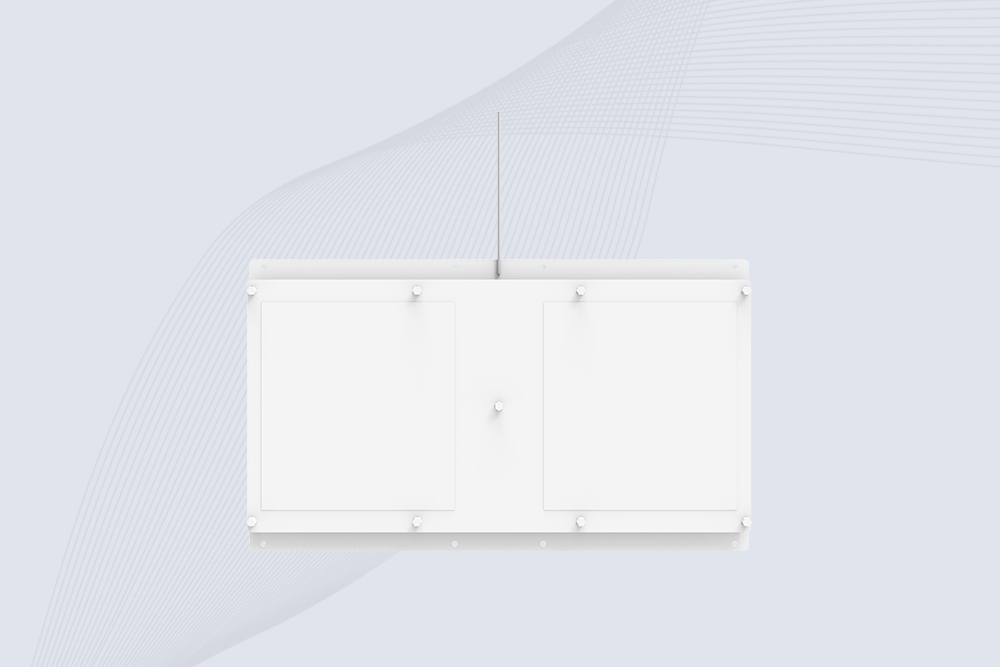
Cykeo CYKEO-A11 UHF RFID reader antenna delivers 11dBi gain, 840-960MHz frequency range, and IP65 ruggedness for retail, logistics, and industrial RFID systems. Features low VSWR and easy installation.

CYKEO Antenna RFID Reader delivers stable long-range UHF performance with a 10.5dBi directional design, built for warehouses, conveyor portals, and industrial RFID systems. This rfid reader antenna provides 20m+ read distance and rugged IP67 protection.

Cykeo CYKEO-PHF3 industrial HF RFID Antenna offers 24-point dynamic tracking, ISO 14443A/15693 protocols, metal-environment stability for archives/libraries/manufacturing.

Cykeo CYKEO-A5B industrial Linear RFID Antenna delivers 5dBi gain, ≤1.5:1 VSWR, and IP65 rugged design for warehouse, production line, and logistics UHF systems.

Cykeo’s CYKEO-B12 Long Range RFID Antenna delivers 15m+ read range with 12dBi gain, IP65 rugged design, and global 840-960MHz UHF support. Ideal for warehouse/logistics asset tracking.
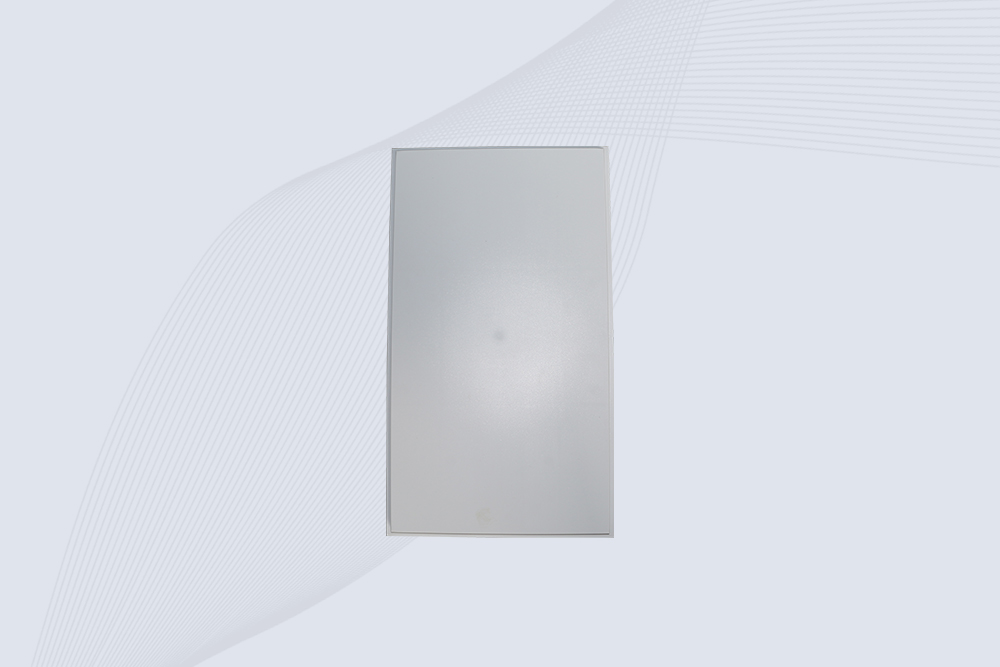
Cykeo CYKEO-B10 Long Distance RFID Antenna offers 10dBi gain, 840-960MHz frequency range, IP65 rating, and 20m+ coverage for logistics/warehousing/ETC systems. Low VSWR ensures stable signal transmission.
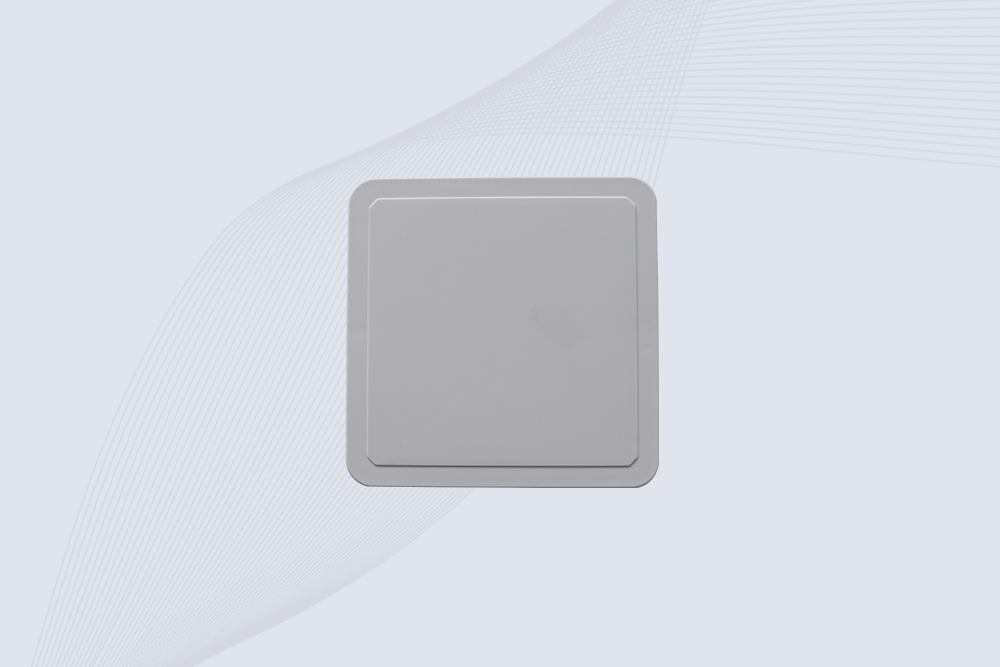
Cykeo CYKEO-A6 UHF RFID panel antenna features 6dBi gain, 840-960MHz broadband, IP65 metal-ready housing for logistics/smart retail. 18mm ultra-thin design with tool-free mounting.

Cykeo CK-A3 industrial antenna RFID UHF offers 5m+ tag detection, ≤1.3:1 VSWR, IP65 rugged design, and global UHF spectrum compatibility (840-960MHz) for warehouses, factories, and retail.
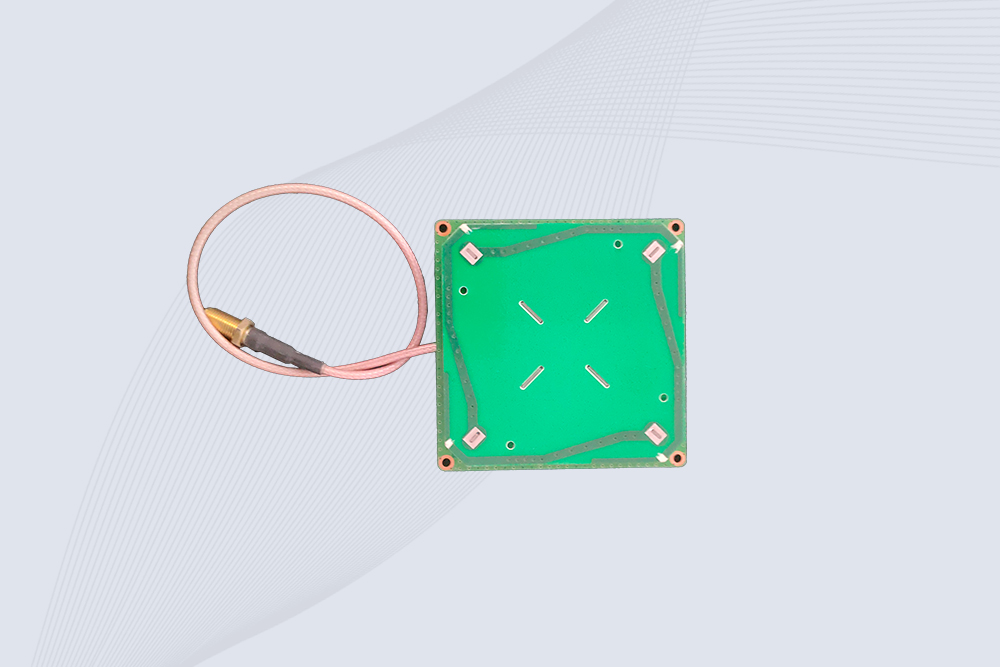
Cykeo CYKEO-B5 directional RFID antenna provides 5dBi gain with 60° narrow beamwidth for precise inventory tracking. IP65-rated, global UHF frequency support, and low VSWR.
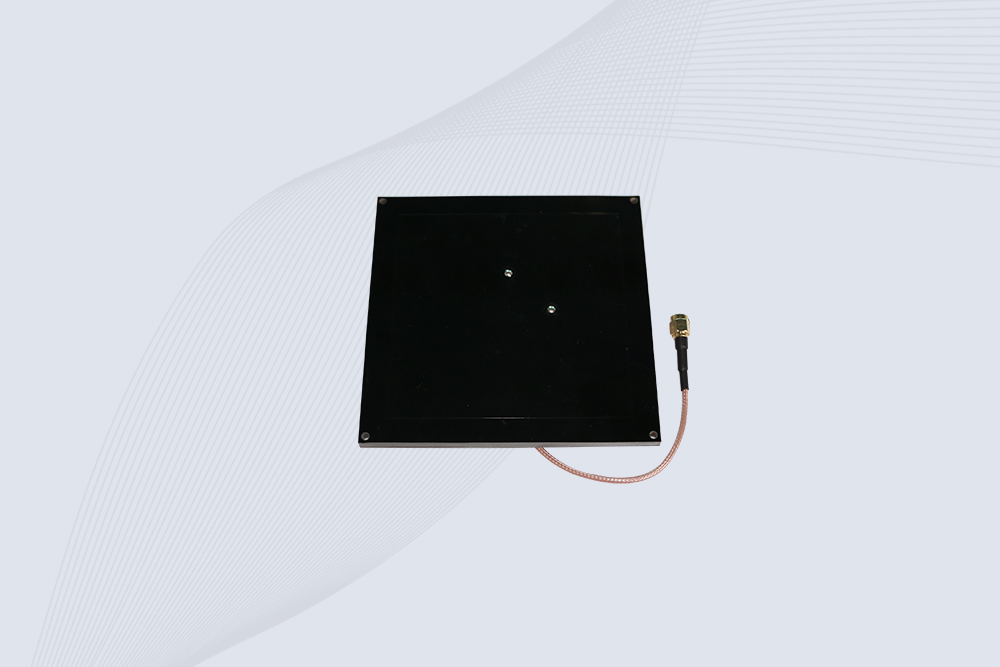
Create your own high-performance DIY RFID antenna! 5dBi gain, 840-960MHz tunable, step-by-step guides. Compatible with Arduino, Raspberry Pi, and commercial UHF readers.
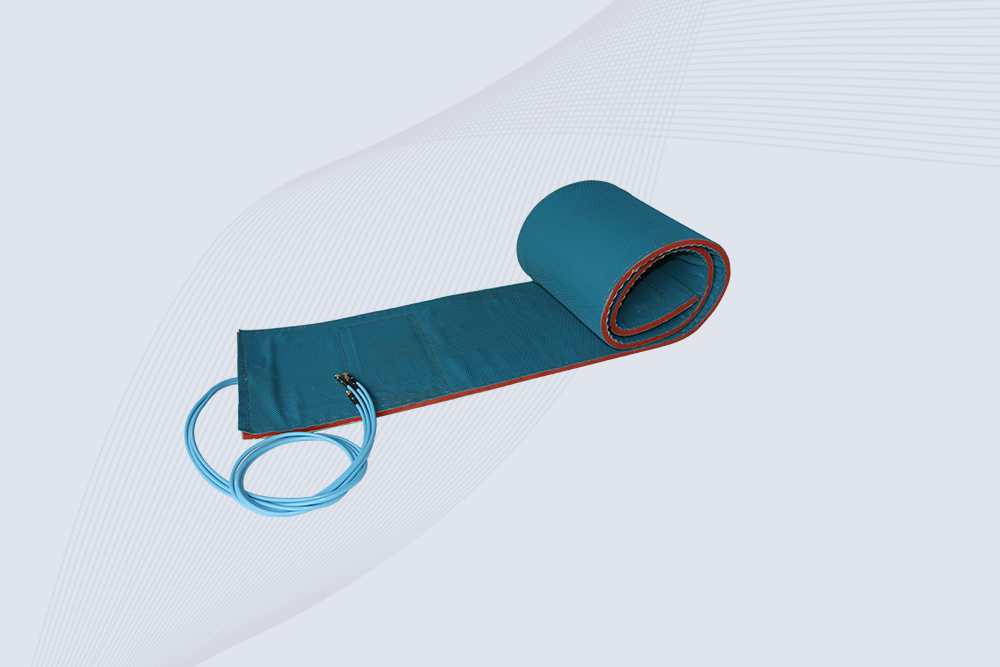
Cykeo CYKEO-A7 Flexible RFID Antenna features 840-960MHz wideband tuning, 7dBi gain, and IP68 rating for medical/retail/industrial curved surface deployments. 98% read accuracy with peel-and-stick installation.

Cykeo CYKEO-B5A industrial Passive RFID Antenna delivers 5dBi gain, 70° beamwidth, and -40°C~55°C operation for warehouses/smart cabinets. Compatible with Zebra/Impinj readers.
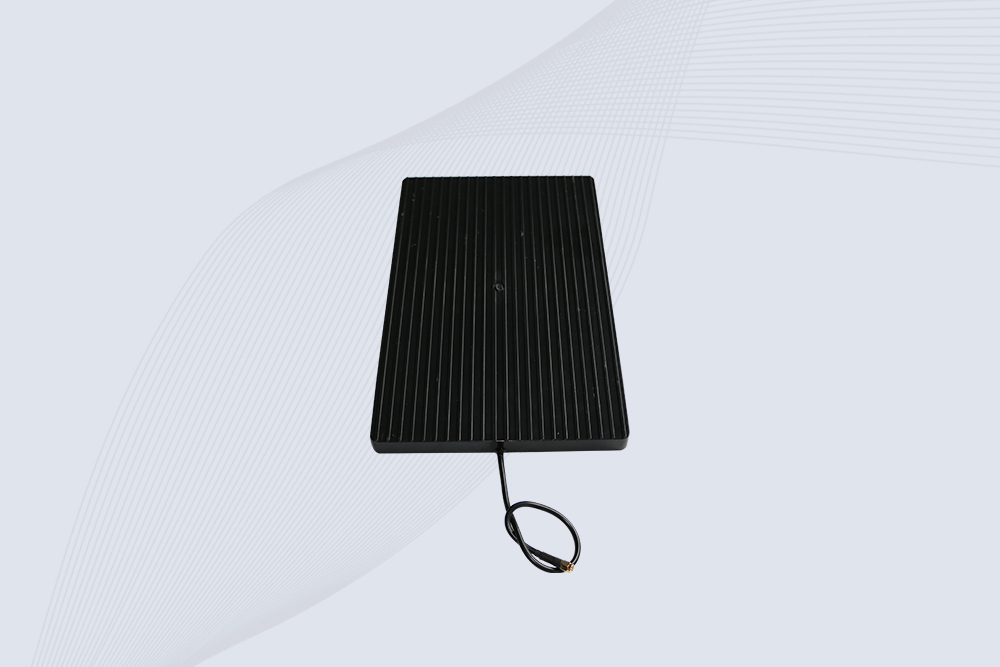
Cykeo’s CYKEO-A9B High Gain RFID Antenna delivers 15m+ read range with 9dBi amplification. Features IP54 rugged design, 840-960MHz bandwidth, and 80° beamwidth for warehouse/manufacturing RFID systems.

Cykeo’s enterprise-grade 8dbi Impinj RFID Antenna 10m+ read range with 840-960MHz tuning. Features IP65 housing, 1.4 VSWR, 35° beamwidth for retail/warehouse RFID systems.
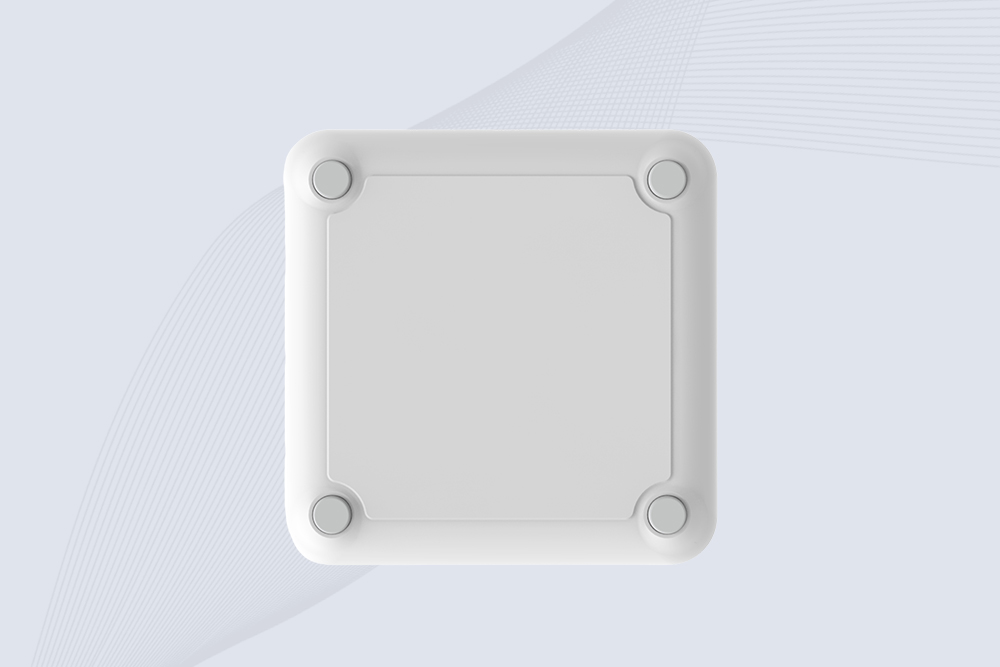
Cykeo CYKEO-A9 industrial UHF RFID antenna delivers 9dBi gain, 840-960MHz frequency range, and IP65 protection for warehouse/logistics/retail RFID systems. Features N-type connector and ≤1.3:1 VSWR.
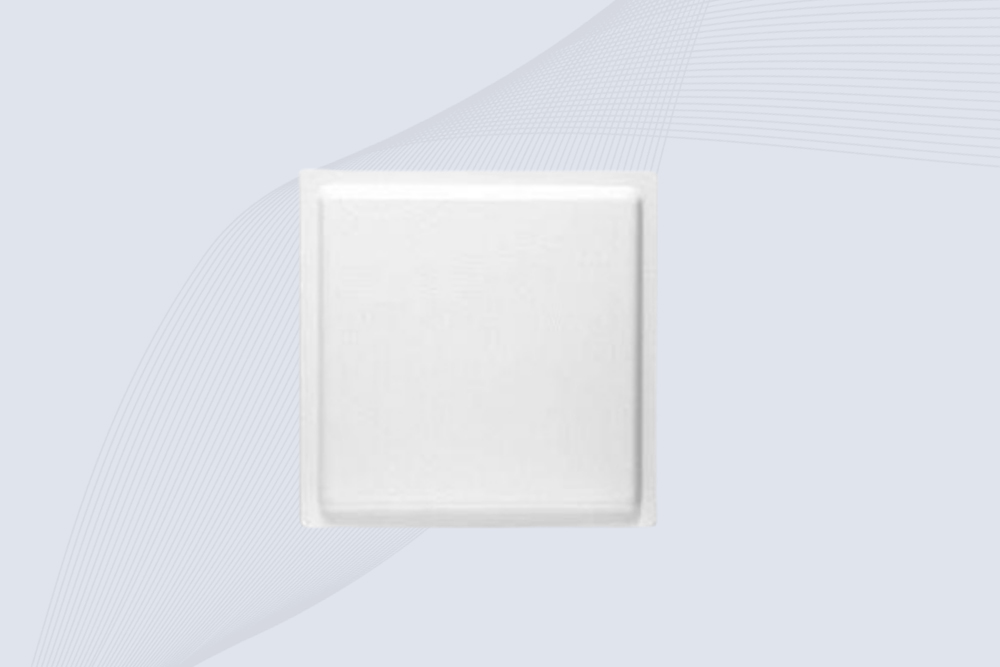
CYKEO UHF RFID Antenna built for long-distance and industrial applications. This antenna rfid uhf delivers strong gain, outdoor durability, and reliable tag performance in warehouses, yards, and vehicle ID systems.
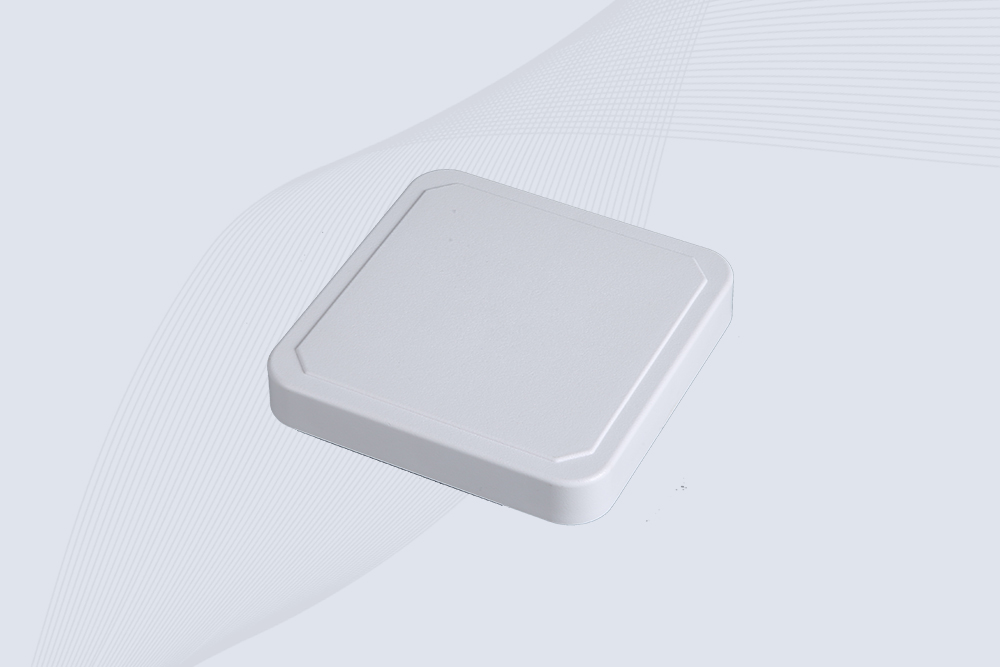
CYKEO Antenna RFID delivers reliable long-range UHF performance in warehouses, retail shelves, and cold-chain environments. This compact uhf rfid antenna provides stable reads with circular polarization and ultra-wide 840–960 MHz support, ideal for industrial tracking, smart shelves, and asset monitoring.
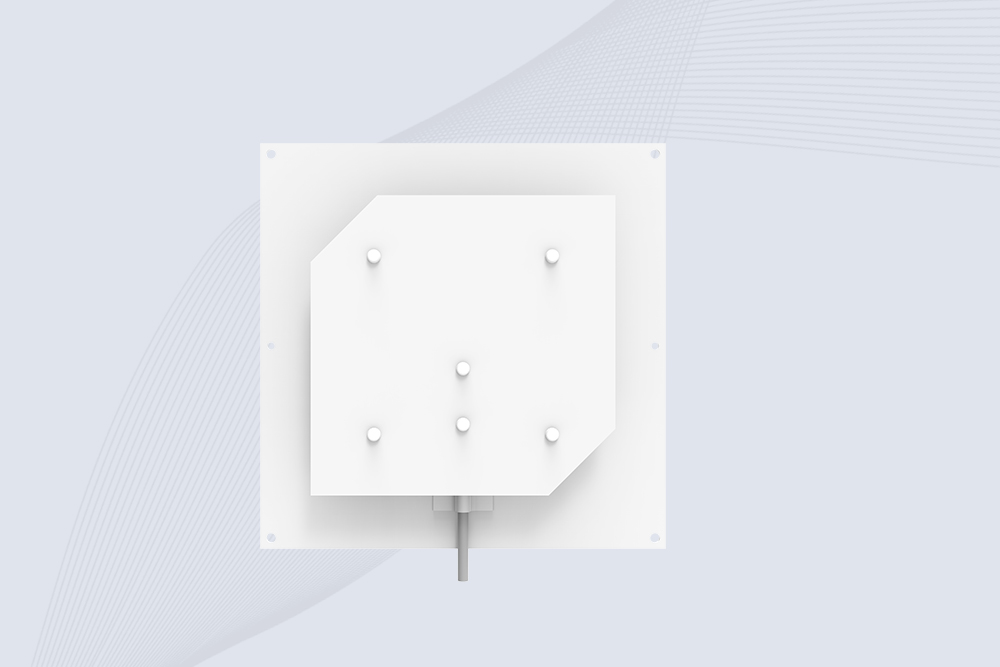
Cykeo’s CYKEO-C8 UHF RFID antennas delivers 8dBi gain, 840-960MHz full-band coverage, and IP65 ruggedness for manufacturing/warehouse RFID systems. Industrial RFID Antennas Features
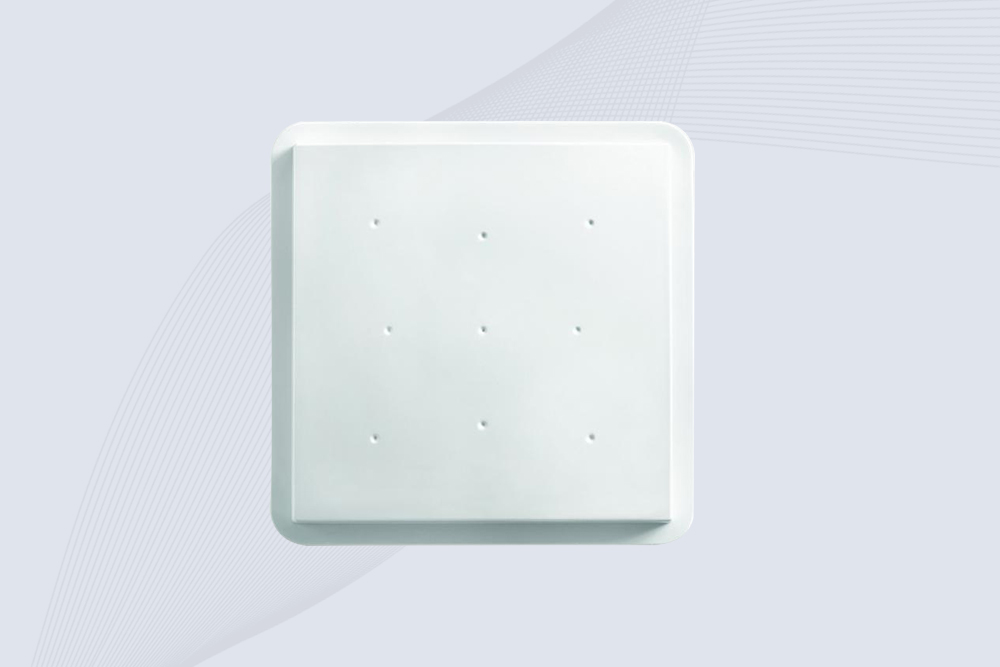
Cykeo’s 8dBi UHF RFID antenna and reader kit delivers 10m+ range, 840-960MHz broadband, and IP65 ruggedness for factories, warehouses, and logistics. ISO 18000-6C & EPC Gen2 certified.
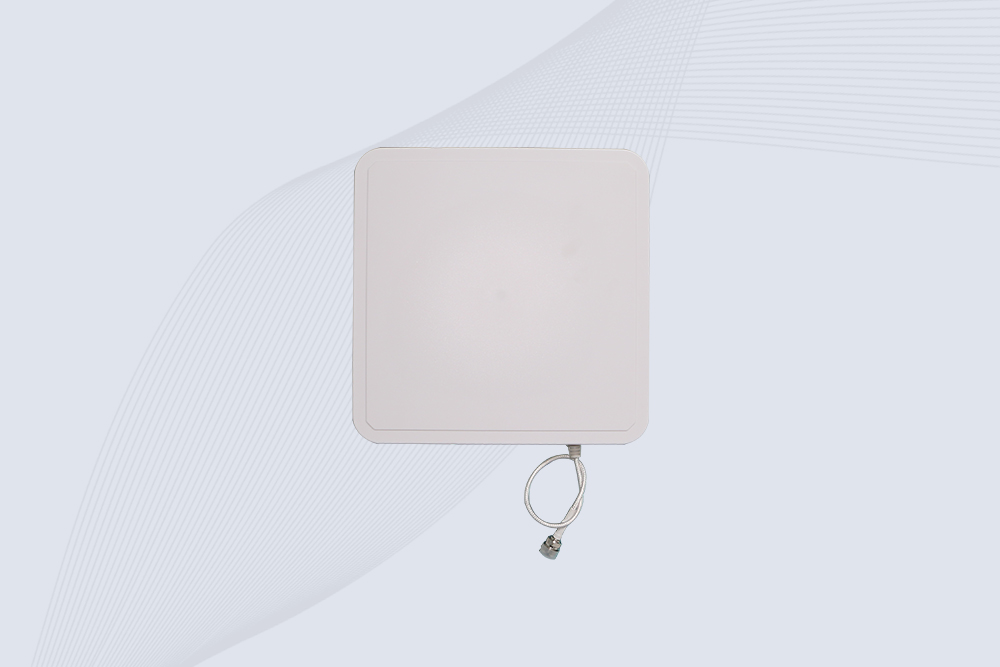
Cykeo CYKEO-A9A industrial UHF RFID reader and antenna kit delivers 10m range, 500 tags/sec, IP65 ruggedness for manufacturing/logistics. Supports EPC Gen2, ISO18000-6C.
Cykeo’s CYKEO-A12C UHF Large RFID Antenna delivers 12dBi gain, 840-960MHz global frequency, IP65 ruggedness for logistics/warehousing/automotive. 40° beamwidth ensures stable 15m+ tag reads.

CYKEO Near Field RFID Antenna provides precise 5–30 cm reading for shelves, cabinets, and workstations. This compact rfid shelf antenna delivers stable short-range performance around metal and clutter, ideal for pharmacies, libraries, and electronics sorting.
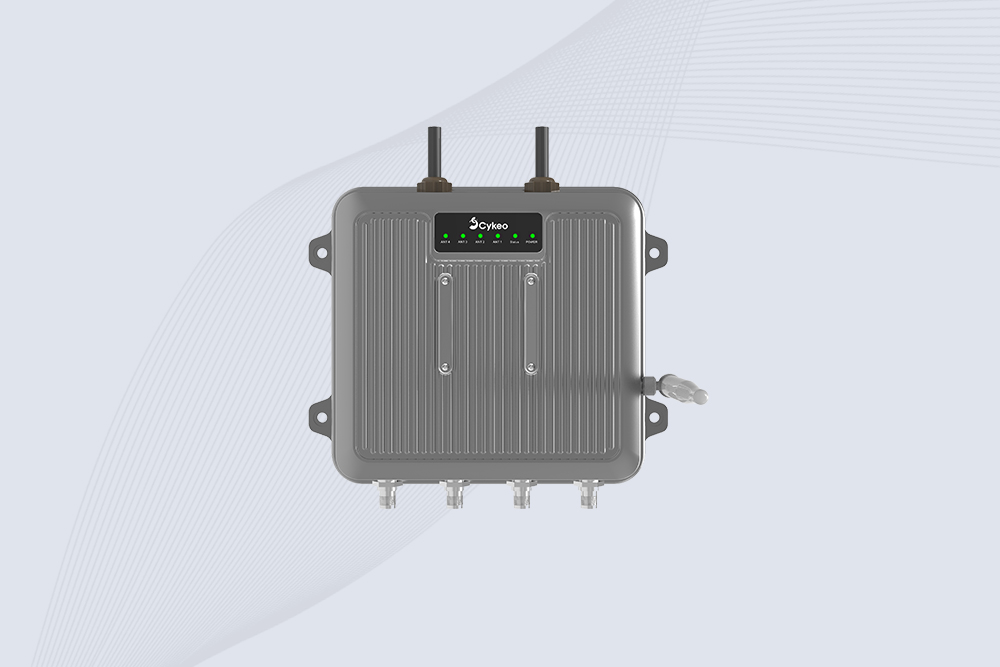
Cykeo CYKEO-C1 industrial Forklift RFID Reader features 20m read range, 600 tags/sec scanning, Impinj R2000 chipset, and IP67 rugged design. Ideal for warehouse logistics and manufacturing. Supports ISO 18000-6C/6B protocols.
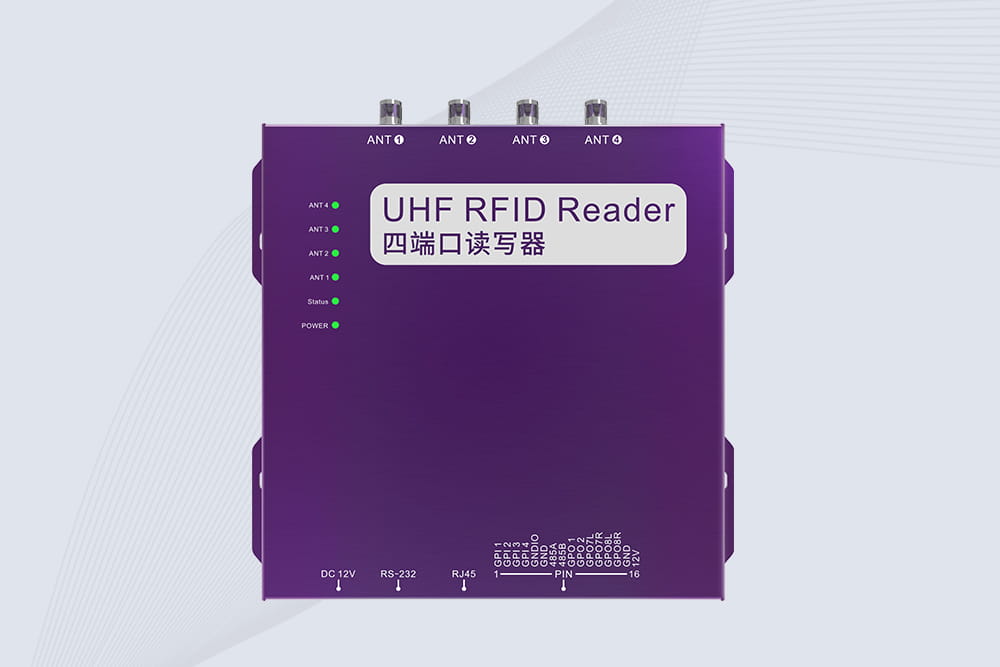
Cykeo CYKEO-R4 industrial UHF RFID Fixed Reader features 4 TNC ports, 400+ tags/sec speed, IP67 housing, and global frequency compliance for vehicle inspection, smart warehouse, and asset management systems.
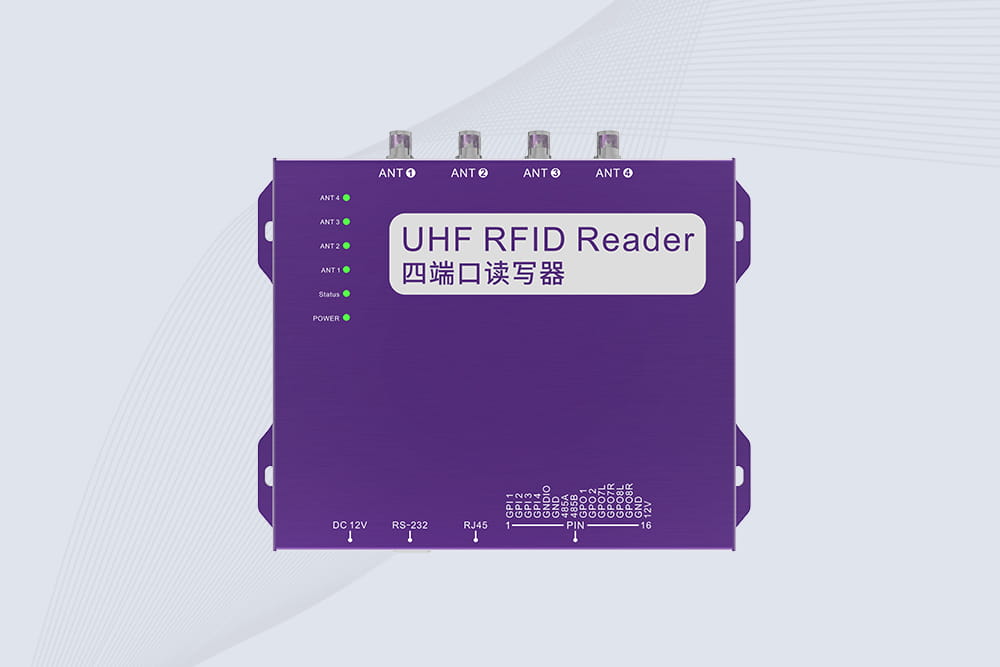
Cykeo’s CYKEO-R4L 4-port Fixed UHF RFID Reader delivers 400 tags/sec scanning, ISO 18000-6C compliance, and IP65 protection. Ideal for warehouse automation, manufacturing WIP tracking, and logistics management.
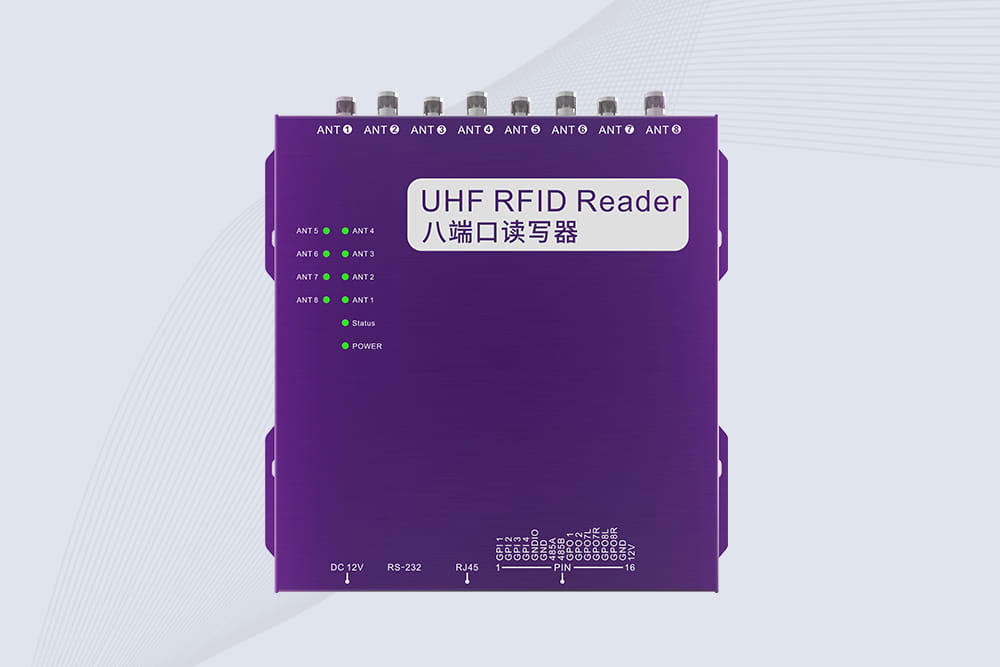
CYKEO CYKEO-R8L Fixed RFID Reader with 8-port UHF design, Impinj-based RF core and up to 20m read range. An industrial Fixed RFID Reader for vehicle inspection, warehouse portals, smart manufacturing lines and secure access checkpoints.
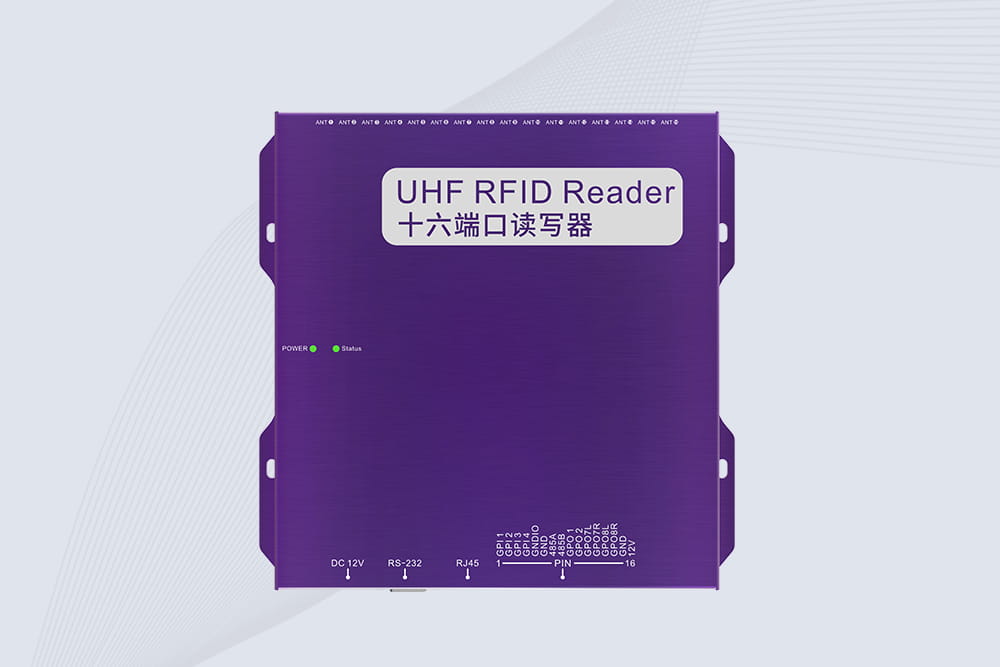
RFID Fixed Reader from CYKEO – the CYKEO-R16L 16-port UHF fixed reader for warehouses, smart cabinets, and production lines. Long-range, multi-tag reading, stable performance for 24/7 industrial use.

RFID tags have no single universal type count. They are mainly classified by power source, frequency, and physical construction, with passive UHF/RAIN RFID w...
More
A practical guide to building an RFID access control system for warehouses, including gate systems, antenna setup, and RFID module integration.
More
Learn how to identify RFID tags by frequency, appearance, and behavior. Understand the differences between LF, HF/NFC, and UHF RFID in everyday use.
More
RFID technology has extensive applications in the medical field, contributing in the following areas: Records ManagementRFID enables the rapid and accurate identification and tracking of medical records, including patient files, examination report...
More