 Cykeo RFID IoT Solution Products R&D Manufacturer
How Does Passive RFID Work? A Practical Guide to Passive RFID Technology
171Discover how does passive rfid work, including RF energy, backscatter communication, tag antennas, reader signals, read range, and real-world industrial RFID use.
MoreAll RFID Product
Most RFID tool tracking systems don’t fail because of the technology.
They fail because of bad decisions made early in the project.
If you’re planning to build or resell RFID tool tracking system, here are the mistakes that cause the most problems—and cost the most money.
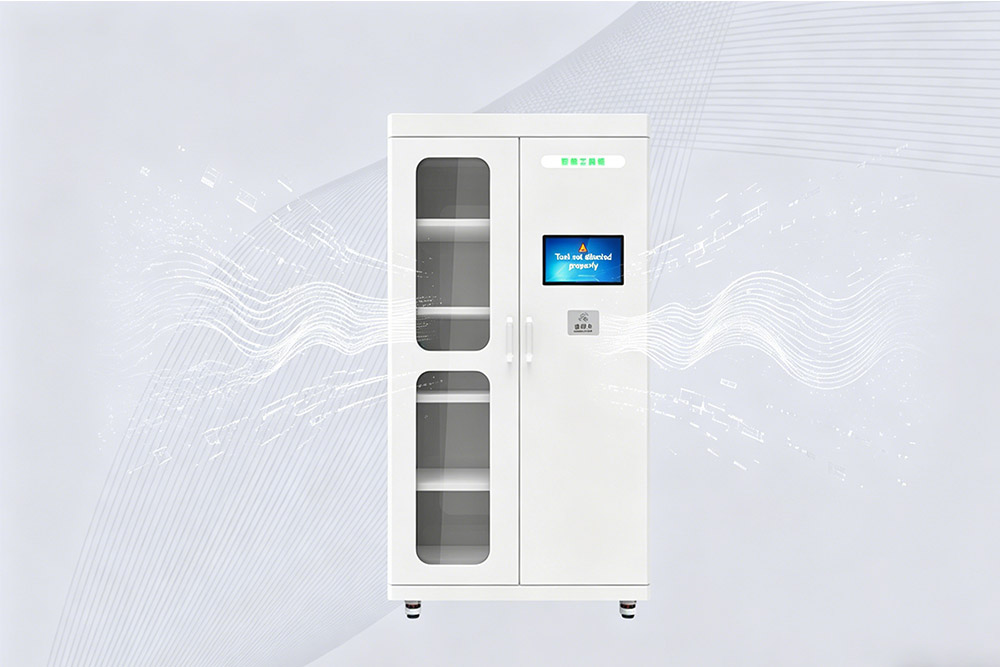
A lot of buyers assume RFID works like a barcode scanner.
Install it, turn it on, done.
That’s not how it works.
RFID is a system made of multiple parts:
If these aren’t designed to work together, you’ll get inconsistent results.
A smart rfid tool cabinet like this one already solves part of that problem by creating a controlled environment:
Mistake #2: Ignoring antenna design
This is the most common technical mistake.
People focus on the cabinet or the reader—but ignore antennas.
In reality, antennas decide:
Typical problems:
Fixing this later is expensive. It’s much easier to design it right from the start.
On paper, rfid modules can look very similar.
In real use, they’re not.
Low-cost modules often struggle with:
This leads to:
And once users lose trust in the system, it’s hard to recover.
Most tools are metal.
And metal is the worst environment for RFID.
Common issues:
Solutions include:
Skipping this step is one of the fastest ways to break a system.
A system that works in a demo doesn’t mean it works in production.
Real conditions are messy:
If you don’t test for this, problems will show up after deployment—when it’s already too late.
From real projects, a stable RFID tool tracking system usually has:
When these are in place, the system becomes predictable—and that’s what clients care about.
RFID works. That’s not the question anymore.
The real question is whether it’s implemented properly.
Avoid these five mistakes, and you’ll already be ahead of most projects in the market.
RFID Tool Cabinets
CYKEO-GT1 RFID Intelligent Tool Cabinet
CYKEO-GGT1 Intelligent Weighing Cabinet
CYKEO-GT7 RFID Inventory Tool Cabinet
CYKEO-TC RFID Multi-Drawer Tool Cart
CYKEO-GTC4 INDUSTRIAL RFID TOOL CART
CYKEO-GTC7 RFID Aviation Maintenance Cart
CYKEO-GTC7A RFID Real-Time Tool Tracking Cart
CYKEO-GTC4B RFID Mobile Tool Cart
CYKEO-GTC4C RFID Workshop Tool Control Cart
CYKEO-GTC4A Multi-drawer RFID Tool Cart
CYKEO-GTC4D RFID Tool Tracking Cart
CYKEO-GT3A COMPACT RFID TOOL CABINET
CYKEO-GT1A INDOOR RFID CABINET
CYKEO-GT4A RFID Secure Tool Cabinet
CYKEO-GT2B RFID Aviation Tool Cabinet
CYKEO-GTC5 RFID tool tracking system
CYKEO-GT3B RFID Tool Inventory System Cabinet
CYKEO-GT3 UHF RFID Tool Cabinet
CYKEO-GT4 RFID Multi-Drawer Tool Cabinet
CYKEO-GT2 INDUSTRIAL RFID TOOL CABINET
CK-GT2A INDUSTRIAL RFID CABINET
CK-GT1B INDUSTRIALRFID TOOL CABINET
CK-GT3C RFID Tool Checkout System Cabinet
RFID Reader Antennas
CYKEO-A11 UHF RFID reader antenna
CYKEO-A10 UHF RFID HIGH GAIN ANTENNA
CYKEO-PHF3 SMART HIGH-FREQUENCY POSITIONING ANTENNA
CYKEO-A5B 5dBi Industrial Linear RFID Antenna
CYKEO-B12 12dBi UHF Long Range RFID Antenna
CYKEO-B10 Long Distance RFID Antenna
CYKEO-A6 UHF RFID panel antenna
CK-A3 industrial antenna RFID UHF
CYKEO-B5 directional RFID antenna
CYKEO-A5C High-Gain UHF RFID Antenna System
CYKEO-A7 Flexible RFID Antenna
CYKEO-B5A industrial Passive RFID Antenna
CYKEO-A9B High Gain RFID Antenna
CYKEO-A8A INDUSTRIAL UHF RFID ANTENNA
CYKEO-A9 9dBi UHF RFID Antenna
CYKEO-A12 12dBi RFID Circular Polarized Antenna
CYKEO-A5 5dBi UHF RFID Circular Polarized Antenna
CYKEO-A8 8dBi HIGH-GAIN UHF RFID ANTENNA
CYKEO-A9A 9dBi UHF RFID HIGH-GAIN ANTENNA

Discover how does passive rfid work, including RF energy, backscatter communication, tag antennas, reader signals, read range, and real-world industrial RFID use.
More
Can RFID tags be tracked? Learn how RFID tracking works, read ranges, real-world applications, and expert insights from Cykeo RFID engineers.
More
A practical guide to choosing anti metal RFID tags for industrial use. Learn what matters when buying in bulk, from size to durability.
More
RFID copy machine explained honestly: what can be copied, what can’t, and where risks appear. Real use cases, no hype.
More