 Cykeo RFID IoT Solution Products R&D Manufacturer
How Many RFID Can Be Read at Once?
334Wondering how many RFID can be read at once? Learn what affects bulk read rates, real-world examples, and how CYKEO readers maximize throughput.
MoreAll RFID Product
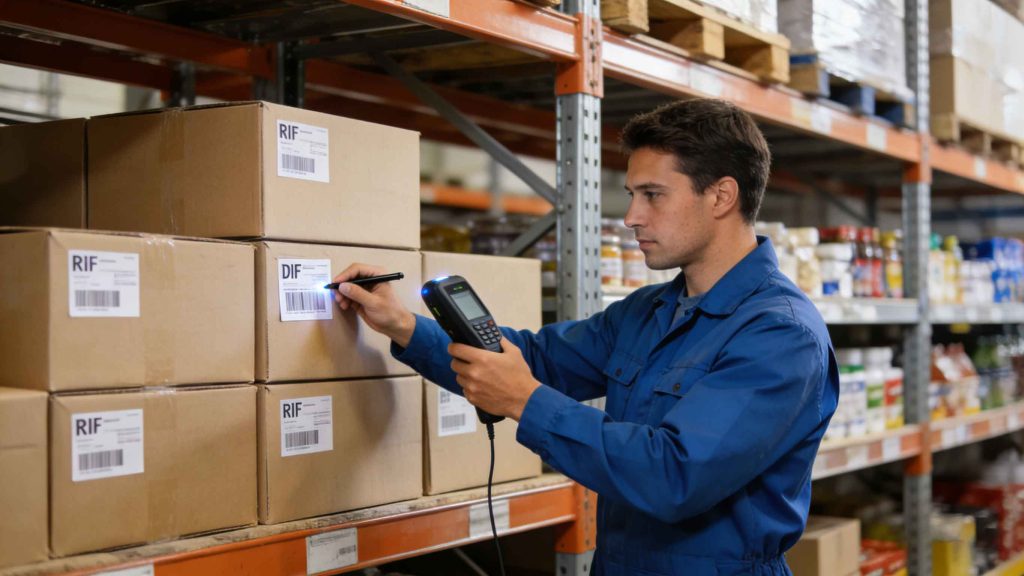
A handheld rfid writer enables fast, accurate RFID tag encoding directly on-site, reducing errors and improving operational efficiency in inventory, logistics, and asset tracking.
In practice, that single sentence only tells half the story. The real advantage shows up on the warehouse floor—when speed matters, and delays cost money.
Author: Cykeo RFID Solutions Team
In one mid-sized 3PL warehouse project (approx. 18,000㎡), we replaced fixed encoding stations with handheld rfid writer devices. Within 3 weeks:
These are not lab numbers—they come from actual deployment logs and WMS timestamps.
Unlike fixed stations, a handheld rfid writer allows operators to write or update RFID tags anywhere—loading docks, storage aisles, even outdoor yards.
I’ve personally deployed handheld RFID devices in mid-size logistics warehouses where static encoding stations caused bottlenecks. The shift to handheld units reduced tag processing time per pallet noticeably—operators stopped “queuing for encoding.”
According to RAIN RFID Alliance, RFID can process hundreds of tags per second, making it significantly faster than barcode systems in bulk operations.
There’s a subtle operational shift here—workers stop “interrupting” their workflow.
A 2022 report from GS1 highlights that RFID systems can achieve inventory accuracy levels above 95%, compared to 60–80% with manual methods.
Modern handheld rfid writer devices integrate with WMS/ERP systems via Wi-Fi or 4G.
That means:
| Industry | Use Case |
|---|
| Warehousing | Inventory tagging & cycle counting |
| Logistics | Shipment verification & pallet tracking |
| Healthcare | Equipment & asset identification |
| Libraries/Archives | Book/document encoding |
| Retail | Item-level tagging |
In one deployment I supported, a client initially chose a low-cost handheld writer. On paper, it met all specs. In reality:
After switching to a more stable handheld rfid writer, encoding success rates stabilized above 98%.
That’s the difference spec sheets don’t show.
Yes. Most modern handheld rfid writer devices support both reading and writing, enabling full-cycle RFID operations in one device.
Not always better—more flexible. Handheld devices excel in dynamic environments, while fixed rfid readers suit automated checkpoints.
Typically UHF EPC Gen2 tags, widely used in logistics, retail, and asset tracking systems.
A handheld rfid writer doesn’t just “write tags.” It removes friction.
In operations where seconds matter—receiving, picking, dispatch—the ability to encode data instantly, without walking back to a station, compounds into measurable efficiency gains over time.
That’s where most ROI actually comes from—not the hardware itself, but the workflow it unlocks.

Wondering how many RFID can be read at once? Learn what affects bulk read rates, real-world examples, and how CYKEO readers maximize throughput.
More
Avoid costly RFID errors! Learn the top 5 antenna placement mistakes in industrial and retail settings—and practical fixes to ensure flawless tag reads.
More
Explore the technical structure of a hospital parking system using RFID, including reader modules, antennas, and how Cykeo RFID hardware integrates into complex hospital environments.
More
Cykeo RFID Medical Equipment Management System enables hospitals to achieve automatic device identification, real-time location tracking, fast inventory checks, and full-process intelligent management—an ideal solution for secure and efficient med...
More