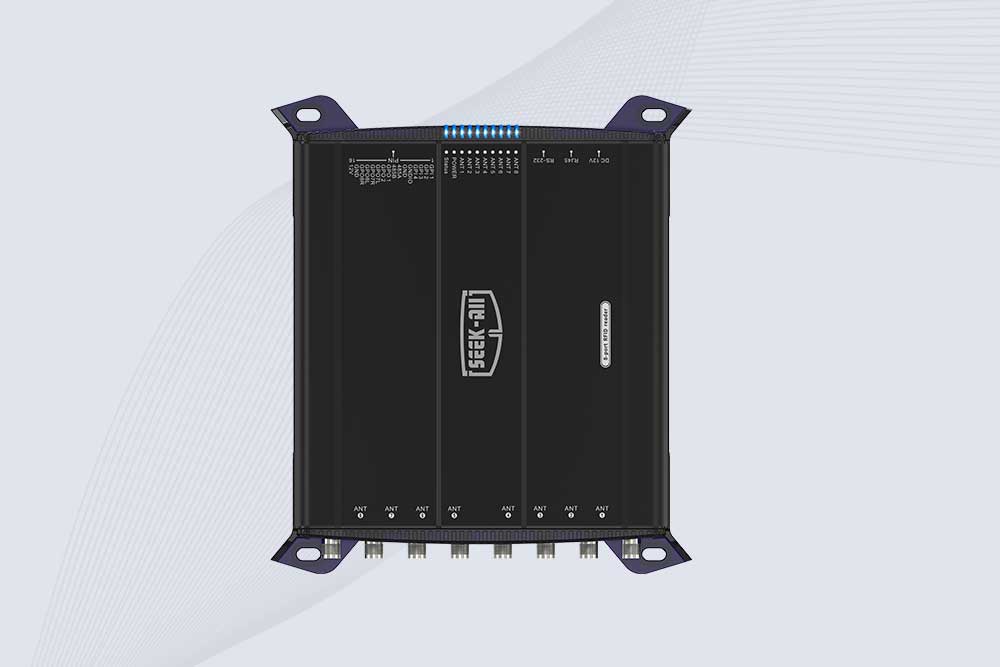
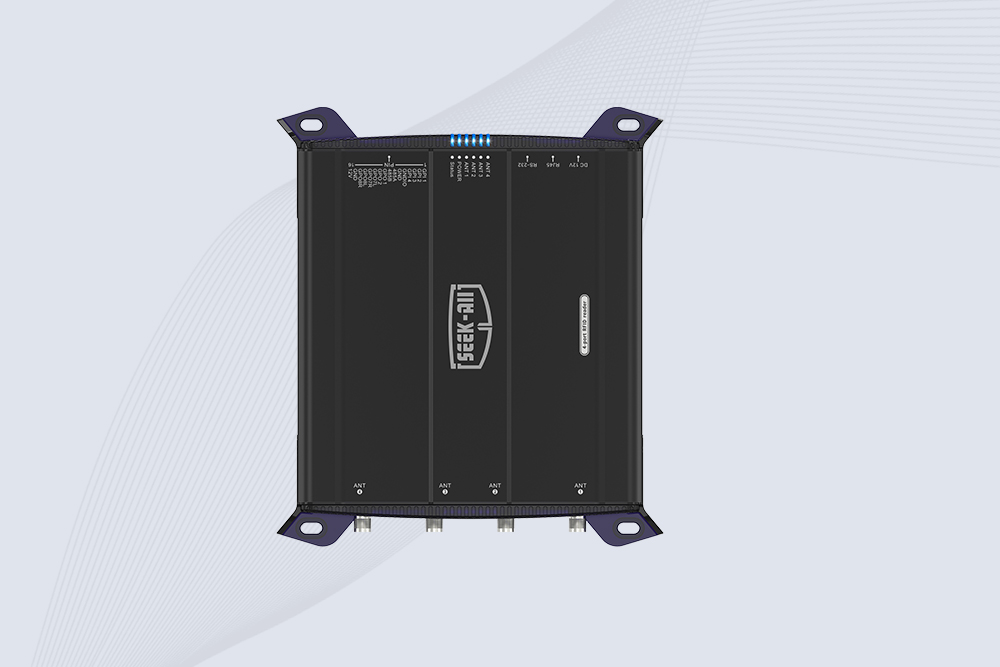
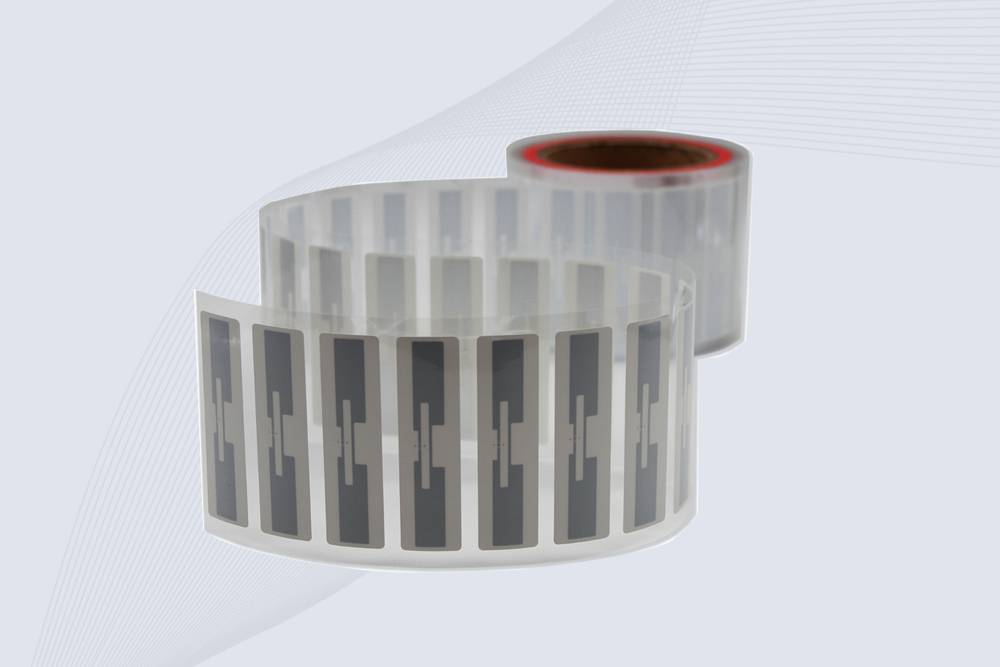
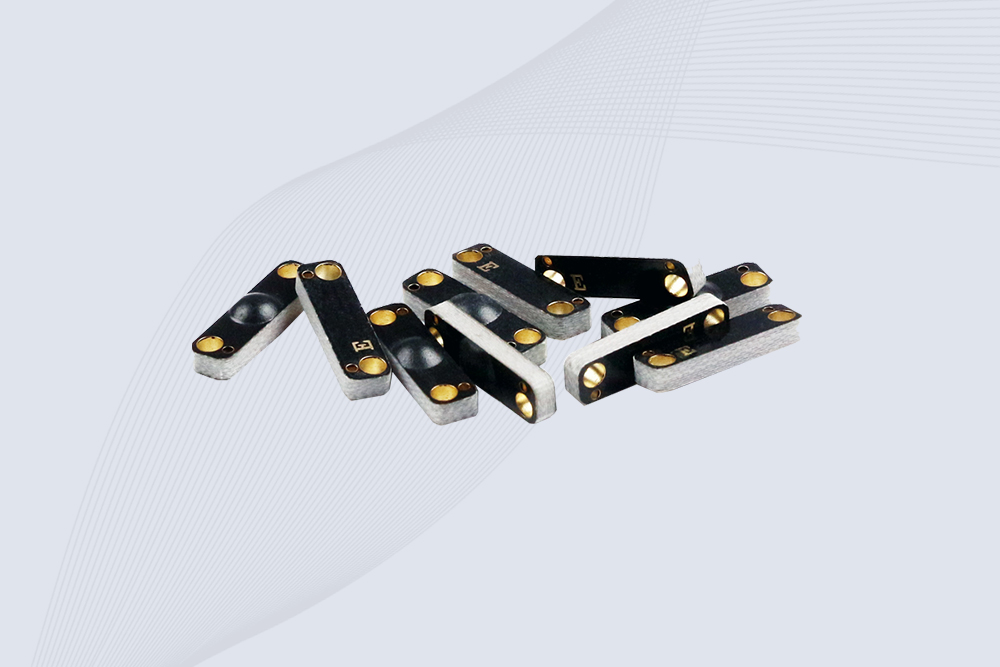
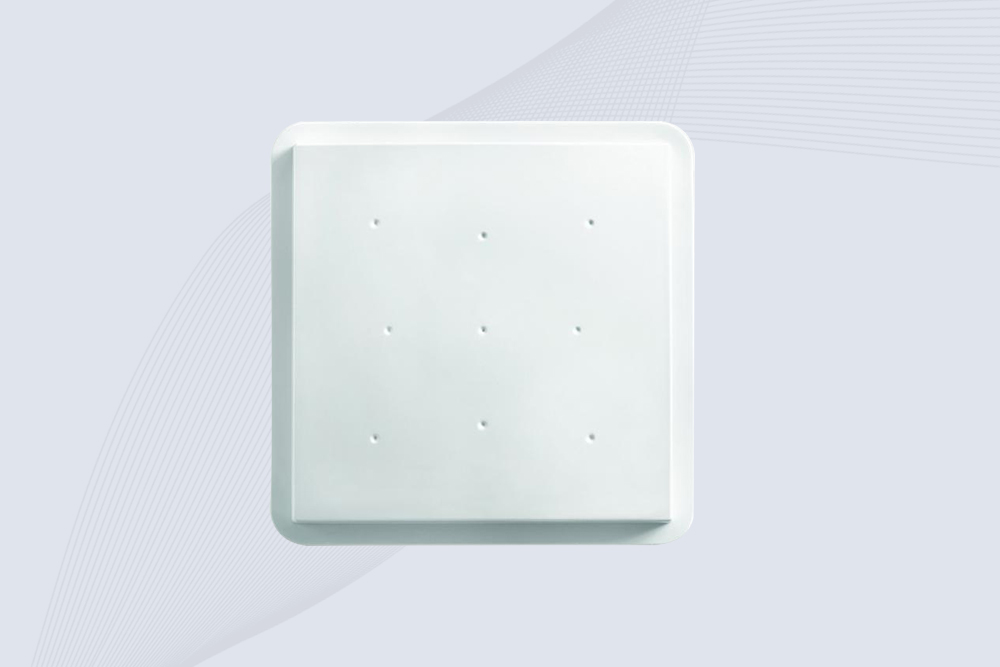
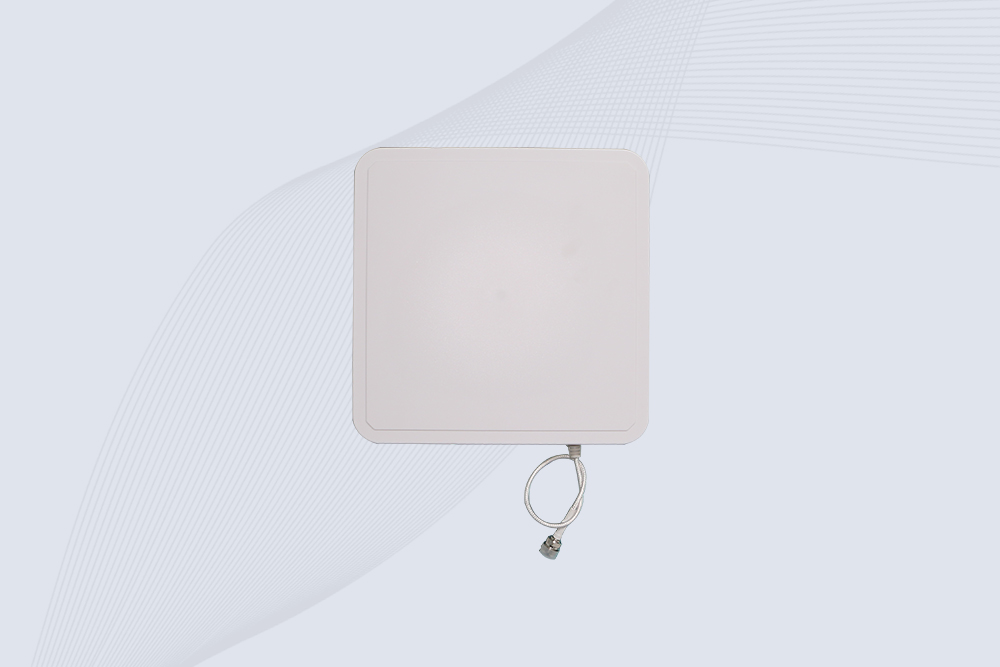
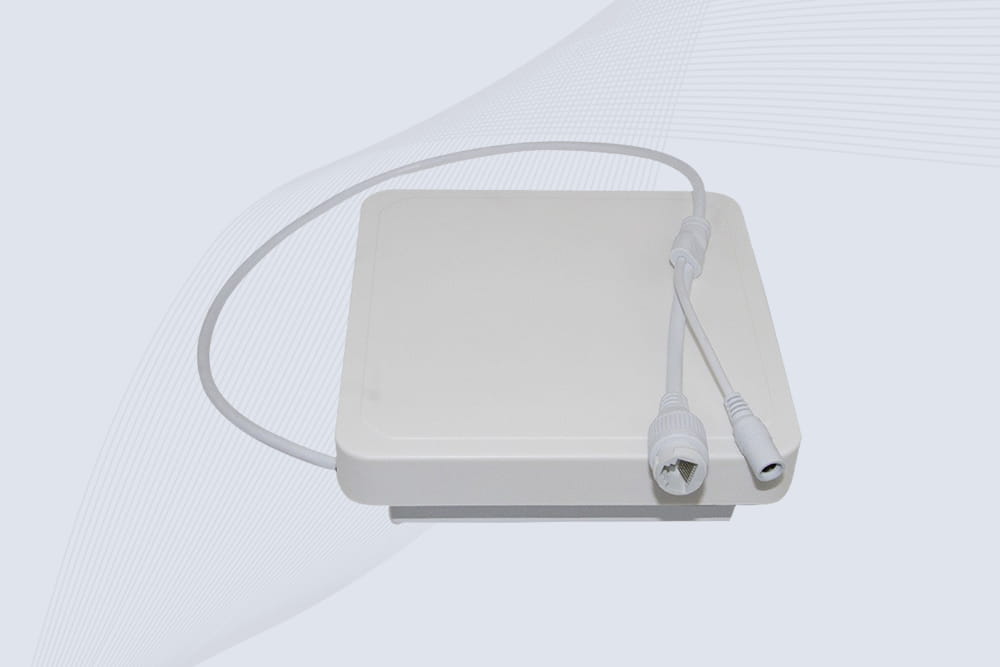
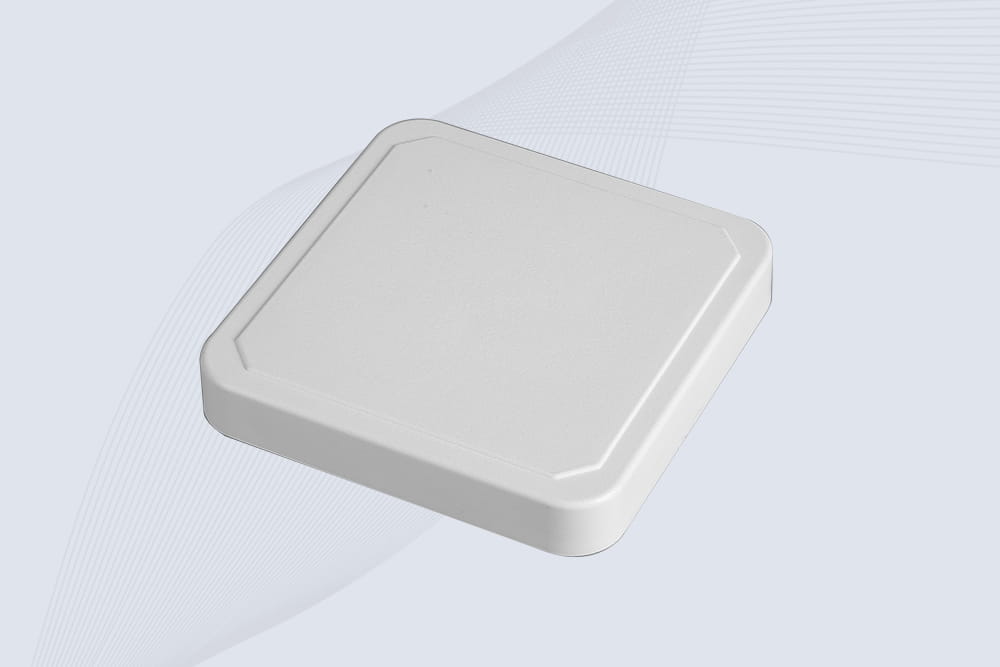
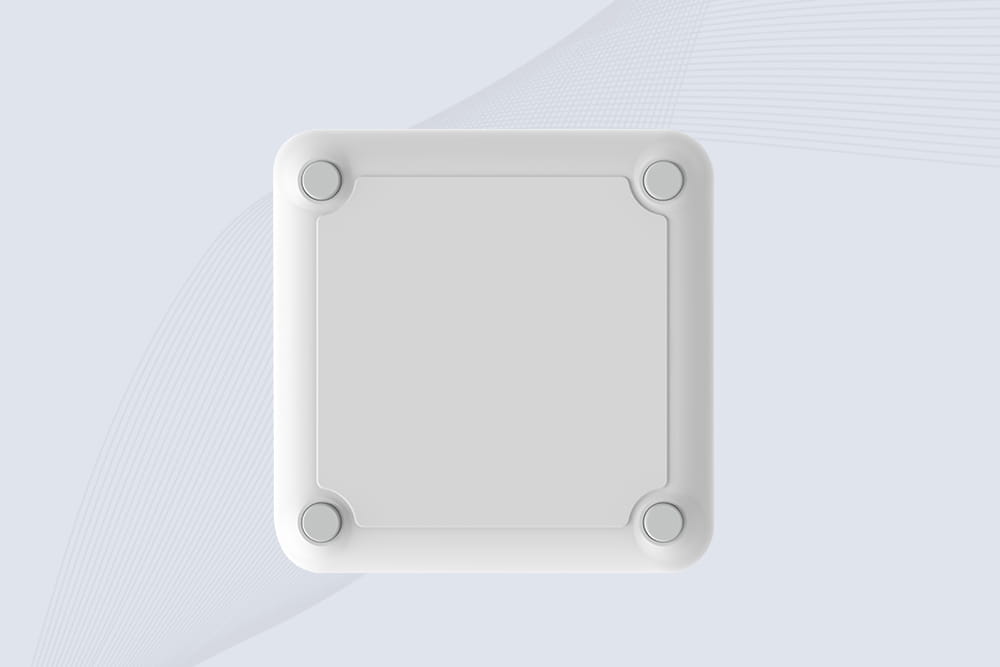
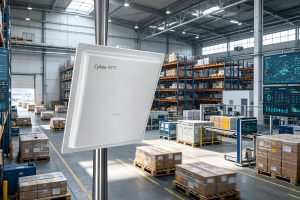
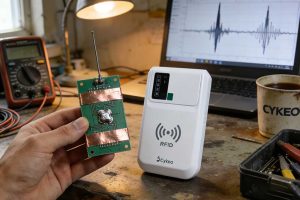
A long range RFID scanner supports pharmaceutical manufacturing by identifying tagged materials, containers, equipment, and products as they move between storage, preparation, production, inspection, and packaging areas.
The reader captures RFID tag data, while the software connects each detection event with a batch number, material record, work order, equipment status, or production process. Reliable performance depends on tag selection, cleanroom requirements, antenna placement, reading-zone control, and software integration.
How Does RFID Work in Pharmaceutical Manufacturing?
A typical pharmaceutical RFID workflow looks like this:
RFID tag → antenna → long range RFID scanner → EPC data → manufacturing software → inventory or production event
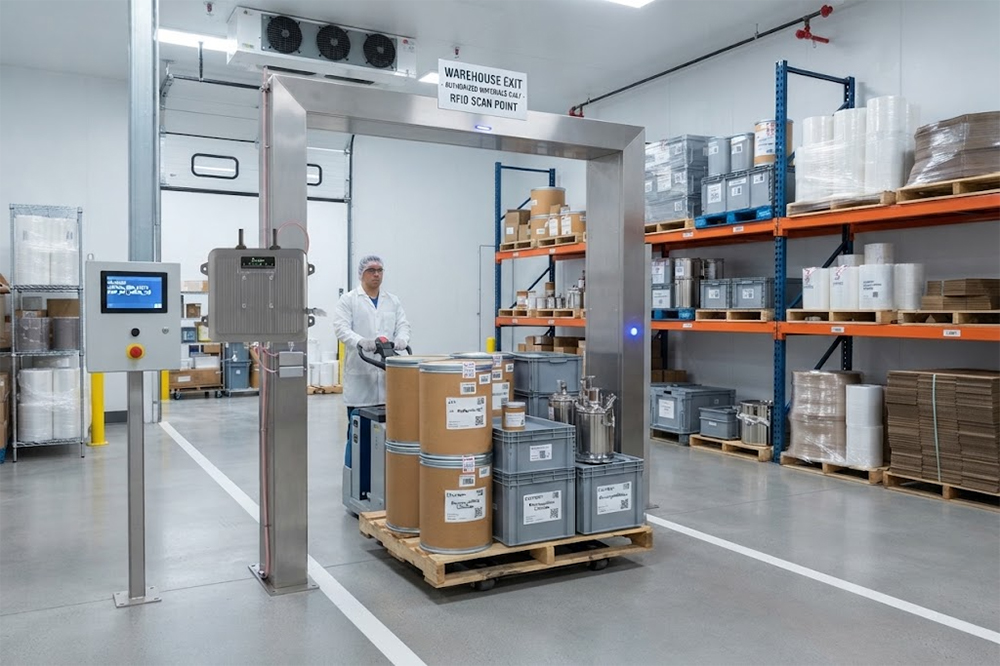
For example, a tagged raw material container leaves the warehouse and enters the production preparation area. A fixed RFID reader detects the tag and sends its EPC to the factory software.
The system may then update the container status to:
Released from storage
Sent to material preparation
Assigned to a production batch
Received at a manufacturing station
Waiting for quality inspection
Moved to packaging
Returned to storage
The RFID reader identifies the physical object. The software connects that identity with the correct pharmaceutical record.
RFID does not replace batch control, quality procedures, or regulatory documentation. It provides another reliable source of identification and movement data.
Tracking Pharmaceutical Raw Materials
Pharmaceutical production involves many materials that move through controlled processes.
Depending on the application, RFID can help identify:
Raw material containers
Powder or liquid ingredient bins
Packaging materials
Reusable stainless-steel containers
Plastic totes
Pallets
Intermediate product containers
Sampling equipment
Laboratory supplies
Finished product cases
Temperature-monitoring carriers
A long range RFID scanner can detect tagged containers at warehouse entrances, material transfer points, production rooms, and packaging areas.
This can reduce repetitive barcode scanning and improve visibility into whether the correct material has reached the correct location.
However, the EPC itself does not contain the complete material history. The software database must associate the tag with information such as:
Material name
Material code
Batch number
Quantity
Expiration date
Supplier
Quality status
Production order
Current location
RFID for Batch and Production Tracking
Pharmaceutical manufacturers need strong control over material movement and production status.
An RFID tag may be attached to a reusable container, pallet, production trolley, or intermediate product carrier. The tag can then be detected at different process stages.
In some cases, attaching an RFID tag directly to the product may not be suitable. A reusable carrier or container can provide a more practical identification method.
The RFID system should support the manufacturer’s existing batch-control procedures rather than create an uncontrolled parallel record.
RFID in Cleanrooms and Controlled Areas
Pharmaceutical manufacturing environments may have strict requirements for cleanliness, material compatibility, and contamination control.
RFID tags and equipment used in or near cleanrooms should be evaluated for:
Surface cleanliness
Material compatibility
Chemical resistance
Cleaning and disinfection procedures
Temperature exposure
Moisture resistance
Particle generation
Mounting method
Tag durability
Required cleanroom classification
A general-purpose paper RFID label may not be appropriate for every cleanroom application. Some projects may require encapsulated, washable, chemical-resistant, or specially certified tags.
The reader and antenna installation also need to respect the facility’s layout and hygiene requirements. Equipment should not interfere with cleaning, material flow, or controlled access procedures.
Metal Containers and Liquid Materials
Pharmaceutical facilities may use stainless-steel containers, metal carts, mixing equipment, tanks, and liquid-filled vessels.
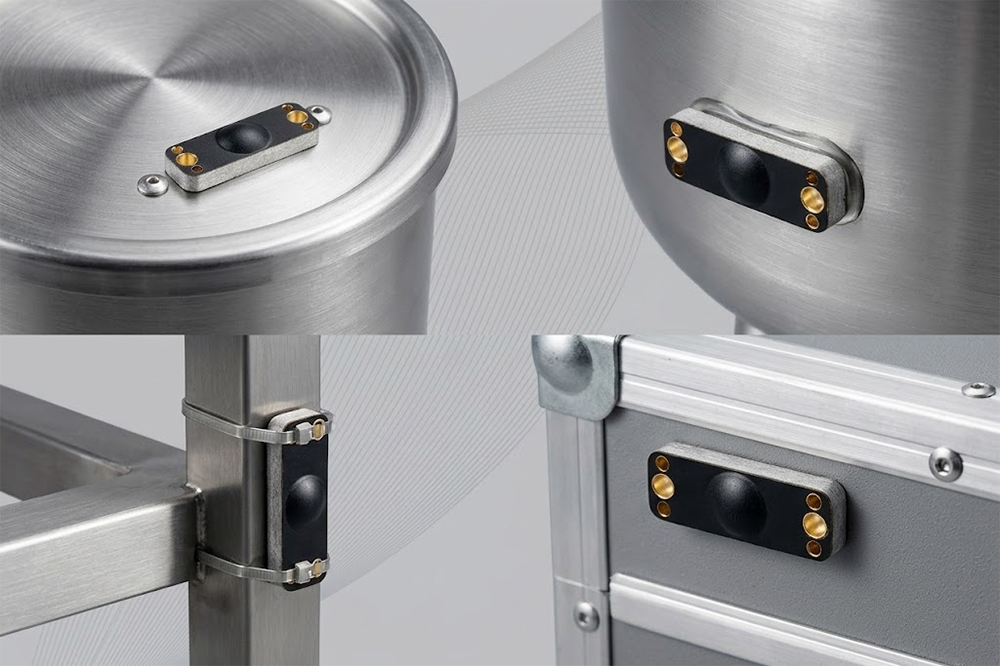
Metal and liquid can affect RFID performance. A standard RFID label may not work correctly when attached directly to a metal container or placed close to liquid.
Depending on the application, the project may require:
On-metal RFID tags
Rugged encapsulated tags
Tags mounted with a spacer
Tags installed on a non-metallic holder
Special tag orientation
A different antenna position
Lower or higher reader power
A more controlled reading zone
The tag should be tested in its final position. Testing a tag in open air does not prove that it will work on a stainless-steel vessel or liquid container.
Why Antenna Position Matters
A long range RFID scanner does not automatically read every tag in a large room. The actual reading area depends on antenna direction, reader power, tag performance, mounting position, and nearby materials.
In a pharmaceutical facility, unwanted reads can create serious confusion. A reader at one material transfer point should not identify containers waiting in another room or on the opposite side of a wall.
A controlled reading zone can be created through:
Directional antennas
Antenna height and angle
Reader output power
Physical separation
Shielding or barriers
Doorway design
Sensor triggering
EPC filtering
Software time windows
Entry and exit antenna separation
The objective is to record the correct material at the correct process point, not simply to achieve the maximum advertised reading distance.
RFID for Laboratory and Maintenance Equipment
Pharmaceutical facilities also manage laboratory instruments, maintenance tools, calibration devices, and production equipment.
Potential RFID assets include:
Testing instruments
Laboratory tools
Calibration equipment
Portable measurement devices
Maintenance toolboxes
Production fixtures
Cleaning equipment
Reusable equipment cases
Mobile carts
Inspection devices
A fixed reader near a laboratory entrance or equipment room can record when assets enter or leave. A handheld reader can support detailed inventory checks inside cabinets, shelves, and storage rooms.
The software may connect the RFID identity with:
Equipment calibration status
Maintenance history
Assigned department
Responsible employee
Cleaning status
Inspection schedule
Service records
Current location
This can help reduce the time spent searching for equipment and checking manual records.
Can RFID Read Multiple Pharmaceutical Containers?
UHF RFID readers can identify multiple tags in a reading zone. This is useful for containers, pallets, equipment carts, and groups of packaging materials.
Actual performance depends on:
Number of tags
Tag spacing
Metal surfaces
Liquid content
Tag orientation
Container material
Antenna position
Reader power
Reading distance
Movement speed
Software filtering
A pallet containing several tagged pharmaceutical cartons may behave differently from a single carton. A group of stainless-steel containers may also require a different tag and antenna setup.
Testing should use the actual containers, packaging, tag mounting method, and movement process.
RFID and Pharmaceutical Manufacturing Software
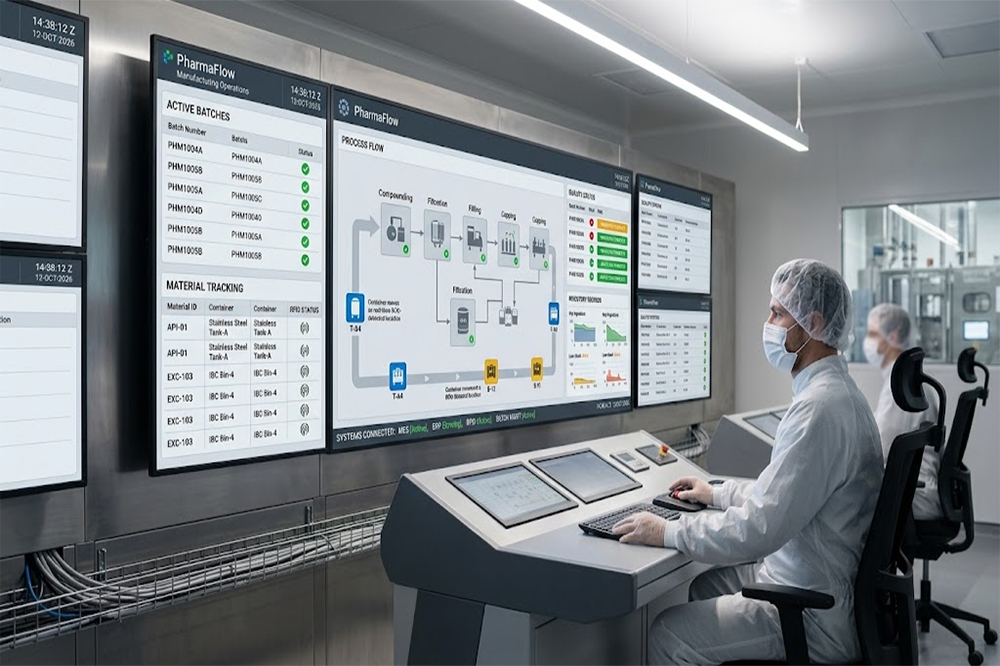
RFID readers generate identification data. Manufacturing software turns that data into a controlled operational event.
Depending on the project, the RFID system may connect with:
ERP systems
MES platforms
Warehouse management systems
Laboratory information management systems
Quality management systems
Batch management software
Equipment maintenance systems
Inventory databases
Access control systems
Communication may use Ethernet, TCP/IP, serial communication, digital I/O, API, SDK, HTTP, MQTT, or an industrial gateway, depending on the reader and system architecture.
For example:
A sensor detects a container entering a transfer point.
The PLC triggers the RFID reading window.
The reader identifies the EPC.
The software checks the expected batch or material.
The system confirms or rejects the movement.
The event is stored in the production record.
This approach helps prevent an RFID reader from creating uncontrolled or ambiguous data.
A Practical Pharmaceutical RFID Example
Consider a pharmaceutical manufacturer that uses reusable stainless-steel containers to move materials between the warehouse, preparation room, production area, and cleaning station.
The company installs long range RFID scanners at:
The raw material warehouse exit
The material preparation entrance
The production transfer point
The quality inspection area
The container cleaning room
Each container receives an RFID tag designed for its mounting surface and cleaning conditions.
During the pilot test, the reader at the preparation entrance detects containers waiting near the doorway. The integrator adjusts the antenna angle, reduces unnecessary coverage, and uses a sensor to trigger the reading window.
The software then checks whether the detected container belongs to the expected production batch. If the wrong container enters the area, the system can generate an alert for review.
The result comes from the complete combination of RFID hardware, container design, installation, and software logic.
What Should You Test Before Deployment?
Before purchasing RFID equipment in bulk, test the system under actual pharmaceutical manufacturing conditions.
Important test items include:
Actual container and packaging materials
Metal and liquid content
RFID tag type
Tag mounting method
Cleaning and disinfection procedures
Chemical exposure
Temperature exposure
Tag durability
Reader frequency and protocol
Antenna direction
Reading distance
Reader output power
Number of tags
Container movement speed
Doorway and transfer-point layout
Sensor trigger timing
Duplicate read filtering
Batch and material validation logic
ERP or MES integration
Repeatability over multiple process cycles
The test should not be limited to one tag in an open environment. It should include the actual container, actual production path, actual cleaning process, and intended software workflow.
What Should Distributors and System Integrators Look For?
For pharmaceutical projects, buyers should evaluate RF performance, industrial reliability, and compatibility with the manufacturing environment.
Important procurement points include:
Supported UHF frequency range
EPC C1G2 / ISO18000-6C compatibility
Reader sensitivity
Adjustable output power
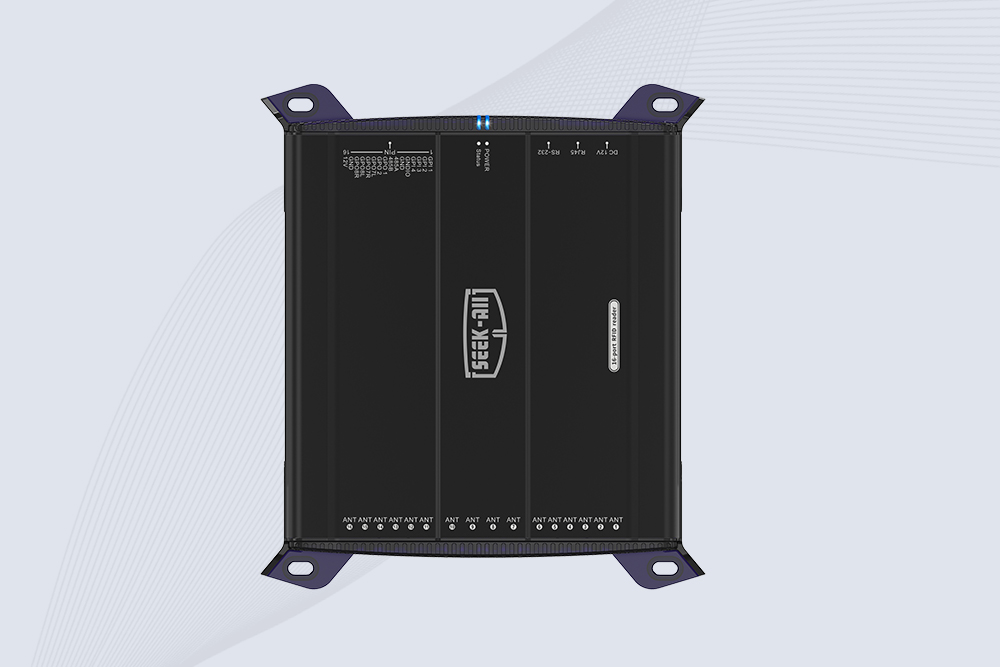
Number of antenna ports
Antenna compatibility
Multi-tag reading performance
Communication interfaces
API and SDK support
Digital input and output
PLC integration options
Trigger support
Firmware stability
Cleanroom-compatible installation options
On-metal RFID tag compatibility
Chemical-resistant and washable tags
OEM and private-label support
Sample availability
MOQ
Lead time
Technical support
Bulk supply capability
The reader should also be evaluated as part of the complete solution. A high-performance reader may still be unsuitable if the tags cannot survive cleaning or if the software cannot validate batch movement.
Long Range RFID Does Not Replace Quality Control
RFID can improve identification and movement visibility, but it does not replace pharmaceutical quality systems.
RFID cannot independently verify:
Product purity
Chemical composition
Sterility
Batch quality
Temperature compliance
Laboratory test results
Regulatory release status
Those functions remain part of the manufacturer’s quality and production systems.
RFID can support these processes by providing accurate identification, location events, container history, and equipment status.
The strongest solution connects RFID data with existing quality, batch, and inventory workflows.
Final Takeaway
A long range RFID scanner can help pharmaceutical manufacturers track raw materials, reusable containers, laboratory equipment, maintenance tools, and finished products at controlled production checkpoints.
The most reliable system combines:
Suitable RFID tags
Cleanroom-compatible materials
Correct antenna placement
Controlled reading zones
Batch and material validation
Software integration
Real-world testing
The goal is not simply to read tags from a long distance. The goal is to identify the correct material or asset, at the correct process point, and connect that event with the correct production record.
Pharmaceutical warehouses can also use the same approach for RFID warehouse inventory tracking, especially when raw materials and packaging supplies move through controlled storage areas.
For pharmaceutical packaging lines, RFID tracking on conveyor systems can help identify cartons, cases, and containers as they move through automated production processes.
Laboratory instruments, maintenance tools, and production fixtures can also be managed through RFID asset tracking.
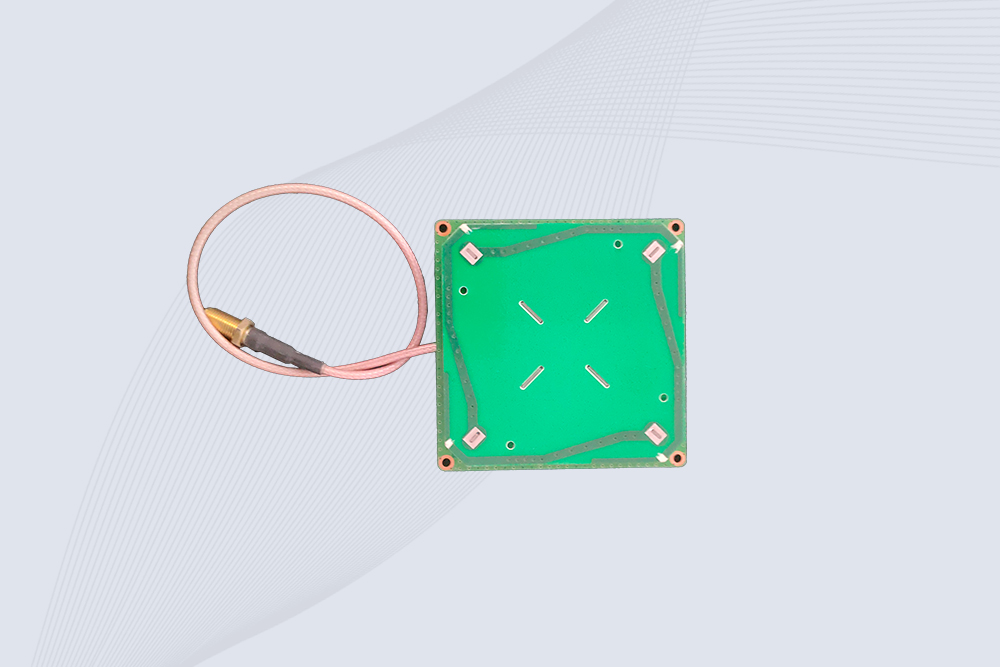
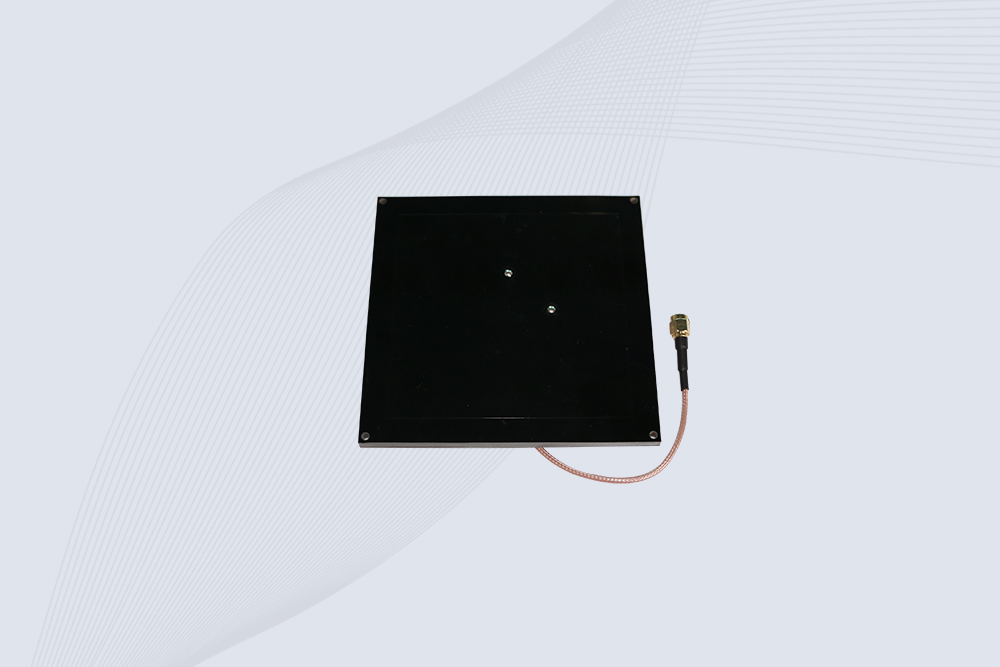
SSD-A06 UHF RFID antenna with circular polarization, adjustable 840–960 MHz frequency, ≥4.5 dBi gain, and a compact directional design for RFID systems.
SSD-R16L Multi-Channel RFID Infrastructure for Automated Inventory Management ✔️ 16-Port High-Density RFID Reading Equipped with 16 SMA antenna ports, SSD-R16L supports multi-antenna deployment for warehouses, retail stores, logistics, production lines, and large-area RFID identification. ✔️ High-Speed & Long-Range Performance With up to 33…
SSD-R8L 8-port UHF RFID reader with 33dBm output, up to 20m reading range and 600+ tags/s recognition. Ideal for warehouse, logistics, retail and asset tracking.
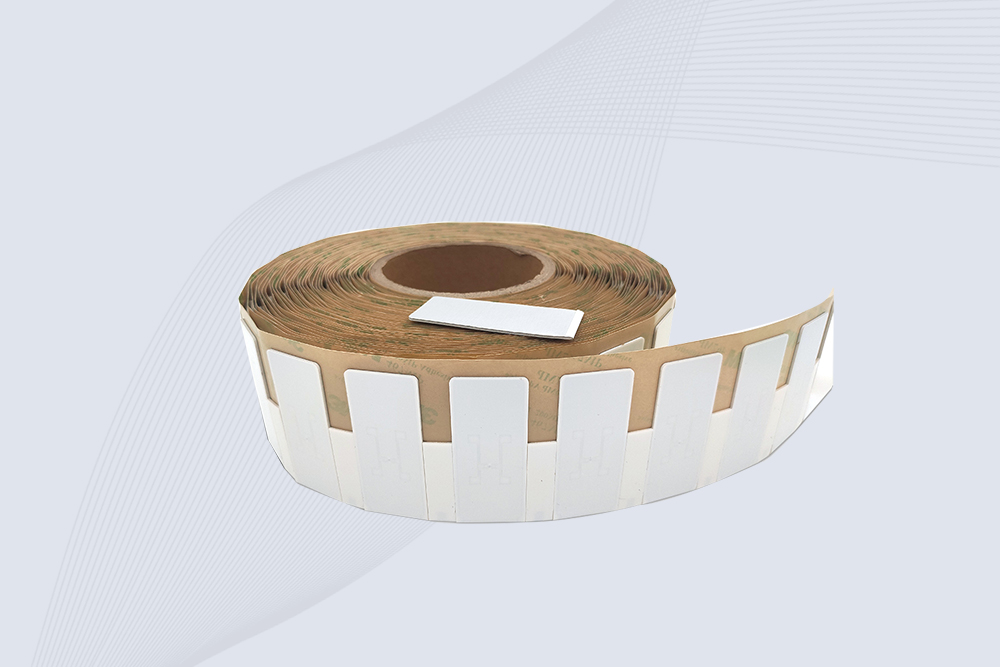
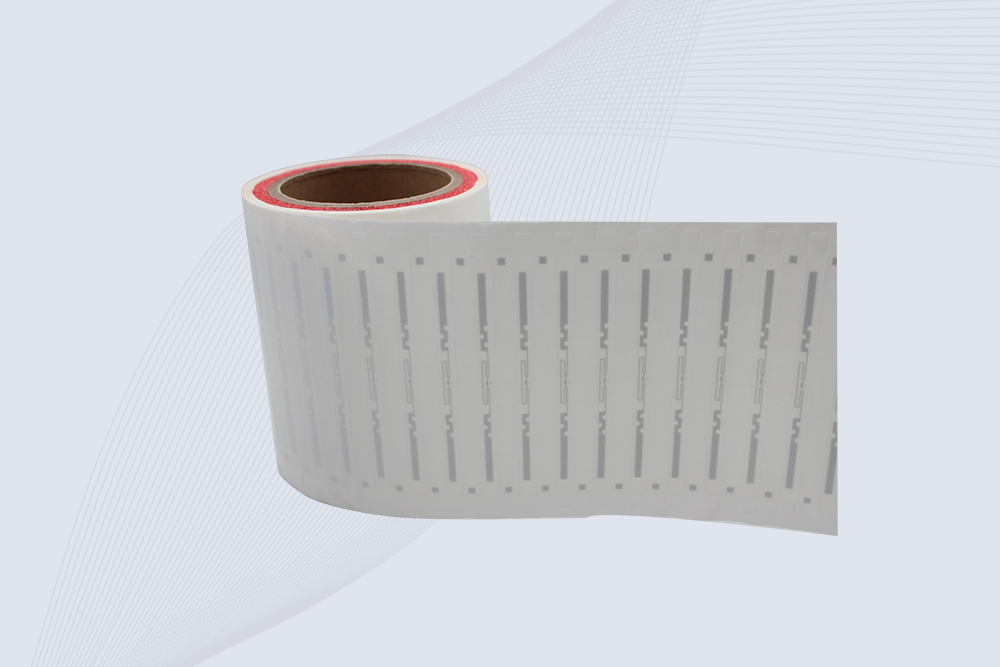
CYKEO Passive RFID Tags are made for wet and high-humidity environments where standard labels do not last. This rfid passive tag is often used around liquids, chemicals and temperature changes, providing stable reading distance and long data life for industrial tracking.
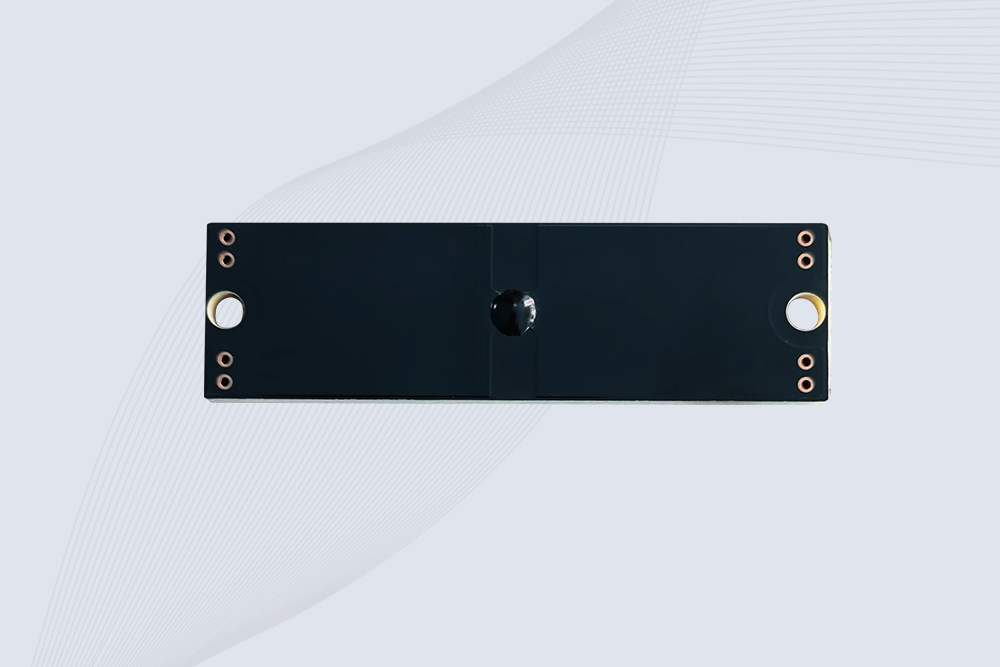
CYKEO CYKEO-PCB1504 Metal RFID Tags is a compact anti-metal UHF RFID solution built for direct mounting on metal surfaces. With stable 8-meter read range, Ucode-8 chip, and long data retention, this rfid metal tag fits tools, containers, automotive parts, and industrial asset tracking.
CYKEO CYKEO-PCB7020 On-Metal RFID Tags are designed for reliable tracking on steel and metal surfaces. Built with an FR4 epoxy body and industrial-grade chips, these On-Metal RFID Tags deliver stable performance, long data life, and chemical resistance, making them a dependable RFID anti-metal tag for harsh environments.
The CYKEO CYKEO-60-25 Anti-Metal RFID Tag is built for metal surfaces where standard tags fail. Designed for long-range performance, harsh environments, and stable data retention, this Anti-Metal RFID Tag is ideal for industrial assets, containers, and equipment tracking using on metal RFID tags.
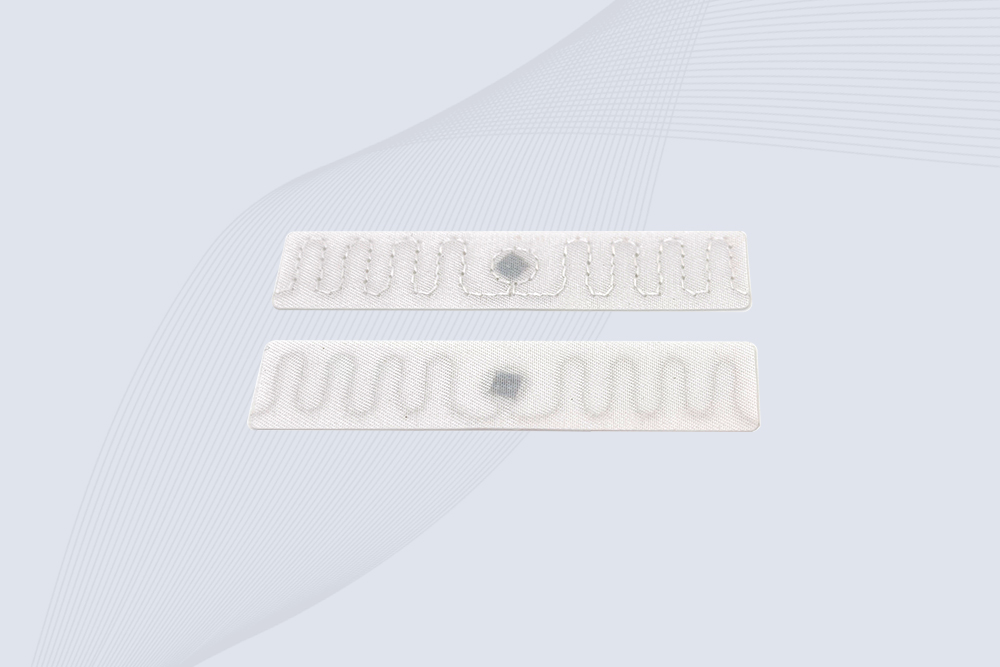
The CYKEO RFID Laundry Tag is designed for long-term textile identification in harsh laundry environments. Built to withstand high heat, chemicals, and repeated washing, this RFID Laundry Tag delivers stable performance for hotels, hospitals, and industrial laundry operations using laundry rfid tags at scale.
The CYKEO CYKEO-125-7 RFID Book Tag is designed for reliable book and document tracking in libraries and archives. This RFID Book Tag delivers long read range, dense placement support, and stable performance on shelves, making it a practical rfid tag on books for library automation, file management, and archival systems.
CYKEO RFID tags in hospitals are designed for sterile environments where accuracy matters. These autoclavable RFID tags support long-term tracking of surgical tools, implants, and medications, helping hospitals improve visibility, compliance, and patient safety.
CYKEO RFID Cable Tie Tag is built for reliable identification on metal surfaces. This UHF RFID Cable Tie Tag is widely used in rfid tags for inventory systems, industrial asset management and Hospital RFID Tags, offering stable read performance, long service life and global EPC Gen2 compatibility.
CYKEO RFID Asset Tag is designed for stable identification of metal assets in industrial environments. This UHF RFID Asset Tag is commonly used for rfid tag asset tracking on equipment, tools and containers, providing reliable reads, long service life and ISO/IEC 18000-6C support.
CYKEO UHF RFID Card is designed for fast identification and long-term use in industrial and commercial systems. Supporting ISO 18000-6C, this UHF RFID Card works at 860–960 MHz and is suitable for custom RFID cards used in asset tracking, access control and inventory management.
CYKEO HF RFID Cards are designed for secure and stable access control systems. These 13.56 MHz RFID key cards support ISO 14443-A, reliable rewriting and long service life, making HF RFID Cards suitable for offices, campuses, events and membership management.
CYKEO UHF RFID Tag is designed for reliable tracking of metal jewelry and high-value items. This Jewelry RFID Tag supports long-range reading up to 8 meters, anti-counterfeit protection and stable performance on metal, making it suitable for retail, inventory control and asset management.
CYKEO Embedded RFID Modules are designed for compact industrial and IoT devices that require stable UHF performance. These UHF RFID Modules support global protocols, flexible power control, and reliable multi-tag reading for smart cabinets, production lines, and asset tracking systems.
CYKEO Embedded RFID Module is built for compact IoT and industrial devices that need stable UHF performance. This UHF module supports global protocols, low power operation, and reliable multi-tag reading for smart lockers, production lines, and always-on RFID systems.
CYKEO CYKEO-M1 drone rfid module is a compact UHF RFID reader module designed for drones and UAV platforms. It supports long-range aerial scanning, fast multi-tag reading, and stable performance in wind, vibration, and outdoor environments.
CYKEO CYKEO-M4 RC522 RFID Module is an industrial-grade UHF RFID reader with 4 ports, supporting ISO, EPC, and GB protocols. High-speed, accurate reading for IoT, automation, and warehouse applications.
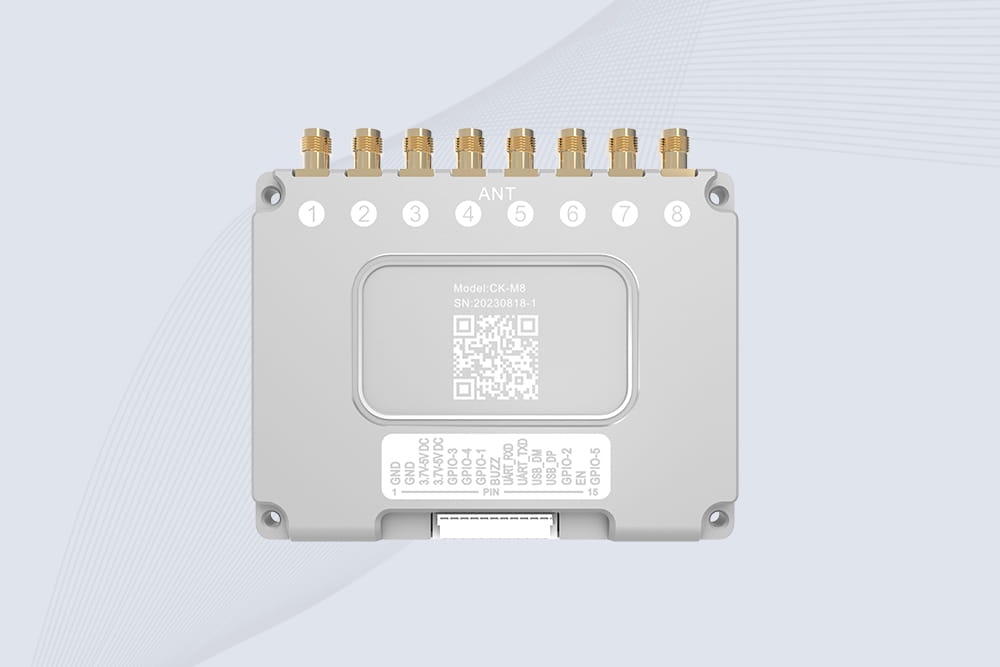
CYKEO CYKEO-M8 Module RFID is an 8-port UHF R2000 RFID Module designed for high-density, multi-tag environments. Stable 33dBm output, ISO & GB protocol support, ideal for warehouses, factories, and automated systems.
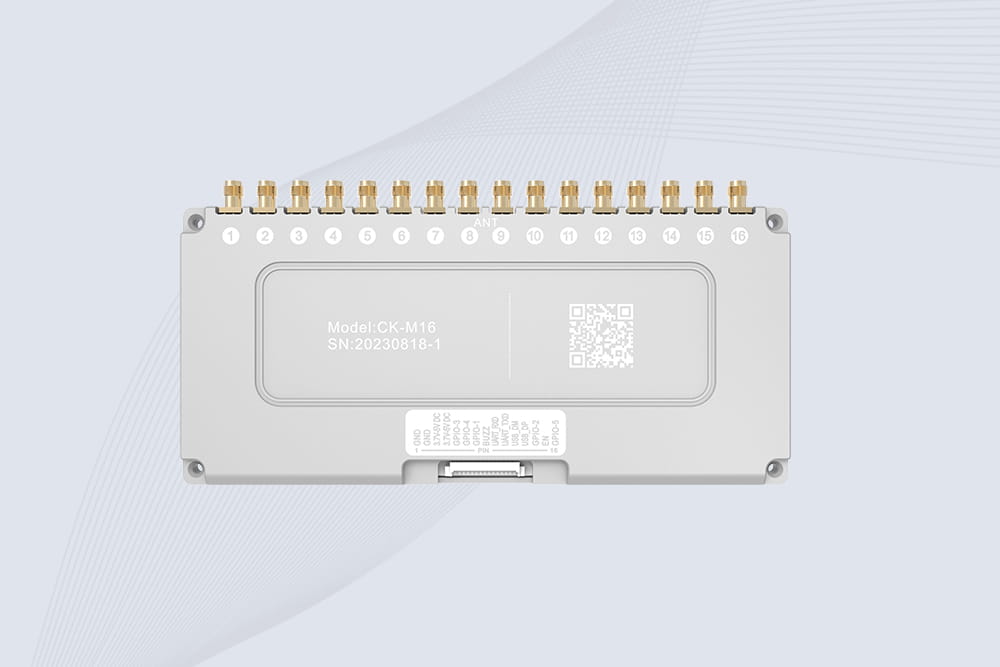
CYKEO CYKEO-M16 RFID Module is a 16-port UHF RFID reader module based on the R2000 chipset. Designed for dense tag environments, it supports ISO and GB standards and delivers stable multi-antenna control for industrial automation.
The CYKEO CYKEO-M16L RFID Reader Module is a 16-channel UHF RFID core designed for dense tag environments. With adjustable 33dBm output, multi-protocol support, and stable multi-antenna control, this RFID Tag Reader Module fits industrial automation, warehouse systems, and large-scale IoT deployments.
CYKEO CYKEO-M8L module RFID is a compact industrial UHF module built for dense tag and multi-antenna environments. With 8 RF ports, adjustable 33 dBm output, and ISO & GB protocol support, it is widely used in factories, warehouses, and automated tracking systems.
CYKEOCYKEO-M4L UHF RFID Module is a compact 4-channel RFID tag reader module designed for dense tag environments. Supporting ISO and GB protocols, it delivers stable reads up to 10 meters for industrial and IoT systems.
Cykeo CYKEO-A11 UHF RFID reader antenna delivers 11dBi gain, 840-960MHz frequency range, and IP65 ruggedness for retail, logistics, and industrial RFID systems. Features low VSWR and easy installation.
CYKEO Antenna RFID Reader delivers stable long-range UHF performance with a 10.5dBi directional design, built for warehouses, conveyor portals, and industrial RFID systems. This rfid reader antenna provides 20m+ read distance and rugged IP67 protection.
Cykeo CYKEO-A5B industrial Linear RFID Antenna delivers 5dBi gain, ≤1.5:1 VSWR, and IP65 rugged design for warehouse, production line, and logistics UHF systems.
Cykeo’s CYKEO-B12 Long Range RFID Antenna delivers 15m+ read range with 12dBi gain, IP65 rugged design, and global 840-960MHz UHF support. Ideal for warehouse/logistics asset tracking.
Cykeo CYKEO-B10 Long Distance RFID Antenna offers 10dBi gain, 840-960MHz frequency range, IP65 rating, and 20m+ coverage for logistics/warehousing/ETC systems. Low VSWR ensures stable signal transmission.
Cykeo CYKEO-A6 UHF RFID panel antenna features 6dBi gain, 840-960MHz broadband, IP65 metal-ready housing for logistics/smart retail. 18mm ultra-thin design with tool-free mounting.
Cykeo CK-A3 industrial antenna RFID UHF offers 5m+ tag detection, ≤1.3:1 VSWR, IP65 rugged design, and global UHF spectrum compatibility (840-960MHz) for warehouses, factories, and retail.
Cykeo CYKEO-B5 directional RFID antenna provides 5dBi gain with 60° narrow beamwidth for precise inventory tracking. IP65-rated, global UHF frequency support, and low VSWR.
Create your own high-performance DIY RFID antenna! 5dBi gain, 840-960MHz tunable, step-by-step guides. Compatible with Arduino, Raspberry Pi, and commercial UHF readers.
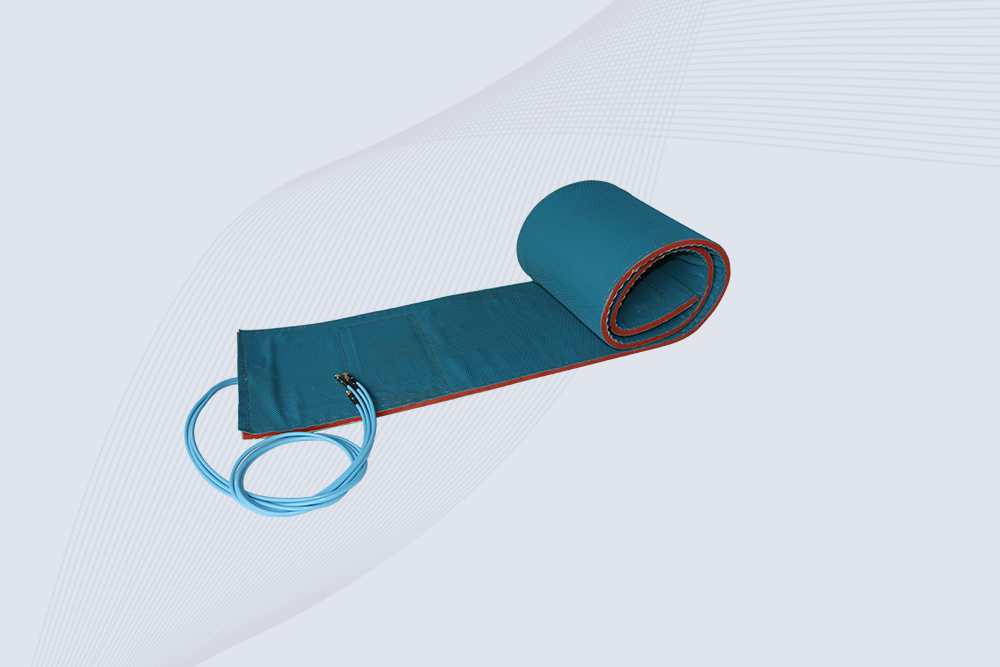
Cykeo CYKEO-A7 Flexible RFID Antenna features 840-960MHz wideband tuning, 7dBi gain, and IP68 rating for medical/retail/industrial curved surface deployments. 98% read accuracy with peel-and-stick installation.
Cykeo CYKEO-B5A industrial Passive RFID Antenna delivers 5dBi gain, 70° beamwidth, and -40°C~55°C operation for warehouses/smart cabinets. Compatible with Zebra/Impinj readers.
Cykeo’s CYKEO-A9B High Gain RFID Antenna delivers 15m+ read range with 9dBi amplification. Features IP54 rugged design, 840-960MHz bandwidth, and 80° beamwidth for warehouse/manufacturing RFID systems.
Cykeo’s enterprise-grade 8dbi Impinj RFID Antenna 10m+ read range with 840-960MHz tuning. Features IP65 housing, 1.4 VSWR, 35° beamwidth for retail/warehouse RFID systems.
Cykeo CYKEO-A9 industrial UHF RFID antenna delivers 9dBi gain, 840-960MHz frequency range, and IP65 protection for warehouse/logistics/retail RFID systems. Features N-type connector and ≤1.3:1 VSWR.
CYKEO UHF RFID Antenna built for long-distance and industrial applications. This antenna rfid uhf delivers strong gain, outdoor durability, and reliable tag performance in warehouses, yards, and vehicle ID systems.
CYKEO Antenna RFID delivers reliable long-range UHF performance in warehouses, retail shelves, and cold-chain environments. This compact uhf rfid antenna provides stable reads with circular polarization and ultra-wide 840–960 MHz support, ideal for industrial tracking, smart shelves, and asset monitoring.
Cykeo’s CYKEO-C8 UHF RFID antennas delivers 8dBi gain, 840-960MHz full-band coverage, and IP65 ruggedness for manufacturing/warehouse RFID systems. Industrial RFID Antennas Features
Cykeo’s 8dBi UHF RFID antenna and reader kit delivers 10m+ range, 840-960MHz broadband, and IP65 ruggedness for factories, warehouses, and logistics. ISO 18000-6C & EPC Gen2 certified.
Cykeo’s CYKEO-A12C UHF Large RFID Antenna delivers 12dBi gain, 840-960MHz global frequency, IP65 ruggedness for logistics/warehousing/automotive. 40° beamwidth ensures stable 15m+ tag reads.
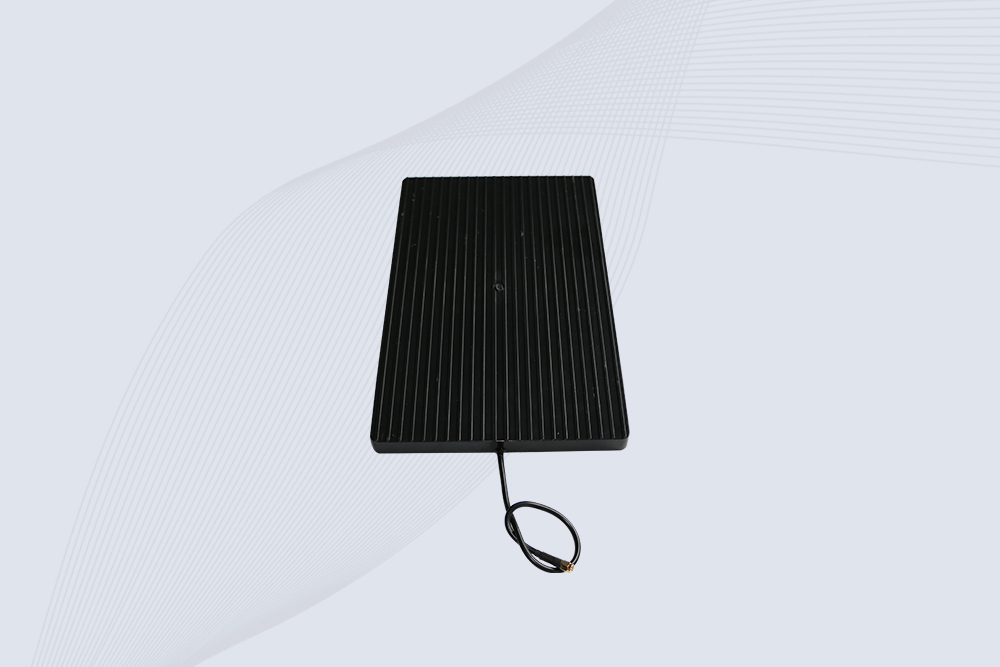
CYKEO Near Field RFID Antenna provides precise 5–30 cm reading for shelves, cabinets, and workstations. This compact rfid shelf antenna delivers stable short-range performance around metal and clutter, ideal for pharmacies, libraries, and electronics sorting.
Cykeo’s industrial long range RFID reader delivers 20-meter scanning, 500+ tags/sec speed, and IP67 waterproof design for automated warehouses, logistics, and harsh environment applications.
Cykeo’s CYKEO-RA6L industrial RFID long range reader features 20m read distance, 500 tags/sec speed, and IP67 protection. Ideal for warehouse automation, manufacturing WIP tracking, and smart logistics. Supports ISO 18000-6C/6B protocols.
CYKEO Long Range RFID Tag Reader built for outdoor and industrial operations. This Outdoor RFID Reader delivers 20m read distance, fast tag processing, and IP67 durability for wide-area tracking.
RFID Industry Writer | IoT & Asset Tracking Analyst
James writes about RFID technology, asset tracking, and the practical challenges of digital transformation across warehousing, retail, manufacturing, and logistics.
His work focuses on how RFID is applied in real-world operations—improving inventory visibility, automating workflows, and helping businesses manage assets with greater accuracy and efficiency.
He regularly covers topics including UHF RFID, smart cabinets, RFID portals, tool tracking, warehouse automation, and industrial IoT trends..
Discover how RFID for tracking improves asset visibility, inventory accuracy, and operational efficiency. Learn proven RFID tracking applications, industry data, and deployment insights from Cykeo experts.
Learn multiple ways for how to connect an RFID reader to computer. Step-by-step guide for USB, Ethernet & serial ports with CYKEO readers, including driver and software setup.
Explore key challenges in UHF passive RFID technology, including signal interference, material limitations, and scalability. Discover how Cykeo addresses these issues.
We tried figuring out how to make an RFID antenna in our lab. Here's an honest look at the DIY process, its real-world limits, and why off-the-shelf antennas often win.
 Cykeo RFID IoT Solution Products R&D Manufacturer