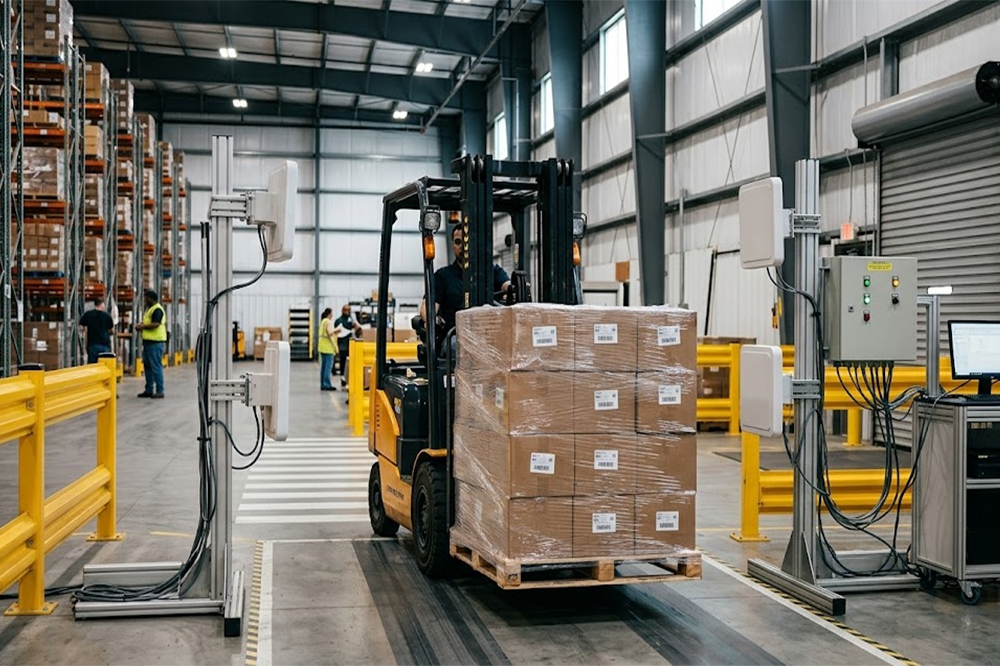
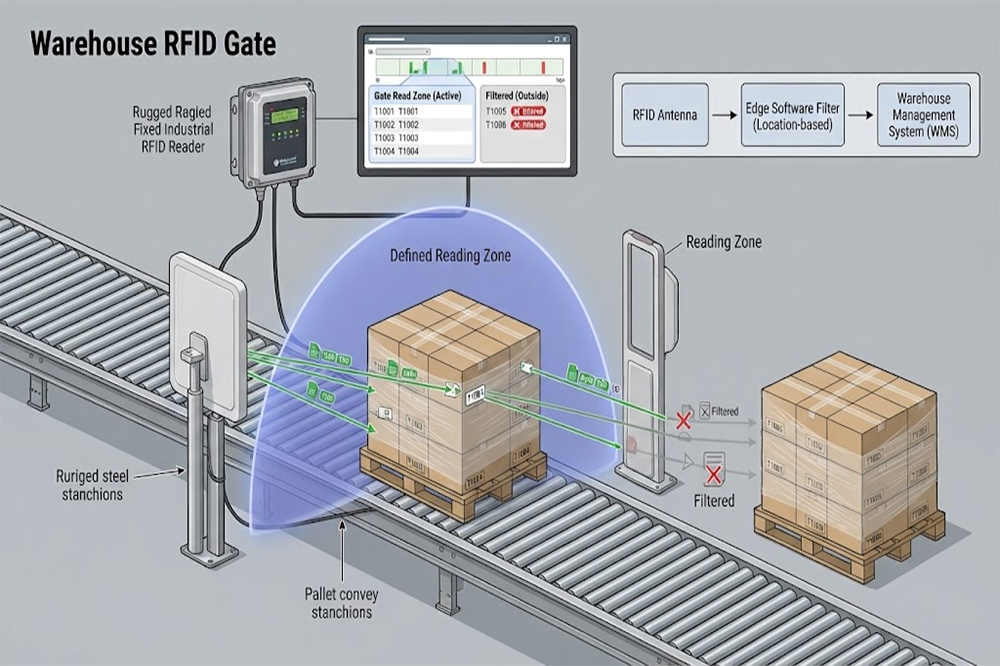
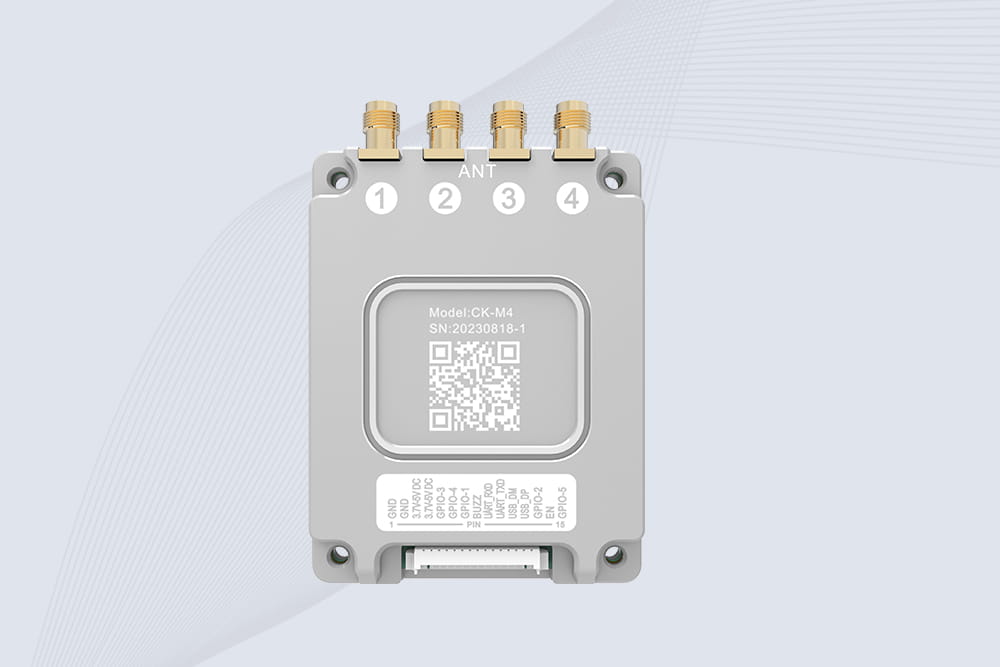
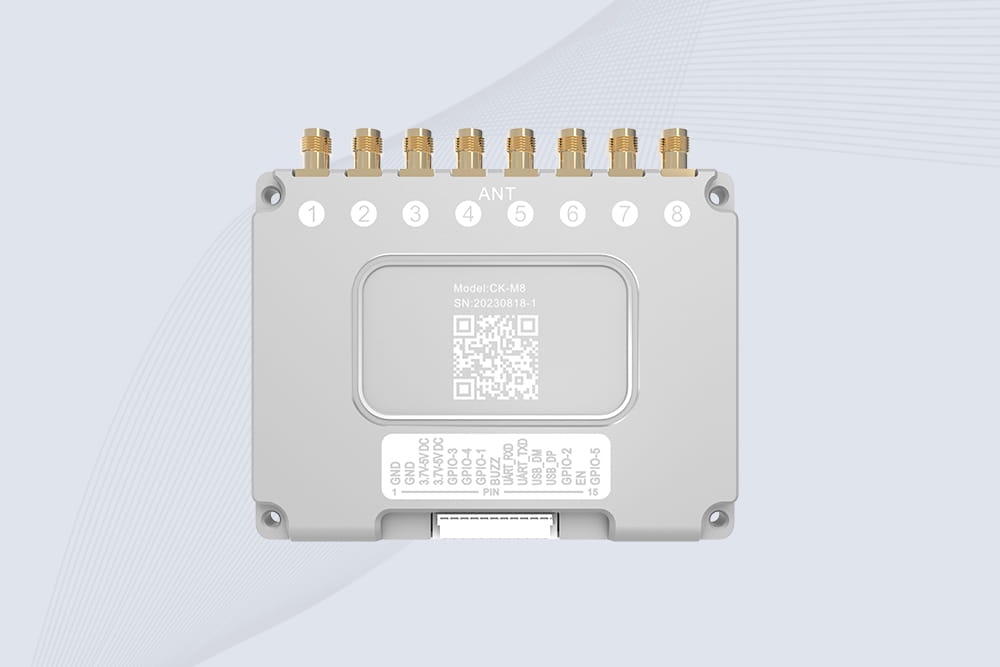
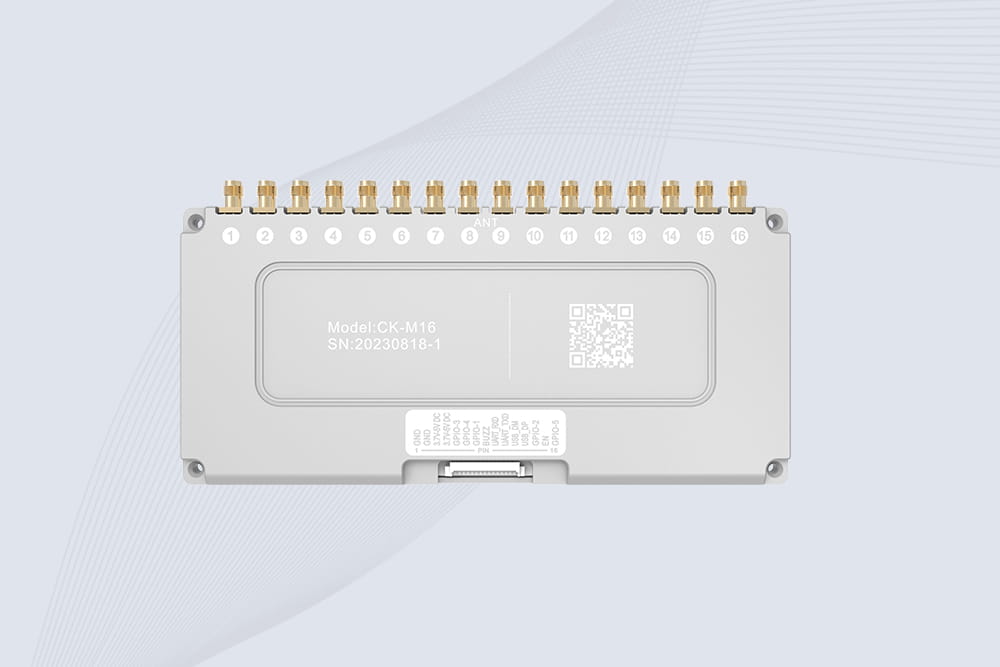
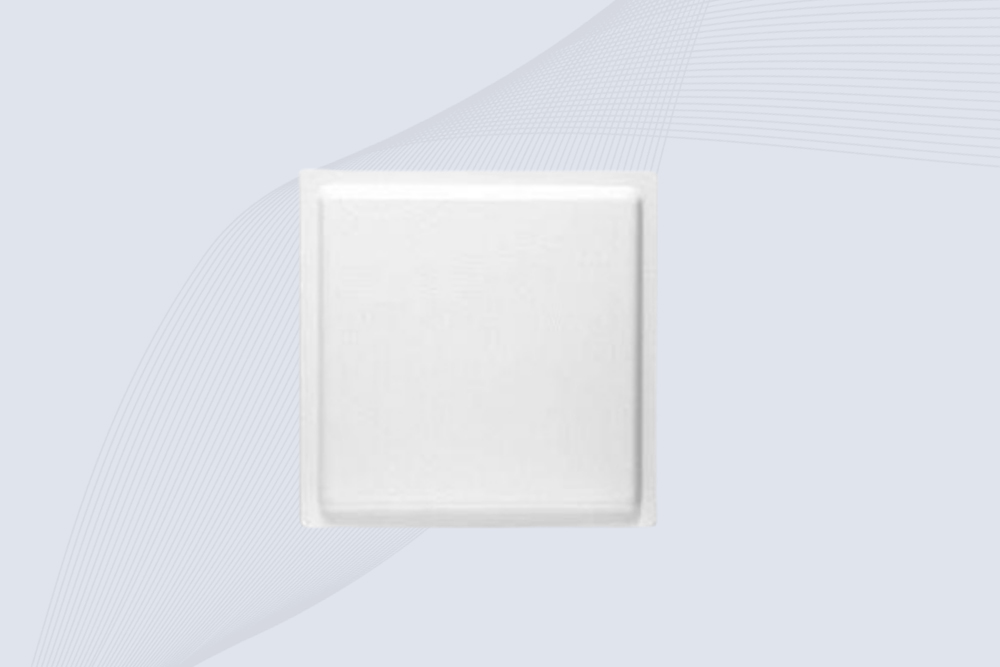
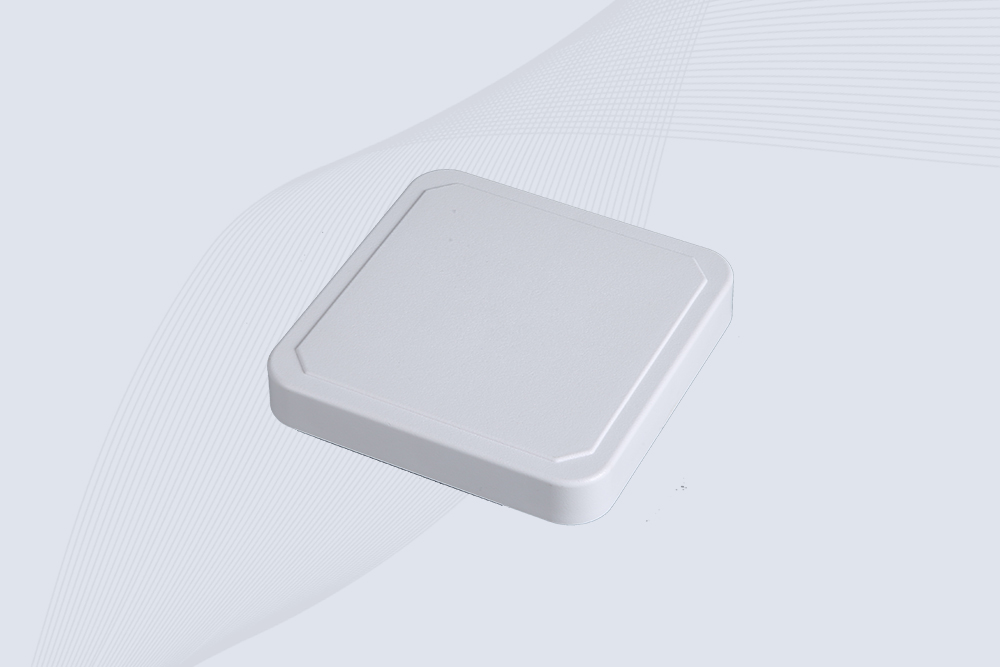
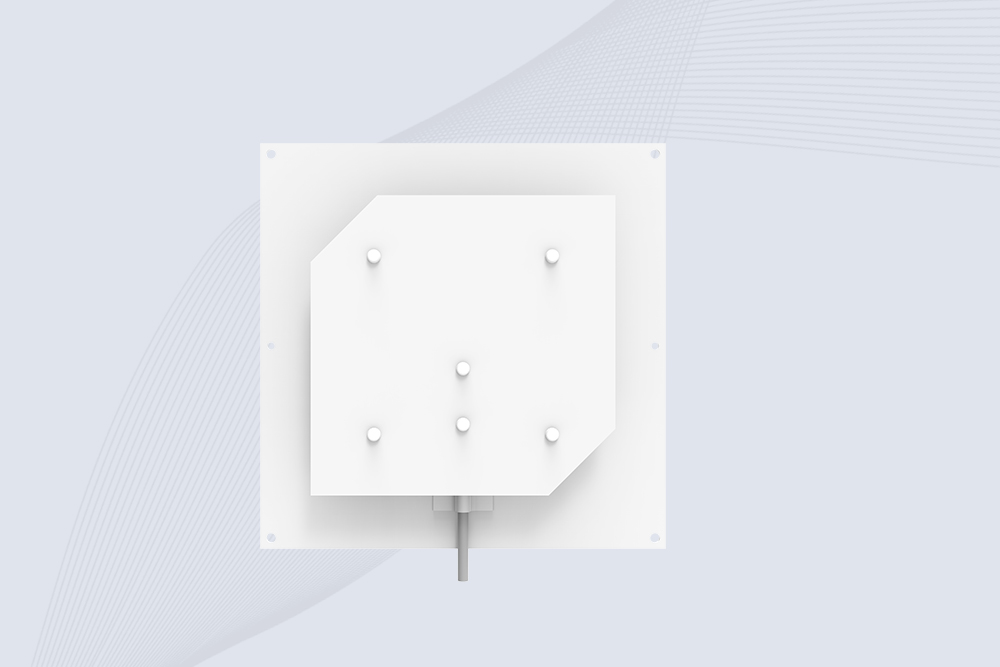
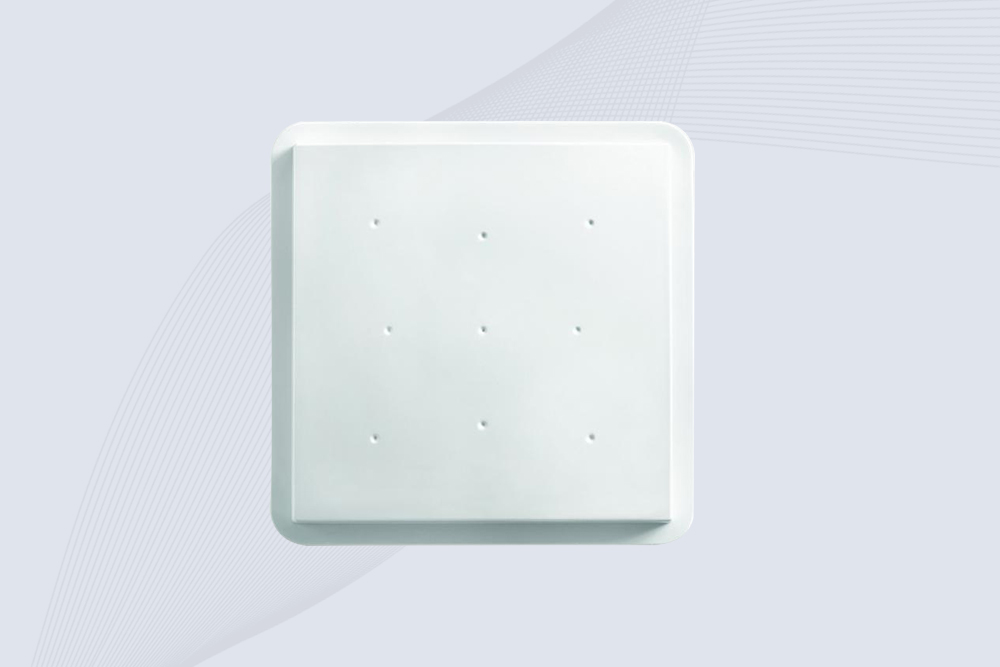
A long range RFID scanner can identify tags across a warehouse gate, but simply increasing reading power is not the best way to improve performance. A reliable RFID gate needs the right antenna direction, reader settings, tag placement, physical layout, and software filtering to create a controlled reading zone.
There is a moment in almost every RFID gate project when someone asks:
“Why is the reader picking up the pallet next to the gate?”
The reader may be working perfectly.
That is what makes the problem confusing.
A long range RFID scanner is designed to detect tags from a distance. If the reading area is not controlled properly, the reader can do exactly what it was designed to do — detect tags that happen to be within its RF field.
The problem is not always weak performance.
Sometimes there is simply too much reading range in the wrong direction.
This becomes especially noticeable in warehouses where several pallets are waiting close to the entrance.
A Warehouse Gate Is Not Just a Reader
It is easy to think of an RFID gate as:
RFID reader + antenna = RFID gate
In practice, it is more like:
Reader + antenna + tag + physical layout + power settings + software + operating process
Every part affects the final result.
Imagine a loading area with two lanes.
Lane A is for outbound shipments.
Lane B is only three meters away and is waiting for another truck.
The customer wants the RFID system to record products passing through Lane A.
If the reader detects tags in both lanes, the hardware may still be performing normally.
The system design needs more control.
This is why RFID gate projects often require testing rather than simply installing the highest-power reader available.
The First Question: Where Should the RFID Reading Zone Be?
Before choosing the reader, define the actual reading area.
For example:
Gate width: 4 meters
Required reading distance: 3–5 meters
Pallet speed: slow forklift movement
Tags: UHF passive RFID
Antennas: two directional antennas
That gives the system integrator something concrete to design around.
Compare this with:
“We need a long range RFID scanner.”
That doesn’t tell the supplier very much.
A 20-meter reader may sound attractive, but a warehouse gate may only need a controlled 4-meter zone.
Longer is not automatically better.
Antenna Direction Is a Big Part of the Solution
The antenna determines where the RF energy is concentrated.
For a warehouse gate, directional antennas are often useful because the system needs to focus on a specific passage.
Think about a flashlight.
If you point it at the doorway, most of the useful light goes where you need it.
If you shine it everywhere, you illuminate areas that may not matter.
RFID is obviously more complicated than a flashlight, but the basic idea is useful when explaining antenna selection to a customer.
The antenna should help define the reading area.
Two Antennas or Four?
There is no universal answer.
Two antennas may be enough for a relatively simple gate.
A wider lane, different pallet positions, or a more demanding application may require additional antennas.
The important thing is to understand what the tags look like while passing through the gate.
A pallet does not always travel perfectly straight.
One carton may face the left antenna.
Another may face the right.
Some tags may be partially blocked.
The antenna layout needs to account for this.
Reader Power Needs Some Restraint
When a customer reports short reading distance, increasing power is an obvious reaction.
But with an RFID gate, more power can sometimes create more problems.
Suppose the required reading zone ends at the gate.
The reader is configured at high power.
Now tags on pallets waiting 6–8 meters away are detected.
The software receives those EPC numbers.
The customer sees an inventory event that should never have happened.
Reducing power may actually improve the system.
It sounds counterintuitive, but this is one of those RFID problems that becomes easier once you stop treating maximum range as the main target.
What Counts as a Misread?
It helps to define the term.
A “misread” can mean different things.
Sometimes the reader detects a tag that is physically outside the intended gate.
Sometimes the same tag is reported several times.
Sometimes a pallet is detected before it has actually crossed the checkpoint.
Sometimes tags from an adjacent lane appear in the system.
And sometimes the tag itself is correct, but the software assigns the event to the wrong process.
So before changing hardware, the integrator should find out exactly what the customer means by “misread.”
Duplicate Reads Are Not Always a Hardware Problem
UHF RFID readers can see the same tag multiple times while it remains in the reading zone.
For example, a pallet stays in front of the antenna for ten seconds.
The reader may detect the same EPC repeatedly.
That does not necessarily mean the reader is malfunctioning.
The software can normally apply filtering logic.
For example:
EPC detected → store EPC → ignore repeated reads for a defined period → create one movement event
The exact filtering strategy depends on the application.
For warehouse gates, this kind of event management can be just as important as RF performance.
Tag Placement Can Change Gate Performance
A customer may put RFID labels anywhere that is convenient.
That can create problems.
One carton may have a tag facing the antenna.
Another may have the tag on the opposite side.
A third may have the tag hidden behind another carton.
If the customer is tracking pallets, the tag might be placed near the pallet edge.
If the customer is tracking cartons, the position may vary from box to box.
Before changing the reader, standardizing tag placement can sometimes improve consistency.
It is a relatively inexpensive adjustment.
Metal Racks Can Make Things More Interesting
Warehouse gates are rarely installed in empty rooms.
There are usually steel racks nearby.
Sometimes the gate is only a few meters from a large metal structure.
That can affect the RF environment.
If the RFID system works well in an open test area but performs poorly after installation, look at the physical environment.
These questions are often more useful than immediately changing reader models.
Forklifts Create Another Variable
A forklift carrying a pallet does not always move at the same speed.
Sometimes it stops.
Sometimes it turns slightly.
Sometimes the pallet is raised higher.
Sometimes the driver approaches the gate from an angle.
That movement changes tag orientation.
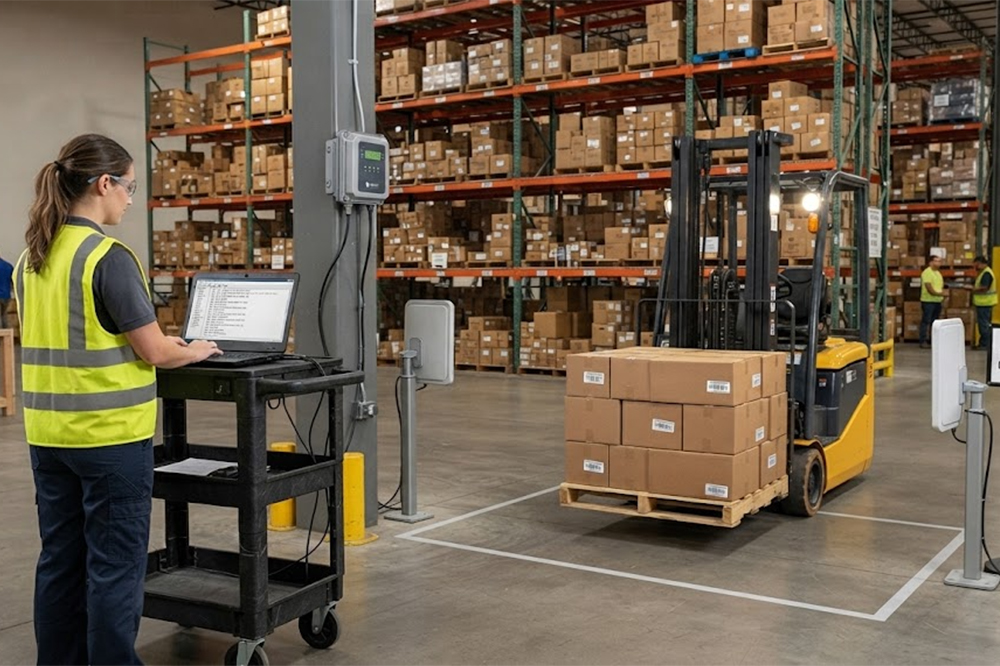
For a real warehouse project, testing should involve actual forklift movement rather than having an employee stand in front of an antenna holding one RFID tag.
The second test is much closer to reality.
What Happens When Multiple Tags Enter Together?
This is where UHF RFID becomes useful, but it also needs proper configuration.
A pallet may carry dozens of tagged cartons.
Several pallets may pass through a gate within a short period.
The reader needs to handle multiple tags efficiently.
The system also needs to understand which tags belong to which movement event.
This is where reader performance and software logic meet.
The reader provides the tag data.
The application decides what that data means.
Don’t Ignore Adjacent Gates
A common warehouse layout has several gates side by side.
For example:
Gate 1 | Gate 2 | Gate 3 | Gate 4
If every reader has a wide reading field, the systems can interfere with each other’s intended reading zones.
This can become more noticeable when several readers operate at the same time.
A solution may involve:
Antenna positioning
Power adjustment
Reader configuration
Frequency management
Software filtering
Physical separation
The exact approach depends on the reader and site.
This is one reason multi-gate projects should be tested as a complete system.
Reading Distance Should Be Measured in the Real Application
Suppose a reader is advertised as reaching 20 meters.
The integrator should not simply stand 20 meters away with a tag and declare the test complete.
Instead, test:
3 meters
5 meters
8 meters
10 meters
and so on.
Then change:
Tag orientation
Product
Pallet position
Forklift direction
Antenna angle
The useful result is not the maximum distance.
It is the distance at which the system performs reliably under normal operating conditions.
A Practical RFID Gate Testing Process
For a new warehouse project, a simple field test might look like this.
Step 1 — Mark the intended reading zone
Define exactly where tags should be detected.
Step 2 — Install the planned antennas
Use the antenna type and position intended for the final project.
Step 3 — Use actual customer tags
Don’t rely only on generic demo tags.
Step 4 — Test real products
Use actual cartons, pallets, or containers.
Step 5 — Move products through the gate
Use realistic forklift movement.
Step 6 — Test adjacent areas
Place tagged products outside the gate.
Check whether they are detected.
Step 7 — Adjust power and antenna direction
Make small changes and test again.
Step 8 — Configure filtering
Remove unnecessary duplicate or unwanted events.
This process takes some time.
But it is much safer than installing 50 readers and discovering the problem afterward.
A Simple Example
A logistics customer wants RFID gates at a warehouse exit.
There are three loading lanes.
The initial installation uses high-power readers and wide coverage.
The customer quickly notices that pallets waiting beside the gate are being detected.
The first reaction is:
“The RFID reader is reading too far.”
The integrator reduces power and changes the antenna angle.
The unwanted reads decrease.
Then the team notices that some tags on the rear side of the pallet are not being detected consistently.
They adjust the antenna arrangement.
Now the system is more balanced.
This kind of tuning is fairly normal.
RFID installation is rarely just plug-and-play when the environment is complicated.
Why the Longest Reading Range Can Be the Wrong Choice
This is worth repeating because it affects procurement decisions.
A customer may search for:
“20 meter RFID reader”
because they assume a longer range gives them more flexibility.
But if the gate only needs a 5-meter reading zone, a very long range may create unnecessary coverage.
The better question is:
“What reading zone does the application require?”
That changes the purchasing conversation.
Instead of selling a number, the supplier and integrator are designing a system.
What RFID System Integrators Should Ask Before Quoting
Before recommending a long range RFID scanner for a warehouse gate, collect at least:
Gate width
Gate height
Required reading distance
Number of lanes
Number of gates
Product type
Tag type
Tag location
Product material
Forklift speed
Antenna mounting options
Required communication interface
WMS or ERP integration
Expected daily tag volume
Estimated reader quantity
These details make a technical quotation much more useful.
What Wholesalers Should Check With the Manufacturer
For distributors and wholesalers, the hardware itself is only part of the purchase decision.
It is useful to ask the supplier whether the reader supports:
Multiple antenna configurations
Adjustable RF power
Stable multi-tag reading
Ethernet or TCP/IP communication
API or SDK integration
OEM branding
Firmware customization
Sample testing
Technical support
Bulk production
For a small trial order, this may not seem important.
For a 100-unit project, it becomes a very different matter.
The Reader Is Only One Piece
A long range RFID scanner can provide strong RF performance, but a warehouse gate needs more than a powerful reader.
The antenna needs to point in the right direction.
The tags need to be suitable for the products.
The reading power needs to match the required zone.
The software needs to filter repeated and unwanted reads.
And the physical installation needs to make sense.
A reader that detects everything is not necessarily a successful RFID system.
Sometimes the best RFID gate is the one that only detects exactly what it is supposed to detect.
For RFID distributors, wholesalers, and system integrators sourcing long range UHF RFID scanners, fixed RFID readers, RFID gate antennas, or complete warehouse RFID hardware, provide the gate width, required reading distance, tag type, product material, number of lanes, and estimated quantity for sample testing and bulk quotation.
Short Summary
A reliable warehouse RFID gate is not created simply by using a high-power long range RFID scanner. Antenna placement, reading-zone control, tag position, RF power, physical surroundings, and software filtering all need to work together to reduce unwanted reads.
Explore the SSD-A07 UHF RFID antenna with 7 dBi gain, circular polarization, adjustable 840–960 MHz frequency, and 60°/75° beamwidth for stable RFID read/write performance.
SSD-A06 UHF RFID antenna with circular polarization, adjustable 840–960 MHz frequency, ≥4.5 dBi gain, and a compact directional design for RFID systems.
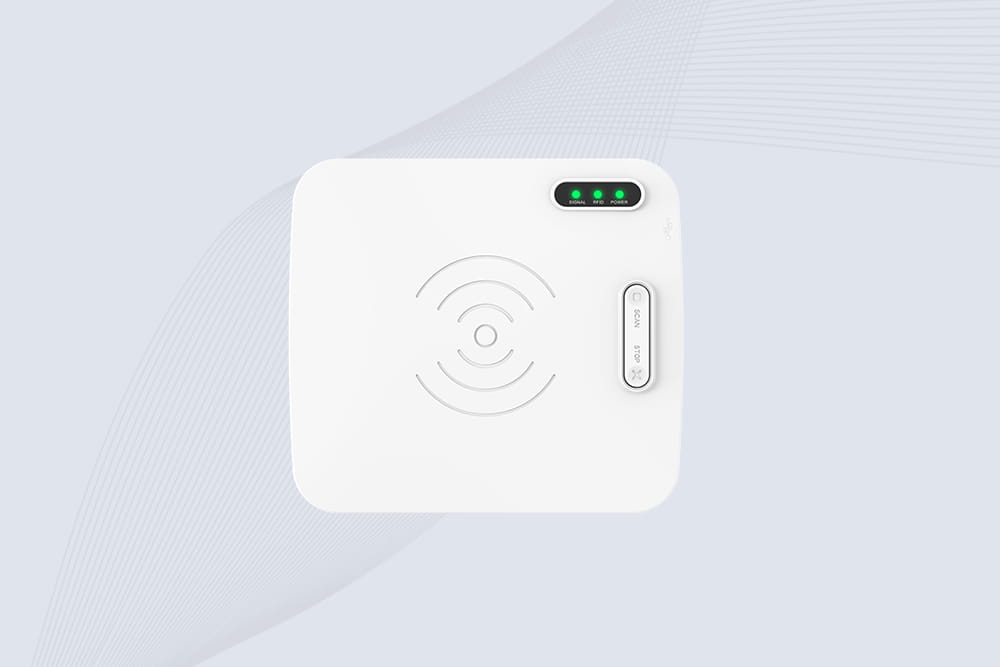
SSD-D3AL is a USB-HID UHF RFID reader with 0–30 cm reading, 0–15 cm writing, over 600 tags/s recognition, USB plug-and-play operation and OEM Logo customization.
SSD-D1AL is a compact USB UHF RFID reader with Impinj E710/X3M1 chipset, USB-HID, 600+ tags/s recognition, 4/8/16 antenna support and plug-and-play USB power.
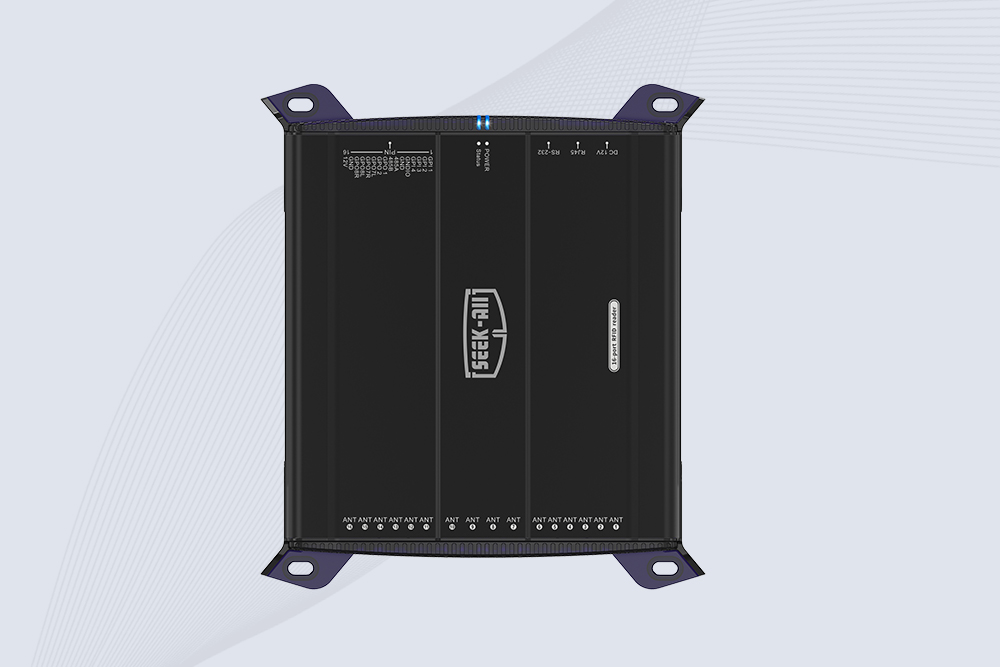
SSD-R16L Multi-Channel RFID Infrastructure for Automated Inventory Management ✔️ 16-Port High-Density RFID Reading Equipped with 16 SMA antenna ports, SSD-R16L supports multi-antenna deployment for warehouses, retail stores, logistics, production lines, and large-area RFID identification. ✔️ High-Speed & Long-Range Performance With up to 33…
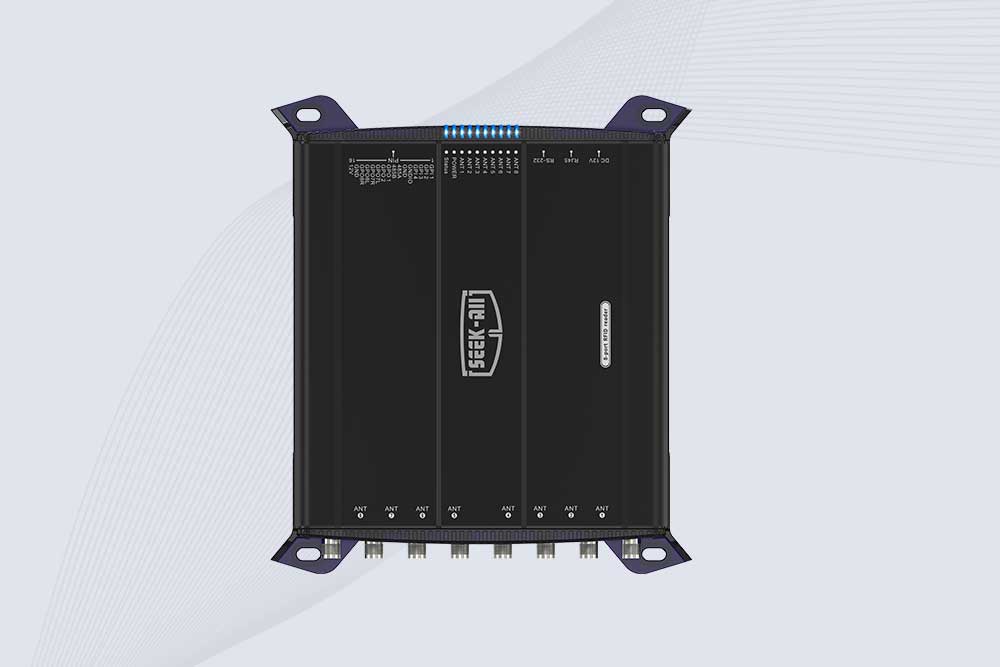
SSD-R8L 8-port UHF RFID reader with 33dBm output, up to 20m reading range and 600+ tags/s recognition. Ideal for warehouse, logistics, retail and asset tracking.
CYKEO CYKEO-D1LA USB RFID Reader is a compact desktop solution with near-field control for precise tag reading and encoding. Powered by USB, supporting ISO 18000-6C, and built for stable batch writing, this usb rfid tag reader fits retail, libraries, offices, and controlled RFID encoding tasks.
CYKEO CYKEO-D1L RFID scanner USB is a compact desktop UHF RFID scanner designed for short-range tag writing and verification. This usb rfid scanner supports batch encoding, stable 0–26 dBm output, and works across Windows, Linux, and Android systems.
CYKEO CYKEO-D1C USB RFID Card Reader is a near-field UHF desktop writer designed for secure, short-range tag encoding. With USB-C connectivity and stable 26 dBm output, this rfid reader usb c is ideal for badge issuance, label encoding, and controlled desktop RFID workflows.
CYKEO CYKEO-D2L RFID Reader USB is a compact desktop encoder built on the Impinj R500 chip. With near-field control and stable USB power, this usb rfid card reader delivers precise tag writing for offices, retail counters, and small-scale logistics encoding tasks.
CYKEO CYKEO-D3L USB RFID Tag Reader delivers stable UHF tag reading and writing for daily desktop and light industrial tasks. Designed for controlled short-range operation, this USB RFID Tag Reader works reliably with rfid tag and reader systems in libraries, tool tracking, and inventory registration.
The CYKEO CYKEO-D4L UHF RFID Tag Reader is a stable Desktop RFID Reader designed for accurate tag registration, borrowing, and return workflows. Built with the Impinj R2000 chip, this UHF RFID Tag Reader delivers controlled short-range reads for libraries, asset tracking, and inventory management environments.
The CYKEO CYKEO-D5L Desktop RFID Card Reader is a stable UHF RFID Card Reader designed for controlled short-range reading and writing. Built for libraries, tool rooms, and asset desks, this UHF RFID Card Reader supports dense tag handling, secure data processing, and easy USB integration.
The CYKEO CYKEO-D6L RFID Reader Writer is a heavy-duty Desktop RFID Reader designed for short-range, high-accuracy tag programming. Built for libraries, labs, and asset desks, this RFID Reader Writer supports batch processing, stable 33dBm output, and seamless integration with existing management systems.
Cykeo CYKEO-D8A embedded RFID badge reader offers 30+ tags/sec scanning, 20cm anti-crosstalk precision, and DC 12V power for unmanned stores, warehouses, and smart inventory systems.
Cykeo’s CYKEO-D8C UHF RFID gate reader achieves 200-tag/batch scanning with adjustable power control, ideal for retail inventory and smart warehouse management.
CYKEO Embedded RFID Modules are designed for compact industrial and IoT devices that require stable UHF performance. These UHF RFID Modules support global protocols, flexible power control, and reliable multi-tag reading for smart cabinets, production lines, and asset tracking systems.
CYKEO Embedded RFID Module is built for compact IoT and industrial devices that need stable UHF performance. This UHF module supports global protocols, low power operation, and reliable multi-tag reading for smart lockers, production lines, and always-on RFID systems.
CYKEO CYKEO-M1 drone rfid module is a compact UHF RFID reader module designed for drones and UAV platforms. It supports long-range aerial scanning, fast multi-tag reading, and stable performance in wind, vibration, and outdoor environments.
CYKEO CYKEO-M4 RC522 RFID Module is an industrial-grade UHF RFID reader with 4 ports, supporting ISO, EPC, and GB protocols. High-speed, accurate reading for IoT, automation, and warehouse applications.
CYKEO CYKEO-M8 Module RFID is an 8-port UHF R2000 RFID Module designed for high-density, multi-tag environments. Stable 33dBm output, ISO & GB protocol support, ideal for warehouses, factories, and automated systems.
CYKEO CYKEO-M16 RFID Module is a 16-port UHF RFID reader module based on the R2000 chipset. Designed for dense tag environments, it supports ISO and GB standards and delivers stable multi-antenna control for industrial automation.
The CYKEO CYKEO-M16L RFID Reader Module is a 16-channel UHF RFID core designed for dense tag environments. With adjustable 33dBm output, multi-protocol support, and stable multi-antenna control, this RFID Tag Reader Module fits industrial automation, warehouse systems, and large-scale IoT deployments.
CYKEO CYKEO-M8L module RFID is a compact industrial UHF module built for dense tag and multi-antenna environments. With 8 RF ports, adjustable 33 dBm output, and ISO & GB protocol support, it is widely used in factories, warehouses, and automated tracking systems.
CYKEOCYKEO-M4L UHF RFID Module is a compact 4-channel RFID tag reader module designed for dense tag environments. Supporting ISO and GB protocols, it delivers stable reads up to 10 meters for industrial and IoT systems.
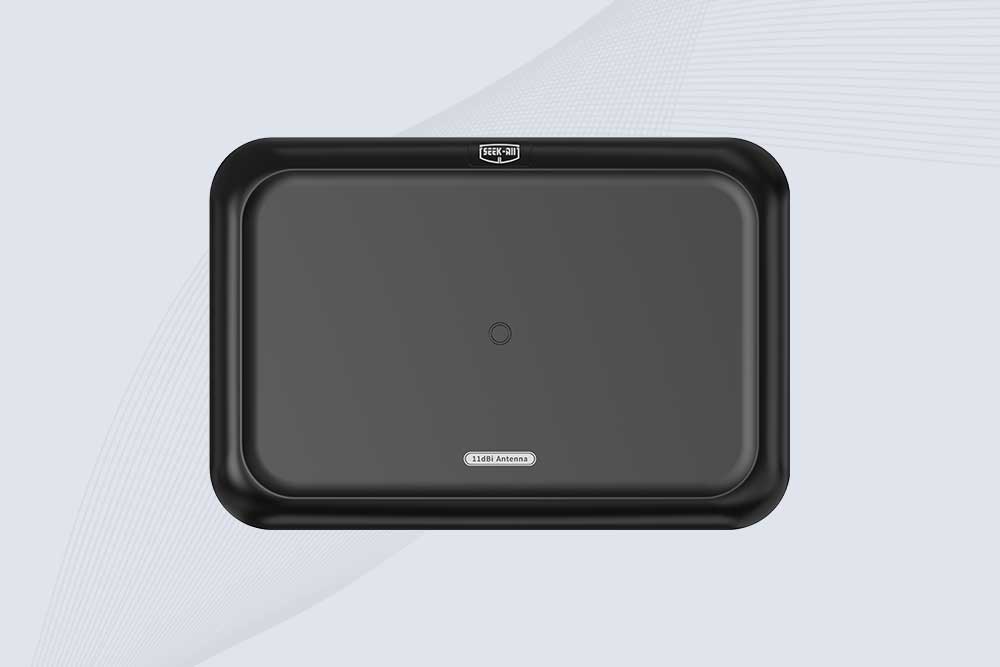
Cykeo CYKEO-A11 UHF RFID reader antenna delivers 11dBi gain, 840-960MHz frequency range, and IP65 ruggedness for retail, logistics, and industrial RFID systems. Features low VSWR and easy installation.
CYKEO Antenna RFID Reader delivers stable long-range UHF performance with a 10.5dBi directional design, built for warehouses, conveyor portals, and industrial RFID systems. This rfid reader antenna provides 20m+ read distance and rugged IP67 protection.
Cykeo CYKEO-A5B industrial Linear RFID Antenna delivers 5dBi gain, ≤1.5:1 VSWR, and IP65 rugged design for warehouse, production line, and logistics UHF systems.
Cykeo’s CYKEO-B12 Long Range RFID Antenna delivers 15m+ read range with 12dBi gain, IP65 rugged design, and global 840-960MHz UHF support. Ideal for warehouse/logistics asset tracking.
Cykeo CYKEO-B10 Long Distance RFID Antenna offers 10dBi gain, 840-960MHz frequency range, IP65 rating, and 20m+ coverage for logistics/warehousing/ETC systems. Low VSWR ensures stable signal transmission.
Cykeo CYKEO-A6 UHF RFID panel antenna features 6dBi gain, 840-960MHz broadband, IP65 metal-ready housing for logistics/smart retail. 18mm ultra-thin design with tool-free mounting.
Cykeo CK-A3 industrial antenna RFID UHF offers 5m+ tag detection, ≤1.3:1 VSWR, IP65 rugged design, and global UHF spectrum compatibility (840-960MHz) for warehouses, factories, and retail.
Cykeo CYKEO-B5 directional RFID antenna provides 5dBi gain with 60° narrow beamwidth for precise inventory tracking. IP65-rated, global UHF frequency support, and low VSWR.
Create your own high-performance DIY RFID antenna! 5dBi gain, 840-960MHz tunable, step-by-step guides. Compatible with Arduino, Raspberry Pi, and commercial UHF readers.
Cykeo CYKEO-A7 Flexible RFID Antenna features 840-960MHz wideband tuning, 7dBi gain, and IP68 rating for medical/retail/industrial curved surface deployments. 98% read accuracy with peel-and-stick installation.
Cykeo CYKEO-B5A industrial Passive RFID Antenna delivers 5dBi gain, 70° beamwidth, and -40°C~55°C operation for warehouses/smart cabinets. Compatible with Zebra/Impinj readers.
Cykeo’s CYKEO-A9B High Gain RFID Antenna delivers 15m+ read range with 9dBi amplification. Features IP54 rugged design, 840-960MHz bandwidth, and 80° beamwidth for warehouse/manufacturing RFID systems.
Cykeo’s enterprise-grade 8dbi Impinj RFID Antenna 10m+ read range with 840-960MHz tuning. Features IP65 housing, 1.4 VSWR, 35° beamwidth for retail/warehouse RFID systems.
Cykeo CYKEO-A9 industrial UHF RFID antenna delivers 9dBi gain, 840-960MHz frequency range, and IP65 protection for warehouse/logistics/retail RFID systems. Features N-type connector and ≤1.3:1 VSWR.
CYKEO UHF RFID Antenna built for long-distance and industrial applications. This antenna rfid uhf delivers strong gain, outdoor durability, and reliable tag performance in warehouses, yards, and vehicle ID systems.
CYKEO Antenna RFID delivers reliable long-range UHF performance in warehouses, retail shelves, and cold-chain environments. This compact uhf rfid antenna provides stable reads with circular polarization and ultra-wide 840–960 MHz support, ideal for industrial tracking, smart shelves, and asset monitoring.
Cykeo’s CYKEO-C8 UHF RFID antennas delivers 8dBi gain, 840-960MHz full-band coverage, and IP65 ruggedness for manufacturing/warehouse RFID systems. Industrial RFID Antennas Features
Cykeo’s 8dBi UHF RFID antenna and reader kit delivers 10m+ range, 840-960MHz broadband, and IP65 ruggedness for factories, warehouses, and logistics. ISO 18000-6C & EPC Gen2 certified.
RFID Industry Writer | IoT & Asset Tracking Analyst
James writes about RFID technology, asset tracking, and the practical challenges of digital transformation across warehousing, retail, manufacturing, and logistics.
His work focuses on how RFID is applied in real-world operations—improving inventory visibility, automating workflows, and helping businesses manage assets with greater accuracy and efficiency.
He regularly covers topics including UHF RFID, smart cabinets, RFID portals, tool tracking, warehouse automation, and industrial IoT trends..
Learn about radio frequency identification tags—what they are, how they work, the different types (LF, HF, UHF), and their applications in retail, logistics, and access control. Expert guidance from CYKEO engineers.
Long range RFID scanners can make warehouse inventory faster by automatically identifying multiple tagged products, pallets, and containers. The real perform...
 Cykeo RFID IoT Solution Products R&D Manufacturer