RFID works by using radio waves to identify tagged objects without requiring direct visual contact. An RFID reader communicates with a tag through an antenna, receives the tag’s identification response, processes the signal, and transfers the resulting digital data to software for inventory, tracking, access, or asset-management operations.
How Does RFID Work in a Real System?
RFID is not a single device. It is a system made up of a tag, reader, antenna, communication protocol, and software.
GS1 describes RFID as a family of technologies that use radio waves to automatically capture an object’s unique identifier. A typical system contains a reader and a transponder, with the tag combining an RFID chip and antenna.
In a warehouse, the physical sequence can be surprisingly simple:
Tagged carton → RFID antenna field → reader → digital tag ID → warehouse software
The operator does not necessarily need to aim at a label.
A pallet can pass through a portal. A tool can move through a maintenance station. Hundreds of tagged garments can be checked during an inventory walk.
The important difference is that RFID identifies the object through radio communication rather than visual recognition.
That changes the entire workflow.
What Are the Main Parts of an RFID System?
A practical RFID installation normally contains these elements:
The tag and reader should not be evaluated separately.
In field deployment, the tag is attached to a real object. That object may be cardboard, plastic, steel, fabric, glass, liquid-filled packaging, or machinery.
The mounting surface becomes part of the RF problem.
How Does an RFID Tag Communicate?
The answer depends on the RFID technology being used.
For passive UHF RFID, the reader sends a continuous RF signal toward the tag. The tag receives energy and responds by changing the reflection characteristics of its antenna.
ISO/IEC 18000-63:2021 specifies the Type C UHF RFID air interface for the 860–960 MHz range and defines a passive-backscatter, reader-talks-first architecture. In this architecture, the reader transmits the RF signal and the tag communicates by modulating the reflection coefficient of its antenna.
That is the technical foundation behind many modern warehouse and industrial RFID systems.
The tag is not behaving like a miniature Wi-Fi device.
It is reflecting and modulating the reader’s signal.
The reader has to recover that very weak response while managing its own transmitted RF energy.
This is why receiver sensitivity and RF processing can matter just as much as transmit power.
How Does RFID Identify an Object?
The RFID tag normally contains a unique identifier.
For item-management applications, that identifier may be an EPC or another serialized code. The reader retrieves the identifier and passes it to the application.
The software can then associate that number with a much larger database record:
EPC → Product → Location → Status → Transaction history
This approach is useful because the physical tag does not have to contain an entire business database.
For example, a pallet tag might contain a serialized identifier. The warehouse system can use that identifier to retrieve shipment information, destination, contents, receiving status and other operational data.
The RFID reader handles the physical identification.
The enterprise system handles the business meaning.
How Does RFID Read Multiple Items?
This is one of the strongest reasons companies use RFID instead of relying exclusively on optical scanning.
A reader can encounter many tags within the same RF field. Those tags cannot all respond as though they were the only device present.
The RFID protocol therefore includes collision-arbitration mechanisms.
ISO/IEC 18000-63 specifies the collision-arbitration scheme used to identify individual tags in a multiple-tag environment.
A simplified inventory sequence looks like this:
The reader establishes the RF field.
Tags within the operating area become available for communication.
The reader initiates the inventory process.
Multiple tags participate according to the protocol.
This is why RFID can be useful when a pallet contains dozens of tagged cartons.
The reader is not simply “seeing” everything at once.
It is managing a radio conversation.
RFID Frequency: Why It Changes the Application
RFID operates across different frequency ranges, and frequency strongly influences coupling, antenna design, read distance and application behavior.
For UHF Type C RFID, ISO/IEC 18000-63:2021 specifies operation in the 860–960 MHz range.
In practical terms, RFID systems are commonly grouped by frequency technology:
RFID category
Typical characteristic
Common applications
LF RFID
Short range, strong tolerance in some environments
Animal identification, industrial identification
HF RFID
Shorter-range proximity applications
Cards, documents, item identification
UHF RFID
Longer range and high-volume reading
Logistics, retail, inventory, asset tracking
The technology should follow the physical requirement.
A short-range identification point does not automatically need UHF.
A warehouse portal expected to identify moving pallets may benefit greatly from UHF.
The wrong frequency can create unnecessary engineering problems before the project even reaches the reader configuration stage.
How Far Can RFID Read?
There is no single RFID read distance.
GS1 states that passive RFID read range depends on frequency, reader power, interference and other factors. For passive UHF/RAIN RFID, the typical range is several meters, with up to 15 meters in very special cases. GS1 also notes that highly sensitive phased-array systems can reach approximately 20 meters.
But distance alone is a poor way to evaluate an RFID installation.
GS1 specifically points to antenna directivity, gain, electromagnetic polarization and tag orientation as major factors affecting the volume in which tags can be read.
In a warehouse portal, I would rather have a predictable five-meter reading zone than an uncontrolled ten-meter field that also captures inventory sitting behind the doorway.
That distinction often appears only after installation.
What Affects RFID Performance in the Field?
RFID performance changes when the physical environment changes.
Important variables include:
Tag orientation
Antenna polarization
Reader output power
Reader receiver sensitivity
Antenna gain and directivity
Distance between tag and reader
Metal surfaces
Water or liquid content
Tag density
Nearby RFID readers
RF interference
Reader placement
GS1 explains that metal can reflect and diffract electromagnetic waves, while liquids can absorb RF energy and detune RFID tag antennas. Specialized tag designs can improve performance in these environments.
This is why a tag that performs beautifully on a cardboard sample may fail when attached to a steel tool.
The reader did not necessarily become worse.
The RF environment changed.
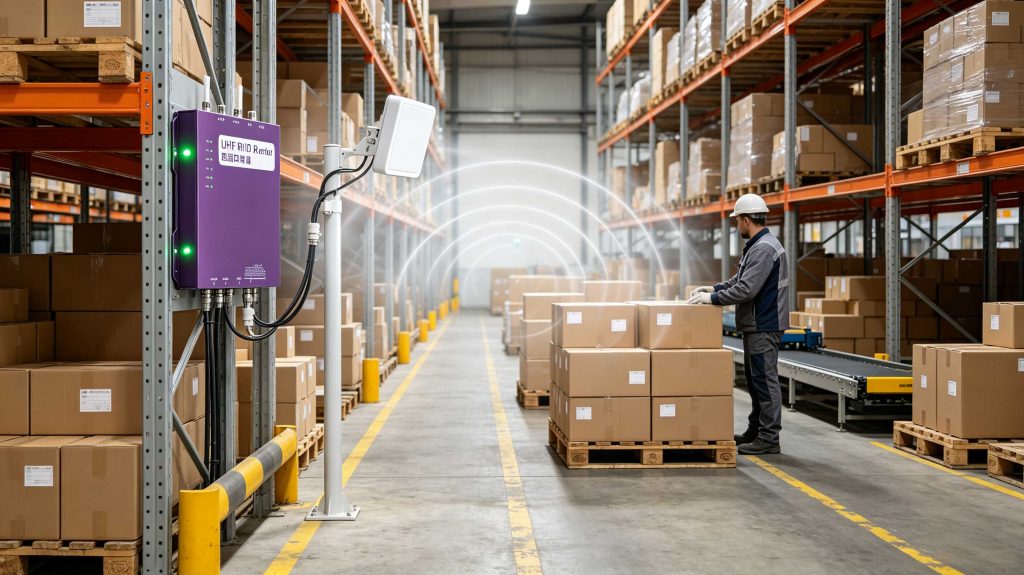
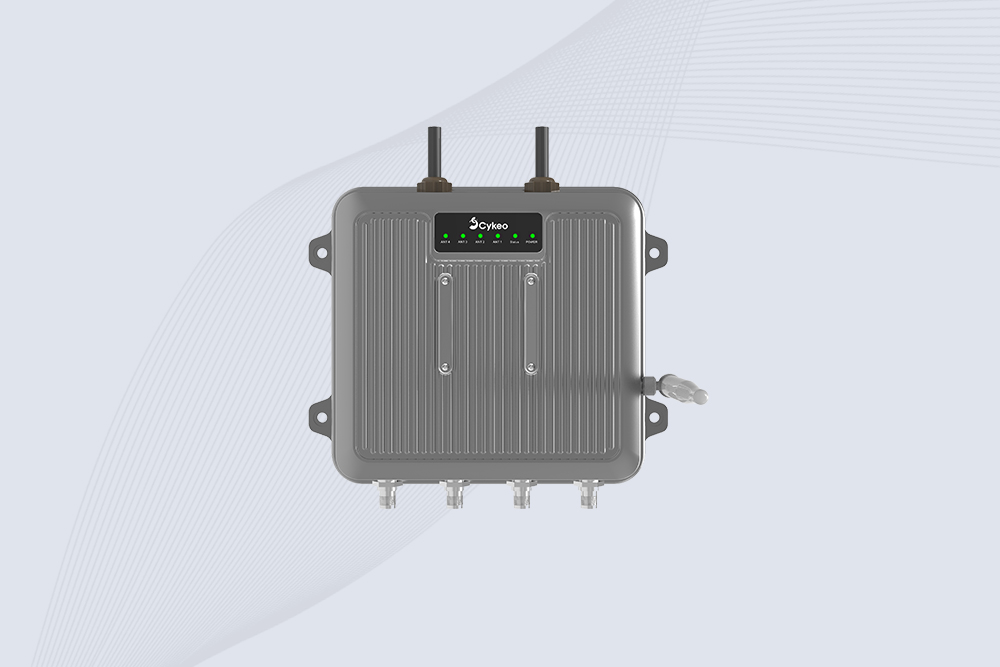
An RFID reader uses radio-frequency communication to identify tagged cartons moving through an industrial warehouse.
How Does RFID Work Around Metal and Water?
This is where real-world testing becomes more valuable than a brochure.
Metal can interfere with conventional RFID tag performance because it changes the electromagnetic environment around the tag antenna.
Water creates another problem. GS1 explains that liquids absorb electromagnetic waves, reducing the power available to a tag, and can detune the tag antenna and reduce sensitivity.
For challenging objects, engineers may select:
On-metal RFID tags
Specialized antenna designs
Spacers between tag and metal
Different tag positions
Alternative reader antenna polarization
Lower or higher reader power depending on the zone
Different RFID frequency technology where appropriate
I normally test the actual finished object rather than a clean sample.
A metal tool with a tag attached is the test.
Not the loose tag sitting on a laboratory bench.
How Does RFID Become Useful Business Data?
An RFID reader only knows that a particular identifier was detected.
The application decides what that event means.
For example:
Tag detected → EPC 300833B2DDD9014000000001
The software can translate that identifier into:
Tool 001 → Maintenance Room → Checked Out → Technician A
Or:
Pallet 2048 → Receiving Dock → Shipment 78392 → Received
That separation between RFID identification and application logic is important for system architecture.
GS1 describes RFID as an automatic identification technology in which readers convert information from RFID tags into digital data that computer systems can use.
The reader provides the event.
The software provides the context.
Cykeo RFID Engineering Perspective
Cykeo works across the reader side of RFID systems, including RF front-end design, digital signal processing, anti-collision algorithms, multi-tag recognition, data filtering and application interfaces.
Applicable Cykeo UHF RFID platforms can provide:
Up to 33 dBm output power
Adjustable RF output
Multi-tag recognition
Anti-collision processing
Tag data filtering
Fixed-frequency or frequency-hopping operation
ISO 18000-6C / EPC C1G2 support
ISO 18000-6B support on applicable models
GB/T 29768-2013 support on applicable models
Ethernet, RS-232 and other interfaces depending on model
SDK/API integration
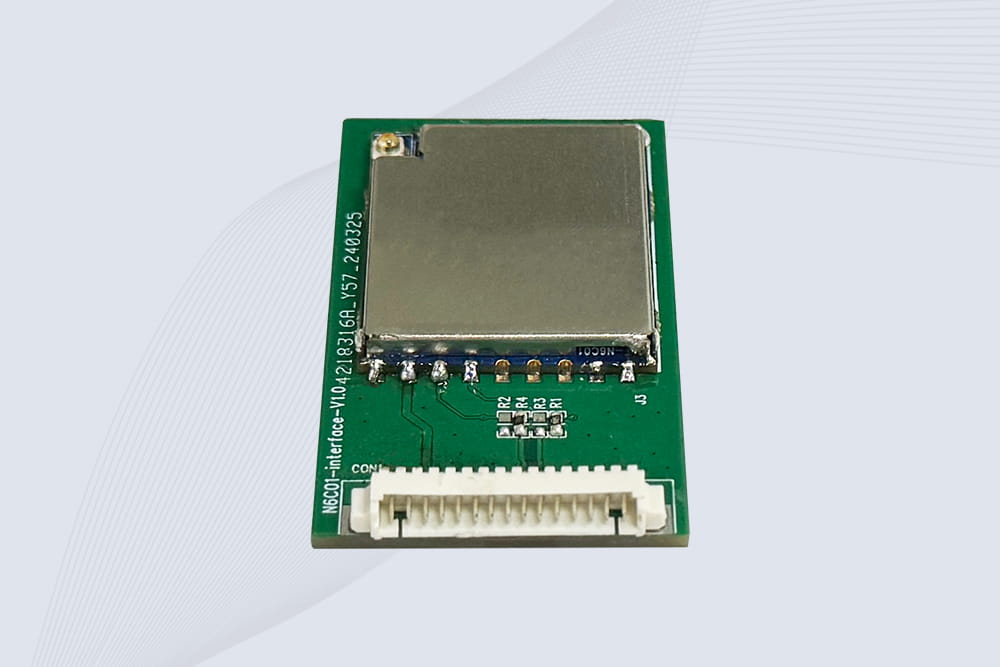
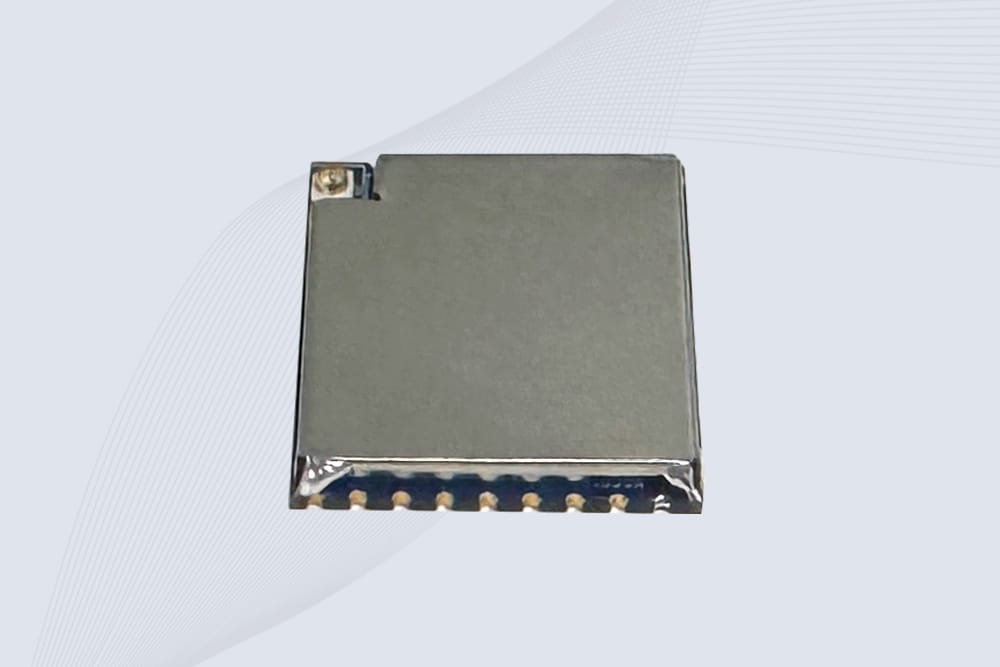
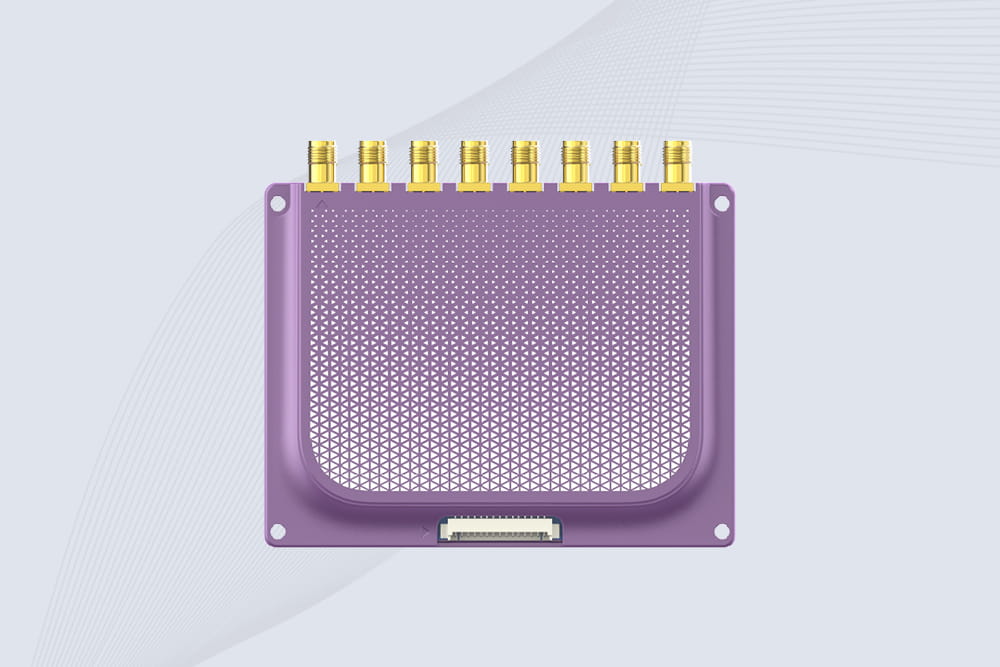
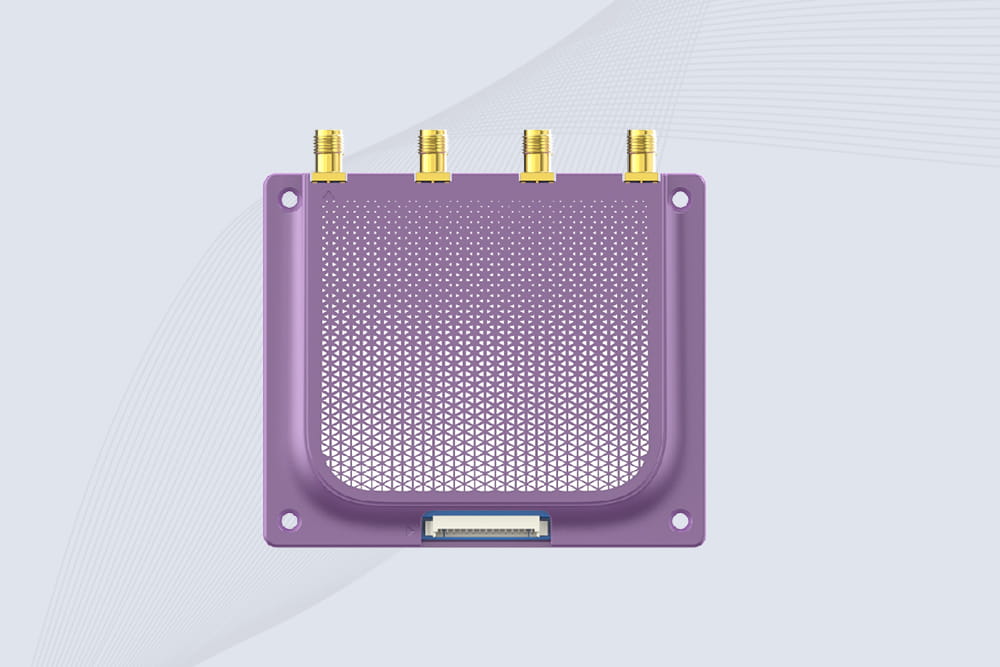
The CYKEO-M4L, for example, integrates an RF front end with baseband digital processing for OEM development. Under specified test conditions, its multi-tag recognition performance exceeds 400 tags/s.
But a specification is only the beginning.
A reader that processes 400 tag events per second does not automatically make a good warehouse system.
The antenna may be wrong.
The tags may be mounted incorrectly.
The RF field may extend into the neighboring aisle.
Another reader may be interfering.
The useful measurement is what happens after all of those variables are introduced.
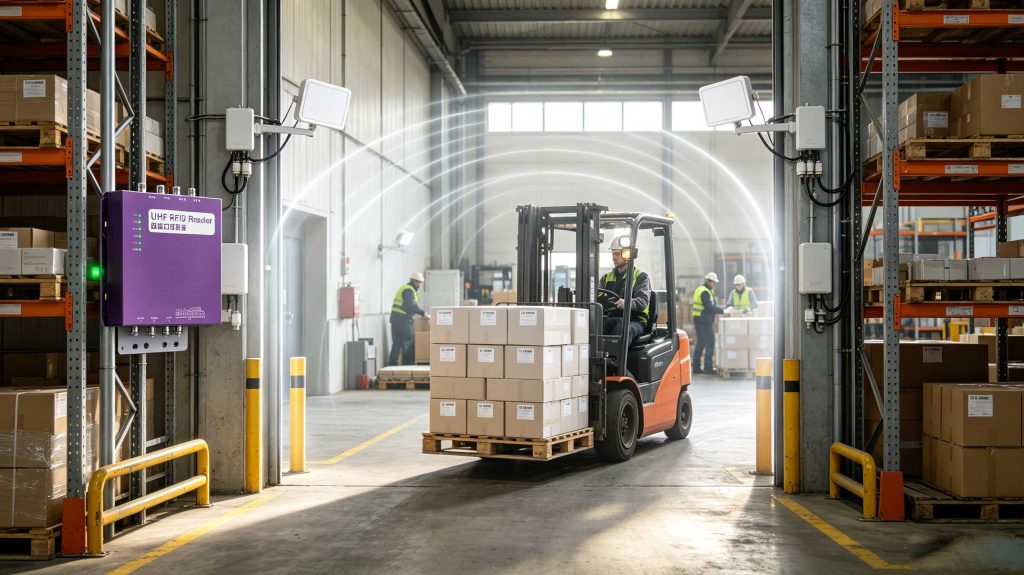
A fixed RFID reader automatically captures tagged pallets as they move through a controlled logistics zone.
What Makes an RFID System Reliable?
A reliable RFID installation is rarely the result of one impressive specification.
The system has to work as a complete chain:
Tag → Antenna → RF Field → Reader → Protocol → Data Processing → Application
If one section is poorly matched, the final result suffers.
A practical engineering validation should include:
Test condition
What it reveals
Single tag
Basic reader/tag communication
Multiple tags
Anti-collision capability
Different tag orientations
Orientation sensitivity
Metal-mounted tag
Environmental robustness
Liquid-containing product
Material effects
Moving objects
Dynamic read performance
Maximum expected distance
Operating margin
Adjacent reader active
Interference behavior
Repeated inventory cycles
Stability
Actual production environment
Real deployment performance
ISO/IEC 18047-63:2023 defines conformance test methods for RFID devices operating according to ISO/IEC 18000-63, while also recognizing that application-specific testing may be needed beyond general conformance testing.
That distinction is important.
Passing a protocol test does not mean a warehouse portal has been engineered correctly.
How Does RFID Differ From Barcode Identification?
RFID and barcode systems both identify objects, but they do it in very different physical environments.
A barcode scanner needs to see and optically decode the printed symbol. RFID uses radio communication, so the tag does not have to be directly visible to the reader. GS1 notes that RAIN RFID can capture tags without line-of-sight and can read tags inside containers or beneath other products in a stack.
Characteristic
RFID
Barcode
Line of sight
Usually not required
Usually required
Multiple-item reading
Yes
Usually one symbol at a time
Reading through packaging
Possible, depending on material and frequency
Generally not
Read/write capability
Supported by suitable tags
Usually printed/read-only
Environmental sensitivity
RF environment matters
Optical visibility matters
Automatic bulk inventory
Strong advantage
More operator-dependent
Typical tag cost
Higher than printed barcode
Very low
The practical difference becomes obvious during inventory.
With a barcode process, an operator often handles the item and positions the scanner.
With RFID, the reader can sit at the doorway while tagged objects pass naturally through the reading zone.
That is not merely a different scanning method. It is a different workflow.
How Does RFID Work in Warehouses?
Warehouse RFID usually relies on UHF systems because the technology can identify multiple tagged objects over several meters.
A typical deployment may include:
Fixed RFID readers at receiving doors
Directional antennas at portals
RFID tags on cartons or pallets
Handheld RFID readers for cycle counting
RFID software connected to the WMS
Event rules for receiving, shipping and inventory
GS1 reports that passive UHF RFID typically provides a read range of several meters, with up to 15 meters possible in special cases. It also emphasizes that antenna characteristics and tag orientation influence the actual readable volume.
The warehouse design therefore matters more than the headline range.
A portal should know where to read and where not to read.
That distinction becomes important when two dock doors are close together.
How Does RFID Work in Retail?
Retail is one of the clearest examples of RFID’s value at item level.
A tagged garment can be identified without the employee locating and scanning each barcode individually. A handheld reader can inventory a rack while the operator walks along it.
The result is not simply faster counting.
The system can create a more continuous picture of inventory.
For example:
RFID read → Item ID → Store location → Inventory status → Replenishment decision
GS1 identifies improved inventory accuracy, reduced labor requirements and increased productivity among the potential benefits of RAIN RFID, while also stressing that RFID is not automatically the best choice for every application.
That qualification is important.
RFID should solve a physical identification problem first.
How Does RFID Work for Industrial Assets?
Industrial environments are less forgiving than retail shelves.
Tools may be made from steel.
Parts may be packed tightly.
Equipment may contain motors, cables or other conductive structures.
Outdoor installations may experience dust, moisture and temperature changes.
For these applications, RFID tag selection becomes a major engineering decision.
GS1 notes that dedicated RFID tags can be designed for metallic objects such as medical devices, kegs and automotive or aerospace parts.
A practical asset-tagging project should therefore test:
The actual asset material.
The final tag mounting position.
The expected reading distance.
Tag orientation.
Number of tags in the same field.
Reader antenna position.
Environmental interference.
The required read zone.
A tag that performs perfectly in free air is not necessarily a production tag.
How Does RFID Work With Metal and Liquid?
Metal and liquid are two of the first variables to investigate.
Metal can reflect and diffract RF energy, affecting conventional RFID tag performance. Modern on-metal tags address this through specialized antenna and packaging structures.
Liquid is different.
Water and other liquids can absorb RF energy, reducing the energy available to passive tags. They can also detune the tag antenna and reduce sensitivity.
This means “increase reader power” is not a universal solution.
A better tag can be more effective than a stronger signal.
For a liquid-filled product, I would test the final packaged product—not an empty sample box.
That small distinction often saves considerable redesign work later.
Which RFID Technology Should You Choose?
The application should determine the technology.
Requirement
Common RFID direction
Very short identification distance
LF or HF RFID
High-volume item inventory
UHF RFID
Long-range active asset tracking
Active RFID
Metal asset identification
Specialized on-metal RFID
Warehouse portal
Fixed UHF RFID
Mobile inventory counting
Handheld UHF RFID
Embedded industrial identification
Application-specific tag and reader
ISO/IEC 18000-63:2021 defines the UHF Type C air interface for RFID operating in the 860–960 MHz range and specifies the passive-backscatter, reader-talks-first communication model.
For current engineering work, the standard itself should be checked rather than relying on an old product brochure. ISO currently lists the 2021 edition as the published ISO/IEC 18000-63 standard, while a fourth edition is under development.
How Should RFID Read Performance Be Measured?
Do not measure RFID performance with one number.
A serious test should record several variables.
Measurement
Why it matters
Read distance
Establishes usable operating margin
Read rate
Shows how consistently tags are captured
Tag population
Tests dense inventory conditions
Orientation
Reveals antenna polarization sensitivity
Material
Shows metal/liquid/plastic effects
Movement speed
Tests dynamic reading
Missed reads
Identifies reliability problems
Unwanted reads
Detects excessive RF coverage
Repeatability
Confirms stable operation
ISO/IEC 18047-63:2023 defines conformance test methods for RFID tags and interrogators under ISO/IEC 18000-63. It also states that application-specific functionality may require additional criteria beyond general conformance testing.
That is exactly how an industrial deployment should be approached.
A protocol-compliant reader is necessary.
It is not sufficient.
Cykeo RFID Technical Advantages
Cykeo develops RFID reader and RFID system technologies with particular attention to RF processing, digital signal processing and multi-tag identification.
Depending on the model, Cykeo UHF RFID solutions can support:
Up to 33 dBm RF output power
Adjustable output power
Multi-tag recognition
Anti-collision algorithms
Tag data filtering
Fixed-frequency operation
Frequency-hopping operation
ISO 18000-6C / EPC C1G2
ISO 18000-6B on applicable models
GB/T 29768-2013 on applicable models
Ethernet and RS-232 interfaces on applicable models
SDK/API integration
The CYKEO-M4L integrates an RF front end and baseband digital processing in a compact module intended for OEM development. Under specified test conditions, its multi-tag recognition performance exceeds 400 tags/s.
For an OEM project, that architecture matters.
The developer does not have to design the complete RF reader chain from the ground up. The module can provide the core RFID processing while the manufacturer develops the surrounding product.
For fixed industrial readers, the same principle extends to the complete system: RF performance, antenna configuration, communication interface and application software have to work together.
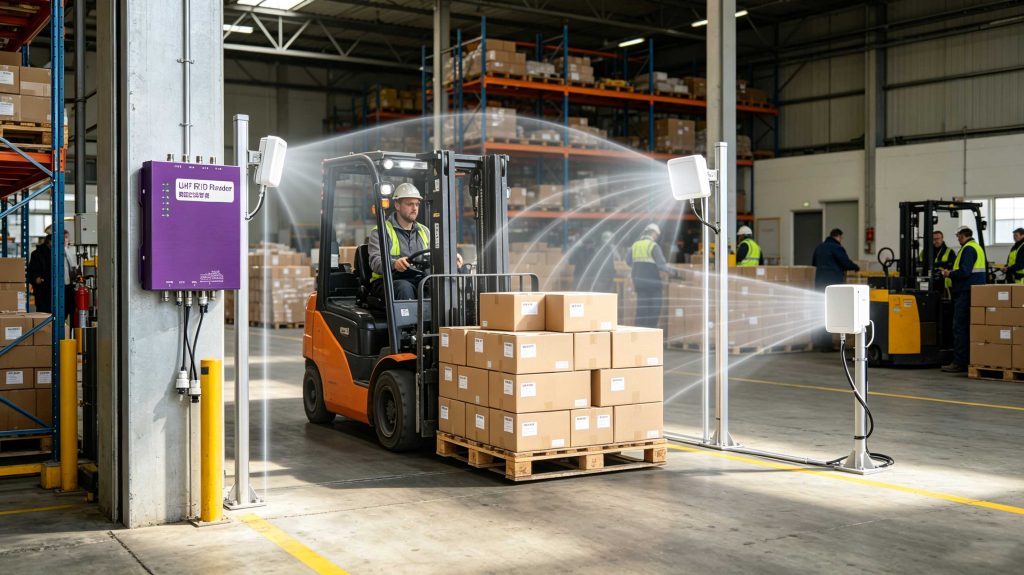
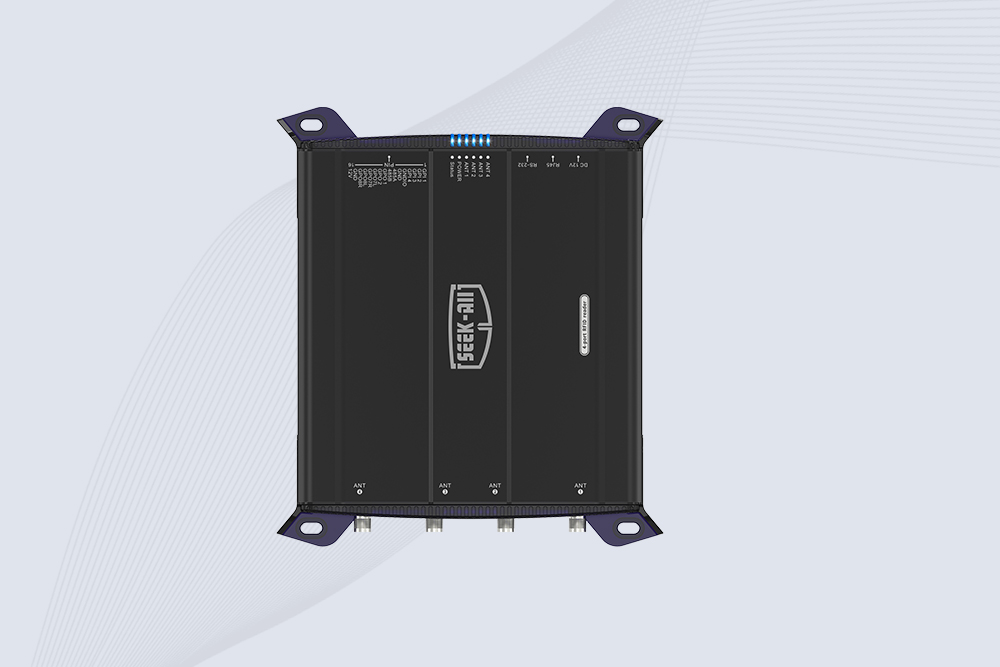
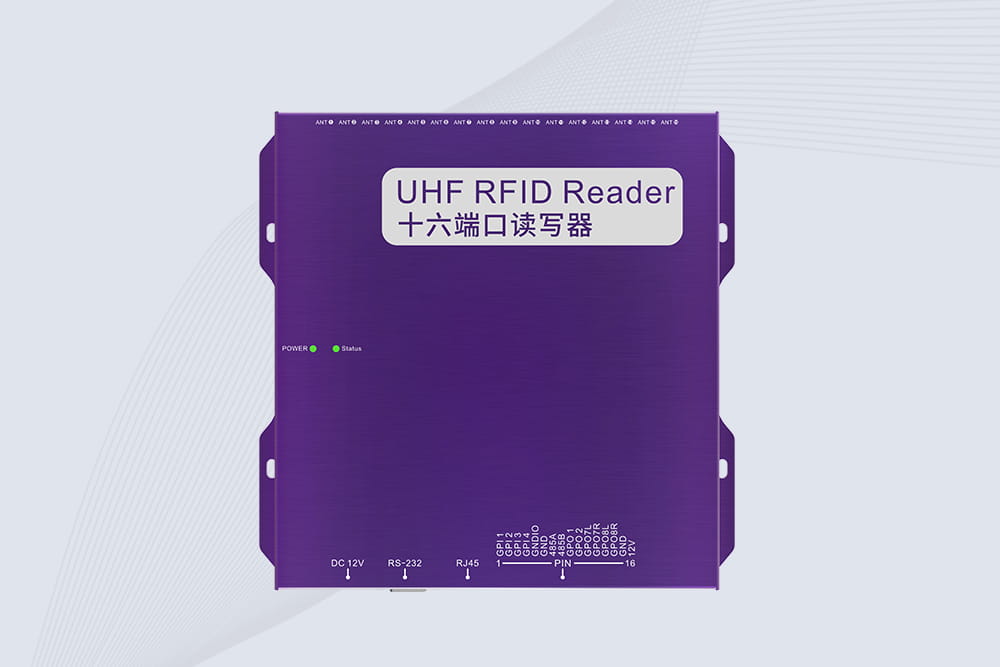
A fixed RFID reader captures identification data from tagged pallets as they move through a controlled warehouse portal.
Frequently Asked Questions About How Does RFID
1. How does RFID work without direct contact?
RFID uses radio-frequency communication instead of optical scanning. Depending on the RFID technology, the reader either powers and communicates with a passive tag or receives a transmission from an active tag. Passive UHF systems use backscatter communication.
2. Does RFID require line of sight?
No. RFID generally does not require the direct visual alignment needed by barcode scanning. GS1 notes that RAIN RFID can capture tags without line-of-sight, including tags inside containers or beneath other items, although materials and tag placement still affect performance.
3. How many RFID tags can a reader detect?
There is no universal number. Reader architecture, protocol, tag density, RF environment, antenna configuration and application settings all affect multi-tag performance. ISO/IEC 18000-63 includes collision-arbitration procedures for identifying specific tags in a multiple-tag environment.
4. Can RFID read through cardboard?
Yes. Passive UHF RFID is commonly used with cardboard cartons and packaging. However, the actual product inside the carton can change RF behavior, particularly when it contains metal or liquid.
5. Can RFID work on metal?
Yes, with suitable tags. Conventional tags can perform poorly on metal because metal changes the electromagnetic environment. Dedicated on-metal tags use specialized antenna and packaging designs for metallic assets.
6. How far can RFID read?
It depends on the RFID type and installation. GS1 states that passive UHF RFID typically reads over several meters, with up to 15 meters possible in special cases and around 20 meters for certain highly sensitive phased-array systems.
7. Is RFID better than a barcode?
Not automatically. RFID is particularly valuable when non-line-of-sight identification, bulk reading, automated inventory or repeated asset identification is important. For simple low-cost visual identification, barcodes can remain the better choice. GS1 also recommends evaluating the specific use case before implementation.
How Does RFID?
How does RFID work? RFID identifies objects through radio-frequency communication between tags and readers. Depending on the technology, the tag either receives energy from the reader and responds through backscatter or uses its own power source to transmit. The reader converts that radio interaction into digital identification data.
The deeper engineering issue is not simply whether a reader can detect a tag.
It is whether it can detect the right tag, at the right location, under the right physical conditions, with sufficient consistency.
That is where antenna selection, tag construction, RF output, receiver performance, protocol processing and software integration start to matter.
For a clean laboratory demonstration, RFID can look almost effortless.
A production warehouse is different.
There are metal racks, moving forklifts, densely packed cartons, neighboring readers and tags mounted at imperfect angles.
That is where good RFID engineering shows itself.
And that is ultimately the practical answer to how does RFID.
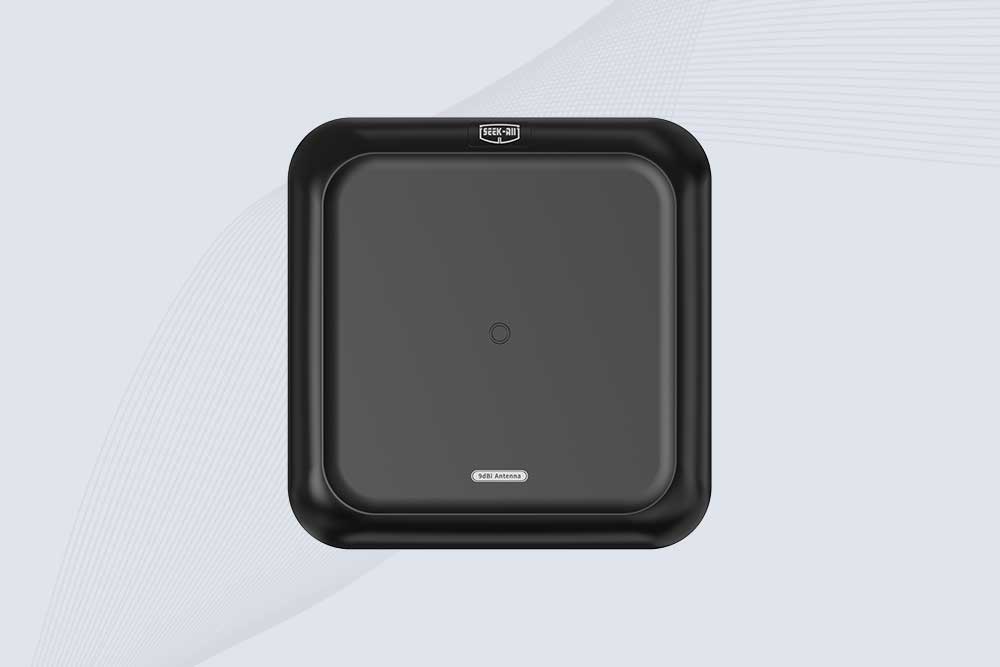
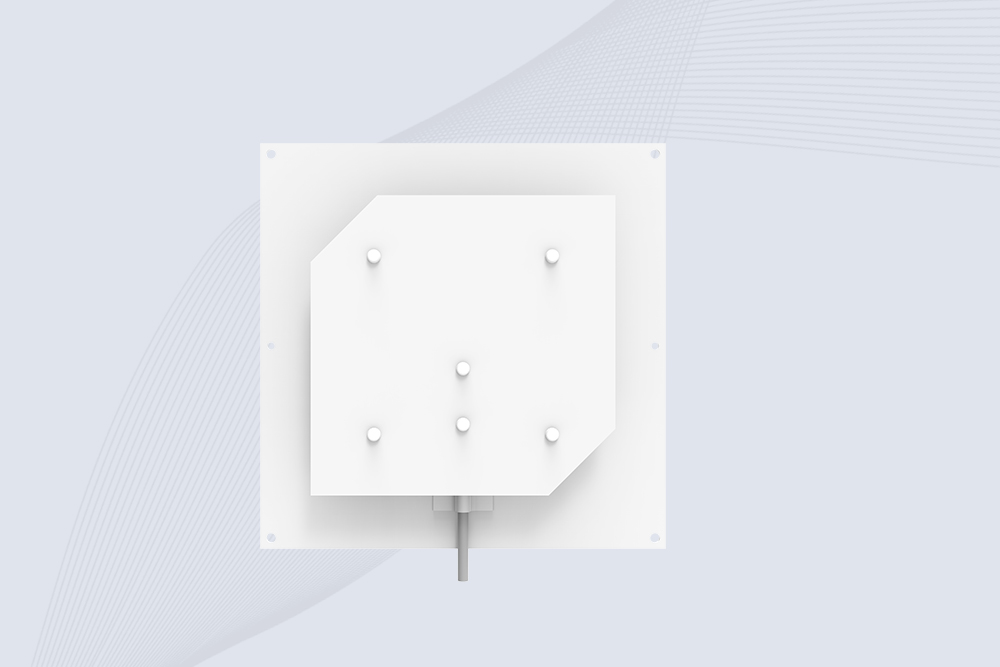
Explore the SSD-A07 UHF RFID antenna with 7 dBi gain, circular polarization, adjustable 840–960 MHz frequency, and 60°/75° beamwidth for stable RFID read/write performance.
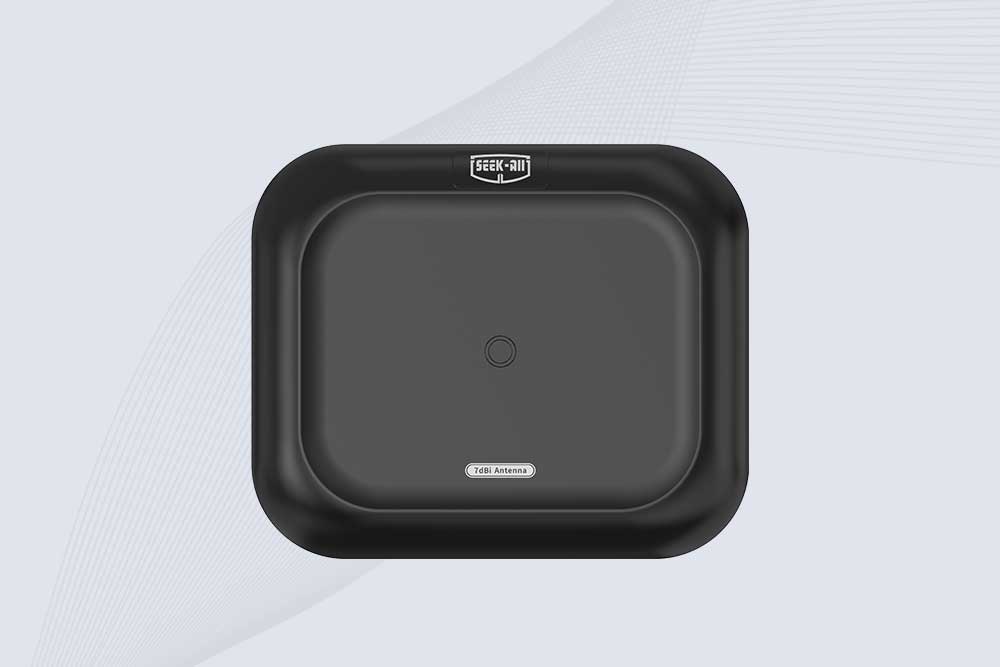
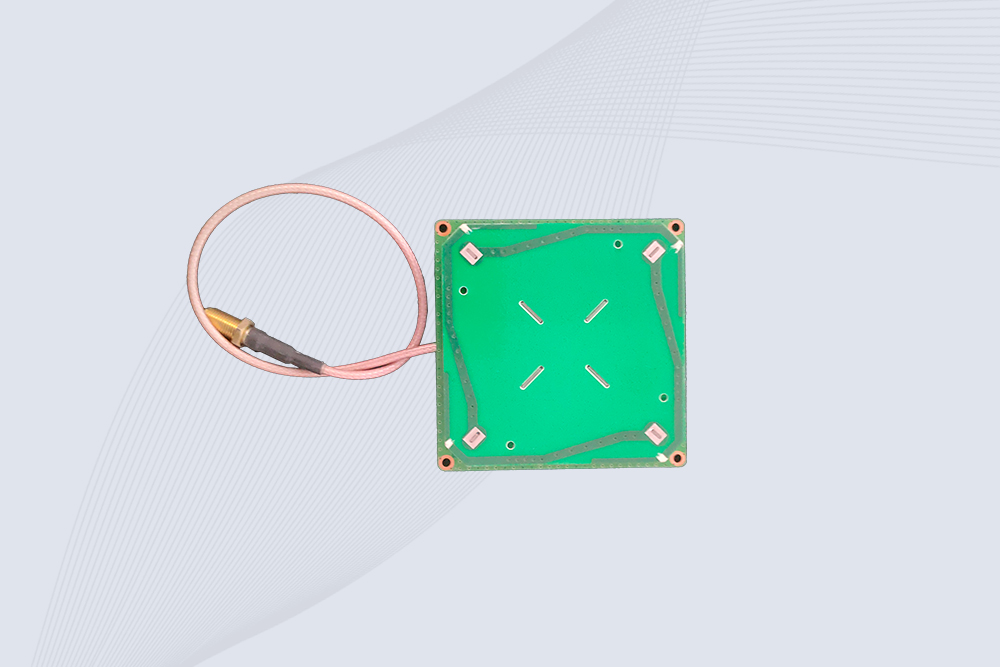
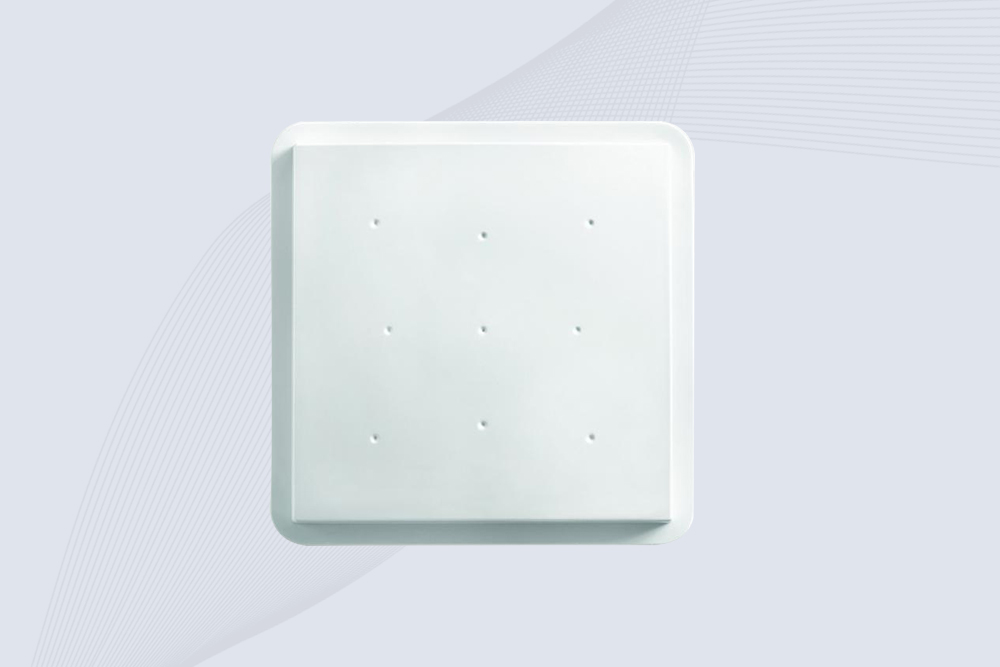
SSD-A06 UHF RFID antenna with circular polarization, adjustable 840–960 MHz frequency, ≥4.5 dBi gain, and a compact directional design for RFID systems.
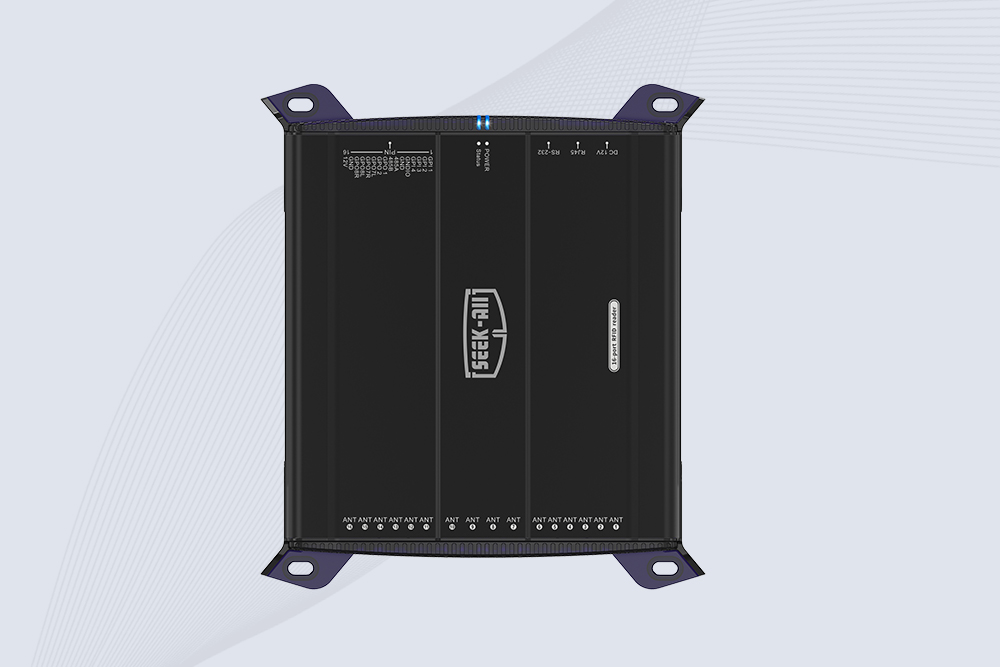
SSD-R16L Multi-Channel RFID Infrastructure for Automated Inventory Management ✔️ 16-Port High-Density RFID Reading Equipped with 16 SMA antenna ports, SSD-R16L supports multi-antenna deployment for warehouses, retail stores, logistics, production lines, and large-area RFID identification. ✔️ High-Speed & Long-Range Performance With up to 33…
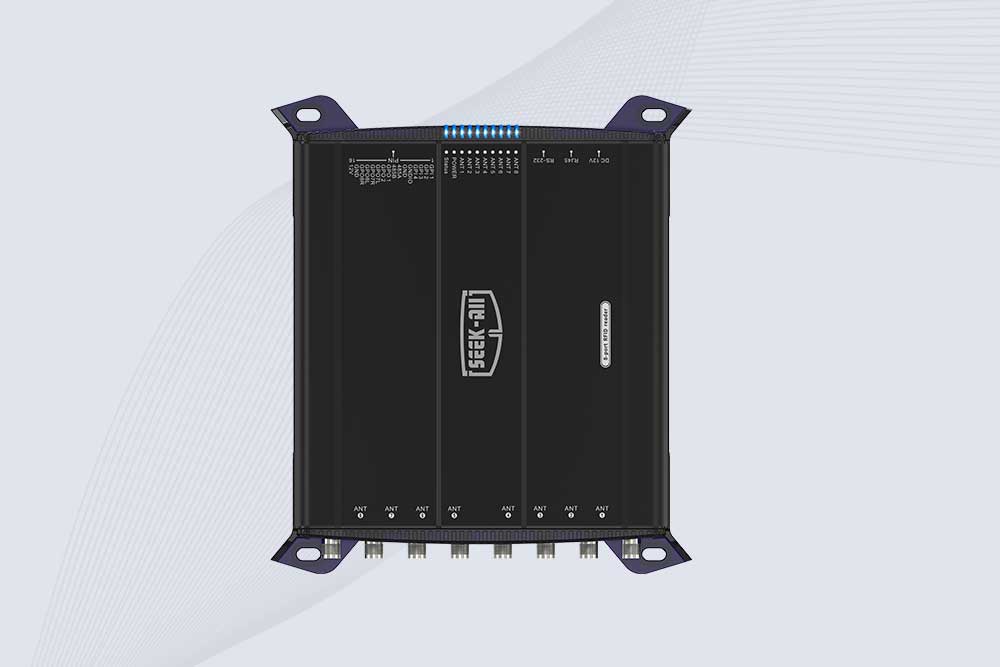
SSD-R8L 8-port UHF RFID reader with 33dBm output, up to 20m reading range and 600+ tags/s recognition. Ideal for warehouse, logistics, retail and asset tracking.
CYKEO Embedded RFID Modules are designed for compact industrial and IoT devices that require stable UHF performance. These UHF RFID Modules support global protocols, flexible power control, and reliable multi-tag reading for smart cabinets, production lines, and asset tracking systems.
CYKEO Embedded RFID Module is built for compact IoT and industrial devices that need stable UHF performance. This UHF module supports global protocols, low power operation, and reliable multi-tag reading for smart lockers, production lines, and always-on RFID systems.
CYKEO CYKEO-M1 drone rfid module is a compact UHF RFID reader module designed for drones and UAV platforms. It supports long-range aerial scanning, fast multi-tag reading, and stable performance in wind, vibration, and outdoor environments.
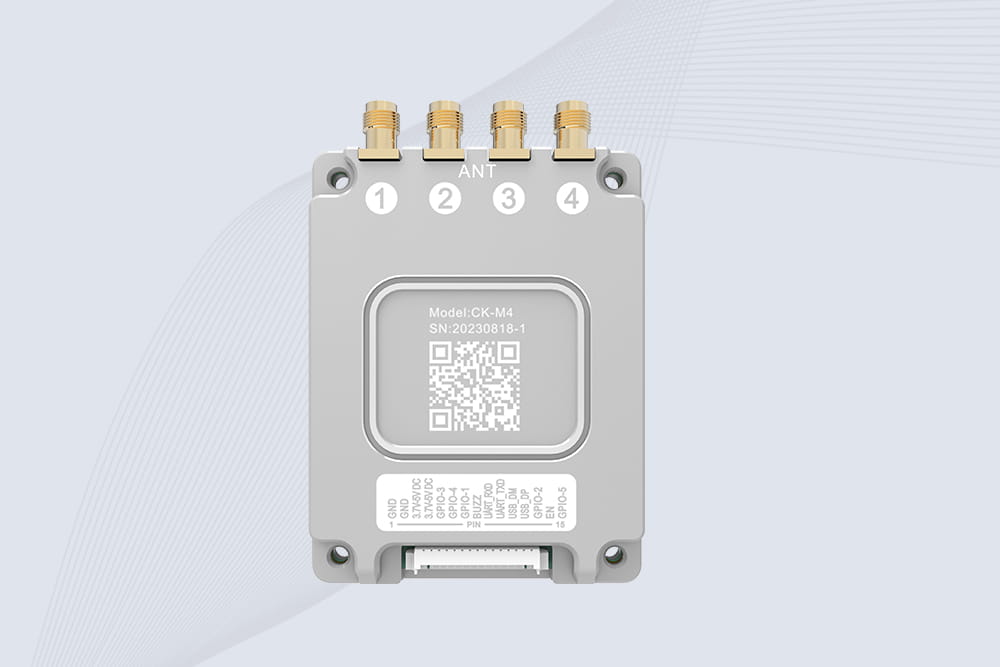
CYKEO CYKEO-M4 RC522 RFID Module is an industrial-grade UHF RFID reader with 4 ports, supporting ISO, EPC, and GB protocols. High-speed, accurate reading for IoT, automation, and warehouse applications.
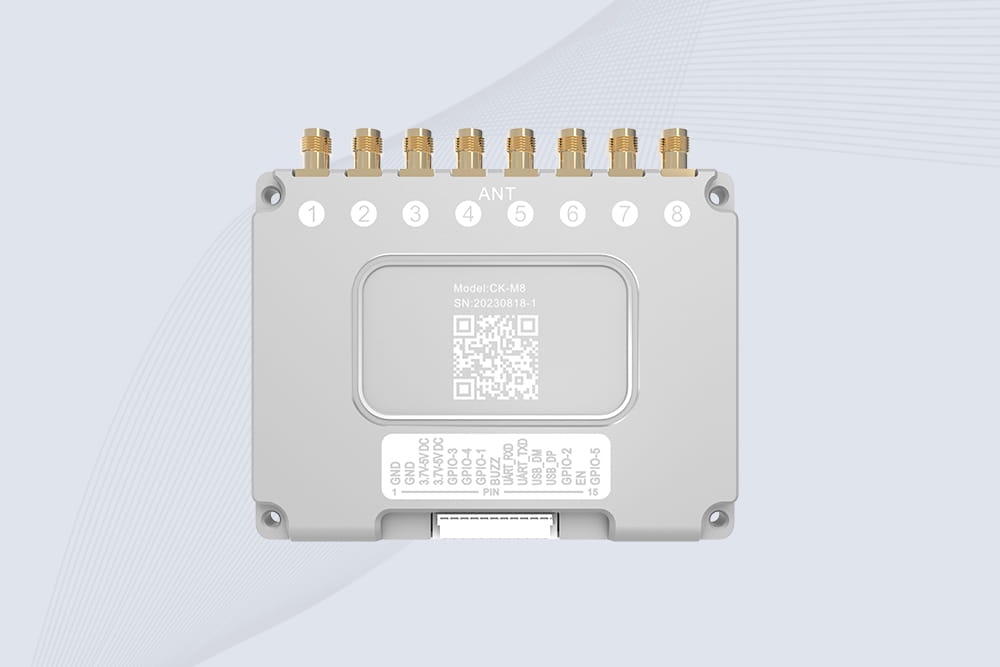
CYKEO CYKEO-M8 Module RFID is an 8-port UHF R2000 RFID Module designed for high-density, multi-tag environments. Stable 33dBm output, ISO & GB protocol support, ideal for warehouses, factories, and automated systems.
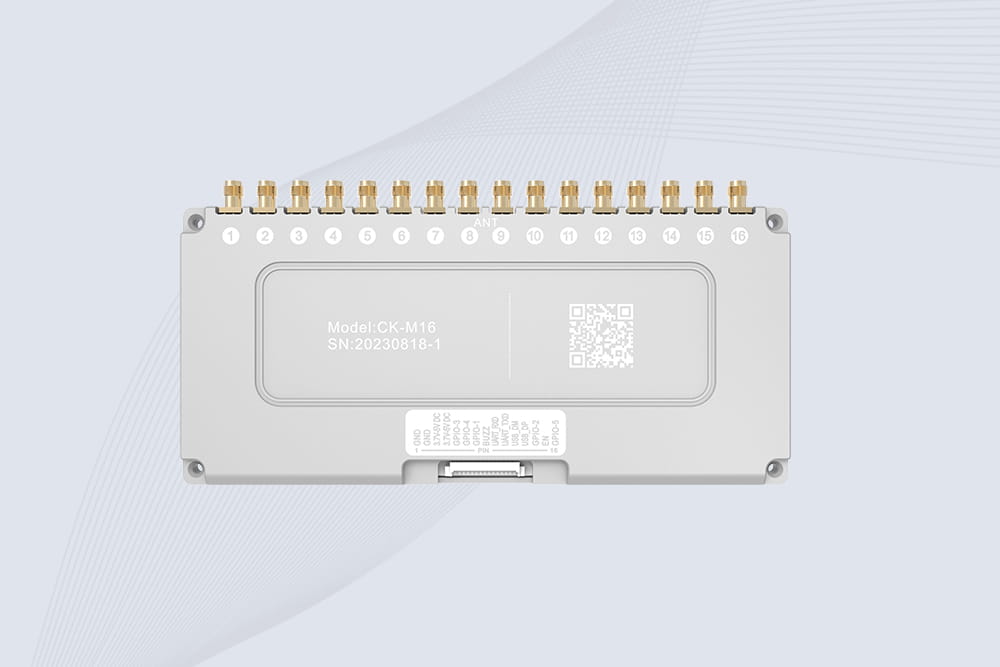
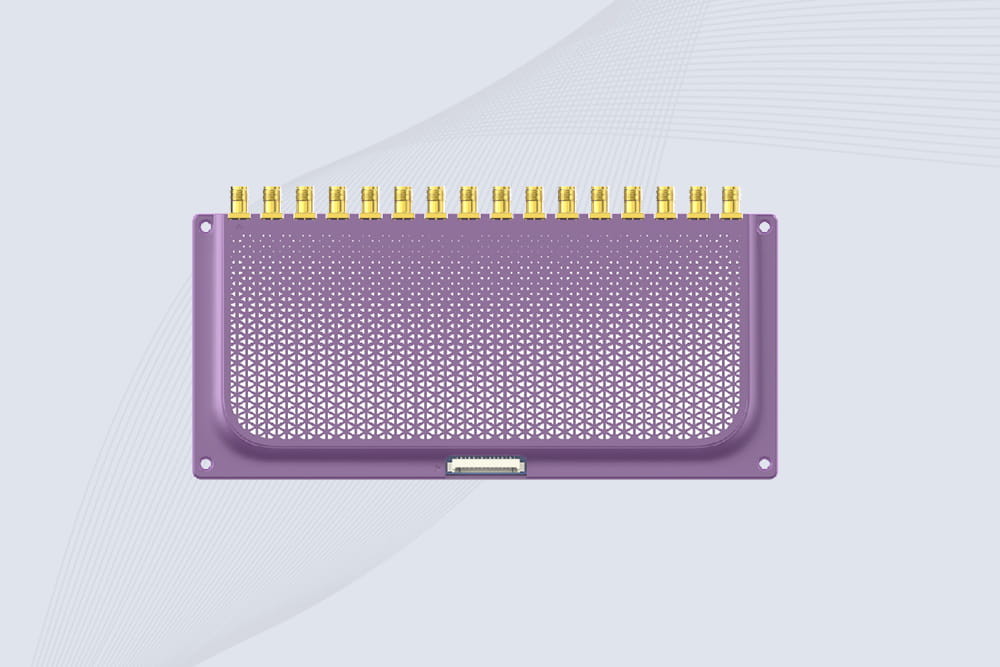
CYKEO CYKEO-M16 RFID Module is a 16-port UHF RFID reader module based on the R2000 chipset. Designed for dense tag environments, it supports ISO and GB standards and delivers stable multi-antenna control for industrial automation.
The CYKEO CYKEO-M16L RFID Reader Module is a 16-channel UHF RFID core designed for dense tag environments. With adjustable 33dBm output, multi-protocol support, and stable multi-antenna control, this RFID Tag Reader Module fits industrial automation, warehouse systems, and large-scale IoT deployments.
CYKEO CYKEO-M8L module RFID is a compact industrial UHF module built for dense tag and multi-antenna environments. With 8 RF ports, adjustable 33 dBm output, and ISO & GB protocol support, it is widely used in factories, warehouses, and automated tracking systems.
CYKEOCYKEO-M4L UHF RFID Module is a compact 4-channel RFID tag reader module designed for dense tag environments. Supporting ISO and GB protocols, it delivers stable reads up to 10 meters for industrial and IoT systems.
Cykeo CYKEO-A11 UHF RFID reader antenna delivers 11dBi gain, 840-960MHz frequency range, and IP65 ruggedness for retail, logistics, and industrial RFID systems. Features low VSWR and easy installation.
CYKEO Antenna RFID Reader delivers stable long-range UHF performance with a 10.5dBi directional design, built for warehouses, conveyor portals, and industrial RFID systems. This rfid reader antenna provides 20m+ read distance and rugged IP67 protection.
Cykeo CYKEO-A5B industrial Linear RFID Antenna delivers 5dBi gain, ≤1.5:1 VSWR, and IP65 rugged design for warehouse, production line, and logistics UHF systems.
Cykeo’s CYKEO-B12 Long Range RFID Antenna delivers 15m+ read range with 12dBi gain, IP65 rugged design, and global 840-960MHz UHF support. Ideal for warehouse/logistics asset tracking.
Cykeo CYKEO-B10 Long Distance RFID Antenna offers 10dBi gain, 840-960MHz frequency range, IP65 rating, and 20m+ coverage for logistics/warehousing/ETC systems. Low VSWR ensures stable signal transmission.
Cykeo CYKEO-A6 UHF RFID panel antenna features 6dBi gain, 840-960MHz broadband, IP65 metal-ready housing for logistics/smart retail. 18mm ultra-thin design with tool-free mounting.
Cykeo CK-A3 industrial antenna RFID UHF offers 5m+ tag detection, ≤1.3:1 VSWR, IP65 rugged design, and global UHF spectrum compatibility (840-960MHz) for warehouses, factories, and retail.
Cykeo CYKEO-B5 directional RFID antenna provides 5dBi gain with 60° narrow beamwidth for precise inventory tracking. IP65-rated, global UHF frequency support, and low VSWR.
Create your own high-performance DIY RFID antenna! 5dBi gain, 840-960MHz tunable, step-by-step guides. Compatible with Arduino, Raspberry Pi, and commercial UHF readers.
Cykeo CYKEO-A7 Flexible RFID Antenna features 840-960MHz wideband tuning, 7dBi gain, and IP68 rating for medical/retail/industrial curved surface deployments. 98% read accuracy with peel-and-stick installation.
Cykeo CYKEO-B5A industrial Passive RFID Antenna delivers 5dBi gain, 70° beamwidth, and -40°C~55°C operation for warehouses/smart cabinets. Compatible with Zebra/Impinj readers.
Cykeo’s CYKEO-A9B High Gain RFID Antenna delivers 15m+ read range with 9dBi amplification. Features IP54 rugged design, 840-960MHz bandwidth, and 80° beamwidth for warehouse/manufacturing RFID systems.
Cykeo’s enterprise-grade 8dbi Impinj RFID Antenna 10m+ read range with 840-960MHz tuning. Features IP65 housing, 1.4 VSWR, 35° beamwidth for retail/warehouse RFID systems.
Cykeo CYKEO-A9 industrial UHF RFID antenna delivers 9dBi gain, 840-960MHz frequency range, and IP65 protection for warehouse/logistics/retail RFID systems. Features N-type connector and ≤1.3:1 VSWR.
CYKEO UHF RFID Antenna built for long-distance and industrial applications. This antenna rfid uhf delivers strong gain, outdoor durability, and reliable tag performance in warehouses, yards, and vehicle ID systems.
CYKEO Antenna RFID delivers reliable long-range UHF performance in warehouses, retail shelves, and cold-chain environments. This compact uhf rfid antenna provides stable reads with circular polarization and ultra-wide 840–960 MHz support, ideal for industrial tracking, smart shelves, and asset monitoring.
Cykeo’s CYKEO-C8 UHF RFID antennas delivers 8dBi gain, 840-960MHz full-band coverage, and IP65 ruggedness for manufacturing/warehouse RFID systems. Industrial RFID Antennas Features
Cykeo’s 8dBi UHF RFID antenna and reader kit delivers 10m+ range, 840-960MHz broadband, and IP65 ruggedness for factories, warehouses, and logistics. ISO 18000-6C & EPC Gen2 certified.
Cykeo’s CYKEO-A12C UHF Large RFID Antenna delivers 12dBi gain, 840-960MHz global frequency, IP65 ruggedness for logistics/warehousing/automotive. 40° beamwidth ensures stable 15m+ tag reads.
CYKEO Near Field RFID Antenna provides precise 5–30 cm reading for shelves, cabinets, and workstations. This compact rfid shelf antenna delivers stable short-range performance around metal and clutter, ideal for pharmacies, libraries, and electronics sorting.
Cykeo CYKEO-C1 industrial Forklift RFID Reader features 20m read range, 600 tags/sec scanning, Impinj R2000 chipset, and IP67 rugged design. Ideal for warehouse logistics and manufacturing. Supports ISO 18000-6C/6B protocols.
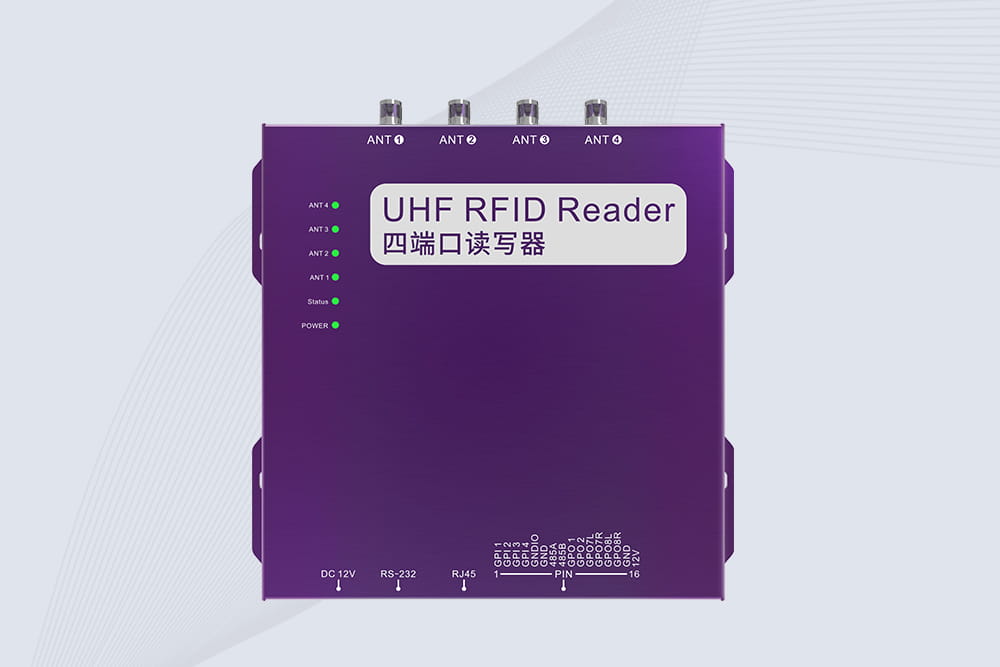
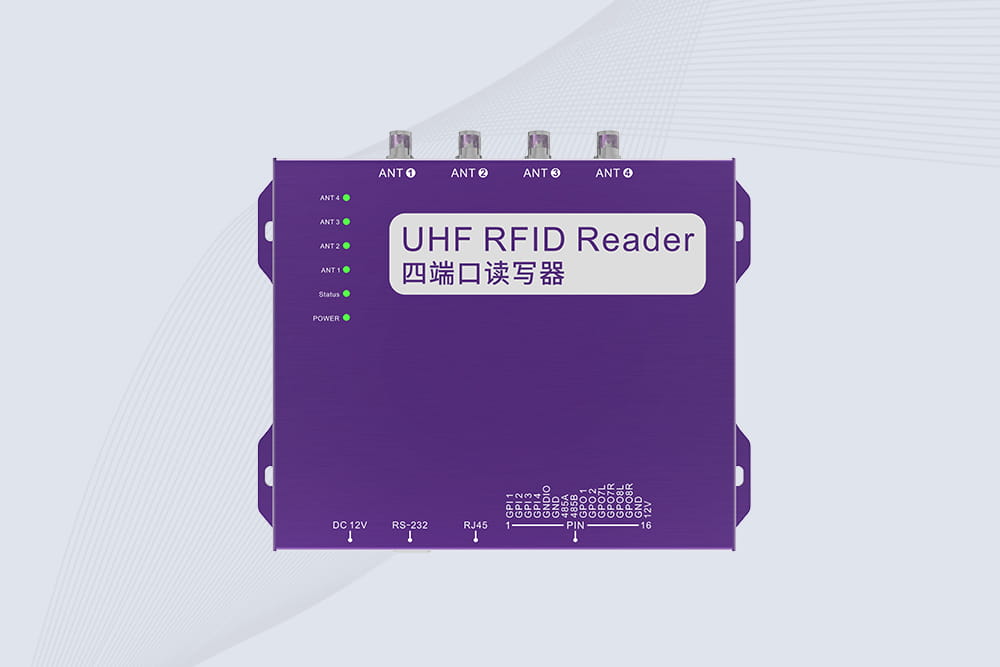
Cykeo CYKEO-R4 industrial UHF RFID Fixed Reader features 4 TNC ports, 400+ tags/sec speed, IP67 housing, and global frequency compliance for vehicle inspection, smart warehouse, and asset management systems.
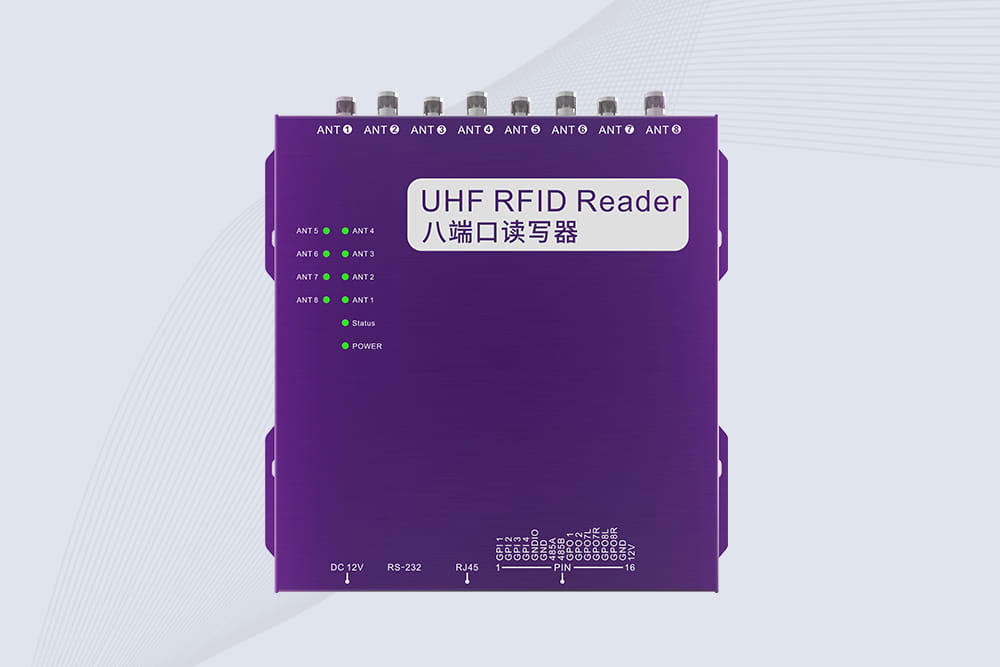
CYKEO CYKEO-R8L Fixed RFID Reader with 8-port UHF design, Impinj-based RF core and up to 20m read range. An industrial Fixed RFID Reader for vehicle inspection, warehouse portals, smart manufacturing lines and secure access checkpoints.
RFID Fixed Reader from CYKEO – the CYKEO-R16L 16-port UHF fixed reader for warehouses, smart cabinets, and production lines. Long-range, multi-tag reading, stable performance for 24/7 industrial use.
Looking for a UHF RFID reader for warehouse automation or asset tracking? This guide shares practical selection tips, deployment insights, and wholesale considerations for system integrators and distributors.
Discover how RFID access solutions improve security, automate entry management, and reduce operational costs. Learn about RFID cards, readers, tags, system architecture, industry applications, and how to choose the right solution for your business.
Learn how to clean and maintain RFID handheld readers to extend their lifespan. Discover best practices for sanitization, battery care, and preventing hardware failures.
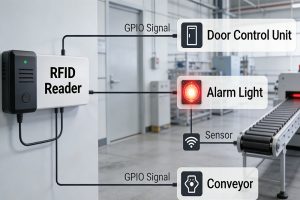
Learn how GPIO (General Purpose Input/Output) devices work in RFID systems. Discover how RFID readers connect with doors, sensors, alarms, and automation equipment using GPIO.
 Cykeo RFID IoT Solution Products R&D Manufacturer