 Cykeo RFID IoT Solution Products R&D Manufacturer


rfid tag label: What Is It and Why It Changes Tracking Completely
170Learn how rfid tag label technology enables fast tracking, real-time inventory, and automation across retail, logistics, and asset management systems.
MoreAll RFID Product
Warehouse operations involve more than receiving goods and storing them on shelves. Products move between loading docks, storage areas, sorting stations, picking zones, and shipping departments throughout the day. Keeping accurate records of these movements becomes increasingly difficult as inventory volume grows.
Barcode scanning remains common in many warehouses, but it requires items to be presented to a scanner. When employees need to identify large numbers of cartons or pallets, repeated manual scanning can slow down operations.
This is where fixed-mount readers for warehouse applications become useful. Installed at specific points, fixed RFID readers automatically identify tagged items as they pass through designated reading zones. They provide a way to collect inventory movement data without requiring workers to scan every item individually.
For warehouse automation projects, the main value is not simply reading more RFID tags. It is connecting identification data with actual warehouse operations.
Inventory records can become inaccurate when goods move faster than employees can update the system.
A pallet may arrive at a receiving dock, move to temporary storage, and later be transferred to another location. If one movement is missed, the recorded inventory location may no longer match the physical warehouse.
Fixed-mount RFID readers help reduce this gap by collecting tag information at important operational checkpoints.
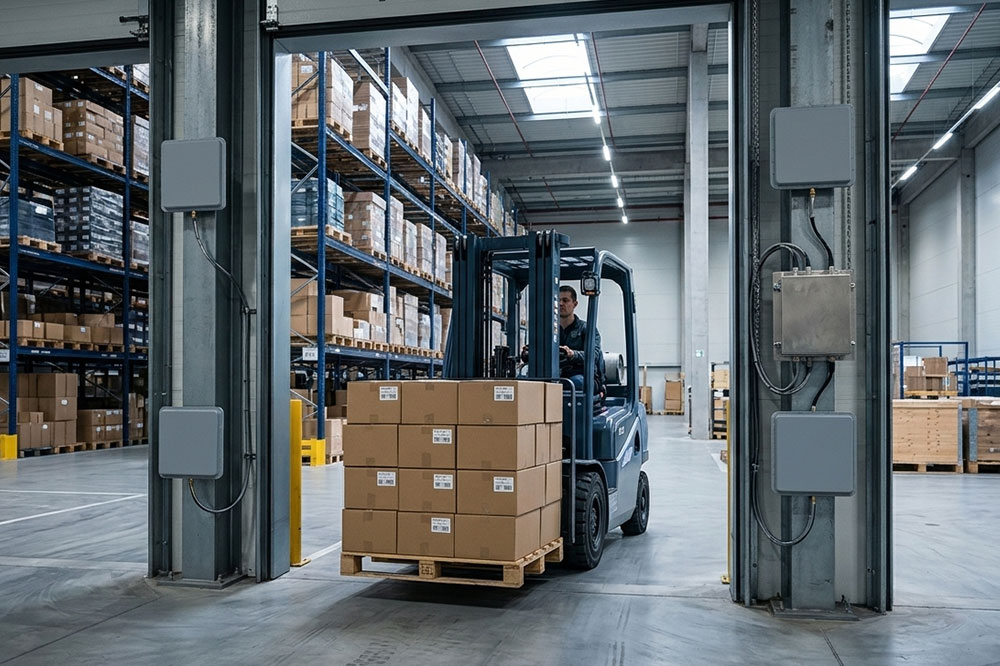
For example, an RFID reader installed at a receiving entrance can identify tagged pallets when a forklift carries them into the warehouse. The software can then compare the tag information with the expected delivery record.
Similar processes can be used at shipping exits, sorting areas, and internal transfer points.
The system does not eliminate the need for inventory management software or operational procedures. Instead, it supplies more automatic identification data for those systems to process.
A warehouse does not necessarily need RFID coverage in every aisle. In many projects, the most useful locations are the points where goods enter, leave, or change operational status.
Receiving is often a practical starting point for warehouse RFID deployment.
When goods arrive, workers normally check delivery documents, identify products, and confirm quantities. A fixed RFID reader installed near a receiving door can identify multiple tagged cartons or pallets as they pass through the reading area.
The warehouse system can use the received tag IDs to compare incoming goods with purchase orders or advance shipping information.
This can reduce repetitive scanning work, particularly when deliveries contain many individually tagged items.
The reading area should be designed around the actual movement of pallets. Antenna position, tag orientation, forklift speed, and nearby metal structures all influence the results.
Once goods enter the warehouse, maintaining accurate location records becomes another challenge.
Fixed readers can be installed at selected storage entrances, transfer stations, or controlled inventory checkpoints. When tagged goods pass through these areas, the system can record their movement.
For example, a tagged pallet moving from a receiving zone to a designated storage section can generate an identification event. The WMS can then associate the event with the corresponding warehouse location.
However, a fixed reader does not automatically know the exact shelf position of every item. Location accuracy depends on the placement of reading points and the software logic used to interpret tag observations.
For warehouses with extensive storage aisles, handheld RFID readers may still be needed for periodic verification and locating individual products.
Conveyor systems are another suitable application for fixed-mount readers.
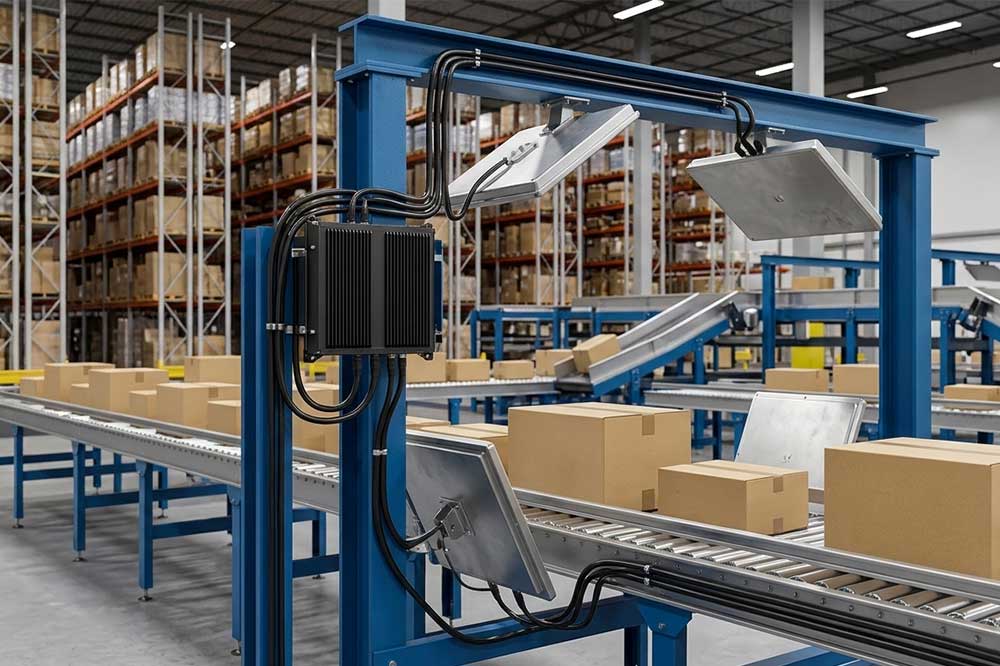
Products moving along a conveyor can pass through an RFID reading zone without stopping for manual scanning. Multiple antennas can be arranged around the conveyor to improve tag detection from different directions.
The warehouse control system can use the identification results to associate products with sorting instructions, destination areas, or order information.
In high-volume operations, the reader must handle repeated tag observations and overlapping products. Reading speed, antenna configuration, conveyor spacing, and data filtering should all be considered during system design.
RFID identification can also support order fulfillment.
At packing stations, readers can identify tagged products and provide data for checking whether the correct items have been prepared. At shipping exits, fixed readers can capture tagged cartons or pallets as they leave the facility.
A shipping checkpoint can be configured to compare detected tag IDs with the expected shipment list.
If an unexpected tag is detected, the warehouse application may generate an exception for an operator to review.
The reader provides identification data; the application determines whether the shipment is correct.
The effectiveness of an RFID warehouse system depends on how its hardware, antennas, and software work together.
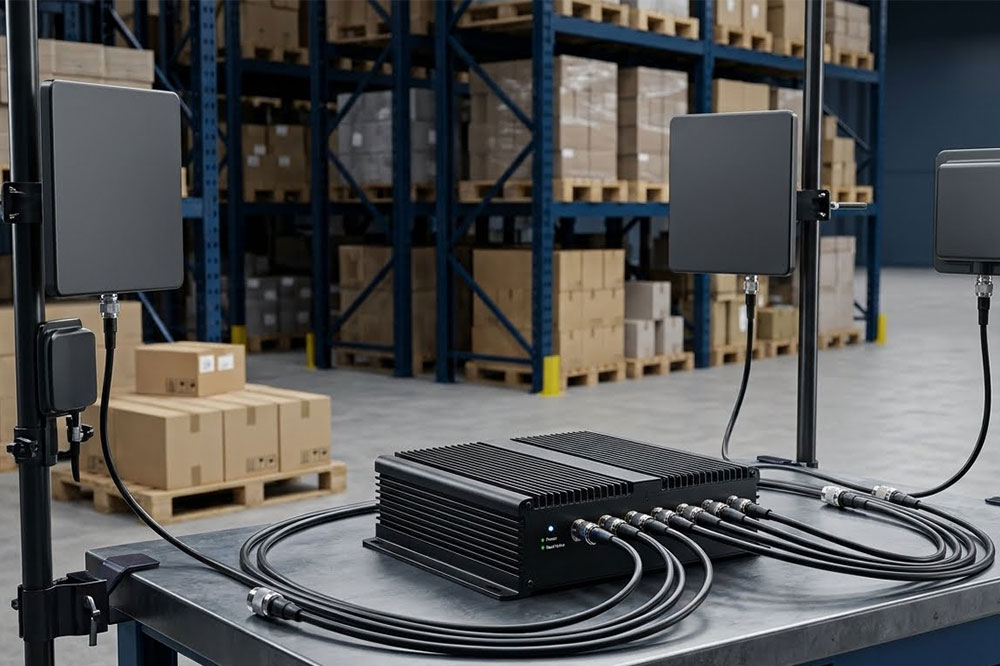
A fixed RFID reader can work with external antennas to create a defined reading area.
For a warehouse portal, antennas may be installed on both sides of a doorway or around a pallet transfer point. This helps detect tags from different directions as goods pass through.
Multi-port readers are particularly useful when a project requires several reading zones or wider coverage.
A 4-port reader may be sufficient for a relatively simple checkpoint, while an 8-port or 16-port model may be considered for more complex installations.
The correct configuration depends on the number of antennas, the required coverage, and the actual reading workload.
Fixed readers can collect RFID tag information continuously or according to configured reading operations.
In warehouse applications, the software needs to turn raw tag observations into meaningful events.
For example:
Repeated reads should be filtered and associated with the correct reading zone. Otherwise, one pallet may generate multiple records simply because it remains inside the antenna coverage area.
An RFID reader alone cannot manage warehouse inventory.
The collected tag data must be transferred to software that understands product records, orders, storage locations, and shipment information.
Depending on the reader model and project architecture, integration may use Ethernet, serial communication, SDKs, APIs, or other supported interfaces.
A typical data flow looks like this:
RFID Tag → Fixed Reader → Middleware → WMS/ERP → Inventory Update
For system integrators, it is important to confirm the reader’s communication protocol and software development support before selecting hardware.
Cykeo provides SDK, API, and demo software support for integrating its fixed RFID readers into customer-developed applications and RFID systems. Cykeo
Not every warehouse needs the same reader configuration. The selection should follow the physical layout and the number of identification points.
Port count is one of the first specifications to consider.
| Reader configuration | Typical project consideration |
|---|---|
| 4-port | Individual dock doors and smaller checkpoints |
| 8-port | Multiple antennas across larger reading zones |
| 16-port | High-density antenna deployment and complex systems |
These are application examples rather than fixed rules. A four-port reader may cover a demanding installation, while a sixteen-port model may be unnecessary for a small receiving area.
Cykeo offers 4-port, 8-port, and 16-port fixed UHF RFID reader options for different system configurations. Cykeo
Antenna installation can have as much influence on reading performance as the reader itself.
Warehouse environments often contain metal racks, forklifts, electrical equipment, and densely packed products. These materials and structures can affect radio propagation.
Before installation, identify the actual movement path of tagged goods and determine where the reading zone should begin and end.
Testing should include different pallet orientations, tag positions, product materials, and operating speeds.
A warehouse reader may operate for long periods in an environment with dust, vibration, temperature changes, or electrical interference.
Check the reader’s enclosure protection, supported power input, communication interfaces, and operating temperature against the project requirements.
For forklift-mounted applications, vibration resistance and vehicle power compatibility are also important considerations.
Fixed and handheld readers solve different warehouse problems.
| Feature | Fixed-Mount Reader | Handheld RFID Reader |
|---|---|---|
| Operation | Automatic | Operator-controlled |
| Installation | Permanent | Portable |
| Main application | Checkpoints and conveyors | Aisle inspections |
| Data collection | Continuous or configured | On-demand |
| Best suited for | Automated workflows | Spot checks and searching |
For example, a fixed reader can automatically identify pallets at a shipping entrance, while a warehouse employee can use a handheld reader to verify inventory on a particular shelf.
Many warehouse RFID systems combine both devices to cover automatic identification and manual exception handling.
Even a properly selected reader may produce inconsistent results if the installation environment is not considered.
One common issue is reading tags outside the intended area. A reader installed near two adjacent dock doors may detect inventory moving through the neighboring door.
Another challenge is inconsistent tag orientation. Tags placed on different sides of cartons or pallets may not respond equally well to the antenna arrangement.
Dense pallets can also create reading difficulties, especially when products contain metal or liquid materials.
For these reasons, warehouse RFID projects should include on-site testing rather than relying entirely on laboratory specifications.
It is also important to define how the software handles duplicate reads, unexpected tags, missing tags, and incomplete transactions.
A warehouse does not need to automate every process at once.
A more practical approach is to begin with one or two high-value checkpoints, such as receiving and shipping. After the reading performance and software integration have been verified, additional locations can be introduced.
During the planning stage, document:
This information makes it easier for hardware suppliers and system integrators to evaluate the project before equipment selection.
Cykeo provides fixed UHF RFID readers for warehouse automation, logistics checkpoints, industrial identification, and inventory management projects.
The product range includes 4-port, 8-port, and 16-port reader configurations, as well as industrial forklift RFID readers. SDKs, APIs, and demo software are available to support integration with customer-developed RFID applications.
For warehouse solution providers and system integrators, the choice of reader should be based on the number of reading points, antenna layout, tag volume, installation environment, and software requirements.
Explore the Cykeo Fixed-Mount RFID Reader Product Range to review available hardware options for your warehouse project.
Fixed-mount readers are installed at receiving docks, shipping gates, conveyor systems, and inventory checkpoints. They automatically identify tagged goods as they pass through designated reading zones.
Yes. Fixed readers can continuously collect RFID tag information and send it to warehouse software. The WMS can process these readings to update inventory movement records and improve stock visibility.
It depends on the number of reading zones and antennas required. Four-port readers are suitable for smaller installations, while 8-port and 16-port readers can support more complex antenna layouts.
Yes. Depending on the model, readers can communicate through Ethernet, serial interfaces, SDKs, APIs, or other supported protocols. Software integration allows RFID data to be connected with inventory and logistics processes.
For a better understanding of fixed-mount RFID technology, antenna configuration, installation, and system integration, explore these related articles. They cover different aspects of fixed-mount reader selection and deployment, helping engineers and system integrators plan RFID projects with fewer design uncertainties.
What Are Fixed-Mount Readers and How Do They Work?
Fixed-Mount Reader Connectivity and Interfaces
Fixed-Mount Reader Antenna Configuration
Improving Read Accuracy with Fixed-Mount Readers
How to Install Fixed-Mount Readers in Industrial Environments
RFID Reader for Warehouse Inventory
For manufacturing facilities, fixed-mount readers for conveyor systems provide another way to automate product identification and track work-in-progress.
RFID tracking does not stop at warehouse operations. Fixed readers can also follow tagged workpieces and production carriers inside manufacturing facilities. Learn more about fixed-mount readers for manufacturing and work-in-progress tracking.
For more details about automating outbound shipment verification, read our guide to fixed-mount readers for dock doors. It explains reader configurations, antenna positioning, and RFID integration at warehouse shipping checkpoints.
For facilities that need to monitor equipment, tools, and reusable containers across multiple locations, fixed readers can do more than identify items at individual checkpoints. Learn how [fixed-mount readers for automated asset tracking systems] can support continuous asset identification, movement records, and centralized management.
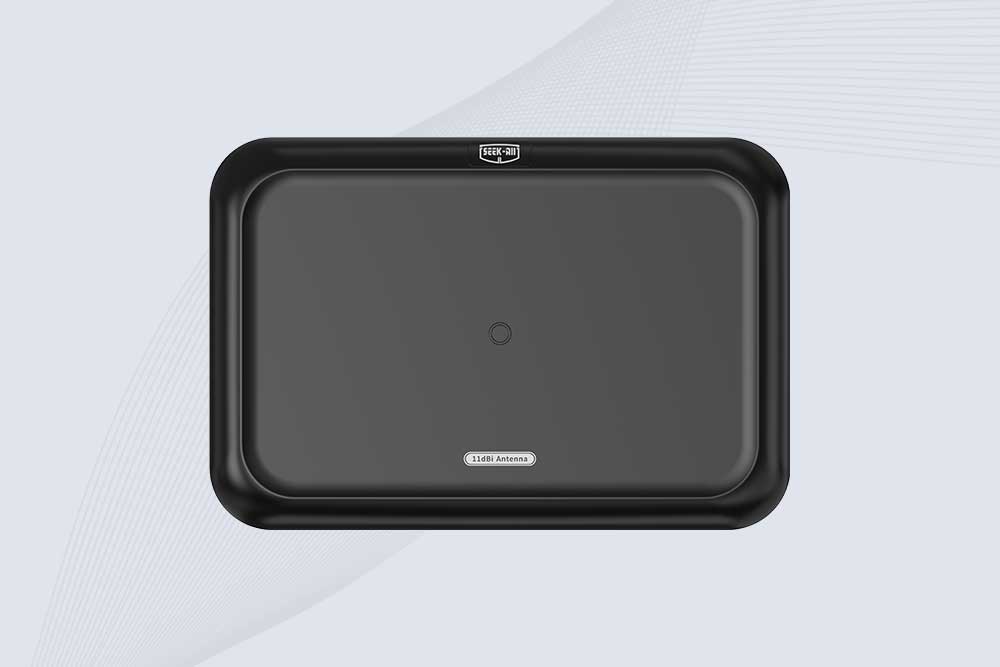
SSD-A11 UHF RFID antenna features 840–960 MHz adjustable frequency, ≥10.5 dBi gain, circular polarization and 50Ω impedance for fixed RFID systems.
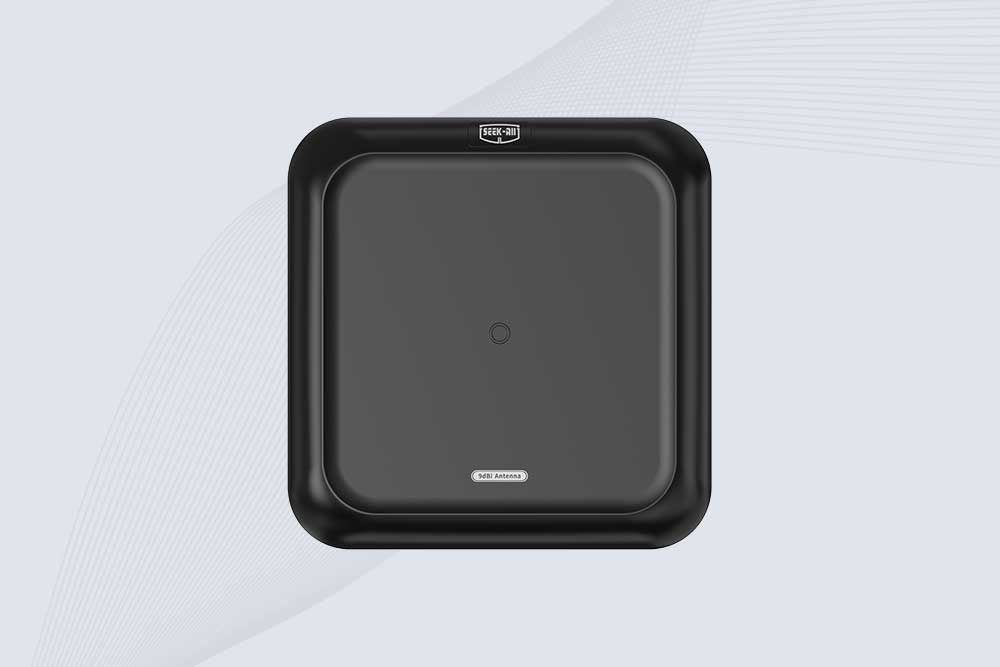
SSD-A09 is a 9 dBi UHF RFID antenna with 840–960 MHz adjustable frequency, circular polarization, 50Ω impedance and directional 60° × 60° coverage.
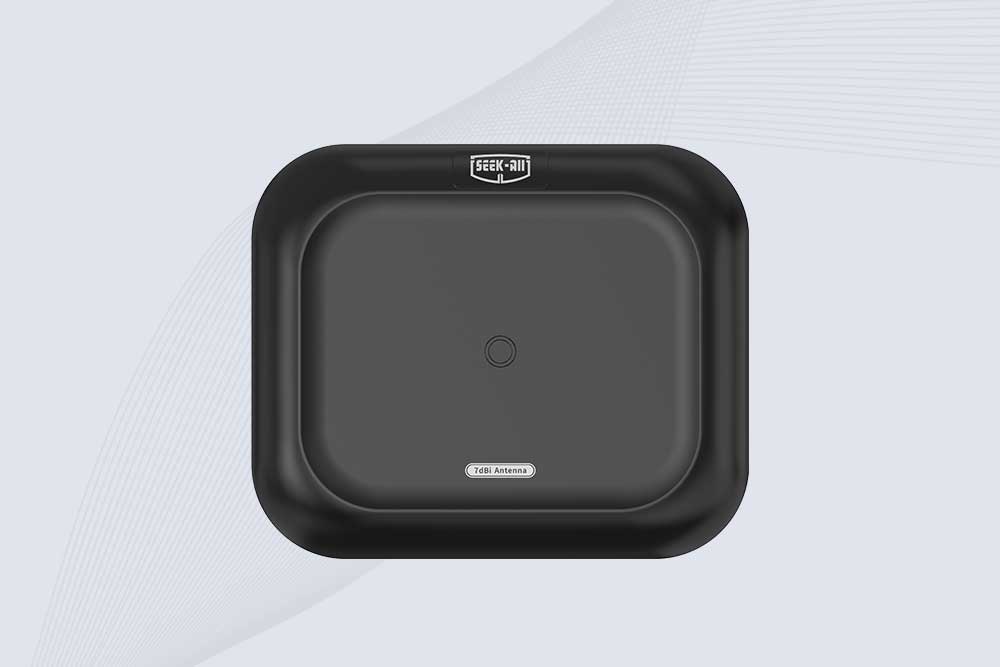
Explore the SSD-A07 UHF RFID antenna with 7 dBi gain, circular polarization, adjustable 840–960 MHz frequency, and 60°/75° beamwidth for stable RFID read/write performance.

SSD-A06 UHF RFID antenna with circular polarization, adjustable 840–960 MHz frequency, ≥4.5 dBi gain, and a compact directional design for RFID systems.
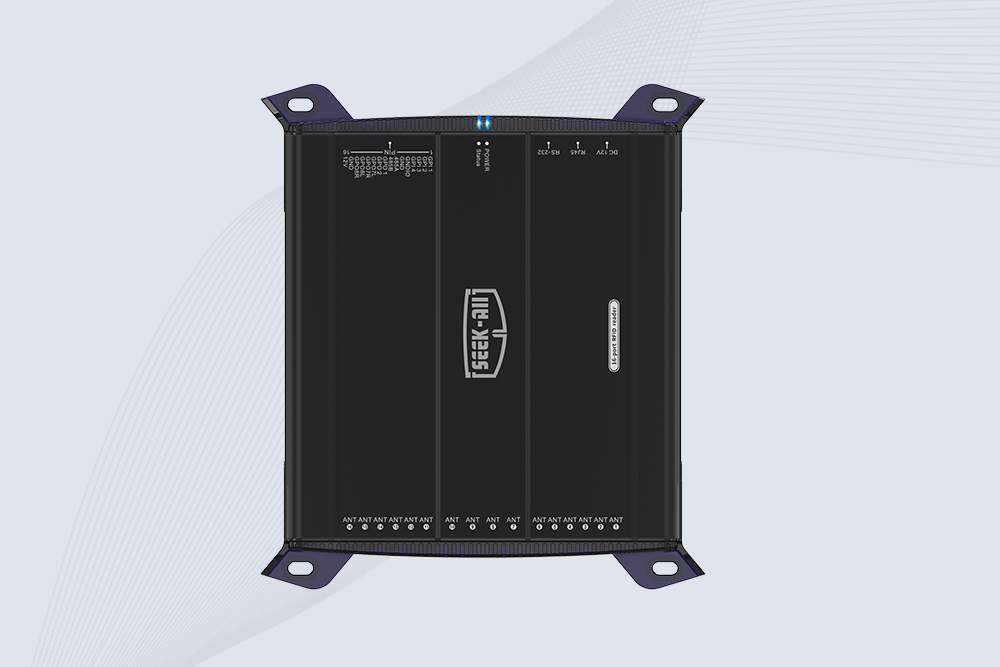
SSD-R16L Multi-Channel RFID Infrastructure for Automated Inventory Management ✔️ 16-Port High-Density RFID Reading Equipped with 16 SMA antenna ports, SSD-R16L supports multi-antenna deployment for warehouses, retail stores, logistics, production lines, and large-area RFID identification. ✔️ High-Speed & Long-Range Performance With up to 33…
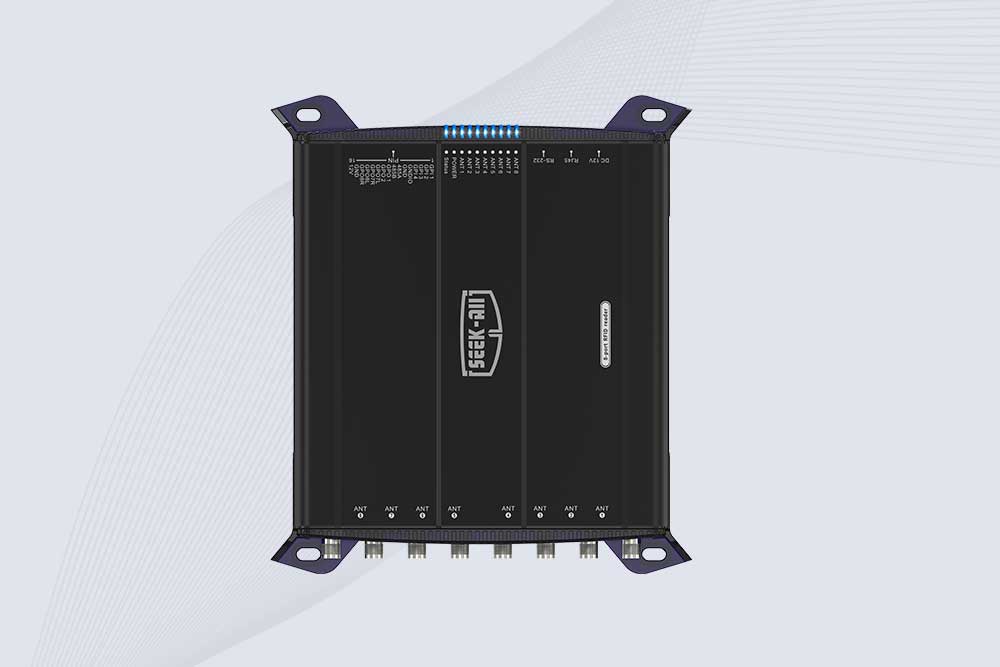
SSD-R8L 8-port UHF RFID reader with 33dBm output, up to 20m reading range and 600+ tags/s recognition. Ideal for warehouse, logistics, retail and asset tracking.
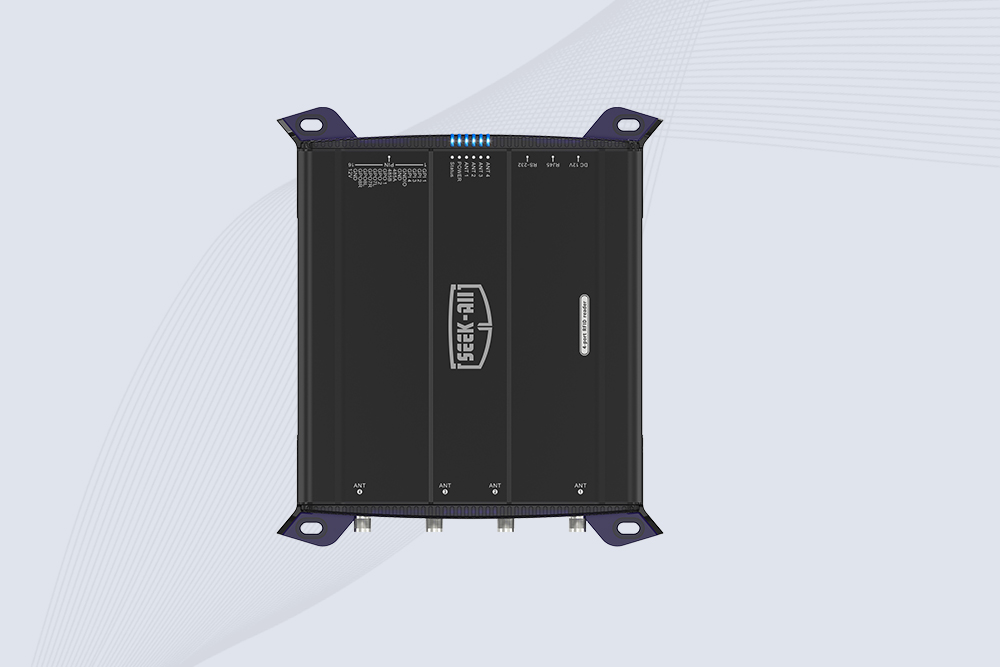
SSD-R4L is a 4-port UHF RFID fixed reader with 33dBm output power, up to 20m reading range, EPC C1G2 support and 600+ tags/s reading speed.
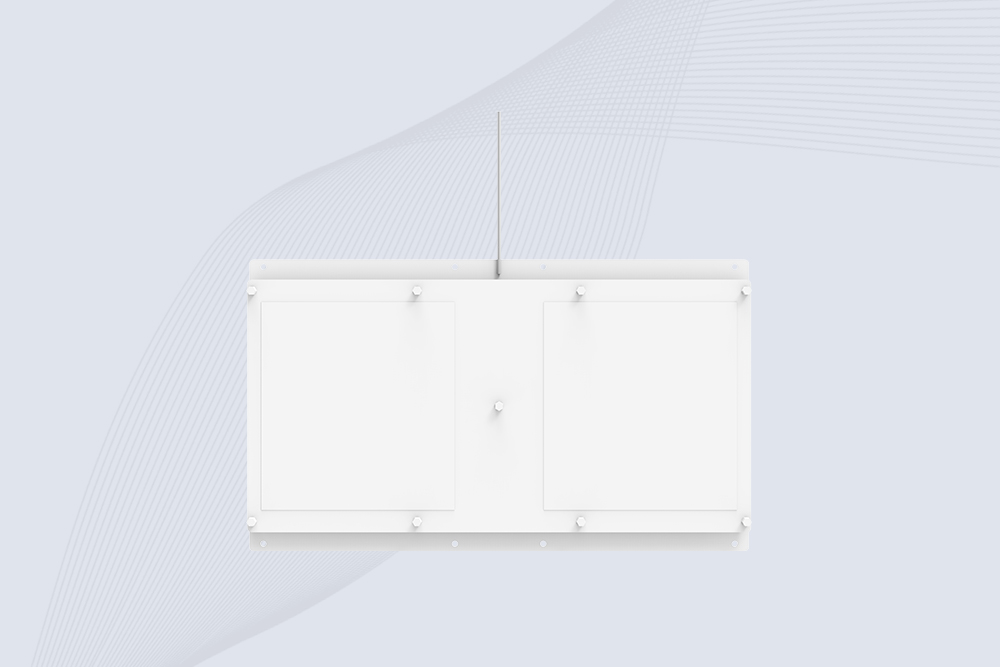
Cykeo CYKEO-A11 UHF RFID reader antenna delivers 11dBi gain, 840-960MHz frequency range, and IP65 ruggedness for retail, logistics, and industrial RFID systems. Features low VSWR and easy installation.

CYKEO Antenna RFID Reader delivers stable long-range UHF performance with a 10.5dBi directional design, built for warehouses, conveyor portals, and industrial RFID systems. This rfid reader antenna provides 20m+ read distance and rugged IP67 protection.

Cykeo CYKEO-PHF3 industrial HF RFID Antenna offers 24-point dynamic tracking, ISO 14443A/15693 protocols, metal-environment stability for archives/libraries/manufacturing.

Cykeo CYKEO-A5B industrial Linear RFID Antenna delivers 5dBi gain, ≤1.5:1 VSWR, and IP65 rugged design for warehouse, production line, and logistics UHF systems.

Cykeo’s CYKEO-B12 Long Range RFID Antenna delivers 15m+ read range with 12dBi gain, IP65 rugged design, and global 840-960MHz UHF support. Ideal for warehouse/logistics asset tracking.
Cykeo CYKEO-B10 Long Distance RFID Antenna offers 10dBi gain, 840-960MHz frequency range, IP65 rating, and 20m+ coverage for logistics/warehousing/ETC systems. Low VSWR ensures stable signal transmission.
Cykeo CYKEO-A6 UHF RFID panel antenna features 6dBi gain, 840-960MHz broadband, IP65 metal-ready housing for logistics/smart retail. 18mm ultra-thin design with tool-free mounting.

Cykeo CK-A3 industrial antenna RFID UHF offers 5m+ tag detection, ≤1.3:1 VSWR, IP65 rugged design, and global UHF spectrum compatibility (840-960MHz) for warehouses, factories, and retail.
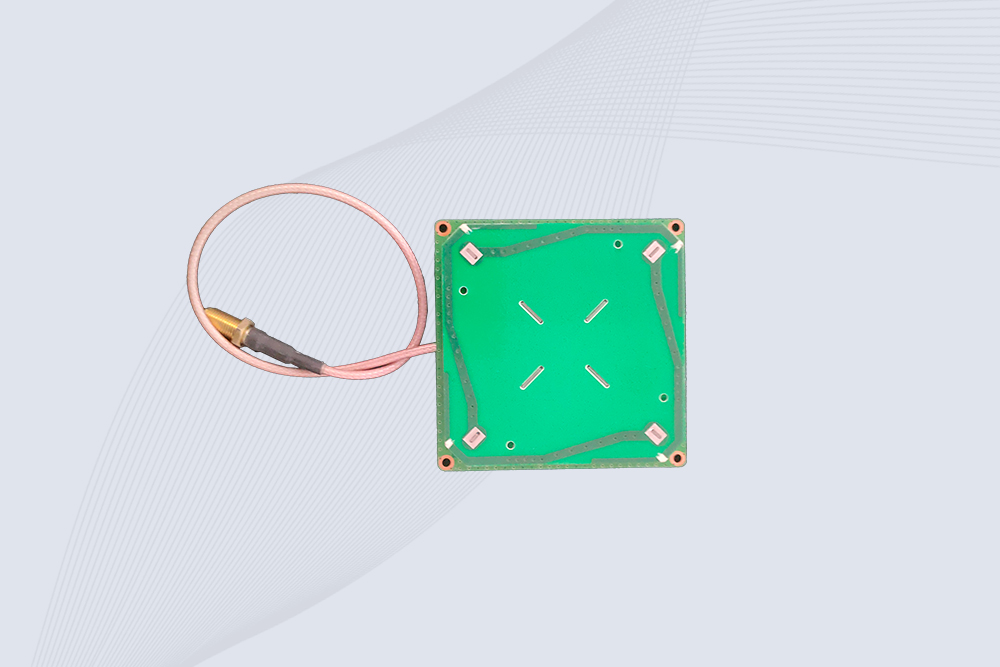
Cykeo CYKEO-B5 directional RFID antenna provides 5dBi gain with 60° narrow beamwidth for precise inventory tracking. IP65-rated, global UHF frequency support, and low VSWR.
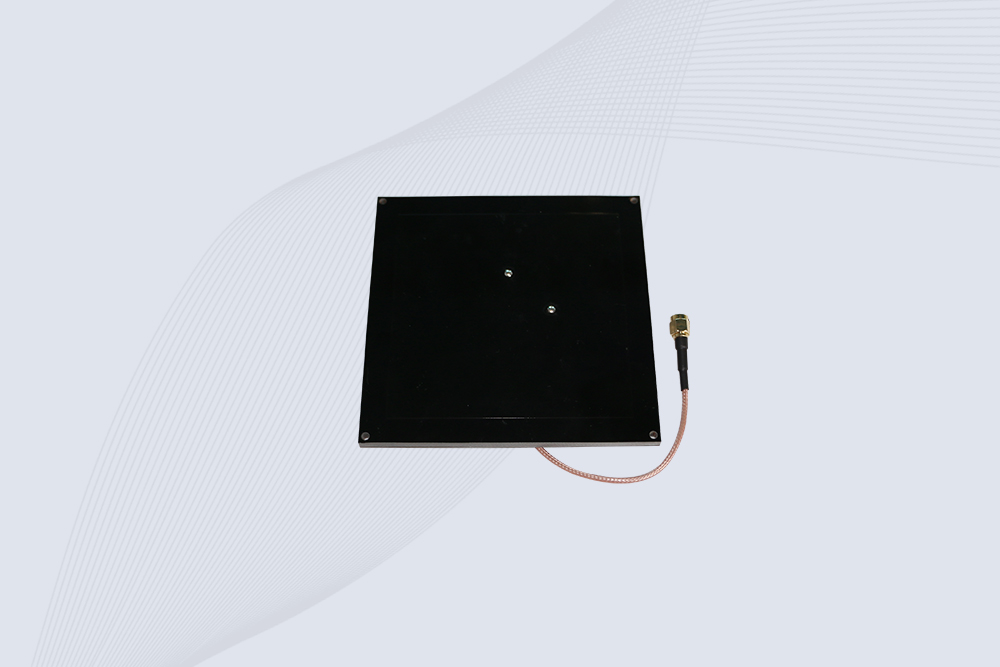
Create your own high-performance DIY RFID antenna! 5dBi gain, 840-960MHz tunable, step-by-step guides. Compatible with Arduino, Raspberry Pi, and commercial UHF readers.
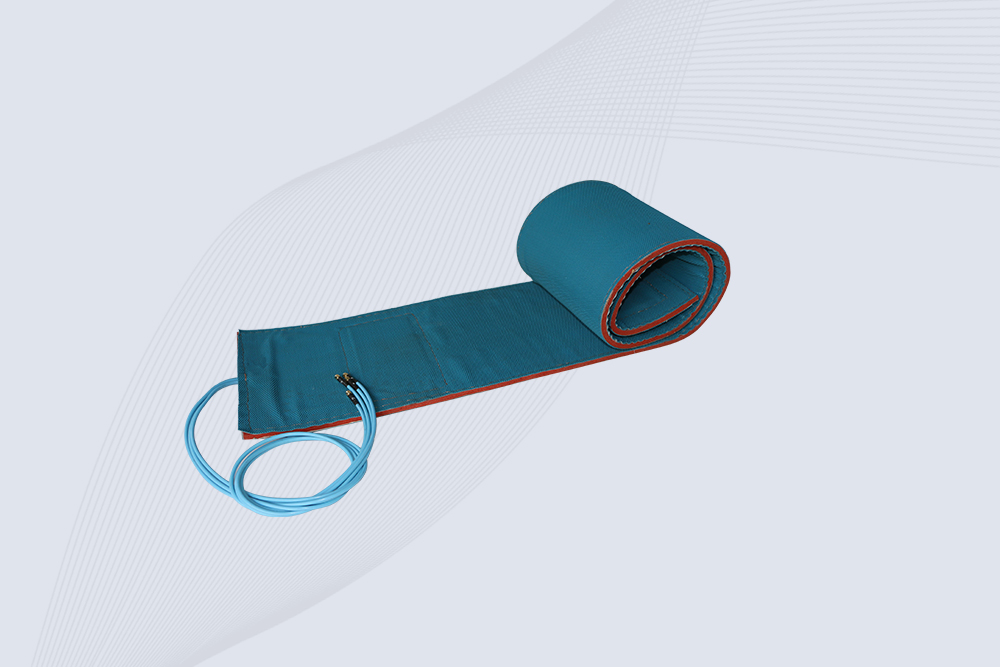
Cykeo CYKEO-A7 Flexible RFID Antenna features 840-960MHz wideband tuning, 7dBi gain, and IP68 rating for medical/retail/industrial curved surface deployments. 98% read accuracy with peel-and-stick installation.

Cykeo CYKEO-B5A industrial Passive RFID Antenna delivers 5dBi gain, 70° beamwidth, and -40°C~55°C operation for warehouses/smart cabinets. Compatible with Zebra/Impinj readers.
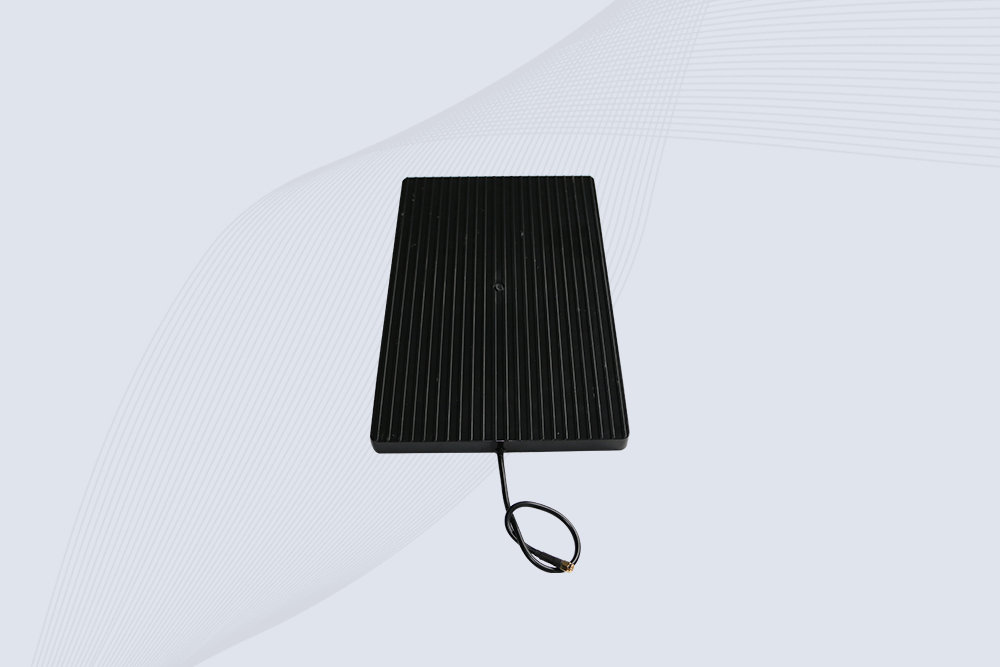
Cykeo’s CYKEO-A9B High Gain RFID Antenna delivers 15m+ read range with 9dBi amplification. Features IP54 rugged design, 840-960MHz bandwidth, and 80° beamwidth for warehouse/manufacturing RFID systems.

Cykeo’s enterprise-grade 8dbi Impinj RFID Antenna 10m+ read range with 840-960MHz tuning. Features IP65 housing, 1.4 VSWR, 35° beamwidth for retail/warehouse RFID systems.
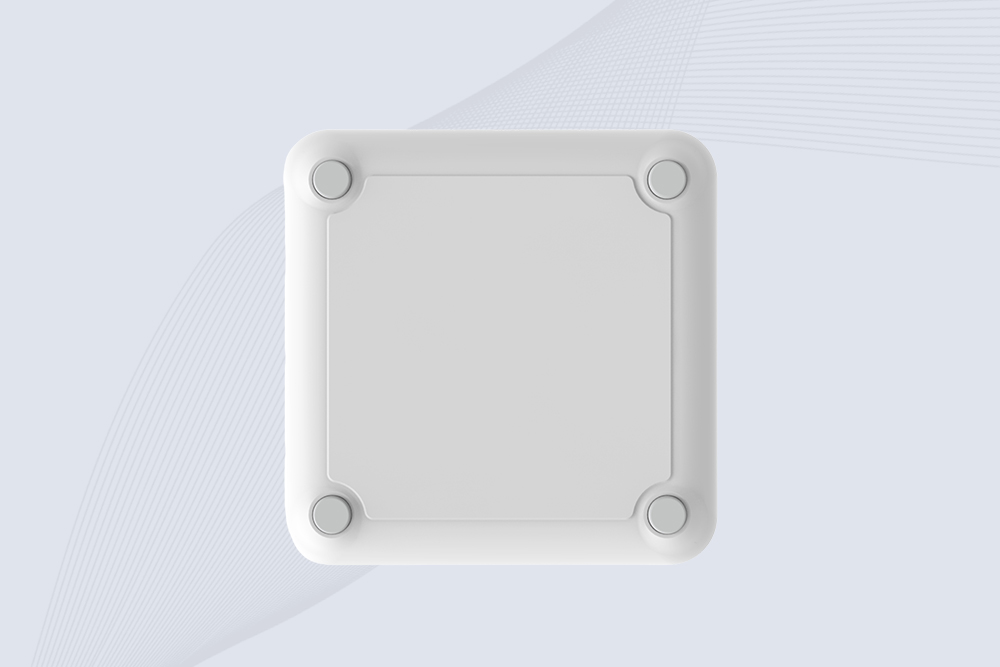
Cykeo CYKEO-A9 industrial UHF RFID antenna delivers 9dBi gain, 840-960MHz frequency range, and IP65 protection for warehouse/logistics/retail RFID systems. Features N-type connector and ≤1.3:1 VSWR.
CYKEO UHF RFID Antenna built for long-distance and industrial applications. This antenna rfid uhf delivers strong gain, outdoor durability, and reliable tag performance in warehouses, yards, and vehicle ID systems.
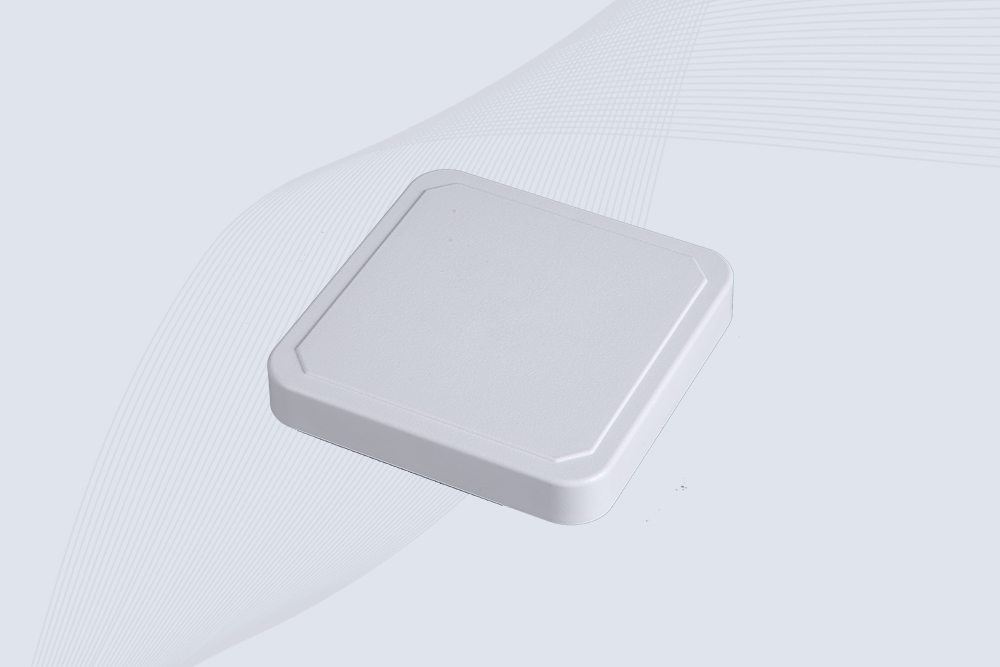
CYKEO Antenna RFID delivers reliable long-range UHF performance in warehouses, retail shelves, and cold-chain environments. This compact uhf rfid antenna provides stable reads with circular polarization and ultra-wide 840–960 MHz support, ideal for industrial tracking, smart shelves, and asset monitoring.
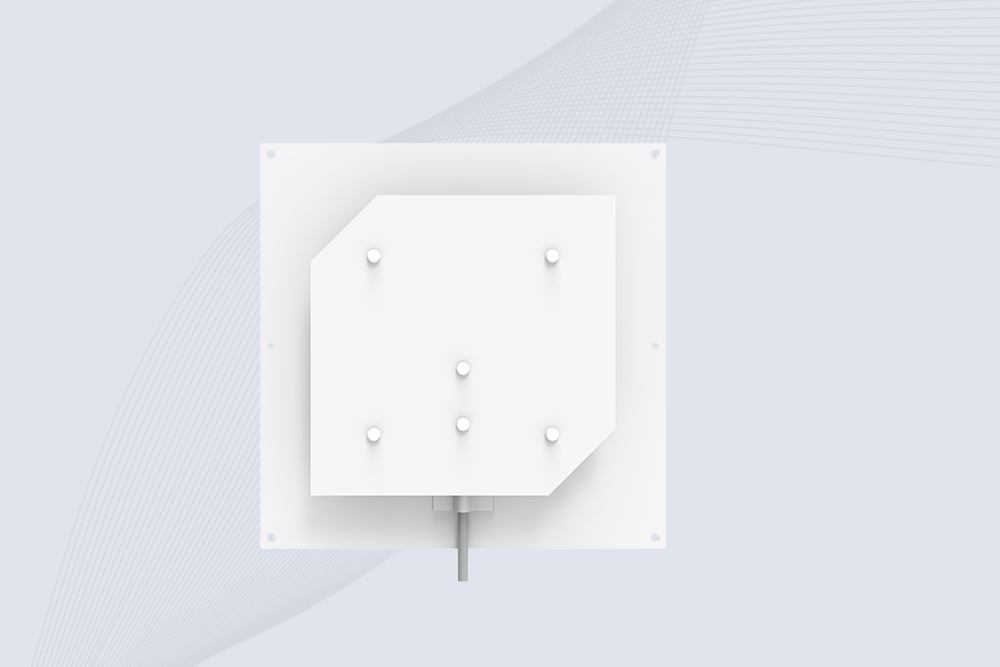
Cykeo’s CYKEO-C8 UHF RFID antennas delivers 8dBi gain, 840-960MHz full-band coverage, and IP65 ruggedness for manufacturing/warehouse RFID systems. Industrial RFID Antennas Features
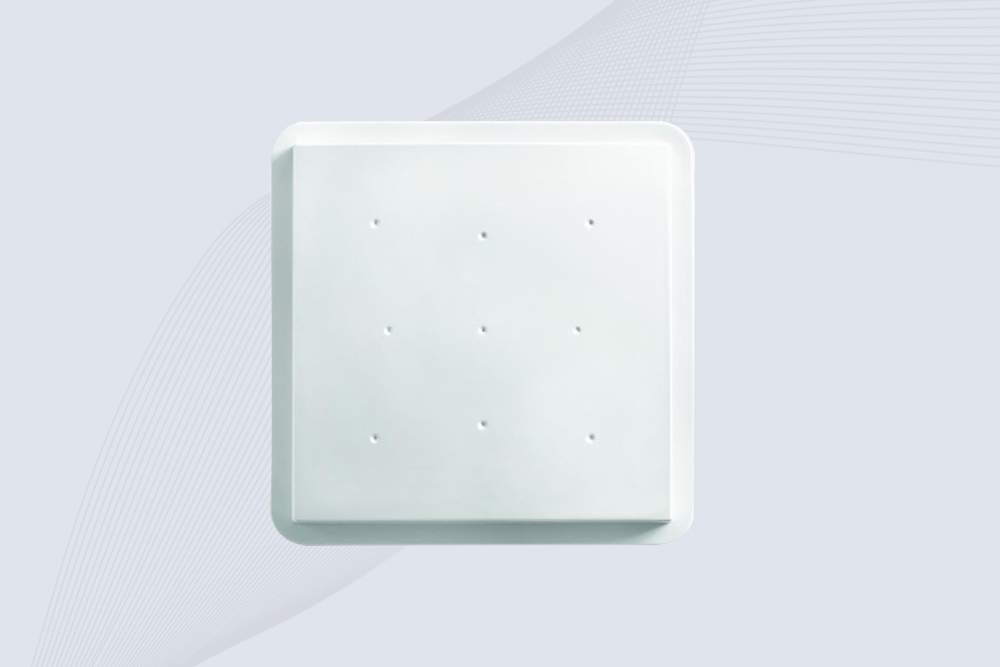
Cykeo’s 8dBi UHF RFID antenna and reader kit delivers 10m+ range, 840-960MHz broadband, and IP65 ruggedness for factories, warehouses, and logistics. ISO 18000-6C & EPC Gen2 certified.
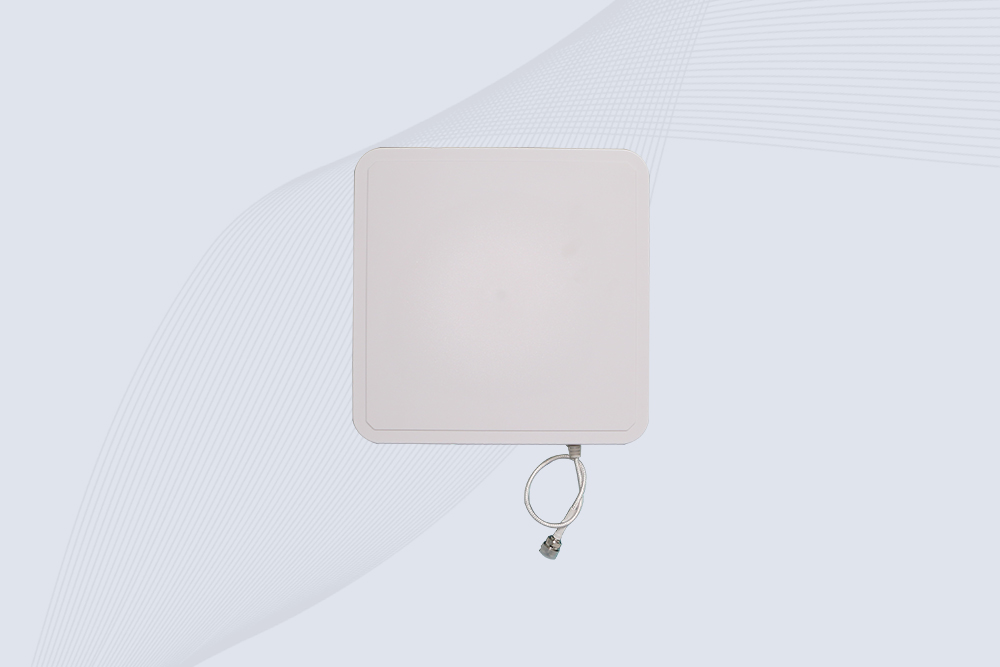
Cykeo CYKEO-A9A industrial UHF RFID reader and antenna kit delivers 10m range, 500 tags/sec, IP65 ruggedness for manufacturing/logistics. Supports EPC Gen2, ISO18000-6C.
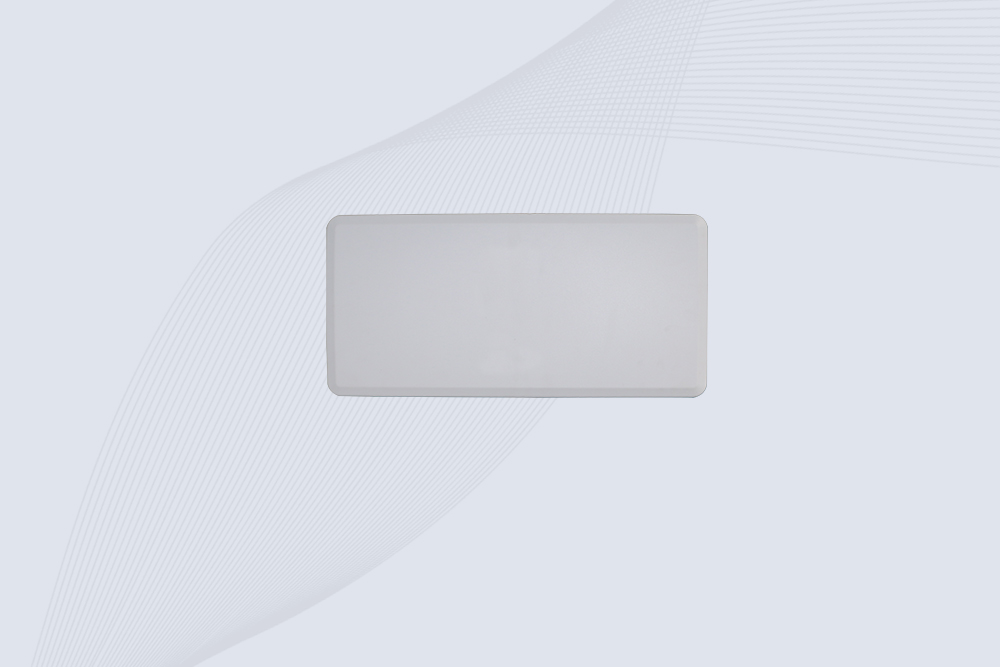
Cykeo’s CYKEO-A12C UHF Large RFID Antenna delivers 12dBi gain, 840-960MHz global frequency, IP65 ruggedness for logistics/warehousing/automotive. 40° beamwidth ensures stable 15m+ tag reads.

CYKEO Near Field RFID Antenna provides precise 5–30 cm reading for shelves, cabinets, and workstations. This compact rfid shelf antenna delivers stable short-range performance around metal and clutter, ideal for pharmacies, libraries, and electronics sorting.
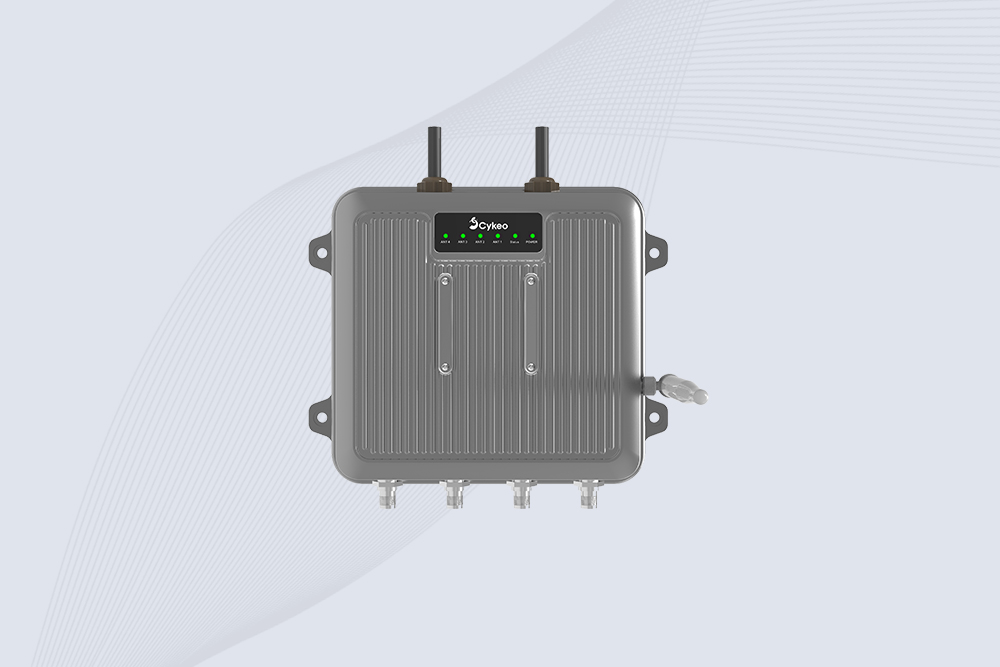
Cykeo CYKEO-C1 industrial Forklift RFID Reader features 20m read range, 600 tags/sec scanning, Impinj R2000 chipset, and IP67 rugged design. Ideal for warehouse logistics and manufacturing. Supports ISO 18000-6C/6B protocols.
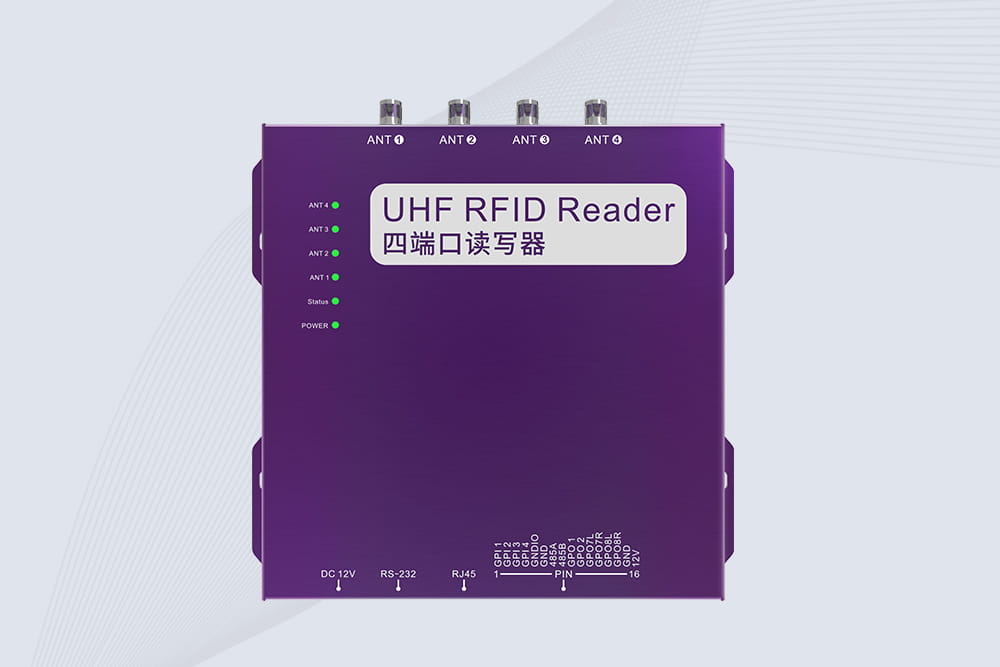
Cykeo CYKEO-R4 industrial UHF RFID Fixed Reader features 4 TNC ports, 400+ tags/sec speed, IP67 housing, and global frequency compliance for vehicle inspection, smart warehouse, and asset management systems.
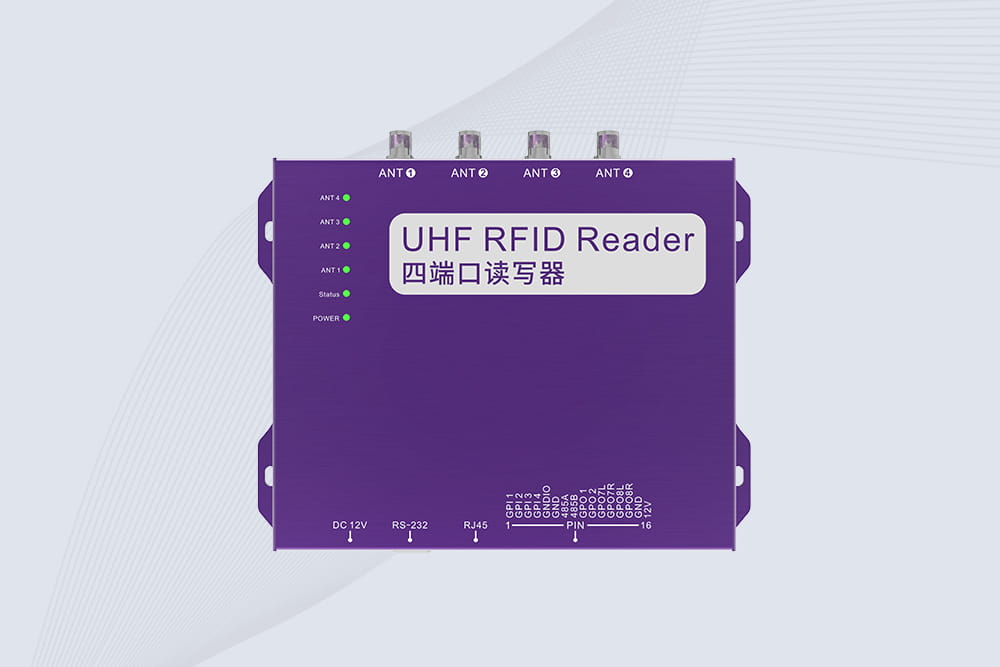
Cykeo’s CYKEO-R4L 4-port Fixed UHF RFID Reader delivers 400 tags/sec scanning, ISO 18000-6C compliance, and IP65 protection. Ideal for warehouse automation, manufacturing WIP tracking, and logistics management.
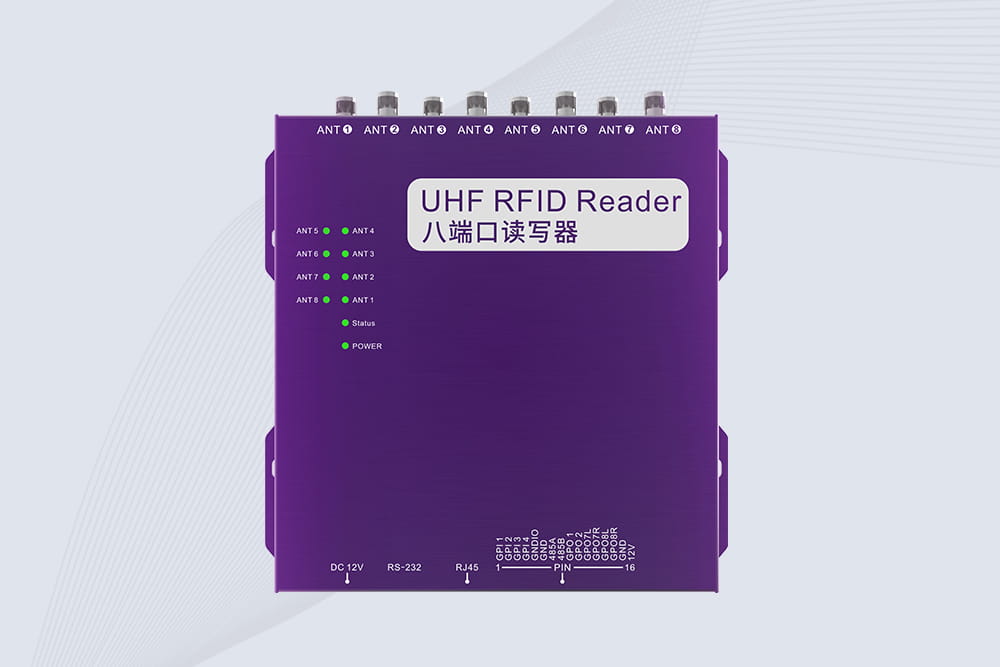
CYKEO CYKEO-R8L Fixed RFID Reader with 8-port UHF design, Impinj-based RF core and up to 20m read range. An industrial Fixed RFID Reader for vehicle inspection, warehouse portals, smart manufacturing lines and secure access checkpoints.
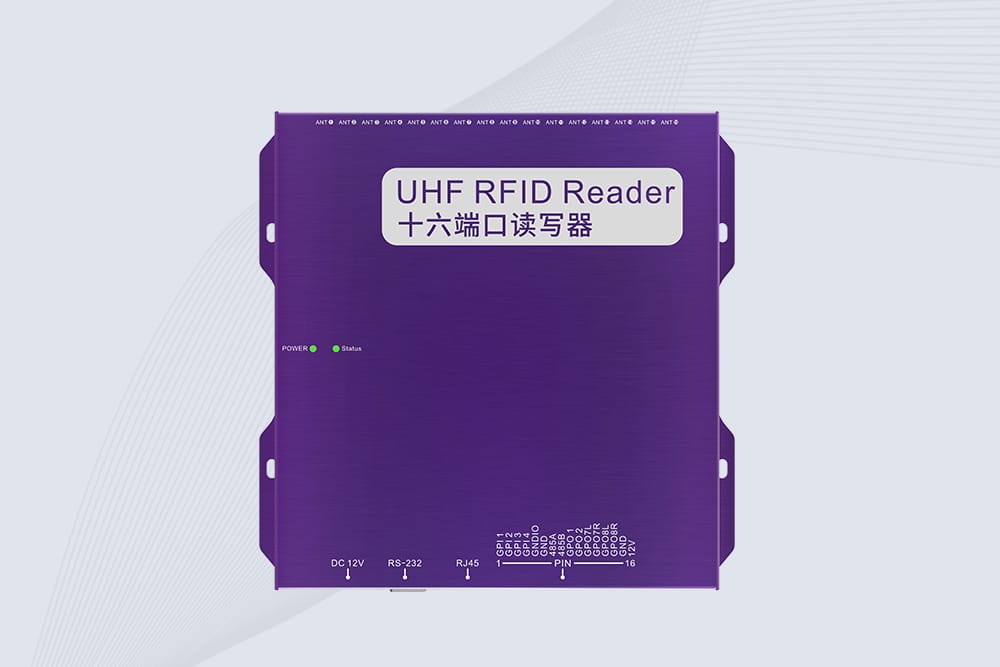
RFID Fixed Reader from CYKEO – the CYKEO-R16L 16-port UHF fixed reader for warehouses, smart cabinets, and production lines. Long-range, multi-tag reading, stable performance for 24/7 industrial use.
RFID Industry Writer | IoT & Asset Tracking Analyst
James writes about RFID technology, asset tracking, and the practical challenges of digital transformation across warehousing, retail, manufacturing, and logistics.
His work focuses on how RFID is applied in real-world operations—improving inventory visibility, automating workflows, and helping businesses manage assets with greater accuracy and efficiency.
He regularly covers topics including UHF RFID, smart cabinets, RFID portals, tool tracking, warehouse automation, and industrial IoT trends..

Learn how rfid tag label technology enables fast tracking, real-time inventory, and automation across retail, logistics, and asset management systems.
More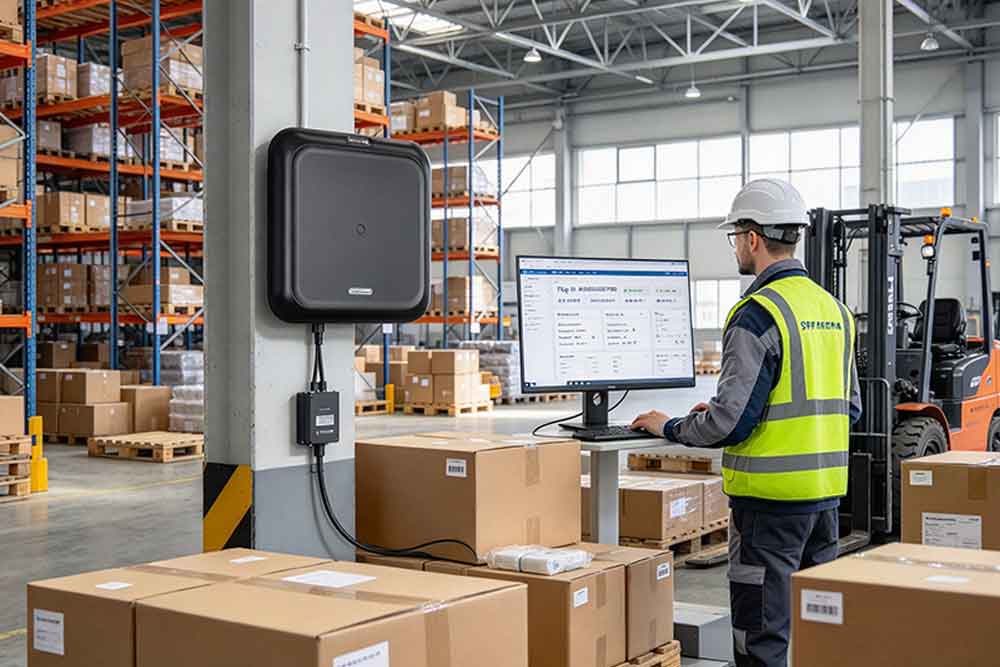
An RFID tag is a small electronic identification device that uses radio frequency communication to store and transmit data wirelessly to RFID readers for aut...
More
RFID improves medication inventory accuracy by linking medication identification, secure access, dispensing, returns, and automated inventory reconciliation.
More
Discover how RFID modules optimize EV battery recycling—tracking health, ensuring compliance, and reducing costs. Learn Cykeo’s solutions for sustainable battery management.
More