Installing a fixed-mount RFID reader in a factory is not simply a matter of attaching the device to a wall and connecting a power cable. The installation location, antenna direction, surrounding machinery, tag orientation, and communication setup all influence the final reading performance.
A reader may work perfectly during a bench test but produce missed reads or unwanted tag detection after being installed beside a conveyor, metal rack, or production machine.
For industrial RFID projects, installation should be treated as part of the system design process. The following guide explains how to install fixed-mount readers, configure their antennas, and test their performance under actual operating conditions.
Understand the Installation Environment
Before installing any hardware, examine the area where RFID identification will take place.
Start by understanding how products, pallets, containers, or tools move through the facility. A fixed-mount reader should be positioned around a clearly defined identification point rather than simply wherever there is available wall space.
Identify the RFID Reading Area
Consider a production line where tagged products pass through several workstations. Installing readers at every workstation may not be necessary. In some projects, identifying products at key entry and exit points provides enough information for the production management system.
Typical installation locations include:
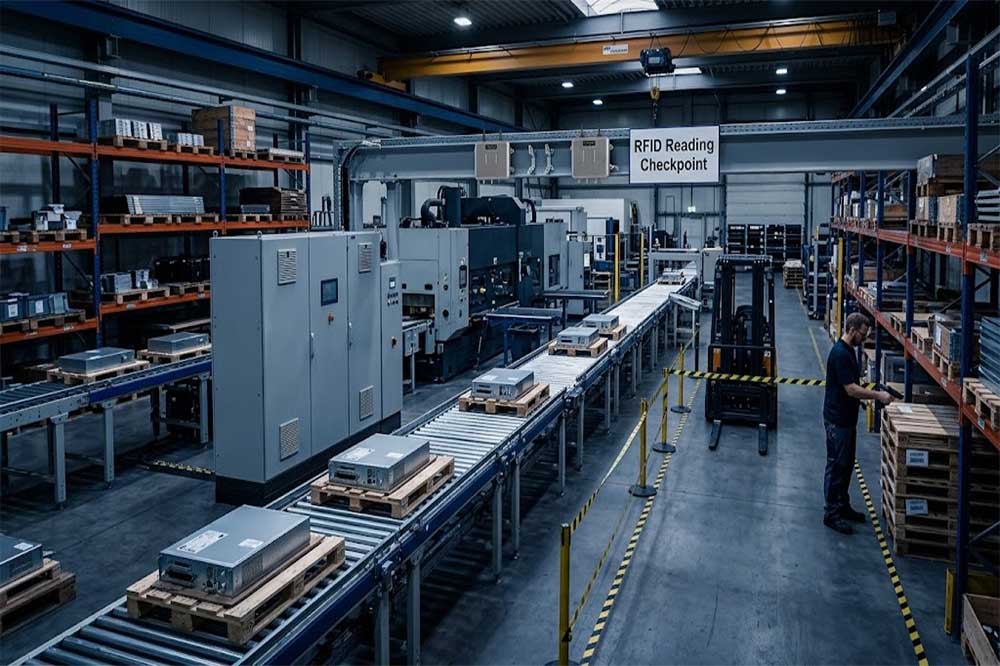
Conveyor belt entry and exit points
Warehouse loading and unloading areas
Production line checkpoints
Automated sorting stations
Equipment and tool storage areas
Vehicle access gates
The objective is to create a controlled reading zone where tagged items can be identified at the appropriate stage of the workflow.
Check Metal Structures and Interference Sources
Industrial facilities contain considerable amounts of metal. Steel racks, machine frames, conveyor structures, and metal containers can reflect or absorb UHF RFID signals.
These conditions may cause unexpected reading areas, inconsistent tag detection, or interference between nearby antennas.
During the site survey, identify large metal surfaces and nearby RF equipment. Record the positions of electrical cabinets, motors, wireless devices, and other potential interference sources.
Do not assume that a reader will achieve its advertised maximum reading distance inside a factory. Actual performance depends on the complete installation environment.
Choose the Right Mounting Position
The mounting position determines where the RFID system can identify tagged objects.
A good installation places the antenna close enough to the target reading area while avoiding unnecessary coverage outside that area.
Install Readers Near Key Process Points
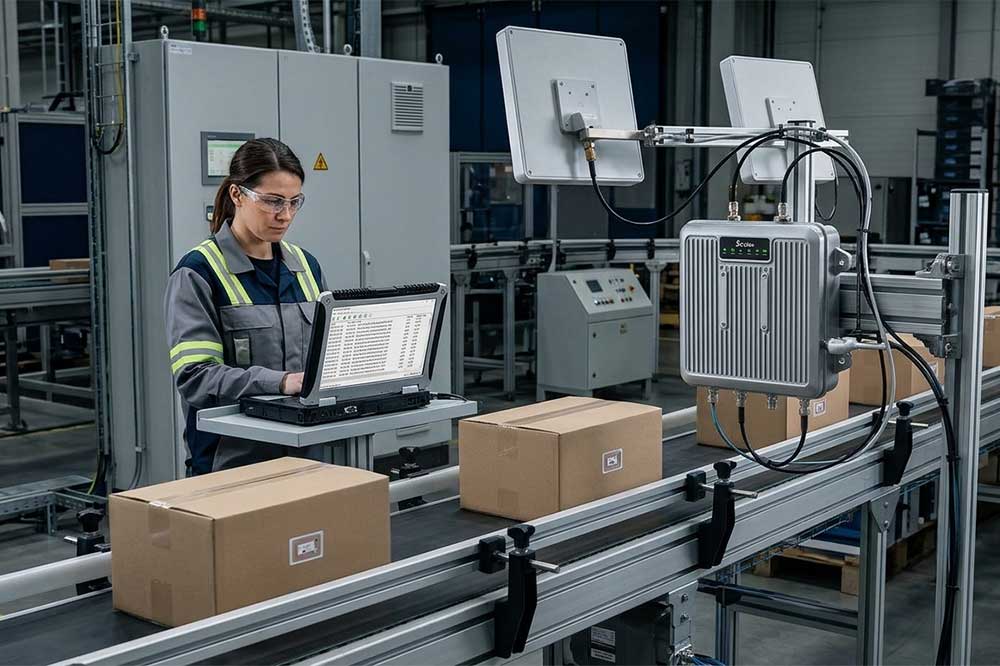
For conveyor applications, antennas are commonly mounted beside or above the belt, depending on product dimensions and tag orientation.
For warehouse gates, antennas can be installed on both sides of the passage to improve coverage as pallets move through.
For production tracking, the reader and antennas should be positioned where workpieces naturally pass during normal operations.
One important consideration is maintenance access. Industrial equipment may need inspection, cable replacement, or configuration changes. Installing the reader behind a machine or in an inaccessible location creates unnecessary maintenance work.
Consider Height, Angle, and Accessibility
There is no universal installation height for every fixed-mount reader.
Antenna height and angle should be determined by the dimensions of the reading zone, the movement path, and the position of RFID tags.
For example, an overhead antenna may work well when pallets pass beneath it, while side-mounted antennas may be more effective when tags are attached to the sides of containers.
Use adjustable mounting brackets during the testing stage. Small changes in antenna angle can make a noticeable difference to reading consistency.
Also check whether the mounting surface can withstand continuous vibration. Secure brackets, suitable fasteners, and protected cable connections are particularly important around conveyor equipment and moving machinery.
Install and Position RFID Antennas
The antenna is one of the most important components of a fixed RFID installation. Even a high-performance reader cannot compensate for an unsuitable antenna arrangement.
Match Antenna Orientation with Tag Movement
RFID tags may be attached to cartons, plastic containers, metal equipment, or pallets. Their orientation can vary considerably.
If tagged products always travel in the same direction, directional antenna positioning can help focus the reading area.
When tag orientation is unpredictable, circularly polarized antennas are often worth considering because they are less sensitive to tag orientation than linearly polarized antennas.
However, antenna selection should also account for tag design, mounting material, required coverage, and reading distance.
Configure Multiple Antennas for Wider Coverage
Large industrial installations often require more than one antenna.
For example, a warehouse portal may need antennas on both sides of the entrance, while a production line may require separate reading zones at different positions.
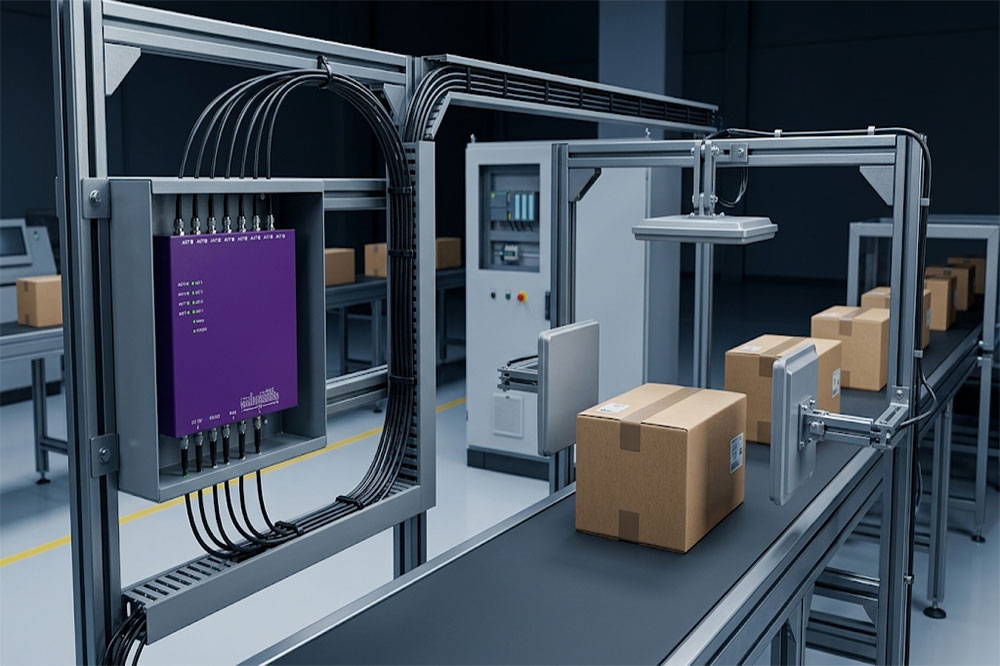
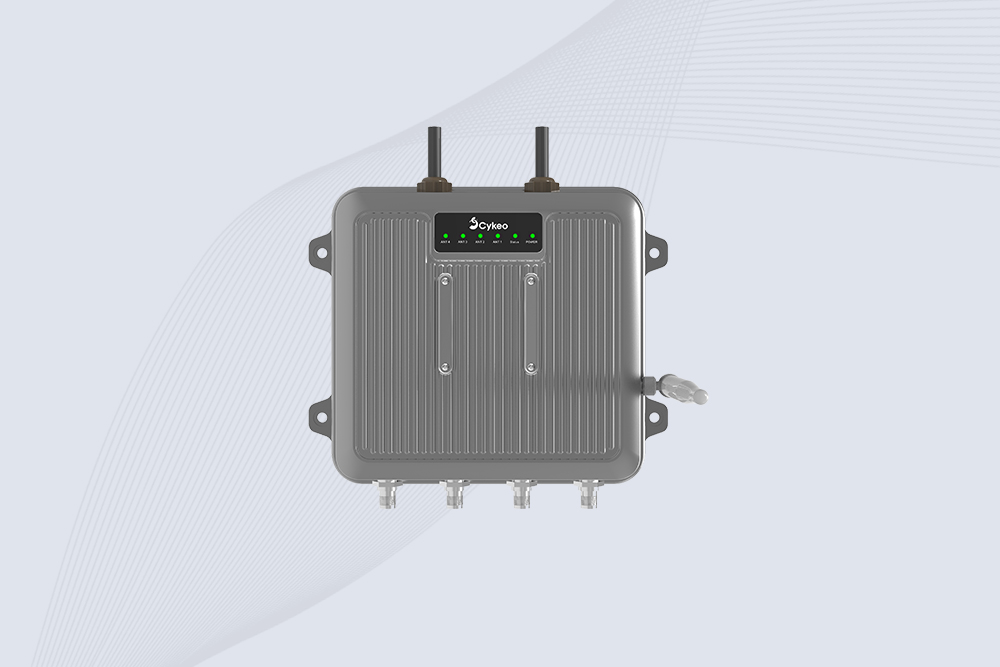
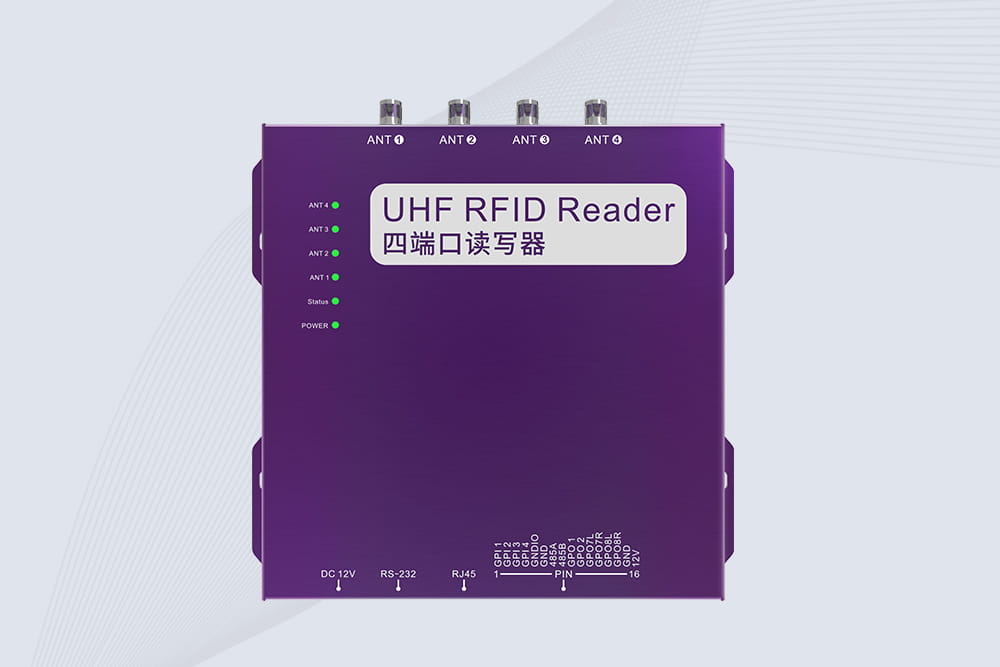
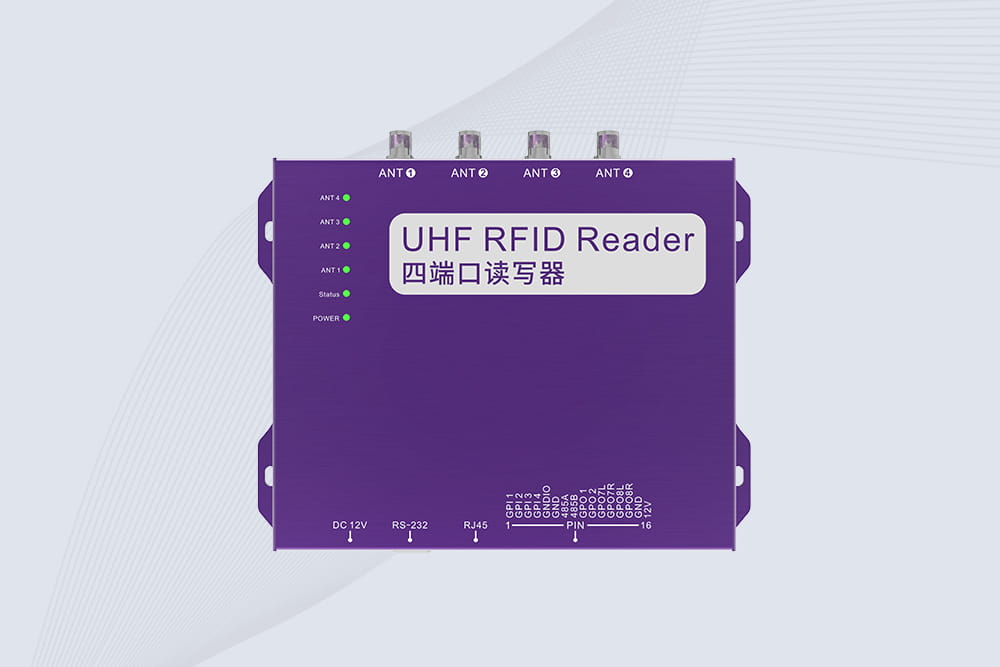
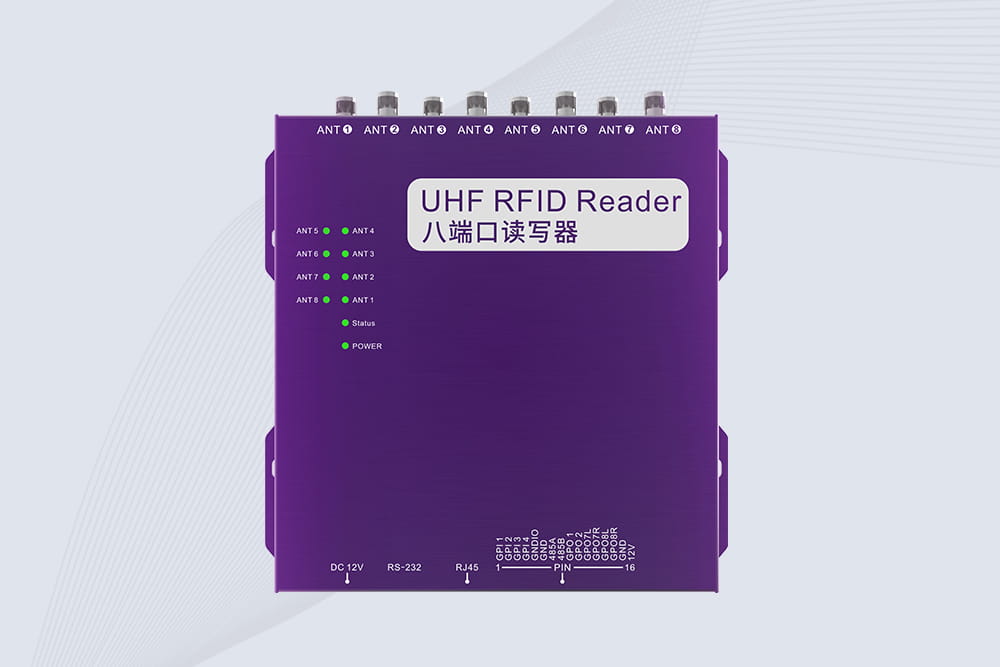
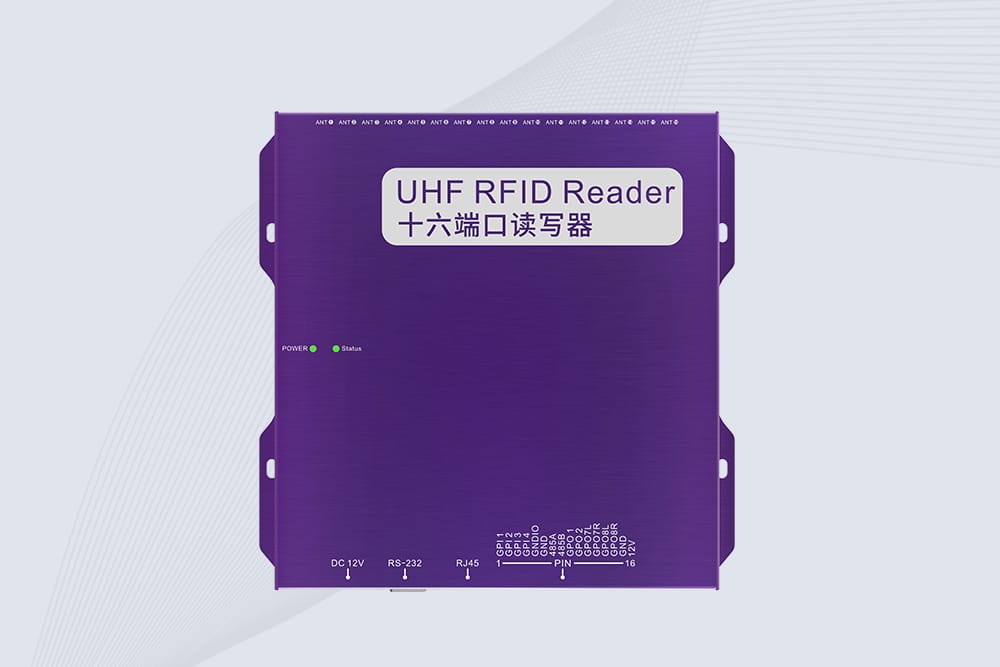
A 4-port, 8-port, or 16-port fixed reader can support different multi-antenna configurations, depending on the model.
When installing multiple antennas, check their coverage overlap. Excessive overlap can cause unwanted reads outside the intended zone, while insufficient coverage may leave blind spots.
The final arrangement should be tested with actual tagged products moving through the area.
Connect Power and Communication Cables
After mounting the reader and antennas, the next step is to complete the electrical and communication connections.
Cable planning is often underestimated during installation. In industrial environments, poor routing can create maintenance difficulties and communication problems.
Select the Appropriate Power Supply
Check the reader’s technical documentation before connecting power.
Confirm the required voltage, current capacity, connector type, and polarity. If the reader supports Power over Ethernet (PoE), verify that the network switch or injector meets the required PoE standard.
Avoid sharing unsuitable power circuits with equipment that generates substantial electrical noise.
Where possible, use properly protected power supplies and follow the facility’s electrical safety requirements.
Plan Ethernet and Serial Connections
Most industrial RFID projects need to transfer identification data to a computer, PLC, gateway, or management platform.
Ethernet is commonly used for network-based installations. RS232 and RS485 may also be suitable when the project requires serial communication.
Use industrial-grade cables where necessary, especially in areas exposed to vibration, dust, moisture, or mechanical damage.
Keep communication cables away from high-voltage power cables where practical. Use appropriate cable separation, shielding, and grounding according to the equipment specifications and local electrical standards.
Before continuing, verify that the reader can communicate with the host computer or control system.
Configure the Reader and Control Read Zones
Physical installation is only half of the job. The reader must also be configured to match the application.
Adjust RF Output Power
Starting with maximum RF output power is not always the best approach.
Excessive power can extend the reading area beyond the intended checkpoint. For example, a reader installed near a warehouse doorway may detect tags on nearby shelves, even when those items are not passing through the doorway.
Start with a conservative power setting and increase it gradually while monitoring actual tag detection.
The goal is not to achieve the longest possible reading distance. It is to identify the correct tags consistently within the required area.
Always follow the permitted frequency and transmission-power limits for the installation region.
Set Antenna Ports and Reading Parameters
For multi-port readers, confirm that each antenna is connected to the correct port.
Configure antenna switching, reading intervals, session parameters, and tag filtering according to the reader’s capabilities and project requirements.
If the system uses a PLC, WMS, MES, or ERP platform, confirm how tag data will be delivered and processed.
For software developers and system integrators, SDKs and APIs can help connect the reader to existing applications without building the communication layer entirely from scratch.
Test the Installation in Real Operating Conditions
An RFID installation should never be considered complete simply because the reader powers on and detects a test tag.
Testing must reflect normal operating conditions.
Check Read Rate and Missed Tags
Prepare several tagged items representing the actual products used in the facility.
Move them through the reading area at different speeds, distances, and orientations. Repeat the test with different tag positions and product loads.
Record:
Whether all expected tags are detected
Whether tags are detected at the correct checkpoint
Whether moving products cause inconsistent readings
Whether nearby tags are detected unintentionally
Whether reading performance changes when machinery operates
A controlled test with one tag is useful for initial setup, but it does not represent a real warehouse or production line.
Identify Cross-Reads and Signal Interference
Cross-reads occur when the reader detects tags outside the intended identification area.
If this happens, first review antenna direction and RF output power. You may also need to adjust antenna positions, use directional antennas, or introduce additional shielding where appropriate.
For installations with several readers operating close together, review their operating schedules and available interference-management features.
Only make one or two adjustments at a time. This makes it easier to identify which change improves the system.
Common Installation Mistakes to Avoid
Several installation problems appear repeatedly in industrial RFID projects.
Mounting antennas without testing their orientation: A mechanically convenient position may not provide effective tag coverage.
Installing equipment too close to metal: Metal structures can change the RF environment and affect antenna performance.
Using excessive transmission power: A larger reading area is not necessarily a better reading area.
Ignoring cable protection: Exposed cables near forklifts, conveyors, and machinery can become a source of downtime.
Testing only stationary tags: Actual products may move at different speeds and orientations.
Ignoring software integration: A reader that identifies tags but cannot deliver usable data to the control system does not complete the project.
These issues are easier and less expensive to address during commissioning than after the production line is operating.
Final Checklist Before Industrial Deployment
Before handing the system over to the operations team, review the installation.
Confirm that the reader is securely mounted.
Check antenna connections and mounting angles.
Verify the power supply and network connection.
Confirm that all antenna ports are configured correctly.
Test tag reading with actual products and operating speeds.
Check for missed reads and unwanted cross-reads.
Verify communication with the target software or control system.
Document reader settings, antenna positions, and cable routes.
Keep a copy of the final configuration. This is useful when replacing equipment, expanding the reading area, or troubleshooting performance changes later.
A successful fixed-mount RFID installation is not defined by how quickly the hardware is mounted. It is defined by whether the system continues to identify the right tags at the right location under normal industrial working conditions.
For manufacturers, system integrators, and automation developers, choosing suitable hardware and planning the installation together can reduce commissioning time and avoid unnecessary modifications.
Explore Cykeo Fixed RFID Readers for industrial RFID projects requiring multi-antenna configurations, continuous tag identification, and software integration support.
Frequently Asked Questions
1. Where should fixed-mount RFID readers be installed in a factory?
Fixed-mount readers should be installed near important identification points, such as conveyor entrances, production checkpoints, warehouse gates, and loading areas. The final position depends on product movement, tag location, and the required reading coverage.
2. How high should an industrial fixed-mount RFID reader be installed?
There is no fixed height for every application. Installation height depends on the antenna type, reading distance, tag orientation, and physical layout. Test different positions before finalizing the mounting arrangement.
3. Can fixed-mount RFID readers work near metal equipment?
Yes. Industrial UHF RFID readers can operate in metal-rich environments, but nearby metal surfaces may affect RF propagation. Proper antenna positioning, suitable tag selection, and on-site testing are important.
4. How many antennas can be connected to a fixed-mount RFID reader?
It depends on the reader model. Common configurations include 4-port, 8-port, and 16-port readers. The number of antennas should be selected according to the required reading zones and coverage.
5. How do you test a fixed-mount RFID installation?
Test with actual RFID-tagged products under normal operating conditions. Check reading consistency, missed tags, unwanted reads, movement speed, and communication with the host system.
Related Fixed-Mount RFID Reader Guides
Choosing the right reader starts with understanding its working principle and installation requirements. These guides provide additional information for RFID project planning:
Choosing a reader type is only the first step. For industrial projects, factors such as antenna coverage, communication interfaces, environmental conditions, and software integration also matter. Read our guide on how to choose fixed-mount readers for industrial applicationsfor a more detailed selection process.
Choosing a reader with enough antenna ports is only part of the installation process. You also need to determine how antennas should be positioned and connected to achieve reliable coverage. Read our guide to fixed-mount reader antenna configuration]for practical antenna layout considerations.
Besides reading performance and antenna configuration, communication compatibility is another important factor when selecting industrial RFID equipment. See our guide to fixed-mount reader connectivity and interfaces for an overview of Ethernet, serial communication, GPIO and software integration.
Power requirements should be evaluated early when selecting a fixed-mount RFID reader for industrial applications. Depending on the installation environment, PoE or an external DC power supply may be more suitable. Read our guide to PoE vs. DC Power for Fixed-Mount Readers to understand the differences and choose an appropriate power configuration.
For manufacturing projects that require continuous product identification across multiple production stages, installation planning should also consider work-in-progress tracking. See how fixed-mount readers support manufacturing and WIP visibility across production workflows.
For facilities that need to monitor equipment, tools, and reusable containers across multiple locations, fixed readers can do more than identify items at individual checkpoints. Learn how [fixed-mount readers for automated asset tracking systems] can support continuous asset identification, movement records, and centralized management.
SSD-R16L Multi-Channel RFID Infrastructure for Automated Inventory Management ✔️ 16-Port High-Density RFID Reading Equipped with 16 SMA antenna ports, SSD-R16L supports multi-antenna deployment for warehouses, retail stores, logistics, production lines, and large-area RFID identification. ✔️ High-Speed & Long-Range Performance With up to 33…
SSD-R8L 8-port UHF RFID reader with 33dBm output, up to 20m reading range and 600+ tags/s recognition. Ideal for warehouse, logistics, retail and asset tracking.
Cykeo CYKEO-C1 industrial Forklift RFID Reader features 20m read range, 600 tags/sec scanning, Impinj R2000 chipset, and IP67 rugged design. Ideal for warehouse logistics and manufacturing. Supports ISO 18000-6C/6B protocols.
Cykeo CYKEO-R4 industrial UHF RFID Fixed Reader features 4 TNC ports, 400+ tags/sec speed, IP67 housing, and global frequency compliance for vehicle inspection, smart warehouse, and asset management systems.
CYKEO CYKEO-R8L Fixed RFID Reader with 8-port UHF design, Impinj-based RF core and up to 20m read range. An industrial Fixed RFID Reader for vehicle inspection, warehouse portals, smart manufacturing lines and secure access checkpoints.
RFID Fixed Reader from CYKEO – the CYKEO-R16L 16-port UHF fixed reader for warehouses, smart cabinets, and production lines. Long-range, multi-tag reading, stable performance for 24/7 industrial use.
RFID Industry Writer | IoT & Asset Tracking Analyst
James writes about RFID technology, asset tracking, and the practical challenges of digital transformation across warehousing, retail, manufacturing, and logistics.
His work focuses on how RFID is applied in real-world operations—improving inventory visibility, automating workflows, and helping businesses manage assets with greater accuracy and efficiency.
He regularly covers topics including UHF RFID, smart cabinets, RFID portals, tool tracking, warehouse automation, and industrial IoT trends..
Learn how long range RFID scanners improve warehouse inventory tracking, pallet management, and logistics automation. A practical guide for RFID integrators, distributors, and bulk buyers.
Discover the best RFID-barcode hybrid scanners for small retail stores in 2024. Compare affordability, durability, and software compatibility for seamless inventory management.
Discover what is rfid reader and how it enables fast, accurate tag identification. Cykeo explains RFID reader technology, applications, and smart management solutions.
As technology advances rapidly, the concept of smart cities has garnered increasing attention. Among the key technologies enabling smart city development, Radio Frequency Identification (RFID) plays a pivotal role in boosting urban efficiency and ...
 Cykeo RFID IoT Solution Products R&D Manufacturer