When planning an RFID system, one of the first hardware decisions is whether to use fixed-mount readers or handheld RFID readers.
Both devices identify RFID tags and transfer collected data to a software platform. However, the way they are used in daily operations is quite different. A fixed reader monitors a designated location automatically, while a handheld reader allows an operator to scan tagged items wherever the work takes place.
The difference is not simply about whether a device can be moved. It affects system installation, labor requirements, reading coverage, data collection, and long-term operating costs.
For warehouse operators, manufacturers, and RFID system integrators, understanding these differences helps avoid choosing equipment that does not match the actual workflow.
Explore Cykeo’s range of industrial RFID readers, including fixed, handheld, USB, and portable models designed for different identification and tracking requirements.
Understanding the Two Types of RFID Readers
What Are Fixed-Mount RFID Readers?
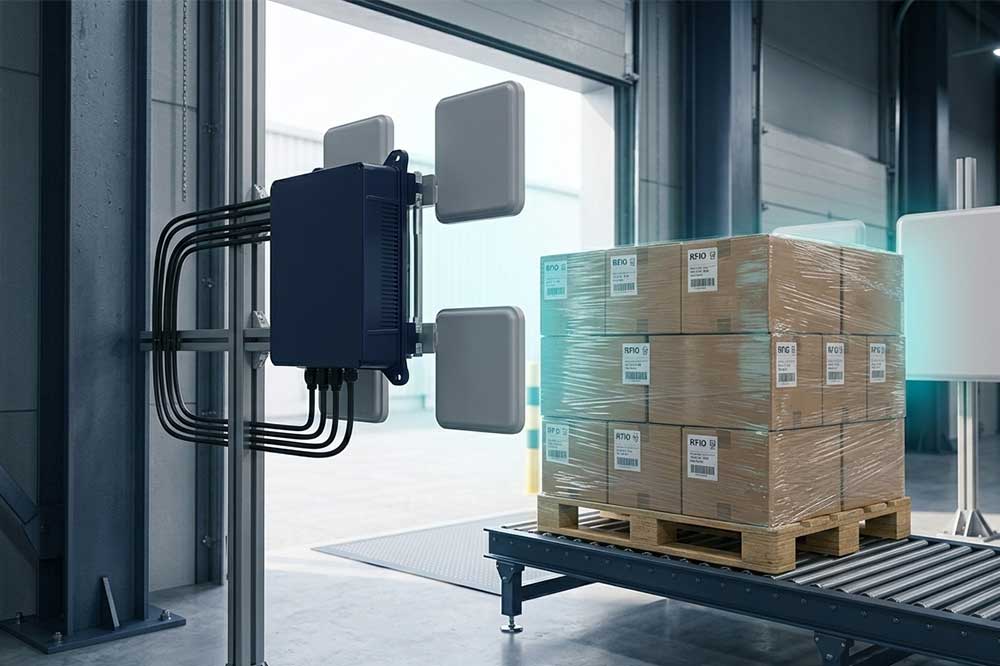
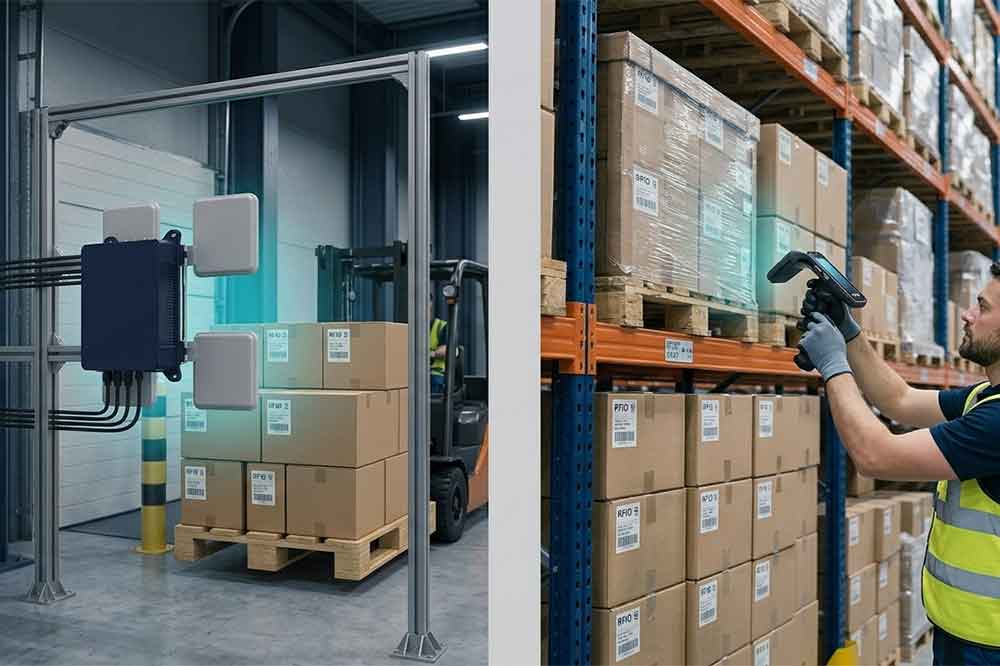
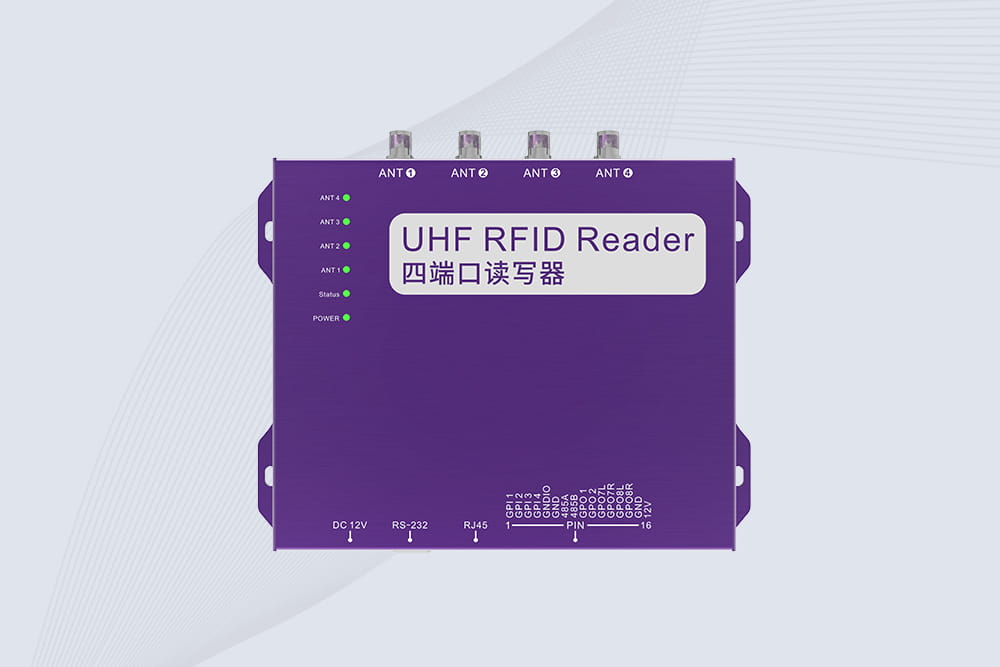
Fixed-mount RFID readers are stationary devices installed at specific locations within an RFID system. Typical installation points include warehouse entrances, loading docks, conveyor belts, production stations, and access control gates.
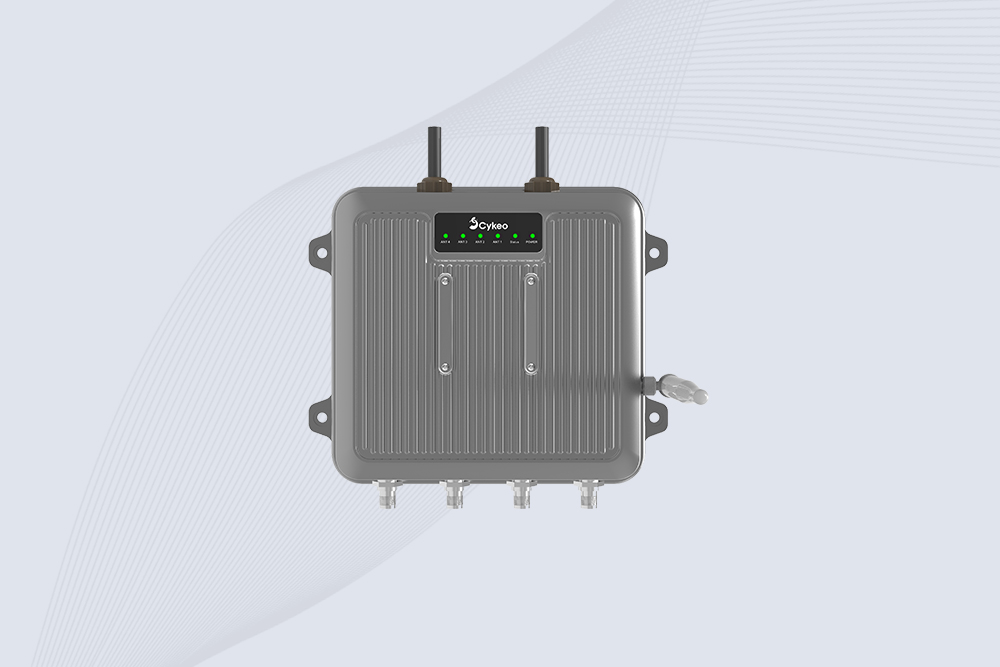
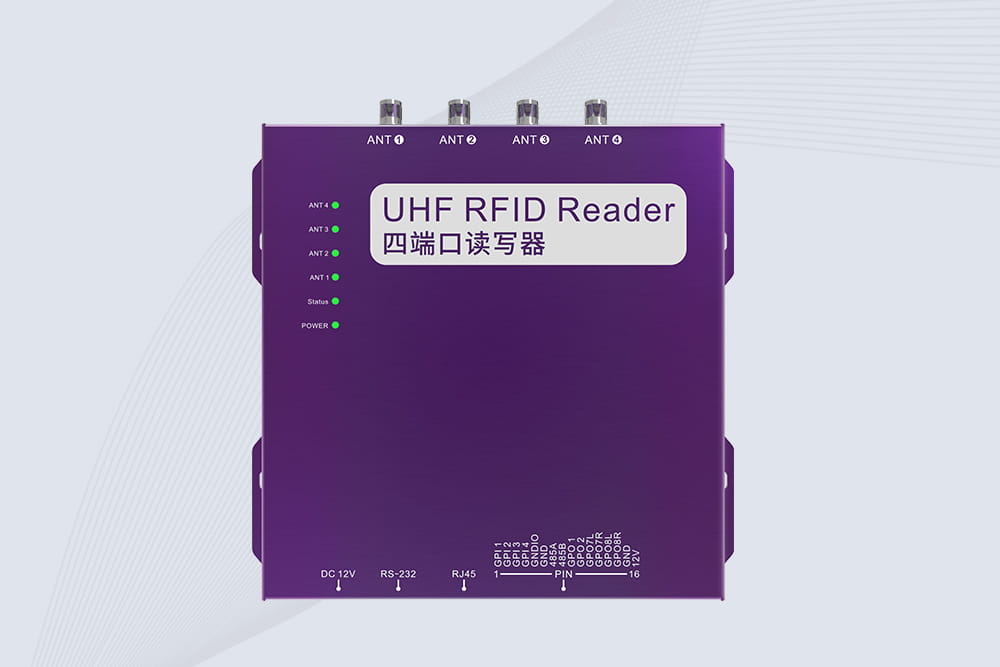
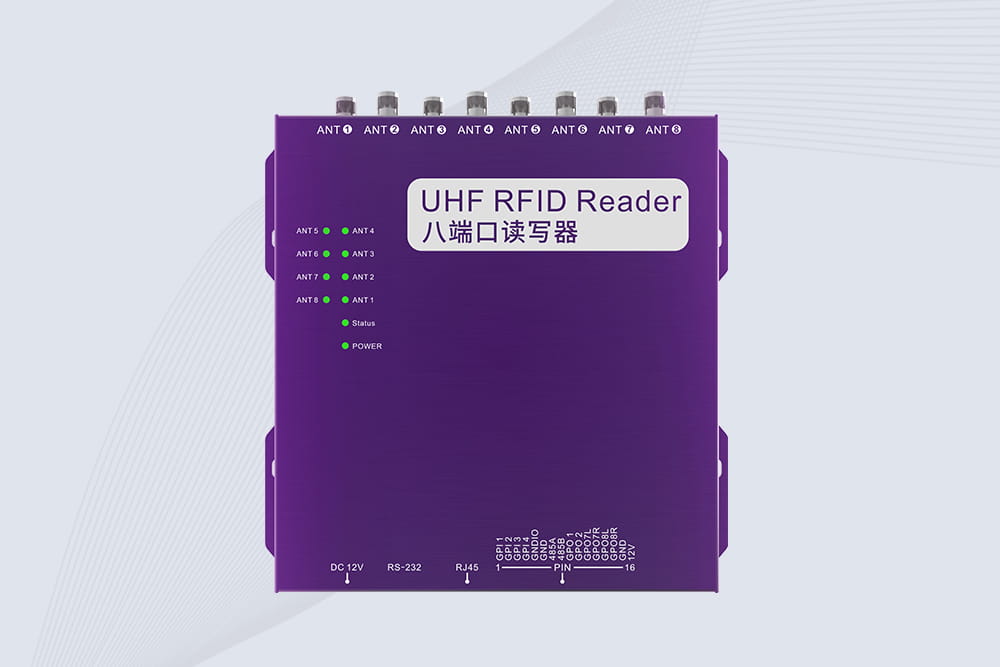
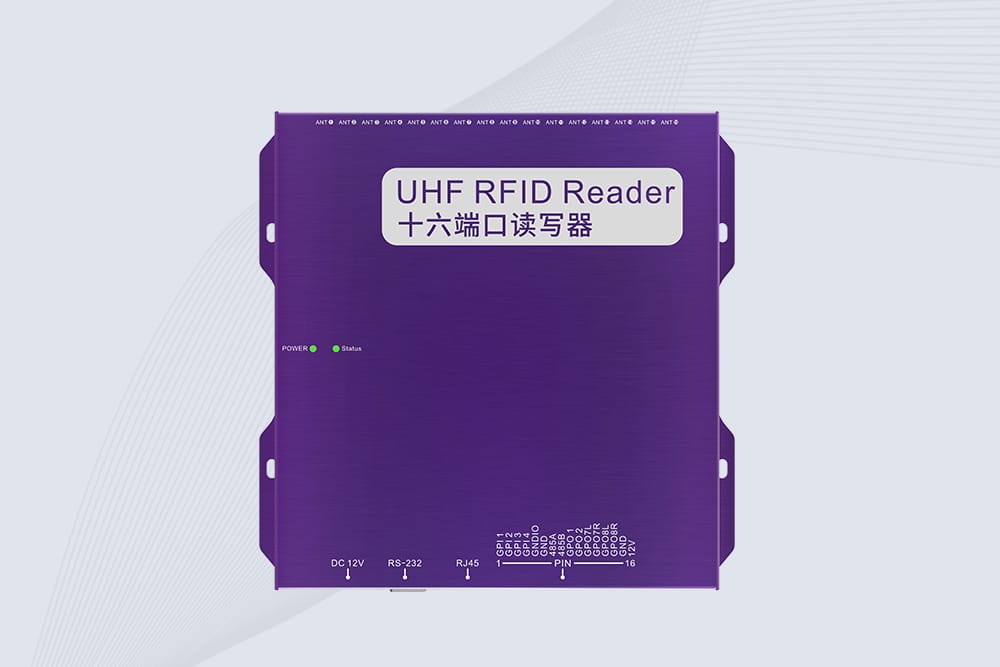
A fixed reader usually works with one or more external RFID antennas. Depending on the project, the antennas can be positioned in different directions to create a defined reading zone.
Once the system is configured, tagged items can be identified as they pass through the monitored area without requiring employees to scan each item manually.
For example, when a pallet enters a warehouse through an RFID checkpoint, the fixed reader can capture the tag information and send it to the warehouse management system.
This makes fixed readers suitable for applications where products, materials, or assets follow predictable movement paths.
What Are Handheld RFID Readers?
Handheld RFID readers are portable devices operated directly by employees. They are commonly used for inventory counting, asset inspection, warehouse audits, and locating specific tagged items.
An operator carries the reader to the target area and initiates scanning. Depending on the model, the device may include an integrated screen and antenna or connect to a smartphone, tablet, or computer.
The main advantage is flexibility. Employees can scan different shelves, storage areas, production locations, or outdoor asset zones without installing permanent reading infrastructure at every location.
However, handheld scanning still depends on people. The operator must visit the relevant area, operate the device, and complete the scanning task.
Fixed-Mount Readers vs. Handheld: Key Differences
The two reader types use RFID communication technology, but their deployment models create different advantages.
Comparison Factor
Fixed-Mount Readers
Handheld RFID Readers
Installation
Permanent mounting
Portable operation
Mobility
Limited
High
Scanning method
Automatic
Operator-controlled
Coverage
Defined reading zones
Areas visited by users
Antennas
Often external antennas
Usually integrated antenna
Operation
Continuous or event-based
Task-based
Labor requirements
Lower for routine checkpoints
Requires operators
Best applications
Automation and checkpoints
Inventory and inspections
The actual reading performance depends on the RFID frequency, antenna design, reader power, tag type, surrounding materials, and installation conditions. A fixed reader is not automatically better at every reading task.
Installation and Mobility
Installation is one of the clearest differences.
A fixed-mount reader needs a suitable mounting position, power supply, communication connection, and antenna arrangement. In industrial projects, engineers may also need to consider protective enclosures, cable routing, mounting brackets, and the physical movement of goods.
This requires more preparation before the system becomes operational.
Handheld readers are generally easier to deploy. An operator can take the device to a working area and start scanning after the required software and network settings have been configured.
For temporary inventory checks or facilities with changing layouts, this flexibility can be useful.
However, when a business needs to monitor the same checkpoint throughout the day, repeatedly sending employees to scan that location is usually less practical than installing a fixed reader.
Reading Coverage and Performance
Fixed readers are often connected to external antennas. Multiple antennas can be installed around a conveyor, doorway, or warehouse passage to cover different directions.
This is useful when tagged items move through a controlled reading area. Engineers can adjust antenna positions and settings to improve tag detection and reduce unwanted reads.
Handheld readers provide a different type of coverage. Their reading area moves with the operator, allowing staff to scan shelves, containers, tools, and equipment in different locations.
The operator can also change position or scanning direction when a tag is difficult to detect.
Neither configuration guarantees that every tag will be read. Metal surfaces, liquid products, tag orientation, tag density, and interference from nearby equipment can all affect performance.
For a fixed installation, antenna placement and read-zone testing are particularly important. For handheld applications, device handling and scanning procedures also influence the results.
Automation and Labor Requirements
A fixed reader can collect RFID data without requiring an employee to trigger every scan. This is particularly useful in high-volume operations.
Consider a distribution center receiving dozens of pallets every hour. With a properly designed RFID checkpoint, tagged pallets can be identified as they pass through the entrance. The information can then be transferred to the warehouse system for receiving or movement records.
A handheld reader is more appropriate when employees need to verify stock, inspect equipment, or search for specific assets.
It can improve the speed of manual work, but it does not remove the need for an operator to visit the target location.
The decision should therefore be based on the level of automation required, not just the number of RFID tags involved.
System Integration
Both fixed and handheld RFID readers can be connected to business software, although the integration architecture may differ.
Fixed readers are commonly integrated into WMS, ERP, MES, access control, and industrial automation systems. Their data collection process can be linked to predefined events, such as goods entering a warehouse or workpieces reaching a production station.
Handheld devices are often connected to inventory applications, mobile databases, warehouse terminals, or asset management software.
For system integrators and software developers, available communication interfaces, SDKs, APIs, and development documentation should be checked before selecting a device.
The important question is not only whether a reader can identify a tag, but also whether the collected data can be transferred and processed correctly within the customer’s existing system.
Initial Investment and Operating Costs
Handheld RFID readers generally require less installation infrastructure. A project may begin with a small number of devices and expand as operational needs grow.
Fixed readers require more planning. The total project cost may include the reader, external antennas, cables, mounting hardware, network connections, installation labor, and software integration.
However, comparing equipment prices alone can be misleading.
If a warehouse performs repetitive scanning at several busy checkpoints, a fixed system may reduce manual work and improve data consistency over time. On the other hand, installing fixed readers in areas that only require occasional checks may create unnecessary expense.
The right comparison should include installation costs, labor, maintenance, expected operating hours, and the number of reading points.
Applications: Where Does Each Reader Work Best?
Warehouse and Logistics Operations
Fixed readers are useful at loading docks, warehouse entrances, conveyor systems, and shipping checkpoints. They can automatically record the movement of tagged pallets, containers, and goods.
Handheld readers support cycle counting, stock verification, location checks, and exception handling.
A warehouse that needs both continuous movement tracking and periodic stock audits may benefit from using both types.
Manufacturing and Production Lines
Fixed readers can be installed at production stations to identify workpieces, containers, or material carriers as they move between processes.
This allows production software to associate RFID data with manufacturing stages.
Handheld readers are useful for equipment inspections, tool tracking, maintenance checks, and verifying materials in storage areas.
For automated production lines, a handheld device alone may not provide the continuous data collection required by the process.
Asset Tracking and Inventory Management
Fixed readers are suitable for monitoring assets at important access points or designated storage locations.
Handheld readers are useful when employees need to perform periodic asset audits or locate tagged equipment across a large facility.
The choice depends on whether the project needs automatic monitoring at specific locations or flexible identification across a wider working area.
Can Fixed-Mount and Handheld RFID Readers Work Together?
Yes. In many industrial RFID projects, combining the two types provides a more practical solution than relying on only one.
For example, a logistics company can install fixed readers at warehouse entry and exit points to record incoming and outgoing goods. Employees can then use handheld readers to perform cycle counts, verify inventory differences, and locate missing items.
In manufacturing, fixed readers can monitor work-in-progress movement between production stations, while handheld devices support maintenance and tool inspections.
This arrangement separates routine automated data collection from tasks that require human attention.
It also helps system integrators design an RFID solution around actual operating procedures instead of forcing every process to use the same hardware.
How to Choose the Right RFID Reader for Your Project
Before selecting equipment, consider the following questions:
Where will RFID tags be read? If items pass through known checkpoints, fixed readers may be suitable. If scanning locations change frequently, handheld devices offer more flexibility.
Does the process require automatic identification? Continuous monitoring generally favors fixed readers.
How many reading zones are needed? Multiple external antennas may be necessary for larger or more complex installations.
What software will receive the data? Check communication interfaces, SDKs, APIs, and compatibility with the existing system.
What are the environmental conditions? Metal, liquids, vibration, dust, and installation space should be considered during hardware selection.
Will the system expand later? Future reading points, antenna requirements, and integration needs should be included in the original design.
It is also important to confirm the RFID frequency and protocol required by the project. A reader and tag must use compatible standards to communicate correctly.
For businesses developing their own RFID products or industrial systems, the reader should be selected as part of the complete solution, together with antennas, tags, software, and mechanical installation requirements.
Final Thoughts
The comparison between fixed-mount readers and handheld RFID readers comes down to how a business needs to collect information.
Fixed readers are a strong choice for permanent checkpoints, automated identification, and continuous tracking. Handheld readers are more suitable for mobile inventory work, inspections, and flexible scanning tasks.
Neither option is the universal solution. The best choice depends on the operating environment, reading process, integration requirements, and expected level of automation.
For companies planning an RFID deployment, reviewing the available RFID reader solutions from Cykeo is a useful starting point. The product range includes fixed, handheld, USB, and portable RFID reader options for different project requirements.
Contact the Cykeo team with your application details, RFID frequency, reading distance, and software requirements to discuss a suitable reader configuration.
FAQ
Q1: What is the main difference between fixed-mount and handheld RFID readers?
Fixed-mount readers are installed at permanent locations for automatic tag detection. Handheld RFID readers are portable devices operated by users for inventory checks, inspections, and mobile scanning.
Q2: Are fixed RFID readers better for warehouse automation?
Generally, yes. Fixed readers can automatically identify tagged goods at warehouse gates, conveyor systems, and loading areas without requiring employees to initiate each scan.
Q3: Can handheld RFID readers read multiple tags simultaneously?
Yes. UHF handheld RFID readers support multiple-tag identification. Actual performance depends on reader specifications, antenna design, tag density, and operating conditions.
Q4: Can fixed and handheld RFID readers be used in the same system?
Yes. Fixed readers can monitor warehouse checkpoints, while handheld devices support inventory audits, asset inspections, and exception handling.
Q5: Which RFID reader is more cost-effective?
Handheld readers usually have lower initial installation costs. Fixed readers require additional infrastructure but may reduce labor costs in repetitive, high-volume automated operations.
SSD-R16L Multi-Channel RFID Infrastructure for Automated Inventory Management ✔️ 16-Port High-Density RFID Reading Equipped with 16 SMA antenna ports, SSD-R16L supports multi-antenna deployment for warehouses, retail stores, logistics, production lines, and large-area RFID identification. ✔️ High-Speed & Long-Range Performance With up to 33…
SSD-R8L 8-port UHF RFID reader with 33dBm output, up to 20m reading range and 600+ tags/s recognition. Ideal for warehouse, logistics, retail and asset tracking.
Cykeo CYKEO-C1 industrial Forklift RFID Reader features 20m read range, 600 tags/sec scanning, Impinj R2000 chipset, and IP67 rugged design. Ideal for warehouse logistics and manufacturing. Supports ISO 18000-6C/6B protocols.
Cykeo CYKEO-R4 industrial UHF RFID Fixed Reader features 4 TNC ports, 400+ tags/sec speed, IP67 housing, and global frequency compliance for vehicle inspection, smart warehouse, and asset management systems.
CYKEO CYKEO-R8L Fixed RFID Reader with 8-port UHF design, Impinj-based RF core and up to 20m read range. An industrial Fixed RFID Reader for vehicle inspection, warehouse portals, smart manufacturing lines and secure access checkpoints.
RFID Fixed Reader from CYKEO – the CYKEO-R16L 16-port UHF fixed reader for warehouses, smart cabinets, and production lines. Long-range, multi-tag reading, stable performance for 24/7 industrial use.
RFID Industry Writer | IoT & Asset Tracking Analyst
James writes about RFID technology, asset tracking, and the practical challenges of digital transformation across warehousing, retail, manufacturing, and logistics.
His work focuses on how RFID is applied in real-world operations—improving inventory visibility, automating workflows, and helping businesses manage assets with greater accuracy and efficiency.
He regularly covers topics including UHF RFID, smart cabinets, RFID portals, tool tracking, warehouse automation, and industrial IoT trends..
Discover the best handheld RFID readers for healthcare equipment tracking. Learn key features like sterilization resistance, compliance, and Cykeo’s healthcare-focused solutions.
in-depth look at RFID bank card readers, from commercial applications to the controversy around RFID-blocking wallets. Drawing from real-world cases and industry experience, this article unpacks the tension between payment convenience and security...
A long range RFID scanner helps smart factories track materials, work-in-process products, tools, equipment, pallets, and reusable containers. By connecting ...
 Cykeo RFID IoT Solution Products R&D Manufacturer