 Cykeo RFID IoT Solution Products R&D Manufacturer
What Is EPC in RFID?
83Learn what EPC in RFID means, how Electronic Product Codes work, and why EPC data is essential for RFID asset tracking, inventory management, and supply chain visibility.
MoreAll RFID Product
An RFID chip stores digital information and communicates wirelessly with RFID readers to identify, track, and manage tagged objects automatically. It enables fast data capture without direct contact, supporting applications such as inventory control, asset tracking, logistics, healthcare management, and industrial automation.
What does an rfid chip do is a question we frequently receive from companies evaluating RFID systems for the first time. In practical deployments, an RFID chip acts as a small electronic identity carrier. It connects a physical object with digital information, allowing organizations to recognize, locate, and manage items more efficiently.
Unlike traditional barcodes that require visible alignment and manual scanning, RFID chips communicate through radio frequency signals. A reader sends energy through an antenna, activates the chip, and receives stored information back. This interaction happens within milliseconds, making RFID suitable for environments where hundreds or thousands of items must be identified quickly.
During Cykeo RFID solution testing projects, our engineering team often observes this difference directly. In a warehouse environment, operators do not need to stop, open boxes, or manually scan labels one by one. RFID readers can capture multiple tagged items simultaneously, reducing manual handling steps and improving operational visibility.
According to the GS1 RFID technology guidelines, RFID enables automatic identification and data capture by using radio waves to exchange information between tags and readers. This technology has become an important foundation for modern supply chain visibility and asset management systems.
An RFID chip is usually embedded inside an RFID tag. The complete RFID system contains three essential components:
| Component | Function |
|---|---|
| RFID Chip | Stores identification data and communicates with readers |
| RFID Antenna | Receives and transmits radio frequency signals |
| RFID Reader | Sends commands and collects chip information |
The chip itself contains a small integrated circuit (IC). Depending on the application, it may store:
When an RFID reader emits radio waves, the antenna inside the tag captures energy from the signal. Passive RFID chips use this energy to power the chip temporarily and transmit stored data back to the reader.
This process is different from active RFID systems, where tags include their own battery. Passive RFID is widely adopted because it offers long service life, compact size, and lower maintenance requirements.
Choosing the correct RFID chip depends on the environment, reading distance, and data requirements.
| RFID Chip Type | Power Source | Typical Range | Common Applications |
|---|---|---|---|
| Passive RFID Chip | Powered by reader signal | From centimeters to several meters | Inventory, tools, documents, retail |
| Active RFID Chip | Built-in battery | Tens to hundreds of meters | Vehicle tracking, large assets |
| Semi-passive RFID Chip | Battery-assisted | Medium range | Sensors and industrial monitoring |
For many industrial identification projects, passive UHF RFID chips provide the right balance between cost and performance.
Cykeo engineering teams commonly work with UHF RFID systems based on EPC Class 1 Gen 2 / ISO 18000-6C standards. These standards are widely used globally for supply chain and asset identification applications.
The GS1 EPCglobal framework defines EPC-based RFID identification methods that allow companies to create unique digital identities for physical products.
At Cykeo, RFID performance is not evaluated only in laboratory conditions. Real deployment environments introduce challenges that specifications alone cannot reveal.
During RFID system integration projects, our engineers typically test:
A common issue we encounter is that an RFID chip may perform differently depending on where it is installed. A tag attached to a metal tool, for example, requires different antenna design compared with a paper document label.
This is why RFID system design involves more than selecting a chip. The combination of chip type, antenna structure, reader power, and software algorithm determines the final performance.
Cykeo RFID solutions use advanced signal processing algorithms and anti-collision technology to improve multi-tag recognition efficiency. In practical inventory scenarios, this allows operators to identify groups of tagged items instead of processing each item individually.
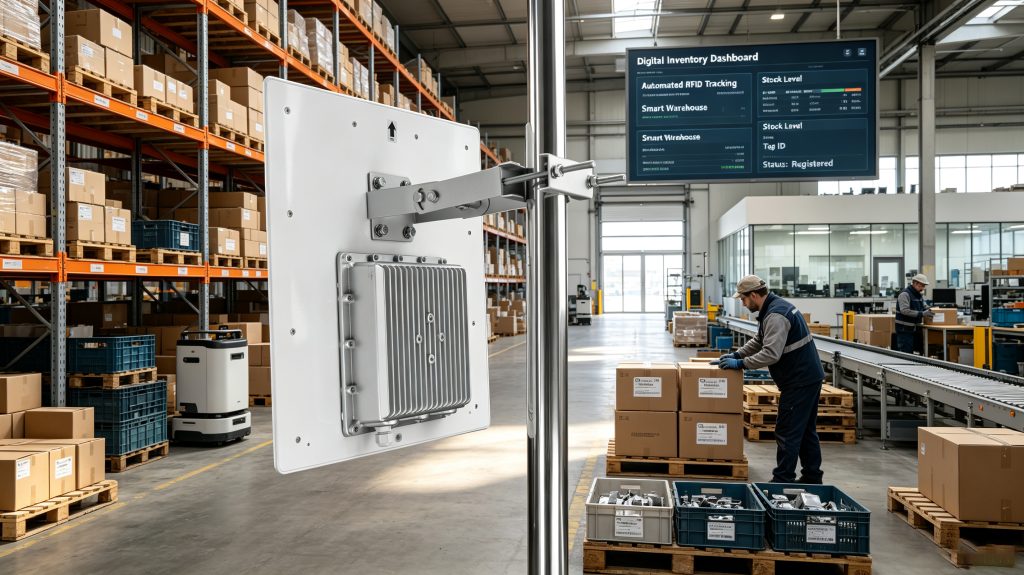
RFID chip performance is not determined only by the silicon inside the tag. During real deployments, Cykeo engineers evaluate the interaction between RFID chips, antennas, readers, materials, and software systems. This engineering approach helps customers avoid common problems such as unstable reading, missed inventory, and unreliable data capture.
Over years of RFID system development, our team has worked on applications including smart libraries, industrial tool tracking, textile management, manufacturing identification, and enterprise asset management. In these environments, RFID chips are tested under conditions that are very different from laboratory demonstrations.
A tag attached to a metal tool behaves differently from one placed on a cardboard box. A textile label moving through a laundry process faces different challenges from a library label sitting on a shelf. The chip itself is only one part of the complete identification system.
According to the RFID Journal, RFID adoption continues expanding across industries because organizations need automatic identification systems that improve visibility and operational efficiency. The practical value comes from designing the complete RFID ecosystem, not simply selecting a chip.
When designing RFID solutions, Cykeo focuses on several engineering factors:
| Technical Factor | Engineering Consideration | Practical Benefit |
|---|---|---|
| Chip compatibility | Supports different RFID protocols and frequency ranges | Flexible deployment across industries |
| Signal stability | Optimized reader-chip communication | Higher identification reliability |
| Anti-collision processing | Multiple tag recognition algorithms | Faster bulk inventory operations |
| Data management | Filtering and RSSI signal analysis | Better control in complex environments |
| Integration capability | SDK, API, and development support | Faster customer system integration |
RFID chips normally contain three core elements:
For industrial applications, Cykeo engineers often analyze:
This prevents a common mistake: selecting RFID chips based only on advertised reading distance.
In factories and maintenance environments, RFID chips help companies identify tools, equipment, and production assets.
A typical deployment process includes:
For example, maintenance departments can quickly verify whether tools return after inspection instead of relying on manual counting.
RFID chips are widely used in libraries because they allow fast identification of books and documents.
Cykeo RFID systems support:
Compared with manual barcode scanning, RFID enables multiple items to be identified simultaneously, reducing repetitive scanning work.
The International Federation of Library Associations and Institutions (IFLA) has documented RFID technology as an important automation method for modern library services. International Federation of Library Associations and Institutions (IFLA)
Laundry environments create unique RFID challenges because tags must withstand:
RFID chips integrated into textile labels allow organizations to track uniforms, hospital linen, and rental textiles throughout their lifecycle.
The key engineering point is not only chip selection but also packaging technology and reader configuration.

Choosing an RFID chip requires understanding application requirements.
| Application | Recommended RFID Consideration |
|---|---|
| Library books | Compact tags, reliable reading, fast inventory |
| Industrial tools | Durable housing, metal resistance, stable communication |
| Medical supplies | Data accuracy, hygiene requirements |
| Logistics pallets | Long-range UHF communication |
| Textile tracking | Wash resistance and flexible materials |
Cykeo engineers normally review these questions before recommending an RFID solution:
Different surfaces affect performance. Metal environments may require specialized anti-metal RFID tags, while plastic packaging usually provides easier communication conditions.
High-volume inventory requires strong anti-collision algorithms. Reader performance and chip communication efficiency must work together.
Some projects only require unique identification numbers, while others require additional memory for operational information.
A successful RFID project depends on more than purchasing RFID chips. Field experience shows that installation details often determine final performance.
During system testing, engineers may discover issues that are invisible during initial planning:
Cykeo approaches RFID deployment as a complete engineering process:
This practical workflow helps organizations build RFID systems that remain stable after long-term operation.
Most passive RFID chips do not contain batteries. They receive energy from the electromagnetic field generated by an RFID reader and use this energy to transmit stored information.
RFID chips usually store identification data rather than complete personal information. System security depends on encryption methods, access controls, and backend database management.
Reading distance depends on RFID frequency, reader power, antenna design, tag type, and environment. UHF RFID systems can achieve longer distances than HF systems under suitable conditions.
Common causes include:
Professional testing before deployment helps reduce these problems.

SSD-A06 UHF RFID antenna with circular polarization, adjustable 840–960 MHz frequency, ≥4.5 dBi gain, and a compact directional design for RFID systems.
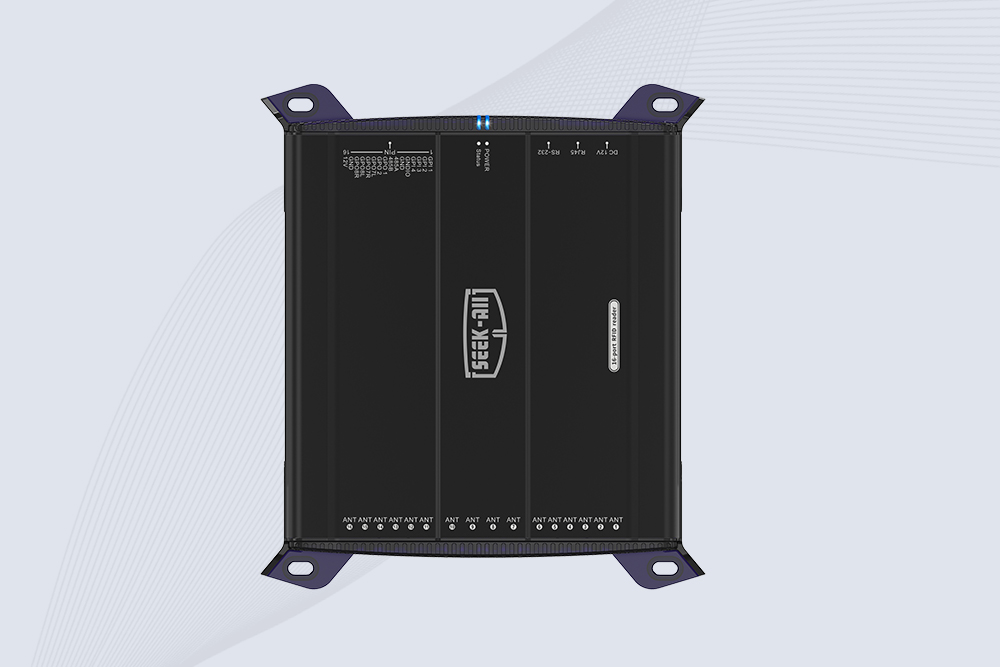
SSD-R16L Multi-Channel RFID Infrastructure for Automated Inventory Management ✔️ 16-Port High-Density RFID Reading Equipped with 16 SMA antenna ports, SSD-R16L supports multi-antenna deployment for warehouses, retail stores, logistics, production lines, and large-area RFID identification. ✔️ High-Speed & Long-Range Performance With up to 33…
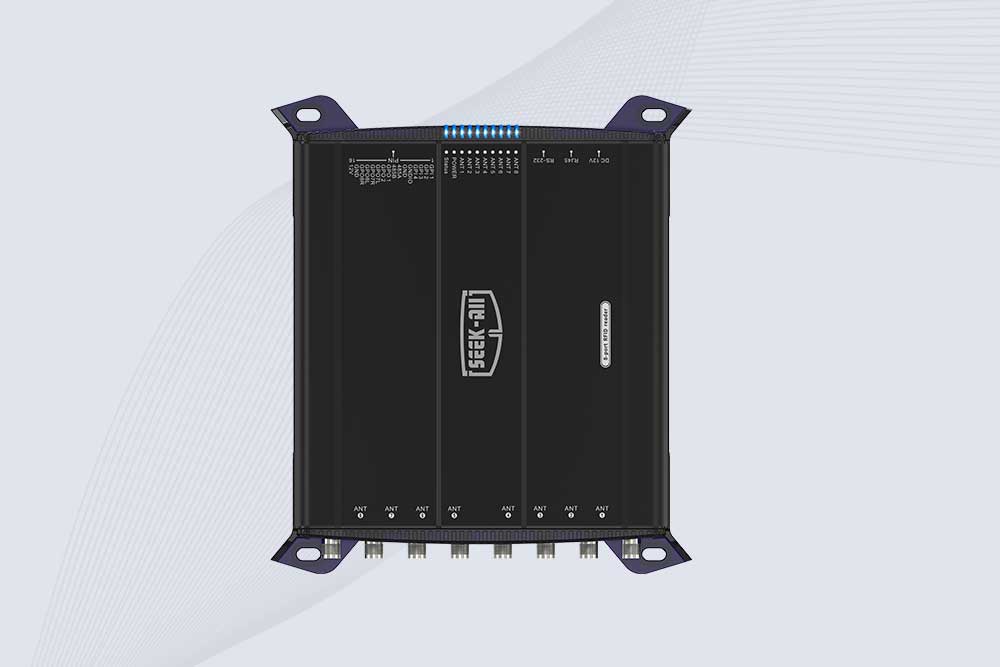
SSD-R8L 8-port UHF RFID reader with 33dBm output, up to 20m reading range and 600+ tags/s recognition. Ideal for warehouse, logistics, retail and asset tracking.
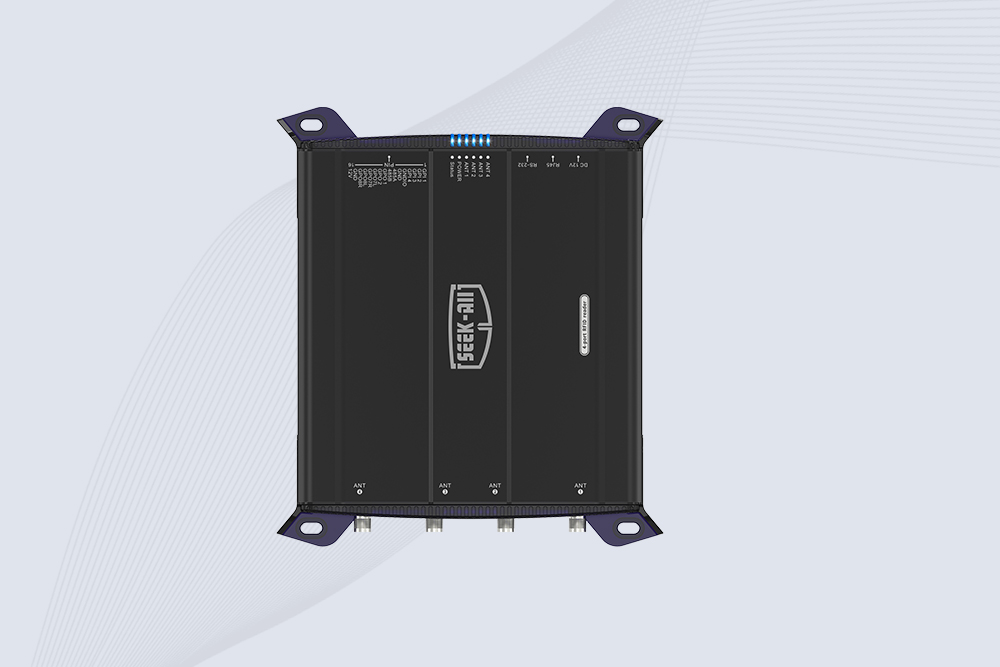
SSD-R4L is a 4-port UHF RFID fixed reader with 33dBm output power, up to 20m reading range, EPC C1G2 support and 600+ tags/s reading speed.
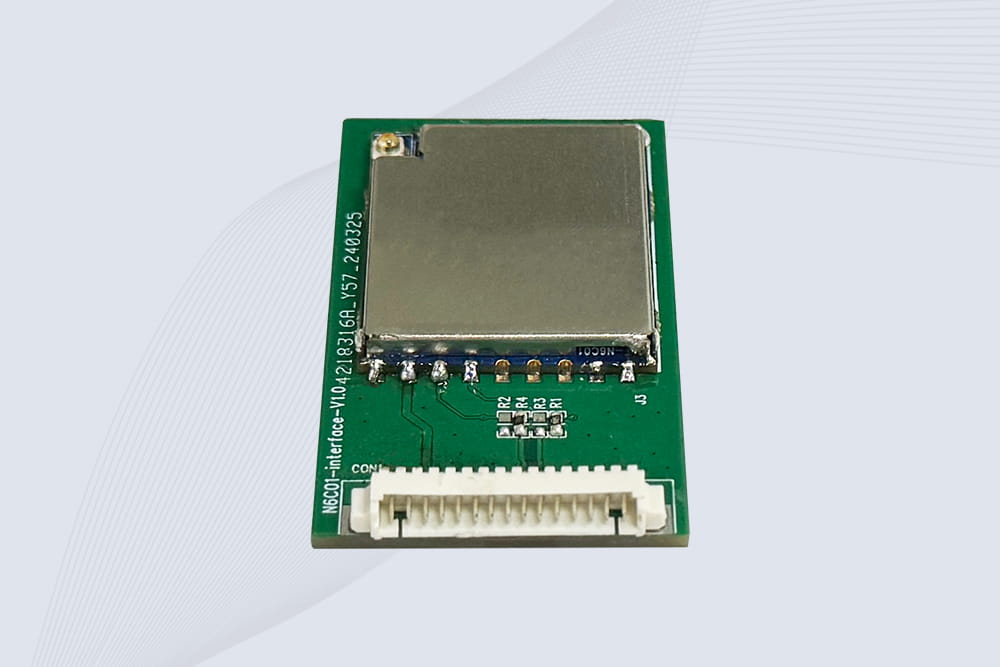
CYKEO Embedded RFID Modules are designed for compact industrial and IoT devices that require stable UHF performance. These UHF RFID Modules support global protocols, flexible power control, and reliable multi-tag reading for smart cabinets, production lines, and asset tracking systems.
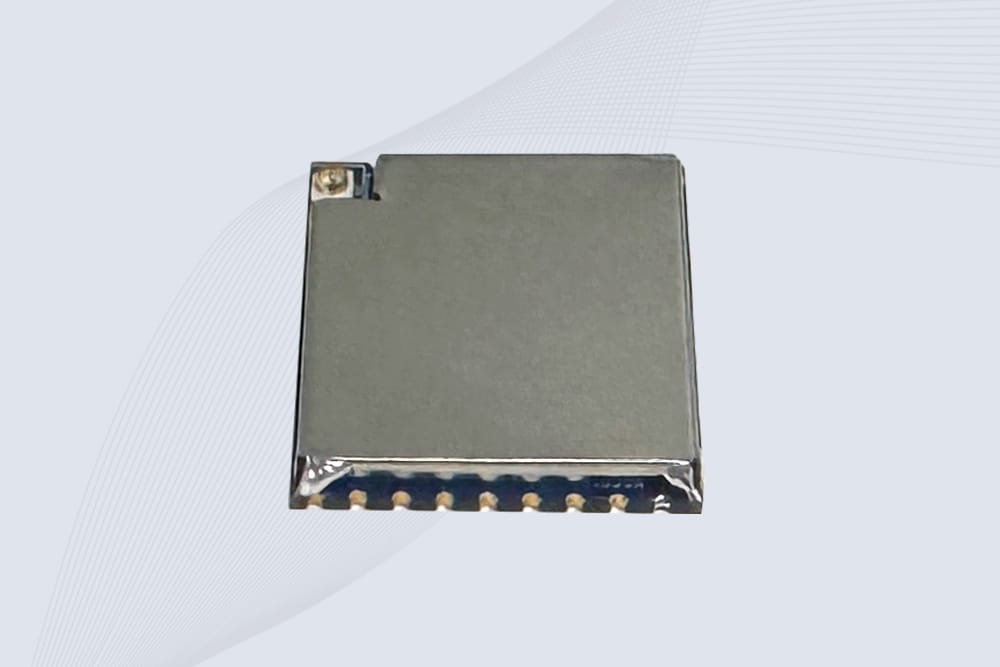
CYKEO Embedded RFID Module is built for compact IoT and industrial devices that need stable UHF performance. This UHF module supports global protocols, low power operation, and reliable multi-tag reading for smart lockers, production lines, and always-on RFID systems.
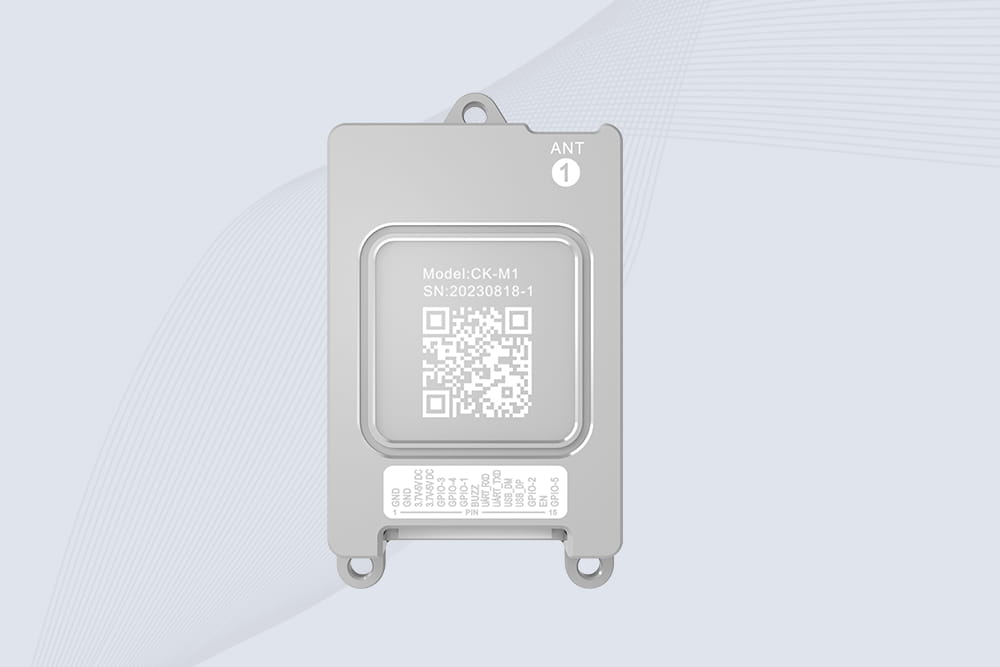
CYKEO CYKEO-M1 drone rfid module is a compact UHF RFID reader module designed for drones and UAV platforms. It supports long-range aerial scanning, fast multi-tag reading, and stable performance in wind, vibration, and outdoor environments.
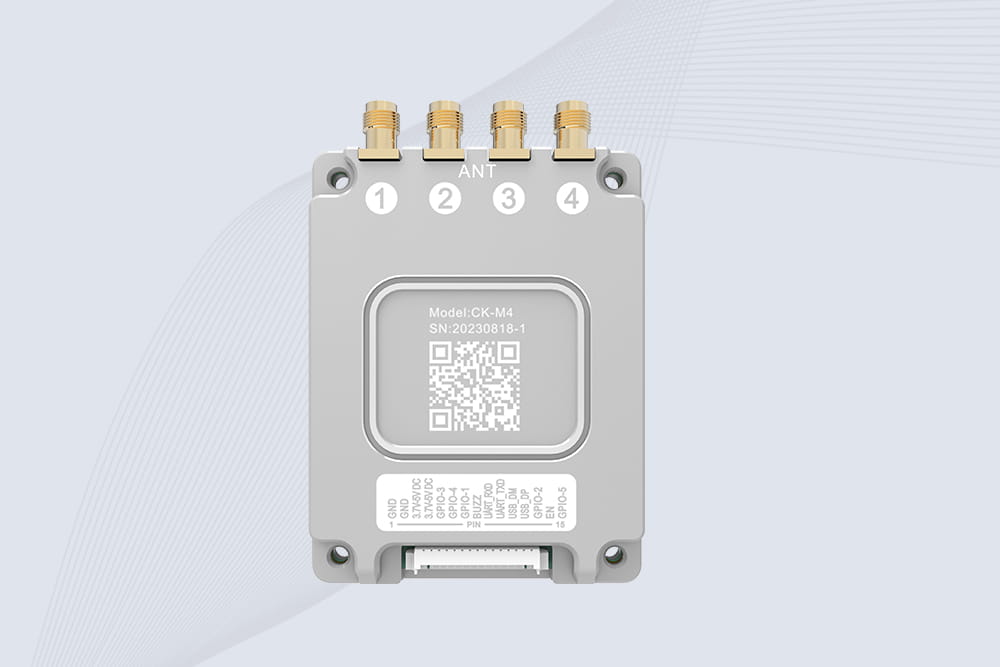
CYKEO CYKEO-M4 RC522 RFID Module is an industrial-grade UHF RFID reader with 4 ports, supporting ISO, EPC, and GB protocols. High-speed, accurate reading for IoT, automation, and warehouse applications.
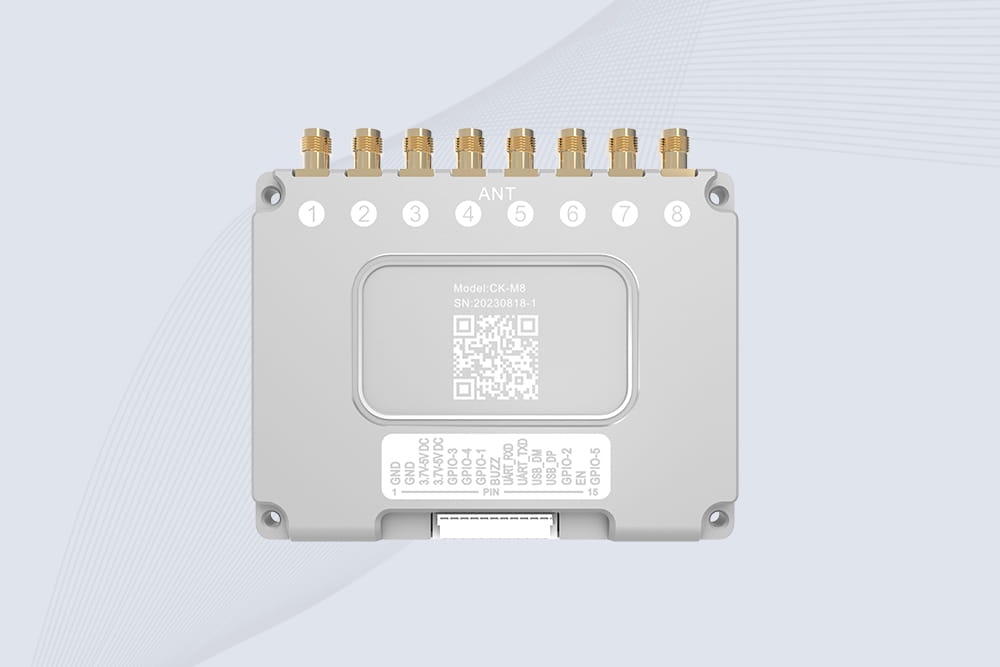
CYKEO CYKEO-M8 Module RFID is an 8-port UHF R2000 RFID Module designed for high-density, multi-tag environments. Stable 33dBm output, ISO & GB protocol support, ideal for warehouses, factories, and automated systems.
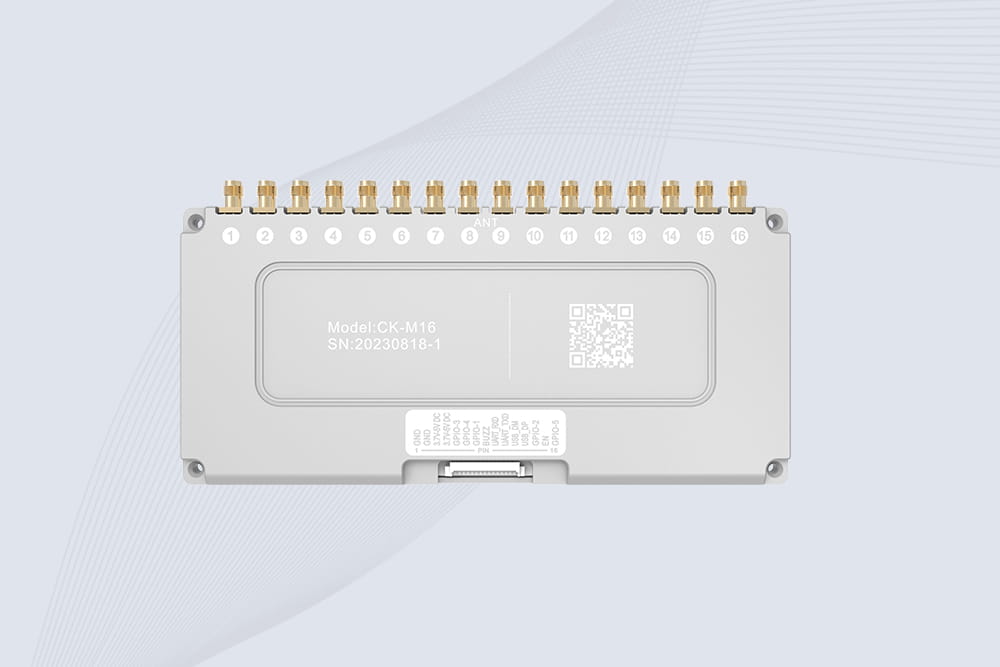
CYKEO CYKEO-M16 RFID Module is a 16-port UHF RFID reader module based on the R2000 chipset. Designed for dense tag environments, it supports ISO and GB standards and delivers stable multi-antenna control for industrial automation.
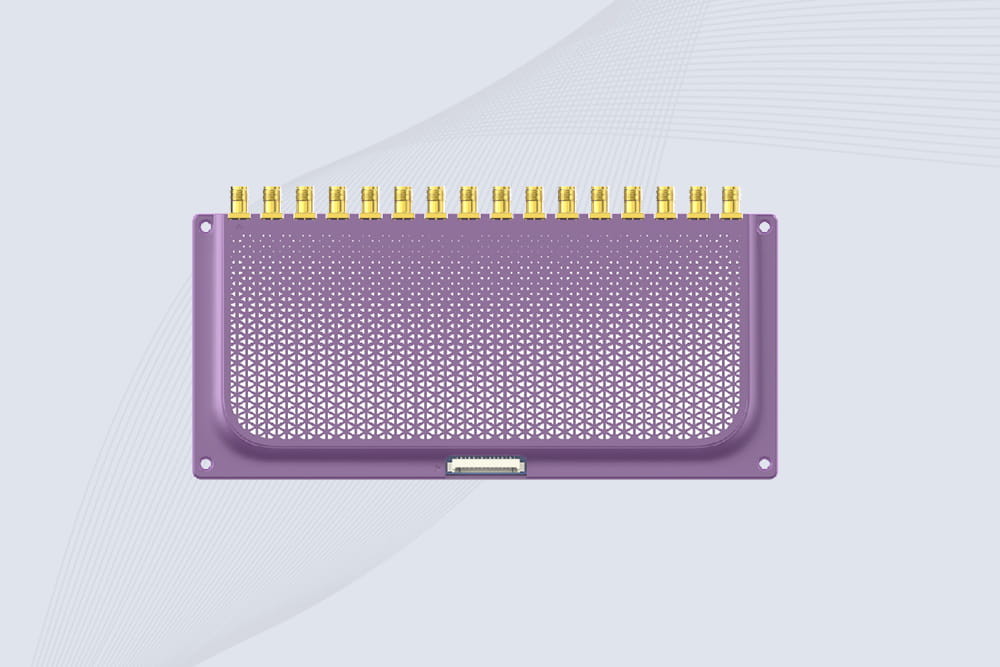
The CYKEO CYKEO-M16L RFID Reader Module is a 16-channel UHF RFID core designed for dense tag environments. With adjustable 33dBm output, multi-protocol support, and stable multi-antenna control, this RFID Tag Reader Module fits industrial automation, warehouse systems, and large-scale IoT deployments.
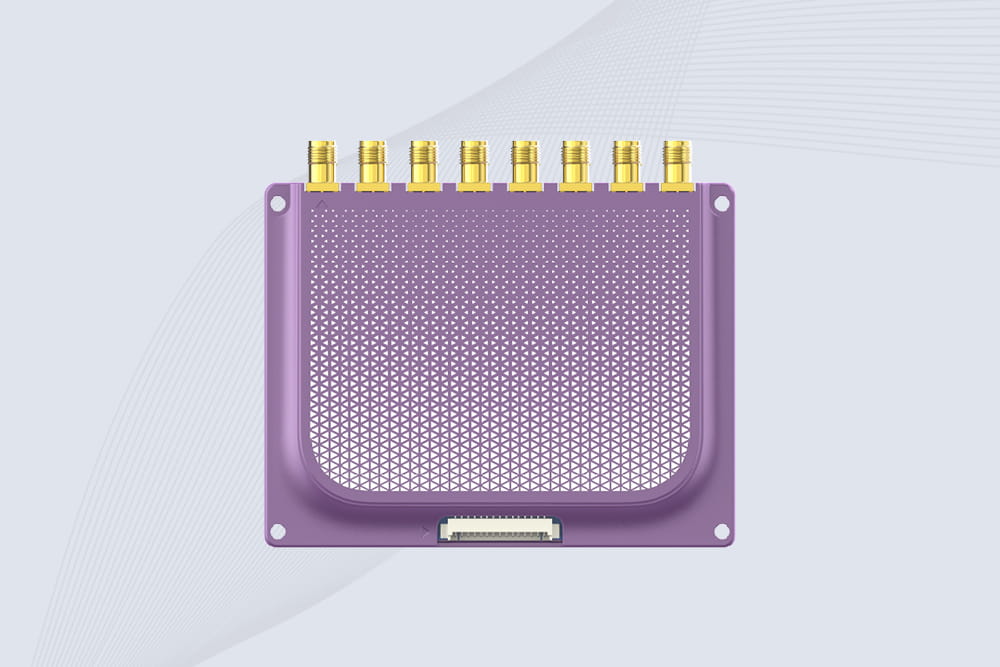
CYKEO CYKEO-M8L module RFID is a compact industrial UHF module built for dense tag and multi-antenna environments. With 8 RF ports, adjustable 33 dBm output, and ISO & GB protocol support, it is widely used in factories, warehouses, and automated tracking systems.
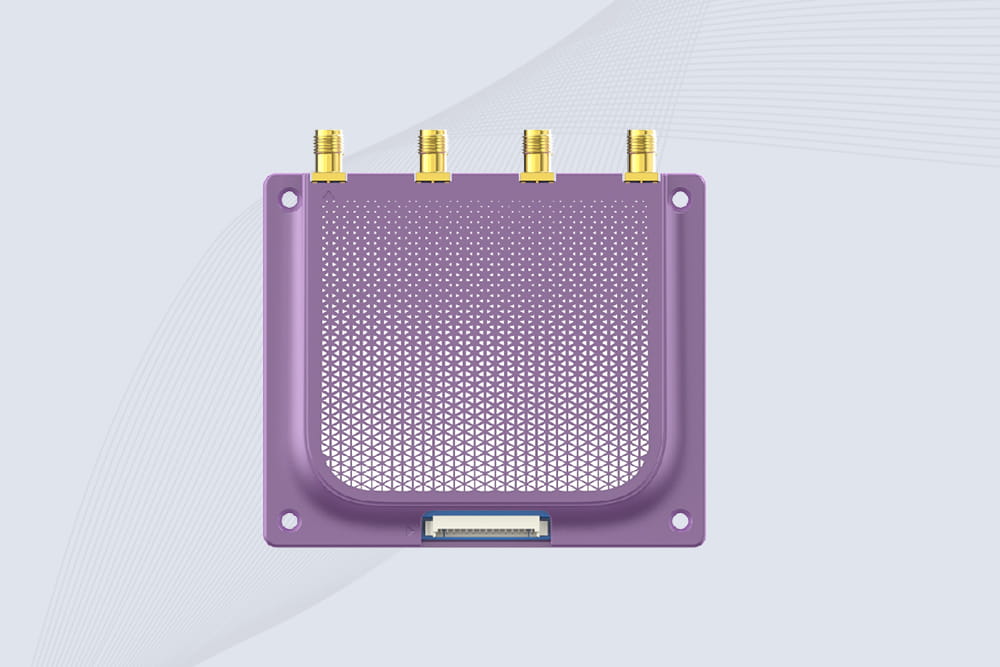
CYKEOCYKEO-M4L UHF RFID Module is a compact 4-channel RFID tag reader module designed for dense tag environments. Supporting ISO and GB protocols, it delivers stable reads up to 10 meters for industrial and IoT systems.
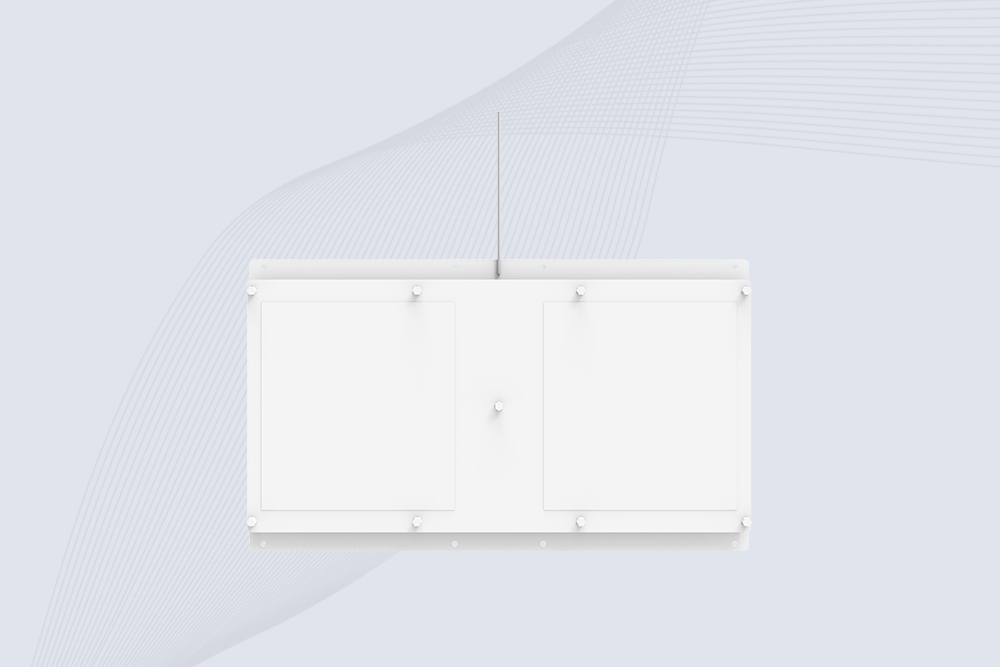
Cykeo CYKEO-A11 UHF RFID reader antenna delivers 11dBi gain, 840-960MHz frequency range, and IP65 ruggedness for retail, logistics, and industrial RFID systems. Features low VSWR and easy installation.

CYKEO Antenna RFID Reader delivers stable long-range UHF performance with a 10.5dBi directional design, built for warehouses, conveyor portals, and industrial RFID systems. This rfid reader antenna provides 20m+ read distance and rugged IP67 protection.

Cykeo CYKEO-PHF3 industrial HF RFID Antenna offers 24-point dynamic tracking, ISO 14443A/15693 protocols, metal-environment stability for archives/libraries/manufacturing.

Cykeo CYKEO-A5B industrial Linear RFID Antenna delivers 5dBi gain, ≤1.5:1 VSWR, and IP65 rugged design for warehouse, production line, and logistics UHF systems.

Cykeo’s CYKEO-B12 Long Range RFID Antenna delivers 15m+ read range with 12dBi gain, IP65 rugged design, and global 840-960MHz UHF support. Ideal for warehouse/logistics asset tracking.
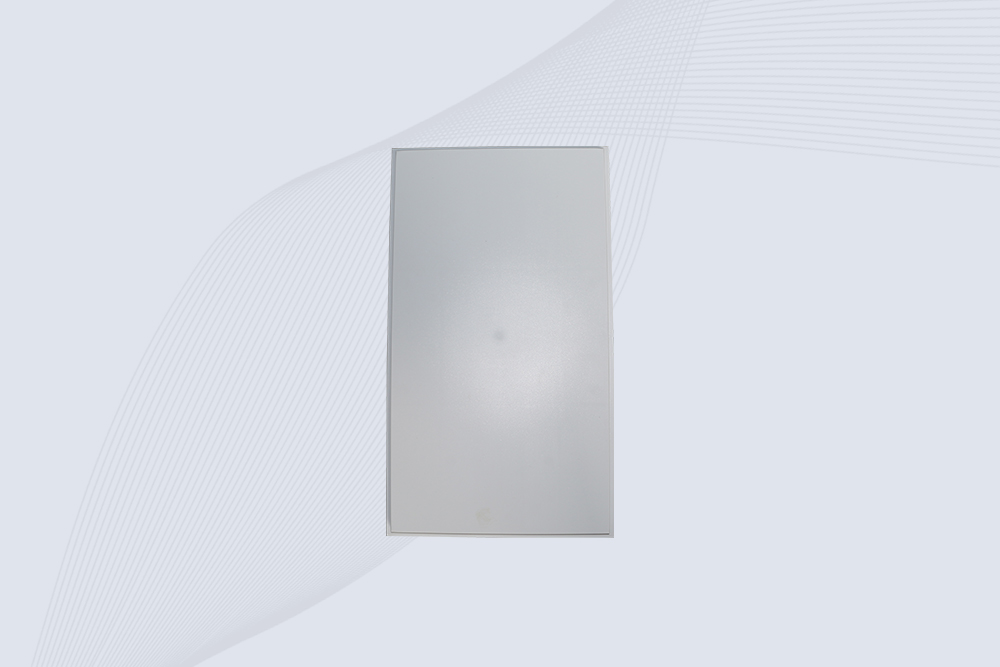
Cykeo CYKEO-B10 Long Distance RFID Antenna offers 10dBi gain, 840-960MHz frequency range, IP65 rating, and 20m+ coverage for logistics/warehousing/ETC systems. Low VSWR ensures stable signal transmission.
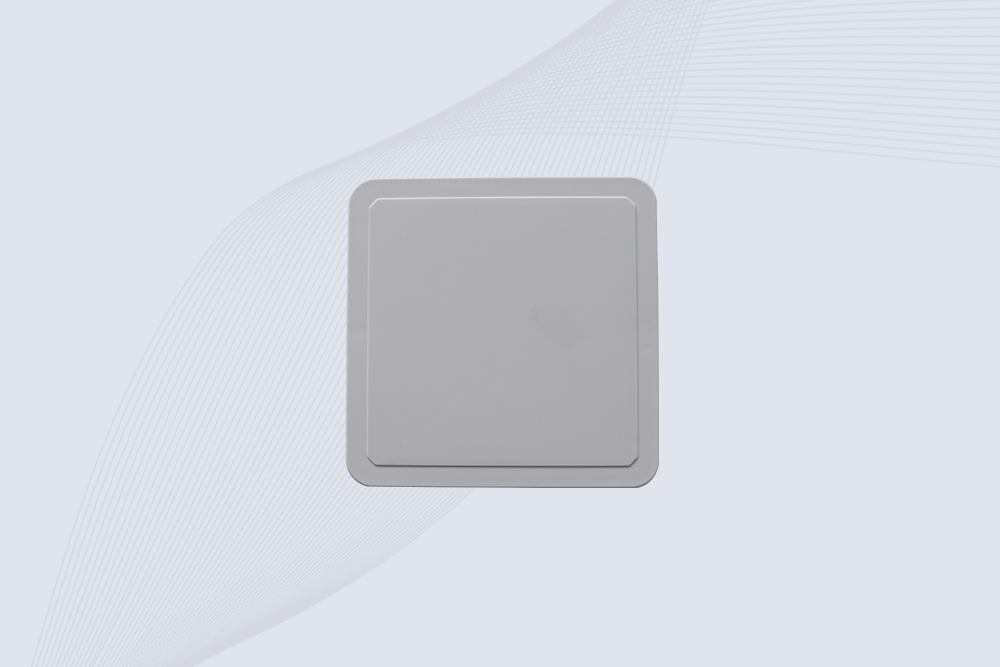
Cykeo CYKEO-A6 UHF RFID panel antenna features 6dBi gain, 840-960MHz broadband, IP65 metal-ready housing for logistics/smart retail. 18mm ultra-thin design with tool-free mounting.

Cykeo CK-A3 industrial antenna RFID UHF offers 5m+ tag detection, ≤1.3:1 VSWR, IP65 rugged design, and global UHF spectrum compatibility (840-960MHz) for warehouses, factories, and retail.
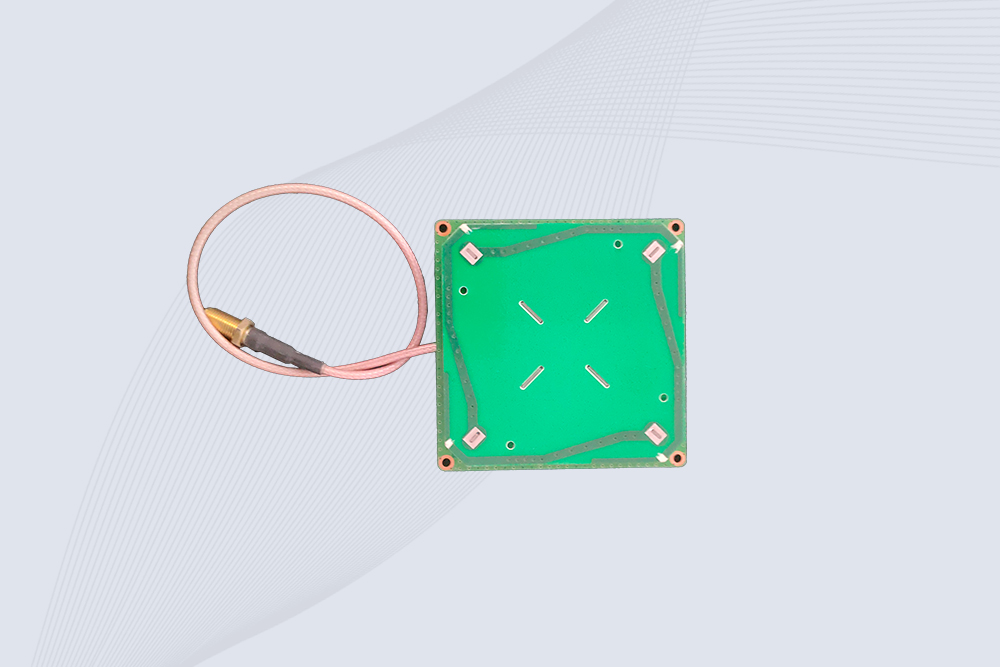
Cykeo CYKEO-B5 directional RFID antenna provides 5dBi gain with 60° narrow beamwidth for precise inventory tracking. IP65-rated, global UHF frequency support, and low VSWR.
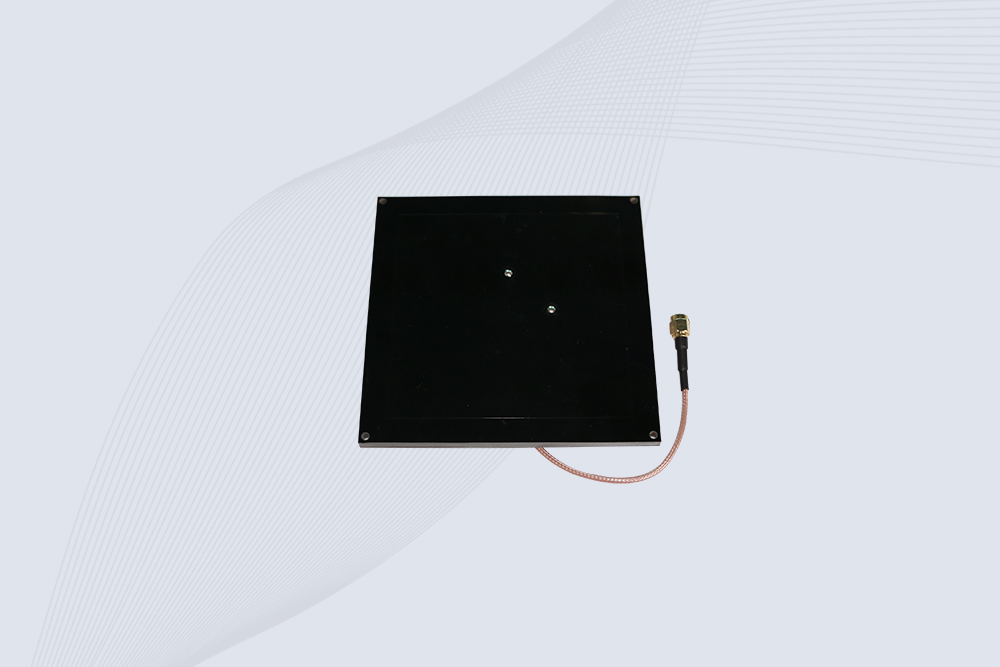
Create your own high-performance DIY RFID antenna! 5dBi gain, 840-960MHz tunable, step-by-step guides. Compatible with Arduino, Raspberry Pi, and commercial UHF readers.
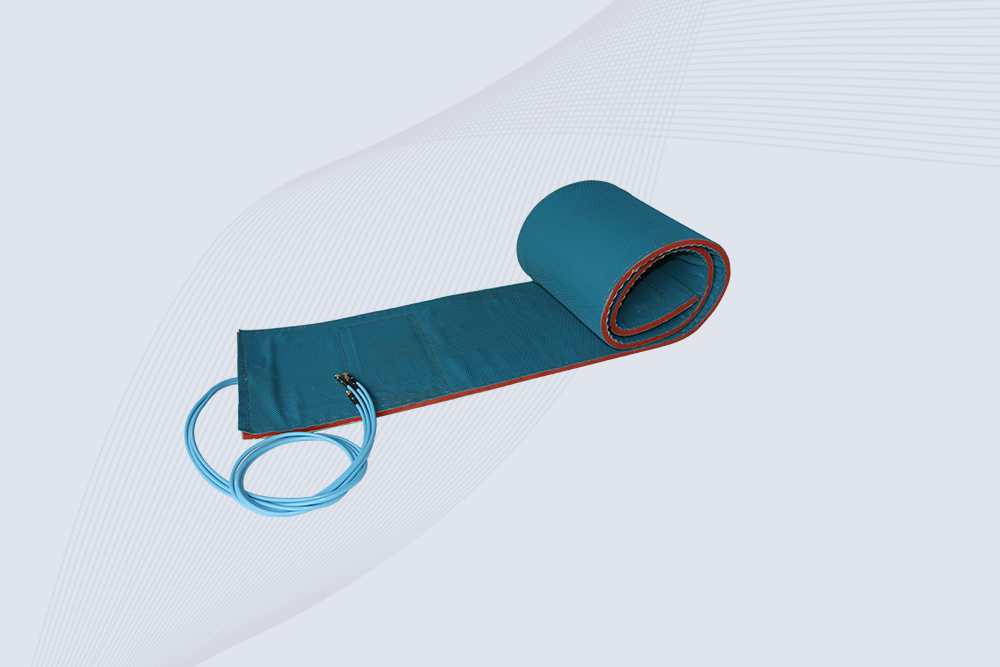
Cykeo CYKEO-A7 Flexible RFID Antenna features 840-960MHz wideband tuning, 7dBi gain, and IP68 rating for medical/retail/industrial curved surface deployments. 98% read accuracy with peel-and-stick installation.

Cykeo CYKEO-B5A industrial Passive RFID Antenna delivers 5dBi gain, 70° beamwidth, and -40°C~55°C operation for warehouses/smart cabinets. Compatible with Zebra/Impinj readers.
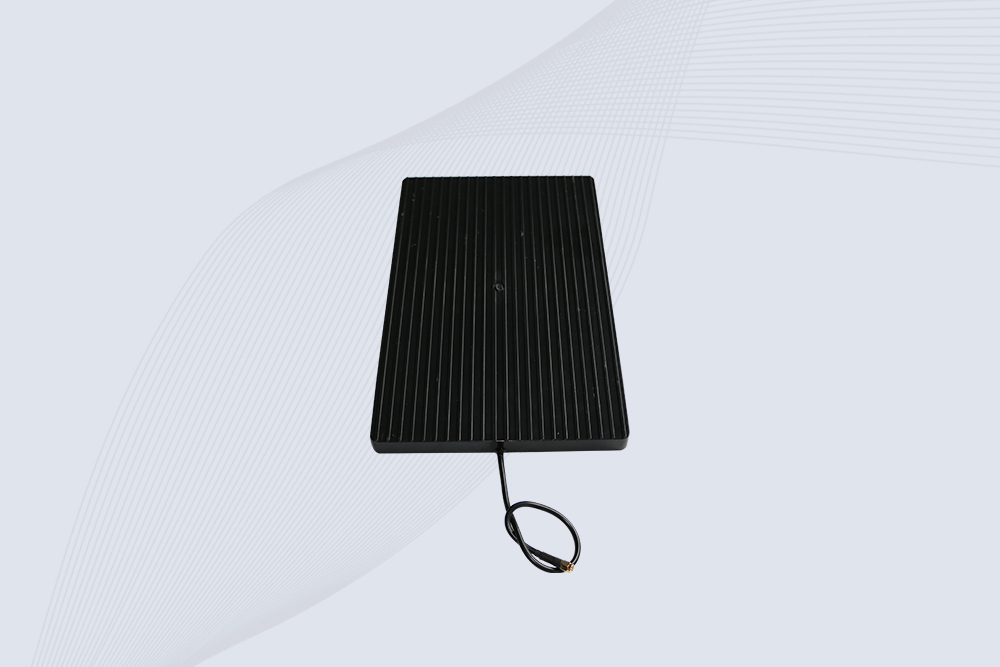
Cykeo’s CYKEO-A9B High Gain RFID Antenna delivers 15m+ read range with 9dBi amplification. Features IP54 rugged design, 840-960MHz bandwidth, and 80° beamwidth for warehouse/manufacturing RFID systems.

Cykeo’s enterprise-grade 8dbi Impinj RFID Antenna 10m+ read range with 840-960MHz tuning. Features IP65 housing, 1.4 VSWR, 35° beamwidth for retail/warehouse RFID systems.
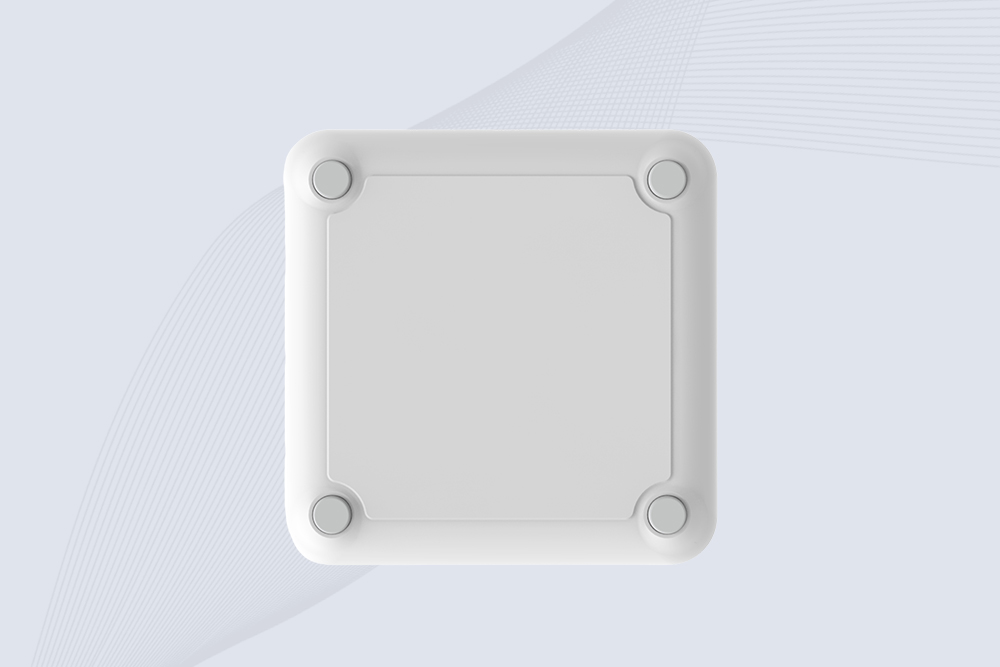
Cykeo CYKEO-A9 industrial UHF RFID antenna delivers 9dBi gain, 840-960MHz frequency range, and IP65 protection for warehouse/logistics/retail RFID systems. Features N-type connector and ≤1.3:1 VSWR.
CYKEO UHF RFID Antenna built for long-distance and industrial applications. This antenna rfid uhf delivers strong gain, outdoor durability, and reliable tag performance in warehouses, yards, and vehicle ID systems.
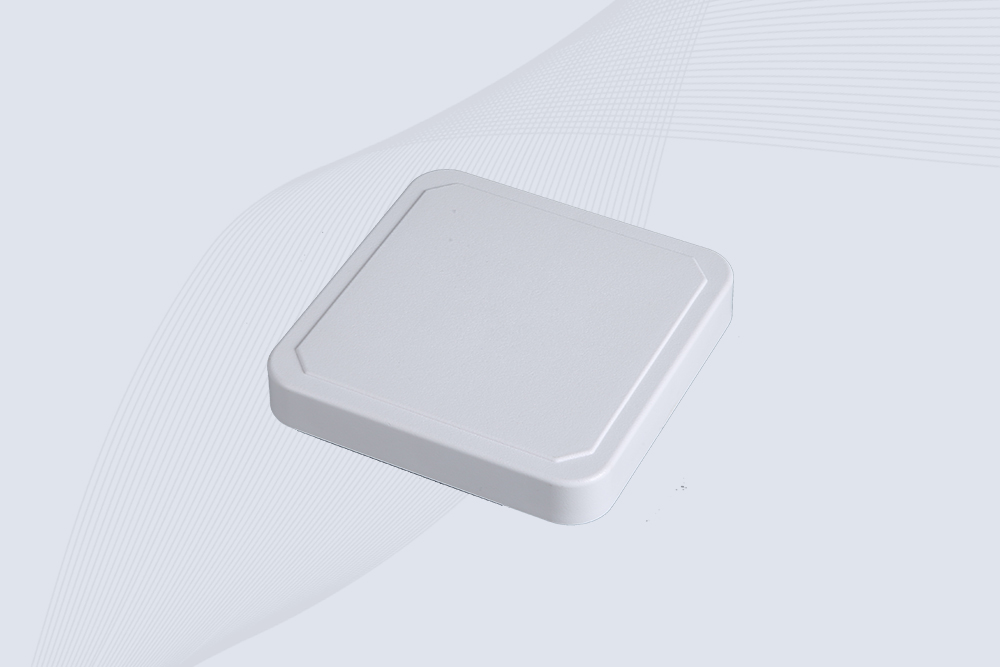
CYKEO Antenna RFID delivers reliable long-range UHF performance in warehouses, retail shelves, and cold-chain environments. This compact uhf rfid antenna provides stable reads with circular polarization and ultra-wide 840–960 MHz support, ideal for industrial tracking, smart shelves, and asset monitoring.
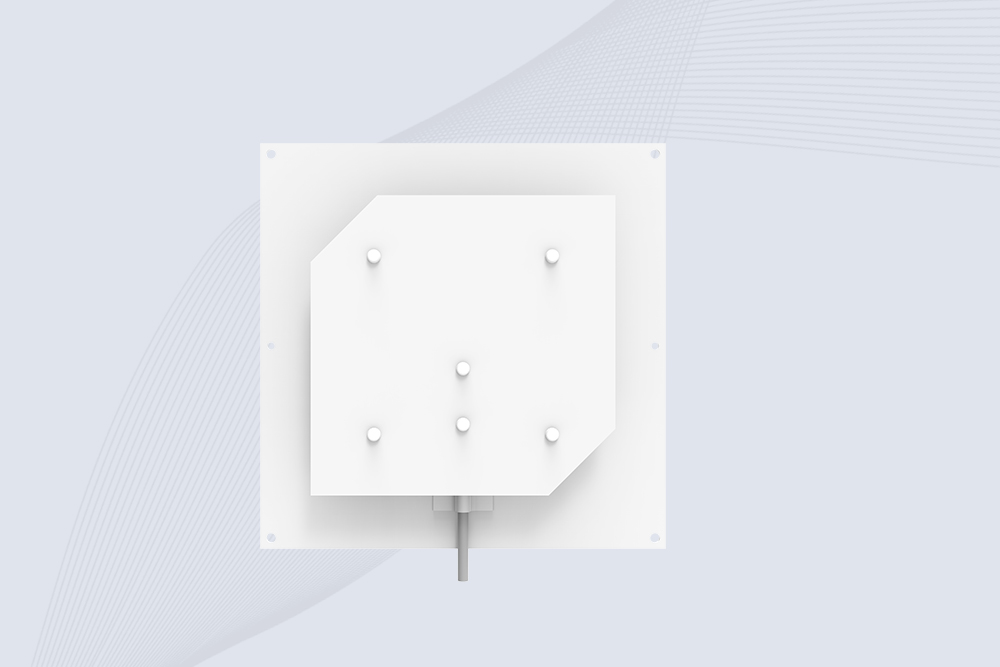
Cykeo’s CYKEO-C8 UHF RFID antennas delivers 8dBi gain, 840-960MHz full-band coverage, and IP65 ruggedness for manufacturing/warehouse RFID systems. Industrial RFID Antennas Features
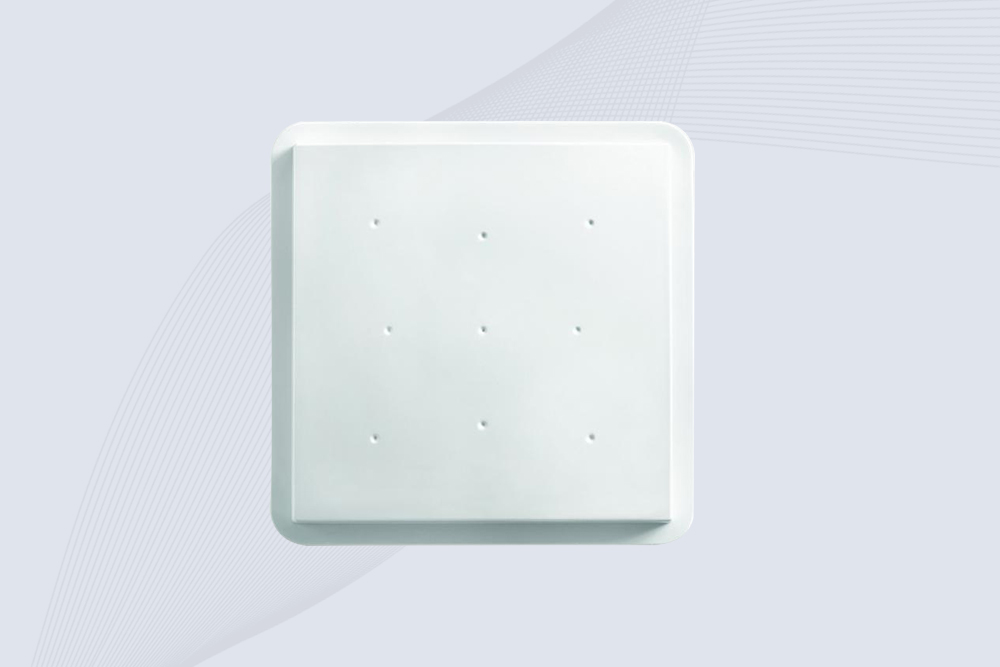
Cykeo’s 8dBi UHF RFID antenna and reader kit delivers 10m+ range, 840-960MHz broadband, and IP65 ruggedness for factories, warehouses, and logistics. ISO 18000-6C & EPC Gen2 certified.
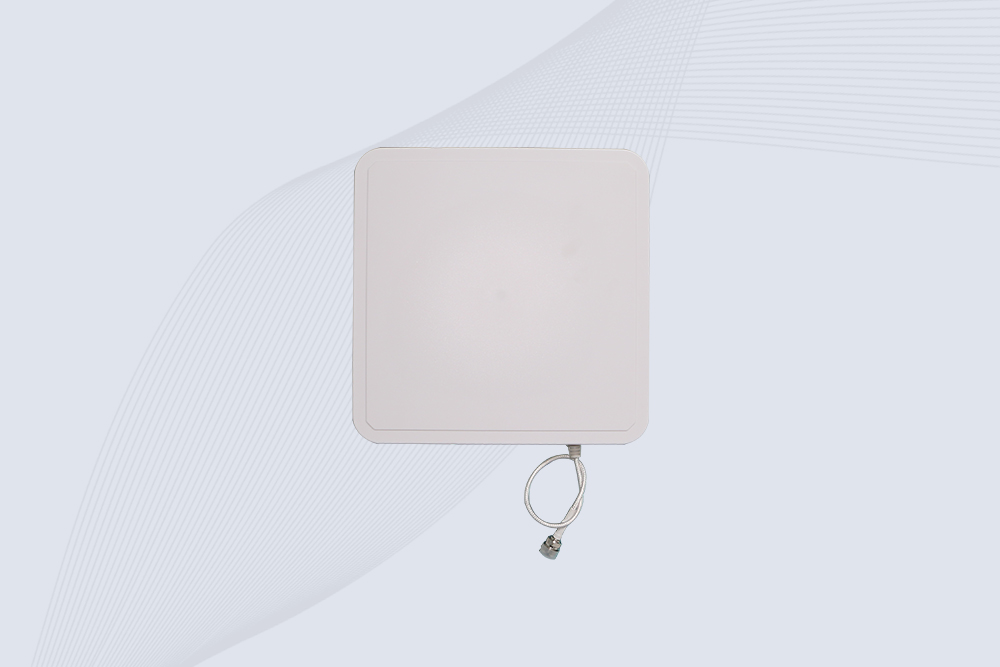
Cykeo CYKEO-A9A industrial UHF RFID reader and antenna kit delivers 10m range, 500 tags/sec, IP65 ruggedness for manufacturing/logistics. Supports EPC Gen2, ISO18000-6C.
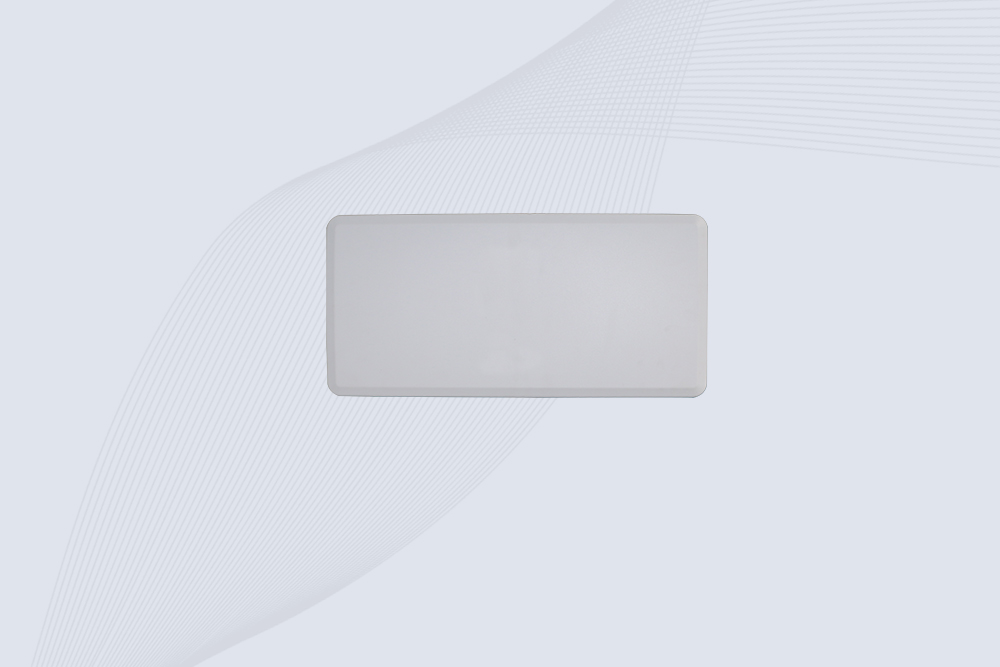
Cykeo’s CYKEO-A12C UHF Large RFID Antenna delivers 12dBi gain, 840-960MHz global frequency, IP65 ruggedness for logistics/warehousing/automotive. 40° beamwidth ensures stable 15m+ tag reads.

CYKEO Near Field RFID Antenna provides precise 5–30 cm reading for shelves, cabinets, and workstations. This compact rfid shelf antenna delivers stable short-range performance around metal and clutter, ideal for pharmacies, libraries, and electronics sorting.
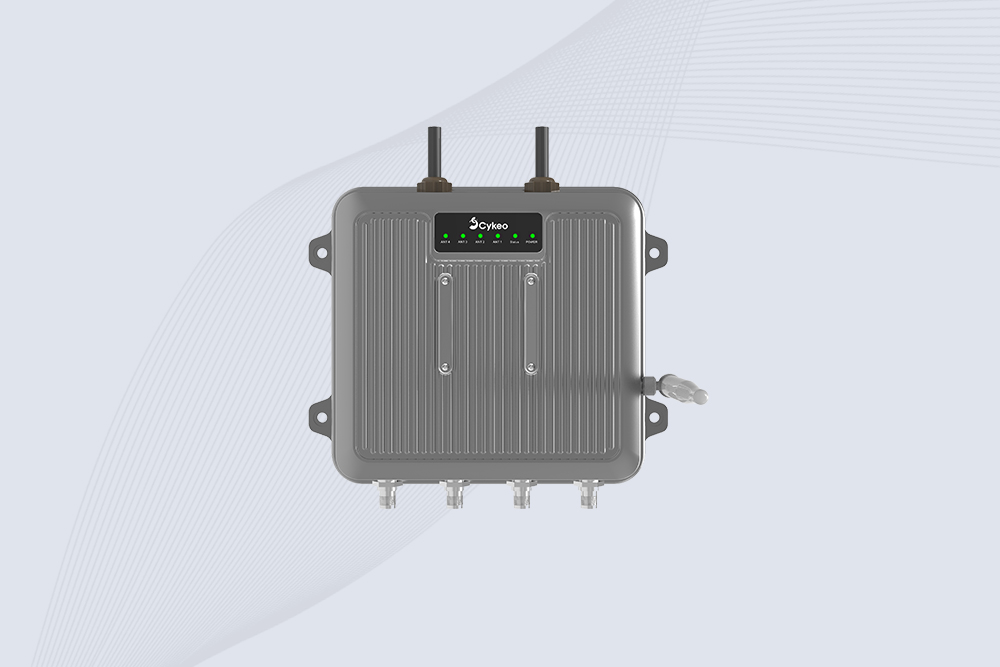
Cykeo CYKEO-C1 industrial Forklift RFID Reader features 20m read range, 600 tags/sec scanning, Impinj R2000 chipset, and IP67 rugged design. Ideal for warehouse logistics and manufacturing. Supports ISO 18000-6C/6B protocols.
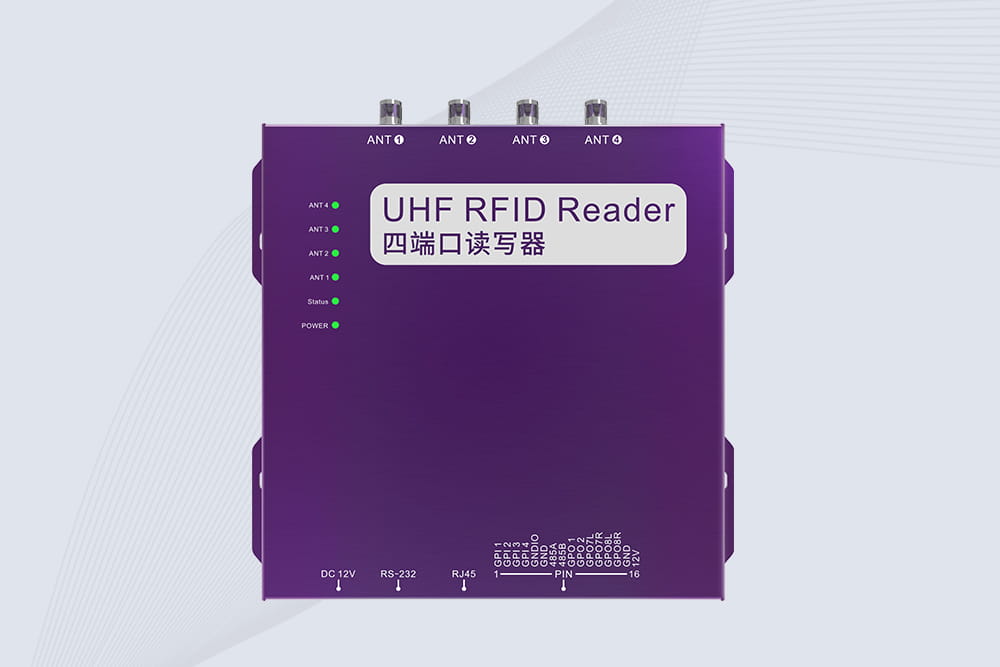
Cykeo CYKEO-R4 industrial UHF RFID Fixed Reader features 4 TNC ports, 400+ tags/sec speed, IP67 housing, and global frequency compliance for vehicle inspection, smart warehouse, and asset management systems.
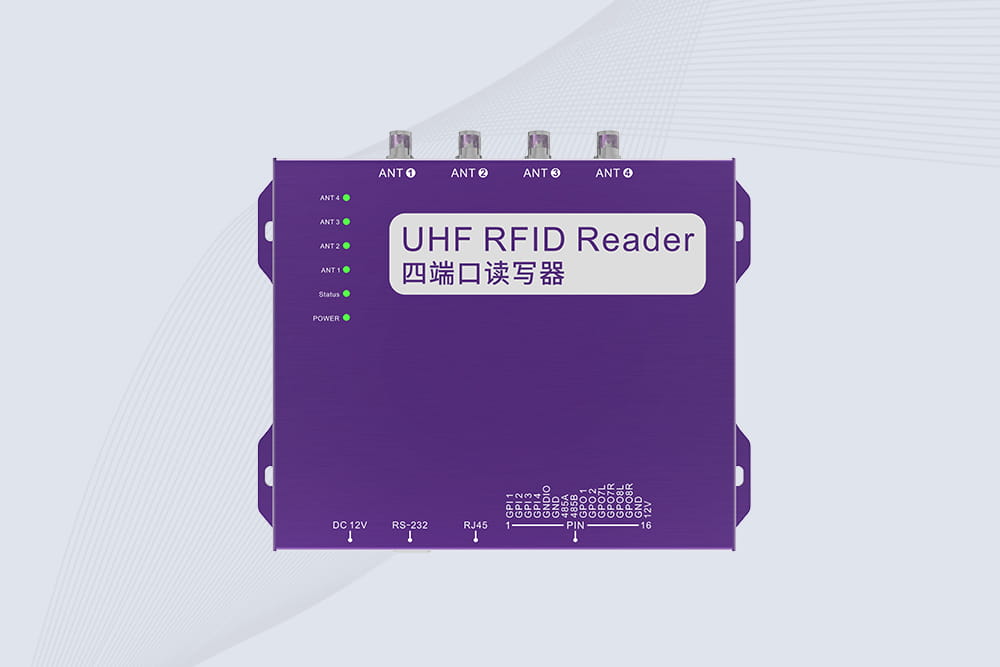
Cykeo’s CYKEO-R4L 4-port Fixed UHF RFID Reader delivers 400 tags/sec scanning, ISO 18000-6C compliance, and IP65 protection. Ideal for warehouse automation, manufacturing WIP tracking, and logistics management.
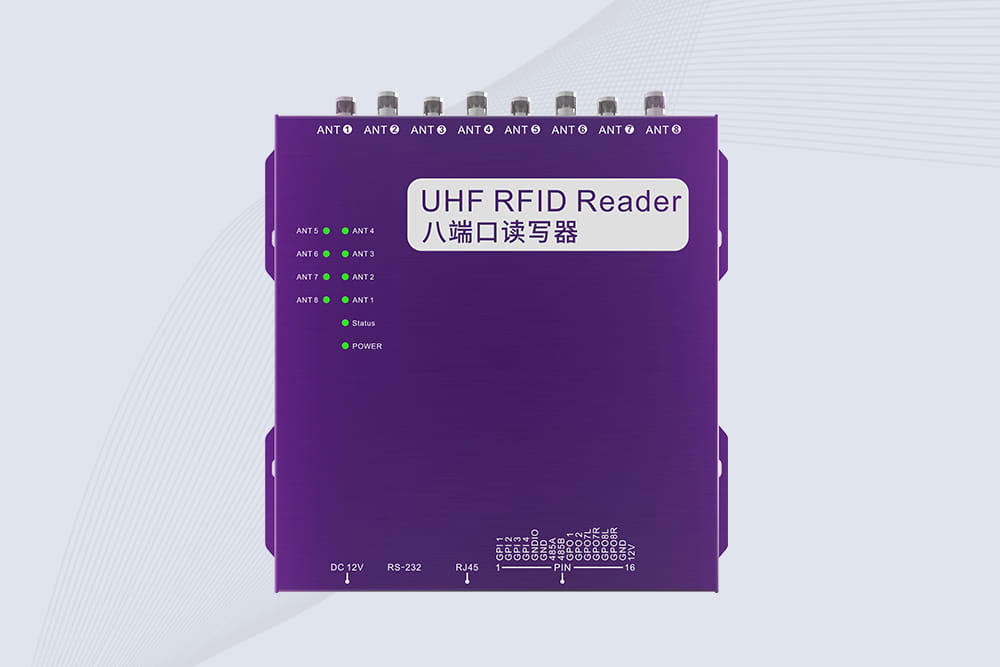
CYKEO CYKEO-R8L Fixed RFID Reader with 8-port UHF design, Impinj-based RF core and up to 20m read range. An industrial Fixed RFID Reader for vehicle inspection, warehouse portals, smart manufacturing lines and secure access checkpoints.
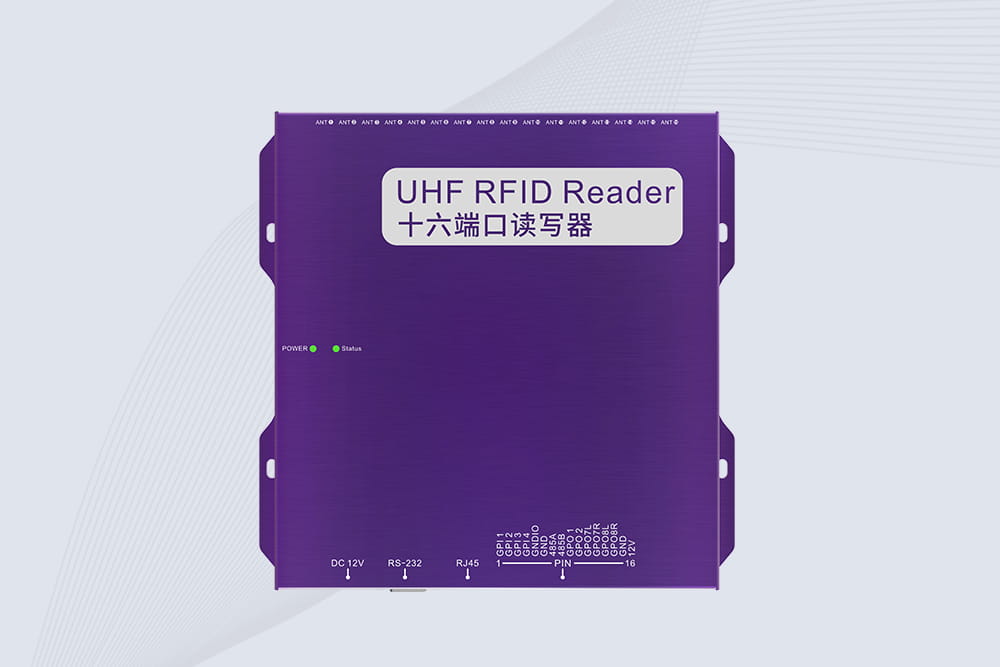
RFID Fixed Reader from CYKEO – the CYKEO-R16L 16-port UHF fixed reader for warehouses, smart cabinets, and production lines. Long-range, multi-tag reading, stable performance for 24/7 industrial use.
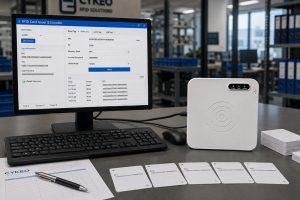
Learn what EPC in RFID means, how Electronic Product Codes work, and why EPC data is essential for RFID asset tracking, inventory management, and supply chain visibility.
More
Explore the latest trends in RFID technology for retail, including smart inventory, contactless checkout, and sustainability. Learn how Cykeo drives retail innovation.
More
Discover the 5 hidden costs of cheap RFID readers and learn how Cykeo’s high-performance RFID solutions save you money, improve efficiency, and ensure long-term ROI.
More
RFID devices improve tool tracking, automate inventory checks, and enable real-time UHF identification for industrial assets with fast and accurate management.
More