 Cykeo RFID IoT Solution Products R&D Manufacturer
UHF vs. HF RFID Antennas: How to Choose the Right Frequency for Your Needs
1000Confused between UHF and HF RFID antennas? Learn the pros, cons, and ideal applications for each frequency band to optimize your system’s performance.
MoreAll RFID Product
what are the advantages of rfid? RFID provides faster identification, better inventory visibility, reduced manual counting, and more reliable item-level data. In UHF RFID deployments, multiple tagged items can be identified without direct line of sight, helping warehouses, factories, retailers, and logistics teams capture movement and inventory information with less repetitive scanning.
The practical advantage is not simply that RFID “reads tags faster.” The bigger change happens in the workflow. A barcode process usually asks an operator to find the label, position the scanner, and capture each item. A properly engineered UHF RFID system can create a read zone around a doorway, conveyor, workstation, shelf, or storage area and collect tag IDs as items move through it.
That difference becomes particularly important when the number of items is large.
The strongest RFID advantage in inventory work is visibility without requiring every item to be individually handled.
In a warehouse environment, I would not evaluate an RFID project by maximum reader range alone. The more useful question is whether the system captures the right tags at the right location and excludes unwanted reads. Antenna orientation, reader power, tag placement, metal surfaces, liquid products, conveyor speed, and the physical layout of the read zone all affect the result.
A well-designed UHF RFID installation can provide:
Auburn University researchers provide useful field evidence rather than theoretical claims. In a 23-week study involving 13 stores, RFID-enabled visibility reduced inventory record inaccuracy by approximately 26%. A second study expanded the research to 62 stores and five product categories, finding that the effect varied considerably by category, from no statistically significant improvement to 81% improvement.
That last point matters. RFID does not produce one universal percentage improvement. The result depends heavily on the process being changed.
| Operational factor | Barcode | UHF RFID |
|---|---|---|
| Direct line of sight | Usually required | Not normally required |
| One-by-one scanning | Common | Multiple tags can be identified |
| Manual handling | Higher | Potentially lower |
| Item-level identification | Yes | Yes |
| Automated read points | Limited | Well suited |
| Read-zone design | Less relevant | Critical |
| Environmental sensitivity | Generally lower | Tag and installation dependent |
| Real-time event capture | Possible | Strong fit for automated events |
The distinction is especially noticeable at receiving docks.
A worker checking 100 cartons manually is performing 100 identification actions. With UHF RFID, the engineering objective can instead be a controlled portal where tagged cartons are read as they pass. The software then decides whether the shipment matches the expected list.
That does not eliminate operational design work. It moves the work upstream—from repetitive scanning toward read-zone engineering, tag selection, filtering, and system integration.
Inventory accuracy is one of the more measurable advantages of RFID.
A common mistake is to treat an RFID reader as an automatic inventory system. It is not. The reader only provides identification events. The inventory application must interpret those events correctly.
For example, if a fixed UHF reader is installed near a warehouse doorway, the system needs to distinguish between:
This is where filtering and read-zone configuration become operationally important.
Research from Auburn University found that RFID-enabled visibility could significantly reduce inventory record inaccuracy, while also showing that the effect varies according to product category.
For a deployment team, that suggests a more useful KPI than simply asking, “How far can the reader read?”
Ask instead:
Can the system reliably identify the right items at the right process point?
That is the RFID advantage that tends to survive contact with a real warehouse floor.

RFID becomes more valuable when identification events are connected across several process points.
A tagged item can potentially be associated with events such as receiving, storage, picking, packing, shipping, or return processing. Instead of relying only on a final inventory count, the organization can build a sequence of recorded events around the item.
Auburn research describes RFID as creating visibility into inventory movement and links that visibility to inventory accuracy and store execution.
For manufacturers and logistics operators, this creates an important distinction:
RFID is not only an identification technology. It can become a process-data collection layer.
That is particularly useful when a business needs to know not just what an item is, but where and when it was detected.
In the next section, we will look more closely at the operational advantages of UHF RFID, including faster multi-tag identification, receiving and shipping control, labor reduction, and how Cykeo reader hardware can be incorporated into these workflows.
From an RFID engineering perspective, the most useful deployments are rarely the ones with the highest theoretical reading distance. They are the installations where antenna position, output power, tag orientation, filtering, communication interface, and software logic have been matched to one specific operational event.
That is the difference between demonstrating RFID and making RFID useful.
RFID becomes particularly useful when identification needs to happen while people are already doing another job.
At a receiving dock, for example, the operator should not have to stop unloading every carton just to scan a barcode. A fixed UHF RFID reader can be positioned at a controlled passage point so tagged cases are identified as they move through the area. GS1 US describes fixed RFID readers as systems designed to continuously capture tagged items as they pass a read point, including warehouse loading docks.
The same principle applies to shipping.
A practical deployment can compare the RFID reads against an expected shipment list before the goods leave the facility. Missing, unexpected, or duplicated items can then be flagged by the application.
This creates several operational advantages:
GS1 also notes that RFID can provide supply-chain visibility for products, cartons, cases, and other physical assets, while supporting unique identification across manufacturing, distribution, and point-of-sale environments.
For warehouse and logistics applications, UHF passive RFID—often referred to as RAIN RFID—is the dominant RFID approach. GS1 identifies UHF passive tags as the most broadly implemented RFID tags in industry and notes that uniquely encoded tags can be captured at high rates without line-of-sight contact.
That matters when the physical workflow is messy.
Cartons may overlap. Labels may face different directions. Workers may be moving pallets while forklifts cross the same area. A barcode workflow can become slower simply because the operator has to expose each label. RFID changes the identification method from optical positioning to radio-frequency communication.
It does not, however, mean that every tag will always be read regardless of its environment.
Metal, liquids, tag orientation, antenna placement, reader power, and the geometry of the read zone still matter. This is why experienced RFID deployment work starts with the product and process rather than the reader specification sheet.
One of the less obvious advantages of RFID is that it can remove small manual actions that occur hundreds or thousands of times per day.
Consider a cycle count.
With a conventional barcode process, the employee walks to the shelf, locates the product, positions the scanner, scans the label, waits for confirmation, and moves to the next item. None of those actions is technically difficult. The problem is repetition.
RAIN RFID is designed to reduce this interaction. GS1 states that RFID can operate without user interaction and that inventory can be captured without the operator manually activating a scan at each item.
For a large facility, that changes the economics of the task.
The labor saving should not simply be described as “RFID replaces workers.” In well-designed systems, the operator often moves from manual identification toward exception handling.
That is a more useful distinction.
Instead of checking every carton, the employee investigates the carton the system says is missing.
Instead of scanning every tool, the technician investigates the tool that did not appear in the expected location.
Instead of manually confirming every shipment, the shipping team deals with discrepancies.
The value comes from changing where human attention is spent.
RFID is also useful when an organization needs to know where physical assets were detected during a process.
GS1 US describes RFID tracking for products, cartons, cases, and physical assets, including applications involving hospitals, foodservice, apparel, and warehouse operations.
A typical architecture may contain:
| Component | Practical role |
|---|---|
| RFID tag | Provides the item’s electronic identity |
| UHF rfid antenna | Creates the radio-frequency read zone |
| RFID reader | Communicates with tags and collects tag data |
| Controller/software | Filters and interprets read events |
| Database/WMS/ERP | Stores and uses business information |
The important part is the last two layers.
A reader reporting 300 tag reads is not automatically a useful business result. The application needs to know whether those reads represent receiving, shipping, movement, inventory, or an unintended read.
This is where Cykeo’s UHF RFID approach can be configured around actual industrial workflows rather than treated as a standalone reader installation. Fixed readers can connect through interfaces such as RS-232 or Ethernet, allowing RFID events to become part of a larger application.
Another practical point is often overlooked: RFID and barcodes can coexist.
GS1 explicitly describes RAIN RFID as an alternative to optical data carriers rather than an automatic replacement for barcodes. Barcode labels can remain useful as a visual fallback or for processes where RFID does not provide sufficient business value.
That makes a hybrid deployment reasonable for many companies.
For example:
This is often easier to deploy than attempting to convert every process simultaneously.
Cykeo focuses primarily on UHF RFID equipment for industrial identification and tracking applications.
The engineering consideration is not simply maximum transmit power. A fixed reader such as the CYKEO-RA9L / CK-D9L can be used with Ethernet or RS-232 communication, while the CYKEO-M4L module is designed for OEM integration and supports UHF protocols including ISO18000-6C/EPC C1G2.
For an installation, several parameters are normally considered together:
This is where field experience matters more than a headline reading-distance number.
A warehouse doorway with a narrow, controlled read zone may deliver more useful data than a reader capable of reading much farther but also capturing tags from adjacent aisles.
Yes. UHF RFID is designed for high-speed identification of multiple tagged items, making it suitable for inventory, pallet, carton, and asset workflows.
No. RAIN RFID does not normally require direct line of sight between the reader and tag, although tag orientation, material, distance, and the physical environment still affect performance.
Yes, under appropriate operating conditions. A field study across 13 stores over 23 weeks reported an approximately 26% reduction in inventory record inaccuracy associated with RFID-enabled visibility. The larger 62-store study found that results varied by product category.
RFID can be substantially faster for high-volume identification because multiple tags can be captured without individually positioning a scanner. The actual productivity improvement depends on the application and read-zone design.
Yes. Some RAIN RFID tags provide user memory in addition to the unique EPC identifier, allowing selected information such as batch or expiration data to be stored and updated according to the application.
No. GS1 specifically recommends evaluating the use case before implementation. Barcode and RFID can also operate together when that better fits the workflow, budget, and operational requirements.

The practical answer to what are the advantages of RFID is broader than faster scanning. RFID can create automatic identification points, reduce repetitive data capture, improve inventory visibility, support multi-item identification, and connect physical movement with digital business events.
The strongest deployments are the ones where the RFID read event has a clear operational purpose.
A reader at a doorway should answer a doorway problem. A reader at a conveyor should support a conveyor process. A shelf or workstation deployment should solve a specific identification requirement.
That is also why RFID performance should be measured by successful business events, not simply by maximum reading distance.
For companies evaluating UHF RFID, Cykeo can support the hardware layer—from OEM RFID modules to fixed readers and application-oriented reader solutions—while the final system should be engineered around the actual tags, materials, movement patterns, read zones, and software requirements.
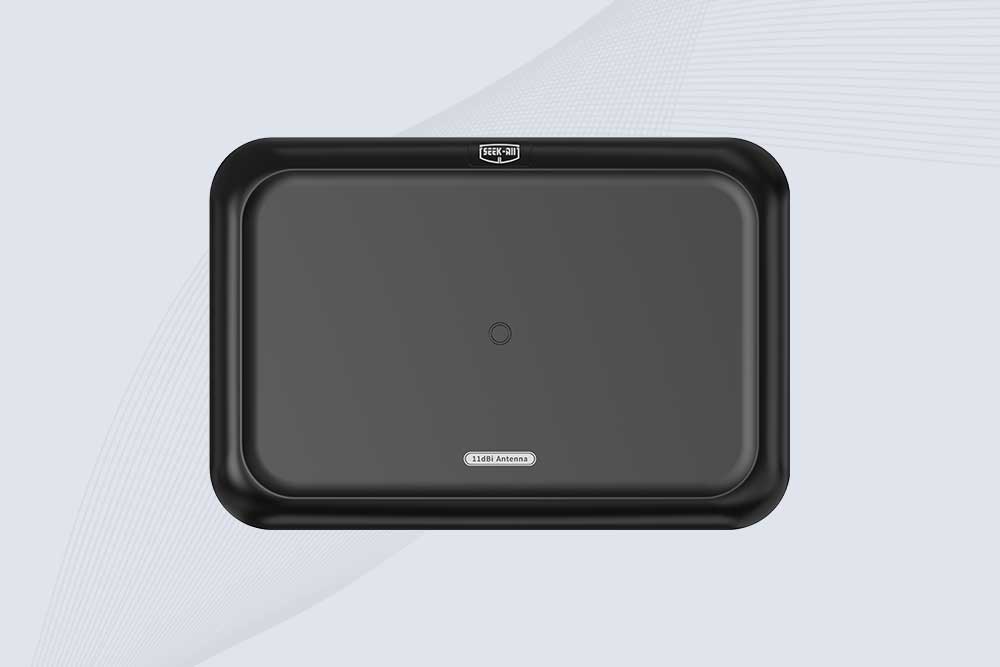
SSD-A11 UHF RFID antenna features 840–960 MHz adjustable frequency, ≥10.5 dBi gain, circular polarization and 50Ω impedance for fixed RFID systems.
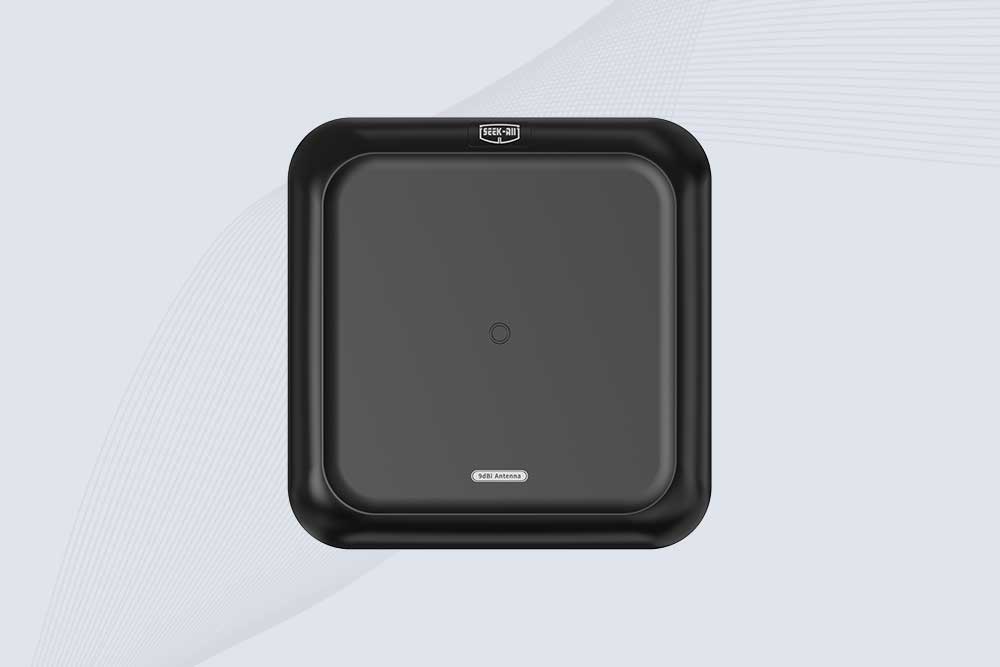
SSD-A09 is a 9 dBi UHF RFID antenna with 840–960 MHz adjustable frequency, circular polarization, 50Ω impedance and directional 60° × 60° coverage.
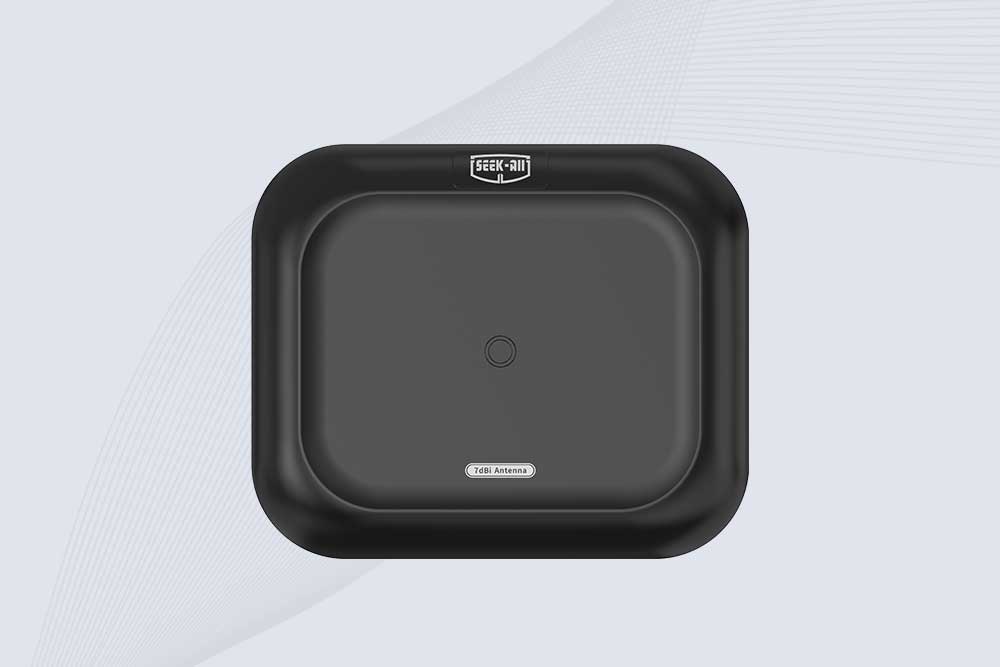
Explore the SSD-A07 UHF RFID antenna with 7 dBi gain, circular polarization, adjustable 840–960 MHz frequency, and 60°/75° beamwidth for stable RFID read/write performance.

SSD-A06 UHF RFID antenna with circular polarization, adjustable 840–960 MHz frequency, ≥4.5 dBi gain, and a compact directional design for RFID systems.
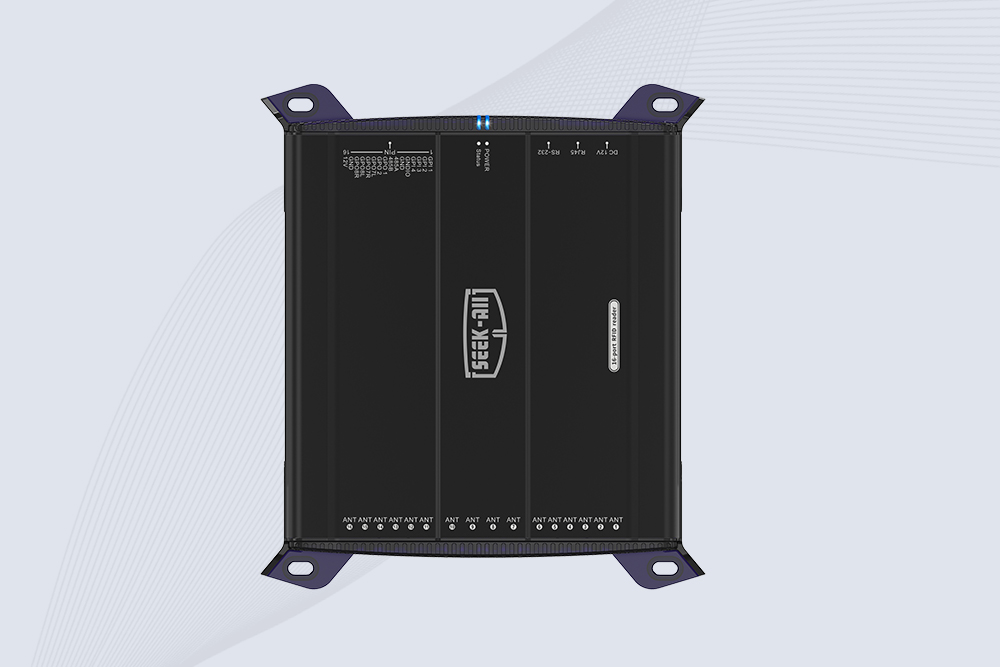
SSD-R16L Multi-Channel RFID Infrastructure for Automated Inventory Management ✔️ 16-Port High-Density RFID Reading Equipped with 16 SMA antenna ports, SSD-R16L supports multi-antenna deployment for warehouses, retail stores, logistics, production lines, and large-area RFID identification. ✔️ High-Speed & Long-Range Performance With up to 33…
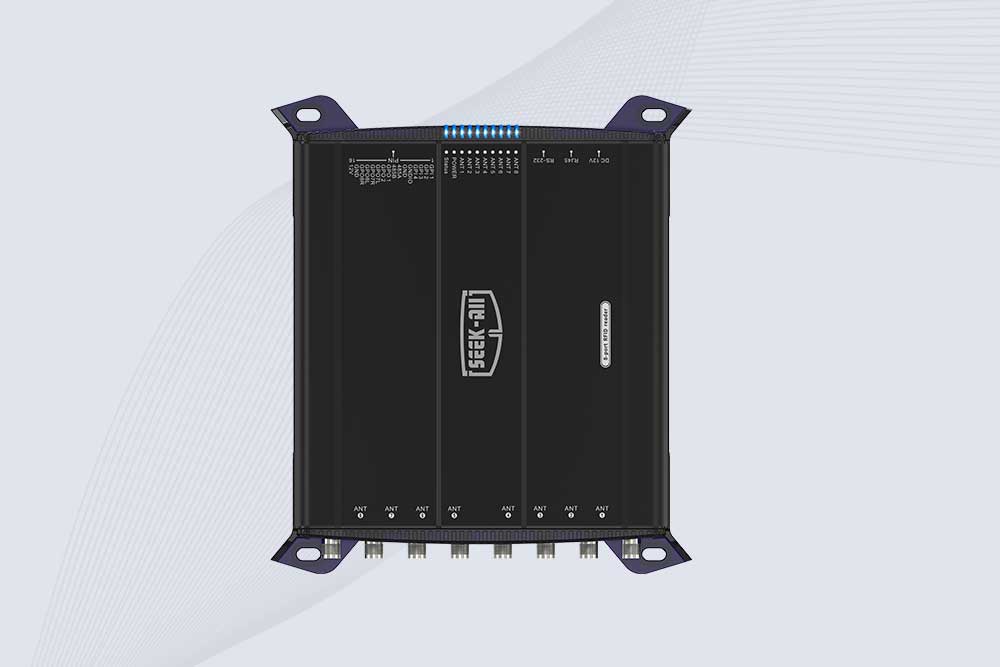
SSD-R8L 8-port UHF RFID reader with 33dBm output, up to 20m reading range and 600+ tags/s recognition. Ideal for warehouse, logistics, retail and asset tracking.
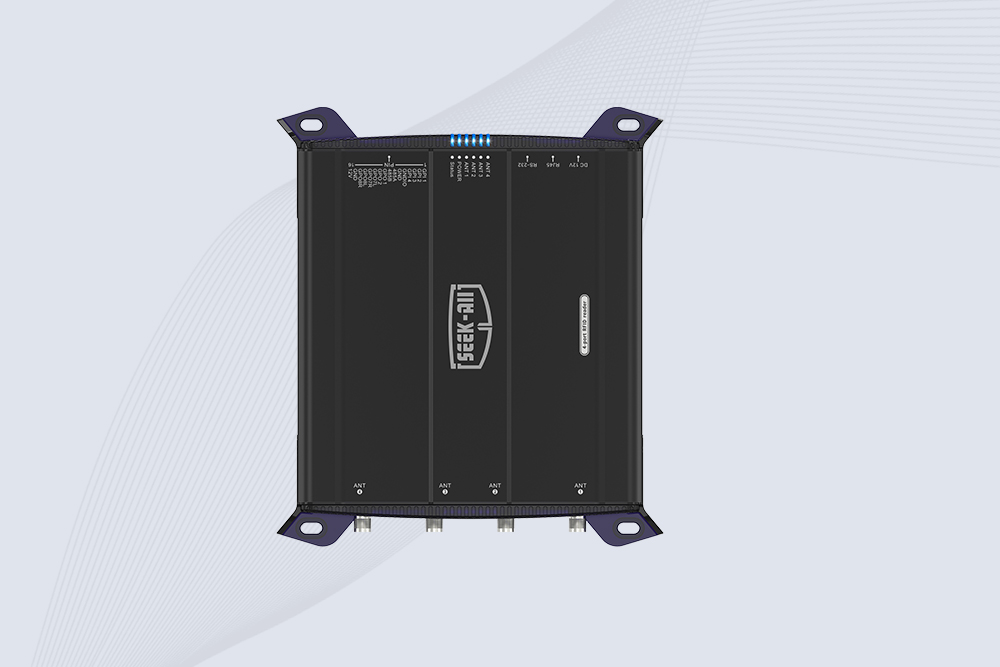
SSD-R4L is a 4-port UHF RFID fixed reader with 33dBm output power, up to 20m reading range, EPC C1G2 support and 600+ tags/s reading speed.
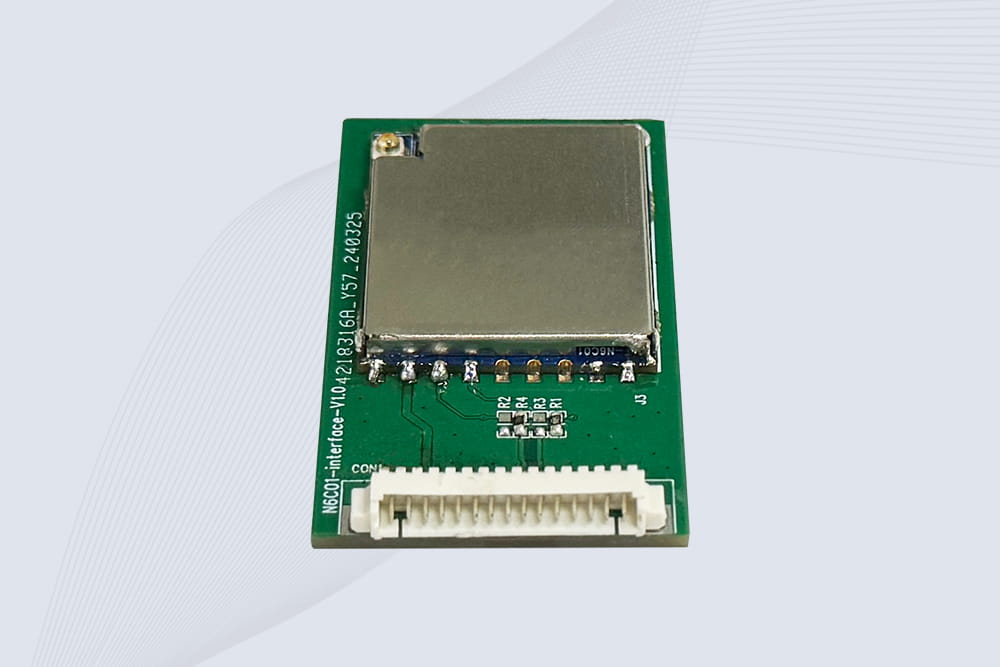
CYKEO Embedded RFID Modules are designed for compact industrial and IoT devices that require stable UHF performance. These UHF RFID Modules support global protocols, flexible power control, and reliable multi-tag reading for smart cabinets, production lines, and asset tracking systems.
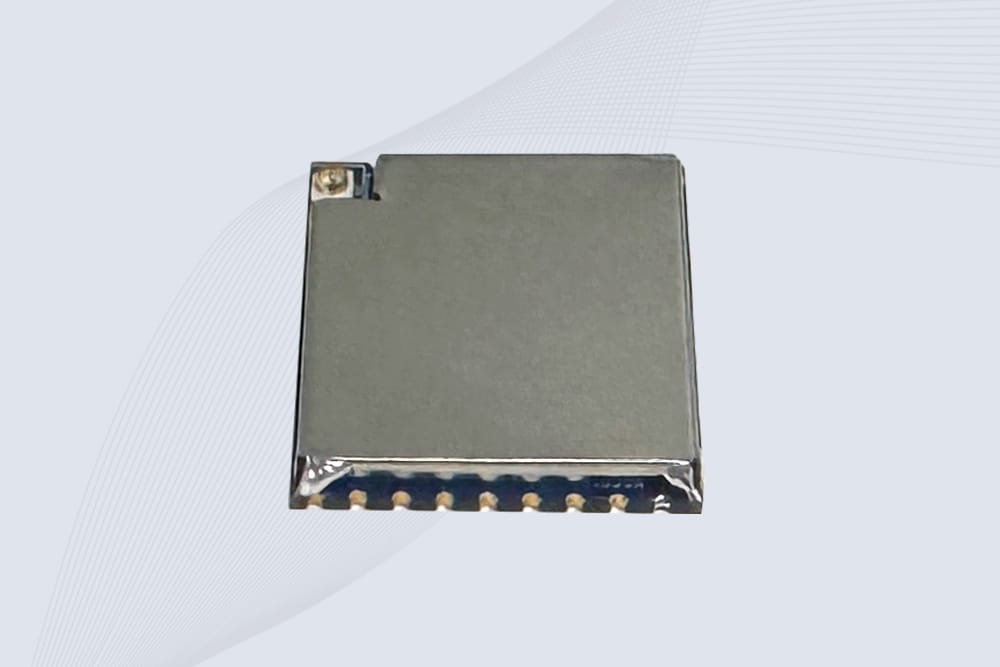
CYKEO Embedded RFID Module is built for compact IoT and industrial devices that need stable UHF performance. This UHF module supports global protocols, low power operation, and reliable multi-tag reading for smart lockers, production lines, and always-on RFID systems.
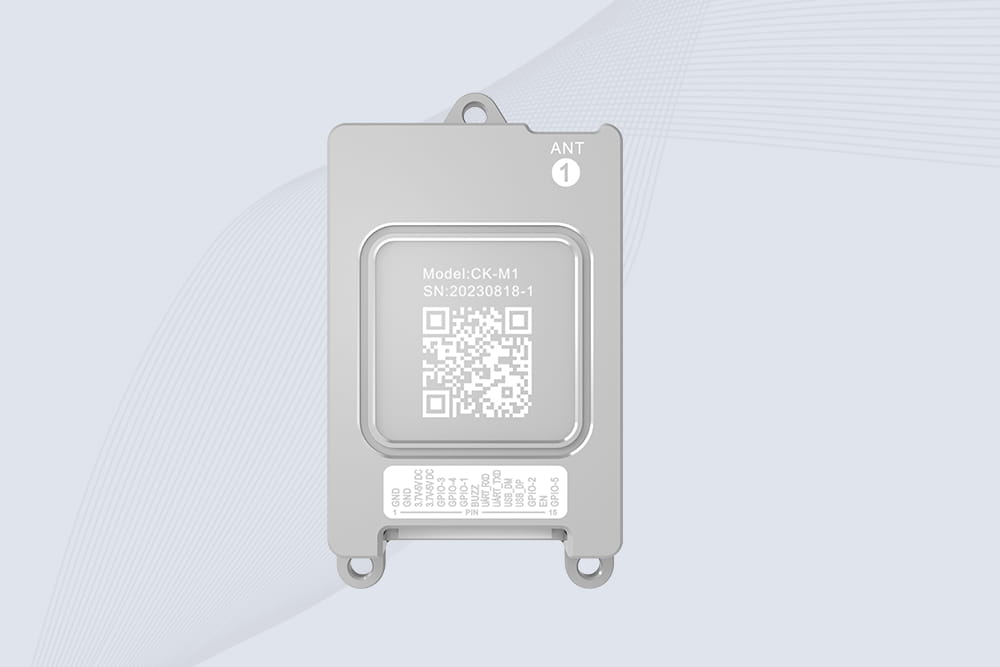
CYKEO CYKEO-M1 drone rfid module is a compact UHF RFID reader module designed for drones and UAV platforms. It supports long-range aerial scanning, fast multi-tag reading, and stable performance in wind, vibration, and outdoor environments.
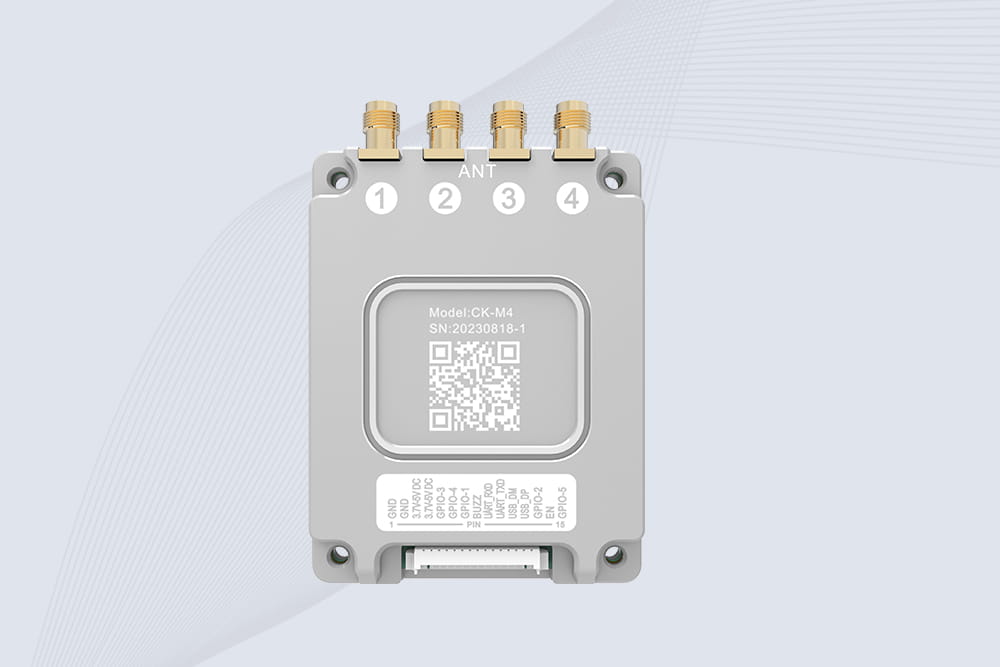
CYKEO CYKEO-M4 RC522 RFID Module is an industrial-grade UHF RFID reader with 4 ports, supporting ISO, EPC, and GB protocols. High-speed, accurate reading for IoT, automation, and warehouse applications.
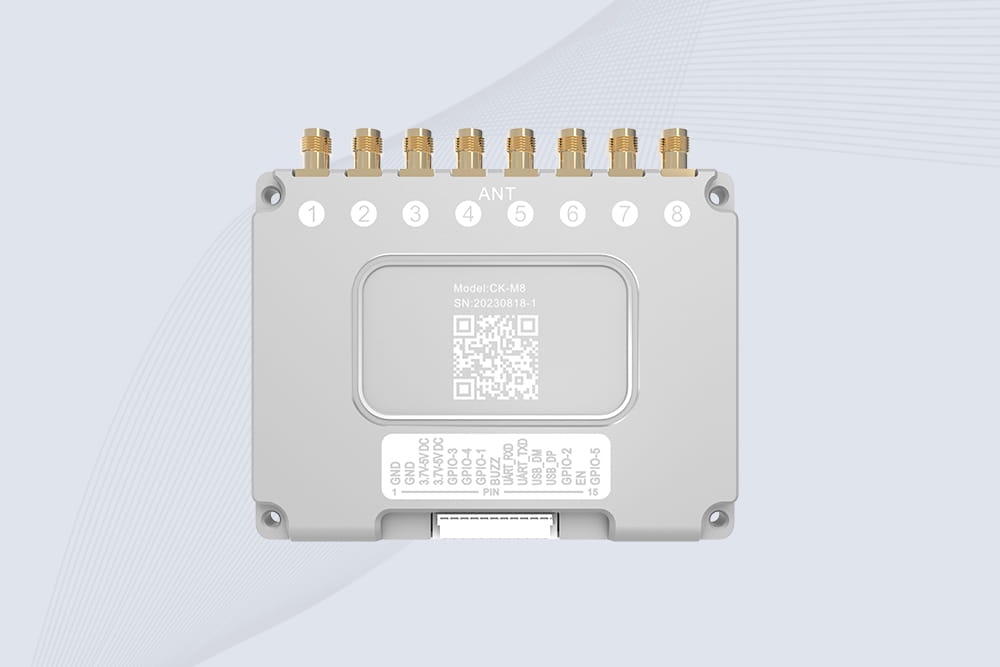
CYKEO CYKEO-M8 Module RFID is an 8-port UHF R2000 RFID Module designed for high-density, multi-tag environments. Stable 33dBm output, ISO & GB protocol support, ideal for warehouses, factories, and automated systems.
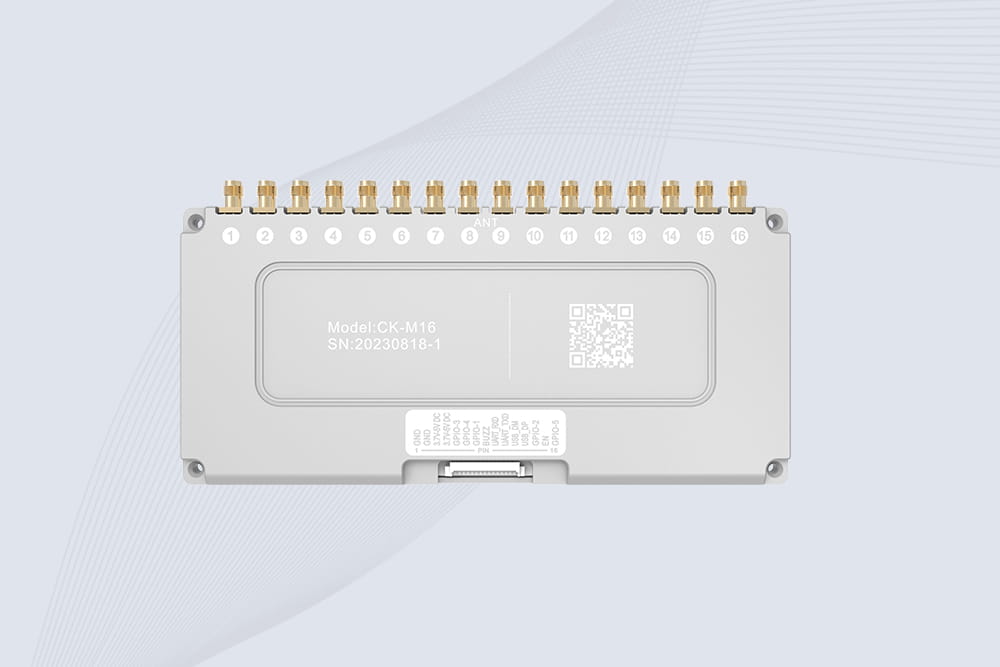
CYKEO CYKEO-M16 RFID Module is a 16-port UHF RFID reader module based on the R2000 chipset. Designed for dense tag environments, it supports ISO and GB standards and delivers stable multi-antenna control for industrial automation.
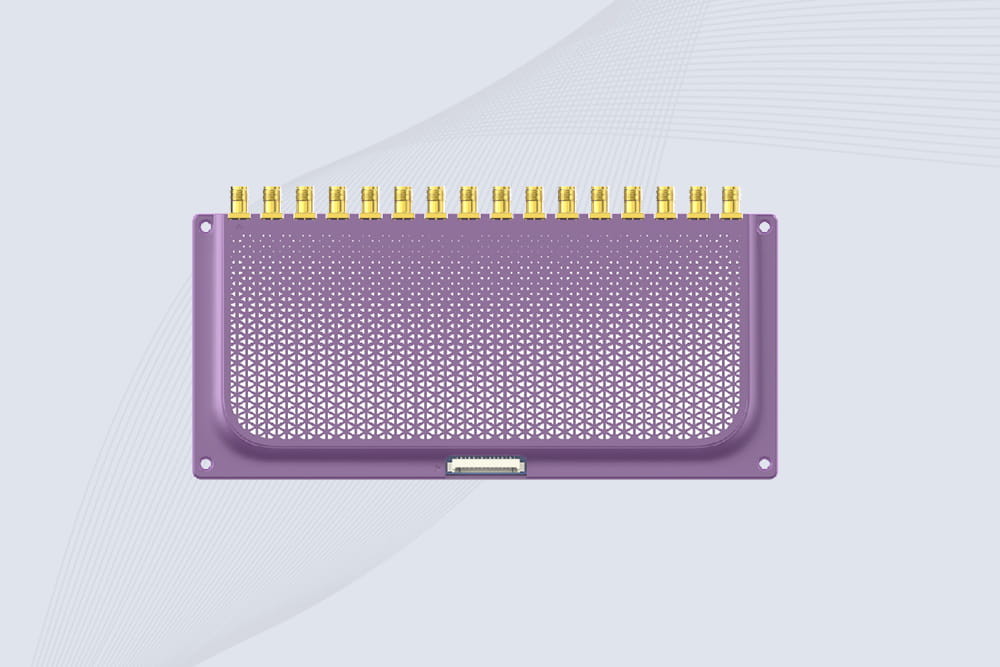
The CYKEO CYKEO-M16L RFID Reader Module is a 16-channel UHF RFID core designed for dense tag environments. With adjustable 33dBm output, multi-protocol support, and stable multi-antenna control, this RFID Tag Reader Module fits industrial automation, warehouse systems, and large-scale IoT deployments.
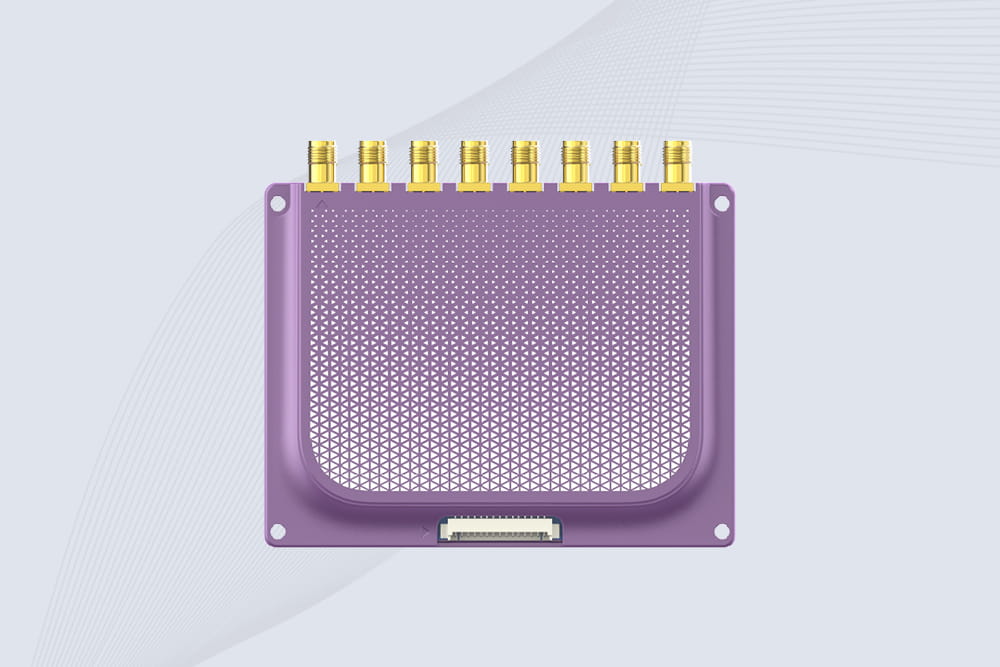
CYKEO CYKEO-M8L module RFID is a compact industrial UHF module built for dense tag and multi-antenna environments. With 8 RF ports, adjustable 33 dBm output, and ISO & GB protocol support, it is widely used in factories, warehouses, and automated tracking systems.
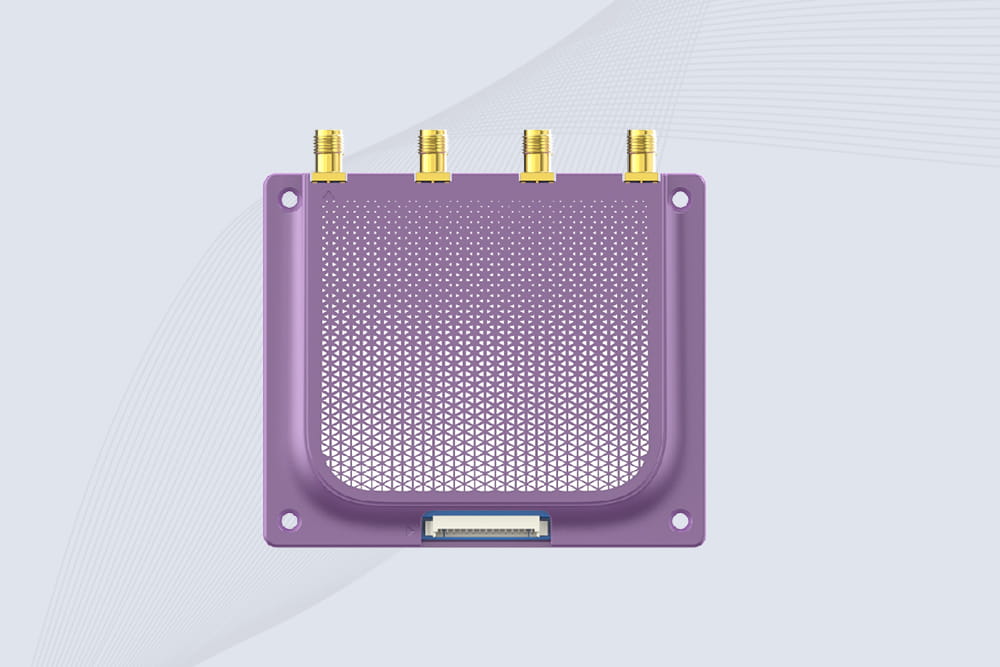
CYKEOCYKEO-M4L UHF RFID Module is a compact 4-channel RFID tag reader module designed for dense tag environments. Supporting ISO and GB protocols, it delivers stable reads up to 10 meters for industrial and IoT systems.
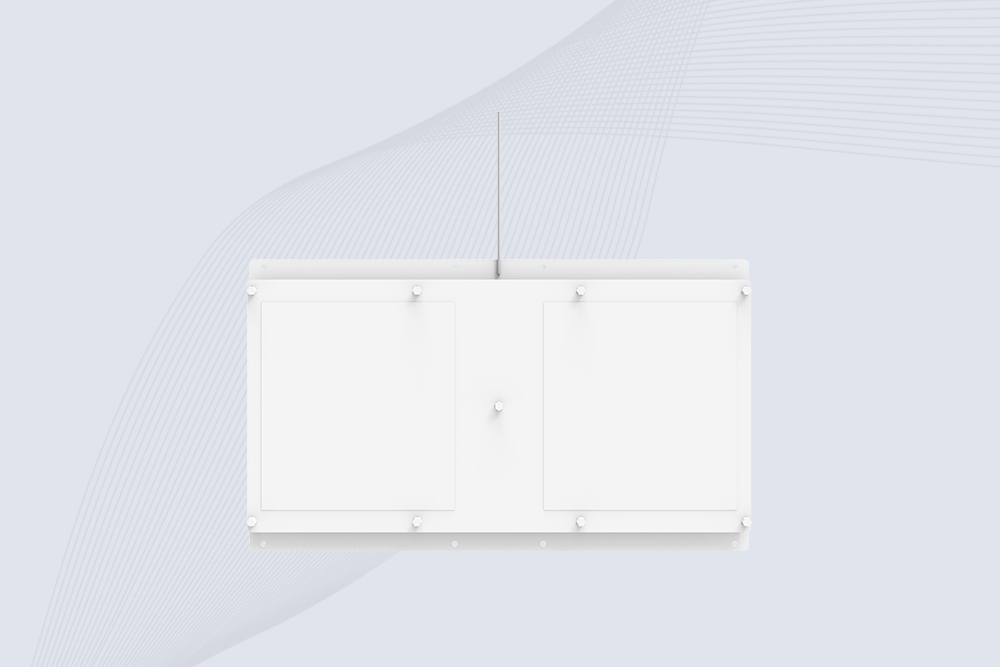
Cykeo CYKEO-A11 UHF RFID reader antenna delivers 11dBi gain, 840-960MHz frequency range, and IP65 ruggedness for retail, logistics, and industrial RFID systems. Features low VSWR and easy installation.

CYKEO Antenna RFID Reader delivers stable long-range UHF performance with a 10.5dBi directional design, built for warehouses, conveyor portals, and industrial RFID systems. This rfid reader antenna provides 20m+ read distance and rugged IP67 protection.

Cykeo CYKEO-PHF3 industrial HF RFID Antenna offers 24-point dynamic tracking, ISO 14443A/15693 protocols, metal-environment stability for archives/libraries/manufacturing.

Cykeo CYKEO-A5B industrial Linear RFID Antenna delivers 5dBi gain, ≤1.5:1 VSWR, and IP65 rugged design for warehouse, production line, and logistics UHF systems.

Cykeo’s CYKEO-B12 Long Range RFID Antenna delivers 15m+ read range with 12dBi gain, IP65 rugged design, and global 840-960MHz UHF support. Ideal for warehouse/logistics asset tracking.
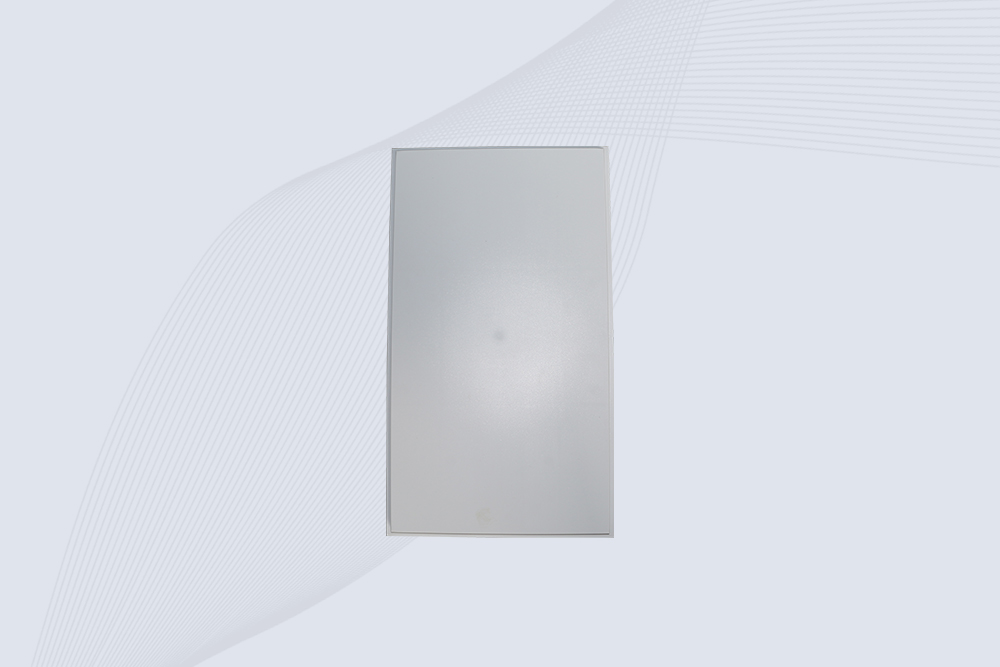
Cykeo CYKEO-B10 Long Distance RFID Antenna offers 10dBi gain, 840-960MHz frequency range, IP65 rating, and 20m+ coverage for logistics/warehousing/ETC systems. Low VSWR ensures stable signal transmission.
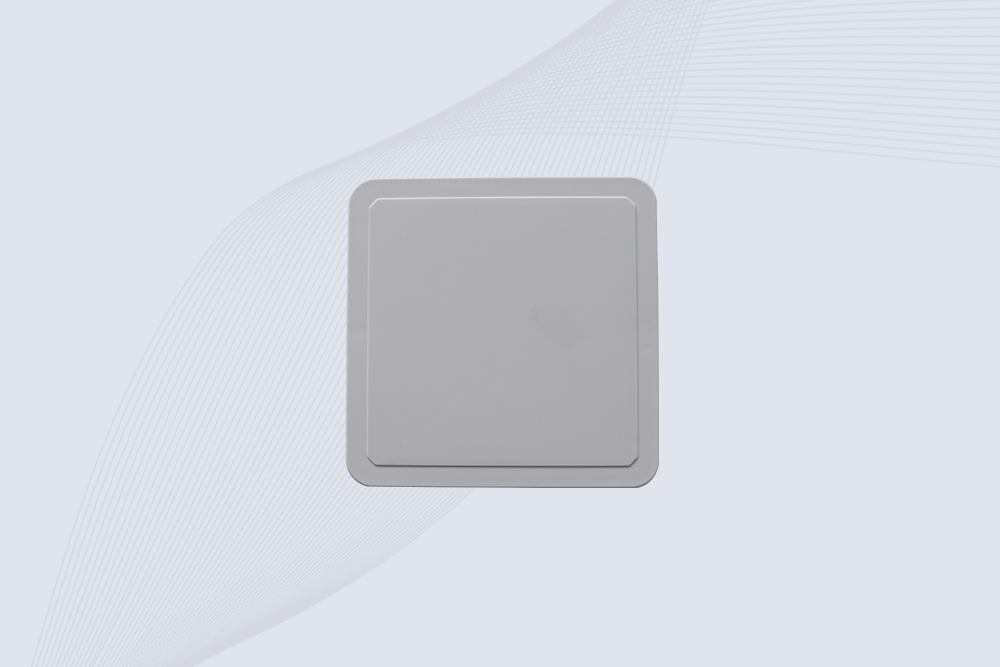
Cykeo CYKEO-A6 UHF RFID panel antenna features 6dBi gain, 840-960MHz broadband, IP65 metal-ready housing for logistics/smart retail. 18mm ultra-thin design with tool-free mounting.

Cykeo CK-A3 industrial antenna RFID UHF offers 5m+ tag detection, ≤1.3:1 VSWR, IP65 rugged design, and global UHF spectrum compatibility (840-960MHz) for warehouses, factories, and retail.
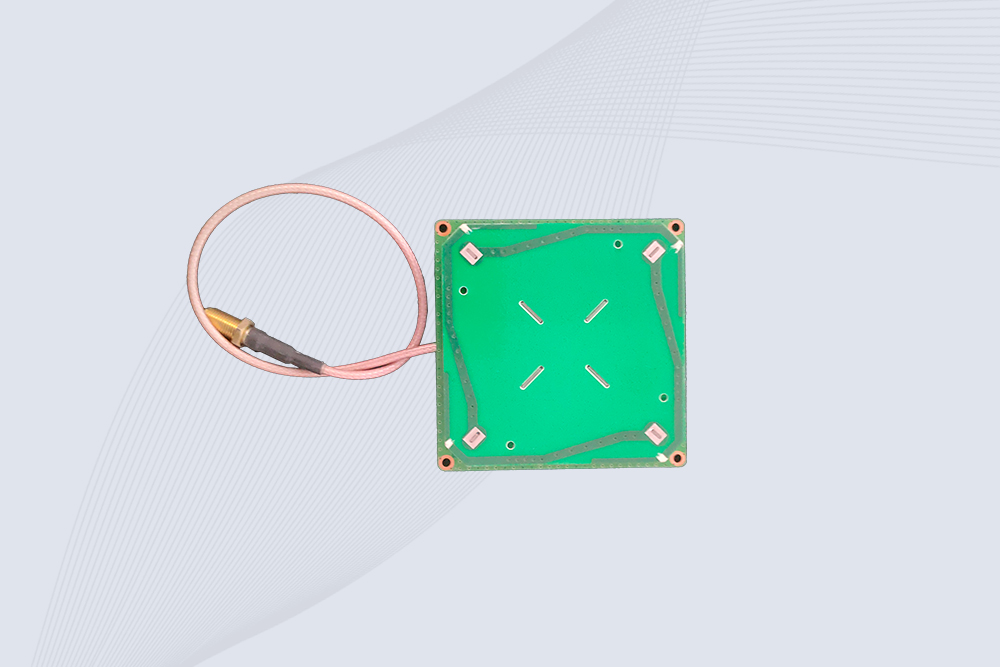
Cykeo CYKEO-B5 directional RFID antenna provides 5dBi gain with 60° narrow beamwidth for precise inventory tracking. IP65-rated, global UHF frequency support, and low VSWR.
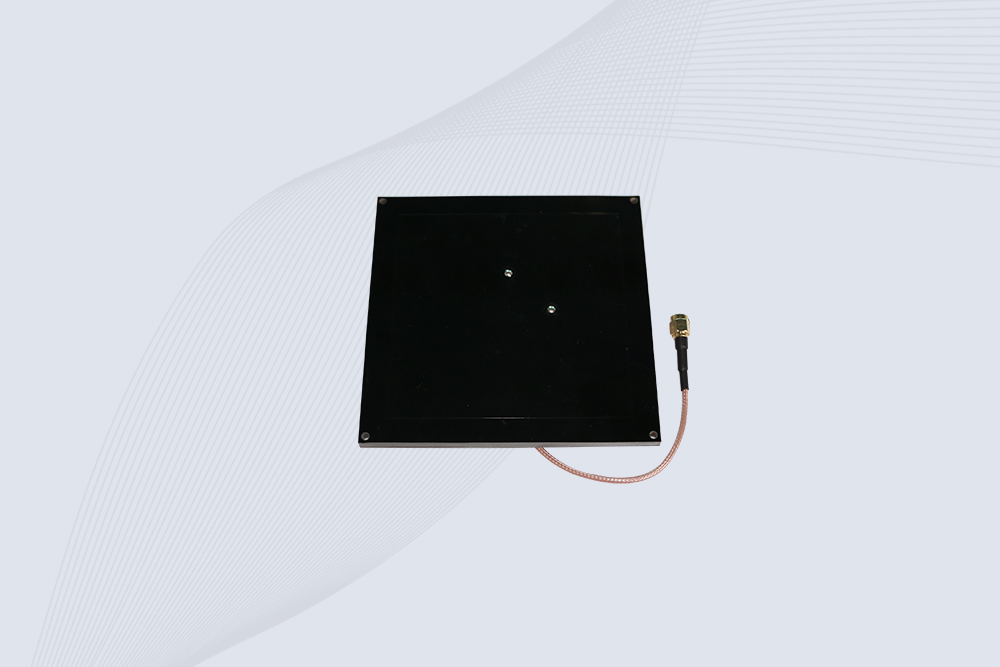
Create your own high-performance DIY RFID antenna! 5dBi gain, 840-960MHz tunable, step-by-step guides. Compatible with Arduino, Raspberry Pi, and commercial UHF readers.
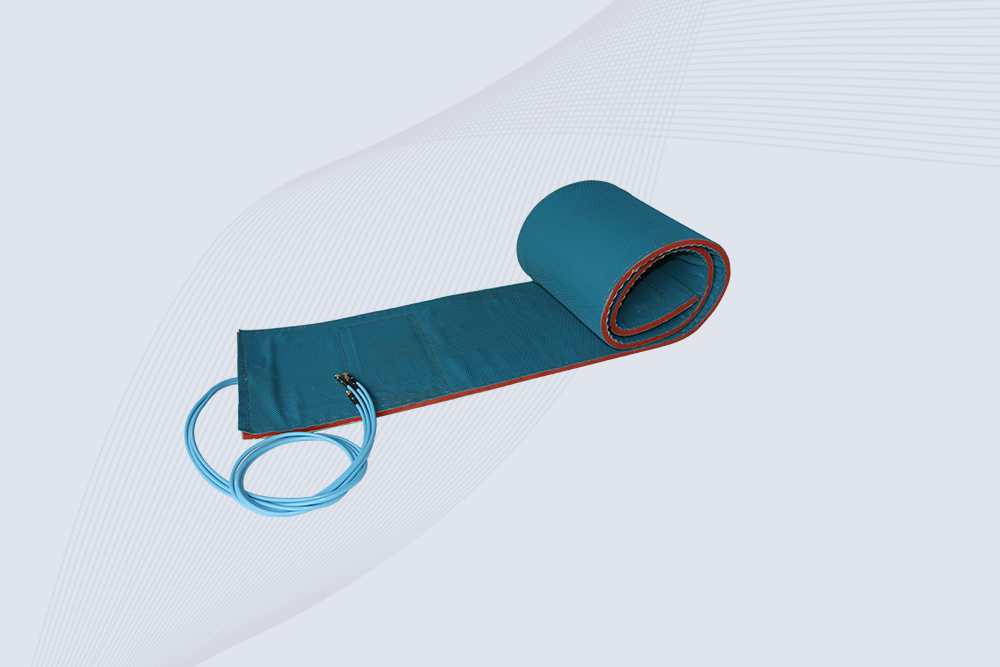
Cykeo CYKEO-A7 Flexible RFID Antenna features 840-960MHz wideband tuning, 7dBi gain, and IP68 rating for medical/retail/industrial curved surface deployments. 98% read accuracy with peel-and-stick installation.

Cykeo CYKEO-B5A industrial Passive RFID Antenna delivers 5dBi gain, 70° beamwidth, and -40°C~55°C operation for warehouses/smart cabinets. Compatible with Zebra/Impinj readers.
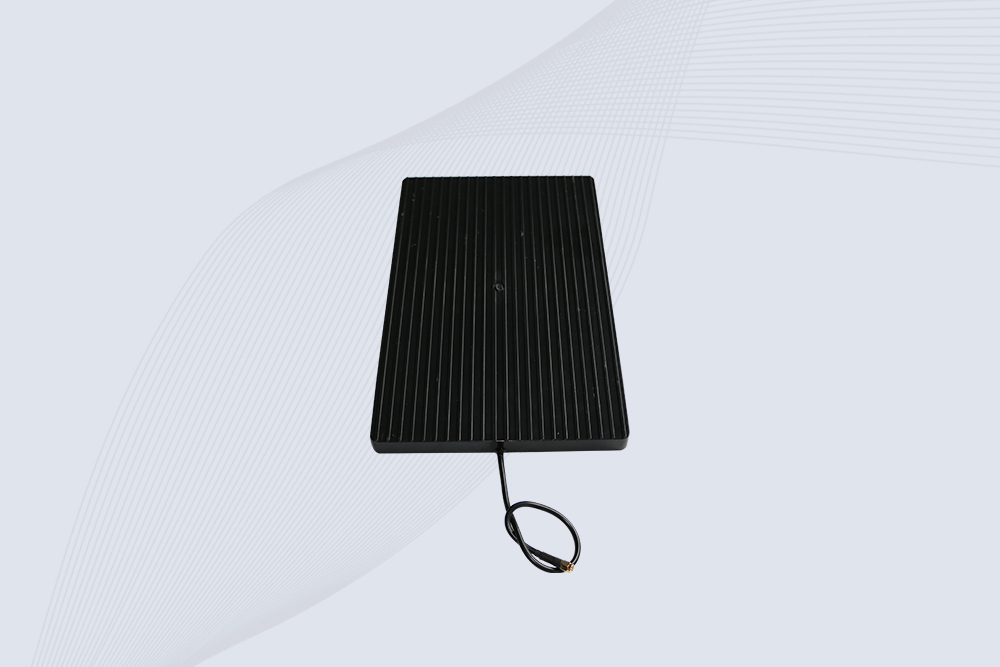
Cykeo’s CYKEO-A9B High Gain RFID Antenna delivers 15m+ read range with 9dBi amplification. Features IP54 rugged design, 840-960MHz bandwidth, and 80° beamwidth for warehouse/manufacturing RFID systems.

Cykeo’s enterprise-grade 8dbi Impinj RFID Antenna 10m+ read range with 840-960MHz tuning. Features IP65 housing, 1.4 VSWR, 35° beamwidth for retail/warehouse RFID systems.
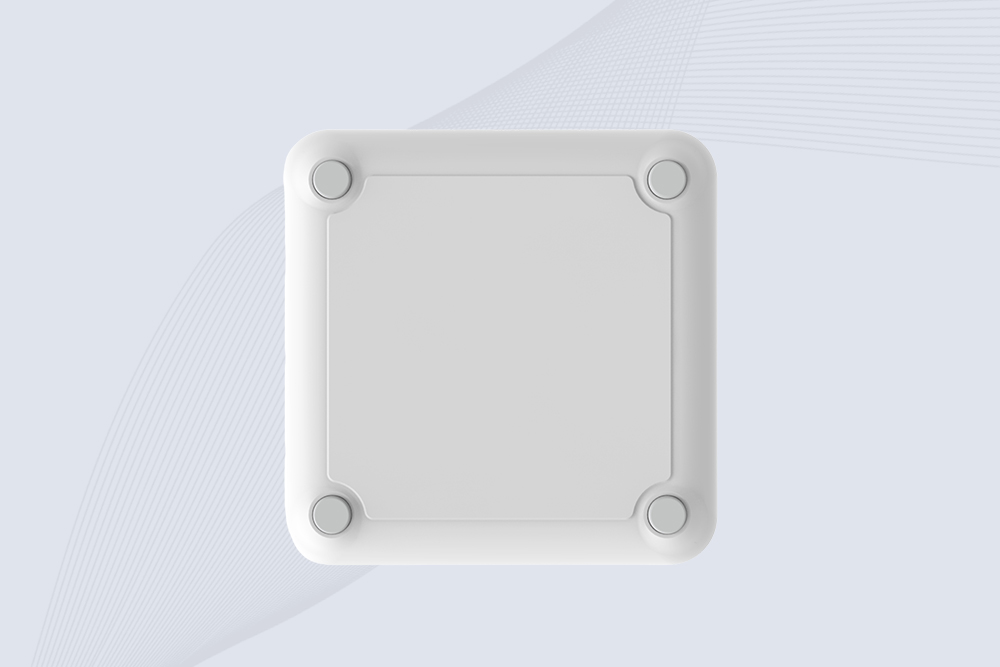
Cykeo CYKEO-A9 industrial UHF RFID antenna delivers 9dBi gain, 840-960MHz frequency range, and IP65 protection for warehouse/logistics/retail RFID systems. Features N-type connector and ≤1.3:1 VSWR.
CYKEO UHF RFID Antenna built for long-distance and industrial applications. This antenna rfid uhf delivers strong gain, outdoor durability, and reliable tag performance in warehouses, yards, and vehicle ID systems.
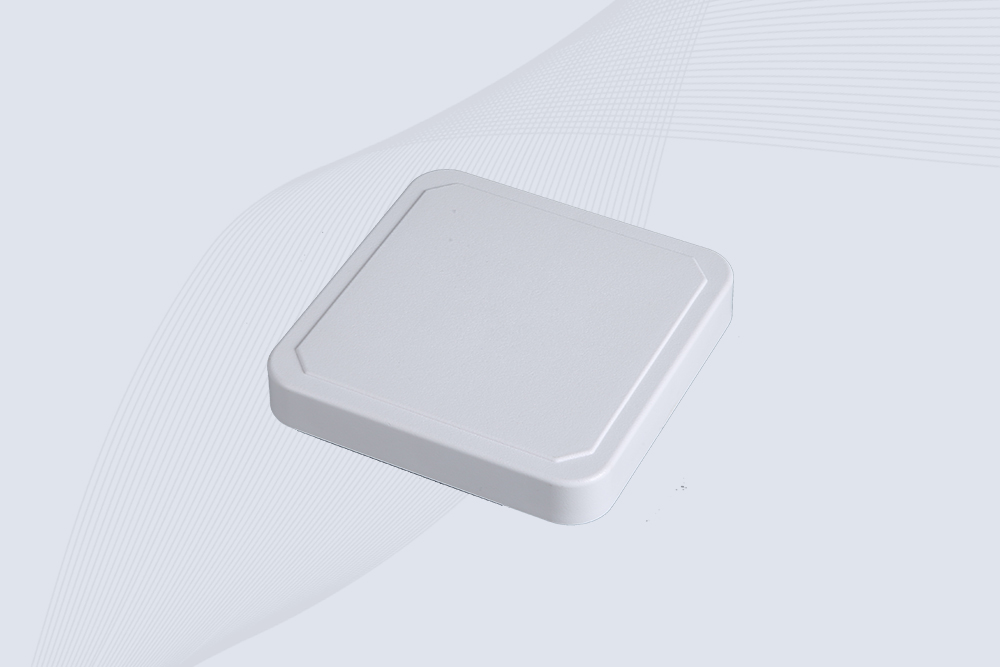
CYKEO Antenna RFID delivers reliable long-range UHF performance in warehouses, retail shelves, and cold-chain environments. This compact uhf rfid antenna provides stable reads with circular polarization and ultra-wide 840–960 MHz support, ideal for industrial tracking, smart shelves, and asset monitoring.
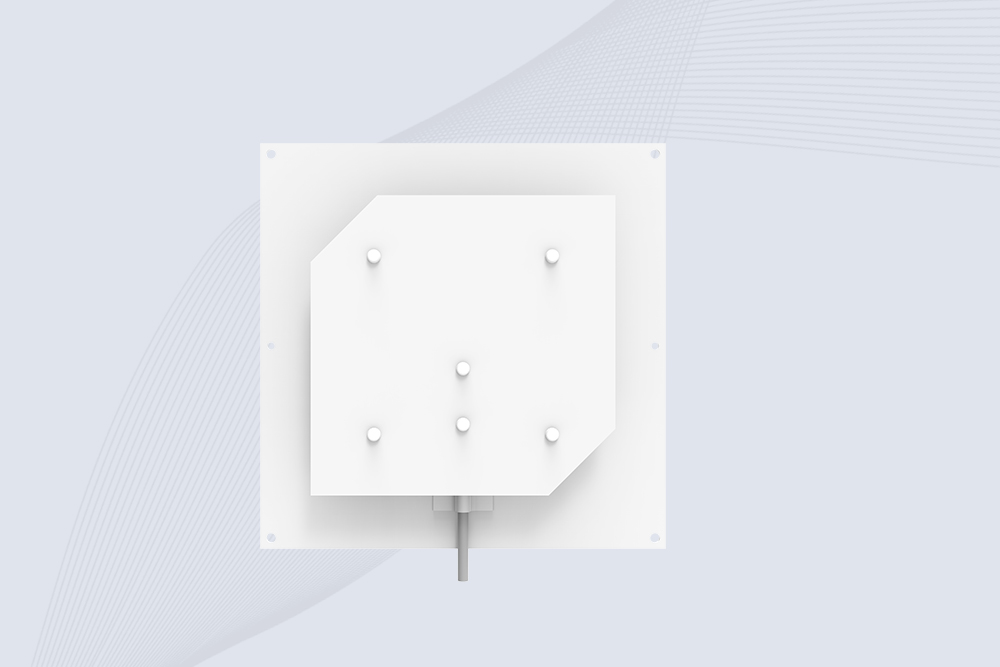
Cykeo’s CYKEO-C8 UHF RFID antennas delivers 8dBi gain, 840-960MHz full-band coverage, and IP65 ruggedness for manufacturing/warehouse RFID systems. Industrial RFID Antennas Features
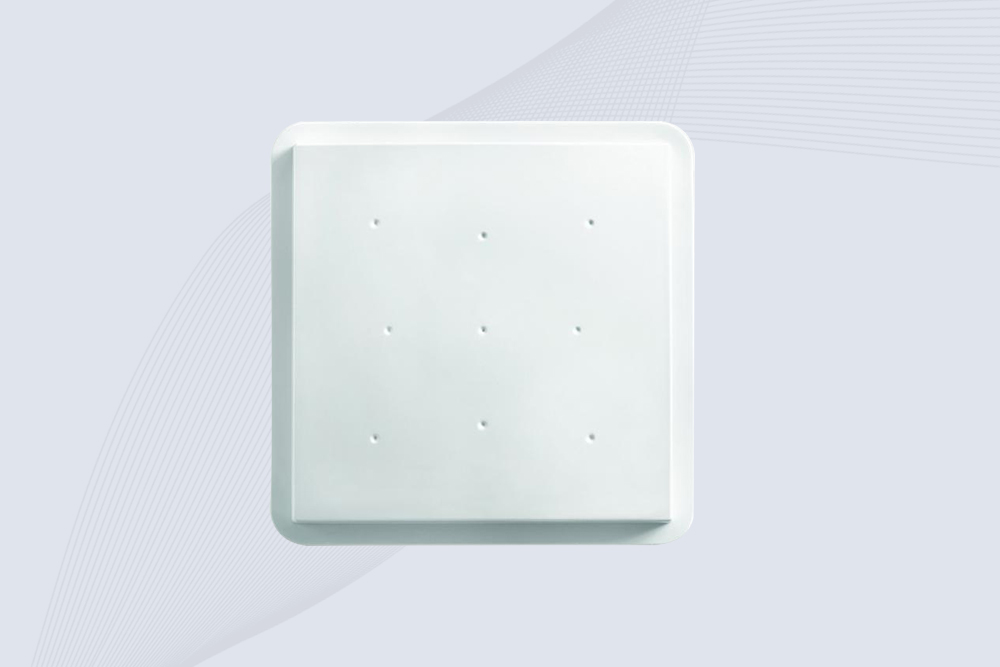
Cykeo’s 8dBi UHF RFID antenna and reader kit delivers 10m+ range, 840-960MHz broadband, and IP65 ruggedness for factories, warehouses, and logistics. ISO 18000-6C & EPC Gen2 certified.
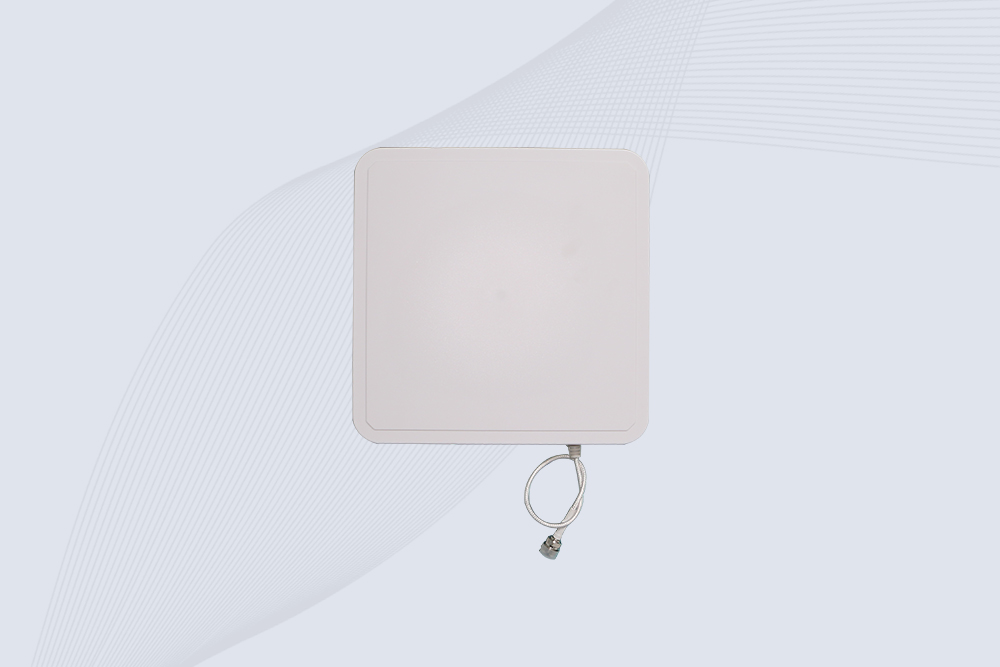
Cykeo CYKEO-A9A industrial UHF RFID reader and antenna kit delivers 10m range, 500 tags/sec, IP65 ruggedness for manufacturing/logistics. Supports EPC Gen2, ISO18000-6C.
Cykeo’s CYKEO-A12C UHF Large RFID Antenna delivers 12dBi gain, 840-960MHz global frequency, IP65 ruggedness for logistics/warehousing/automotive. 40° beamwidth ensures stable 15m+ tag reads.

CYKEO Near Field RFID Antenna provides precise 5–30 cm reading for shelves, cabinets, and workstations. This compact rfid shelf antenna delivers stable short-range performance around metal and clutter, ideal for pharmacies, libraries, and electronics sorting.
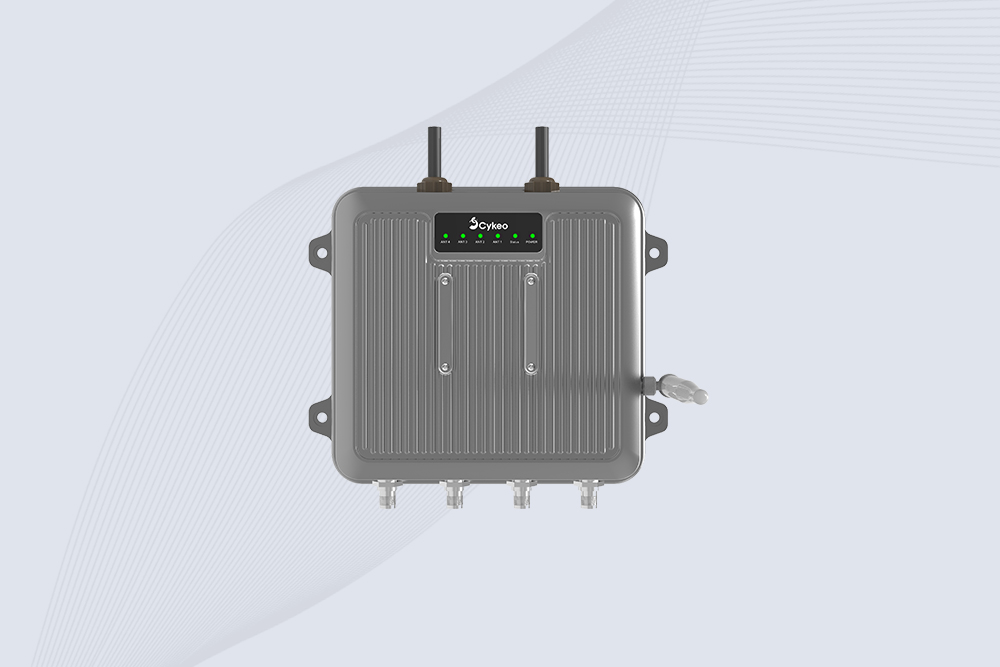
Cykeo CYKEO-C1 industrial Forklift RFID Reader features 20m read range, 600 tags/sec scanning, Impinj R2000 chipset, and IP67 rugged design. Ideal for warehouse logistics and manufacturing. Supports ISO 18000-6C/6B protocols.
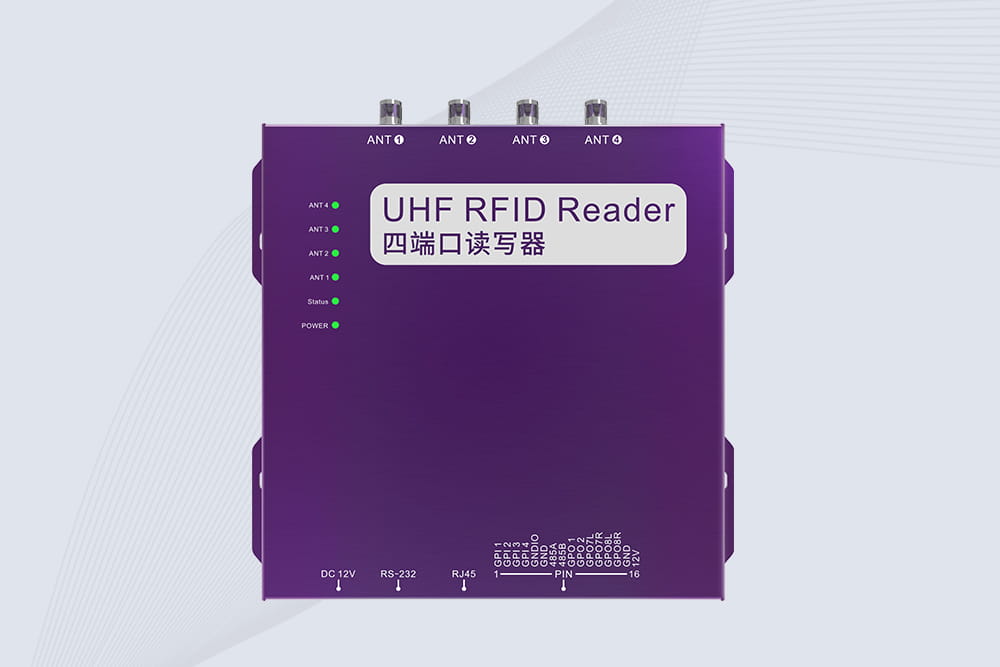
Cykeo CYKEO-R4 industrial UHF RFID Fixed Reader features 4 TNC ports, 400+ tags/sec speed, IP67 housing, and global frequency compliance for vehicle inspection, smart warehouse, and asset management systems.
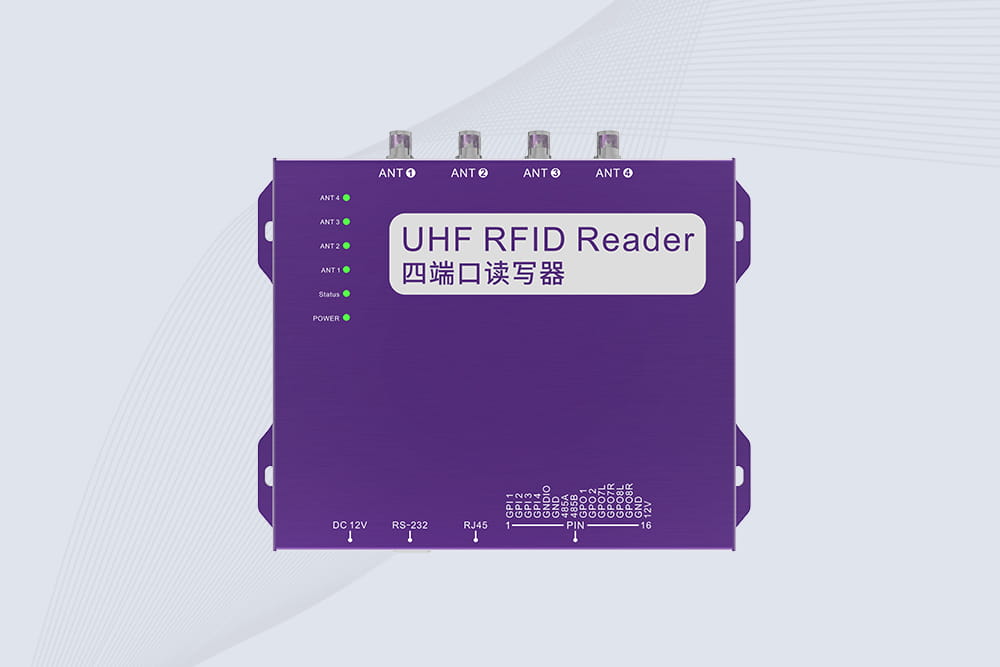
Cykeo’s CYKEO-R4L 4-port Fixed UHF RFID Reader delivers 400 tags/sec scanning, ISO 18000-6C compliance, and IP65 protection. Ideal for warehouse automation, manufacturing WIP tracking, and logistics management.
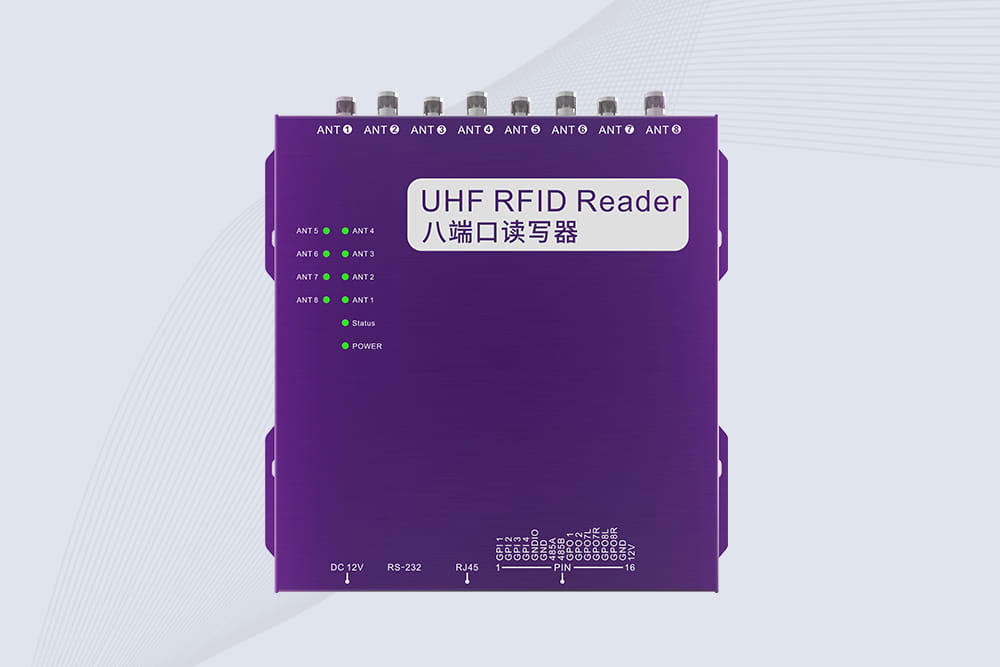
CYKEO CYKEO-R8L Fixed RFID Reader with 8-port UHF design, Impinj-based RF core and up to 20m read range. An industrial Fixed RFID Reader for vehicle inspection, warehouse portals, smart manufacturing lines and secure access checkpoints.
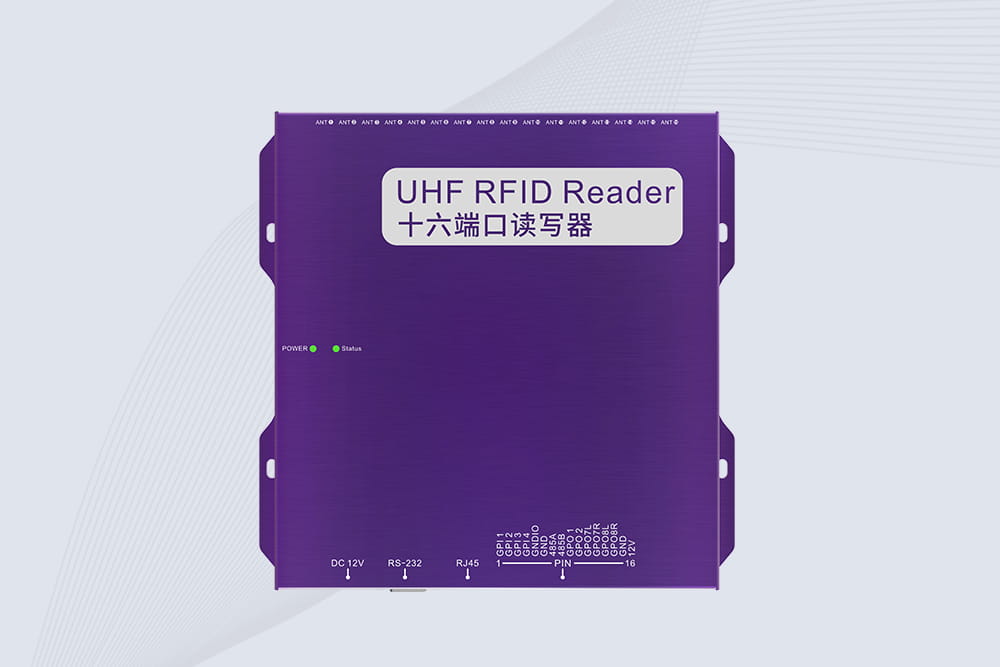
RFID Fixed Reader from CYKEO – the CYKEO-R16L 16-port UHF fixed reader for warehouses, smart cabinets, and production lines. Long-range, multi-tag reading, stable performance for 24/7 industrial use.
Confused between UHF and HF RFID antennas? Learn the pros, cons, and ideal applications for each frequency band to optimize your system’s performance.
More
Cykeo RFID Library Management System Enhancing Management Efficiency
More
CYKEO long range RFID tag reader with 9dBi integrated antenna, rugged design, outdoor-ready, real-time tag reading, and multi-protocol support. Perfect for warehouses, logistics, and industrial automation.
More
rfid wristband system improves access control, cashless payment, and attendee tracking using Cykeo ultra-high frequency RFID technology.
More