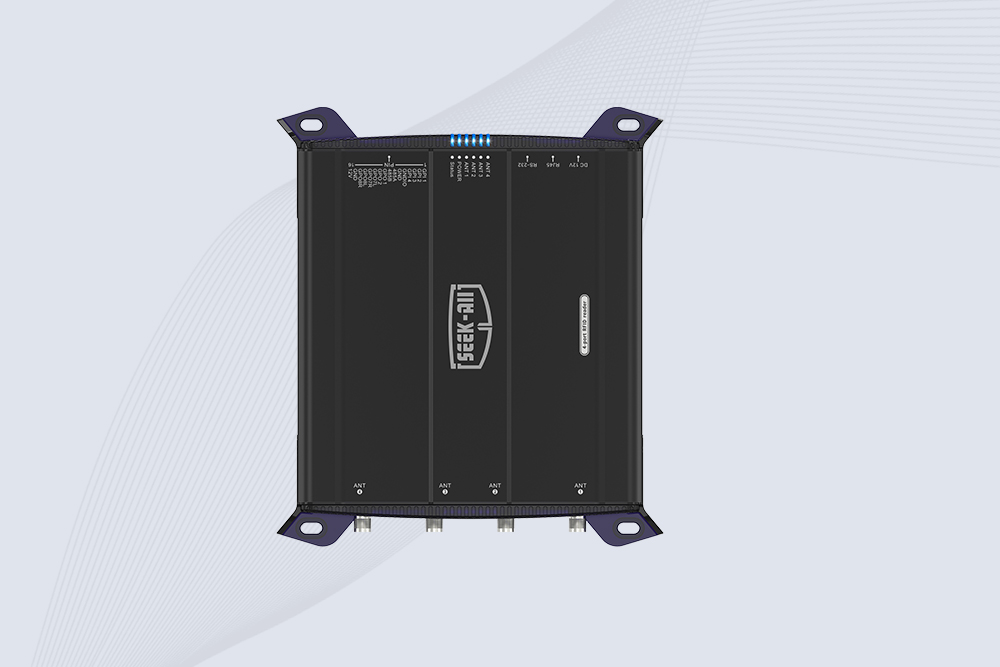
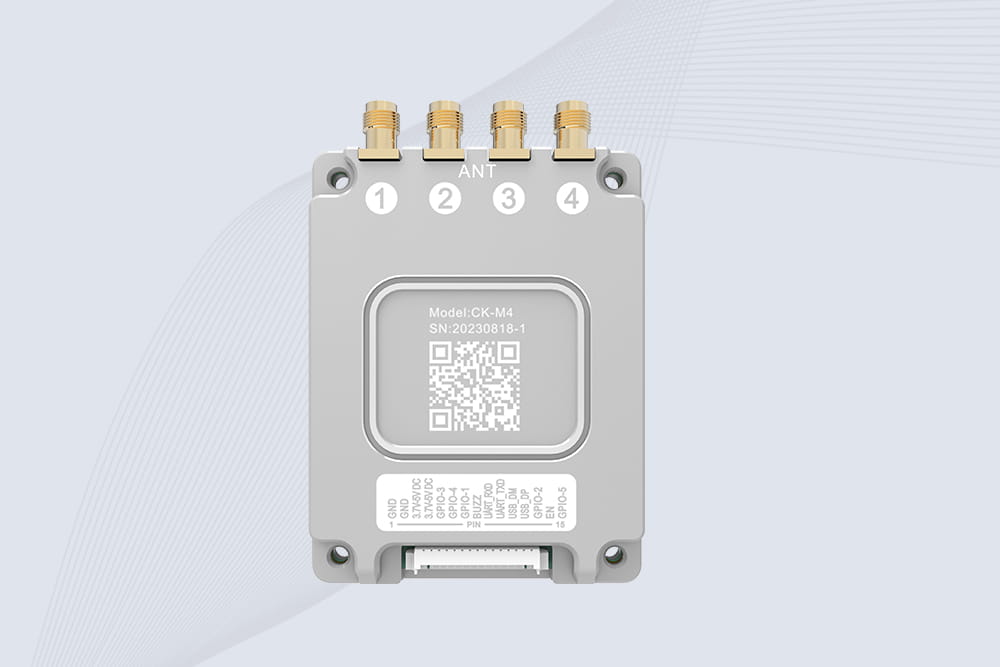
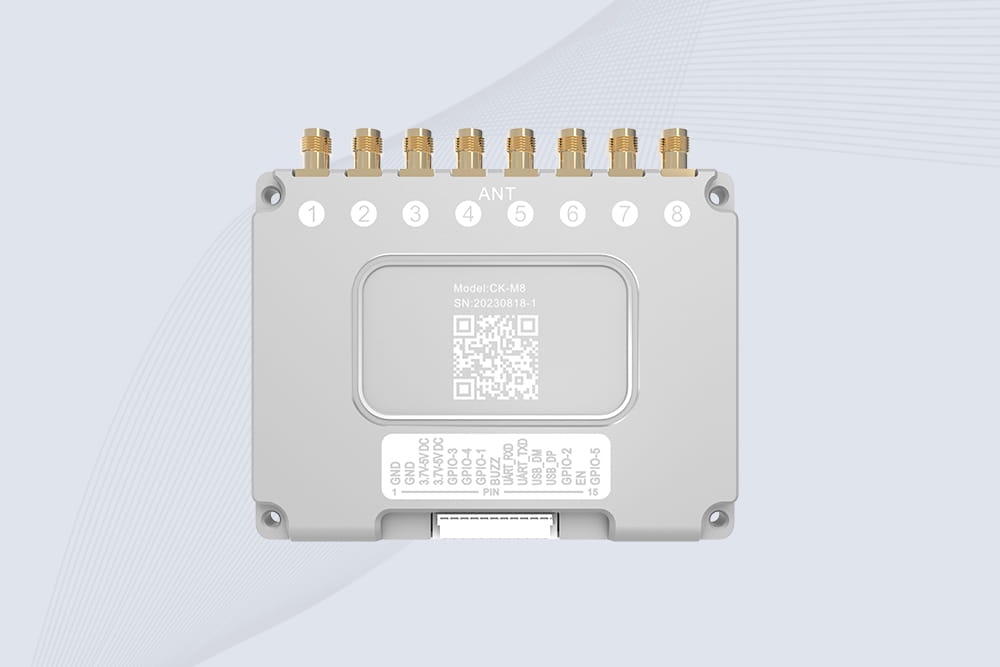
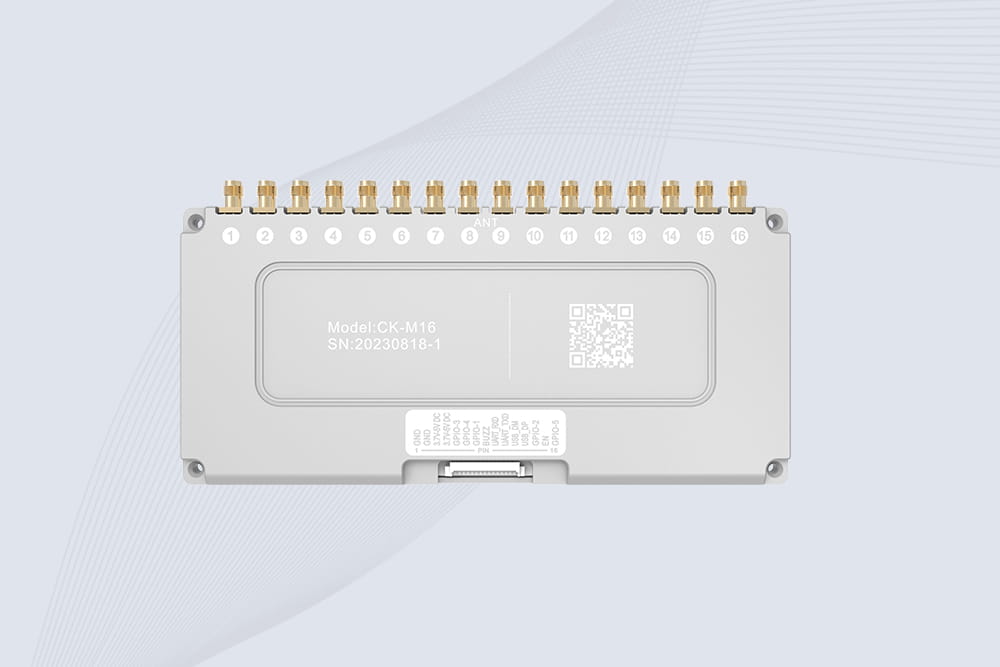
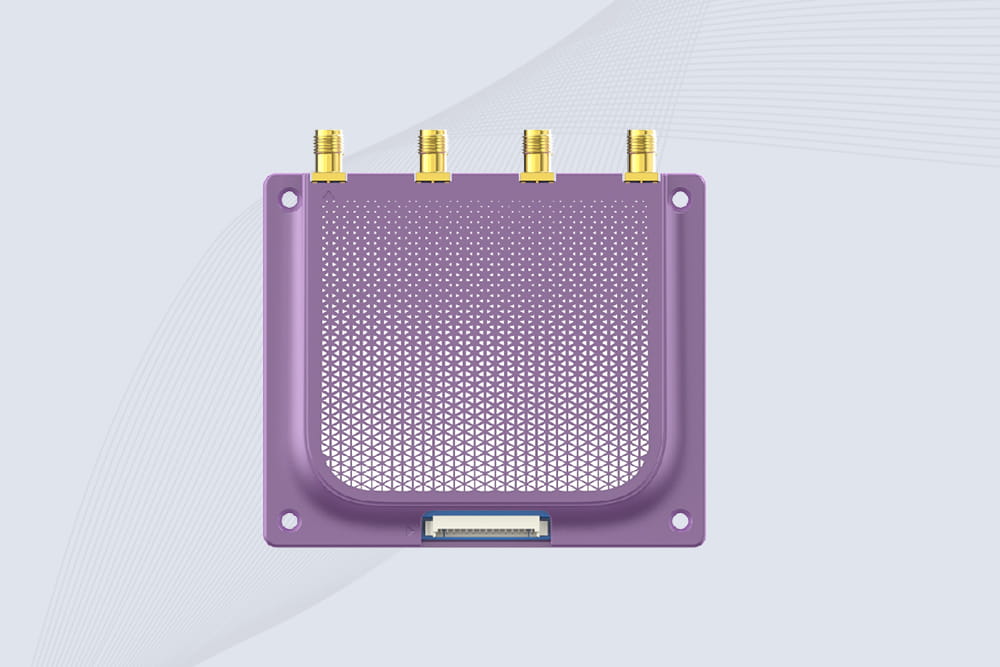
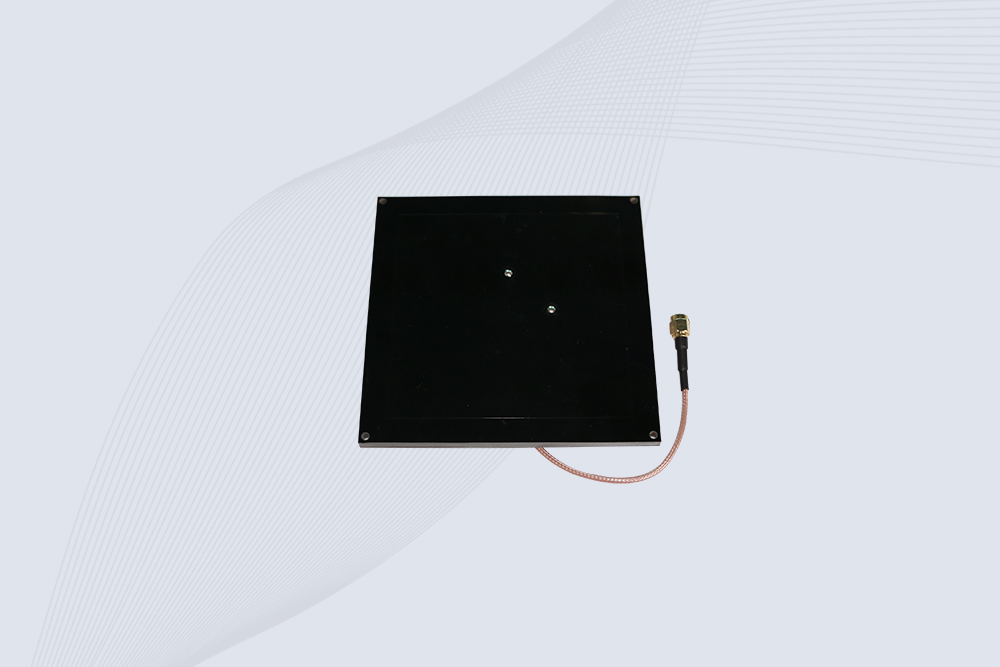
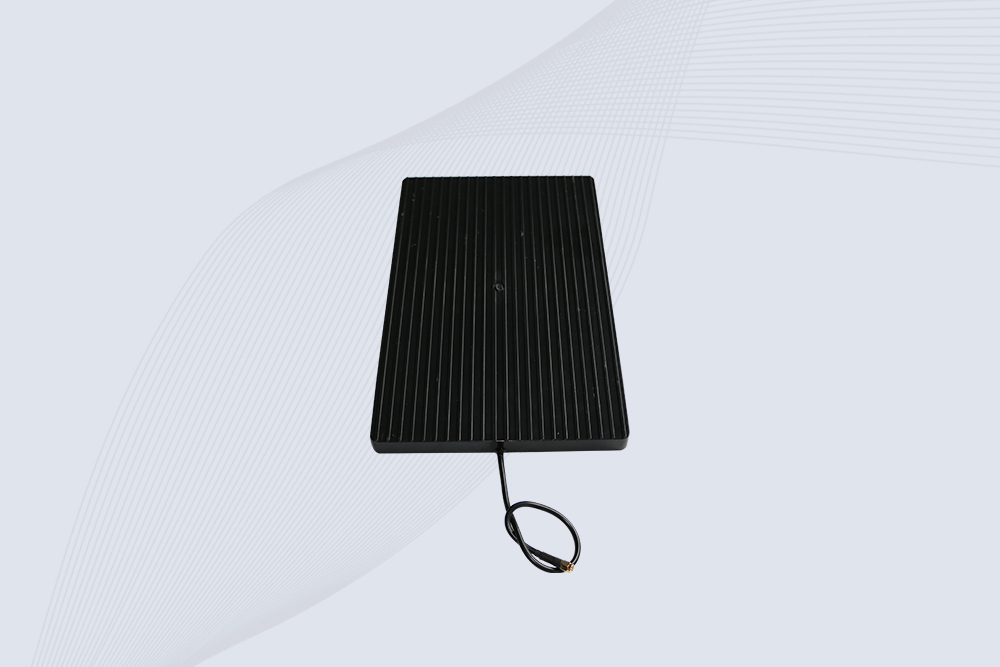
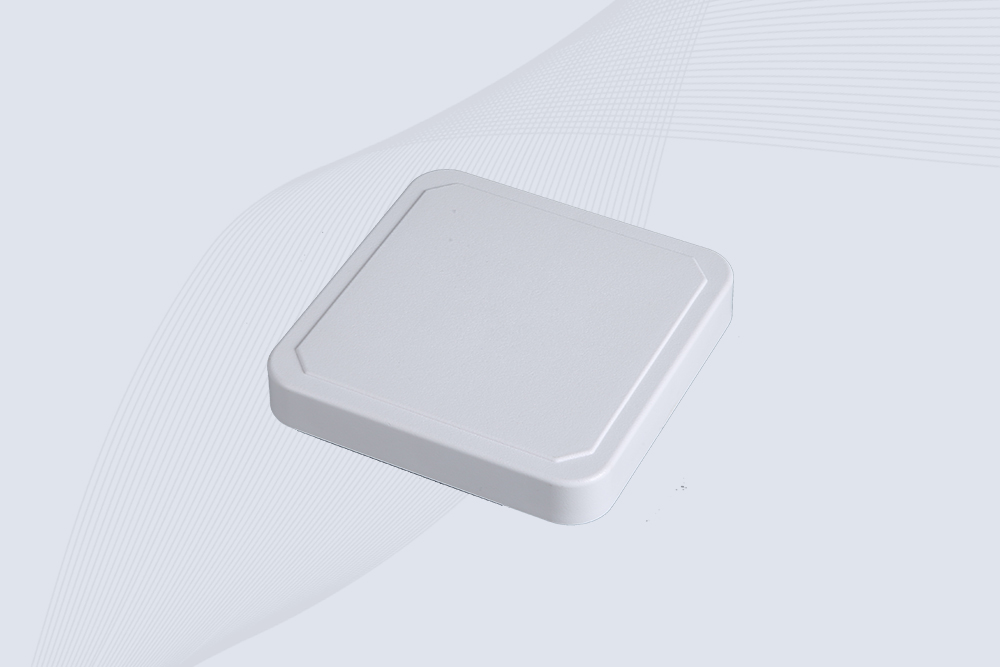
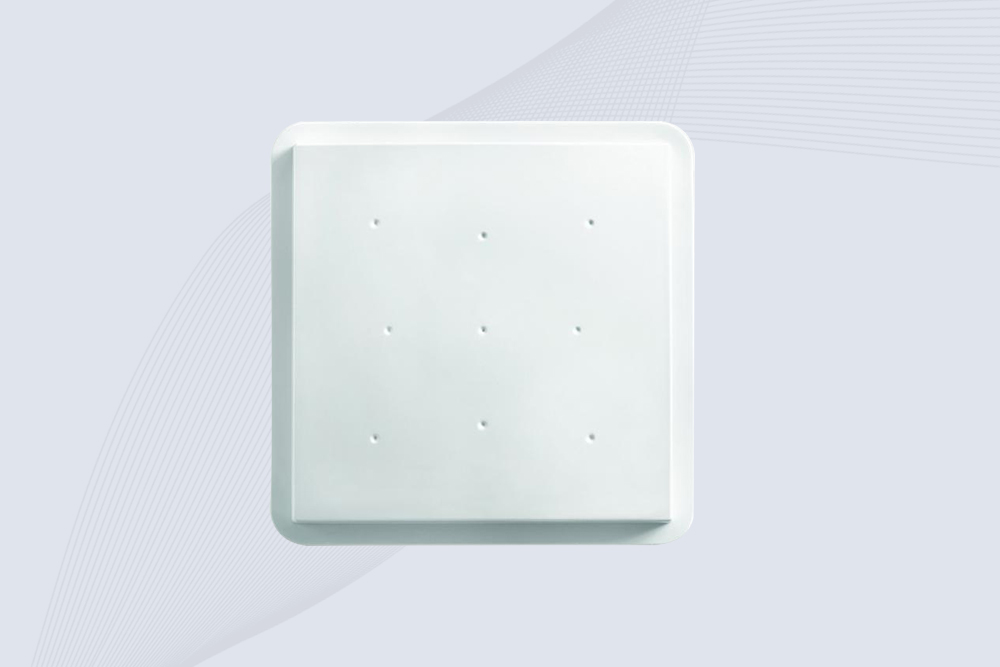
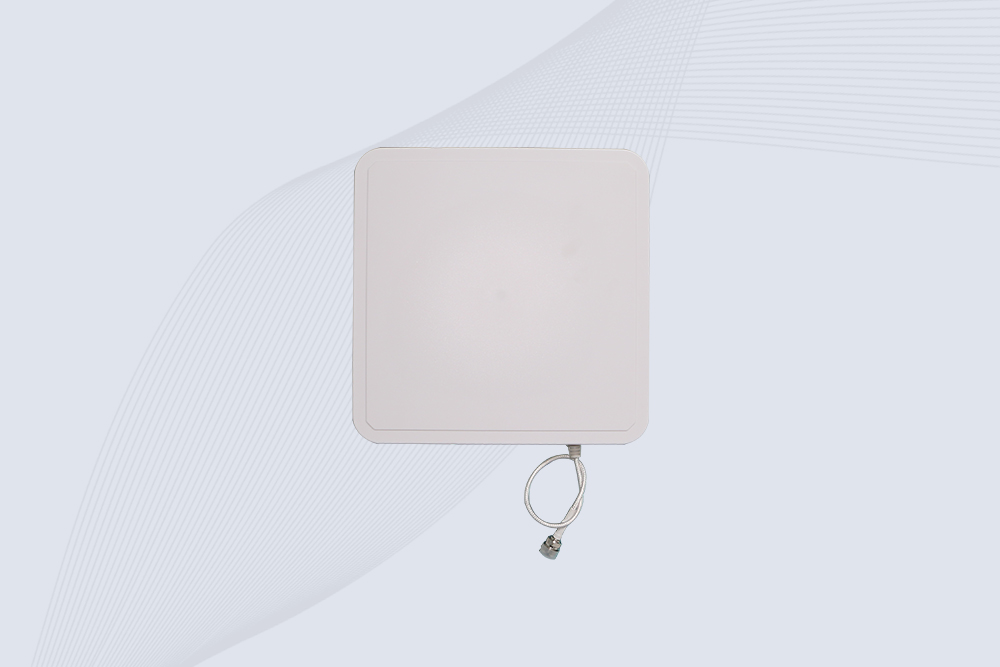
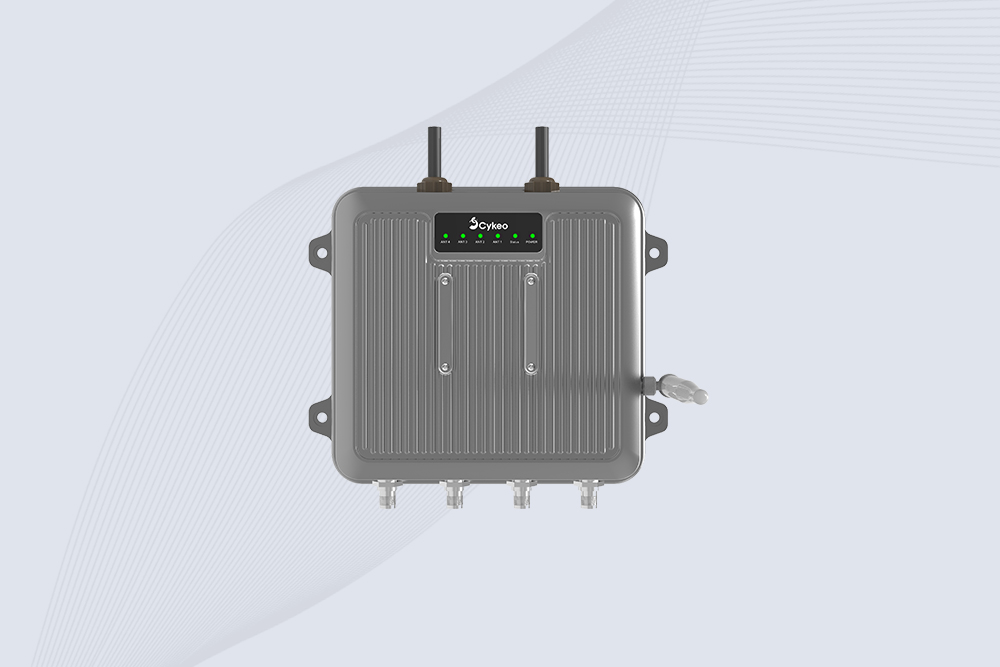
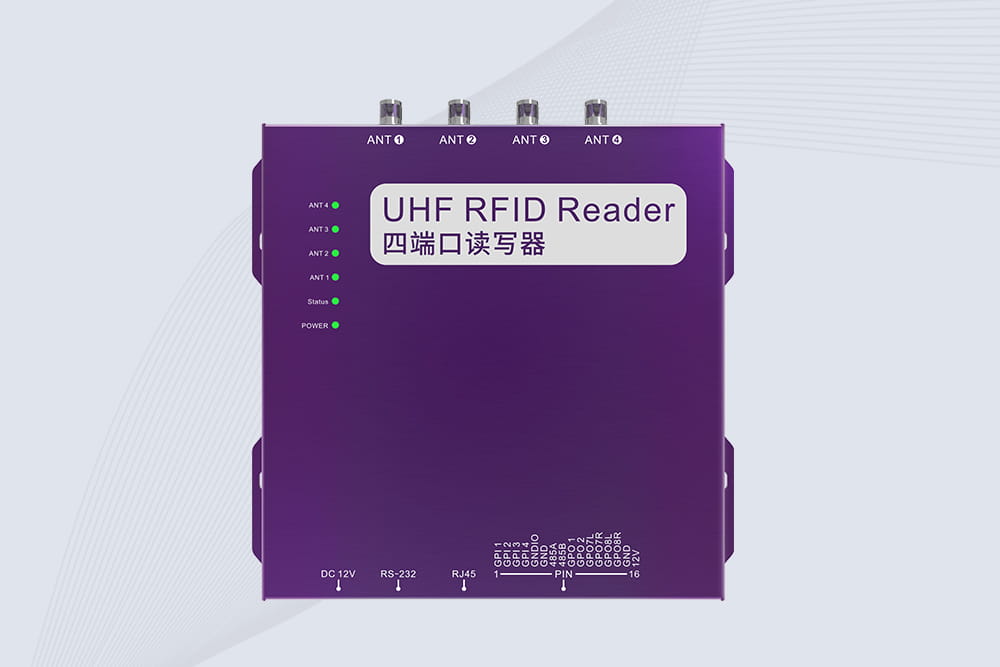
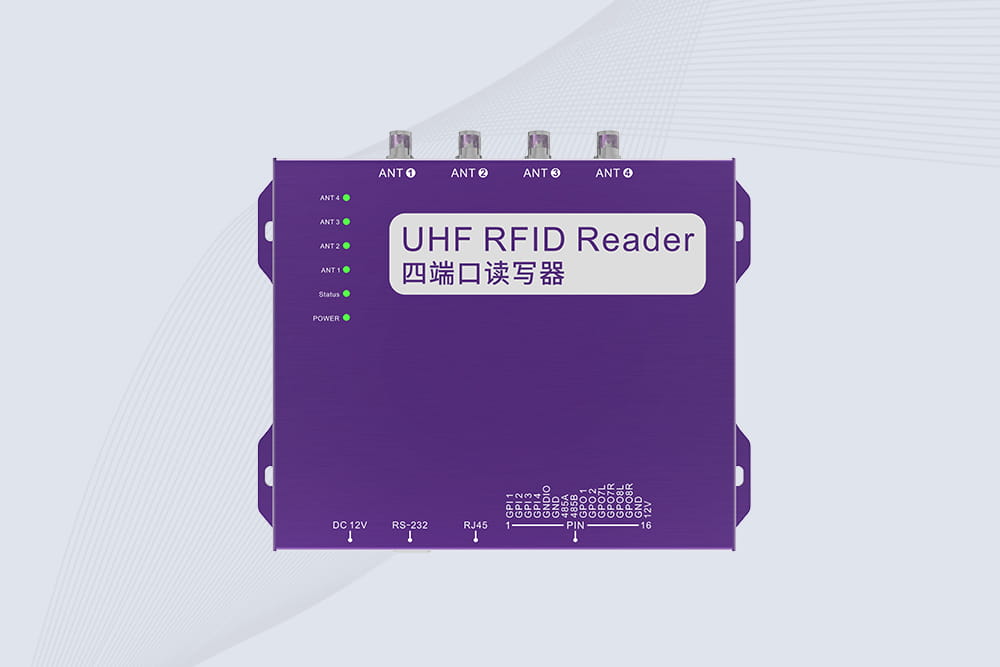
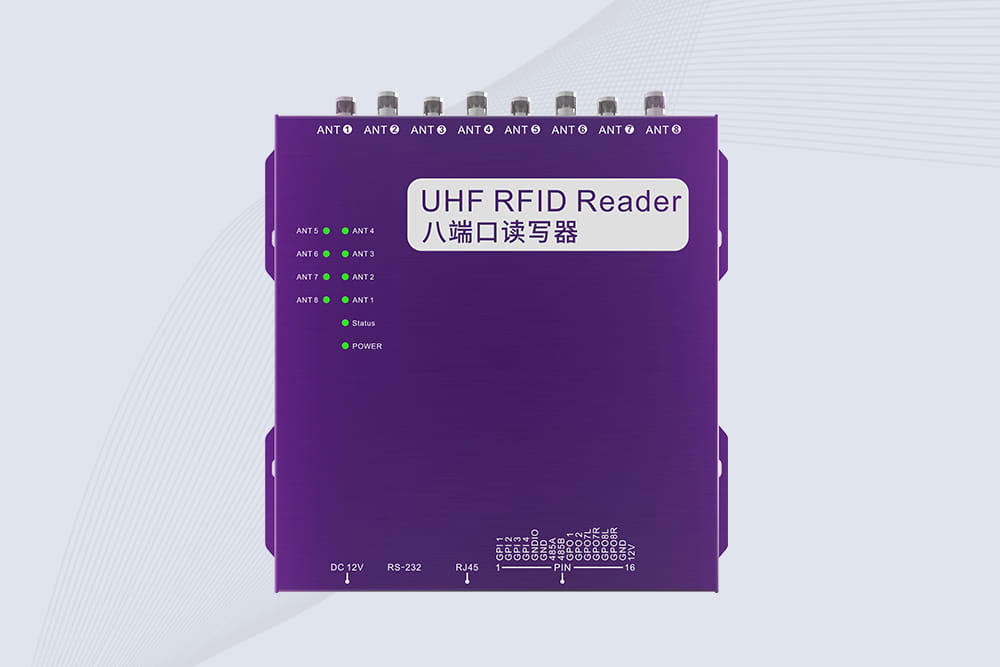
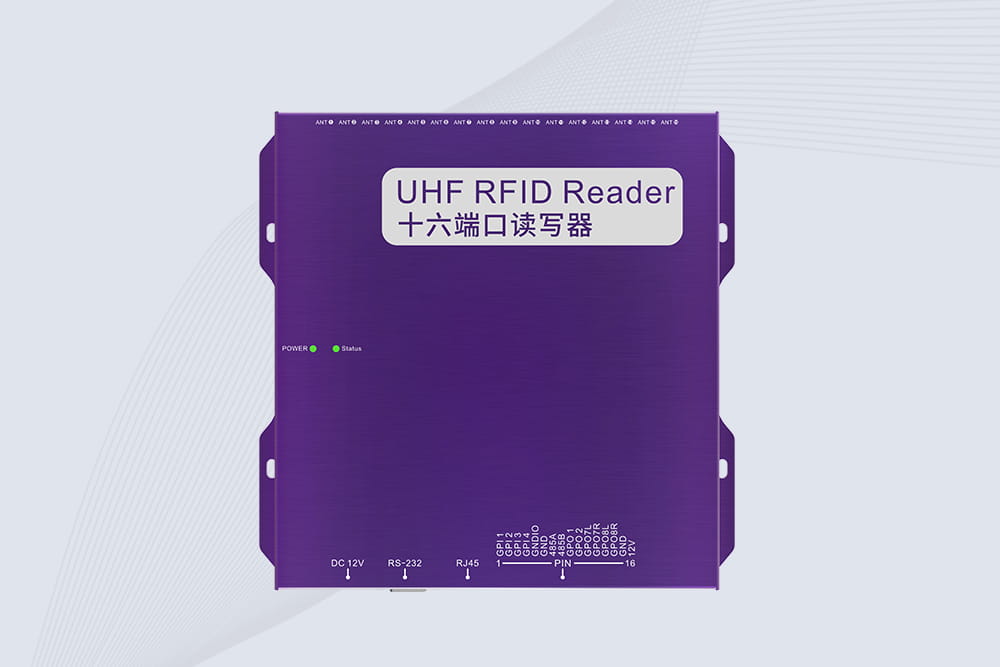
A long range RFID scanner can help oil and gas companies identify and track equipment, tools, containers, spare parts, maintenance assets, and other tagged items at warehouses, workshops, terminals, and controlled site checkpoints. By combining UHF RFID readers, suitable tags, directional antennas, and asset management software, companies can create automatic movement records and reduce manual equipment checks.
How Does RFID Tracking Work in Oil and Gas?
Oil and gas operations often involve large quantities of equipment moving between warehouses, workshops, drilling areas, processing facilities, terminals, and maintenance locations.
Some equipment stays in one location for months. Other assets move frequently between different teams or sites.
Keeping track of these movements manually can become difficult.
An RFID system provides another way to identify assets.
RFID tag is attached to a tool, equipment case, container, spare parts bin, or other asset. When the tagged item enters a reading zone, the antenna receives the RFID signal and sends it to the reader.
The reader captures the tag’s EPC and transfers the identification data to the software.
The software can then create an event such as:
Equipment P018 → Maintenance Workshop → 10:25
Or:
Container C316 → Site Warehouse → 15:40
This is important to understand: RFID normally records detection events at defined locations. It does not automatically provide continuous GPS positioning.
For many asset-management applications, knowing the last confirmed checkpoint can already be useful.
Tracking Oilfield Equipment
Oil and gas operations use a wide range of equipment and tools.
Depending on the application, RFID tags may be attached to:
Drilling equipment
Pumps
Valves and components
Generators
Compressors
Inspection equipment
Maintenance tools
Tool cases
Equipment containers
Spare parts bins
Reusable transport units
Some of these assets can be expensive, while others are frequently shared between maintenance teams.
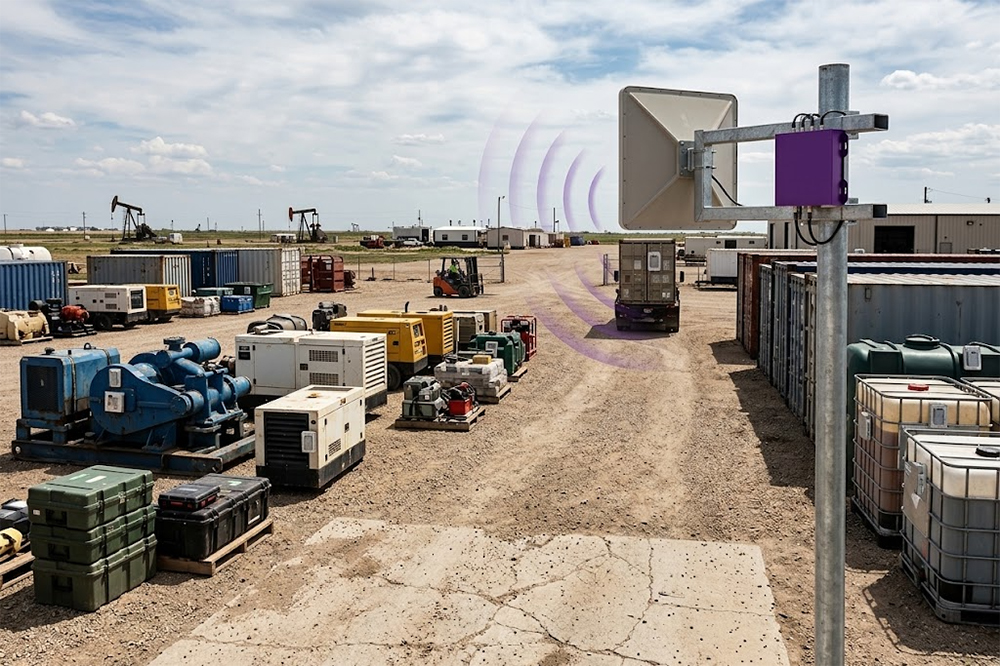
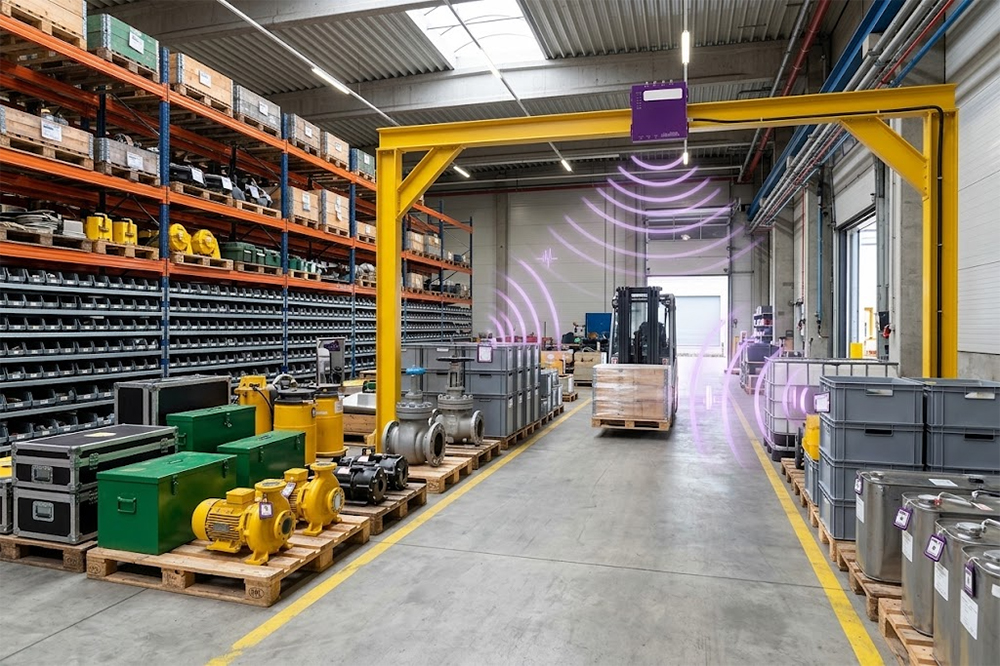
A fixed long range RFID scanner can be installed at a warehouse entrance, workshop door, equipment yard, or transfer point.
When tagged equipment passes through the checkpoint, the system automatically records the identification event.
This can help maintenance and logistics teams determine:
When equipment entered a workshop
When an asset left the warehouse
Where a tool was last detected
Which equipment is assigned to a site
Whether a reusable container has returned
Which assets remain in a particular storage area
RFID for Spare Parts and Containers
Inventory management is another possible application.
Oil and gas facilities may store large numbers of spare parts, components, tools, and maintenance materials.
Some parts are small. Others are stored in boxes, bins, cases, pallets, or metal containers.
Instead of scanning each barcode individually, RFID can provide automatic identification when tagged items pass a controlled reading point.
For example, a tagged spare parts container can be detected when it moves from:
Warehouse → Maintenance Workshop → Equipment Area
The system can associate each RFID event with a work order, asset number, project, or maintenance task.
This becomes more useful when the same containers are reused many times.
Rather than treating every movement as a manual inventory transaction, the RFID system can provide a background record of asset movement.
Metal Equipment Requires Careful Tag Selection
Metal is common in oil and gas environments.
Pipes, tools, equipment housings, machinery, containers, and many other assets may have metal surfaces.
This can affect RFID performance.
A standard RFID tag may not perform reliably when attached directly to metal. An on-metal RFID tag may be more appropriate for these assets.
But “on-metal” does not automatically mean “works everywhere.”
The mounting surface, tag position, orientation, reader power, antenna angle, and distance from surrounding metal can all influence the result.
For example, a tag mounted on a flat equipment panel may perform differently from one attached to a curved metal pipe or inside an equipment case.
This is why sample testing with the actual asset is important.
Harsh Industrial Environments
Oil and gas sites can present demanding operating conditions.
Depending on the location, RFID equipment may be exposed to:
Dust
Moisture
Outdoor temperature changes
Vibration
Impact
Oil or chemical contamination
UV exposure
Metal structures
Heavy machinery
The RFID tag and reader installation should therefore match the environment.
A rugged tag with suitable protection may be required for outdoor equipment. Some applications may also require protective mounting or a suitable enclosure.
Environmental requirements should be discussed during the project design rather than after the hardware has already been purchased.
For deployments in hazardous areas, the RFID equipment must also meet the applicable site safety and certification requirements. Standard RFID hardware should not automatically be assumed suitable for hazardous locations.
Antenna Position Is Critical
A common mistake in long range RFID projects is to focus only on reading distance.
Imagine an equipment yard with two adjacent storage lanes.
The customer wants the reader to identify equipment entering Lane A.
If the RFID antenna covers both lanes, the system may detect equipment in Lane B as well.
Increasing power would make the problem worse.
A better approach may involve:
Directional antenna placement
Lower reader power
Physical lane separation
Better tag positioning
Sensor triggering
Software filtering
The goal is not to create the largest possible reading zone.
The goal is to create a predictable reading zone.
This matters particularly when multiple assets are stored or moved close to each other.
Tracking Equipment Between Facilities
Large oil and gas companies may operate multiple warehouses, workshops, terminals, and field locations.
Equipment can move between these facilities for maintenance, deployment, inspection, or replacement.
RFID checkpoints can provide a simple movement history.
For example:
Central Warehouse → Service Workshop → Field Site → Return Warehouse
A reader at each selected checkpoint can record the asset’s movement.
This does not replace fleet GPS or other positioning technologies.
Instead, RFID provides an automatic identification event when the tagged asset passes a known location.
For equipment that moves between controlled facilities, this can be a practical complement to existing tracking systems.
Can RFID Read Multiple Oilfield Assets?
UHF RFID readers can detect multiple tags within the reading zone.
This can be useful when several tagged tools, containers, or equipment cases move through a checkpoint together.
However, the physical arrangement can change the result.
Ten plastic containers may behave differently from ten metal tool cases.
Closely packed equipment can also create a more difficult RF environment.
The system should therefore be tested with the expected number of assets.
Software filtering is equally important.
If a container remains beside an antenna for several seconds, the reader may capture the same EPC repeatedly.
The software should determine whether those repeated reads represent:
One asset remaining in place
An entry event
An exit event
A movement between zones
This event logic is often just as important as the reader’s raw reading capability.
RFID and Oil and Gas Asset Management Software
The reader generates RFID identification data.
The management platform turns that data into operational information.
Depending on the equipment and software architecture, communication may use:
Ethernet
TCP/IP
Serial communication
Digital I/O
API
SDK
HTTP
MQTT
RFID system may connect with:
Asset management software
ERP
WMS
Maintenance management systems
Inventory platforms
Equipment management systems
Industrial automation software
For example, a tagged pump entering a maintenance workshop could automatically create an arrival event.
A spare parts container leaving the warehouse could be associated with a maintenance work order.
A tool case returning from a field site could update the asset database.
The exact workflow depends on the customer’s existing software architecture.
A Practical Oil and Gas RFID Example
Consider a service company that manages equipment for several field projects.
Its warehouse contains hundreds of tools, equipment cases, and reusable containers. Workers record movements manually, but some records are updated several hours after the actual movement.
The system integrator installs RFID readers at the warehouse entrance and maintenance workshop.
Each equipment case receives an RFID tag suitable for its material.
When a case leaves the warehouse, the reader records the EPC.
When it reaches the workshop, another reader records the second checkpoint.
During the field test, several metal cases are not consistently detected.
The team does not immediately increase reader power.
Instead, it tests a different tag position, changes the antenna angle, and adjusts the reading zone.
Software filtering is also configured to prevent repeated reads from becoming multiple movement events.
The final system provides a more consistent movement history.
This example illustrates an important principle: RFID performance comes from the complete system, not the reader alone.
What Should Be Tested Before Deployment?
For oil and gas applications, testing should use real equipment and realistic conditions.
Important factors include:
Asset material
Metal surface
RFID tag type
Tag mounting position
Tag orientation
Reader output power
Antenna type
Antenna position
Reading distance
Number of tags
Asset spacing
Movement speed
Nearby metal structures
Electrical equipment
Outdoor conditions
Reading-zone boundaries
Software filtering
Entry and exit logic
Communication interface
If equipment will be moved outdoors, test it outdoors.
If metal containers will be tracked, test the actual containers.
If multiple assets pass the checkpoint together, test the complete group.
A reader that performs well with one RFID tag in a laboratory may behave differently in a real equipment yard.
What Should Distributors and System Integrators Look For?
For distributors and system integrators, an oil and gas RFID project may require several components.
When evaluating a long range RFID scanner, consider:
Frequency range
EPC C1G2 / ISO18000-6C support
Reader sensitivity
Output power
Antenna ports
Compatible antennas
Communication interfaces
API or SDK availability
Digital I/O
Multiple-tag reading capability
Firmware functions
On-metal tag compatibility
Rugged tag options
OEM customization
Sample availability
MOQ
Lead time
Technical support
Bulk supply capability
For projects involving specialized industrial or hazardous environments, buyers should also verify the required certifications and installation requirements for the specific site.
Long Range Does Not Mean the Largest Possible Reading Area
The phrase “long range RFID scanner” can create the impression that the reader should detect assets from as far away as possible.
That is not always desirable.
Suppose a workshop entrance needs to detect equipment passing through a 3-meter-wide doorway.
A reader that reliably detects assets at a controlled distance may be more useful than one that can detect tags throughout the surrounding yard.
Too much coverage can create false events.
For this reason, system designers should consider effective reading distance, not only the maximum distance listed on a specification sheet.
A controlled reading zone makes the system easier to understand, test, and maintain.
Final Takeaway
A long range RFID scanner can help oil and gas companies improve the visibility of equipment, tools, containers, spare parts, and other industrial assets.
The strongest applications usually involve defined checkpoints such as warehouses, workshops, equipment yards, terminals, and controlled transfer areas.
Metal surfaces and harsh environments make tag selection and installation particularly important. Antenna direction, reader power, software filtering, and integration also affect the final result.
For distributors and system integrators, the opportunity is broader than supplying one RFID reader. A complete project may require long range readers, rfid antennas, on-metal tags, rugged tags, software integration, testing support, OEM customization, and ongoing bulk supply.
SSD-A06 UHF RFID antenna with circular polarization, adjustable 840–960 MHz frequency, ≥4.5 dBi gain, and a compact directional design for RFID systems.
SSD-R16L Multi-Channel RFID Infrastructure for Automated Inventory Management ✔️ 16-Port High-Density RFID Reading Equipped with 16 SMA antenna ports, SSD-R16L supports multi-antenna deployment for warehouses, retail stores, logistics, production lines, and large-area RFID identification. ✔️ High-Speed & Long-Range Performance With up to 33…
SSD-R8L 8-port UHF RFID reader with 33dBm output, up to 20m reading range and 600+ tags/s recognition. Ideal for warehouse, logistics, retail and asset tracking.
CYKEO Embedded RFID Modules are designed for compact industrial and IoT devices that require stable UHF performance. These UHF RFID Modules support global protocols, flexible power control, and reliable multi-tag reading for smart cabinets, production lines, and asset tracking systems.
CYKEO Embedded RFID Module is built for compact IoT and industrial devices that need stable UHF performance. This UHF module supports global protocols, low power operation, and reliable multi-tag reading for smart lockers, production lines, and always-on RFID systems.
CYKEO CYKEO-M1 drone rfid module is a compact UHF RFID reader module designed for drones and UAV platforms. It supports long-range aerial scanning, fast multi-tag reading, and stable performance in wind, vibration, and outdoor environments.
CYKEO CYKEO-M4 RC522 RFID Module is an industrial-grade UHF RFID reader with 4 ports, supporting ISO, EPC, and GB protocols. High-speed, accurate reading for IoT, automation, and warehouse applications.
CYKEO CYKEO-M8 Module RFID is an 8-port UHF R2000 RFID Module designed for high-density, multi-tag environments. Stable 33dBm output, ISO & GB protocol support, ideal for warehouses, factories, and automated systems.
CYKEO CYKEO-M16 RFID Module is a 16-port UHF RFID reader module based on the R2000 chipset. Designed for dense tag environments, it supports ISO and GB standards and delivers stable multi-antenna control for industrial automation.
The CYKEO CYKEO-M16L RFID Reader Module is a 16-channel UHF RFID core designed for dense tag environments. With adjustable 33dBm output, multi-protocol support, and stable multi-antenna control, this RFID Tag Reader Module fits industrial automation, warehouse systems, and large-scale IoT deployments.
CYKEO CYKEO-M8L module RFID is a compact industrial UHF module built for dense tag and multi-antenna environments. With 8 RF ports, adjustable 33 dBm output, and ISO & GB protocol support, it is widely used in factories, warehouses, and automated tracking systems.
CYKEOCYKEO-M4L UHF RFID Module is a compact 4-channel RFID tag reader module designed for dense tag environments. Supporting ISO and GB protocols, it delivers stable reads up to 10 meters for industrial and IoT systems.
Cykeo CYKEO-A11 UHF RFID reader antenna delivers 11dBi gain, 840-960MHz frequency range, and IP65 ruggedness for retail, logistics, and industrial RFID systems. Features low VSWR and easy installation.
CYKEO Antenna RFID Reader delivers stable long-range UHF performance with a 10.5dBi directional design, built for warehouses, conveyor portals, and industrial RFID systems. This rfid reader antenna provides 20m+ read distance and rugged IP67 protection.
Cykeo CYKEO-A5B industrial Linear RFID Antenna delivers 5dBi gain, ≤1.5:1 VSWR, and IP65 rugged design for warehouse, production line, and logistics UHF systems.
Cykeo’s CYKEO-B12 Long Range RFID Antenna delivers 15m+ read range with 12dBi gain, IP65 rugged design, and global 840-960MHz UHF support. Ideal for warehouse/logistics asset tracking.
Cykeo CYKEO-B10 Long Distance RFID Antenna offers 10dBi gain, 840-960MHz frequency range, IP65 rating, and 20m+ coverage for logistics/warehousing/ETC systems. Low VSWR ensures stable signal transmission.
Cykeo CYKEO-A6 UHF RFID panel antenna features 6dBi gain, 840-960MHz broadband, IP65 metal-ready housing for logistics/smart retail. 18mm ultra-thin design with tool-free mounting.
Cykeo CK-A3 industrial antenna RFID UHF offers 5m+ tag detection, ≤1.3:1 VSWR, IP65 rugged design, and global UHF spectrum compatibility (840-960MHz) for warehouses, factories, and retail.
Cykeo CYKEO-B5 directional RFID antenna provides 5dBi gain with 60° narrow beamwidth for precise inventory tracking. IP65-rated, global UHF frequency support, and low VSWR.
Create your own high-performance DIY RFID antenna! 5dBi gain, 840-960MHz tunable, step-by-step guides. Compatible with Arduino, Raspberry Pi, and commercial UHF readers.
Cykeo CYKEO-A7 Flexible RFID Antenna features 840-960MHz wideband tuning, 7dBi gain, and IP68 rating for medical/retail/industrial curved surface deployments. 98% read accuracy with peel-and-stick installation.
Cykeo CYKEO-B5A industrial Passive RFID Antenna delivers 5dBi gain, 70° beamwidth, and -40°C~55°C operation for warehouses/smart cabinets. Compatible with Zebra/Impinj readers.
Cykeo’s CYKEO-A9B High Gain RFID Antenna delivers 15m+ read range with 9dBi amplification. Features IP54 rugged design, 840-960MHz bandwidth, and 80° beamwidth for warehouse/manufacturing RFID systems.
Cykeo’s enterprise-grade 8dbi Impinj RFID Antenna 10m+ read range with 840-960MHz tuning. Features IP65 housing, 1.4 VSWR, 35° beamwidth for retail/warehouse RFID systems.
Cykeo CYKEO-A9 industrial UHF RFID antenna delivers 9dBi gain, 840-960MHz frequency range, and IP65 protection for warehouse/logistics/retail RFID systems. Features N-type connector and ≤1.3:1 VSWR.
CYKEO UHF RFID Antenna built for long-distance and industrial applications. This antenna rfid uhf delivers strong gain, outdoor durability, and reliable tag performance in warehouses, yards, and vehicle ID systems.
CYKEO Antenna RFID delivers reliable long-range UHF performance in warehouses, retail shelves, and cold-chain environments. This compact uhf rfid antenna provides stable reads with circular polarization and ultra-wide 840–960 MHz support, ideal for industrial tracking, smart shelves, and asset monitoring.
Cykeo’s CYKEO-C8 UHF RFID antennas delivers 8dBi gain, 840-960MHz full-band coverage, and IP65 ruggedness for manufacturing/warehouse RFID systems. Industrial RFID Antennas Features
Cykeo’s 8dBi UHF RFID antenna and reader kit delivers 10m+ range, 840-960MHz broadband, and IP65 ruggedness for factories, warehouses, and logistics. ISO 18000-6C & EPC Gen2 certified.
Cykeo’s CYKEO-A12C UHF Large RFID Antenna delivers 12dBi gain, 840-960MHz global frequency, IP65 ruggedness for logistics/warehousing/automotive. 40° beamwidth ensures stable 15m+ tag reads.
CYKEO Near Field RFID Antenna provides precise 5–30 cm reading for shelves, cabinets, and workstations. This compact rfid shelf antenna delivers stable short-range performance around metal and clutter, ideal for pharmacies, libraries, and electronics sorting.
Cykeo CYKEO-C1 industrial Forklift RFID Reader features 20m read range, 600 tags/sec scanning, Impinj R2000 chipset, and IP67 rugged design. Ideal for warehouse logistics and manufacturing. Supports ISO 18000-6C/6B protocols.
Cykeo CYKEO-R4 industrial UHF RFID Fixed Reader features 4 TNC ports, 400+ tags/sec speed, IP67 housing, and global frequency compliance for vehicle inspection, smart warehouse, and asset management systems.
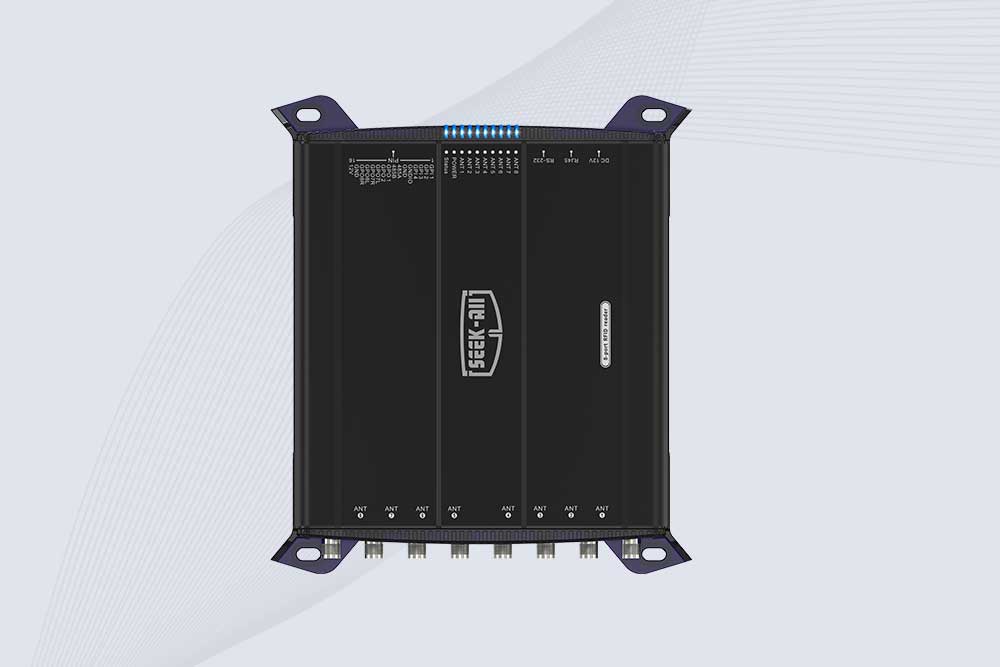
CYKEO CYKEO-R8L Fixed RFID Reader with 8-port UHF design, Impinj-based RF core and up to 20m read range. An industrial Fixed RFID Reader for vehicle inspection, warehouse portals, smart manufacturing lines and secure access checkpoints.
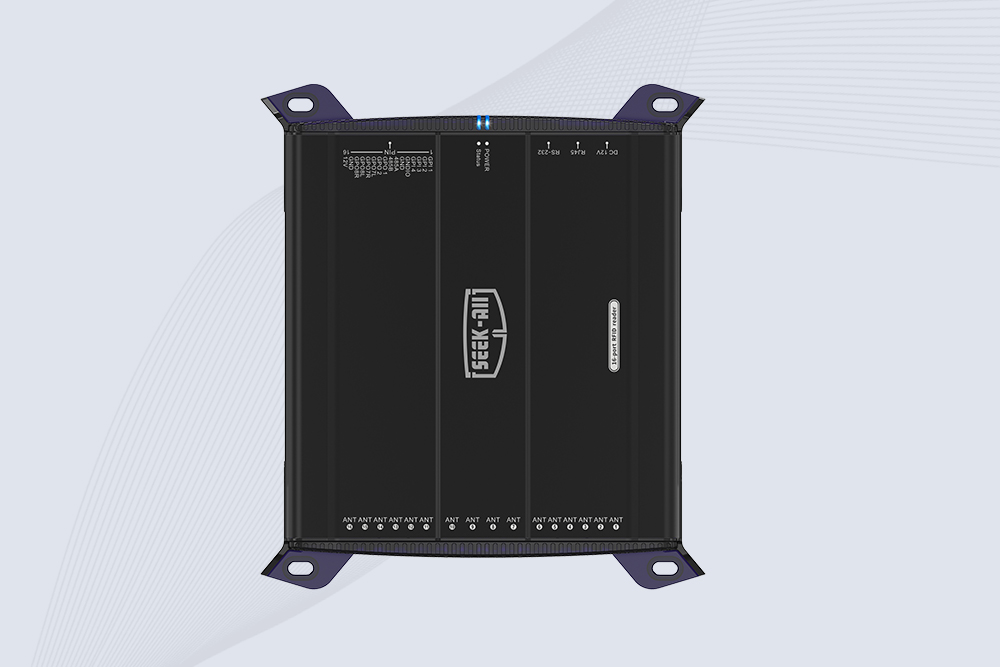
RFID Fixed Reader from CYKEO – the CYKEO-R16L 16-port UHF fixed reader for warehouses, smart cabinets, and production lines. Long-range, multi-tag reading, stable performance for 24/7 industrial use.
RFID Industry Writer | IoT & Asset Tracking Analyst
James writes about RFID technology, asset tracking, and the practical challenges of digital transformation across warehousing, retail, manufacturing, and logistics.
His work focuses on how RFID is applied in real-world operations—improving inventory visibility, automating workflows, and helping businesses manage assets with greater accuracy and efficiency.
He regularly covers topics including UHF RFID, smart cabinets, RFID portals, tool tracking, warehouse automation, and industrial IoT trends..
CK-GC120 RFID management cabinet with face recognition or card login, dual-frequency UHF/HF scanning, and 72 independent RFID units. Supports RESTful and native APIs, Java/C# SDK, and cloud-based Windows/Android systems for precise asset control i...
Explore the working principle of RFID tags: energy transfer, data transmission, and real-world applications. Learn about passive, active, and semi-passive RFID systems.
Tried to make an RFID antenna? We have too. Here’s a real account of the DIY process, where it goes wrong, and why we usually recommend buying instead.
 Cykeo RFID IoT Solution Products R&D Manufacturer