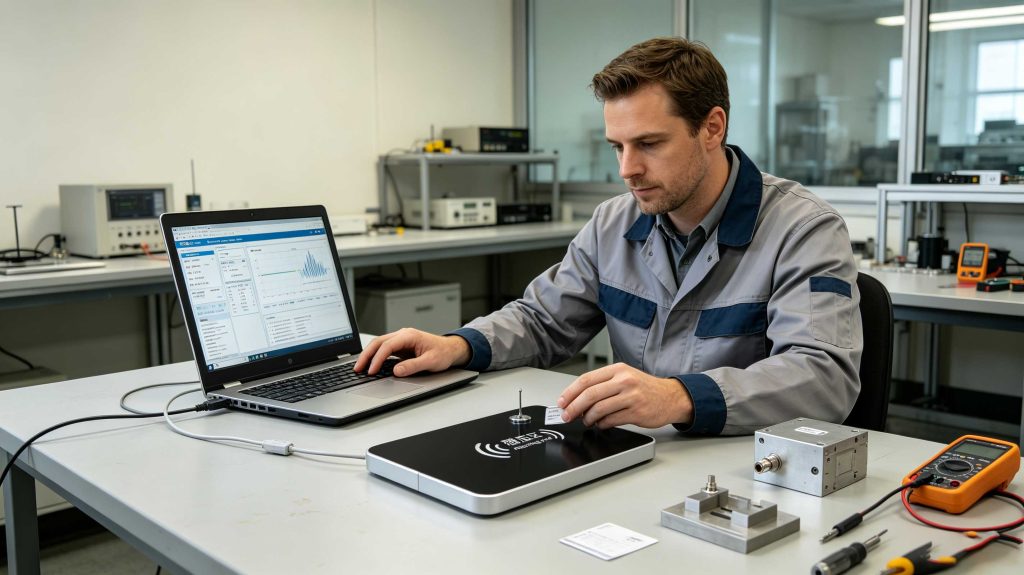
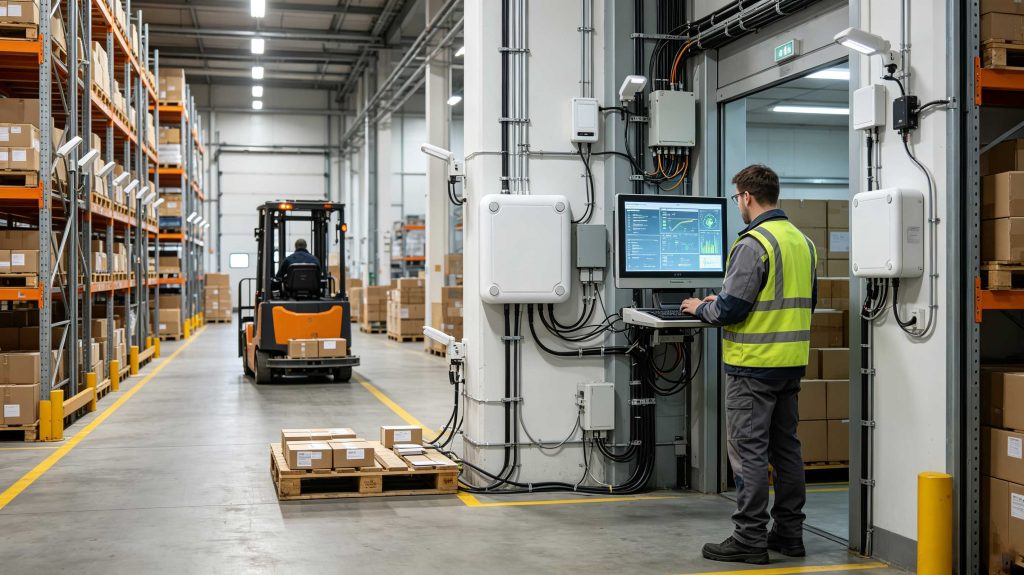
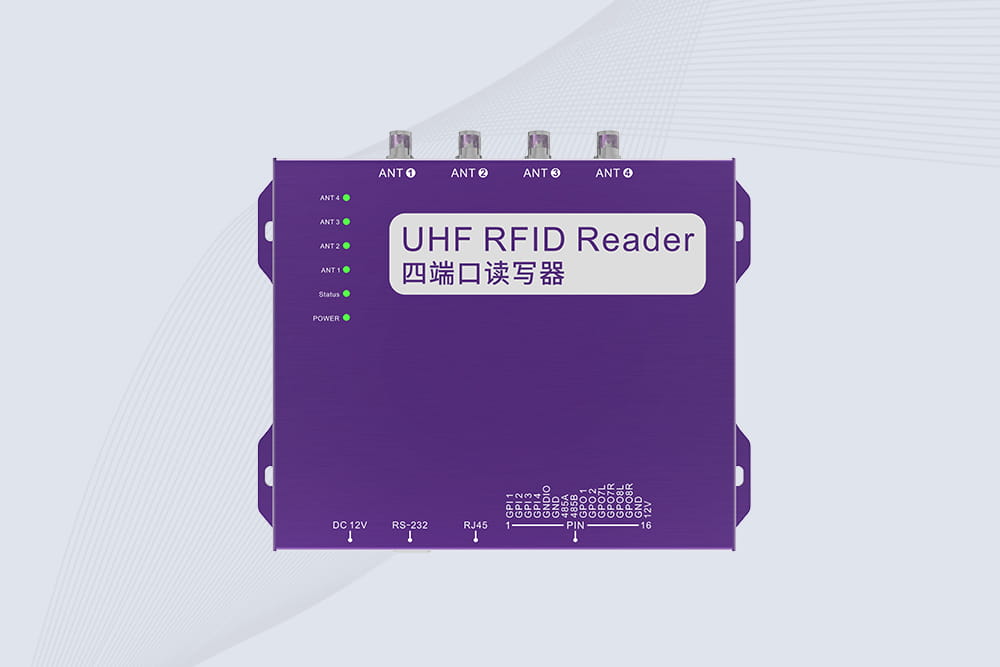
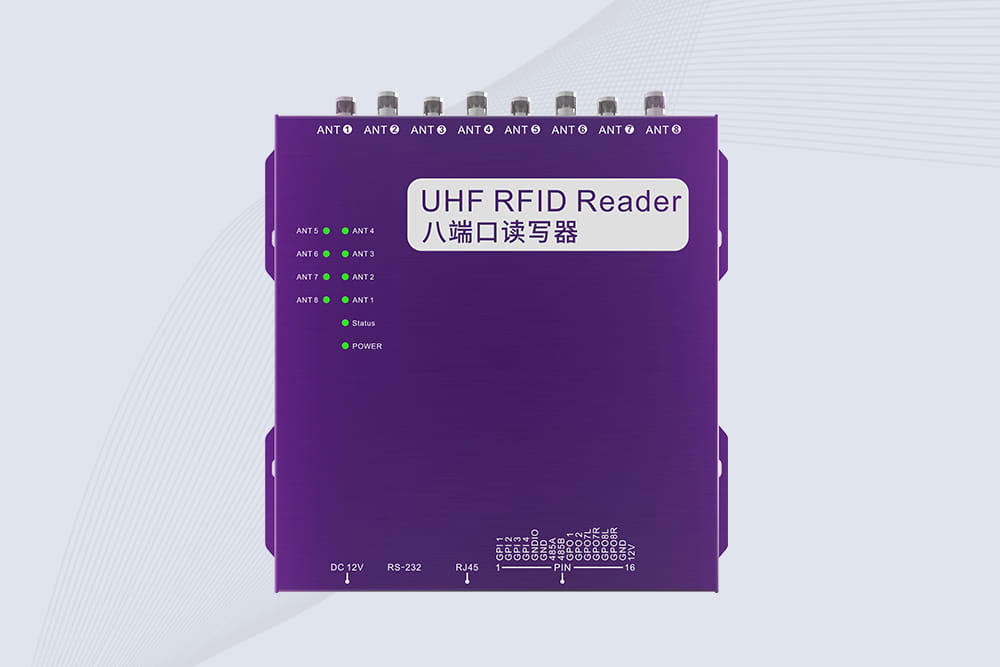
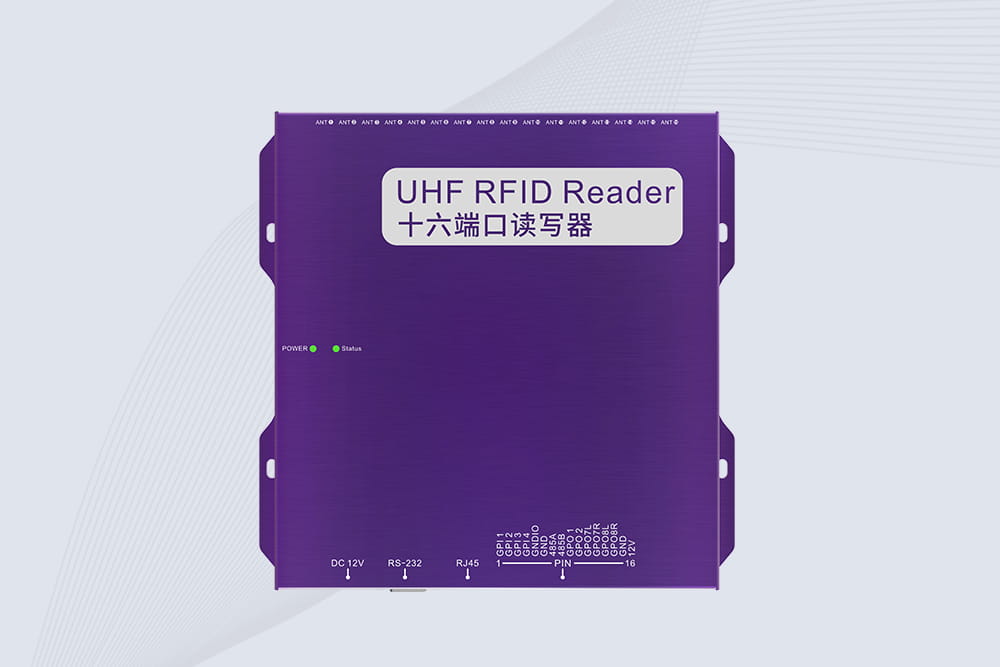
To program an RFID reader, configure communication parameters, set reader commands, adjust RF settings, connect the SDK or API, and test tag reading performance in the actual application environment. Proper programming ensures reliable identification, stable data transmission, and accurate RFID system operation.
Programming an RFID reader is not simply sending a command to “start reading tags.” In a production RFID project, the reader becomes a communication bridge between physical objects and software systems. The configuration determines how tags are detected, how often data is reported, how duplicate reads are handled, and how the application interprets each RFID event.
During RFID deployments, I have found that many integration problems are not caused by the reader hardware itself. They usually appear at the connection point between the reader settings and the business workflow. A warehouse reader may capture thousands of tag observations, but the inventory system only needs meaningful events. A tool-management reader may detect a tagged tool, but the software must know whether it represents borrowing, returning, or an unauthorized movement.
That difference is where professional RFID programming begins.
According to the GS1 RFID standards ecosystem, RFID systems involve multiple layers, including tag identification, reader communication, middleware processing, and event-level data exchange. Standards such as EPC Gen2 / ISO 18000-63 and EPCIS help create interoperability between RFID hardware and business applications.
Understanding RFID reader programming before configuration
RFID reader programming includes several technical layers
A complete RFID reader setup usually involves:
Programming Layer
Purpose
Common Configuration
Communication layer
Connect reader with software
USB, RS-232, Ethernet, TCP/IP
RF configuration
Control wireless performance
Output power, frequency, antenna ports
Inventory command
Control tag scanning
Start, stop, continuous inventory
Tag filtering
Reduce unnecessary data
EPC filtering, duplicate removal
Data processing
Convert reads into events
Time stamps, reader location
Application interface
Connect business software
SDK, API, middleware
A common mistake is treating reader programming as a one-time setup task.
In reality, RFID readers are usually tuned during commissioning. The correct output power for a warehouse doorway may be completely different from a desktop registration station. A reader mounted beside metal shelving may require different antenna settings than one installed in an open area.
How to program a UHF RFID reader step by step
1. Establish the communication connection
The first programming step is communication.
Depending on the RFID reader model, developers may connect through:
USB communication
Serial communication
Ethernet
TCP/IP network
Wireless communication interface
After connection, verify:
Reader recognition
Communication speed
Network address
Port availability
Data transmission stability
For industrial RFID systems, Ethernet communication is commonly preferred because fixed readers often need integration with warehouse management systems, manufacturing execution systems, or enterprise applications.
2. Configure reader operating parameters
After communication is established, configure the reader according to the application.
Typical parameters include:
Reader output power
Frequency region
Antenna selection
Reading mode
Session parameters
Inventory timing
Tag filtering rules
The UHF RFID standard ISO/IEC 18000-63 defines air-interface communication between RFID readers and tags, allowing compliant equipment from different manufacturers to communicate through standardized methods.
For example, a warehouse portal may require:
Multiple antenna operation
Fast inventory scanning
Strong anti-collision processing
Event filtering
A desktop RFID writer may require:
Short reading distance
Controlled writing area
Stable single-tag operation
The programming logic should follow the physical application.
RFID reader command programming and SDK integration
Use manufacturer SDKs for application development
Professional RFID deployments rarely communicate with readers using raw commands only.
Manufacturers typically provide:
SDK libraries
API documentation
Demo software
Development examples
Communication protocols
An SDK allows developers to control functions such as:
Connecting and disconnecting readers
Starting inventory scans
Reading EPC data
Writing tag memory
Setting reader parameters
Receiving tag callbacks
Managing multiple antennas
Cykeo RFID readers support integration methods designed for engineering development, including SDK/API-based connection methods for software platforms.
For example, a warehouse application may use the reader SDK like this:
Application Software
        ↓
RFID SDK/API
        ↓
RFID Reader Driver
        ↓
Reader Hardware
        ↓
RFID Tags
The reader does not decide the business meaning. The software layer does.
A tag read event becomes useful only after the application understands:
Which reader detected it
Where that reader is installed
When the event happened
What business process it represents
Common RFID reader programming challenges
Duplicate tag reads
One of the first issues developers encounter is repeated EPC data.
A fixed reader scanning a pallet may report the same tag dozens of times within seconds.
The solution usually involves:
Duplicate filtering
Read-time windows
Middleware rules
Application-level event processing
Incorrect read zones
A reader may successfully detect tags but still fail operationally.
Example:
A warehouse shipping door reader detects:
The pallet leaving the warehouse
Pallets waiting nearby
Inventory stored beside the door
The programming challenge is not making the reader read more. It is making the system understand which reads matter.
Communication instability
Industrial environments may contain:
Network interruptions
Electrical noise
Multiple readers operating nearby
Heavy data traffic
Reliable RFID programming requires testing the communication layer under actual working conditions.
RFID reader programming combines hardware configuration, SDK integration, and real-world performance testing.
Testing RFID reader programming after configuration
A programmed reader should always be validated using the final application scenario.
Recommended tests include:
Test
Purpose
Single-tag test
Verify basic communication
Multi-tag test
Confirm anti-collision performance
Distance test
Validate read range
Write test
Confirm memory programming
Movement test
Simulate real workflow
Integration test
Verify software communication
Long-running test
Check system stability
The testing process should include real tags, not only simulation tools.
RFID performance depends heavily on physical conditions. GS1 notes that read range and RFID performance are influenced by tag type, antenna characteristics, environment, and reader configuration.
This is why experienced RFID engineers avoid configuring a reader only from a datasheet.
The final environment decides whether the programming is correct.
Practical insight from RFID implementation projects
A reliable RFID reader program is usually simple on paper:
The difficult part appears when the reader meets reality.
A warehouse has moving forklifts. A factory has vibration and interference. A hospital asset room has strict access requirements. A retail environment has dense product shelves.
The programming must respect those conditions.
For Cykeo RFID solutions, reader programming is designed around the complete system: hardware configuration, software integration, tag identification, and application requirements.
The goal is not only to make the reader communicate.
The goal is to make RFID data useful.
Advanced RFID reader programming methods for industrial applications
Programming an RFID reader becomes more complex when the system moves from laboratory testing into real operational environments. A production RFID system must handle hundreds or thousands of tag interactions, network communication, data filtering, and application-level decisions.
A professional RFID implementation usually separates three functions:
Reader control – hardware commands, antenna control, RF parameters.
Data processing – filtering repeated reads and converting tag observations into events.
Business integration – connecting RFID data with ERP, WMS, MES, HIS, or asset-management platforms.
This separation improves system stability because the RFID reader focuses on identification, while software determines the meaning of each event.
EPC Gen2 / ISO 18000-63-based readers commonly provide functions for inventory operations, memory access, tag selection, and filtering through SDK or API interfaces. These capabilities allow developers to control how tags are identified and processed instead of collecting uncontrolled raw data.
How to program RFID reader for tag reading and writing
Reading RFID tag data
The most common programming operation is inventory scanning.
A typical reading workflow includes:
Step
Reader Operation
1
Open communication channel
2
Initialize reader parameters
3
Select antenna
4
Start inventory command
5
Receive EPC/TID information
6
Filter duplicate reads
7
Send processed data to application
For UHF RFID systems, the reader typically retrieves EPC information first. Additional memory areas, such as TID or USER memory, can be accessed when the application requires additional identification or data storage. EPC Gen2 memory organization includes Reserved, EPC, TID, and User memory banks.
A warehouse inventory system may only need EPC numbers.
A tool-management system may require:
EPC identification
Tool category
Maintenance information
Calibration date
User assignment
The programming approach changes according to the business requirement.
Writing data to RFID tags
RFID readers can also write information into compatible tags.
Common write operations include:
Writing EPC numbers
Updating user memory
Locking tag memory
Setting access passwords
However, writing should be handled carefully.
A mistake during tag programming can create:
Duplicate asset identities
Incorrect inventory records
Unreadable locked tags
Data synchronization problems
In professional deployments, tag writing is normally performed through controlled registration stations rather than random field operations.
For example, Cykeo’s RFID desktop reading platform can be used for controlled tag registration, conversion, and management operations where operators need a stable short-distance writing environment.
Programming RFID reader communication with SDK and API
SDK-based development workflow
Most commercial RFID readers provide SDK libraries to reduce development complexity.
A typical application architecture looks like:
Enterprise Software
        ↓
RFID Application Layer
        ↓
Cykeo SDK / API
        ↓
RFID Reader Communication Interface
        ↓
UHF RFID Reader
        ↓
RFID Tags
The developer usually creates functions for:
Reader connection
Parameter configuration
Inventory start/stop
EPC collection
Tag writing
Event reporting
Error handling
A good SDK integration should also include connection recovery.
Industrial environments are rarely perfect.
A network cable may disconnect. A reader may restart after maintenance. A software service may temporarily stop.
The application should know how to reconnect without creating false inventory events.
Optimize RFID reader programming for multi-tag environments
Anti-collision configuration
One of the biggest differences between a demonstration and a production RFID system is tag quantity.
Reading one tag is simple.
Reading 500 tagged cartons on a pallet requires:
Anti-collision algorithms
Appropriate Q-value settings
Inventory timing optimization
Data filtering
RFID SDK documentation commonly exposes anti-collision and inventory configuration parameters because multi-tag environments require tuning rather than default settings.
For example:
Scenario
Programming Focus
Retail shelf
Fast repeated inventory
Warehouse pallet
High-density tag reading
Production line
Real-time event capture
Asset tracking
Stable identification
Library management
Accurate item-level recognition
The correct configuration depends on how objects move.
A fixed warehouse reader and a handheld reader should not use identical inventory strategies.
RFID reader programming mistakes to avoid
1. Using maximum power as the default setting
Higher output power does not always create a better RFID system.
The application should transform these observations into a meaningful event:
Asset EPC001 entered warehouse zone A at 10:32:15
This is the difference between RFID data collection and RFID system design.
3. Ignoring installation conditions
Software configuration cannot compensate for incorrect hardware placement.
Common environmental problems include:
Metal interference
Liquid products
Poor antenna positioning
Reader overlap
Network instability
RFID programming must be validated together with physical deployment.
Cykeo RFID reader programming advantages
Cykeo RFID readers are designed for integration into professional RFID applications where developers need hardware control and software flexibility.
Its application scenarios include:
Smart cabinets
Industrial equipment tracking
Warehouse automation
Retail systems
Asset-management solutions
The important engineering principle remains the same:
The RFID reader should adapt to the application, not force the application to adapt to the reader.
RFID reader programming deployment checklist
Before launching an RFID system, verify:
Item
Verification
Hardware connection
Reader communicates correctly
Protocol compatibility
Reader and tags support the same standard
Antenna setup
Coverage matches application requirements
RF parameters
Power and frequency are optimized
SDK integration
Software receives correct data
Tag writing
Registration process works correctly
Exception handling
Errors are recorded properly
Long-term stability
System runs continuously
A factory production line, hospital asset system, and warehouse portal may all use RFID readers, but their programming logic will be different.
The hardware is only one part of the solution.
Real-world RFID reader programming requires integration testing between hardware, software, and operational workflows.
FAQ: how to program RFID reader
1. Can I program an RFID reader without an SDK?
Yes. Some readers support direct command communication through serial or network protocols. However, SDKs usually simplify development by providing ready-made functions for inventory, configuration, and tag operations.
2. What programming languages can be used with RFID readers?
Many RFID readers support development with common languages such as C#, Java, C++, Python, and mobile application frameworks depending on the SDK provided.
3. How do I connect an RFID reader to software?
The reader can usually connect through USB, RS-232, Ethernet, TCP/IP, or wireless interfaces. Developers then communicate through commands, SDK libraries, or APIs.
4. Can RFID readers write information to tags?
Yes. Compatible RFID readers can write EPC or user memory areas, but writing operations should be controlled carefully to prevent incorrect identification data.
5. Why does my RFID reader detect duplicate tags?
Duplicate reads are normal during continuous inventory scanning. Software filtering, timing rules, and event processing are used to convert repeated observations into meaningful records.
6. Do all RFID readers use the same programming method?
No. Programming methods depend on reader hardware, communication interfaces, supported protocols, and manufacturer SDK design.
7. How long does RFID reader integration take?
The development time depends on system complexity. A simple tag-reading application may require limited integration, while industrial systems connected to ERP, WMS, or MES platforms require more testing and customization.
Final thoughts on how to program RFID reader
The practical answer to how to program RFID reader is not only learning commands.
Successful RFID programming requires understanding the complete system:
The tag being identified
The reader hardware
The RF environment
The communication protocol
The software workflow
The business process behind the data
In professional RFID projects, the best programmers are not only writing code. They are designing a reliable connection between physical objects and digital systems.
Cykeo approaches RFID reader programming from this complete-system perspective, combining hardware capability, software integration, and application-specific optimization.
A well-programmed RFID reader should disappear into the workflow.
Users should not notice the technology.
They should only see accurate data, faster operations, and reliable traceability.
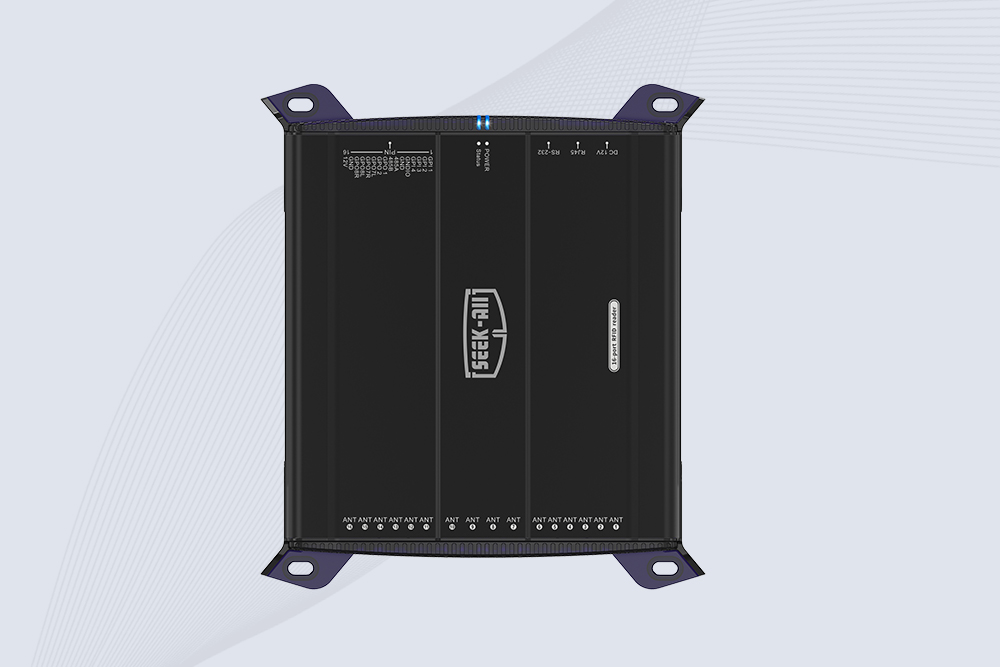
SSD-R16L Multi-Channel RFID Infrastructure for Automated Inventory Management ✔️ 16-Port High-Density RFID Reading Equipped with 16 SMA antenna ports, SSD-R16L supports multi-antenna deployment for warehouses, retail stores, logistics, production lines, and large-area RFID identification. ✔️ High-Speed & Long-Range Performance With up to 33…
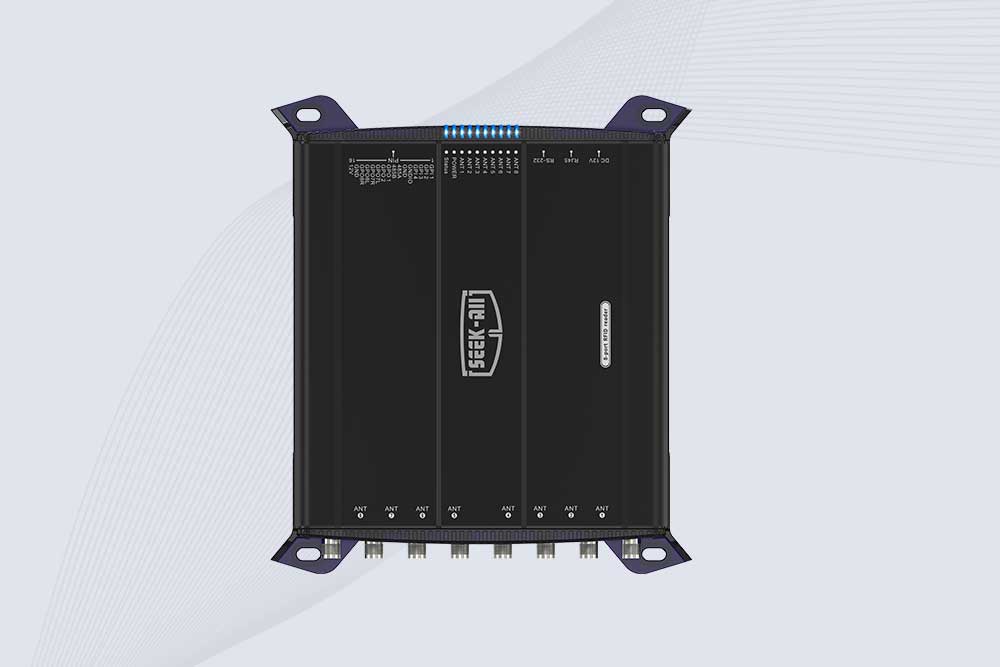
SSD-R8L 8-port UHF RFID reader with 33dBm output, up to 20m reading range and 600+ tags/s recognition. Ideal for warehouse, logistics, retail and asset tracking.
CYKEO Embedded RFID Modules are designed for compact industrial and IoT devices that require stable UHF performance. These UHF RFID Modules support global protocols, flexible power control, and reliable multi-tag reading for smart cabinets, production lines, and asset tracking systems.
CYKEO Embedded RFID Module is built for compact IoT and industrial devices that need stable UHF performance. This UHF module supports global protocols, low power operation, and reliable multi-tag reading for smart lockers, production lines, and always-on RFID systems.
CYKEO CYKEO-M1 drone rfid module is a compact UHF RFID reader module designed for drones and UAV platforms. It supports long-range aerial scanning, fast multi-tag reading, and stable performance in wind, vibration, and outdoor environments.
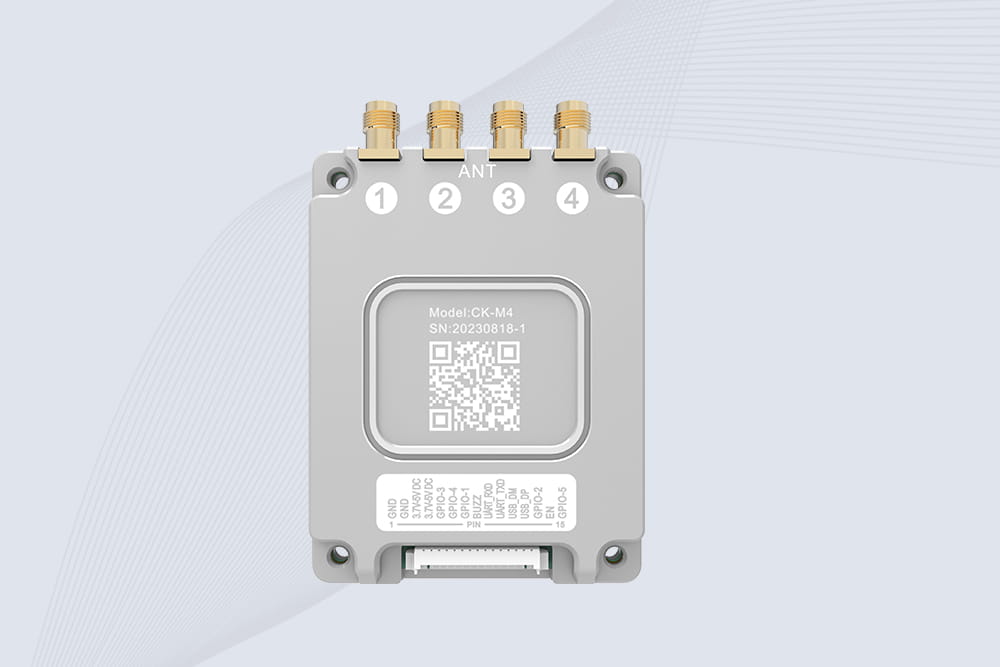
CYKEO CYKEO-M4 RC522 RFID Module is an industrial-grade UHF RFID reader with 4 ports, supporting ISO, EPC, and GB protocols. High-speed, accurate reading for IoT, automation, and warehouse applications.
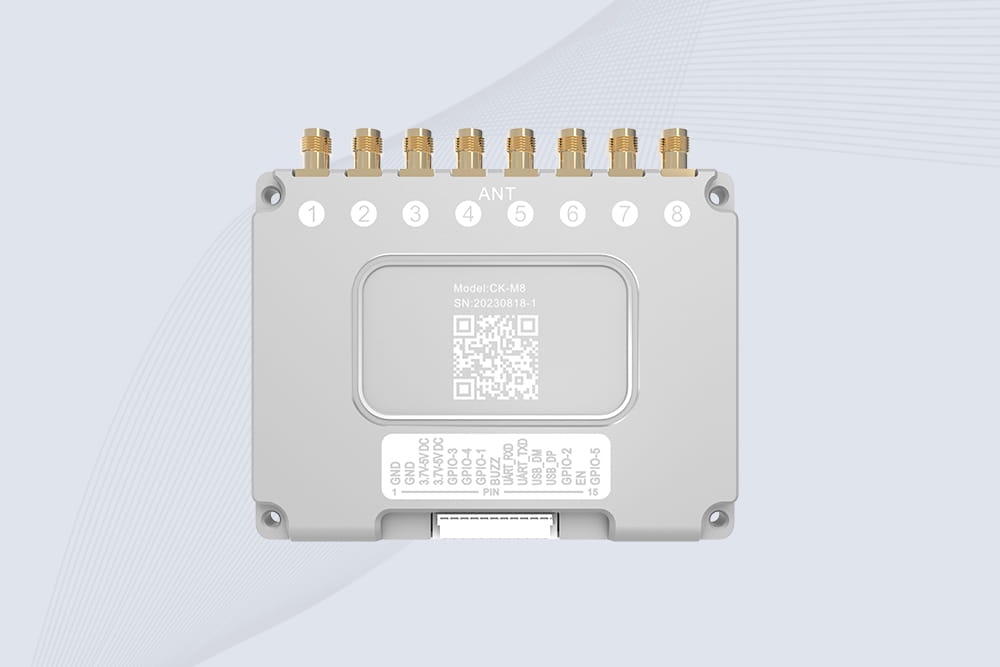
CYKEO CYKEO-M8 Module RFID is an 8-port UHF R2000 RFID Module designed for high-density, multi-tag environments. Stable 33dBm output, ISO & GB protocol support, ideal for warehouses, factories, and automated systems.
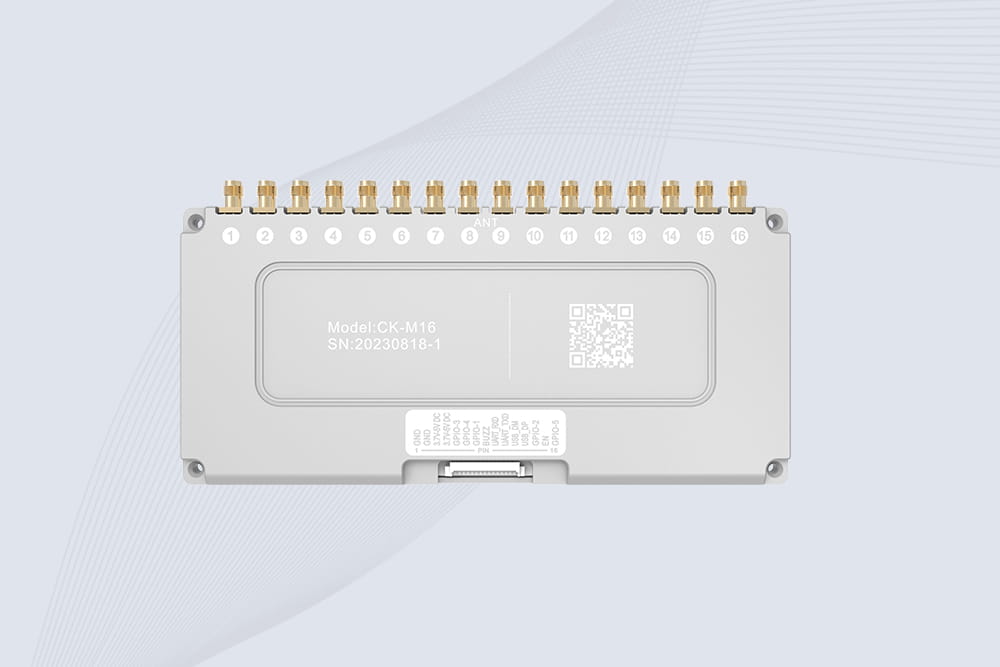
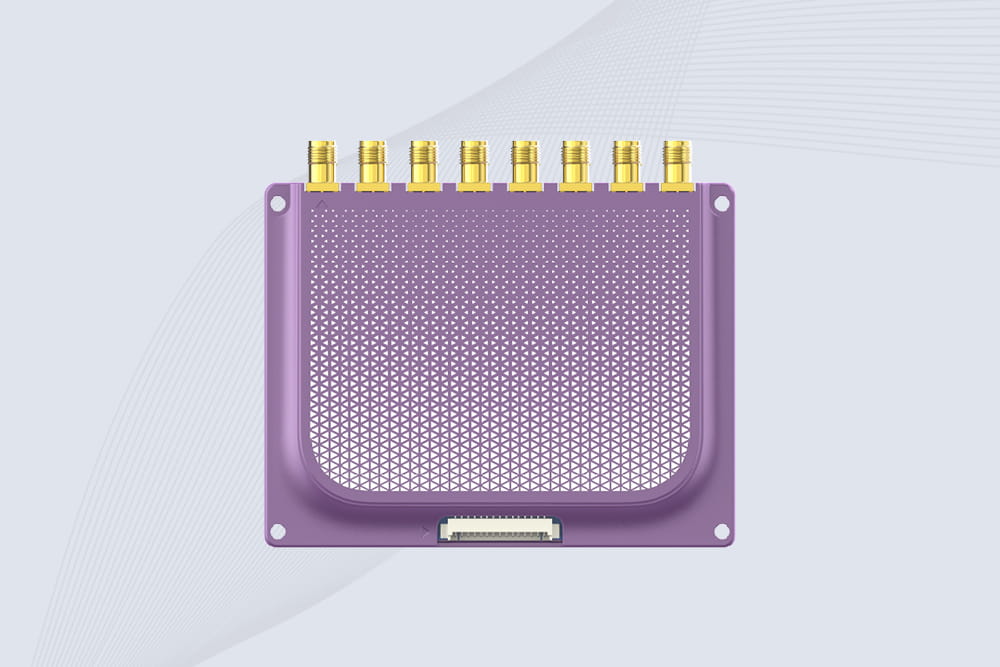
CYKEO CYKEO-M16 RFID Module is a 16-port UHF RFID reader module based on the R2000 chipset. Designed for dense tag environments, it supports ISO and GB standards and delivers stable multi-antenna control for industrial automation.
The CYKEO CYKEO-M16L RFID Reader Module is a 16-channel UHF RFID core designed for dense tag environments. With adjustable 33dBm output, multi-protocol support, and stable multi-antenna control, this RFID Tag Reader Module fits industrial automation, warehouse systems, and large-scale IoT deployments.
CYKEO CYKEO-M8L module RFID is a compact industrial UHF module built for dense tag and multi-antenna environments. With 8 RF ports, adjustable 33 dBm output, and ISO & GB protocol support, it is widely used in factories, warehouses, and automated tracking systems.
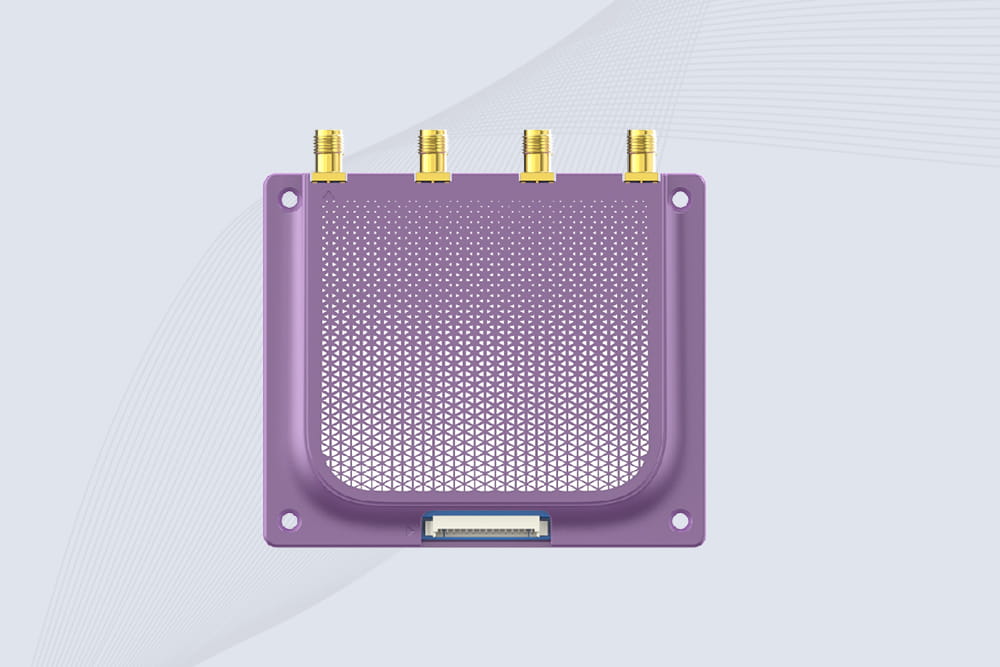
CYKEOCYKEO-M4L UHF RFID Module is a compact 4-channel RFID tag reader module designed for dense tag environments. Supporting ISO and GB protocols, it delivers stable reads up to 10 meters for industrial and IoT systems.
Cykeo’s industrial long range RFID reader delivers 20-meter scanning, 500+ tags/sec speed, and IP67 waterproof design for automated warehouses, logistics, and harsh environment applications.
Cykeo’s CYKEO-RA6L industrial RFID long range reader features 20m read distance, 500 tags/sec speed, and IP67 protection. Ideal for warehouse automation, manufacturing WIP tracking, and smart logistics. Supports ISO 18000-6C/6B protocols.
CYKEO Long Range RFID Tag Reader built for outdoor and industrial operations. This Outdoor RFID Reader delivers 20m read distance, fast tag processing, and IP67 durability for wide-area tracking.
Cykeo CYKEO-RA12L industrial Long Range RFID Reader delivers 20m read range, 200+ tags/sec scanning, and IP67 protection for manufacturing/logistics applications. Supports ISO 18000-6C/GB protocols.
Cykeo CYKEO-C1 industrial Forklift RFID Reader features 20m read range, 600 tags/sec scanning, Impinj R2000 chipset, and IP67 rugged design. Ideal for warehouse logistics and manufacturing. Supports ISO 18000-6C/6B protocols.
Cykeo CYKEO-R4 industrial UHF RFID Fixed Reader features 4 TNC ports, 400+ tags/sec speed, IP67 housing, and global frequency compliance for vehicle inspection, smart warehouse, and asset management systems.
CYKEO CYKEO-R8L Fixed RFID Reader with 8-port UHF design, Impinj-based RF core and up to 20m read range. An industrial Fixed RFID Reader for vehicle inspection, warehouse portals, smart manufacturing lines and secure access checkpoints.
RFID Fixed Reader from CYKEO – the CYKEO-R16L 16-port UHF fixed reader for warehouses, smart cabinets, and production lines. Long-range, multi-tag reading, stable performance for 24/7 industrial use.
In modern business, efficiency and accuracy are key to success. Radio Frequency Identification (RFID) technology has become a game-changer across industries, and the four-port RFID reader has emerged as a powerful tool for enhancing operational ef...
A fixed RFID reader is designed to stay in one location and continuously identify RFID-tagged items as they move through a defined reading zone. It is especi...
 Cykeo RFID IoT Solution Products R&D Manufacturer