 Cykeo RFID IoT Solution Products R&D Manufacturer
What Is an RFID Inventory System? (No Jargon, Just Facts)
512Discover what an RFID inventory system is, how it automates tracking, its benefits over barcodes, and real-world applications. Optimize your operations with Cykeo.
MoreAll RFID Product
How passive RFID works: Passive RFID works by using electromagnetic energy transmitted by an RFID reader to activate a battery-free tag. The tag’s chip processes the reader’s command and changes the antenna’s electrical characteristics, creating a backscattered response that the reader detects and converts into digital identification data.
That is the short answer.
The interesting part begins when the tag is no longer sitting on a test bench.
A carton moves through a warehouse portal. A reader antenna creates an RF field. A passive tag enters that field, harvests enough energy to operate its chip, receives a command, and returns its stored information by modifying the reflected RF signal.
There is no battery-powered transmitter inside the conventional passive tag.
GS1 describes the same operating principle: the reader provides operating energy through a continuous-wave signal, while the passive tag responds by modulating its antenna’s reflection coefficient and backscattering information to the reader.
Passive RFID is an identification technology in which the tag does not normally contain its own power source.
A basic system contains:
| Component | Primary function |
|---|---|
| RFID reader | Generates RF energy and sends commands |
| RFID antenna | Transmits and receives the RF signal |
| Passive RFID tag | Harvests energy and responds |
| RFID chip | Processes commands and stores tag data |
| RFID software | Converts reads into business information |
NIST defines a passive tag as a tag without its own power supply that uses RF energy from the reader. Because passive tags operate with limited available power, they are generally smaller, lighter and less expensive than active alternatives.
This battery-free architecture is one of the reasons passive RFID has become practical for high-volume item identification.
A disposable carton label can carry an electronic identity without carrying a battery.
That difference is substantial when thousands or millions of objects need identification.
The first thing a passive RFID tag receives is energy, not data.
The reader transmits an electromagnetic signal through its antenna. When a compatible passive tag enters the effective field, the tag antenna captures part of that RF energy.
The chip uses the harvested energy to operate its internal circuitry.
GS1 states that passive tags receive their operating energy from the reader’s continuous-wave signal rather than relying on a battery.
The process can be represented simply:
Reader RF field → tag antenna → energy harvesting → chip activation
Only after the chip has enough energy to operate does the communication exchange become useful.
The amount of RF energy reaching a tag changes with:
NIST’s research on passive RFID backscatter identifies reader transmit power, tag antenna tuning and chip power sensitivity as important factors affecting minimum received-backscatter performance.
This is why an RFID engineer does not evaluate a tag by looking at the chip alone.
The antenna and mounting environment are part of the RFID system.
A passive RFID tag does not behave like a miniature Wi-Fi transmitter.
It has no conventional radio transmitter of its own.
Instead, the reader sends the RF carrier and the tag uses backscatter to return information.
GS1 explains that the passive tag responds by modulating the reflection coefficient of its antenna, producing a binary backscattered signal that the reader receives and decodes.
NIST similarly defines the backscatter channel as the communication path in which a passive tag reflects or backscatters electromagnetic signals received from a reader.
The important detail is step six.
The tag does not need to generate a strong independent radio transmission.
It changes how it reflects the reader’s signal.
For industrial and supply-chain applications, passive UHF RFID is particularly important.
GS1’s EPC Gen2 air-interface standard covers passive UHF RFID operation, and GS1 identifies RAIN RFID as the most broadly implemented passive RFID technology in many industries.
GS1 specifies the UHF Gen2 family across the 860–930 MHz range, while ISO/IEC 18000-63 addresses the 860–960 MHz UHF RFID air-interface range.
This frequency range supports a very different operating model from short-range HF systems.
GS1 notes that RAIN RFID can capture unique identifiers at very high rates and, in suitable environments, at distances well beyond 10 meters without optical line-of-sight contact.
That makes passive UHF particularly useful at:

A real RFID reader rarely encounters one perfectly isolated tag.
A pallet can contain many tagged cartons.
A conveyor may carry several tagged products through the antenna field within seconds.
Passive UHF RFID therefore needs a structured inventory process.
GS1’s Gen2 air-interface protocol defines physical and logical operations for passive tags, including tag selection and inventory procedures. The newer Gen2v3 specification adds additional selection functions and mechanisms designed to improve operation in environments containing unwanted or fringe tags.
This is where the phrase multi-tag reading needs some qualification.
The reader is not simply shouting at every tag simultaneously.
The protocol controls which tags participate and when they respond.
| Factor | Why it matters |
|---|---|
| Tag population | More tags create a more complex inventory exchange |
| Tag orientation | Changes coupling with the reader antenna |
| RF output | Affects available energy at the tag |
| Reader sensitivity | Determines whether weak backscatter can be detected |
| Antenna placement | Defines the physical read zone |
| Tag material | Changes RF behavior |
| Interference | Can reduce reliable communication |
| Object movement | Changes tag position during the read cycle |
NIST has specifically studied RFID interference and the effect of variables such as frequency hopping, antenna polarization, reader/interferer topology and interference power on RFID performance.
So “the reader can see 100 tags” and “the system reliably captures every required tag on a moving pallet” are two different engineering statements.
Passive RFID range is not a fixed property of the chip.
It is a property of the complete RF link.
Two links are involved.
Reader → Tag
The tag must receive sufficient RF energy to activate and respond.
Tag → Reader
The reader must detect the tag’s much weaker backscattered response.
NIST notes that the passive tag’s backscattered signal contains only a fraction of the reader’s transmitted power. This limited power contributes to the shorter operating range of passive systems compared with active RFID.
That creates a practical engineering rule:
More reader power does not automatically equal more reliable RFID.
A poorly matched tag can remain difficult to read even when the reader is operating at a high output level.
The RFID chip is not the whole tag.
The antenna is critical.
NIST’s passive UHF RFID research measured 20 tag samples from nine manufacturers and three chip manufacturers, examining performance across the UHF operating range.
That kind of testing matters because two tags can use the same general RFID protocol and still behave differently in an actual installation.
A paper label attached to corrugated cardboard is one environment.
A rugged tag mounted directly to a steel tool is another.
A textile tag sewn into clothing introduces another set of constraints.
The practical question is therefore not:
“What is the longest-range RFID chip?”
It is:
“Which tag and antenna construction gives the required performance on this actual object?”
Metal and liquid deserve special attention.
A conventional UHF label designed for cardboard may lose performance when placed directly against a metal surface because the conductive material changes the antenna’s electrical environment.
This is why industrial applications often use specialized on-metal RFID tags.
Liquid-filled products can also change RF behavior because electromagnetic energy interacts differently with the product and packaging.
During deployment, the tag should be tested:
This sounds less glamorous than quoting maximum range.
It is also much more useful.
A passive RFID tag usually does not need to store an entire product database.
For RAIN RFID, GS1 explains that simple “license plate” tags may carry a 96-bit or 128-bit identifier, while higher-memory passive UHF tags can provide up to 8 KB of data depending on the chip and application.
A Gen2 tag has four memory banks:
| Memory bank | Typical role |
|---|---|
| Reserved | Access and kill passwords |
| EPC | Electronic Product Code |
| TID | Tag/chip identification information |
| User | Additional application data, where supported |
GS1 confirms that User Memory is intended for application information separate from the object’s primary identifier.
For most supply-chain systems, the RFID tag acts more like a digital license plate than a database.
For example:
RFID tag:EPC = 3034 1234 5678 9001
Enterprise system:SKU → purchase order → supplier → location → shipment status
The tag identifies the physical object.
The software knows what that object means.
Passive and active RFID are sometimes grouped together even though their operating mechanisms are different.
| Characteristic | Passive RFID | Active RFID |
|---|---|---|
| Internal battery | Normally no | Yes |
| Tag transmitter | No conventional transmitter | Yes |
| Operating energy | Reader RF field | Internal power source |
| Typical size | Small | Usually larger |
| Cost | Generally lower | Generally higher |
| Typical strength | High-volume identification | Longer-range tracking applications |
GS1 states that active tags use a radio transmitter and their own power source, while passive tags backscatter the reader’s signal and draw operating energy directly from the reader’s electromagnetic field.
This distinction matters when someone asks whether passive RFID can “track” an object.
Passive RFID can identify an object whenever it passes an appropriately configured read point.
That is different from an active-tag real-time location system that can continuously broadcast location-related signals.
A laboratory demonstration can prove that a tag works.
It cannot prove that a warehouse process will work.
For a production deployment, I would validate the following:
NIST’s RFID interference testing work is a good reminder that the RF environment itself must be measured rather than assumed to be neutral.
Cykeo’s UHF RFID solutions are designed around passive-tag identification scenarios using standards including ISO 18000-6C / EPC C1G2.
For industrial deployments, reader characteristics such as adjustable output power, antenna configuration, tag filtering and multi-tag processing become more important than simply choosing the reader with the highest advertised range.
Cykeo UHF reader specifications include configurations supporting up to 33 dBm output power, adjustable power levels and high-speed multi-tag recognition.
Those figures should always be interpreted against the intended tag, antenna, mounting material and operating environment.
The same principle applies throughout RFID engineering:
The reader, antenna, tag and physical process form one RF system.
The mechanics are straightforward on paper.
The difficult part is making those mechanics remain reliable when the tag is attached to the real object, surrounded by other tagged objects, moving through a real facility.
That is where how passive rfid works stops being a textbook question and becomes an engineering question.
The laboratory version is simple. The warehouse version is not.
A passive RFID interaction typically follows this sequence:
Reader → RF energy → tag antenna → RFID chip → reader command → backscatter → reader → software
GS1’s current EPC Gen2 UHF standard defines passive RFID as a passive-backscatter, interrogator-talks-first system. The reader supplies both information and operating energy; the tag responds by changing the reflection coefficient of its antenna. Communication is half-duplex rather than simultaneous.
That last detail is easy to overlook.
The tag does not continuously transmit its identity.
It waits.
The reader creates the RF field and initiates the exchange. Once the tag has enough harvested energy, its chip can process the command and return the requested information.
Put 30 tagged cartons inside a reader field and the system does not simply receive 30 identical signals at once.
The RFID protocol manages tag participation through inventory procedures and anti-collision mechanisms.
GS1’s EPC Gen2 standard includes logical functions for selection, inventory and access, allowing readers to manage populations of passive tags within their operating field.
| Variable | Practical effect |
|---|---|
| Tag population | More tags increase inventory activity |
| Tag orientation | Changes antenna coupling |
| Reader sensitivity | Determines whether weak responses are detected |
| RF output | Influences available energy at the tag |
| Antenna placement | Defines the useful read zone |
| Tag construction | Affects harvesting and backscatter |
| Interference | Can reduce reliable reads |
| Object movement | Changes tag position during the exchange |
NIST’s passive UHF research measured 20 tag samples from 9 manufacturers and 3 chip manufacturers across 860–960 MHz, finding measurable differences in power harvesting and backscatter performance among tag designs.
That is why “supports hundreds of tags” should never be interpreted as a guaranteed production result.
The test environment matters.
A passive RFID tag does not have one universal read distance.
The practical range comes from the complete RF link.
Reader → Tag
The tag must receive enough RF energy to activate its chip.
Tag → Reader
The reader must detect the tag’s weaker backscattered response.
NIST explains that a passive tag’s backscattered signal contains only a fraction of the reader’s transmitted power. This limits operating range and makes reader sensitivity important.
NIST’s backscatter modeling work further identifies reader transmit power, tag antenna tuning and chip power sensitivity as important parameters affecting minimum received-backscatter performance.
So increasing reader power is not a universal solution.
If the tag antenna is poorly matched to the object, the extra power may not solve the actual problem.
A passive RFID tag is not simply “the chip.”
The antenna is an active part of the RF system.
It collects energy from the reader and provides the electrical interface through which the chip modulates the reflected signal.
This becomes obvious when the same tag is tested on different materials.
Cardboard carton: generally straightforward.
Plastic tote: usually manageable.
Steel tool: antenna behavior can change significantly.
Liquid-containing product: electromagnetic interaction can become more complicated.
The tag needs to be selected for the object—not the other way around.
Before approving a passive RFID tag, test it:
NIST’s measured variation across passive UHF tag samples is strong evidence that RFID performance should be evaluated as an assembled tag-and-system problem rather than as a chip specification alone.
Metal deserves its own test.
A conventional adhesive UHF inlay designed for corrugated packaging can behave very differently when attached directly to steel.
The conductive surface changes the electrical environment around the antenna. Industrial applications therefore commonly use purpose-designed on-metal RFID tags with antenna structures and substrates engineered for conductive surfaces.
This is particularly relevant to:
A tag that works beautifully on a cardboard box is not automatically the right tag for a steel tool.
The RFID chip stores information in digital memory, but the tag does not normally need to contain an entire enterprise database.
GS1’s EPC architecture uses the RFID tag primarily to identify the physical object through an EPC or other identifier.
A typical architecture looks like this:
RFID Tag
EPC: 3034 1234 5678 9001
↓
RFID Reader
Detects and decodes the identifier
↓
Warehouse System
SKU → Purchase Order → Location → Shipment → Status
This division is important.
The tag identifies the object.
The software provides the business context.
GS1 also distinguishes the physical data carrier from the information system using that data, which is particularly relevant when RFID is integrated into supply-chain workflows.
The two technologies should not be treated as interchangeable.
| Characteristic | Passive RFID | Active RFID |
|---|---|---|
| Internal battery | Normally no | Yes |
| Conventional radio transmitter | No | Yes |
| Power source | Reader RF field | Internal power |
| Typical tag size | Small | Larger |
| Cost | Generally lower | Generally higher |
| Communication model | Backscatter | Active transmission |
| Typical strength | High-volume identification | Longer-range asset/location applications |
GS1 explicitly distinguishes passive tags, which backscatter the reader’s signal, from active tags, which use their own power source and radio transmitter.
This distinction matters when discussing “tracking.”
Passive RFID can automatically identify an item when it passes a configured read point.
It does not automatically mean continuous real-time location tracking.

A successful passive RFID pilot should not stop at “the reader saw the tag.”
I would measure the process that actually matters.
NIST has conducted dedicated RFID interference measurements involving variables such as interference power, antenna polarization, frequency hopping and reader/interferer topology.
That is a useful reminder: RFID deployment is partly an RF-engineering exercise.
Cykeo’s UHF RFID solutions support passive-tag applications using standards including ISO 18000-6C / EPC C1G2.
For industrial installations, the useful specification is rarely just maximum output power.
A complete evaluation should consider:
Cykeo’s published UHF reader specifications include configurations with up to 33 dBm output, adjustable output power and high-speed multi-tag recognition. Actual field performance still depends on the selected tag, antenna and application environment.
That distinction is important for a technical website.
A specification describes the equipment.
A field test describes the system.
No. A conventional passive RFID tag receives its operating energy from the electromagnetic field generated by the reader.
The tag uses backscatter. Its chip changes the reflection characteristics of the antenna, allowing information to be encoded into the reflected RF signal received by the reader.
Yes. Passive UHF RFID protocols support multi-tag inventory operations. Actual throughput depends on tag population, reader configuration, antenna design, RF interference, tag orientation and the required read reliability.
No. Passive RFID uses radio communication rather than optical scanning. GS1 identifies RAIN RFID as capable of capturing identifiers without the line-of-sight requirement associated with conventional barcode scanning.
Yes, but the tag should be designed for the mounting surface. Specialized on-metal RFID tags are generally used when the tag must be attached directly to conductive materials.
There is no single guaranteed distance. Read range depends on reader output, antenna configuration, tag design, tag orientation, reader sensitivity and the surrounding RF environment. GS1 notes that RAIN RFID can operate well beyond 10 meters in appropriate applications.
No. Passive RFID normally identifies an object when it enters a reader’s field. Continuous location tracking generally requires a different architecture, such as active RFID or another RTLS technology.
The complete answer to how passive rfid works is more precise than “the reader powers the tag.”
The actual sequence is:
RF energy → antenna harvesting → chip activation → reader command → chip response → antenna modulation → backscatter → reader decoding → software event.
The physics are well established. GS1’s current Gen2 UHF specification explicitly defines the technology as passive-backscatter and reader-initiated, while NIST’s experimental work demonstrates why tag antenna characteristics, chip sensitivity and RF conditions matter to real performance.
The difficult part is rarely getting one tag to respond.
The difficult part is getting the right tags to respond reliably when they are attached to real objects, packed closely together, moving through a real process, surrounded by metal, machinery and other RF equipment.
That is the point where passive RFID stops being a simple identification label and becomes an engineered RF system.
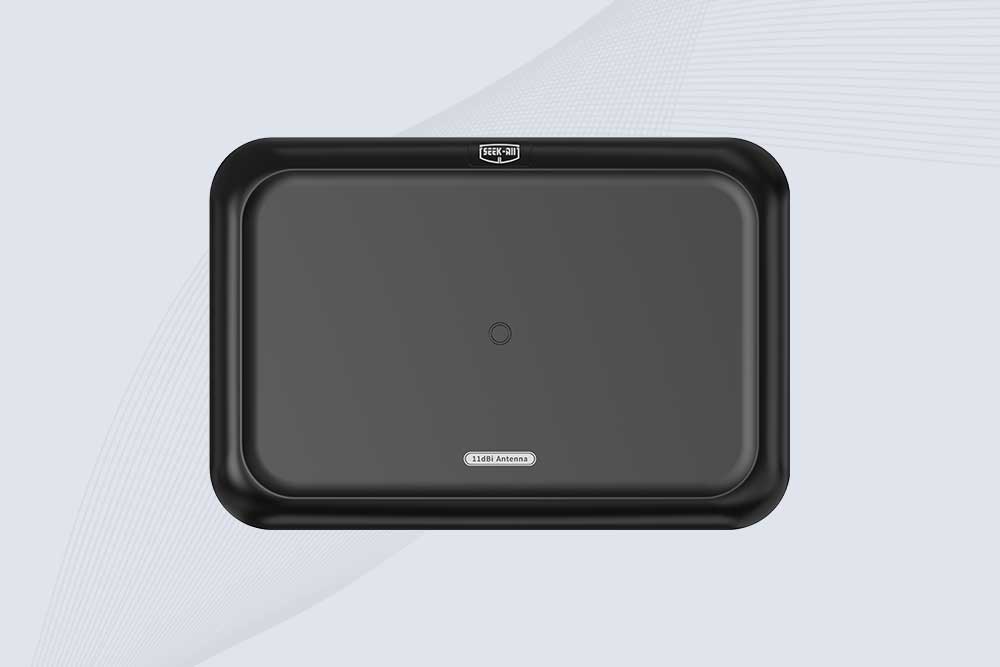
SSD-A11 UHF RFID antenna features 840–960 MHz adjustable frequency, ≥10.5 dBi gain, circular polarization and 50Ω impedance for fixed RFID systems.
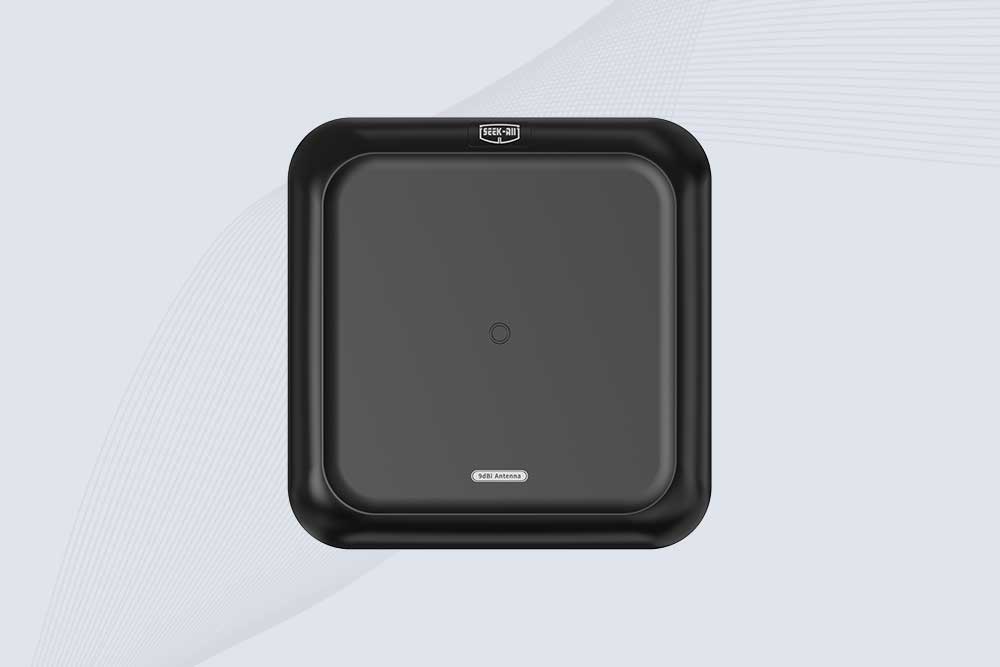
SSD-A09 is a 9 dBi UHF RFID antenna with 840–960 MHz adjustable frequency, circular polarization, 50Ω impedance and directional 60° × 60° coverage.
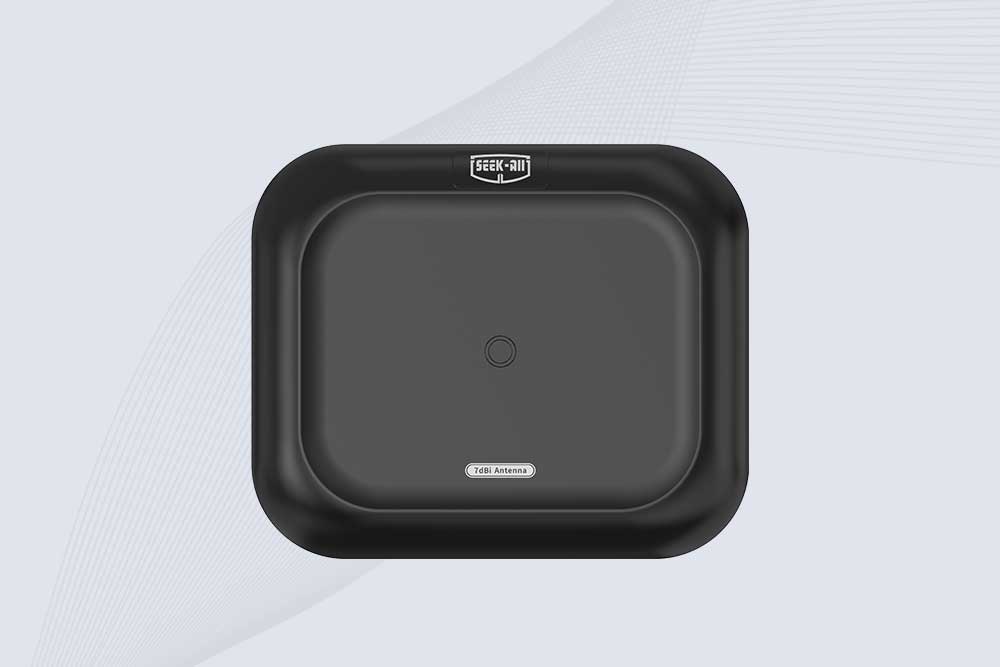
Explore the SSD-A07 UHF RFID antenna with 7 dBi gain, circular polarization, adjustable 840–960 MHz frequency, and 60°/75° beamwidth for stable RFID read/write performance.

SSD-A06 UHF RFID antenna with circular polarization, adjustable 840–960 MHz frequency, ≥4.5 dBi gain, and a compact directional design for RFID systems.
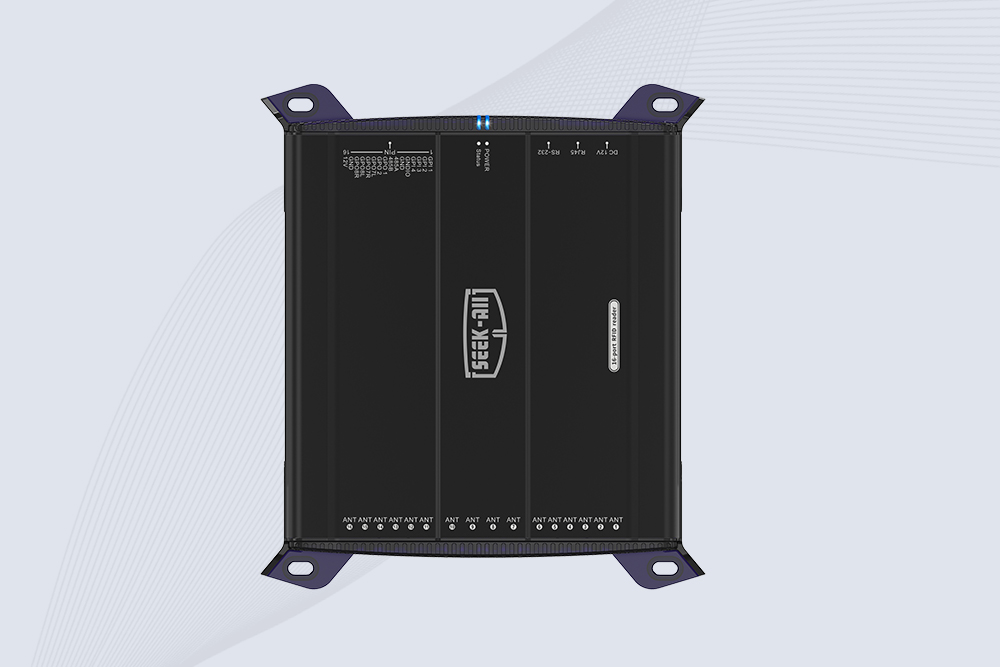
SSD-R16L Multi-Channel RFID Infrastructure for Automated Inventory Management ✔️ 16-Port High-Density RFID Reading Equipped with 16 SMA antenna ports, SSD-R16L supports multi-antenna deployment for warehouses, retail stores, logistics, production lines, and large-area RFID identification. ✔️ High-Speed & Long-Range Performance With up to 33…
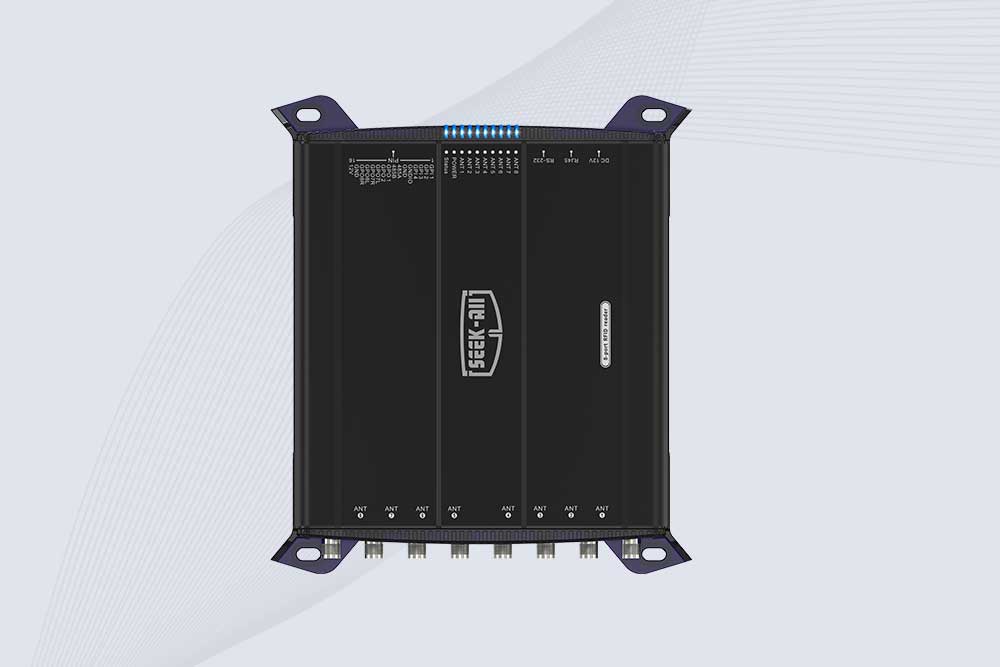
SSD-R8L 8-port UHF RFID reader with 33dBm output, up to 20m reading range and 600+ tags/s recognition. Ideal for warehouse, logistics, retail and asset tracking.
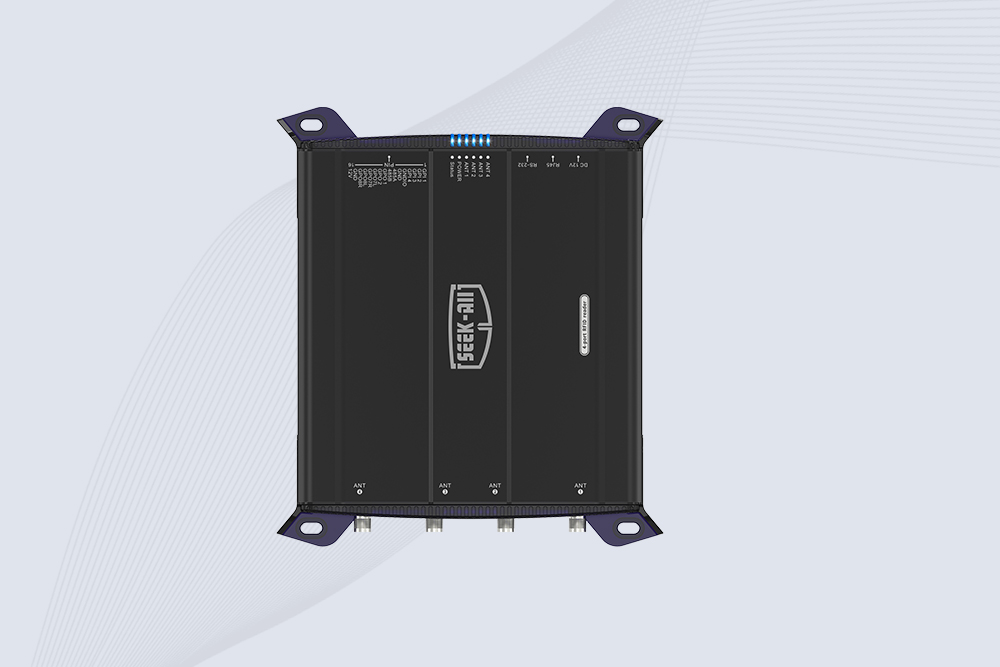
SSD-R4L is a 4-port UHF RFID fixed reader with 33dBm output power, up to 20m reading range, EPC C1G2 support and 600+ tags/s reading speed.

Cykeo CYKEO-A11 UHF RFID reader antenna delivers 11dBi gain, 840-960MHz frequency range, and IP65 ruggedness for retail, logistics, and industrial RFID systems. Features low VSWR and easy installation.

CYKEO Antenna RFID Reader delivers stable long-range UHF performance with a 10.5dBi directional design, built for warehouses, conveyor portals, and industrial RFID systems. This rfid reader antenna provides 20m+ read distance and rugged IP67 protection.

Cykeo CYKEO-PHF3 industrial HF RFID Antenna offers 24-point dynamic tracking, ISO 14443A/15693 protocols, metal-environment stability for archives/libraries/manufacturing.

Cykeo CYKEO-A5B industrial Linear RFID Antenna delivers 5dBi gain, ≤1.5:1 VSWR, and IP65 rugged design for warehouse, production line, and logistics UHF systems.

Cykeo’s CYKEO-B12 Long Range RFID Antenna delivers 15m+ read range with 12dBi gain, IP65 rugged design, and global 840-960MHz UHF support. Ideal for warehouse/logistics asset tracking.
Cykeo CYKEO-B10 Long Distance RFID Antenna offers 10dBi gain, 840-960MHz frequency range, IP65 rating, and 20m+ coverage for logistics/warehousing/ETC systems. Low VSWR ensures stable signal transmission.
Cykeo CYKEO-A6 UHF RFID panel antenna features 6dBi gain, 840-960MHz broadband, IP65 metal-ready housing for logistics/smart retail. 18mm ultra-thin design with tool-free mounting.

Cykeo CK-A3 industrial antenna RFID UHF offers 5m+ tag detection, ≤1.3:1 VSWR, IP65 rugged design, and global UHF spectrum compatibility (840-960MHz) for warehouses, factories, and retail.
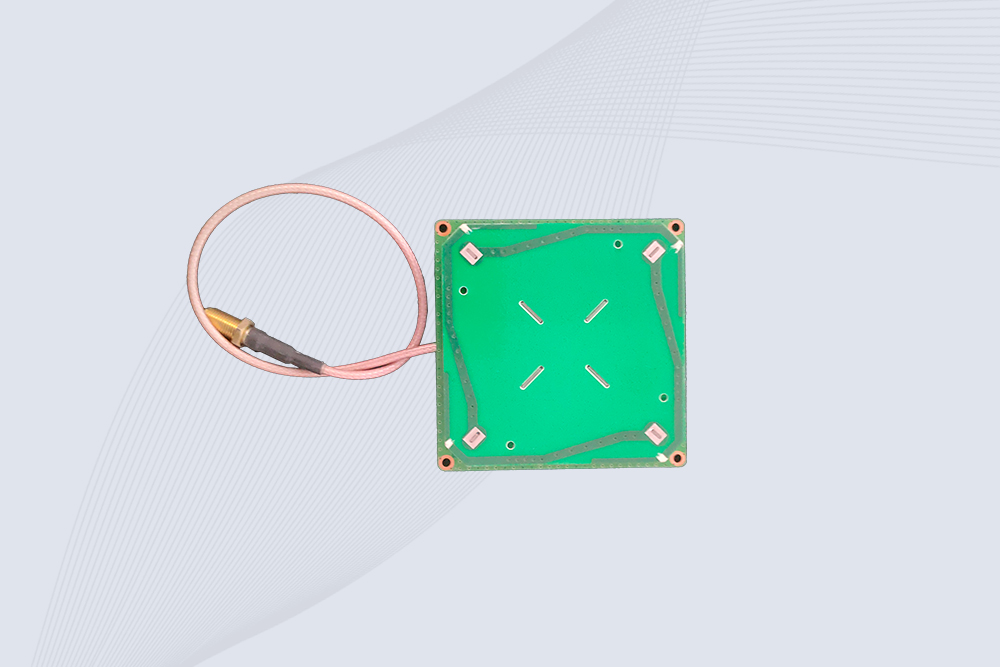
Cykeo CYKEO-B5 directional RFID antenna provides 5dBi gain with 60° narrow beamwidth for precise inventory tracking. IP65-rated, global UHF frequency support, and low VSWR.
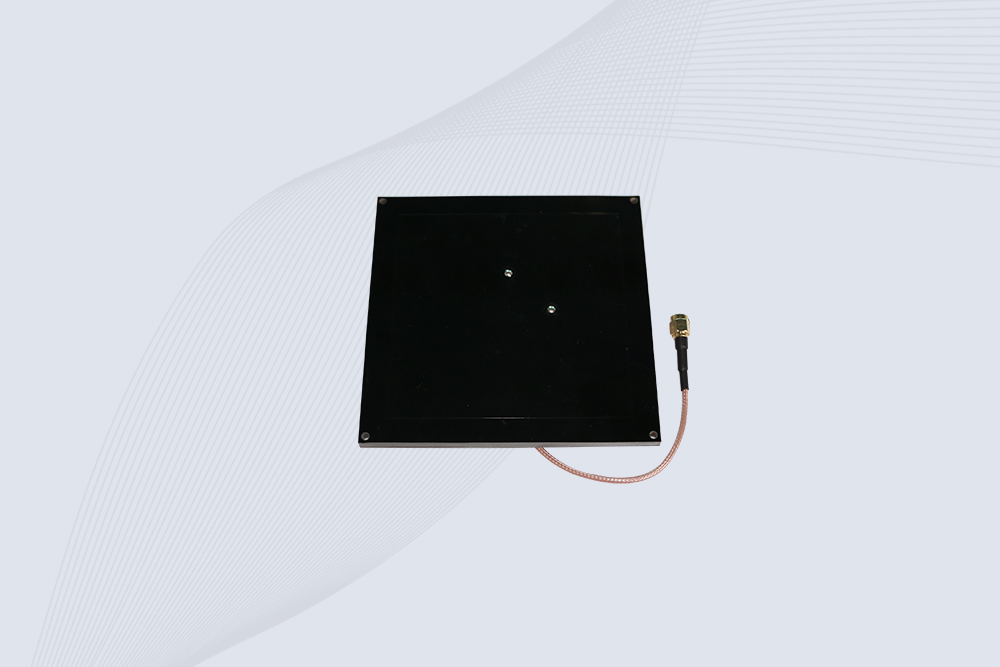
Create your own high-performance DIY RFID antenna! 5dBi gain, 840-960MHz tunable, step-by-step guides. Compatible with Arduino, Raspberry Pi, and commercial UHF readers.

Cykeo CYKEO-A7 Flexible RFID Antenna features 840-960MHz wideband tuning, 7dBi gain, and IP68 rating for medical/retail/industrial curved surface deployments. 98% read accuracy with peel-and-stick installation.

Cykeo CYKEO-B5A industrial Passive RFID Antenna delivers 5dBi gain, 70° beamwidth, and -40°C~55°C operation for warehouses/smart cabinets. Compatible with Zebra/Impinj readers.
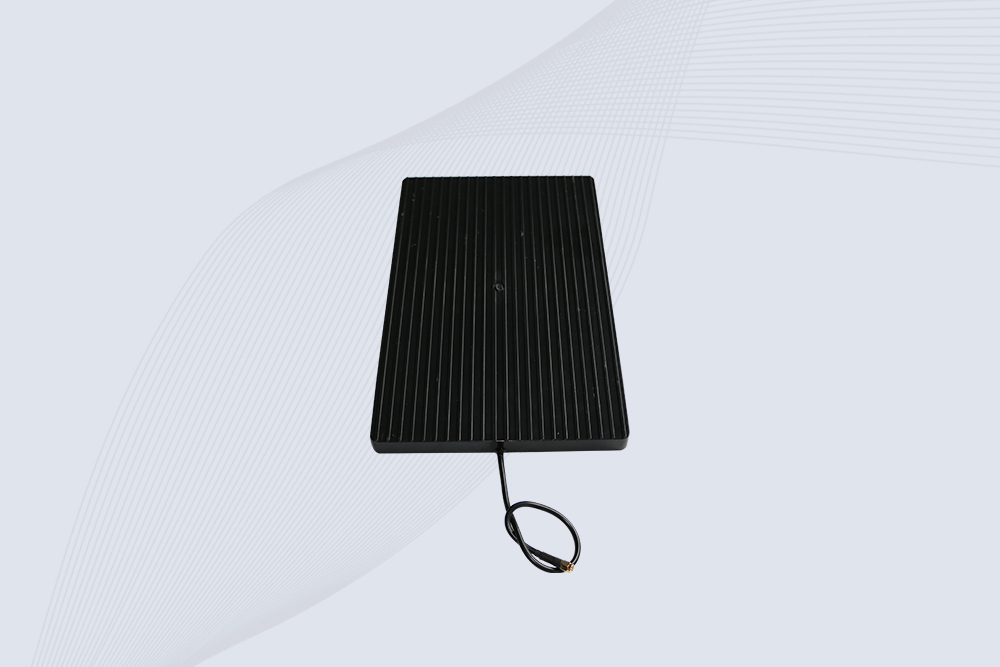
Cykeo’s CYKEO-A9B High Gain RFID Antenna delivers 15m+ read range with 9dBi amplification. Features IP54 rugged design, 840-960MHz bandwidth, and 80° beamwidth for warehouse/manufacturing RFID systems.

Cykeo’s enterprise-grade 8dbi Impinj RFID Antenna 10m+ read range with 840-960MHz tuning. Features IP65 housing, 1.4 VSWR, 35° beamwidth for retail/warehouse RFID systems.

Cykeo CYKEO-A9 industrial UHF RFID antenna delivers 9dBi gain, 840-960MHz frequency range, and IP65 protection for warehouse/logistics/retail RFID systems. Features N-type connector and ≤1.3:1 VSWR.

CYKEO UHF RFID Antenna built for long-distance and industrial applications. This antenna rfid uhf delivers strong gain, outdoor durability, and reliable tag performance in warehouses, yards, and vehicle ID systems.

CYKEO Antenna RFID delivers reliable long-range UHF performance in warehouses, retail shelves, and cold-chain environments. This compact uhf rfid antenna provides stable reads with circular polarization and ultra-wide 840–960 MHz support, ideal for industrial tracking, smart shelves, and asset monitoring.

Cykeo’s CYKEO-C8 UHF RFID antennas delivers 8dBi gain, 840-960MHz full-band coverage, and IP65 ruggedness for manufacturing/warehouse RFID systems. Industrial RFID Antennas Features

Cykeo’s 8dBi UHF RFID antenna and reader kit delivers 10m+ range, 840-960MHz broadband, and IP65 ruggedness for factories, warehouses, and logistics. ISO 18000-6C & EPC Gen2 certified.
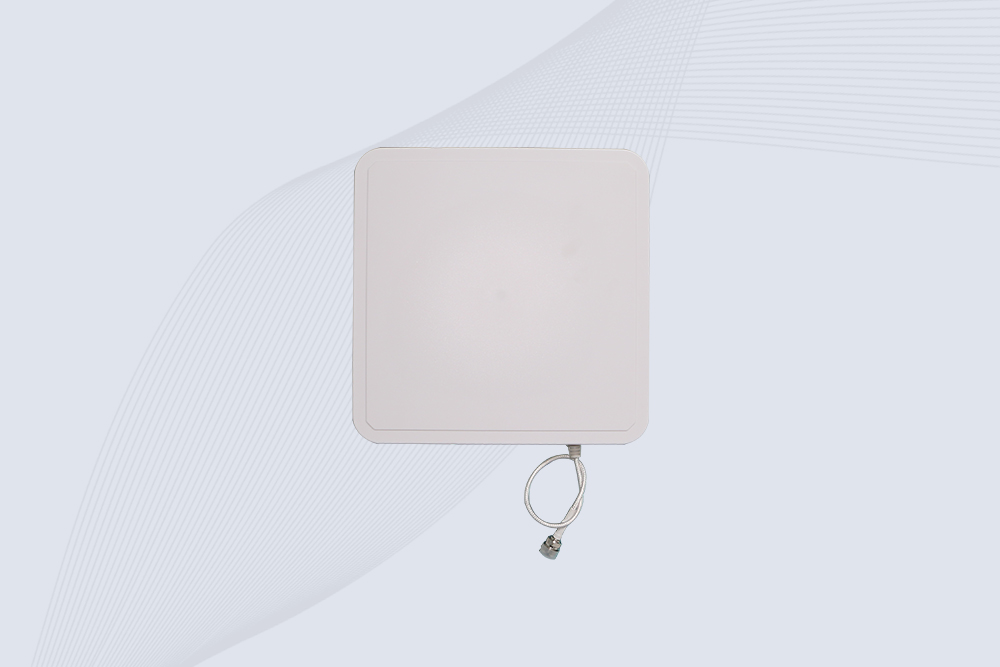
Cykeo CYKEO-A9A industrial UHF RFID reader and antenna kit delivers 10m range, 500 tags/sec, IP65 ruggedness for manufacturing/logistics. Supports EPC Gen2, ISO18000-6C.
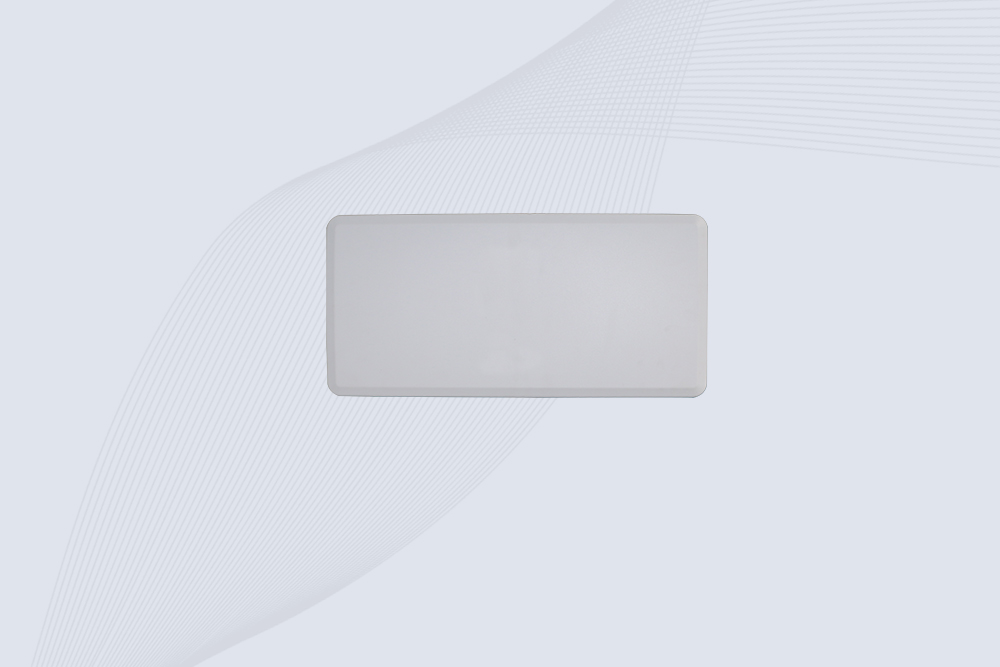
Cykeo’s CYKEO-A12C UHF Large RFID Antenna delivers 12dBi gain, 840-960MHz global frequency, IP65 ruggedness for logistics/warehousing/automotive. 40° beamwidth ensures stable 15m+ tag reads.

CYKEO Near Field RFID Antenna provides precise 5–30 cm reading for shelves, cabinets, and workstations. This compact rfid shelf antenna delivers stable short-range performance around metal and clutter, ideal for pharmacies, libraries, and electronics sorting.
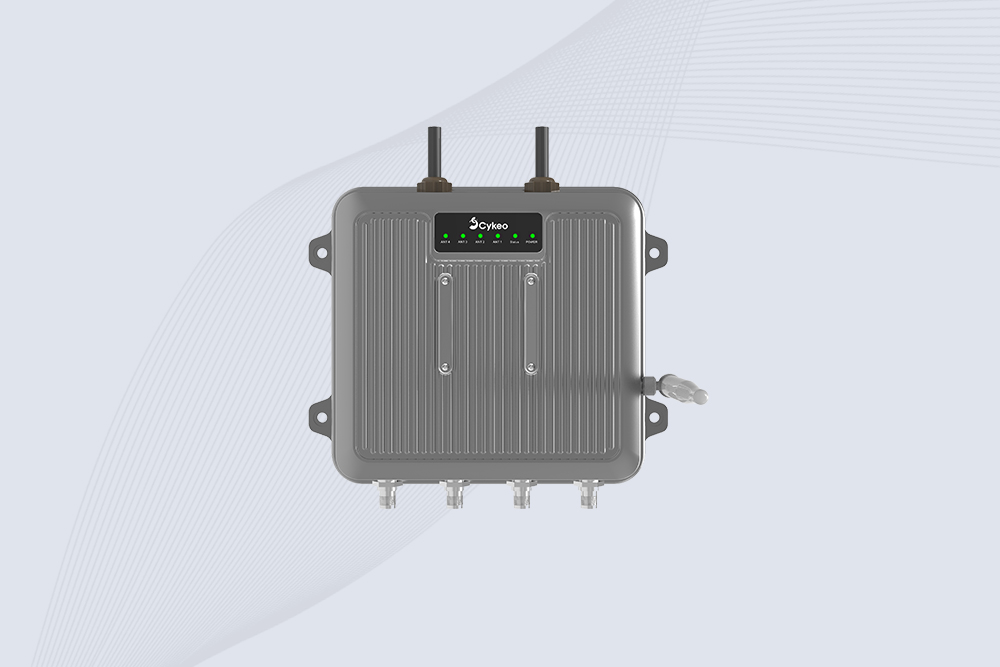
Cykeo CYKEO-C1 industrial Forklift RFID Reader features 20m read range, 600 tags/sec scanning, Impinj R2000 chipset, and IP67 rugged design. Ideal for warehouse logistics and manufacturing. Supports ISO 18000-6C/6B protocols.
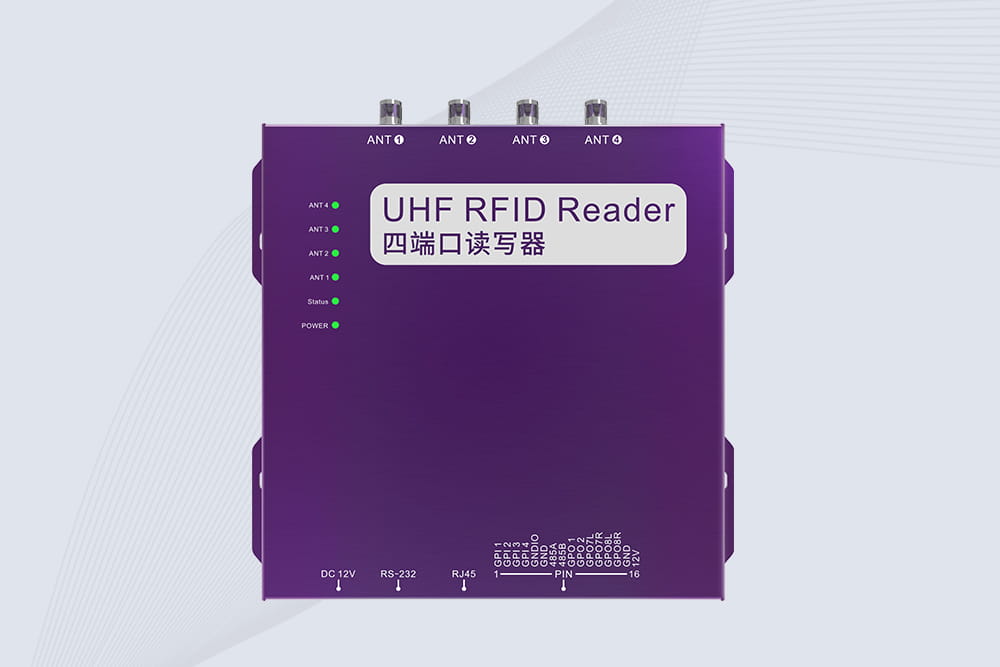
Cykeo CYKEO-R4 industrial UHF RFID Fixed Reader features 4 TNC ports, 400+ tags/sec speed, IP67 housing, and global frequency compliance for vehicle inspection, smart warehouse, and asset management systems.
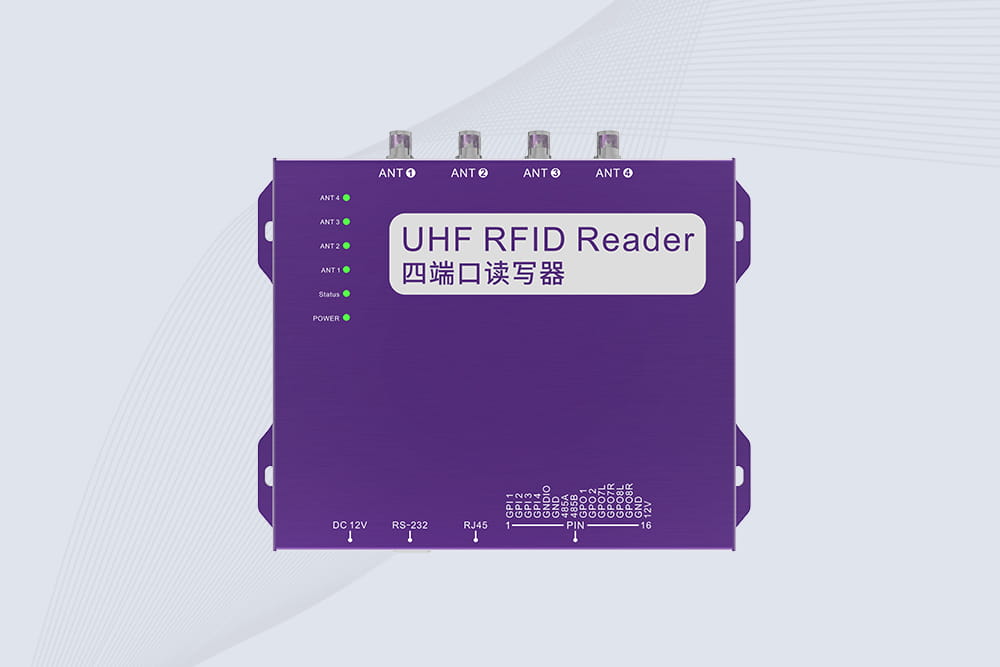
Cykeo’s CYKEO-R4L 4-port Fixed UHF RFID Reader delivers 400 tags/sec scanning, ISO 18000-6C compliance, and IP65 protection. Ideal for warehouse automation, manufacturing WIP tracking, and logistics management.
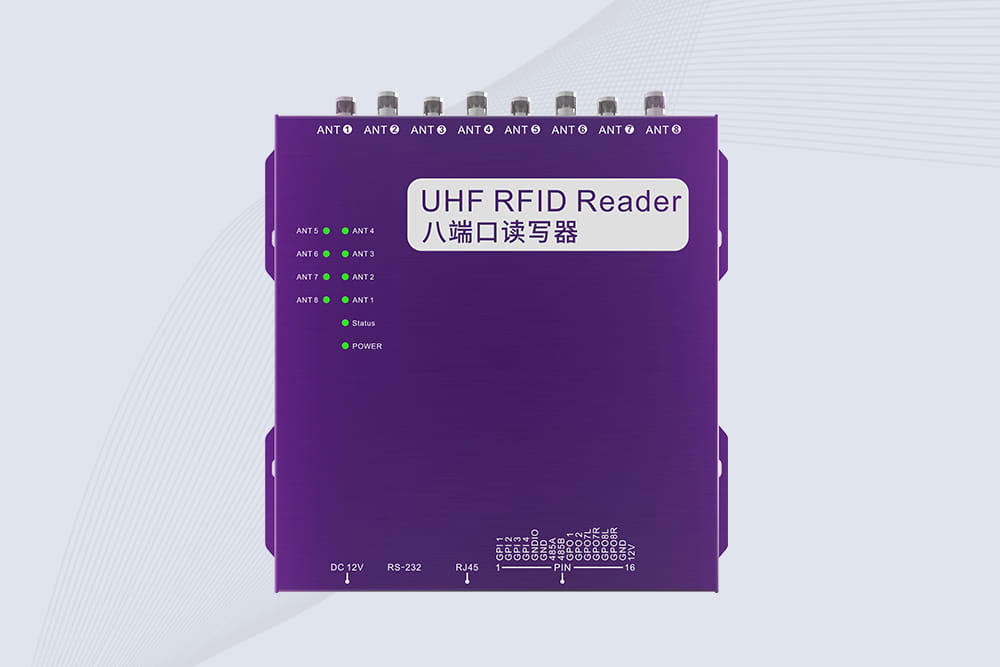
CYKEO CYKEO-R8L Fixed RFID Reader with 8-port UHF design, Impinj-based RF core and up to 20m read range. An industrial Fixed RFID Reader for vehicle inspection, warehouse portals, smart manufacturing lines and secure access checkpoints.
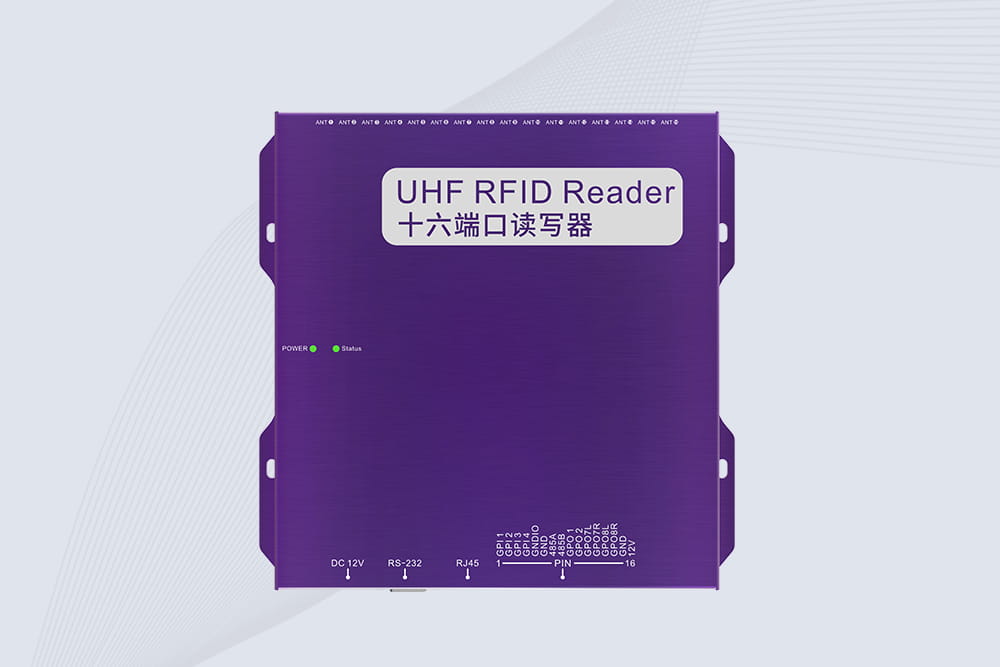
RFID Fixed Reader from CYKEO – the CYKEO-R16L 16-port UHF fixed reader for warehouses, smart cabinets, and production lines. Long-range, multi-tag reading, stable performance for 24/7 industrial use.
Discover what an RFID inventory system is, how it automates tracking, its benefits over barcodes, and real-world applications. Optimize your operations with Cykeo.
More
Trying to understand what an RFID Intelligent Police Equipment Cabinet really solves? This real-world breakdown covers police gear management, law enforcement storage workflows, keyless RFID locker systems, and smart cabinet setups — including wha...
More
Discover the maximum scanning range of handheld RFID devices, factors affecting performance, and how Cykeo’s technology extends coverage for industrial use.
More
RFID tool cabinet can connect tool identification with calibration, inspection, maintenance status, and availability records. This helps maintenance and qual...
More