If you’ve never worked on an RFID project before, it’s easy to think it’s just “wireless barcode scanning.”
Install a rfid reader , attach rfid tags , and everything works automatically.
In reality, RFID projects don’t usually fail because the technology is bad.
The tricky part is that most of these mistakes don’t show up during testing —
Below are some of the most common issues seen in real deployments, and how to avoid them.
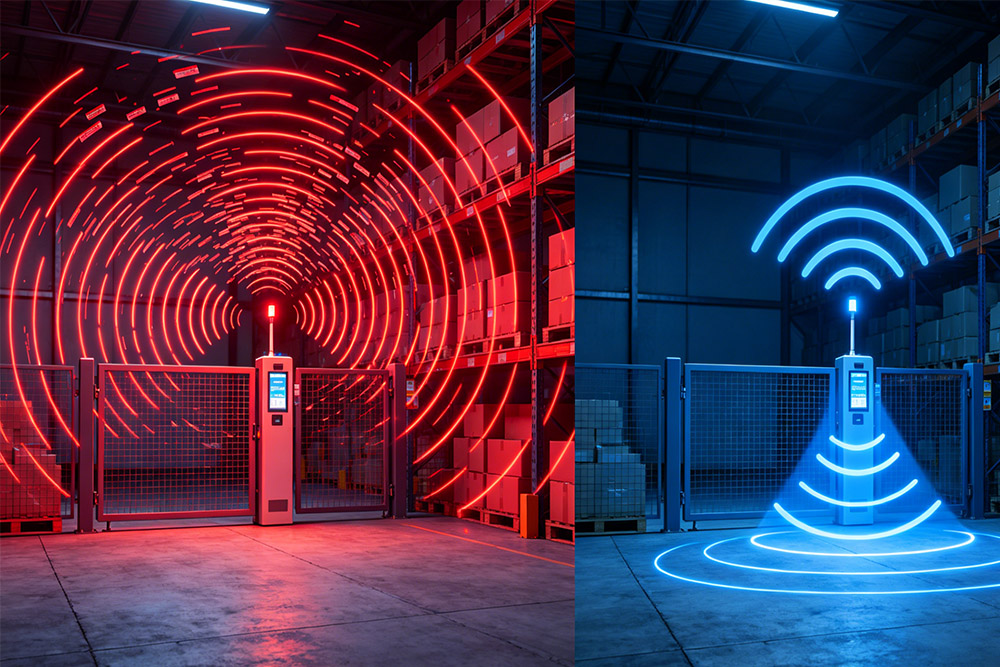
1. Chasing Maximum Reading Distance
This is probably the most common mistake.
The first question people ask is:
So they choose a reader, set it to maximum power, and expect better performance.
What actually happens:
Tags get read too early
Items outside the intended area get picked up
Data becomes unreliable
In warehouse or gate systems, too much range is a problem, not a benefit.
What works better:
2. Ignoring Antenna Layout
A lot of projects focus heavily on the reader itself and treat antennas as accessories.
They’re not.
In most cases, the rfid antenna layout has a bigger impact on performance than the reader model.
Common issues:
Too few antennas
Wrong angles
No top coverage
This leads to:
Blind spots
Missed reads
Inconsistent performance
What works better:
3. Treating RFID Like Barcode
This mistake usually happens at the software level.
Barcode logic is simple:
→ One scan = one result
RFID doesn’t work like that.
RFID is continuous. The same tag can be read multiple times in seconds.
If you treat RFID data like barcode input, you’ll end up with:
Duplicate records
Incorrect inventory
Broken workflows
What works better:
4. Skipping Real-World Testing
Lab testing often looks perfect.
Then the system is installed in a warehouse, and suddenly:
Tags are missed
Reads become unstable
Performance drops
Why?
Because real environments include:
Metal racks
Liquids
Moving objects
Interference
What works better:
5. Choosing the Wrong Rfid Tag
People often focus on the reader and ignore the tag.
But the tag is just as important.
Using the wrong tag can cause:
Poor read range
Inconsistent detection
Complete failure in some cases
For example:
Standard tags don’t work well on metal
Some tags are sensitive to orientation
What works better:
6. No Data Filtering
This is one of the fastest ways to break a system.
Without filtering, the reader might output:
→ Same tag, 10–50 times
If every read is treated as a new event:
→ Your system becomes unusable
What works better:
Time-based filtering (e.g., ignore repeats within 3–5 seconds)
State tracking (processed vs not processed)
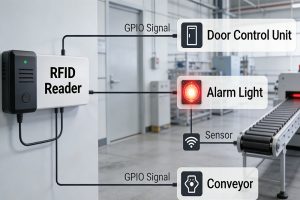
7. Weak Integration Design
Some projects treat RFID as a standalone tool.
But in reality, RFID only creates value when integrated with:
WMS
ERP
Inventory systems
Without proper integration:
Data sits unused
Processes remain manual
ROI disappears
What works better:
8. Overcomplicating the System
Sometimes the opposite problem happens.
People try to design the “perfect system” from day one:
Too many rules
Too many edge cases
Over-engineered logic
This slows down development and makes debugging difficult.
What works better:
9. Ignoring Maintenance and Monitoring
RFID systems are not “install once and forget.”
Over time:
Environment changes
Tags wear out
Hardware needs adjustment
Without monitoring, small issues become big problems.
What works better:
10. Starting with Hardware Instead of Workflow
This is probably the root cause of most problems.
Many projects start like this:
→ Choose reader → install → try to fit into process
But the correct approach is the opposite:
→ Define workflow → define events → design system → choose hardware
A Simple Way to Avoid Most Problems
Before you buy anything, answer these questions:
What exactly should trigger an event?
Where should tags be read?
What should happen after a tag is read?
If these are clear, the rest becomes much easier.
Conclusion
RFID projects don’t fail because the technology doesn’t work.
They fail because of small design decisions that add up over time.
If you can avoid the common mistakes:
Control your read zone
Design your antenna layout properly
Handle data correctly
Test in real environments
you’ll already be ahead of most deployments.
 Cykeo RFID IoT Solution Products R&D Manufacturer