You have a warehouse full of products. You know roughly what is in there, but when someone asks for an exact count, you hesitate. The last inventory took three days. You pulled staff from their regular jobs. And by the time you finished, the numbers were already wrong again.
Here is the thing. When people search rfid tags inventory tracking, they are usually looking for a way out of this cycle—a system that knows what you have, where it is, and whether it is moving, without manual counting.
Let me explain how RFID tags transform inventory tracking, why they outperform barcodes, and how to implement a system that works.
The Simple Definition
RFID tags inventory tracking is the practice of using radio frequency identification tags attached to products, cases, or pallets to automatically track inventory throughout the supply chain . Unlike barcode systems that require line-of-sight and one-at-a-time scanning, RFID inventory tracking reads hundreds of tags simultaneously without needing to see them.
Each RFID tag contains a unique identifier (typically an Electronic Product Code or EPC) that is linked to product information in your inventory system. When tags pass through readers—at dock doors, on handheld scanners, or on shelves—the system knows exactly what is moving, where it is going, and what remains .
RFID inventory tracking is also called RFID stock tracking, automated inventory management, or RAIN RFID inventory. It has become the standard for modern supply chains, retail operations, and manufacturing facilities.
How RFID Tags Inventory Tracking Works
The process is simple in concept but powerful in execution:
Tag the items. Every item, case, or pallet gets an RFID tag. For retail items, tags may be applied at the factory. For warehouse inventory, tags are applied during receiving .
Capture reads automatically.Fixed rfid readers at dock doors capture tags as pallets arrive and depart. Handheld readers count entire aisles in minutes. Overhead readers provide continuous shelf-level visibility .
Process the data. Software receives tag reads, filters duplicates, and updates inventory records in real time. Each read includes the tag ID, location, and timestamp .
See what you have. Dashboards show stock levels, movement history, and exceptions. Alerts trigger when inventory runs low or items go missing .
Act on the information. Staff use the data to restock, pick orders, or investigate discrepancies. Cycle counts are scheduled based on activity levels .
RFID vs. Barcode: Why the Shift?
Barcodes have been the standard for decades. But they have fundamental limitations that RFID overcomes :
Feature
Barcode System
RFID Inventory Tracking
Scanning
One at a time, line of sight required
Hundreds at once, no line of sight
Labor
Manual scanning consumes hours
Automated reading takes minutes
Accuracy
Human error in scanning
System captures all tags automatically
Visibility
Only when scanned
Real-time, continuous
Data
Read-only
Read-write (can update tag data)
Environment
Barcodes fail when dirty or damaged
Tags can be ruggedized
Cost per unit
Pennies
More than barcodes, but dropping
The productivity gains are substantial. A barcode count of a 500-item pallet might take 15 minutes of scanning. An RFID handheld reads that same pallet in 3 seconds .
Types of RFID Tags for Inventory Tracking
Choosing the right tag is critical. Different applications need different tags :
UHF Passive Tags (860-960 MHz)
These are the standard for inventory tracking. They have no battery, last decades, and cost pennies in volume. Read range: 3-12 meters .
Wet inlays: Adhesive-backed, peel-and-stick. Used for retail items, cases, pallets
Dry inlays: No adhesive, for embedding into products or labels
Hard tags: Rugged plastic or epoxy, for reusable containers, tools, industrial use
On-metal tags: Special design for mounting on metal surfaces
HF Passive Tags (13.56 MHz)
Shorter range (up to 1 meter), used for library books, access control, and some retail applications. Less common for warehouse inventory but used in specialized settings .
Active Tags
Battery-powered, transmit their own signal. Used for high-value asset tracking where longer range (100+ meters) and continuous location are needed. Not typically used for item-level inventory due to cost .
RFID Tag Memory and Data
RFID tags store data in structured memory banks. For UHF RAIN tags (ISO 18000-6C), there are four banks :
Bank
Name
What It Stores
00
Reserved
Kill password and access password
01
EPC
Electronic Product Code—the main identifier
10
TID
Tag Identifier—factory programmed, globally unique
11
User
User memory—custom data like lot numbers, expiration dates
For inventory tracking, the EPC is what matters most. It contains the product identifier and unique serial number. The EPC is standardized by GS1, ensuring interoperability across the supply chain .
RFID Inventory System Components
A complete RFID inventory tracking system has three layers :
RFID Tags attached to items. Each tag has a unique EPC linked to product information in your database .
RFID Readers that capture tag data. The system typically includes:
Fixed readers: Mounted at dock doors, conveyors, and production lines. They work automatically, reading tags as they pass .
Handheld readers: Used for cycle counting, spot checks, and finding items. The CYKEO CK-B5L reads 500+ tags in under 3 seconds from up to 8 meters .
Overhead readers: Ceiling-mounted for continuous shelf-level visibility. Used in retail and smart warehouses .
Portal readers: Doorway-mounted for automated check-in/check-out .
RFID Inventory Software that processes reader data and presents it as actionable information:
Real-time dashboards show stock levels and movement
Reporting tools track accuracy and exceptions
Integration modules connect with ERP, WMS, and accounting systems
Types of RFID Inventory Tracking Systems
Different facilities need different configurations :
Fixed Portal Systems
Readers mounted at dock doors, aisle entrances, or conveyor lines. As pallets pass through, tags are read automatically—no operator needed . Ideal for high-throughput receiving and shipping.
Handheld Cycle Counting
Workers walk aisles with handheld readers like the CYKEO CK-B5L, scanning entire shelves in minutes. The system tracks which areas have been counted and flags discrepancies .
Overhead Real-Time Location
Readers mounted on ceilings track items on shelves continuously. Used in retail and smart warehouses to know exactly what is on the sales floor at all times .
Smart Shelf Systems
Readers integrated directly into shelving. Items placed on the shelf are automatically identified. When items are removed, the system knows instantly .
Automated Tunnels
Items on conveyors pass through tunnels with multiple readers, capturing every tag from every angle. Common in e-commerce fulfillment where accuracy is critical .
Benefits of RFID Tags Inventory Tracking
Companies implementing RFID inventory tracking report dramatic improvements :
Inventory Accuracy increases from 60-70% (typical for manual systems) to 95-99% . This means fewer stockouts, less safety stock, and more reliable order fulfillment .
Labor Productivity improves dramatically. Cycle counting that took weeks now takes hours . Staff are freed from manual scanning to focus on value-added work.
Shrink Reduction comes from better visibility. Items are tracked from receiving to shipment. Theft, misplacement, and process errors are caught early .
Faster Receiving happens because pallets are read automatically as they enter the dock. No manual scanning, no paperwork delays. Inventory is available minutes after arrival .
Better Customer Service results from accurate inventory. When the system knows what is in stock, orders are filled reliably. Buy-online-pickup-in-store programs work because store inventory is accurate .
Real-Time Visibility means you know where inventory is at all times—not just after the next manual count .
Industry Applications
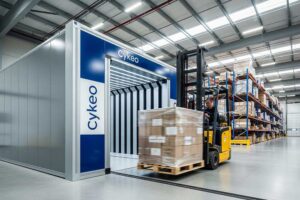
Warehousing and Distribution: RFID tags on every pallet and case. Fixed portals at dock doors log movement. Handheld readers verify cycle counts. Dock doors confirm shipments without stopping trucks .
Retail: RFID tags on every item. Inventory accuracy jumps from 70% to 95%+. Counts that took days now take hours . Out-of-stocks are identified and replenished immediately. Self-checkout becomes truly self-service .
Manufacturing: RFID tags on work-in-progress track items through production lines. Each station reads tags automatically, capturing timestamps and quality data. Raw materials are verified before use .
Healthcare: RFID tags on medical supplies, surgical implants, and equipment. Smart cabinets ensure critical items are always available. Inventory counts that took hours now take minutes .
Implementation Steps
Implementing RFID tags inventory tracking follows a proven path :
Step 1: Assessment and Pilot Start with a pilot in a defined area—one aisle, one product category, one process. Tag items, deploy readers, and test. Measure accuracy gains, time savings, and integration requirements .
Step 2: Tag Selection and Application Choose the right tag for your items. On-metal tags for metal surfaces. Standard inlays for cardboard and plastic . Apply tags consistently. For new items, apply at receiving. For existing inventory, plan a tagging blitz .
Step 3: Reader Deployment Place fixed readers at key choke points—dock doors, aisle ends, production stations. Deploy handheld readers for cycle counting. Ensure network connectivity and power .
Step 4: Software Integration Connect the RFID system to your existing ERP, WMS, or inventory software. Data should flow automatically—no manual entry . Set up dashboards and alerts. Train staff on new workflows .
Step 5: Scaling and Optimization Once the pilot proves successful, expand to other areas. Optimize reader placement, tag application, and software configuration. Use data from the system to improve processes beyond counting .
The Bottom Line
RFID tags inventory tracking replaces slow, manual counting with automated, real-time visibility. It uses RFID tags on items, readers that capture tag data, and software that turns that data into actionable inventory information .
The result is inventory accuracy above 95%, labor savings that pay for the system in months, and visibility that transforms operations from reactive to proactive .
For warehouses, retail, manufacturing, and healthcare, RFID inventory tracking has become not just a competitive advantage but an operational necessity. The technology is proven. The cost has dropped. The time to implement is now.
CYKEO offers complete RFID inventory solutions—tags for every application, handheld and fixed readers, and software that integrates with your existing systems. Our engineers can help you design, pilot, and scale a system that fits your operation.
When you are ready to stop counting boxes and start knowing where everything is, RFID tags inventory tracking is the answer. CYKEO can help you get there.
Need to implement RFID tags inventory tracking? CYKEO offers free system consultations. Tell us about your operation and we will design a solution that works. Contact our team to get started.
Comparing RFID vs NFC through real warehouse and retail scenarios. Practical insights from Cykeo’s deployments explain why RFID scales better for logistics, manufacturing, and high-volume tracking.
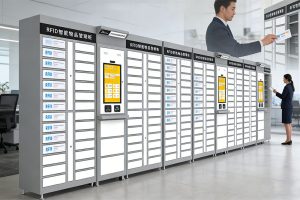
Upgrade to the CK-G0628 UHF RFID Locker System for smarter, faster, and more secure item management. Automate tracking, enhance security, and provide real-time monitoring—all with the power of RFID technology.
How is RFID used for animal tracking? Learn how RFID livestock identification improves animal management, traceability, and smart farming with Cykeo solutions.
When selectingRFID Bluetooth Reader, factors like frequency, communication protocols, battery life, reading range, and system compatibility are critical. This guide breaks down each key parameter to help enterprises make informed decisions and boo...
 Cykeo RFID IoT Solution Products R&D Manufacturer