RFID tags can be read in milliseconds, with modern UHF RFID systems capable of identifying hundreds or even more than 1,000 tags per second under suitable RF conditions. Actual throughput depends on reader hardware, tag population, antenna setup, tag orientation, interference, and application design.
What Determines RFID Tag Read Speed?
When engineers ask how fast can RFID tags be read, the useful number is not simply the theoretical speed printed on a reader datasheet. It is the number of unique, reliable tag reads delivered by the complete system.
GS1 identifies UHF passive RFID, also called RAIN RFID, as a technology capable of capturing unique identifiers at very high rates and at distances well beyond 10 meters in suitable installations.
The reader and tag communicate through the UHF air interface. A reader energizes passive tags, tags respond through backscatter, and the anti-collision protocol allows multiple tags to participate in an inventory round rather than forcing an operator to scan each item individually.
That distinction becomes obvious on a warehouse floor.
A single carton passing an antenna is easy. Twenty cartons stacked tightly together are a different RF problem. Add metal shelving, liquid-filled products, moving pallets, neighboring readers, and tags facing different directions, and the headline read-rate number starts to mean much less.
RFID Read Rate vs. Real-World Throughput
Modern reader hardware can be extremely fast. For example, Impinj’s current E910 reader chip specification lists a maximum read rate of 1,100 tags per second, while the E710 is specified at up to 1,000 tags per second. These figures are measured under controlled conditions with a large tag population and a quiet RF environment.
That qualification matters.
Factor
Effect on read speed
Reader processing capability
Sets the upper performance ceiling
Tag population
More tags require more inventory activity
Antenna design
Determines field coverage and consistency
Tag orientation
Poor orientation can reduce successful responses
RF interference
Can increase retries and missed reads
Reader mode
Changes the balance between speed and reliability
Moving tags
Requires sufficient dwell time in the read zone
Metal/liquid environment
Can significantly alter RF behavior
In a production deployment, I would rather have a reader consistently identify 300 correctly positioned tags than advertise 1,000 tags per second and leave gaps in the inventory record.
That is the difference between read rate and usable throughput.
How Fast Can RFID Tags Be Read in a Warehouse?
For warehouse applications, UHF RFID is particularly useful because multiple tagged items can be identified without requiring direct line of sight. GS1 notes that passive UHF RFID normally provides a read range of several meters, with specially configured systems reaching considerably farther.
A receiving dock provides a good example.
A pallet may contain dozens or hundreds of tagged cartons. The objective is not to read one carton exceptionally quickly. The objective is to capture the intended tag population while the pallet moves through a defined zone.
This changes the engineering priority:
Fast inventory rounds
Controlled antenna coverage
Stable RF power
Reliable anti-collision performance
Low duplicate-read overhead
Accurate filtering at the application layer
A well-designed system can therefore feel almost instantaneous to the warehouse operator even when the raw reader specification is not being used at its maximum theoretical rate.
What Does “Hundreds of Tags per Second” Actually Mean?
It means the RFID reader can process many tag responses during a short inventory period. It does not mean every physical tag in every environment will be successfully captured every second.
Impinj’s published reader specifications illustrate the range: the R700 and R420 fixed readers are listed at up to 1,100 tags/second, while the R220 is listed at 200 tags/second.
Those figures are useful for comparing reader platforms, but they should not replace an RF site test.
In practice, engineers should measure:
Unique tags detected
Tags expected
Time spent inside the read zone
Missed-read rate
Duplicate-read behavior
Performance at different tag orientations
A reader that produces a large volume of repeated EPC messages is not necessarily reading faster. It may simply be spending more time reporting the same tag.
RFID Read Speed in Apparel and Retail
Retail is another environment where speed becomes visible immediately. A self-checkout station may need to identify a handful of garments simultaneously rather than requiring the customer to present each item individually.
The key is controlled field geometry.
If the read zone is too broad, neighboring merchandise can enter the inventory cycle. If it is too narrow, the customer may need to reposition the items. The best-performing system is usually the one that makes the intended read zone predictable.
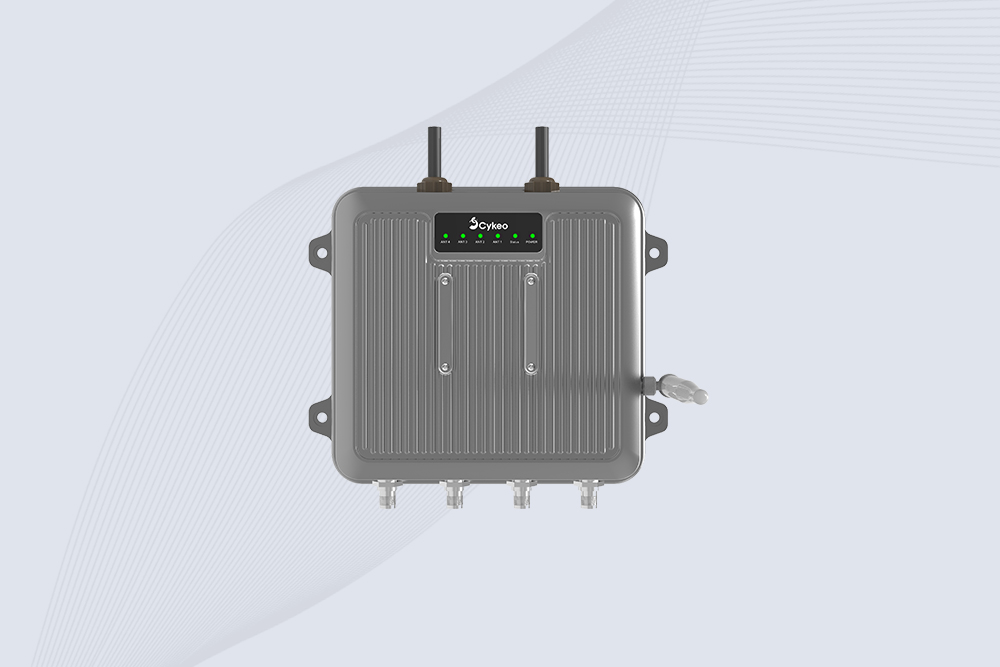
For Cykeo RFID applications, this principle is especially relevant to multi-tag reading, self-service checkout, library security gates, and item-level inventory systems. The reader, antenna, enclosure, trigger logic, and software filtering need to behave as one system rather than as isolated components.
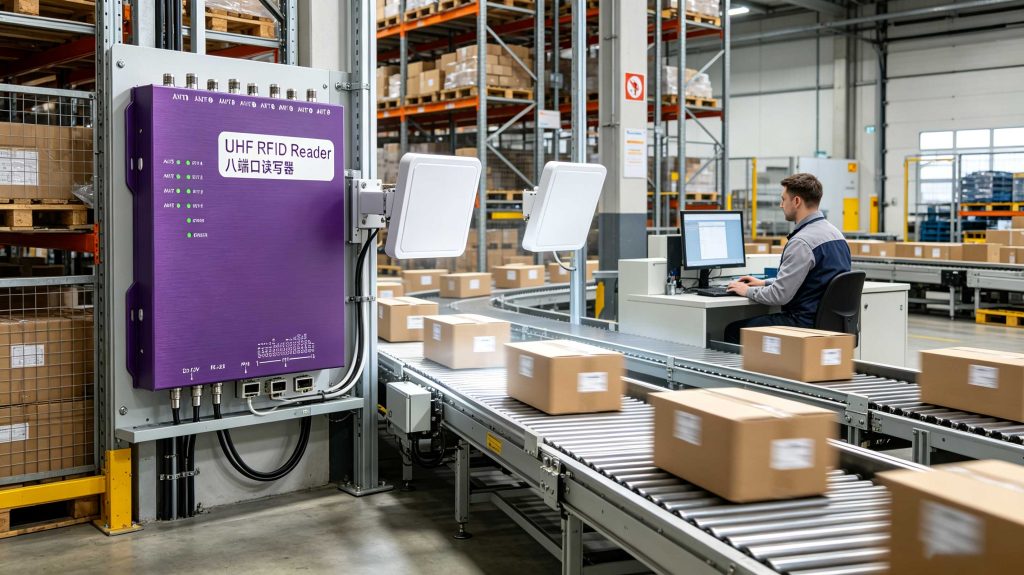
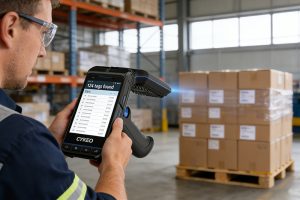
A UHF RFID reader captures multiple tagged items as they pass through a controlled warehouse read zone.
Why Reader Speed Alone Is Not Enough
The practical question is not simply how fast can RFID tags be read. It is whether the system can maintain that performance while the tags are moving, rotating, overlapping, and entering or leaving the antenna field.
GS1 specifically points out that read performance depends on antenna characteristics, polarization, tag orientation, reader power, frequency, and RF interference.
That is why a laboratory figure should be treated as a benchmark—not a promise.
For system integrators, a useful field test is to start with a known tag population, run repeated passes, change tag orientation, vary conveyor speed, and record unique successful reads. The resulting dataset says much more about deployment quality than a single maximum-tags-per-second specification.
Cykeo Perspective: Designing for Reliable Speed
Cykeo’s UHF RFID development approach centers on multi-tag identification, adjustable RF parameters, anti-collision processing, tag filtering, and application-specific read-zone control.
For a fixed reader installation, the important engineering question is where the RF field ends—not simply how far it reaches.
A dock door may require broad coverage. A self-checkout station needs tight coverage. A library security gate needs predictable passage detection. A smart shelf needs stable reads from a relatively confined area.
The same RFID technology can therefore produce very different practical read speeds depending on how the antenna and software are deployed.
That is where meaningful performance testing begins.
RFID Tag Read Speed: What Should Be Measured?
A reliable RFID deployment should be evaluated by unique-tag capture rate, not by the maximum theoretical reader specification alone.
For example, current Impinj R700/R720 specifications list maximum read rates of 1,100 reads per second, while the R220 is listed at 200 reads per second. Impinj also explicitly notes that actual results can vary because its figures are based on modeling and test data.
For a production project, I normally separate performance into four numbers:
Measurement
What it tells you
Maximum read rate
Reader hardware capability
Unique tags/second
Actual identification throughput
Read completeness
Whether expected tags were captured
Read-zone dwell time
Whether moving items remain detectable long enough
This distinction matters when a pallet is moving.
Suppose 100 tagged cartons pass through a gate. A reader producing thousands of responses is not necessarily performing better if those responses repeatedly represent the same 100 tags. The useful result is whether the complete population was identified within the available passage window.
GS1 describes passive UHF/Rain RFID as capable of capturing unique identifiers at very high rates and at distances well beyond 10 meters, without requiring line-of-sight contact.
How Anti-Collision Affects RFID Reading Speed
RFID does not simply ask every tag to speak at the same time.
In a passive UHF system, the reader supplies operating energy and communicates with tags through the standardized air interface. Tags respond by backscattering information to the reader.
The inventory process therefore has to coordinate a population of tags.
When there are only a few tags in the field, inventory can move quickly. As tag density rises, the reader has more responses to manage. Reader mode, protocol settings, RF conditions and application filtering then become important.
This is one reason a retail checkout containing 15 garments can behave very differently from a pallet containing 150 densely packed cartons—even when both use the same UHF RFID frequency band.
Cykeo RFID Architecture for High-Speed Multi-Tag Reading
For Cykeo, high-speed RFID is treated as a system-level problem rather than a single-chip specification.
A typical architecture includes:
RFID tag → antenna → UHF reader → filtering/anti-collision processing → communication interface → application software
Each layer has a job.
Tag: stores the EPC or application identifier.
Antenna: creates the physical read zone.
Reader: manages RF transmission and tag communication.
Signal processing: separates simultaneous tag responses.
Filtering: removes unnecessary duplicate events.
Application software: converts raw RFID events into business actions.
Cykeo UHF RFID platforms support applications where multi-tag recognition is more valuable than manually scanning individual items. Depending on the model and configuration, Cykeo readers can support ISO 18000-6C / EPC C1G2, adjustable RF output and multi-tag recognition.
The practical advantage is not merely speed.
It is speed inside a controlled read zone.
Where High-Speed RFID Reading Makes a Difference
Warehouse Receiving
At receiving docks, operators may need to identify many cartons or pallets without opening every package. UHF RFID allows the reader to capture multiple identifiers during a short passage through the antenna field.
The strongest deployment is usually one where the pallet’s movement and the antenna geometry have been designed together.
Retail Self-Checkout
In apparel retail, RFID allows several garments to be identified together. A customer places multiple tagged products in the checkout area rather than presenting them individually.
That is particularly valuable when the system needs to identify 10, 15 or 20 garments quickly.
The challenge is field containment. A checkout that reads fast but also captures merchandise sitting on the adjacent display is not a successful deployment.
Library and Asset Management
Libraries use RFID for inventory, circulation and security. The required read speed is different from a conveyor application, but multi-tag recognition remains important.
A fixed RFID security gate may need to identify several items as a person passes through while simultaneously triggering an alarm condition.
Manufacturing and Logistics
In manufacturing, RFID can identify work-in-process items, containers, tools and finished goods. The reader may encounter tags at different orientations and distances.
Here, consistency becomes more valuable than a laboratory maximum.
Multiple RFID-tagged garments are identified simultaneously at a modern self-service retail checkout.
FAQ: How Fast Can RFID Tags Be Read?
1. How fast can RFID tags be read?
Modern UHF RFID readers can reach hundreds to more than 1,000 tag reads per second under suitable conditions. Current Impinj R700/R720 specifications list up to 1,100 reads per second. Actual deployment speed depends on the tag population, RF environment, antenna design and reader configuration.
2. Can RFID read multiple tags at the same time?
Yes. Passive UHF RFID is specifically designed for multi-tag inventory. Anti-collision mechanisms coordinate tag responses so a reader can identify many tags during the same inventory process.
3. Is RFID faster than scanning barcodes?
For applications involving many items, RFID can be substantially faster because tags can be identified without individually presenting each item to a scanner or maintaining direct line of sight. GS1 identifies high-speed, non-line-of-sight identification as a major characteristic of RAIN RFID.
4. Does a faster reader always mean faster RFID performance?
No. Reader speed is only one part of the system. Antenna configuration, tag orientation, interference, read-zone design and software filtering can determine whether that theoretical rate becomes useful production throughput.
5. How many RFID tags can be read at once?
There is no universal fixed number. Reader capability, tag density, RF conditions and application requirements determine practical performance. Modern RAIN RFID platforms are designed to handle large tag populations, including hundreds of tags per second in suitable conditions.
6. What is a good RFID read rate for a warehouse?
There is no single target. A better specification is the number of unique expected tags successfully captured during the available passage time. A slower but complete read can be operationally better than a faster system with missed tags.
7. Can Cykeo RFID readers support high-speed multi-tag applications?
Yes. Cykeo UHF RFID solutions are designed for multi-tag identification and applications such as logistics, warehouse inventory, retail, libraries and asset management. The appropriate reader, antenna, RF power and read-zone configuration should be selected according to the deployment environment.
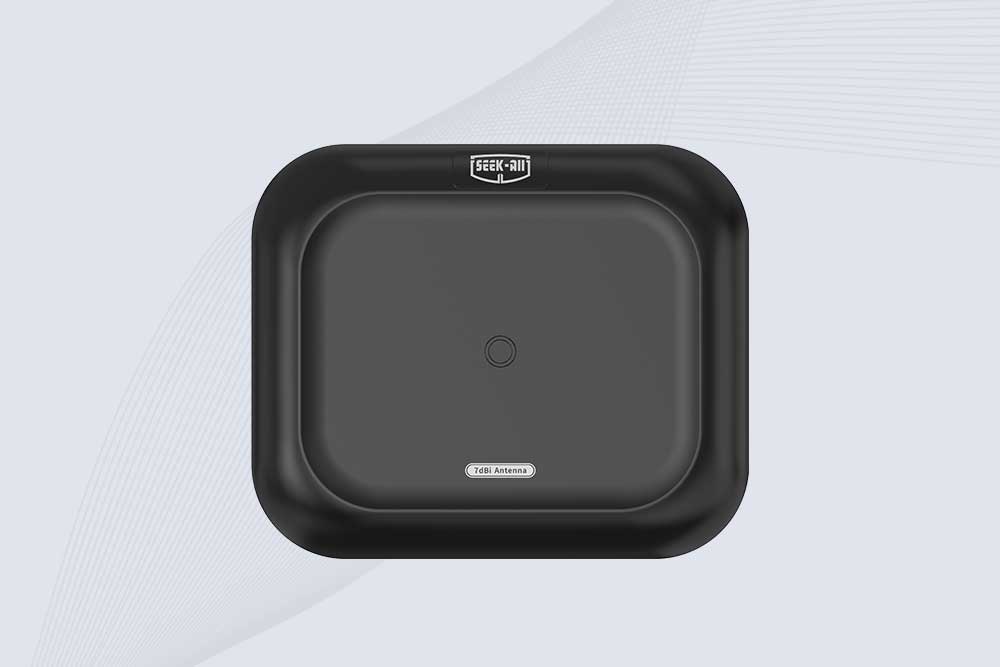
Explore the SSD-A07 UHF RFID antenna with 7 dBi gain, circular polarization, adjustable 840–960 MHz frequency, and 60°/75° beamwidth for stable RFID read/write performance.
SSD-A06 UHF RFID antenna with circular polarization, adjustable 840–960 MHz frequency, ≥4.5 dBi gain, and a compact directional design for RFID systems.
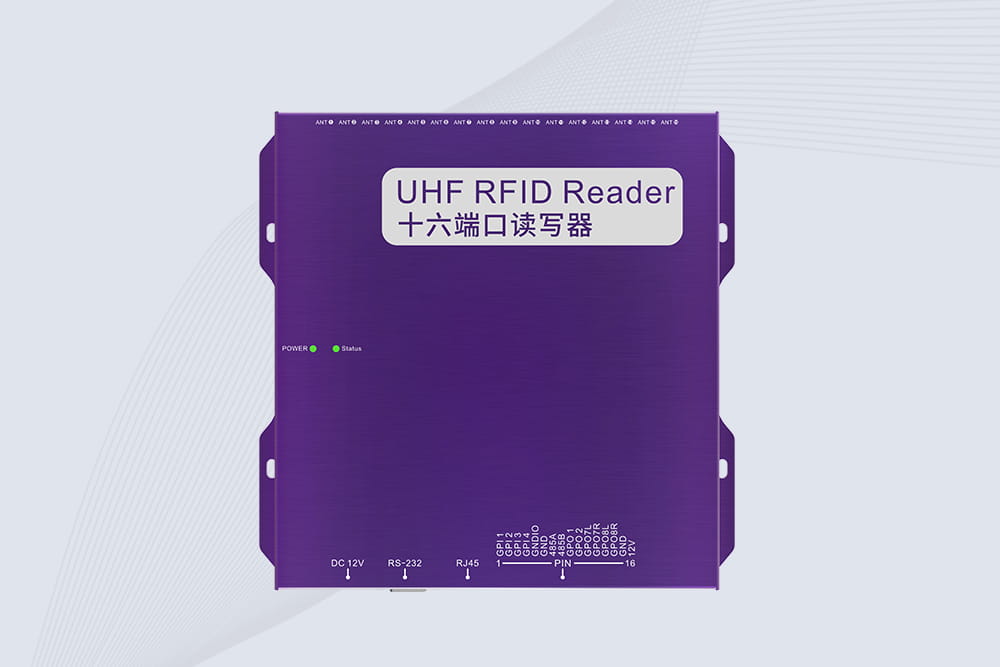
SSD-R16L Multi-Channel RFID Infrastructure for Automated Inventory Management ✔️ 16-Port High-Density RFID Reading Equipped with 16 SMA antenna ports, SSD-R16L supports multi-antenna deployment for warehouses, retail stores, logistics, production lines, and large-area RFID identification. ✔️ High-Speed & Long-Range Performance With up to 33…
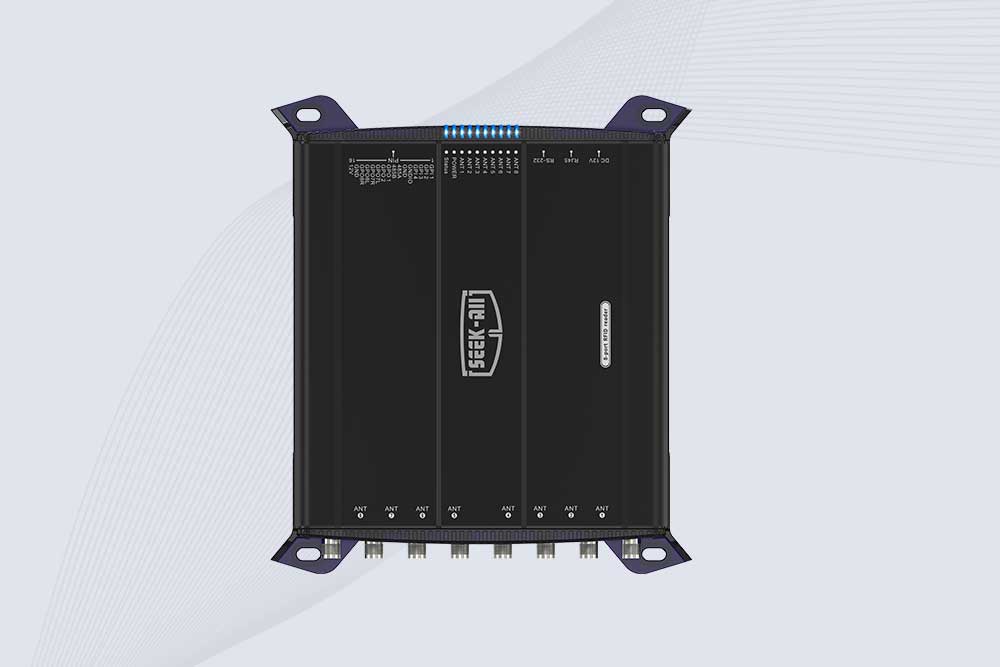
SSD-R8L 8-port UHF RFID reader with 33dBm output, up to 20m reading range and 600+ tags/s recognition. Ideal for warehouse, logistics, retail and asset tracking.
CYKEO Embedded RFID Modules are designed for compact industrial and IoT devices that require stable UHF performance. These UHF RFID Modules support global protocols, flexible power control, and reliable multi-tag reading for smart cabinets, production lines, and asset tracking systems.
CYKEO Embedded RFID Module is built for compact IoT and industrial devices that need stable UHF performance. This UHF module supports global protocols, low power operation, and reliable multi-tag reading for smart lockers, production lines, and always-on RFID systems.
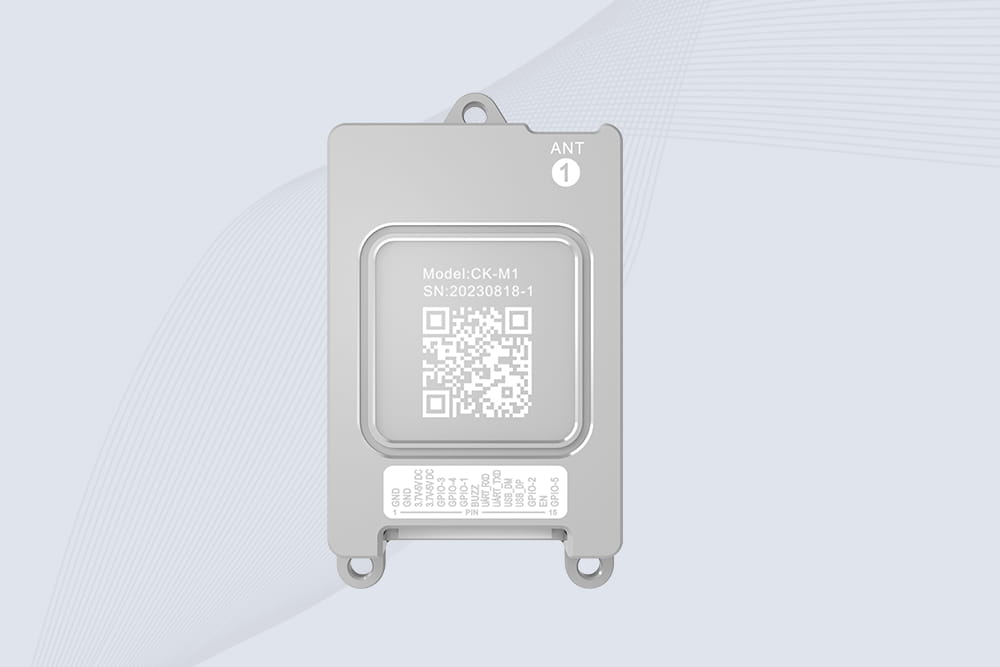
CYKEO CYKEO-M1 drone rfid module is a compact UHF RFID reader module designed for drones and UAV platforms. It supports long-range aerial scanning, fast multi-tag reading, and stable performance in wind, vibration, and outdoor environments.
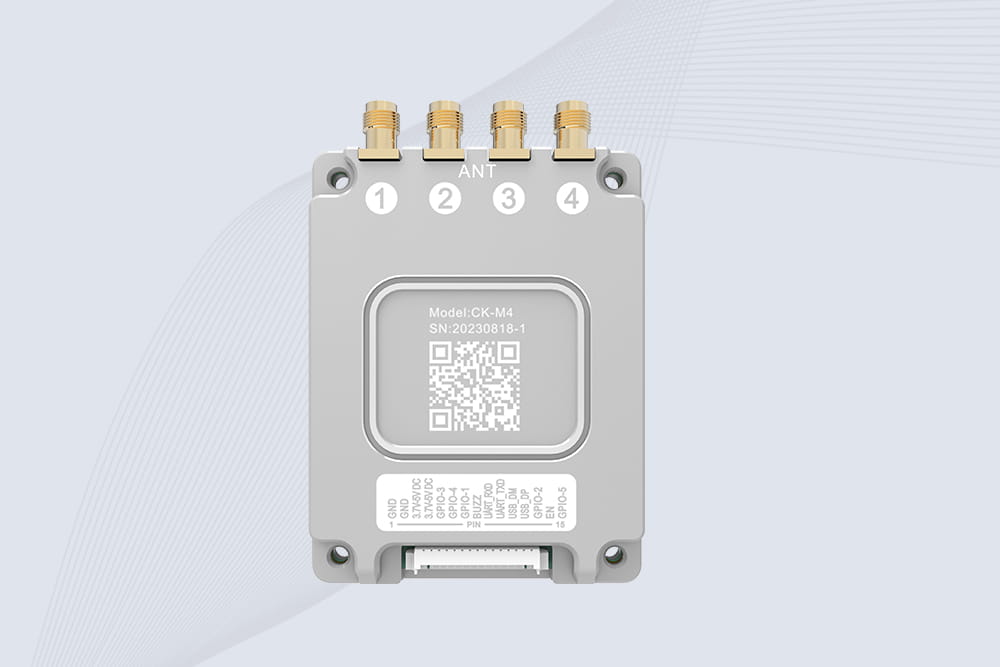
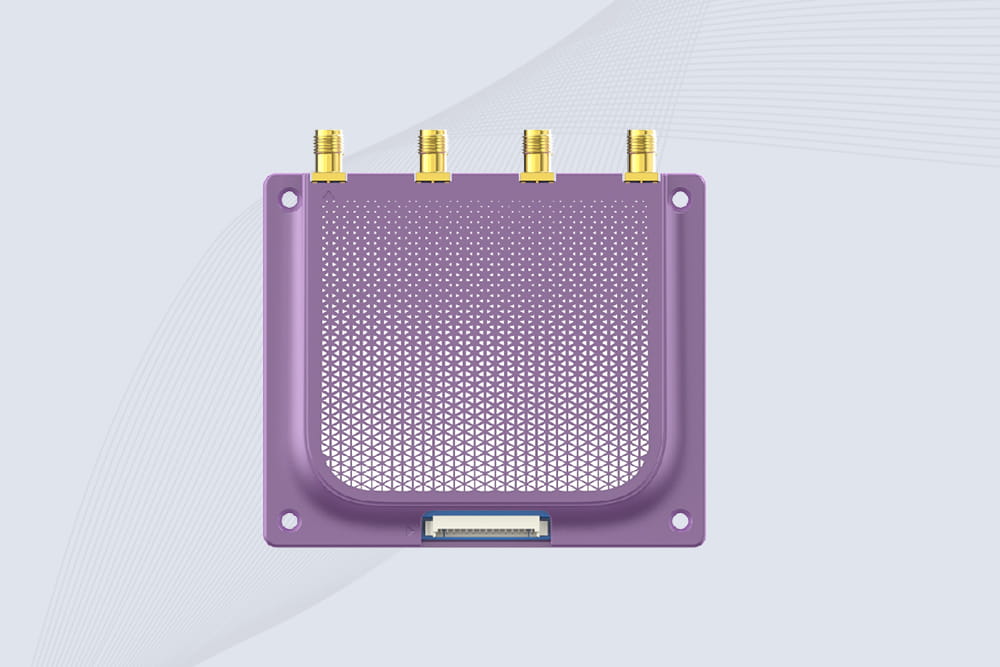
CYKEO CYKEO-M4 RC522 RFID Module is an industrial-grade UHF RFID reader with 4 ports, supporting ISO, EPC, and GB protocols. High-speed, accurate reading for IoT, automation, and warehouse applications.
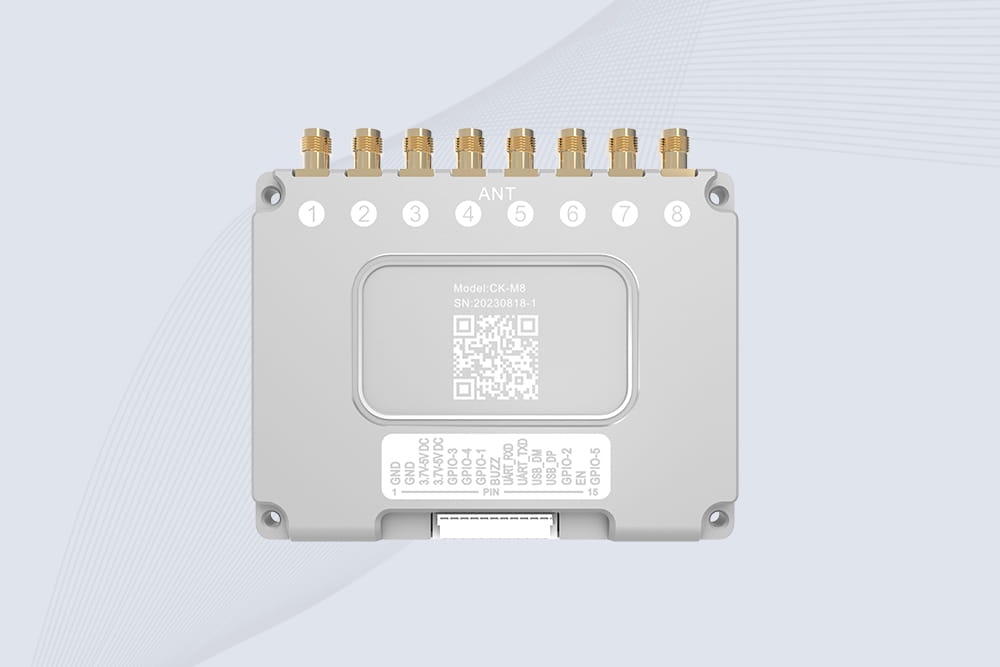
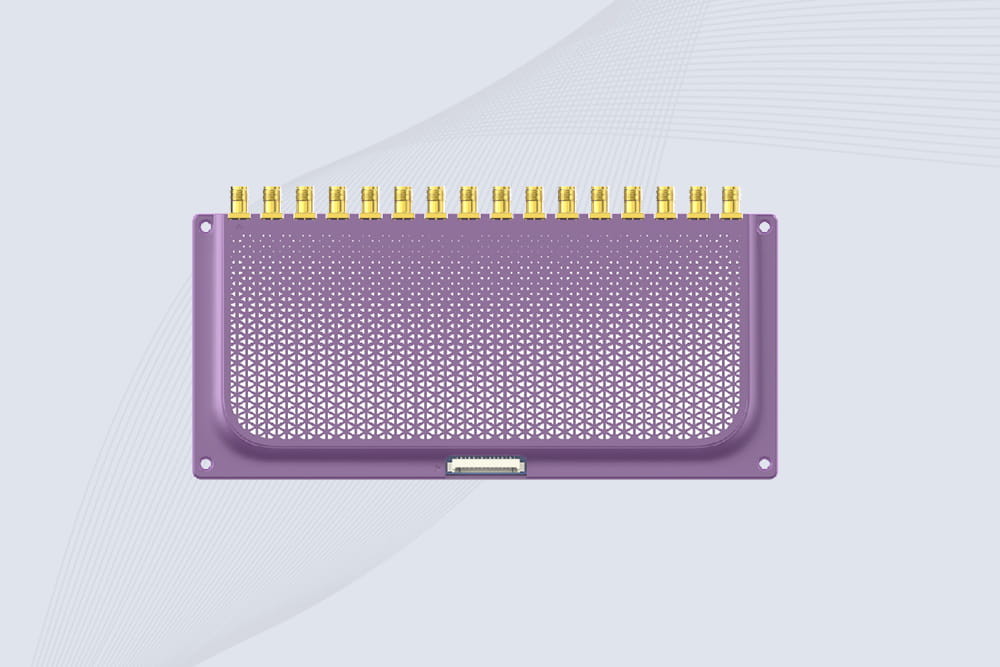
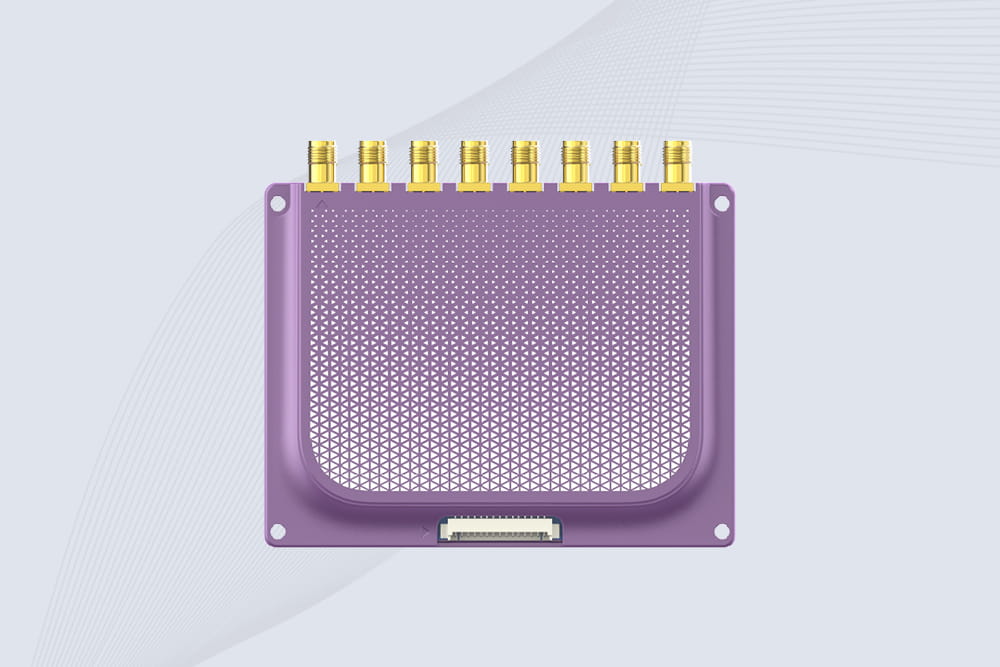
CYKEO CYKEO-M8 Module RFID is an 8-port UHF R2000 RFID Module designed for high-density, multi-tag environments. Stable 33dBm output, ISO & GB protocol support, ideal for warehouses, factories, and automated systems.
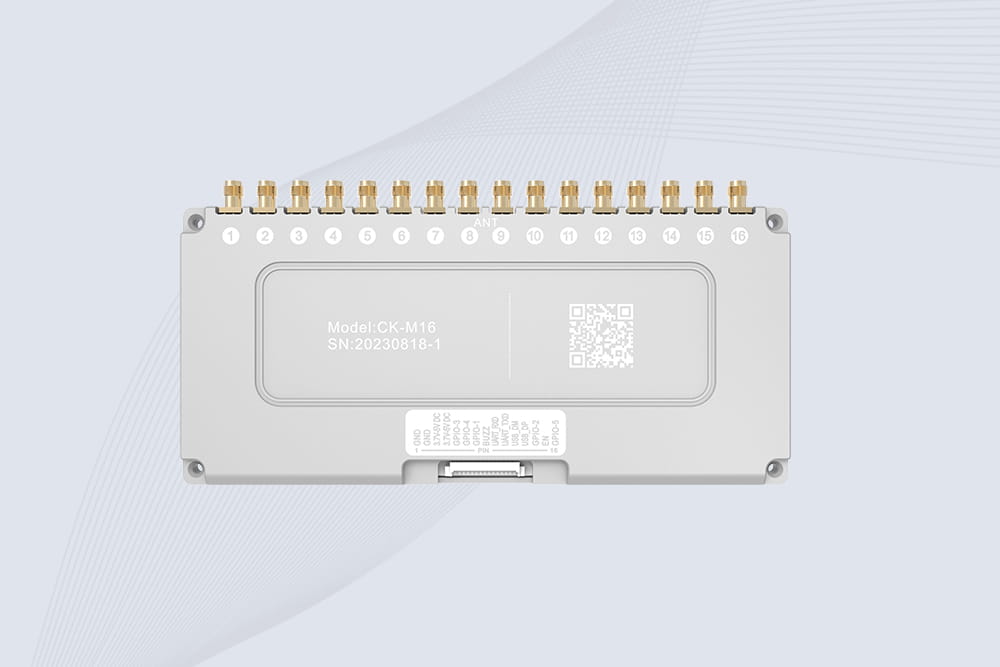
CYKEO CYKEO-M16 RFID Module is a 16-port UHF RFID reader module based on the R2000 chipset. Designed for dense tag environments, it supports ISO and GB standards and delivers stable multi-antenna control for industrial automation.
The CYKEO CYKEO-M16L RFID Reader Module is a 16-channel UHF RFID core designed for dense tag environments. With adjustable 33dBm output, multi-protocol support, and stable multi-antenna control, this RFID Tag Reader Module fits industrial automation, warehouse systems, and large-scale IoT deployments.
CYKEO CYKEO-M8L module RFID is a compact industrial UHF module built for dense tag and multi-antenna environments. With 8 RF ports, adjustable 33 dBm output, and ISO & GB protocol support, it is widely used in factories, warehouses, and automated tracking systems.
CYKEOCYKEO-M4L UHF RFID Module is a compact 4-channel RFID tag reader module designed for dense tag environments. Supporting ISO and GB protocols, it delivers stable reads up to 10 meters for industrial and IoT systems.
Cykeo CYKEO-A11 UHF RFID reader antenna delivers 11dBi gain, 840-960MHz frequency range, and IP65 ruggedness for retail, logistics, and industrial RFID systems. Features low VSWR and easy installation.
CYKEO Antenna RFID Reader delivers stable long-range UHF performance with a 10.5dBi directional design, built for warehouses, conveyor portals, and industrial RFID systems. This rfid reader antenna provides 20m+ read distance and rugged IP67 protection.
Cykeo CYKEO-A5B industrial Linear RFID Antenna delivers 5dBi gain, ≤1.5:1 VSWR, and IP65 rugged design for warehouse, production line, and logistics UHF systems.
Cykeo’s CYKEO-B12 Long Range RFID Antenna delivers 15m+ read range with 12dBi gain, IP65 rugged design, and global 840-960MHz UHF support. Ideal for warehouse/logistics asset tracking.
Cykeo CYKEO-B10 Long Distance RFID Antenna offers 10dBi gain, 840-960MHz frequency range, IP65 rating, and 20m+ coverage for logistics/warehousing/ETC systems. Low VSWR ensures stable signal transmission.
Cykeo CYKEO-A6 UHF RFID panel antenna features 6dBi gain, 840-960MHz broadband, IP65 metal-ready housing for logistics/smart retail. 18mm ultra-thin design with tool-free mounting.
Cykeo CK-A3 industrial antenna RFID UHF offers 5m+ tag detection, ≤1.3:1 VSWR, IP65 rugged design, and global UHF spectrum compatibility (840-960MHz) for warehouses, factories, and retail.
Cykeo CYKEO-B5 directional RFID antenna provides 5dBi gain with 60° narrow beamwidth for precise inventory tracking. IP65-rated, global UHF frequency support, and low VSWR.
Create your own high-performance DIY RFID antenna! 5dBi gain, 840-960MHz tunable, step-by-step guides. Compatible with Arduino, Raspberry Pi, and commercial UHF readers.
Cykeo CYKEO-A7 Flexible RFID Antenna features 840-960MHz wideband tuning, 7dBi gain, and IP68 rating for medical/retail/industrial curved surface deployments. 98% read accuracy with peel-and-stick installation.
Cykeo CYKEO-B5A industrial Passive RFID Antenna delivers 5dBi gain, 70° beamwidth, and -40°C~55°C operation for warehouses/smart cabinets. Compatible with Zebra/Impinj readers.
Cykeo’s CYKEO-A9B High Gain RFID Antenna delivers 15m+ read range with 9dBi amplification. Features IP54 rugged design, 840-960MHz bandwidth, and 80° beamwidth for warehouse/manufacturing RFID systems.
Cykeo’s enterprise-grade 8dbi Impinj RFID Antenna 10m+ read range with 840-960MHz tuning. Features IP65 housing, 1.4 VSWR, 35° beamwidth for retail/warehouse RFID systems.
Cykeo CYKEO-A9 industrial UHF RFID antenna delivers 9dBi gain, 840-960MHz frequency range, and IP65 protection for warehouse/logistics/retail RFID systems. Features N-type connector and ≤1.3:1 VSWR.
CYKEO UHF RFID Antenna built for long-distance and industrial applications. This antenna rfid uhf delivers strong gain, outdoor durability, and reliable tag performance in warehouses, yards, and vehicle ID systems.
CYKEO Antenna RFID delivers reliable long-range UHF performance in warehouses, retail shelves, and cold-chain environments. This compact uhf rfid antenna provides stable reads with circular polarization and ultra-wide 840–960 MHz support, ideal for industrial tracking, smart shelves, and asset monitoring.
Cykeo’s CYKEO-C8 UHF RFID antennas delivers 8dBi gain, 840-960MHz full-band coverage, and IP65 ruggedness for manufacturing/warehouse RFID systems. Industrial RFID Antennas Features
Cykeo’s 8dBi UHF RFID antenna and reader kit delivers 10m+ range, 840-960MHz broadband, and IP65 ruggedness for factories, warehouses, and logistics. ISO 18000-6C & EPC Gen2 certified.
Cykeo’s CYKEO-A12C UHF Large RFID Antenna delivers 12dBi gain, 840-960MHz global frequency, IP65 ruggedness for logistics/warehousing/automotive. 40° beamwidth ensures stable 15m+ tag reads.
CYKEO Near Field RFID Antenna provides precise 5–30 cm reading for shelves, cabinets, and workstations. This compact rfid shelf antenna delivers stable short-range performance around metal and clutter, ideal for pharmacies, libraries, and electronics sorting.
Cykeo CYKEO-C1 industrial Forklift RFID Reader features 20m read range, 600 tags/sec scanning, Impinj R2000 chipset, and IP67 rugged design. Ideal for warehouse logistics and manufacturing. Supports ISO 18000-6C/6B protocols.
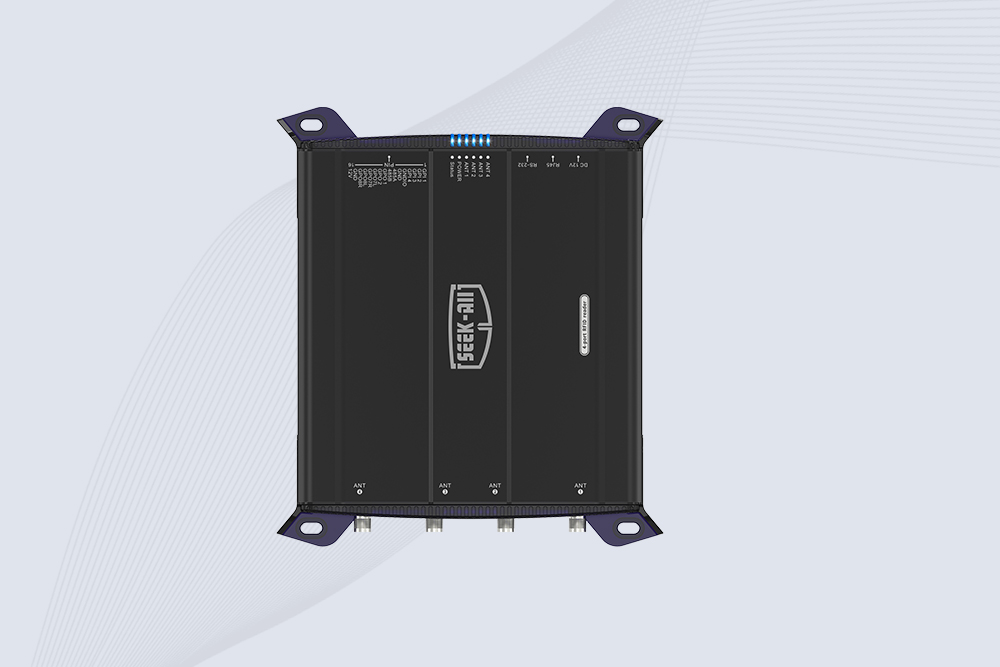
Cykeo CYKEO-R4 industrial UHF RFID Fixed Reader features 4 TNC ports, 400+ tags/sec speed, IP67 housing, and global frequency compliance for vehicle inspection, smart warehouse, and asset management systems.
CYKEO CYKEO-R8L Fixed RFID Reader with 8-port UHF design, Impinj-based RF core and up to 20m read range. An industrial Fixed RFID Reader for vehicle inspection, warehouse portals, smart manufacturing lines and secure access checkpoints.
RFID Fixed Reader from CYKEO – the CYKEO-R16L 16-port UHF fixed reader for warehouses, smart cabinets, and production lines. Long-range, multi-tag reading, stable performance for 24/7 industrial use.
Wondering what is RFID reader portable? We explain the definition, how it differs from fixed readers, key features, and real-world applications for inventory and asset tracking. Clear guidance from CYKEO engineers.
This article explains how to choose a USB RFID reader based on tag frequency, reading distance, multi-tag requirements, USB connectivity, and software integr...
Can RFID reader read multiple tags? Learn how anti-collision, near-field control, tag filtering, and RF tuning enable reliable batch RFID reading for retail and industrial applications.
 Cykeo RFID IoT Solution Products R&D Manufacturer