Yes. An RFID reader can read multiple tags at the same time, without scanning each tag individually. UHF RFID readers use anti-collision protocols to identify tags within the RF field sequentially and rapidly, making batch inventory, tag encoding, checkout, and asset identification possible.
GS1 explicitly notes that a single RFID interrogator can read many tags simultaneously, while RAIN RFID guidance describes hundreds of tag identifications within seconds as achievable performance under appropriate conditions.
That distinction matters.
“Multiple tags” does not mean that every tag is physically transmitting at exactly the same instant. The reader manages the tag population through an inventory and anti-collision process, rapidly singulating individual tags so the application receives a usable stream of unique IDs.
How Does an RFID Reader Read Multiple Tags?
In a typical UHF RFID environment, the reader creates an RF interrogation zone. Passive tags entering that zone receive energy from the reader and respond through backscatter communication. The reader then manages the population using standardized inventory and collision-management procedures.
The practical sequence is less complicated than it sounds:
RF field activation — the reader energizes compatible passive tags.
Tag response — tags respond with their stored identification data.
Anti-collision management — the reader separates overlapping tag responses.
Tag filtering — unwanted tags can be excluded from the inventory operation.
Data output — valid EPC or tag information is passed to the host application.
Repeat inventory — the reader continues until the required tag population has been captured.
The EPC Gen2 / UHF air interface specifically defines collision-management behavior for large tag populations. The current GS1 Gen2 specification describes probabilistic collision arbitration and inventory behavior designed for RFID environments containing many tags.
Why Anti-Collision Matters
Imagine a small stockroom where 30 garments sit in a plastic tote.
With a barcode scanner, the operator normally has to expose each barcode to the optical scanner.
With RFID, the reader can interrogate the group. The tags do not have to wait for a human hand to present them one by one.
But there is a field-engineering catch.
If the same reader is asked to identify 500 tags packed tightly together, surrounded by metal, compressed against liquid-filled containers, and positioned outside the antenna’s effective pattern, the theoretical capability of the protocol is no longer the practical performance of the installation.
RAIN RFID’s own field guidance warns against treating extremely high tag-per-second numbers as universal. One published example gives approximately 200 tags/second under particular protocol conditions, while describing hundreds of tags within a few seconds as strong real-world performance.
That is the number I would pay attention to during commissioning—not a laboratory maximum printed on a product sheet.
Can a Desktop RFID Reader Read Multiple Tags?
Yes, but the physical reading zone must be controlled.
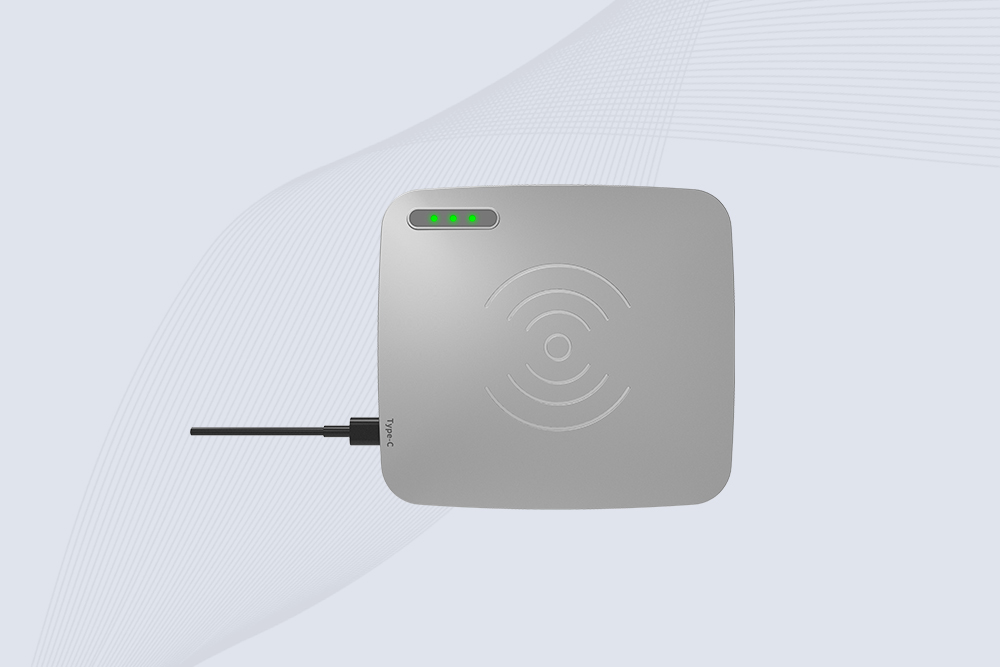
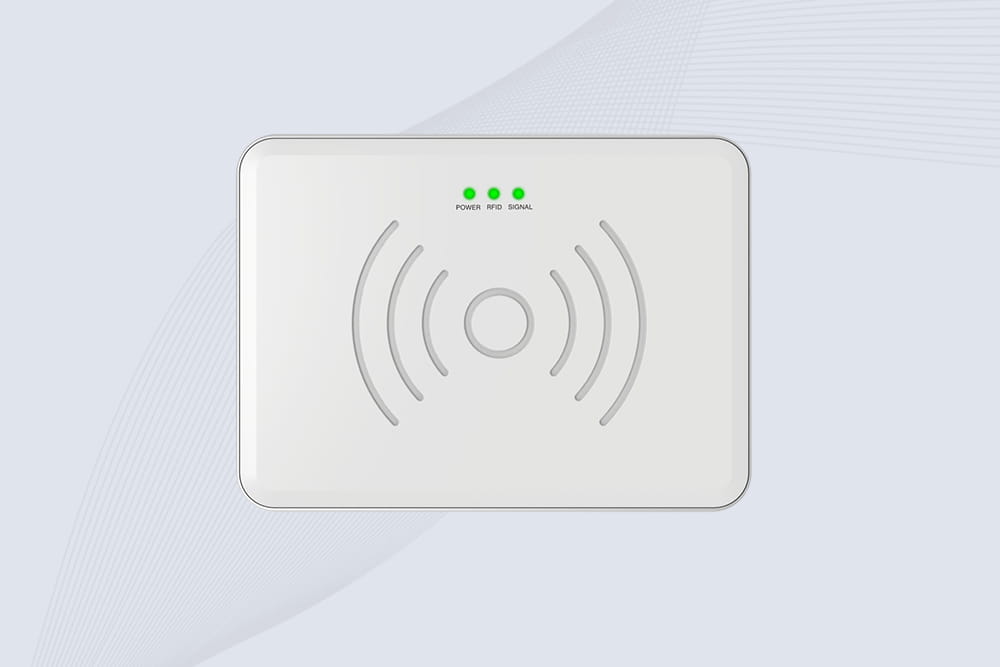
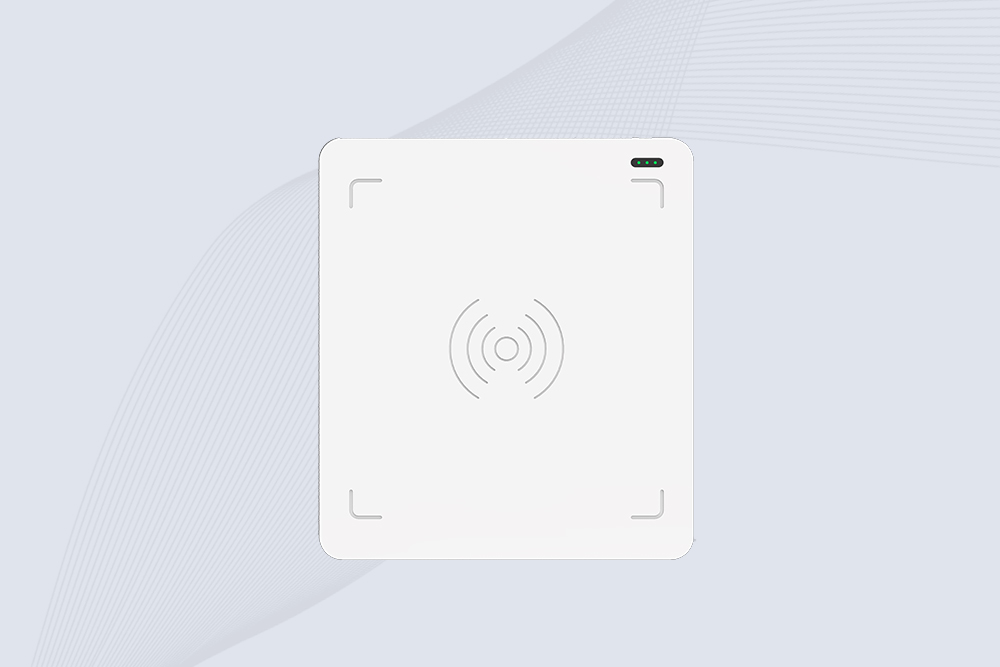
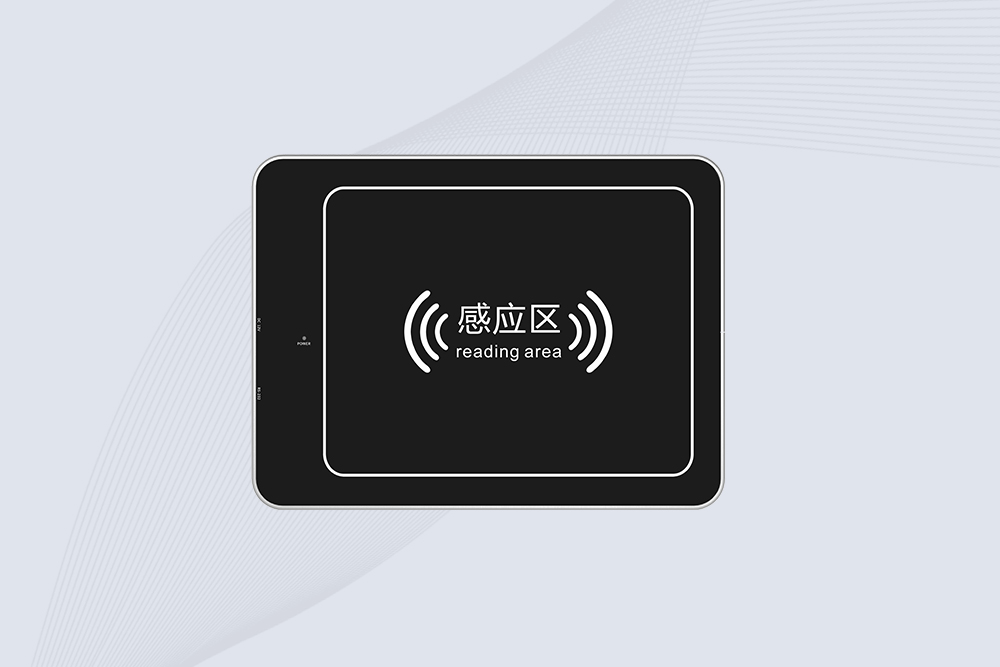
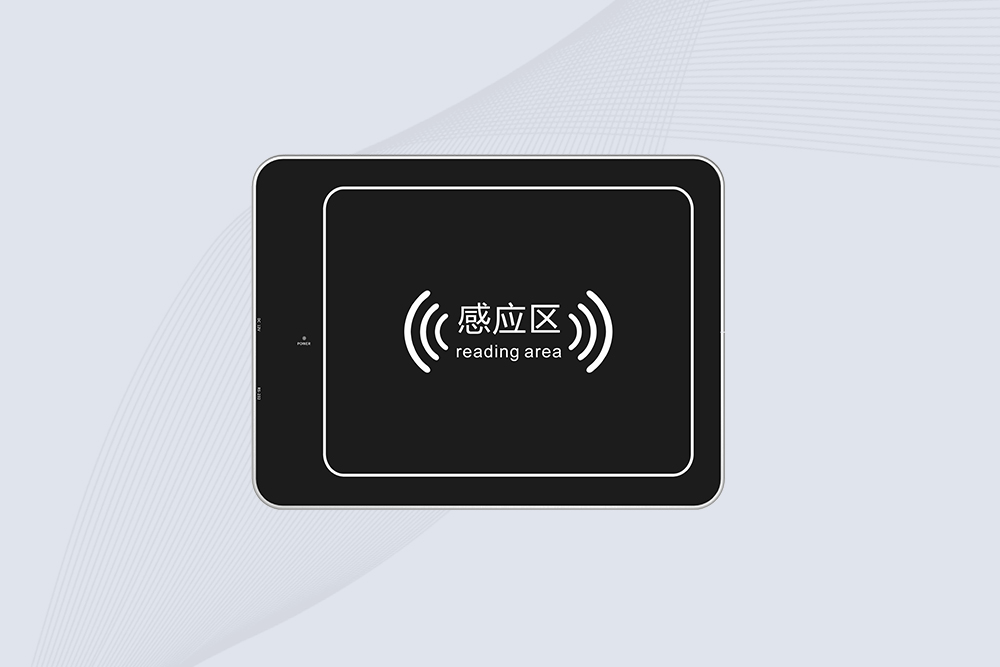
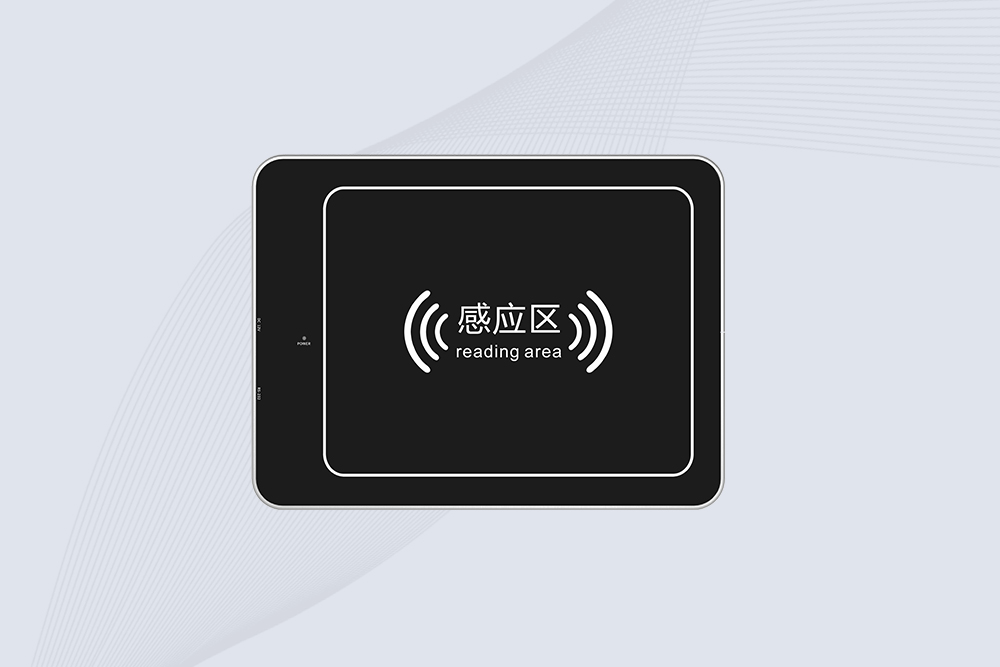
For Cykeo’s desktop RFID platform, the near-field antenna is designed to constrain the effective reading area to approximately 30 cm or less, with the writing range controlled to approximately 10 cm. The purpose is not maximum distance. It is selective, repeatable tag interaction.
That makes this architecture useful for:
RFID tag issuing
Batch tag encoding
Garment checkout
Library tag registration
Tool registration
Small-batch inventory operations
Countertop verification
Desktop RFID payment or settlement workflows
The near-field design can actually be an advantage when an operator has ten tagged items on a work surface but only wants the reader to interact with the items immediately in front of it.
A long-range reader is not automatically better.
In tag-writing work, accidental interaction with the wrong nearby tag can be more troublesome than a short read range.
RFID Multiple Tag Reading vs Single Tag Reading
Feature
Single-Tag Reading
Multiple-Tag Reading
Typical operation
One tag at a time
Tag population
Human handling
Higher
Lower
Barcode-like scanning
Common
Not required
Anti-collision
Less critical
Essential
Inventory speed
Limited by handling
Much faster for batches
Tag filtering
Useful
Particularly important
Read-zone control
Important
Critical
Typical applications
Verification, encoding
Inventory, checkout, bulk registration
GS1 also identifies simultaneous multi-tag reading, non-line-of-sight operation, and rewritable tag data as important differences between RFID and conventional barcode capture.
What Determines How Many RFID Tags Can Be Read?
The reader specification is only one part of the equation.
During actual deployment, I would examine these factors first:
1. Tag Population
Twenty tags and two thousand tags are very different RF workloads.
RAIN RFID design guidance gives an example where approximately 20 tags at 100 tags/second can be inventoried within a short RF dwell period, while larger populations may require different session strategies.
2. Antenna Geometry
The antenna determines where energy goes and which tags are likely to respond.
A well-positioned antenna can outperform a more powerful reader installed badly.
3. Tag Orientation
UHF RFID tags are sensitive to antenna polarization and tag orientation. A pile of garments behaves differently from tags arranged flat on a tabletop.
4. Material Around the Tag
Metal, liquids, dense packaging, and tightly packed products can change RF behavior significantly.
5. Reader Power
Higher power is not automatically better. Excessive RF energy can enlarge the unwanted reading zone and increase the chance of capturing tags outside the intended area.
6. Filtering and Session Configuration
In a busy environment, filtering can be just as important as raw read speed. GS1 describes filter values specifically as a mechanism that can help readers handle large populations by selecting the intended tag group.
Cykeo Approach to Batch RFID Reading
For Cykeo systems, the useful engineering target is controlled multi-tag identification, not simply the largest possible number on a specification sheet.
The desktop platform combines:
Up to 33 dBm maximum port output
Near-field antenna architecture
Read range controlled within approximately 30 cm
Write range controlled within approximately 10 cm
Automatic card/tag writing
Batch tag writing
Rapid tag filtering
Type-C communication
C# and Java development resources
Demo software for reading and writing
For a tag-issuing station, this combination is particularly practical. The operator can place a group of tags into the controlled work area, identify them, write required information, verify the result, and move the batch forward without repeatedly aligning a barcode scanner.
An Important Field Lesson
A reader that can theoretically identify hundreds of tags per second is not necessarily the reader that will deliver the best production result.
In one installation, the better solution may be a tightly controlled 10–30 cm reading zone. In another, it may be a portal covering a conveyor. The tag material, antenna layout, reader configuration, and application logic have to be evaluated together.
That is why can RFID reader read multiple tags is only the starting question. The more useful engineering question is: how many tags need to be read, in what physical arrangement, and how reliably must every tag be captured?
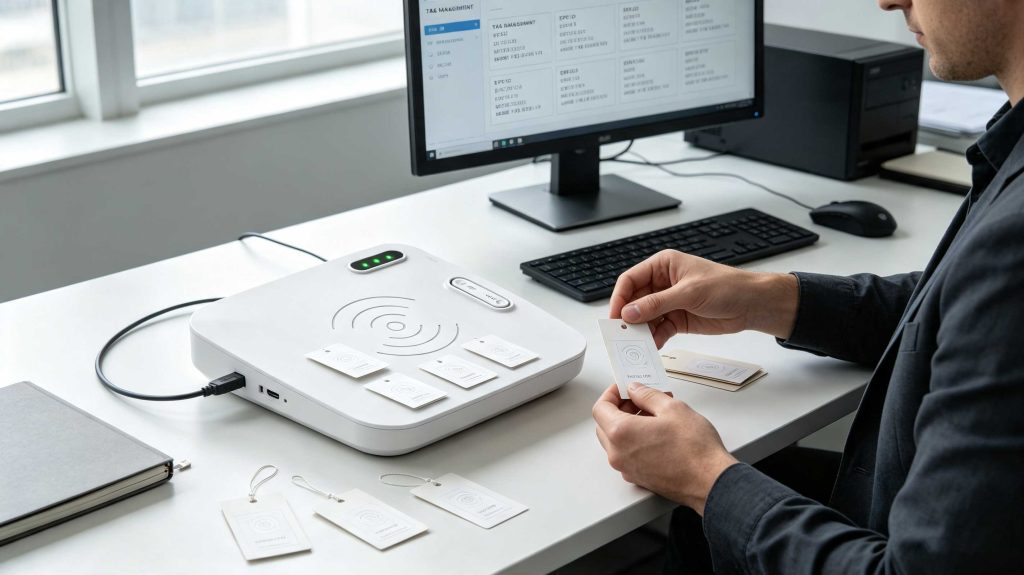
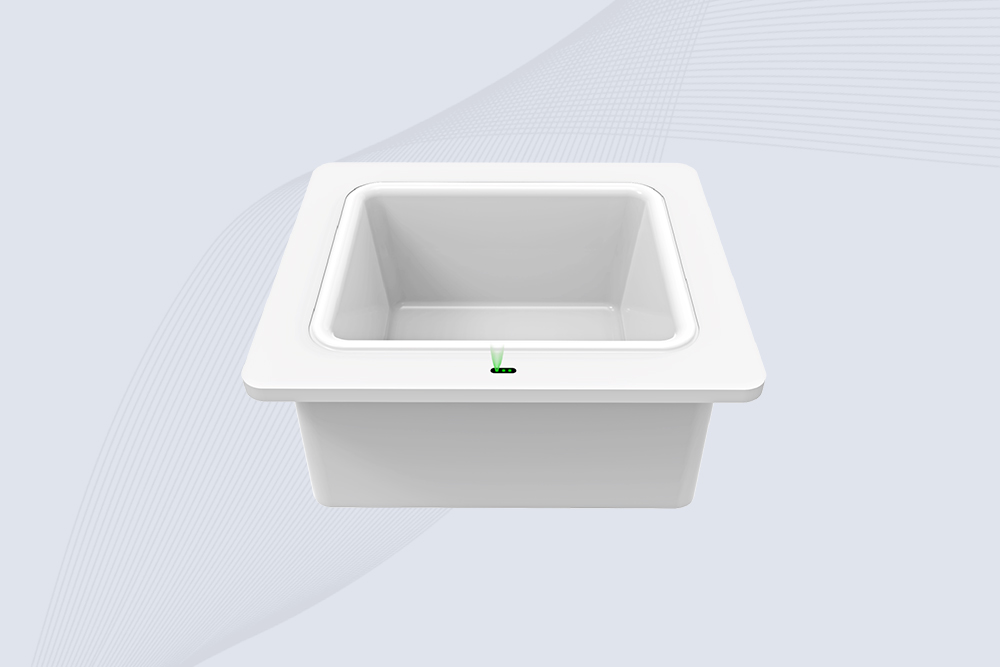
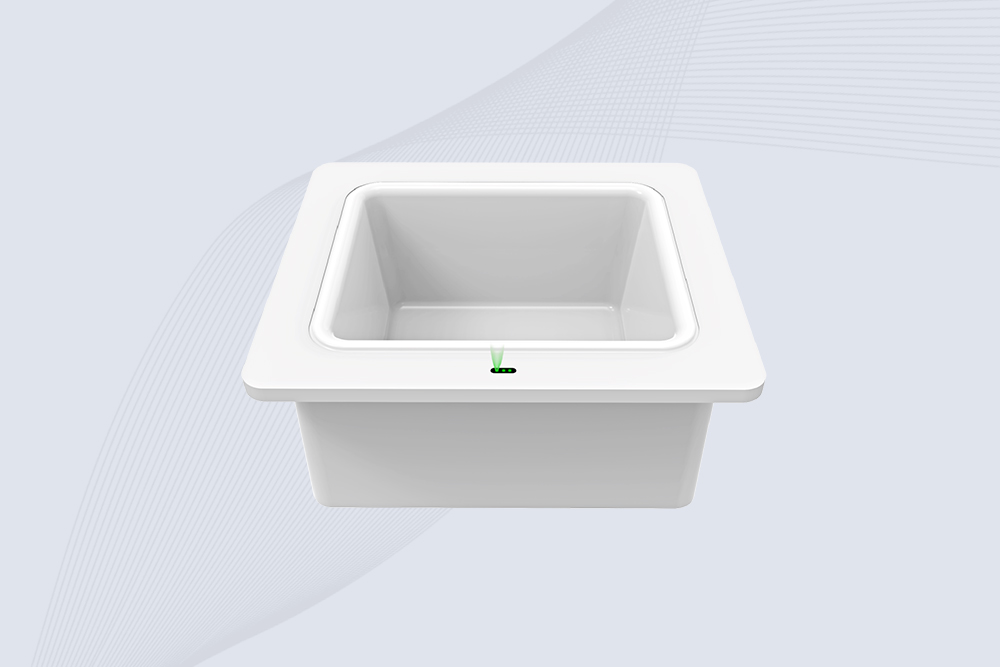
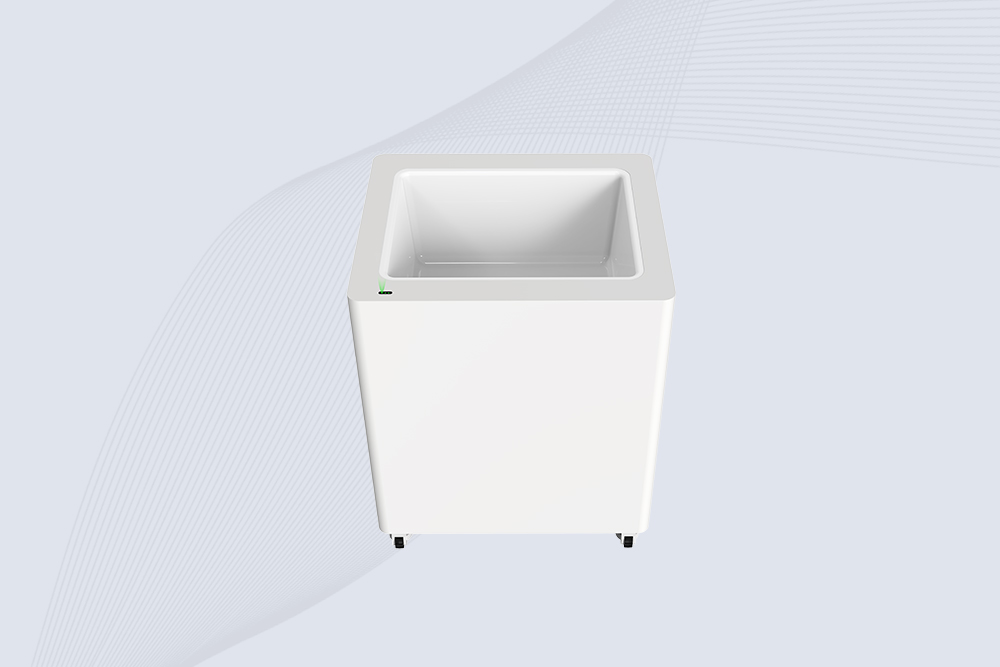
A UHF RFID reader captures multiple tagged garments within the defined RF reading zone, reducing manual item-by-item scanning.
Cykeo RFID Reader Technical Advantages
Yes. A properly designed UHF RFID reader can identify multiple tags within the same RF field. This is not ordinary “simultaneous reading” in the sense of every tag transmitting at exactly the same instant. UHF RFID systems use standardized inventory and anti-collision mechanisms to separate tag responses and build a complete tag list. GS1 identifies EPC Gen2/RAIN RFID as the dominant framework for passive UHF deployments, with inventory, selection, and tag-access functions built into the protocol.
For a desktop RFID reader, however, the engineering target is different from a warehouse portal.
The equipment described for Cykeo’s desktop RFID card/tag writer is designed around controlled near-field operation:
Maximum RF output: up to 33 dBm
Effective reading range: controlled within approximately 30 cm
Writing range: controlled within approximately 10 cm
Communication: USB Type-C
Software support: automatic card/tag writing and reading demo software
Development: C# and Java development materials
Tag filtering: supported for rapid selection of target tags
Use cases: tag issuing, desktop encoding, small-batch settlement and tag administration
The short writing distance is particularly useful. In a real tag-encoding workstation, excessive range can be a nuisance rather than an advantage. A nearby tag on the next workbench should not accidentally become the tag being rewritten.
Why Multi-Tag Reading Works
The underlying mechanism is defined by the RFID air-interface protocol.
In an EPC Gen2 inventory round, the reader manages the tag population through Select and Inventory operations. Tags use a random-slotted collision-arbitration process to determine when they respond. The standard defines a Q parameter that controls the probability of tags selecting particular response slots.
That distinction matters when evaluating a reader.
A specification saying “supports multiple tags” is only the beginning. Field performance depends on:
Tag antenna orientation
Tag density
Reader output power
Antenna design
RF reflections
Material surrounding the tag
Reader-to-tag distance
Inventory algorithm and filtering
Required read/write accuracy
GS1 specifically notes that UHF RFID can capture unique identifiers at high rates and at distances well beyond 10 metres in appropriate applications, without line-of-sight contact. That does not mean every reader, tag and environment will achieve 10 metres. Tag construction and deployment geometry remain decisive.
RFID System Architecture for Multi-Tag Reading
A practical RFID system is usually built as four layers:
Layer
Main component
Function
Tag layer
UHF RFID tags
Stores EPC and other tag data
RF layer
Reader + antenna
Energizes and communicates with tags
Control layer
SDK / API / filtering
Processes tag events and commands
Application layer
POS / WMS / ERP / database
Converts tag data into business actions
GS1 describes the basic RFID infrastructure as readers communicating with tags, with passive tags receiving operating energy from the reader’s continuous-wave signal and returning information through backscatter.
For a Cykeo desktop workstation, this architecture can be simplified considerably:
RFID Tag → Near-Field Antenna → Cykeo Reader → Type-C → PC Software → POS / Inventory Database
That compact structure is useful in apparel stores, pharmacies, consumables rooms and tag-issuing stations where the operator needs controlled identification rather than a 10-metre reading zone.
Where Multi-Tag RFID Reading Creates a Real Advantage
Apparel Checkout
A customer may place several RFID-tagged garments into the identification area. Instead of scanning each barcode individually, the system can identify the tags within the reading zone and transfer their item information to the checkout application.
GS1’s system architecture specifically describes RFID-enabled retail checkout as a way to support automated checkout, inventory updates and electronic article surveillance.
Hospital Supply Rooms
RFID can identify tagged medical supplies without requiring the operator to find and scan each individual barcode.
The useful part is not simply speed. It is the reduction in repetitive handling when the same item is repeatedly issued, returned and counted.
Tool Libraries
For tools, RFID is valuable when items are checked in and out repeatedly. The reader can identify a group of tagged tools within its controlled field, while the application records the transaction against the responsible employee.
RFID vs Barcode for Multiple-Item Identification
Capability
RFID
Barcode
Line of sight
Usually not required
Normally required
Multiple-item identification
Yes
Usually one scan at a time
Physical handling
Lower
Higher
Item-level unique ID
Yes
Possible
Reading through packaging
Often possible
No
Rewriting tag data
Supported by suitable RFID tags
Barcode itself is normally printed
Dense-item inventory
Strong potential
Labor intensive
Initial deployment cost
Generally higher
Generally lower
RFID should not automatically replace barcode technology. Barcode remains inexpensive and highly practical for simple identification. RFID becomes more compelling when the business process depends on batch identification, item-level visibility or reduced manual scanning.
Deployment Strategy: The Part That Usually Determines Success
I would not begin a deployment by purchasing the highest-powered reader.
Start with the tag
Define the read zone
For a desktop station, decide exactly where a tag should be recognized. A controlled 10–30 cm zone can be more useful than an uncontrolled long-range field.
Test the actual tagged product
Test the RFID tag attached to the real garment, medical package, tool or consumable.
Do not validate an RFID system with loose sample labels and assume the same result after installation.
Measure dense-tag behavior
Test:
1 tag
5 tags
10 tags
Expected maximum batch
Closely stacked tags
Different tag orientations
Separate reading from writing
Reading several tags is not the same engineering problem as writing one specific tag.
For encoding stations, controlled near-field writing reduces the chance of unintentionally addressing another tag within the RF field.
Integrate the application early
The reader is only one part of the system. GS1 identifies interfaces such as LLRP and Application Level Events as part of the wider RFID software architecture.
For Cykeo-based development, C# and Java materials can shorten the integration path when the reader needs to connect with an existing POS, inventory or asset-management application.
A controlled near-field RFID workstation enables repeatable tag reading, writing, filtering, and verification at a retail or asset-management desk.
FAQ: Can RFID Readers Read Multiple Tags?
1. Can RFID readers read multiple tags at once?
Yes. UHF RFID readers are specifically designed to inventory multiple tags in the same RF field using anti-collision mechanisms defined by the air-interface protocol.
2. How many RFID tags can a reader read?
There is no single universal number. Performance depends on reader power, antenna configuration, tag design, tag density, RF environment and inventory settings. A realistic deployment should test the actual maximum batch rather than rely on a generic number.
3. Can Cykeo RFID readers read five or more tags?
For applications requiring batch identification, Cykeo UHF RFID readers can be configured for multi-tag reading. Actual results should be validated with the customer’s tag type, product material and operating distance.
4. Can an RFID reader write multiple tags?
Some RFID systems support rapid tag writing, but writing requires tighter control than inventory reading. For desktop encoding, a short controlled writing field is often preferable because it reduces unintended tag selection.
5. Why does RFID sometimes miss tags?
Common causes include poor tag orientation, metal or liquid interference, excessive tag density, unsuitable antenna placement, insufficient RF coupling or an overly broad reading zone.
6. Is RFID better than barcode for batch scanning?
For applications involving many individually tagged products, RFID generally has a strong operational advantage because tags can be identified without individually aligning a barcode with a scanner.
7. Does more RF power always mean better RFID performance?
No. More power can increase the usable field, but it can also make field control and unintended tag reads more difficult. Good RFID engineering is about usable RF geometry, not simply maximum output power.
SEO Ending
The practical answer to can RFID reader read multiple tags is yes, particularly with UHF RFID systems designed around proper anti-collision processing, antenna control and tag selection. The harder question is how reliably those tags can be identified in the actual operating environment.
For Cykeo desktop RFID equipment, the emphasis is different: controlled near-field identification, stable tag writing, rapid batch processing and straightforward software integration. With a maximum port output of 33 dBm, reading controlled within approximately 30 cm and writing within approximately 10 cm, the platform is suited to workstations where the operator needs precision rather than an unnecessarily large RF field.
That is the difference between demonstrating RFID and deploying it.
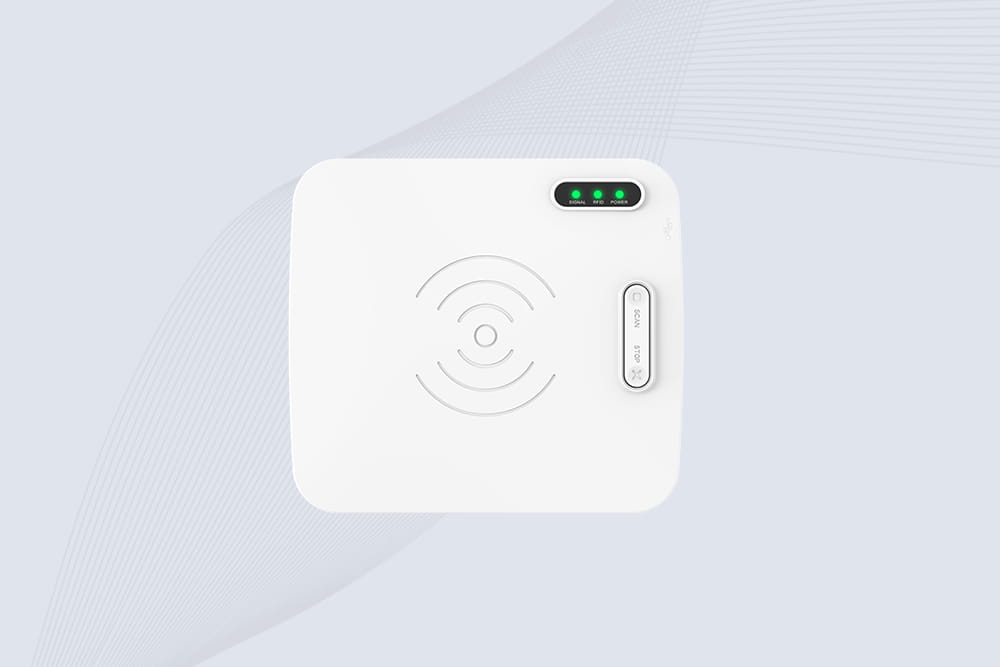
SSD-D3AL is a USB-HID UHF RFID reader with 0–30 cm reading, 0–15 cm writing, over 600 tags/s recognition, USB plug-and-play operation and OEM Logo customization.
SSD-D1AL is a compact USB UHF RFID reader with Impinj E710/X3M1 chipset, USB-HID, 600+ tags/s recognition, 4/8/16 antenna support and plug-and-play USB power.
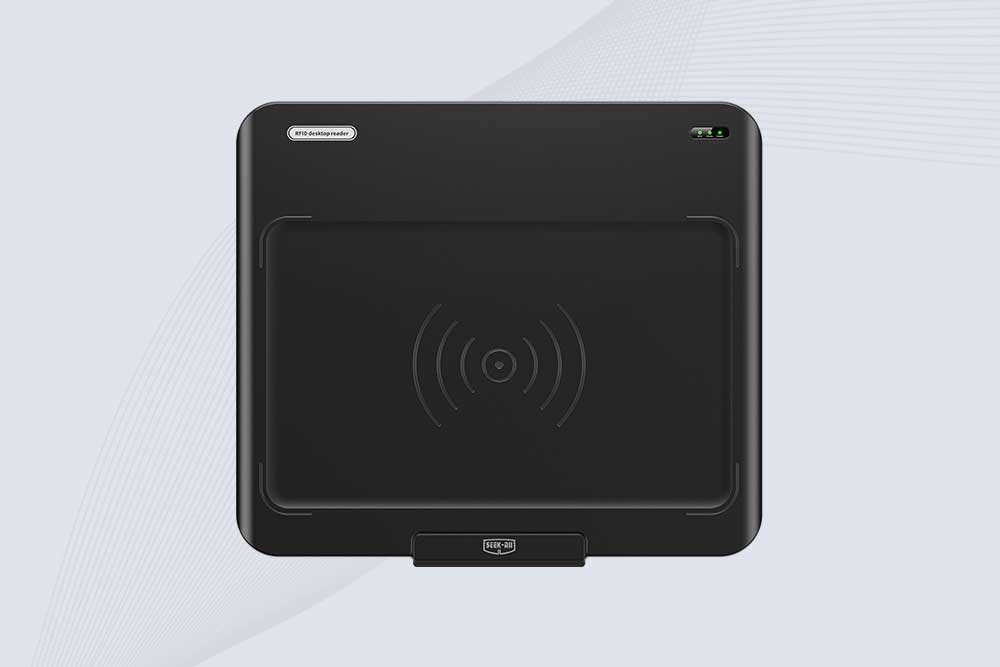
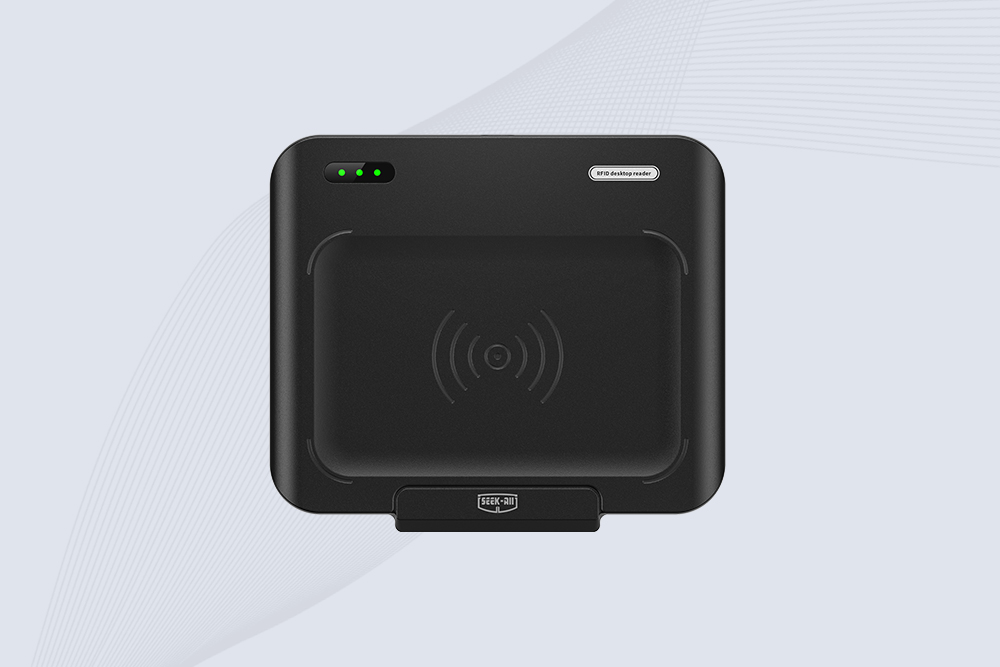
CYKEO CYKEO-D1LA USB RFID Reader is a compact desktop solution with near-field control for precise tag reading and encoding. Powered by USB, supporting ISO 18000-6C, and built for stable batch writing, this usb rfid tag reader fits retail, libraries, offices, and controlled RFID encoding tasks.
CYKEO CYKEO-D1L RFID scanner USB is a compact desktop UHF RFID scanner designed for short-range tag writing and verification. This usb rfid scanner supports batch encoding, stable 0–26 dBm output, and works across Windows, Linux, and Android systems.
CYKEO CYKEO-D1C USB RFID Card Reader is a near-field UHF desktop writer designed for secure, short-range tag encoding. With USB-C connectivity and stable 26 dBm output, this rfid reader usb c is ideal for badge issuance, label encoding, and controlled desktop RFID workflows.
CYKEO CYKEO-D2L RFID Reader USB is a compact desktop encoder built on the Impinj R500 chip. With near-field control and stable USB power, this usb rfid card reader delivers precise tag writing for offices, retail counters, and small-scale logistics encoding tasks.
CYKEO CYKEO-D3L USB RFID Tag Reader delivers stable UHF tag reading and writing for daily desktop and light industrial tasks. Designed for controlled short-range operation, this USB RFID Tag Reader works reliably with rfid tag and reader systems in libraries, tool tracking, and inventory registration.
The CYKEO CYKEO-D4L UHF RFID Tag Reader is a stable Desktop RFID Reader designed for accurate tag registration, borrowing, and return workflows. Built with the Impinj R2000 chip, this UHF RFID Tag Reader delivers controlled short-range reads for libraries, asset tracking, and inventory management environments.
The CYKEO CYKEO-D5L Desktop RFID Card Reader is a stable UHF RFID Card Reader designed for controlled short-range reading and writing. Built for libraries, tool rooms, and asset desks, this UHF RFID Card Reader supports dense tag handling, secure data processing, and easy USB integration.
The CYKEO CYKEO-D6L RFID Reader Writer is a heavy-duty Desktop RFID Reader designed for short-range, high-accuracy tag programming. Built for libraries, labs, and asset desks, this RFID Reader Writer supports batch processing, stable 33dBm output, and seamless integration with existing management systems.
Cykeo CYKEO-D8A embedded RFID badge reader offers 30+ tags/sec scanning, 20cm anti-crosstalk precision, and DC 12V power for unmanned stores, warehouses, and smart inventory systems.
Cykeo’s CYKEO-D8C UHF RFID gate reader achieves 200-tag/batch scanning with adjustable power control, ideal for retail inventory and smart warehouse management.
Not sure whether to choose a fixed or handheld RFID reader? This guide compares both options to help you select the best solution for warehouse, retail, and industrial RFID projects.
Discover why multi-protocol RFID modules are critical for modern supply chains. Learn how they solve compatibility issues, reduce costs, and adapt to global standards.
Learn how to maintain fixed RFID readers in high-dust environments. Discover Cykeo’s dustproofing strategies, cleaning routines, and firmware updates for reliable performance.
Learn what an RFID reader module is, how it works, and why OEMs and system integrators use it to build RFID devices. A practical guide covering integration, interfaces, and real-world applications.
 Cykeo RFID IoT Solution Products R&D Manufacturer