 Cykeo RFID IoT Solution Products R&D Manufacturer
rfid material fabric: What Makes RFID Work on Textiles?
136Explore RFID material fabric used in laundry, textiles, and asset tracking. Learn how durable RFID fabric tags improve efficiency with Cykeo systems.
MoreAll RFID Product
An RFID card reader device is a wireless device that scans radio-frequency identification (RFID) tags or cards to retrieve stored data. These readers are widely used for secure access control, contactless payments, inventory management, and more. Here’s a detailed look at their applications and how they work.
| Feature | RFID Card Reader | Barcode Scanner |
|---|---|---|
| Scanning Range | Up to 15 meters (UHF RFID) | Requires line-of-sight (~30 cm) |
| Speed | Batch scanning (100+ tags/second) | One item at a time |
| Durability | Works in dusty/wet environments | Labels degrade easily |
A logistics company reduced inventory audit times by 40% using Cykeo’s card RFID readers, achieving 99.8% accuracy across 10,000+ stock items monthly.
What Is RFID Reader? How Does an RFID Reader Actually Work in Real Systems?
If you walk through a modern warehouse or manufacturing facility today, there’s a good chance products are being identified without anyone scanning a barcode. Boxes move along a conveyor, pass a gate, and somehow the system already knows what just went through.
That’s usually where an rfid card and reader is doing its job quietly in the background.
So when someone asks “what is rfid reader?”, the short answer is simple: it’s the device that communicates with RFID tags and collects their data. But that explanation alone doesn’t really tell you how the technology works in real environments.
An Fixed RFID reader is the electronic device that sends radio signals to detect RFID tags and receive the information stored on those tags. The reader then converts that signal into digital data that software systems can understand.
The process sounds technical, but the idea is fairly direct.
The reader creates a radio frequency field using an antenna. When an RFID tag enters that field, the small chip inside the tag wakes up and sends back its unique ID. The reader captures that response and forwards the information to a computer system.
That entire exchange happens in a fraction of a second.
This technology belongs to the broader field of Radio-Frequency Identification, which is widely used for automatic identification. According to industry data published by the RAIN Alliance, billions of RFID tags are deployed every year in supply chain and retail environments worldwide.
In other words, this isn’t experimental technology anymore. It’s already part of daily operations in many industries.
When people first learn what is rfid reader, they often imagine a single device scanning items one by one. In reality, the system is more dynamic than that.
An rfid card and reader usually works together with several components:
Once the tag information is captured, the reader sends it to backend software such as warehouse management or asset tracking systems.
And here’s the part that surprises many people the first time they see it working: a reader can detect dozens or even hundreds of tags almost simultaneously.
No line of sight required.
Boxes can stay sealed. Pallets can stay stacked.
The reader still captures the data.
In practice, RFID Fixed readers appear in several different forms depending on the environment.
Fixed readers are often installed at warehouse doors or production lines. Every time tagged goods pass through the checkpoint, the system records them automatically.
Handheld readers are more flexible. Staff use them for inventory counting or equipment checks. Instead of scanning items individually, they simply walk through the storage area while the reader detects nearby tags.
Retail companies, logistics operators, and manufacturing plants rely heavily on these systems. According to research from the International Data Corporation, RFID adoption in supply chains continues to grow as businesses look for more accurate inventory visibility.
Barcodes still work well. Nobody is denying that.
But they require manual scanning and direct visibility. Every label must be pointed at a scanner.
RFID card readers work differently. The signal passes through packaging materials and reads multiple tags at once. That difference alone can change the speed of inventory operations dramatically.
In large warehouses, teams sometimes discover that a full stock count which used to take hours can be completed in minutes once card RFID card readers device are deployed.
Not perfect, of course. No technology is.
But the efficiency gain is real.
Companies developing RFID hardware continue improving reader performance, especially in areas like signal stability, multi-tag reading accuracy, and integration with IoT systems.
Industrial manufacturers such as CYKEO focus on designing RFID reader solutions that operate reliably in logistics centers, manufacturing plants, and automated supply chains. In these environments, the reader becomes the bridge between physical goods and digital management platforms.
Without it, the tags attached to products would simply store information with no way to transmit it.
Which brings us back to the original question.
What is rfid reader?
In the simplest terms, it’s the device that turns RFID tags from passive labels into a real-time tracking system.
And once you see it running in a warehouse or production line, the concept suddenly makes a lot more sense.
While this guide is packed with RFID knowledge, it only scratches the surface of implementing RFID technology. The good news is, there are many different ways to learn more:
RFID Product Knowledge – This knowledge base aims to keep you up-to-date with RFID product applications and product knowledge. Whether you are an industry veteran or new to the RFID field, we plan to create original content covering all levels of RFID expertise.
RFID Resources – Discover tutorials, research, market reports, industry news, and more on the RFID Resources channel. We will discuss RFID and its applications across various industries.
For more information and questions, please feel free to contact us.
Guide Recommendations

Explore RFID material fabric used in laundry, textiles, and asset tracking. Learn how durable RFID fabric tags improve efficiency with Cykeo systems.
More
The customer raised the problems and requirements for RFID Gate Reader products. We listen to the customer's answers about the environment in which the product is used. Give each other all opinions to each other about the project situation and ex...
More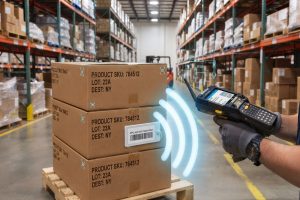
Learn how RFID tags work, how RFID systems read and identify objects, and what businesses should consider when sourcing RFID tags for inventory, retail, warehouse, and industrial applications.
More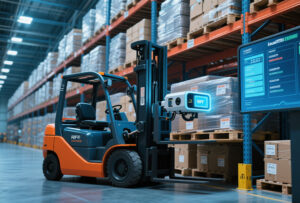
Industrial RFID Readers feature high protection ratings, long-range identification, and high-speed data reading, making them essential for manufacturing, logistics, and warehouse automation. These devices serve as key components in industrial auto...
More