A passive RFID tag has no battery and does not actively transmit radio signals. Instead, an RFID reader sends electromagnetic energy to the tag antenna, powering its chip. The chip then changes the reflected signal, or backscatter, to send its stored identification data back to the reader.
That is the short answer. The interesting part happens in the few milliseconds after the tag enters the reader’s field.
GS1 describes the basic mechanism directly: passive tags draw operating energy from the electromagnetic field produced by the reader, then modulate that signal to communicate back through backscatter.
In practical deployments, this means the tag itself can be remarkably simple. There is no battery to replace, no transmitter continuously broadcasting, and no requirement for a direct visual path between the reader and the label.
For engineers working with RFID every day, that last point is easy to underestimate.
A label can sit inside a carton, pass through a portal, or be attached to a product while remaining completely invisible to the reader.
What Is Inside a Passive RFID Tag?
A passive UHF RFID tag generally consists of two critical parts:
RFID IC (integrated circuit) — processes commands and stores tag information.
RF antenna — receives energy from the reader and provides the radio interface.
The combination is commonly called an RFID inlay.
Impinj describes a RAIN RFID endpoint as a chip connected to an antenna, with the inlay commonly converted into labels, stickers, hangtags, security tags, or more durable industrial tags.
There is no miniature battery hidden inside a normal passive UHF label.
That changes the engineering problem completely.
The tag must collect enough energy from the reader’s RF field to power its chip and respond reliably. Antenna geometry, frequency, orientation, attachment material, reader power, and surrounding objects all become part of the system.
The Three-Stage Operation of a Passive RFID Tag
A useful way to understand how does a passive rfid tag work is to watch what happens during one reader interaction.
1. The reader creates an RF field
The RFID reader sends radio-frequency energy through its antenna.
For RAIN RFID, the reader is doing two jobs at once: supplying energy and communicating commands.
GS1’s system architecture specifies that readers transmit commands while also providing operating energy through a continuous-wave signal.
2. The tag harvests energy
The tag antenna receives part of that RF energy.
The antenna converts the electromagnetic field into electrical energy that can power the RFID IC.
There is no separate power switch.
The tag effectively wakes up when sufficient energy reaches the chip.
The amount of available energy depends heavily on the RF environment. A larger or better-matched antenna can generally collect more energy, while metal, liquids, poor orientation, or tightly packed objects can alter tag performance.
Impinj notes that tag antenna size influences how much energy a tag can collect and therefore its potential read range.
3. The tag backscatters information
Once powered, the chip responds to the reader.
It does not generate a conventional radio transmission like a Wi-Fi device or cellular phone.
Instead, the chip changes the electrical characteristics of the antenna so that the reflected RF signal is modulated.
That reflected response is called backscatter.
The reader receives the altered signal and decodes it into digital information.
GS1 specifically describes passive RFID communication as modulation of the reflected wave, allowing the tag to return information to the reader without its own radio transmitter.
Why Passive RFID Does Not Need a Battery
This is probably the most important distinction between passive and active RFID.
Feature
Passive RFID
Active RFID
Battery
No
Usually yes
Radio transmitter
No
Yes
Power source
Reader RF field
Internal battery
Communication
Backscatter
Active transmission
Typical application
Inventory, retail, logistics
Long-range tracking, RTLS
Tag construction
Generally simpler
More complex
Maintenance
No battery replacement
Battery management required
GS1 confirms that passive tags have no radio transmitter and obtain their operating energy from the reader’s electromagnetic field, while active tags have their own power source and transmitter.
There is also a middle category: battery-assisted passive (BAP) RFID. These tags may use a battery to power internal electronics or sensors but still communicate by backscatter.
That distinction matters when specifying equipment. Calling every RFID tag simply “RFID” hides a major difference in system architecture.
How Far Can a Passive RFID Tag Be Read?
There is no single passive RFID read distance.
GS1 reports that low-frequency and high-frequency passive tags can generally operate around 1 meter or less, while UHF passive RAIN RFID tags typically operate over several meters, with up to 15 meters possible in special cases. The actual range depends on reader power, antenna characteristics, tag orientation, operating frequency, interference, and the surrounding environment.
Impinj gives a broader practical figure of up to approximately 10 meters (30 feet) for high-performing RAIN RFID implementations.
So a specification such as “10-meter RFID range” should never be treated as a universal property of the tag.
The antenna on the reader matters.
The antenna on the tag matters.
The object carrying the tag matters even more than people expect.
Near-Field and Far-Field Passive RFID
This distinction becomes important in real installations.
Near-field RFID
Near-field systems rely primarily on close electromagnetic coupling. Impinj describes near-field RAIN RFID applications as having a read range below approximately 30 cm, with reduced sensitivity to dielectric materials such as water or metal compared with far-field operation.
This is useful for controlled workstations.
For example, a desktop RFID encoding platform can deliberately keep the writing area small so that the operator does not accidentally program another tag sitting several centimeters away.
Far-field UHF RFID
Far-field systems use radiated electromagnetic waves and are commonly selected when several meters of reading distance are required.
This is where warehouse portals, conveyor systems, retail inventory readers, and dock-door applications become practical.
The trade-off is that RF behavior becomes much more dependent on the environment.
A metal rack.
A liquid-filled container.
A dense carton stack.
A badly oriented tag.
Any of them can change the result.
What Information Does a Passive RFID Tag Store?
A passive RFID tag can contain several types of information depending on its chip and application.
For RAIN RFID, common memory areas include:
EPC memory — stores the Electronic Product Code.
TID memory — contains chip-related identification information.
User memory — available on supported chips for additional application data.
Reserved memory — used for security-related information such as access and kill passwords.
GS1 identifies EPC as a unique identifier associated with physical objects and notes that EPCs have binary representations designed for RFID tags.
Impinj notes that a typical EPC often takes the form of a 96-bit data string, although actual tag memory configurations vary.
In many commercial systems, the tag does not need to store the entire product record.
Instead:
RFID tag → unique EPC → database record
The tag carries the key.
The enterprise software carries the context.
That architecture keeps the RFID memory requirement relatively small while allowing the business system to hold product descriptions, locations, transactions, pricing, maintenance records, and other information.
A passive RFID tag harvests RF energy from the reader before returning its identification data through backscatter.
Why Tag Antenna Design Matters
The RFID IC gets most of the attention in product specifications.
On the workbench, the antenna often decides whether the system behaves well.
A passive tag’s antenna must efficiently receive energy from the reader and provide a suitable path for the chip to modulate the reflected signal.
Impinj’s RFID antenna design documentation explains that tag antenna design involves impedance matching and interaction with the chip, and emphasizes that field testing is necessary to evaluate performance in the intended application.
This is why two tags using the same RFID protocol can behave very differently.
Put one on a cardboard box.
Then place another on a steel tool.
The chip may be identical.
The RF environment is not.
GS1 notes that metal can reflect and diffract electromagnetic waves and that modern on-metal RFID tags use specialized packaging and antenna designs to maintain operation on metallic objects.
Passive RFID in a Real Warehouse
Consider a pallet leaving a warehouse.
The operator does not need to point a scanner at every carton.
As the pallet enters the reader’s field:
The reader transmits RF energy.
Passive tags receive enough energy to activate.
Multiple tags respond using the RFID protocol.
The reader separates and decodes their responses.
EPC values are passed to software.
The warehouse system records the event.
The important detail is multiple-tag operation.
A passive RFID system is not designed around one tag answering once like a barcode scanner.
Modern RAIN RFID readers can identify large numbers of tagged items rapidly. Impinj states that readers can identify and locate more than 1,000 tagged items per second in suitable deployments, while also supporting applications such as continuous inventory and tag filtering.
That figure is a system capability, not a promise that every warehouse will achieve 1,000 successful reads per second.
Antenna placement, tag density, packaging, RF reflections, reader configuration, and application logic all matter.
That is where deployment experience starts to matter more than a datasheet.
Cykeo Perspective: Why Passive RFID Performance Is a System Problem
When we evaluate passive RFID equipment at Cykeo, the question is rarely just “How far can this tag read?”
The more useful questions are:
What material is carrying the tag?
How many tags must be identified simultaneously?
Is the application near-field or far-field?
Does the tag need to be written?
How tightly are tagged objects packed?
What antenna orientation will exist in actual operation?
What false reads must be rejected?
Where should the reader’s RF field stop?
For a desktop RFID writing station, for example, a short and controlled RF zone can be more valuable than maximum distance.
For a warehouse portal, the priorities change.
For an RFID tool-management system, tag orientation and metal interaction may dominate.
For retail apparel, tag placement and dense inventory reads become more important.
The passive tag itself is only one part of that equation.
Multiple passive RFID tags communicate with a fixed reader as tagged cartons move through a warehouse reading zone.
Passive RFID vs. Barcode: The Practical Difference
Characteristic
Passive RFID
Barcode
Line of sight
Usually not required
Usually required
Battery
No
No
Identification method
Radio communication
Optical scanning
Multiple items
Can be read simultaneously
Usually scanned individually
Read through packaging
Often possible
Requires visible code
Writing capability
Supported by many tags
Not applicable to ordinary printed barcode
Environmental sensitivity
RF environment matters
Optical conditions matter
RFID does not simply replace a barcode scanner.
It changes the physical interaction between the operator, item, and identification system.
A barcode reader asks the operator to present the code.
A passive RFID reader can detect the tag without the operator deliberately aligning it.
That difference is why passive RFID is particularly valuable when item volume becomes high.
What Actually Happens Between Tag and Reader?
The most useful way to understand passive RFID is to stop thinking of the tag as a tiny radio transmitter.
It is not.
The reader creates the RF environment. The tag enters that field, harvests enough energy to activate its IC, receives commands, and changes the reflection characteristics of its antenna to return information.
GS1 describes this as a reader transmitting a continuous-wave signal that supplies operating energy to passive tags. The tag then modulates its antenna’s reflection coefficient to backscatter information to the reader. This operating model is part of the EPC/RFID architecture and is closely aligned with ISO/IEC 18000-63 for passive UHF systems.
That sequence happens extremely quickly.
There is no battery startup delay. No pairing screen. No visible indication that the tag has become active.
A carton can simply move into the antenna field and suddenly its EPC appears in the reader’s data stream.
Passive UHF RFID Uses Anti-Collision to Read Multiple Tags
A warehouse rarely presents one RFID tag at a time.
A pallet might carry dozens of cartons. Each carton might carry several tagged items. If every tag responded simultaneously, the reader would receive overlapping responses.
Passive UHF RFID therefore uses an anti-collision protocol to organize tag responses.
The reader can effectively narrow down the responding population and identify tags sequentially during an inventory round.
This is one reason RAIN RFID is fundamentally different from scanning a barcode one item at a time.
Impinj states that RAIN RFID readers can identify and locate more than 1,000 tagged items per second under suitable conditions. That is a system capability rather than a guaranteed result for every installation, because tag design, antenna placement, orientation, RF environment, and reader configuration all affect actual performance.
The number is impressive.
The engineering caveat is more important.
A warehouse that reads 300 tags reliably is more useful than one that occasionally reports 1,000 and produces false reads around the dock door.
Why a Passive RFID Tag Can Work Without Line of Sight
A barcode depends on light.
A passive UHF RFID tag communicates through radio waves.
That means the reader does not need to visually “see” the printed label. GS1 US notes that RAIN RFID can capture tags without direct scanning and can read tags inside containers or among stacked items.
This is particularly valuable in:
Carton receiving
Pallet identification
Retail inventory
Library circulation
Tool management
Laundry tracking
Manufacturing WIP
Medical supply management
Returnable transport item tracking
There is an important qualification.
No line of sight does not mean no physical constraints.
A tag buried behind metal may perform badly.
A tag placed directly against liquid may need a different antenna design.
A tag folded around a product may change polarization or coupling.
RFID removes the optical alignment problem. It does not remove electromagnetic physics.
Passive RFID and Metal or Liquid
This is where many deployments go wrong.
A standard paper RFID label can perform very well on cardboard and ordinary packaging. Move the same label onto a steel tool, aluminum container, or liquid-filled package and the result can change substantially.
GS1 notes that metal can reflect or diffract electromagnetic waves and that specialized RFID tag designs are available for metallic objects.
The practical response is not automatically “increase reader power.”
Sometimes the correct answer is a different tag.
For metal assets, an on-metal RFID tag may incorporate a spacer, specially tuned antenna, or different construction that changes how the antenna interacts with the mounting surface.
For liquid-heavy products, antenna selection and placement become equally important.
The lesson from field testing is blunt:
The tag must be tested on the object it will actually identify.
Testing a tag loose on a laboratory table and approving it for a steel machine is not meaningful validation.
Passive RFID Read Range Is a System Property
Manufacturers often publish maximum read distances, but those numbers should be interpreted carefully.
GS1 reports that UHF passive RAIN RFID can operate over several meters and, in some circumstances, beyond 15 meters. Impinj describes RAIN RFID implementations reaching approximately 10 meters.
These figures are not contradictory.
They represent different equipment, tag designs, antennas, regulatory environments, and operating conditions.
Read range depends on:
Variable
Practical effect
Reader output power
Determines available RF energy
Reader antenna gain
Shapes field strength and coverage
Tag antenna
Determines how efficiently energy is collected
Tag orientation
Can strongly affect coupling
Frequency
Changes propagation and antenna behavior
Product material
Can absorb, reflect, or detune RF
Reader sensitivity
Affects detection of weak backscatter
RF interference
Can reduce reliability
Tag density
Changes inventory behavior
Environment
Creates reflections and nulls
This is why a responsible RFID specification should describe the test setup, not only a maximum distance.
What Is Stored Inside a Passive RAIN RFID Tag?
A passive tag does more than hold one serial number.
GS1 defines four logical memory banks for RAIN RFID tags:
Memory bank
Primary role
Reserved
Kill and access passwords
EPC
Electronic Product Code
TID
Tag/chip identification
User
Optional application data
GS1 states that EPC memory contains the EPC associated with the tagged object, while TID memory contains information identifying the tag’s integrated circuit. User memory, when available, can hold additional application information.
The amount of storage varies significantly.
GS1 reports that typical RAIN RFID tags carry no more than 8 KB, while simple “license plate” style tags may contain only a 96-bit or 128-bit identifier.
In many supply-chain deployments, that smaller approach is preferable.
The tag stores the identifier.
The database stores everything else.
EPC Is the Key to Item-Level Identification
The EPC is where passive RFID becomes particularly useful for inventory systems.
A barcode can identify a product type.
A serialized EPC can distinguish individual instances of that product.
GS1 describes EPC as the bridge between GS1 identifiers and RAIN RFID, allowing identifiers such as GTINs to be serialized for individual physical objects.
Consider ten identical products.
Their printed barcodes may be identical.
Their EPCs can be different:
Product A → EPC 001
Product B → EPC 002
Product C → EPC 003
Product D → EPC 004
The warehouse software can then associate each EPC with location, receiving event, shipping event, ownership, maintenance status, or other business data.
That is where the passive tag’s tiny amount of memory becomes surprisingly powerful.
Passive RFID Tag Programming and Verification
Passive RFID tags can also be written.
A compatible reader sends the required command, and the selected tag stores the new information in its writable memory.
The critical word is selected.
If five tags are sitting inside the active writing zone, the system needs a way to identify the intended tag before changing its memory.
For a desktop RFID encoding environment, this is one reason a controlled near-field antenna is useful.
Cykeo’s desktop RFID platform uses a near-field antenna with an effective read range controlled to approximately 30 cm and a write range controlled to approximately 10 cm. The purpose is not long-distance inventory.
It is controlled tag interaction.
That distinction becomes very practical when an operator has a pile of blank labels beside the workstation.
Cykeo Passive RFID Technology Approach
Cykeo’s RFID equipment is designed around the idea that passive RFID performance has to match the working environment rather than simply maximize radio range.
For desktop tag management, the architecture includes:
UHF RFID reader/writer
Near-field antenna
Maximum port output of 33 dBm
Controlled read zone of approximately 30 cm
Controlled write zone of approximately 10 cm
Mini USB communication
Automatic read/write demonstration software
Batch rapid-writing capability
Fast tag filtering
C# development resources
Java development resources
The use of a high-performance Impinj R500 reader architecture is particularly relevant for applications where writing stability matters.
A tag-writing station has a different priority from a warehouse portal.
The operator wants to write this tag, not every tag on the desk.
That is why controlled RF behavior can be more valuable than maximum theoretical read distance.
Where Passive RFID Works Best
Passive RFID has found a strong position in applications where large numbers of objects need to be identified without deliberate barcode scanning.
Retail
RAIN RFID is widely used for item-level inventory. A worker can sweep a handheld reader across garments, shelves, or stock areas without individually aligning a scanner with every barcode.
Logistics
At receiving and shipping points, RFID readers can capture tagged cartons and pallets as they move through defined read zones. GS1 US describes warehouse dock-door deployments where RFID-tagged cases and cartons can be automatically captured during unloading.
Manufacturing
Passive tags can follow work-in-process items between stations, especially when manual scanning becomes a bottleneck.
Libraries
Books and media can be tagged individually, allowing automated circulation, inventory, sorting, and shelf-management processes.
Tool Management
Durable passive tags can be attached to tools and equipment. For metal tools, tag selection becomes particularly important because the mounting surface can significantly affect RF behavior.
Medical and Healthcare Logistics
RFID can support identification of medical supplies, linen, equipment, and other physical assets where manual checking creates repetitive work.
A purpose-designed passive RFID tag maintains reliable identification when mounted on a metal industrial asset.
What Passive RFID Cannot Do
RFID is powerful, but it is not magic.
A passive tag does not continuously broadcast its location.
It is normally detected when it enters the operating field of an appropriate reader.
That distinction is especially important when comparing passive RFID with active RTLS systems.
GS1 explains that active tags have their own power source and radio transmitter, while passive tags rely on reader energy and backscatter.
So if a passive RFID tag is sitting in a warehouse corner with no reader covering that area, the system does not automatically know its precise location.
The software knows the last read event.
Location becomes meaningful when readers, antennas, zones, and timestamps are deliberately designed around the physical workflow.
This is a common source of confusion in RFID projects.
Identification is not automatically real-time location.
How to Validate a Passive RFID Installation
Before production deployment, Cykeo recommends testing the actual tag and actual object rather than relying entirely on nominal specifications.
A practical test should include:
Empty-area read test
Single-tag sensitivity test
Tag orientation test
Maximum useful read-distance test
Multiple-tag inventory test
Metal-object test where applicable
Liquid-product test where applicable
Movement-speed test
Read-zone boundary test
False-read and missed-read analysis
For a portal installation, walk the tagged object through the reader from both directions.
For a conveyor, test different orientations.
For a metal tool, test the actual steel surface.
For a desktop writer, deliberately place a second tag just outside the intended writing area.
The ugly tests are often the valuable ones.
Passive RFID FAQ
1. Does a passive RFID tag need a battery?
No. A conventional passive RFID tag receives operating energy from the electromagnetic field generated by the reader. It uses that energy to activate the chip and respond through backscatter.
2. How far can a passive RFID tag be read?
It depends on the RFID frequency, tag antenna, reader antenna, power, orientation, and environment. GS1 notes that UHF passive RFID can operate over several meters and can exceed 15 meters in some circumstances.
3. Can passive RFID work through cardboard?
Yes. Cardboard generally presents far fewer RF challenges than metal or liquid. Passive UHF RFID is commonly used to identify cartons and cases without direct line of sight.
4. Can passive RFID work on metal?
Yes, but ordinary labels may not perform well when directly attached to metal. Purpose-designed on-metal RFID tags use antenna and construction techniques intended to maintain RF performance on metallic surfaces.
5. Can passive RFID tags be rewritten?
Many tags support writable EPC or User memory, subject to their memory configuration and security settings. GS1 defines EPC memory and optional User memory for RAIN RFID tags.
6. Does passive RFID track location continuously?
Not by itself. A passive tag normally communicates when powered by a reader. Continuous or real-time location requires an appropriately designed reader infrastructure, and active RFID or other RTLS technologies may be more suitable for certain applications.
7. How many items can passive RFID identify at once?
Modern RAIN RFID systems are designed for multi-tag identification. Impinj reports that suitable RAIN RFID readers can identify and locate more than 1,000 tagged items per second. Actual results depend heavily on the installation and RF environment.
How Does a Passive RFID Tag Work?
How does a passive rfid tag work? The reader supplies the energy, the passive tag’s antenna harvests it, the chip processes the reader’s command, and the tag returns information by backscatter. No conventional battery or radio transmitter is required. In a properly engineered system, tag design, reader antenna, RF power, mounting material, and software all work together.
For Cykeo, that last point is the practical one.
A passive RFID tag is inexpensive and physically small, but reliable identification is not created by the tag alone. It comes from the complete RF system surrounding it.
That is why the same passive tag can perform beautifully on a cardboard carton and disappoint when placed directly against steel.
The physics stays the same. The application changes.
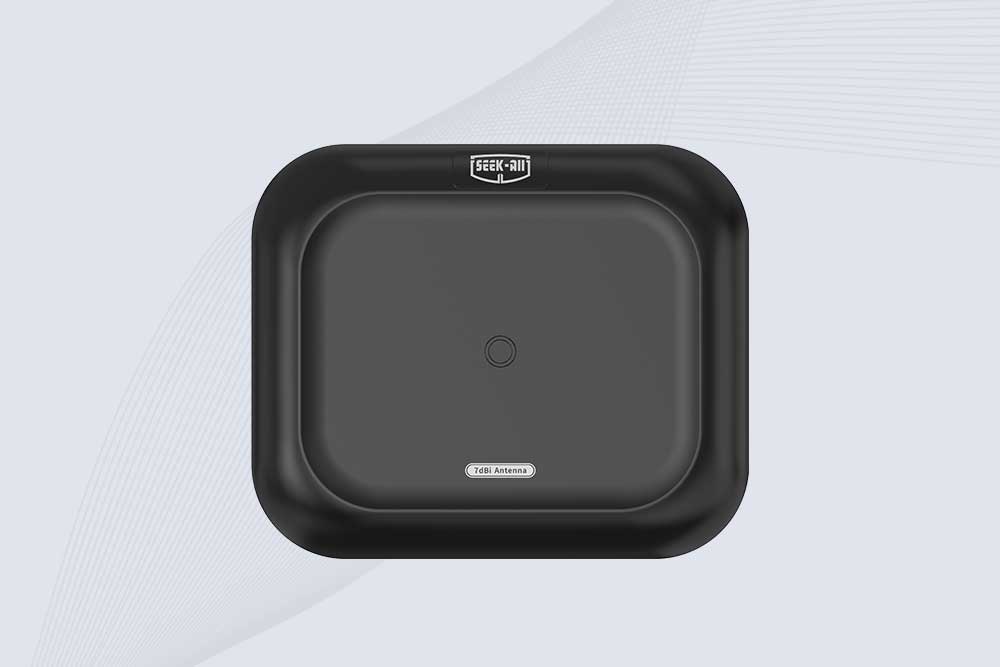
Explore the SSD-A07 UHF RFID antenna with 7 dBi gain, circular polarization, adjustable 840–960 MHz frequency, and 60°/75° beamwidth for stable RFID read/write performance.
SSD-A06 UHF RFID antenna with circular polarization, adjustable 840–960 MHz frequency, ≥4.5 dBi gain, and a compact directional design for RFID systems.
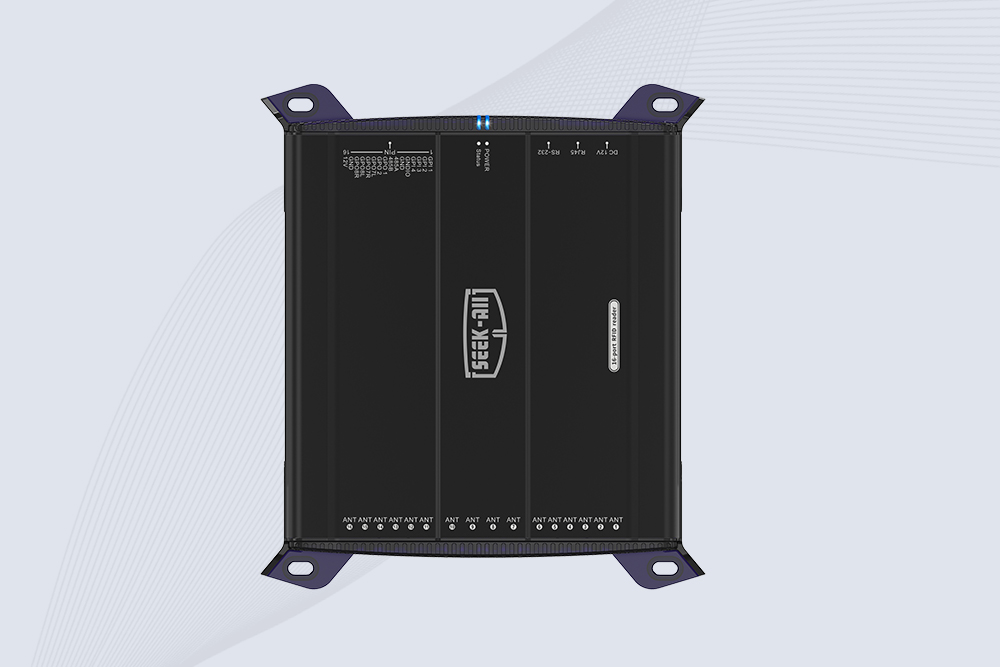
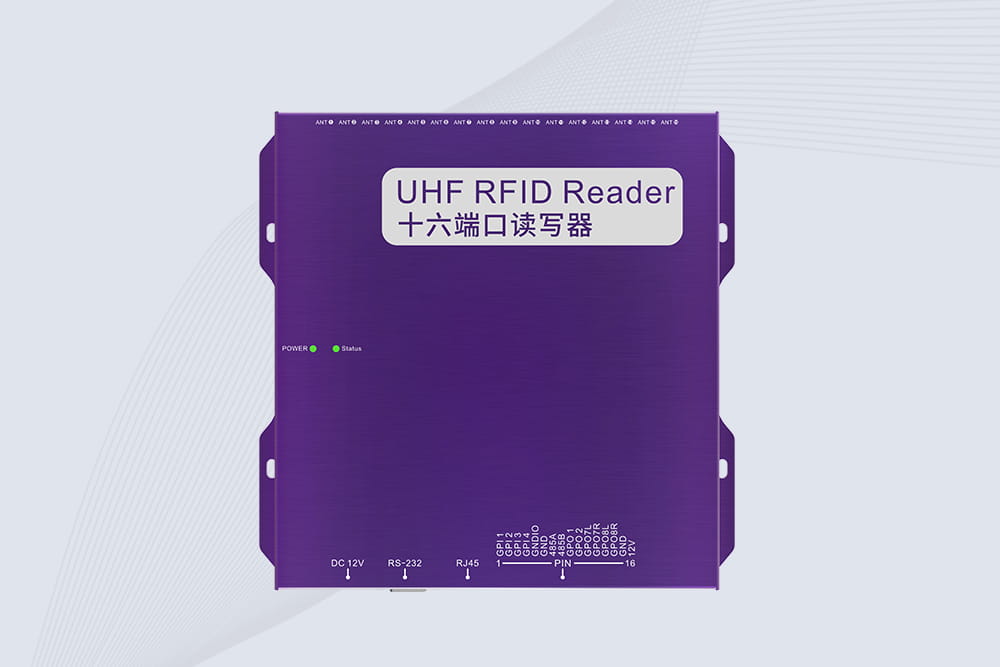
SSD-R16L Multi-Channel RFID Infrastructure for Automated Inventory Management ✔️ 16-Port High-Density RFID Reading Equipped with 16 SMA antenna ports, SSD-R16L supports multi-antenna deployment for warehouses, retail stores, logistics, production lines, and large-area RFID identification. ✔️ High-Speed & Long-Range Performance With up to 33…
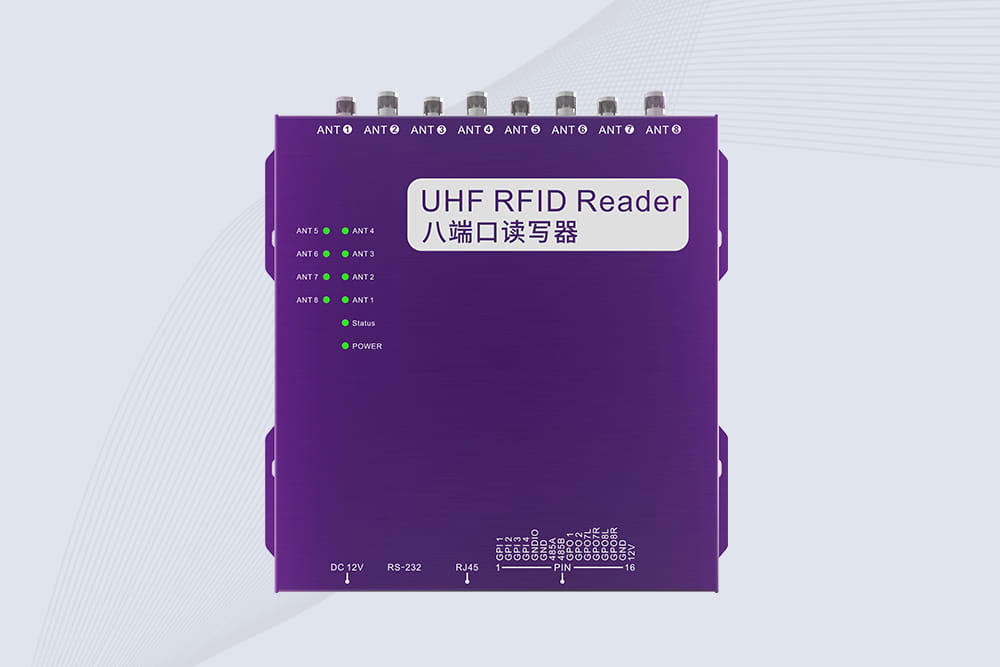
SSD-R8L 8-port UHF RFID reader with 33dBm output, up to 20m reading range and 600+ tags/s recognition. Ideal for warehouse, logistics, retail and asset tracking.
CYKEO Embedded RFID Modules are designed for compact industrial and IoT devices that require stable UHF performance. These UHF RFID Modules support global protocols, flexible power control, and reliable multi-tag reading for smart cabinets, production lines, and asset tracking systems.
CYKEO Embedded RFID Module is built for compact IoT and industrial devices that need stable UHF performance. This UHF module supports global protocols, low power operation, and reliable multi-tag reading for smart lockers, production lines, and always-on RFID systems.
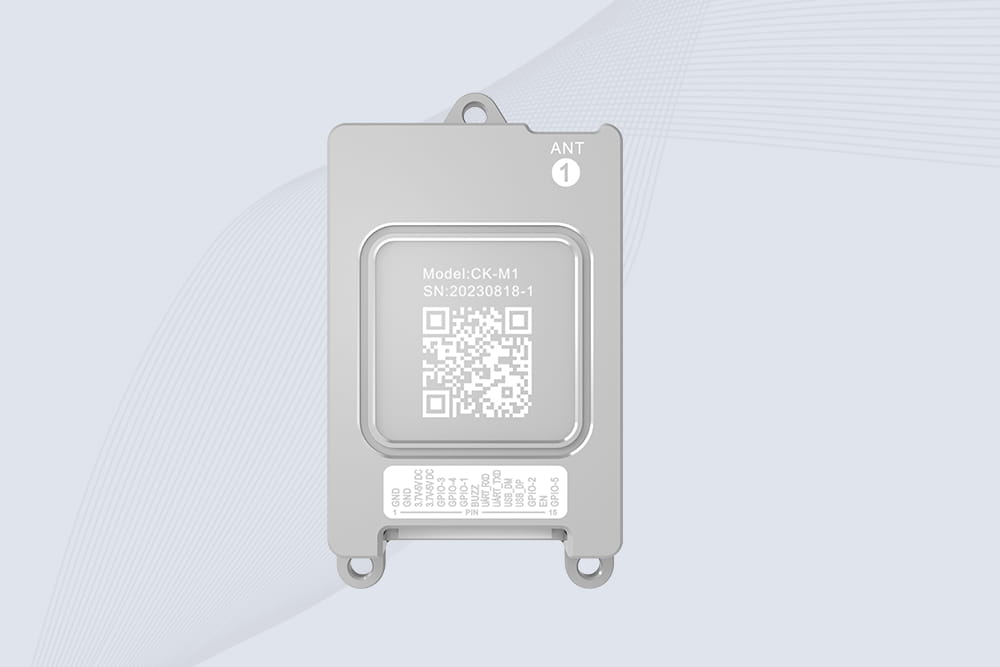
CYKEO CYKEO-M1 drone rfid module is a compact UHF RFID reader module designed for drones and UAV platforms. It supports long-range aerial scanning, fast multi-tag reading, and stable performance in wind, vibration, and outdoor environments.
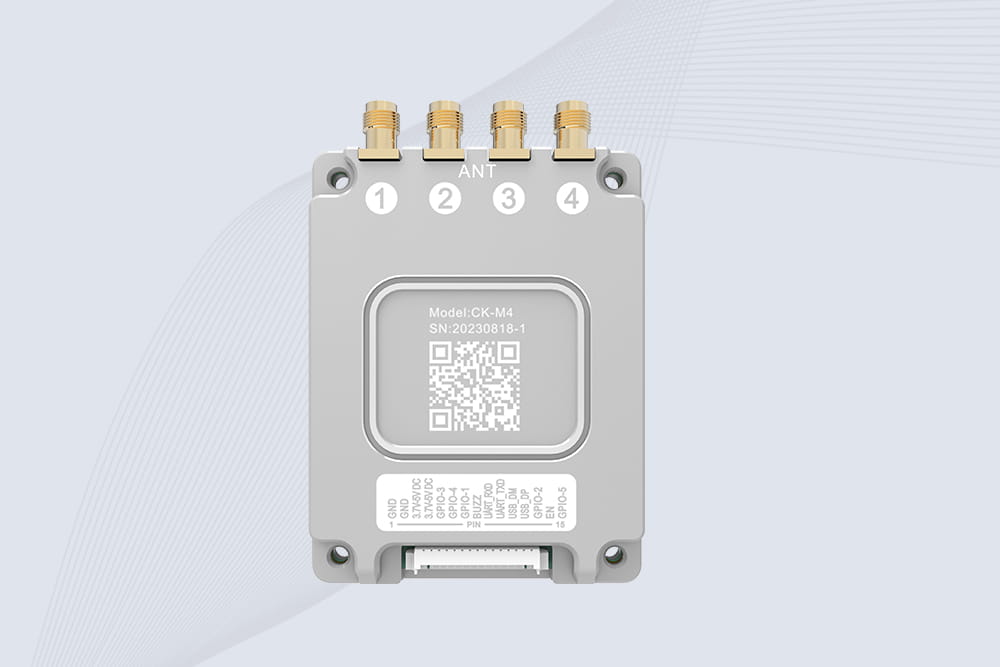
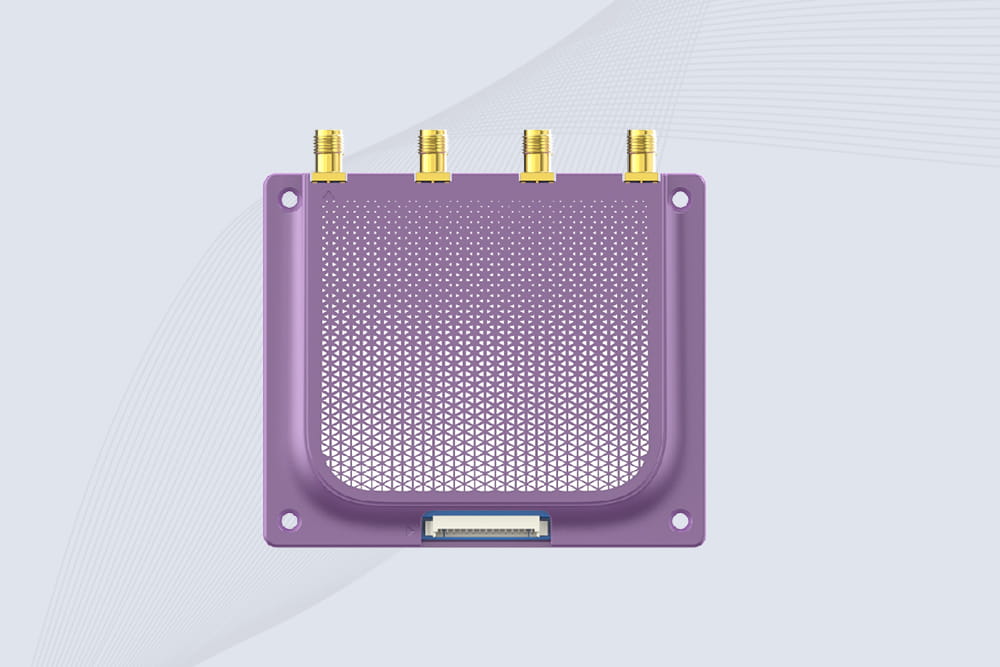
CYKEO CYKEO-M4 RC522 RFID Module is an industrial-grade UHF RFID reader with 4 ports, supporting ISO, EPC, and GB protocols. High-speed, accurate reading for IoT, automation, and warehouse applications.
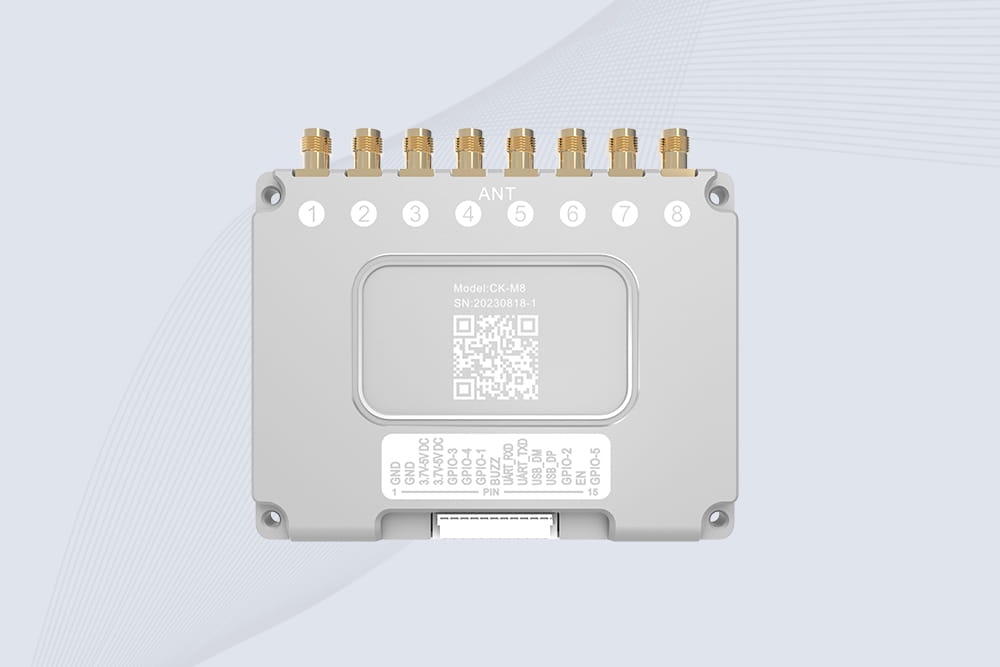
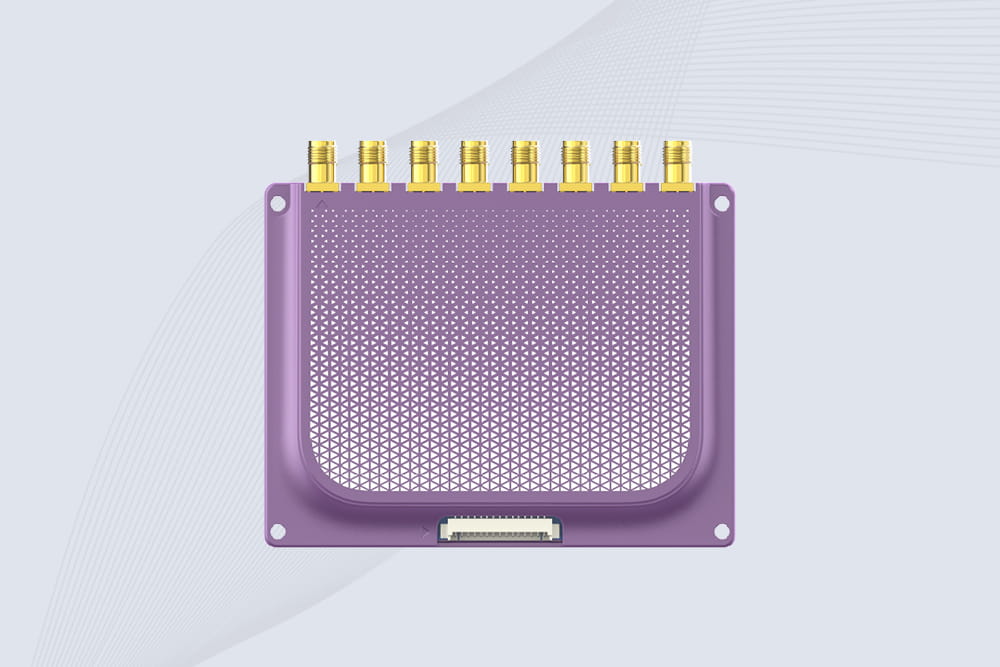
CYKEO CYKEO-M8 Module RFID is an 8-port UHF R2000 RFID Module designed for high-density, multi-tag environments. Stable 33dBm output, ISO & GB protocol support, ideal for warehouses, factories, and automated systems.
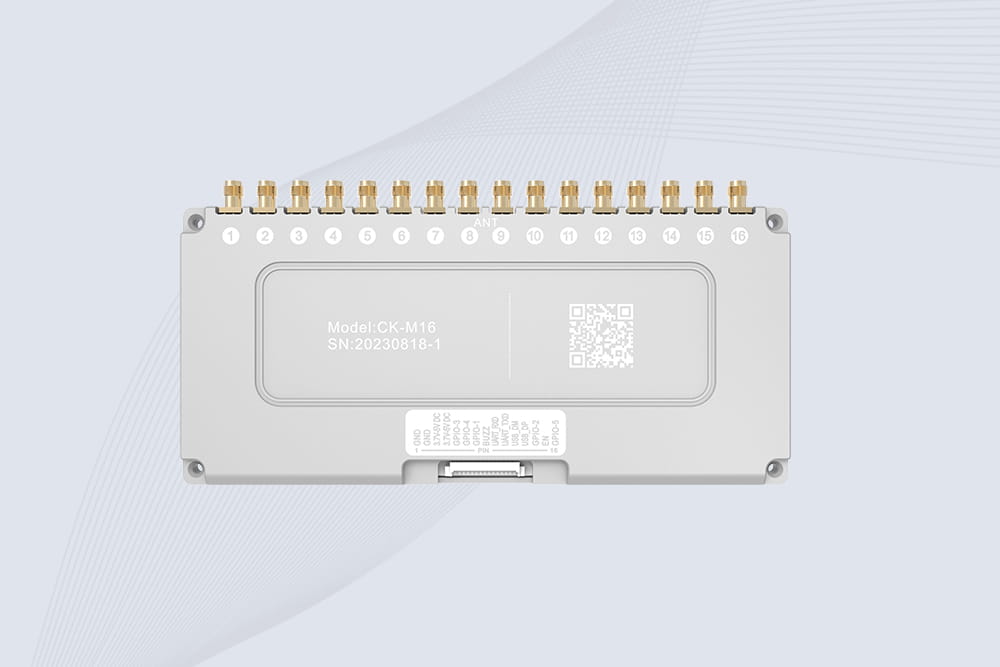
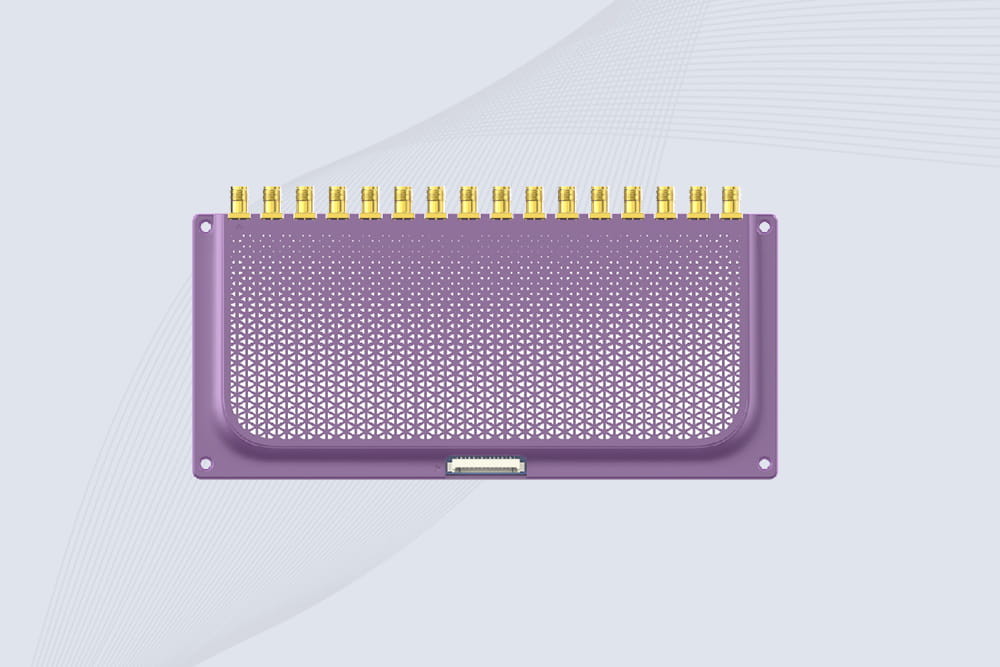
CYKEO CYKEO-M16 RFID Module is a 16-port UHF RFID reader module based on the R2000 chipset. Designed for dense tag environments, it supports ISO and GB standards and delivers stable multi-antenna control for industrial automation.
The CYKEO CYKEO-M16L RFID Reader Module is a 16-channel UHF RFID core designed for dense tag environments. With adjustable 33dBm output, multi-protocol support, and stable multi-antenna control, this RFID Tag Reader Module fits industrial automation, warehouse systems, and large-scale IoT deployments.
CYKEO CYKEO-M8L module RFID is a compact industrial UHF module built for dense tag and multi-antenna environments. With 8 RF ports, adjustable 33 dBm output, and ISO & GB protocol support, it is widely used in factories, warehouses, and automated tracking systems.
CYKEOCYKEO-M4L UHF RFID Module is a compact 4-channel RFID tag reader module designed for dense tag environments. Supporting ISO and GB protocols, it delivers stable reads up to 10 meters for industrial and IoT systems.
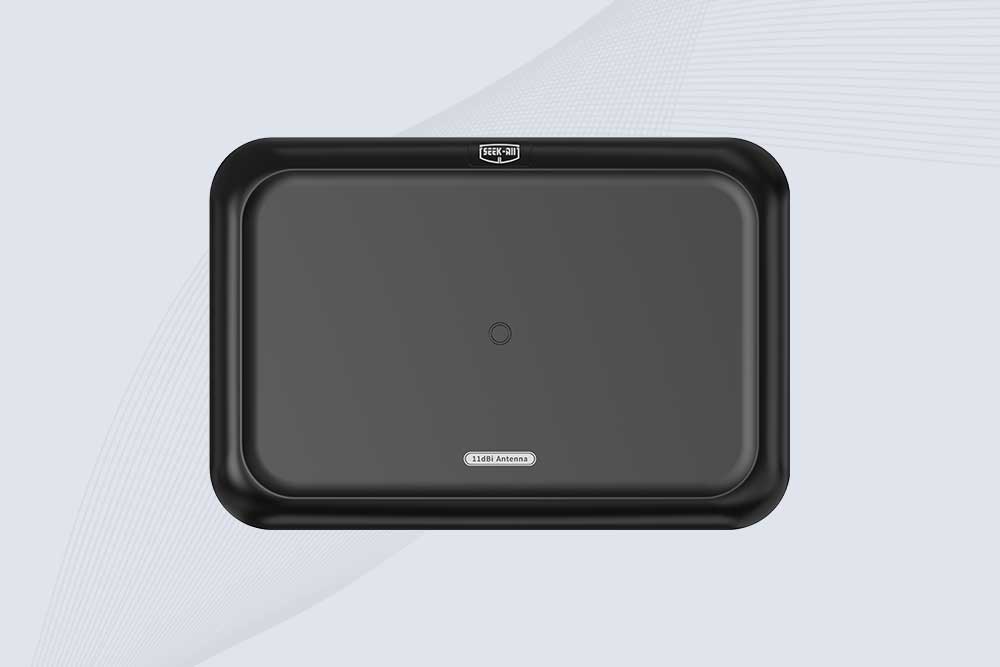
Cykeo CYKEO-A11 UHF RFID reader antenna delivers 11dBi gain, 840-960MHz frequency range, and IP65 ruggedness for retail, logistics, and industrial RFID systems. Features low VSWR and easy installation.
CYKEO Antenna RFID Reader delivers stable long-range UHF performance with a 10.5dBi directional design, built for warehouses, conveyor portals, and industrial RFID systems. This rfid reader antenna provides 20m+ read distance and rugged IP67 protection.
Cykeo CYKEO-A5B industrial Linear RFID Antenna delivers 5dBi gain, ≤1.5:1 VSWR, and IP65 rugged design for warehouse, production line, and logistics UHF systems.
Cykeo’s CYKEO-B12 Long Range RFID Antenna delivers 15m+ read range with 12dBi gain, IP65 rugged design, and global 840-960MHz UHF support. Ideal for warehouse/logistics asset tracking.
Cykeo CYKEO-B10 Long Distance RFID Antenna offers 10dBi gain, 840-960MHz frequency range, IP65 rating, and 20m+ coverage for logistics/warehousing/ETC systems. Low VSWR ensures stable signal transmission.
Cykeo CYKEO-A6 UHF RFID panel antenna features 6dBi gain, 840-960MHz broadband, IP65 metal-ready housing for logistics/smart retail. 18mm ultra-thin design with tool-free mounting.
Cykeo CK-A3 industrial antenna RFID UHF offers 5m+ tag detection, ≤1.3:1 VSWR, IP65 rugged design, and global UHF spectrum compatibility (840-960MHz) for warehouses, factories, and retail.
Cykeo CYKEO-B5 directional RFID antenna provides 5dBi gain with 60° narrow beamwidth for precise inventory tracking. IP65-rated, global UHF frequency support, and low VSWR.
Create your own high-performance DIY RFID antenna! 5dBi gain, 840-960MHz tunable, step-by-step guides. Compatible with Arduino, Raspberry Pi, and commercial UHF readers.
Cykeo CYKEO-A7 Flexible RFID Antenna features 840-960MHz wideband tuning, 7dBi gain, and IP68 rating for medical/retail/industrial curved surface deployments. 98% read accuracy with peel-and-stick installation.
Cykeo CYKEO-B5A industrial Passive RFID Antenna delivers 5dBi gain, 70° beamwidth, and -40°C~55°C operation for warehouses/smart cabinets. Compatible with Zebra/Impinj readers.
Cykeo’s CYKEO-A9B High Gain RFID Antenna delivers 15m+ read range with 9dBi amplification. Features IP54 rugged design, 840-960MHz bandwidth, and 80° beamwidth for warehouse/manufacturing RFID systems.
Cykeo’s enterprise-grade 8dbi Impinj RFID Antenna 10m+ read range with 840-960MHz tuning. Features IP65 housing, 1.4 VSWR, 35° beamwidth for retail/warehouse RFID systems.
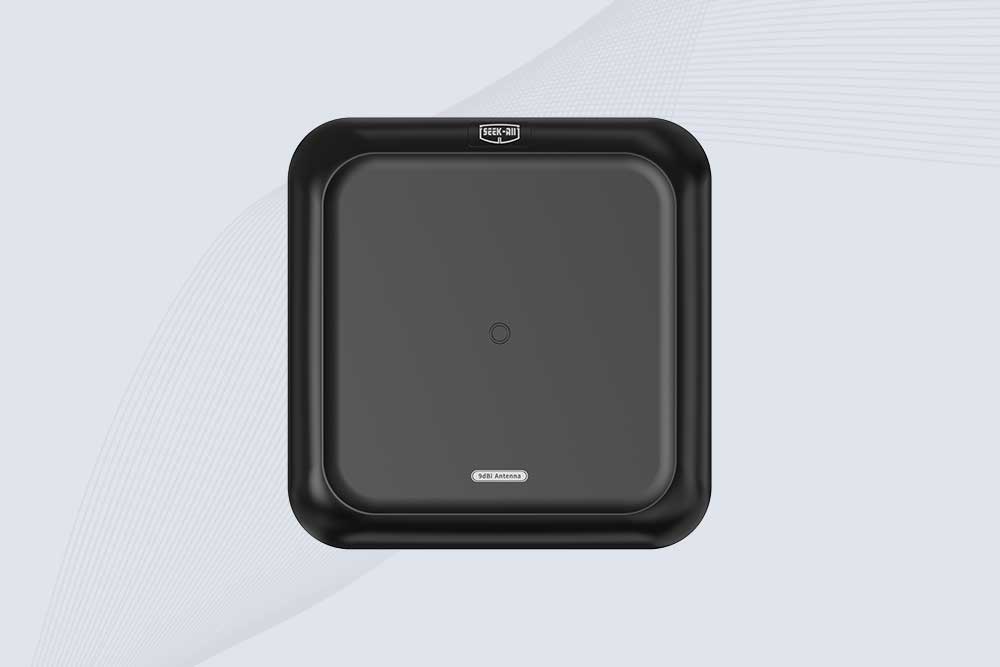
Cykeo CYKEO-A9 industrial UHF RFID antenna delivers 9dBi gain, 840-960MHz frequency range, and IP65 protection for warehouse/logistics/retail RFID systems. Features N-type connector and ≤1.3:1 VSWR.
CYKEO UHF RFID Antenna built for long-distance and industrial applications. This antenna rfid uhf delivers strong gain, outdoor durability, and reliable tag performance in warehouses, yards, and vehicle ID systems.
CYKEO Antenna RFID delivers reliable long-range UHF performance in warehouses, retail shelves, and cold-chain environments. This compact uhf rfid antenna provides stable reads with circular polarization and ultra-wide 840–960 MHz support, ideal for industrial tracking, smart shelves, and asset monitoring.
Cykeo’s CYKEO-C8 UHF RFID antennas delivers 8dBi gain, 840-960MHz full-band coverage, and IP65 ruggedness for manufacturing/warehouse RFID systems. Industrial RFID Antennas Features
Cykeo’s 8dBi UHF RFID antenna and reader kit delivers 10m+ range, 840-960MHz broadband, and IP65 ruggedness for factories, warehouses, and logistics. ISO 18000-6C & EPC Gen2 certified.
Cykeo’s CYKEO-A12C UHF Large RFID Antenna delivers 12dBi gain, 840-960MHz global frequency, IP65 ruggedness for logistics/warehousing/automotive. 40° beamwidth ensures stable 15m+ tag reads.
CYKEO Near Field RFID Antenna provides precise 5–30 cm reading for shelves, cabinets, and workstations. This compact rfid shelf antenna delivers stable short-range performance around metal and clutter, ideal for pharmacies, libraries, and electronics sorting.
Cykeo CYKEO-C1 industrial Forklift RFID Reader features 20m read range, 600 tags/sec scanning, Impinj R2000 chipset, and IP67 rugged design. Ideal for warehouse logistics and manufacturing. Supports ISO 18000-6C/6B protocols.
Cykeo CYKEO-R4 industrial UHF RFID Fixed Reader features 4 TNC ports, 400+ tags/sec speed, IP67 housing, and global frequency compliance for vehicle inspection, smart warehouse, and asset management systems.
CYKEO CYKEO-R8L Fixed RFID Reader with 8-port UHF design, Impinj-based RF core and up to 20m read range. An industrial Fixed RFID Reader for vehicle inspection, warehouse portals, smart manufacturing lines and secure access checkpoints.
RFID Fixed Reader from CYKEO – the CYKEO-R16L 16-port UHF fixed reader for warehouses, smart cabinets, and production lines. Long-range, multi-tag reading, stable performance for 24/7 industrial use.
Learn how to set up an RC522 RFID module with Raspberry Pi for DIY projects like access control, inventory tracking, and smart locks. Step-by-step instructions included.
Explore rfid and sensor technology from Cykeo for automated asset tracking, warehouse monitoring, inventory visibility, and intelligent RFID alarm management.
Wondering how many tags can RFID read at once? In bulk, UHF systems can handle hundreds simultaneously. We explain real-world anti-collision limits, not just lab specs.
 Cykeo RFID IoT Solution Products R&D Manufacturer