How do RFID labels work? RFID labels work by combining an RFID chip and antenna inside a self-adhesive label. A compatible reader sends radio energy to the tag, the chip responds with stored identification data, and software converts that response into an inventory, asset, or tracking event.
What Is an RFID Label?
An RFID label looks deceptively ordinary.
From the outside, it can resemble a standard adhesive barcode label. Inside, however, there is an RFID inlay containing an antenna and integrated circuit (IC).
The label can therefore carry an electronic identity that can be detected without physically scanning a printed code.
GS1 describes RAIN RFID tags as devices containing an RFID chip and antenna, with the tag communicating wirelessly with an RFID reader. RAIN RFID generally refers to passive UHF RFID based on the GS1 EPC standard.
A typical RFID label contains:
RFID IC — stores and processes tag data.
RFID antenna — receives RF energy and sends the tag response.
Label substrate — holds the inlay.
Adhesive layer — attaches the label to the asset.
Printable surface — carries human-readable information, barcodes, logos, or serial numbers.
The important detail is that the printed information and electronic RFID identity can coexist on the same label.
How RFID Labels Communicate With Readers
Passive UHF RFID labels normally do not contain a battery.
Instead, the reader supplies RF energy through its antenna. The RFID label captures part of that energy, powers its integrated circuit, and responds by changing the way it reflects the incoming RF signal.
This is called backscatter communication.
GS1 explains that passive RAIN RFID tags receive energy from the reader and use backscatter to communicate their stored information back to the reader.
The sequence happens extremely quickly:
Reader transmits RF energy.
RFID label receives sufficient energy.
Chip becomes active.
Reader identifies the tag.
Tag responds with stored data.
Reader decodes the response.
Software associates the tag with an asset or transaction.
There is no optical scanning step.
That is why a carton does not necessarily need to be opened or positioned exactly in front of a scanner.
What Information Does an RFID Label Store?
This is where RFID labels differ from the idea of simply putting a barcode on an object.
A UHF RFID tag contains several logical memory banks. GS1 identifies Reserved, EPC, TID, and User Memory as the four memory areas used by Gen2 RFID tags
EPC Memory
The Electronic Product Code (EPC) is generally the most important application identifier.
It can represent a unique serialized object rather than merely identifying a product type.
For example:
Product: 123456
does not necessarily distinguish one physical item from another.
A serialized EPC can:
Product 123456 + Serial 008921
That difference is fundamental for item-level inventory.
TID Memory
TID identifies information associated with the RFID chip itself.
GS1 notes that TID can contain manufacturer and chip information and may include a manufacturer-programmed serial number.
TID is therefore not normally the field an operator changes during routine label issuance.
User Memory
Some RFID chips provide additional User Memory for application-specific data.
GS1 states that a typical RAIN RFID tag stores no more than 8 KB, although capacity varies considerably between chip models.
In many commercial systems, the EPC is kept short and meaningful while detailed product information remains in the enterprise database.
That is usually cleaner.
RFID Labels vs. Barcode Labels
The practical difference becomes obvious on a warehouse floor.
A barcode scanner normally needs the printed symbol to be within its optical field and sufficiently visible.
An RFID reader does not depend on optical visibility.
Feature
Barcode label
RFID label
Optical line of sight
Usually required
Not required
Individual identification
Yes
Yes
Multiple-item reading
Limited by scanning process
Multiple tags can be read
Wireless data exchange
No
Yes
Rewritable memory
No
Supported by suitable RFID tags
Printed information
Yes
Can be included
Typical UHF read distance
N/A
Several meters possible
Performance near metal/liquid
Usually unaffected by RF behavior
Requires suitable tag design
This does not mean RFID automatically replaces barcodes.
In many projects, the strongest implementation uses both.
The barcode remains visible to people and conventional scanners.
The RFID identity supports automatic machine reading.
How Far Can RFID Labels Be Read?
For passive UHF RFID, the answer can be several meters.
GS1 states that a typical UHF RFID read range is several meters and that up to approximately 15 meters can be achieved under special conditions. (GS1)
The actual range depends on:
Reader output power
Reader sensitivity
Antenna gain
Antenna polarization
RFID label design
Label orientation
Asset material
Mounting surface
Surrounding metal
Liquids
RF interference
Regulatory limits
A label that performs well on cardboard should not automatically be expected to perform identically on steel.
That is one of the first things I check when evaluating a new RFID label specification.
An RFID label combines a printed surface with an embedded RFID chip and antenna for wireless identification.
How RFID Labels Are Programmed
RFID labels can be encoded before or after they are attached to an asset, depending on the workflow.
A sends the required data wirelessly to the tag’s programmable memory.
A reliable process normally includes:
Detect the RFID label.
Select the intended tag.
Prepare the EPC or User Memory data.
Write the data.
Read the tag again.
Verify the returned value.
Associate the EPC with the physical asset.
Lock the memory if required.
GS1 US recommends read-back verification after EPC encoding to confirm that the intended value was successfully written.
That verification step sounds mundane.
On a production line, it is not.
A wrong EPC attached to the right asset can become a traceability problem much later.
Why RFID Label Antenna Design Matters
The chip is only half of the RF system.
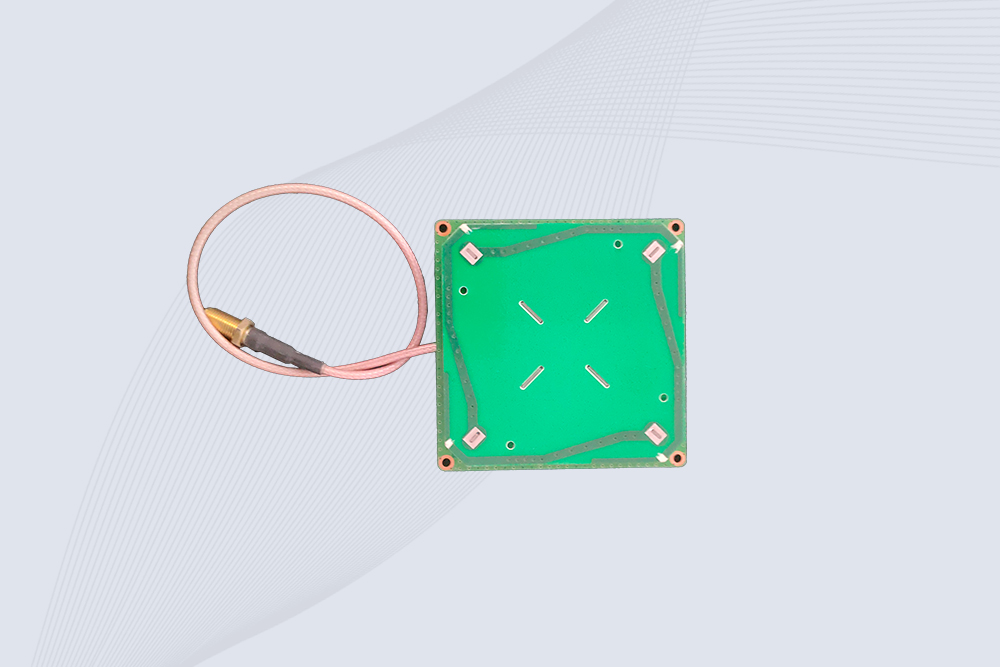
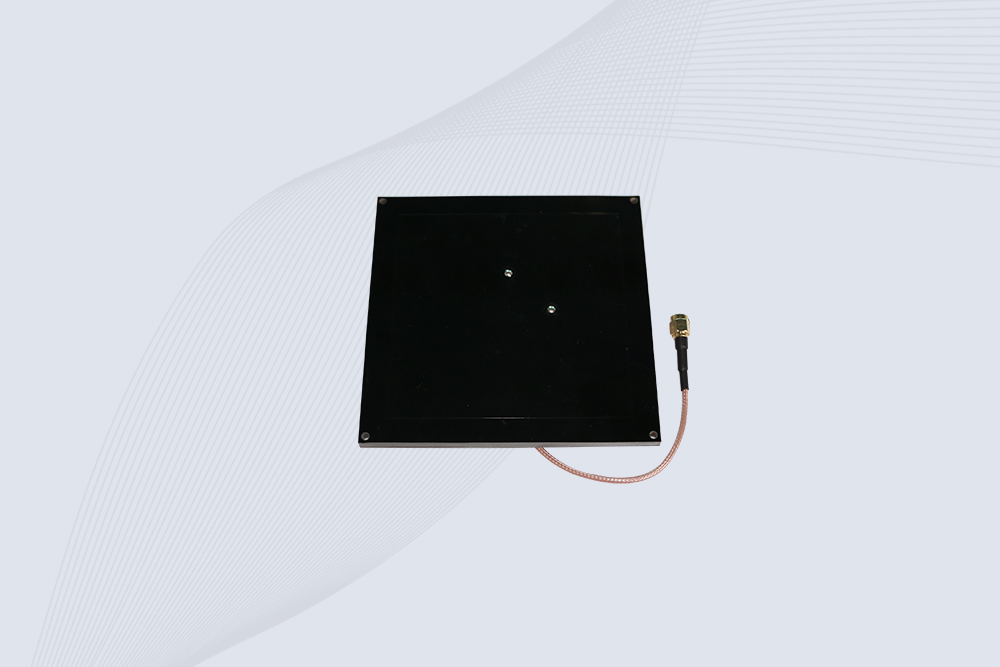
The rfid antenna determines how effectively the label interacts with the reader’s electromagnetic field.
This becomes especially important when the label is attached to difficult materials.
RFID Labels on Cardboard
Cardboard and paper are generally friendly environments for standard UHF RFID labels.
This is one reason ordinary adhesive RFID labels are widely used on cartons, cases, documents, and retail packaging.
RFID Labels on Metal
Metal can interfere strongly with conventional RFID label antennas.
GS1 notes that metal reflects and diffracts electromagnetic waves and can make standard RFID tags difficult to read. Specialized on-metal RFID tags use different antenna structures to work on conductive surfaces.
For an equipment cabinet, steel tool, or machinery component, I would test the final label on the actual metal surface, not on a cardboard sample.
RFID Labels Near Liquids
Liquids can absorb RF energy and alter the behavior of the RFID antenna.
GS1 specifically identifies water and other liquids as materials that can reduce RFID performance.
A label placed on a dry cardboard box and the same label placed on a bottle filled with water are not equivalent RF test conditions.
How Multiple RFID Labels Are Read
One of the strongest features of UHF RFID is its ability to identify multiple tags within the reader’s field.
The reader uses an anti-collision protocol so that multiple tags can participate in communication without all responding simultaneously.
This changes the physical workflow.
Instead of:
Pick item → aim scanner → scan → put item down
the process can become:
Move tagged items through the read zone → reader detects multiple EPCs → software records events.
For inventory operations, that difference can remove a large amount of manual scanning.
But multiple-tag reading also makes antenna placement, filtering, shielding, and read-zone control more important.
A reader that sees everything around it is not necessarily performing well.
A reader that sees everything it is supposed to see—and very little else is much more useful.
Cykeo RFID Labels and Reader Integration
Cykeo RFID systems are designed around practical UHF RFID identification workflows, including tag registration, reading, writing, filtering, and asset tracking.
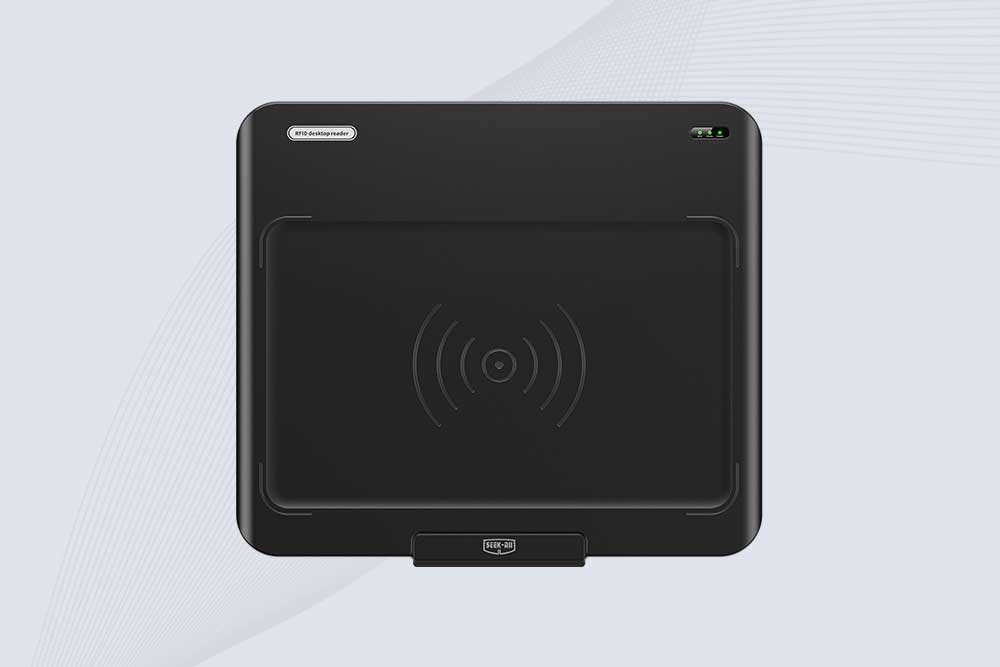
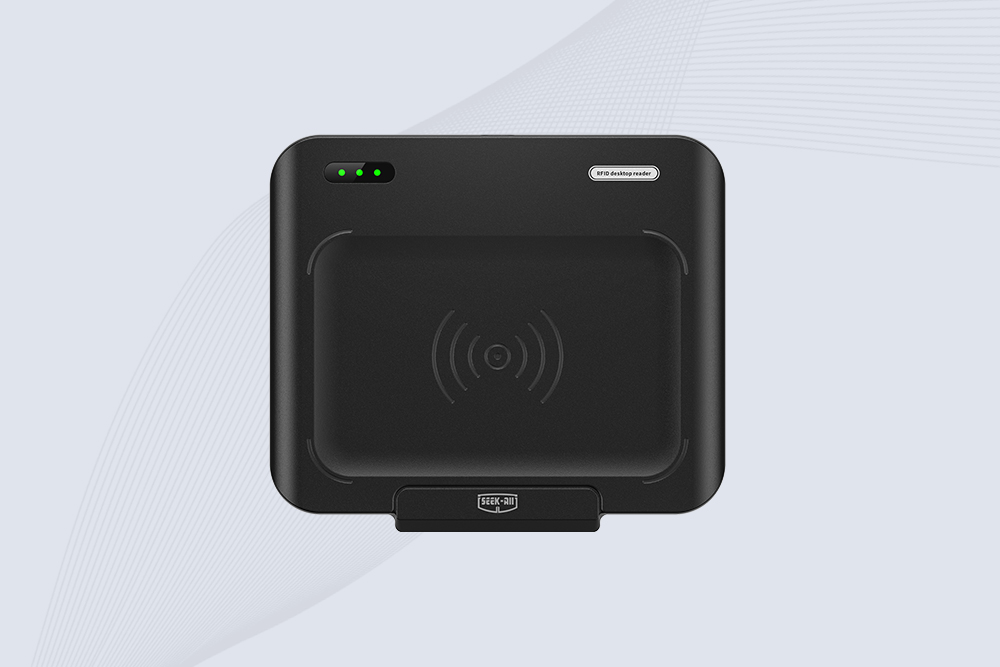
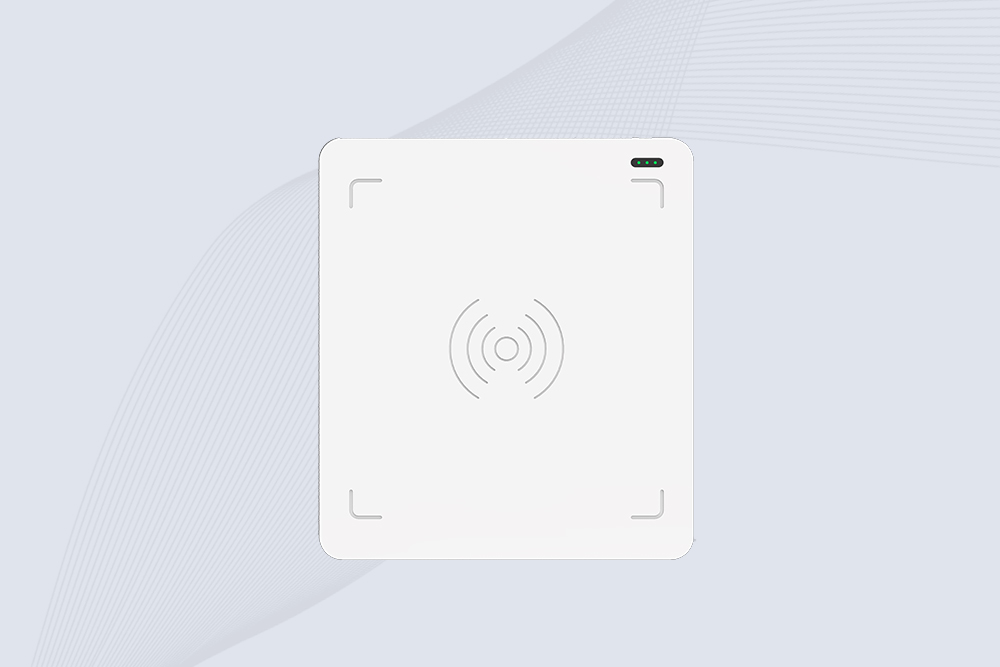
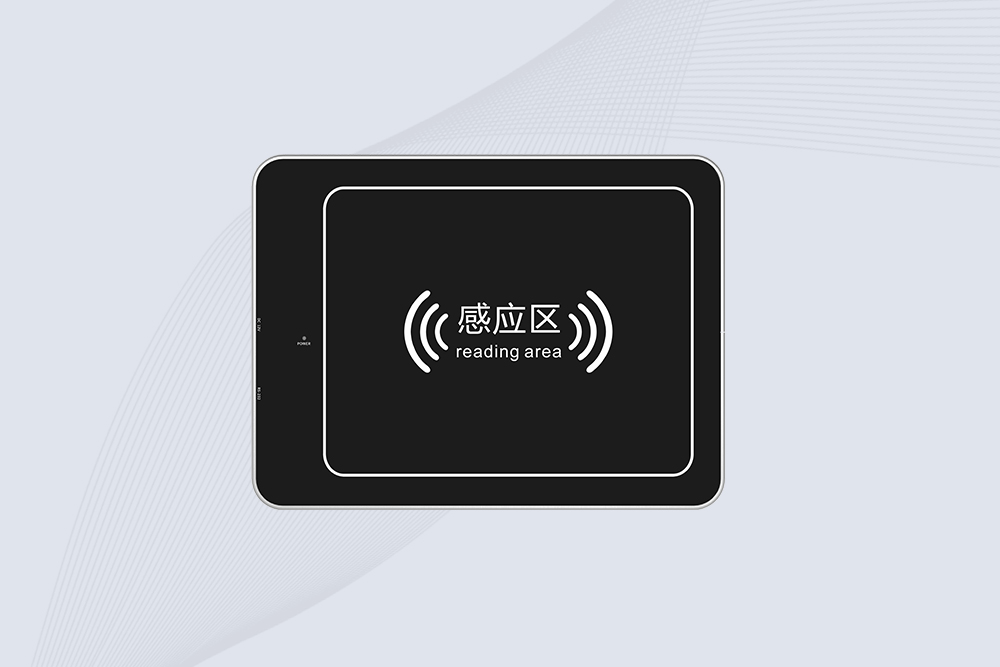
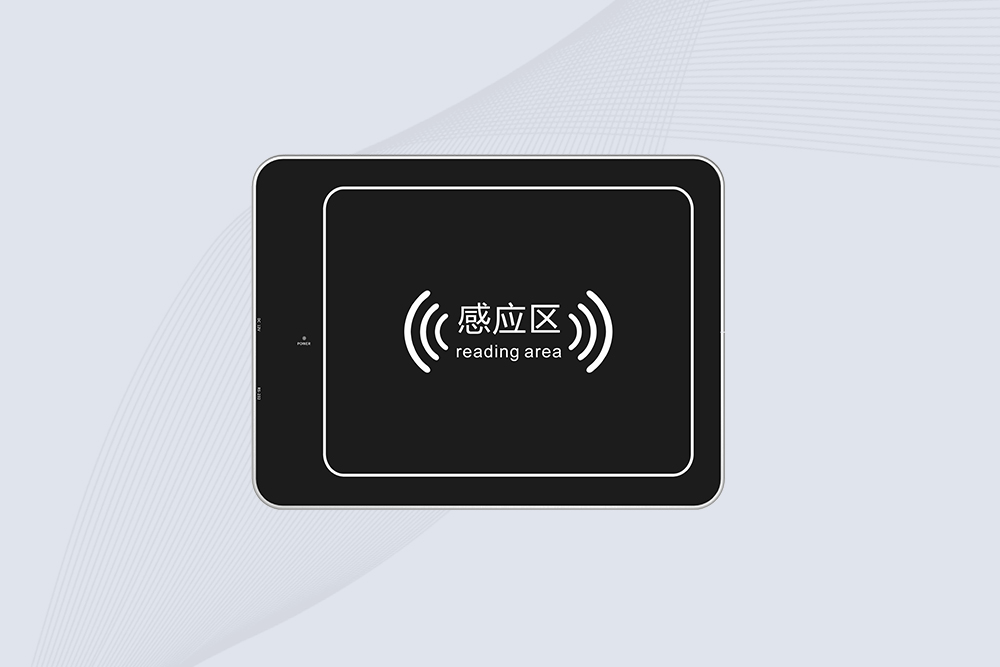
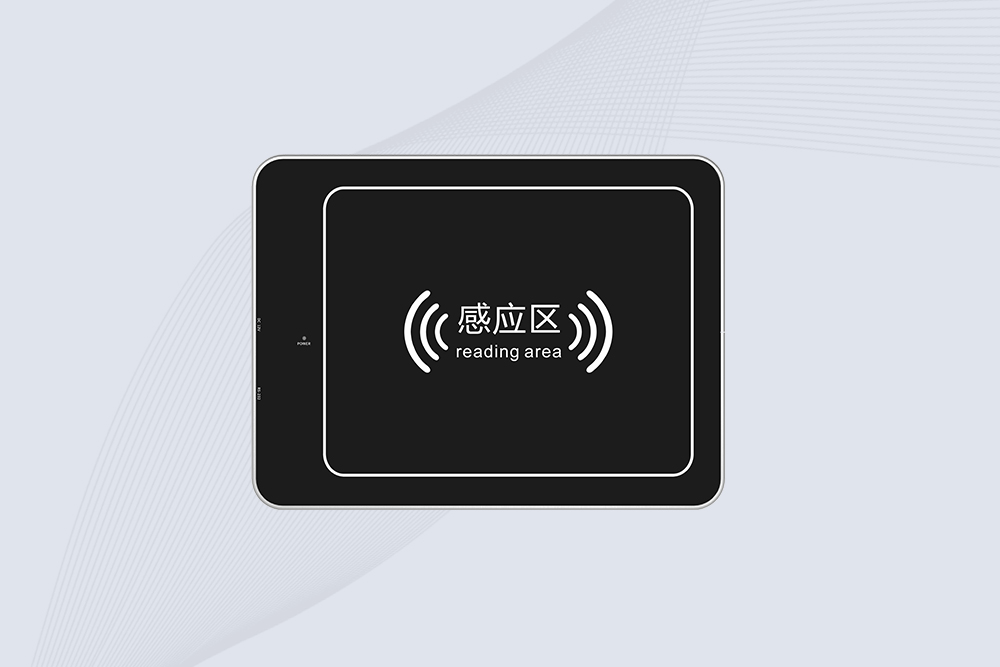
For desktop RFID label programming, Cykeo’s desktop issuing platform uses a near-field antenna to control the effective read range to approximately 30 cm and the write range to approximately 10 cm.
The platform also supports:
Up to 33 dBm maximum port output
Stable RFID label writing
Automatic read/write demonstration software
Batch fast-writing
Rapid RFID tag filtering
Mini USB communication
C# development materials
Java development materials
That short write zone is intentional.
For a tag issuing workstation, an operator generally does not want a reader writing to every RFID label on the desk.
The useful range is the controlled range.
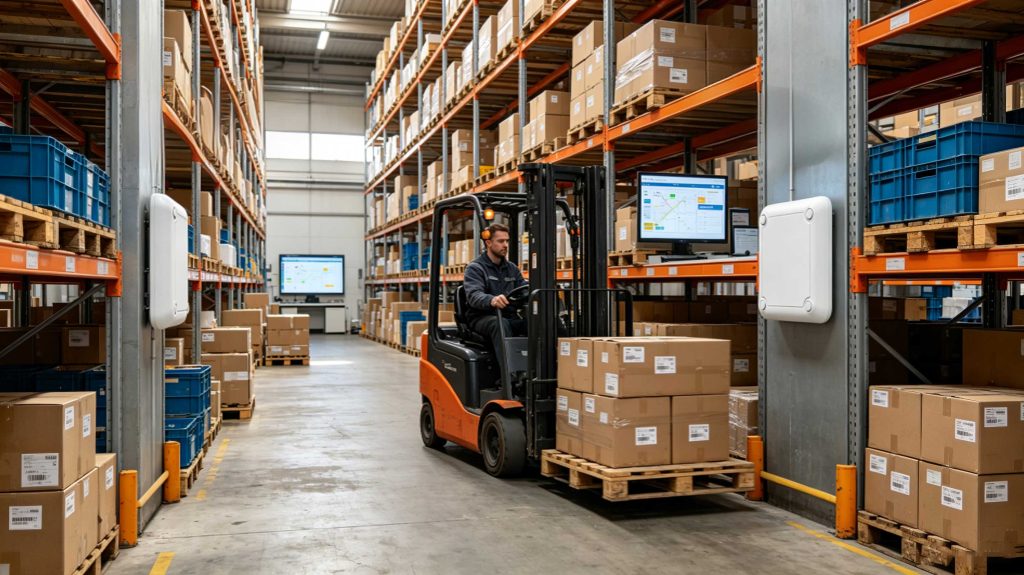
RFID Label Workflow in a Real Warehouse
Consider a carton entering a distribution center.
The RFID label carries a unique EPC.
A fixed reader detects it as the carton moves through a doorway.
The software receives the EPC and records:
Asset or product ID
Reader location
Date
Time
Movement direction
Process status
The physical label has not changed.
The event around the label has changed.
This is the foundation of RFID tracking.
GS1 describes EPCIS as a standard for sharing information about events involving physical or digital objects, including what happened, when, where, and why.
That distinction is important: RFID identifies the object; enterprise software interprets the object’s movement.
Practical RFID Label Selection Checklist
Before selecting an RFID label, check:
Frequency: UHF, HF, or another RFID technology?
Application: inventory, tracking, access, library, retail, or logistics?
Mounting surface: cardboard, plastic, glass, wood, or metal?
Verification: must every programmed label be read back?
Reader: desktop, fixed, handheld, portal, or integrated device?
A label should be selected against the final asset and operating environment—not from the label’s datasheet alone.
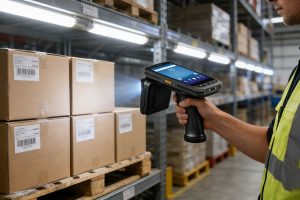
UHF RFID labels allow tagged cartons and assets to be identified automatically as they move through a warehouse read zone.
FAQ: How Do RFID Labels Work?
1. Do RFID labels need batteries?
Most UHF RFID labels used for logistics and inventory are passive, meaning they obtain operating energy from the reader’s RF field rather than using an internal battery.
2. How far can an RFID label be read?
Passive UHF RFID labels can typically be read several meters away. GS1 states that approximately 15 meters can be possible under special conditions, depending on system design and environment.
3. Can RFID labels be rewritten?
Yes, suitable RFID tags can have programmable EPC or User Memory. Whether they can be rewritten depends on memory configuration and whether the tag has been locked.
4. Can one reader read multiple RFID labels?
Yes. UHF RFID systems are designed to identify multiple tags using anti-collision mechanisms, making them suitable for cases, pallets, shelves, and inventory operations.
5. Do RFID labels work on metal?
Standard labels can experience severe performance changes on metal. Specialized on-metal RFID labels use antenna designs intended for conductive surfaces.
6. Can an RFID label include a barcode?
Yes. RFID labels can be printed with barcodes, serial numbers, product information, and other human-readable content. This allows RFID and conventional barcode processes to coexist on the same label.
7. What is the difference between an RFID label and an RFID tag?
An RFID tag refers to the RFID electronic device more broadly. An RFID label is usually an RFID inlay integrated into a printable adhesive label, making it convenient for attaching electronic identification to products, cartons, documents, and assets.
Technical Conclusion
How do RFID labels work? They combine an RFID chip and antenna inside a label that communicates wirelessly with a compatible reader. The tag provides an electronic identity, while the RFID system turns that identity into an inventory, tracking, authentication, or transaction event.
The important engineering decision is not simply choosing a label with the longest advertised range.
It is matching the RFID inlay, reader, antenna, mounting surface, operating distance, and software workflow to the actual job.
For ordinary cartons, a standard UHF adhesive label may be sufficient.
For steel equipment, use an on-metal design.
For liquids, test the finished package.
For desktop programming, use a controlled near-field writing zone.
And for high-volume deployment, verify the written EPC instead of assuming that every successful write command produced a correct production record.
That is the practical answer to how do rfid labels work—the label supplies the wireless identity, but the reader, RF environment, and software determine how useful that identity becomes.
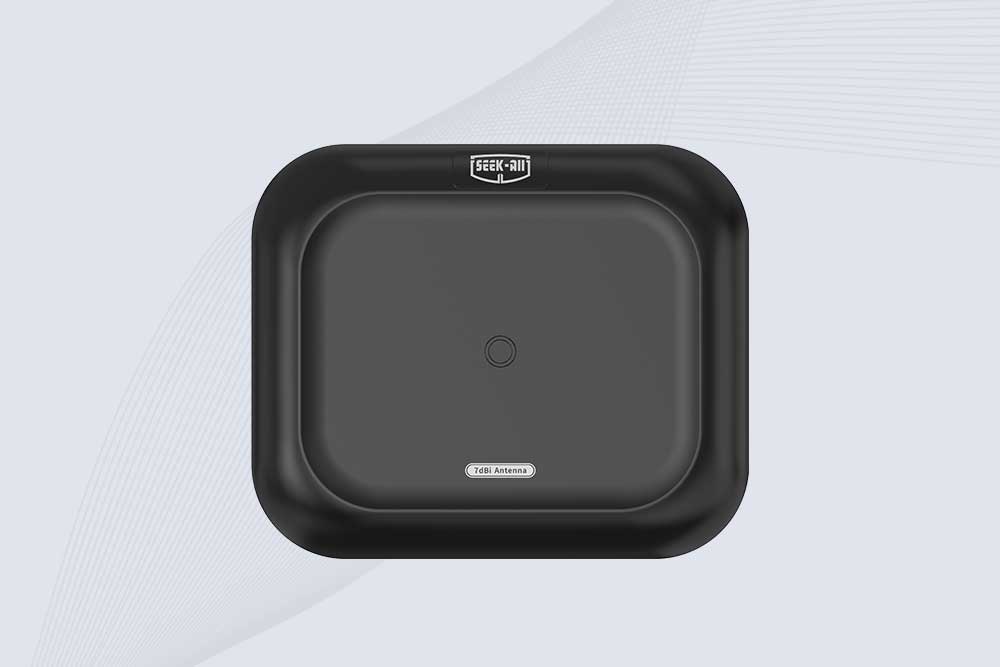
Explore the SSD-A07 UHF RFID antenna with 7 dBi gain, circular polarization, adjustable 840–960 MHz frequency, and 60°/75° beamwidth for stable RFID read/write performance.
SSD-A06 UHF RFID antenna with circular polarization, adjustable 840–960 MHz frequency, ≥4.5 dBi gain, and a compact directional design for RFID systems.
SSD-D3AL is a USB-HID UHF RFID reader with 0–30 cm reading, 0–15 cm writing, over 600 tags/s recognition, USB plug-and-play operation and OEM Logo customization.
SSD-D1AL is a compact USB UHF RFID reader with Impinj E710/X3M1 chipset, USB-HID, 600+ tags/s recognition, 4/8/16 antenna support and plug-and-play USB power.
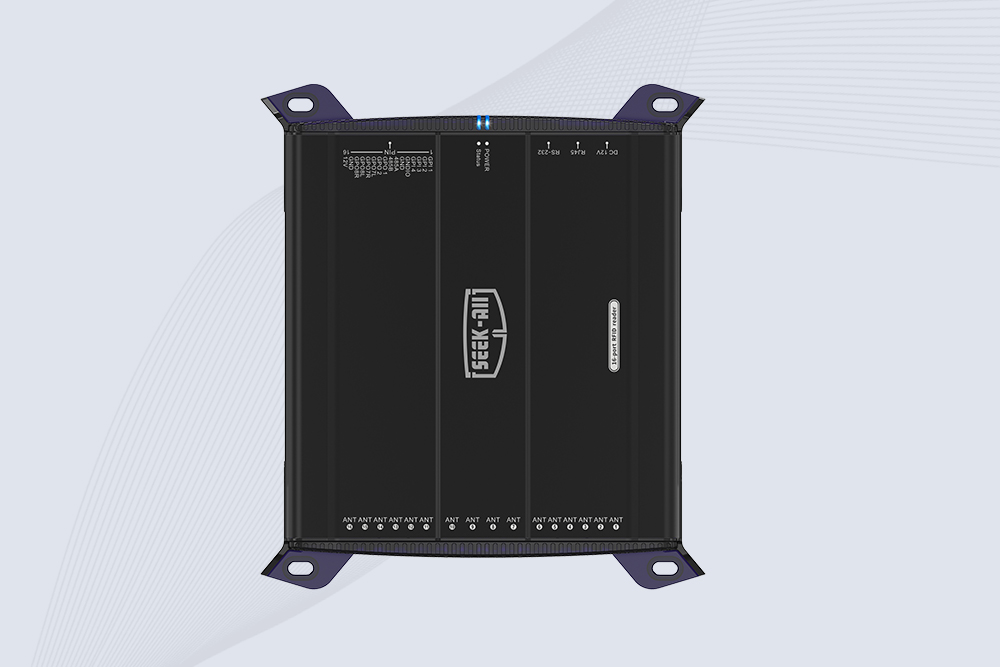
SSD-R16L Multi-Channel RFID Infrastructure for Automated Inventory Management ✔️ 16-Port High-Density RFID Reading Equipped with 16 SMA antenna ports, SSD-R16L supports multi-antenna deployment for warehouses, retail stores, logistics, production lines, and large-area RFID identification. ✔️ High-Speed & Long-Range Performance With up to 33…
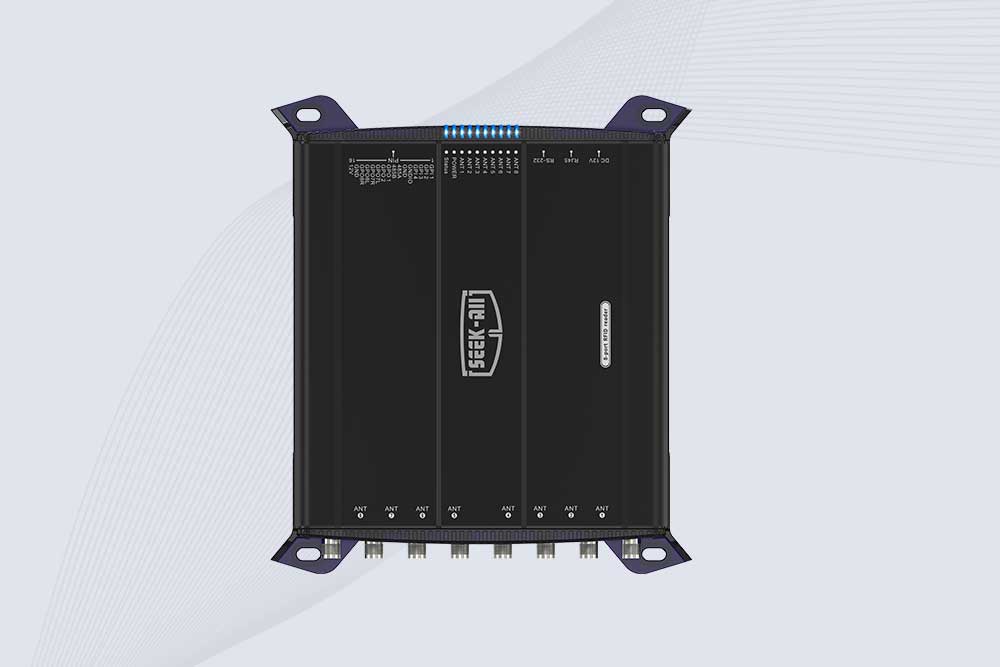
SSD-R8L 8-port UHF RFID reader with 33dBm output, up to 20m reading range and 600+ tags/s recognition. Ideal for warehouse, logistics, retail and asset tracking.
CYKEO CYKEO-D1LA USB RFID Reader is a compact desktop solution with near-field control for precise tag reading and encoding. Powered by USB, supporting ISO 18000-6C, and built for stable batch writing, this usb rfid tag reader fits retail, libraries, offices, and controlled RFID encoding tasks.
CYKEO CYKEO-D1L RFID scanner USB is a compact desktop UHF RFID scanner designed for short-range tag writing and verification. This usb rfid scanner supports batch encoding, stable 0–26 dBm output, and works across Windows, Linux, and Android systems.
CYKEO CYKEO-D1C USB RFID Card Reader is a near-field UHF desktop writer designed for secure, short-range tag encoding. With USB-C connectivity and stable 26 dBm output, this rfid reader usb c is ideal for badge issuance, label encoding, and controlled desktop RFID workflows.
CYKEO CYKEO-D2L RFID Reader USB is a compact desktop encoder built on the Impinj R500 chip. With near-field control and stable USB power, this usb rfid card reader delivers precise tag writing for offices, retail counters, and small-scale logistics encoding tasks.
CYKEO CYKEO-D3L USB RFID Tag Reader delivers stable UHF tag reading and writing for daily desktop and light industrial tasks. Designed for controlled short-range operation, this USB RFID Tag Reader works reliably with rfid tag and reader systems in libraries, tool tracking, and inventory registration.
The CYKEO CYKEO-D4L UHF RFID Tag Reader is a stable Desktop RFID Reader designed for accurate tag registration, borrowing, and return workflows. Built with the Impinj R2000 chip, this UHF RFID Tag Reader delivers controlled short-range reads for libraries, asset tracking, and inventory management environments.
The CYKEO CYKEO-D5L Desktop RFID Card Reader is a stable UHF RFID Card Reader designed for controlled short-range reading and writing. Built for libraries, tool rooms, and asset desks, this UHF RFID Card Reader supports dense tag handling, secure data processing, and easy USB integration.
The CYKEO CYKEO-D6L RFID Reader Writer is a heavy-duty Desktop RFID Reader designed for short-range, high-accuracy tag programming. Built for libraries, labs, and asset desks, this RFID Reader Writer supports batch processing, stable 33dBm output, and seamless integration with existing management systems.
Cykeo CYKEO-D8A embedded RFID badge reader offers 30+ tags/sec scanning, 20cm anti-crosstalk precision, and DC 12V power for unmanned stores, warehouses, and smart inventory systems.
Cykeo’s CYKEO-D8C UHF RFID gate reader achieves 200-tag/batch scanning with adjustable power control, ideal for retail inventory and smart warehouse management.
CYKEO Embedded RFID Modules are designed for compact industrial and IoT devices that require stable UHF performance. These UHF RFID Modules support global protocols, flexible power control, and reliable multi-tag reading for smart cabinets, production lines, and asset tracking systems.
CYKEO Embedded RFID Module is built for compact IoT and industrial devices that need stable UHF performance. This UHF module supports global protocols, low power operation, and reliable multi-tag reading for smart lockers, production lines, and always-on RFID systems.
CYKEO CYKEO-M1 drone rfid module is a compact UHF RFID reader module designed for drones and UAV platforms. It supports long-range aerial scanning, fast multi-tag reading, and stable performance in wind, vibration, and outdoor environments.
CYKEO CYKEO-M4 RC522 RFID Module is an industrial-grade UHF RFID reader with 4 ports, supporting ISO, EPC, and GB protocols. High-speed, accurate reading for IoT, automation, and warehouse applications.
CYKEO CYKEO-M8 Module RFID is an 8-port UHF R2000 RFID Module designed for high-density, multi-tag environments. Stable 33dBm output, ISO & GB protocol support, ideal for warehouses, factories, and automated systems.
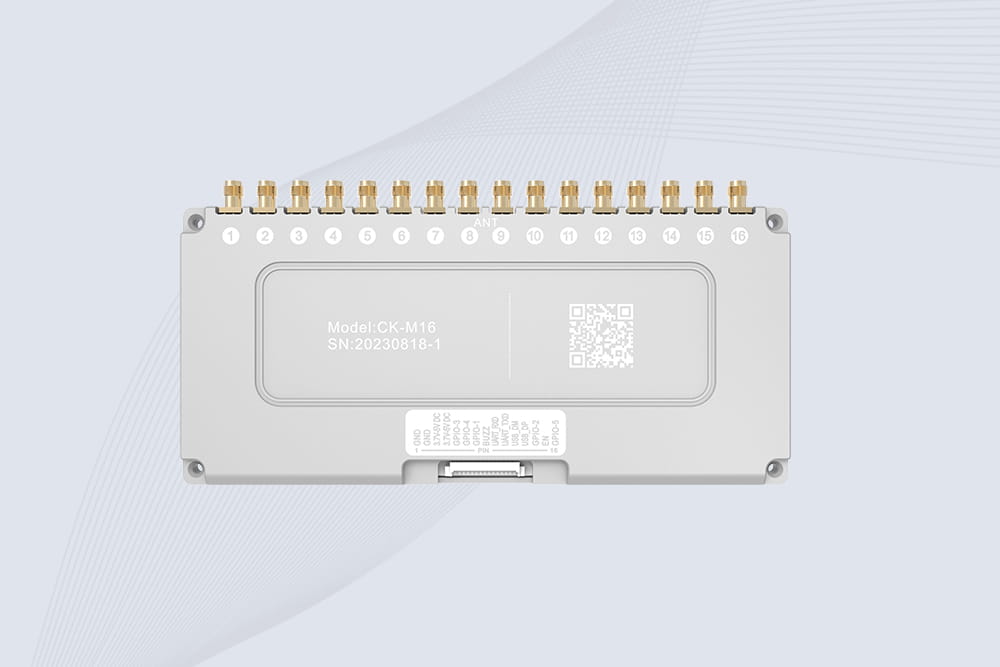
CYKEO CYKEO-M16 RFID Module is a 16-port UHF RFID reader module based on the R2000 chipset. Designed for dense tag environments, it supports ISO and GB standards and delivers stable multi-antenna control for industrial automation.
The CYKEO CYKEO-M16L RFID Reader Module is a 16-channel UHF RFID core designed for dense tag environments. With adjustable 33dBm output, multi-protocol support, and stable multi-antenna control, this RFID Tag Reader Module fits industrial automation, warehouse systems, and large-scale IoT deployments.
CYKEO CYKEO-M8L module RFID is a compact industrial UHF module built for dense tag and multi-antenna environments. With 8 RF ports, adjustable 33 dBm output, and ISO & GB protocol support, it is widely used in factories, warehouses, and automated tracking systems.
CYKEOCYKEO-M4L UHF RFID Module is a compact 4-channel RFID tag reader module designed for dense tag environments. Supporting ISO and GB protocols, it delivers stable reads up to 10 meters for industrial and IoT systems.
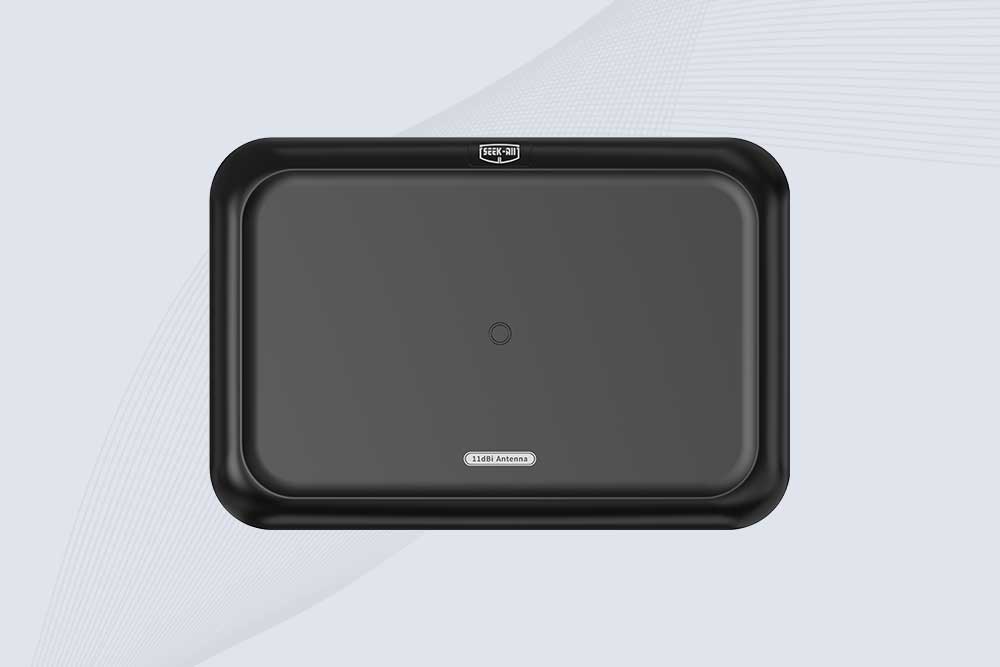
Cykeo CYKEO-A11 UHF RFID reader antenna delivers 11dBi gain, 840-960MHz frequency range, and IP65 ruggedness for retail, logistics, and industrial RFID systems. Features low VSWR and easy installation.
CYKEO Antenna RFID Reader delivers stable long-range UHF performance with a 10.5dBi directional design, built for warehouses, conveyor portals, and industrial RFID systems. This rfid reader antenna provides 20m+ read distance and rugged IP67 protection.
Cykeo CYKEO-A5B industrial Linear RFID Antenna delivers 5dBi gain, ≤1.5:1 VSWR, and IP65 rugged design for warehouse, production line, and logistics UHF systems.
Cykeo’s CYKEO-B12 Long Range RFID Antenna delivers 15m+ read range with 12dBi gain, IP65 rugged design, and global 840-960MHz UHF support. Ideal for warehouse/logistics asset tracking.
Cykeo CYKEO-B10 Long Distance RFID Antenna offers 10dBi gain, 840-960MHz frequency range, IP65 rating, and 20m+ coverage for logistics/warehousing/ETC systems. Low VSWR ensures stable signal transmission.
Cykeo CYKEO-A6 UHF RFID panel antenna features 6dBi gain, 840-960MHz broadband, IP65 metal-ready housing for logistics/smart retail. 18mm ultra-thin design with tool-free mounting.
Cykeo CK-A3 industrial antenna RFID UHF offers 5m+ tag detection, ≤1.3:1 VSWR, IP65 rugged design, and global UHF spectrum compatibility (840-960MHz) for warehouses, factories, and retail.
Cykeo CYKEO-B5 directional RFID antenna provides 5dBi gain with 60° narrow beamwidth for precise inventory tracking. IP65-rated, global UHF frequency support, and low VSWR.
Create your own high-performance DIY RFID antenna! 5dBi gain, 840-960MHz tunable, step-by-step guides. Compatible with Arduino, Raspberry Pi, and commercial UHF readers.
Cykeo CYKEO-A7 Flexible RFID Antenna features 840-960MHz wideband tuning, 7dBi gain, and IP68 rating for medical/retail/industrial curved surface deployments. 98% read accuracy with peel-and-stick installation.
Cykeo CYKEO-B5A industrial Passive RFID Antenna delivers 5dBi gain, 70° beamwidth, and -40°C~55°C operation for warehouses/smart cabinets. Compatible with Zebra/Impinj readers.
Cykeo’s CYKEO-A9B High Gain RFID Antenna delivers 15m+ read range with 9dBi amplification. Features IP54 rugged design, 840-960MHz bandwidth, and 80° beamwidth for warehouse/manufacturing RFID systems.
Cykeo’s enterprise-grade 8dbi Impinj RFID Antenna 10m+ read range with 840-960MHz tuning. Features IP65 housing, 1.4 VSWR, 35° beamwidth for retail/warehouse RFID systems.
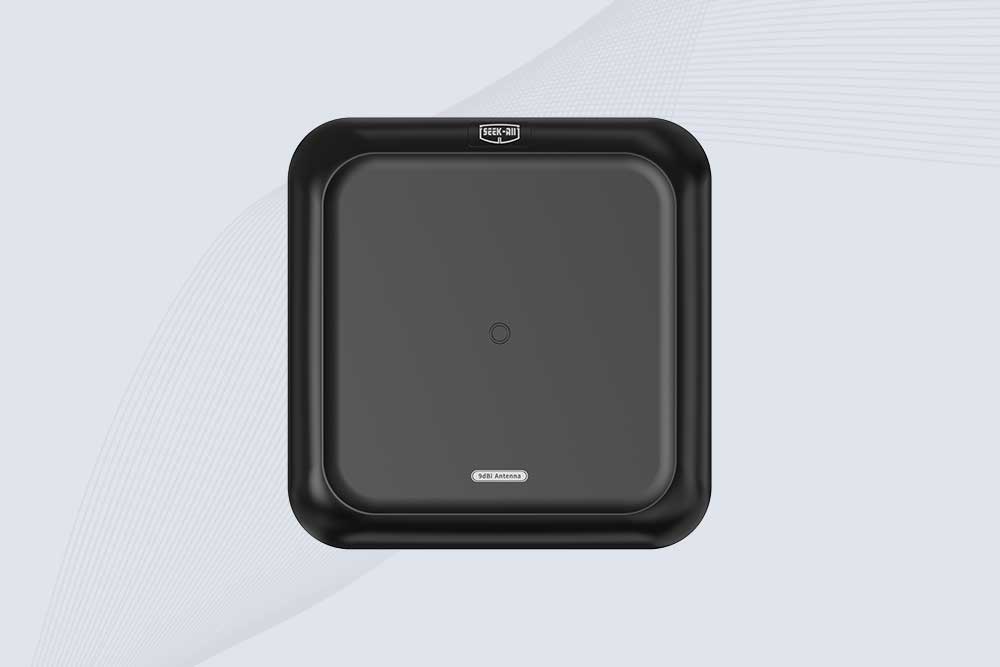
Cykeo CYKEO-A9 industrial UHF RFID antenna delivers 9dBi gain, 840-960MHz frequency range, and IP65 protection for warehouse/logistics/retail RFID systems. Features N-type connector and ≤1.3:1 VSWR.
CYKEO UHF RFID Antenna built for long-distance and industrial applications. This antenna rfid uhf delivers strong gain, outdoor durability, and reliable tag performance in warehouses, yards, and vehicle ID systems.
CYKEO Antenna RFID delivers reliable long-range UHF performance in warehouses, retail shelves, and cold-chain environments. This compact uhf rfid antenna provides stable reads with circular polarization and ultra-wide 840–960 MHz support, ideal for industrial tracking, smart shelves, and asset monitoring.
Cykeo’s CYKEO-C8 UHF RFID antennas delivers 8dBi gain, 840-960MHz full-band coverage, and IP65 ruggedness for manufacturing/warehouse RFID systems. Industrial RFID Antennas Features
Cykeo’s 8dBi UHF RFID antenna and reader kit delivers 10m+ range, 840-960MHz broadband, and IP65 ruggedness for factories, warehouses, and logistics. ISO 18000-6C & EPC Gen2 certified.
In industries like logistics, warehousing, and retail, traditional identification processes often face challenges, such as inefficiency, high error rates, and complex operations. As businesses scale, these limitations become increasingly prominent...
A practical developer-level breakdown of RFID tools tracking systems used in factories and workshops. Learn system architecture, RFID tool cabinets, edge data processing, and ERP integration for industrial asset management solutions. OEM and B2B i...
Struggling to read single tags in a crowded space? A meander line UHF RFID reader antenna for near-field applications delivers surgical precision for healthcare and manufacturing.
Wondering how far a passive RFID tag can be read? We break down real-world ranges for UHF, HF, and LF tags and what factors actually affect the distance.
 Cykeo RFID IoT Solution Products R&D Manufacturer