 Cykeo RFID IoT Solution Products R&D Manufacturer
handheld rfid writer RFID tool tracking tags: How Do They Improve Asset Control?
96Learn how handheld rfid writer enables RFID tool tracking tags for accurate asset visibility, reduced loss, and faster audits in industrial environments.
MoreAll RFID Product
Hospitals never stop moving. Ambulances arrive at all hours, staff work rotating shifts, visitors come and go throughout the day, and delivery vehicles need regular access to different areas of the facility. In many hospitals, parking entrances become crowded quickly, especially during peak outpatient hours or emergencies.
Traditional parking systems often struggle in these conditions. Manual checks slow traffic down, access cards get lost, and queues form at entry gates. For hospitals, delays are more than just an inconvenience. In emergency situations, every second matters.
This is one reason many healthcare facilities are moving toward RFID parking systems.
A hospital parking system using RFID allows vehicles to enter automatically without stopping for manual verification. The system identifies authorized vehicles as they approach the gate, opens barriers automatically, and records vehicle activity in real time.
An RFID hospital parking setup usually includes:
Each authorized vehicle receives an RFID tag. When the vehicle approaches the parking entrance, the RFID reader detects the tag and checks its permissions through the management platform. If access is approved, the gate opens automatically.
The entire process takes only a few seconds and requires no physical contact.
Many hospitals install
long range RFID readers
to improve traffic flow at busy entrances and reduce waiting time for vehicles entering the property.
Emergency vehicle access is one of the most important uses of RFID in hospital parking management.
In older parking systems, ambulances may still need to slow down at security checkpoints or wait for barriers to open manually. During high-traffic periods, this creates unnecessary delays near emergency entrances.
RFID systems remove that problem.
Authorized emergency vehicles can be assigned high-priority RFID credentials. As the ambulance approaches the entrance, the system immediately recognizes the vehicle and opens the gate automatically.
At the same time, the system can:
Because the process is fully automated, emergency vehicles can move through hospital access points without interruption.
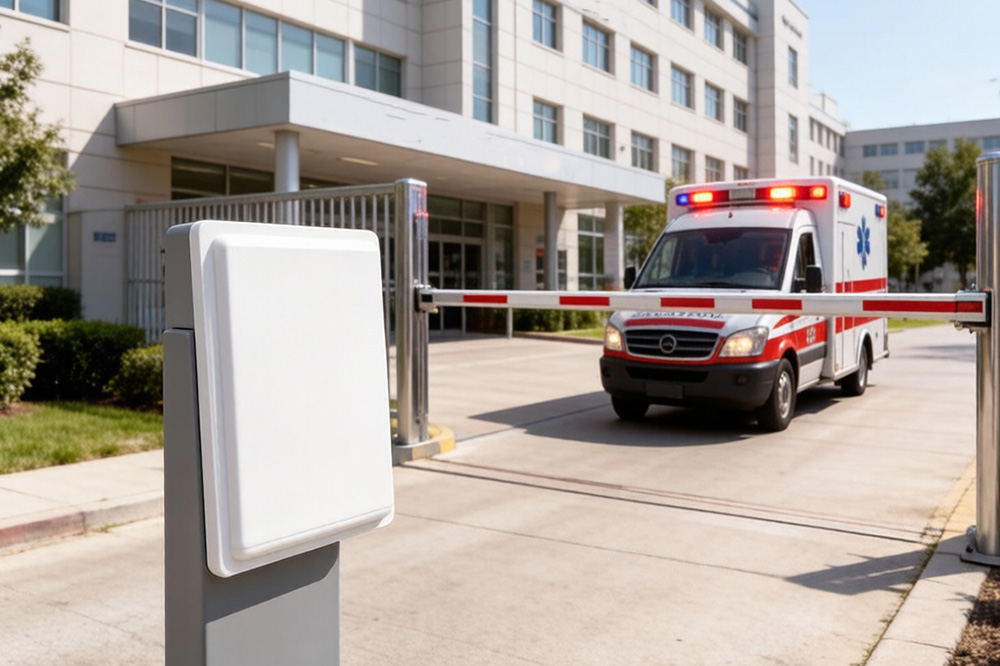
Large hospitals often manage hundreds of employee vehicles every day. Staff members working night shifts, emergency rotations, or on-call schedules need quick and reliable parking access.
RFID parking systems simplify this process by allowing:
Instead of stopping to scan cards or check permits, staff vehicles can enter smoothly through dedicated RFID-controlled lanes.
This becomes especially useful during shift changes when vehicle traffic increases around staff entrances.
Visitor traffic can change quickly throughout the day. Outpatient clinics, emergency departments, and visiting hours often create sudden increases in parking demand.
RFID parking systems help reduce congestion by automating several parts of the process, including:
Some hospitals combine RFID with license plate recognition to improve vehicle identification accuracy and strengthen security.
Hospitals usually prefer long-range RFID systems because they allow vehicles to be identified from several meters away.
This means drivers do not need to stop at the gate to scan cards or roll down windows.
Long-range RFID systems offer several advantages:
For hospitals handling constant vehicle movement, these advantages make a noticeable difference in daily operations.
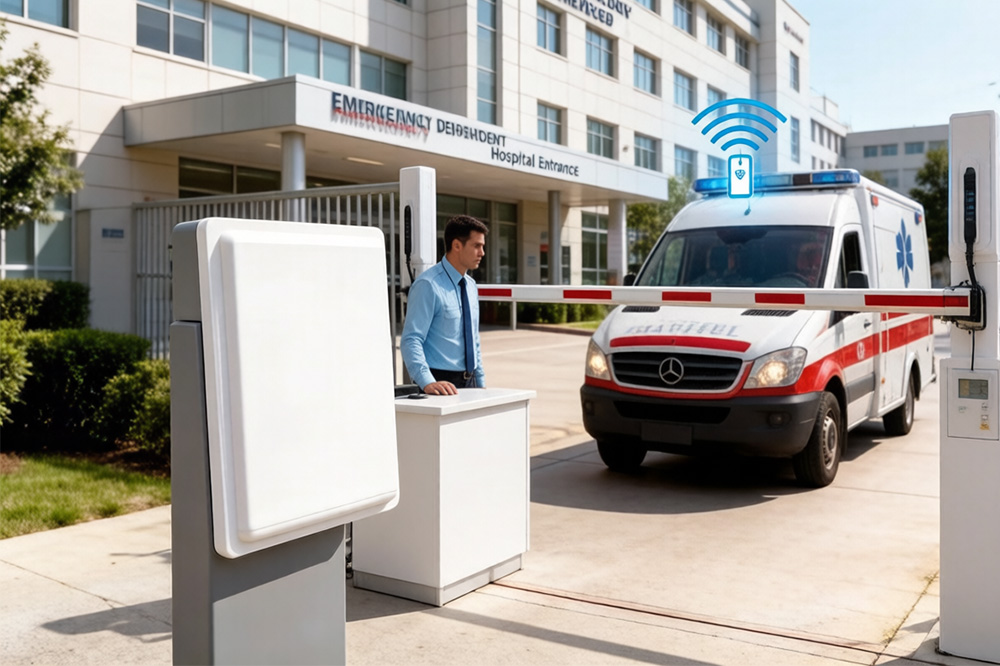
Parking control is also part of hospital security management.
RFID systems keep records of every authorized vehicle entering and leaving the facility. Security teams can review logs, monitor access activity, and quickly identify unauthorized vehicles.
Access permissions can also be updated remotely without replacing physical cards or changing gate hardware.
This gives hospitals more control over restricted parking zones, emergency access areas, and staff-only entrances.
Hospitals continue investing in smarter infrastructure, and parking systems are evolving alongside it.
Modern RFID parking platforms are increasingly connected with:
As hospitals grow larger and vehicle traffic increases, automated parking access systems are becoming a standard part of facility management.
A hospital parking system using RFID improves more than just parking convenience. It helps hospitals manage emergency access more efficiently, reduce congestion, improve security, and simplify vehicle control across the entire property.
For busy healthcare facilities, reliable vehicle access is part of keeping daily operations running smoothly. RFID technology gives hospitals a practical way to manage that traffic without slowing people down.
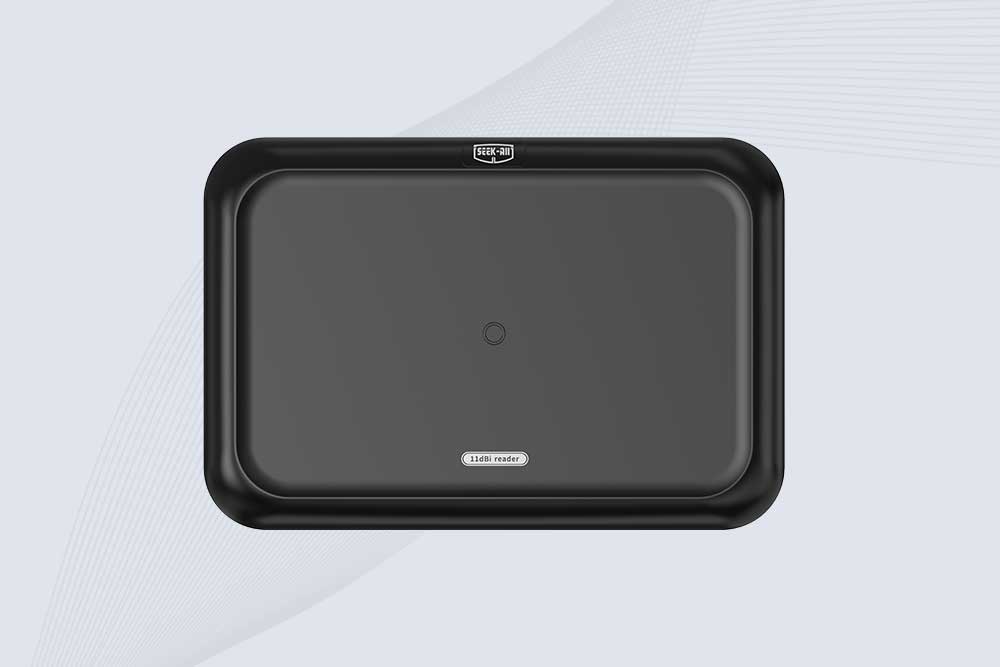
SSD-RA11L is an 11 dBi UHF RFID reader with up to 15m reading distance, 600+ tags/s speed, integrated antenna and flexible connectivity.
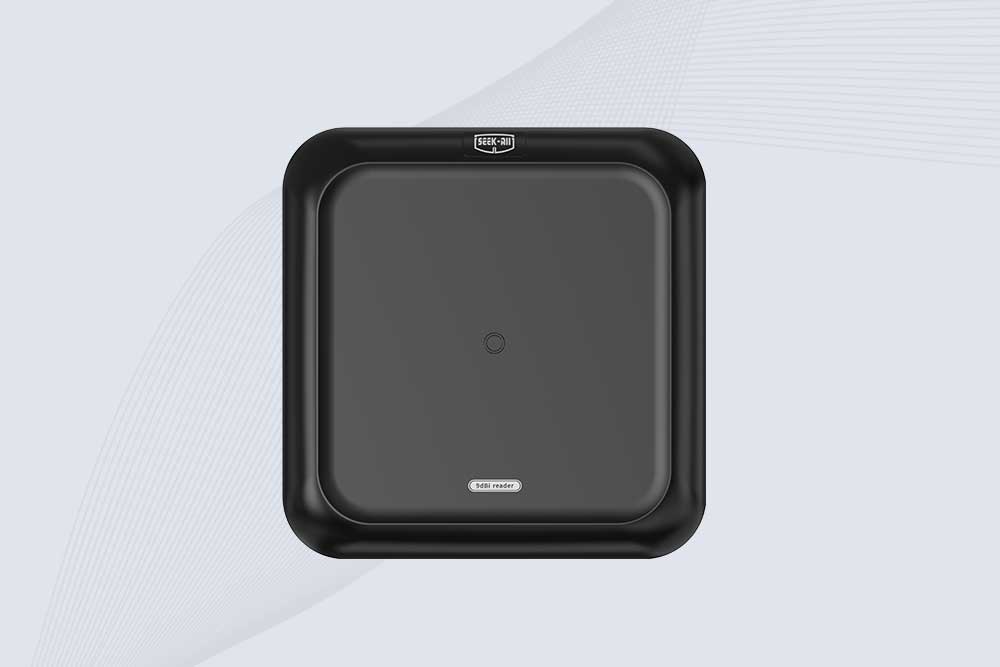
SSD-RA09L is a long range UHF RFID reader with a built-in 9 dBi antenna, 10m reading range, 600+ tags/s speed and flexible interfaces.
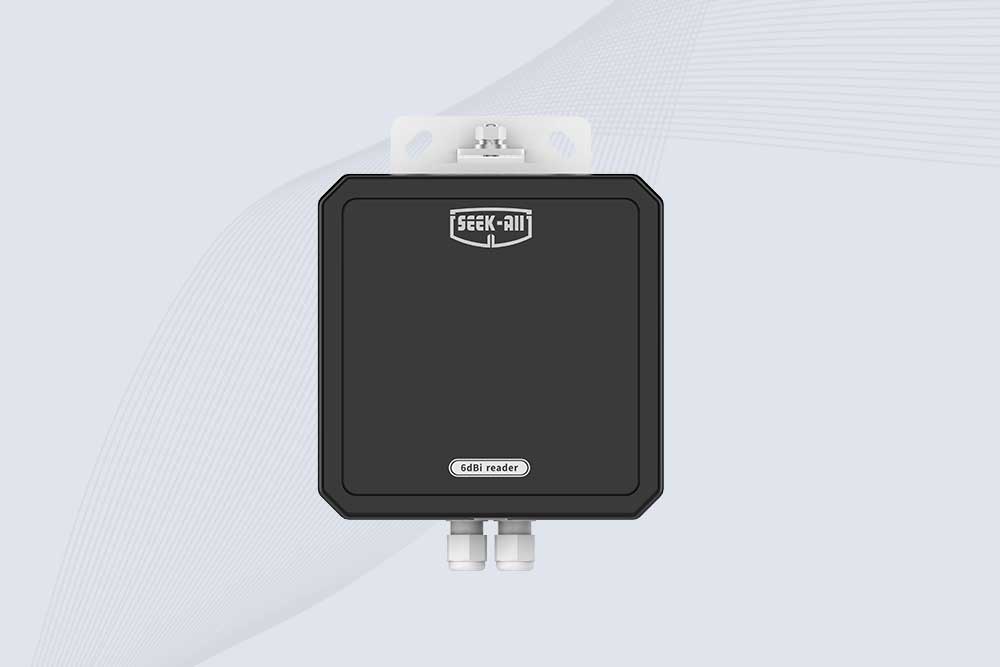
SSD-RA06L is an industrial UHF RFID reader with a built-in 6 dBi antenna, 3 m read range, 600+ tags/s, Ethernet, RS232, and optional Wi-Fi, 4G, and PoE.
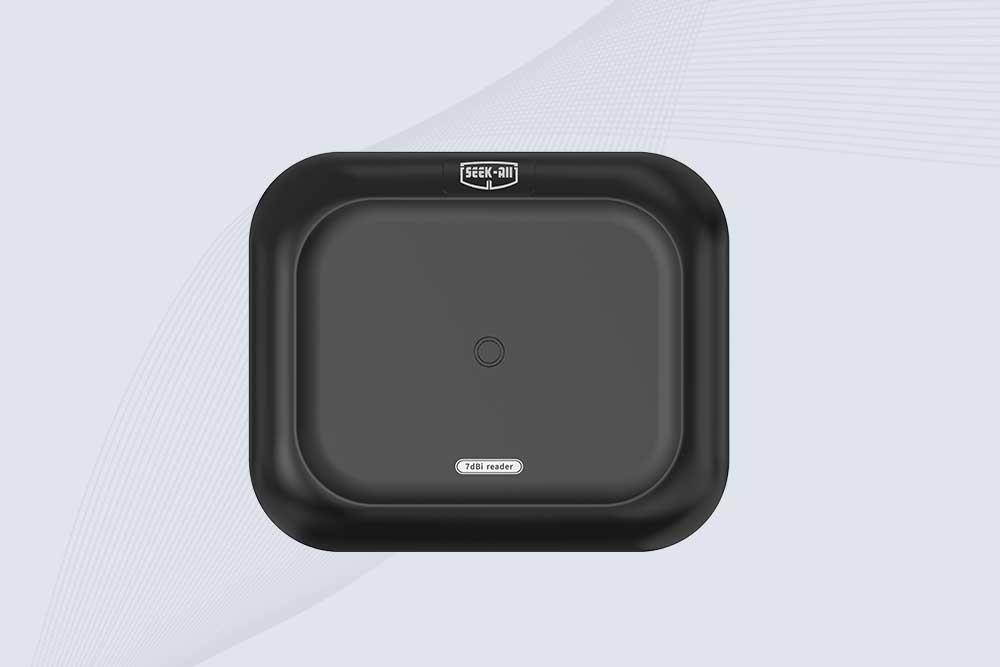
SSD-RA07L industrial UHF RFID reader with integrated 7 dBi antenna, up to 6 m reading distance, over 600 tags/s, Ethernet, RS232, and optional Wi-Fi, 4G, and PoE.
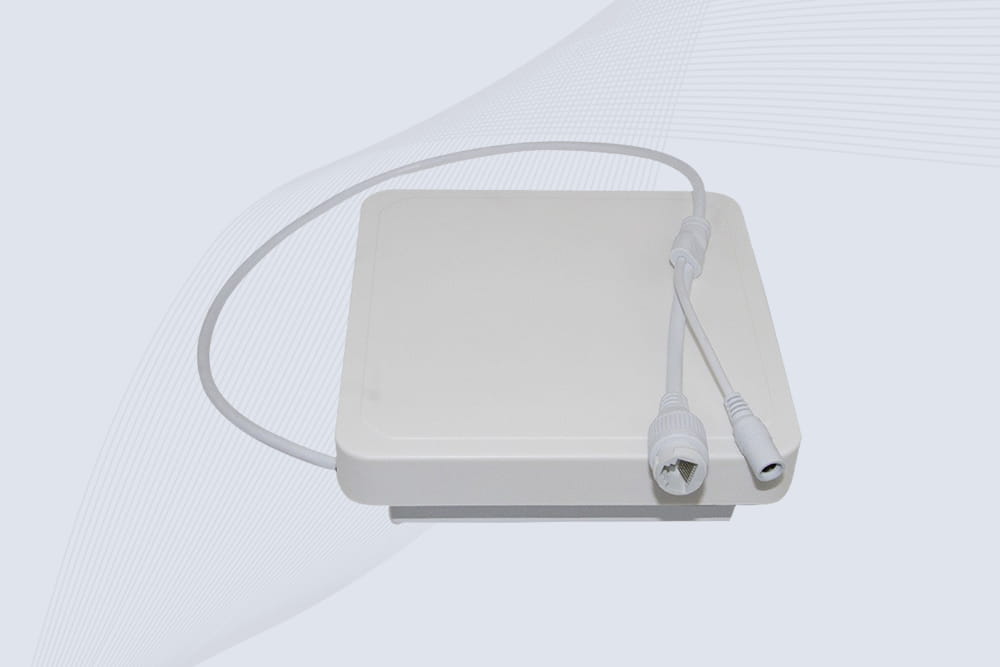
Cykeo’s industrial long range RFID reader delivers 20-meter scanning, 500+ tags/sec speed, and IP67 waterproof design for automated warehouses, logistics, and harsh environment applications.
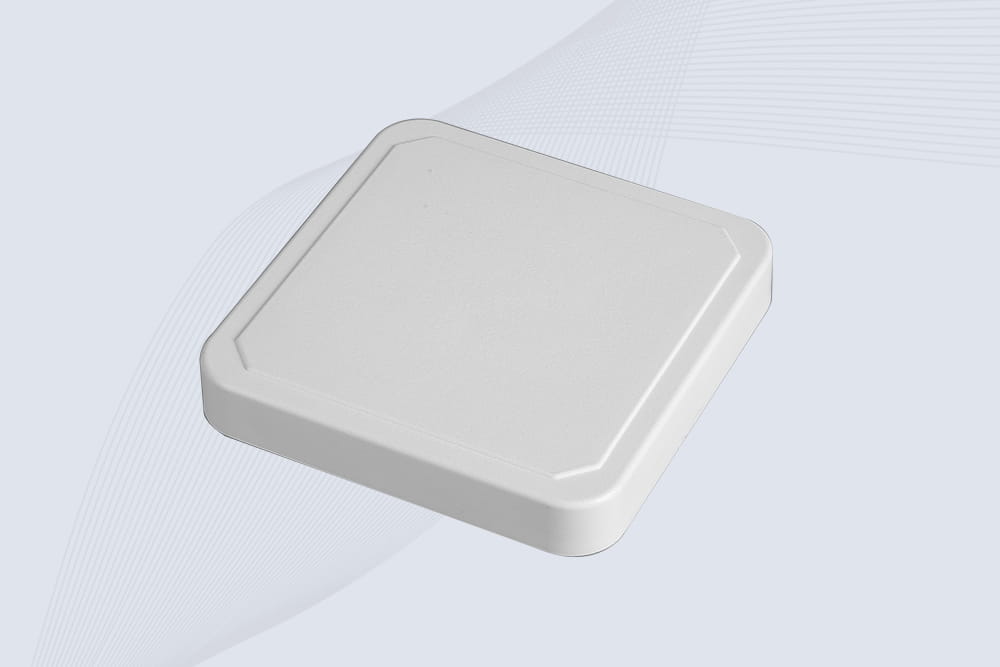
Cykeo’s CYKEO-RA6L industrial RFID long range reader features 20m read distance, 500 tags/sec speed, and IP67 protection. Ideal for warehouse automation, manufacturing WIP tracking, and smart logistics. Supports ISO 18000-6C/6B protocols.
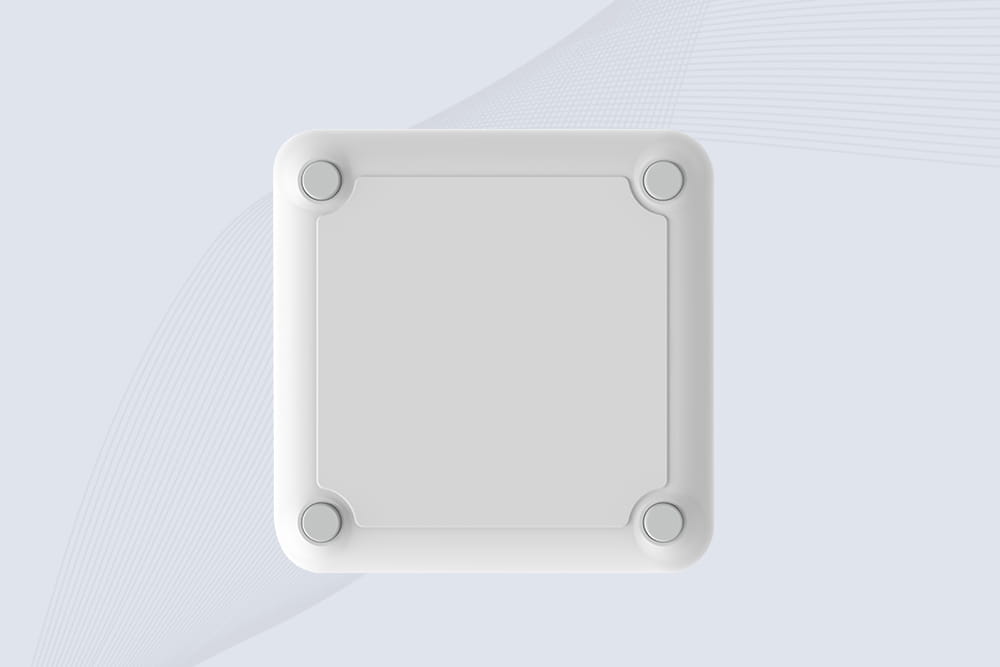
CYKEO Long Range RFID Tag Reader built for outdoor and industrial operations. This Outdoor RFID Reader delivers 20m read distance, fast tag processing, and IP67 durability for wide-area tracking.
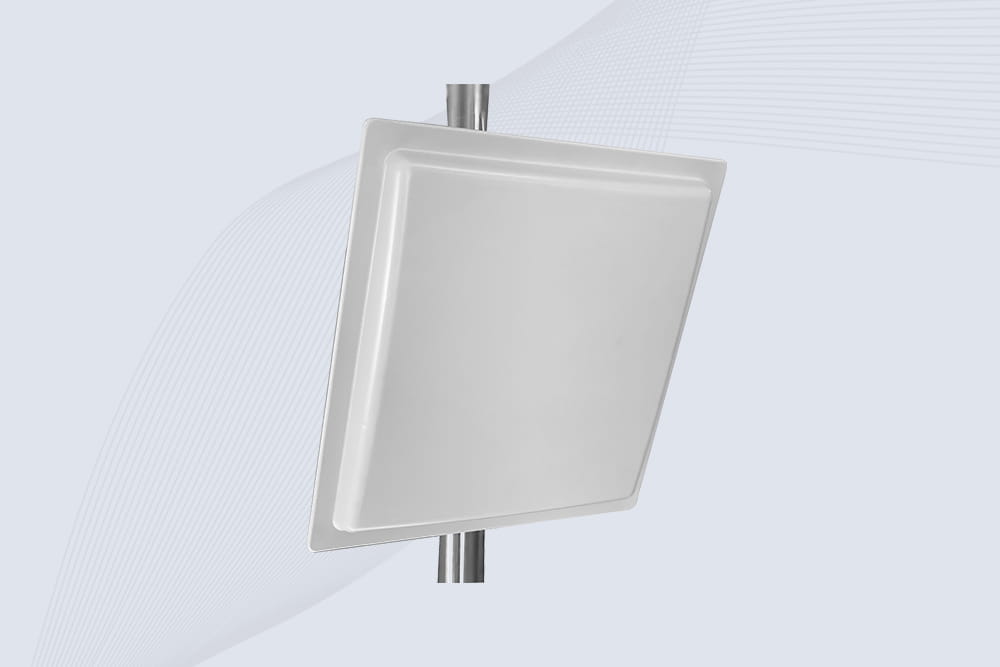
Cykeo CYKEO-RA12L industrial Long Range RFID Reader delivers 20m read range, 200+ tags/sec scanning, and IP67 protection for manufacturing/logistics applications. Supports ISO 18000-6C/GB protocols.
Learn how handheld rfid writer enables RFID tool tracking tags for accurate asset visibility, reduced loss, and faster audits in industrial environments.
More
RFID tags for garments must be washable, soft, and tamper-resistant. This article outlines common RFID label types—fabric, hang tag, embedded, and sew-in—and helps businesses select the right solution for different textile applications.
More
Discover how does rfid system work, including tags, readers, antennas, RF communication, backscatter, data processing, read range, and real-world RFID deployment insights.
More
RFID access control identifies tagged items or credentials within controlled zones and triggers defined actions, combining RFID, infrared sensing, filtering,...
More