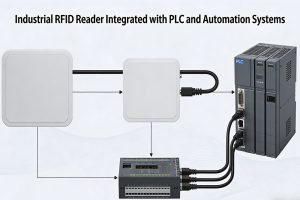
Yes, RFID tags can track location, but the accuracy depends on the RFID system. Passive UHF tags usually identify an item when it enters a reader’s coverage zone, while active RFID and specialized RTLS configurations can provide more continuous location data.
The distinction matters more than it first appears.
A standard passive RFID tag does not contain GPS. It normally has no battery and does not continuously transmit its position. GS1 describes passive tags as devices powered by the electromagnetic field generated by the reader; the tag responds by backscattering information to that reader.
So when someone asks can rfid tags track location, the practical answer is often: the reader identifies where the tag was detected.
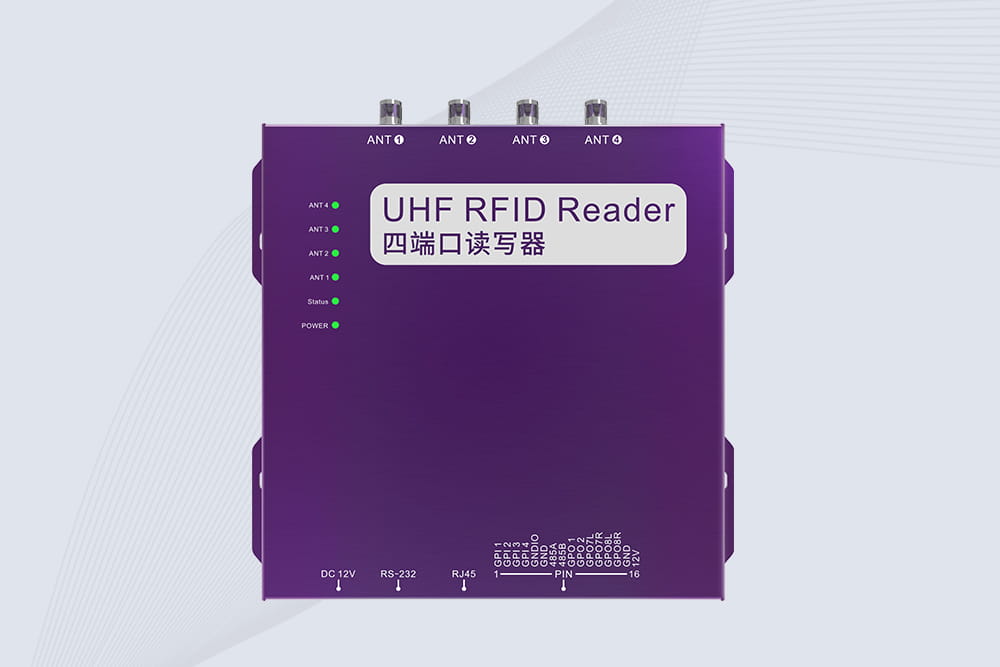
If a fixed reader is installed at a warehouse entrance, shelf aisle, production station, or tool room, every successful tag read creates a location event. The software can associate the tag ID with that reader and timestamp. RFID Journal describes this approach as choke-point or zone-level visibility rather than continuous GPS-style positioning.
Passive RFID Location Tracking
This is where most commercial RFID deployments begin.
RAIN RFID, the common passive UHF RFID technology, operates in the 860–930 MHz range and is widely used for asset identification, inventory, and tracking. GS1 notes that UHF RFID can reach several meters and, under special conditions, considerably farther; actual performance depends heavily on antenna design, tag orientation, reader power, and the surrounding environment.
In a real warehouse, for example:
RFID event
Location information
Reader at receiving door detects tag
Receiving area
Reader at packing station detects tag
Packing area
Reader at dispatch gate detects tag
Shipping area
Shelf reader detects tag
Specific storage zone
Handheld reader detects tag
Last manually inspected location
This approach is often more useful than trying to calculate an exact coordinate for every item.
During system evaluations, I pay particular attention to where the reader is installed, not simply how far the tag can be read. A reader positioned over a doorway can create a very clean movement event. The same reader placed in an open warehouse may produce ambiguous reads from neighboring zones.
Why RFID Is Not Automatically GPS
This is one of the most common misunderstandings in RFID projects.
A passive tag cannot normally tell the software, “I am at 40.7128° N, 74.0060° W.” It responds when interrogated. The system determines location from the reader, antenna, read zone, signal characteristics, or other positioning methods.
GS1’s traceability framework makes an important distinction between a readPoint—where an RFID event was captured—and a businessLocation—where the object is considered to reside after that event. This distinction is particularly useful when designing warehouse and supply-chain tracking workflows.
For many applications, that is exactly what operators need.
A hospital does not necessarily need the precise coordinates of a mobile infusion pump. It may need to know that the pump was last detected in Ward B. A tool manager may care that a torque wrench left the controlled tool room. A retailer may want to know that a tagged garment moved from the stockroom into the sales area.
That is operational location intelligence.
Active RFID and Real-Time Location Systems
When the requirement changes from “Where was this asset last detected?” to “Where is this asset right now?”, a different architecture may be appropriate.
Active RFID tags contain their own power source and can transmit signals at defined intervals. GS1 specifically notes that active RFID-based real-time location systems can use reader signals and software calculations to determine tag location.
Specialized passive RFID RTLS systems can also provide more precise positioning. RFID Journal reports that some passive UHF RTLS implementations can locate tags in three-dimensional space, with certain systems achieving approximately one-meter-cube accuracy.
The choice therefore looks roughly like this:
Requirement
Suitable RFID approach
Inventory by room or zone
Passive UHF RFID
Door/gate movement events
Fixed UHF RFID
Last-known asset location
Passive RFID + software
Continuous location visibility
Active RFID / RTLS
Higher positioning precision
Specialized RTLS architecture
Low-cost item identification
Passive RFID
What Determines RFID Location Accuracy?
The tag itself is only one part of the equation.
Key factors include:
Reader placement: defines the physical detection zones.
Antenna pattern: determines where RF energy is concentrated.
Tag orientation: affects coupling and read reliability.
Material: metal and liquid can alter RFID performance.
Zone overlap: excessive overlap can create ambiguous location events.
Software logic: converts individual reads into meaningful movement records.
GS1 notes that RFID read range is strongly affected by antenna directivity, gain, polarization, tag orientation, reader power, and RF interference.
This is why a specification such as “10-meter read range” should never be treated as a location-accuracy specification.
A ten-meter read range can be excellent for inventory counting and completely wrong for a doorway where two adjacent zones must remain separate.
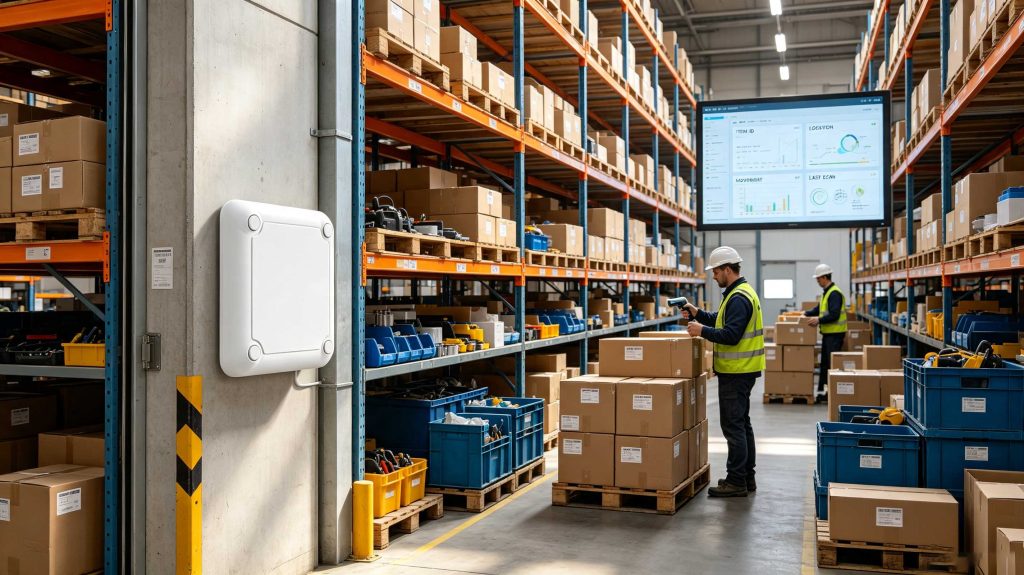
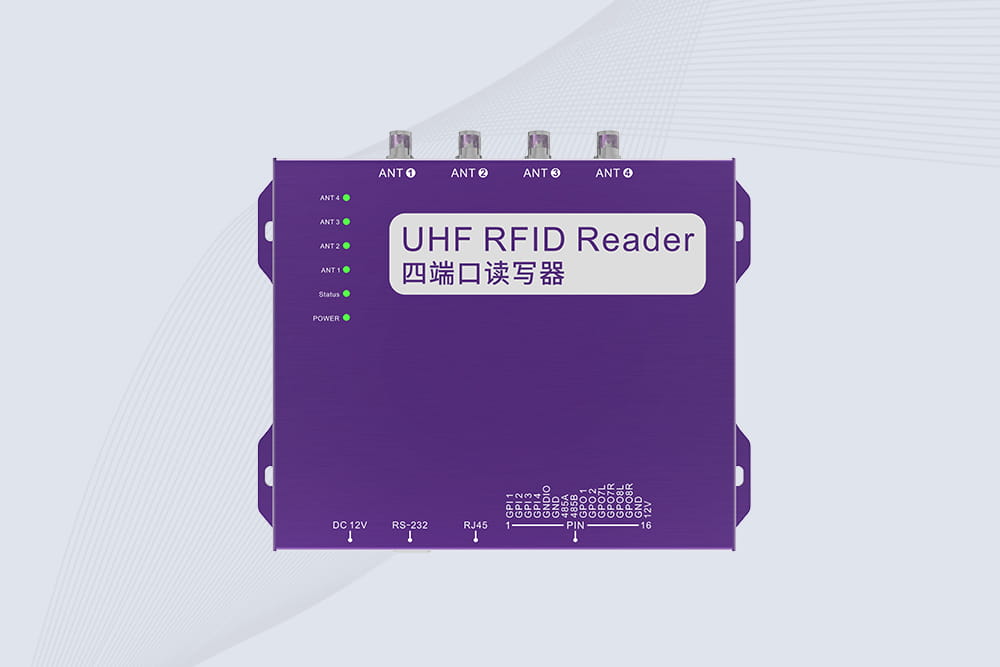
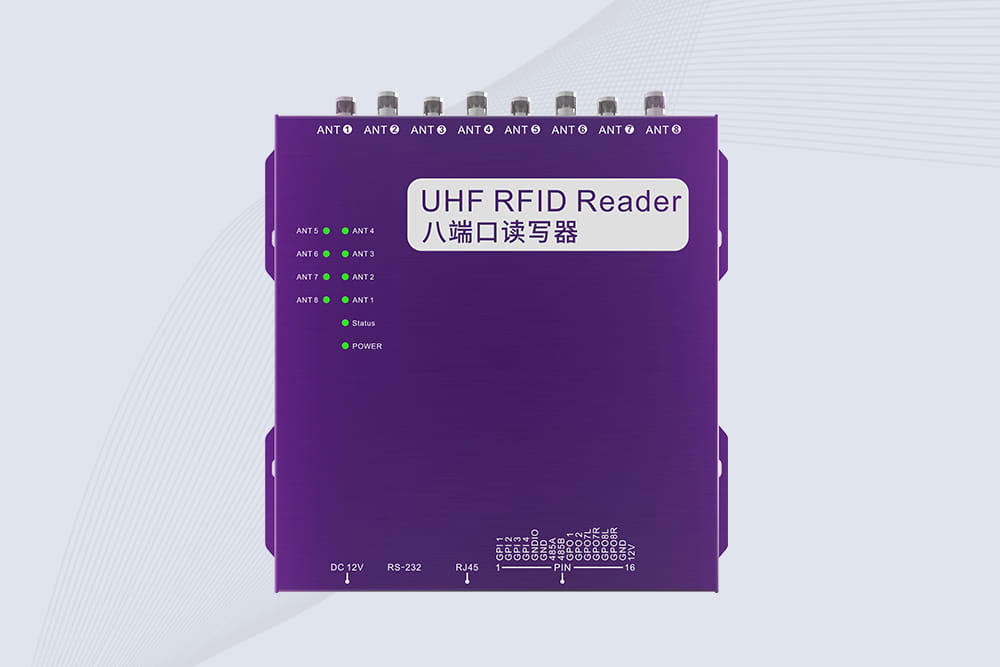
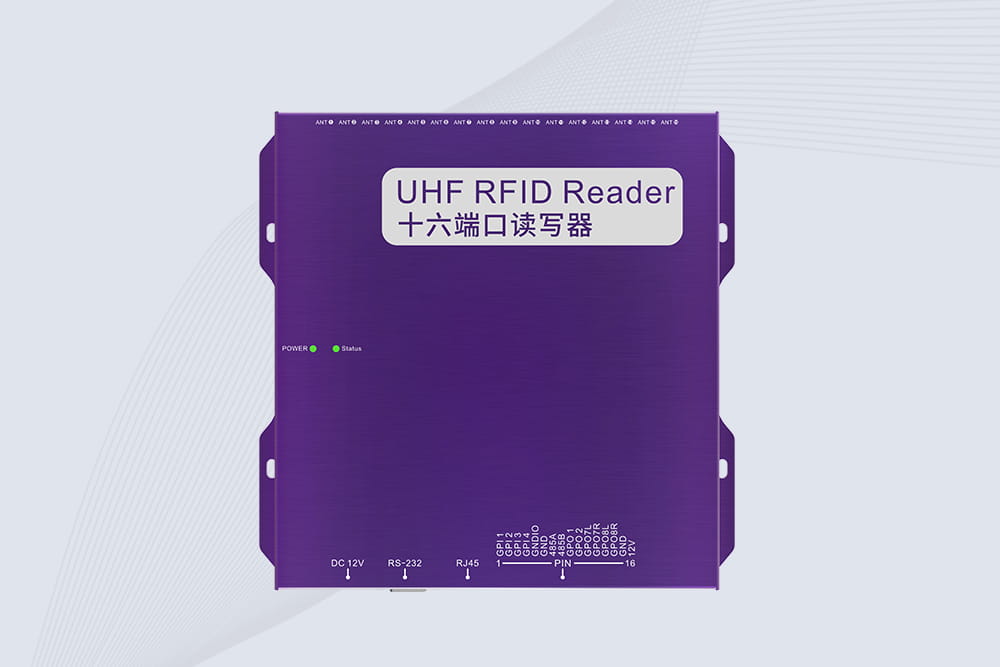
RFID readers create defined detection zones for automated inventory and asset tracking.
Where RFID Location Tracking Works Particularly Well
RFID location tracking is valuable when organizations need frequent identification without requiring workers to scan every item manually.
Typical applications include:
Warehouses: receiving, storage, picking and dispatch
Retail: stockroom and sales-floor visibility
Hospitals: medical equipment and supply tracking
Manufacturing: work-in-process and tool movement
Libraries: item movement between service areas
Airports: baggage and equipment visibility
Automotive: parts, containers and production assets
Construction: tools and reusable equipment
GS1 also documents healthcare applications in which RFID-based asset management was used to improve visibility of medical equipment and support more specific location identification through standardized location identifiers.
Cykeo Perspective: Design the Zone Before Choosing the Tag
At Cykeo, RFID location projects should be evaluated from the physical workflow backward.
Before selecting the final tag, I would establish:
What location resolution is actually required?
Which movement events matter?
Where can readers be physically installed?
Which areas must remain isolated from neighboring read zones?
What materials surround the tag?
How should the software interpret repeated reads?
That last point is frequently underestimated.
If a tag is detected 30 times while sitting beside a fixed antenna, the system does not have 30 different location changes. It has one sustained presence event. Good RFID software filters and interprets those reads instead of simply displaying raw reader data.
For that reason, can rfid tags track location should never be treated as a simple yes-or-no hardware question. The better question is whether the complete RFID architecture can produce the level of location visibility the operation actually needs.
Cykeo RFID Tracking Technical Advantages
For location tracking, the important distinction is not simply whether an RFID tag can be detected. The real engineering question is where the tag was detected, by which reader, at what time, and whether that event is reliable enough to support an operational decision.
Cykeo RFID systems are designed around this event-based approach. A reader captures the tag’s unique identifier, the software associates that identifier with a defined read point, and the backend converts the event into an operational location such as warehouse entrance, pharmacy storage area, tool cabinet, checkout zone, or retail shelf.
GS1 describes the RFID infrastructure as readers and tags working together, with the reader supplying energy to passive tags and receiving their backscattered data.
Where Cykeo RFID Adds Practical Value
Multi-tag identification — several tagged products can be captured during one reading cycle rather than requiring individual barcode scans.
No direct line of sight — RAIN RFID can identify tags that are not visually exposed to the operator.
Defined read zones — antenna placement can create controlled detection areas around doors, shelves, counters, cabinets, or workstations.
Event-based tracking — every successful read can become a timestamped inventory or movement event.
Integration flexibility — reader data can be connected to inventory, ERP, WMS, retail, pharmacy, or asset-management software.
Selective identification — EPC data can distinguish individual tagged items rather than only identifying a product category.
One detail matters in deployment: RFID detection is not automatically GPS positioning. A conventional passive UHF reader normally establishes that a tag entered its RF read zone. More precise localization requires multiple antennas/readers, specialized algorithms, or an active RFID RTLS architecture.
RFID Location Tracking System Architecture Deep Dive
A practical RFID tracking system usually contains five layers:
Converts RFID events into inventory/location status
The physical workflow is straightforward:
RFID Tag → Antenna → Reader → Middleware → Database → Tracking Application
A passive RAIN RFID tag does not continuously broadcast its position. It receives energy from the reader’s RF field and returns information through backscatter. Active RFID tags, by contrast, contain a power source and can transmit their own signal.
That difference changes the system design considerably.
For a hospital pharmacy, for example, a fixed reader at the receiving area can record when a tagged supply enters the department. Another read point near the dispensing counter records the next movement. The software does not need to pretend the tag has centimeter-level coordinates. It simply knows which controlled zone last detected the item.
That is often more useful operationally.
Passive RFID vs Active RFID Location Tracking
Characteristic
Passive UHF RFID
Active RFID RTLS
Tag power
Reader-powered
Battery-powered
Typical purpose
Identification and zone tracking
Continuous location tracking
Tag cost
Lower
Higher
Infrastructure
Reader + antenna
Readers/locators + active tags
Location method
Read-zone detection
Signal-based positioning
Best suited to
Retail, inventory, logistics, tools
High-value assets, RTLS
Continuous broadcast
No
Yes
GS1 notes that passive UHF/RAIN tags typically operate over several meters, with exceptional systems reaching farther, while active RFID can provide substantially longer ranges.
RFID Tracking vs Barcode: The Difference at the Read Point
Barcode technology remains useful, but it depends on a different operating behavior.
A barcode scanner normally needs the operator to position the symbol in front of the scanner. RFID can capture a tag without direct visual alignment, which is particularly valuable when multiple products are placed together. GS1 US specifically identifies this no-line-of-sight capability as one of the major advantages of RAIN RFID.
Factor
RFID
Barcode
Line of sight
Not normally required
Usually required
Multiple-item reading
Yes
Usually one-by-one
Manual scanning
Minimal
Normally required
Read speed
High for bulk identification
Dependent on operator
Tag visibility
Not necessary
Necessary
Rewritable data
Available on suitable tags
Generally printed/static
Tracking capability
Strong with controlled read points
Depends on scan discipline
Tag cost
Higher
Lower
The better question is therefore not RFID or barcode? In many installations, both are retained. GS1 US explicitly describes RFID and barcode as complementary technologies that can support different points in the same supply chain.
Industry Case Studies
1. Hospital Pharmacy and Medical Consumables
RFID can be installed at receiving points, storage cabinets, pharmacy counters and issue stations.
A tagged medical supply passing a controlled reader zone can automatically generate an inventory event. When the same item is issued, the second read point provides a new event.
Useful records include:
Item ID
Batch or serial reference
Receiving time
Storage location
Issue time
Operator
Return status
Inventory history
This reduces the dependence on handwritten movement records.
2. Retail and Apparel
Retail is one of the strongest use cases for item-level RAIN RFID. GS1 states that RAIN RFID is widely used in retail, logistics and manufacturing for high-volume item identification.
A store can establish read zones around:
Receiving doors
Stockrooms
Shelving areas
Fitting rooms
Checkout stations
Returns counters
A tagged garment does not need to be physically scanned every time an employee handles it.
3. Tool and Equipment Management
For tool rooms, the tracking objective is often simple: which tool was last detected, and where?
An RFID reader installed at a tool cabinet or exit can create a reliable movement history. If a tool disappears from the expected zone, the software can flag the exception rather than waiting for a manual inventory check.
RFID Location Tracking Deployment Strategy
A successful deployment usually starts with read points, not readers.
Step 1: Define the location event
Decide what the system must actually report:
“Item entered warehouse A”
or
“Tool left maintenance room”
or
“Garment reached checkout.”
Avoid starting with a vague requirement such as “track everything in real time.”
Step 2: Select the RFID technology
Use passive UHF RFID when zone-level identification and high-volume item reading are the priority.
Consider active RFID RTLS when continuous location information is genuinely required.
Step 3: Build controlled RF zones
Reader power, antenna gain, polarization, tag orientation, metal surfaces and liquid-filled products can all affect the RF environment. GS1 specifically notes that the effective read volume depends heavily on antenna characteristics and tag orientation.
Step 4: Test the difficult items first
Do not begin testing with an empty cardboard box.
Test:
Metal tools
Liquid containers
Dense product stacks
Clothing bundles
Medical supplies
Mixed-tag cartons
RFID performance is usually decided by the difficult items, not the easy ones.
Step 5: Connect events to business software
The final system should transform raw reads into meaningful events:
EPC → Reader ID → Antenna/Zone → Timestamp → Business Event
That is where an RFID project stops being a radio experiment and becomes an operational system.
RFID Location Tracking: Performance Considerations
There is no universal RFID location accuracy number.
NIST’s research on RFID localization identifies multipath, interference and the challenge of locating multiple objects as important technical issues.
For ordinary passive RFID, the safest interpretation is generally zone-level location. RFID Journal likewise notes that conventional passive HF and UHF systems usually indicate that a tag was detected by a particular reader rather than automatically providing precise coordinates.
For higher-precision positioning, specialized passive RTLS, active RFID RTLS or other technologies may be appropriate.
This distinction prevents one of the most common RFID project mistakes: buying ordinary UHF readers while expecting GPS-like positioning.
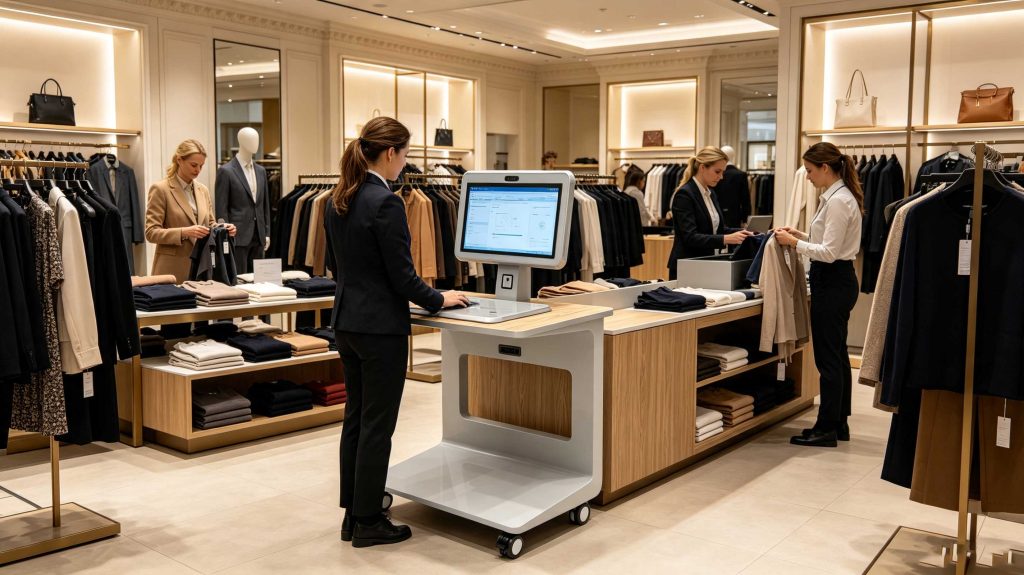
RFID enables rapid item identification at retail checkout and inventory control points.
FAQ: RFID Location Tracking
Can RFID tags track location?
Yes. RFID can track an item’s location when readers are installed at defined detection points. Standard passive RFID generally reports the tag’s detected zone rather than exact coordinates.
Can passive RFID provide real-time location?
It can support near-real-time zone tracking when readers continuously monitor defined areas. Exact positioning requires additional system architecture and localization methods.
How far can an RFID tag be detected?
Read distance varies with tag type, frequency, reader power, antenna design, tag orientation and the surrounding environment. GS1 notes that passive UHF tags typically operate over several meters, while special configurations can reach farther.
Can RFID track multiple items simultaneously?
Yes. RAIN RFID is specifically designed for rapid identification of multiple tagged objects, making it suitable for inventory, retail and logistics applications.
Does RFID require GPS?
No. Conventional RFID location tracking uses reader detection zones rather than GPS. A system can determine that an item is at a particular door, shelf area, cabinet or workstation based on the reader that detected it.
Can RFID track assets inside a warehouse?
Yes. Fixed readers, antennas and strategically positioned read zones can create an asset movement history throughout a warehouse. Reader placement and RF testing are essential for reliable results.
Is RFID better than barcode for tracking?
RFID is usually stronger for automated, high-volume identification, while barcode remains attractive for low-cost, deliberate scanning. Many commercial systems use both technologies.
SEO Ending
Can RFID tags track location? Yes—but the answer depends on what “location” means in the application. For inventory and asset operations, passive UHF RFID can provide dependable zone-level visibility through strategically positioned read points. For precise real-time positioning, a dedicated RTLS architecture may be required.
Cykeo approaches RFID tracking from the equipment and application side: reader performance, antenna coverage, tag behavior, read-zone control and software events all have to work together. The useful result is not simply a tag being detected. It is a trustworthy location event that can be acted on.
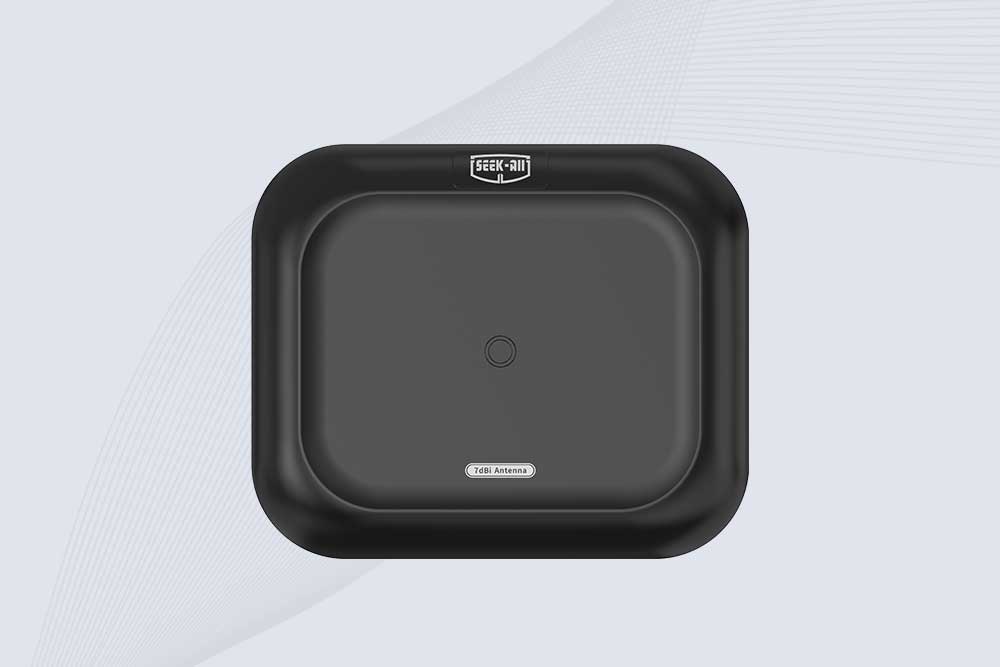
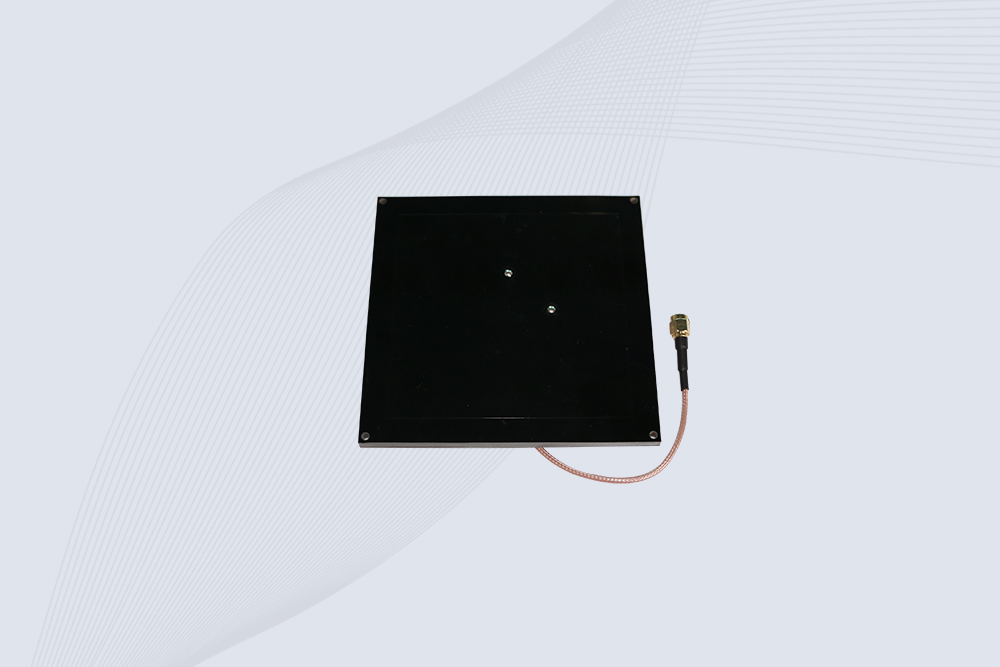
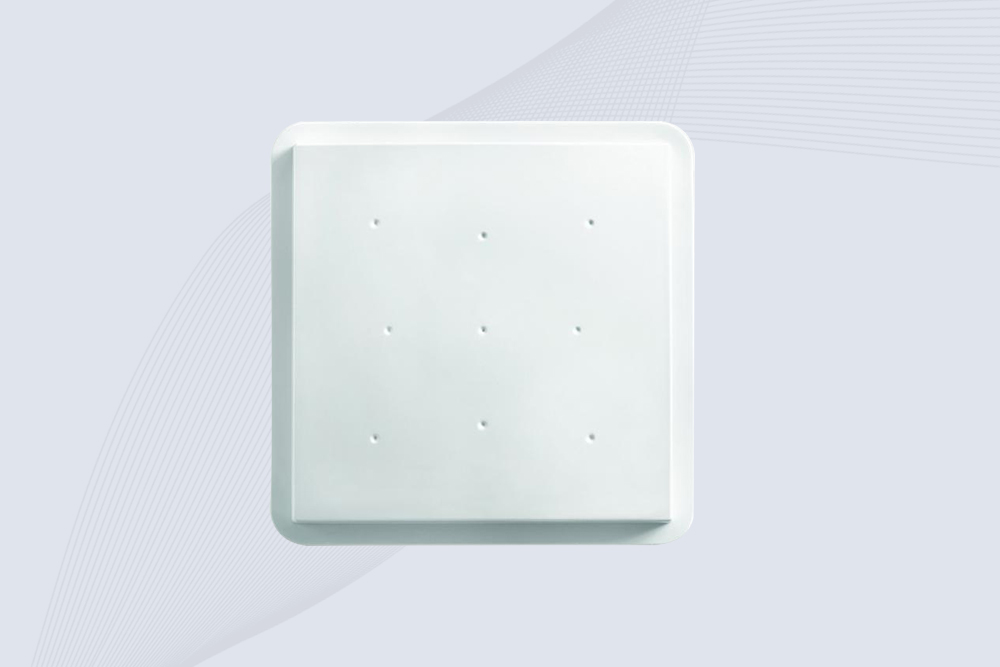
Explore the SSD-A07 UHF RFID antenna with 7 dBi gain, circular polarization, adjustable 840–960 MHz frequency, and 60°/75° beamwidth for stable RFID read/write performance.
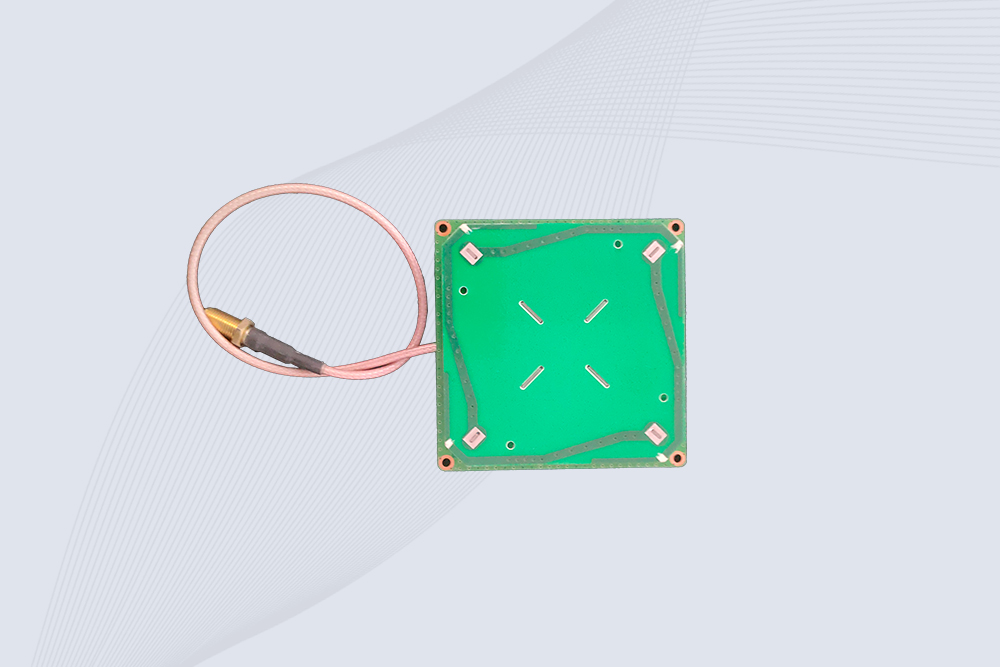
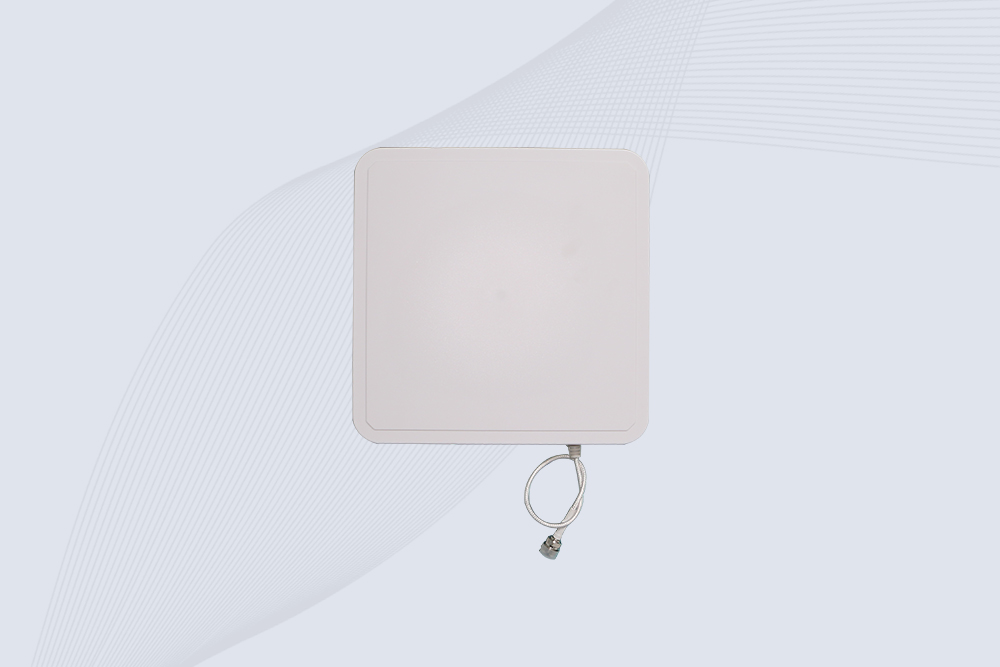
SSD-A06 UHF RFID antenna with circular polarization, adjustable 840–960 MHz frequency, ≥4.5 dBi gain, and a compact directional design for RFID systems.
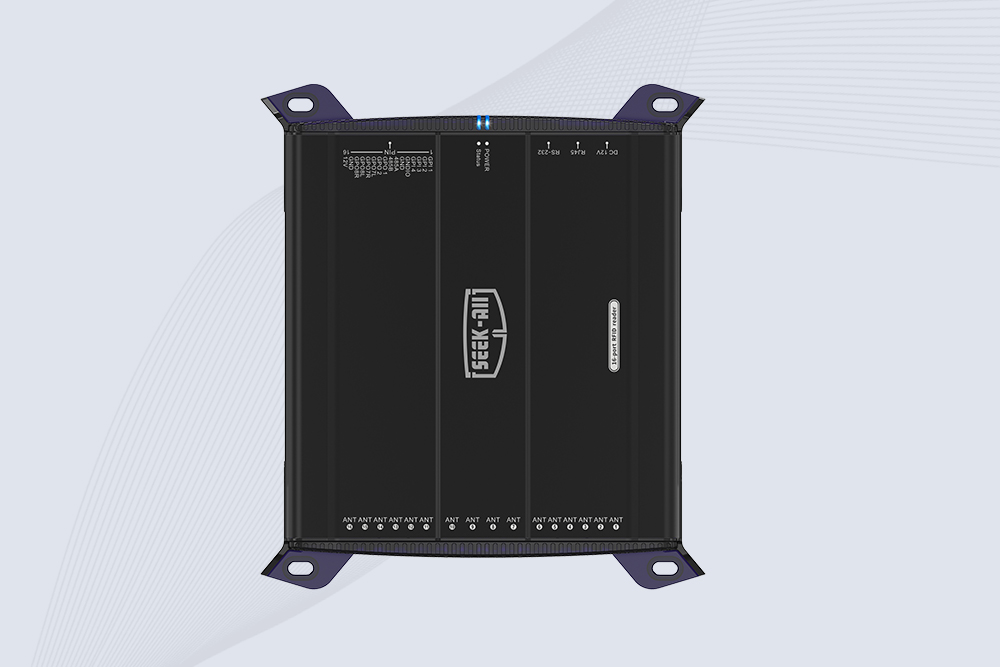
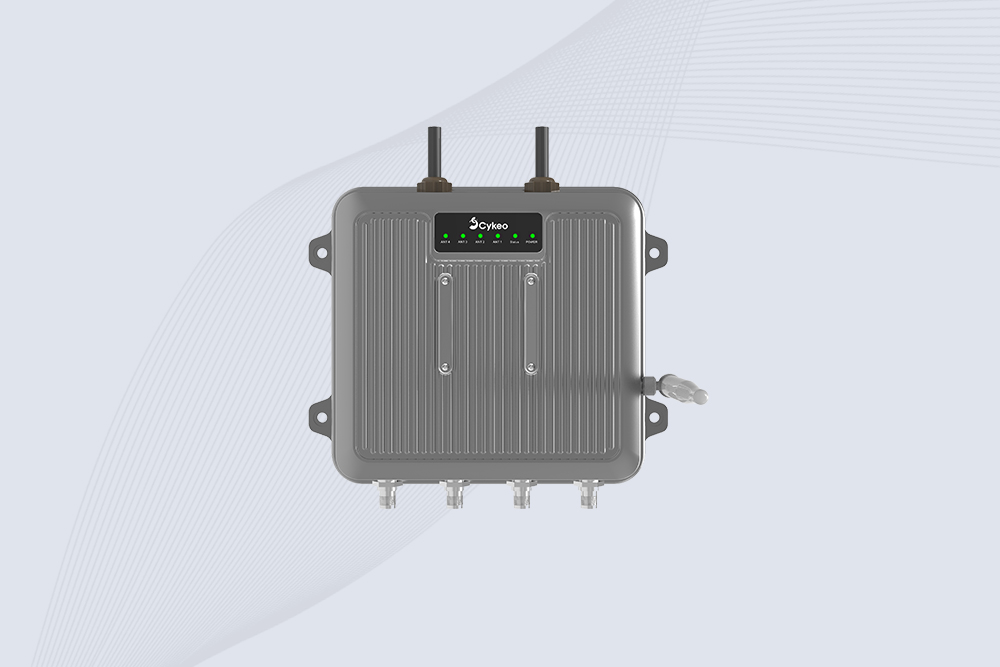
SSD-R16L Multi-Channel RFID Infrastructure for Automated Inventory Management ✔️ 16-Port High-Density RFID Reading Equipped with 16 SMA antenna ports, SSD-R16L supports multi-antenna deployment for warehouses, retail stores, logistics, production lines, and large-area RFID identification. ✔️ High-Speed & Long-Range Performance With up to 33…
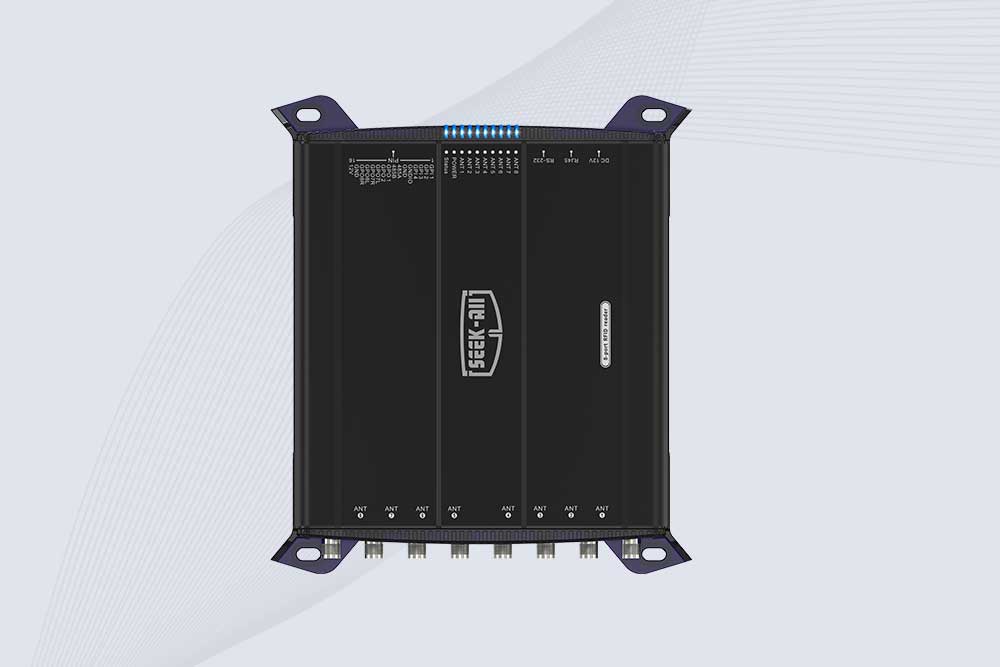
SSD-R8L 8-port UHF RFID reader with 33dBm output, up to 20m reading range and 600+ tags/s recognition. Ideal for warehouse, logistics, retail and asset tracking.
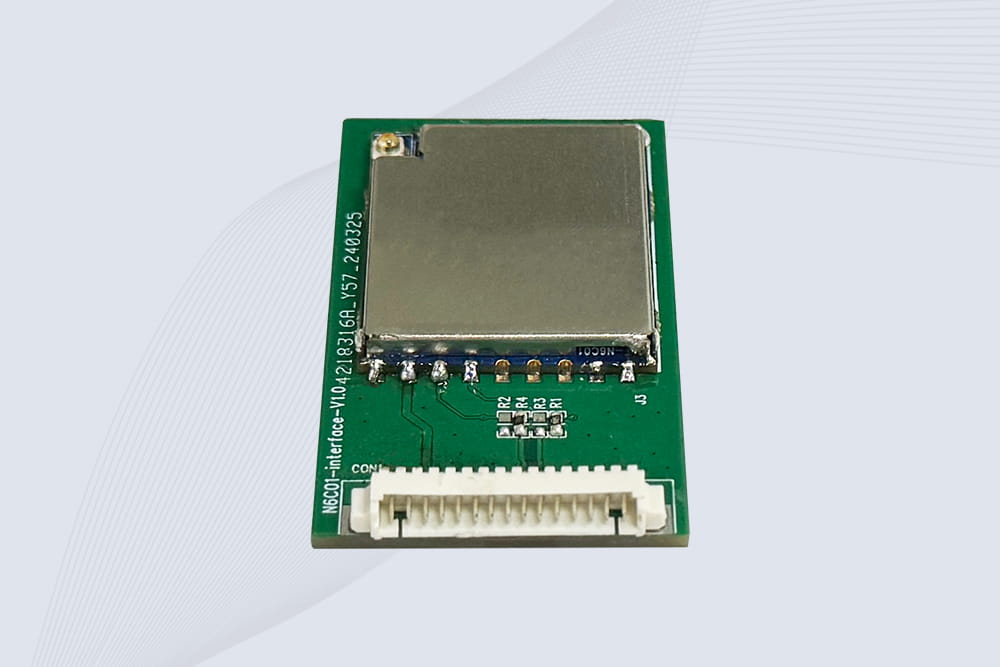
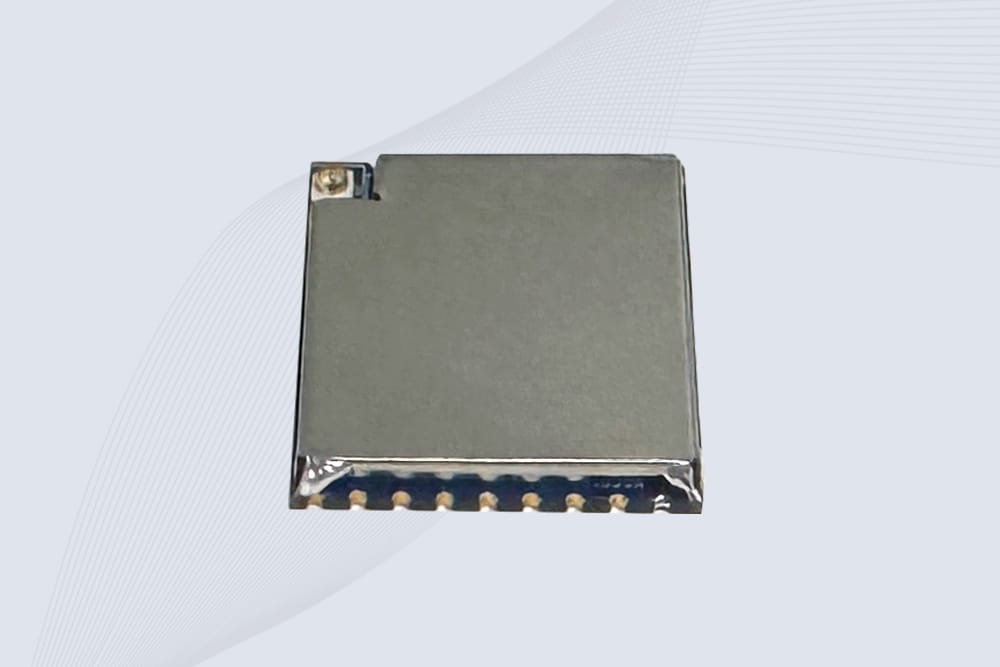
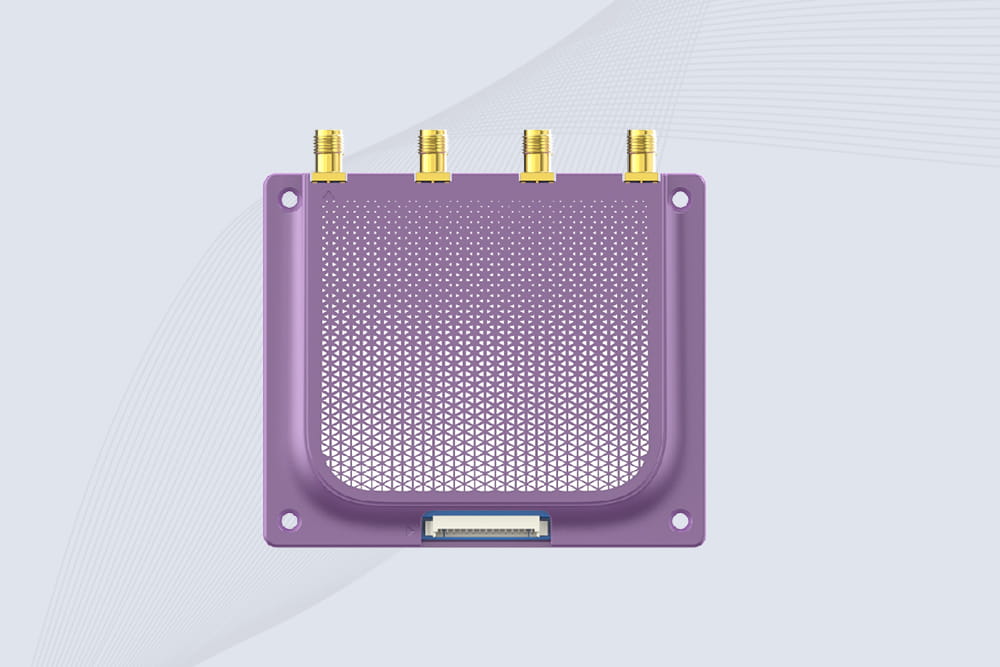
CYKEO Embedded RFID Modules are designed for compact industrial and IoT devices that require stable UHF performance. These UHF RFID Modules support global protocols, flexible power control, and reliable multi-tag reading for smart cabinets, production lines, and asset tracking systems.
CYKEO Embedded RFID Module is built for compact IoT and industrial devices that need stable UHF performance. This UHF module supports global protocols, low power operation, and reliable multi-tag reading for smart lockers, production lines, and always-on RFID systems.
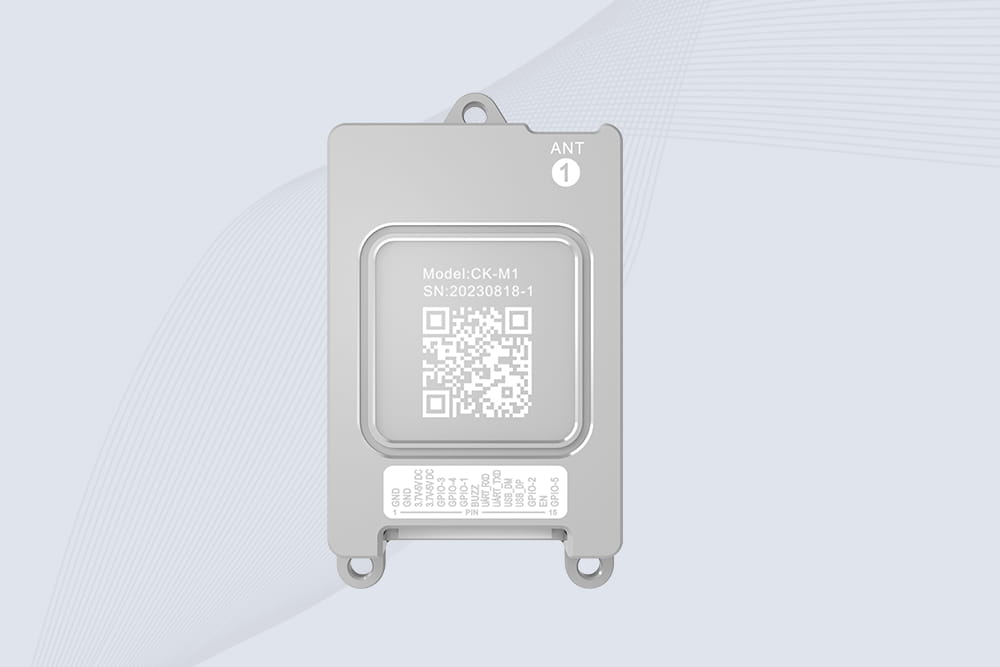
CYKEO CYKEO-M1 drone rfid module is a compact UHF RFID reader module designed for drones and UAV platforms. It supports long-range aerial scanning, fast multi-tag reading, and stable performance in wind, vibration, and outdoor environments.
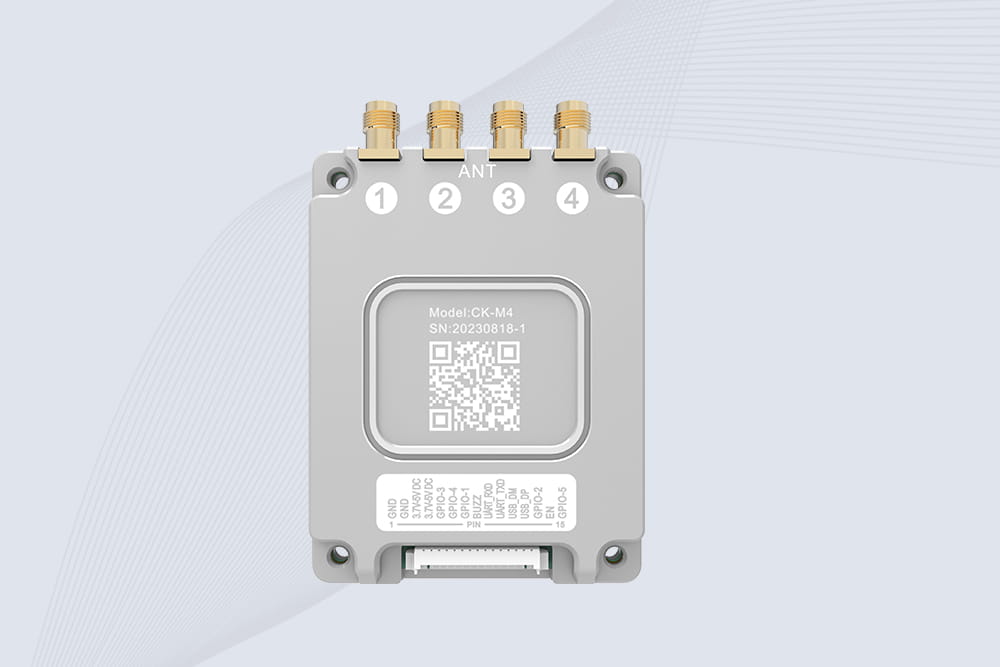
CYKEO CYKEO-M4 RC522 RFID Module is an industrial-grade UHF RFID reader with 4 ports, supporting ISO, EPC, and GB protocols. High-speed, accurate reading for IoT, automation, and warehouse applications.
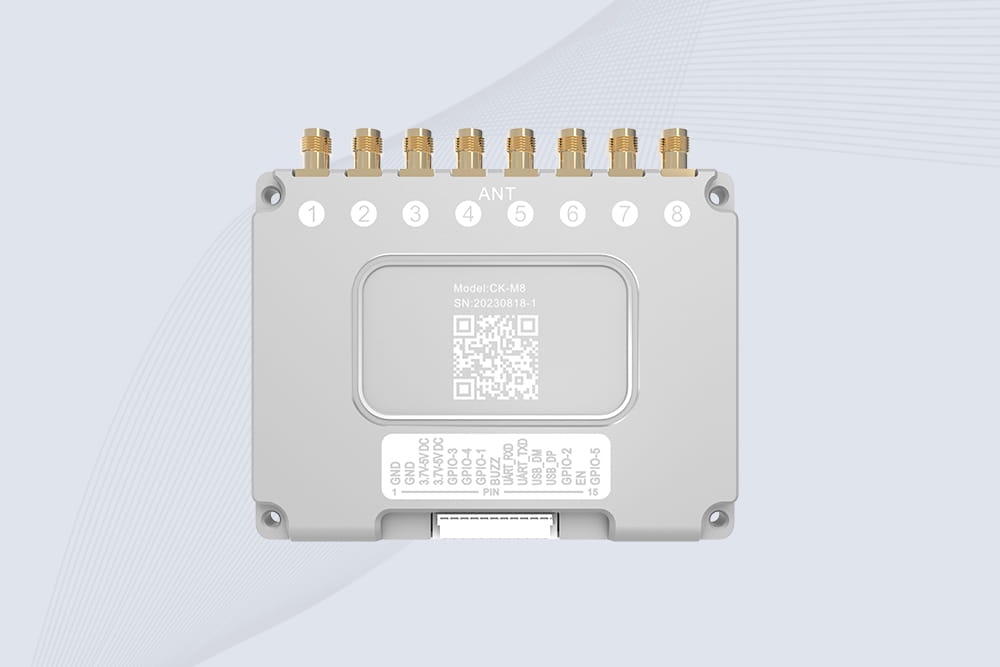
CYKEO CYKEO-M8 Module RFID is an 8-port UHF R2000 RFID Module designed for high-density, multi-tag environments. Stable 33dBm output, ISO & GB protocol support, ideal for warehouses, factories, and automated systems.
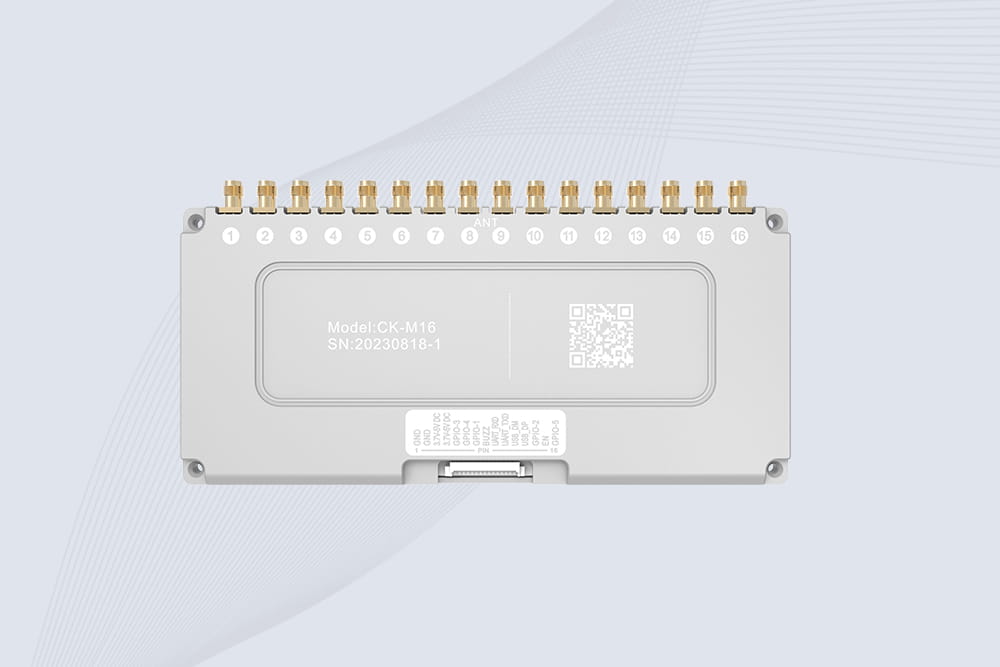
CYKEO CYKEO-M16 RFID Module is a 16-port UHF RFID reader module based on the R2000 chipset. Designed for dense tag environments, it supports ISO and GB standards and delivers stable multi-antenna control for industrial automation.
The CYKEO CYKEO-M16L RFID Reader Module is a 16-channel UHF RFID core designed for dense tag environments. With adjustable 33dBm output, multi-protocol support, and stable multi-antenna control, this RFID Tag Reader Module fits industrial automation, warehouse systems, and large-scale IoT deployments.
CYKEO CYKEO-M8L module RFID is a compact industrial UHF module built for dense tag and multi-antenna environments. With 8 RF ports, adjustable 33 dBm output, and ISO & GB protocol support, it is widely used in factories, warehouses, and automated tracking systems.
CYKEOCYKEO-M4L UHF RFID Module is a compact 4-channel RFID tag reader module designed for dense tag environments. Supporting ISO and GB protocols, it delivers stable reads up to 10 meters for industrial and IoT systems.
Cykeo CYKEO-A11 UHF RFID reader antenna delivers 11dBi gain, 840-960MHz frequency range, and IP65 ruggedness for retail, logistics, and industrial RFID systems. Features low VSWR and easy installation.
CYKEO Antenna RFID Reader delivers stable long-range UHF performance with a 10.5dBi directional design, built for warehouses, conveyor portals, and industrial RFID systems. This rfid reader antenna provides 20m+ read distance and rugged IP67 protection.
Cykeo CYKEO-A5B industrial Linear RFID Antenna delivers 5dBi gain, ≤1.5:1 VSWR, and IP65 rugged design for warehouse, production line, and logistics UHF systems.
Cykeo’s CYKEO-B12 Long Range RFID Antenna delivers 15m+ read range with 12dBi gain, IP65 rugged design, and global 840-960MHz UHF support. Ideal for warehouse/logistics asset tracking.
Cykeo CYKEO-B10 Long Distance RFID Antenna offers 10dBi gain, 840-960MHz frequency range, IP65 rating, and 20m+ coverage for logistics/warehousing/ETC systems. Low VSWR ensures stable signal transmission.
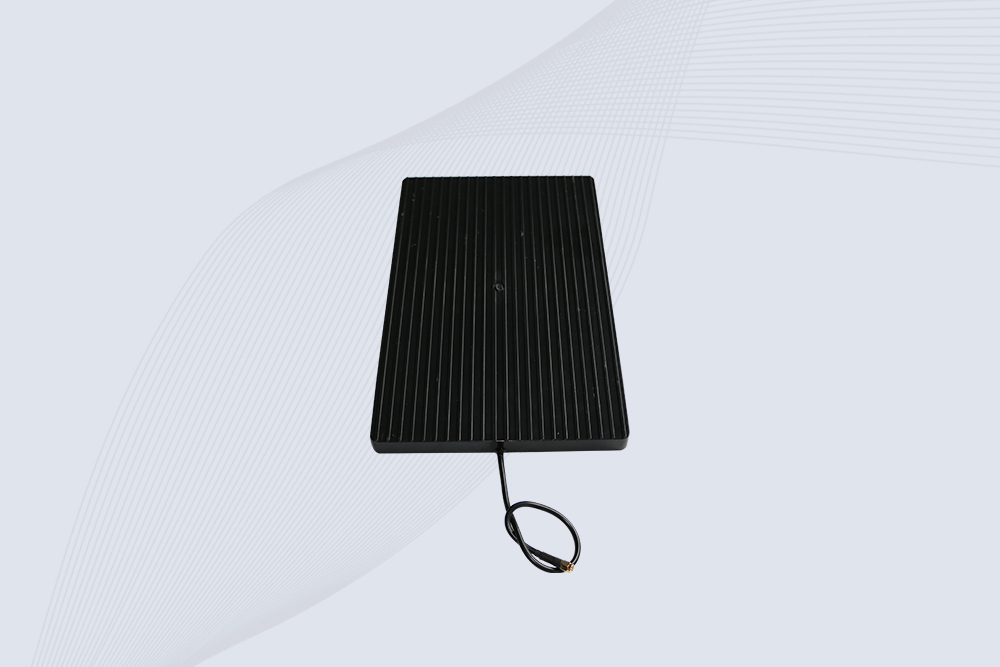
Cykeo CYKEO-A6 UHF RFID panel antenna features 6dBi gain, 840-960MHz broadband, IP65 metal-ready housing for logistics/smart retail. 18mm ultra-thin design with tool-free mounting.
Cykeo CK-A3 industrial antenna RFID UHF offers 5m+ tag detection, ≤1.3:1 VSWR, IP65 rugged design, and global UHF spectrum compatibility (840-960MHz) for warehouses, factories, and retail.
Cykeo CYKEO-B5 directional RFID antenna provides 5dBi gain with 60° narrow beamwidth for precise inventory tracking. IP65-rated, global UHF frequency support, and low VSWR.
Create your own high-performance DIY RFID antenna! 5dBi gain, 840-960MHz tunable, step-by-step guides. Compatible with Arduino, Raspberry Pi, and commercial UHF readers.
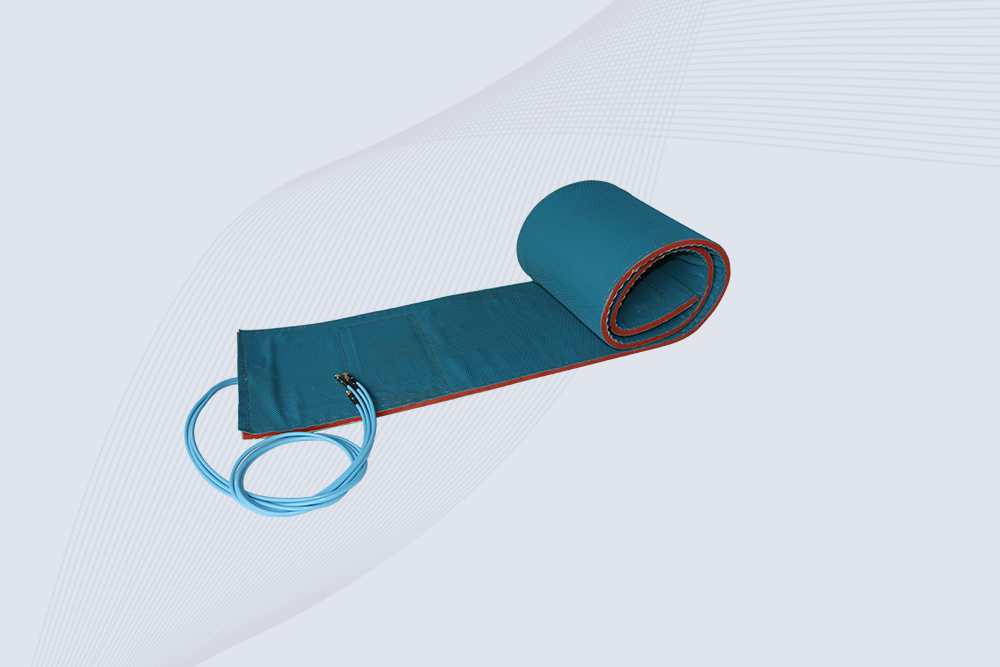
Cykeo CYKEO-A7 Flexible RFID Antenna features 840-960MHz wideband tuning, 7dBi gain, and IP68 rating for medical/retail/industrial curved surface deployments. 98% read accuracy with peel-and-stick installation.
Cykeo CYKEO-B5A industrial Passive RFID Antenna delivers 5dBi gain, 70° beamwidth, and -40°C~55°C operation for warehouses/smart cabinets. Compatible with Zebra/Impinj readers.
Cykeo’s CYKEO-A9B High Gain RFID Antenna delivers 15m+ read range with 9dBi amplification. Features IP54 rugged design, 840-960MHz bandwidth, and 80° beamwidth for warehouse/manufacturing RFID systems.
Cykeo’s enterprise-grade 8dbi Impinj RFID Antenna 10m+ read range with 840-960MHz tuning. Features IP65 housing, 1.4 VSWR, 35° beamwidth for retail/warehouse RFID systems.
Cykeo CYKEO-A9 industrial UHF RFID antenna delivers 9dBi gain, 840-960MHz frequency range, and IP65 protection for warehouse/logistics/retail RFID systems. Features N-type connector and ≤1.3:1 VSWR.
CYKEO UHF RFID Antenna built for long-distance and industrial applications. This antenna rfid uhf delivers strong gain, outdoor durability, and reliable tag performance in warehouses, yards, and vehicle ID systems.
CYKEO Antenna RFID delivers reliable long-range UHF performance in warehouses, retail shelves, and cold-chain environments. This compact uhf rfid antenna provides stable reads with circular polarization and ultra-wide 840–960 MHz support, ideal for industrial tracking, smart shelves, and asset monitoring.
Cykeo’s CYKEO-C8 UHF RFID antennas delivers 8dBi gain, 840-960MHz full-band coverage, and IP65 ruggedness for manufacturing/warehouse RFID systems. Industrial RFID Antennas Features
Cykeo’s 8dBi UHF RFID antenna and reader kit delivers 10m+ range, 840-960MHz broadband, and IP65 ruggedness for factories, warehouses, and logistics. ISO 18000-6C & EPC Gen2 certified.
Cykeo’s CYKEO-A12C UHF Large RFID Antenna delivers 12dBi gain, 840-960MHz global frequency, IP65 ruggedness for logistics/warehousing/automotive. 40° beamwidth ensures stable 15m+ tag reads.
CYKEO Near Field RFID Antenna provides precise 5–30 cm reading for shelves, cabinets, and workstations. This compact rfid shelf antenna delivers stable short-range performance around metal and clutter, ideal for pharmacies, libraries, and electronics sorting.
Cykeo CYKEO-C1 industrial Forklift RFID Reader features 20m read range, 600 tags/sec scanning, Impinj R2000 chipset, and IP67 rugged design. Ideal for warehouse logistics and manufacturing. Supports ISO 18000-6C/6B protocols.
Cykeo CYKEO-R4 industrial UHF RFID Fixed Reader features 4 TNC ports, 400+ tags/sec speed, IP67 housing, and global frequency compliance for vehicle inspection, smart warehouse, and asset management systems.
CYKEO CYKEO-R8L Fixed RFID Reader with 8-port UHF design, Impinj-based RF core and up to 20m read range. An industrial Fixed RFID Reader for vehicle inspection, warehouse portals, smart manufacturing lines and secure access checkpoints.
RFID Fixed Reader from CYKEO – the CYKEO-R16L 16-port UHF fixed reader for warehouses, smart cabinets, and production lines. Long-range, multi-tag reading, stable performance for 24/7 industrial use.
Ever wonder how an RFID reader actually works? This article breaks it down in a human way — how the reader talks to tags, what happens in warehouses or metro gates, and why it’s quietly powering daily life everywhere.
Learn how industrial RFID readers are integrated into automation systems. Covers system architecture, PLC connectivity, long-range reader deployment, and real-world integration considerations.
 Cykeo RFID IoT Solution Products R&D Manufacturer