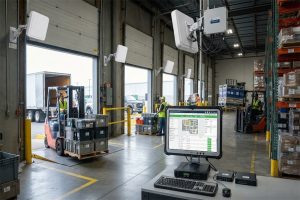
I remember walking into a fashion retailer’s backroom during a holiday inventory rush. Three employees were still scanning hanging garments one by one with barcode guns. Forty minutes later, the count still was not finished. Across the corridor, another store using UHF RFID completed a full rack audit in under two minutes.
Same number of products. Completely different pace.
That gap explains why RFID adoption in retail keeps accelerating globally.
Why retailers are adopting UHF RFID technology
Retail inventory problems rarely begin with technology. They begin with visibility.
Missing products. Wrong shelf counts. Delayed replenishment. Items marked “available” online but physically gone from the store.
RFID changes this because products start communicating automatically.
What UHF RFID brings to retail operations
Retail Task
Barcode Process
UHF RFID Process
Inventory counting
Manual scanning
Bulk automatic reading
Shelf auditing
Slow
Real time
Product visibility
Limited
Continuous
Stock accuracy
Lower
Significantly improved
Labor demand
High
Reduced
According to research published by, retailers implementing RFID inventory systems commonly achieve inventory accuracy levels above 95%, compared with much lower accuracy under traditional manual processes.
That difference affects revenue more than many retailers initially expect.
If a product cannot be found quickly, it effectively stops existing for the customer.
How rfid tags in retail actually work
UHF RFID retail systems combine several hardware and software layers working together continuously.
1. RFID labels attached to products
Each item receives a unique EPC identity stored inside the RFID chip.
Retailers commonly place RFID labels on:
Apparel
Shoes
Cosmetics
Luxury goods
Electronics
Warehouse cartons
Unlike barcodes, RFID tags do not require direct line-of-sight scanning.
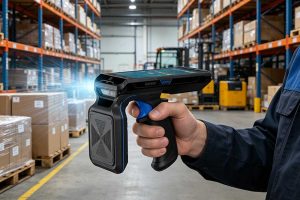
Handheld readers are also widely used for rapid inventory checks.
3. Retail management software
The software synchronizes RFID reads with inventory databases in real time.
Store managers can instantly see:
Missing products
Overstock conditions
Shelf replenishment needs
Movement history
Shrinkage patterns
One retail operations director told me the biggest surprise was not faster inventory counts.
It was how quickly employees stopped “guessing” stock levels.
Real benefits of rfid tags in retail environments
Faster inventory counting
Traditional inventory audits can consume entire overnight shifts.
With UHF RFID, thousands of items can be counted in minutes.
According to, RFID enables automatic bulk item identification using EPC Gen2 protocols widely adopted in retail supply chains.
In one apparel deployment observed by the Cykeo engineering team, a retailer reduced weekly stock counting time from nearly 8 labor hours to under 35 minutes.
No dramatic workflow redesign. Just automation replacing repetition.
Reduced retail shrinkage
Retail theft and inventory loss remain expensive operational problems.
RFID improves traceability because every tagged item movement can be logged automatically.
Suspicious inventory movement patterns become easier to identify.
Improved omnichannel fulfillment
Online order pickup systems depend on accurate physical inventory.
RFID helps synchronize store inventory with e-commerce platforms more reliably.
That matters when customers expect same-day pickup accuracy.
Why UHF RFID performs well in retail
Retail environments contain large product volumes moving constantly.
UHF RFID was designed for this kind of workload.
Typical UHF RFID specifications
Parameter
UHF RFID
Frequency
860–960 MHz
Standard
EPC C1G2 / ISO18000-6C
Multi-tag reading
Supported
Reading distance
Several meters
Bulk identification
Excellent
One overlooked detail: antenna placement matters enormously in retail fitting rooms and dense apparel racks.
A powerful reader cannot compensate for poor RF planning.
That lesson usually arrives after installation, not before.
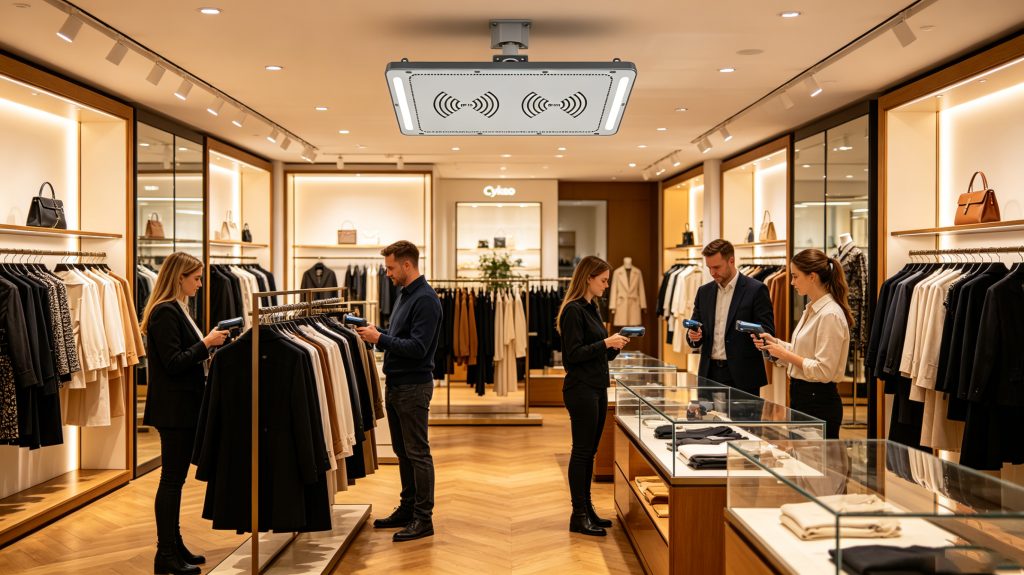
Real-time apparel inventory management using Cykeo UHF RFID technology
Retail challenges RFID still cannot fully solve
RFID is powerful, but not magical.
Metallic packaging, liquid-heavy products, and poorly attached labels can still affect read performance.
Some retailers also underestimate staff training.
The hardware installs quickly.
Operational habits take longer to change.
Common retail RFID deployment mistakes
Weak tag attachment positions
Ignoring RF interference
Overlapping reader zones
Inconsistent item tagging
Poor inventory synchronization
One cosmetics retailer solved repeated misreads simply by rotating tag orientation on shelf displays.
For large-scale inventory visibility, yes. RFID enables bulk automatic reading without line-of-sight scanning, making inventory processes much faster.
Can RFID reduce retail theft?
RFID improves product traceability and movement monitoring, helping retailers detect inventory anomalies and shrinkage more effectively.
What retail industries use RFID most?
Fashion, footwear, luxury retail, cosmetics, electronics, and omnichannel fulfillment centers are among the largest RFID adopters.
How accurate are UHF RFID retail systems?
Well-designed UHF RFID retail systems commonly achieve inventory accuracy above 95% under real operating conditions.
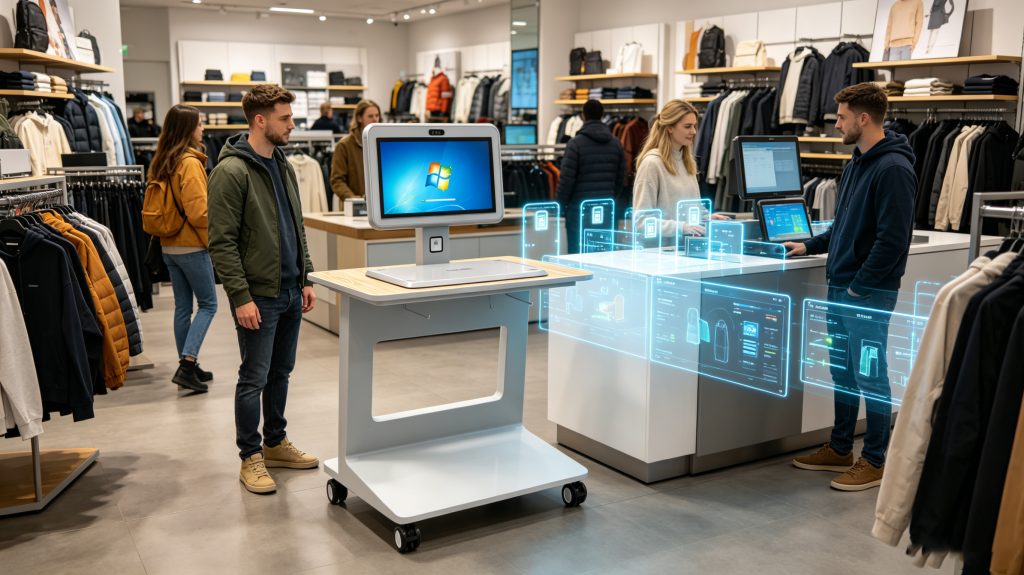
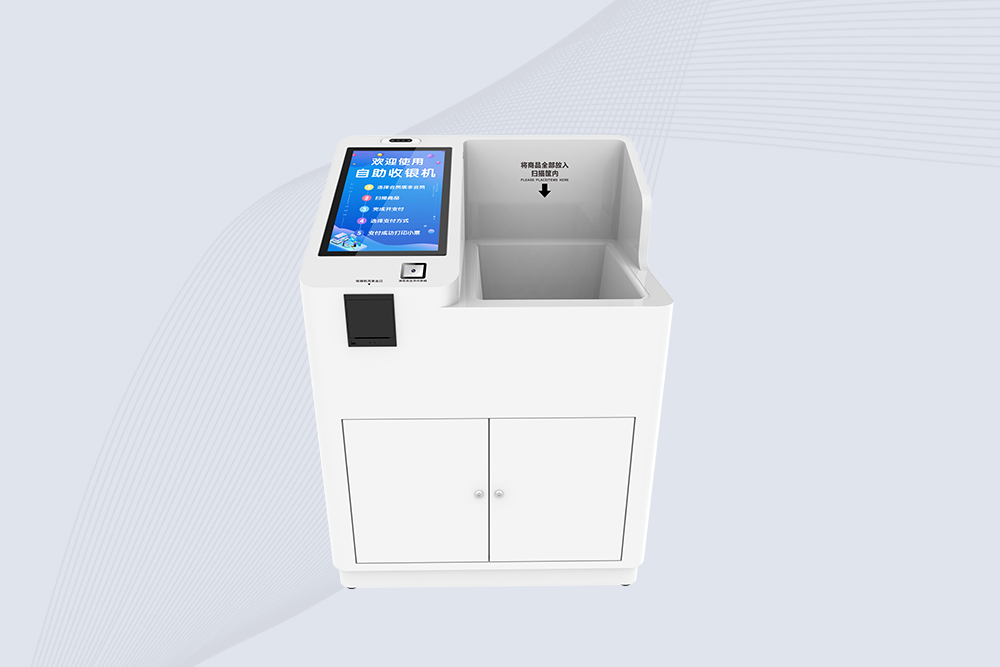
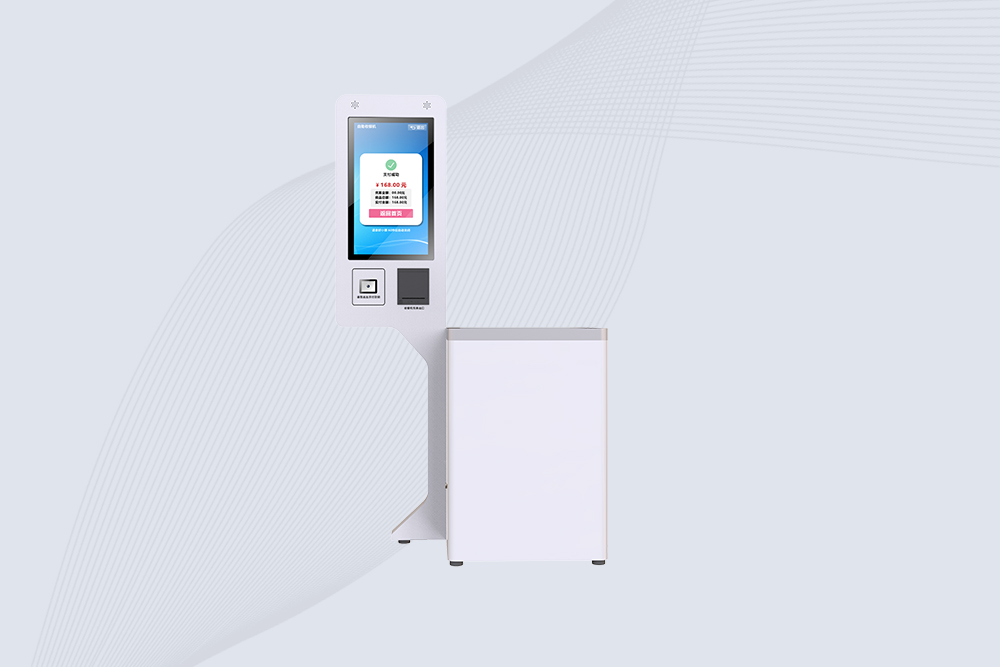
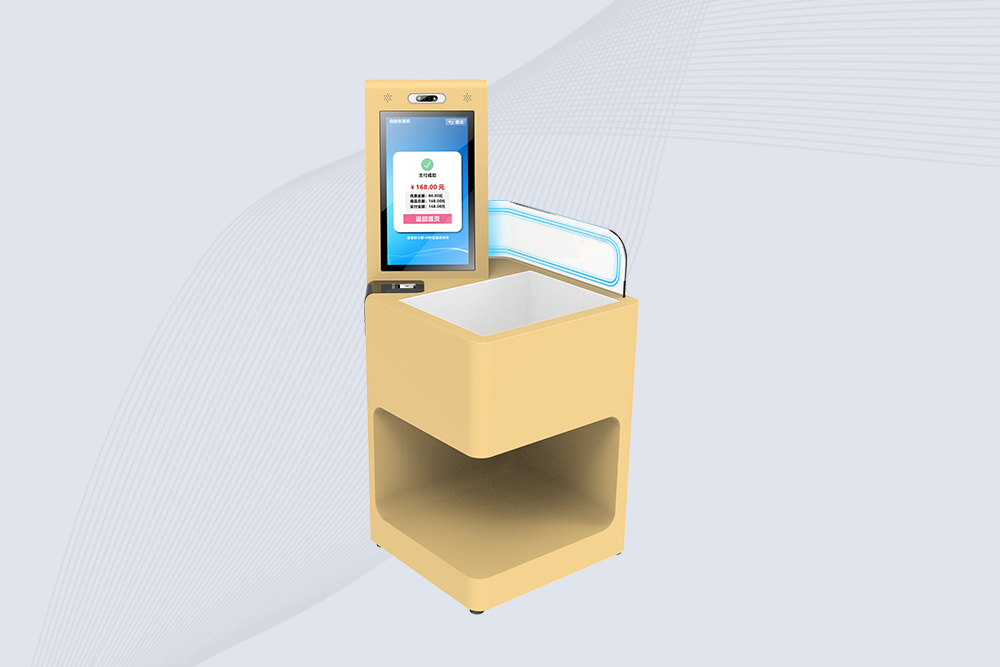
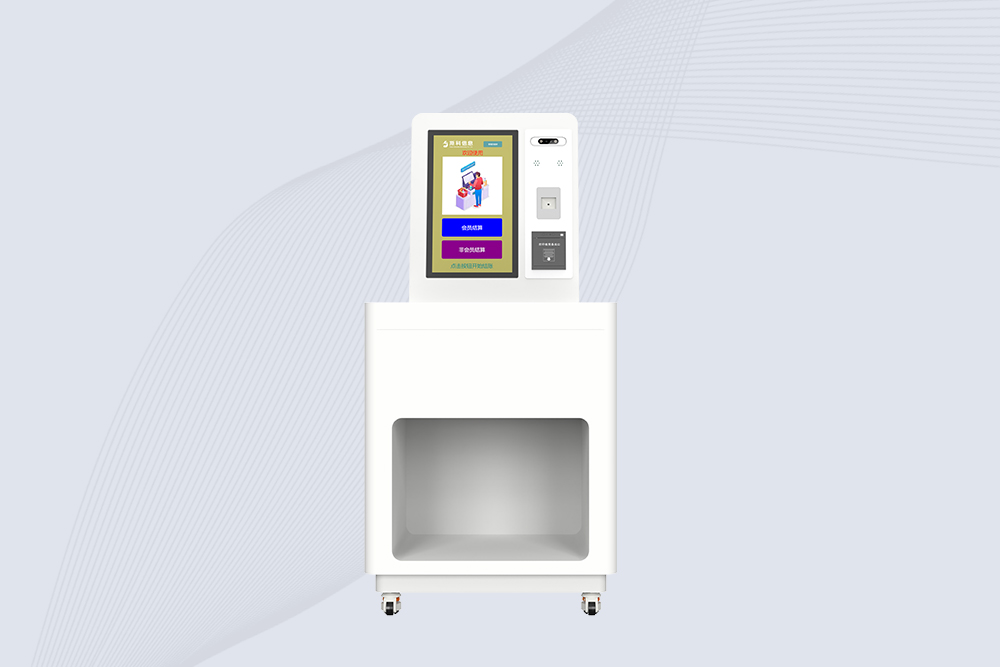
Automated retail checkout using UHF RFID product identification
Conclusion
rfid tags in retail are no longer experimental technology reserved for global chains. UHF RFID has become a practical operational tool for improving inventory visibility, reducing manual workload, and supporting faster retail fulfillment.
Cykeo continues developing UHF RFID retail solutions designed for stable multi-tag reading, real-time inventory synchronization, and scalable deployment across stores and warehouses.
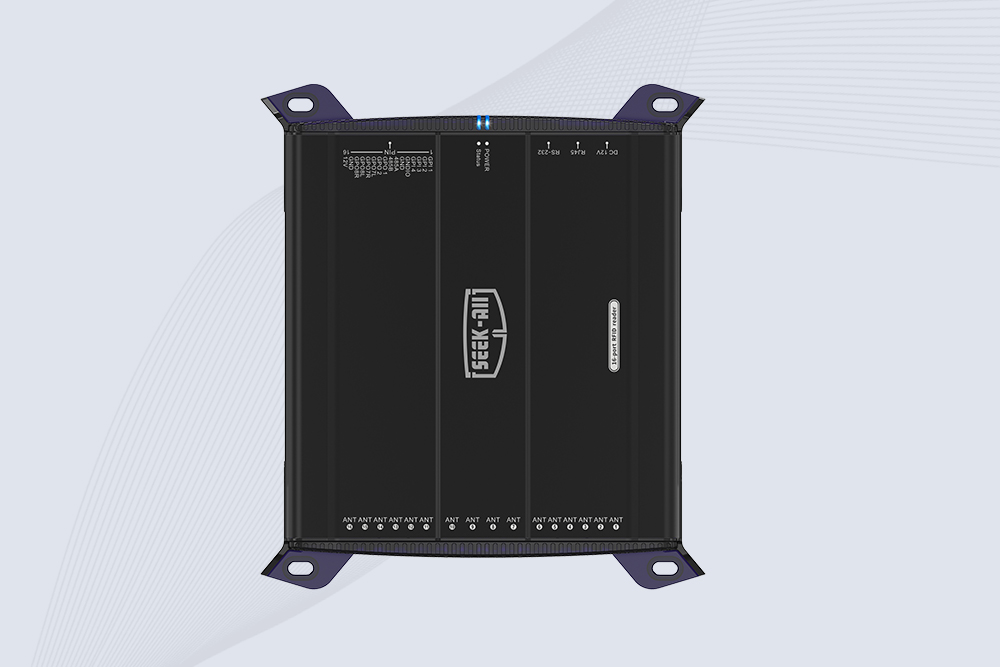
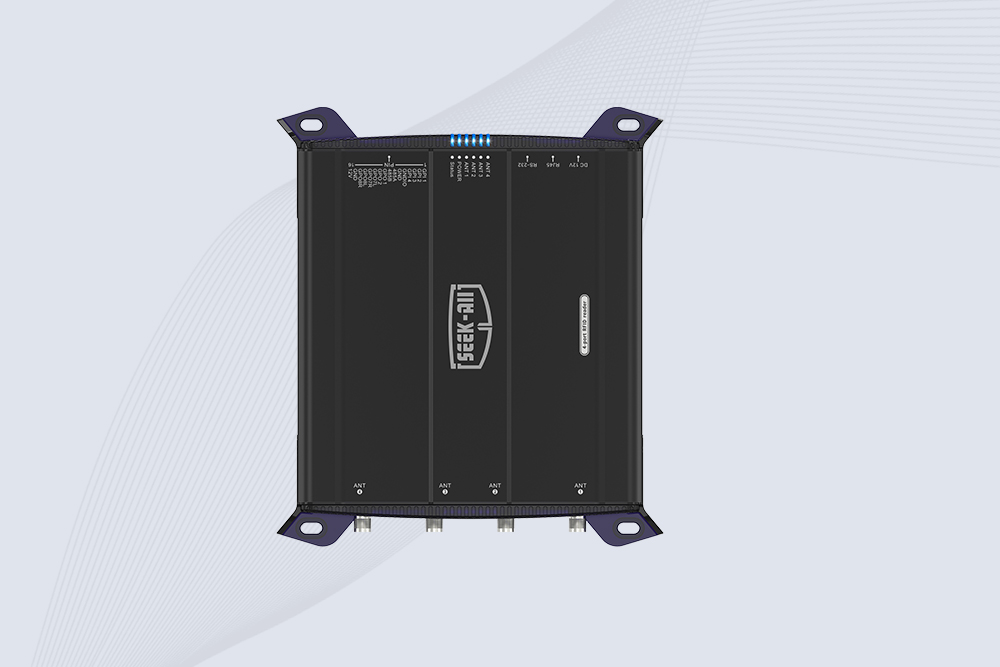
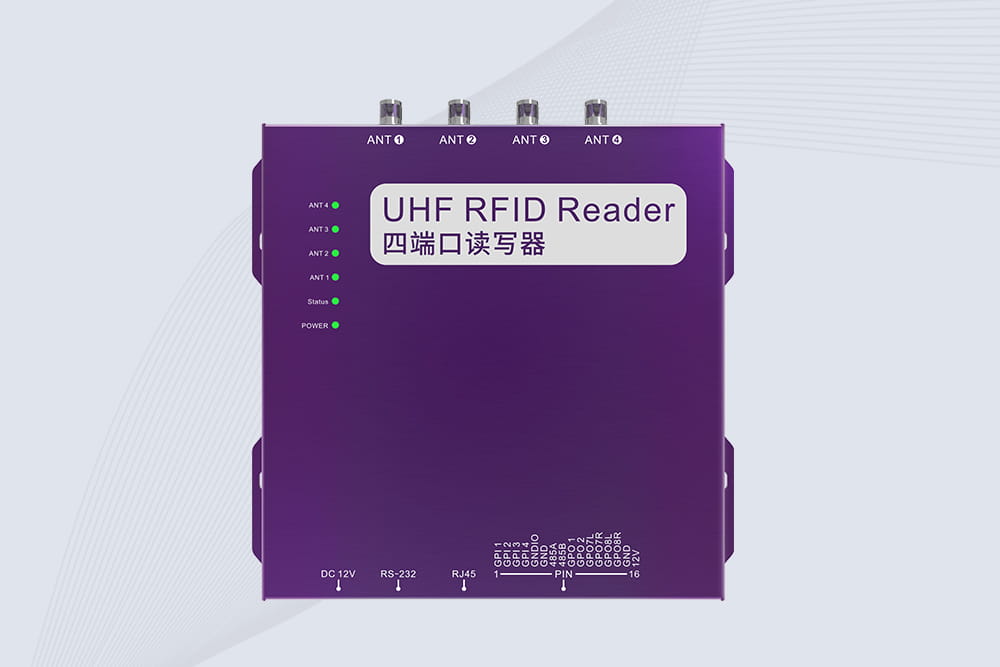
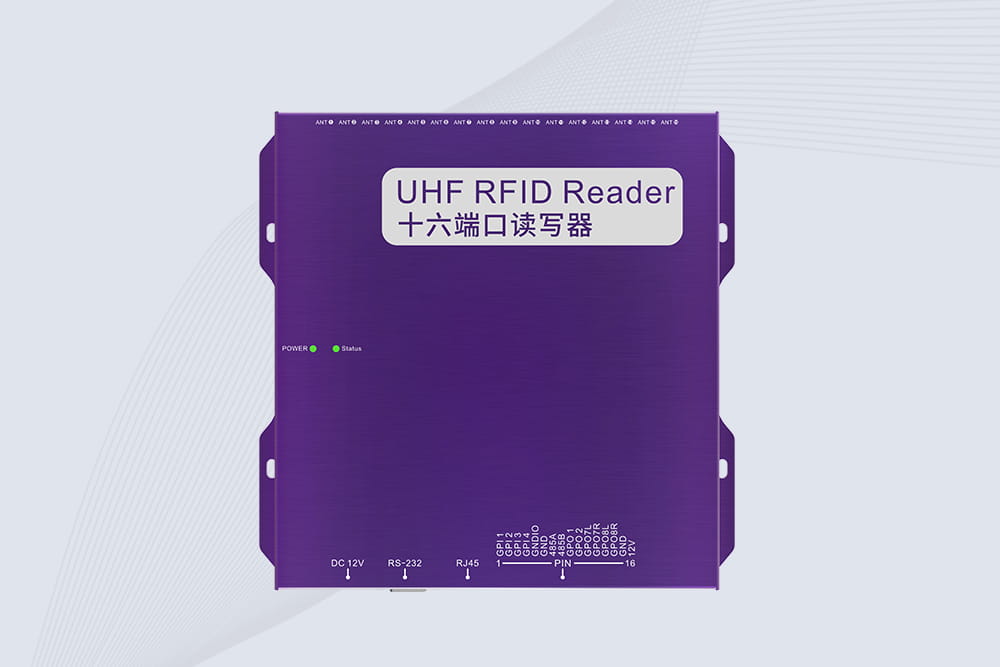
SSD-R16L Multi-Channel RFID Infrastructure for Automated Inventory Management ✔️ 16-Port High-Density RFID Reading Equipped with 16 SMA antenna ports, SSD-R16L supports multi-antenna deployment for warehouses, retail stores, logistics, production lines, and large-area RFID identification. ✔️ High-Speed & Long-Range Performance With up to 33…
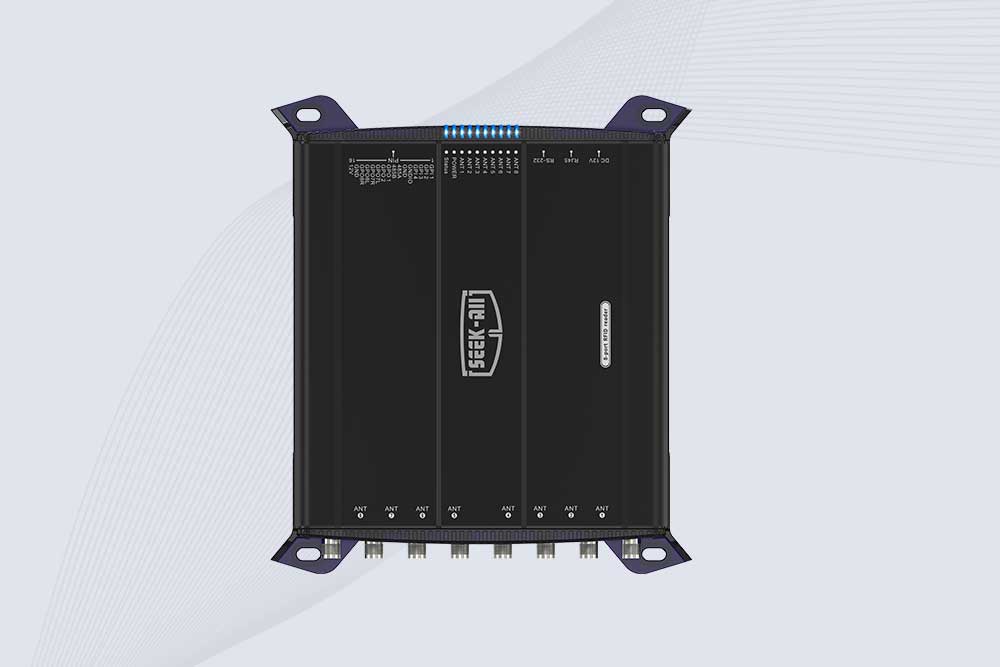
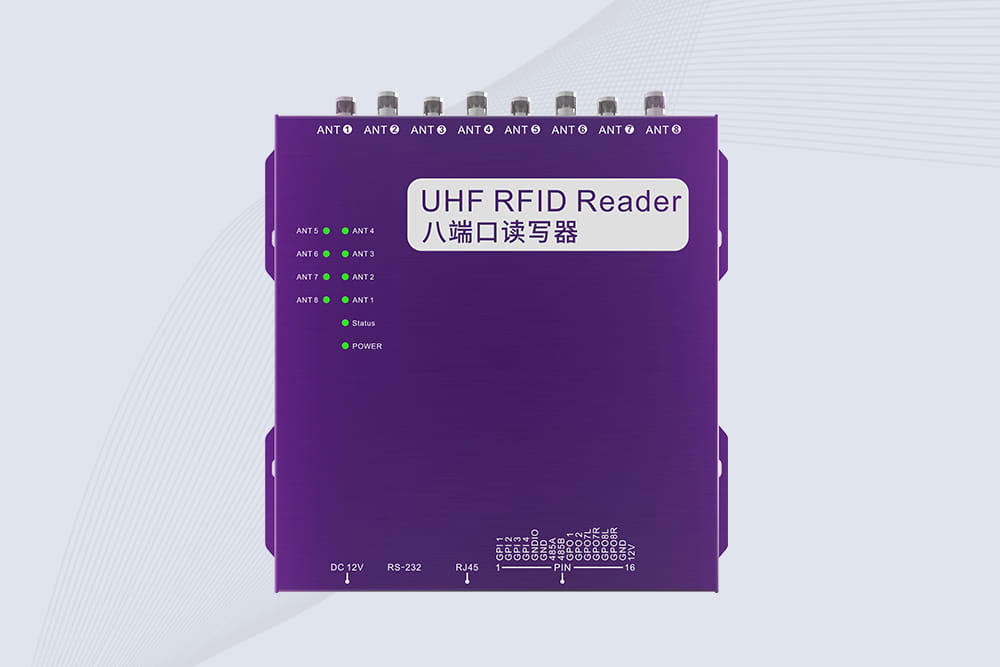
SSD-R8L 8-port UHF RFID reader with 33dBm output, up to 20m reading range and 600+ tags/s recognition. Ideal for warehouse, logistics, retail and asset tracking.
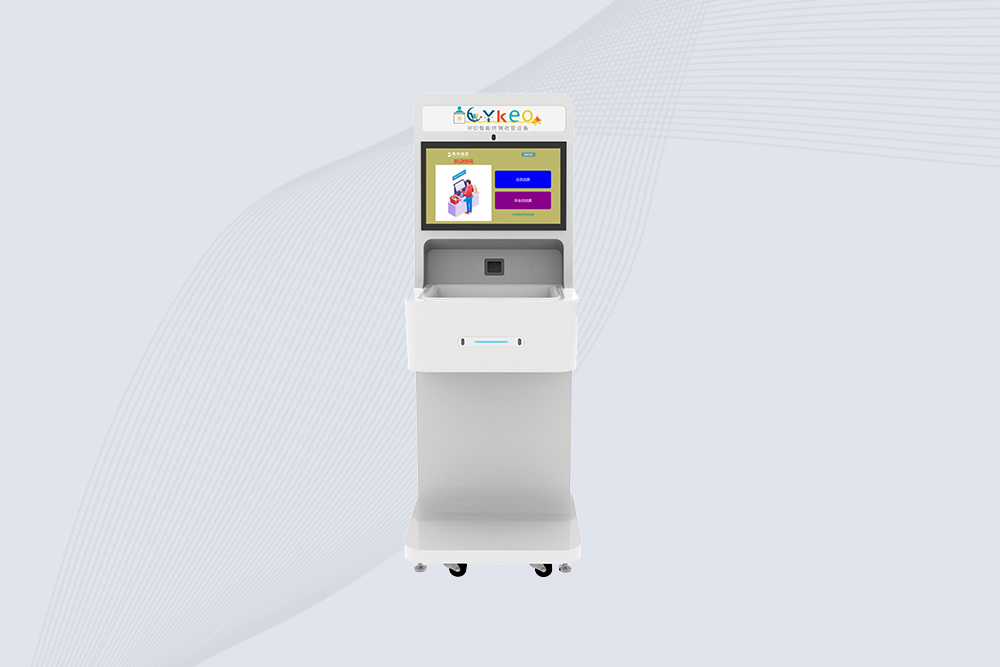
Cykeo’s CYKEO-DP11A RFID payment system combines UHF item recognition, facial authentication, and PCI-certified transactions for retail. Features Windows/Android dual OS, 4G connectivity, and SAP integration.
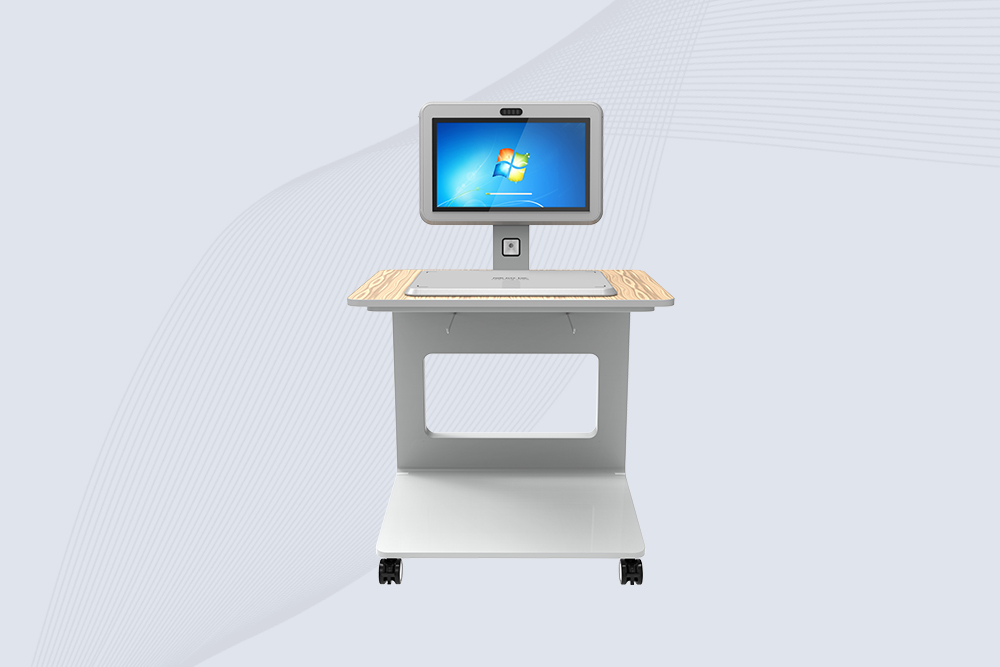
Cykeo CYKEO-DP11 UHF RFID Checkout Terminal streamlines bulk scanning operations with 5-tag/sec efficiency, dual OS compatibility (Windows/Android), and pharmacy-grade inventory management. Ideal for healthcare, retail, and unmanned stores, it ensures high-accuracy RFID bulk scanning with IP54 ruggedness and ISO 18000-6C compliance.
Cykeo’s unmanned RFID checkout Kiosk terminal enables 10-item bulk scanning in 3 seconds with 21.5″ touchscreen, anti-theft tag update, and POS integration for retail automation.
Cykeo’s CYKEO-DP11C UHF RFID self checkout kiosk enables unmanned retail with 10+ items/sec scanning, 21.5″ payment UI, and ISO 18000-6C compliance. Ideal for supermarkets and apparel stores.
Cykeo CYKEO-DP11E RFID self checkout system offers 21.5″ touchscreen, UHF RFID batch scanning (ISO 18000-6C), and cloud integration for retail automation. Ideal for unmanned supermarkets and apparel stores.
Cykeo’s autonomous RFID payment kiosk enables 10-item/sec contactless checkout, POS integration, and EAS tag deactivation. Features 21.5″ payment interface, PCI-certified security.
Cykeo CYKEO-C1 industrial Forklift RFID Reader features 20m read range, 600 tags/sec scanning, Impinj R2000 chipset, and IP67 rugged design. Ideal for warehouse logistics and manufacturing. Supports ISO 18000-6C/6B protocols.
Cykeo CYKEO-R4 industrial UHF RFID Fixed Reader features 4 TNC ports, 400+ tags/sec speed, IP67 housing, and global frequency compliance for vehicle inspection, smart warehouse, and asset management systems.
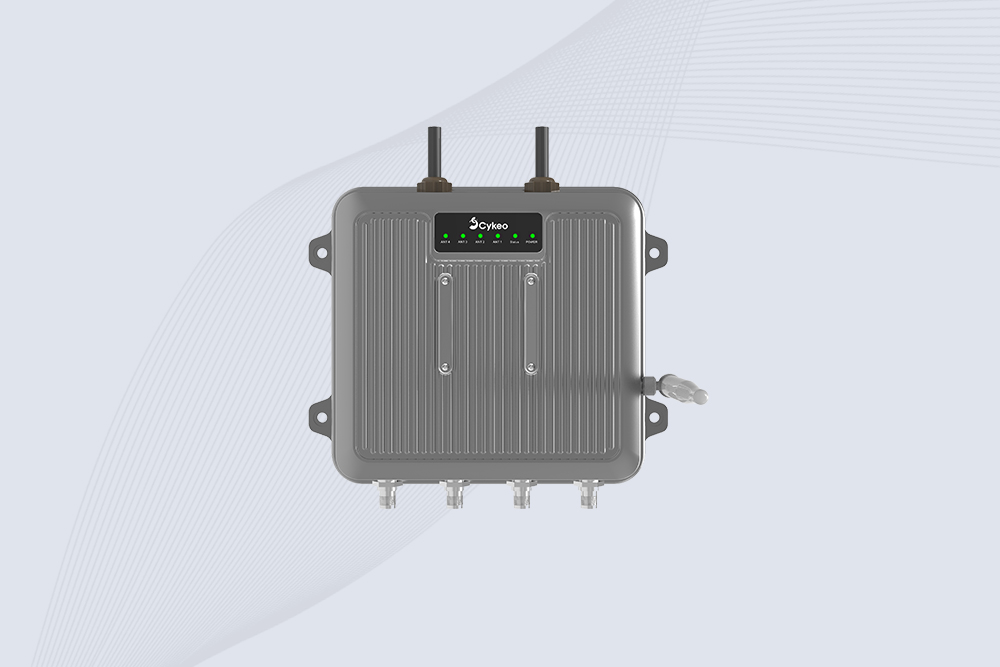
CYKEO CYKEO-R8L Fixed RFID Reader with 8-port UHF design, Impinj-based RF core and up to 20m read range. An industrial Fixed RFID Reader for vehicle inspection, warehouse portals, smart manufacturing lines and secure access checkpoints.
RFID Fixed Reader from CYKEO – the CYKEO-R16L 16-port UHF fixed reader for warehouses, smart cabinets, and production lines. Long-range, multi-tag reading, stable performance for 24/7 industrial use.
CYKEO CK-R8L is one of thebest fixed rfid readers read range reliability 2025, offering stable long-distance UHF performance, 8 antenna ports, multi-protocol support and flexible deployment for industrial RFID projects.
A long range RFID scanner for logistics helps identify tagged pallets, containers, cartons, and other assets as they move through warehouses, loading docks, ...
Discover how RFID technology slashes retail stockouts by 63%—proven by data from 500 stores. Learn Cykeo’s strategies for real-time inventory accuracy and higher sales.
Learn how does an rfid scanner work, from RF signals and tag detection to reader antennas, anti-collision, data capture, and real-world RFID scanning performance.
 Cykeo RFID IoT Solution Products R&D Manufacturer