 Cykeo RFID IoT Solution Products R&D Manufacturer
How to Read RFID Tags: Professional RFID Tag Reading Guide
108Learn how to read rfid tags with professional RFID technology. Explore RFID readers, tag communication, inventory applications, and Cykeo solutions.
MoreAll RFID Product
Can RFID chips be tracked? Yes, RFID chips can be tracked when used with compatible RFID readers and systems, but most passive RFID chips do not provide independent GPS-style location tracking. They are identified when they enter the reading range of an RFID system.
After years working with RFID identification systems across manufacturing, healthcare, retail, and logistics environments, I have found that the word “tracked” creates the most confusion in RFID projects.
Many people imagine an RFID chip working like a smartphone with GPS, continuously transmitting its location.
That is not how most RFID systems operate.
A passive RFID chip does not constantly broadcast its position. It remains inactive until an RFID reader sends radio energy to activate communication. Once the reader detects the chip, the system can identify the tagged object, record the reading event, and associate that information with a location.
During an industrial asset tracking project, I saw this distinction clearly. The customer initially requested “real-time tracking” of maintenance tools across a factory. After analyzing the environment, we found that the actual requirement was not continuous location monitoring.
They needed three answers:
RFID solved those problems through controlled reading points rather than satellite positioning.
This is the practical meaning behind can rfid chips be tracked.
RFID tracking is event-based identification.
The system knows when and where a tagged object was detected.
According to GS1, RFID technology enables automatic identification and data capture by using radio frequency communication between readers and tags. RFID is widely adopted in supply chains because it provides item-level visibility.
An RFID tracking system usually contains three essential elements:
| Component | Function |
|---|---|
| RFID Chip / Tag | Stores unique identification information |
| RFID Reader | Sends signals and receives chip responses |
| Software Platform | Records, analyzes, and manages tracking data |
The tracking process follows a simple technical sequence:
The “location” comes from the reader installation point.
For example:
A reader at a warehouse entrance detects a tagged pallet
A reader at a tool cabinet detects equipment removal
A reader at a retail checkout detects purchased products
The RFID chip itself does not calculate coordinates.
The RFID infrastructure creates visibility.
Not all RFID chips work the same way.
The tracking capability depends heavily on RFID chip type.
| RFID Type | Power Source | Tracking Method | Typical Applications |
|---|---|---|---|
| Passive RFID | Powered by reader signal | Detection within reader range | Retail, inventory, tools |
| Active RFID | Internal battery | Longer-range communication | Vehicles, large assets |
| Semi-Passive RFID | Battery-assisted | Sensor and tracking applications | Industrial monitoring |
Passive RFID is the most common choice for inventory and asset identification because it is small, affordable, and maintenance-free.
Active RFID systems can provide wider coverage but require batteries and more complex management.
Retailers use RFID chips to understand product movement.
Applications include:
A tagged product can be identified during receiving, storage, sales, and return processes.
For large retail operations, this reduces the gap between digital inventory records and physical stock.
Factories often manage thousands of tools and components.
RFID chip tracking helps companies monitor:
In these environments, RFID is valuable because manual tracking creates delays.
A missing tool may stop a production process.
A missing record may create compliance problems.
RFID provides automatic identification at important checkpoints.
Hospitals use RFID technology for managing valuable mobile assets.
Common applications include:
The goal is not only knowing where equipment is.
It is improving availability.
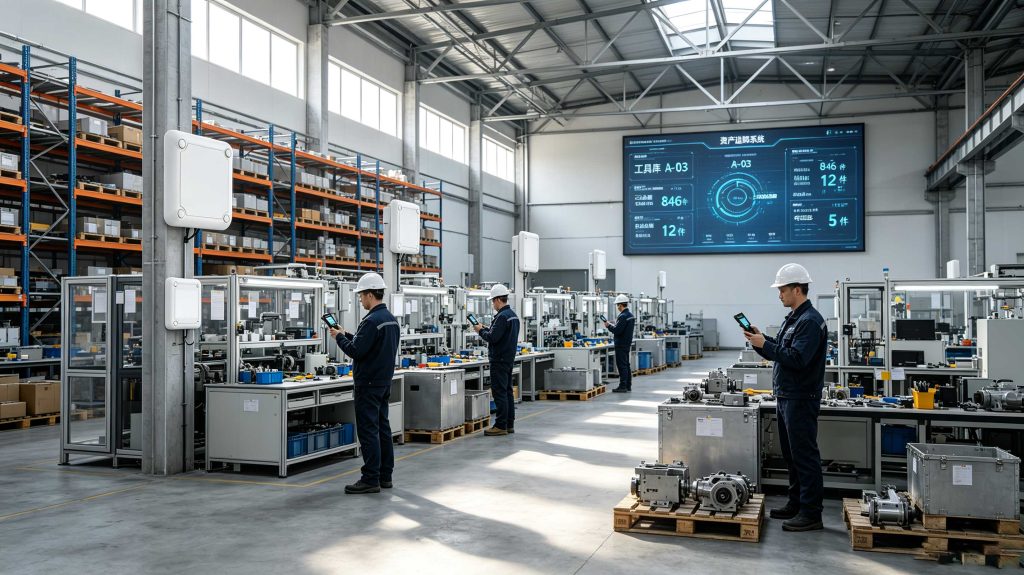
RFID performance depends on system design.
Important factors include:
According to research from Auburn University RFID Lab, RFID adoption in retail environments has demonstrated significant improvements in inventory accuracy, helping organizations achieve accuracy levels above 95% in RFID-supported operations.
The data shows an important point:
RFID creates tracking value through accurate identification.
It does not replace every location technology.

Understanding RFID limitations is important before deployment.
Most passive RFID chips cannot:
However, when combined with properly positioned RFID readers and software platforms, RFID systems can create highly accurate visibility for assets and products.
Cykeo RFID solutions focus on this practical approach by combining UHF RFID readers, antennas, and identification technologies for retail, logistics, manufacturing, and asset management applications.
The answer to can rfid chips be tracked depends on the tracking method.
RFID chips are not miniature GPS devices.
They are intelligent identification components that become powerful when connected to the right RFID system.
RFID chip tracking performance depends on the entire identification system, not only the RFID chip itself.
In real deployment environments, companies often discover that the biggest challenge is not reading a tag once. The challenge is maintaining stable identification when hundreds or thousands of tagged objects move through complex environments.
Cykeo develops UHF RFID identification solutions designed for industrial, retail, logistics, and healthcare applications.
The system architecture focuses on:
Cykeo RFID solutions include:
| Technology Feature | Practical Application Value |
|---|---|
| UHF RFID reader technology | Supports long-distance identification scenarios |
| ISO 18000-6C / EPC C1G2 compatibility | Meets international RFID communication standards |
| Multi-tag anti-collision algorithm | Reads multiple RFID chips efficiently |
| Adjustable RF output power | Helps optimize different environments |
| Multiple communication interfaces | Supports enterprise system integration |
| SDK/API development support | Simplifies software connection |
A successful RFID tracking system is not built around maximum specifications alone.
It is built around repeatable performance.
Retail is one of the most mature RFID application areas.
RFID chips attached to products allow retailers to monitor:
For fashion, supermarkets, and chain stores, RFID helps reduce inventory uncertainty.
A store manager can understand not only how many products exist, but where products are moving throughout the business process.
Healthcare organizations manage products where accuracy is critical.
RFID chip tracking can support:
For example, a hospital supply room equipped with RFID readers can automatically record when tagged materials enter or leave controlled areas.
This reduces dependence on manual registration.
Manufacturing environments often contain expensive tools that move between departments.
RFID chips can be attached to:
The system can record:
This improves operational accountability.
Modern warehouses require faster movement information.
RFID chip tracking supports:
Unlike manual scanning, RFID allows identification without stopping every item for individual barcode reading.
Choosing between passive and active RFID depends on the application requirements.
| Comparison | Passive RFID Chip | Active RFID Chip |
|---|---|---|
| Power Source | RFID reader energy | Internal battery |
| Cost | Lower | Higher |
| Size | Smaller | Larger |
| Reading Distance | Usually shorter | Longer |
| Maintenance | Minimal | Battery replacement required |
| Common Use | Inventory and products | Vehicles and high-value assets |
Passive RFID is widely used because it provides:
Typical applications:
Most supply chain RFID systems use passive UHF RFID because millions of tagged items can be managed economically.
Active RFID includes a battery-powered transmitter.
It is suitable for:
However, active RFID requires more maintenance and higher investment.
The correct choice depends on whether the business needs identification events or continuous location monitoring.
Successful RFID deployment requires planning before installation.
Different materials require different RFID tags.
Examples:
| Object | Recommended RFID Type |
|---|---|
| Clothing | UHF RFID label tag |
| Metal tools | Anti-metal RFID tag |
| Medical equipment | Durable RFID tag |
| Warehouse pallets | Industrial RFID tag |
Choosing the wrong tag can reduce reading performance.
RFID tracking depends heavily on reader installation.
Important factors include:
A warehouse entrance and a retail shelf require completely different RFID configurations.
RFID creates value when information reaches operational systems.
Common integrations include:
Cykeo provides RFID development support through communication interfaces and software integration options.
| Technology | Identification Method | Best Application |
|---|---|---|
| Barcode | Optical scanning | Basic product identification |
| RFID | Radio communication | Automated identification and inventory |
| GPS | Satellite positioning | Outdoor location tracking |
RFID and GPS solve different problems.
GPS answers:
“Where is this object geographically?”
RFID answers:
“Was this object detected at this location?”
For warehouses, factories, hospitals, and retail stores, RFID is often the more practical solution.
Yes, RFID chips can be tracked through RFID readers and software systems. However, most passive RFID chips do not transmit their own location like GPS devices. They are tracked when detected by RFID infrastructure.
RFID chips do not usually provide independent GPS coordinates. Their location is determined by the position of RFID readers that detect them.
The tracking distance depends on RFID frequency, reader power, antenna design, and environment. UHF RFID systems can typically achieve several meters of reading distance.
Most RFID chips used in retail and inventory systems are passive and do not require batteries. They receive energy from RFID reader signals.
RFID performance depends on materials and frequency. Some environments may reduce signal strength, especially with metal and liquid obstacles.
RFID chip tracking is widely used in retail, healthcare, logistics, manufacturing, transportation, and asset management.
Cykeo provides UHF RFID readers, modules, antennas, and integrated identification solutions designed for reliable tracking applications in industrial and commercial environments.
The demand for digital visibility continues to grow.
Companies increasingly need to know:
RFID provides the connection between physical objects and digital systems.
The future of RFID will not simply be about reading more tags.
It will be about creating smarter decisions from identification data.
Cykeo continues developing RFID technologies that help organizations improve visibility across retail, healthcare, manufacturing, and logistics environments.
The answer to can rfid chips be tracked is yes — when RFID chips are combined with properly designed readers, antennas, and software platforms, they become powerful tools for intelligent asset and product management.
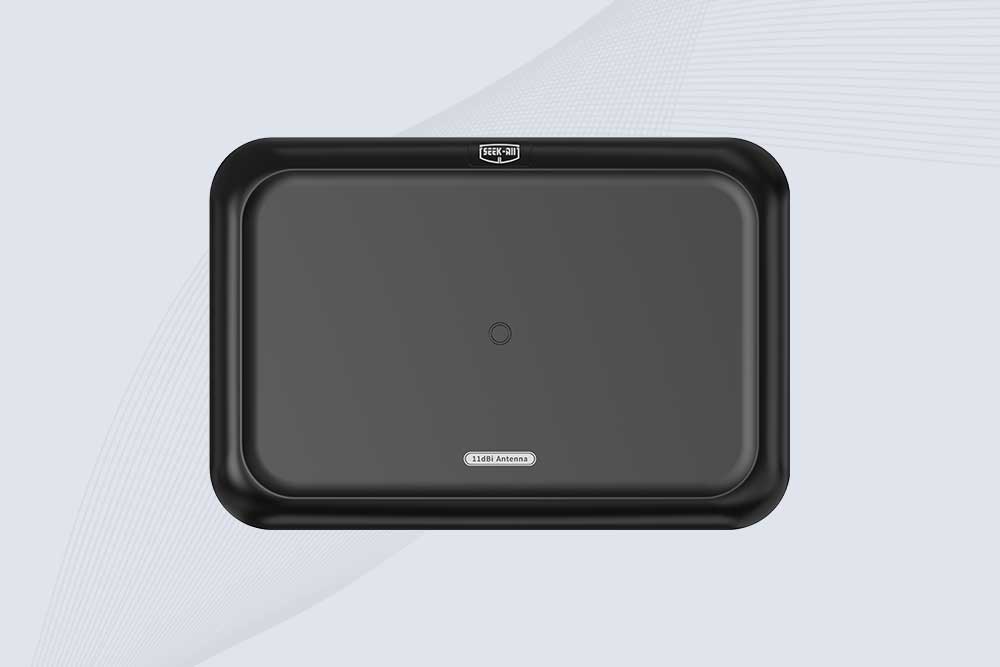
SSD-A11 UHF RFID antenna features 840–960 MHz adjustable frequency, ≥10.5 dBi gain, circular polarization and 50Ω impedance for fixed RFID systems.
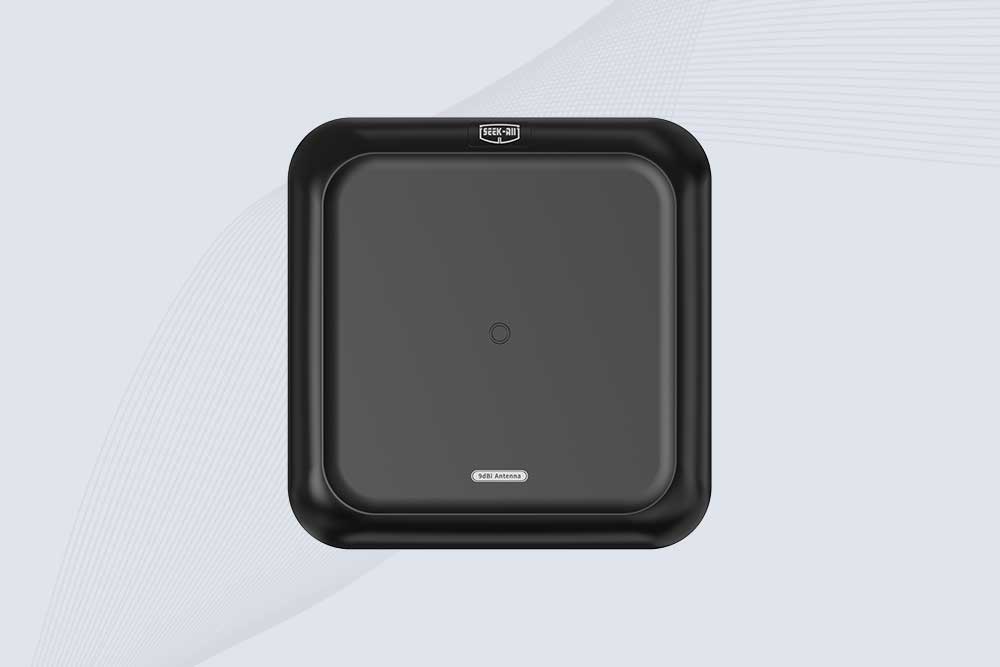
SSD-A09 is a 9 dBi UHF RFID antenna with 840–960 MHz adjustable frequency, circular polarization, 50Ω impedance and directional 60° × 60° coverage.
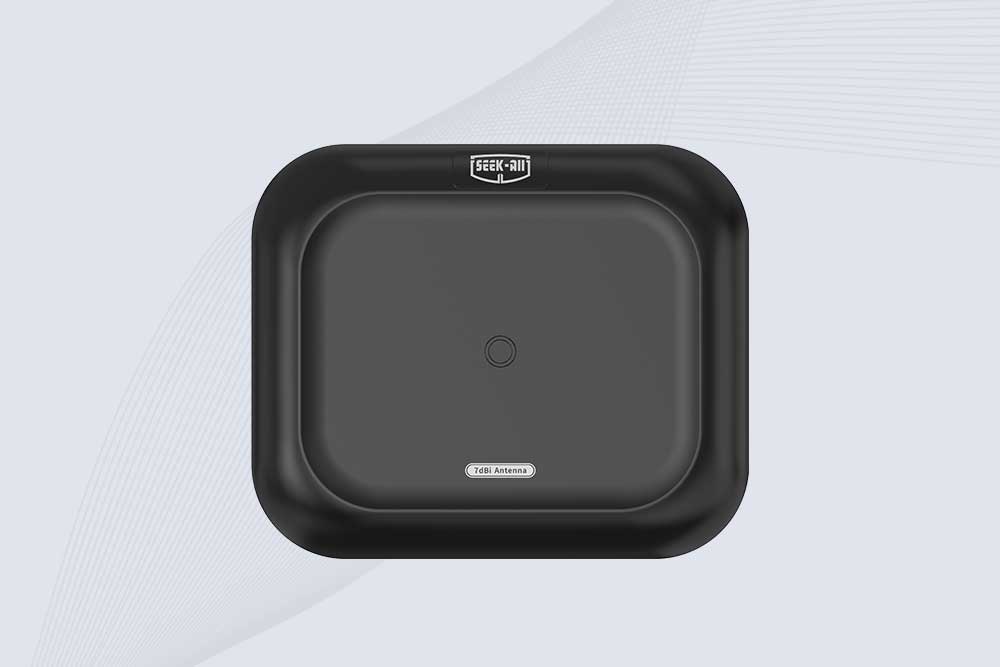
Explore the SSD-A07 UHF RFID antenna with 7 dBi gain, circular polarization, adjustable 840–960 MHz frequency, and 60°/75° beamwidth for stable RFID read/write performance.

SSD-A06 UHF RFID antenna with circular polarization, adjustable 840–960 MHz frequency, ≥4.5 dBi gain, and a compact directional design for RFID systems.

SSD-R16L Multi-Channel RFID Infrastructure for Automated Inventory Management ✔️ 16-Port High-Density RFID Reading Equipped with 16 SMA antenna ports, SSD-R16L supports multi-antenna deployment for warehouses, retail stores, logistics, production lines, and large-area RFID identification. ✔️ High-Speed & Long-Range Performance With up to 33…
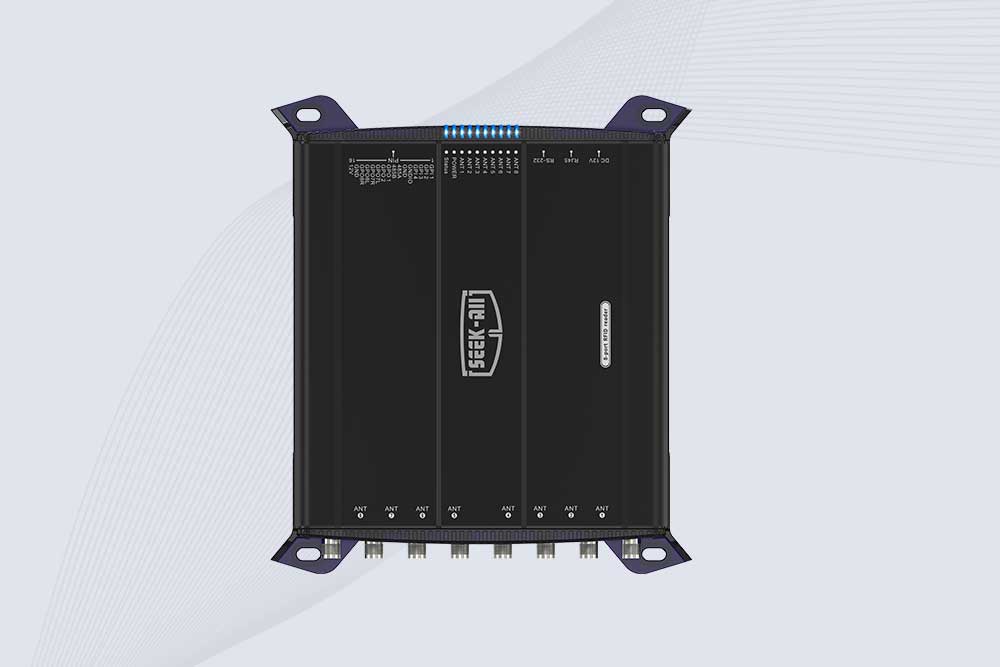
SSD-R8L 8-port UHF RFID reader with 33dBm output, up to 20m reading range and 600+ tags/s recognition. Ideal for warehouse, logistics, retail and asset tracking.
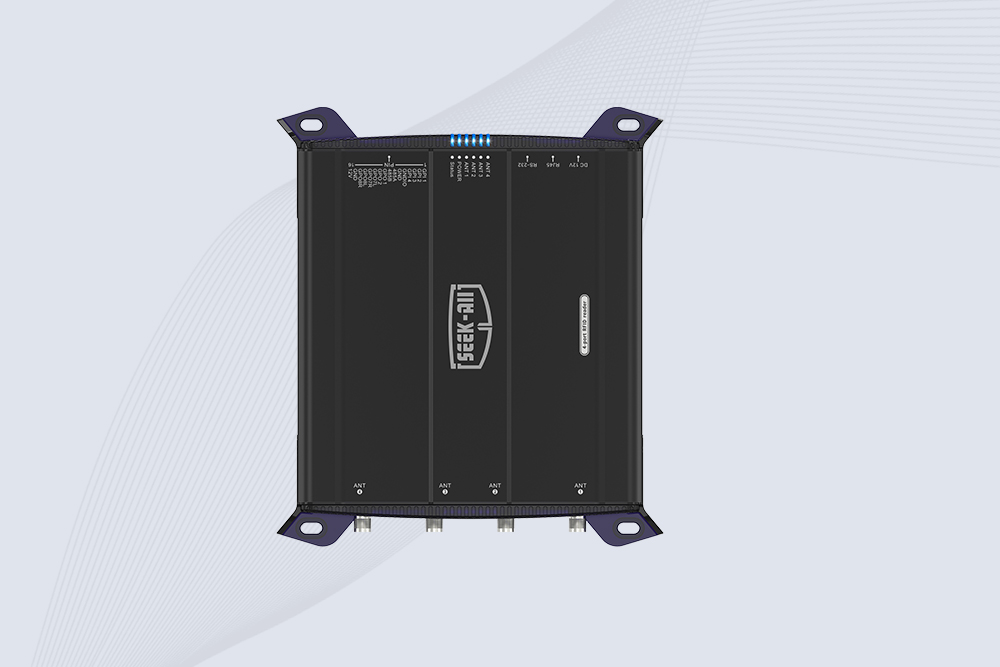
SSD-R4L is a 4-port UHF RFID fixed reader with 33dBm output power, up to 20m reading range, EPC C1G2 support and 600+ tags/s reading speed.
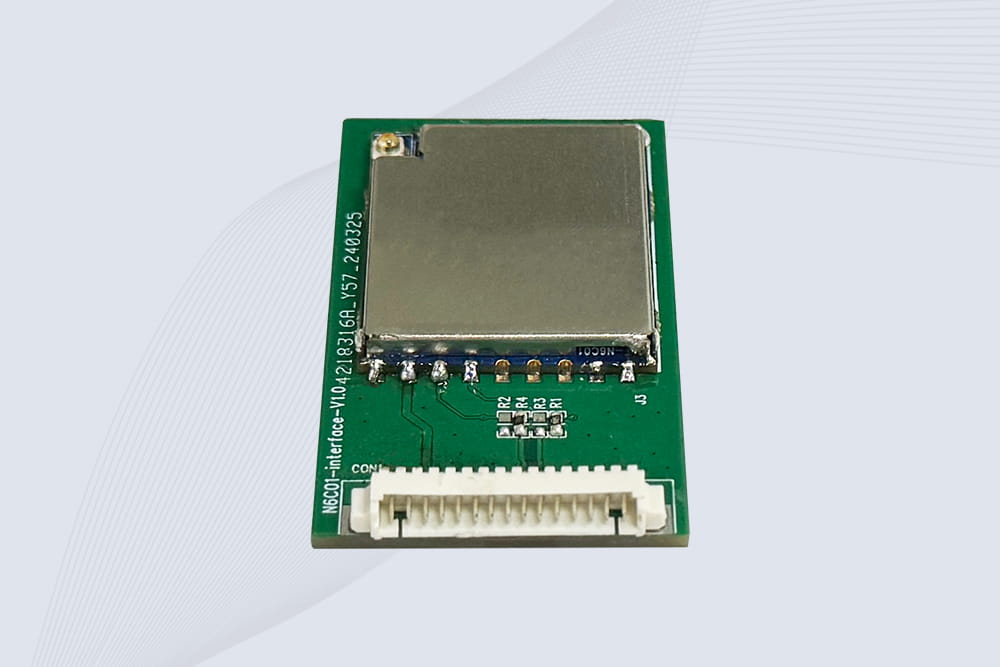
CYKEO Embedded RFID Modules are designed for compact industrial and IoT devices that require stable UHF performance. These UHF RFID Modules support global protocols, flexible power control, and reliable multi-tag reading for smart cabinets, production lines, and asset tracking systems.
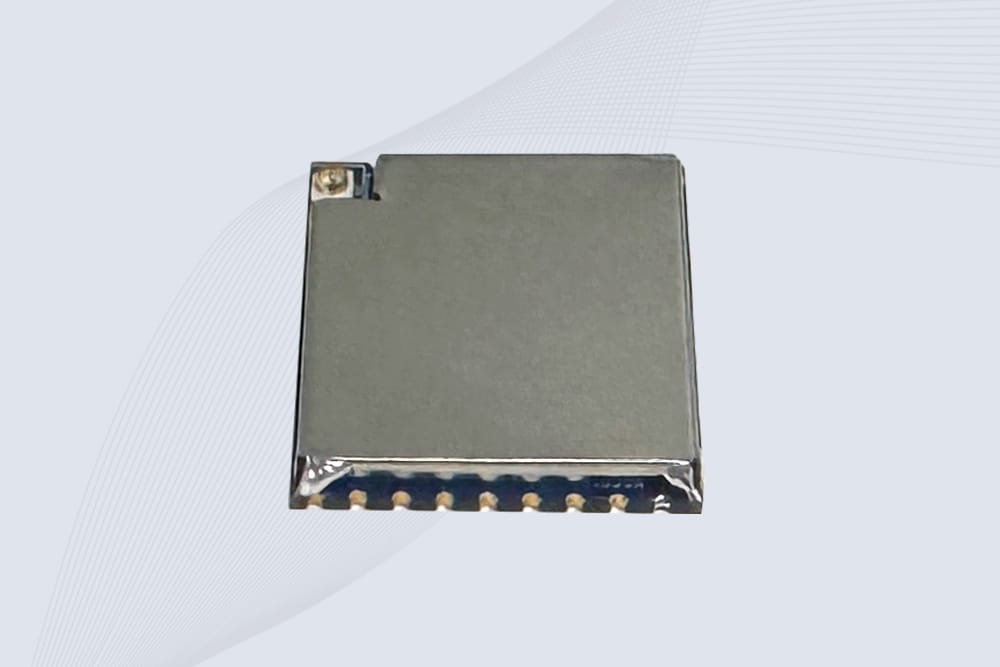
CYKEO Embedded RFID Module is built for compact IoT and industrial devices that need stable UHF performance. This UHF module supports global protocols, low power operation, and reliable multi-tag reading for smart lockers, production lines, and always-on RFID systems.
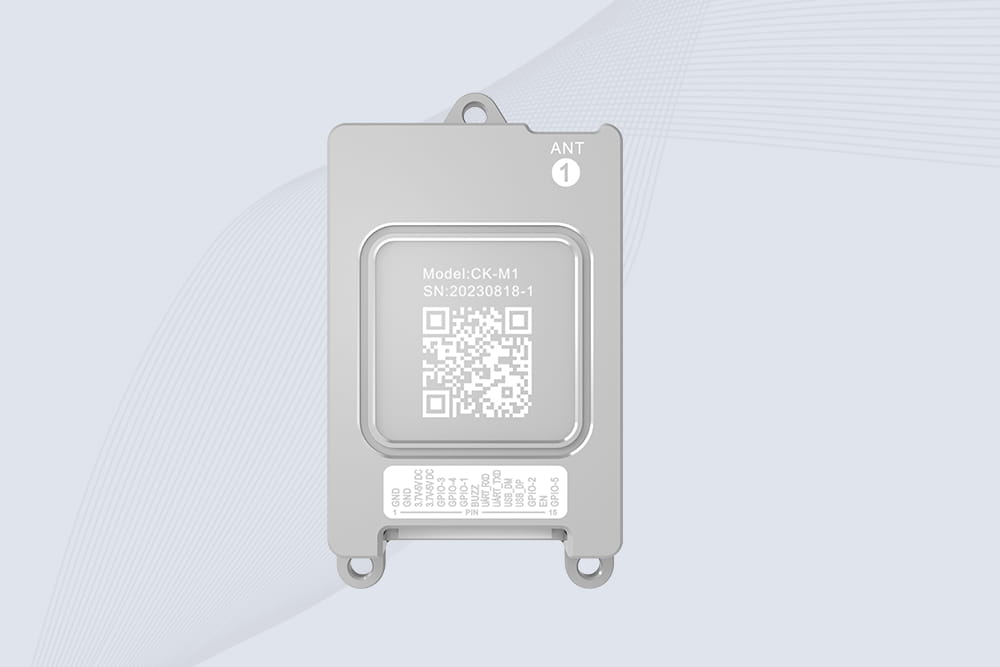
CYKEO CYKEO-M1 drone rfid module is a compact UHF RFID reader module designed for drones and UAV platforms. It supports long-range aerial scanning, fast multi-tag reading, and stable performance in wind, vibration, and outdoor environments.
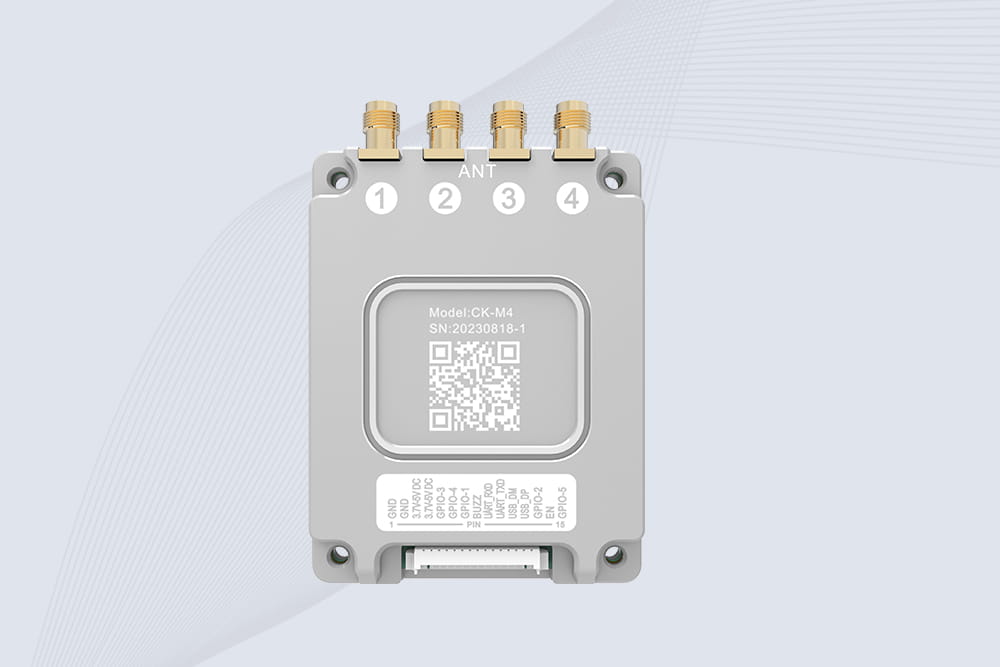
CYKEO CYKEO-M4 RC522 RFID Module is an industrial-grade UHF RFID reader with 4 ports, supporting ISO, EPC, and GB protocols. High-speed, accurate reading for IoT, automation, and warehouse applications.
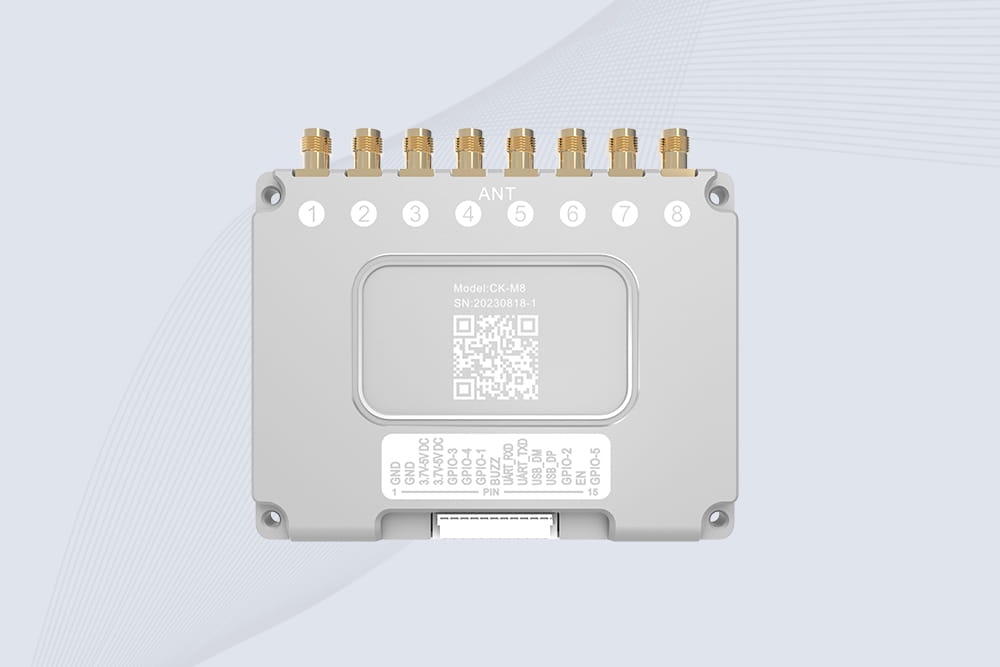
CYKEO CYKEO-M8 Module RFID is an 8-port UHF R2000 RFID Module designed for high-density, multi-tag environments. Stable 33dBm output, ISO & GB protocol support, ideal for warehouses, factories, and automated systems.
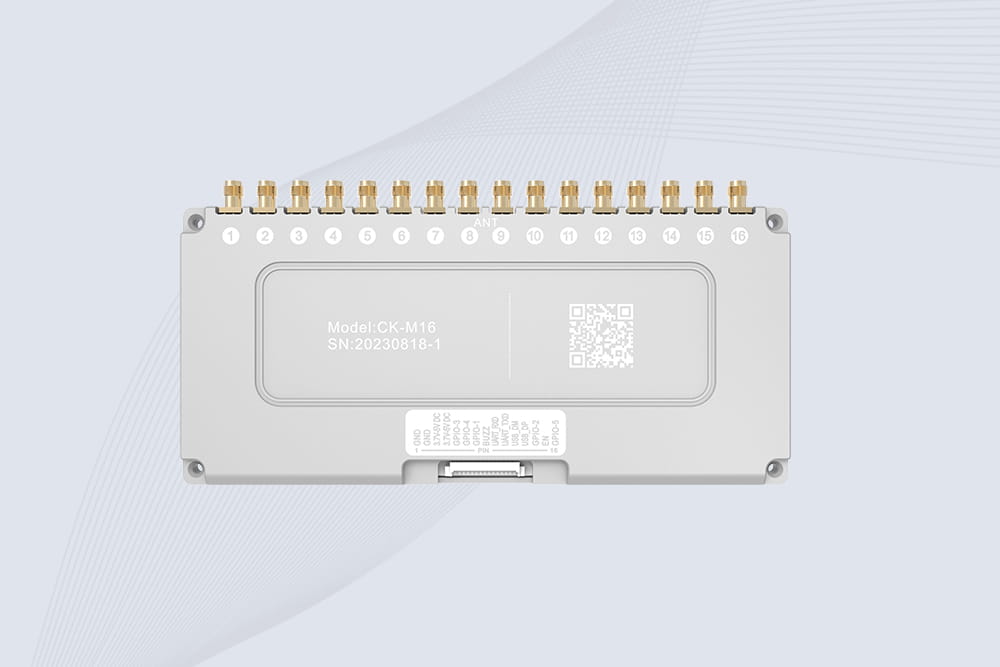
CYKEO CYKEO-M16 RFID Module is a 16-port UHF RFID reader module based on the R2000 chipset. Designed for dense tag environments, it supports ISO and GB standards and delivers stable multi-antenna control for industrial automation.
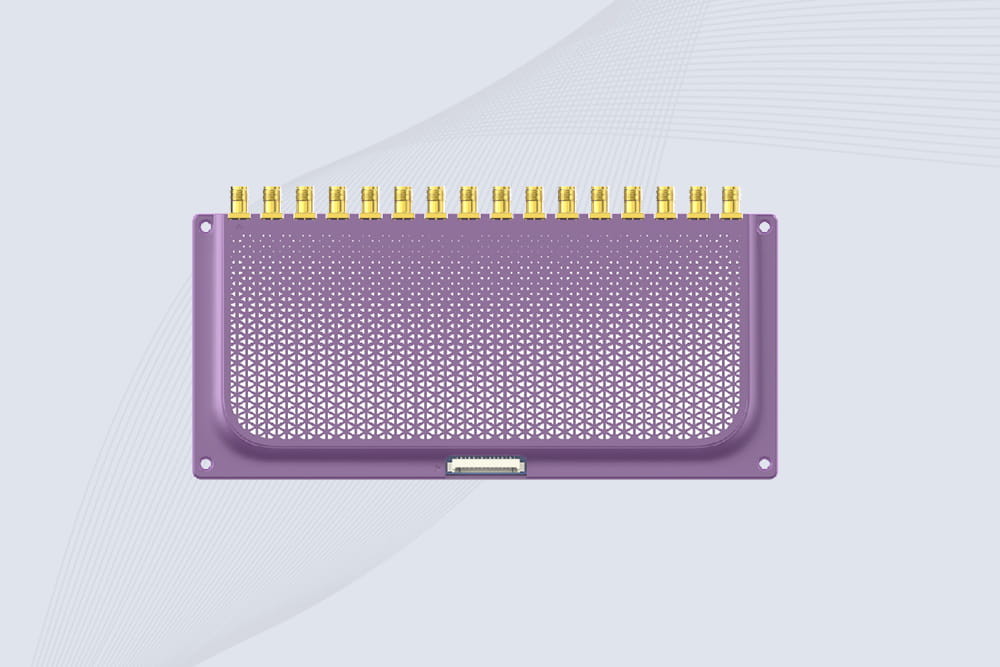
The CYKEO CYKEO-M16L RFID Reader Module is a 16-channel UHF RFID core designed for dense tag environments. With adjustable 33dBm output, multi-protocol support, and stable multi-antenna control, this RFID Tag Reader Module fits industrial automation, warehouse systems, and large-scale IoT deployments.
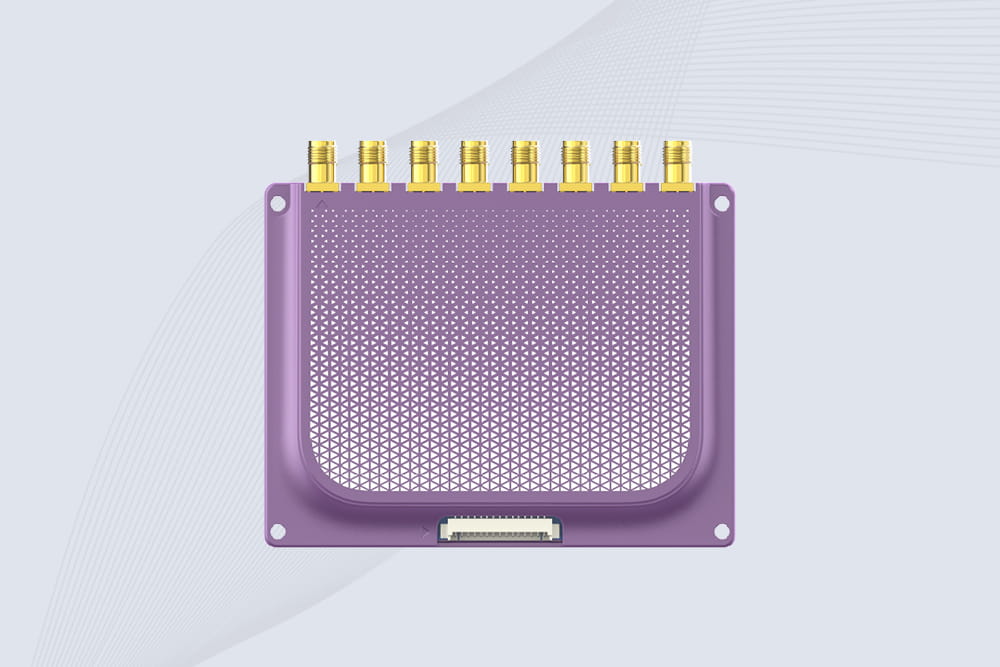
CYKEO CYKEO-M8L module RFID is a compact industrial UHF module built for dense tag and multi-antenna environments. With 8 RF ports, adjustable 33 dBm output, and ISO & GB protocol support, it is widely used in factories, warehouses, and automated tracking systems.
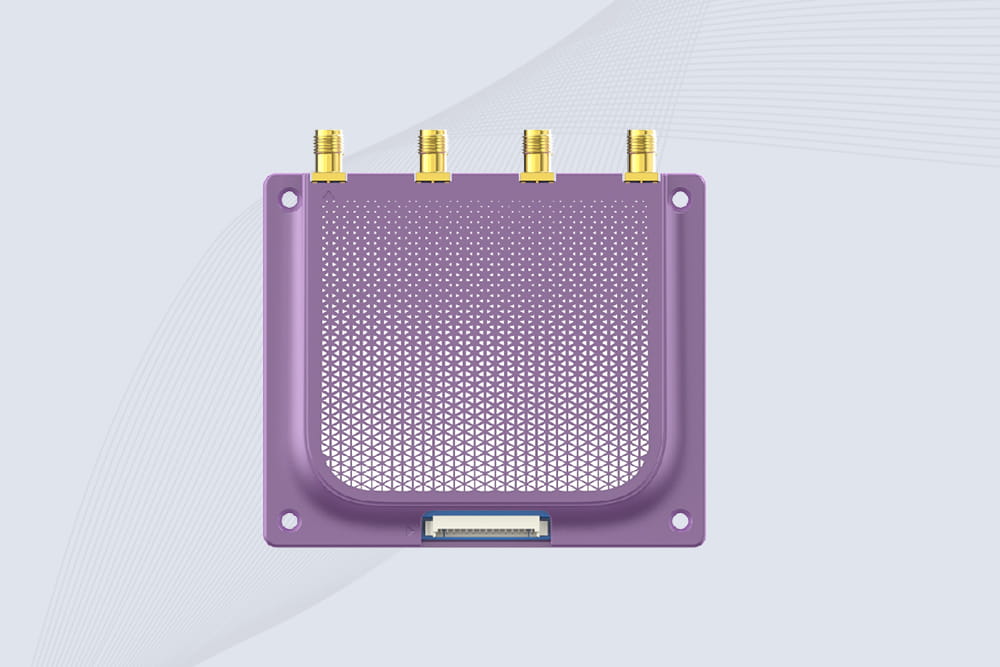
CYKEOCYKEO-M4L UHF RFID Module is a compact 4-channel RFID tag reader module designed for dense tag environments. Supporting ISO and GB protocols, it delivers stable reads up to 10 meters for industrial and IoT systems.

Cykeo CYKEO-A11 UHF RFID reader antenna delivers 11dBi gain, 840-960MHz frequency range, and IP65 ruggedness for retail, logistics, and industrial RFID systems. Features low VSWR and easy installation.

CYKEO Antenna RFID Reader delivers stable long-range UHF performance with a 10.5dBi directional design, built for warehouses, conveyor portals, and industrial RFID systems. This rfid reader antenna provides 20m+ read distance and rugged IP67 protection.

Cykeo CYKEO-PHF3 industrial HF RFID Antenna offers 24-point dynamic tracking, ISO 14443A/15693 protocols, metal-environment stability for archives/libraries/manufacturing.

Cykeo CYKEO-A5B industrial Linear RFID Antenna delivers 5dBi gain, ≤1.5:1 VSWR, and IP65 rugged design for warehouse, production line, and logistics UHF systems.

Cykeo’s CYKEO-B12 Long Range RFID Antenna delivers 15m+ read range with 12dBi gain, IP65 rugged design, and global 840-960MHz UHF support. Ideal for warehouse/logistics asset tracking.

Cykeo CYKEO-B10 Long Distance RFID Antenna offers 10dBi gain, 840-960MHz frequency range, IP65 rating, and 20m+ coverage for logistics/warehousing/ETC systems. Low VSWR ensures stable signal transmission.

Cykeo CYKEO-A6 UHF RFID panel antenna features 6dBi gain, 840-960MHz broadband, IP65 metal-ready housing for logistics/smart retail. 18mm ultra-thin design with tool-free mounting.

Cykeo CK-A3 industrial antenna RFID UHF offers 5m+ tag detection, ≤1.3:1 VSWR, IP65 rugged design, and global UHF spectrum compatibility (840-960MHz) for warehouses, factories, and retail.

Cykeo CYKEO-B5 directional RFID antenna provides 5dBi gain with 60° narrow beamwidth for precise inventory tracking. IP65-rated, global UHF frequency support, and low VSWR.

Create your own high-performance DIY RFID antenna! 5dBi gain, 840-960MHz tunable, step-by-step guides. Compatible with Arduino, Raspberry Pi, and commercial UHF readers.

Cykeo CYKEO-A7 Flexible RFID Antenna features 840-960MHz wideband tuning, 7dBi gain, and IP68 rating for medical/retail/industrial curved surface deployments. 98% read accuracy with peel-and-stick installation.

Cykeo CYKEO-B5A industrial Passive RFID Antenna delivers 5dBi gain, 70° beamwidth, and -40°C~55°C operation for warehouses/smart cabinets. Compatible with Zebra/Impinj readers.

Cykeo’s CYKEO-A9B High Gain RFID Antenna delivers 15m+ read range with 9dBi amplification. Features IP54 rugged design, 840-960MHz bandwidth, and 80° beamwidth for warehouse/manufacturing RFID systems.

Cykeo’s enterprise-grade 8dbi Impinj RFID Antenna 10m+ read range with 840-960MHz tuning. Features IP65 housing, 1.4 VSWR, 35° beamwidth for retail/warehouse RFID systems.

Cykeo CYKEO-A9 industrial UHF RFID antenna delivers 9dBi gain, 840-960MHz frequency range, and IP65 protection for warehouse/logistics/retail RFID systems. Features N-type connector and ≤1.3:1 VSWR.

CYKEO UHF RFID Antenna built for long-distance and industrial applications. This antenna rfid uhf delivers strong gain, outdoor durability, and reliable tag performance in warehouses, yards, and vehicle ID systems.

CYKEO Antenna RFID delivers reliable long-range UHF performance in warehouses, retail shelves, and cold-chain environments. This compact uhf rfid antenna provides stable reads with circular polarization and ultra-wide 840–960 MHz support, ideal for industrial tracking, smart shelves, and asset monitoring.

Cykeo’s CYKEO-C8 UHF RFID antennas delivers 8dBi gain, 840-960MHz full-band coverage, and IP65 ruggedness for manufacturing/warehouse RFID systems. Industrial RFID Antennas Features

Cykeo’s 8dBi UHF RFID antenna and reader kit delivers 10m+ range, 840-960MHz broadband, and IP65 ruggedness for factories, warehouses, and logistics. ISO 18000-6C & EPC Gen2 certified.

Cykeo CYKEO-A9A industrial UHF RFID reader and antenna kit delivers 10m range, 500 tags/sec, IP65 ruggedness for manufacturing/logistics. Supports EPC Gen2, ISO18000-6C.
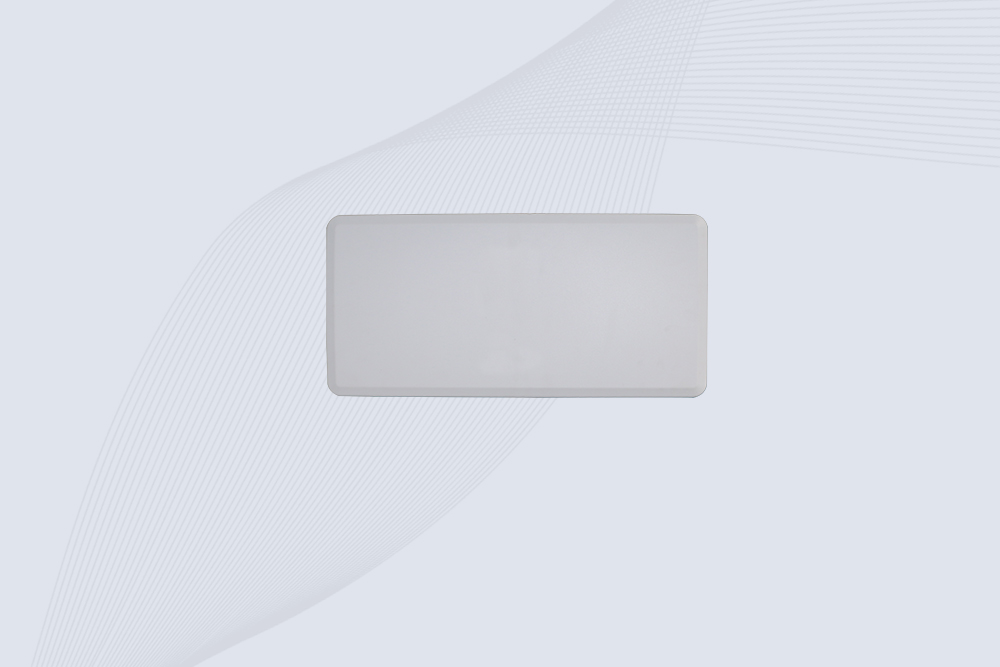
Cykeo’s CYKEO-A12C UHF Large RFID Antenna delivers 12dBi gain, 840-960MHz global frequency, IP65 ruggedness for logistics/warehousing/automotive. 40° beamwidth ensures stable 15m+ tag reads.

CYKEO Near Field RFID Antenna provides precise 5–30 cm reading for shelves, cabinets, and workstations. This compact rfid shelf antenna delivers stable short-range performance around metal and clutter, ideal for pharmacies, libraries, and electronics sorting.
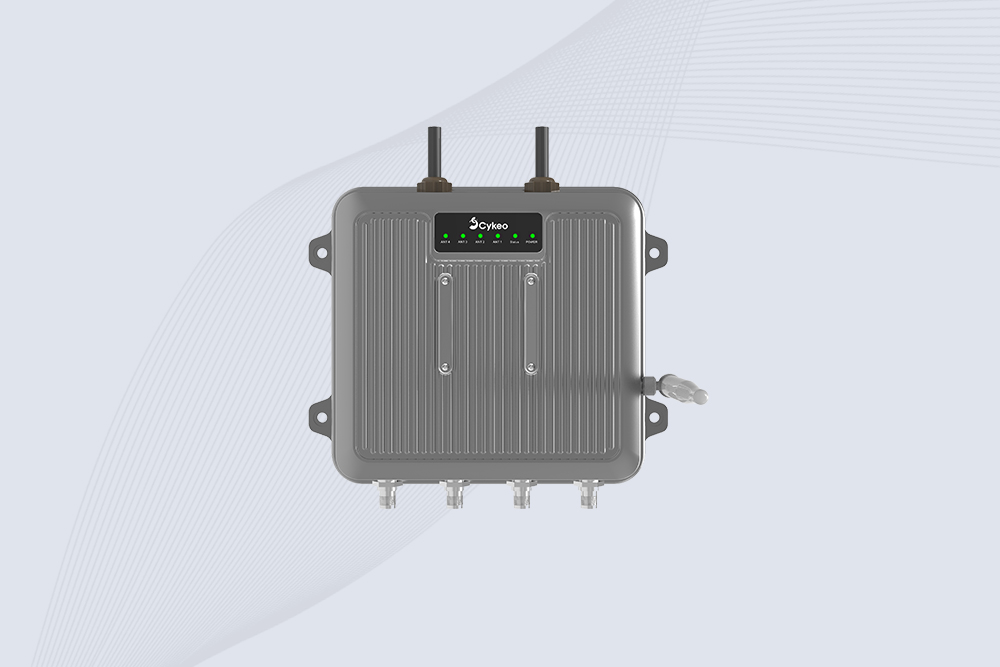
Cykeo CYKEO-C1 industrial Forklift RFID Reader features 20m read range, 600 tags/sec scanning, Impinj R2000 chipset, and IP67 rugged design. Ideal for warehouse logistics and manufacturing. Supports ISO 18000-6C/6B protocols.
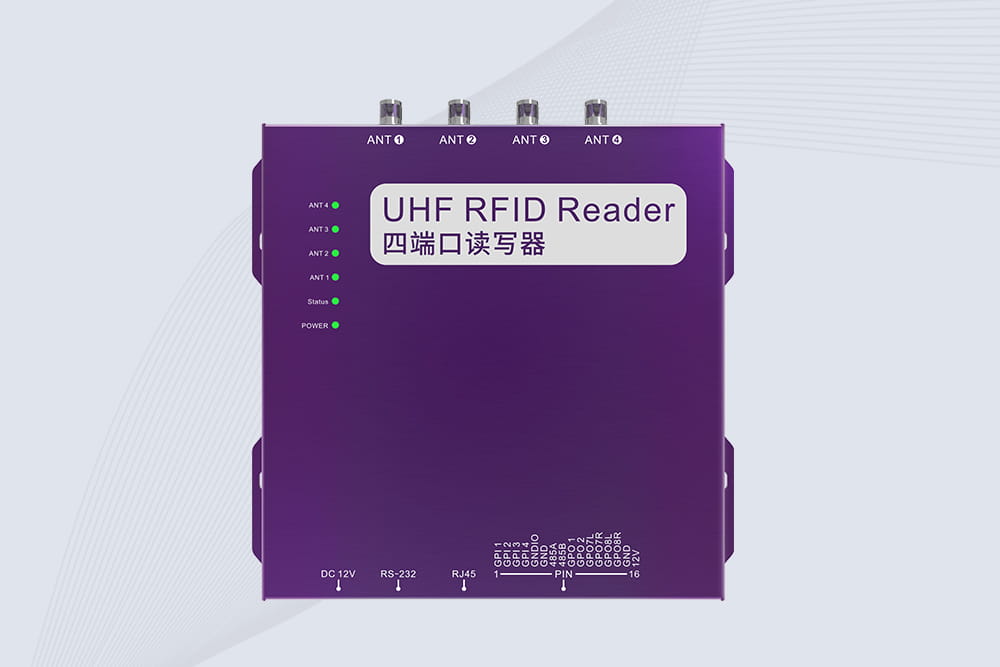
Cykeo CYKEO-R4 industrial UHF RFID Fixed Reader features 4 TNC ports, 400+ tags/sec speed, IP67 housing, and global frequency compliance for vehicle inspection, smart warehouse, and asset management systems.
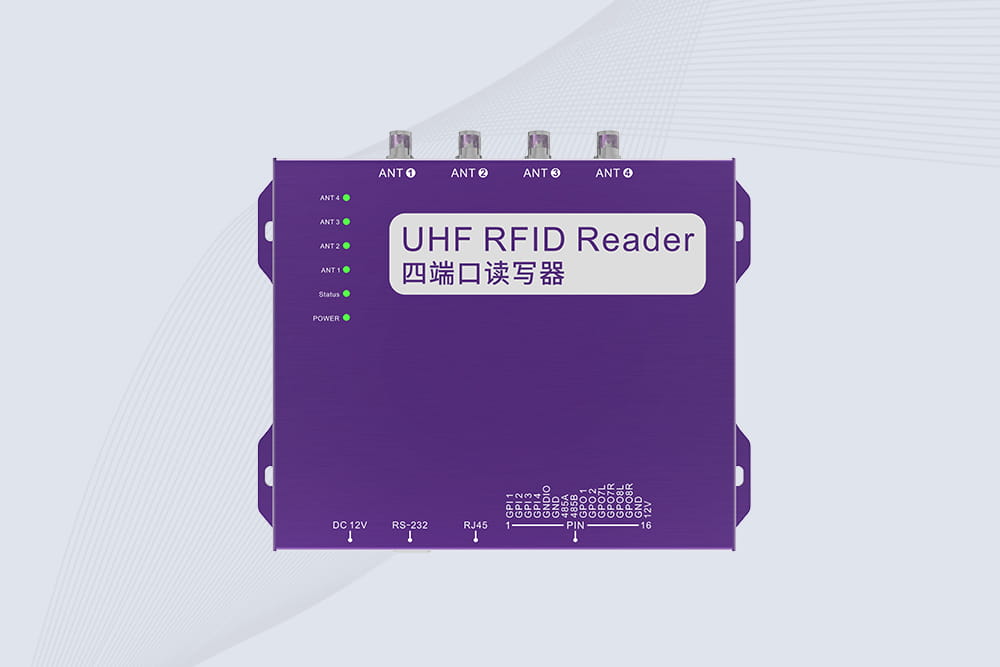
Cykeo’s CYKEO-R4L 4-port Fixed UHF RFID Reader delivers 400 tags/sec scanning, ISO 18000-6C compliance, and IP65 protection. Ideal for warehouse automation, manufacturing WIP tracking, and logistics management.
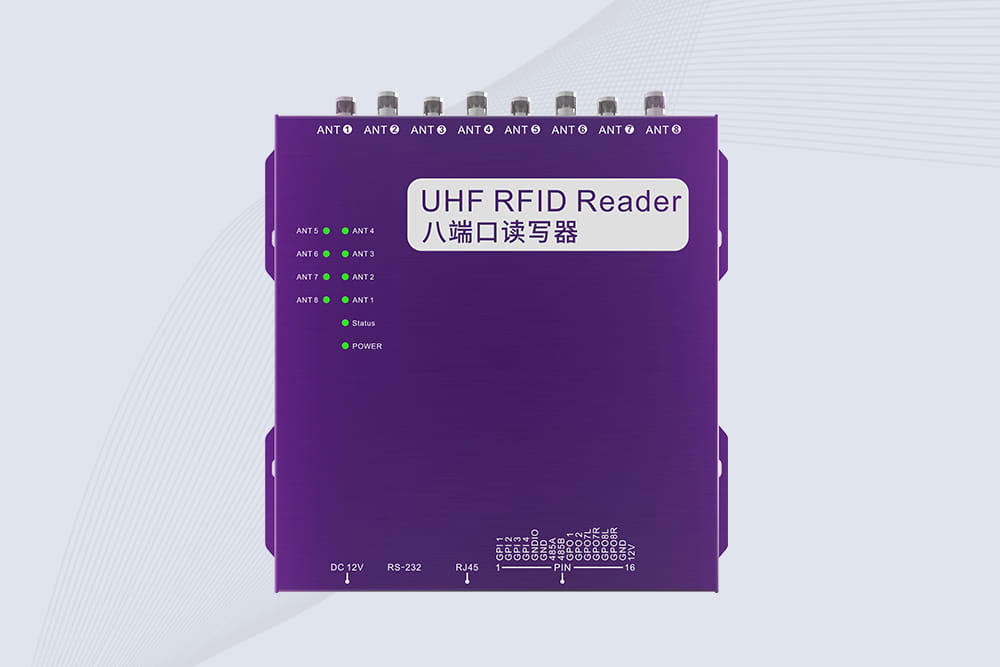
CYKEO CYKEO-R8L Fixed RFID Reader with 8-port UHF design, Impinj-based RF core and up to 20m read range. An industrial Fixed RFID Reader for vehicle inspection, warehouse portals, smart manufacturing lines and secure access checkpoints.
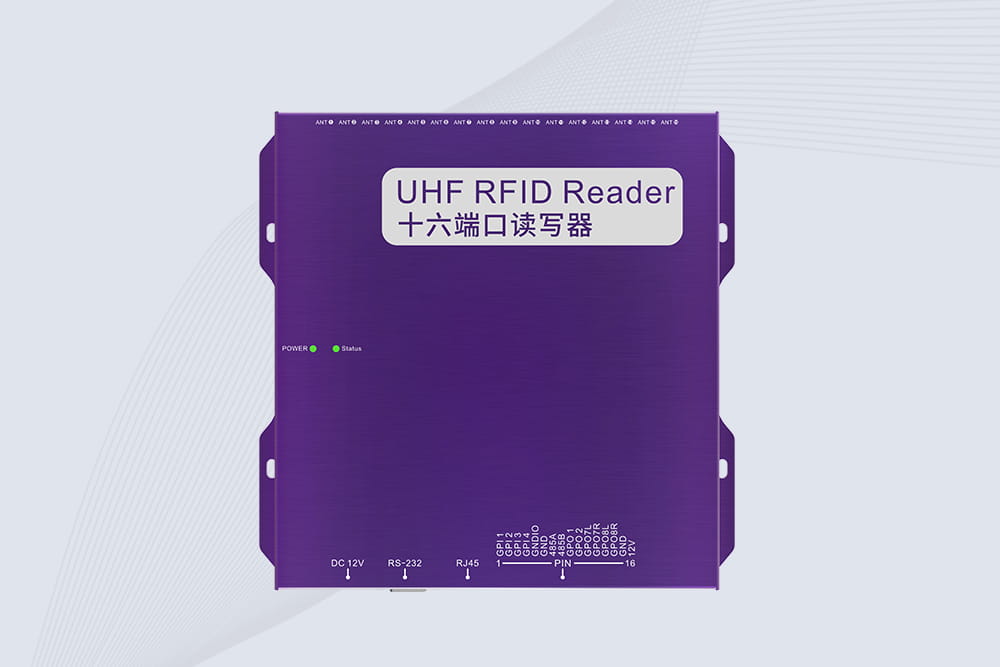
RFID Fixed Reader from CYKEO – the CYKEO-R16L 16-port UHF fixed reader for warehouses, smart cabinets, and production lines. Long-range, multi-tag reading, stable performance for 24/7 industrial use.

Learn how to read rfid tags with professional RFID technology. Explore RFID readers, tag communication, inventory applications, and Cykeo solutions.
More
Discover what is rfid asset tracking and how RFID technology improves asset visibility, location management, and operational efficiency with Cykeo solutions.
More
rfid patient wristbands improve UHF patient identification, healthcare tracking, and hospital safety. Discover Cykeo RFID solutions for medical automation.
More
Discover the real difference between an RFID reader and an RFID antenna — how they communicate, where each fits in RFID systems, and why their connection defines performance in industries from logistics to healthcare.
More