 Cykeo RFID IoT Solution Products R&D Manufacturer
How Do RFID Reader Work?
318Curious about how do RFID reader work? We explain the step-by-step process of radio wave communication between readers and tags in plain English.
MoreAll RFID Product
If you’ve tried using standard RFID tags on metal, you’ve probably seen this happen:
And the confusing part is—on paper, everything should work.
This is one of the most common issues in RFID projects, especially in industries like power, telecom, and manufacturing.
Let’s go through what’s really happening, and how to fix it.
The problem isn’t the tag itself—it’s the environment.
Metal interferes with radio frequency signals in two ways:
Metal reflects RF signals, causing interference and signal distortion.
Some energy is absorbed, reducing the effective read range.
The result?
Even a tag that works perfectly in open air can fail completely when attached to metal.
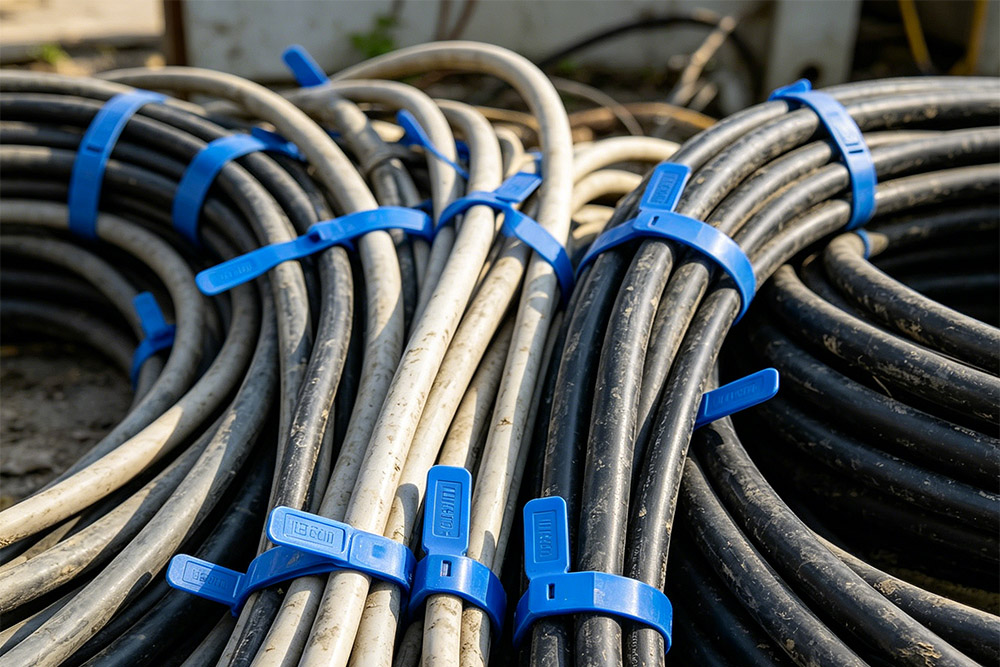
Many buyers initially try:
These might work temporarily—but rarely hold up in real conditions.
For metal cables and equipment, these solutions are not reliable long term.
Not all RFID cable tags are designed for metal surfaces.
To work properly, the tag needs specific structural design.
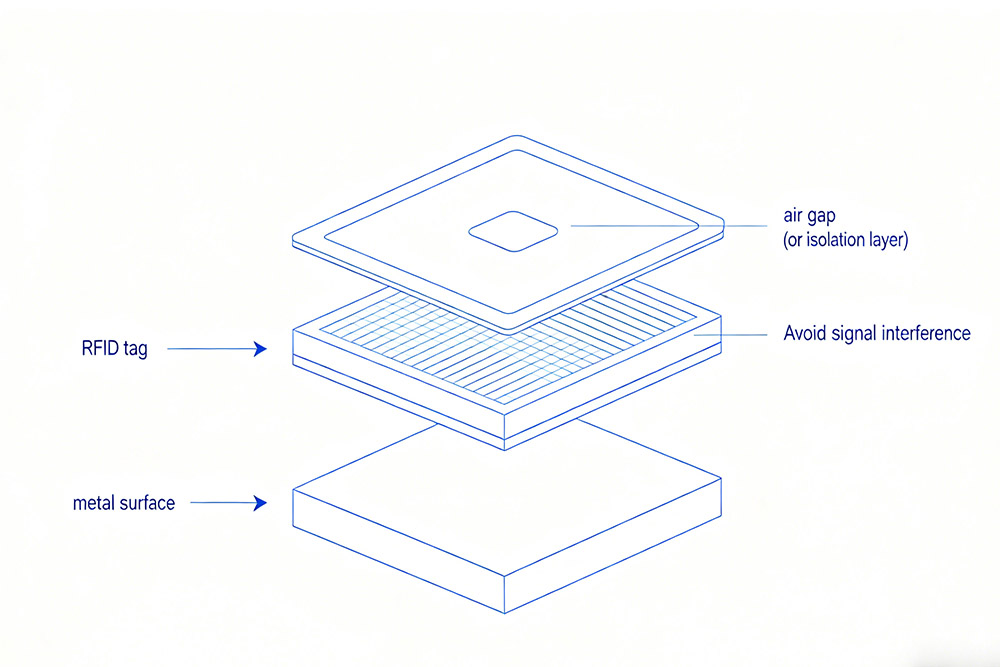
The tag must create distance between the antenna and metal surface.
The antenna needs to be optimized specifically for metal interference.
A good industrial tag should still maintain several meters of read range.
Compared to flat labels, cable tie RFID tags have a natural advantage:
They don’t sit flush against the metal surface.
Instead:
This is why they are widely used in:
In real projects, read range depends on:
But for a well-designed UHF cable tag:
You should expect several meters of stable reading distance, even in metal-heavy environments.
If your current tags only read within 1 meter or less, something is wrong—usually the tag design.
This is where many projects go wrong.
Low-cost tags often lack proper anti-metal design.
Result: unstable performance, wasted deployment.
A tag that works on a desk may fail in:
Even good tags can perform poorly if:
Before placing a bulk order, check:
If a supplier cannot clearly answer these, that’s a red flag.
A power utility company needed to track thousands of outdoor cables.
Initial attempt:
After switching to cable tie RFID tags:
The difference wasn’t the system—it was the tag design.
You should consider this type of tag if:
In these cases, standard tags will cost you more in the long run.
RFID on metal is not impossible—it just requires the right tag.
Most failures in RFID projects don’t come from the reader or software.
They come from choosing the wrong tag for the environment.
If your application involves cables, equipment, or industrial assets,
a properly designed RFID cable tie tag is usually the safest and most stable option.
User Guide
How to Remove RFID Tags from Clothing Safely (Without Ripping Your Shirt)
The Truth About RFID Signals: Aluminum Foil, Smartphones, and Reading Range Explained
How Security Tag Readers Work: RFID vs. Magnetic Systems – Which Is More Efficient?
How to Deactivate RFID Tags Without Guesswork or Myths?
How to Test RFID Tags with Phone
How to Test RFID Tags with Your Smartphone (No Scanner Needed)
How to Use Android Phone to Emulate RFID Tag: Full Tutorial and Application Guide
Can Your RFID Tags Reader iPhone ? Here’s How It Actually Works
Can You Use an NFC Phone as an RFID Tag?
How to Choose the Right RFID Tag for Clothing? Materials, Packaging & Attachment Explained
Industrial Essentials: 2025 Guide to the Most Durable Rugged RFID Tags
Active RFID Tag Range: The Real Difference Between Active and Passive Tags

Curious about how do RFID reader work? We explain the step-by-step process of radio wave communication between readers and tags in plain English.
More
Learn how RFID reader modules perform in real industrial environments and how to avoid common integration problems involving antennas, metal interference, SDKs, and multi-tag reading.
More
A real-world look at UHF RFID reader deployment issues in warehouses and industrial sites. Covers installation mistakes, integration gaps, and what wholesale buyers often miss before scaling RFID projects.
More
RFID motherboard is what turns RFID readers and antennas into a real smart cabinet. Learn how it controls inventory, access, sensors, and system integration inside RFID cabinets.
More