 Cykeo RFID IoT Solution Products R&D Manufacturer
Advantage of rfid reader/writer and applications
122rfid reader/writer solutions improve UHF tag encoding, asset tracking, and inventory accuracy. Discover Cykeo desktop RFID platforms for fast multi-tag reading.
MoreAll RFID Product
If you’ve ever seen a warehouse where items get recorded automatically as they pass through a gate—no scanning, no stopping—that’s usually a fixed RFID reader at work.
Most people first come across RFID through handheld scanners.
But in real industrial projects, handheld is only the starting point.
When operations scale, companies move to fixed RFID readers—because manual scanning simply doesn’t keep up.
Let’s walk through what these devices actually are, and more importantly, when you need one.
A UHF RFID fixed reader is a stationary device that automatically reads RFID tags within a defined area, without requiring human intervention.
Unlike handheld readers, it’s installed in a fixed position, such as:
Once installed, it continuously scans for tags and sends data directly to your system.
No trigger. No aiming. No manual process.
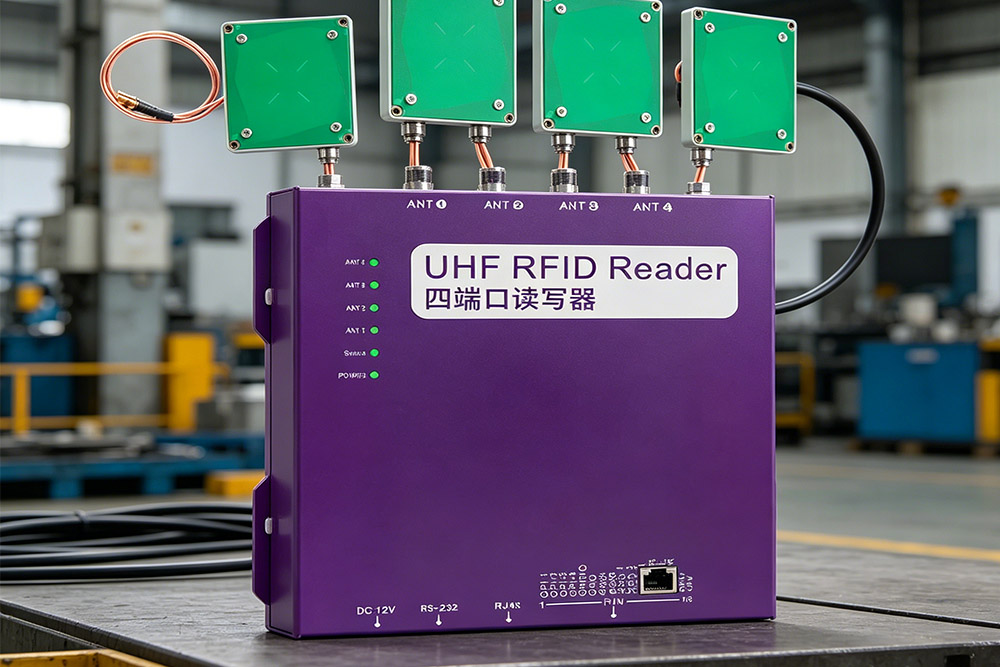
At a basic level, the system has three parts:
Here’s what happens on site:
In a well-configured setup, this all happens in milliseconds.
Handheld readers are flexible—but they rely on people.
That becomes a problem when:
In short:
Handheld helps you manage. Fixed readers help you scale.
You’ll usually find them anywhere items move through defined points.
A fixed reader doesn’t work alone—it relies on antennas.
Most industrial readers support:
More ports = more antennas = wider coverage.
For example:
Poor antenna setup is one of the main reasons RFID systems fail—not the reader itself.
This is one of the most misunderstood topics.
You’ll often see claims like “up to 15 meters.”
That’s under ideal conditions.
In real environments:
Metal, liquids, and interference can reduce performance significantly.
So the question isn’t “maximum range”—it’s reliable range.
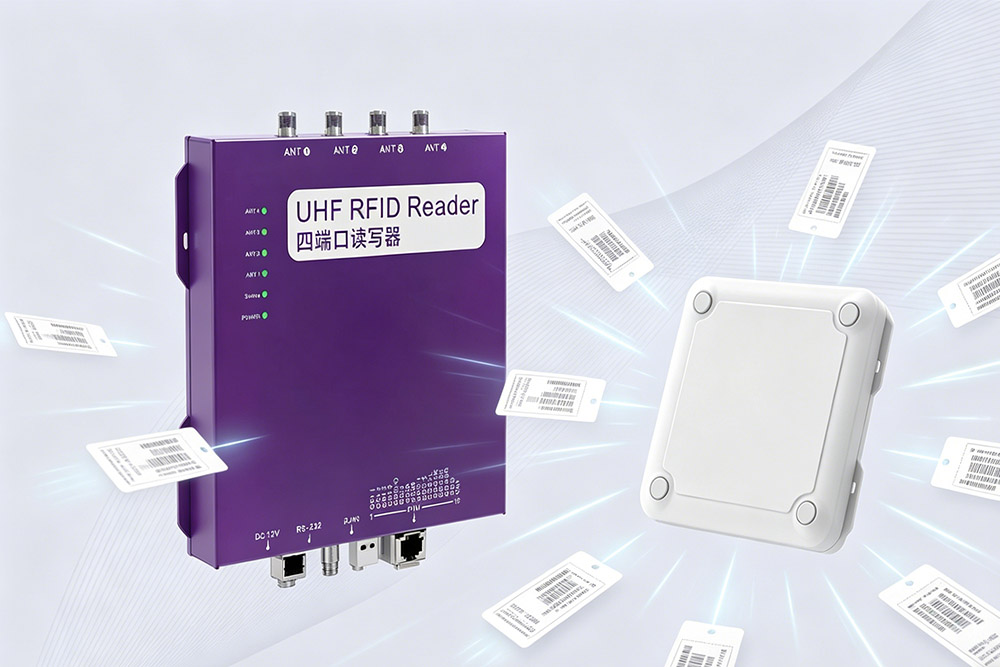
You don’t always need one.
But you should seriously consider it if:
If your team is still walking around scanning items one by one,
that’s usually the tipping point.
A warehouse initially used handheld RFID readers for inventory.
It worked—until volume increased.
Problems started:
They installed fixed readers at entry/exit gates.
Result:
The system didn’t change much—just the way data was captured.
Many buyers think:
“RFID system = reader”
In reality:
RFID success depends on:
The reader is just one part—but it’s the core controller.
A UHF RFID fixed reader is not just a device—it’s a shift from manual tracking to automated data capture.
If your operation is still relying heavily on manual scanning,
a fixed reader is usually the next logical step.
It doesn’t just make things faster—it makes them consistent.
If you’re planning to implement RFID in your warehouse or industrial system, it’s worth evaluating whether a fixed reader setup fits your workflow.
You can request:
Start with your use case, and build the system around it.
Guide Recommendations
Fixed RFID Reader: Why It’s Becoming Must-Have
Fixed RFID Readers: What I Didn’t Expect and What I Learned
RFID Handheld Reader vs. Fixed Reader: Which Is Better for Retail?
Different Types of RFID Readers: A Simple Introduction
Best Budget USB RFID Readers Under $100 for Small Business Inventory Systems
RFID Module vs. RFID Reader: What’s the Difference?
Fixed RFID Reader Buying Guide: 5 Core Parameters You Must Know
What is an RFID Reader Used For?
How RFID Reader Works: The Simple Explanation
How to Choose the Best Long-Range RFID Reader for Warehouse Management
RFID Readers for Boom Barriers ,Where Efficiency Meets Access Control
Why Your Warehouse Needs Smarter RFID Readers in 2025
Understanding RFID Readers,Essential Devices for Efficient Tracking
rfid reader/writer solutions improve UHF tag encoding, asset tracking, and inventory accuracy. Discover Cykeo desktop RFID platforms for fast multi-tag reading.
More
Learn como programar RFID access control step by step: from reading card UIDs with Arduino to enrolling credentials in commercial controllers. Practical tips, common mistakes, and best practices for a secure system.
More
Step-by-step guide for building RFID access control systems for OEM and bulk projects using gates, antennas, and modules.
More
A practical breakdown of RFID parking access control for system integrators and solution providers. Learn how RFID vehicle access control works step by step, what affects reading distance, and why real parking projects behave differently from lab ...
More