One of the first questions buyers ask is simple:
“How much do RFID cable tags cost?”
The honest answer is:
And if a supplier gives you a flat price without asking questions, that’s usually a red flag.
Because in real projects, RFID pricing is not just about the tag—it’s about how the tag performs in your environment.
Let’s break it down in a way that actually helps you budget and negotiate.
The Typical Price Range
For UHF RFID cable tie tags used in industrial environments:
Small quantities: higher per-unit cost
Bulk orders: significantly lower
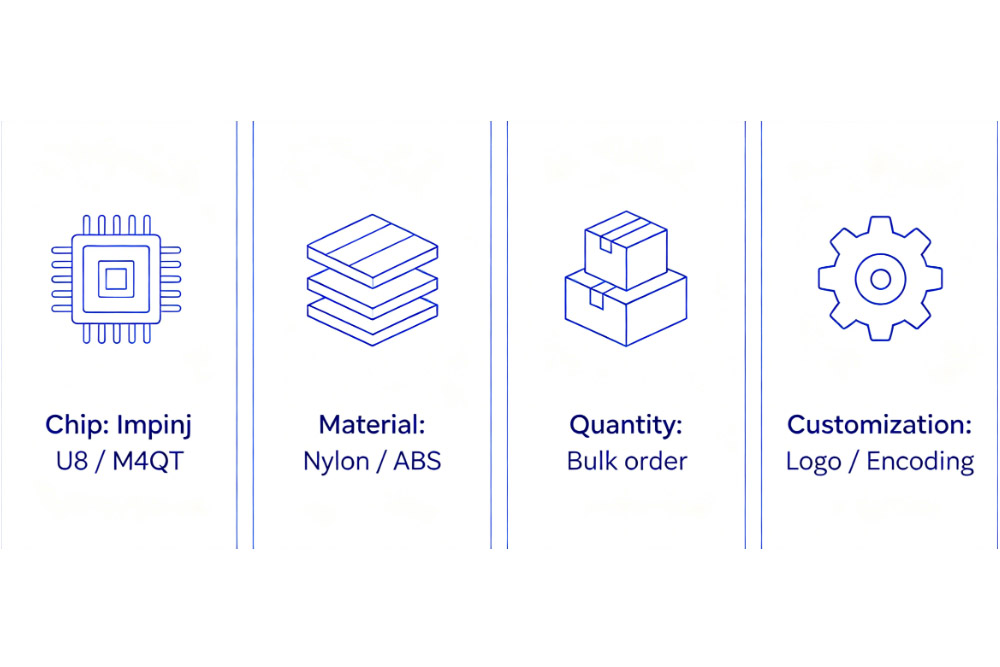
In most cases, pricing varies based on:
Chip type
Material quality
Order volume
Customization requirements
The gap between a low-end tag and a reliable industrial tag can be substantial.
And that difference usually shows up later—in performance.
What Actually Affects RFID Cable Tag Pricing
1. Chip Type
Common chips include:
Higher-end chips offer:
Better read sensitivity
More stable performance
Improved encoding flexibility
👉 Cheaper chips reduce upfront cost
2. Material & Durability
Industrial cable tags are typically made from:
Cost increases if the tag needs to be:
UV resistant
Waterproof
High-temperature resistant
If your project is outdoors or long-term, this is not where you want to cut corners.
3. Anti-Metal Design
Tags designed for metal environments usually cost more because they include:
Special antenna design
Structural spacing
Signal optimization
But without this, performance can drop dramatically.
So while it adds cost, it often saves the project.
4. Order Quantity
This is where pricing changes the most.
Typical pattern:
1K pcs → higher unit cost
10K pcs → noticeable drop
50K+ pcs → optimized pricing
👉 If you’re planning a large deployment, always ask for tier pricing.
5. Customization
Customization can include:
Logo printing
Barcode / QR code
EPC pre-encoding
Packaging requirements
Each adds cost—but also saves time during deployment.
The Hidden Cost Most Buyers Miss
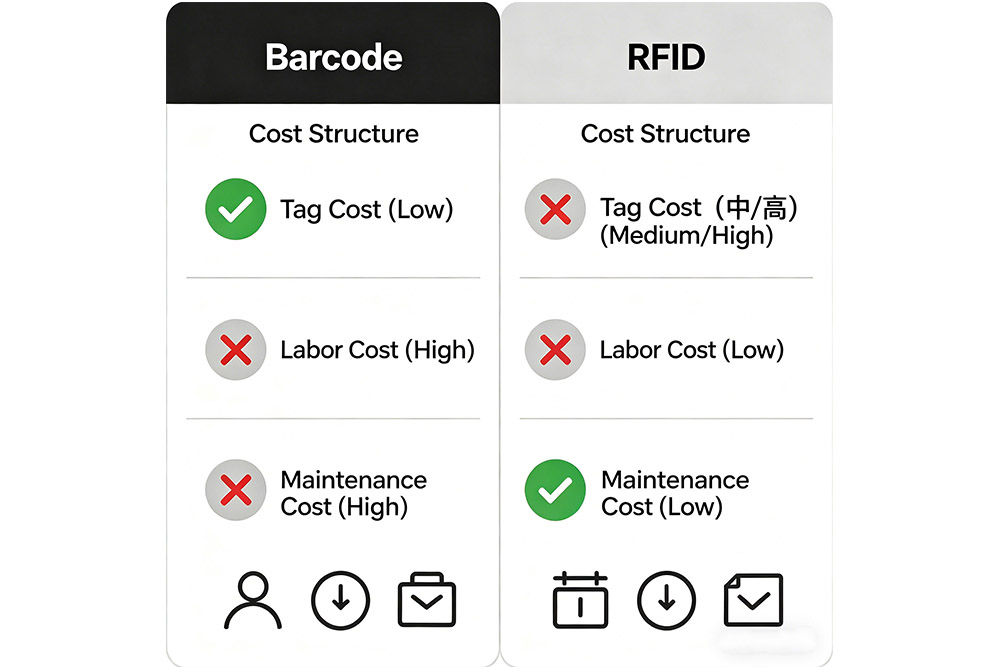
Many buyers focus only on unit price .
But in real projects, the bigger cost is:
👉 labor
Let’s compare:
Cheap tag scenario:
Lower upfront cost
Poor read performance
More manual scanning
Higher labor cost
Better tag scenario:
Higher unit price
Stable long-range reading
Faster operations
Lower labor cost
Over time, the second option is often cheaper.
How to Reduce RFID Tag Costs
Here are practical ways buyers reduce cost:
1. Order in Phases
Start with:
Sample testing
Small pilot
Then scale to bulk pricing.
2. Choose the Right Chip
Not every project needs top-tier chips.
Match the chip to:
Required read range
Data needs
3. Avoid Over-Specifying
Some buyers request:
Extreme temperature resistance
Unnecessary memory
That increases cost without real benefit.
4. Work with a Supplier Who Understands Your Application
A good supplier will:
Recommend the right spec
Prevent overpaying
Help avoid deployment issues
A bad one will just quote a price.
A Real Example
A warehouse project initially chose the lowest-cost RFID tags .
Result:
Inconsistent reads
Repeated scanning
Delayed operations
They later switched to higher-quality cable tags.
Result:
Faster inventory
Fewer errors
Lower labor cost
Total project cost actually decreased.
What to Ask Before Requesting a Quote
To get accurate pricing, prepare:
Application (cable / asset / environment)
Surface type (metal or not)
Required read distance
Quantity
Customization needs
The more details you provide, the more accurate—and useful—the quote will be.
Final Thoughts
RFID cable tag pricing is not just about finding the lowest number.
It’s about finding the right balance between:
Cost
Performance
Reliability
The cheapest option often becomes expensive later.
The right option usually pays for itself.
If you’re planning an RFID project, the best way to get accurate pricing is to match the tag to your real use case.
You can request:
Bulk pricing tiers
Sample testing
Chip recommendations
Customization options
Start with your requirements—we’ll help you optimize both cost and performance.
 Cykeo RFID IoT Solution Products R&D Manufacturer