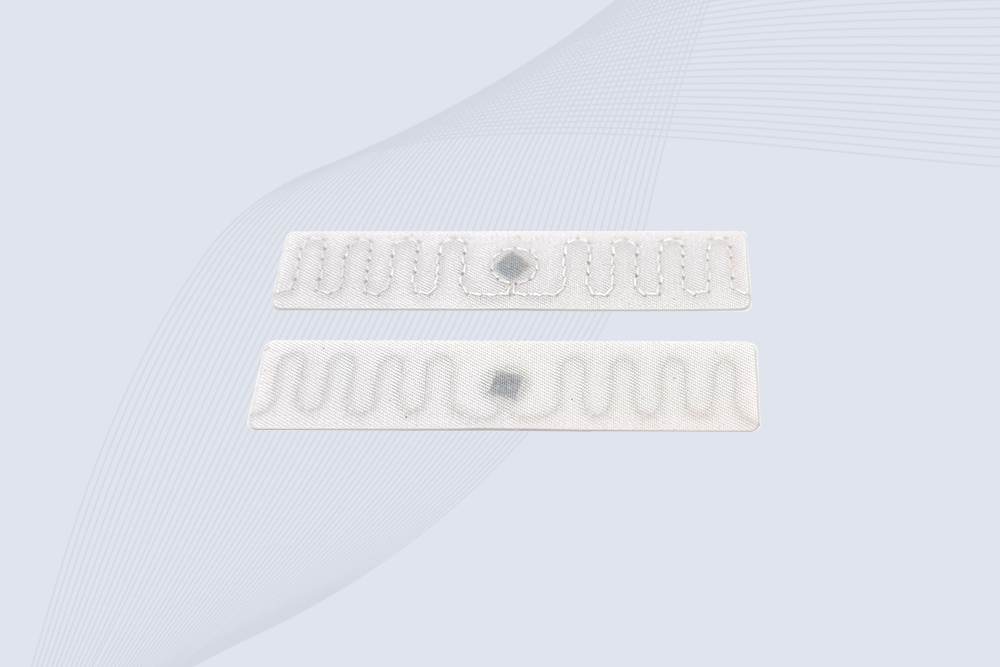
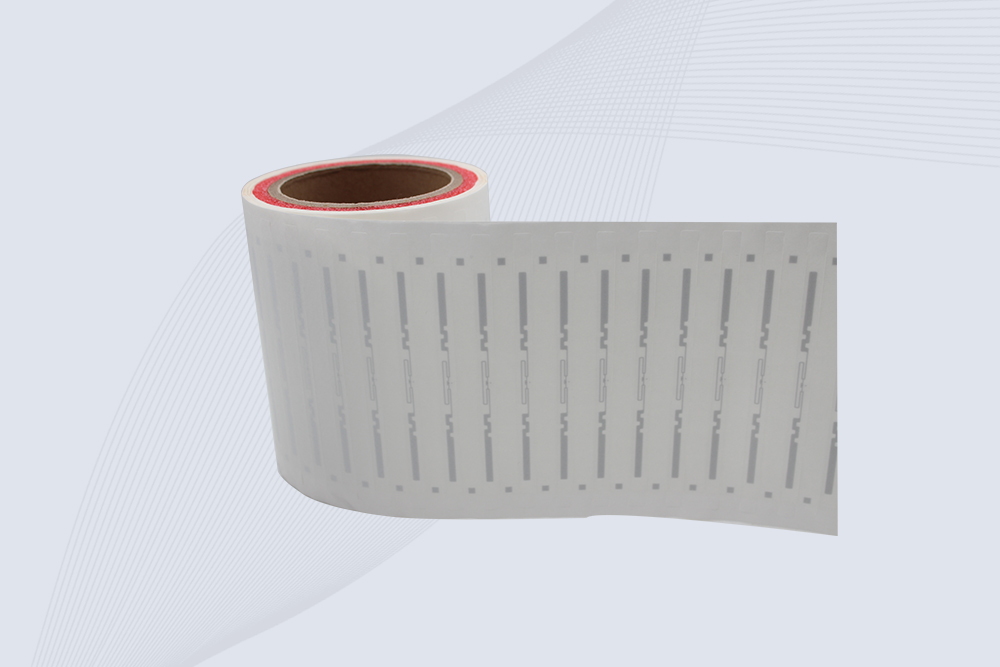
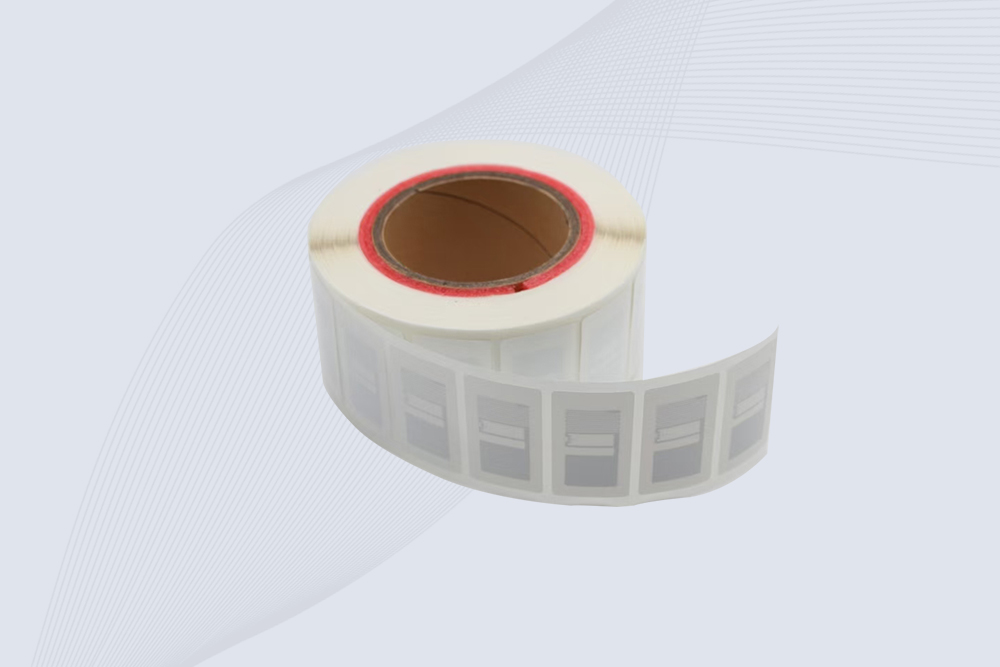
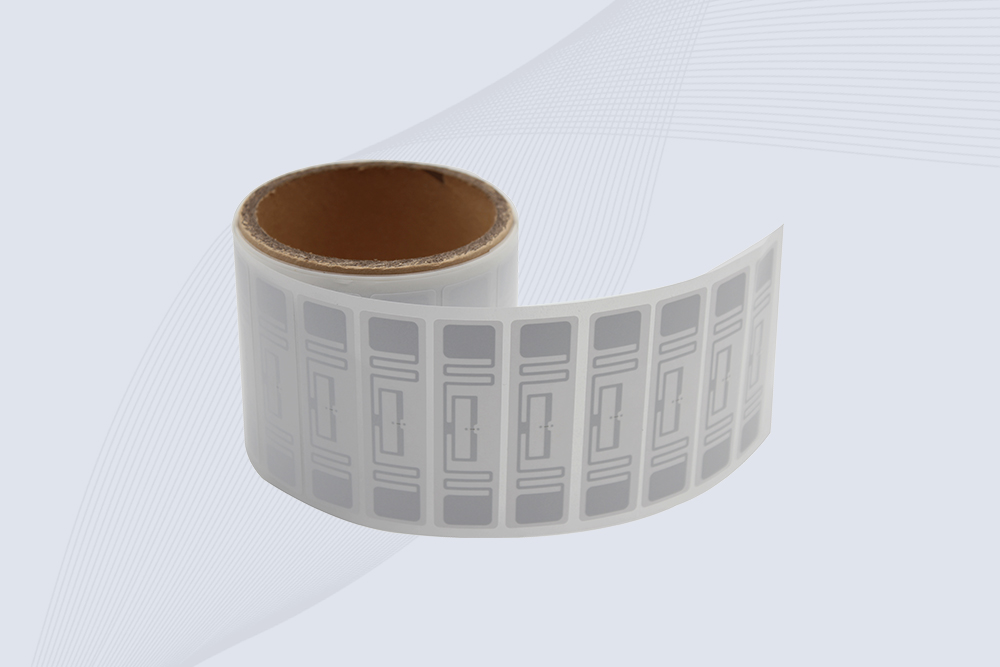
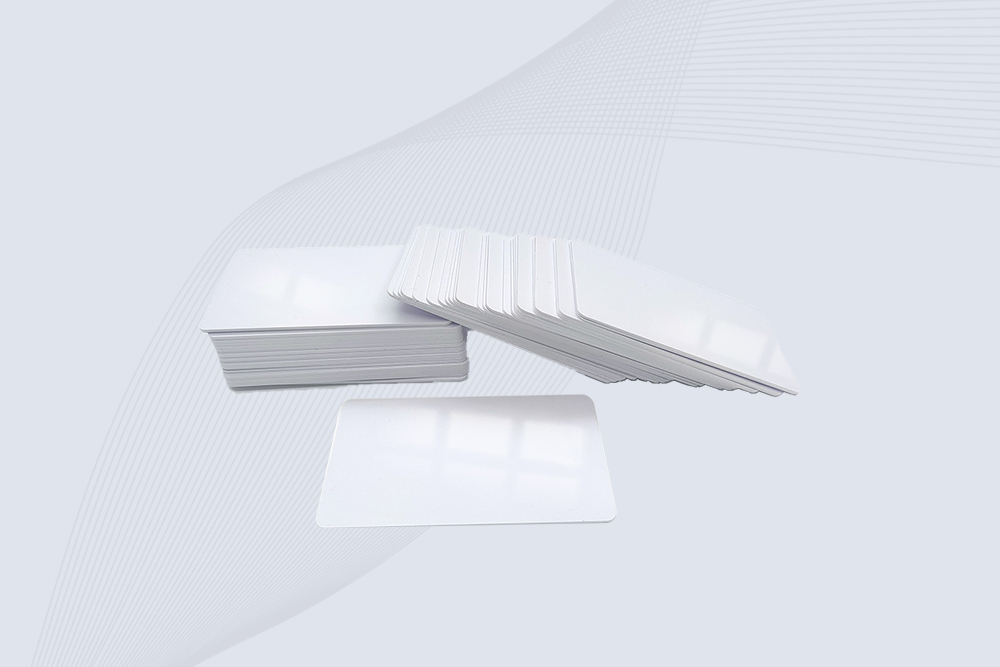
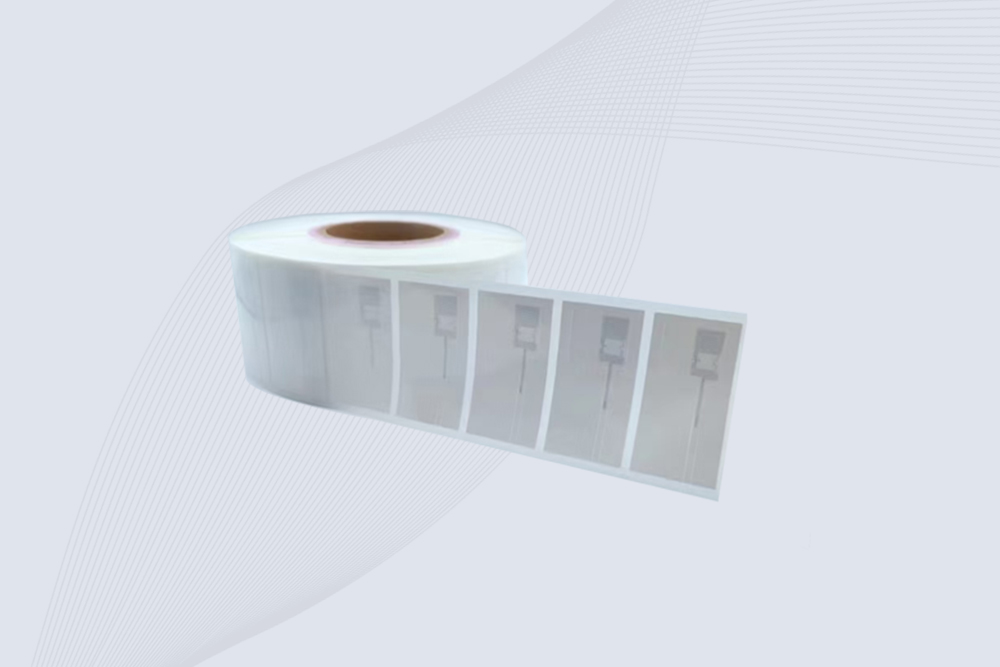
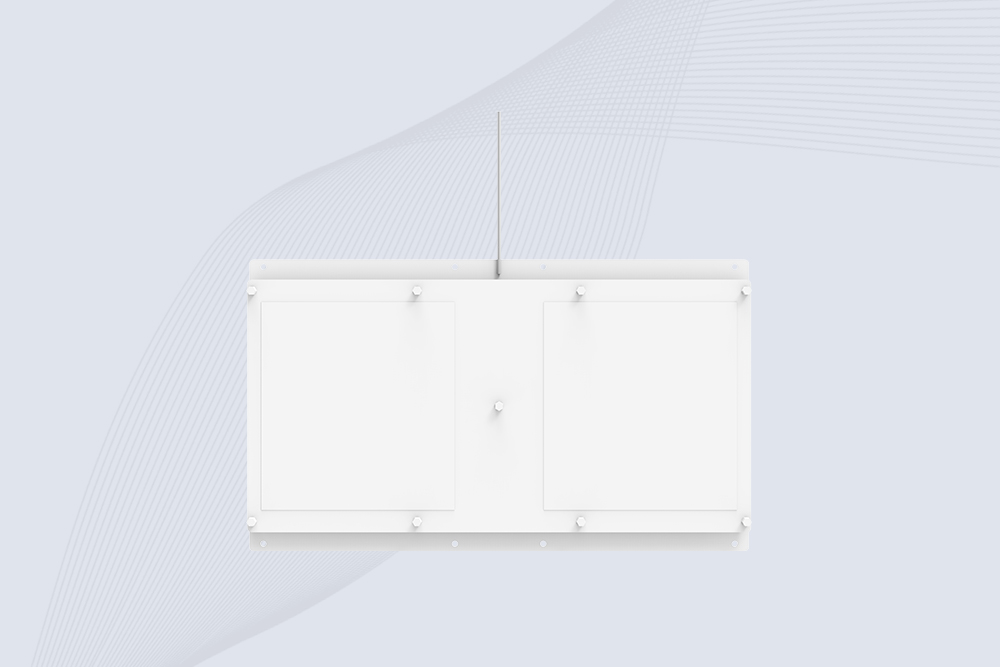
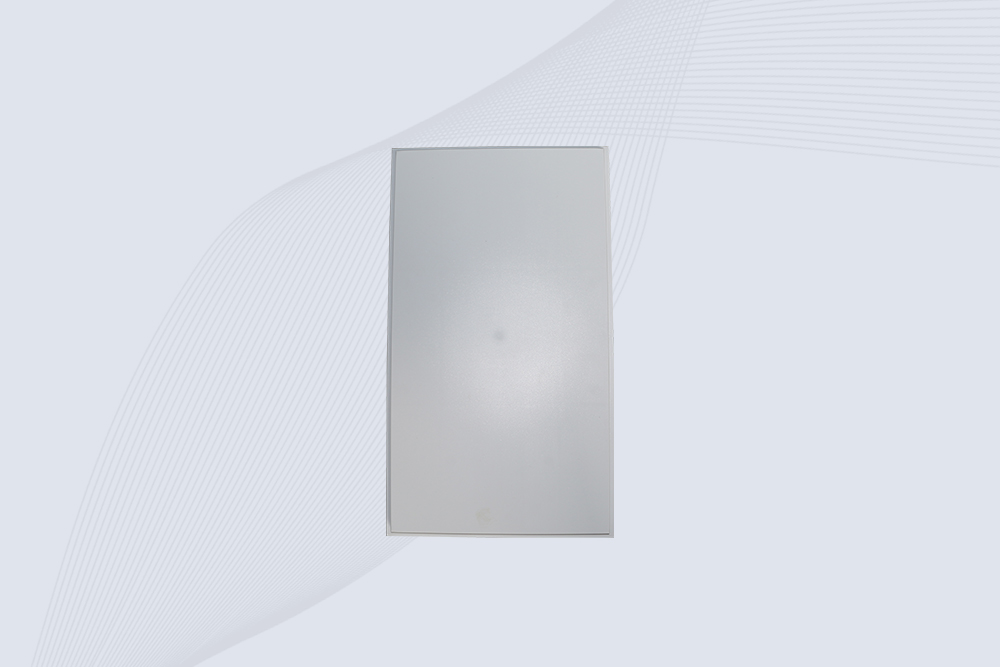
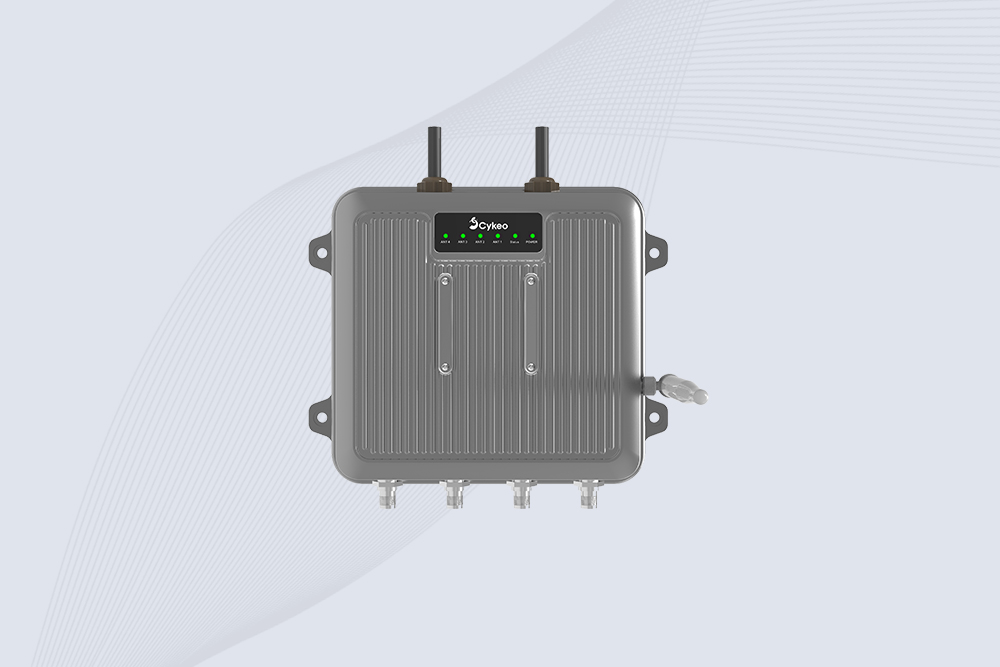
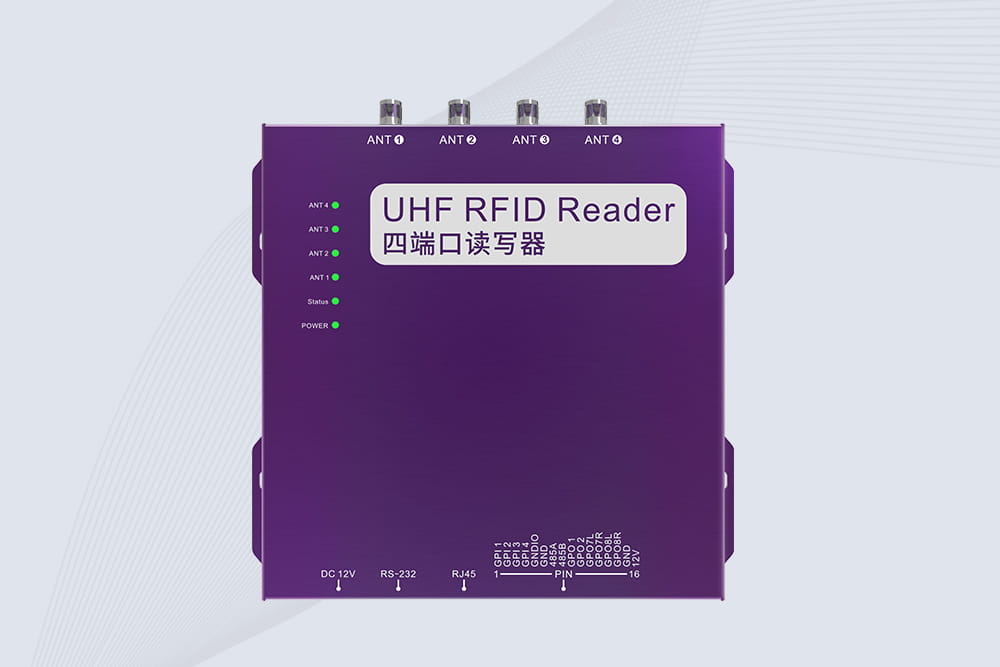
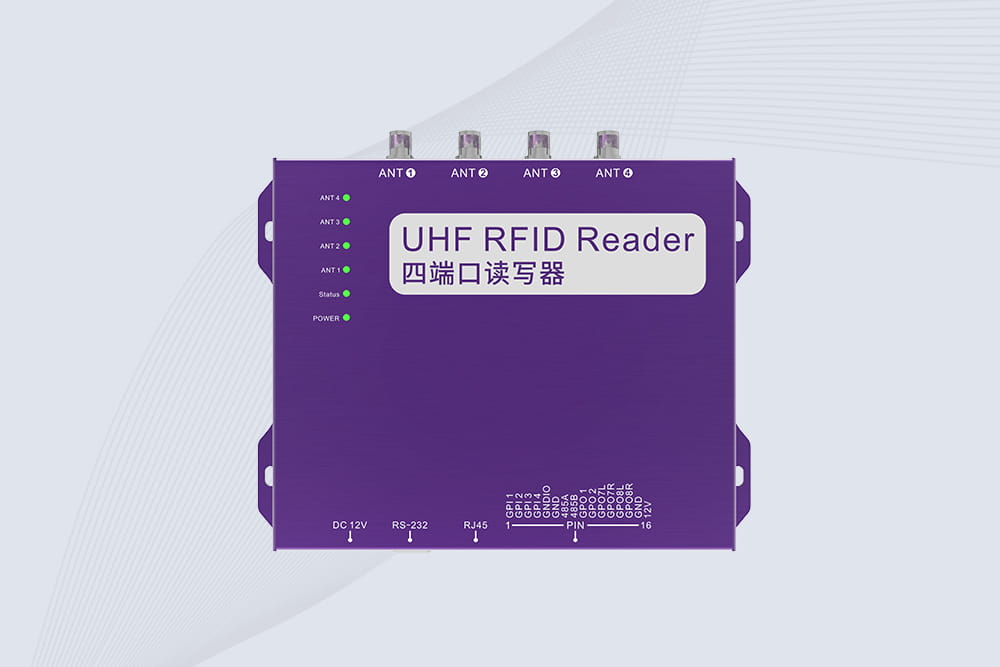
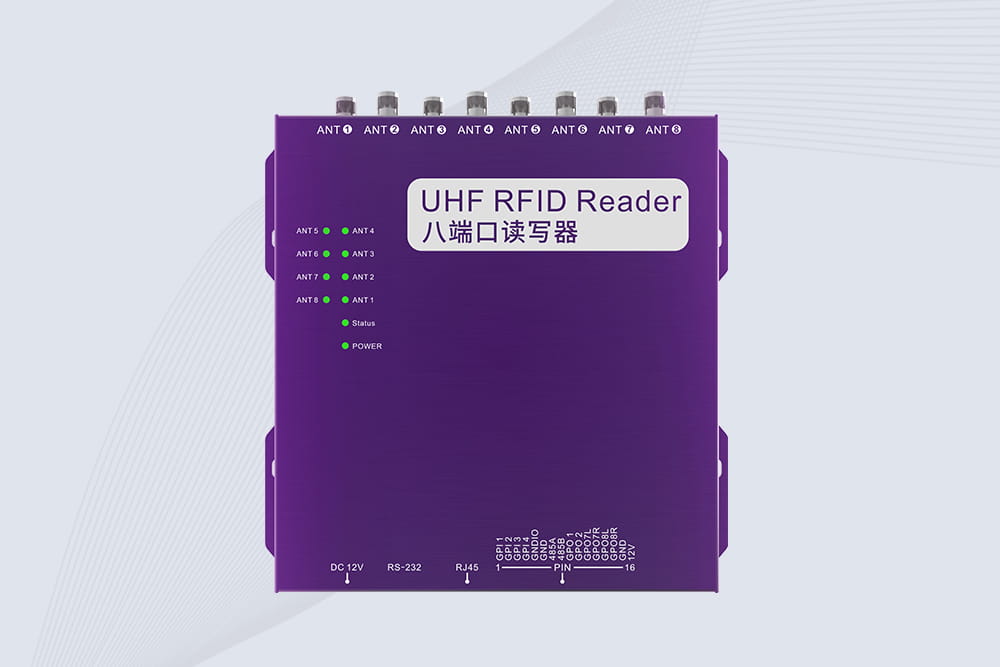
An RFID system is a technology setup that uses radio waves to identify and track tagged objects without requiring direct visual contact. It typically includes RFID tags, readers, antennas, and software that collects tag data and connects each identification event to inventory, asset, production, or logistics records.
RFID stands for Radio Frequency Identification. The term describes the communication method, but an RFID system is more than a tag or a scanner. It is a coordinated arrangement of hardware, radio-frequency communication, data processing, and business applications.
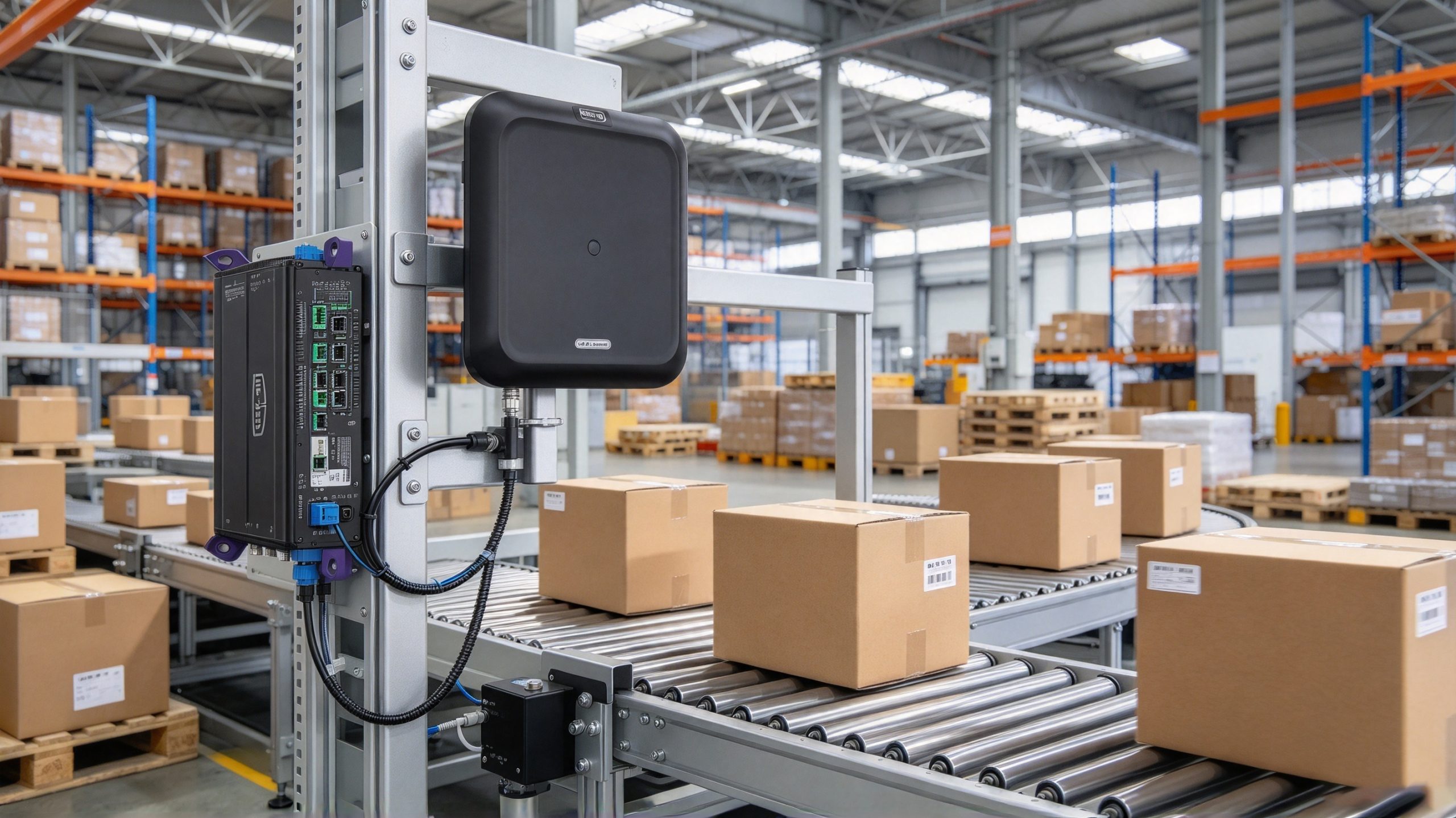
Consider a warehouse receiving area. A supplier delivers cartons carrying UHF RFID labels. As the cartons pass a fixed reader, antennas transmit radio signals and receive responses from compatible tags. The reader forwards the tag identifiers to warehouse software, which checks them against the expected delivery. The system can then help record what arrived and flag unexpected items.
No employee needs to point a barcode scanner at every label. But the system still needs careful setup: tags must be suitable for the products, antennas must cover the intended area, and the software must know what each identifier represents.
That last point is often underestimated. A reader can detect a tag successfully while the business application still has no useful information about the item. RFID creates the identification event; the connected data system turns it into an operational record.
What Are the Main Components of an RFID System?
An RFID system generally has four core components: tags, readers, antennas, and software. Some installations also use controllers, network equipment, sensors, printers, or automation devices. The exact configuration depends on the application and the type of RFID technology being used.
An RFID tag is attached to or embedded in an object that needs to be identified. A typical tag contains:
Microchip: stores an identifier and, depending on the tag, additional data.
Antenna: receives signals from the reader and enables the tag to communicate.
Substrate or enclosure: holds and protects the chip and antenna.
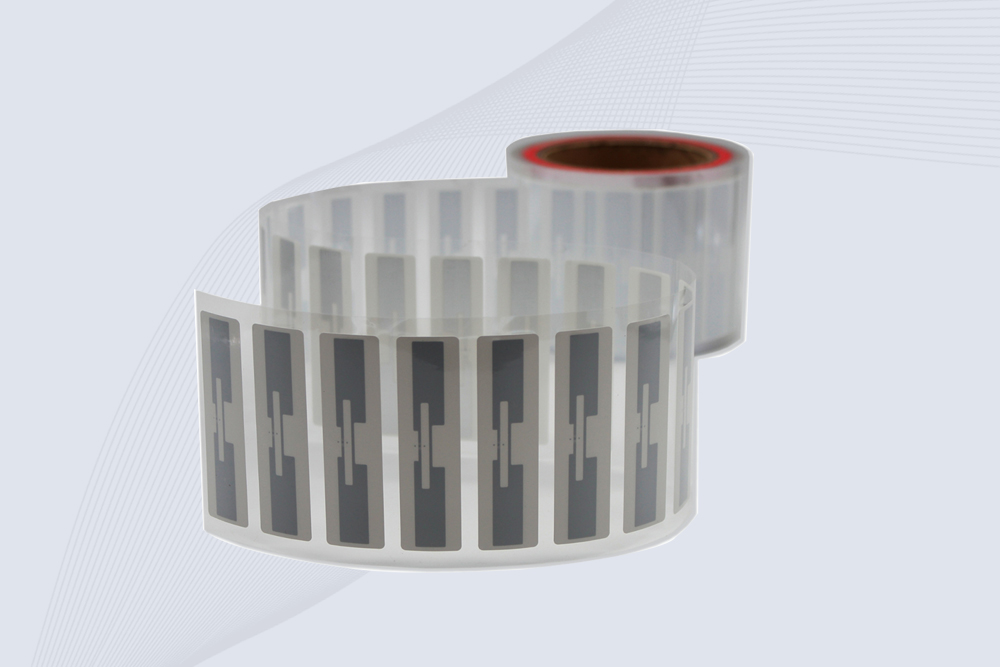
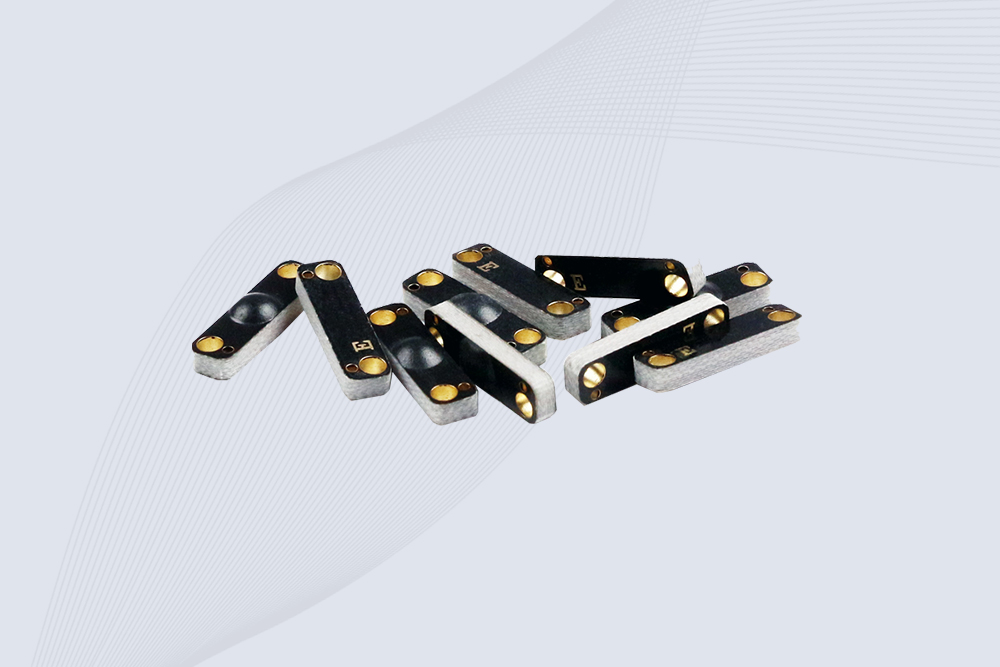
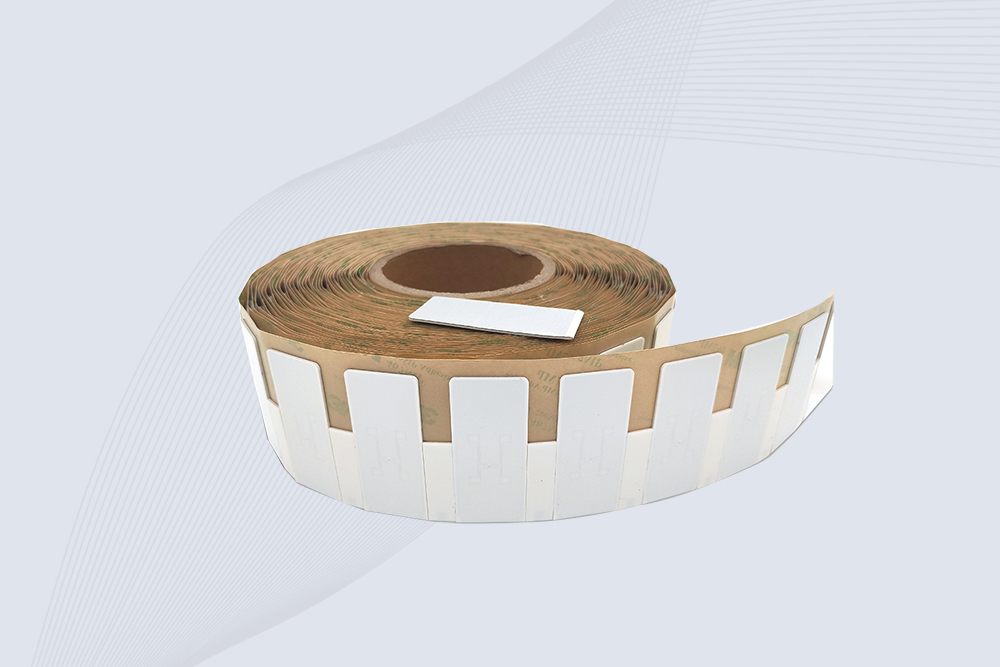
Tags are available in many formats: adhesive labels, hard plastic tags, cards, laundry tags, industrial tags, and specialized on-metal designs.
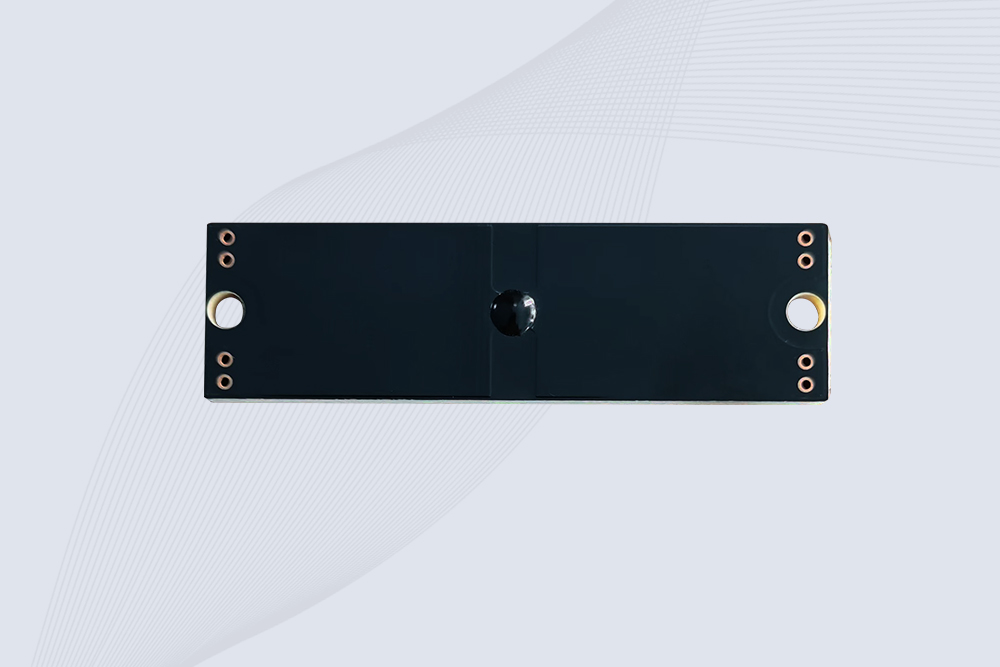
A passive UHF label used on a carton is very different from a rugged tag attached to a metal tool. Both may use RFID, but their antenna structures, packaging, mounting requirements, and intended environments are not interchangeable.
The data stored on a tag also varies. In many retail and logistics applications, the tag carries a unique identifier such as an Electronic Product Code (EPC). The full product description, price, stock quantity, and supplier information are usually maintained in a connected business database rather than written entirely onto the tag.
2. RFID Readers: The Communication and Data-Capture Devices
An RFID reader, sometimes called an interrogator, communicates with compatible tags and captures their responses.
Depending on the system, a reader may be:
A handheld device used by staff for stocktaking or asset checks.
A fixed industrial reader installed at a conveyor or doorway.
A desktop reader used for tag registration and encoding.
An embedded module integrated into a machine or custom terminal.
The reader’s role is to manage the radio communication and provide the resulting tag data to another device or application. It does not automatically know whether an item is being received, shipped, borrowed, returned, or moved between departments. That meaning comes from the software and the business process.
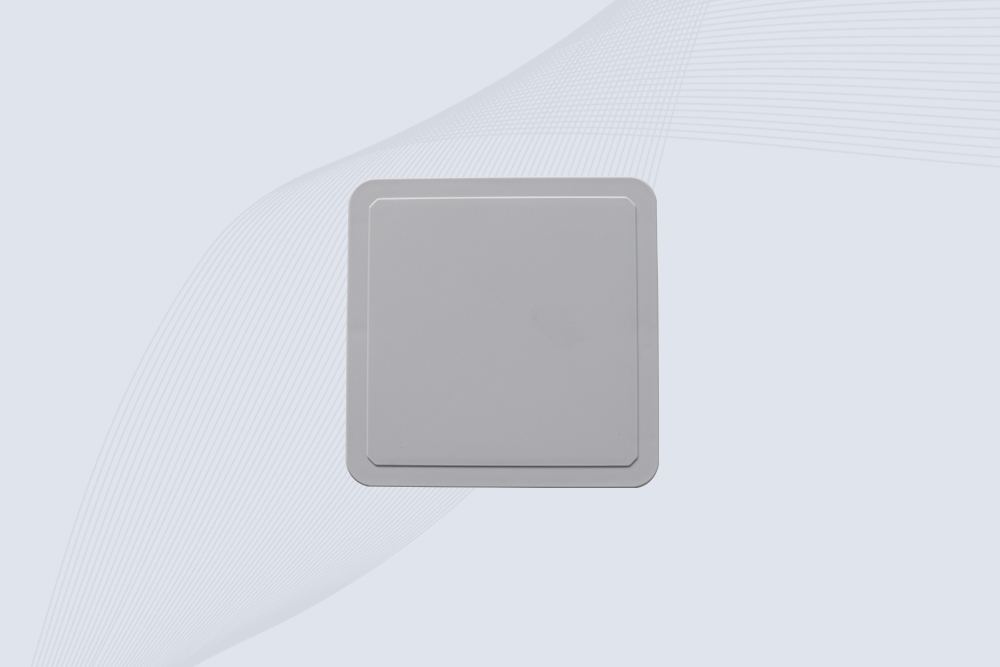
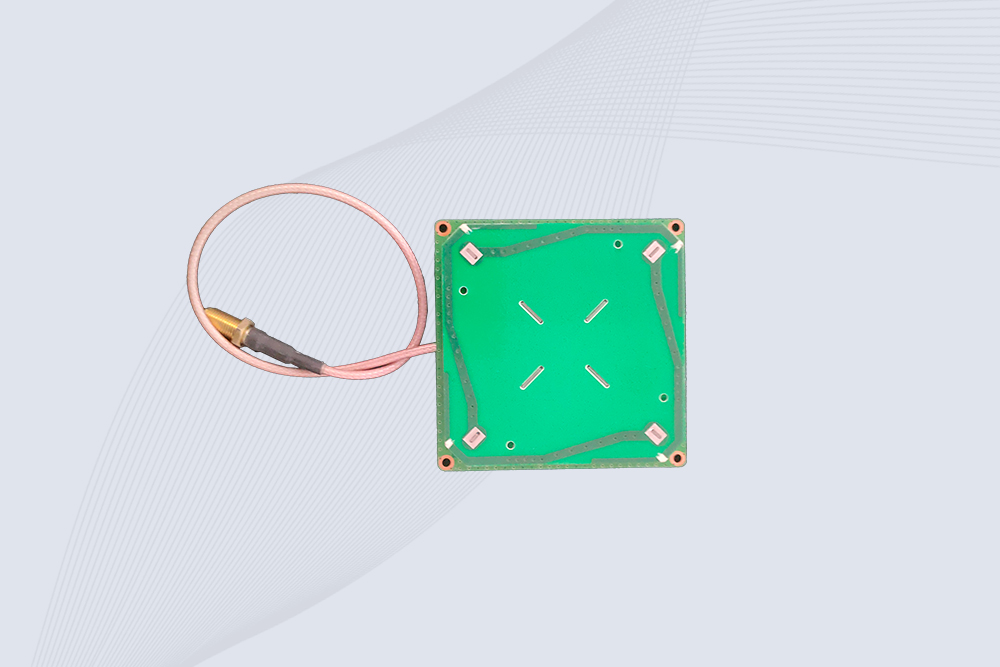
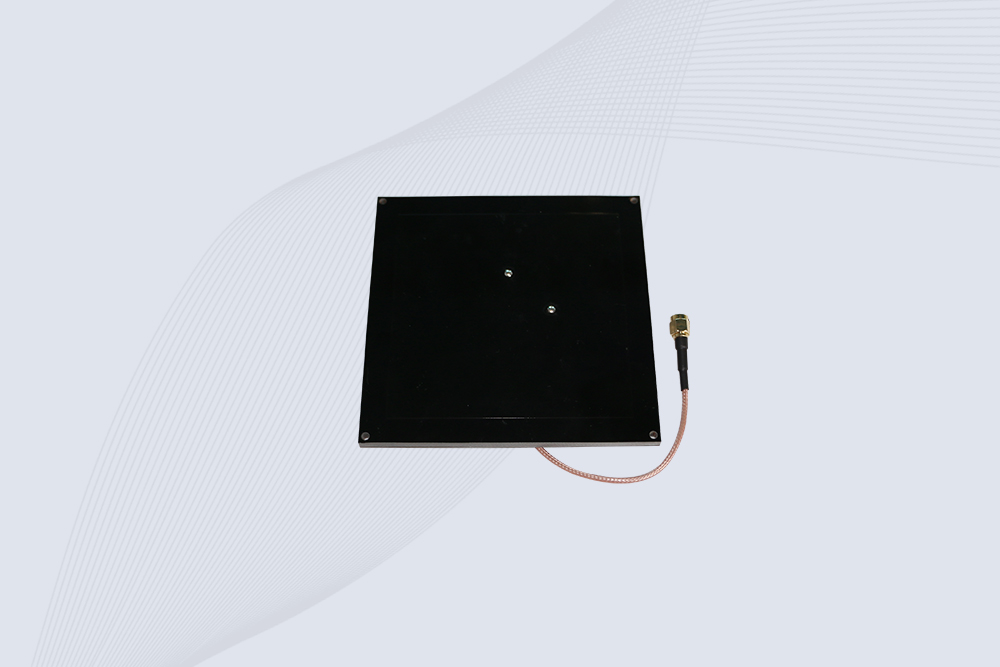
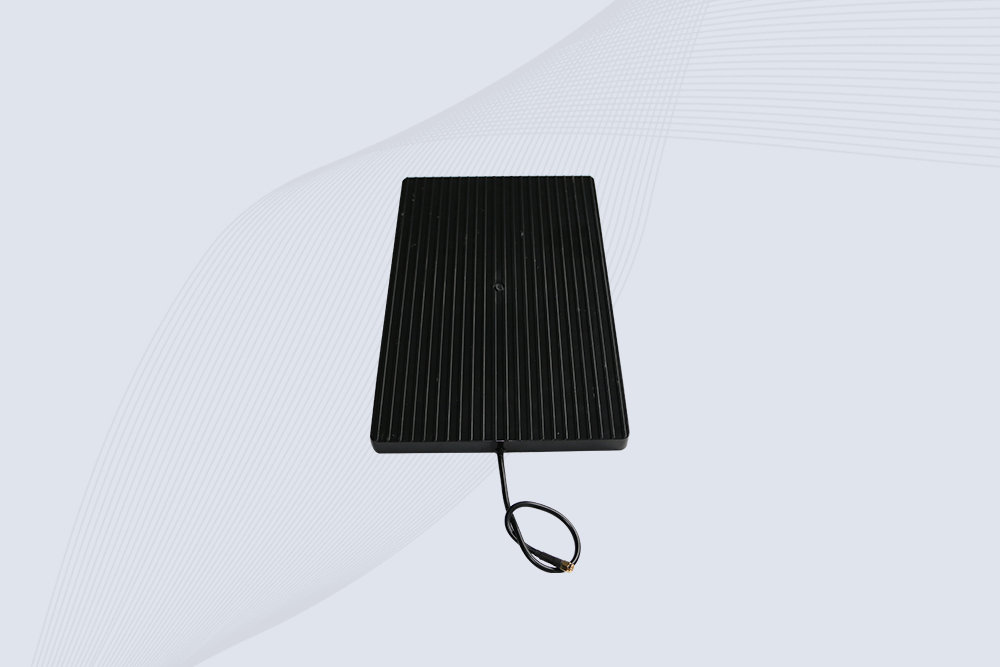
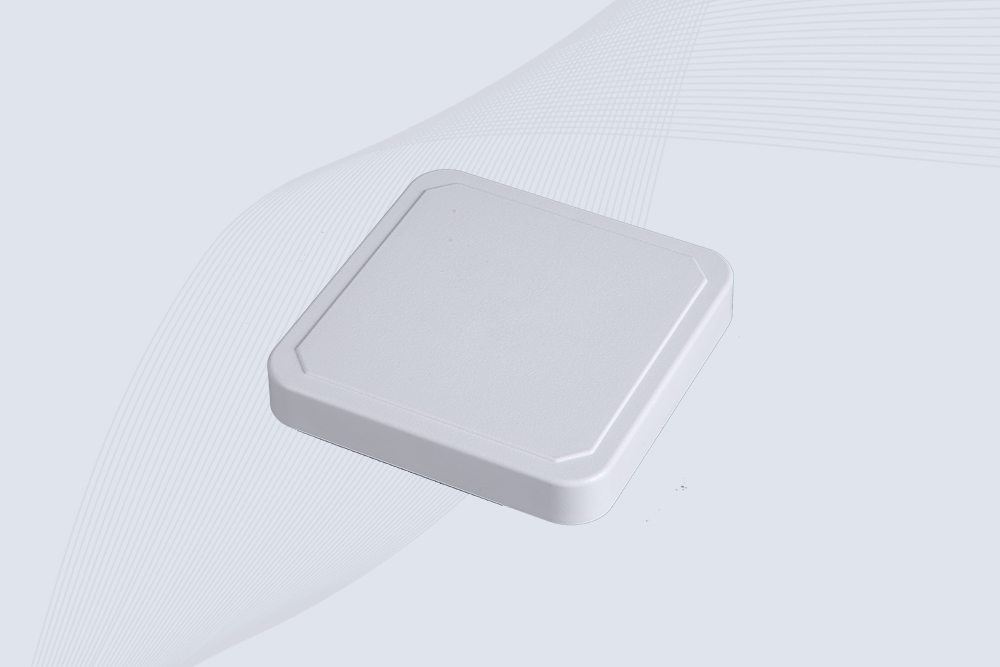
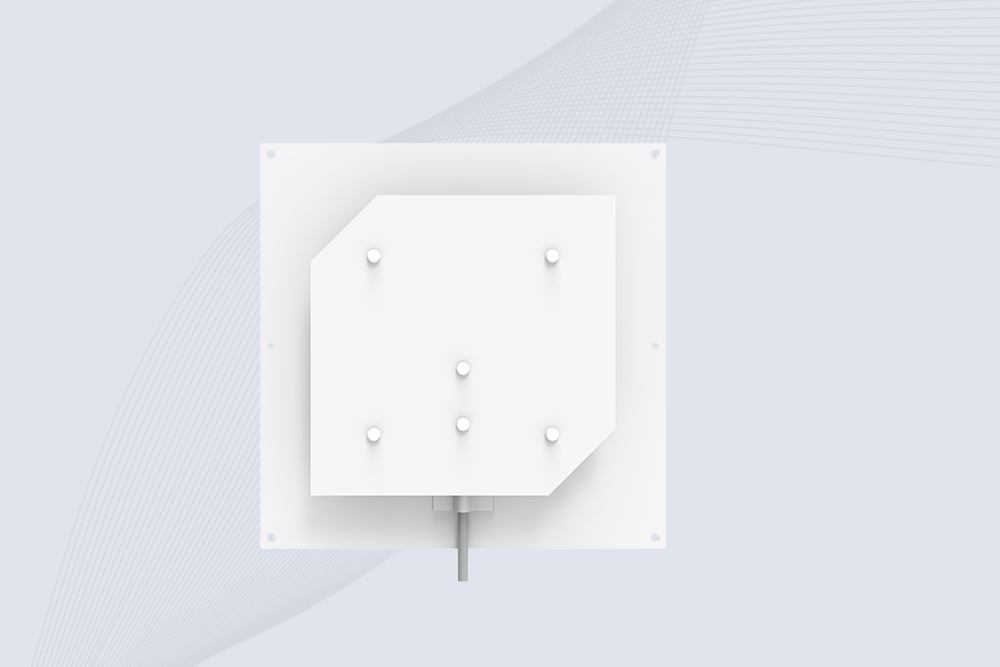
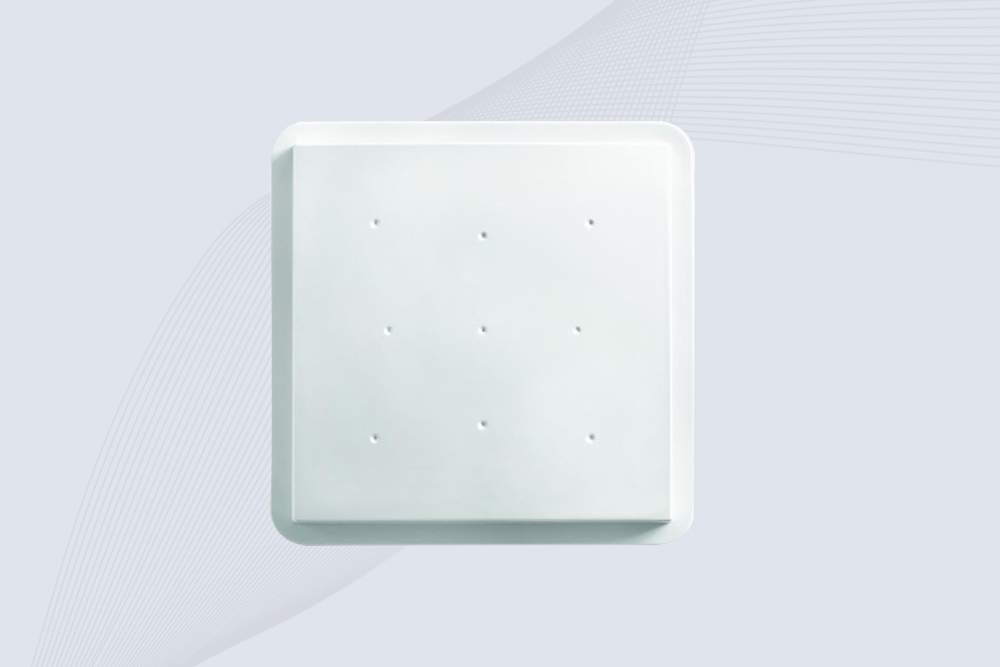
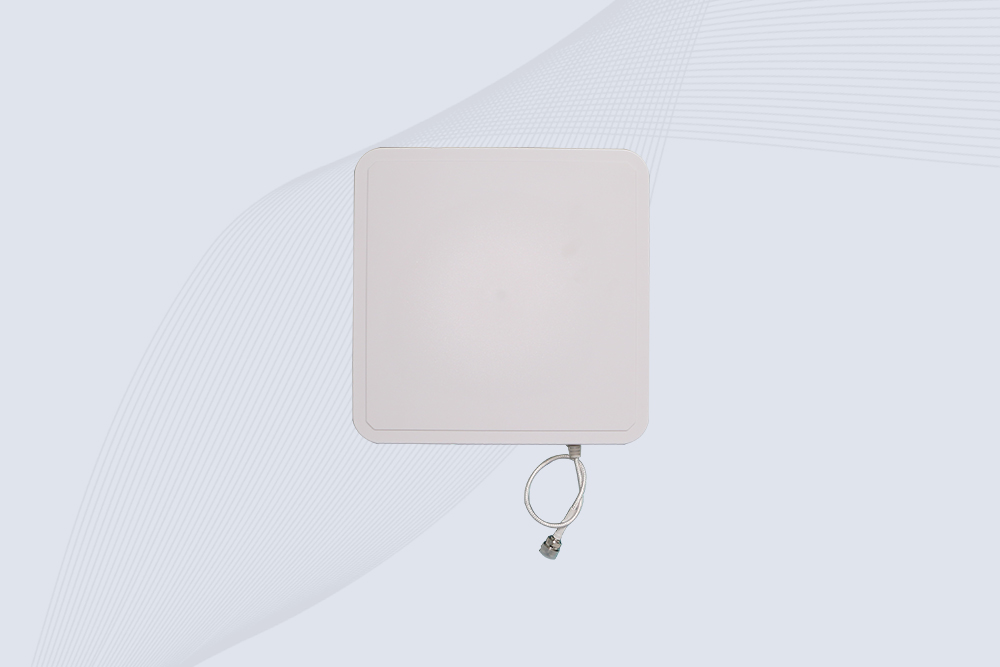
The antenna transmits the reader’s RF signal and receives tag responses. In some products, the antenna is integrated into the reader enclosure. Other installations use separate antennas connected by cables.
Antenna selection affects:
The shape and direction of the reading zone.
The area in which tags can be detected.
The consistency of reading across different tag orientations.
The ability to focus coverage on a doorway, shelf, conveyor, or workstation.
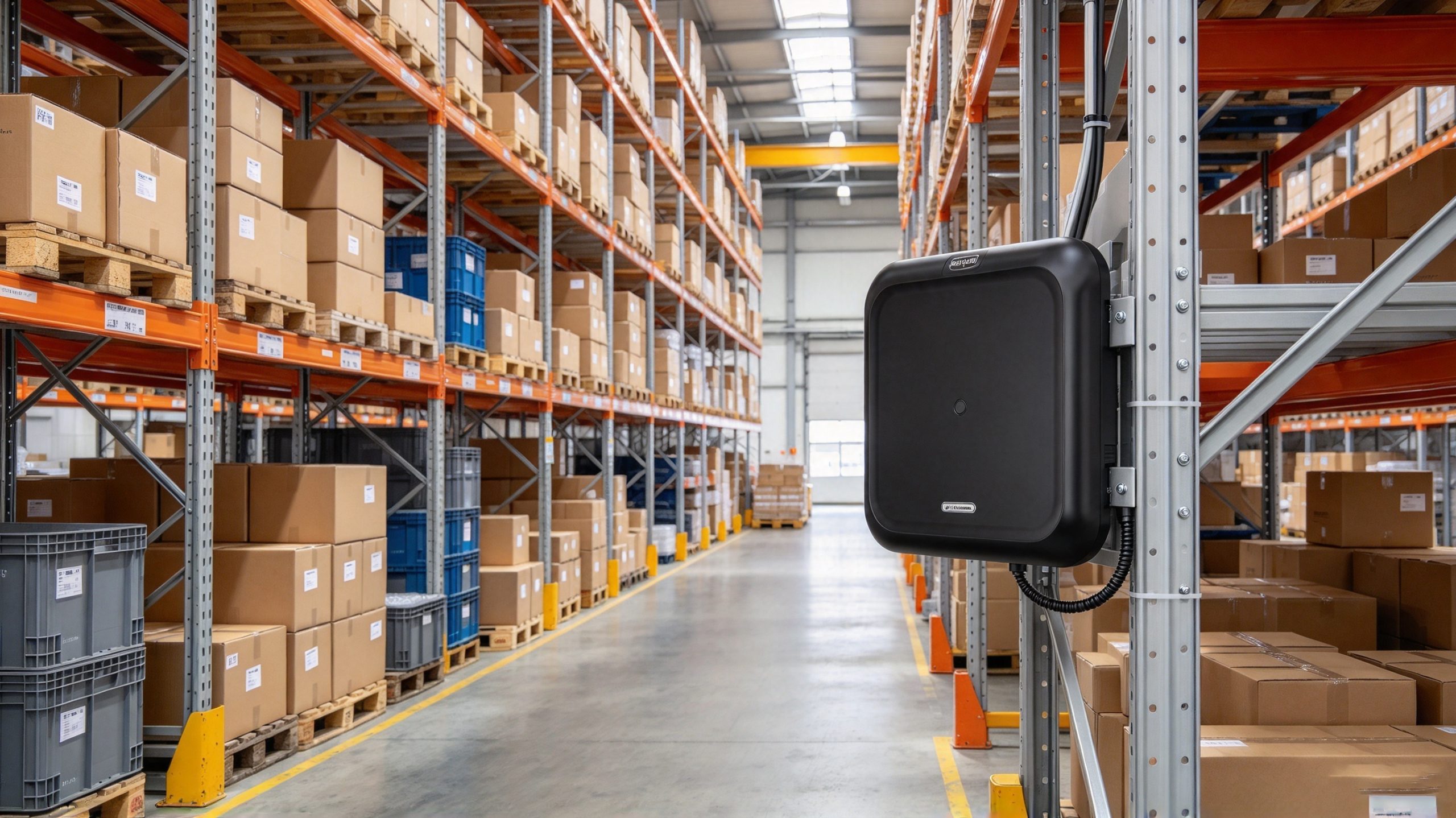
A warehouse portal, for example, may use several antennas positioned around a passage so that cartons can be read from different directions. A desktop encoding station may use a compact antenna designed for a much smaller working area.
More antennas do not automatically mean better performance. Their positions, polarization, power settings, and interaction with nearby equipment need to be considered together.
4. RFID Software: Turning Tag Reads into Useful Information
Software connects RFID identification data with the organization’s actual operations.
Depending on the project, this may include:
A warehouse management system (WMS).
An enterprise resource planning (ERP) platform.
A manufacturing execution system (MES).
An asset management application.
A library or retail management system.
Custom software connected through an SDK or API.
For example, a reader may return an EPC value such as a tag identifier. The application looks up that identifier in its database and finds the corresponding product record. It can then compare the read event with a purchase order, shipment, production order, or stock location.
This is the difference between collecting radio data and managing a business process.
How Does an RFID System Work?
An RFID system works through communication between a reader and one or more compatible tags. The reader sends a radio signal, the tag responds with identification data, and the reader transfers the captured information to software for processing.
The exact communication method depends on whether the system uses passive, active, or battery-assisted passive tags. Passive UHF RFID is particularly common in inventory and logistics because it supports identification of many tagged items without requiring a battery in every label.
The RFID Identification Process
A UHF RFID system uses radio communication between readers and tags to capture product identifiers during warehouse handling.
A typical passive UHF RFID process follows these stages:
1. The reader transmits a radio signal.
The reader generates an RF signal and sends it through one or more antennas. The signal creates an electromagnetic field in the intended reading area.
2. The tag receives energy and responds.
When a compatible passive tag enters the field, its antenna receives energy from the reader signal. This energy powers the tag’s chip, allowing it to respond to the reader’s command.
3. The tag sends identification information.
In passive UHF systems, the tag communicates through backscatter. It changes the way its antenna reflects the reader’s signal, encoding information into the returned response.
4. The reader decodes the response.
The reader receives and processes the backscattered signal. If communication is successful, it extracts the tag’s data, such as its EPC identifier.
5. The host system processes the event.
The reader sends the data to connected software. The application can match the identifier with a product or asset record, check a transaction, and update the relevant business information.
GS1 describes this passive UHF communication model as an interrogator-talks-first system: the reader initiates communication, supplies operating energy to the passive tag, and receives the tag’s response through backscatter.
A useful detail for system designers: a reader may detect the same tag repeatedly while it remains in the reading field. The application must distinguish repeated radio observations from separate business events. Otherwise, a single carton could be recorded as multiple receipts simply because it stayed near the antenna for several seconds.
What Happens When Several RFID Tags Are in the Reading Area?
RFID systems can identify multiple tags within a reading zone. This capability is one reason UHF RFID is widely used for carton, pallet, and item-level identification.
However, several tags responding at once create a communication challenge. UHF systems use anti-collision procedures to manage tag responses and allow the reader to inventory a population of tags.
The result depends on more than the reader’s advertised tag-reading speed. Tag density, signal strength, antenna placement, protocol settings, and the time available for each inventory round all affect actual throughput.
A conveyor carrying a small number of well-positioned cartons is a different test from a densely packed pallet containing hundreds of tagged products. Both may use the same reader, but they should not be expected to deliver identical results.
Types of RFID Systems: LF, HF, and UHF
RFID systems are commonly grouped by their operating frequency: Low Frequency (LF), High Frequency (HF), and Ultra-High Frequency (UHF). These technologies have different communication characteristics, reading distances, and application strengths.
RFID type
Common frequency
Typical characteristics
Common applications
LF RFID
125–134.2 kHz
Short reading distance; relatively tolerant of some environmental interference
These frequency ranges are not interchangeable specifications. The exact frequency and permitted transmit power depend on the country or region where the system operates.
GS1 identifies LF, HF, and UHF as the three principal RFID frequency categories. Its guidance describes passive UHF RAIN RFID as operating across the 860–930 MHz range, with reading distances that can reach several metres depending on the environment.
LF RFID Systems
LF systems commonly operate at 125 kHz or 134.2 kHz. They are often used where relatively short-range identification is sufficient, including animal identification and certain access-control applications.
LF is not usually the first choice for high-volume warehouse carton identification. Its shorter reading range and slower communication make it less suitable for applications that require rapid bulk reading over a larger area.
HF RFID Systems
HF RFID commonly operates at 13.56 MHz. It is widely used in contactless cards, ticketing, library applications, and near-field identification.
NFC is also based on 13.56 MHz technology, although not every HF RFID system is an NFC system. The specific protocol and application determine compatibility.
UHF RFID Systems
UHF RFID is commonly used when a business needs to identify many tagged items across a larger reading area.
Passive UHF systems are widely associated with RAIN RFID and GS1 EPC Gen2 technology. They are suitable for inventory, logistics, and asset-tracking applications where tags may be attached to cartons, containers, products, or equipment.
GS1’s guidance notes that passive UHF read range can reach several metres and, under particular conditions, up to 15 metres. That figure should not be treated as a guaranteed operating distance. Antenna design, tag orientation, reader configuration, and the physical environment all matter.
Passive, Active, and Battery-Assisted Passive RFID Systems
Frequency is only one way to classify an RFID system. Another important distinction is how the tag receives energy and communicates.
Tag type
Power source
Communication method
Typical application
Passive RFID
Energy received from the reader’s field
Backscatter for passive UHF systems
Product labels, inventory, logistics
Active RFID
Usually an onboard battery
Tag has its own radio transmitter
Long-range tracking and location systems
Battery-assisted passive (BAP)
Battery supports chip operation or sensors
Generally communicates through backscatter
Selected asset and sensor applications
A passive tag does not need its own battery for normal operation. This makes passive labels practical for applications involving large numbers of relatively low-cost items.
An active tag has its own power source and radio transmitter. It can broadcast a signal over longer distances, making it useful for certain high-value asset-tracking and real-time location applications.
Battery-assisted passive tags occupy a middle ground. A battery can support the chip or onboard sensors, while the tag still uses backscatter to communicate with the reader.
GS1 distinguishes these tag types by their power sources and communication methods, and notes that active RFID can achieve significantly longer reading distances than passive RFID.
What Is an RFID System Used For?
RFID systems are used to identify objects, record movement, verify inventory, and support automated processes. Their applications depend on the tag type, reader configuration, and software connected to the equipment.
Common examples include:
Warehouse inventory: identifying cartons, pallets, and individual products during receiving, stocktaking, and dispatch.
Asset management: tracking reusable tools, containers, equipment, and other business assets.
Manufacturing: identifying components and work-in-process items at selected production stages.
Libraries: managing book circulation, returns, and stocktaking.
Laundry operations: identifying reusable garments and textile batches.
Logistics: recording the movement of tagged shipments and returnable transport items.
The technology’s value depends on how well it addresses a specific identification problem. A business that only needs to read one card at a time may not need a high-performance UHF system. A distribution center handling large volumes of cartons may benefit from UHF bulk identification, provided the reading zones and software processes are properly designed.
A Research Example: RFID and Inventory Record Accuracy
The potential operational value of RFID is supported by published field research.
A study by Bill C. Hardgrave, John A. Aloysius, and Sandeep Goyal, published in Production and Operations Management in 2013, examined RFID-enabled visibility and retail inventory record inaccuracy.
In the first experiment, researchers studied one product category in 13 stores over 23 weeks. The results indicated an approximately 26% decrease in inventory record inaccuracy associated with RFID-enabled visibility. A second experiment expanded the research to 62 stores and five product categories. The results varied by category, ranging from no statistically significant improvement to an improvement of up to 81%.
The important lesson is not that every RFID system will improve inventory accuracy by 26%. The study shows that RFID can improve inventory visibility under particular operating conditions, and that results depend on the products and processes involved.
For an RFID project, the practical question is whether the system can capture reliable identification events and connect them to inventory adjustments, receiving records, or replenishment decisions. Without those connections, additional tag reads may produce more data without improving the quality of the business process.
RFID systems help businesses identify products and assets across warehouse, logistics, and manufacturing workflows.
How an RFID System Moves Data from a Tag to Business Software
An RFID system does more than detect a tag. Its practical value comes from turning a radio-frequency response into a usable business event.
Consider a warehouse receiving area. A pallet carrying several RFID-tagged cartons passes through a fixed reading zone. The reader energizes passive UHF tags, receives their backscattered responses, decodes their identifiers, and sends the collected data to a host application. The warehouse management system can then compare the detected EPCs with the expected shipment records.
The process usually involves five stages:
Tag activation: The reader transmits an RF signal through its antenna. Passive tags within the effective reading field receive energy from that signal.
Tag response: Each compatible tag responds with its stored identification data. In passive UHF systems, this typically uses backscatter communication.
Inventory and anti-collision: The reader manages multiple tag responses so that it can identify many tags within the same reading area.
Data transmission: The reader sends the decoded tag information to a computer, controller, or application server.
Business processing: Middleware or business software interprets the data and updates inventory, asset, production, or logistics records.
The reader does not automatically know what a tag represents in a company’s business process. It reports an identifier. The software must associate that identifier with a product, asset, order, location, or other record.
This distinction matters. A reader can successfully identify 200 tags, while the warehouse application still displays incomplete or incorrect inventory if the tag-to-product database is outdated.
RFID system architecture: reader, middleware, and enterprise software
A typical industrial RFID architecture can be divided into three functional layers.
Layer
Main components
Main responsibility
Identification layer
RFID tags, antennas, readers
Detect tags and collect identifiers
Data processing layer
Reader firmware, middleware, edge computers
Filter, validate, and organize reading events
Business application layer
WMS, ERP, MES, asset management software
Connect RFID events to operational records
In a small desktop application, the reader may connect directly to a computer through USB. In a larger installation, multiple fixed readers may communicate over Ethernet or serial interfaces with an edge server or middleware platform.
The architecture should reflect the actual workflow. A single reader connected directly to a local application may be sufficient for a desktop tag-encoding station. A distribution center with several receiving doors, conveyor lines, and storage areas needs a more structured data-processing layer.
For standardized communication between RFID readers and host applications, organizations may also consider the GS1 Low Level Reader Protocol (LLRP). GS1 identifies LLRP among the standards used in RFID infrastructure. Its suitability depends on reader support and the system’s integration requirements.
How to Choose the Right RFID Tags, Readers, and Antennas
The components should be selected as a system rather than purchased independently. A high-output reader cannot compensate for an unsuitable tag, and a high-gain antenna does not guarantee reliable identification in a poorly designed reading zone.
Choose the RFID frequency according to the application
Frequency affects communication range, tag design, environmental performance, and compatibility.
Frequency
Typical range characteristics
Common applications
LF, 125–134.2 kHz
Short range, generally centimetres
Animal identification, industrial access and specialized identification
HF, 13.56 MHz
Short range, from centimetres to around a metre depending on system design
These are general characteristics, not guaranteed operating distances. Actual performance depends on the tag, reader, antenna, regulatory region, mounting surface, and surrounding materials. UHF systems also require attention to regional frequency regulations.
For many warehouse and supply-chain applications, passive UHF is a practical choice because it can identify multiple tagged items without requiring direct visual contact. However, it is not automatically the best option for every object or operating environment.
Select tags based on the object being identified
The physical object is often the starting point for tag selection.
Cardboard cartons: Standard UHF labels may be suitable when the tag can be mounted on a relatively unobstructed surface.
Metal equipment: Use tags designed for metal surfaces or install a suitable spacer to reduce detuning and interference.
Liquid containers: Test tag placement carefully because liquid can absorb or affect UHF radio-frequency energy.
Reusable plastic containers: Durable hard tags may be more appropriate than disposable paper labels.
Clothing and textiles: Textile-compatible tags or sewn-in labels can withstand handling and, where specified, laundering processes.
Small tools and components: Compact tags may be necessary, but their size and mounting position can affect read performance.
A common mistake is testing a tag on a sample object and assuming it will behave identically after installation. A tag attached to an empty plastic container may perform differently when the container is filled with liquid or stacked closely with other tagged objects.
Choose the reader according to the reading environment
The main reader categories serve different operational needs.
Tag encoding, registration, and small workstations
Writing capability, connection type, software and SDK support
OEM reader module
Custom equipment and embedded RFID systems
Dimensions, power requirements, API, protocol compatibility
For fixed installations, check the reader’s output power range, supported protocols, antenna configuration, network interfaces, and environmental rating. For desktop applications, writing distance, batch-processing capability, and software integration may matter more than maximum reading range.
Antenna Placement: The Difference Between Detecting Tags and Reading the Right Tags
Antenna placement is one of the most important parts of an RFID deployment. The objective is not simply to maximize the number of detected tags. It is to identify the intended tags within a controlled area while limiting unwanted reads.
Imagine a conveyor carrying tagged cartons through a reading station. If antennas are installed without considering carton height, tag orientation, conveyor speed, and nearby metal structures, the system may miss some cartons or read tags from adjacent storage areas.
A more reliable installation begins with the physical movement of the goods.
Practical antenna installation considerations
1. Define the reading zone
Identify where tags should be read and where they should not. A receiving portal, for example, should capture items passing through the doorway without repeatedly detecting stock stored nearby.
2. Consider tag orientation
A tag’s antenna orientation affects how efficiently it couples with the reader’s field. If cartons can enter the reading zone in different orientations, test those positions rather than validating only one ideal arrangement.
3. Select suitable antenna polarization
Linear and circularly polarized antennas behave differently. Linear polarization can provide strong performance when tag orientation is controlled. Circular polarization can be useful when tag orientation varies, although the effective performance still depends on the installation.
4. Adjust power and antenna direction
Increasing reader power may improve detection at the intended location, but it can also expand the reading zone and capture unwanted tags. Adjust power, antenna direction, and placement together.
5. Test under operating conditions
Test with actual products, normal packaging, realistic conveyor speeds, and the surrounding equipment in place. Empty-room demonstrations rarely reproduce the RF conditions of a busy warehouse.
GS1’s guidance on RFID read range also emphasizes that range depends on factors such as antenna directivity, gain, polarization, and tag orientation. A published maximum distance should therefore be treated as a reference condition, not a deployment guarantee.
Common RFID System Problems and How to Diagnose Them
An RFID system can appear to be functioning normally while producing inaccurate operational data. Troubleshooting should distinguish between RF performance, reader configuration, communication, and application-level problems.
Problem
Possible cause
Recommended check
Some tags are not detected
Poor tag placement, weak signal, unsuitable tag, interference
Test tag position, antenna alignment, and output power
Tags are read from outside the intended area
Excessive power, antenna direction, reflections
Reduce power, adjust antenna placement, and define the reading zone
Apply time-based filtering or application-level event logic
Reading performance drops around metal
Tag detuning or RF reflection
Test an on-metal tag and revise mounting or antenna placement
Liquid products are difficult to read
RF absorption and altered propagation
Test alternative tag positions and suitable tag designs
Reader data does not reach the application
Network, serial, driver, or protocol configuration
Check the communication interface and data format
Tags are detected but inventory is incorrect
Incorrect tag-to-item mapping or database synchronization
Verify EPC registration and business-system records
Missing reads: start with the tag and its mounting position
When a fixed reader misses tags, increasing power should not be the first and only response.
Check whether the tag is compatible with the operating frequency. Inspect whether it is attached to metal, placed close to liquid, folded, damaged, or shielded by packaging. Then test its position and orientation inside the actual reading zone.
If the tag is suitable but performance remains inconsistent, review antenna coverage, polarization, reader sensitivity, and interference from nearby equipment.
Excessive reads: narrow the detection area
A reader that captures tags outside the intended zone may create inaccurate receiving or shipping records.
Possible corrective measures include:
Reducing RF output power where appropriate.
Repositioning or redirecting antennas.
Adding physical shielding where the installation permits it.
Using software filters to reject unrelated or repeated events.
Separating adjacent reading processes through timing or workflow controls.
Filtering is useful, but it should not conceal an uncontrolled RF environment. If a receiving portal repeatedly reads stock from a nearby storage area, the antenna arrangement should be reviewed rather than relying entirely on software to remove unwanted records.
Duplicate records: distinguish repeated reads from repeated transactions
RFID readers may identify the same tag multiple times during a reading session. This does not necessarily mean the reader is malfunctioning.
The application should determine when repeated observations represent one event and when they represent separate business activities. For example, a tag may be observed many times while a carton remains inside a reading zone, but the warehouse system may need to create only one receiving event.
A practical implementation can combine tag filtering, time windows, location information, and transaction rules. The appropriate method depends on the movement process and the consequences of missing or duplicating an event.
Integrating an RFID System with WMS, ERP, and MES Software
RFID data becomes useful when it is connected to the systems that manage business operations.
A warehouse management system may use RFID events to support receiving, put-away, picking, stocktaking, and shipping. An ERP system may use the same information for inventory and order records. A manufacturing execution system may connect tag identification to work-in-progress tracking, production steps, and equipment movement.
A typical integration workflow looks like this:
The reader detects a tag and retrieves its identifier.
The reader sends the data to middleware, an edge application, or a host computer.
The software validates the identifier and removes irrelevant repeated observations.
The application checks the identifier against the relevant database.
The system creates or updates a business event.
The event is made available to other connected applications where required.
What should be defined before integration?
Before connecting readers to enterprise software, establish the data structure and operating rules.
Integration item
Questions to resolve
Tag identifier
Is the EPC the primary identifier? How is it linked to a product or asset?
Reader interface
Does the reader communicate through USB, RS-232, Ethernet, or another supported interface?
Data format
What fields are transmitted, and how are they parsed?
Event logic
When does a read become a receiving, shipping, or movement event?
Duplicate handling
How are repeated observations treated?
Error handling
What happens when the network or application is unavailable?
Security
Who can access reader settings, tag-writing functions, and business records?
For larger deployments, standardized reader communication and a consistent event model can simplify integration across multiple reader brands and application platforms. GS1’s RFID infrastructure standards provide relevant references for reader communication and data handling.
One point is worth emphasizing: a reader’s SDK or API can make integration easier, but it does not replace application design. The software team still needs to define identifier mapping, event validation, exception handling, and database synchronization.
Cykeo RFID Hardware for Different System Configurations
Cykeo provides RFID hardware options for embedded equipment, industrial fixed installations, and desktop tag-management workstations. The appropriate product depends on the reading environment and the role the device performs in the overall system.
The following examples are based on the product specifications provided for this article. Confirm the current datasheet, available interfaces, and regional configuration before final product publication.
CYKEO-M4L UHF OEM RFID Module
For embedded RFID equipment and custom systems
The CYKEO-M4L integrates an analog RF front end with baseband digital signal processing. It is designed for developers building RFID functions into their own equipment.
Its stated capabilities include:
Support for ISO 18000-6C / EPC Class 1 Gen 2 and ISO 18000-6B.
Support for GB/T 29768-2013, with possible protocol extensions.
Adjustable RF output up to 33 dBm, in 1 dBm steps.
Fixed-frequency and frequency-hopping operation.
Tag filtering and anti-collision functions.
API library support for software development.
A stated dense multi-tag reading rate of more than 600 tags per second under specified test conditions.
The module may be considered for embedded inventory equipment, automated identification devices, and custom industrial RFID terminals. Actual reading throughput depends on tag population, tag type, RF environment, reader configuration, and test methodology.
CYKEO-RA9L / CK-D9L Industrial Fixed RFID Reader
For fixed reading stations and industrial identification
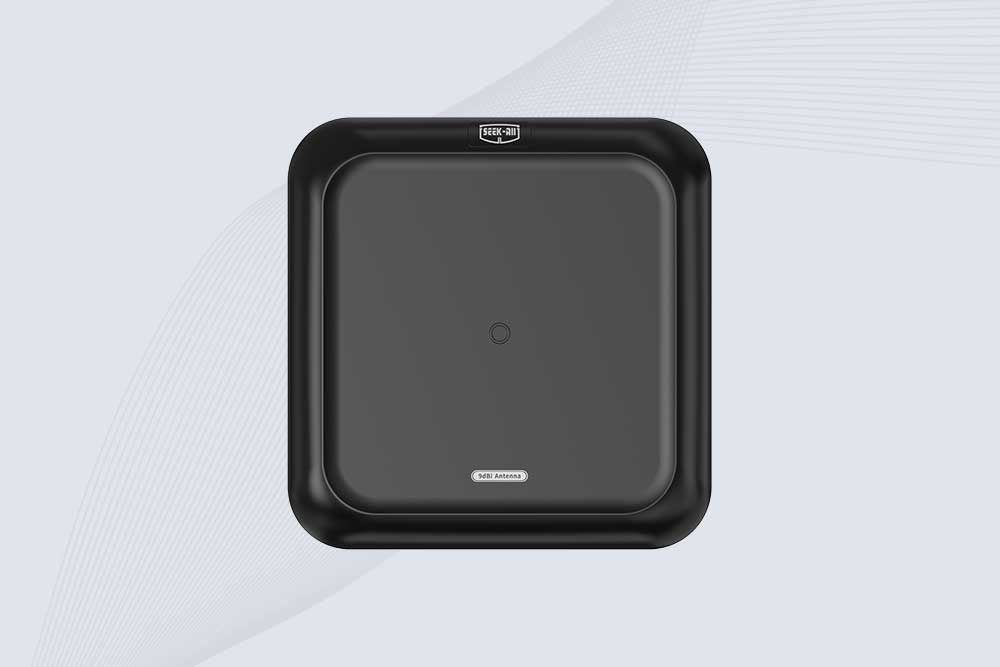
The CYKEO-RA9L / CK-D9L series is an integrated UHF fixed-reader option for installations where the reader and antenna need to operate as a combined unit.
The supplied specifications include:
Integrated 9 dBi antenna configuration.
ABS antenna housing with an aluminum rear shell.
RS-232 and Ethernet interface options.
Support for ISO 18000-6C / 6B and GB/T 29768-2013.
Carrier cancellation and anti-collision functions.
Surge and lightning protection features.
DEMO software, SDK, and API resources.
Wideband frequency-hopping operation.
A 12 dBi variant is also described, with an all-in-one industrial design and a full aluminum rear cavity.
These readers may be evaluated for warehouse portals, production stations, asset monitoring, and other fixed reading points. Installation teams should validate the effective reading zone and environmental protection requirements at the actual site.
SSD-D1AL Desktop RFID Card and Tag Reader-Writer
For desktop tag encoding and registration
The SSD-D1AL is designed for workstation-based RFID tag reading and writing, including small-scale checkout and tag-management tasks.
Its supplied specifications include:
Impinj R500 platform.
Near-field antenna design.
Maximum port output of 33 dBm.
Stated reading distance within 30 cm.
Stated writing distance within 10 cm.
Automatic read/write demonstration software.
Batch tag-writing and rapid tag-filtering functions.
C# and Java development materials.
The short working distance can be useful in controlled desktop workflows where operators need to encode or verify individual tags without unintentionally reading a large surrounding population.
How to Evaluate the Return on Investment of an RFID System
RFID investment should be evaluated against the operational problem it is expected to solve. A system that reads thousands of tags per hour may still deliver limited value if the business does not use the resulting data to improve a process.
A practical evaluation should begin with measurable baseline conditions.
Evaluation area
Baseline to measure
Potential RFID contribution
Inventory accuracy
Difference between recorded and physical stock
More frequent and efficient identification
Stocktaking labor
Staff hours per stocktake
Faster collection of item identifiers
Receiving efficiency
Time required to check incoming goods
Batch identification without scanning every barcode individually
Shipping accuracy
Picking and dispatch error rate
Additional identification checkpoints
Asset utilization
Time spent locating equipment
Faster asset identification and movement visibility
Production traceability
Time required to identify product history
Automated identification at defined production stations
Research from Auburn University’s RFID Lab examined RFID and inventory record inaccuracy in retail environments. One published study involving 13 stores over 23 weeks reported an approximately 26% reduction in inventory record inaccuracy. This is evidence from a specific retail research setting, not a universal improvement rate for every RFID deployment.
A business should calculate its own expected benefit using its actual labor costs, inventory discrepancies, transaction volume, and implementation expenses.
A simple evaluation framework is:
Initial investment may include tags, readers, antennas, cabling, installation, software development, system integration, and testing. Ongoing costs may include replacement tags, maintenance, support, and software services.
The most credible business case is usually built around one clearly defined process, such as reducing receiving time or improving stock visibility. Once the workflow has been validated, the system can be expanded to additional locations.
Frequently Asked Questions About RFID Systems
1. What are the main components of an RFID system?
The main components are RFID tags, RFID readers, antennas, and software. Tags store identification data, readers communicate with tags, antennas transmit and receive radio-frequency signals, and software processes the collected information for inventory, asset tracking, production, or logistics operations.
2. How does an RFID system work?
An RFID reader transmits a radio-frequency signal through an antenna. A compatible tag receives the signal and responds with stored information. The reader decodes the response and sends the identifier to a host application, which connects it to a product, asset, or business record.
3. Can an RFID system read multiple tags at once?
Yes. Many UHF RFID systems support anti-collision procedures that allow a reader to identify multiple tags within its reading zone. The actual number of tags detected depends on reader capability, tag performance, RF conditions, configuration, and how quickly the tagged objects move through the zone.
4. How far can an RFID system read tags?
There is no single reading distance for all RFID systems. LF and HF applications are generally short-range, while passive UHF systems can often read tags several metres away under suitable conditions. Tag design, antenna gain, polarization, orientation, installation, and local regulations all affect the practical range. GS1 GO Customer Service Portal+1
5. Does an RFID system need an internet connection?
Not necessarily. A basic RFID reader can communicate with a local computer or controller without an internet connection. However, a larger deployment may use a local network or cloud-based platform to share identification events with warehouse, enterprise, or production software.
6. Can RFID systems work on metal or liquid products?
Yes, but standard UHF tags may perform poorly when mounted directly on metal or close to liquids. Applications involving these materials often require specially designed tags, alternative mounting positions, and practical testing under real operating conditions.
7. How do I choose an RFID system for my business?
Start by defining the objects to be identified, the required reading distance, the operating environment, and the business process. Then select compatible tags, readers, antennas, and software. Test the complete configuration with actual products before expanding the deployment.
Final Considerations: What Makes an RFID System Reliable?
A reliable RFID system is not defined by reader power or maximum reading distance alone. It depends on whether the tags, antennas, readers, software, and operating process work together consistently.
A warehouse receiving station needs controlled identification at the correct point in the workflow. A desktop encoding station needs predictable tag selection and writing. An industrial production line may require durable equipment, stable communication, and integration with manufacturing software.
That is why the question what is an rfid system should lead to a second question: what information must the business collect, and where must that identification happen?
When those requirements are clear, component selection and system design become much more straightforward.
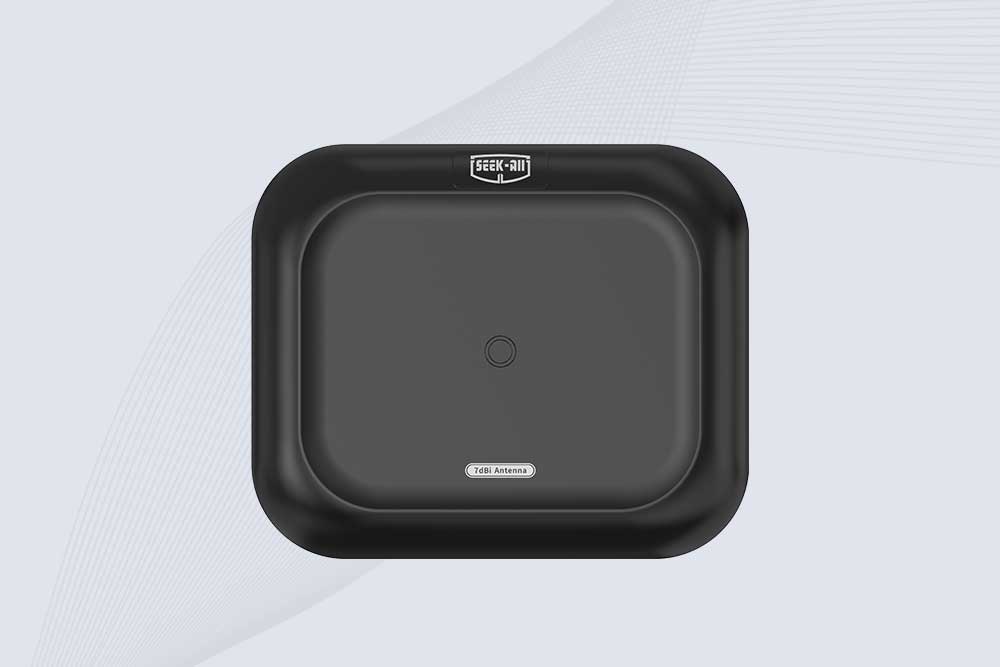
Explore the SSD-A07 UHF RFID antenna with 7 dBi gain, circular polarization, adjustable 840–960 MHz frequency, and 60°/75° beamwidth for stable RFID read/write performance.
SSD-A06 UHF RFID antenna with circular polarization, adjustable 840–960 MHz frequency, ≥4.5 dBi gain, and a compact directional design for RFID systems.
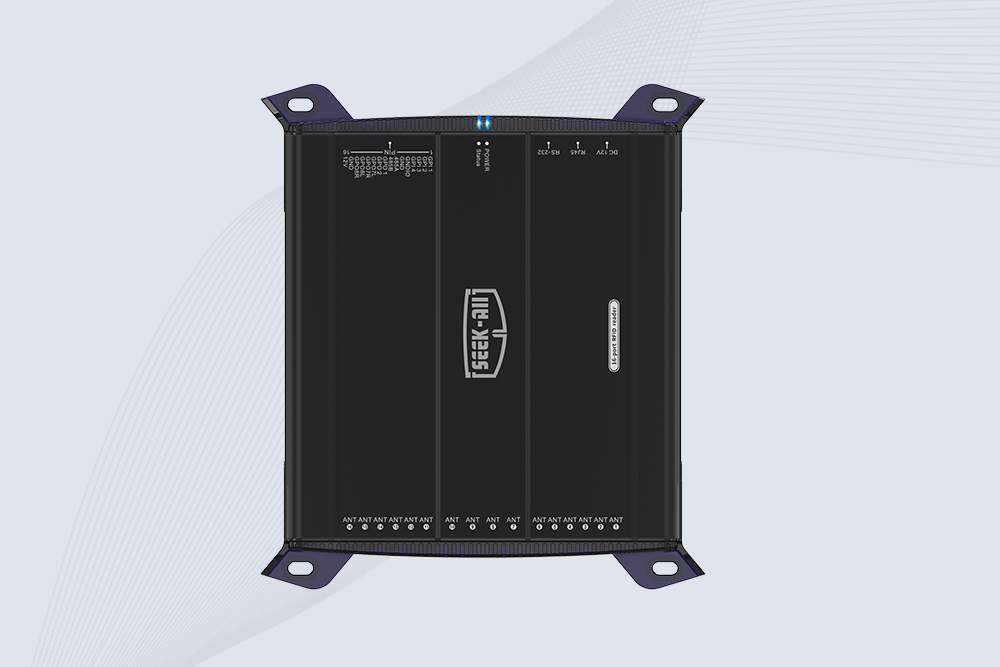
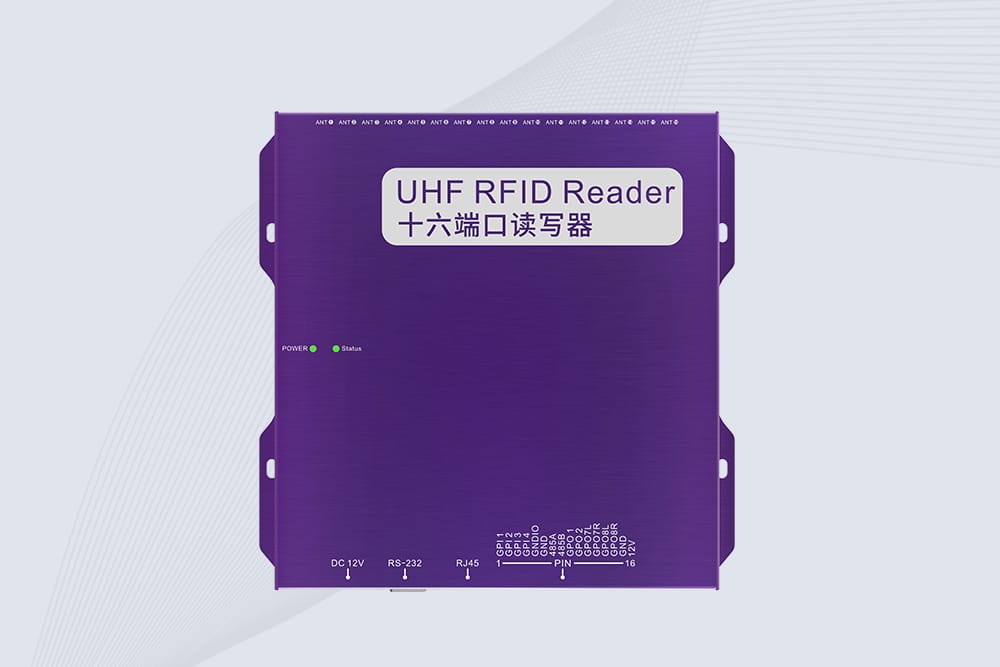
SSD-R16L Multi-Channel RFID Infrastructure for Automated Inventory Management ✔️ 16-Port High-Density RFID Reading Equipped with 16 SMA antenna ports, SSD-R16L supports multi-antenna deployment for warehouses, retail stores, logistics, production lines, and large-area RFID identification. ✔️ High-Speed & Long-Range Performance With up to 33…
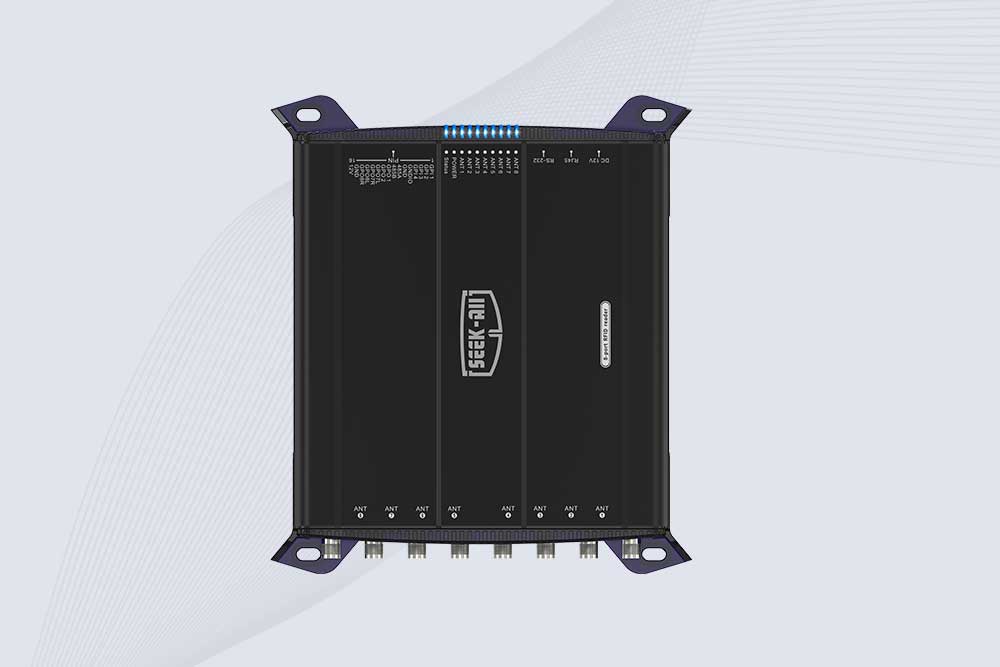
SSD-R8L 8-port UHF RFID reader with 33dBm output, up to 20m reading range and 600+ tags/s recognition. Ideal for warehouse, logistics, retail and asset tracking.
CYKEO Passive RFID Tags are made for wet and high-humidity environments where standard labels do not last. This rfid passive tag is often used around liquids, chemicals and temperature changes, providing stable reading distance and long data life for industrial tracking.
CYKEO CYKEO-PCB1504 Metal RFID Tags is a compact anti-metal UHF RFID solution built for direct mounting on metal surfaces. With stable 8-meter read range, Ucode-8 chip, and long data retention, this rfid metal tag fits tools, containers, automotive parts, and industrial asset tracking.
CYKEO CYKEO-PCB7020 On-Metal RFID Tags are designed for reliable tracking on steel and metal surfaces. Built with an FR4 epoxy body and industrial-grade chips, these On-Metal RFID Tags deliver stable performance, long data life, and chemical resistance, making them a dependable RFID anti-metal tag for harsh environments.
The CYKEO CYKEO-60-25 Anti-Metal RFID Tag is built for metal surfaces where standard tags fail. Designed for long-range performance, harsh environments, and stable data retention, this Anti-Metal RFID Tag is ideal for industrial assets, containers, and equipment tracking using on metal RFID tags.
The CYKEO RFID Laundry Tag is designed for long-term textile identification in harsh laundry environments. Built to withstand high heat, chemicals, and repeated washing, this RFID Laundry Tag delivers stable performance for hotels, hospitals, and industrial laundry operations using laundry rfid tags at scale.
The CYKEO CYKEO-125-7 RFID Book Tag is designed for reliable book and document tracking in libraries and archives. This RFID Book Tag delivers long read range, dense placement support, and stable performance on shelves, making it a practical rfid tag on books for library automation, file management, and archival systems.
CYKEO RFID tags in hospitals are designed for sterile environments where accuracy matters. These autoclavable RFID tags support long-term tracking of surgical tools, implants, and medications, helping hospitals improve visibility, compliance, and patient safety.
CYKEO RFID Cable Tie Tag is built for reliable identification on metal surfaces. This UHF RFID Cable Tie Tag is widely used in rfid tags for inventory systems, industrial asset management and Hospital RFID Tags, offering stable read performance, long service life and global EPC Gen2 compatibility.
CYKEO RFID Asset Tag is designed for stable identification of metal assets in industrial environments. This UHF RFID Asset Tag is commonly used for rfid tag asset tracking on equipment, tools and containers, providing reliable reads, long service life and ISO/IEC 18000-6C support.
CYKEO UHF RFID Card is designed for fast identification and long-term use in industrial and commercial systems. Supporting ISO 18000-6C, this UHF RFID Card works at 860–960 MHz and is suitable for custom RFID cards used in asset tracking, access control and inventory management.
CYKEO HF RFID Cards are designed for secure and stable access control systems. These 13.56 MHz RFID key cards support ISO 14443-A, reliable rewriting and long service life, making HF RFID Cards suitable for offices, campuses, events and membership management.
CYKEO UHF RFID Tag is designed for reliable tracking of metal jewelry and high-value items. This Jewelry RFID Tag supports long-range reading up to 8 meters, anti-counterfeit protection and stable performance on metal, making it suitable for retail, inventory control and asset management.
Cykeo CYKEO-A11 UHF RFID reader antenna delivers 11dBi gain, 840-960MHz frequency range, and IP65 ruggedness for retail, logistics, and industrial RFID systems. Features low VSWR and easy installation.
CYKEO Antenna RFID Reader delivers stable long-range UHF performance with a 10.5dBi directional design, built for warehouses, conveyor portals, and industrial RFID systems. This rfid reader antenna provides 20m+ read distance and rugged IP67 protection.
Cykeo CYKEO-A5B industrial Linear RFID Antenna delivers 5dBi gain, ≤1.5:1 VSWR, and IP65 rugged design for warehouse, production line, and logistics UHF systems.
Cykeo’s CYKEO-B12 Long Range RFID Antenna delivers 15m+ read range with 12dBi gain, IP65 rugged design, and global 840-960MHz UHF support. Ideal for warehouse/logistics asset tracking.
Cykeo CYKEO-B10 Long Distance RFID Antenna offers 10dBi gain, 840-960MHz frequency range, IP65 rating, and 20m+ coverage for logistics/warehousing/ETC systems. Low VSWR ensures stable signal transmission.
Cykeo CYKEO-A6 UHF RFID panel antenna features 6dBi gain, 840-960MHz broadband, IP65 metal-ready housing for logistics/smart retail. 18mm ultra-thin design with tool-free mounting.
Cykeo CK-A3 industrial antenna RFID UHF offers 5m+ tag detection, ≤1.3:1 VSWR, IP65 rugged design, and global UHF spectrum compatibility (840-960MHz) for warehouses, factories, and retail.
Cykeo CYKEO-B5 directional RFID antenna provides 5dBi gain with 60° narrow beamwidth for precise inventory tracking. IP65-rated, global UHF frequency support, and low VSWR.
Create your own high-performance DIY RFID antenna! 5dBi gain, 840-960MHz tunable, step-by-step guides. Compatible with Arduino, Raspberry Pi, and commercial UHF readers.
Cykeo CYKEO-A7 Flexible RFID Antenna features 840-960MHz wideband tuning, 7dBi gain, and IP68 rating for medical/retail/industrial curved surface deployments. 98% read accuracy with peel-and-stick installation.
Cykeo CYKEO-B5A industrial Passive RFID Antenna delivers 5dBi gain, 70° beamwidth, and -40°C~55°C operation for warehouses/smart cabinets. Compatible with Zebra/Impinj readers.
Cykeo’s CYKEO-A9B High Gain RFID Antenna delivers 15m+ read range with 9dBi amplification. Features IP54 rugged design, 840-960MHz bandwidth, and 80° beamwidth for warehouse/manufacturing RFID systems.
Cykeo’s enterprise-grade 8dbi Impinj RFID Antenna 10m+ read range with 840-960MHz tuning. Features IP65 housing, 1.4 VSWR, 35° beamwidth for retail/warehouse RFID systems.
Cykeo CYKEO-A9 industrial UHF RFID antenna delivers 9dBi gain, 840-960MHz frequency range, and IP65 protection for warehouse/logistics/retail RFID systems. Features N-type connector and ≤1.3:1 VSWR.
CYKEO UHF RFID Antenna built for long-distance and industrial applications. This antenna rfid uhf delivers strong gain, outdoor durability, and reliable tag performance in warehouses, yards, and vehicle ID systems.
CYKEO Antenna RFID delivers reliable long-range UHF performance in warehouses, retail shelves, and cold-chain environments. This compact uhf rfid antenna provides stable reads with circular polarization and ultra-wide 840–960 MHz support, ideal for industrial tracking, smart shelves, and asset monitoring.
Cykeo’s CYKEO-C8 UHF RFID antennas delivers 8dBi gain, 840-960MHz full-band coverage, and IP65 ruggedness for manufacturing/warehouse RFID systems. Industrial RFID Antennas Features
Cykeo’s 8dBi UHF RFID antenna and reader kit delivers 10m+ range, 840-960MHz broadband, and IP65 ruggedness for factories, warehouses, and logistics. ISO 18000-6C & EPC Gen2 certified.
Cykeo’s CYKEO-A12C UHF Large RFID Antenna delivers 12dBi gain, 840-960MHz global frequency, IP65 ruggedness for logistics/warehousing/automotive. 40° beamwidth ensures stable 15m+ tag reads.
CYKEO Near Field RFID Antenna provides precise 5–30 cm reading for shelves, cabinets, and workstations. This compact rfid shelf antenna delivers stable short-range performance around metal and clutter, ideal for pharmacies, libraries, and electronics sorting.
Cykeo CYKEO-C1 industrial Forklift RFID Reader features 20m read range, 600 tags/sec scanning, Impinj R2000 chipset, and IP67 rugged design. Ideal for warehouse logistics and manufacturing. Supports ISO 18000-6C/6B protocols.
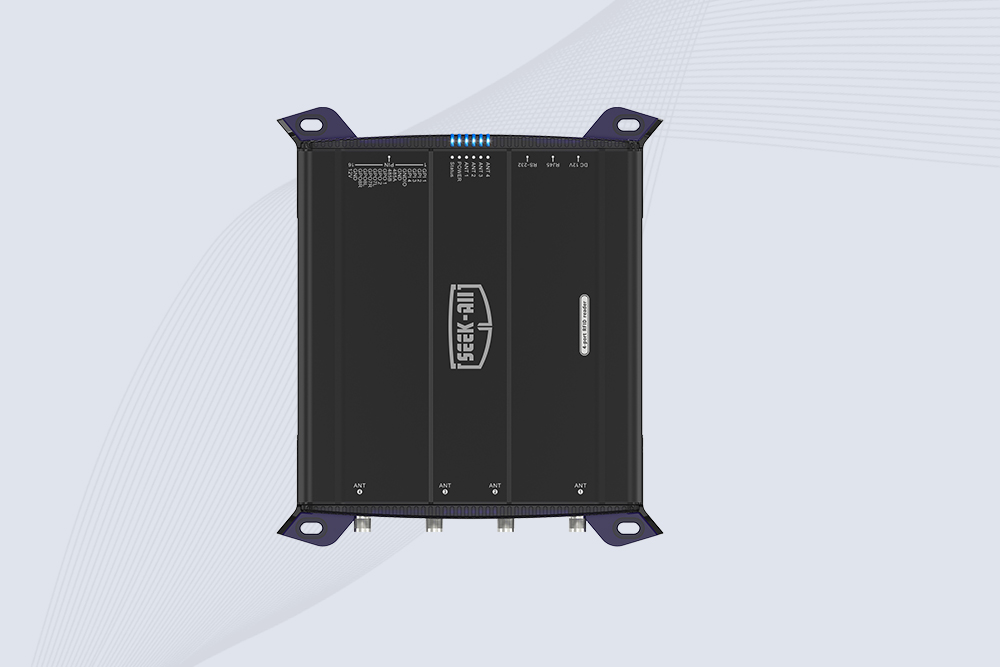
Cykeo CYKEO-R4 industrial UHF RFID Fixed Reader features 4 TNC ports, 400+ tags/sec speed, IP67 housing, and global frequency compliance for vehicle inspection, smart warehouse, and asset management systems.
CYKEO CYKEO-R8L Fixed RFID Reader with 8-port UHF design, Impinj-based RF core and up to 20m read range. An industrial Fixed RFID Reader for vehicle inspection, warehouse portals, smart manufacturing lines and secure access checkpoints.
RFID Fixed Reader from CYKEO – the CYKEO-R16L 16-port UHF fixed reader for warehouses, smart cabinets, and production lines. Long-range, multi-tag reading, stable performance for 24/7 industrial use.
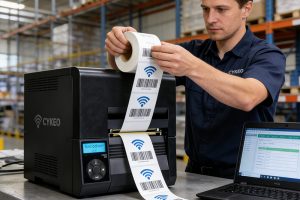
Learn what an RFID printer is, how it encodes and prints smart labels in one pass, the different types available, and how to choose the right one for your application. Expert guidance from CYKEO engineers.
What makes one handheld RFID reader work flawlessly while another misses tags? It's often the antenna. See how a purpose-built design solves real scanning problems.
Struggling to pick the right RFID reader? Learn key factors like frequency, range, and integration to optimize your business operations. Expert insights from Cykeo.
 Cykeo RFID IoT Solution Products R&D Manufacturer