 Cykeo RFID IoT Solution Products R&D Manufacturer


How to Optimize Fixed RFID Readers for High-Speed Conveyor Belts?
1412Learn how to optimize fixed RFID readers for high-speed conveyor belts. Discover Cykeo’s solutions for tag positioning, anti-collision settings, and real-time data capture.
MoreAll RFID Product
A reader that costs eighteen dollars and one that costs four hundred often look identical in a product photo: a small black box, a USB cable, a label reading 860–960 MHz. The difference appears three weeks later, when the cheap unit will not write EPC banks, or drops half the tags in a forty-piece apparel stack, or turns out to work only on the one Windows 7 laptop the vendor tested it with.
Shopping on price is fine. Price is a legitimate constraint, and plenty of teams have built useful systems on modest hardware. But cheap only stays cheap when the device matches the job. Below are the six checks that decide whether a low-cost reader survives contact with real work — plus the cases where spending less is genuinely the right call.
Nothing in a spec sheet moves the price as much as frequency. Three families appear in the results for “cheap USB RFID reader,” and they are not interchangeable.
125 kHz (LF) units are read-only, work at a few centimetres, and usually arrive as a bare module for Arduino projects. Fine for hobby access control. No inventory use.
13.56 MHz (HF / NFC) covers MIFARE Classic, DESFire and NTAG — the campus-card and access-control world. Desktop units sit between twenty and sixty dollars.
860–960 MHz (UHF) reads EPC Gen2 and ISO 18000-6C. Retail, library, laundry and asset tracking live here, because tags cost a few cents each and dozens can be read in one pass. Desktop UHF readers start near one hundred dollars and climb with chipset and output power.
The mistake that shows up most often: someone buys a twenty-five dollar “USB RFID reader” for stock counting, then discovers it cannot see their UHF labels at all. Fix the tag type before fixing the budget. If you are building hardware rather than buying a box, UHF RFID modules are the cheaper starting point.
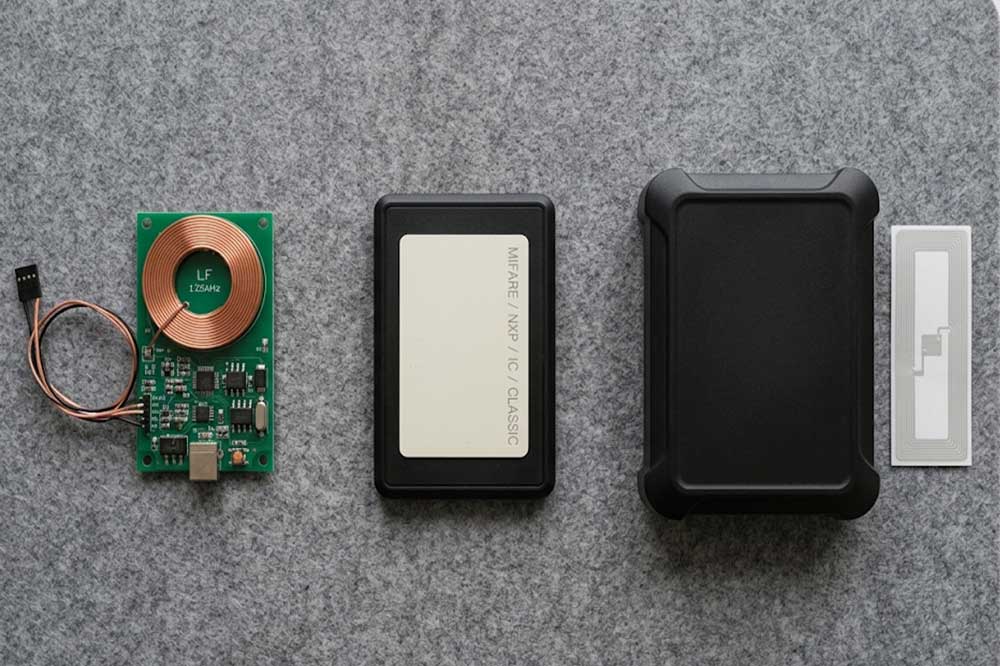
Three very different things hide behind the word USB. USB-HID enumerates as a keyboard and types the tag ID into whatever field has focus — no driver, no code, works with a spreadsheet. Virtual COM gives your application a serial stream to read. SDK-only means nothing happens until you compile something.
For a reception desk that just needs a card number in a form, HID is the cheapest and most reliable route. If you need filtering, de-duplication or RSSI values, you need the SDK and a proper driver. Confirm which one you are buying before checkout; a surprising number of budget listings are HID-only and cannot be switched.
“0–30 cm” means thirty centimetres with a particular tag, at maximum power, in free air, tag flat and facing the antenna. Move that tag onto a metal shelf or hold it at an angle and the number drops. Ask two questions: at what output power, and with which tag? A supplier who answers both is usually selling hardware they understand.
For counter work you want short range anyway. Reading the stack of cards next to the one you are encoding is a worse problem than a modest reach.
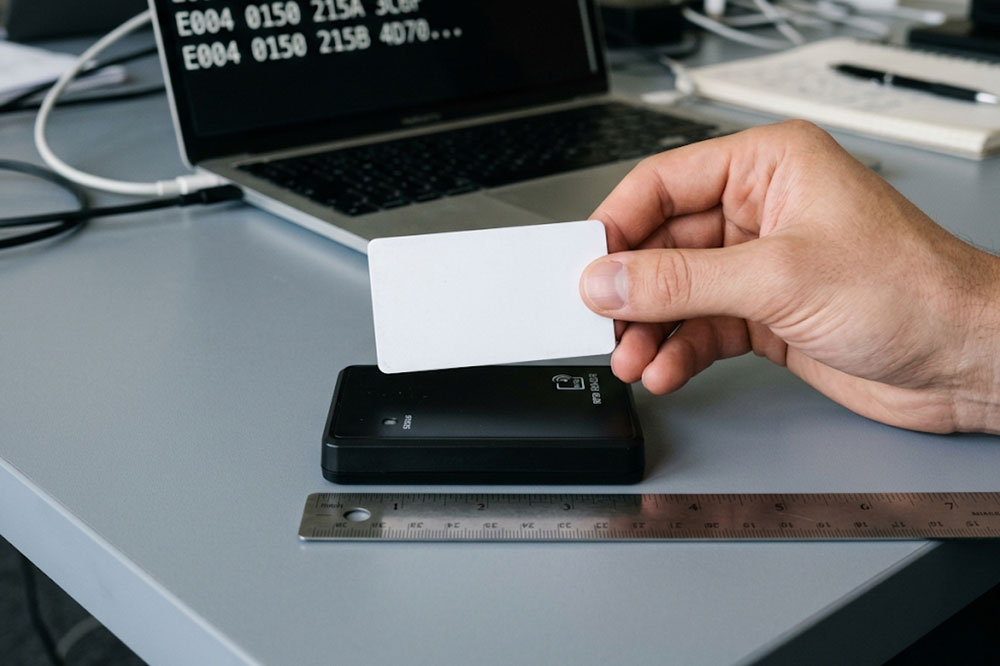
Many inexpensive readers read EPC and nothing else. If your process involves issuing badges, printing labels or commissioning tags on site, you need write support — and you need the write distance, typically about half the read distance. A near-field writer with roughly ten centimetres of write range and adjustable power encodes one tag cleanly. A long-range reader at full power encodes three at once, and nobody notices until the audit.
Request the SDK before you buy, not after. Look for C# and Java libraries, a documented API, and a demo you can run in ten minutes. If your stack includes Linux or Android, get that in writing — Windows-only is common at the low end and becomes a hard wall when the kiosk runs on a small single-board computer.
Firmware updatability matters too. A reader that cannot take a firmware fix is a reader you will replace.
Bus-powered desktop readers can draw real current. A unit rated 20 W at 33 dBm will not be happy on an unpowered hub shared with a keyboard and a webcam, and the resulting dropouts look exactly like software bugs. Use a powered hub or a direct rear-panel port, and keep the vents clear: small ABS housings warm up during batch encoding, and thermal drift surfaces as failed writes late in a run.
840–960 MHz is adjustable, but shipping a unit set to the wrong sub-band causes interference and, in some markets, a compliance problem. Confirm the default band for your country and get the CE or FCC documentation in the box, not a promise over email.
The purchase price is one line item. The others are developer hours spent working around a thin SDK — easily twenty to forty — replacement of units that fail at the connector, tags that were encoded wrong and have to be reissued, and staff time spent re-scanning because reads were unreliable.
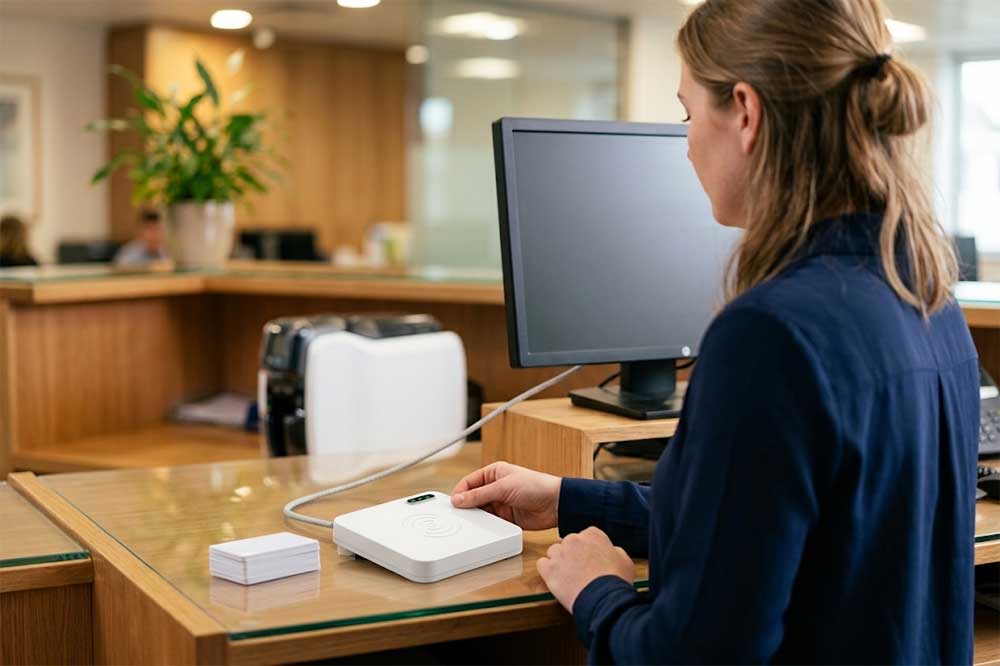
A hundred-and-fifty-dollar reader with a documented API usually beats a sixty-dollar reader that costs two weeks of integration. The exception is the genuinely simple job: reading a card ID into a spreadsheet. There, a thirty-dollar HID unit is the correct engineering answer and anything more is waste.
In all five, range is a liability rather than a feature, and volume is low enough that throughput figures stop mattering. Spend the money on write quality and software support instead. A near-field USB-C writer such as the CYKEO-D1C USB RFID card reader is built for exactly this pattern: about ten centimetres, adjustable output, no cross-reads on a crowded desk.
If your volume runs to thousands of tags per hour, or your read zone is a doorway people walk through, a desktop unit is the wrong tool. Look at fixed RFID readers or handheld RFID readers instead, and keep the desktop unit for the encoding step.
One useful reference point at the cheap-but-capable end: the SSD-D3AL USB RFID reader pairs USB-HID with a 0–30 cm read and 0–15 cm write window, over 600 tag reads per second, and Impinj E710/X3M1 silicon — the sort of spec set that answers checks one through five without a sales call.
If a listing cannot answer three of those five, the discount is smaller than it looks. Browse the full USB RFID reader range to compare interfaces side by side, or read up on long-range RFID readers before assuming you need one.
Is a cheap USB RFID reader enough for inventory counting? Only if it reads UHF. Count work needs 860–960 MHz EPC Gen2 tags, and those readers start around one hundred dollars. A twenty-dollar 13.56 MHz unit reads access cards and nothing else. Check the tag before the price.
Can a USB RFID reader write tags, or only read them? It depends on the model. Many budget units are read-only. If you issue badges or print labels, confirm write support in the datasheet and ask for the write distance, which is usually about half the read distance.
Do I need to install a driver? USB-HID models do not — they present as a keyboard and type the tag ID into the active field. Virtual-COM and SDK-based readers do need a driver or a library. Ask which mode the unit uses; HID-only models usually cannot be switched to COM.
Why does my reader drop tags when several are on the desk? Almost always power or antenna focus. Bus-powered units draw more current than an unpowered hub can supply, and wide-beam antennas read neighbouring tags. Use a powered hub or a direct port, lower the output power, and work one tag at a time within the near-field zone.
Will a US-purchased reader work in Europe or Asia? Usually yes, if the frequency is adjustable across 840–960 MHz — but the default band has to be set for the destination country, and customs may ask for CE or FCC documentation. Order the regional version or ask the supplier to pre-set the band.

Discover SSD-D4AL, a USB-HID UHF RFID reader with 4/8/16 antenna options, Impinj E710/X3M1 chipset, plug-and-play USB power, and OEM customization.
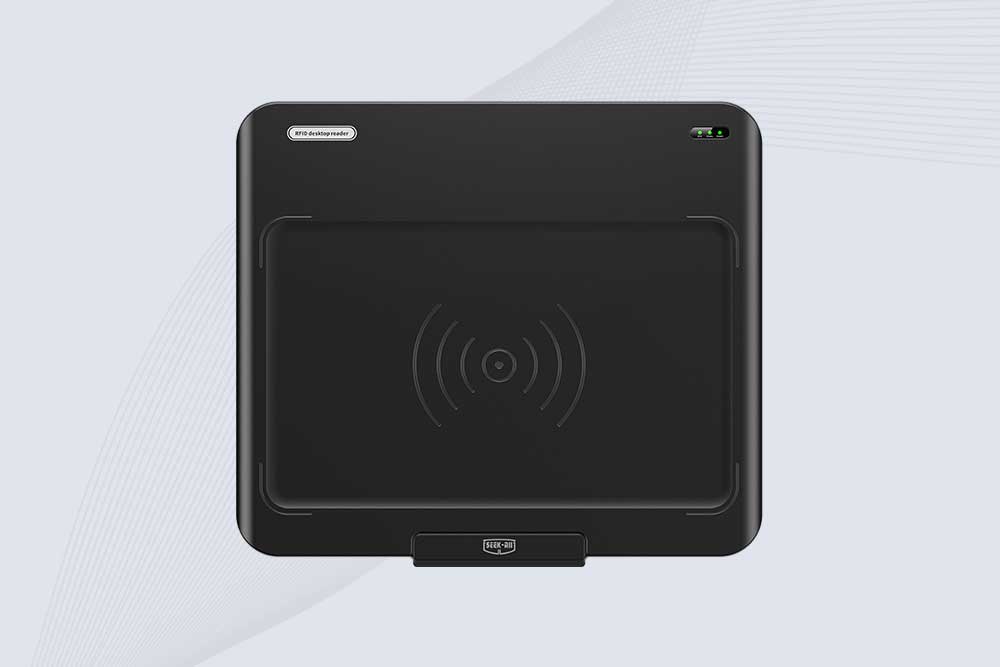
SSD-D3AL is a USB-HID UHF RFID reader with 0–30 cm reading, 0–15 cm writing, over 600 tags/s recognition, USB plug-and-play operation and OEM Logo customization.
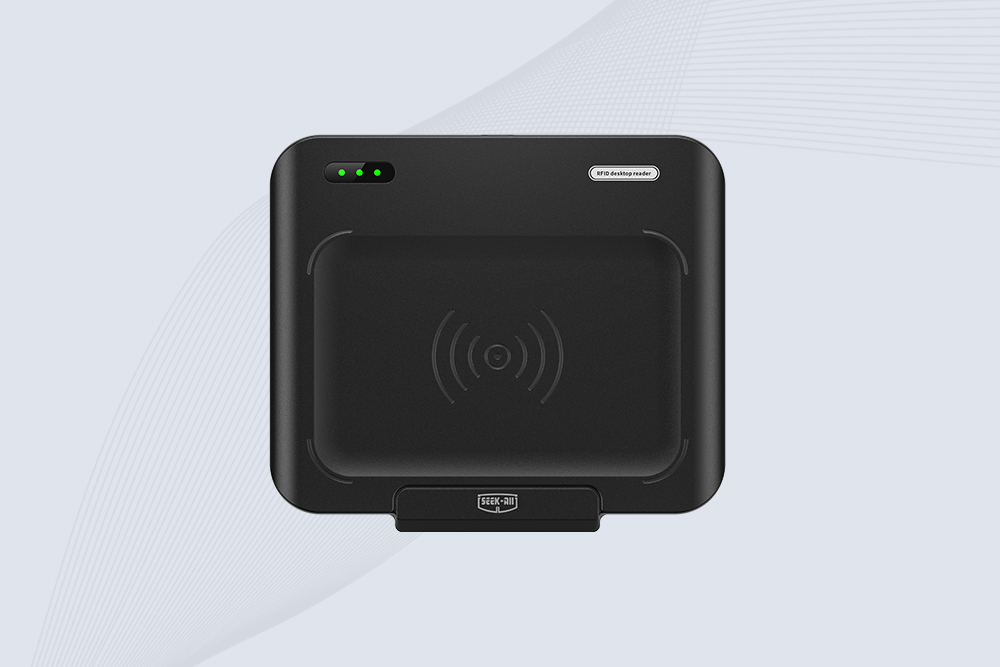
SSD-D1AL is a compact USB UHF RFID reader with Impinj E710/X3M1 chipset, USB-HID, 600+ tags/s recognition, 4/8/16 antenna support and plug-and-play USB power.

CYKEO CYKEO-D1LA USB RFID Reader is a compact desktop solution with near-field control for precise tag reading and encoding. Powered by USB, supporting ISO 18000-6C, and built for stable batch writing, this usb rfid tag reader fits retail, libraries, offices, and controlled RFID encoding tasks.
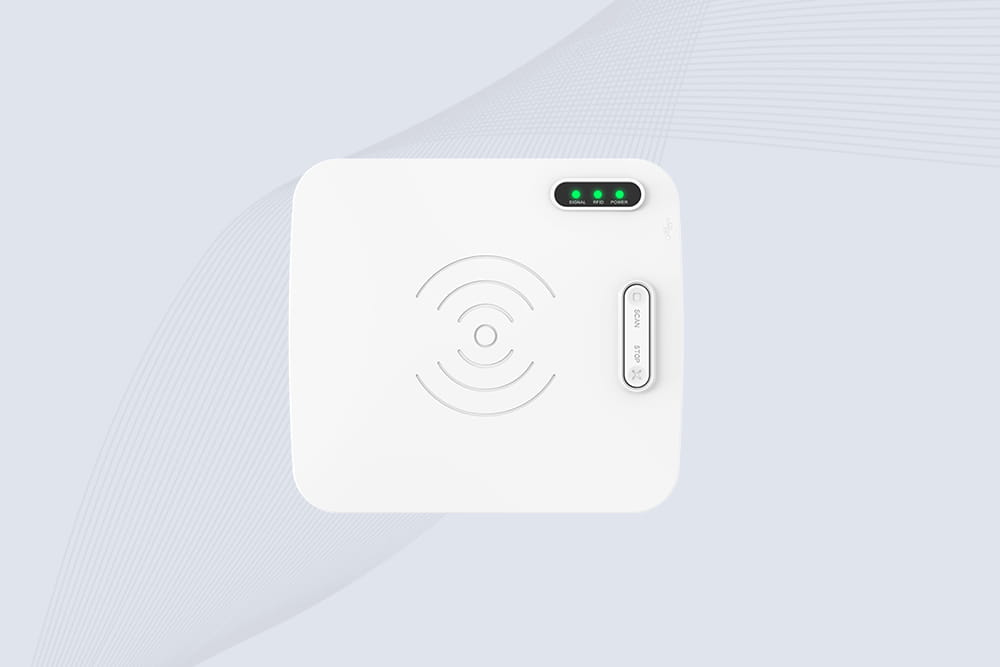
CYKEO CYKEO-D1L RFID scanner USB is a compact desktop UHF RFID scanner designed for short-range tag writing and verification. This usb rfid scanner supports batch encoding, stable 0–26 dBm output, and works across Windows, Linux, and Android systems.
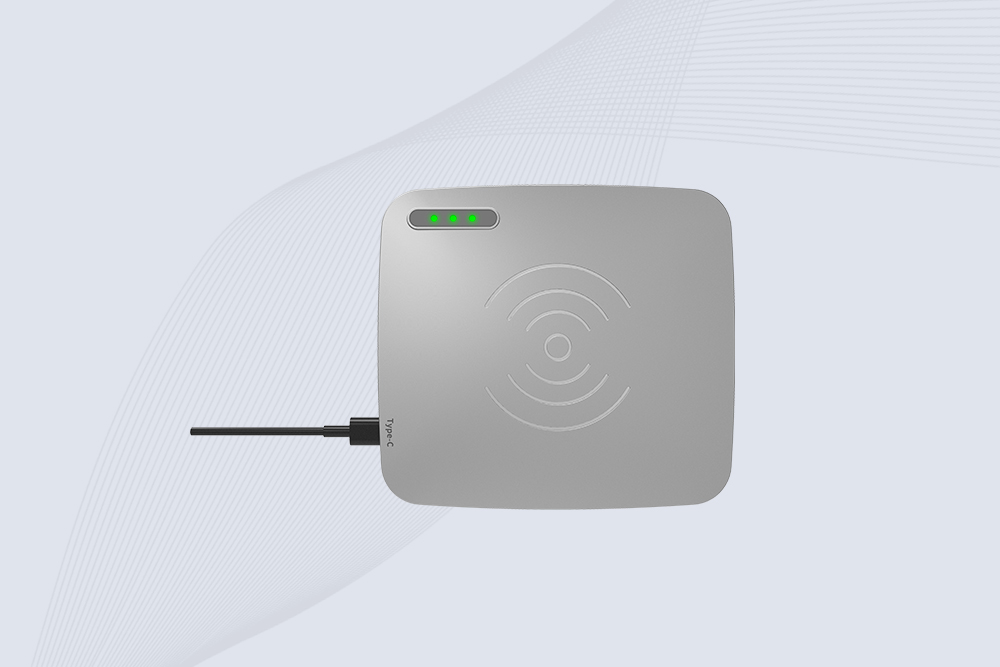
CYKEO CYKEO-D1C USB RFID Card Reader is a near-field UHF desktop writer designed for secure, short-range tag encoding. With USB-C connectivity and stable 26 dBm output, this rfid reader usb c is ideal for badge issuance, label encoding, and controlled desktop RFID workflows.
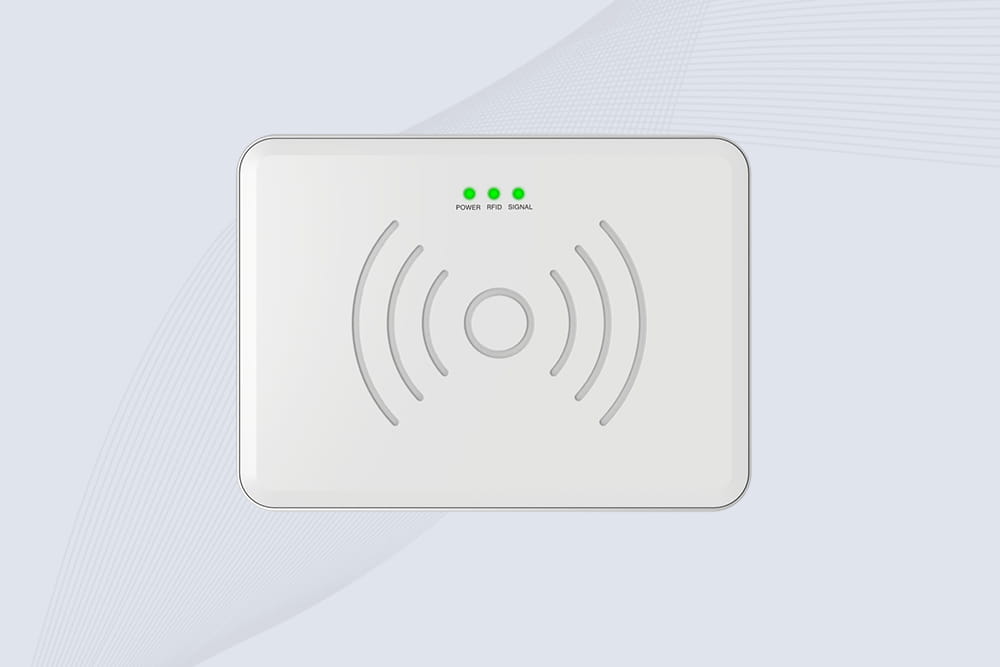
CYKEO CYKEO-D2L RFID Reader USB is a compact desktop encoder built on the Impinj R500 chip. With near-field control and stable USB power, this usb rfid card reader delivers precise tag writing for offices, retail counters, and small-scale logistics encoding tasks.
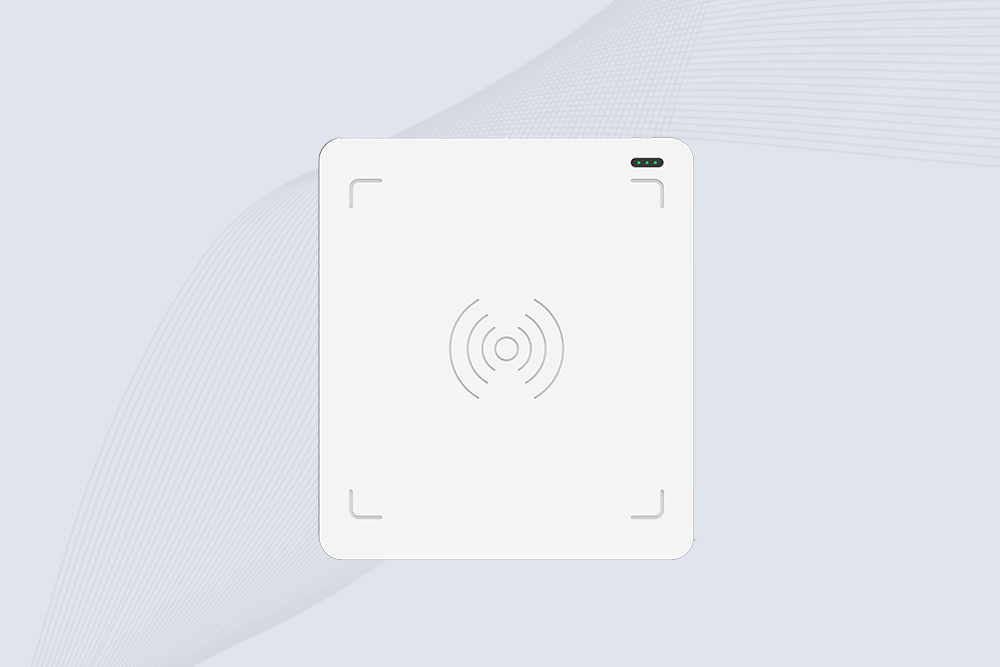
CYKEO CYKEO-D3L USB RFID Tag Reader delivers stable UHF tag reading and writing for daily desktop and light industrial tasks. Designed for controlled short-range operation, this USB RFID Tag Reader works reliably with rfid tag and reader systems in libraries, tool tracking, and inventory registration.
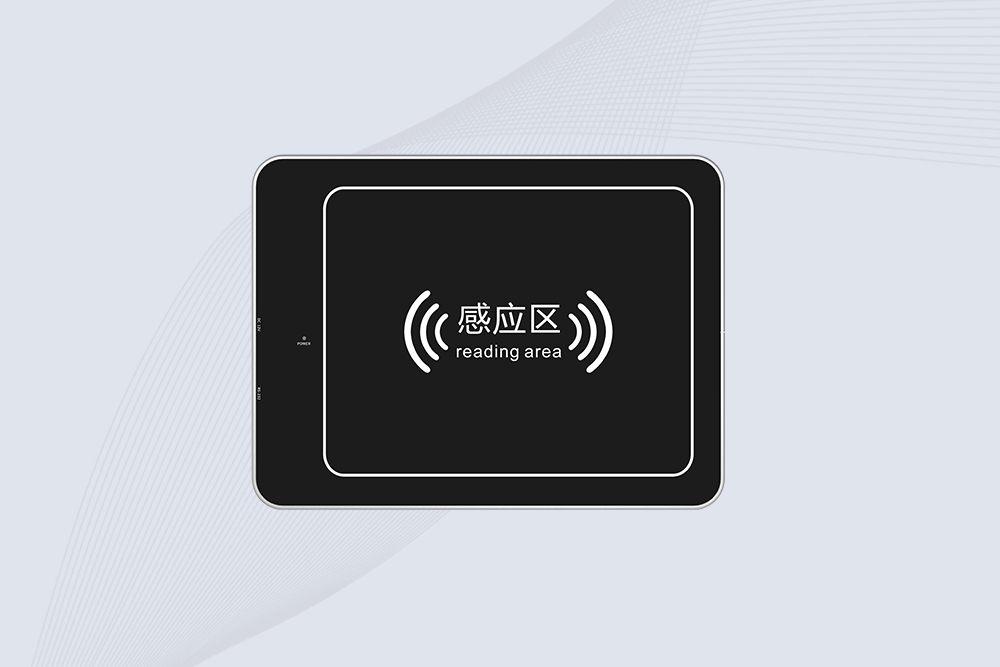
The CYKEO CYKEO-D4L UHF RFID Tag Reader is a stable Desktop RFID Reader designed for accurate tag registration, borrowing, and return workflows. Built with the Impinj R2000 chip, this UHF RFID Tag Reader delivers controlled short-range reads for libraries, asset tracking, and inventory management environments.
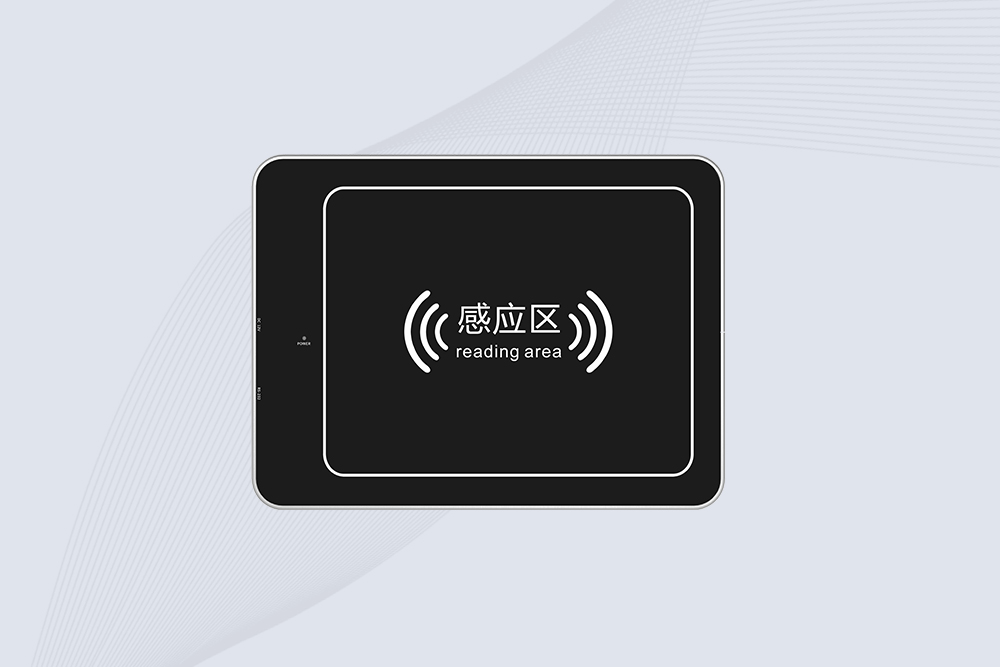
The CYKEO CYKEO-D5L Desktop RFID Card Reader is a stable UHF RFID Card Reader designed for controlled short-range reading and writing. Built for libraries, tool rooms, and asset desks, this UHF RFID Card Reader supports dense tag handling, secure data processing, and easy USB integration.
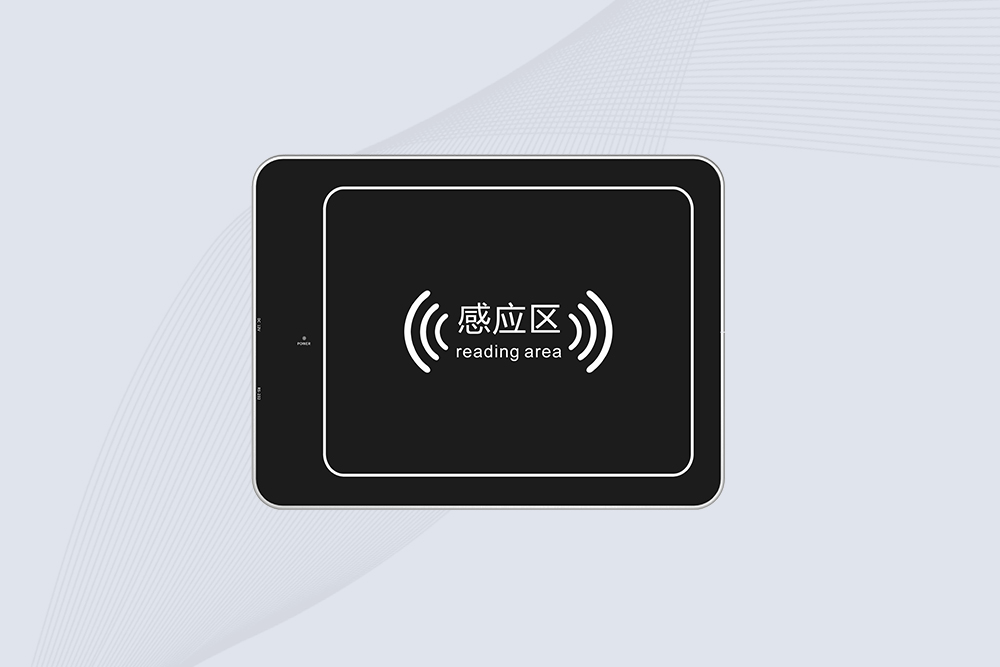
The CYKEO CYKEO-D6L RFID Reader Writer is a heavy-duty Desktop RFID Reader designed for short-range, high-accuracy tag programming. Built for libraries, labs, and asset desks, this RFID Reader Writer supports batch processing, stable 33dBm output, and seamless integration with existing management systems.
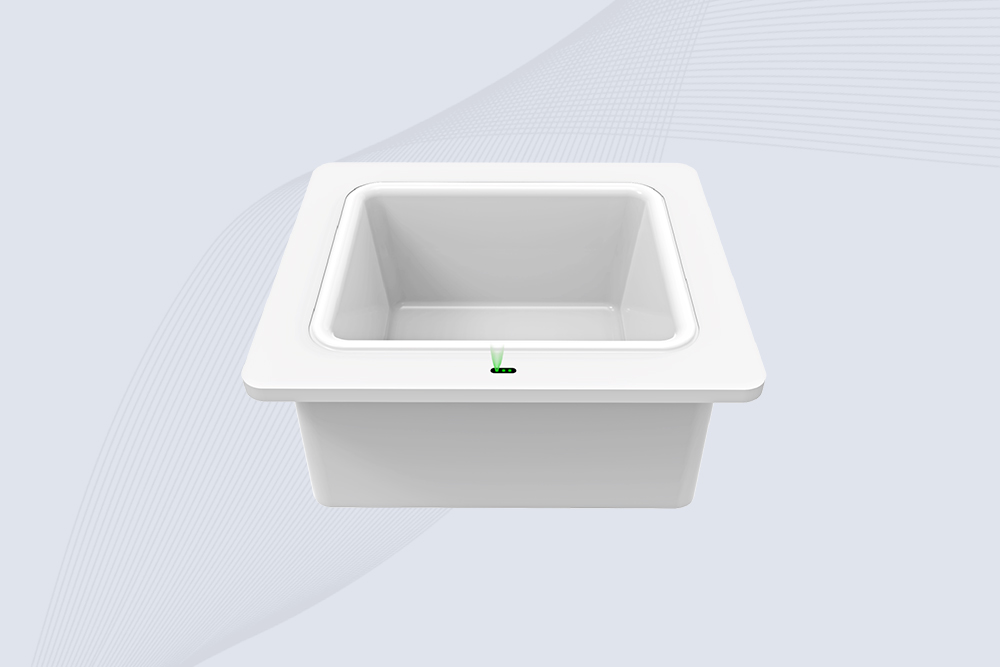
Cykeo CYKEO-D8B UHF RFID tunnel and RFID Desktop Reader features 30+ items batch reading,
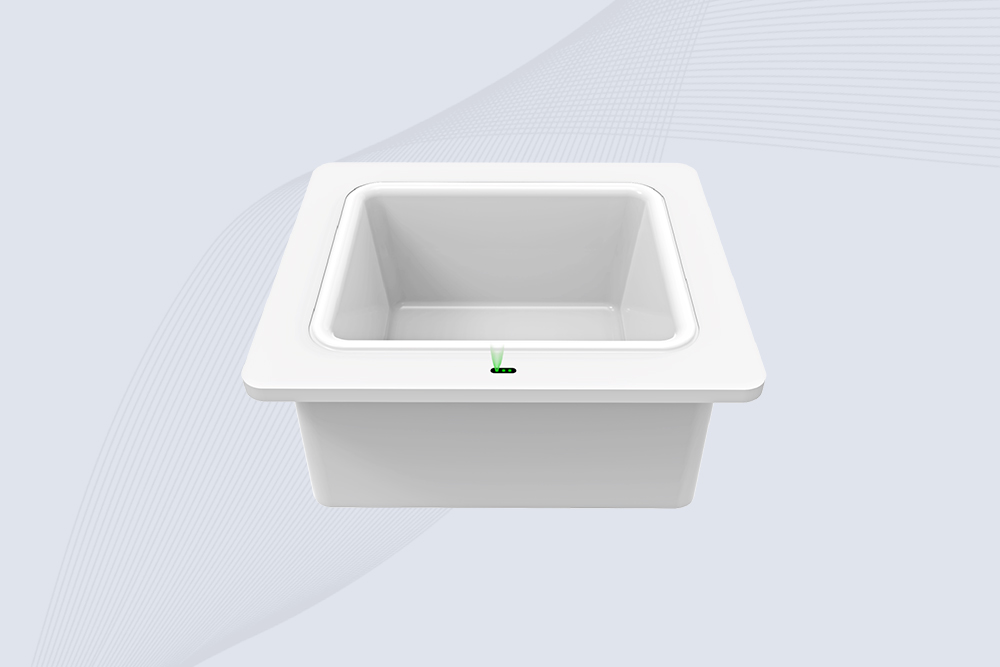
Cykeo CYKEO-D8A embedded RFID badge reader offers 30+ tags/sec scanning, 20cm anti-crosstalk precision, and DC 12V power for unmanned stores, warehouses, and smart inventory systems.
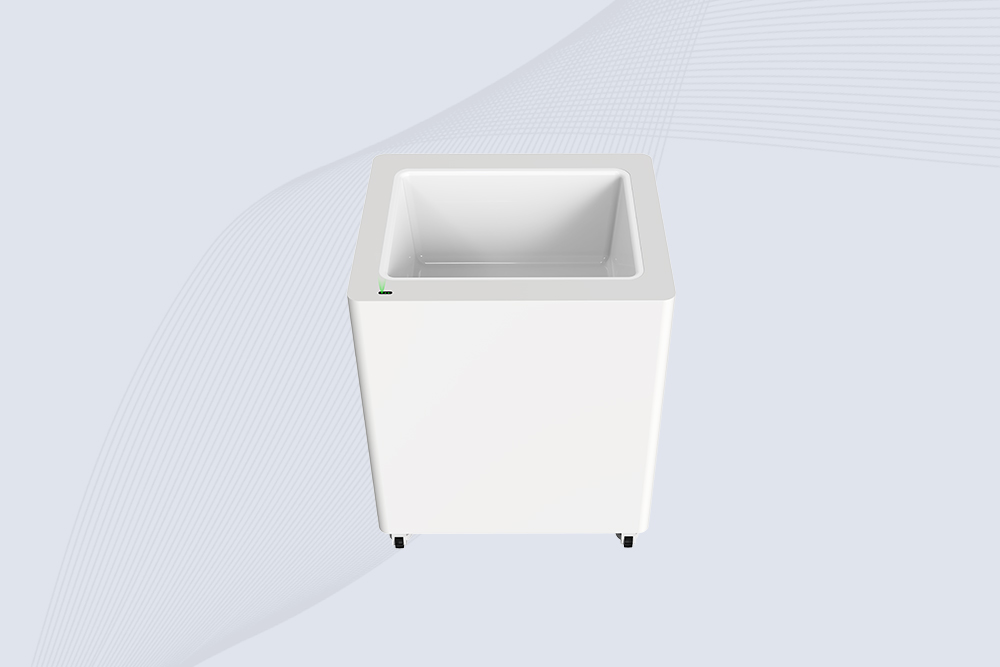
Cykeo’s CYKEO-D8C UHF RFID gate reader achieves 200-tag/batch scanning with adjustable power control, ideal for retail inventory and smart warehouse management.
RFID Industry Writer | IoT & Asset Tracking Analyst
James writes about RFID technology, asset tracking, and the practical challenges of digital transformation across warehousing, retail, manufacturing, and logistics.
His work focuses on how RFID is applied in real-world operations—improving inventory visibility, automating workflows, and helping businesses manage assets with greater accuracy and efficiency.
He regularly covers topics including UHF RFID, smart cabinets, RFID portals, tool tracking, warehouse automation, and industrial IoT trends..
Learn how to optimize fixed RFID readers for high-speed conveyor belts. Discover Cykeo’s solutions for tag positioning, anti-collision settings, and real-time data capture.
More
Discover how RFID laundry tags improve inventory accuracy in commercial textile management by reducing manual errors, automating tracking, and improving visibility across laundry operations.
More
Wondering what an RFID tag looks like? Learn the different shapes, sizes, and applications of RFID tags used in clothing, inventory, logistics, and retail systems.
More
A long range RFID scanner for retail inventory can identify multiple tagged products at once, helping retailers speed up stock counting, improve inventory ac...
More