If you’ve been working around RFID hardware, you’ve probably noticed one thing: most finished RFID readers look simple on the outside, but inside they’re built around a core component—the RFID reader module.
That module is where all the real work happens: signal generation, tag decoding, anti-collision processing, and communication with your host system.
For OEMs, integrators, and device manufacturers, understanding this part is often the difference between building a stable RFID product and fighting endless integration issues.
An RFID reader module is the embedded “engine” of an RFID system.
It’s not a full device. It doesn’t come with a housing, screen, or user interface. Instead, it’s designed to be embedded into other equipment such as:
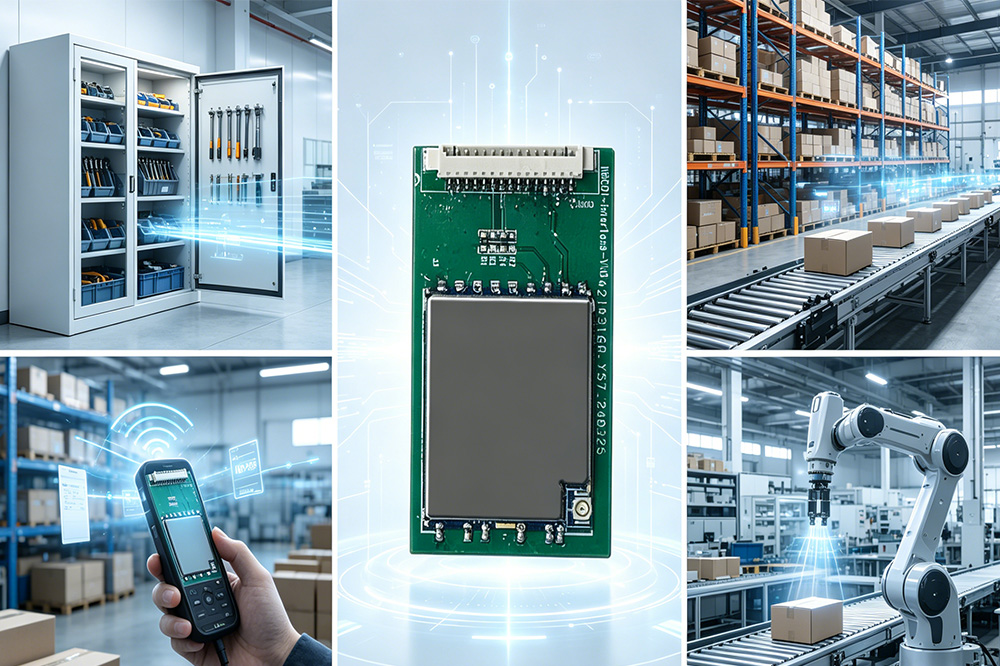
Smart cabinets
Handheld terminals
Industrial control systems
Access control devices
Warehouse automation machines
Think of it as the brain that handles RFID reading, while everything else around it is just structure and application logic.
Most modern UHF modules handle EPC Gen2 / ISO 18000-6C protocols, which are widely used in logistics, retail, and industrial tracking systems.
What an RFID Module Actually Does
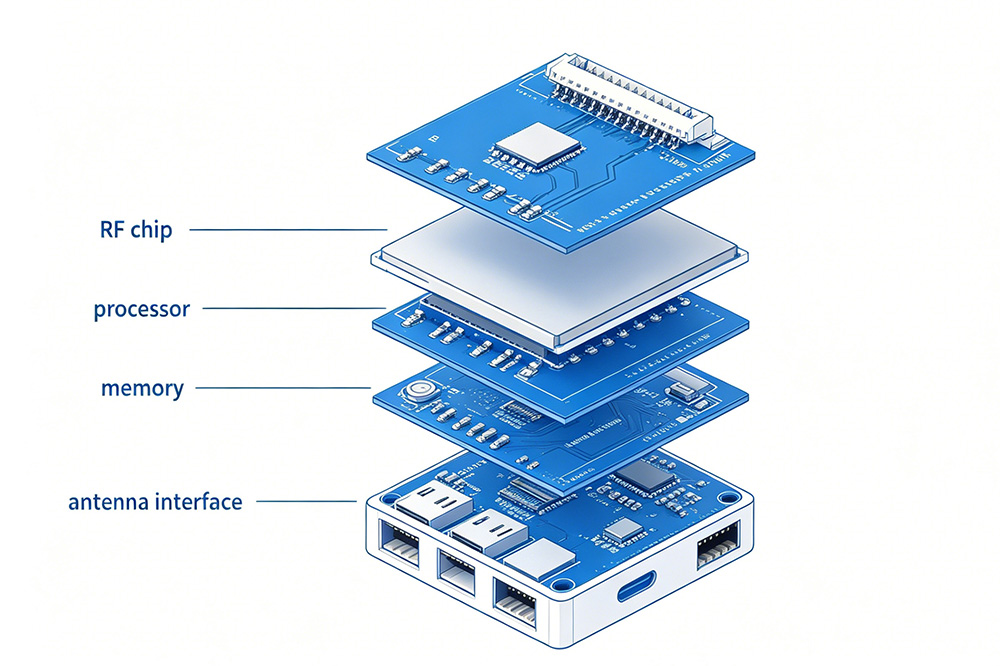
Inside a typical UHF RFID reader module, you’ll usually find:
RF transceiver chip (often Impinj or similar architecture)
Baseband processing unit
Host communication interface (UART / USB / SPI / TCP-IP)
Firmware for tag decoding and anti-collision
Power control and RF output management
Once powered, the module performs a continuous cycle:
Generates RF signal through an external antenna
Activates passive RFID tags in the field
Receives backscattered signals from tags
Decodes tag IDs (EPC/TID/User memory)
Sends data to host system in real time
This whole process happens in milliseconds.
RFID Reader Module vs Finished RFID Reader
This is where many projects go wrong at the beginning.
A finished RFID reader is a complete product. It includes:
Enclosure
Antenna (sometimes built-in)
Power supply
Communication ports
Ready-to-use software functions
An RFID module, on the other hand, is only the core RF + processing unit.
Why OEMs prefer modules:
Flexible integration into custom devices
Lower hardware redundancy
Easier to design compact systems
Better cost control in mass production
Full control over software and UI layer
If you’re building your own RFID-based product, the module approach is almost always the direction taken.
Common Interfaces You’ll See
RFID reader modules are designed to fit into different system architectures. The most common interfaces include:
UART (simple embedded systems)
USB (plug-and-play development devices)
RS232 / RS485 (industrial environments)
Ethernet / TCP-IP (networked RFID systems)
GPIO trigger control (automation lines)
Choosing the right interface early matters more than most people expect. It affects latency, stability, and system architecture.
Where RFID Modules Are Used Today
RFID modules are no longer limited to traditional warehouse systems.
You’ll now find them in:
Smart tool cabinets (automatic tool check-in/out)
Industrial production tracking lines
Medical equipment management systems
Smart retail shelves
Logistics sorting systems
Access control terminals
Embedded Android handheld devices
In many of these systems, the module is hidden deep inside the product, quietly handling millions of tag reads.
Key Things Engineers Care About
When integrators evaluate RFID modules, they rarely look at marketing specs first. Instead, they focus on real-world behavior:
1. Read stability
Can it consistently read tags in different environments?
2. Multi-tag performance
How well does it handle 20, 50, or 100+ tags at once?
3. Antenna flexibility
Does it support external antennas and tuning?
4. SDK and documentation
Is it easy to integrate into existing software systems?
5. Heat and power control
Can it run 24/7 in industrial environments?
These factors matter more than theoretical maximum read distance.
OEM RFID Module Selection (What Actually Matters)
When selecting a module for product development, most engineers eventually narrow it down to a few critical points:
Chipset performance (Impinj-based or equivalent)
Output power stability
Communication flexibility
Firmware upgrade capability
Long-term supply availability
If you’re sourcing for production, consistency across batches is just as important as performance.
A Practical Option for Integration Projects
For OEMs and system integrators looking for ready-to-integrate hardware, CYKEO provides a range of RFID reader modules designed for embedded applications, industrial systems, and custom device development.
These modules are typically used in smart cabinets, industrial tracking systems, and embedded RFID terminals where compact design and stable performance matter more than standalone reader features.
Final Thoughts
An RFID reader module is not just a component—it’s the foundation of most modern RFID systems.
Once you understand how it works and what it affects (read range, stability, integration complexity), it becomes much easier to design reliable RFID-based products.
Most successful RFID solutions don’t start with the antenna or software.
Learn essential RFID terminology including tags, reader modules, antennas, EPC, anti-collision and frequency bands. A practical guide to understanding RFID systems and components.
Learn how to make an RFID reader with Arduino that actually works. Our hands-on tutorial covers RC522 wiring, library setup, and fixing "tag not found" errors.
Descubre para qué sirve RFID antenna coil en etiquetas y lectores. Te explicamos cómo transfiere energía y datos en sistemas de acceso y pagos sin contacto.
 Cykeo RFID IoT Solution Products R&D Manufacturer