 Cykeo RFID IoT Solution Products R&D Manufacturer
How can I connect handheld RFID readers to ERP systems like SAP or Oracle?
1043Learn how to integrate handheld RFID readers with ERP systems like SAP or Oracle. Follow expert steps for data sync, API setup, and real-time inventory updates.
MoreAll RFID Product
When people start an RFID project, the first mistake is usually the same—they focus on range or price first.
But in real OEM development, the RFID reader module you choose decides far more than read distance. It affects system stability, integration time, firmware flexibility, and even whether your product can scale into mass production.
This guide breaks down how engineers and system integrators actually choose RFID modules in real projects, not just in spec sheets.
Before comparing hardware, the first question should always be:
What is this RFID system supposed to do in the real world?
Different applications behave very differently:
The same module can perform very differently depending on environment and use case.
So the correct starting point is always the system, not the component.
Datasheets usually show ideal conditions. Real environments are different.
When evaluating an RFID reader module, focus on:
Can it still perform when 20–100 tags are inside the field at the same time?
Not just maximum distance—but consistent read accuracy at working distance.
Metal, liquids, and interference can dramatically affect performance.
In industrial projects, consistency beats peak performance every time.
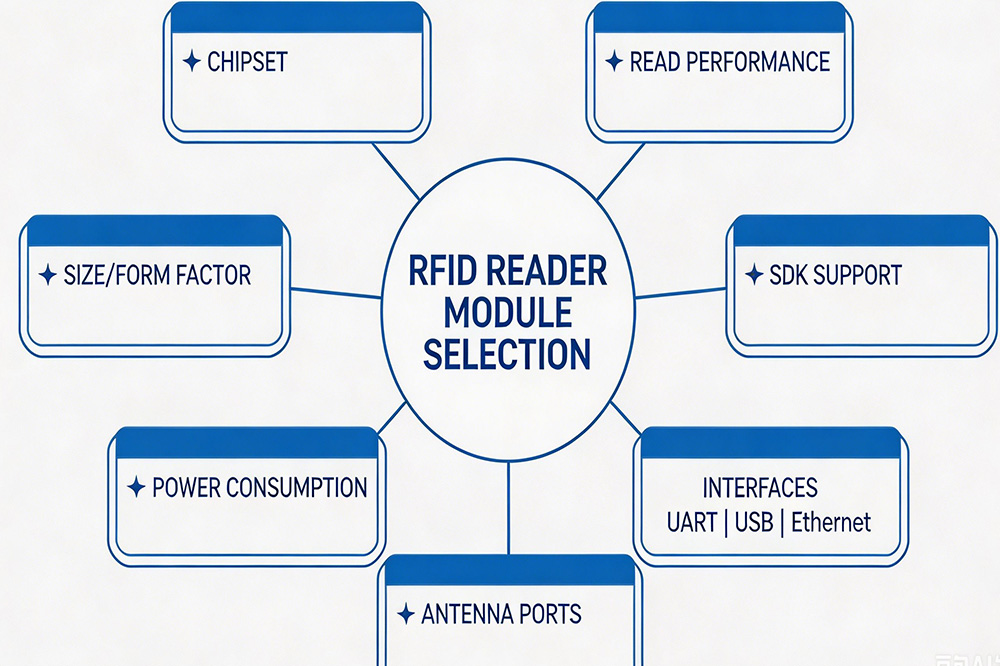
Most UHF RFID modules are built around high-performance chipsets (commonly Impinj-based architectures or equivalent designs).
What matters in practice:
A stronger chipset doesn’t just read faster—it reduces system errors under load.
This is where many OEM projects slow down.
Common interfaces include:
If your system will scale into production, UART or Ethernet-based designs are usually more flexible long term.
Hardware alone is not enough.
A good RFID reader module should come with:
Poor SDK support often turns a 3-day integration into a 3-week debugging cycle.
Some modules support only fixed antennas. Others support external multi-port antennas.
You need to check:
For industrial systems, external antenna flexibility is almost always required.
If you’re building OEM devices, size matters more than most people expect.
Typical constraints:
The trend is clear: smaller modules with higher integration are becoming standard.
RFID modules are often used in continuous scanning environments.
Check:
Poor thermal design can cause unstable reads after long operation.
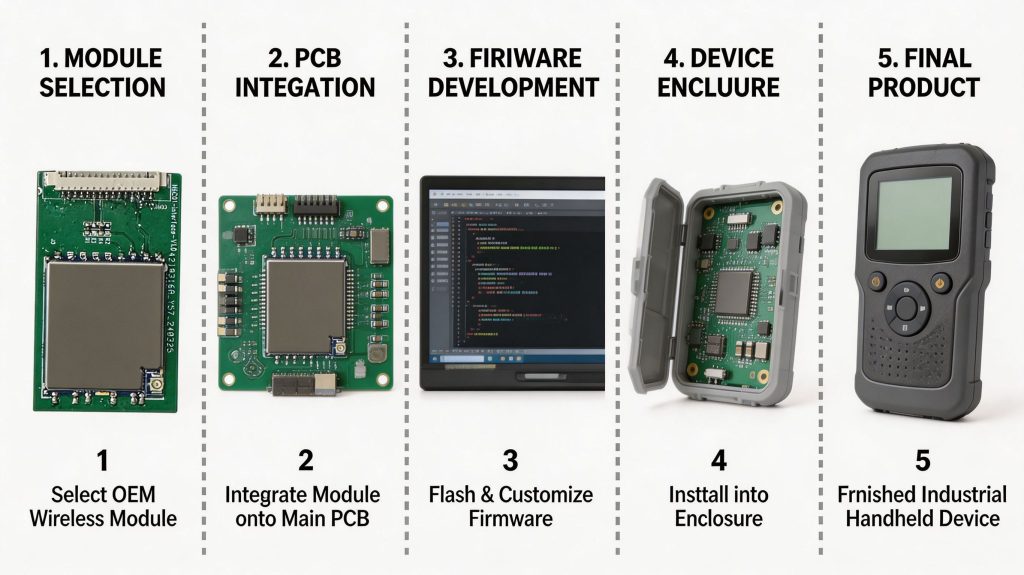
For OEM manufacturers, this is critical.
You should ask:
A module that works in testing but changes in mass production creates serious system risks.
Many engineers run into the same problems:
Most RFID “failures” are not hardware failures—they are selection mistakes.
In real projects, experienced integrators usually follow this sequence:
This approach reduces risk much more than comparing datasheets.
For system integrators building RFID-based devices, choosing a stable embedded module is usually the first step before software or enclosure design.
CYKEO provides RFID reader modules designed for OEM integration, industrial systems, and embedded device development, supporting multiple interfaces and application scenarios.
You can view available modules here:rfid reader module
Choosing an RFID reader module is not about picking the “strongest spec.”
It’s about matching the module to a real system that has constraints, environment challenges, and production requirements.
The best RFID project isn’t the one with the most powerful hardware—it’s the one with the most stable integration.
Guide Recommendations
Fixed RFID Reader: Why It’s Becoming Must-Have
Fixed RFID Readers: What I Didn’t Expect and What I Learned
RFID Handheld Reader vs. Fixed Reader: Which Is Better for Retail?
Different Types of RFID Readers: A Simple Introduction
Best Budget USB RFID Readers Under $100 for Small Business Inventory Systems
RFID Module vs. RFID Reader: What’s the Difference?
Fixed RFID Reader Buying Guide: 5 Core Parameters You Must Know
What is an RFID Reader Used For?
How RFID Reader Works: The Simple Explanation
How to Choose the Best Long-Range RFID Reader for Warehouse Management
RFID Readers for Boom Barriers ,Where Efficiency Meets Access Control
Why Your Warehouse Needs Smarter RFID Readers in 2025
Understanding RFID Readers,Essential Devices for Efficient Tracking
Learn how to integrate handheld RFID readers with ERP systems like SAP or Oracle. Follow expert steps for data sync, API setup, and real-time inventory updates.
More
Discover how RFID for tool tracking enhances safety, compliance, and efficiency in high-risk industries. Learn about Cykeo’s automated solutions.
More
Learn how RFID retail inventory antenna systems improve shelf monitoring and warehouse inventory accuracy. Discover practical RFID shelf zone control methods and smart inventory solutions for retail and distribution centers.
More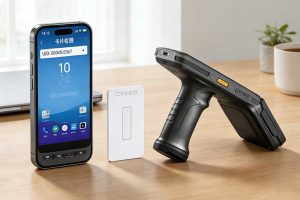
Can you read an RFID card with an iPhone? We explain the real limitations, the types of cards you can read, and the hardware you'll need for the rest.
More