 Cykeo RFID IoT Solution Products R&D Manufacturer
RFID System for Schools: Moving Beyond Memory and Paper
785Explore how RFID systems improve school management — from attendance tracking to asset monitoring — boosting efficiency, safety, and transparency.
MoreAll RFID Product
If you’ve ever managed cables, tools, or equipment in a warehouse, power station, or telecom site, you already know one thing:
labels don’t stay readable forever.
They fade, peel off, get dirty—or worse, someone removes them.
That’s exactly where RFID cable tie tags come in.
Instead of sticking a label onto an asset, you lock a tag onto it. And instead of scanning one by one, you can read hundreds in seconds.
Let’s break it down in a practical way.
An RFID cable tie tag is a combination of a zip tie and an RFID tag in one piece.
It looks like a normal nylon cable tie, but the head contains a small RFID chip and rfid antenna. Once you fasten it, it works as both:
Unlike adhesive labels, it doesn’t rely on surface condition. Once installed, it stays there unless you cut it off.
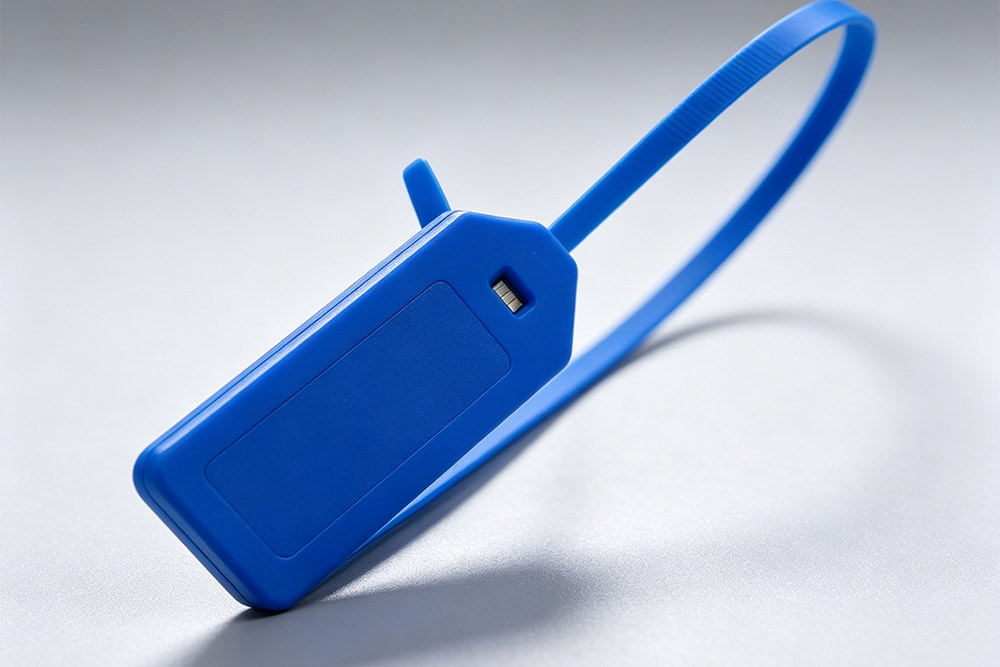
Most industrial users today are using UHF RFID (Ultra High Frequency) versions.
Here’s what actually happens on site:
No line of sight. No manual scanning one by one.
That’s the difference.
Barcodes are cheap. Everyone knows that.
But in real operations, they create hidden costs.
For small operations, barcodes still work.
But once volume increases, RFID starts to pay for itself.
This is not a “lab technology.” It’s already widely used in specific industries.
The common pattern:
assets that need to be tracked long-term, not temporarily labeled
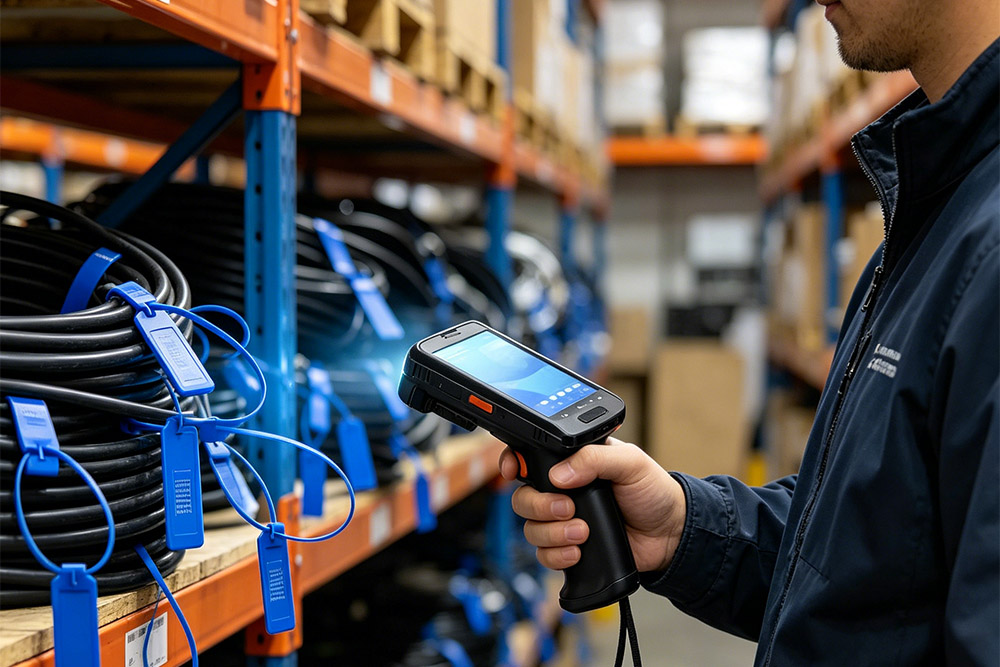
This is something many buyers overlook at first.
The biggest advantage is not just RFID—it’s the locking mechanism.
Once installed:
That’s why it’s widely used for:
In simple terms:
it’s not just identification—it’s control
Not all cable tags perform the same. If you’re sourcing for a project, these are the key factors:
Industrial projects typically require long-range UHF tags
(around several meters depending on reader and environment)
Check:
Common options:
Different chips = different performance and memory
If you’re tagging metal cables or equipment, this matters a lot.
Poor design = unstable reading.
Industrial-grade tags should support:
A utility contractor managing thousands of cables switched from printed labels to RFID cable tie tags.
Before:
After:
The hardware cost increased slightly, but labor dropped significantly.
That’s where the ROI comes from.
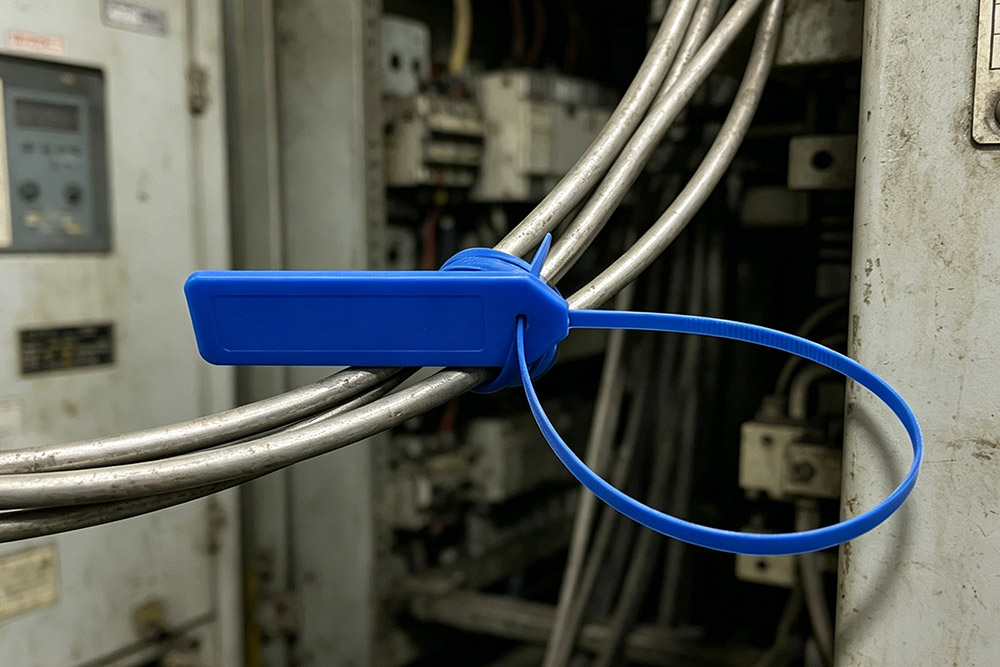
They make the most sense when:
If your use case is temporary labeling or low volume, RFID might be overkill.
But for industrial asset tracking, it’s becoming the standard.
RFID cable tie tags are not just “another label.”
They are a structural upgrade to how assets are identified and tracked.
Instead of relying on something that can fall off, fade, or be ignored,
you’re attaching a durable, scannable identity directly to the asset itself.
That shift is why more industries are moving toward RFID.
User Guide
How to Remove RFID Tags from Clothing Safely (Without Ripping Your Shirt)
The Truth About RFID Signals: Aluminum Foil, Smartphones, and Reading Range Explained
How Security Tag Readers Work: RFID vs. Magnetic Systems – Which Is More Efficient?
How to Deactivate RFID Tags Without Guesswork or Myths?
How to Test RFID Tags with Phone
How to Test RFID Tags with Your Smartphone (No Scanner Needed)
How to Use Android Phone to Emulate RFID Tag: Full Tutorial and Application Guide
Can Your RFID Tags Reader iPhone ? Here’s How It Actually Works
Can You Use an NFC Phone as an RFID Tag?
How to Choose the Right RFID Tag for Clothing? Materials, Packaging & Attachment Explained
Industrial Essentials: 2025 Guide to the Most Durable Rugged RFID Tags
Active RFID Tag Range: The Real Difference Between Active and Passive Tags

Explore how RFID systems improve school management — from attendance tracking to asset monitoring — boosting efficiency, safety, and transparency.
More
RFID UHF tag technology enables long-range asset tracking, inventory management, and logistics visibility. Discover applications, benefits, and industry insights.
More
Discover how does rfid location tracking work with real-time asset visibility, accurate item positioning, and smarter tracking solutions for warehouses, hospitals, and industries.
More
Learn step-by-step how to set up an RFID workstation for efficient inventory management. Discover Cykeo’s hardware, software integration, and optimization tips.
More