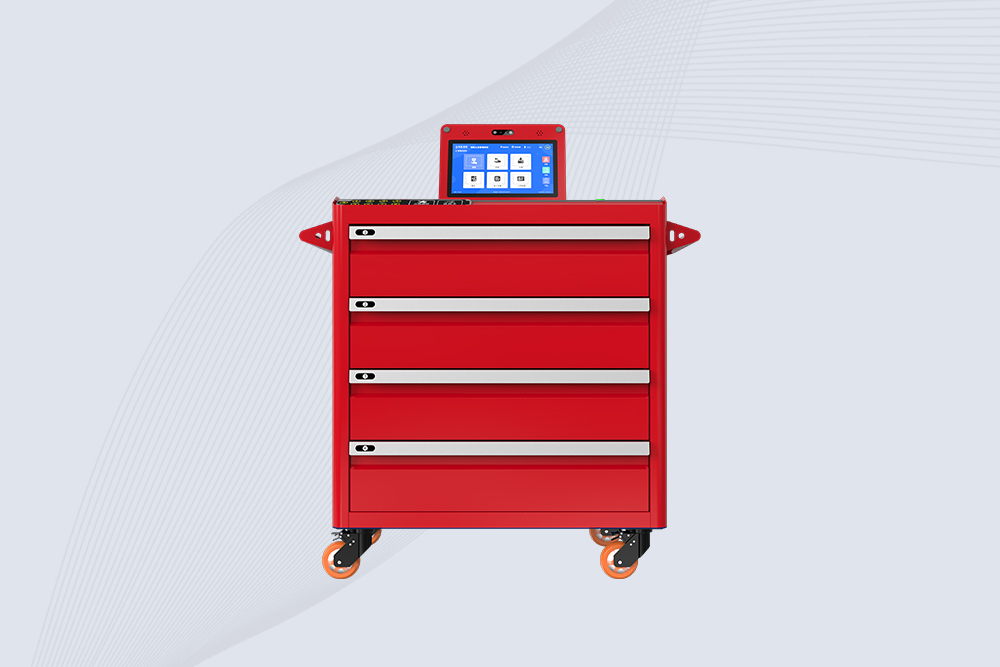
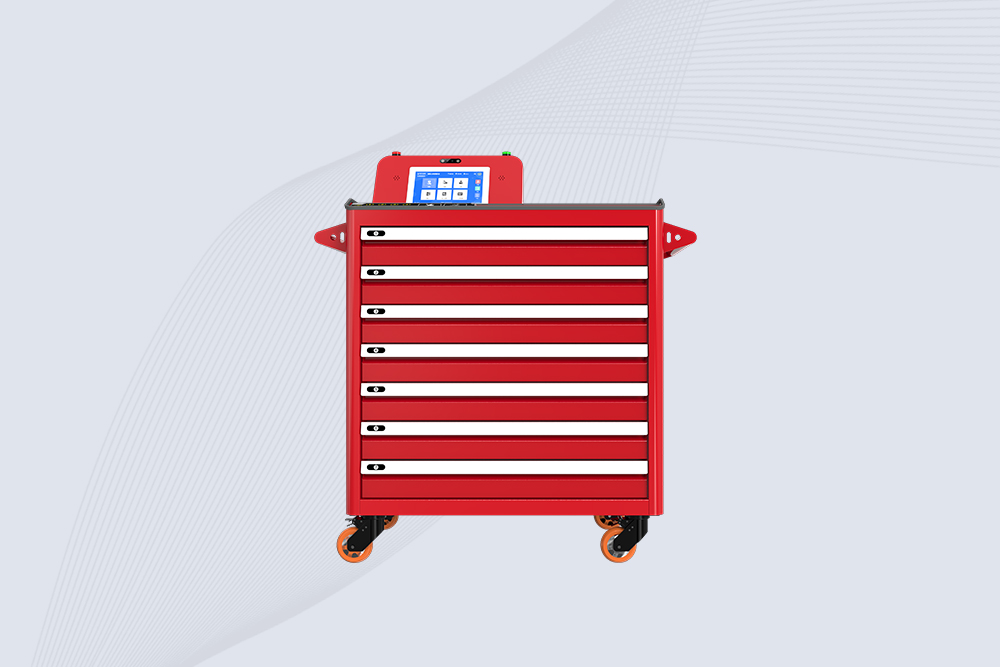
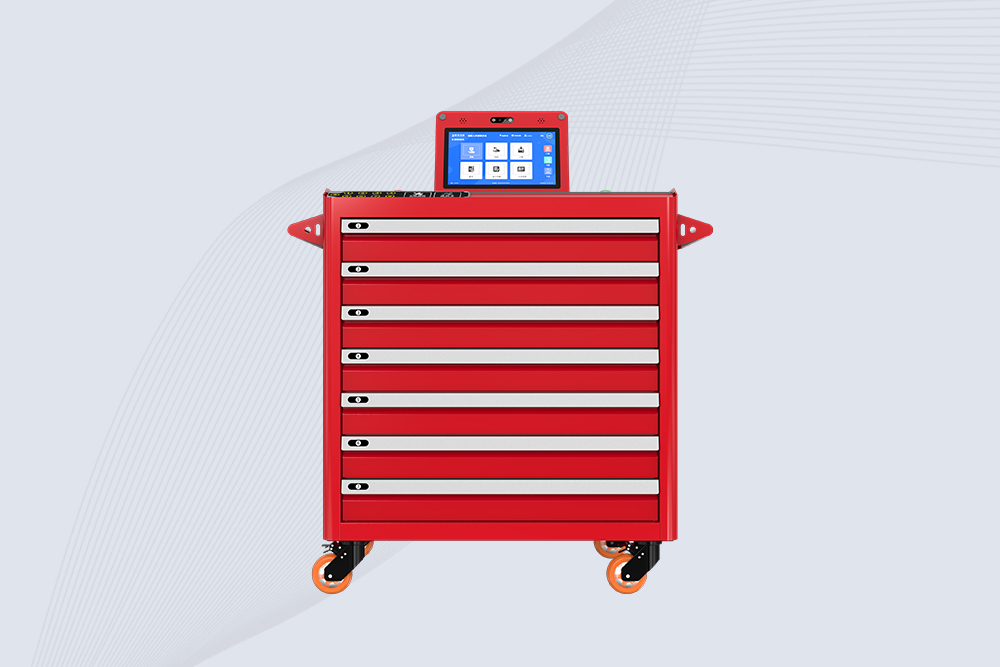
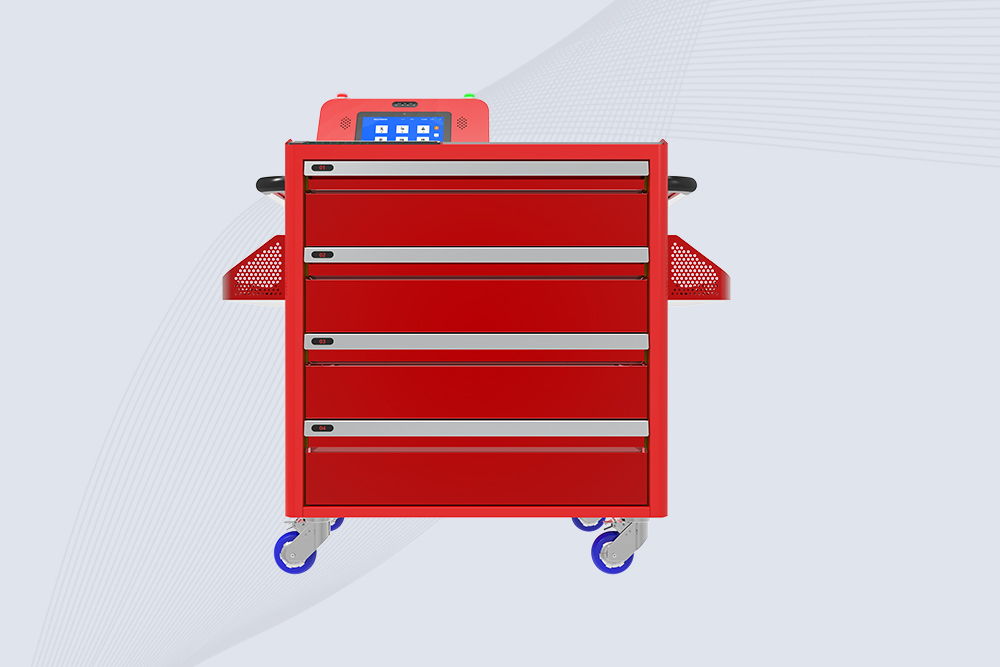
1. Why Manufacturing Factories Need Better Tool Management
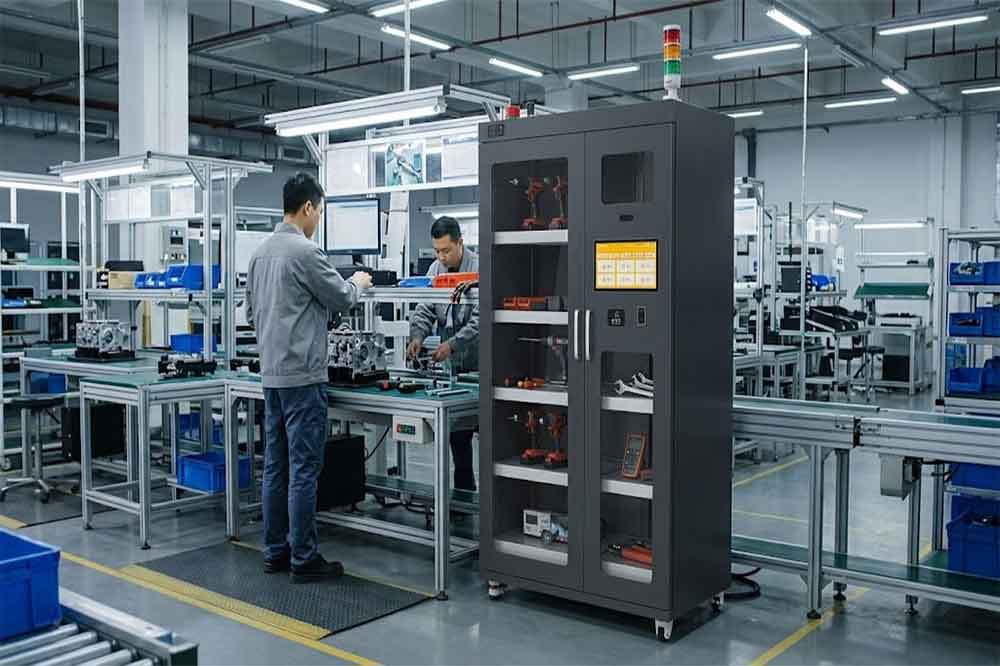
In a manufacturing factory, tools rarely stay in one place.
A torque wrench may be stored in a tool room in the morning, used on a production line later, and returned by another operator during the next shift. Maintenance tools may move between machines, workshops, and service areas.
This movement creates a simple but important management problem: where is the tool, who is using it, and is it available when needed?
Traditional cabinets and tool rooms can work for small operations. As the number of tools, workers, shifts, and production stations increases, manual records become harder to maintain.
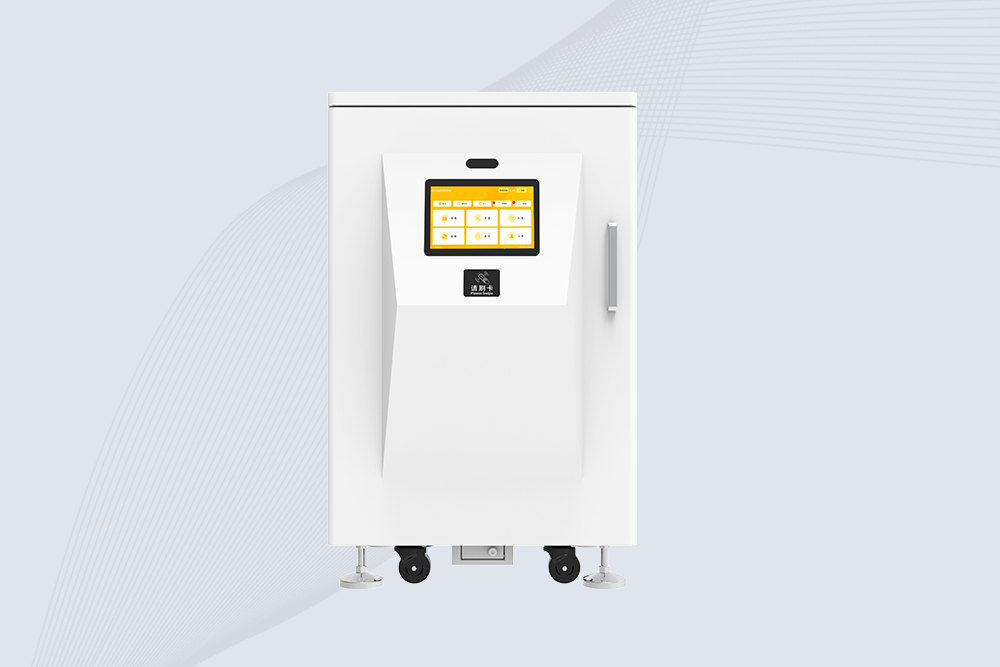
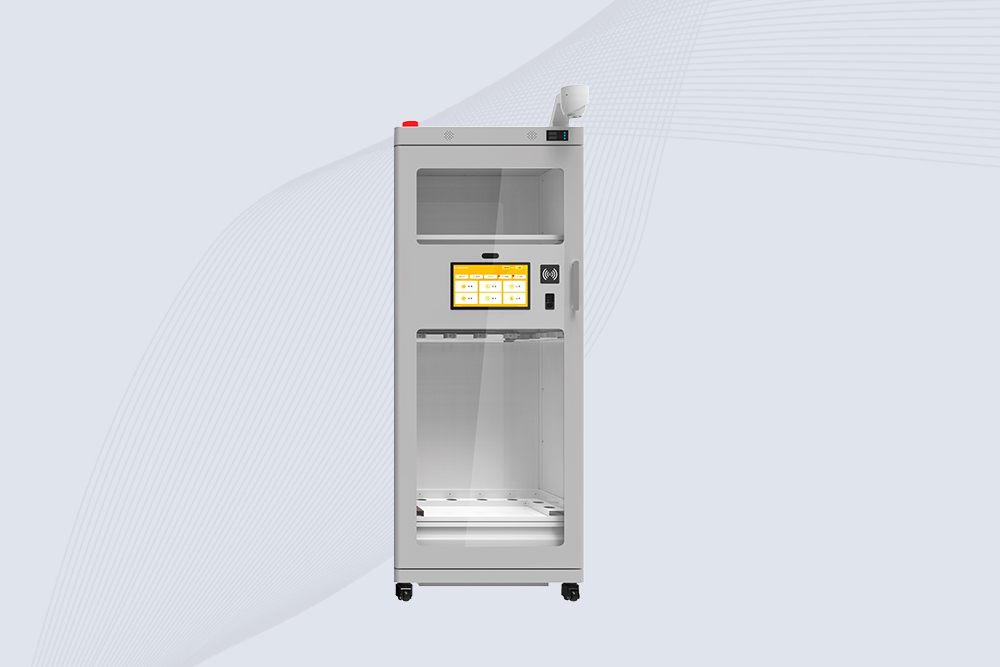
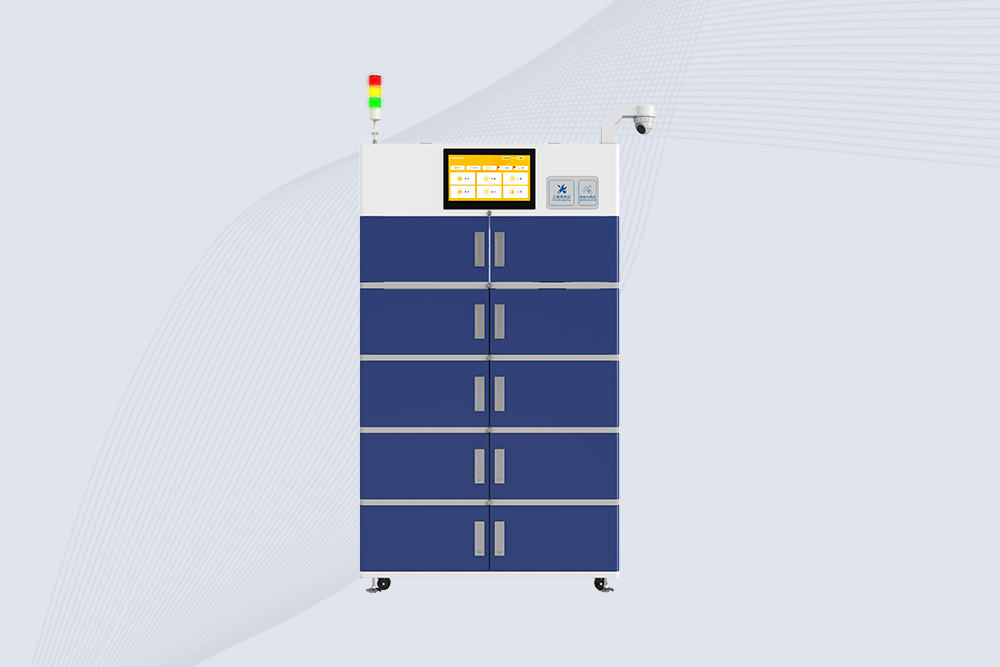
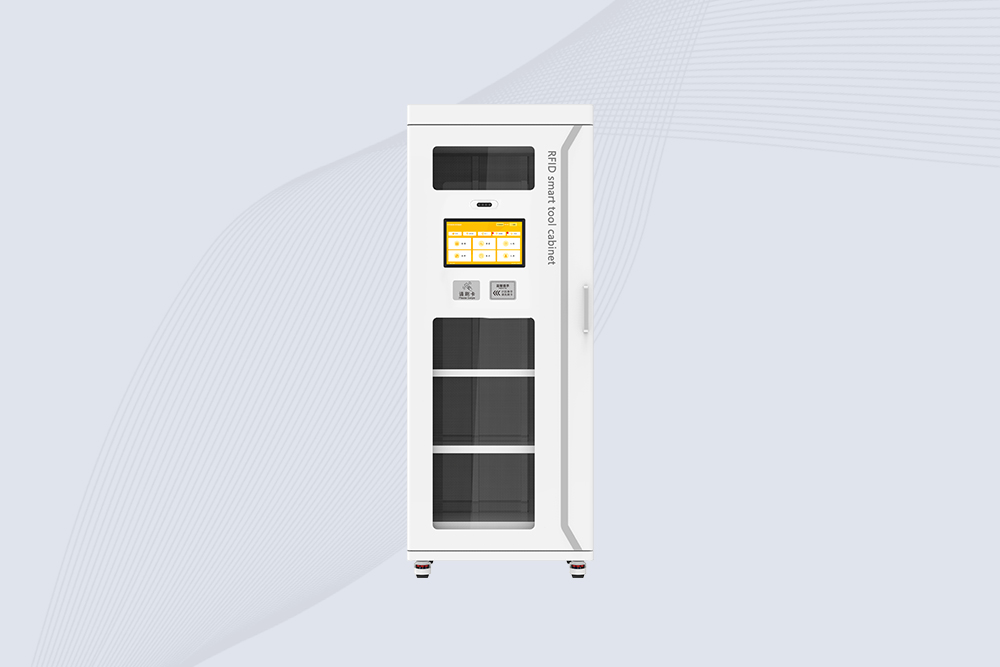
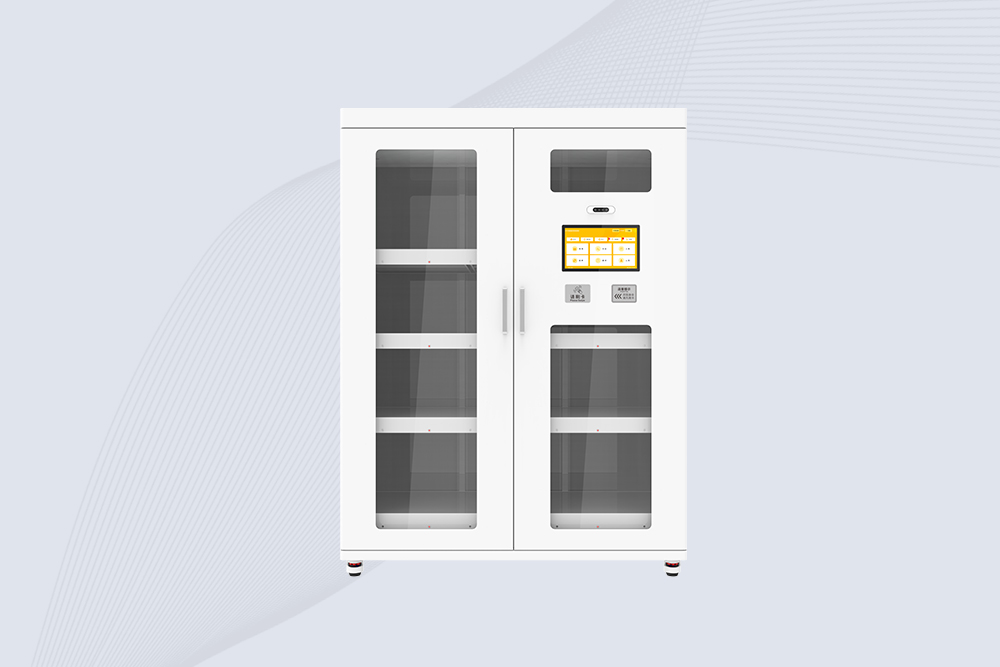
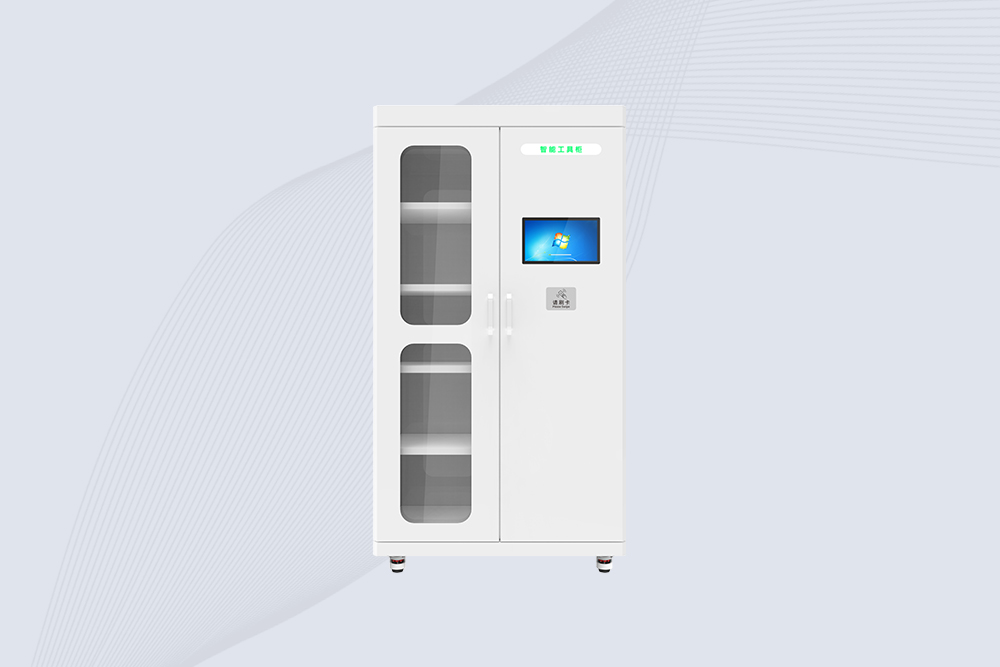
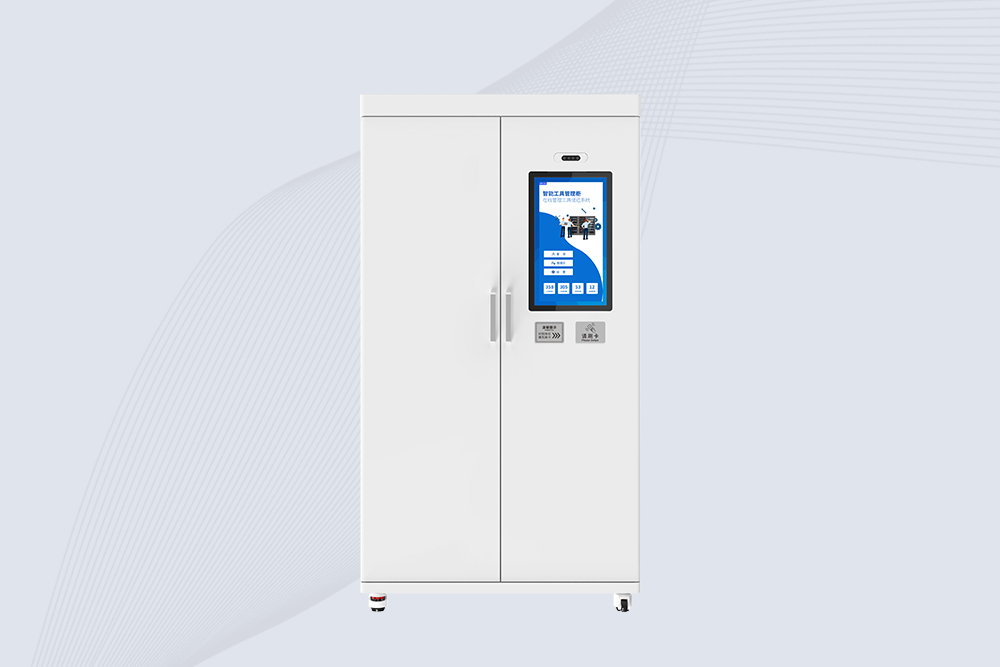
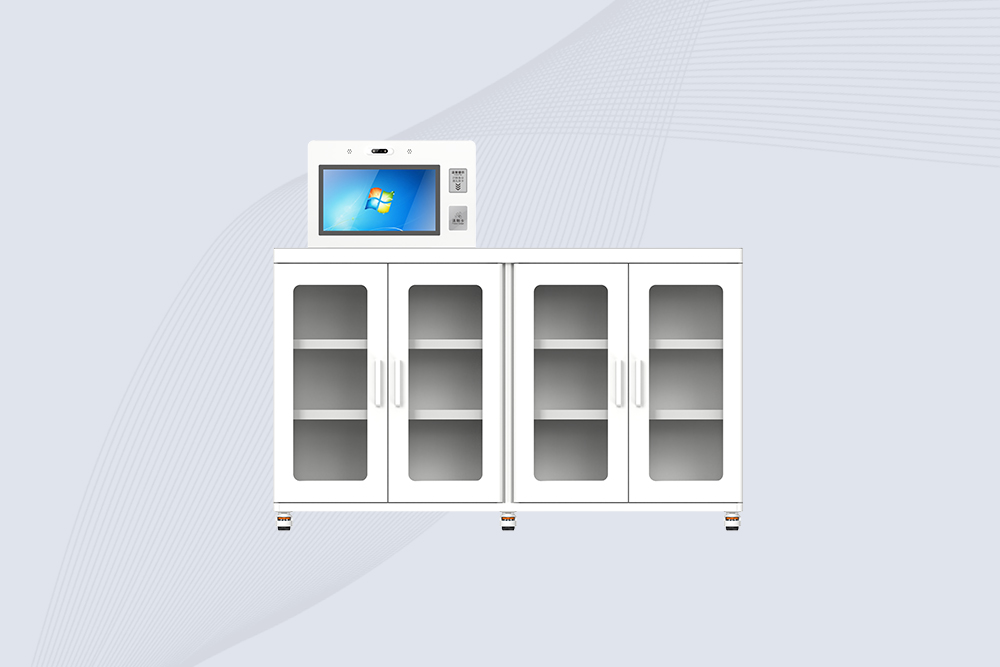
An RFID tool cabinet provides another way to organize this process.
2. Common Tool Management Problems in Manufacturing
Manufacturing environments often face several practical problems:
Tools are stored in different locations.
Operators work across multiple shifts.
Tools may be returned to the wrong location.
Manual inventory takes time.
High-value tools require stronger accountability.
Production workers need tools without unnecessary delays.
Maintenance teams need to know tool availability.
Managers need historical usage records.
These problems are not always caused by a lack of storage space. Often, the bigger issue is the lack of tool identification and usage visibility.
This is where RFID-based tool management can become useful.
3. How an RFID Tool Cabinet Fits the Factory Workflow
An RFID tool cabinet can connect physical tool storage with digital tool records.
A typical workflow can look like this:
User identification → Tool access → Tool removal → RFID identification → Usage record → Tool return → Inventory update
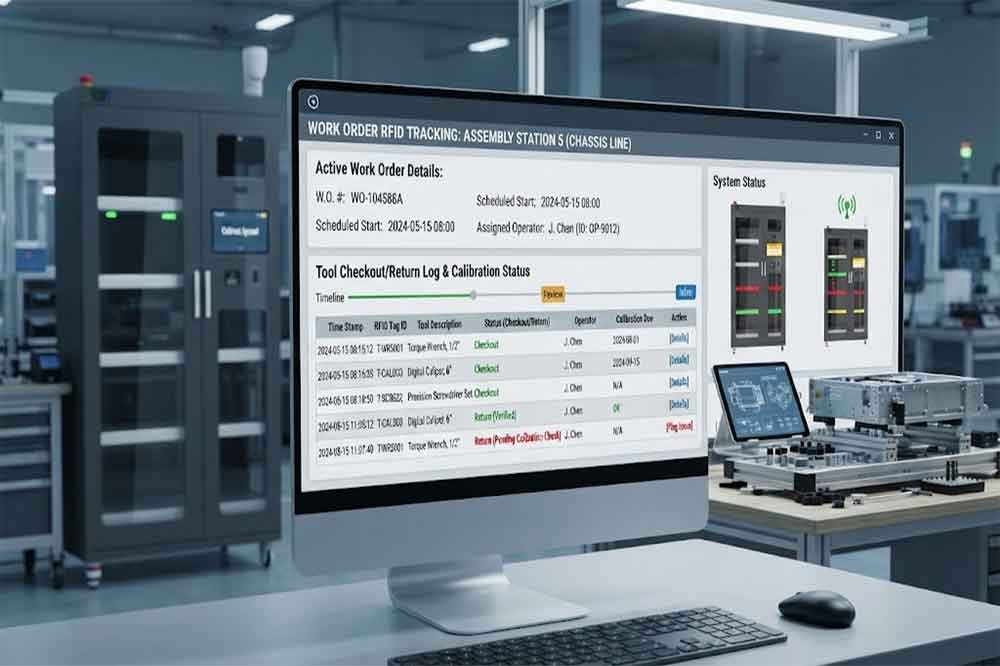
Each tool can have an RFID tag associated with its digital record.
When a user accesses the cabinet, the system can identify the user according to the configured authentication method. When tools are removed or returned, the RFID system can detect the corresponding tool transactions.
The software can then record information such as:
Tool ID
User
Time
Cabinet
Check-out status
Return status
Tool location
Usage history
This creates a more traceable workflow than a simple open storage cabinet.
4. RFID Tool Cabinets in Tool Rooms
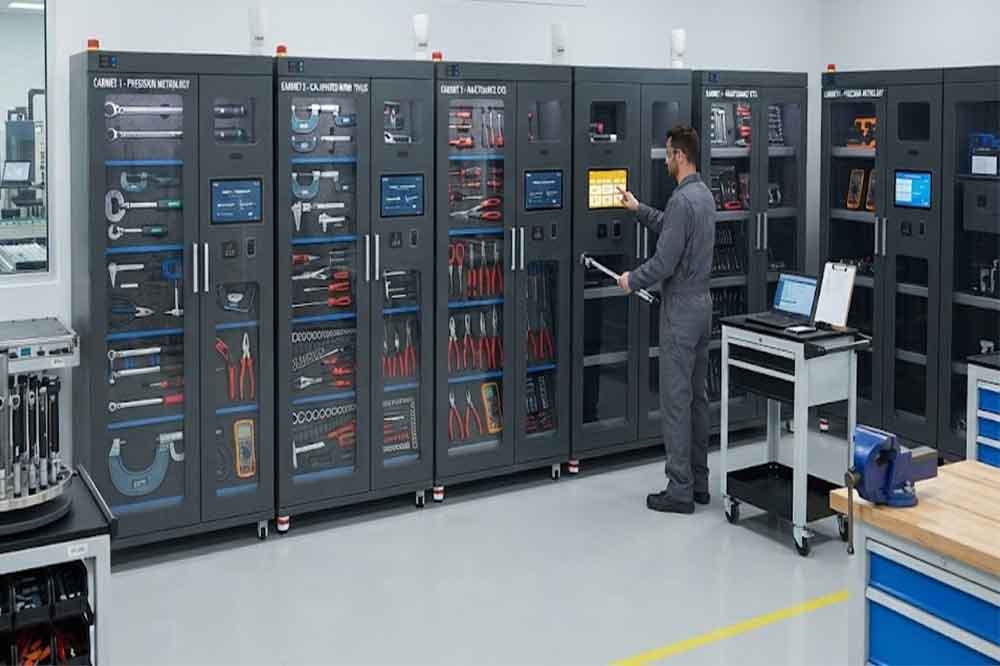
The tool room is one of the most natural locations for an RFID cabinet.
A centralized tool room may contain:
Hand tools
Measuring tools
Power-tool accessories
Maintenance tools
Production fixtures
Calibration-related tools
Specialized equipment
Instead of relying entirely on paper records or manual spreadsheets, RFID can connect each physical tool with a digital record.
For tool-room staff, this can make daily operations easier to organize.
For production teams, the important benefit is visibility. Before looking for a tool manually, users can check whether it is available, checked out, or assigned to another person or workstation.
For more information about the overall technology, see our guide to RFID Tools & Devices.
5. Line-Side Tool Storage for Production Areas
Not every tool needs to stay in a central tool room.
Some tools are used repeatedly at a particular production station. Moving these tools back and forth can waste time.
RFID cabinet can therefore be placed closer to the production area.
For example, a factory may have:
One cabinet in the central tool room
One cabinet near an assembly line
One cabinet in a maintenance workshop
Another cabinet near a testing area
The software can associate each cabinet with its location.
This creates a distributed tool management system instead of treating every cabinet as an isolated storage unit.
6. Managing Multiple Shifts
Shift changes are common in manufacturing.
A tool used by the morning shift may need to be returned before the evening shift starts. Without a clear record, the next operator may spend time searching for it.
Manufacturing facilities may use tools that require more careful management.
Examples include:
Torque tools
Measuring instruments
Calibration equipment
Specialized maintenance tools
Production fixtures
Inspection equipment
These tools may have additional information associated with them, such as:
Tool number
Department
Calibration status
Inspection date
Maintenance status
Assigned location
User history
An RFID cabinet can become part of this wider tool management process rather than functioning only as a storage box.
For expensive or critical equipment, factories can also consider controlled access and detailed audit records.
10. RFID Tool Inventory in Manufacturing
Inventory checking is another important part of factory tool management.
With traditional storage, employees may need to count tools individually or check a spreadsheet against the physical cabinet.
An RFID system can support automated identification of multiple tagged tools, depending on cabinet design, tag selection, reader configuration, and operating conditions.
A typical inventory process may include:
Open cabinet → Identify tagged tools → Compare with database → Detect missing or unexpected tools → Update inventory
This can reduce repetitive manual counting work.
However, RFID performance should always be tested with the actual tools and tags before large-scale deployment.
11. Managing Multiple RFID Tool Cabinets
Larger factories may require more than one cabinet.
A multi-cabinet deployment could cover:
Tool Room → Production Area → Maintenance Workshop → Quality Department → Warehouse
Each cabinet can have its own location and user permissions while remaining part of the same management platform.
This makes it possible to build a factory-wide tool management structure.
The system should be designed so that managers can understand not only which tool is checked out, but also where the tool was last recorded.
12. Reporting and Tool Usage Data
The value of an RFID tool cabinet is not limited to physical storage.
Historical data can help answer questions such as:
Which tools are used most frequently?
Which tools remain checked out for long periods?
Which tools are often unavailable?
Which users currently hold tools?
Which cabinet contains a particular tool?
How often is inventory checked?
Which tools require inspection or maintenance?
These reports can support procurement, maintenance planning, tool allocation, and internal audits.
The exact reports depend on the software connected to the RFID cabinet.
13. A Practical Manufacturing Deployment Workflow
A factory does not need to RFID-enable every tool on the first day.
A practical implementation can start with one department or one tool group.
Step 1: Identify the tools
Select tools that are frequently used, difficult to track, expensive, or operationally important.
Step 2: Select suitable RFID tags
Check the tool material, shape, surface, temperature, cleaning conditions, and available mounting position.
Step 3: Select cabinet structure
Choose shelves, drawers, compartments, or a mixed configuration based on actual tool storage needs.
Step 4: Configure user access
Define who can access the cabinet and which tools require additional permissions.
Step 5: Test RFID reading
Test actual tools rather than relying only on laboratory or product specifications.
Step 6: Connect software
Map tool IDs, user IDs, locations, and transaction events.
Step 7: Run a pilot
Operate the system with real users and real production workflows before expanding to other departments.
14. What Manufacturers Should Check Before Deployment
A manufacturing RFID tool cabinet should be evaluated as a complete system.
Important questions include:
Does the cabinet fit the actual tools?
Are the RFID tags suitable for the tool materials?
Can multiple tools be identified correctly?
Is user authentication practical?
Can the system handle shift changes?
Can the software connect with existing systems?
Can managers view tool status?
Can the system support multiple cabinets?
What happens when the network is unavailable?
Can maintenance teams service the hardware?
These questions are often more useful than looking only at the cabinet’s appearance or RFID reader specifications.
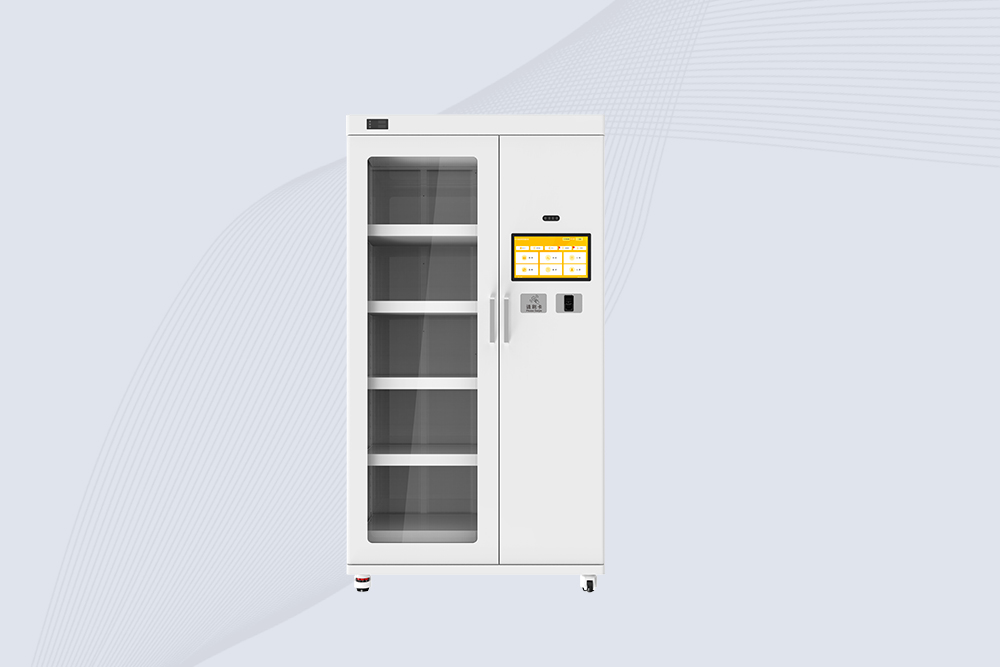
An RFID tool cabinet for manufacturing connects physical tool storage with digital tool management.
For factories, its value can go beyond automatic checkout. The system can support tool identification, controlled access, inventory management, shift handovers, tool availability, production workflows, and software integration.
The most practical approach is to begin with actual manufacturing requirements. Test the tools, RFID tags, cabinet layout, reading performance, user workflow, and software integration before expanding the system across the factory.
Frequently Asked Questions
1. What is an RFID tool cabinet for manufacturing?
It is a smart storage system that uses RFID technology to identify and manage tools. It can support tool checkout, return, inventory, access control, and usage records.
2. Can RFID tool cabinets manage multiple production lines?
Yes. Multiple cabinets can be deployed in different production areas and connected to a central software platform, depending on the system architecture.
3. Can an RFID cabinet connect with MES or ERP?
Yes. Integration can be designed through APIs or other interfaces, depending on the existing MES, ERP, CMMS, WMS, or custom software.
4. Can one cabinet identify multiple tools?
Many RFID cabinet designs can identify multiple tagged tools. Actual performance depends on cabinet structure, tags, reader configuration, tool materials, and testing conditions.
5. Should a factory test the system before deployment?
Yes. Testing with actual tools, RFID tags, users, cabinet layouts, and production workflows helps identify reading and operational issues before wider deployment.
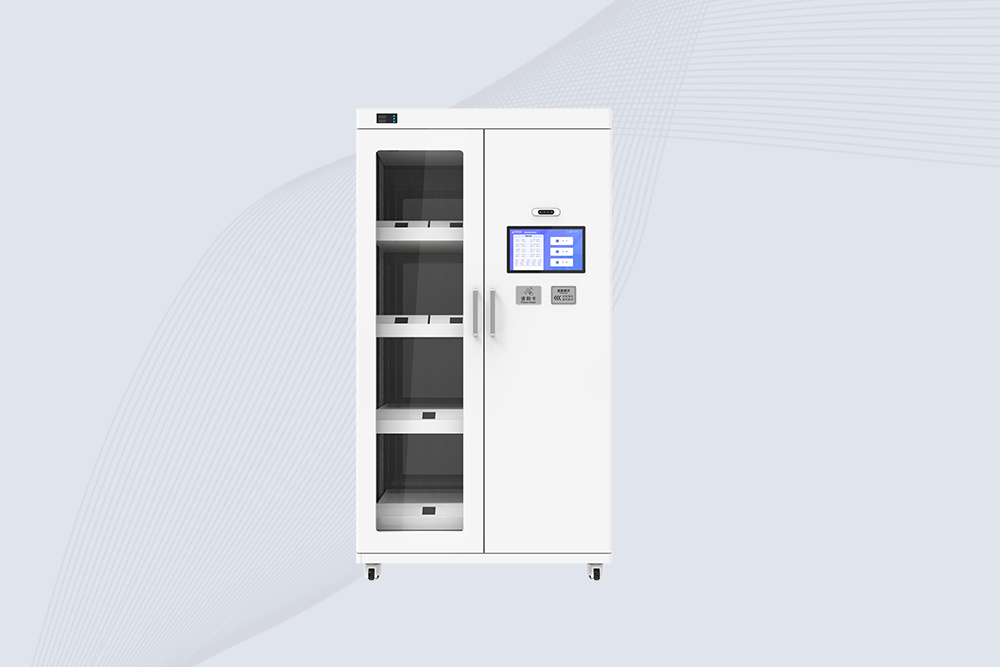
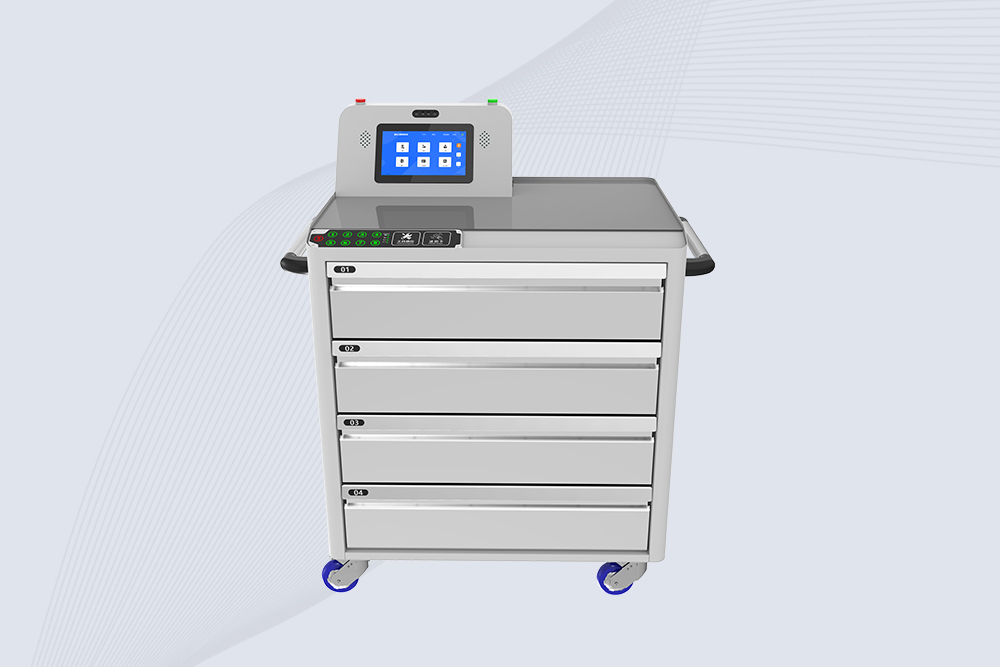
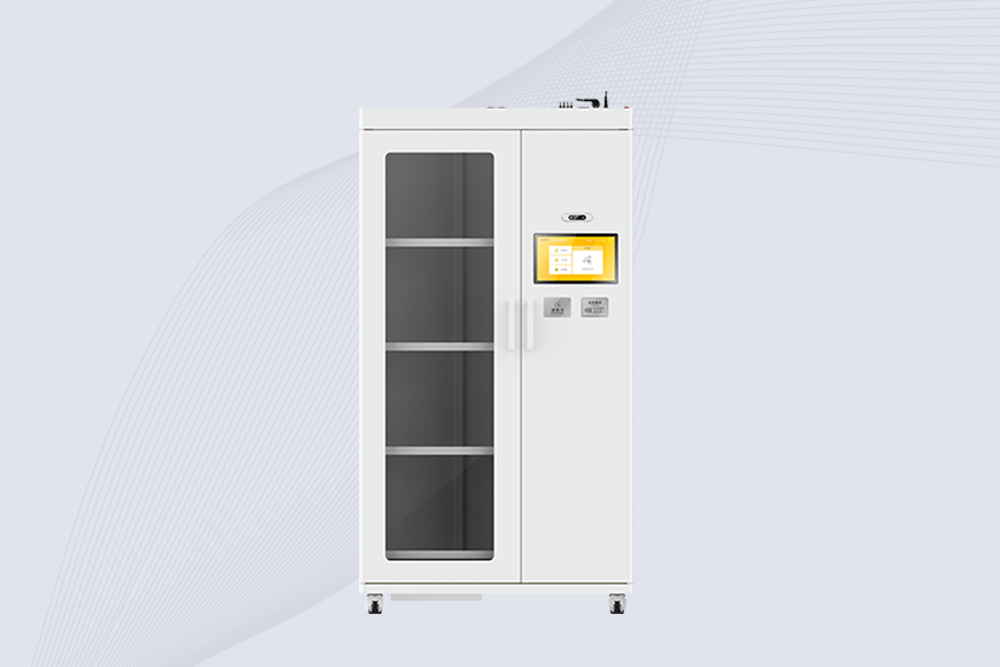
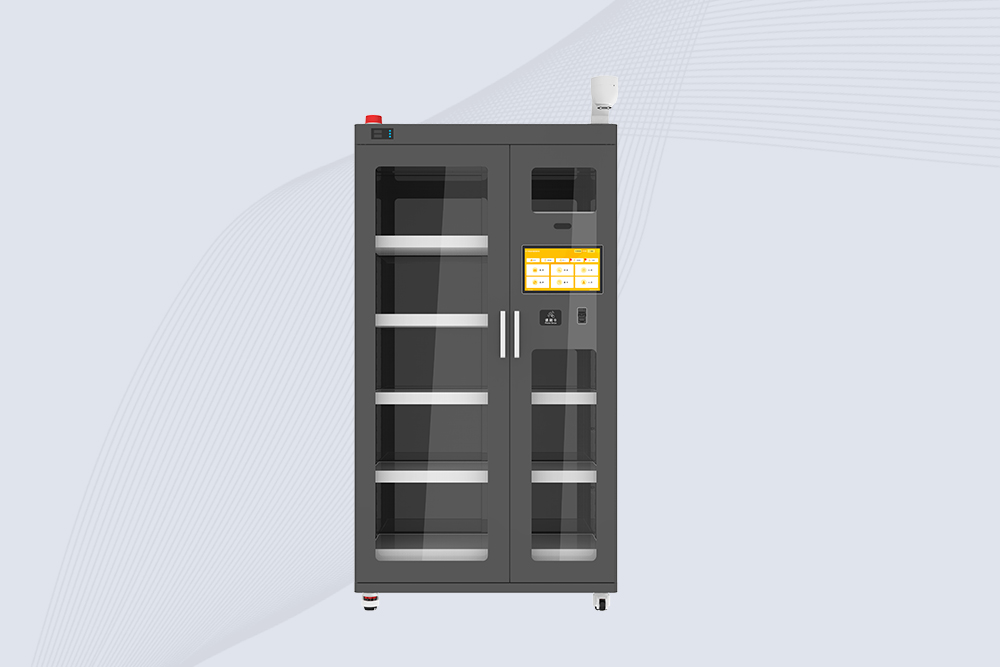
Cykeo’s RFID Smart Tool Cabinet enables 10-second tool audits, user access control & real-time alerts for construction/oil/gas. Features 21.5″ touchscreen, IP54 steel body & -30°C~60°C operation. Supports SAP/Oracle integration.
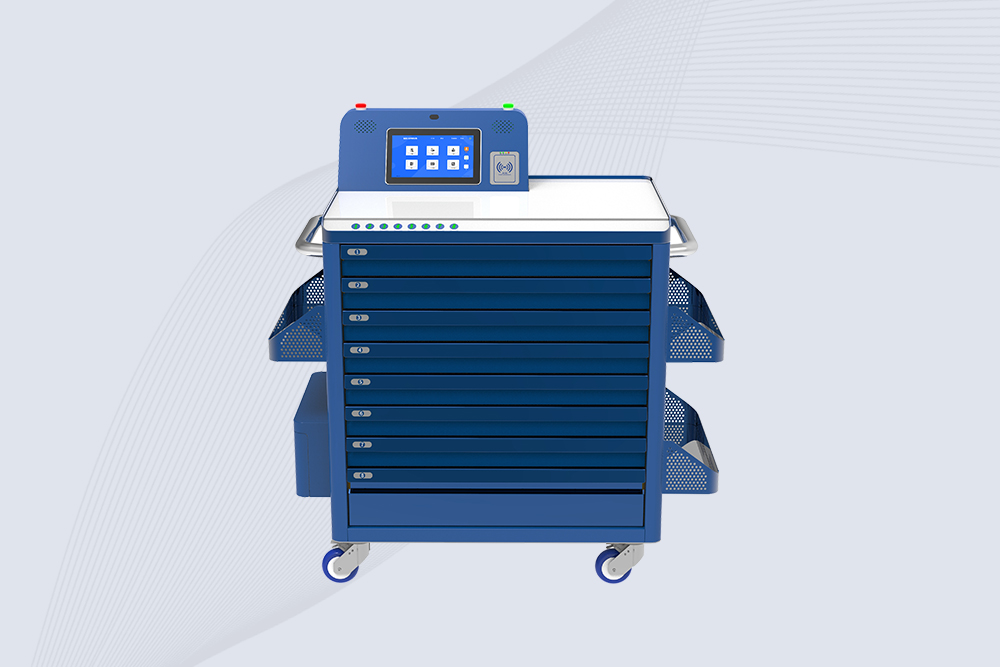
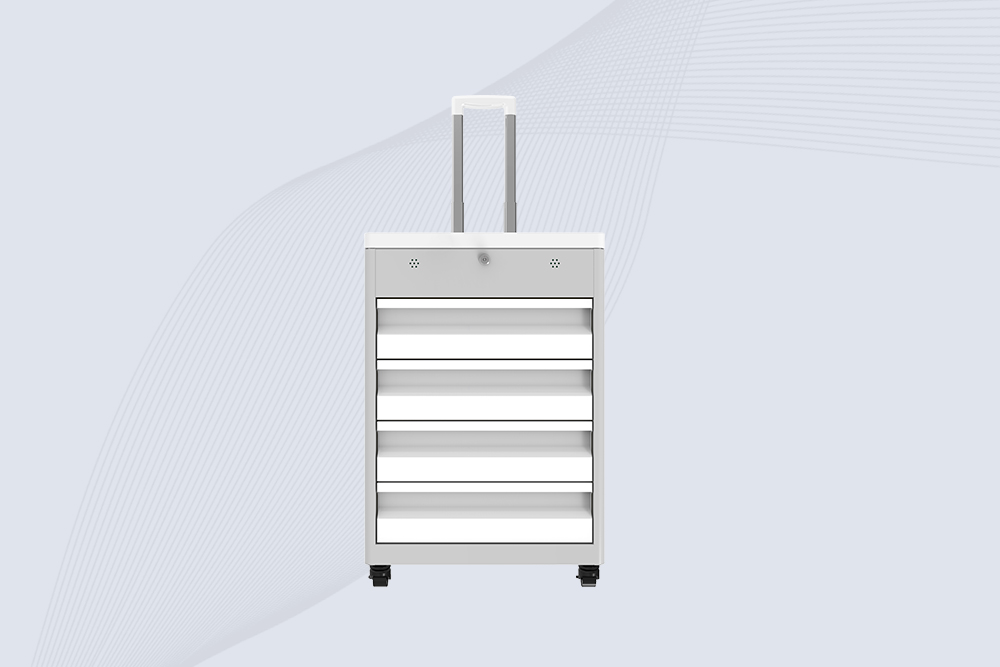
Cykeo’s industrial RFID Tool Cart features 14″ touchscreen, 400+ tool scanning, and carbon steel construction for aviation MRO, power plants and construction sites. 5-second inventory scans.
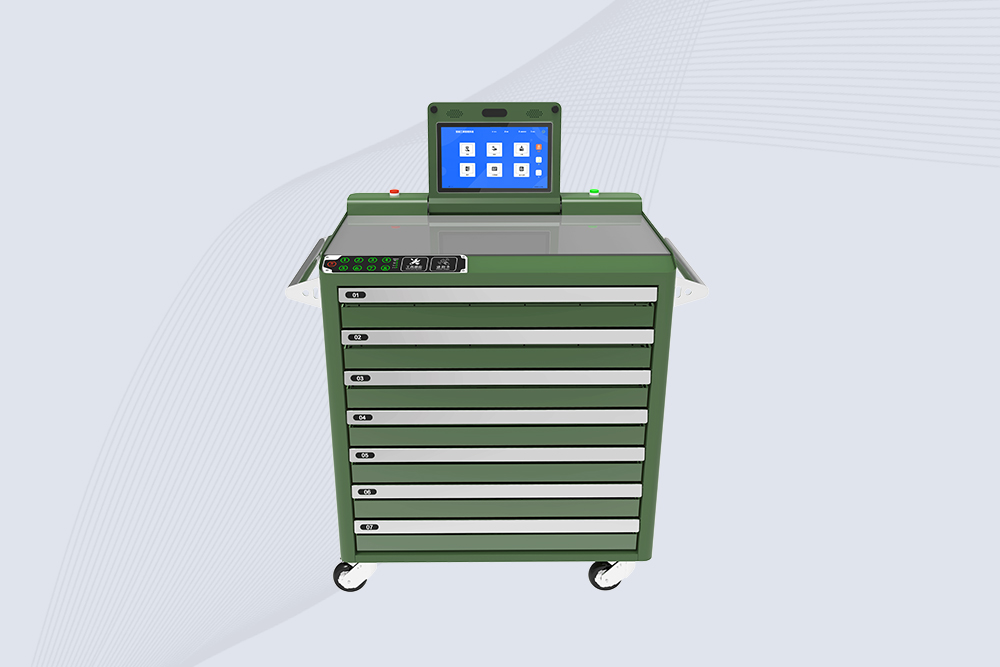
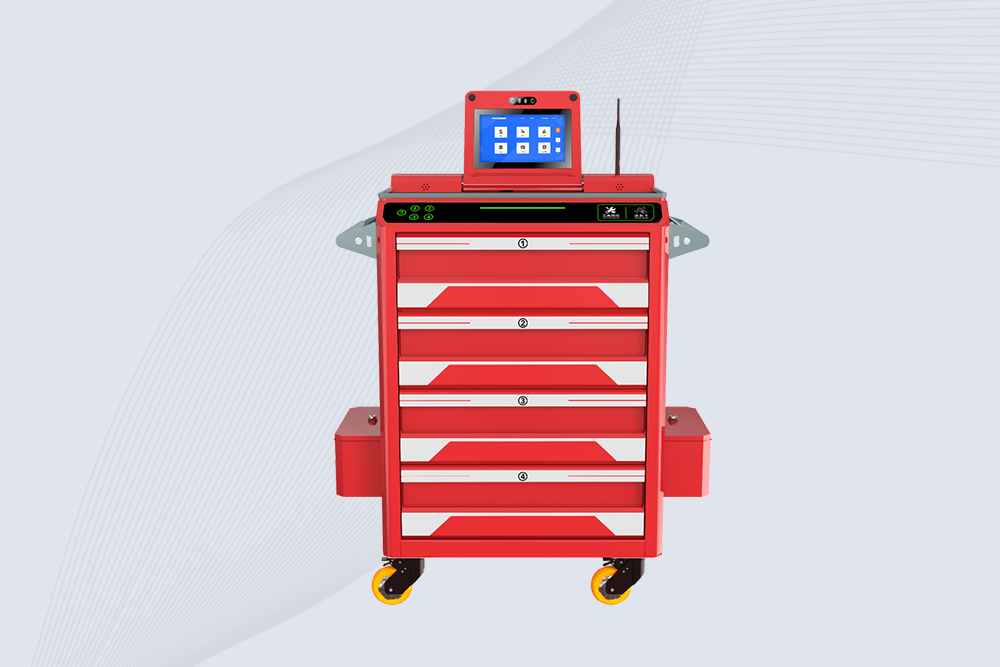
Cykeo CYKEO-TC RFID multi-drawer tool cart manages 300+ tools via UHF RFID, features fingerprint/face recognition, Android/Windows OS, and SAP integration for nuclear/railway/fire safety sectors. IP54 rated for harsh environments.
Cykeo CYKEO-GTC4 RFID tool inventory cart manages 300+ tools via UHF RFID, features instant scanning, fingerprint/face recognition, and SAP integration for nuclear/railway/fire safety sectors. IP54 rated for harsh environments.
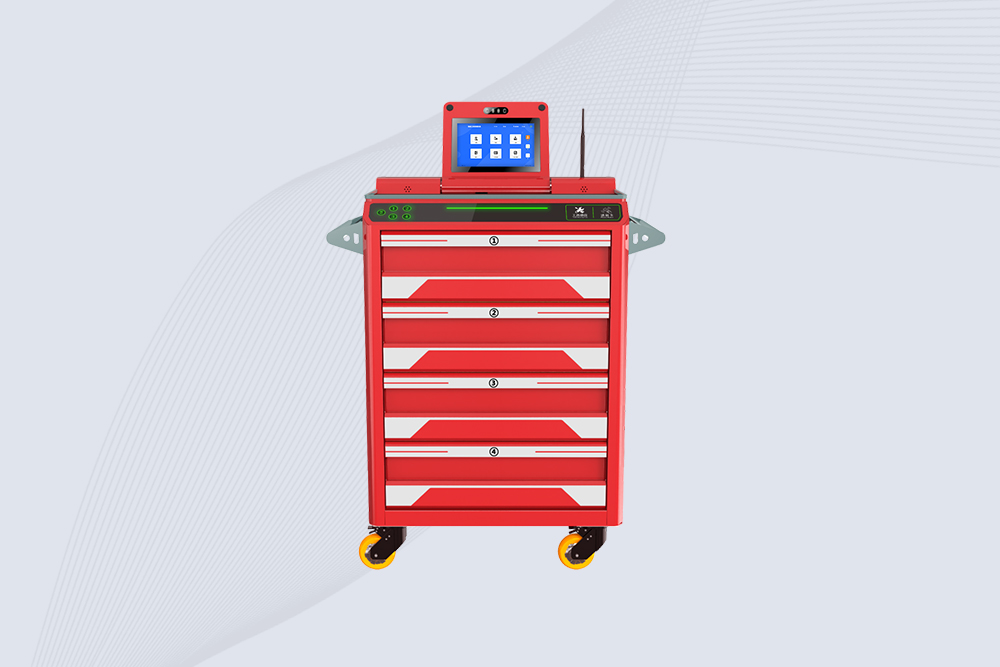
Cykeo CYKEO-GTC7A RFID real-time tool tracking cart features 99.9% accuracy, FOD prevention, and SAP integration for aviation/plant maintenance. Military-grade construction.
Cykeo CYKEO-GTC4B RFID mobile tool cart delivers 300-tool verification in 7 seconds with modular drawers, ≤150W power, and SAP integration for industrial/aviation use.
Cykeo CYKEO-GTC4C RFID workshop tool control cart delivers 300-tool inventory in 3 seconds with 10hr battery, SAP integration, and FOD prevention for industrial workshops.
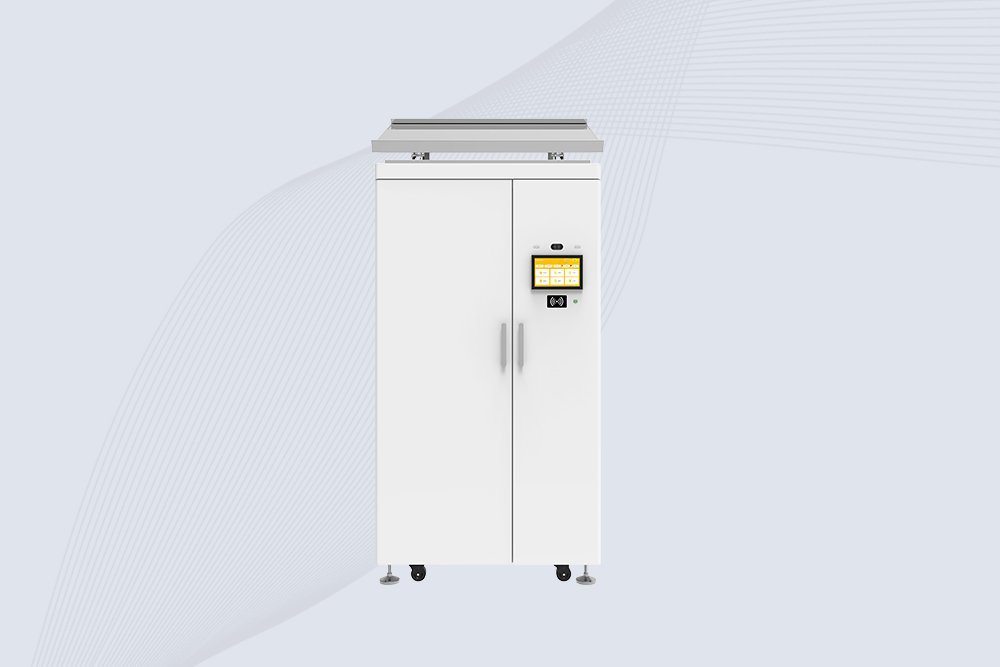
Cykeo’s off-grid RFID tool inventory system features solar/wind power, -30°C~60°C operation, and military-grade durability for mining/energy/military sectors.
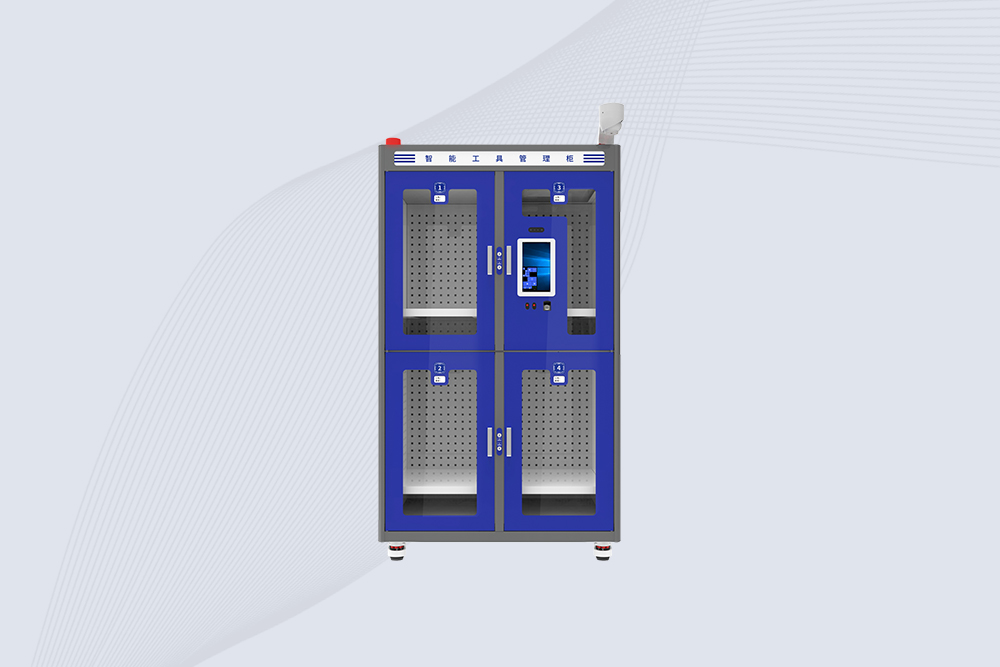
Cykeo’s RFID multi-drawer tool cabinet features 5 adjustable drawers, biometric access, and 99.9% scan accuracy for automotive/aerospace manufacturing.
Cykeo CYKEO-GT1B industrial RFID tool storage cabinet features Impinj R2000 UHF technology, 1,000+ tool capacity, IP54 protection, and Windows/Android OS for manufacturing/aviation MRO. Includes auto check-in/out and SAP/Oracle sync.
Cykeo CYKEO-GT3C industrial RFID tool checkout system Cabinet features millimeter-wave scanning, 280-layer storage, dual OS, and 99.9% accuracy for aviation/semiconductor sectors. Supports auto check-in/out and real-time SAP sync.
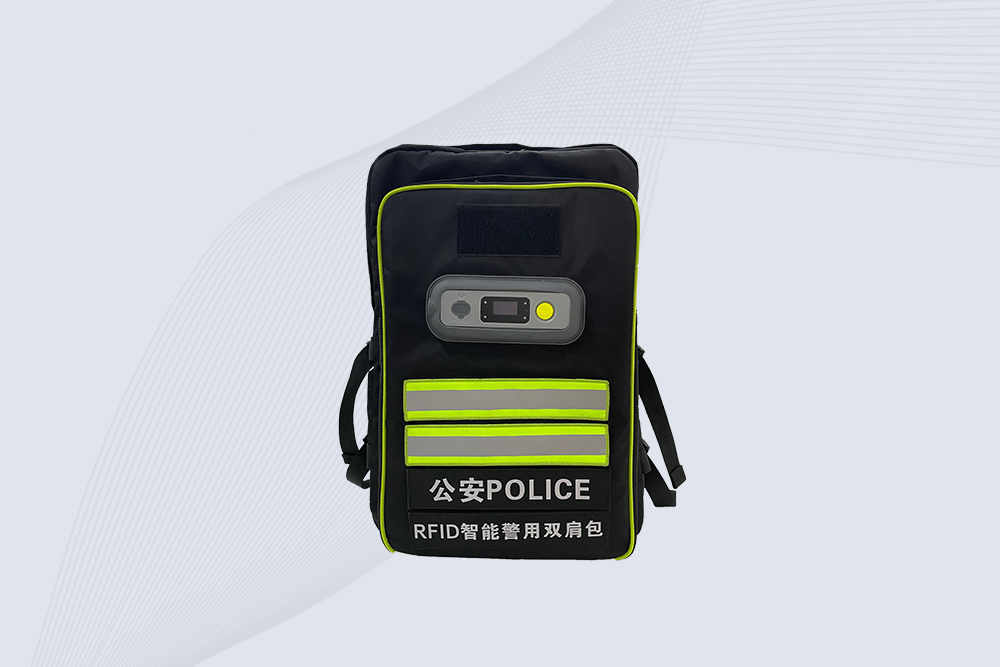
Discover the CYKEO-B1A Industrial RFID Backpack featuring advanced tool tracking technology with 25cm RF shielding, 7-day battery life, and wearable design for field maintenance professionals.
RFID Industry Writer | IoT & Asset Tracking Analyst
James writes about RFID technology, asset tracking, and the practical challenges of digital transformation across warehousing, retail, manufacturing, and logistics.
His work focuses on how RFID is applied in real-world operations—improving inventory visibility, automating workflows, and helping businesses manage assets with greater accuracy and efficiency.
He regularly covers topics including UHF RFID, smart cabinets, RFID portals, tool tracking, warehouse automation, and industrial IoT trends..
Explore how RFID warehouse gate systems are used for pallet tracking, inbound and outbound logistics, and inventory visibility. Learn what integrators look for when choosing RFID antennas and warehouse tracking solutions.
Learn how to set up an RC522 RFID module with Raspberry Pi for DIY projects like access control, inventory tracking, and smart locks. Step-by-step instructions included.
RFID sticker programming requires an RFID reader writer, encoding software, controlled writing environment, and verification process to create reliable digit...
 Cykeo RFID IoT Solution Products R&D Manufacturer