 Cykeo RFID IoT Solution Products R&D Manufacturer
how to set up rfid card
53UHF RFID cards are set up by matching the card and reader, configuring regional frequency parameters, writing supported EPC or user data, and verifying the r...
MoreAll RFID Product
Hotel linen management sounds simple until the operation becomes large enough.
A small hotel may only handle a few hundred towels and sheets every day, but large hospitality groups process massive textile volumes constantly moving between guest rooms, housekeeping departments, storage areas, and external laundry facilities.
Once that happens, inventory visibility becomes difficult very quickly.
Missing towels, misplaced uniforms, inaccurate linen counts, and early textile replacement are all common problems in the hotel industry. Most of the time, these losses happen gradually, so operators don’t immediately realize how much money disappears every year.
That’s one reason RFID laundry tracking has become increasingly common in hotel linen management systems.
Many hotels underestimate how much linen loss affects operating costs.
A towel missing here and a bedsheet missing there may not look serious during daily operations. But over months or years, replacement costs add up fast.
The problem becomes even bigger when hotels outsource laundry services.
Without proper tracking, it’s difficult to verify:
Traditional manual counting methods rarely stay accurate in busy environments.
Housekeeping teams are focused on room turnover speed, while laundry facilities prioritize processing volume. Inventory tracking often becomes secondary.
RFID helps solve that visibility problem.
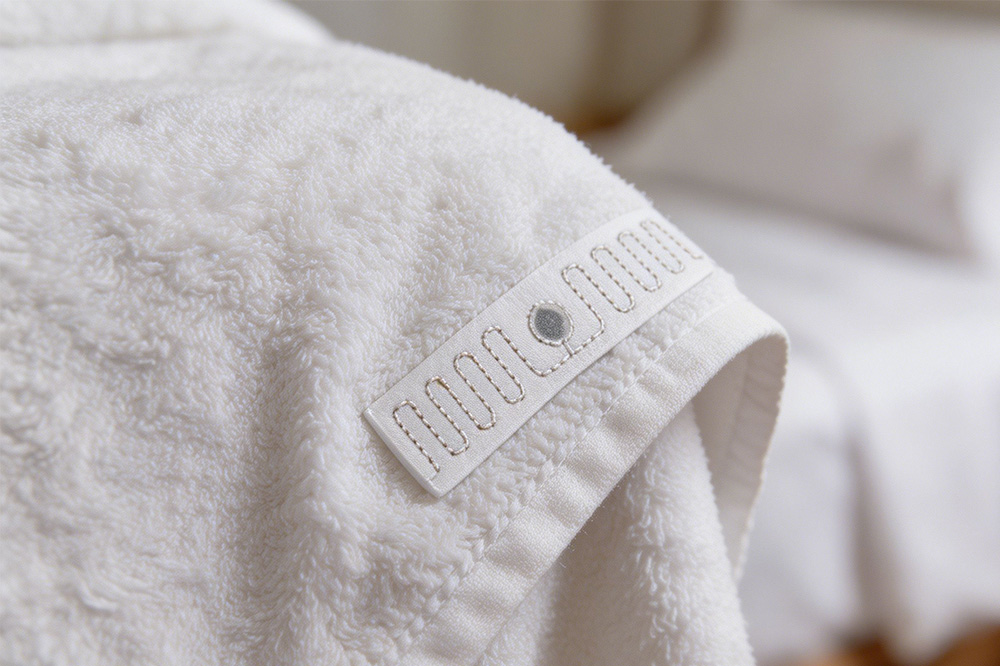
RFID laundry systems usually start with washable RFID tags sewn directly into hotel textiles.
These may include:
Each textile item receives its own unique digital identity.
As linens move through laundry collection, washing, storage, and redistribution, RFID readers automatically capture tracking information without requiring manual scanning.
A durable industrial RFID laundry tag is designed to survive repeated washing, drying, ironing, and chemical exposure commonly found in hotel laundry operations.
Once the system is running, hotel managers can monitor linen movement much more accurately.
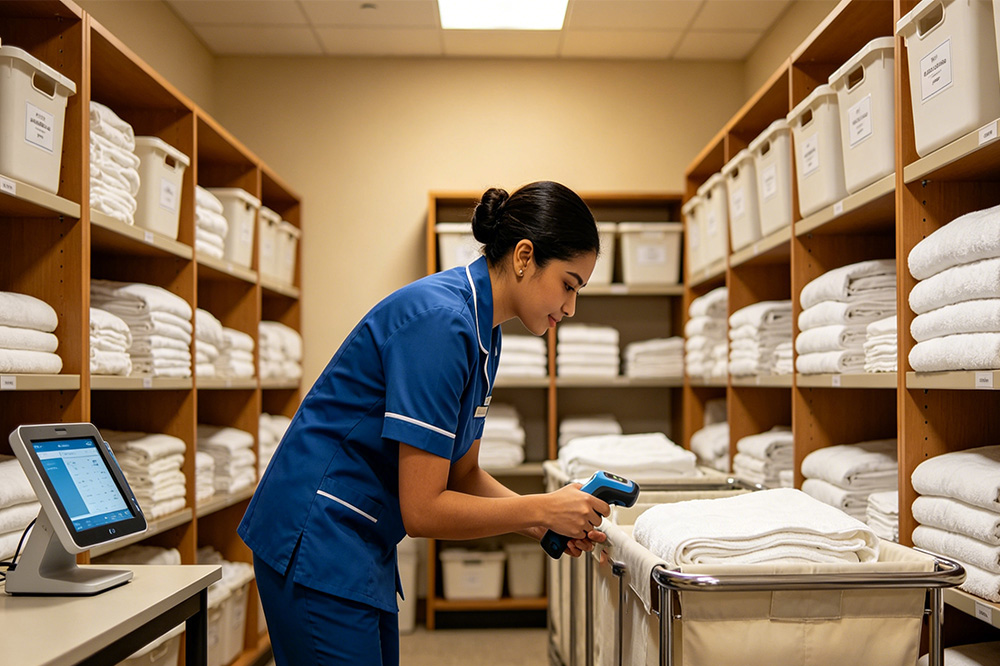
One of the first things hotels notice after implementing RFID is how much time disappears from manual inventory counting.
Traditional linen counting is slow and repetitive. Staff often count stacks manually during shift changes, laundry returns, or warehouse checks.
The larger the property becomes, the harder this gets.
RFID allows entire carts or batches of linens to be identified automatically within seconds.
Instead of scanning individually like barcode systems, RFID readers can process large quantities at once.
For hotels managing multiple buildings or large housekeeping teams, that speed improvement becomes extremely valuable during daily operations.
One of the biggest advantages of RFID is accountability.
Without tracking data, hotels often struggle to determine where losses happen.
With RFID systems, operators can identify:
Some hotels discover certain departments lose significantly more textiles than others. Others realize external laundry discrepancies have been happening for years without clear evidence.
RFID tracking provides actual data instead of assumptions.
That makes operational decisions much easier.
Not all hotel linens wear out at the same speed.
Some towels may complete hundreds of wash cycles before replacement, while others deteriorate earlier because of heavy usage or washing conditions.
Without tracking, hotels often replace linens based on rough estimates rather than actual usage history.
RFID systems allow operators to monitor wash cycle counts for individual items.
That helps hotels:
Over time, this creates more consistent inventory management.
Independent hotels may still manage inventory manually, but large hospitality groups usually require more structured tracking systems.
When multiple hotels share laundry vendors or centralized textile management systems, manual processes become difficult to scale.
RFID helps standardize linen tracking across multiple properties.
Management teams can compare inventory data between locations, monitor loss patterns, and improve purchasing control more effectively.
For hotel chains handling thousands of textile items daily, automation becomes less of a luxury and more of an operational necessity.
A few years ago, RFID linen tracking was mostly used by luxury hotels and very large commercial laundry providers.
Now adoption is spreading much faster across the hospitality industry.
Part of the reason is simple: hotels are under pressure to reduce labor costs while improving operational efficiency.
RFID helps automate a process that has traditionally relied heavily on manual work.
For many hospitality operators today, RFID laundry tags are no longer viewed as experimental technology. They are becoming a practical tool for managing textile inventory more accurately and with less daily effort.
User Guide
How to Remove RFID Tags from Clothing Safely (Without Ripping Your Shirt)
The Truth About RFID Signals: Aluminum Foil, Smartphones, and Reading Range Explained
How Security Tag Readers Work: RFID vs. Magnetic Systems – Which Is More Efficient?
How to Deactivate RFID Tags Without Guesswork or Myths?
How to Test RFID Tags with Phone
How to Test RFID Tags with Your Smartphone (No Scanner Needed)
How to Use Android Phone to Emulate RFID Tag: Full Tutorial and Application Guide
Can Your RFID Tags Reader iPhone ? Here’s How It Actually Works
Can You Use an NFC Phone as an RFID Tag?
How to Choose the Right RFID Tag for Clothing? Materials, Packaging & Attachment Explained
Industrial Essentials: 2025 Guide to the Most Durable Rugged RFID Tags
Active RFID Tag Range: The Real Difference Between Active and Passive Tags

UHF RFID cards are set up by matching the card and reader, configuring regional frequency parameters, writing supported EPC or user data, and verifying the r...
More
Discover what are rfid labels and how they improve asset tracking, inventory accuracy, and workflow efficiency with Cykeo RFID technology for modern industries.
More
Learn how to streamline healthcare asset tracking with handheld RFID scanners. Discover best practices for inventory management, compliance, and reducing equipment loss.
More
Learn how to integrate RFID readers with existing inventory software using APIs, middleware, and best practices. Cykeo’s guide ensures smooth data synchronization.
More