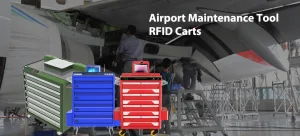
This makes it easier to maintain compliance without slowing down operations.
5. Key Benefits in Aerospace & MRO
✔ Full Tool Traceability
Every tool movement is recorded and traceable
Reduced Risk of FOD (Foreign Object Damage)
Missing tools are detected early
Faster Audit Preparation
Records are already available in the system
Improved Operational Discipline
Accountability becomes system-driven, not manual
Better Shift Handover Control
Tools are not “lost between shifts”
6. Where RFID Is Used in This Industry
RFID tool tracking is commonly applied in:
Aircraft Maintenance Hangars
Tracking precision tools during maintenance work
Engine Repair Facilities
Managing high-value specialized tools
Component Overhaul Centers
Ensuring tools are returned after each job
Military Maintenance Operations
Strict traceability and compliance requirements
7. What Makes This Industry Different
Compared to general manufacturing, aerospace and MRO have:
Higher safety requirements
Stricter audit processes
Zero tolerance for missing tools
Detailed documentation requirements
This is why simple tracking systems are often not enough.
8. Common Mistake in MRO Projects
One mistake I’ve seen:
Trying to use a basic tracking system without controlling access.
That usually leads to:
Partial data
Untracked movements
Audit gaps
In this environment, tracking without control is not enough.
9. Why RFID Is Becoming Standard
More MRO facilities are adopting RFID not because it is new, but because:
Manual systems are too slow
Compliance requirements are increasing
Tool accountability needs to be absolute
RFID provides a structured way to enforce consistency.
10. Final Thoughts
In aerospace and MRO, tool tracking is not optional.
It is part of safety and compliance.
RFID for tools helps reduce uncertainty by making tool movement visible, traceable, and controlled.
It doesn’t replace technicians or processes—it supports them by removing manual tracking from the equation.
If you’re evaluating tool tracking solutions for aerospace or MRO operations, the key is not just tracking tools—but ensuring full accountability and traceability across all shifts and maintenance cycles.
A structured RFID system is usually the most practical starting point.
Learn how RFID reader antennas work, the different antenna types available, and how they affect RFID system performance in warehouses, logistics, inventory tracking, and access control applications.
The aviation industry is known for its stringent safety requirements, where even the smallest detail can impact flight safety. However, traditional tool management methods often suffer from inefficiency and human error, posing significant risks to...
Discover the best handheld RFID readers for healthcare equipment tracking. Learn key features like sterilization resistance, compliance, and Cykeo’s healthcare-focused solutions.
 Cykeo RFID IoT Solution Products R&D Manufacturer