You probably interact with RFID tags every day—supermarket checkouts, access control doors, warehouse logistics—but rarely notice the unsung hero behind it all: the antenna. It’s not just a piece of metal. It’s the bridge connecting readers and tags, the channel that decides whether your system works or silently fails.
What Does an Antenna Do?
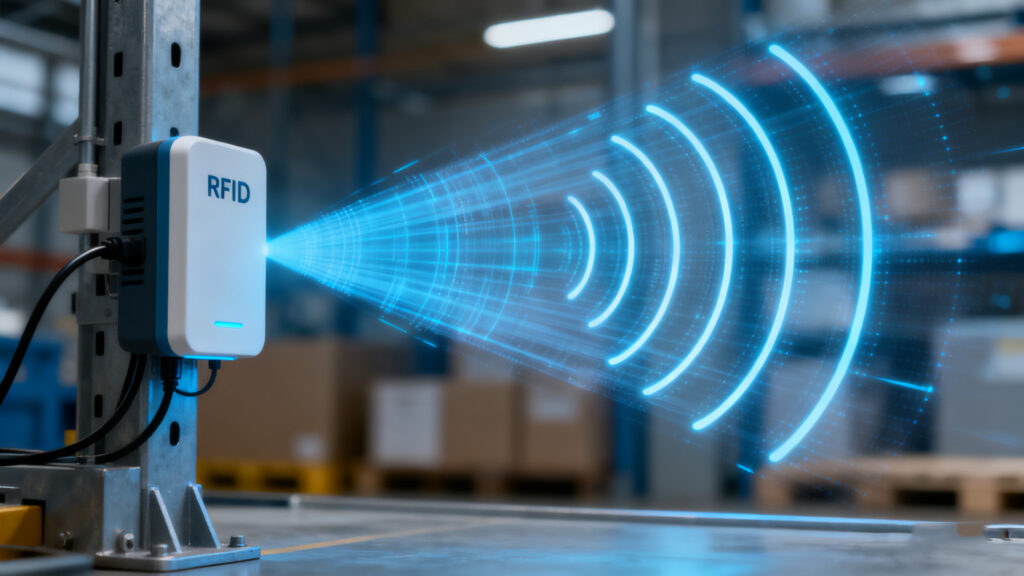
Picture a warehouse pick-and-pack operation. The reader sends high-frequency signals, and the antenna converts them into an electromagnetic field, creating a “read zone.” When a passive tag enters this zone, it powers up, sends data, and the antenna delivers it back to the reader. Without the antenna, the tags are mute objects on shelves.
Antenna parameters shape reading capabilities:
Polarization: Linear polarization is like a straight gaze—tilt the tag slightly, and it may not be read. Circular polarization is like a panoramic view—it catches tags regardless of orientation.
Directionality & Gain: High-gain antennas read farther but narrow the coverage angle, risking blind spots or interference.
Frequency Band: LF (125 kHz) penetrates metals and liquids but reads short distances; HF (13.56 MHz) suits access control and near-field applications; UHF (860–960 MHz) works for logistics, pallet tracking, and fast long-range scanning.
Antenna Shapes and Structures
Different tasks call for different antennas:
Coil antennas: HF/NFC, near-field coupling, short range.
Dipole/patch antennas: UHF, broad coverage but sensitive to environment.
Arrays or tunnel antennas: Conveyor belts, industrial lines, tunnels—multiple antennas form continuous read zones.
PCB antennas: small and cheap but sensitive; enclosure/patch antennas: durable, adjustable, industrial-grade.
Impedance Matching and Tuning
Antennas need matched impedance with readers (usually 50Ω). Mismatch reduces power transfer and increases reflection. In practice, matching networks and S-parameter testing are used. Even tiny PCB traces, ground planes, or dielectric thickness can shift resonant frequency and bandwidth, so batch calibration is common.
Case Study: Warehouse Reading Troubles
The first time I truly noticed antennas was during an automated picking system test. UHF readers were installed, but several rows of shelves wouldn’t read tags. Why? Antenna polarization was misaligned, angles off by a few degrees. After adjusting angles and switching to circular polarization, read rates skyrocketed. That day I realized antennas aren’t just components—they’re guardians of system reliability.
Another case involved automated bottle handling. Ordinary antennas read less than half a meter, tags were frequently missed. Switching to liquid-tolerant antennas with circular polarization and proper gain stabilized the entire production line. Metals and liquids in industrial environments are like mischievous gremlins—antennas must be smart to handle them.
Installation and Tuning Considerations
Environment: Metal, liquid, temperature, humidity, EMC all affect performance.
Angle & Coverage: Antenna spacing, height, and tilt affect blind spots and double reads.
Power & Software: Reader power adjustment plus filtering/deduplication strategies prevent misreads.
Site Survey: Real tags reflect actual performance far better than test cards.
Common Questions & Selection Tips
Tag on metal? Use on-metal or anti-interference antennas.
Circular or linear polarization? Random tag orientation → circular; fixed → linear.
PCB vs enclosure antenna? PCB for tight budgets and space; enclosure/patch for industrial durability.
Selection checklist: frequency band → polarization → gain/directionality → impedance match → environment → tuning → batch consistency → software strategies. Each step decides if your system runs smoothly.
Conclusion
Next time you swipe a card, pick up a package, or walk through a door, don’t just see the tag. Behind it is an invisible web, antennas silently turning silent data into reality. The world of RFID antennas is far more complex—and far more fascinating—than most people imagine.
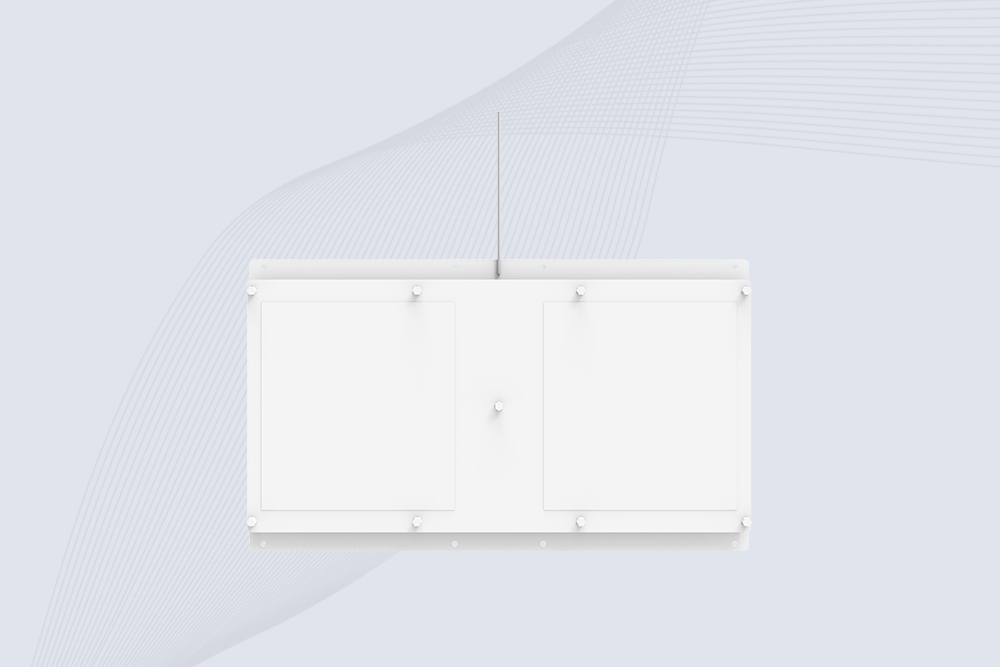
SSD-A06 UHF RFID antenna with circular polarization, adjustable 840–960 MHz frequency, ≥4.5 dBi gain, and a compact directional design for RFID systems.
Cykeo CYKEO-A11 UHF RFID reader antenna delivers 11dBi gain, 840-960MHz frequency range, and IP65 ruggedness for retail, logistics, and industrial RFID systems. Features low VSWR and easy installation.
CYKEO Antenna RFID Reader delivers stable long-range UHF performance with a 10.5dBi directional design, built for warehouses, conveyor portals, and industrial RFID systems. This rfid reader antenna provides 20m+ read distance and rugged IP67 protection.
Discover how rfid tag reader module enables high-performance RFID integration for industrial automation, asset tracking, logistics, and IoT applications. Learn deployment insights from Cykeo experts.
A practical, engineer-level walkthrough of RFID antenna design, covering NFC, LF, and UHF. Real-world tuning, matching networks, metal interference, Q-factor issues, and hands-on debugging strategies. No theory-only nonsense — just actual field ex...
RFID tracking identifies tagged objects at defined reading zones and converts their detection into inventory, location, movement, and traceability events.
 Cykeo RFID IoT Solution Products R&D Manufacturer