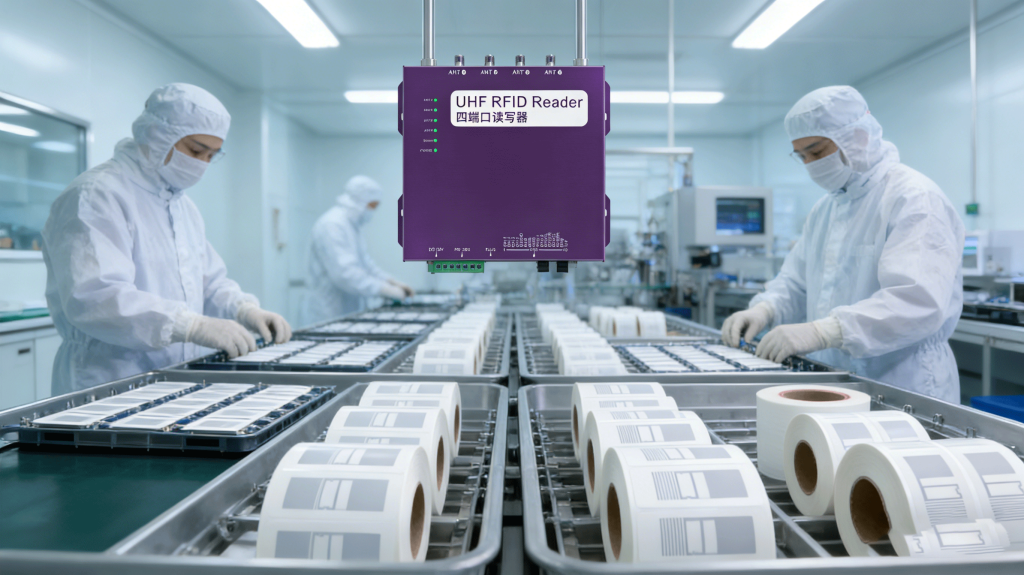
Production tracking solutions for rfid medical device manufacturing enable real-time visibility, automated data capture, and full lifecycle traceability across regulated production environments.
That’s the straightforward answer. But inside a medical device facility, it feels different. Less about “tracking,” more about proving—every step, every component, every timestamp.
Because audits don’t ask what should have happened. They ask what did.
10+ years deploying RFID systems in regulated manufacturing
Experience with ISO 13485 environments and FDA-compliant workflows
Specialized in UHF RFID for cleanroom-compatible tracking
In a recent Class II medical device production line:
Over 120,000 components tracked monthly
Batch traceability time reduced from ~4 hours to under 20 minutes
Manual data entry errors dropped by ~70%
The unexpected gain wasn’t speed—it was confidence during audits.
What are production tracking solutions for rfid medical device manufacturing?
These solutions combine:
RFID tags attached to components or trays
Fixed and handheld RFID readers
Backend software for data capture and traceability
Together, they create a continuous digital record of production activity.
According to U.S. FDA UDI requirements , medical devices must support accurate identification and traceability, especially for recalls and compliance. RFID systems directly support this requirement.
How RFID tracking works on a medical production floor
Quiet automation across controlled environments
In a cleanroom assembly area:
Components arrive tagged
Fixed readers capture movement between stations
Handheld devices verify exceptions
No scanning interruptions. No clipboard checks.
In one line I observed, operators didn’t interact with the system unless something went wrong. That’s the point—RFID fades into the background.
Automated traceability in regulated environments
Key benefits of RFID production tracking
1. End-to-end traceability
Track every component and batch
Maintain digital history for audits
Enable fast recall management
2. Compliance with regulatory standards
RFID supports:
FDA UDI traceability requirements
ISO 13485 documentation processes
Electronic batch record accuracy
3. Error reduction in production
standardized identification systems significantly improve data accuracy and patient safety, especially when automated technologies like RFID are used.
Typical use cases in medical manufacturing
Process Stage
RFID Application
Incoming materials
Supplier batch verification
Assembly
Work-in-progress tracking
Quality control
Inspection status logging
Packaging
Serialization and verification
Distribution
Shipment traceability
Practical deployment insights
RFID in medical environments behaves differently.
From field experience:
Tag selection must consider sterilization processes
Read zones must avoid interference with metal instruments
Cleanroom compatibility limits hardware choices
In one deployment, switching to on-metal RFID tags improved read reliability from ~82% to over 96%.
Small adjustment. Big impact.
How to choose RFID tracking solutions
Key considerations
Compliance requirements: FDA, ISO standards
Tag durability: Sterilization, chemicals, temperature
Read accuracy: Critical for traceability
System integration: MES, ERP, quality systems
Environment: Cleanroom vs standard production
FAQ about production tracking solutions for rfid medical device manufacturing
Q1: Is RFID safe for medical manufacturing environments?
Yes, when properly selected, RFID systems are safe and compatible with cleanroom and regulated environments.
Q2: Can RFID help with product recalls?
Absolutely. RFID enables precise batch and item-level traceability, speeding up recall processes.
Q3: Does RFID replace barcode systems?
In many cases, RFID complements or enhances barcode systems rather than fully replacing them.
Final insight from real deployments
Production tracking solutions for rfid medical device manufacturing don’t just improve efficiency—they change how trust is built.
When every component has a history, and every movement is recorded automatically, compliance stops being reactive.
Learn how to optimize RFID antenna placement for retail checkout gates to reduce errors and speed up transactions. Discover Cykeo’s solutions for seamless inventory scanning.
Can an RFID reader read through a car windshield? Learn how windshield RFID tags work, what affects reading performance, and how to improve vehicle identification accuracy.
RFID and healthcare solutions improve medical inventory accuracy, reduce manual workload, and enable real-time UHF tracking for surgical consumables and hospital assets.
Explore RFID library solutions for smart libraries, including self-service, inventory automation, and RFID library cabinets for modern library management.
 Cykeo RFID IoT Solution Products R&D Manufacturer