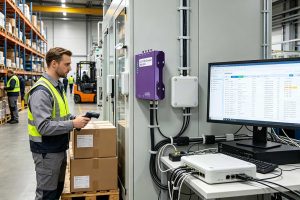
Radio frequency identification in retail enables real-time inventory visibility, automated stock tracking, and improved accuracy by wirelessly identifying items without manual scanning.
That’s the short answer. On the shop floor, it feels less technical—more like shelves finally telling the truth.
You walk past a rack, and suddenly the system already knows what’s missing.
10+ years implementing RFID in apparel, footwear, and big-box retail
Experience with store-level, warehouse, and omnichannel integration
Specialized in UHF RFID for high-SKU environments
In a mid-size apparel chain deployment (40+ stores):
Inventory accuracy improved from ~78% to 96%+
Cycle counting time reduced by ~65%
Out-of-stock incidents dropped noticeably within 3 months
The biggest shift wasn’t speed—it was trust in the data.
What is radio frequency identification in retail?
Radio frequency identification in retail refers to the use of RFID technology to track products throughout the retail lifecycle—from warehouse to sales floor.
According to RAIN RFID Alliance , RFID enables rapid, non-line-of-sight identification, with the ability to read large volumes of items simultaneously—critical in retail environments.
How RFID works inside a retail store
Inventory without interruption
Unlike barcode systems, RFID:
Doesn’t require line-of-sight
Reads multiple items at once
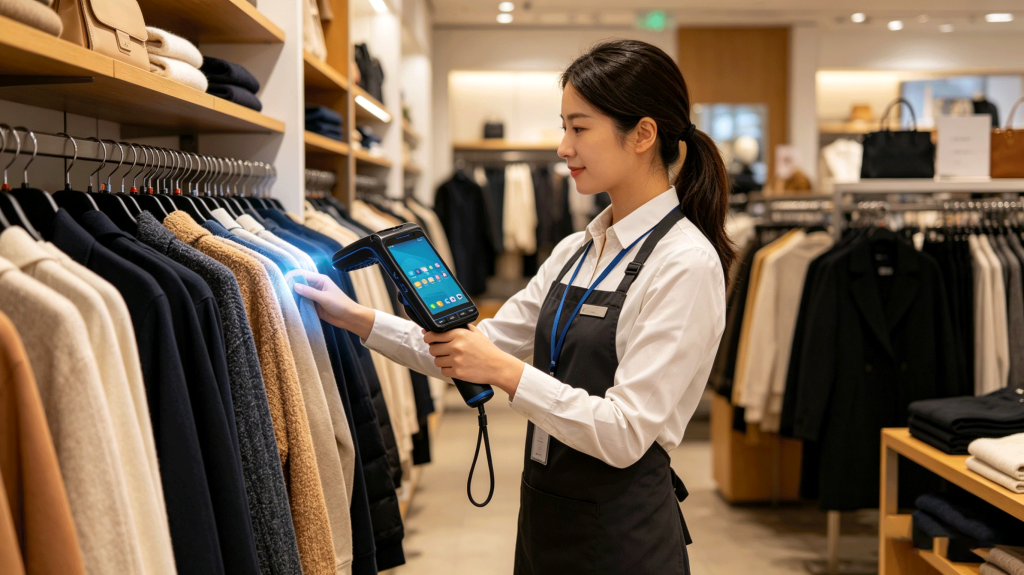
Works while staff move naturally
In one store rollout, staff completed full inventory counts during opening hours—no overnight shutdown, no disruption.
They just walked.
Fast, non-intrusive inventory counting with RFID
Key benefits of RFID in retail
1. Real-time inventory accuracy
Identify stock levels instantly
Reduce discrepancies
Enable reliable replenishment
RFID implementations in retail can achieve inventory accuracy levels above 95%, significantly improving product availability.
2. Faster cycle counting
Count thousands of items in minutes
Reduce labor hours
Eliminate manual scanning
3. Improved loss prevention
Track item movement
Detect anomalies
Support anti-theft strategies
RFID vs barcode in retail
Feature
RFID
Barcode
Line-of-sight required
No
Yes
Bulk reading
Yes
No
Speed
Very high
Moderate
Accuracy
High (95%+)
Lower due to manual input
Automation
Strong
Limited
Real deployment observations
RFID in retail doesn’t fail loudly—it fails quietly when misconfigured.
From field experience:
Tag placement on apparel affects readability
Metal fixtures can create signal reflections
Reader calibration is critical in dense environments
In one store, adjusting antenna angles improved read accuracy from ~85% to over 97%.
No new hardware. Just better alignment.
How to implement RFID in retail
Key considerations
Tagging strategy: Source tagging vs in-store tagging
Store layout: Reader placement and coverage
Integration: POS, ERP, inventory systems
Staff training: Minimal but essential
Data workflow: Real-time vs batch updates
FAQ about radio frequency identification in retail
Q1: Is RFID expensive for retail stores?
Costs have decreased significantly, especially for passive UHF RFID tags, making it accessible for many retailers.
Q2: Can RFID replace barcodes?
In many cases, RFID complements or gradually replaces barcode systems.
Q3: Does RFID improve customer experience?
Yes. Better inventory accuracy means fewer stockouts and faster service.
Final insight from real deployments
Radio frequency identification in retail doesn’t just track inventory—it changes how stores operate.
When stock data becomes reliable in real time, decisions shift from reactive to immediate.
Learn how long range RFID readers are used in parking systems, including barrier gates, windshield tags, license plate tags, vehicle detection, installation layout, and common deployment issues.
Learn how to read an rfid chip with professional RFID readers, antennas, and software. Discover practical methods, technical factors, and Cykeo RFID solutions.
 Cykeo RFID IoT Solution Products R&D Manufacturer