 Cykeo RFID IoT Solution Products R&D Manufacturer
How Far Does a RFID Reader Pickup? Real-World Distances by Type
273Wondering "how far does a RFID reader pickup"? Get straight answers for LF, HF, UHF, and active readers. Real ranges for access control, inventory, and parking with CYKEO.
MoreAll RFID Product
You walk into the tool crib at the start of a shift. There is a line of workers waiting to check out tools. The clerk scribbles names and tool numbers on a clipboard. At the end of the shift, three wrenches are missing. No one knows who took them, where they went, or when they will come back.
Here is the thing. When people search tool tracking system, they are usually looking for a way out of this exact scenario—a system that knows who has which tool, where it is, and when it was returned, without manual paperwork.
Let me explain what a tool tracking system is, how RFID technology makes it work, and how it can transform your tool management operations.
A tool tracking system is an automated solution that uses RFID technology to identify, locate, and manage tools throughout their lifecycle—from check-out to check-in, maintenance to retirement . Unlike manual systems that rely on paper logs and memory, an RFID tool tracking system knows where every tool is at any moment.
Think of it like a library system for tools. Instead of librarians stamping due dates, RFID readers automatically record when a tool is taken and returned. If a tool is not back on time, the system knows. If a tool is missing, the system knows who had it last.
Tool tracking systems are also called tool crib management systems, asset tracking systems for tools, RFID tool management, or industrial tool tracking. They are essential for manufacturing, construction, aviation, and any industry where tools are valuable and must be accounted for.
Lost tools are expensive. A single missing torque wrench might cost $500. Dozens of missing tools over a year add up to thousands of dollars . But the real cost is bigger:
A study found that manufacturing facilities lose 10-20% of their tools annually . A tool tracking system reduces that loss dramatically—often paying for itself in months.
RFID tool tracking follows a straightforward workflow:
Tag the tools. Each tool gets an RFID tag. For metal tools, you need on-metal tags designed to work when attached directly to metal surfaces . Standard RFID tags fail on metal because the metal reflects signals and detunes the antenna. On-metal tags use special materials to isolate the antenna.
Install readers. Readers are placed at key points: tool crib exits, entry doors, or within smart storage cabinets. When a tool passes through, its tag is read automatically .
Assign users. Workers are issued RFID badges or their employee IDs are linked to the system. When a worker checks out a tool, the system records who took it and when .
Track check-outs and returns. As tools pass through readers, the system logs each event. Some systems use smart rfid cabinets where tools are stored in individually monitored slots. Removing a tool from its slot triggers an immediate check-out. Returning it to the correct slot triggers check-in .
Monitor tool location. If tools are used throughout a facility, strategically placed readers at aisle ends or zone boundaries track movement. The system knows the last location where each tool was seen.
Generate alerts. When tools are overdue, leave restricted areas, or need calibration, the system sends alerts to supervisors.
Tool tracking systems come in different configurations depending on the environment and needs :
Smart Tool Cabinets
These are enclosed cabinets with integrated RFID readers. Each tool has a designated slot. When a worker opens the cabinet, their badge is scanned. Removing a tool from its slot registers a check-out. Returning it registers a check-in .
Portal Readers
Fixed readers mounted at tool crib exits or facility doorways. Workers carry tools past the portal, and the reader captures all tags in the area. The system logs that the tools were taken, though it does not know who took them unless combined with a badge reader .
Smart Tool Storage
Drawers or bins with integrated RFID readers. When a drawer is opened, the reader scans all tools inside. The system knows which tools are in the drawer and which are missing .
Mobile Handheld Tracking
Workers use handheld RFID readers like the CYKEO CK-B5L to scan tools periodically. The system records where tools were last seen. This is often combined with fixed readers for hybrid coverage .
Choosing the right tag is critical. Tool tags must survive harsh environments :
On-Metal UHF Tags are designed for metal tools. They incorporate materials like ferrite or foam that isolate the antenna from the metal surface . These tags read reliably on wrenches, hammers, and power tools.
Hard Tags are encased in durable plastic or epoxy. They are impact-resistant and survive drops, chemicals, and extreme temperatures .
Embedded Tags are molded directly into tool handles or housings during manufacturing. These are the most durable but require custom integration .
High-Temperature Tags survive industrial processes like painting or heat treatment. Some withstand 200°C or more .
Implementing an RFID tool tracking system delivers measurable results :
Reduced tool loss. Facilities report 90-95% reduction in lost tools after implementing RFID tracking . The system knows who took what and when, making loss visible and accountable .
Time savings. Workers spend minutes searching for tools instead of hours. One automotive plant reported saving 1,200 labor hours per year just on tool location .
Inventory accuracy. Cycle counts that took days now take minutes. Handheld rfid readers scan entire tool cribs in seconds .
Preventive maintenance. Tools with calibration requirements are tracked. When a torque wrench is due for calibration, the system alerts before it is issued .
Accountability. Workers are responsible for tools they check out. If a tool goes missing, the last person who had it is known .
Better purchasing decisions. When you know what you have, you stop buying duplicates. Facilities often find they have three of something they thought they had one of .
Rolling out a tool tracking system follows a proven path :
Step 1: Inventory and Assessment
Walk through your facility and identify every tool that needs tracking. Note which tools are high-value, which are frequently lost, and which are critical to operations. Count everything .
Step 2: Tag Selection
Choose the right tag for each tool type. On-metal tags for metal tools. Hard tags for tools that take abuse. Embedded tags for new tools purchased with RFID built in .
Step 3: Tagging
Attach tags to tools. For on-metal tags, clean the surface thoroughly before applying adhesive. For hard tags, use cable ties or epoxy for permanent attachment. Test each tag after application to ensure it reads reliably .
Step 4: Reader Installation
Install fixed readers at tool crib exits, doorways, and storage cabinets. For smart cabinets, install the cabinet and configure its internal readers. Ensure network connectivity and power .
Step 5: Software Configuration
Set up the tracking software. Import tool inventory, assign categories, set calibration schedules, and define alert thresholds. Integrate with employee badge systems if available .
Step 6: Training
Show workers how the system works. Demonstrate check-out and check-in procedures. Explain that the system protects everyone by providing accountability for tools .
Step 7: Go Live
Start with a pilot area—one tool crib or one crew. Monitor for issues. Adjust tag placement if some tools do not read reliably. Expand to other areas once the pilot is stable .
A tool tracking system uses RFID technology to automate the management of tools throughout their lifecycle. It replaces manual logs with automatic tracking, reduces loss by 90% or more, saves hours of search time, and ensures tools are available when needed.
Tool tracking systems come in different forms—smart cabinets for precise inventory, portal readers for high-throughput areas, and handheld scanners for mobile auditing. The right solution depends on your tools, your facility, and your workflow.
CYKEO offers complete tool tracking solutions—on-metal RFID tags, handheld readers like the CK-B5L for mobile tracking, fixed readers for portals, and software that integrates with your existing systems.
When you are tired of searching for tools and buying replacements for ones you cannot find, a tool tracking system is the answer. CYKEO can help you implement a solution that works for your operation.
Need a tool tracking system for your facility?
CYKEO offers free consultations. Tell us about your tool inventory and workflow, and we will design a solution that fits. Contact our team to get started.
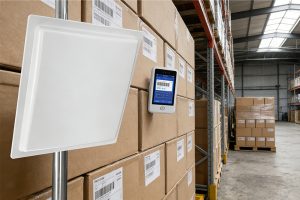
Wondering "how far does a RFID reader pickup"? Get straight answers for LF, HF, UHF, and active readers. Real ranges for access control, inventory, and parking with CYKEO.
More
how RFID tags work, practical methods to test them using phones or dedicated readers, and their industrial applications. Learn about HF/NFC, UHF, and bulk RFID tag solutions for warehouses, access control, and asset tracking.
More
A practical guide to RFID medical equipment tracking in hospitals. Learn how it actually works, where it helps, and how smart cabinets improve inventory control.
More
Wondering what are barcodes and RFID tags? We explain how each works, their pros and cons, and when to use them. A clear comparison for inventory and asset tracking from CYKEO engineers.
More