 Cykeo RFID IoT Solution Products R&D Manufacturer

RFID card Security and Industrial Applications Explained
86RFID card enables secure contactless access control and identification in offices, transport, and industry. Learn real deployments, standards, and insights with Cykeo.
MoreAll RFID Product
A long range RFID scanner for vehicle tracking is a UHF RFID solution that can automatically identify vehicles from several meters away using RFID tags attached to vehicles or equipment. It is commonly used in parking systems, logistics yards, factories, and access control applications. The actual performance depends on RFID reader power, antenna selection, tag type, installation position, and operating environment.
When an RFID project has a reading-distance problem, people often look at the reader first.
Sometimes that makes sense.
But quite often, the antenna is where the real problem starts.
A customer may have a powerful UHF RFID reader but still cannot get stable reading at the required distance. Then the antenna position is changed, the antenna type is replaced, or the tag is tested again — and suddenly the system performs much better.
This is why I would not recommend choosing a long range RFID scanner antenna simply by looking at the highest gain number.
The antenna, reader, tag, and installation environment need to work as one system.
A UHF RFID reader generates the RF signal, but the antenna determines how that signal is transmitted into the surrounding area.
It also receives the response from RFID tags and sends that information back to the reader.
In a fixed RFID installation, the antenna therefore has a big influence on:
For example, an antenna facing a warehouse doorway can create a relatively controlled reading zone.
Turn that antenna toward the storage racks, however, and the system may start reading tags that were never supposed to be part of the transaction.
That small difference can become a real operational problem.
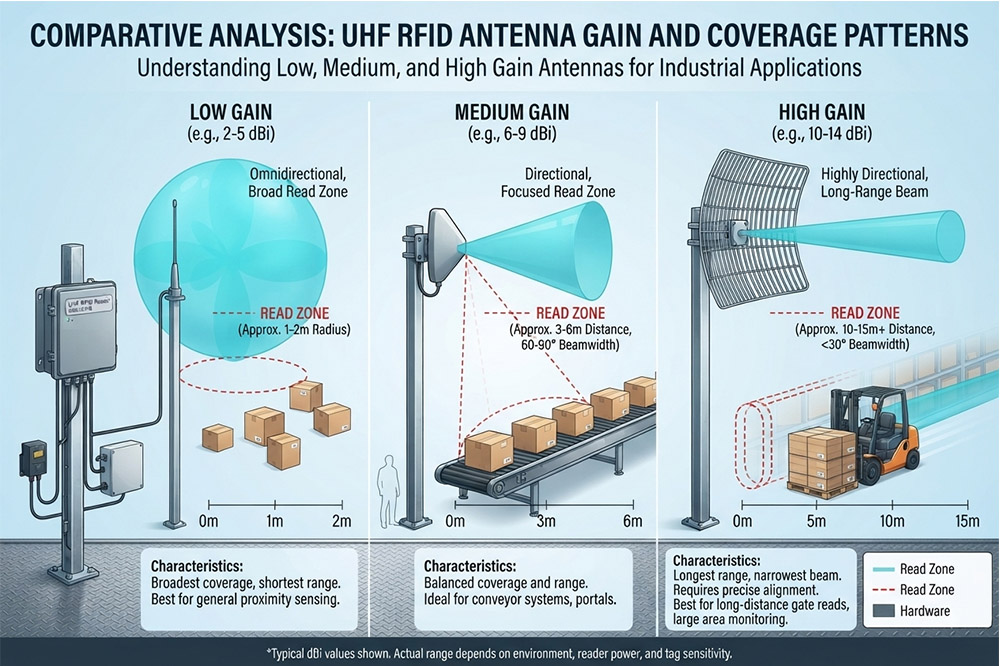
One of the first specifications buyers notice is antenna gain.
You may see antennas rated around 6 dBi, 9 dBi, 12 dBi, or similar levels.
Generally speaking, higher gain helps concentrate RF energy into a more focused area.
That can be useful when you need longer-distance reading.
A vehicle gate is a good example.
The antenna can be aimed toward the lane and the vehicle tag.
But imagine using the same high-gain antenna inside a warehouse where products are stored on both sides.
The narrower coverage may not match the actual workflow.
In that situation, a different antenna may produce better results even if its maximum reading distance is lower.
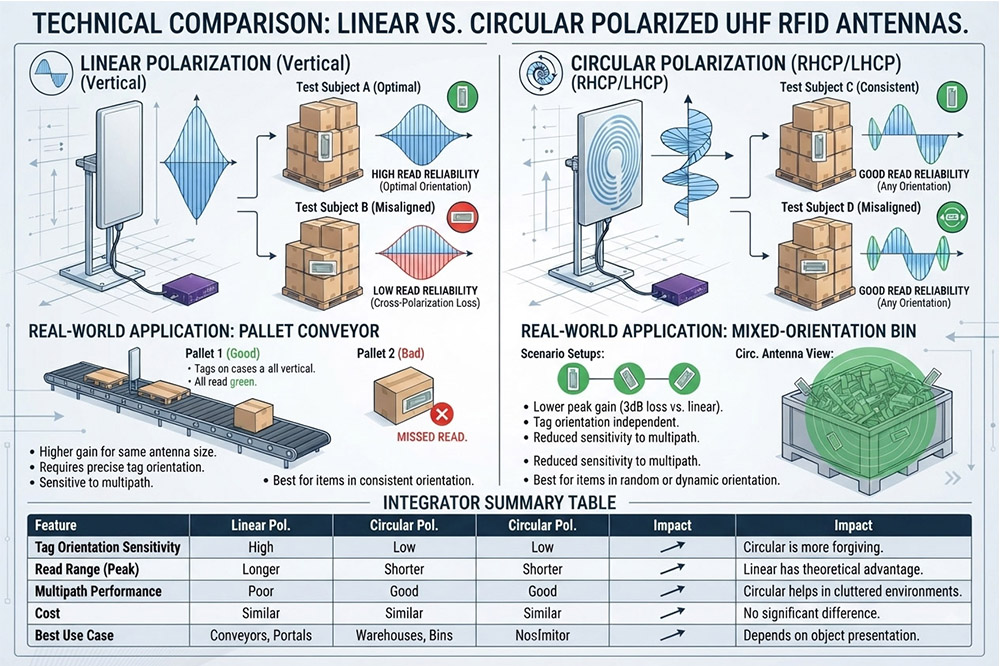
This is another specification that deserves attention.
Linear polarized antennas can provide strong performance when the RFID tag orientation is relatively predictable.
For example, tags mounted consistently on pallets may work well with a suitable linear antenna arrangement.
Circular polarized antennas are often more forgiving when tag orientation changes.
This can be useful when boxes or assets move through a reading area in different directions.
Neither type is universally better.
If the customer cannot control how the tag faces the antenna, circular polarization may be worth considering.
If tag orientation is consistent, linear polarization can sometimes offer an advantage.
This is probably one of the most underestimated parts of RFID deployment.
Suppose an antenna is installed two meters above a warehouse entrance.
Move it higher.
Change the angle slightly.
Move it closer to the gate.
The reading zone can change.
This is why field testing is important, particularly for large projects.
A drawing may show the antenna in the correct location, but the real warehouse contains metal structures, moving forklifts, cables, shelves, and products that were not obvious during the initial planning.
RFID does not behave the same way around every material.
Metal surfaces can reflect or interfere with RF signals, while liquids can absorb part of the RF energy.
This becomes important when selecting RFID tags as well as antennas.
For example, a warehouse may be tracking metal containers.
Using an ordinary adhesive RFID label may give disappointing results.
A specialized on-metal RFID tag could be a much better fit.
The reader may not be the problem at all.
Another detail that sometimes gets overlooked is the cable between the RFID reader and antenna.
Longer cables introduce signal loss.
The exact loss depends on cable type, frequency, length, connectors, and installation quality.
For a short test setup, this may not be obvious.
But in a large warehouse where the reader is installed several meters away from the antenna, cable selection becomes more important.
For RFID distributors, it is worth checking the complete RF path rather than looking only at the antenna specification.
There is no fixed answer.
A small doorway might only need one or two antennas.
A larger vehicle gate could require several antennas to cover different directions or lanes.
For example:
Single-door warehouse
One or two antennas may be enough.
Two-lane vehicle entrance
More careful antenna placement may be required to prevent blind spots.
Conveyor system
The antenna arrangement depends on product size, speed, and tag position.
Adding more antennas does not automatically improve the system. Poorly planned coverage can actually make unwanted reads more difficult to control.
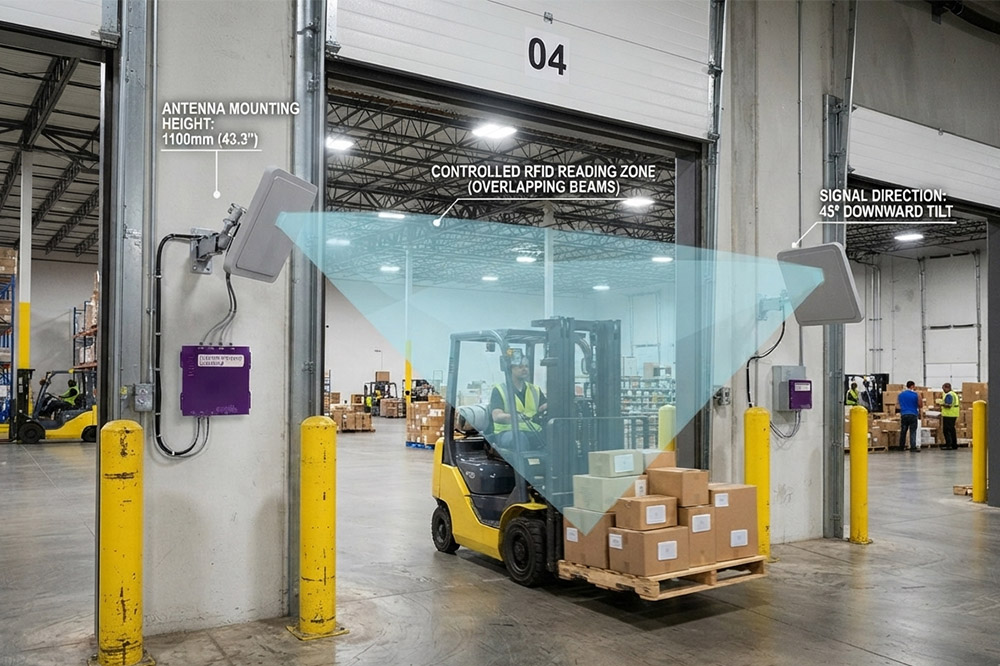
Imagine a warehouse receiving pallets through a 4-meter-wide entrance.
The customer wants to identify every pallet automatically.
The first idea might be to install the highest-gain antenna available.
But after testing, the system begins reading tags from pallets stored several meters inside the warehouse.
Now the software sees more tags than expected.
Instead of increasing power again, the integrator may reduce the reading area, change the antenna angle, or use a different antenna arrangement.
This kind of adjustment is normal in RFID projects.
The best system is often the one that creates the right reading zone, not the biggest one.
For wholesalers and RFID solution providers, antenna selection should include more than price.
Check:
For outdoor projects, environmental protection can be especially important.
For industrial customers, mechanical durability may matter just as much as RF performance.
A long range RFID scanner and rfid antenna should be treated as a combination.
Before ordering in bulk, confirm:
This is particularly important for RFID distributors who may supply hardware to different countries.
| Application | Common Antenna Consideration |
|---|---|
| Warehouse gate | Controlled directional coverage |
| Vehicle tracking | Longer distance and focused coverage |
| Conveyor | Wide enough coverage for moving items |
| Asset tracking | Tag orientation and environment |
| Outdoor logistics | Weather and mechanical protection |
| Factory production line | Stable and repeatable reading zone |
The final selection should still be confirmed through testing.
A product specification can tell you a lot.
It cannot tell you exactly how the antenna will behave in every customer’s warehouse.
For this reason, system integrators often test:
Once the configuration is stable, bulk deployment becomes much easier.
This is also where an experienced RFID manufacturer can be useful. A supplier that can provide different antenna options and technical support gives integrators more room to adjust the system instead of forcing every project into the same hardware setup.
If you are sourcing UHF RFID antennas and long range RFID scanners for warehouse, logistics, vehicle tracking, or industrial projects, we can support bulk orders, OEM requirements, antenna matching, and application testing.
Contact us with your required reading distance, installation environment, RFID tag type, and project quantity for a suitable configuration and quotation.
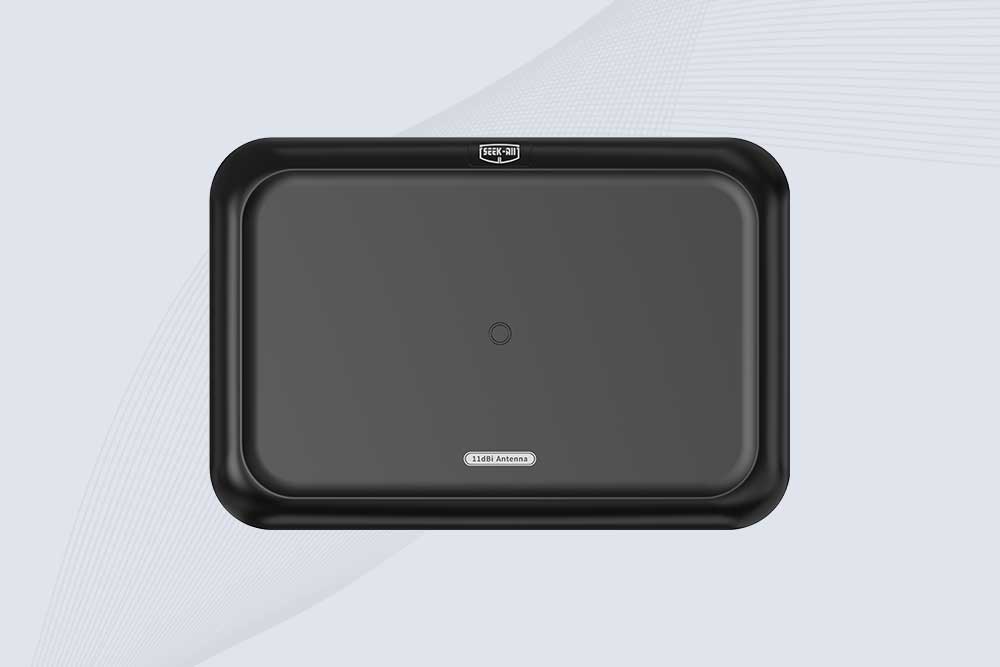
SSD-A11 UHF RFID antenna features 840–960 MHz adjustable frequency, ≥10.5 dBi gain, circular polarization and 50Ω impedance for fixed RFID systems.
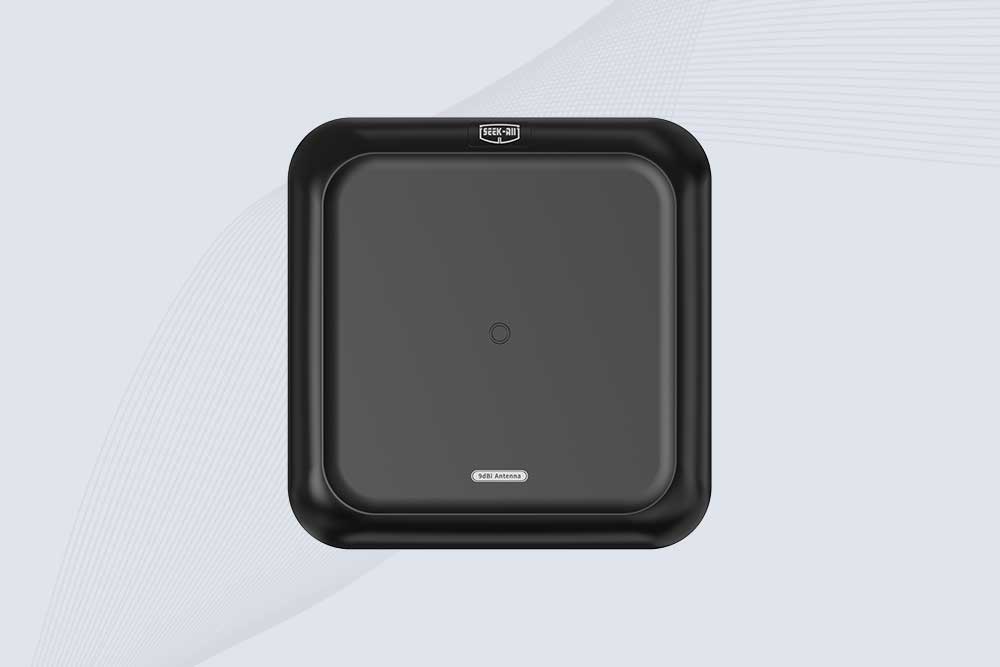
SSD-A09 is a 9 dBi UHF RFID antenna with 840–960 MHz adjustable frequency, circular polarization, 50Ω impedance and directional 60° × 60° coverage.
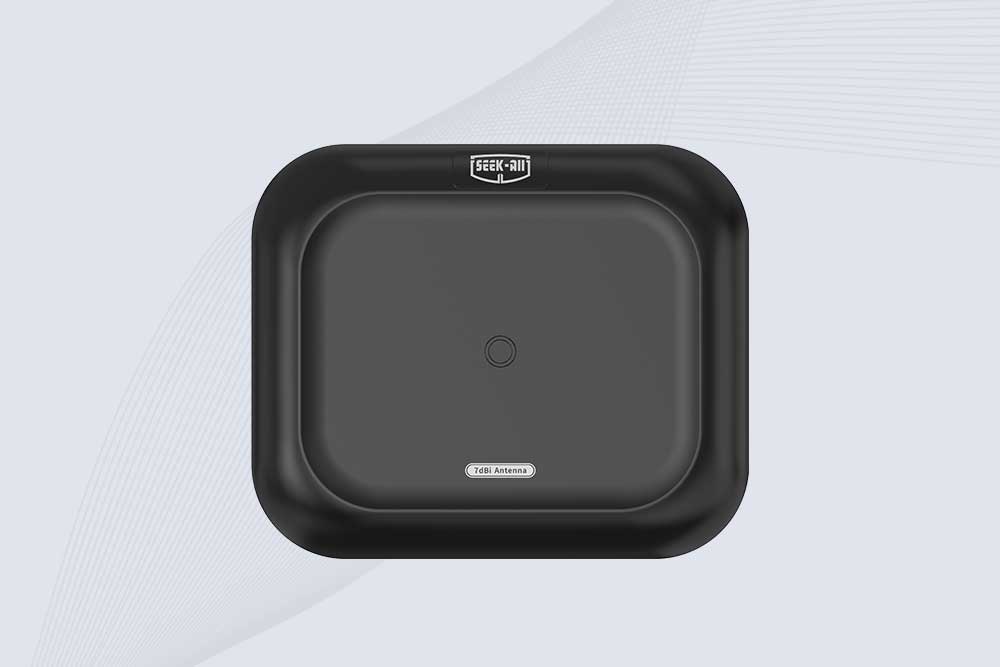
Explore the SSD-A07 UHF RFID antenna with 7 dBi gain, circular polarization, adjustable 840–960 MHz frequency, and 60°/75° beamwidth for stable RFID read/write performance.

SSD-A06 UHF RFID antenna with circular polarization, adjustable 840–960 MHz frequency, ≥4.5 dBi gain, and a compact directional design for RFID systems.

Cykeo CYKEO-A11 UHF RFID reader antenna delivers 11dBi gain, 840-960MHz frequency range, and IP65 ruggedness for retail, logistics, and industrial RFID systems. Features low VSWR and easy installation.

CYKEO Antenna RFID Reader delivers stable long-range UHF performance with a 10.5dBi directional design, built for warehouses, conveyor portals, and industrial RFID systems. This rfid reader antenna provides 20m+ read distance and rugged IP67 protection.

Cykeo CYKEO-PHF3 industrial HF RFID Antenna offers 24-point dynamic tracking, ISO 14443A/15693 protocols, metal-environment stability for archives/libraries/manufacturing.

Cykeo CYKEO-A5B industrial Linear RFID Antenna delivers 5dBi gain, ≤1.5:1 VSWR, and IP65 rugged design for warehouse, production line, and logistics UHF systems.

Cykeo’s CYKEO-B12 Long Range RFID Antenna delivers 15m+ read range with 12dBi gain, IP65 rugged design, and global 840-960MHz UHF support. Ideal for warehouse/logistics asset tracking.

Cykeo CYKEO-B10 Long Distance RFID Antenna offers 10dBi gain, 840-960MHz frequency range, IP65 rating, and 20m+ coverage for logistics/warehousing/ETC systems. Low VSWR ensures stable signal transmission.

Cykeo CYKEO-A6 UHF RFID panel antenna features 6dBi gain, 840-960MHz broadband, IP65 metal-ready housing for logistics/smart retail. 18mm ultra-thin design with tool-free mounting.

Cykeo CK-A3 industrial antenna RFID UHF offers 5m+ tag detection, ≤1.3:1 VSWR, IP65 rugged design, and global UHF spectrum compatibility (840-960MHz) for warehouses, factories, and retail.

Cykeo CYKEO-B5 directional RFID antenna provides 5dBi gain with 60° narrow beamwidth for precise inventory tracking. IP65-rated, global UHF frequency support, and low VSWR.

Create your own high-performance DIY RFID antenna! 5dBi gain, 840-960MHz tunable, step-by-step guides. Compatible with Arduino, Raspberry Pi, and commercial UHF readers.

Cykeo CYKEO-A7 Flexible RFID Antenna features 840-960MHz wideband tuning, 7dBi gain, and IP68 rating for medical/retail/industrial curved surface deployments. 98% read accuracy with peel-and-stick installation.

Cykeo CYKEO-B5A industrial Passive RFID Antenna delivers 5dBi gain, 70° beamwidth, and -40°C~55°C operation for warehouses/smart cabinets. Compatible with Zebra/Impinj readers.

Cykeo’s CYKEO-A9B High Gain RFID Antenna delivers 15m+ read range with 9dBi amplification. Features IP54 rugged design, 840-960MHz bandwidth, and 80° beamwidth for warehouse/manufacturing RFID systems.

Cykeo’s enterprise-grade 8dbi Impinj RFID Antenna 10m+ read range with 840-960MHz tuning. Features IP65 housing, 1.4 VSWR, 35° beamwidth for retail/warehouse RFID systems.

Cykeo CYKEO-A9 industrial UHF RFID antenna delivers 9dBi gain, 840-960MHz frequency range, and IP65 protection for warehouse/logistics/retail RFID systems. Features N-type connector and ≤1.3:1 VSWR.

CYKEO UHF RFID Antenna built for long-distance and industrial applications. This antenna rfid uhf delivers strong gain, outdoor durability, and reliable tag performance in warehouses, yards, and vehicle ID systems.

CYKEO Antenna RFID delivers reliable long-range UHF performance in warehouses, retail shelves, and cold-chain environments. This compact uhf rfid antenna provides stable reads with circular polarization and ultra-wide 840–960 MHz support, ideal for industrial tracking, smart shelves, and asset monitoring.

Cykeo’s CYKEO-C8 UHF RFID antennas delivers 8dBi gain, 840-960MHz full-band coverage, and IP65 ruggedness for manufacturing/warehouse RFID systems. Industrial RFID Antennas Features

Cykeo’s 8dBi UHF RFID antenna and reader kit delivers 10m+ range, 840-960MHz broadband, and IP65 ruggedness for factories, warehouses, and logistics. ISO 18000-6C & EPC Gen2 certified.

Cykeo CYKEO-A9A industrial UHF RFID reader and antenna kit delivers 10m range, 500 tags/sec, IP65 ruggedness for manufacturing/logistics. Supports EPC Gen2, ISO18000-6C.
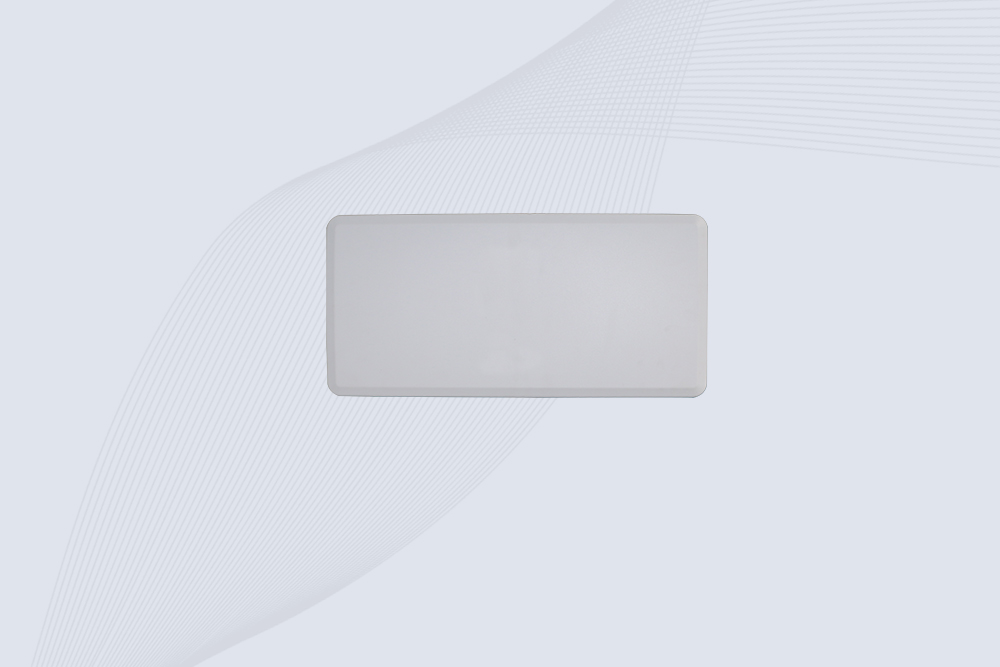
Cykeo’s CYKEO-A12C UHF Large RFID Antenna delivers 12dBi gain, 840-960MHz global frequency, IP65 ruggedness for logistics/warehousing/automotive. 40° beamwidth ensures stable 15m+ tag reads.

CYKEO Near Field RFID Antenna provides precise 5–30 cm reading for shelves, cabinets, and workstations. This compact rfid shelf antenna delivers stable short-range performance around metal and clutter, ideal for pharmacies, libraries, and electronics sorting.
RFID Industry Writer | IoT & Asset Tracking Analyst
James writes about RFID technology, asset tracking, and the practical challenges of digital transformation across warehousing, retail, manufacturing, and logistics.
His work focuses on how RFID is applied in real-world operations—improving inventory visibility, automating workflows, and helping businesses manage assets with greater accuracy and efficiency.
He regularly covers topics including UHF RFID, smart cabinets, RFID portals, tool tracking, warehouse automation, and industrial IoT trends..

RFID card enables secure contactless access control and identification in offices, transport, and industry. Learn real deployments, standards, and insights with Cykeo.
More
Explore production tracking solutions for rfid medical device manufacturing to achieve real-time visibility, compliance, and traceability across every stage.
More
What is RFID tags? Learn how RFID tags work, their types, industrial applications, and how Cykeo RFID solutions improve tracking accuracy and automation.
More
Wondering what passive RFID tags are and how they work? CYKEO explains the battery-free tech that powers inventory, access control, and supply chain visibility.
More