 Cykeo RFID IoT Solution Products R&D Manufacturer
RFID Gates for Library: Finding the Balance Between Security and Experience
656Explore RFID gates for library use—how they evolved from theft prevention to management tools, balancing safety with a welcoming atmosphere.
MoreAll RFID Product
Retail looks simple on the surface—products in, products out.
But anyone who’s worked behind the scenes knows how messy inventory can get.
Stock discrepancies, slow inventory counts, misplaced items—
these issues don’t just affect operations, they directly impact sales.
That’s why more retailers are turning to Impinj RFID reader–based systems to solve a problem that barcode scanning never fully fixed.
Most retail systems already track inventory digitally.
But the accuracy depends on one thing:
How data is collected
With barcode-based workflows:
As store size and SKU count grow,
these limitations become more obvious.
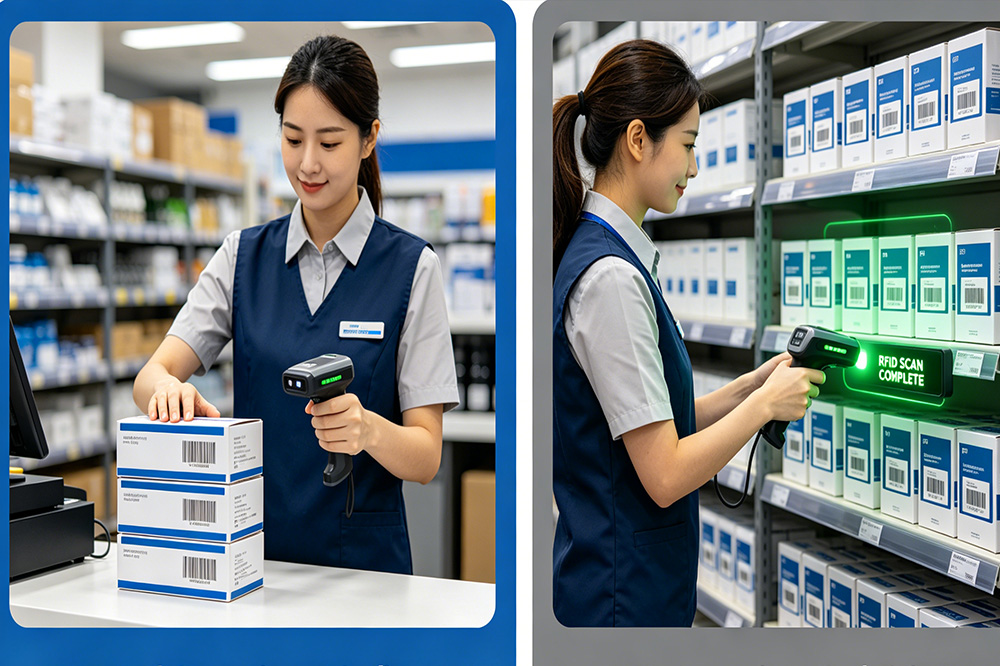
RFID changes how inventory data is captured.
Instead of scanning items one by one:
Multiple products can be read instantly, without contact
This leads to:
In some retail projects, full inventory counts that used to take overnight
can be completed in a fraction of the time.
RFID in retail isn’t just one use case—it usually spans several areas.
Result:
Inventory accuracy improves significantly
This helps prevent lost sales due to empty shelves.
In more advanced setups:
No traditional checkout required
This is where RFID becomes especially powerful.
In unmanned or “grab-and-go” stores:
Compared to barcode-based self-checkout:
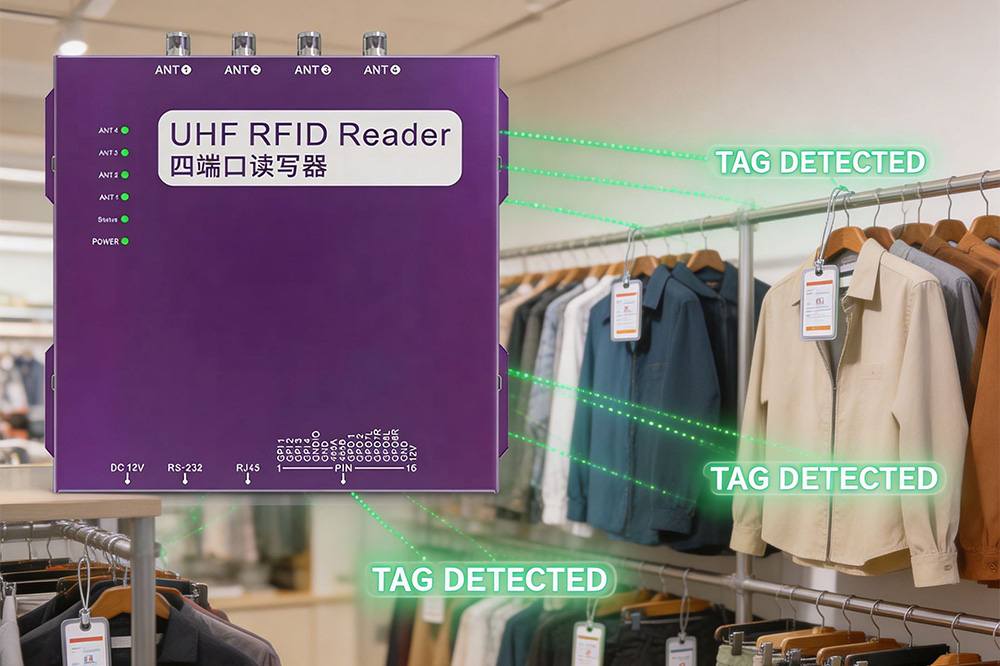
While handheld devices are common in retail,
fixed readers play a key role in automation.
They are typically used at:
If you’re building a retail RFID system, this type of hardware is often used:
UHF RFID fixed reader
In retail environments, these readers need to handle:
Retail environments are different from warehouses.
They require more precision.
If tags are placed randomly,
reading accuracy drops.
Shelves, walls, and product density can affect signals.
Items are constantly moved, picked up, and returned.
Retail margins are tighter, so ROI must be clear.
Instead of rolling out RFID across all stores:
Start with one high-impact use case
For example:
Once results are proven, scaling becomes much easier.
After implementation, the improvements are usually clear:
And most importantly:
fewer missed sales opportunities
Retail is becoming more data-driven—but data quality still depends on how it’s collected.
Impinj RFID reader–based solutions offer a more efficient way to capture inventory data,
especially in fast-moving retail environments.
For solution providers, the opportunity is clear:
Because in retail,
better data doesn’t just improve operations—it directly drives revenue.
Guide Recommendations
Fixed RFID Reader: Why It’s Becoming Must-Have
Fixed RFID Readers: What I Didn’t Expect and What I Learned
RFID Handheld Reader vs. Fixed Reader: Which Is Better for Retail?
Different Types of RFID Readers: A Simple Introduction
Best Budget USB RFID Readers Under $100 for Small Business Inventory Systems
RFID Module vs. RFID Reader: What’s the Difference?
Fixed RFID Reader Buying Guide: 5 Core Parameters You Must Know
What is an RFID Reader Used For?
How RFID Reader Works: The Simple Explanation
How to Choose the Best Long-Range RFID Reader for Warehouse Management
RFID Readers for Boom Barriers ,Where Efficiency Meets Access Control
Why Your Warehouse Needs Smarter RFID Readers in 2025
Understanding RFID Readers,Essential Devices for Efficient Tracking

Explore RFID gates for library use—how they evolved from theft prevention to management tools, balancing safety with a welcoming atmosphere.
More
Learn how to check if RFID blocker works using simple tests. Verify protection accuracy with real RFID readers and improve data security.
More
A practical guide for choosing RFID long range readers for warehouse systems. Learn how to design read zones, select antennas, and ensure stable integration.
More
RFID surgical instrument tracking helps hospitals reduce lost tools, improve OR efficiency, and ensure compliance. See how CYKEO delivers real results.
More